What to Ask For When Getting a Curly Haircut
Oleh Onysko 15 August 2026 7 min read
In this article
Curly hair punishes generic haircuts. Cut wet, stretched and treated like straight hair, it dries into a shape nobody planned, usually a triangle. A good curly cut is mostly decided before anyone picks up scissors: the right cutter, an accurate description of your hair, and a brief that accounts for shrinkage. Here is how to get all three right.
Find someone who actually cuts curls
The single highest-leverage decision is who holds the scissors. Look for stylists who advertise dry cutting or curl-by-curl methods, whose portfolios are full of textured hair, and, most tellingly, ask one question when you enquire: "How do you cut curly hair?"
Good answers mention cutting dry or in its natural state, working with the curl pattern, and shrinkage. A warning-sign answer is "we will straighten it first so we can get it even." Even is a straight-hair concept; curls hang by curl, not by ruler. There are skilled stylists who cut curls wet with technique adapted for it, but they will be able to explain why. If the answer is a shrug, keep looking. A cheap cut from the wrong person costs six months of growing out.
Expect the first appointment with a curl specialist to cost more and take longer than a standard cut, and treat that as the price of the consultation as much as the haircut. Later visits are usually quicker, because the shape only needs maintaining once it exists.
Know your own hair before you go
You do not need a trichology degree, but three facts about your own head make the consultation ten times more precise. Your rough curl pattern, from wavy 2s through curly 3s to coily 4s, and be aware most heads carry more than one pattern, typically looser at the crown and tighter at the nape. Your density, meaning how much hair, which decides whether you need weight removed or preserved. And your shrinkage, meaning how much shorter your hair sits dry than stretched.
Say these plainly: "I am mostly 3B, looser at the front, high density, and I shrink about a third." That single sentence tells a good stylist more than twenty reference photos of other people's hair.
| Pattern | Reads as | What it changes in the cut |
|---|---|---|
| 2A-2C | Waves, loose S-shapes | Weight removal matters more than shape |
| 3A-3C | Ringlets to corkscrews | Internal layers, cut curl by curl |
| 4A-4C | Coils to tight zig-zags | Shape cut dry; shrinkage can exceed half the length |
The words that get you a good cut
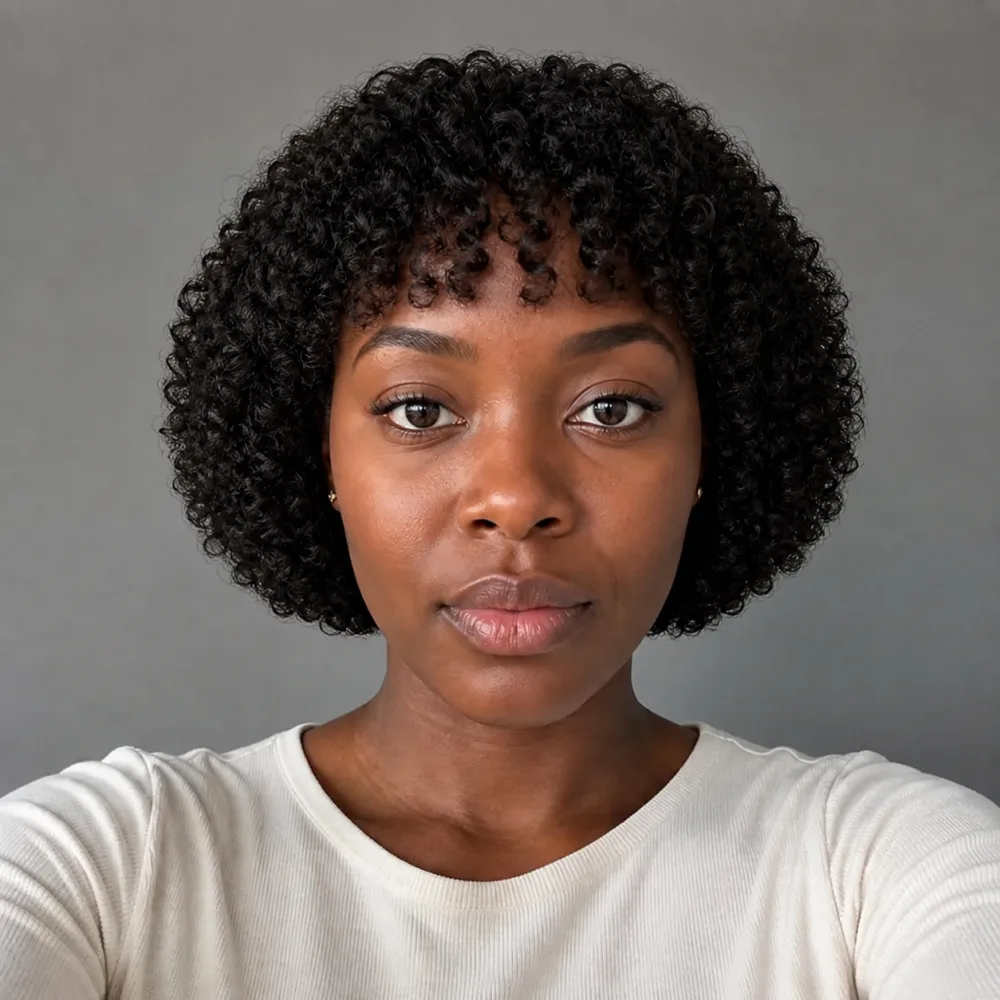
Describe the outcome in dry, worn-as-usual terms, because that is the only state that matters. "When it is dry and curly, I want it to sit at my collarbone, with the shape rounded rather than triangular" is a complete, executable brief.
Some specific requests worth making, and one refusal: ask for shape and weight to be managed with internal layers rather than uniform ones, which is how a cut avoids the pyramid; ask where the shortest curl will land once it springs up; and if your hair frizzes when interfered with, say no thinning shears and no razor, since both can shred curl clumps into permanent frizz on many textures. The AAD\'s everyday hair care guidance is a useful sanity check on which handling actually damages hair and which is salon folklore. If the stylist pushes back with reasons specific to your hair, listen. That is expertise. If they push back with "we always do it this way", that is a schedule.
Say this to your barber
When it is dry and curly, I want it to sit at my collarbone, with the shape rounded rather than triangular. Manage the weight with internal layers rather than uniform ones, no thinning shears and no razor, and tell me where the shortest curl will land once it springs up.
Plan for shrinkage like it is real, because it is
Most curly-cut disappointment is shrinkage arithmetic going unspoken. You said shoulder-length; the stylist cut to shoulder-length wet; it dried to your jaw. Nobody technically erred, and you still lost four months of growth.
So anchor every length to a body part in the dry state, out loud: "dry and curly, resting here", with a finger on the spot. A curly bob has to be cut longer than it looks to land where you want it, which you can sense-check in advance with a bob haircut try-on on your own photo. If you are growing towards length instead, agree what "just a trim" means in centimetres, and preview the long-term target with a long hair filter so you are both aiming at the same picture.

Questions to ask before the scissors move
- Where will the shortest piece sit once it dries and shrinks?
- How much length is coming off at the longest point, in centimetres?
- How will this grow out, and when should I come back?
- How do I style it at home with five minutes and the products I own?
The last one matters most. A curly cut that only works after twenty minutes of diffusing and four products is a photoshoot, not a haircut. A good stylist will cut for your real routine if you tell them what it is, and telling them costs one honest sentence.
Walk in with the shape already chosen
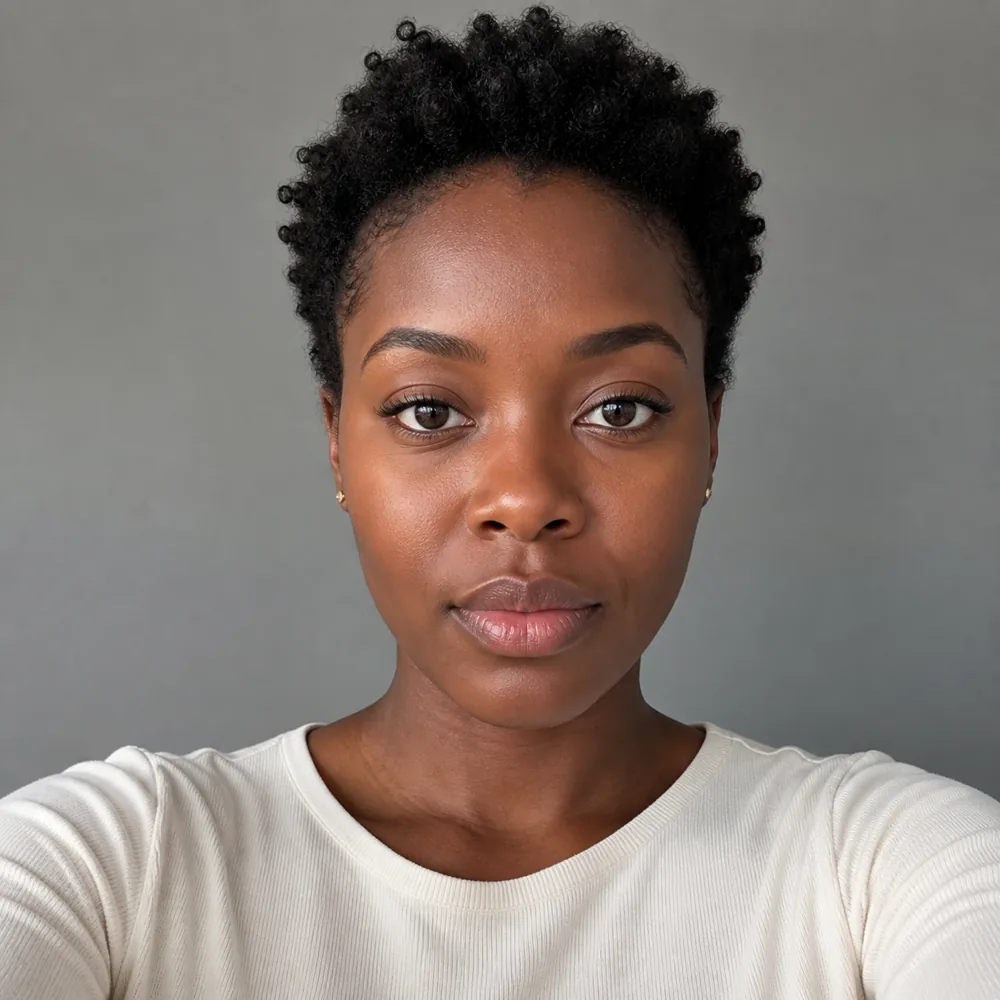
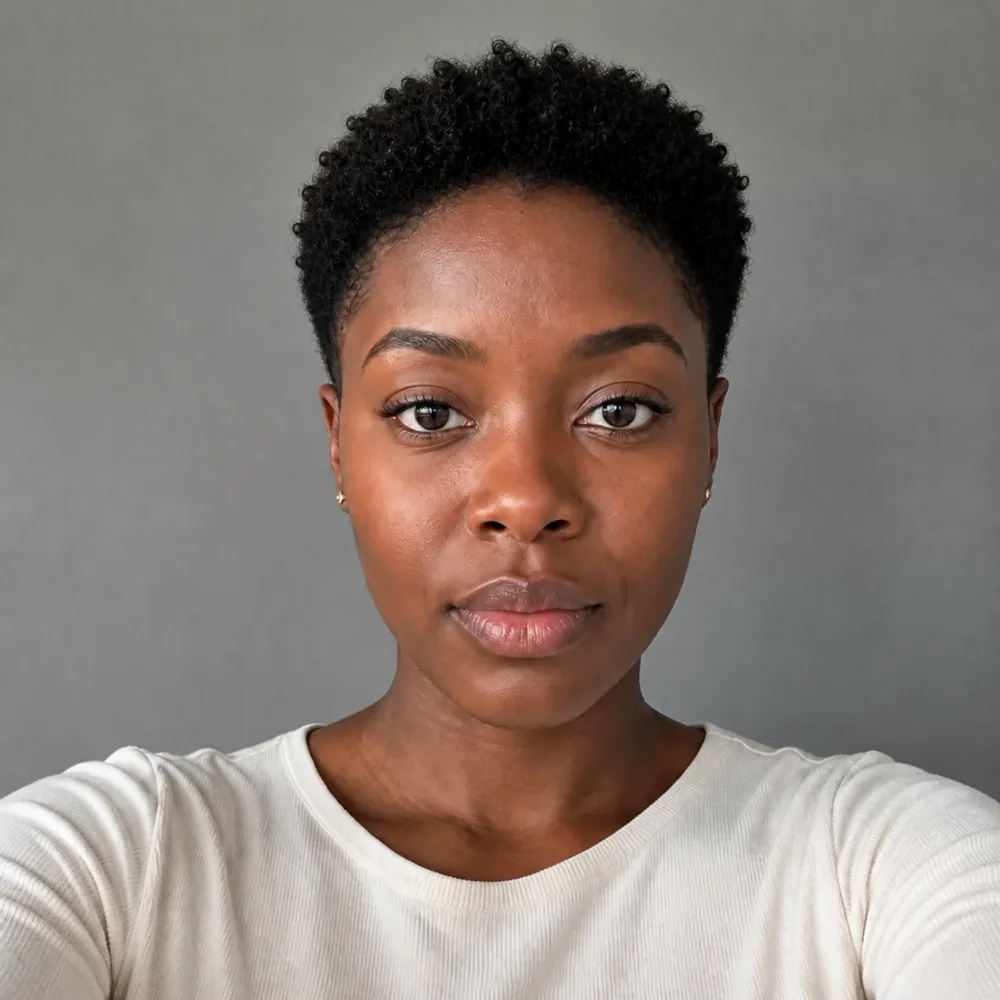
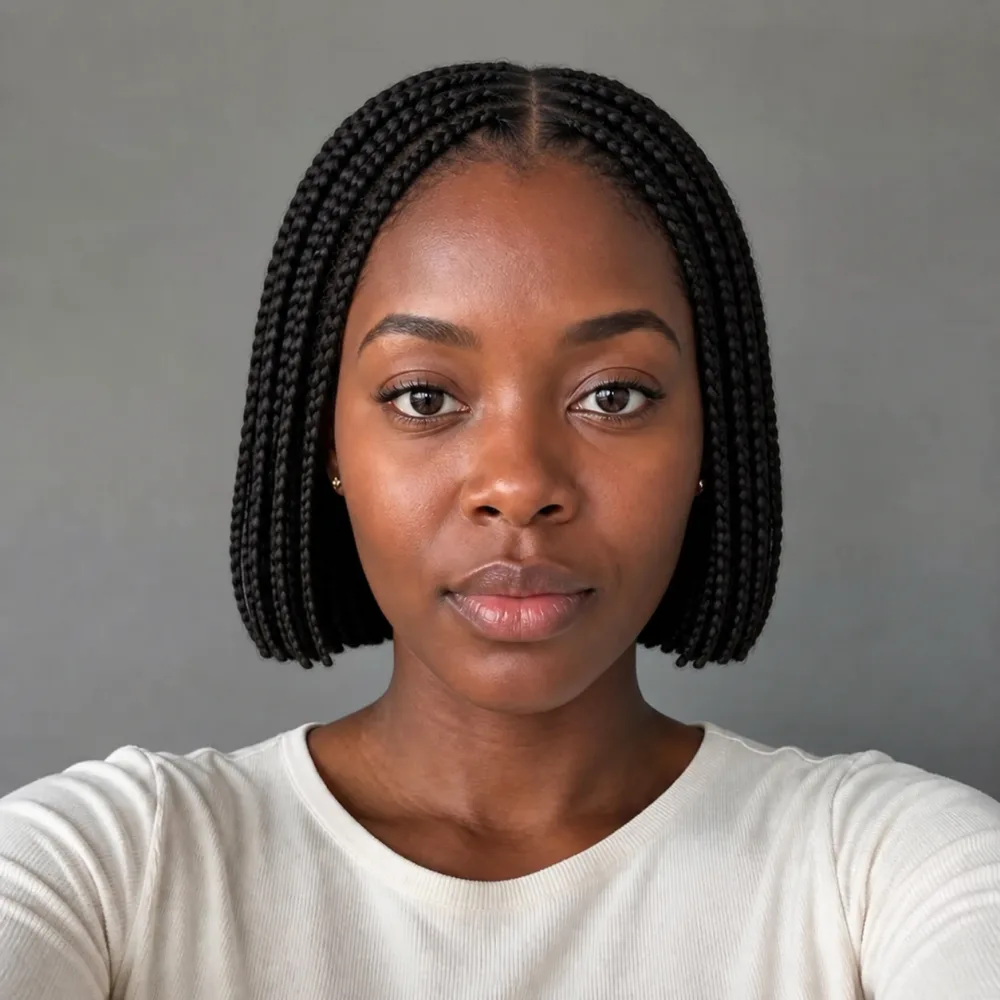
The consultation goes from abstract to concrete the moment there is a picture of you, rather than a stranger, wearing the target cut. A curly hair try-on renders styles matched to your texture and face shape from one selfie, in about twenty seconds per look. Save the two or three you like and open the appointment with them.
And if you are torn between directions entirely, shorter, longer, rounder, a what haircut suits me analysis narrows the field before you spend salon money on the question. The first look is free, no card. Cheaper than cutting to find out.
Frequently asked questions
Look for stylists who advertise dry cutting or curl-by-curl methods and whose portfolios are full of textured hair, then ask one question when you enquire: "How do you cut curly hair?" Good answers mention cutting it dry or in its natural state, working with the curl pattern, and shrinkage. "We will straighten it first so we can get it even" is a warning sign.
Three facts make the consultation far more precise: your rough curl pattern, your density, and your shrinkage. Something like "I am mostly 3B, looser at the front, high density, and I shrink about a third" tells a good stylist more than twenty reference photos of other people.
Anchor every length to a body part in the dry state, out loud, with a finger on the spot: "dry and curly, resting here." Most curly-cut disappointment is shrinkage arithmetic going unspoken, where shoulder-length cut wet dries to the jaw.
Ask for shape and weight to be managed with internal layers rather than uniform ones, and ask where the shortest curl will land once it springs up. If your hair frizzes when it is interfered with, say no thinning shears and no razor.
A first appointment with a curl specialist usually costs more and takes longer, and that price is as much for the consultation as the cut. Later visits are normally quicker, because the shape only needs maintaining once it exists.
Share article
About the author
Founder & Editor
Founded Hairstyle Atlas after one bad clipper decision too many. Writes and edits the guides here, and tests every haircut on his own photo before recommending it.
More articles

Curly & Textured Hair · 5 min
A Wash-and-Go Routine That Actually Holds
The order of operations for a wash and go, why definition is decided while the hair is soaking wet, and what to do about frizz and shrinkage.
Curly & Textured Hair · 8 min
Wash Day for 4C Hair Before a Big Chop
A full wash day routine for 4C hair before a big chop: pre-poo, sectioned cleansing, deep conditioning, and what to expect when the length comes off.