Men's Hairstyle Try-On
Every fade height, every crop, curtains, crew cuts and the classics your barber grew up cutting. Show your barber the render instead of a photo of someone else.






Preview a new look
Your first look is free.
Free sample previews. Try every look on our sample faces here without registering. Your own photo needs a free account, no card: 15 credits once (a cut costs 10, a color on it 5). That covers one cut plus one color on it. No refill; further renders are paid. The optional Plus trial can be declined.



- 48,000+
- users worldwide
- 165,000+
- hairstyles tried
Try it yourself
Pick a look, drag the handle to compare. Then do it with your own selfie.


Keeping a textured fade
- Back in the chair every 3 to 4 weeks.
- Spritz salt spray through damp hair.
- Wash 3 to 4 times a week.

Keeping a edgar
- Back in the chair every 2 to 3 weeks.
- Dry the bangs forward while it is still damp.
- Wash 3 to 4 times a week.

Keeping a modern mullet
- Back in the chair every 6 to 8 weeks.
- Salt spray through the whole head while damp.
- Wash 2 to 3 times a week.

Keeping a perm
- Back in the chair every 8 to 10 weeks.
- Work curl cream through soaking-wet hair.
- Wash 2 to 3 times a week.


Keeping a curtains
- Back in the chair every 6 to 8 weeks.
- Spray salt spray through wet hair.
- Wash 3 to 4 times a week.

Keeping a crew cut
- Back in the chair every 4 to 5 weeks.
- Rub a small amount of clay through dry hair.
- Wash 3 to 4 times a week.

Keeping a ivy league
- Back in the chair every 4 to 5 weeks.
- Part it damp, on the side it already falls.
- Wash 3 to 4 times a week.

Keeping a disconnected crop
- Back in the chair every 3 to 4 weeks.
- Salt spray, then dry the top forward.
- Wash 3 to 4 times a week.

Keeping a low taper blowout
- Back in the chair every 2 to 3 weeks.
- Salt spray at the roots while wet.
- Wash 3 to 4 times a week.

Keeping a taper fade
- Back in the chair every 3 to 4 weeks.
- Towel-dry until damp, not dripping.
- Wash 3 to 4 times a week.

Keeping a quiff
- Back in the chair every 4 to 5 weeks.
- Blow-dry the front up and back over a round brush.
- Wash 3 to 4 times a week.

Keeping a restored
- Back in the chair every 4 to 5 weeks.
- Dry the front forward rather than back.
- Wash 3 to 4 times a week.

Keeping a shaved
- Back in the chair every 1 to 2 weeks.
- Shave with the grain, not against it.
- Wash 5 to 7 times a week.

Keeping a platinum
- Back in the chair every 4 to 6 weeks.
- Purple shampoo once a week, no more.
- Wash 1 to 2 times a week.

Keeping a jet black
- Back in the chair every 6 to 8 weeks.
- Color-safe shampoo, cold rinse.
- Wash 2 to 3 times a week.

Keeping a ash brown
- Back in the chair every 6 to 8 weeks.
- Color-safe shampoo, cool rinse.
- Wash 2 to 3 times a week.

Keeping a silver
- Back in the chair every 8 to 10 weeks.
- Purple shampoo weekly to stop it yellowing.
- Wash 2 to 3 times a week.

Keeping a low taper
- Back in the chair every 3 to 4 weeks.
- Towel-dry until damp.
- Wash 3 to 4 times a week.

Keeping a italian cut
- Back in the chair every 6 to 8 weeks.
- Salt spray on damp hair.
- Wash 2 to 3 times a week.

Keeping a comma fringe
- Back in the chair every 4 to 5 weeks.
- Blow-dry the top forward and full from damp.
- Wash 3 to 4 times a week.

Keeping a mop cut
- Back in the chair every 8 to 10 weeks.
- Salt spray through damp hair.
- Wash 2 to 3 times a week.
Every after is this tool's own render of a demo face, pre-generated for speed - nothing on this page renders live.
Preview a new look
Your first look is free.
Three steps
How it works
Every fade height, every crop, curtains, crew cuts and the classics your barber grew up cutting. Show your barber the render instead of a photo of someone else.
- 01 Your selfie
Show the top and temples
Use a men's haircut photo with the front, both temples and the height on top visible. A cap or a pushed-down fringe hides the decisions you are comparing.
- 02120+ looks
Compare the direction first
Put a forward crop beside a parted or swept style before deciding how close to take the sides. Watch where each outline places height around your forehead.
- 03 Your result
Give your barber a complete brief
Save the men's cut you prefer, then name the top length, side finish and usual styling routine. The render starts the conversation about what your hair will hold.
Choosing a men's cut by what the top has to do
Men's haircut names bundle several decisions together. A crew cut tells the barber something about the top, but very little about the sides or the front corners. Curtains describe a part and a direction, not how much weight stays behind the ears. Start your comparison by deciding whether you want hair forward, sideways or away from the forehead. That separates a crop from an Ivy League or a quiff before clipper numbers enter the conversation.
Look at where the height sits in each preview. A quiff carries its tallest point toward the front; a brushed crew may distribute that height farther back. On your own face those outlines can read quite differently even when the sides are equally short. Keep your usual part in mind too. A center opening that looks balanced in a still can require daily drying if your hair naturally falls sideways.
Then consider what you actually do before leaving home. If your morning routine is a towel and a comb, compare cuts with a settled outline instead of choosing the tallest styled version. Bring your barber the shape you prefer and describe your routine alongside it. A men's try-on is most useful when it helps you reject the haircut you would only wear properly on appointment day.
The barber brief behind a crop, crew or curtains
A useful men's haircut reference answers separate questions about the top, sides and edges. With a crop, point out the fringe length and whether you want a solid edge or broken texture. With a crew, identify how much height should remain at the front. With curtains, show how far the front pieces should fall when parted, and whether they need to tuck behind the ears.
Avoid letting one short word carry the whole brief. Asking for a tidy cut can produce a close taper in one shop and a scissor trim in another. Your preview supplies the outline, but the barber still needs to know which parts you like. You might want the flat sides of one result and the softer fringe of another. Explain that combination before the cape goes on.
The back deserves its own conversation because your front selfie does not describe it. Mention a crown that splits, a neckline that grows unevenly, or hair that sticks out behind an ear. Those details can change where a barber leaves extra length. Ask them to check the reference against your unstyled hair, then agree on the shortest acceptable top length. This turns a broad men's hairstyle choice into a brief someone can execute without guessing what you meant by neat.
Keeping a men's haircut useful between appointments
The first week of a men's haircut and the week before your next appointment are different tests. Close sides may look controlled at first while the top has just enough weight to settle. Later, the sides can widen before the fringe becomes noticeably longer. If that widening is what sends you back to the barber, compare previews that retain a little side weight instead of always choosing the tightest outline.
Growing from a crew toward curtains creates the opposite problem. The top needs time while the edges need enough attention to look intentional. A routine trim that removes the same amount everywhere can keep resetting the part you are trying to grow. Tell the barber that the front is being kept, and use a longer preview to show the intended destination.
Your current crown and hair direction matter more than a fashionable label here. A men's render can suggest how a swept top frames your forehead, but it does not measure the effort needed to hold that sweep after a wash. Save a second, shorter option if you are uncertain about styling. At the appointment, ask which version will remain manageable through your normal booking interval. The better choice is the one whose middle weeks you also want to wear.
Men's cuts, settled before you sit in the chair
Every fade height
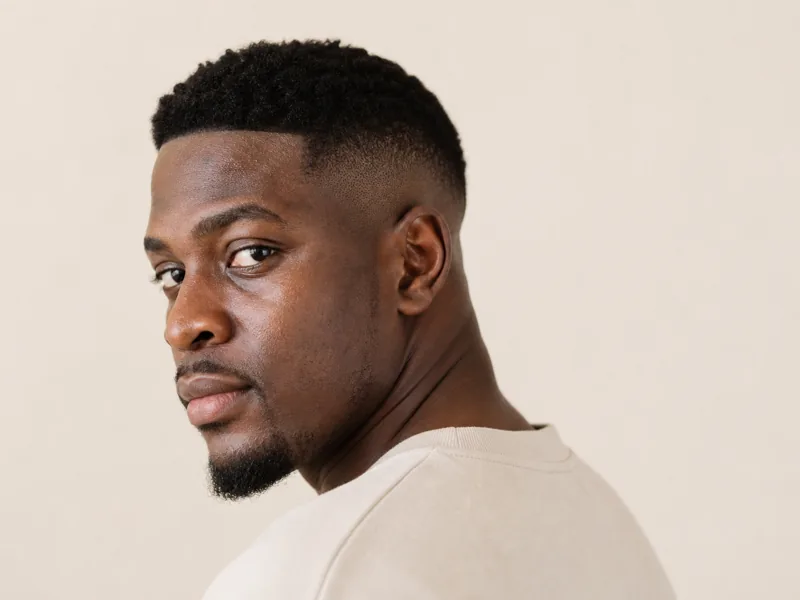
Low, mid, high, skin and taper on the same photo. Height is what people notice first and the part hardest to describe across a barber's mirror.
Crops and crews
French crop, textured crop, crew cut, Caesar. An inch of bangs is the whole difference, and it changes how high your forehead reads.
Curtains and quiffs
Curtains, a quiff, mid-length flow with the sides kept in. Useful when the real question is whether to keep growing it out or cut it back.
Your own texture
Straight, wavy, coarse or thinning on top. Set your texture first and the cut renders the way it would sit on your hair, not on salon-smooth stock hair.
Questions about the Men's Hairstyle Try-On
Straight answers, no hedging.
Choose the top direction first. A forward crop, a side part and curtains need different supporting weight. Once you know what the top should do, compare how tight the sides can be without making the whole cut look disconnected.
It can show a proposed outline around the crown, but it cannot test the way that swirl opens after drying. Tell your barber which spot sticks up before asking them to copy a short crew or brushed top.
Keep the same selfie and begin with a similar color. Judge the exposed forehead and side width separately. Curtains can seem more dramatic simply because they reveal a center opening where a crop previously covered your brow.
Name the pieces: the fringe from the crop, the side weight from the longer cut, or the height from the quiff. Your barber can explain whether those pieces connect, instead of trying to reproduce two incompatible outlines.
A still cannot show hold or drying time. If the result has a lifted front or a precise part, ask the barber how they would reproduce it on your hair and whether you can manage that routine.
The front and top need to gain enough length to separate and fall. Repeatedly shortening them keeps the crew shape in place. Use the curtains reference to explain why you want edge maintenance without losing that progress.
Other tools to explore

Link to this tool
Free sample previews, free to link or embed. No permission needed.
https://hairstyleatlas.com/mens-hairstyle-try-onExplore more try-on tools
Same selfie, a different change. Every tool below runs on the photo you already uploaded.

Settle the top and sides.
Then book the chair.
Compare the men's cuts you would actually style, and take a clear reference for your barber.