Bob Haircut Try On
Blunt, French, long, angled or with bangs. The difference between them is an inch and whether you like your own jaw.






Preview a new look
Your first look is free.
Free sample previews. Try every look on our sample faces here without registering. Your own photo needs a free account, no card: 15 credits once (a cut costs 10, a color on it 5). That covers one cut plus one color on it. No refill; further renders are paid. The optional Plus trial can be declined.


- 48,000+
- users worldwide
- 165,000+
- hairstyles tried
Try it yourself
Pick a look, drag the handle to compare. Then do it with your own selfie.


Keeping a curtain bangs
- Back in the chair every 4 to 5 weeks.
- Dry the bangs first, while the rest is still wet.
- Wash 2 to 3 times a week.

Keeping a butterfly
- Back in the chair every 8 to 10 weeks.
- Dry the short layers up and away from the face.
- Wash 2 to 3 times a week.

Keeping a wolf cut
- Back in the chair every 8 to 10 weeks.
- Mousse through soaking-wet hair.
- Wash 2 to 3 times a week.

Keeping a italian bob
- Back in the chair every 6 to 8 weeks.
- Rough-dry to eighty per cent first.
- Wash 2 to 3 times a week.
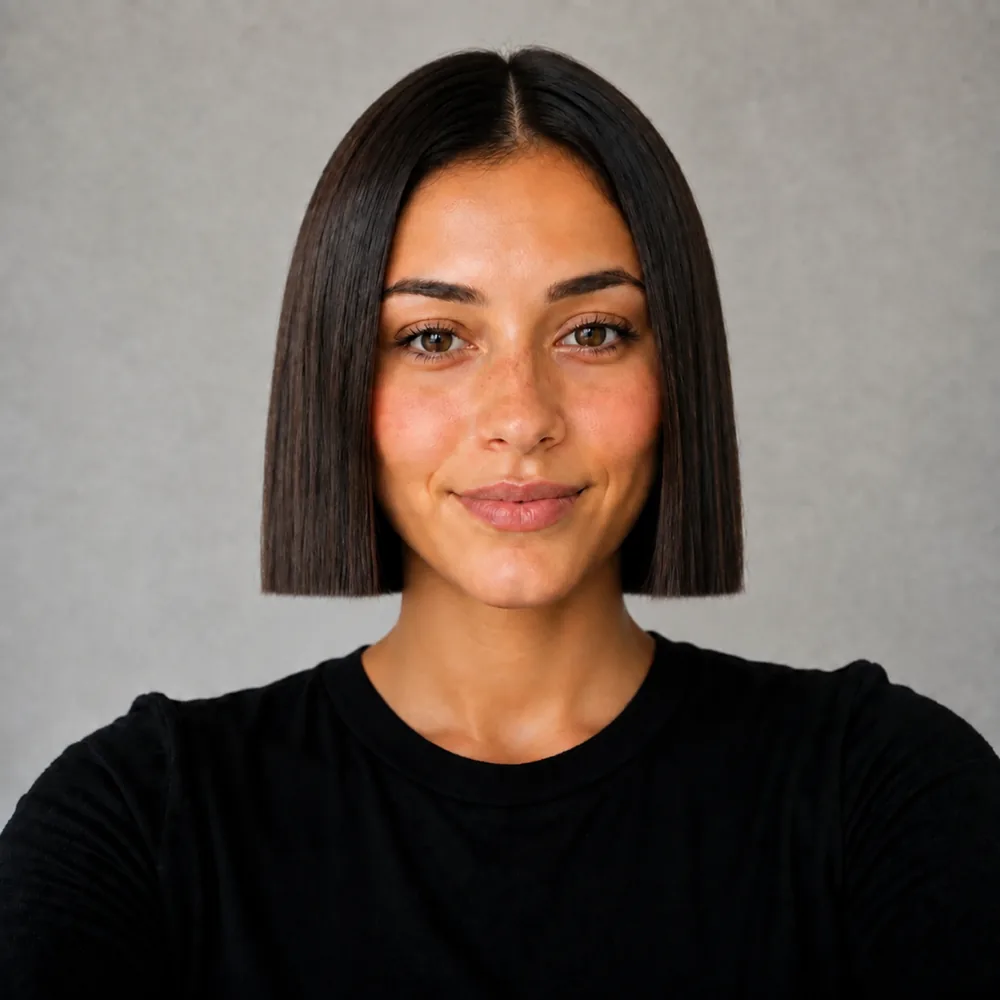
Keeping a blunt bob
- Back in the chair every 6 to 8 weeks.
- Heat protectant through damp hair, ends first.
- Wash 2 to 3 times a week.

Keeping a long layers
- Back in the chair every 10 to 12 weeks.
- Rough-dry with your head upside down for root lift.
- Wash 2 to 3 times a week.

Keeping a balayage
- Back in the chair every 12 to 16 weeks.
- Color-safe shampoo, cool water.
- Wash 2 to 3 times a week.

Keeping a pixie
- Back in the chair every 4 to 6 weeks.
- Rough-dry it in every direction at once.
- Wash 3 to 4 times a week.

Keeping a french bob
- Back in the chair every 8 to 10 weeks.
- Rough-dry it with your fingers, no brush.
- Wash 2 to 3 times a week.

Keeping a bixie
- Back in the chair every 5 to 6 weeks.
- Rough-dry upside down for lift at the crown.
- Wash 3 to 4 times a week.

Keeping a curtain lob
- Back in the chair every 6 to 8 weeks.
- Heat protectant, then blow-dry the fringe first, brushing it away from the centre.
- Wash 2 to 3 times a week.

Keeping a bottleneck bangs
- Back in the chair every 8 to 10 weeks.
- Blow-dry the fringe first, damp, over a small round brush.
- Wash 2 to 3 times a week.

Keeping a bouncy layers
- Back in the chair every 8 to 10 weeks.
- Mousse at the roots, then dry upside down.
- Wash 2 to 3 times a week.

Keeping a hollywood waves
- Back in the chair every 10 to 12 weeks.
- Wand every section in the same direction, away from the face.
- Wash 2 to 3 times a week.
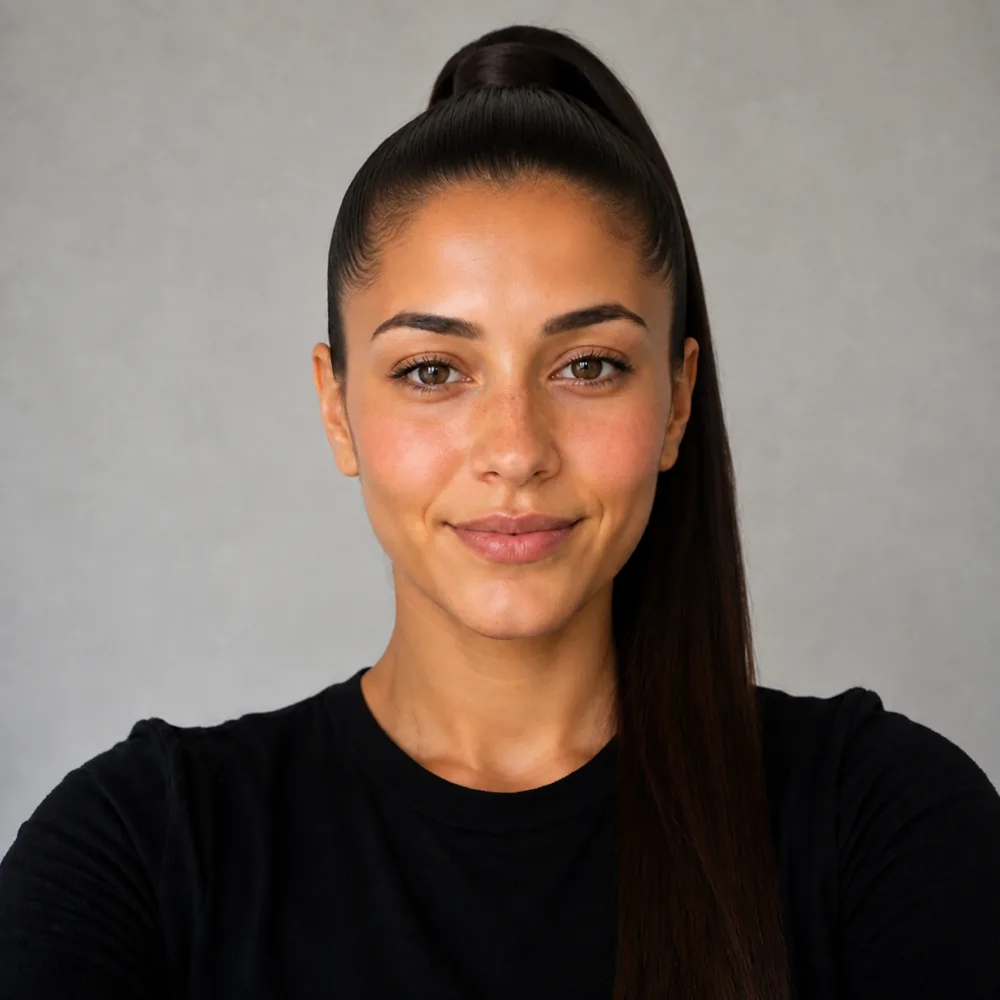
Keeping a high ponytail
- Back in the chair every 10 to 12 weeks.
- Brush back from the hairline with a paddle brush and a little gel.
- Wash 2 to 3 times a week.
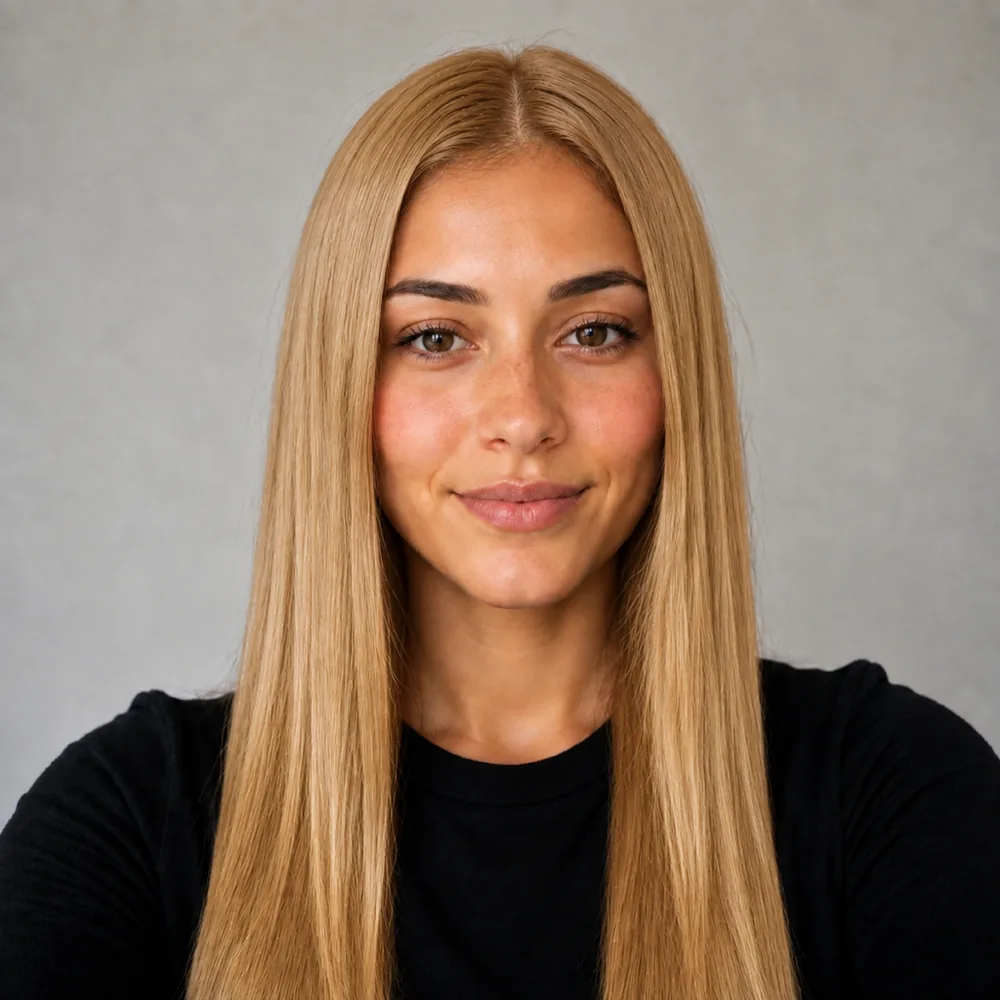
Keeping a blonde
- Back in the chair every 6 to 8 weeks.
- Purple shampoo weekly to hold the tone.
- Wash 2 to 3 times a week.

Keeping a scandi blonde
- Back in the chair every 8 to 10 weeks.
- Purple shampoo once a week, left for two minutes.
- Wash 2 times a week.

Keeping a money piece
- Back in the chair every 8 to 10 weeks.
- Purple shampoo on the front pieces only.
- Wash 2 to 3 times a week.
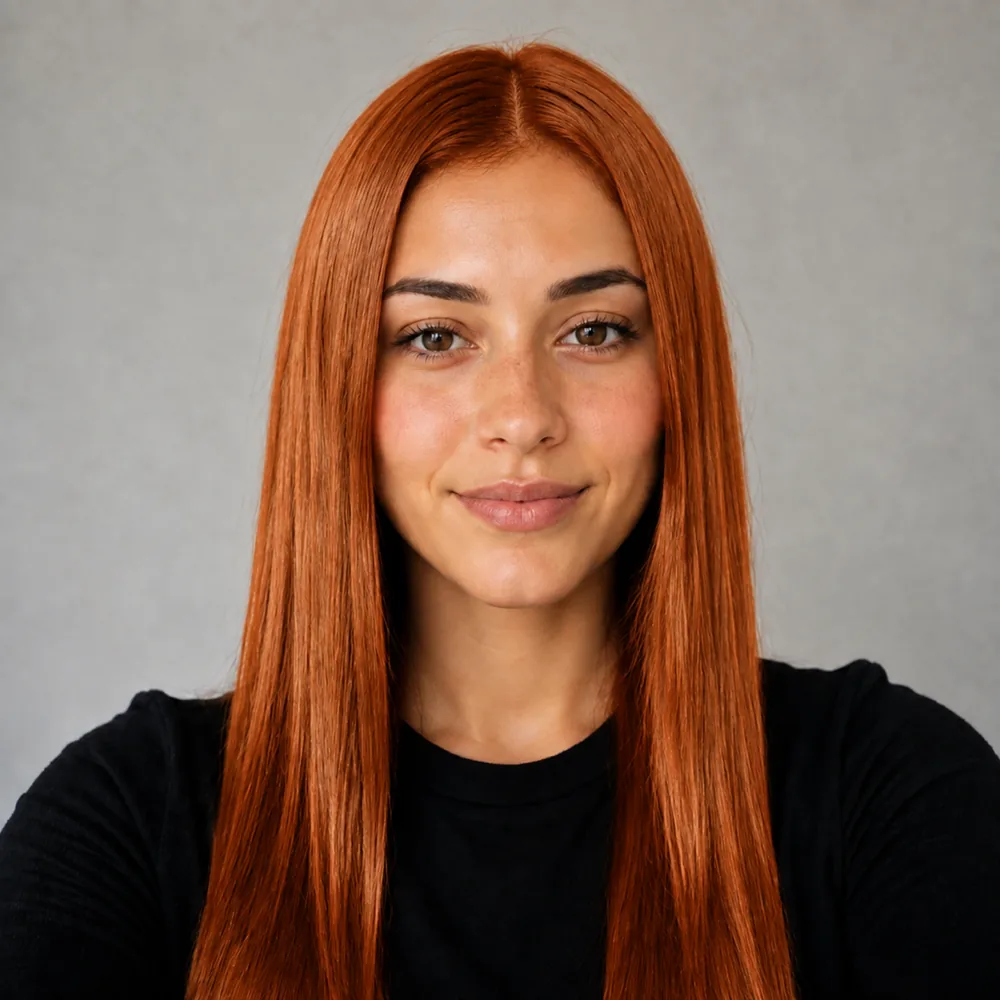
Keeping a copper
- Back in the chair every 4 to 6 weeks.
- Color-depositing conditioner every wash.
- Wash 1 to 2 times a week.
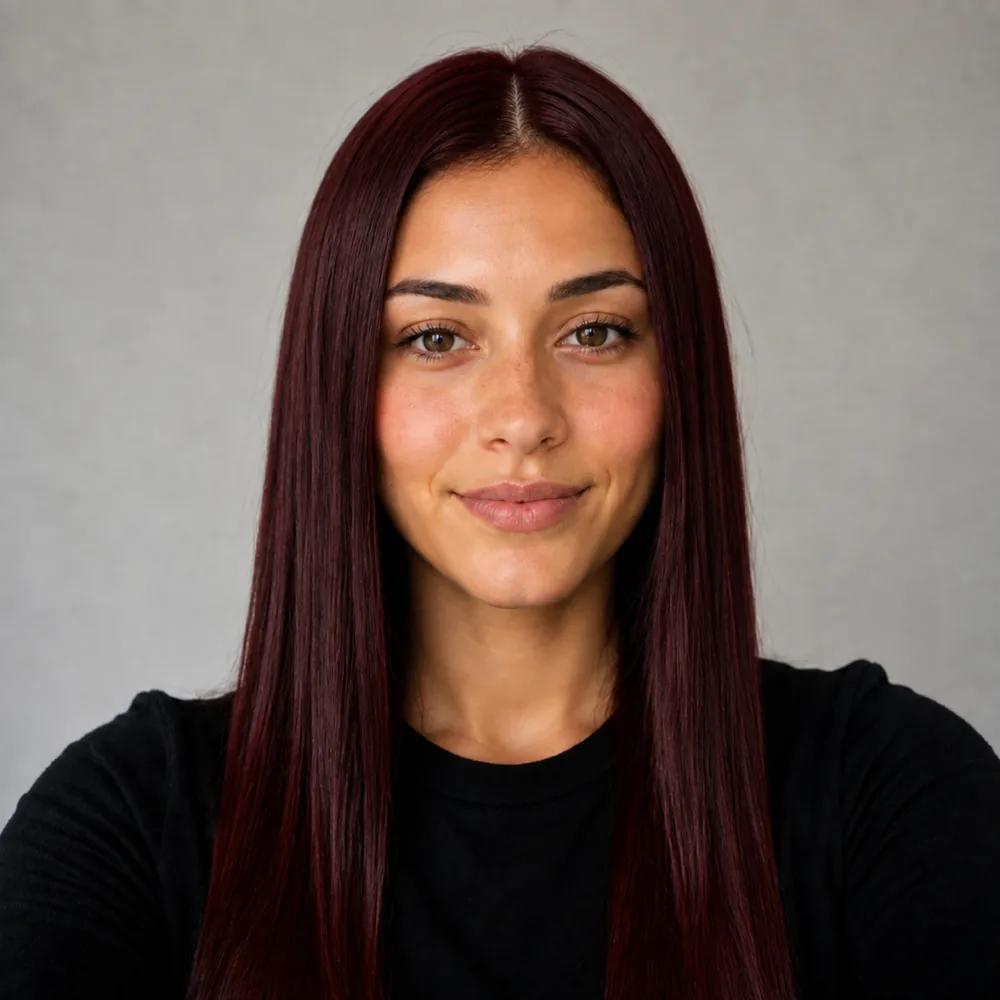
Keeping a cherry cola
- Back in the chair every 6 to 8 weeks.
- Colour-safe shampoo, cool rinse.
- Wash 2 times a week.

Keeping a baroque bob
- Back in the chair every 5 to 6 weeks.
- Mousse through damp roots, heat protectant through the lengths.
- Wash 2 to 3 times a week.

Keeping a kitty cut
- Back in the chair every 8 to 10 weeks.
- Rough-dry to nearly dry.
- Wash 2 to 3 times a week.

Keeping a old money blonde
- Back in the chair every 8 to 10 weeks.
- Colour-safe shampoo, cool rinse.
- Wash 2 to 3 times a week.
Every after is this tool's own render of a demo face, pre-generated for speed - nothing on this page renders live.
Preview a new look
Your first look is free.
Three steps
How it works
Blunt, French, long, angled or with bangs. The difference between them is an inch and whether you like your own jaw.
- 01 Your selfie
Expose the jaw and current ends
Choose a photo that shows both jaw corners, the neck and enough shoulder area. The bob's stopping point needs those landmarks for comparison.
- 02120+ looks
Compare bob, lob and pixie outlines
Start with a bob at the jaw, then test a longer edge or a more exposed short shape. Note what happens to cheek width and visible neck.
- 03 Your result
Agree on the perimeter with your stylist
Bring the short-hair reference and explain tuck, tie-back and styling needs. Ask how your density will support the selected edge and internal weight.
Choose the bob's stopping point against your jaw
A bob is defined by an edge that you see beside the face every day. Moving that edge from above the jaw to below it changes how much cheek, neck and shoulder remain visible. A French bob, a chin-length blunt bob and a longer lob therefore deserve separate comparisons even when all three are described as going short.
Look at where the ends land in relation to the jaw corners, rather than judging the haircut name. An edge beside the chin can emphasize that level, while a longer front can carry the outline below it. The way the hair bends inward or outward also changes the apparent stopping point. A smooth generated edge is a useful reference, but it does not prove your hair will rest in that exact curve.
Tell your stylist whether you want the ends to tuck behind the ears and how much of the neck you want left clear. Those details can matter more than a nominal length in inches. If you like the bob only when the front looks perfectly turned under, ask what routine would produce that finish on your texture. Start with the perimeter you can live with, then decide on bangs, graduation or internal weight. The edge is the part that makes the whole short-hair decision concrete.
Bob, lob or pixie: three different ways to go short
Going short can mean preserving a longer edge or exposing the head more completely. A lob keeps a longer perimeter and can preserve some of the movement of shoulder-length hair. A bob places a clearer edge near the face. A pixie takes the structure closer to the head and makes the crown, ears and nape part of the visible shape. They are not simply three settings on one haircut.
Use the bob as a reference point between those endpoints. If it feels too enclosed around the cheeks, a pixie may reveal more of the face instead of shortening the same frame. If the bob feels too abrupt at the neck, a lob may keep the lower outline you prefer. Compare the exposure each one creates rather than assuming the shortest version is automatically the boldest choice for you.
Practical requirements can separate them quickly. A lob does not guarantee every front piece will stay in a tie, and a pixie can need more deliberate edge maintenance than its small amount of hair suggests. Tell your stylist what you need to tuck, clip or leave alone in the morning. The short-hair decision comes down to two questions: how much length do you actually want removed, and which parts of your face and neck do you want that removal to uncover?
A short perimeter needs a plan for weight and grow-out
A bob can look dense at the bottom, softly broken or visibly stacked toward the back. Those effects come from how weight is retained and distributed, not just where the longest ends stop. If the preview's solid line is what you like, mention that before asking for layers. Removing too much from the interior can change the lower fullness that persuaded you to choose the cut.
On thicker hair, the same perimeter may need a different internal approach to avoid unwanted width. On curls, the resting ends may sit at different heights around the outline. The generated bob cannot test either behavior. Ask your stylist how the reference would be adapted when your hair is dry, and whether the apparent volume depends on a particular finish.
Growing the bob toward a lob usually means managing the point where the ends begin to meet the shoulders. A pixie-to-bob transition has a different challenge: the nape and sides may reach useful length before the top connects. If you are weighing both cuts, discuss those routes separately instead of assigning all short hair one return date. Save a manageable intermediate shape beside the first-choice result. The right short cut is easier to choose when you understand both its fresh outline and the shape you would wear while letting it lengthen.
Which bob suits your face shape
Use your face shape as a starting point, then compare the edge against your own jaw and neck.
- Oval: A jaw-length blunt or French bob can keep balanced proportions visible. Start with the length you enjoy wearing, then try it on your photo to check.
- Round: A lob below the jaw or an A-line front can add a longer outline without extra width at the cheeks. Try it on your photo to check.
- Square: A softly layered bob or loose curls below the jaw can soften the corners of the outline. Try it on your photo to check.
- Heart: A chin-length bob with fullness at the ends can balance a wider forehead and narrower chin. Try it on your photo to check.
- Long: A jaw-length bob with bangs or side volume can break up a longer outline. Try it on your photo to check.
Bob styles you can try on
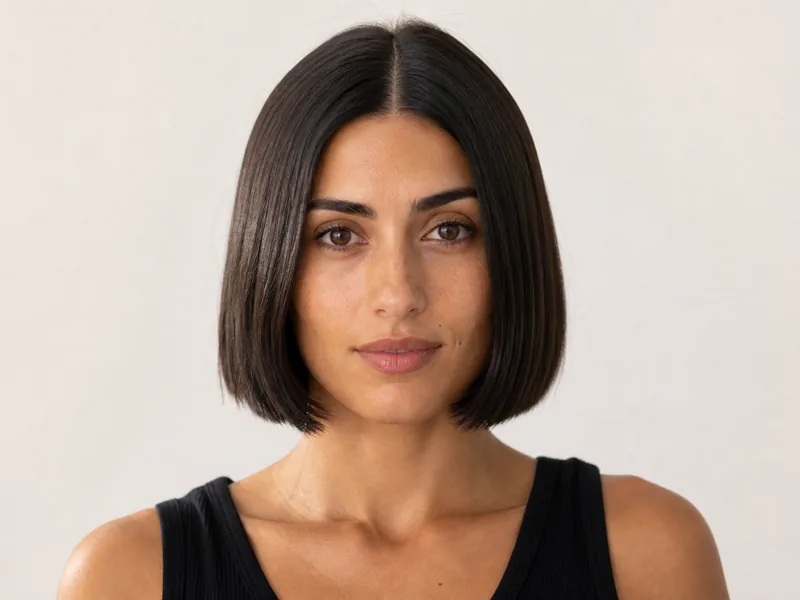
Blunt bob
One clean length at the jaw, no layers, all the weight left in the ends. The sharpest version, and the least forgiving on fine hair.
French bob
Shorter, finishing around the mouth, almost always with blunt or micro bangs. It lifts the focus of your whole face upward. Look before you book.
Long bob
The lob sits at or just under the collarbone. Half the drama of a jaw-length bob, and you can still tie it back.
Bob plus bangs
Add curtain bangs or blunt bangs to any length, and try an angled front or a stacked back while you are looking.
Layered bob
The shaggy bob adds soft, choppy layers and a wispy fringe. Compare its broken edge with the solid blunt line.
Angled / A-line bob
A shorter nape and longer front create a sloping edge. Look at where the front ends beside your chin.
Stacked bob
Graduated layers build a rounded back while the front stays longer. Check the fuller silhouette before choosing the angle.
Curly bob
Defined curls form a rounded chin-length shape with curly bangs. Discuss shrinkage with your stylist before copying the visible length.
Pixie bob
The bixie keeps a cropped nape and longer, choppy pieces around the face. Compare its open outline with a full bob perimeter.
Questions about the Bob Haircut Try-On
Straight answers, no hedging.
Yes. Bobs, lobs and pixies give you three different short-hair structures to judge together. Start with where the bob ends at your jaw, then compare a longer perimeter or a more exposed cropped shape.
Compare the endpoint against your jaw and neck, then add practical requirements such as tucking and tying back. A longer perimeter may keep a familiar lower outline, while a chin bob creates a stronger edge near the face.
A pixie changes the structure around the crown, ears and nape rather than merely lifting a horizontal perimeter. Judge which areas become exposed, since that can matter more than the total amount of length removed.
No. Your density and the amount of internal layering affect the real perimeter. Tell the stylist if the solid edge is the feature you want to preserve, and ask how much weight can remain there.
The screen cannot measure each section's shrinkage. Use the image to identify the desired resting outline and ask a curl-aware stylist to adapt the lengths, rather than copying the apparent cutting line literally.
Different sections may reach the intended perimeter at different times. Discuss how the nape and sides will be managed while the top gains length, and choose an intermediate shape you would be comfortable wearing.
Yes. Upload one clear front-facing selfie, then compare several bob lengths side by side on that same photo. Start at the jaw and compare a longer lob before choosing a reference to save. Sample faces need no account. Your own selfie needs a free account; the first render is free, no card.
It depends on the length and finish. Soft, textured bobs near the jaw can read fresher than heavy blunt lines, but neither effect is universal. Judge the shape on your own photo instead of choosing a cut by an age rule.
Look at your jaw line, neck length and hair density. Try the lengths on your photo and check where the ends frame your face. Bring the saved image to your stylist to discuss how that shape would sit on your real hair.
Other tools to explore

Link to this tool
Free sample previews, free to link or embed. No permission needed.
https://hairstyleatlas.com/bob-haircut-try-onExplore more try-on tools
Same selfie, a different change. Every tool below runs on the photo you already uploaded.


Find where the short cut stops.
Bob, lob or further.
Compare the jaw-length edge with a longer lob and a pixie before deciding how much to remove.