Bald Filter
Shaving it off is a decision most people make in a hurry and regret slowly. Look at it properly first, on your own head shape.






Preview a new look
Your first look is free.
Free sample previews. Try every look on our sample faces here without registering. Your own photo needs a free account, no card: 15 credits once (a cut costs 10, a color on it 5). That covers one cut plus one color on it. No refill; further renders are paid. The optional Plus trial can be declined.



- 48,000+
- users worldwide
- 165,000+
- hairstyles tried
Try it yourself
Pick a look, drag the handle to compare. Then do it with your own selfie.


Keeping a textured fade
- Back in the chair every 3 to 4 weeks.
- Spritz salt spray through damp hair.
- Wash 3 to 4 times a week.

Keeping a edgar
- Back in the chair every 2 to 3 weeks.
- Dry the bangs forward while it is still damp.
- Wash 3 to 4 times a week.

Keeping a modern mullet
- Back in the chair every 6 to 8 weeks.
- Salt spray through the whole head while damp.
- Wash 2 to 3 times a week.

Keeping a perm
- Back in the chair every 8 to 10 weeks.
- Work curl cream through soaking-wet hair.
- Wash 2 to 3 times a week.


Keeping a curtains
- Back in the chair every 6 to 8 weeks.
- Spray salt spray through wet hair.
- Wash 3 to 4 times a week.

Keeping a crew cut
- Back in the chair every 4 to 5 weeks.
- Rub a small amount of clay through dry hair.
- Wash 3 to 4 times a week.

Keeping a ivy league
- Back in the chair every 4 to 5 weeks.
- Part it damp, on the side it already falls.
- Wash 3 to 4 times a week.

Keeping a disconnected crop
- Back in the chair every 3 to 4 weeks.
- Salt spray, then dry the top forward.
- Wash 3 to 4 times a week.

Keeping a low taper blowout
- Back in the chair every 2 to 3 weeks.
- Salt spray at the roots while wet.
- Wash 3 to 4 times a week.

Keeping a taper fade
- Back in the chair every 3 to 4 weeks.
- Towel-dry until damp, not dripping.
- Wash 3 to 4 times a week.

Keeping a quiff
- Back in the chair every 4 to 5 weeks.
- Blow-dry the front up and back over a round brush.
- Wash 3 to 4 times a week.

Keeping a restored
- Back in the chair every 4 to 5 weeks.
- Dry the front forward rather than back.
- Wash 3 to 4 times a week.

Keeping a shaved
- Back in the chair every 1 to 2 weeks.
- Shave with the grain, not against it.
- Wash 5 to 7 times a week.

Keeping a platinum
- Back in the chair every 4 to 6 weeks.
- Purple shampoo once a week, no more.
- Wash 1 to 2 times a week.

Keeping a jet black
- Back in the chair every 6 to 8 weeks.
- Color-safe shampoo, cold rinse.
- Wash 2 to 3 times a week.

Keeping a ash brown
- Back in the chair every 6 to 8 weeks.
- Color-safe shampoo, cool rinse.
- Wash 2 to 3 times a week.

Keeping a silver
- Back in the chair every 8 to 10 weeks.
- Purple shampoo weekly to stop it yellowing.
- Wash 2 to 3 times a week.

Keeping a low taper
- Back in the chair every 3 to 4 weeks.
- Towel-dry until damp.
- Wash 3 to 4 times a week.

Keeping a italian cut
- Back in the chair every 6 to 8 weeks.
- Salt spray on damp hair.
- Wash 2 to 3 times a week.

Keeping a comma fringe
- Back in the chair every 4 to 5 weeks.
- Blow-dry the top forward and full from damp.
- Wash 3 to 4 times a week.

Keeping a mop cut
- Back in the chair every 8 to 10 weeks.
- Salt spray through damp hair.
- Wash 2 to 3 times a week.
Every after is this tool's own render of a demo face, pre-generated for speed - nothing on this page renders live.
Preview a new look
Your first look is free.
Three steps
How it works
Shaving it off is a decision most people make in a hurry and regret slowly. Look at it properly first, on your own head shape.
- 01 Your selfie
Include the whole crown
Leave space above and beside your head in the photo. A shaved outline needs room where your current hair volume will disappear.
- 02120+ looks
Check bare scalp against a shadow
Compare the bald result with a close buzz while keeping facial hair consistent. Notice whether you prefer no dark border or simply a smaller one.
- 03 Your result
Plan the first shave deliberately
Show the bare outline to your barber and discuss the finish. If you are undecided, agree on a clipped checkpoint before taking the scalp smoother.
What disappears when the hair shadow disappears
A bald preview removes more than length. It takes away the dark border that even a close buzz leaves around the forehead and sides. Without that border, the scalp becomes part of the visible skin area, and the brow, ears and lower face can command more attention. Compare the fully shaved version with a short shadow before deciding which change you are responding to.
The top surface in the image is an estimate wherever your original hair concealed it. The filter cannot discover the exact contour, skin tone or marks underneath. A smooth-looking generated scalp should therefore not be read as a photograph of what a razor would reveal. It is useful for the broad visual balance of no hair around your face.
Notice the outline above the ears and how the exposed head sits over the neck. Facial hair can become a stronger part of that balance once the top border is gone. If you normally wear a beard, keep its length comparable across the results so the shaved scalp remains the variable. Your preference may be for a clean scalp, a little shadow or simply less volume than you wear now. Those are separate endpoints, and there is no need to treat the bald version as the inevitable next step after any short haircut.
A clean scalp still has a maintenance choice
Removing the haircut does not remove the routine. A razor-smooth finish and a close clipper finish are different targets, even when both are casually called shaved. One aims to remove the visible surface shadow more completely; the other leaves a small amount of hair. Your bald render can suggest the appearance of the former, but it cannot tell you how either method feels on your scalp.
Think about what you want to maintain between grooming sessions. If you like the fully clear outline only on the day it is refreshed, you are choosing a routine as well as a look. If a little returning shadow seems fine, the exact clean finish may matter less. Ask a barber to explain the practical difference between the finishes they can give you.
Pay attention to the areas behind the ears and around the back where checking the result yourself can be awkward. The front preview offers no evidence about how easily you will reach those areas or whether a particular shaving method suits your skin. Discuss that at the first appointment instead of buying equipment based on a generated image. The useful decision here is how completely bare you want the appearance to be, then how you would realistically keep it that way.
Trying a shaved outline without treating it as permanent
A shaved head can feel like a large identity change because it removes the familiar frame around your face at once. Let the preview sit beside your current photograph for a while instead of deciding from the initial surprise. Look again at ordinary viewing size, where other people would see the whole face, rather than inspecting only the generated scalp at maximum zoom.
If you remain unsure, a short buzz gives you an actual checkpoint before a cleaner shave. That does not guarantee you will prefer either, but it makes the amount removed a decision you can revisit during the appointment. Tell the barber whether you want to stop and look before moving from clipped hair to a smooth finish.
Growing back from a shave also has several possible destinations. Returning to a small shadow is different from returning to a part, a fringe or shoulder length. Avoid treating a single grow-out estimate as the price of every shaved-head experiment. Keep the original haircut in mind and discuss the intermediate cuts you would accept on the way back. A bald filter cannot remove the waiting involved, but it can help you recognize whether you want the clean outline itself or whether you mainly want relief from managing your present style.
What a shaved head actually looks like on you
Clean shave
A razor-finish scalp with no stubble left in it. This is the end state rather than a grade one, so nothing is softening the outline for you.
Skin, not hair
A shaved scalp is skin now: SPF when the sun is out, moisturizer after every pass of the razor. The upkeep moves from the barber's chair to the bathroom shelf.
Ears and neckline
Hair hides ear set, brow height and where the neck meets the shoulders. The render suggests that exposed outline, while your barber can inspect the contours the photograph cannot show.
Same frame
Your before and the shaved version come out of one photo under one light, so hair is the only thing that differs between them.
Questions about the Bald Filter
Straight answers, no hedging.
It aims to show a cleaner scalp appearance than a clipped buzz. Compare those two results separately, because losing the dark border around the forehead can matter as much as losing the remaining length.
No. Concealed skin is not recorded in the source photograph. The model invents its appearance, so the smoothness, tone and fine details of that area should not be treated as discoveries about your scalp.
With less visual weight above the face, facial hair can become a more noticeable border below it. Keep the beard consistent while comparing shaved and buzzed results to avoid choosing between two changes at once.
The front is useful for the brow, ears and face balance, but it cannot establish the rear contour hidden by hair. Ask the barber to discuss the back and sides before committing to the closest finish.
They can leave different surface finishes and amounts of visible shadow. Ask which finish the barber means by shaved. The render helps describe your visual goal but cannot determine which grooming method you will prefer.
You can use it to plan a less abrupt checkpoint. A close clipper cut lets you see the real head outline before taking it smoother, and gives you a chance to decide whether the remaining shadow suits you.
Other tools to explore

Link to this tool
Free sample previews, free to link or embed. No permission needed.
https://hairstyleatlas.com/bald-filterExplore more try-on tools
Same selfie, a different change. Every tool below runs on the photo you already uploaded.
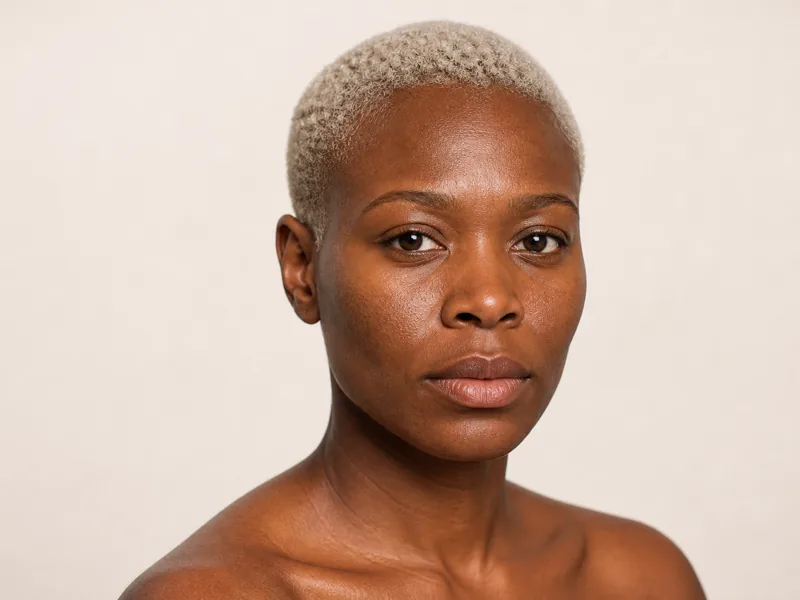



See the fully shaved outline.
Decide how bare.
Look at the face without its hair border, then choose a clean finish or a little remaining shadow.