A free costume and fashion-history reference · 1920s–1990s
Historical Hairstyles by Era
A working reference for students, costume designers, theater makeup teams, and librarians: explore the shapes people wore, how those shapes were made, and where to research them further.
Each decade covers women’s and men’s signature styles, period tools, modern stage techniques, and cultural context. Read every guide freely, print it for your costume notebook, or use the citation below in your research. Styles overlap decades and genders; these selections emphasize US and European fashion alongside relevant Black and diasporic hair traditions.
How to cite this page
HairstyleAtlas. “Historical Hairstyles by Era.” https://hairstyleatlas.com/historical-hairstyles. Accessed October 20, 2026.
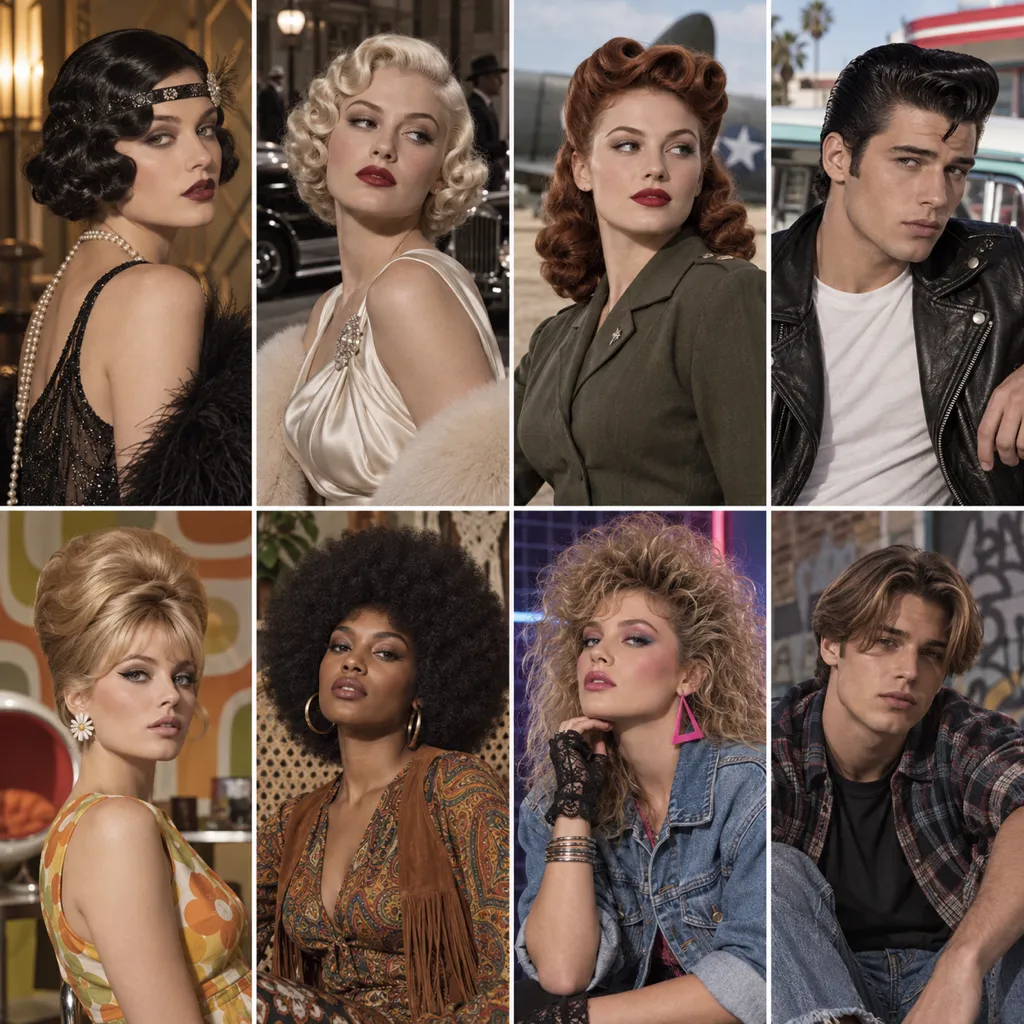
Explore a decade
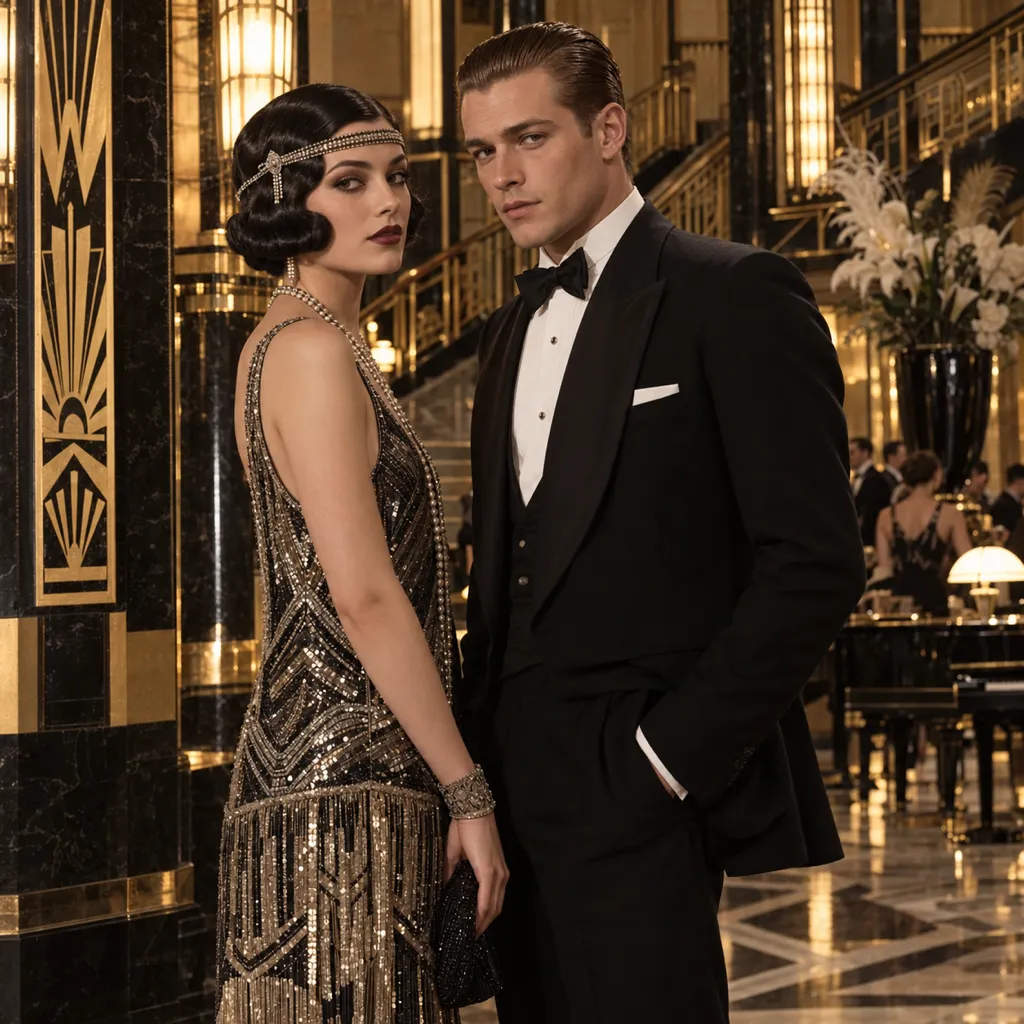
1920s
Close silhouettes, sculpted waves, and the fashion for bobbed hair.
Signature styles: Blunt bob and shingled bob, Slicked-back hair.
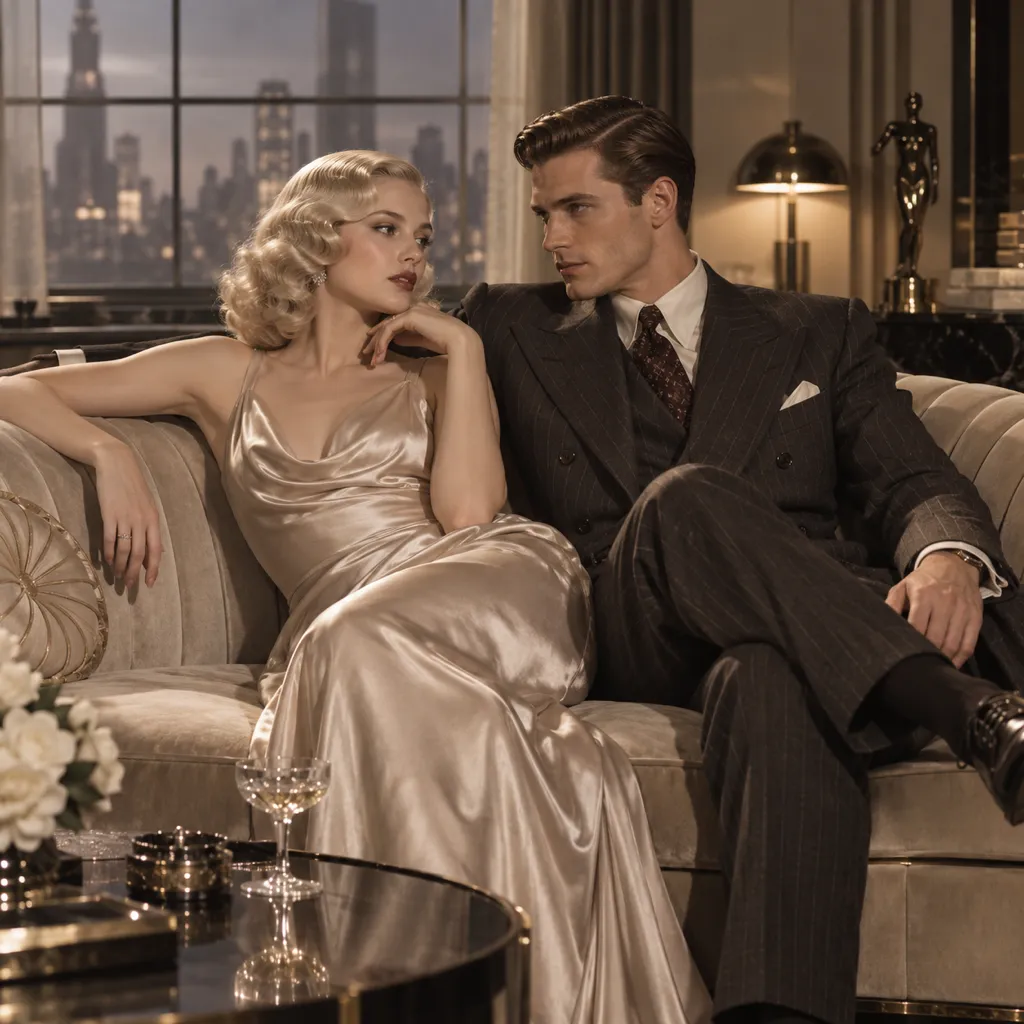
1930s
Soft waves and controlled curls frame the face in an age of screen glamour.
Signature styles: Soft waved bob, Tapered side part.
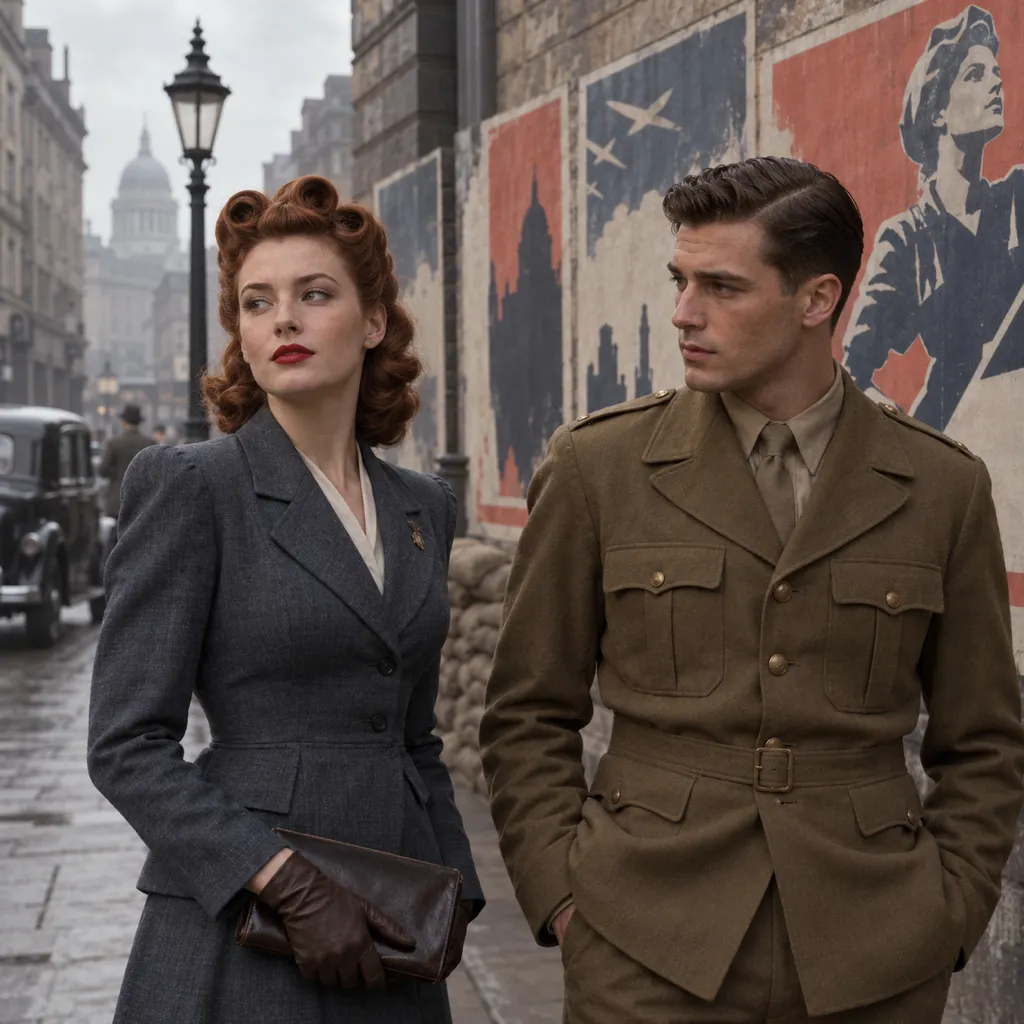
1940s
Rolls and brushed curls meet the practical demands of wartime work.
Signature styles: Raised rolls and victory rolls, Short military cut.
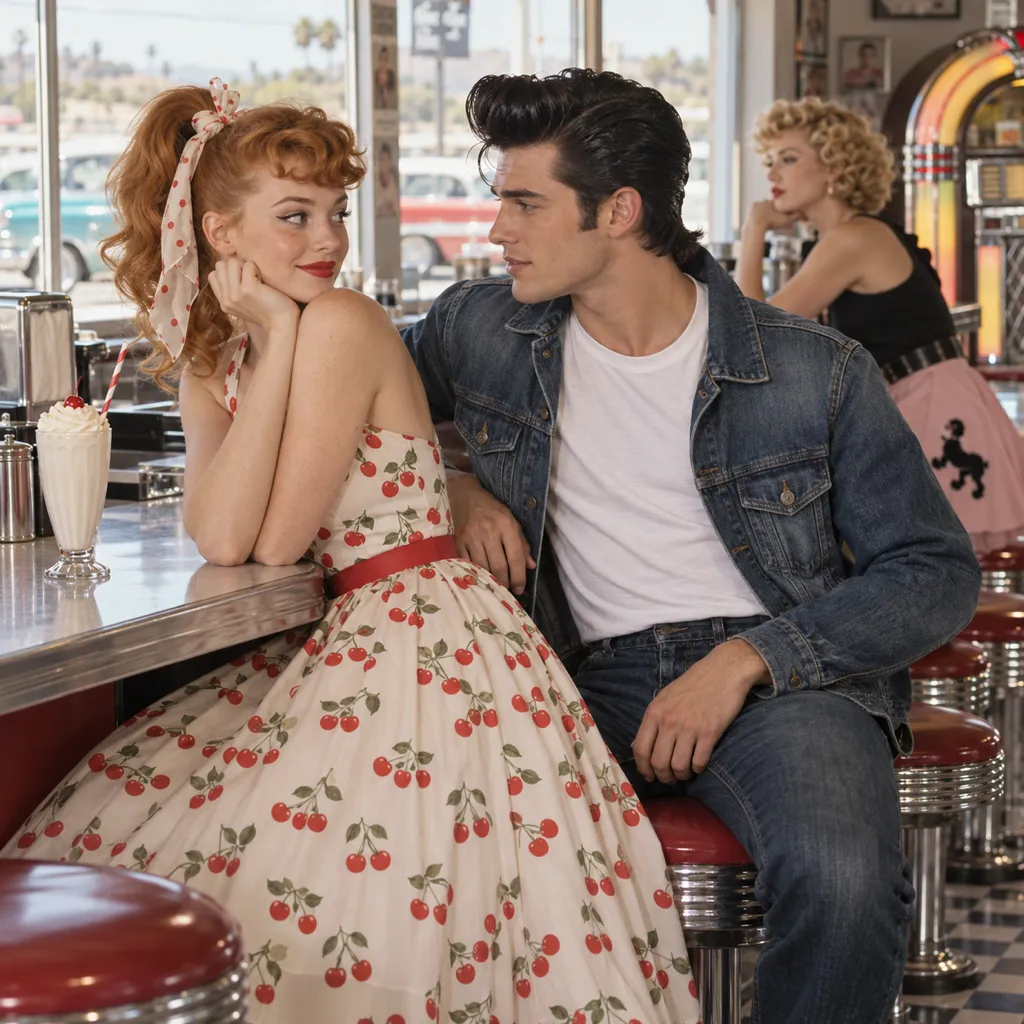
1950s
Salon polish and sculpted curls share the decade with teenage ponytails and quiffs.
Signature styles: Short curled set, Pompadour and quiff.
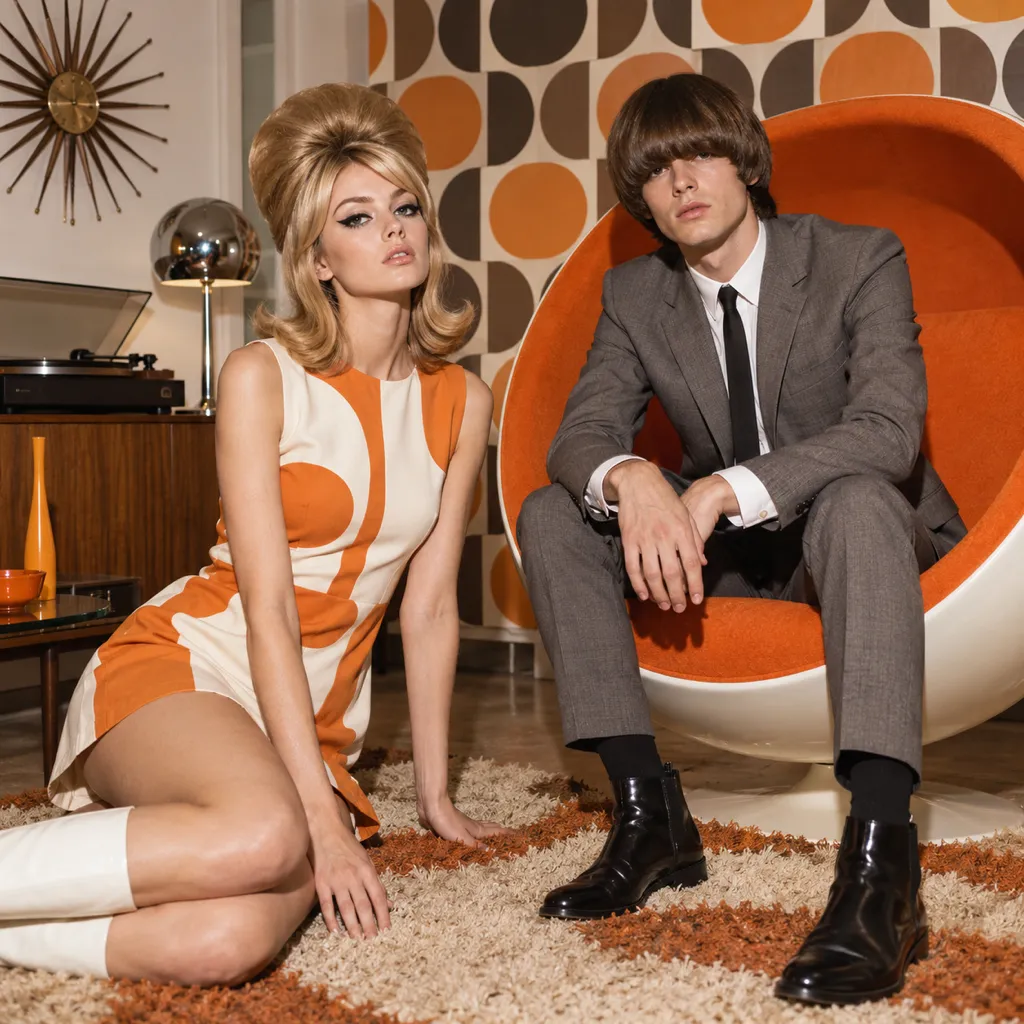
1960s
Height, precision cutting, and new youth silhouettes coexist with natural hair.
Signature styles: Beehive and high bouffant, Mop top.
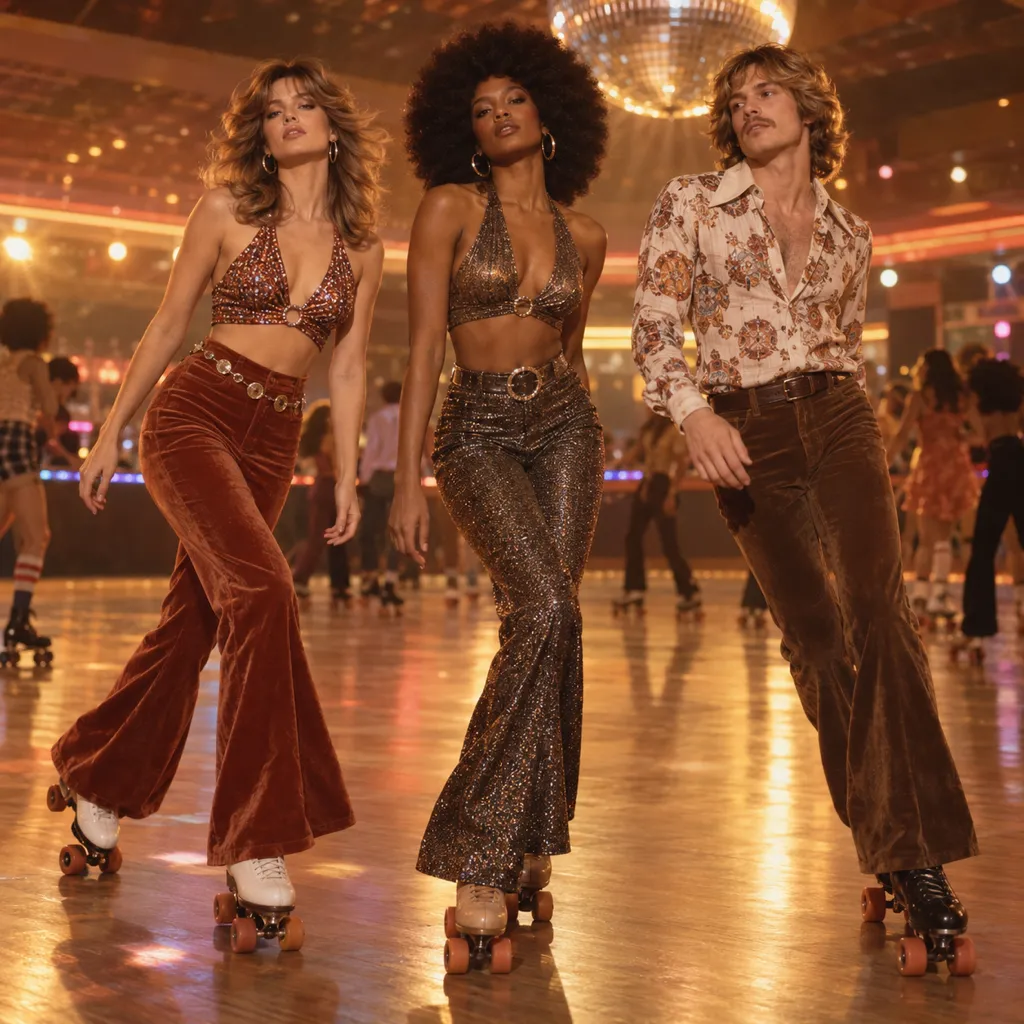
1970s
Feathered movement, layered shags, natural volume, and braided patterns.
Signature styles: Feathered layers, Men’s shag.
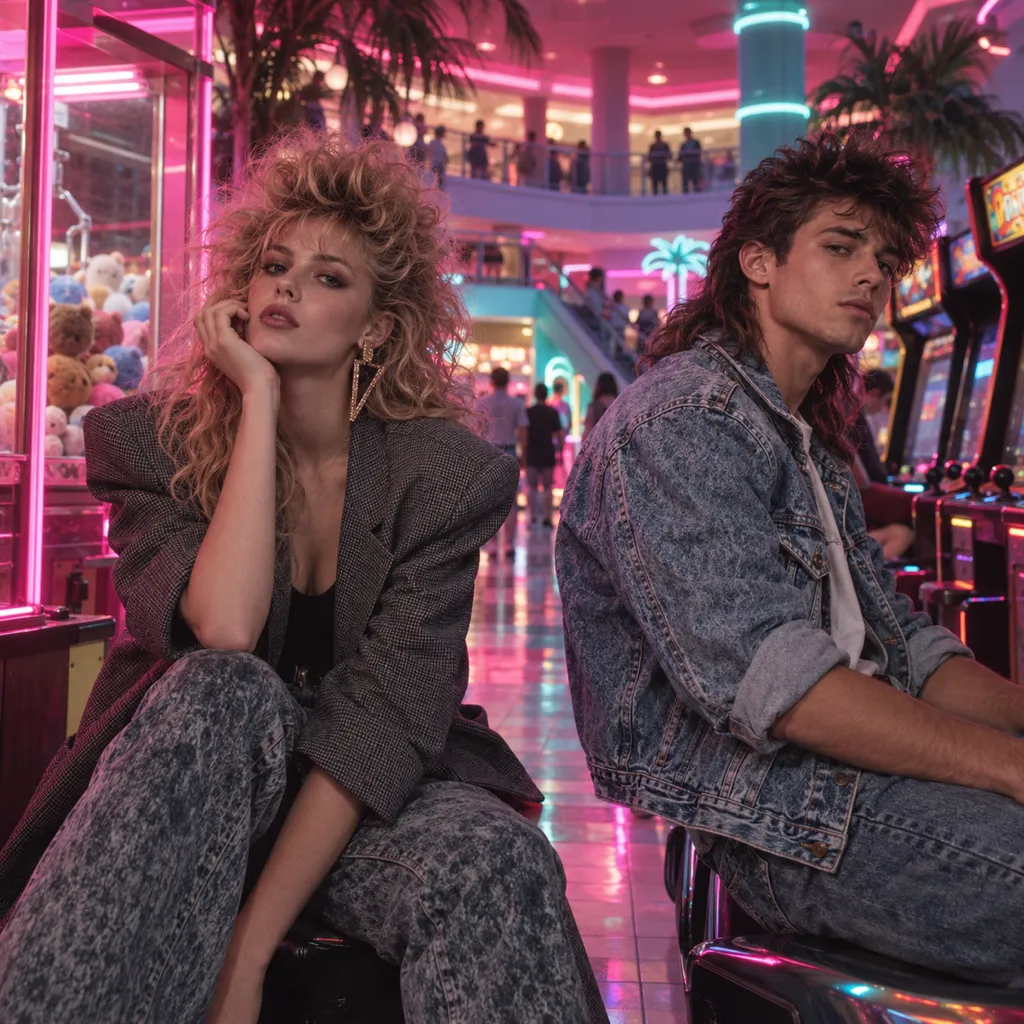
1980s
Big texture, sharply different lengths, and sculpted silhouettes.
Signature styles: Permed volume, Mullet.
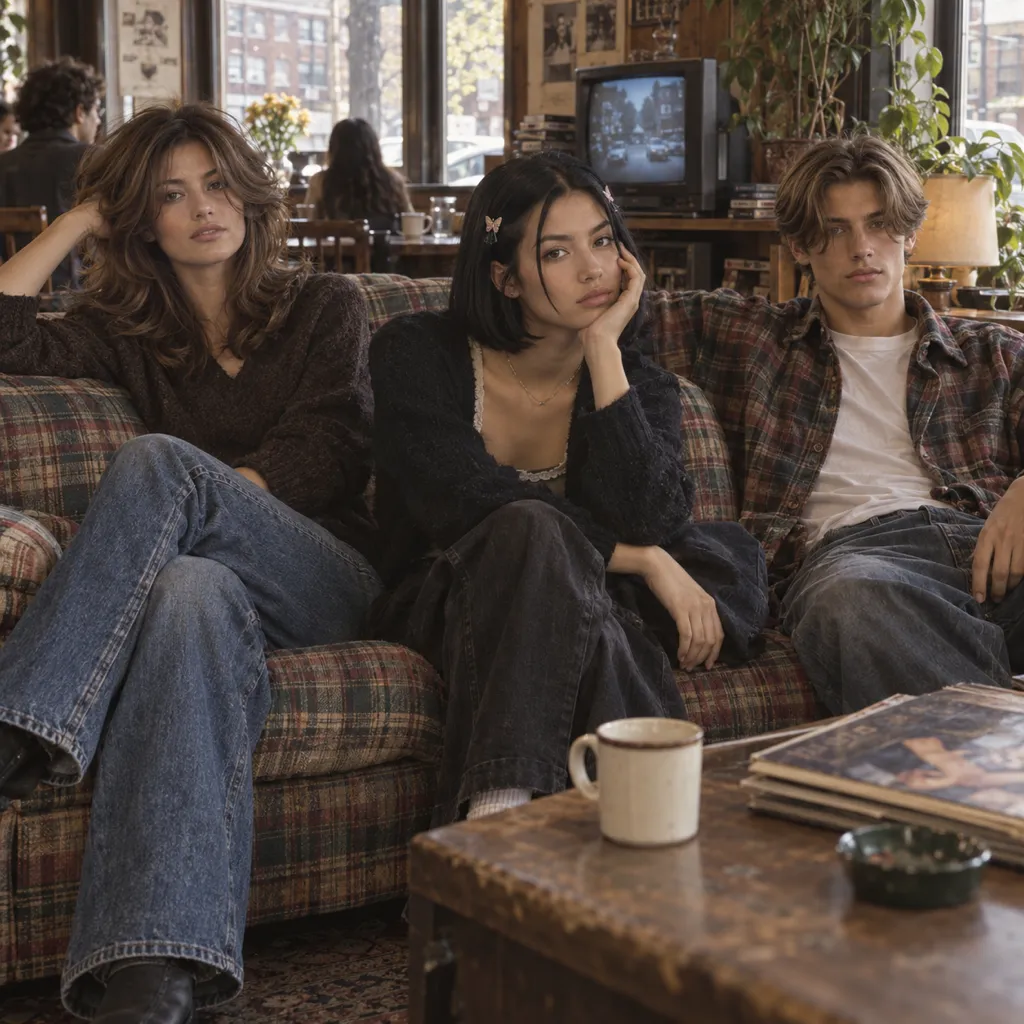
1990s
Layered blowouts and sleek bobs meet braids, curtains, and sculpted fades.
Signature styles: Layered blowout, Curtains.
Quick-reference timeline
| Decade | Women’s styles | Men’s styles | Key tools |
|---|---|---|---|
| 1920s | Blunt bob and shingled bob; Finger waves and marcel waves; Eton crop | Slicked-back hair; Neat side part; Center-parted brushed hair | Combs, marcel irons, wave lotion, brilliantine |
| 1930s | Soft waved bob; Sculpted finger waves; Longer hair with curled ends | Tapered side part; Brushed-back top; Side part with a front wave | Pin curls, setting lotion, waving irons, grooming cream |
| 1940s | Raised rolls and victory rolls; Pageboy and brushed-under ends; Snood or scarf with a dressed front | Short military cut; Civilian side part; Longer brushed-back wave | Pin curls, hairpins, nets, scarves, clippers |
| 1950s | Short curled set; Ponytail with a dressed front; Soft brushed waves | Pompadour and quiff; Ducktail styling; Crew cut and flat top | Rollers, hood dryers, setting lotion, pomade, clippers |
| 1960s | Beehive and high bouffant; Geometric bob; Flip with crown volume | Mop top; Conservative short side part; Natural Afro | Rollers, teasing combs, lacquer, precision scissors, picks |
| 1970s | Feathered layers; Layered shag; Rounded Afro; Cornrows | Men’s shag; Men’s Afro; Long center-parted hair | Blow-dryers, brushes, rollers, picks, sectioning combs |
| 1980s | Permed volume; Raised bangs and crimped lengths; Asymmetric short cut | Mullet; High-top fade; Jheri curl and similar curl systems | Perm rods, crimping irons, mousse, gel, hairspray, clippers |
| 1990s | Layered blowout; Box braids; Sleek bob | Curtains; High-top fade and shorter shaped variants; Short crop and Caesar-style front | Round brushes, blow-dryers, mousse, gel, braiding combs, clippers |
Sources & further reading
These museum, archive, library, and editorial resources provide historical context and further research. The stage and costume suggestions above are modern interpretations. Consult dated images for a specific year, place, and wearer.
- Fashion History Timeline. Fashion Institute of Technology (FIT). https://fashionhistory.fitnyc.edu/
Decade-by-decade essays on Western dress with dated, museum-sourced images and bibliographies, written by FIT faculty and students.
- Clothing, Costume, and Fashion: A Guide to Resources. Library of Congress. https://guides.loc.gov/clothing-costume-fashion
Library of Congress research guide to books, databases, image collections and websites on dress from ancient times to today.
- Fashion – Explore the Collections. Victoria and Albert Museum (V&A). https://www.vam.ac.uk/collections/fashion
Gateway to the V&A's fashion collection, with curator-written articles and object records across the 20th century.
- Hair Style. SFO Museum. https://www.sfomuseum.org/exhibitions/hair-style
Museum exhibition on 20th-century hairstyling and salon technology, including permanent-wave machines, hooded dryers and the beauty-parlor era.
- Fashion Resources: Costume Design, Historic Patterns and Cosplay. Kent State University Libraries. https://libguides.library.kent.edu/costuming
University library guide for costume research and design, pointing to visual resources, historic patterns and hair/makeup references.
See it on your own face
Try a hairstyle free with one selfie. Explore a modern interpretation of a cut; the preview is a starting point for your design, not a historical reconstruction.