Free classroom resource
Free Face Shape Consultation Worksheet (Printable PDF)
A good cut starts with a conversation. Practice that conversation with a one-page worksheet for cosmetology and barbering students, instructors, and salon teams.
Free · No signup · One US Letter page · Also fits A4
HairstyleAtlas
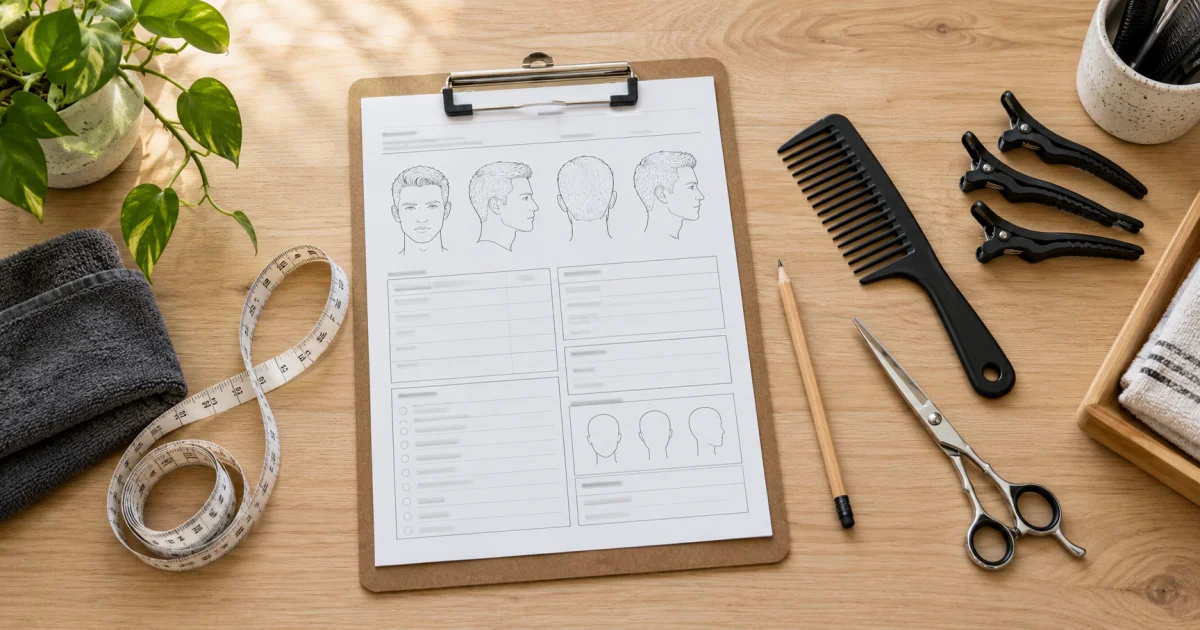
One sheet, the whole consultation
Print a copy for each student. The six sections leave room to record observations, compare options, and explain a plan in the client’s own words.
-
1. Face measurements
Four measurements, the widest point, and six illustrated shapes to circle.
-
2. Hair analysis
Texture, density, curl pattern, growth patterns, and scalp notes.
-
3. Lifestyle & maintenance
Daily styling time, tools, products, budget, and visit frequency.
-
4. Style goals
Length, likes and dislikes, reference photos, and space for notes.
-
5. Recommended cuts
A six-shape reference table with starting points and effects to consider.
-
6. The plan
A chosen cut, a clear rationale, and aftercare or next-visit notes.
Instructor guide: a 20–30 minute consultation
Pair students as stylist and client, and give each pair a soft measuring tape, mirror, pencil, and worksheet. Allow 3 minutes to introduce the client’s goals, 7 minutes for observation and measurements, 5 minutes for hair and lifestyle questions, and 5–10 minutes to propose and discuss cuts. Switch roles in the next round so each student practices listening as well as advising.
With permission, move hair away from the face. Measure the forehead at its widest point, cheekbones across their widest points, jawline from just below the ear to the chin point, and face length from the center hairline to the chin. Double the one-sided jaw measurement and record the unit. This jaw contour is not a straight width: use the mirror to compare jaw width. Keep tape placement consistent and repeat any surprising reading.
Use all four numbers alongside the visible outline. Similar length and width with soft corners suggest round; defined jaw corners suggest square. A gently longer outline suggests oval, while clearly greater length suggests oblong. A broad forehead tapering to the chin suggests heart; cheekbones wider than forehead and jaw suggest diamond. Accept mixed shapes and ask students to explain their observations instead of forcing a label.
Discuss texture, density, curl pattern, and growth patterns: cowlicks, whorls, a widow’s peak, and the nape. Ask how much daily styling the client wants, which tools they use, and what their job or sport requires. Have students select two or three cuts from the table, justify each against the client’s goals, and agree on one plan with aftercare.
Assess consistent measurements, clear questions, accurate notes, and a rationale that connects face shape, hair behavior, and maintenance. A peer can check whether the final plan reflects the client’s preferences. Reward thoughtful alternatives; the reference table offers possibilities, not rules about which faces need “correcting.”
How to determine a client’s face shape
1. Prepare
Pull hair back, face a mirror, and keep the chin level. Use a soft tape without pulling it tight. Record every measurement in the same unit.
2. Measure forehead width
Measure across the widest part of the forehead, between the hairline edges.
3. Measure cheekbone width
Measure across the widest points of the cheekbones. Keep the tape clear of the eyes.
4. Measure the jawline
Measure from just below one ear to the chin point along the jaw, then double that number. This traces the jaw rather than measuring straight across; also compare its visible width in the mirror.
5. Measure face length
Measure from the center of the hairline to the bottom of the chin. With a widow’s peak or receding hairline, note the starting point so a repeat measure is consistent.
6. Compare the outline
Compare length, forehead and cheekbone widths, then check the jaw outline in the mirror. Use the six shape descriptions below; a blend of two shapes is normal. Treat the doubled jaw measurement as a contour reference, not a directly comparable width.
Six shapes to recognize
Look at proportions and the jaw outline together. It is normal to sit between two shapes.
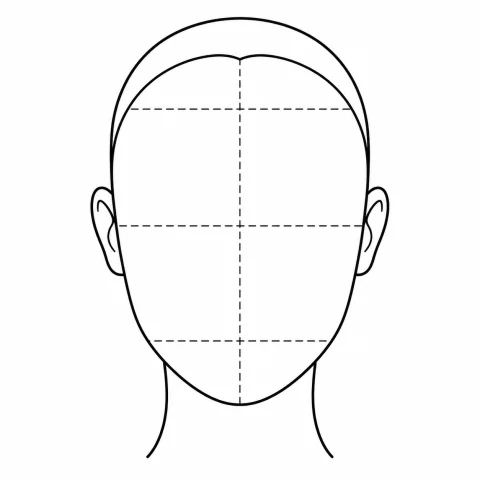
Oval
A little longer than wide, with a softly rounded jaw.
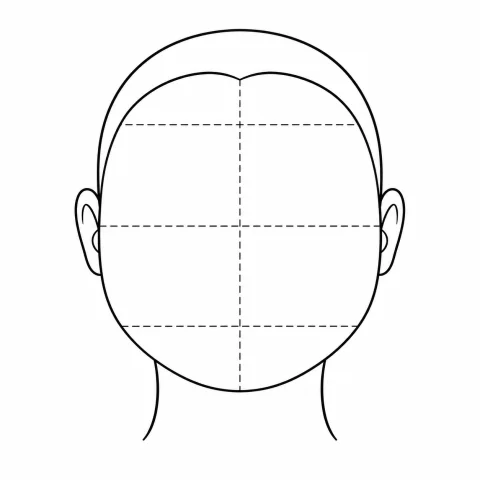
Round
Similar width and length, full cheeks and a soft jaw.
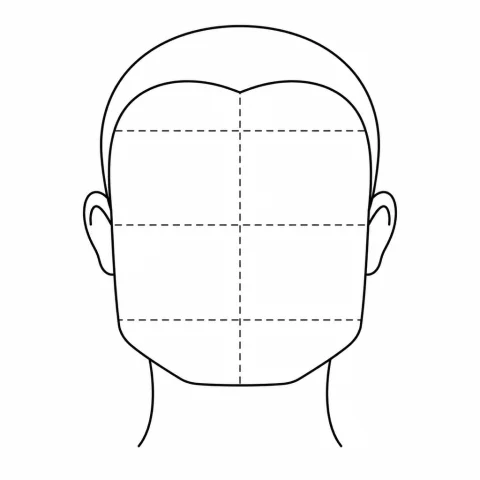
Square
Forehead and jaw are similar in width, with defined jaw corners.
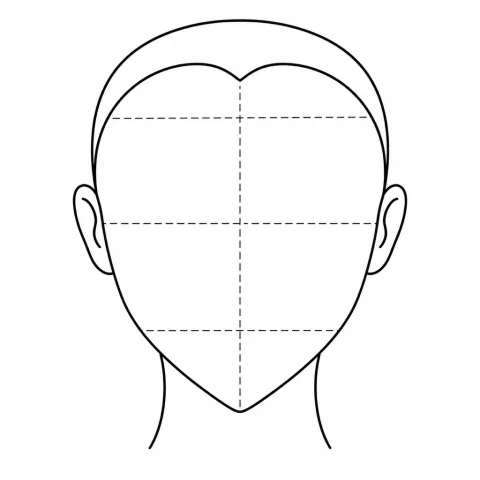
Heart
A wider forehead tapering to a narrower, sometimes pointed chin.
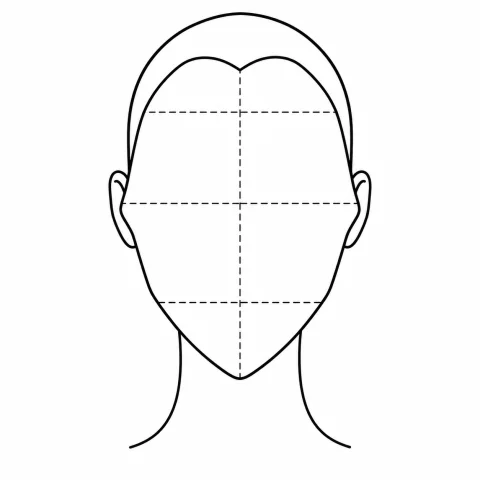
Diamond
Cheekbones are widest, with a narrower forehead and jaw.
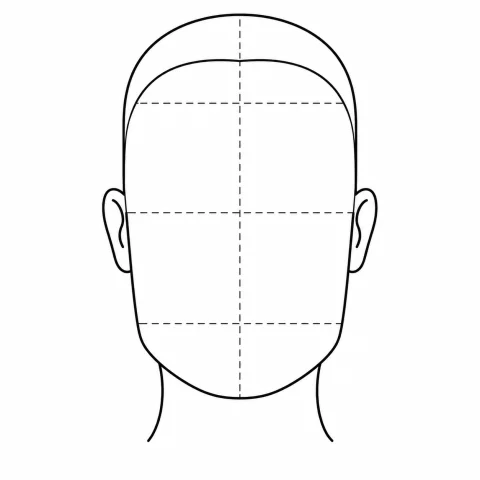
Oblong
Also called oblong: noticeably longer than wide, with fairly straight sides.
| Shape | Cuts to explore | Go easy on, if that is your goal |
|---|---|---|
| Oval | Bob; layered length; textured crop | Extra crown height if you want to keep your face from looking longer. |
| Round | Long layers; angled lob; crop with height | Chin-length bluntness and extra width at the cheeks if you want a longer outline. |
| Square | Wavy lob; side-parted cut; layers past jaw | A heavy straight line at jaw level if your goal is to soften the corners. |
| Heart | Chin-length bob; shoulder layers; side bangs | Heavy volume at the temples with very tight sides below it if you want balance. |
| Diamond | Jaw-length bob; layered lob; soft bangs | Very tight temples with all the volume at cheekbone level if you want balance. |
| Oblong | Wavy bob; full-sided crop; cut with bangs | Tall quiffs or very long, flat sides if you want a shorter-looking outline. |
Digital companion
Studying for state board? Try the free practice quiz.
Compare your observations with the face shape detector, or use What haircut suits me? to explore a shortlist. Discuss where the suggestions agree with the consultation and where the client’s texture or preferences point elsewhere.
Print, share, and teach
Free for classroom and salon use. Print and share as many copies as you like; please link back to this page.
For a school library guide, course page, or salon training handout, copy this HTML attribution link:
<a href="https://hairstyleatlas.com/resources/face-shape-consultation-worksheet">Free Face Shape Consultation Worksheet — HairstyleAtlas</a>