History, technique, and costume notes
1920s Hairstyles
Close silhouettes, sculpted waves, and the fashion for bobbed hair.
How to cite this page
HairstyleAtlas. “1920s Hairstyles.” https://hairstyleatlas.com/historical-hairstyles/1920s. Accessed October 20, 2026.
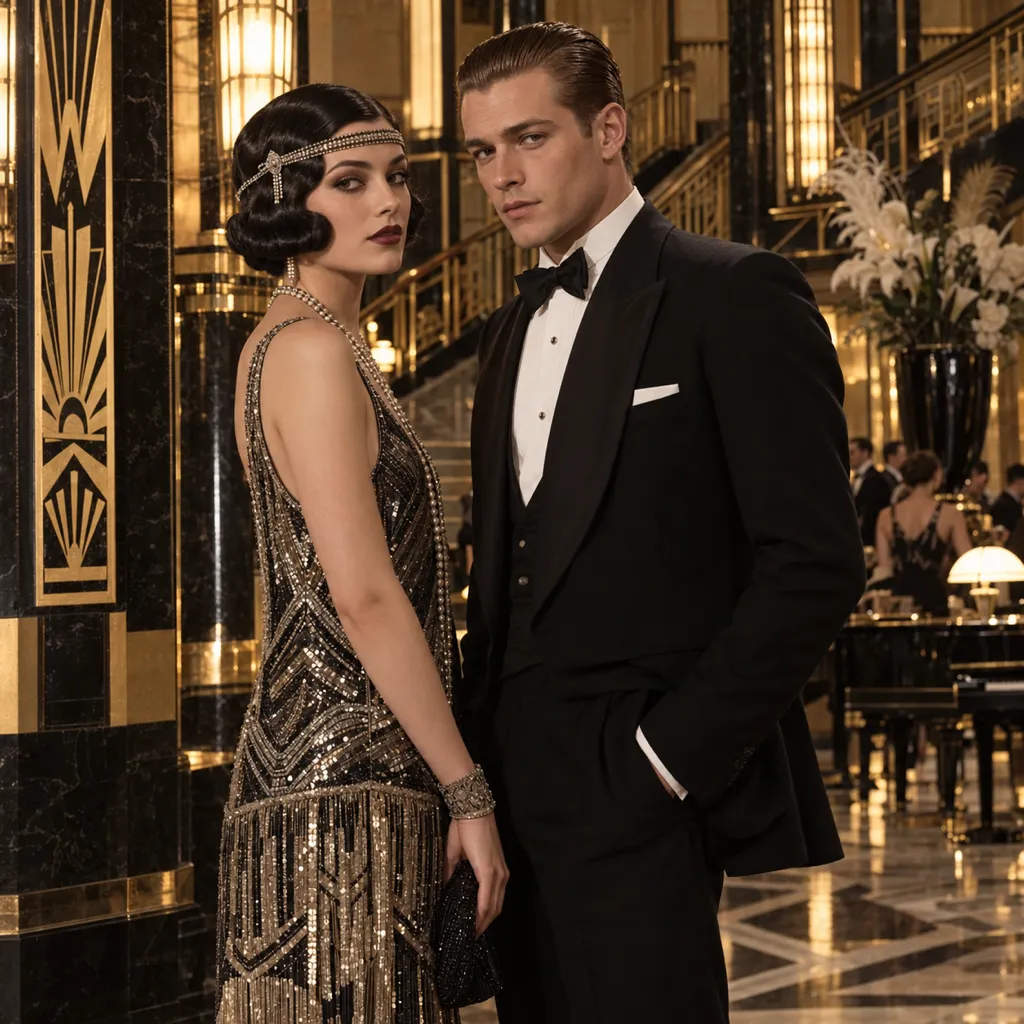
Hair in the 1920s
The bob became an especially visible expression of modern fashion in the 1920s, although short hair did not begin with this decade and many women kept their hair long. Cloche hats encouraged a compact outline around the head. Film, illustrated magazines, dancing, and urban leisure helped circulate fashionable silhouettes, while family expectations and employment could make a conspicuous haircut a difficult choice. A student should distinguish a fashionable evening portrait from ordinary dress in a particular town, workplace, or household.
The important technical distinction is between a cut and a set. A bob describes length and outline; finger waving and marcel waving describe ways of shaping that hair. Long hair could also be dressed to suggest a bob. Glossy men’s styles depended on combing, grooming preparations, and sufficient length on top. For a production, start with the character’s exact year and hat, then compare front, profile, and rear views in dated photographs before choosing the construction.
Women’s signature styles
Blunt bob and shingled bob
A bob could end near the jaw or above it, with straight bangs or a side-swept front. Shingling graduated the back into a close nape rather than leaving one blunt line all around. These variations matter: the familiar straight, dark bob is only one version of a much wider fashion.
How it was done: Scissors established the perimeter, with closer cutting at the nape for a shingle. Brushing and a controlled set supplied the finish; naturally wavy hair did not automatically fall into a ruler-straight outline. A small amount of dressing could smooth the surface and add sheen without adding height at the crown.
Recreating it for stage & costume: For a performer who keeps long hair, test a tucked-under false bob or a fitted wig before proposing a cut. Keep the bulk close to the head, particularly under a cloche. Photograph the nape: a large rolled bundle at the back can spoil an otherwise convincing short silhouette.
Finger waves and marcel waves
Both methods produced repeating waves, but their construction differed. Marcel waving used heated irons; finger waving shaped damp hair with the fingers and a comb. The waves could decorate bobbed hair or the visible front of a longer arrangement, so they should not be treated as a separate haircut.
How it was done: For finger waves, the hair was dampened and worked into alternating ridges with a comb and setting preparation, then allowed to dry in position. Marcel irons imposed a wave with heat and skilled wrist movement. The wave pattern generally followed the head rather than forming loose spirals away from it.
Recreating it for stage & costume: Use modern setting lotion and wave clips on a wig block to practice the ridge direction. Let a wet set dry completely before removing support. A modern curling iron can suggest the contour, but separate beachy curls will read differently from the continuous, close waves visible in period portraits.
Eton crop
The Eton crop was an especially close women’s haircut associated with the more daring end of 1920s fashion. It exposed the ears and followed the skull more closely than a jaw-length bob. Its appearance in fashion history does not mean that most women adopted it.
How it was done: Close cutting around the back and ears reduced weight, while the remaining hair was brushed or combed flat. A smooth dressing could emphasize the head-hugging outline. The effect depended on the cut and finish together, not on a raised crown or a mass of teased hair.
Recreating it for stage & costume: Choose a closely fitted short wig if a permanent cut is unsuitable. Flatten the performer’s own hair carefully under the foundation, since excess bulk changes the shape. Keep temple details and the hairline soft enough for the production’s viewing distance, and fit any hat over the completed hairstyle.
Men’s signature styles
Slicked-back hair
Hair brushed back from the forehead suited the polished appearance seen in many formal and screen portraits. It usually retained enough top length to lie in a continuous sweep. The close sides of a period haircut should not automatically be translated into a contemporary skin fade.
How it was done: The barber shaped the sides and back, leaving the top longer. Brilliantine, pomade, or another dressing added shine and helped a comb direct the hair backward. A firm surface could be refreshed with combing, while the amount of dressing depended on the wearer’s hair and circumstances.
Recreating it for stage & costume: Start with a light water-soluble pomade and build only enough shine to read under stage lights. Comb backward from the hairline without adding a tall modern quiff. Check whether the character wears a hat repeatedly; rehearse removing it without lifting the whole front of the style.
Neat side part
A defined side part offered a restrained alternative to a completely swept-back top. Its usefulness across work, leisure, and formal settings helps explain why related cuts persisted through several decades. The overall outline and grooming finish date the result more reliably than the presence of a part alone.
How it was done: Scissors and clippers tidied the back and sides, with enough length above to comb across. A comb established the part on damp or dressed hair. Brushing blended the top into the sides, and a small quantity of hair dressing controlled stray strands and supplied a modest sheen.
Recreating it for stage & costume: Follow the performer’s natural growth where possible and avoid shaving a modern hard line into the part. Compare the amount of exposed forehead with your reference. For an ensemble, vary the polish slightly by character rather than giving everyone identical wet-looking hair and an identical barbered outline.
Center-parted brushed hair
Center parts remained an option alongside side parts and unparted styles. They carried over earlier grooming habits rather than representing a sudden invention of the decade. In a costume design, an older-fashioned arrangement can be useful for a character who would not follow every new fashion.
How it was done: The top needed enough length to divide and lie toward either side. A fine comb and dressing defined the division and kept the sides compact. Natural wave could remain visible, but the intended effect was generally controlled rather than the loose, forward-falling curtains associated with much later youth styles.
Recreating it for stage & costume: Keep the divided sections close to the head and arrange them back or sideways according to the reference. Do not substitute a 1990s curtain cut simply because it also has a middle part. Mark the position in the performer’s dressing notes so the same division is repeated nightly.
Notable products & tools
- Combs, wave-setting preparations, and marcel irons served different jobs: a wet finger wave and a heat-imposed wave were alternative techniques, not interchangeable tool names.
- Brilliantine and pomades supplied sheen and control. Early electric dryers and permanent-wave equipment existed, but access, expense, and salon practice varied; their existence does not prove everyday ownership.
Regional & cultural variations
This overview emphasizes styles visible in US and European fashion imagery. Age, rural or urban life, religion, race, and local convention shaped who cut their hair and how it was worn. Black beauty culture had its own salons and grooming traditions; a white fashion plate cannot stand in for every community. Use family photographs and local archives alongside fashion sources, and record the place and social setting of each reference.
See it on your own face
Try a hairstyle free with one selfie. Explore a modern interpretation of a cut; the preview is a starting point for your design, not a historical reconstruction.
Sources & further reading
These museum, archive, library, and editorial resources provide historical context and further research. The stage and costume suggestions above are modern interpretations. Consult dated images for a specific year, place, and wearer.
- 1920-1929. Fashion History Timeline (FIT). https://fashionhistory.fitnyc.edu/1920-1929/
Overview essay on 1920s fashion, from the dropped-waist silhouette to the shingled bob and cloche hat, with dated images.
- Historic Hair: "Bobbing" and "Waving" in the 1920s. Denver Public Library Special Collections and Archives. https://history.denverlibrary.org/news/historic-hair-%E2%80%9Cbobbing%E2%80%9D-and-%E2%80%9Cwaving%E2%80%9D-1920s-0
Archive-photo essay explaining the bob, shingle and Eton crop, plus marcel waving, finger waving and early permanents.
- A 1920s Fashion History Lesson: Flappers, the Bob, and More Trends. Vogue. https://www.vogue.com/article/1920s-fashion-history-lesson
Vogue's decade survey of flapper dress, the bob and the designers who shaped 1920s style.
- Art Deco fashion. Victoria and Albert Museum (V&A). https://www.vam.ac.uk/articles/art-deco-fashion
V&A article on how Art Deco design shaped the clothing and jewellery of the 1920s and 1930s, illustrated with collection objects.
- Sol hairdryer, Germany, c 1925. Science Museum Group Collection. https://collection.sciencemuseumgroup.org.uk/objects/co49019/sol-hairdryer-germany-c-1925-hair-dryer
Museum object record for an early electric hand-held hair dryer of the 1920s, showing the tools behind period styling.