Layered Bob Haircuts: 10 Cuts and Which Layers to Ask For
Oleh Onysko Updated 27 September 2026 15 min read
In this article
A layered bob is a chin to collarbone bob with the weight cut out from inside the shape instead of left hanging in one solid line. Done right it moves, lifts at the back and dries faster than the blunt version. Done vaguely it turns into a flat helmet or a triangle, and the reason is almost never the stylist.
Layers in a bob do two opposite jobs. Stacked layers on the outside of the shape add bulk. Internal layers cut underneath take bulk away. If you walk in and say "add some layers", you have left it to someone else to guess which one your hair needed.
Layers do two opposite jobs in a bob
Look at a bob as two separate things. The perimeter is the outline you can see, the line that ends at your jaw or your collarbone. Everything inside that outline is weight, and layering is the decision about where that weight goes.
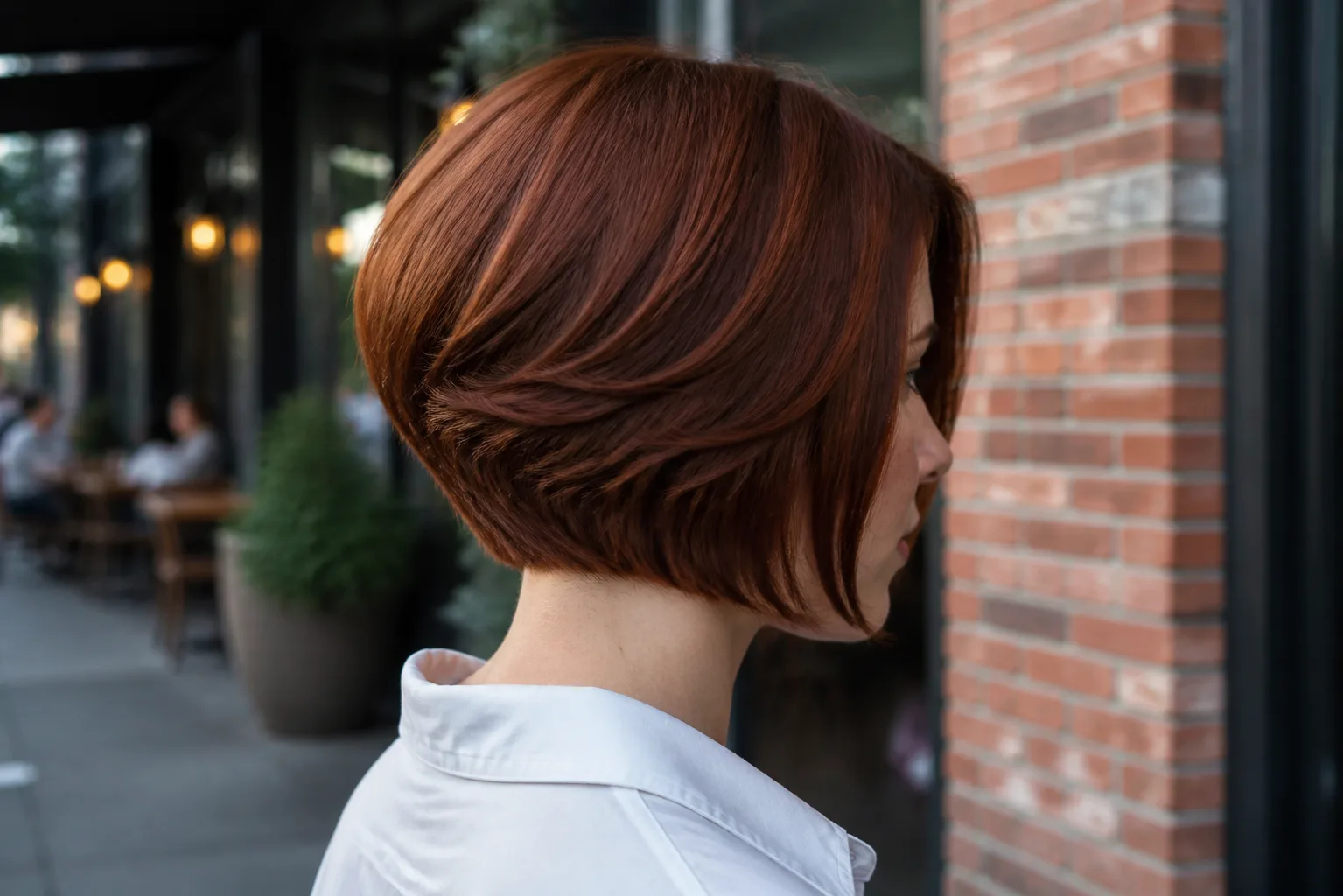
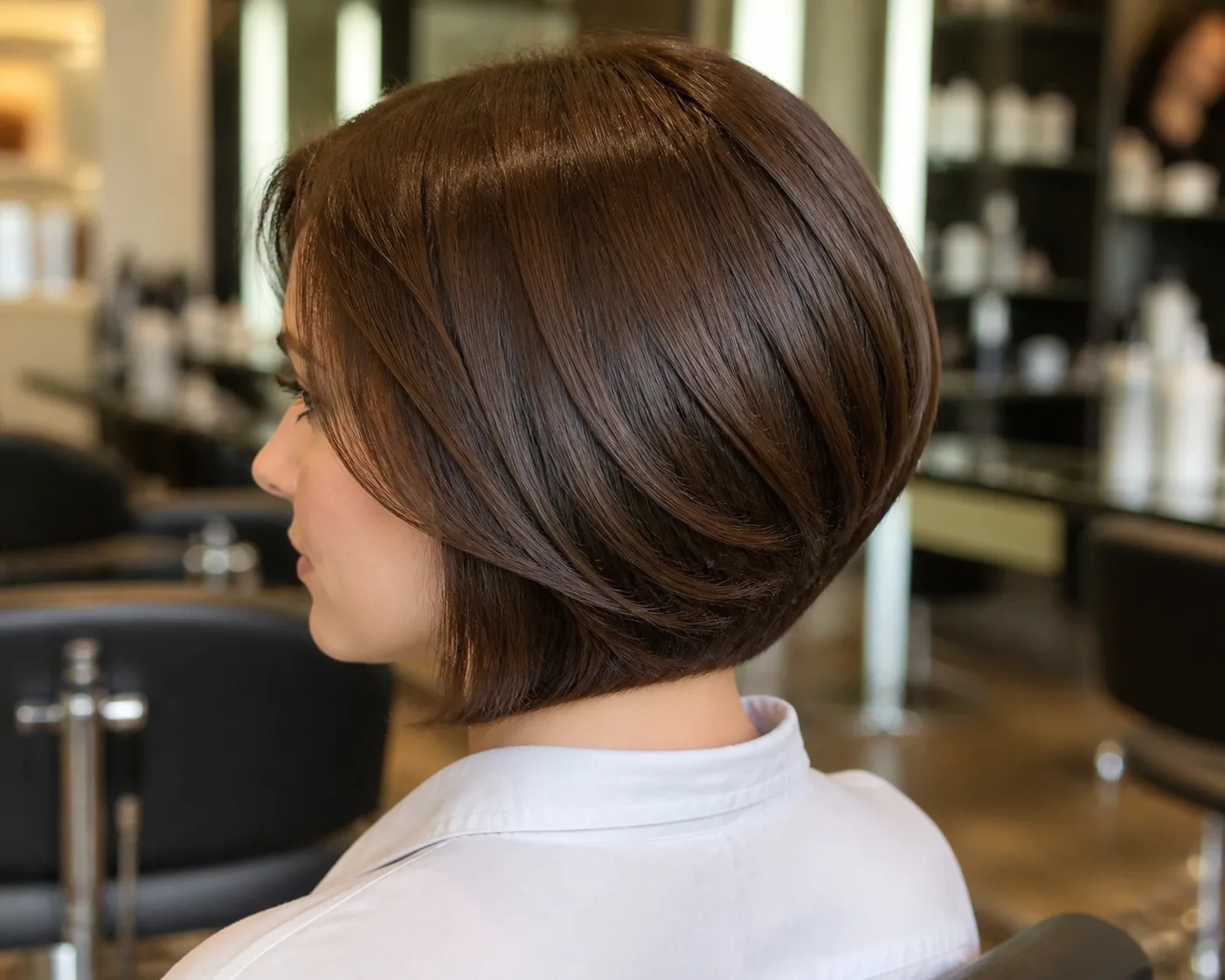
A stacked bob graduates the back. Each section is cut slightly shorter as it climbs the back of the head, so each layer sits on top of the one below and pushes it outward. The result is a rounded shelf of volume above the nape that was not there before. It builds.
Internal layers do the reverse. The stylist lifts the top surface, removes weight from underneath, and leaves the outside and the perimeter untouched. From the front nothing looks different. The bob just stops flaring at the ends and starts hanging flat.
| Layering | Where the weight goes | Ask for it when | What it costs you |
|---|---|---|---|
| Stacked or graduated back | Builds a rounded shelf above the nape | Hair is fine, flat, or one length and falls limp | A round brush most mornings, and a heavy grow-out at the back by week eight |
| Internal or invisible | Removed from underneath, surface stays smooth | Hair is thick and the bob flares out at the ends | Nothing you can see, which is the point and also the disappointment |
| Choppy or blunt-cut | Splits the ends into visible separated chunks | You want the cut to look undone rather than styled | Reads straggly on very fine hair, and needs texture spray daily |
| Long face-framing | Sits only at the front, shortest at the cheekbone | You want softness near the face without losing the shape | Barely changes the silhouette, so do not expect volume from it |
That table is the whole article. The rest is which row is yours. A stacked layered bob is also where most people land when they grow a pixie back out, because the graduation at the back hides the stage where the sides are catching up.
Which layered bob suits your hair
Hair density and texture decide this, not fashion. A cut that looks right on thick straight hair is the same cut that collapses on fine hair, because it removed weight that was holding the shape up.
| Your hair | Ask for | Avoid | Perimeter length |
|---|---|---|---|
| Fine and straight | Short graduated layers at the back only | Layers through the front and sides | Jaw or shorter |
| Thick and coarse | Internal layers under a blunt perimeter | Stacked layers at the back | Jaw to collarbone |
| Wavy, 2a to 2c | Soft long layers starting below the chin | Any layer that starts above the chin | Collarbone |
| Curly, 3a to 3c | Layers cut dry, curl by curl | A uniform wet cut | Cut long to allow for shrinkage |
Fine hair

Fine hair has no weight to spare, so every layer you take is volume you will never get back. Keep the perimeter short, at the jaw or above it, and put the only layers at the back where they stack. Leave the sides and the front alone entirely.
The perimeter also has to stay blunt. A fine-haired bob with softened, feathered ends looks thinner than the hair actually is, because the eye reads the see-through edge as the amount of hair you have. If you have watched a wavy 2a pattern go flat by midday, this is the same problem. The rule matters even more once the crown starts to thin, which is why the blunt bob leads our guide to short cuts for thinning hair after 60.
Thick, heavy hair
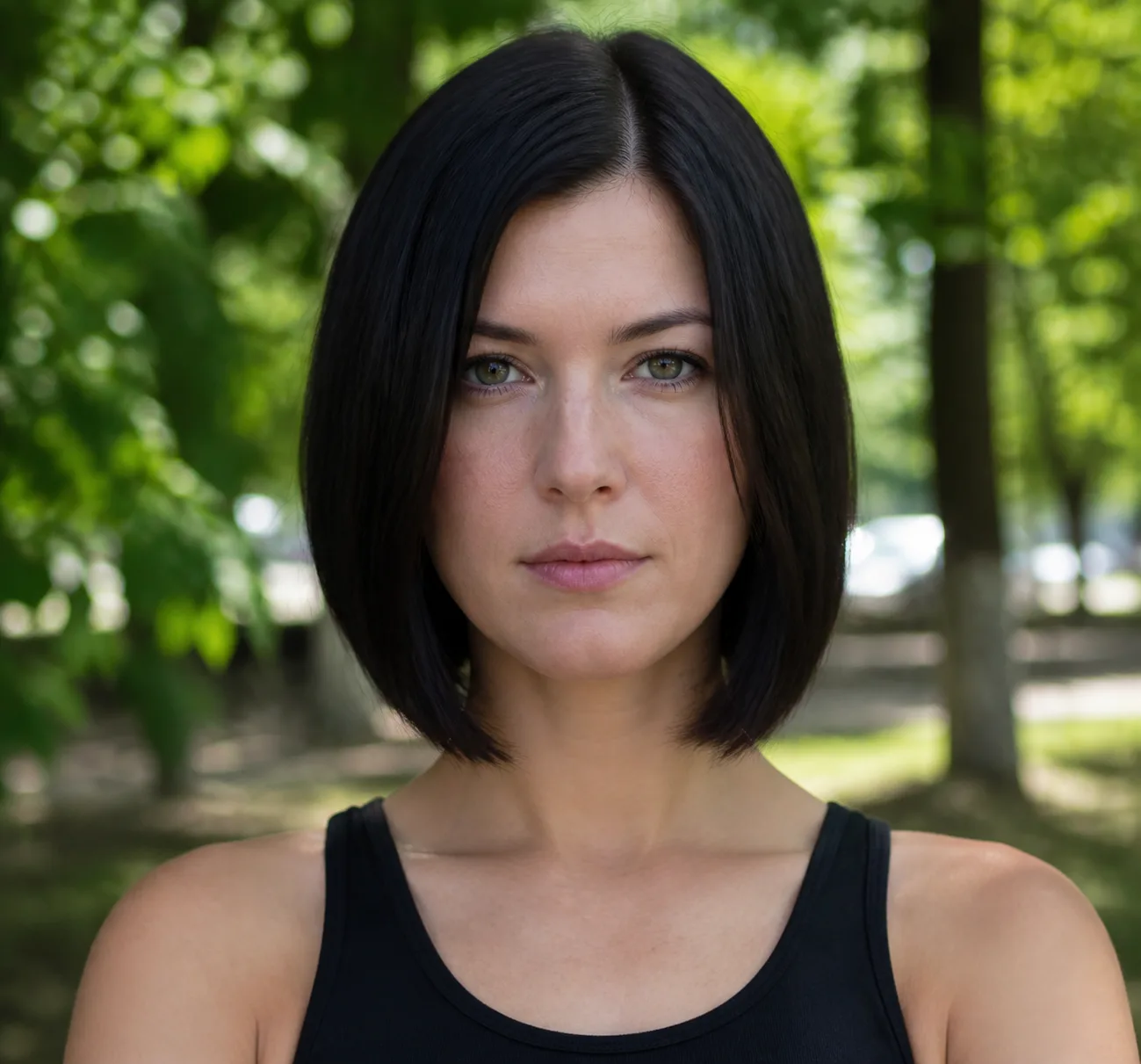
Thick hair does not need volume, it needs the bottom third to stop flaring. The fix is internal layering, sometimes called invisible layering: weight comes out from underneath while the outside surface and the perimeter stay exactly as they were.
Ask for it explicitly, because a stylist who hears "layers" on thick hair and starts graduating the back will hand you a pyramid. You will see it the first time you wash it at home without their brush.
Wavy hair
Waves already supply the movement that layers are usually chasing, so the job here is placement. Keep every layer below the chin. A wave that starts above the chin springs up and sits wide at the ear, which widens the whole head.
Go longer than you think, too. A collarbone perimeter on wavy hair dries to something closer to jaw length, and that is before the first summer.
Curly hair

Curly hair should be cut dry and curl by curl. A wet uniform layer looks even in the chair and lands somewhere else entirely once it dries and springs, which is how people end up with a triangle they did not ask for.
Shrinkage is the number that matters. If the cut is measured at the jaw wet, it may finish at the ear dry. Say out loud where you want the dry perimeter to land, not the wet one. The same principle runs through our guide to 3a curls.
Does your face shape change the answer

Less than the internet claims, and only in one place: where the shortest front piece starts. Face shape has no opinion about the back of your head.
The rule that actually holds is that the shortest front layer draws the eye to wherever it begins. Start it at the cheekbone and you widen the middle of the face. Start it at the jaw and you lengthen it. So a round face is usually better off with the front layers starting at or below the jaw, and a long face can take them higher; our guide to the best cut for your face shape runs the same logic for all six shapes.
If you have never measured, the calculator below gives you the ratio rather than a guess.
Measure it instead of guessing
Both numbers in the same unit — the answer is a ratio, so it does not matter which.
Under 1.15 reads round, 1.15 to 1.5 reads oval, over 1.5 reads long. Oval and long split on the jaw rather than the ratio: an oval tapers toward the chin, a long face runs straight down.
How to ask for a layered bob
The words matter more than the picture, because a picture shows the result and not the route. These five sentences cover the route.
How to ask for a layered bob
- Name the perimeter first
Say where the shortest point of the outline should land, using your own face as the ruler: at the jaw, an inch below the jaw, at the collarbone. Never say "shoulder length", because shoulders move.
- Say which direction the weight goes
"Take weight out" and "build weight in" are opposite instructions. Pick one out loud before anyone picks up shears.
- Say stacked or internal, not just layers
Stacked means graduated at the back for lift. Internal means removed from underneath with the surface left smooth. Naming it is the single sentence that prevents the wrong haircut.
- Decide the front separately
The front is its own decision: face-framing pieces, curtain bangs, or nothing. A fourth option is a diagonal fringe from a deep part, and here is how to get side bangs that stay put. If you want the softer separated version instead, ask for it the way you would ask for messy bangs. If you do not say, most stylists will soften the front by default, and on fine hair that is exactly the wrong default.
- Ask to see the back before you leave
Two mirrors, phone photo, either is fine. The back is where a layered bob goes wrong and the only part you cannot check at home.
If you want one sentence to say in the chair, use this one:
Say this to your barber
A bob with the shortest point at my jaw, blunt perimeter, and internal layers underneath only. Nothing stacked at the back and nothing shorter than my cheekbone at the front.
Four mistakes that turn a layered bob into a bad one
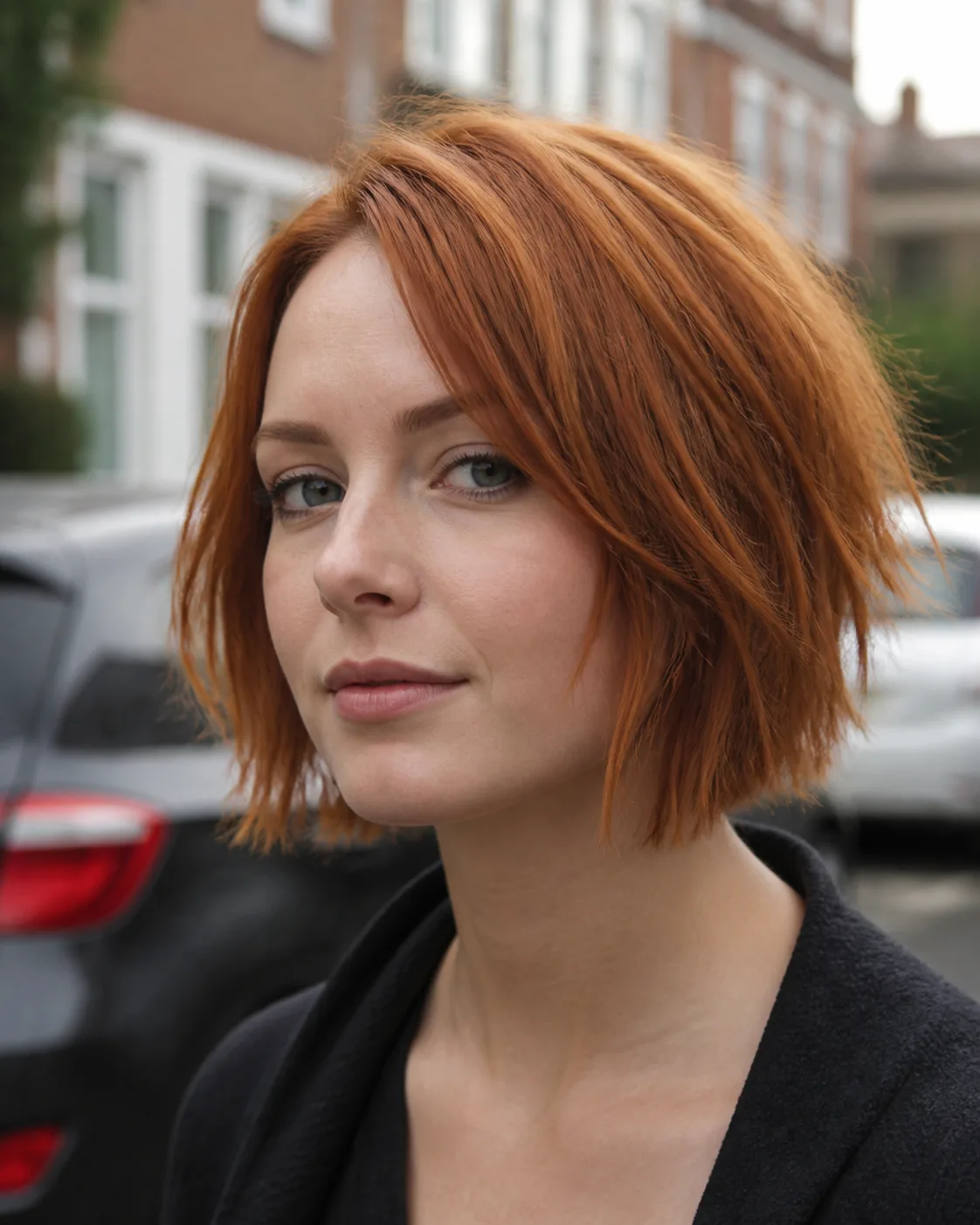
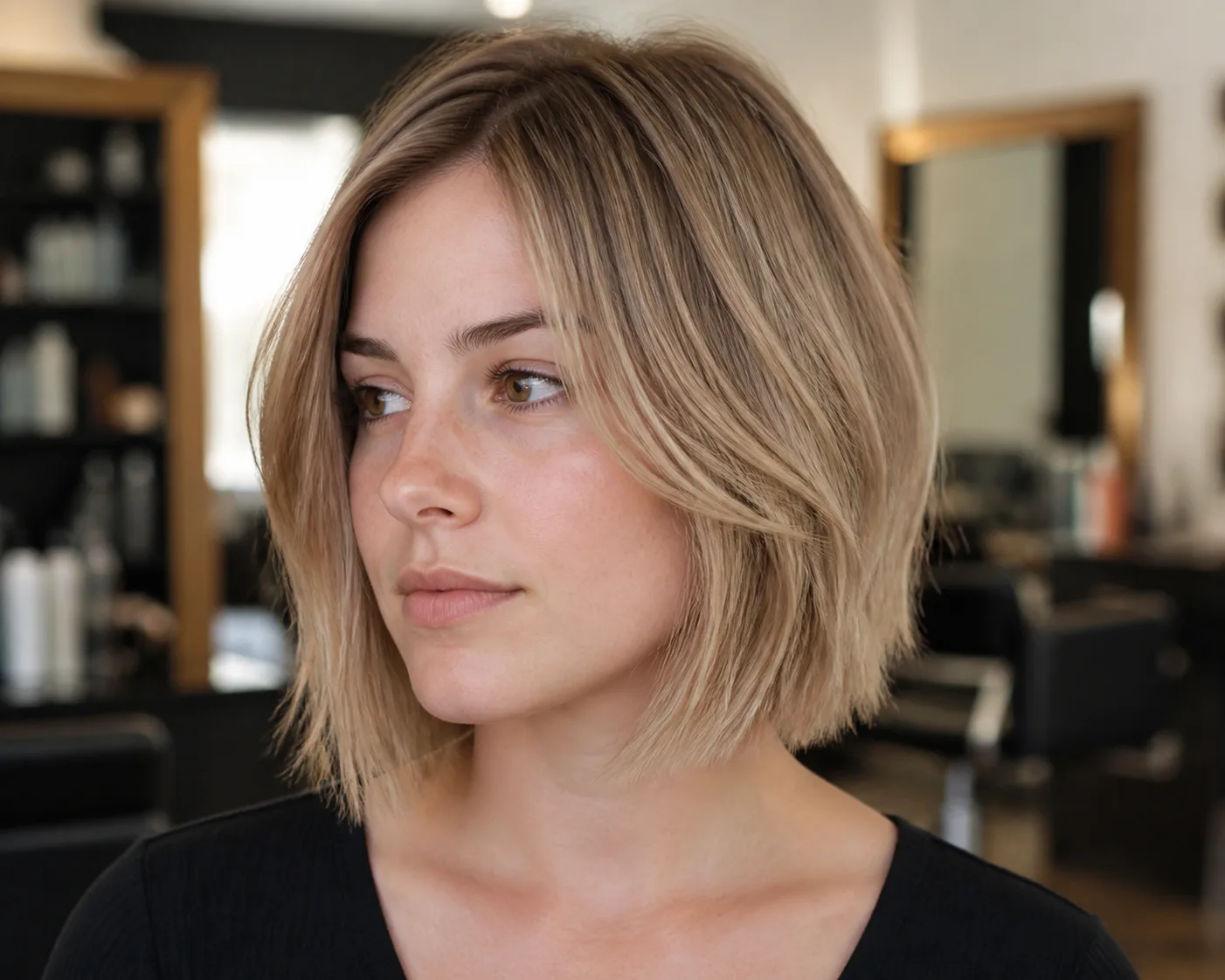
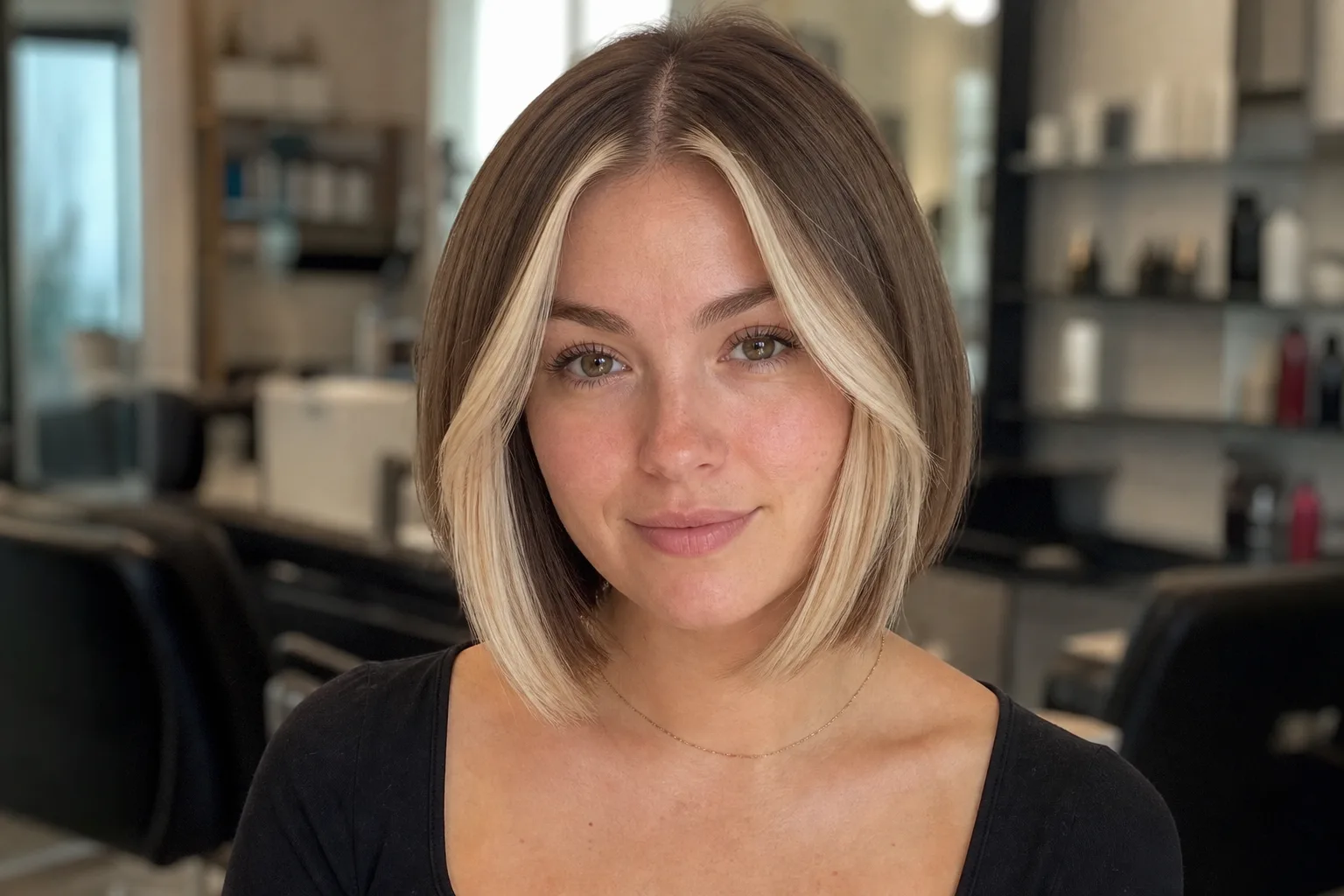
Asking for choppy when you meant soft. Choppy means the ends are cut blunt and left separated on purpose, as in the picture above. It is a deliberate look, not a default. Say "softly blended" if that is what you want, because "textured" is heard as choppy in most chairs.
Layering fine hair at the front. It reads as thinning hair rather than a haircut. Keep the front weighted and put the interest at the back.
Cutting curly hair wet. The length you agree on wet is not the length you leave with. Dry cutting costs more and takes longer, and it is still the cheaper option.
Booking the grow-out too late. Hair grows roughly 0.35 mm a day, about four tenths of an inch a month, according to the reference anatomy text. On a stacked bob that is enough to flatten the shelf at the back within eight weeks. Book the next cut when you book the first one.
Styling and upkeep, honestly
A layered bob is a low-effort cut only if the layering matched your hair type. Stacked layers on fine hair need a round brush and about four minutes with a dryer. Internal layers on thick hair need almost nothing, which is the quiet argument for them.
Heat is the real cost. If you are blow-drying a stacked back every day, the ends carry that, and the American Academy of Dermatology's hair care guidance is worth reading before you make it a habit. Air-drying with a wave is a legitimate answer, and it is why the wavy row in the table above sits at collarbone length.
For the in-between weeks, the shortest layers of a grown-out bob pin back well; our half up half down guide covers the versions that work at this length. If you would rather keep the length and add the movement, a shag haircut gets you there with a different shape, and the jellyfish cut is the more extreme version of the same disconnection idea.
Ten layered bobs, sorted by where the layers sit
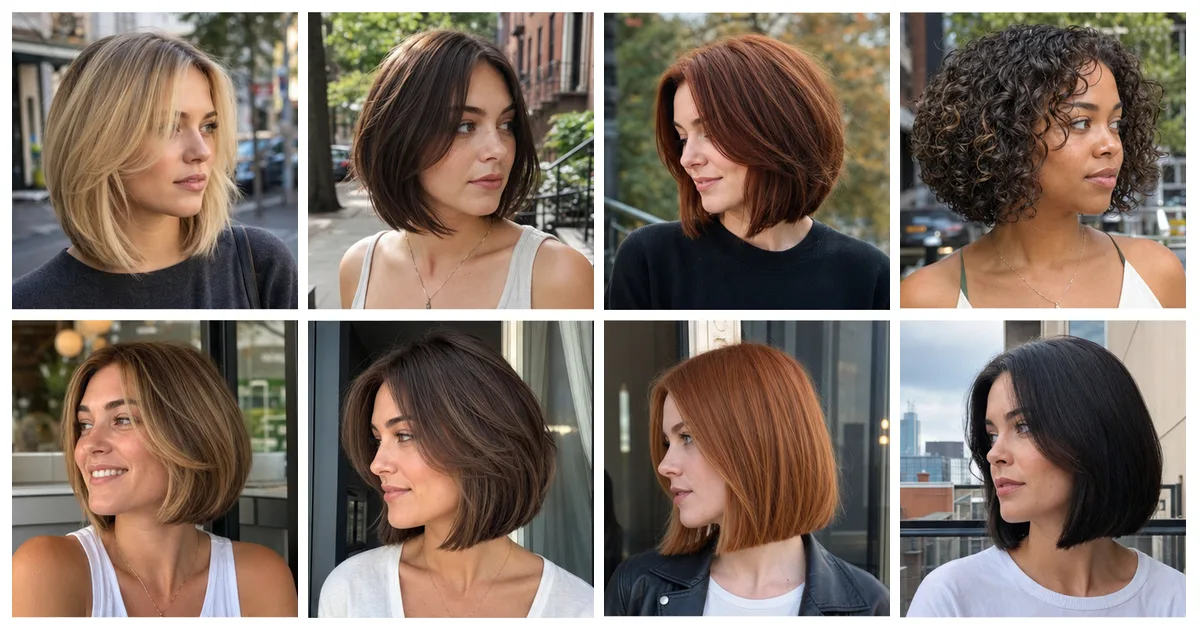
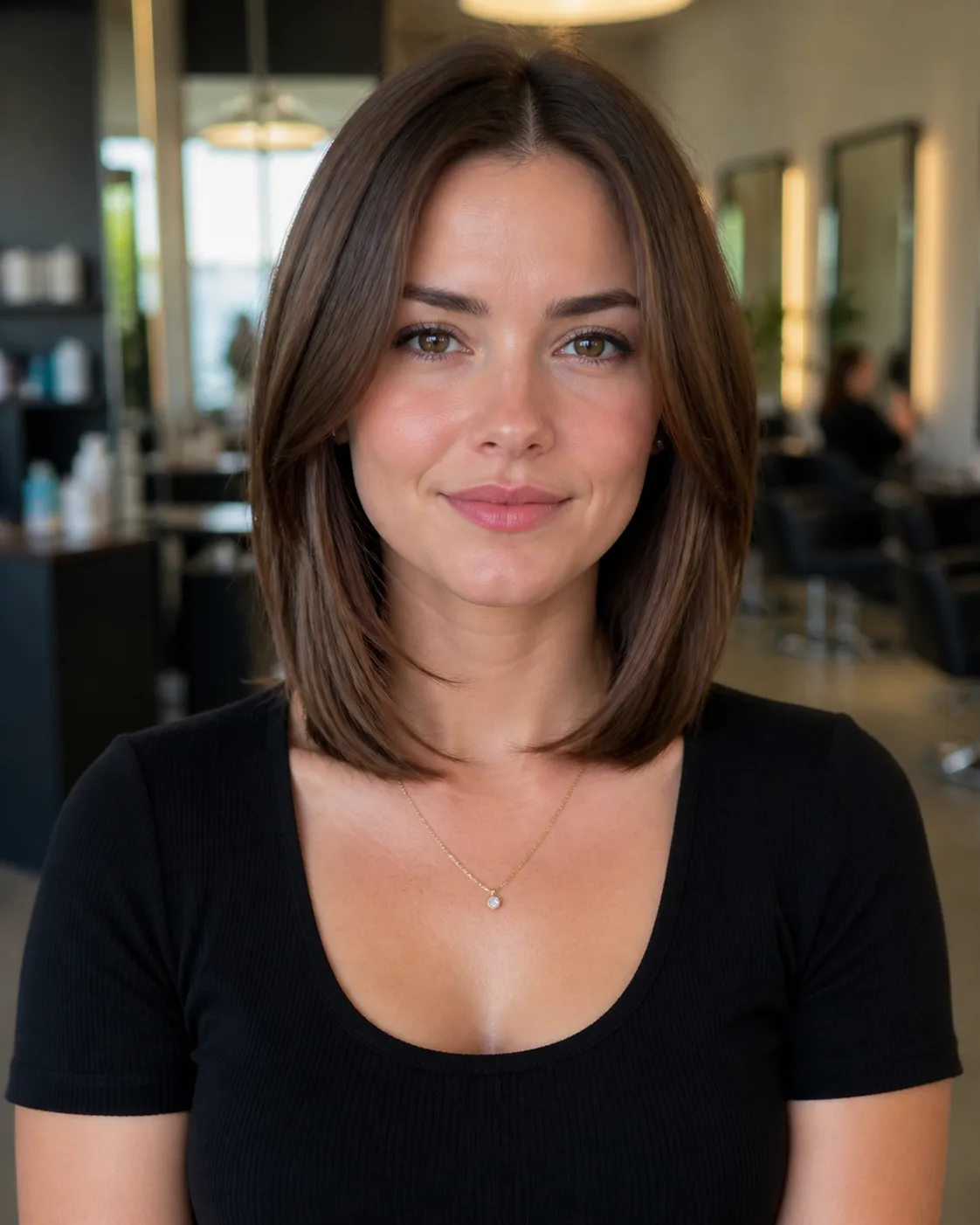
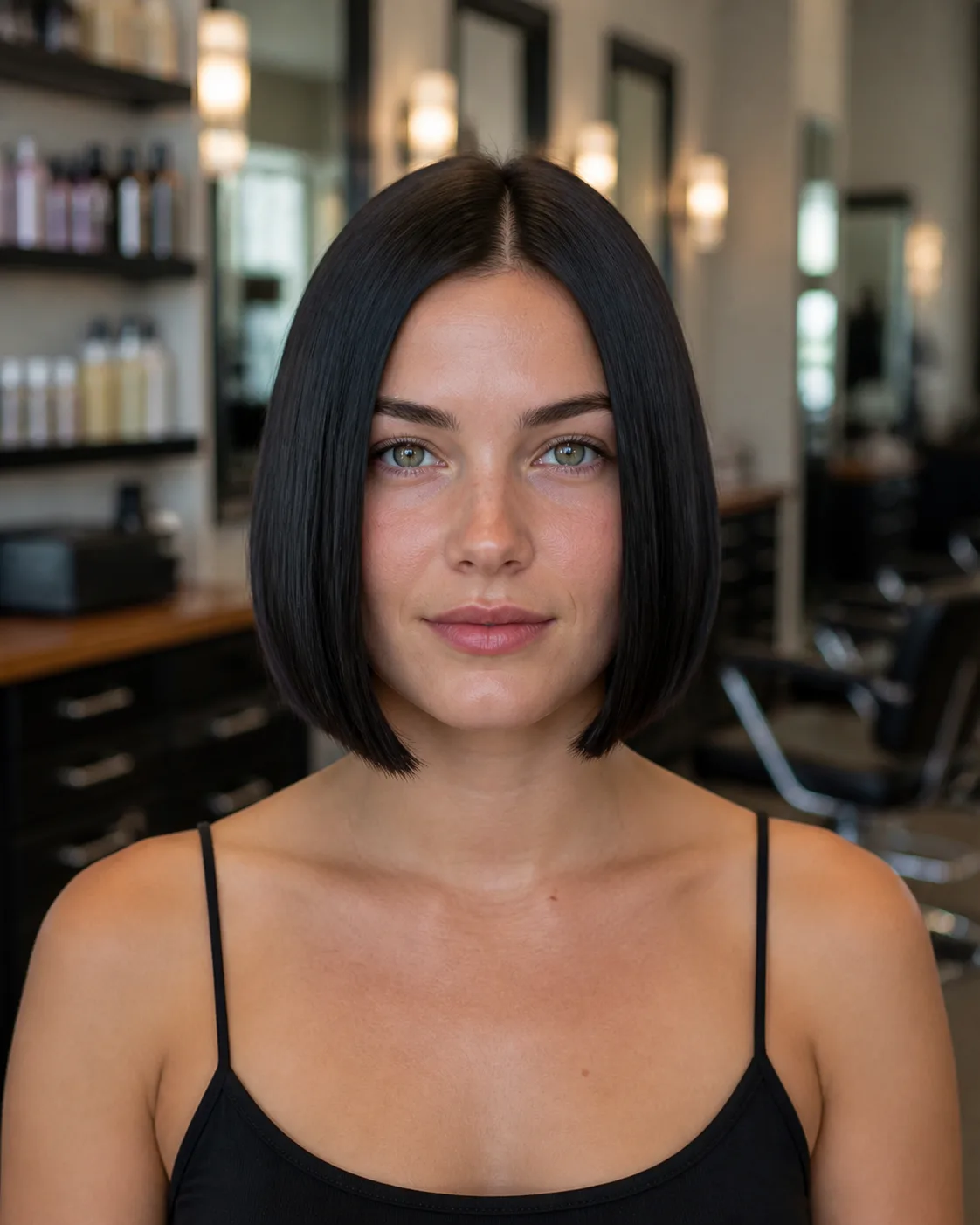
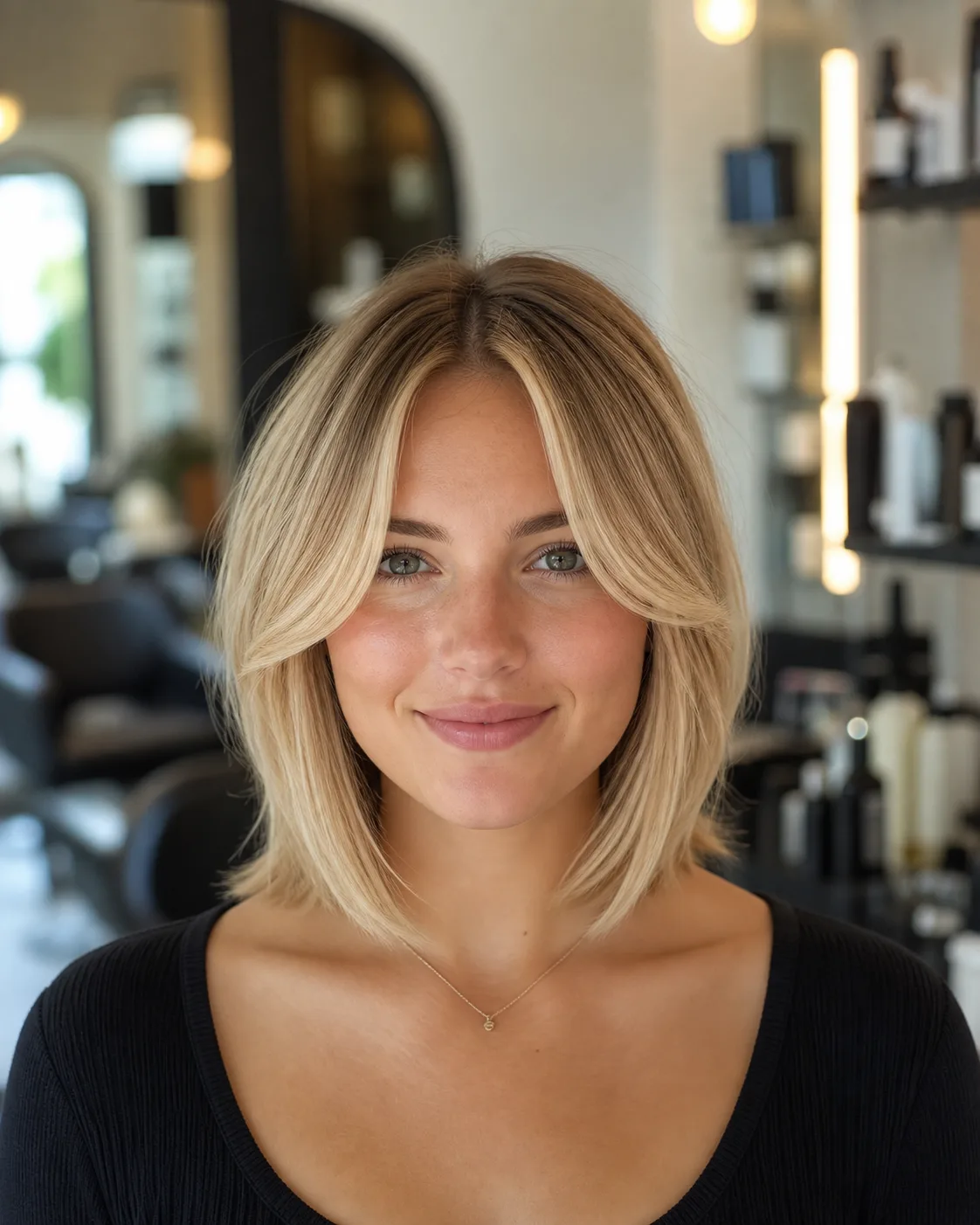
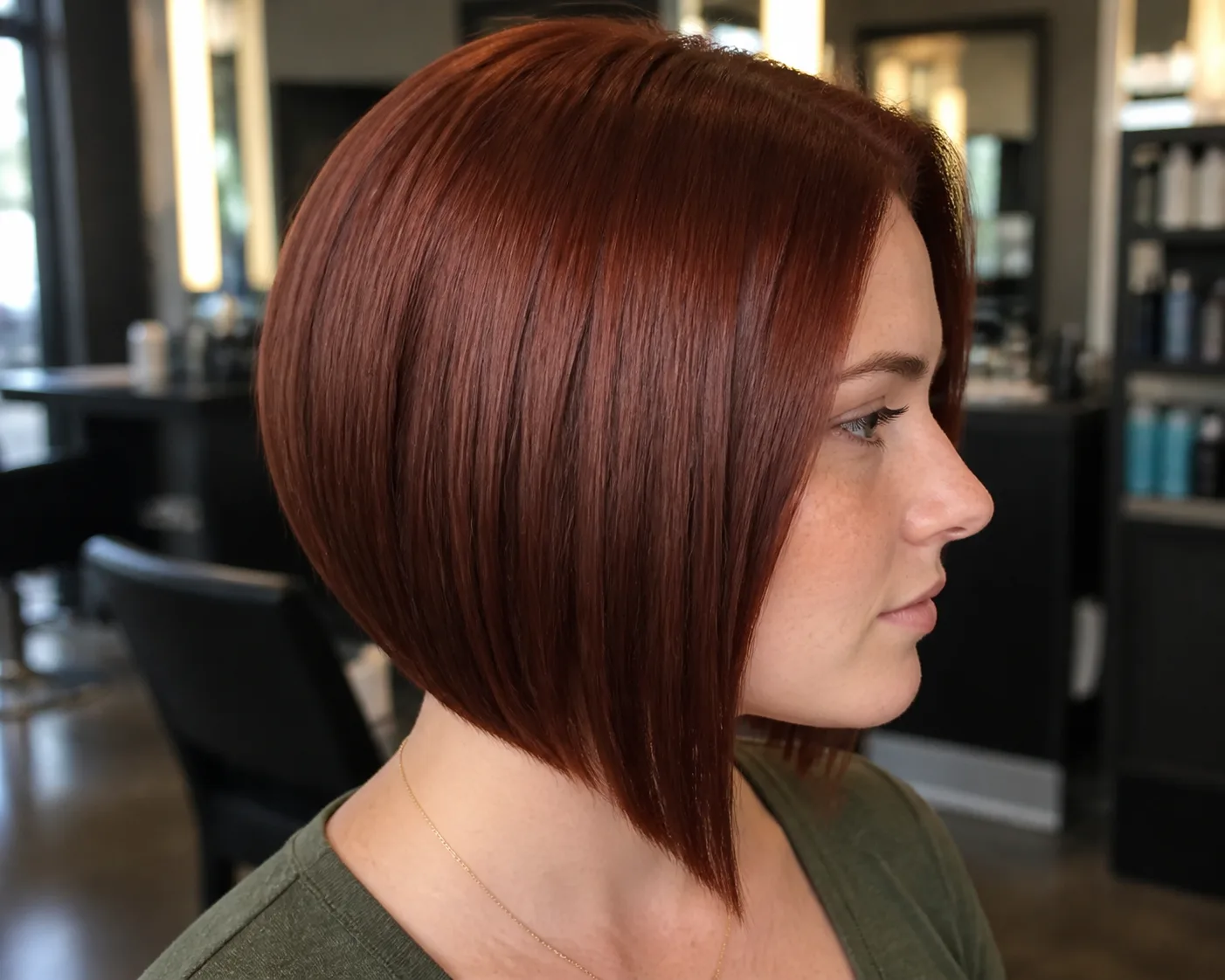
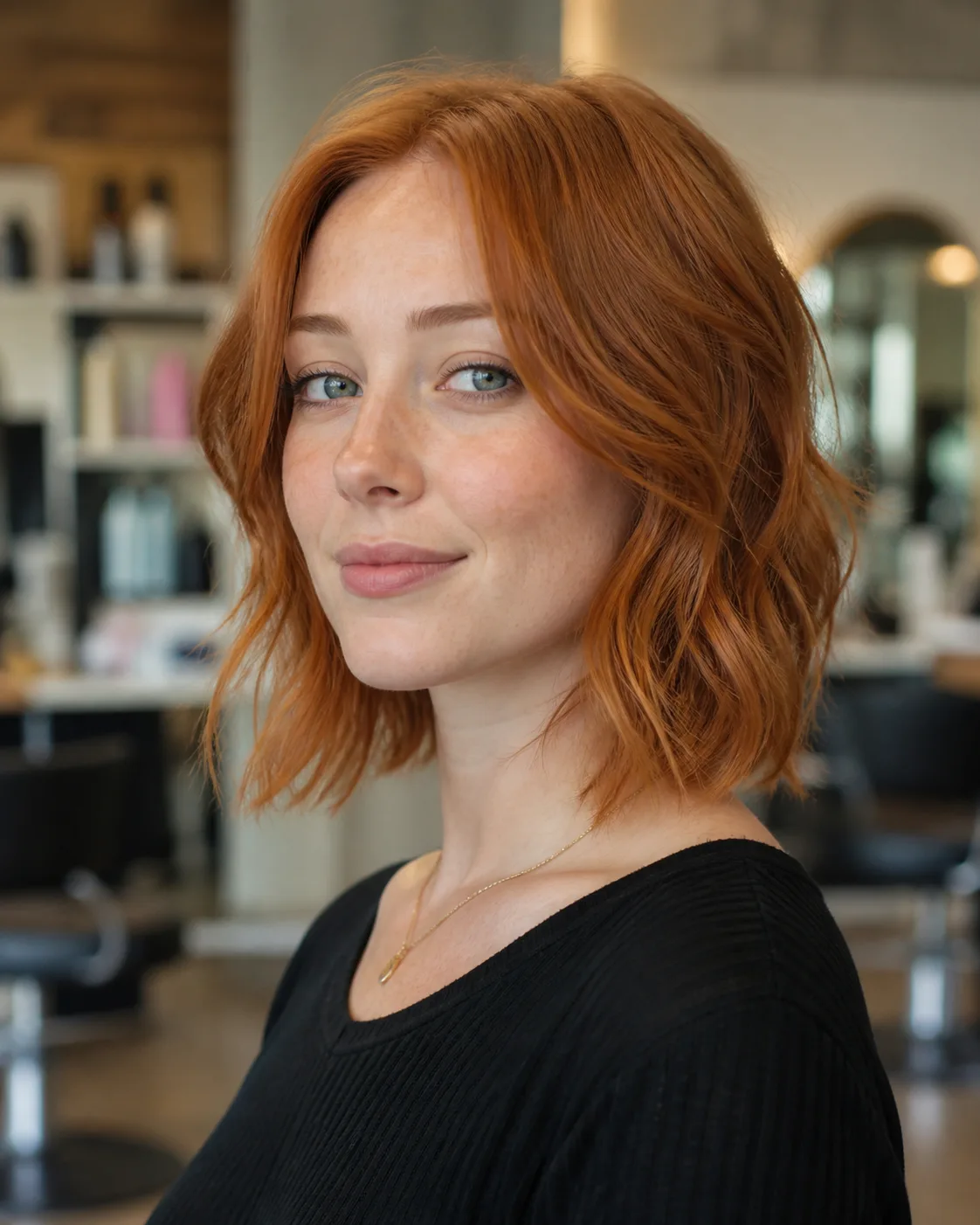
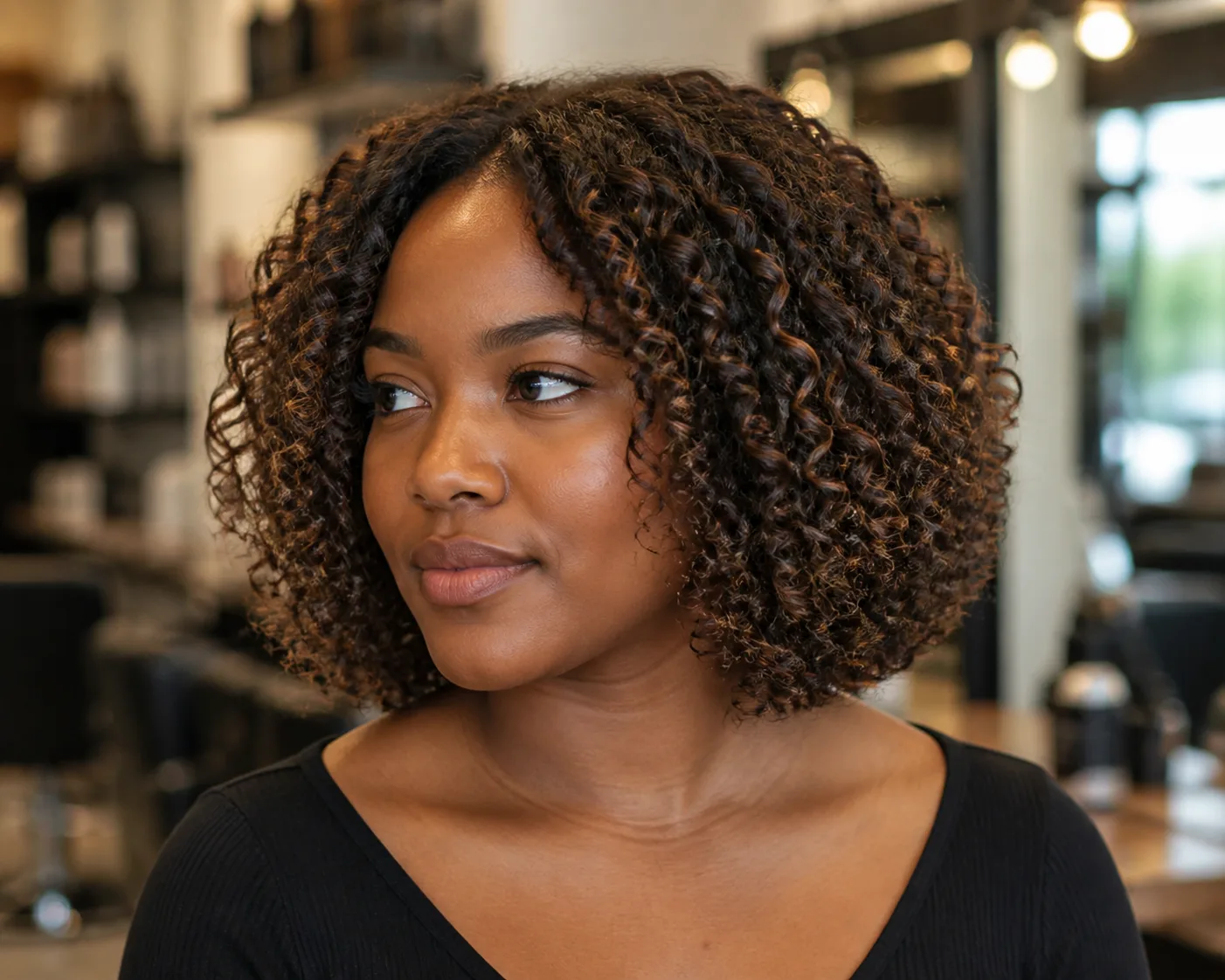
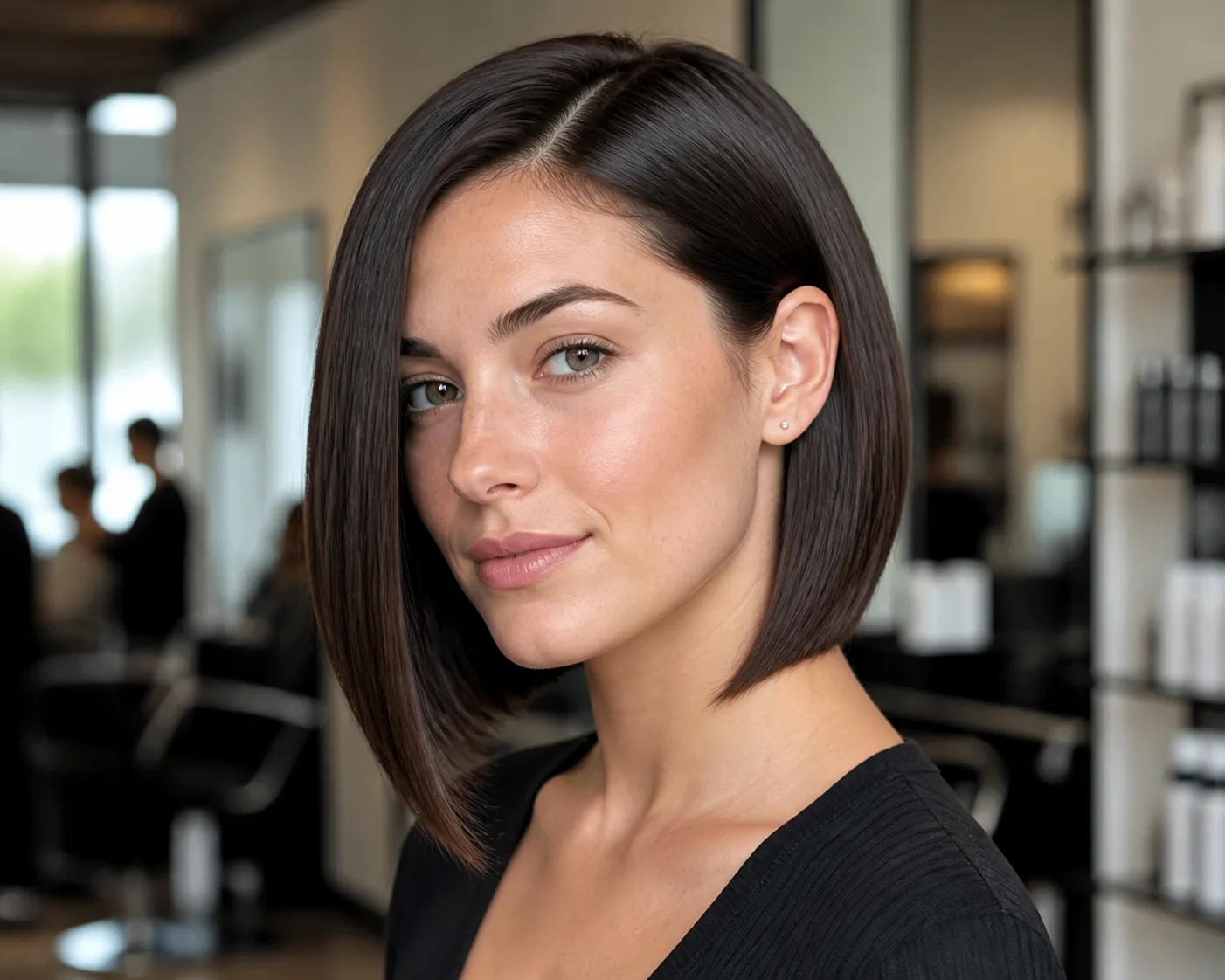
Every picture below is the same haircut. What changes across the ten is one thing: where the layers sit in the shape and how the ends are finished. Read them as ten positions on one dial, not ten different cuts.
Gallery10 photos · tap to enlarge
 Try this on me
 Try this on me
 Try this on me
 Try this on me
 Try this on me
 Try this on me
 Try this on me
 Try this on me
 Try this on me
 Try this on me
 Yours could be here.
Start with one selfie.
One photo, twenty seconds, and you'll know. Free account, no card for your first render.
Is it free to try a layered bob on yourself
Yes, for the first one. Hairstyle Atlas renders one hairstyle and one color on your own photo with no card and no account commitment; the front view of one look costs nothing. Paid plans start at $9 a month for 150 credits, a hairstyle render is 10 credits, and a color on top of that cut is 5. Length, bangs and part are free adjustments inside the same picture.
That matters here for one reason. The difference between a stacked bob and an internally layered bob is invisible in a salon inspiration photo and obvious on your own face. Seeing it before you commit is the whole point, since growing a bob back out is a nine month project.
If you are on the other side of this decision and thinking about going shorter still, boyish haircuts covers what comes after a bob, and grey hair transition covers doing it while you change color at the same time.
The one thing to get right
Say which direction the weight goes. Everything else on this page is detail, and every bad layered bob comes from that one sentence not being said out loud.
If your hair is fine, you want weight built at the back and nothing touched at the front. If it is thick, you want weight removed from underneath and the outline left alone. Those are opposite haircuts with the same name, and the only person who can tell your stylist which one you booked is you.
Frequently asked questions
A plain bob is cut to one length, so all the hair ends on the same line and the weight sits at the bottom. A layered bob keeps that outline but cuts different lengths inside it, so the shape can lift at the back or hang flatter at the sides. Same silhouette, different weight distribution.
Stacked is a type of layered. A stacked bob puts short graduated layers at the back of the head so they pile up and create a rounded shelf of volume above the nape. A layered bob is the broader term and includes layering that removes volume rather than adding it, which is the opposite effect.
Only at the back, and only if the hair is fine or flat. On a short bob the perimeter is doing most of the work, so layering the sides or front leaves you with less shape rather than more. A short bob on thick hair usually needs weight taken from underneath instead.
The same cut, usually with the layers kept longer and the perimeter at or just below the jaw. Very short stacked layers need styling every morning to look intentional, and hair density tends to drop with age, so a blunt perimeter with soft internal layering holds its shape with less work.
No, though the tight, heavily set version is what gives it that reputation. What ages a bob is a rigid rounded set and a perimeter that stops short of the jaw. A jaw to collarbone length with movement in it reads as neither young nor old.
There is no cut that does this reliably, and anyone selling one number is guessing. What does help is softening hard edges near the face and keeping some length: face-framing pieces starting at or below the jaw, and a perimeter that is not set into a rigid shape.
A slightly longer one, with the shortest front pieces starting at or below the jaw rather than at the cheekbone. Length past the jaw draws the eye down instead of across. Avoid a chin-length blunt bob with volume stacked at the sides, since that adds width exactly where a round face already has it.
The direction has been toward a blunt, strong perimeter with the layering hidden inside it, rather than the visibly stepped layers of the early 2010s. The Italian bob and the French bob are both versions of that idea. Trend aside, the perimeter length that suits your face has not changed and will not.
Name three things in order: where the outline ends, whether weight is coming out or going in, and where the shortest layer starts. For example: "collarbone perimeter, weight taken out from underneath, nothing shorter than my chin." A photo helps, but the photo cannot tell them which of those three you cared about.
Preview it on your own photo: Virtual Hair Color Try-On.
Share article
About the author

More articles
Women's Haircuts · 14 min
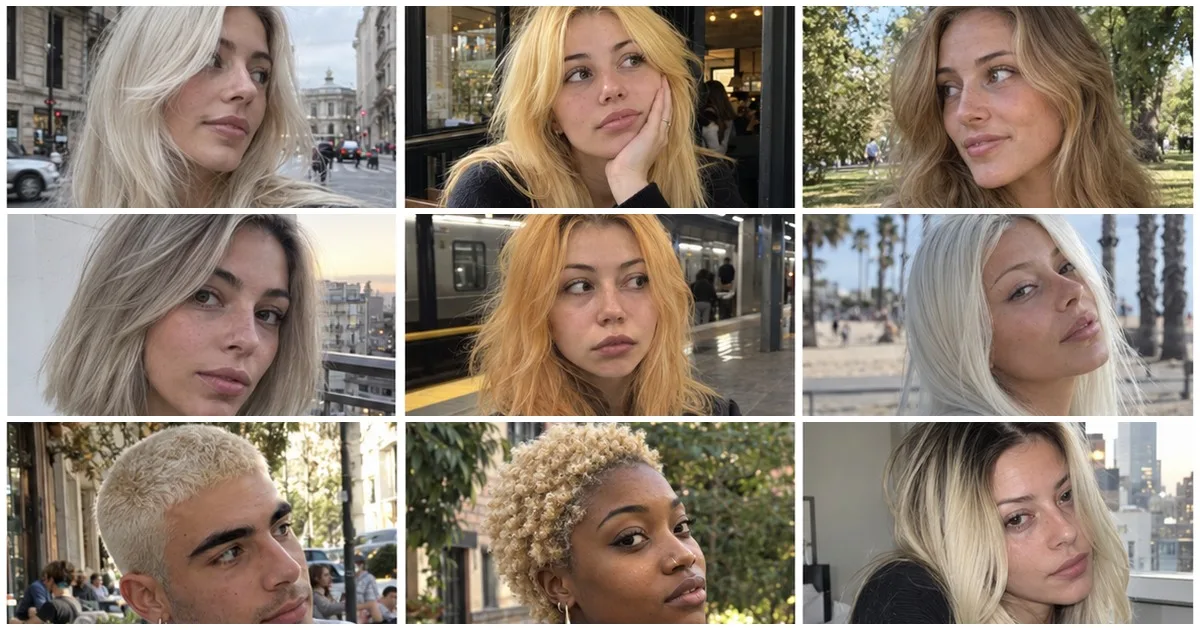
Bleached Hair: How Light Yours Can Go, 14 Shades, Aftercare
How light your bleached hair can go depends on where it starts. See 14 bleached shades on one cut, what each starting color can reach in one session, how toner finishes the job, and the aftercare that keeps it soft.
Women's Haircuts · 16 min
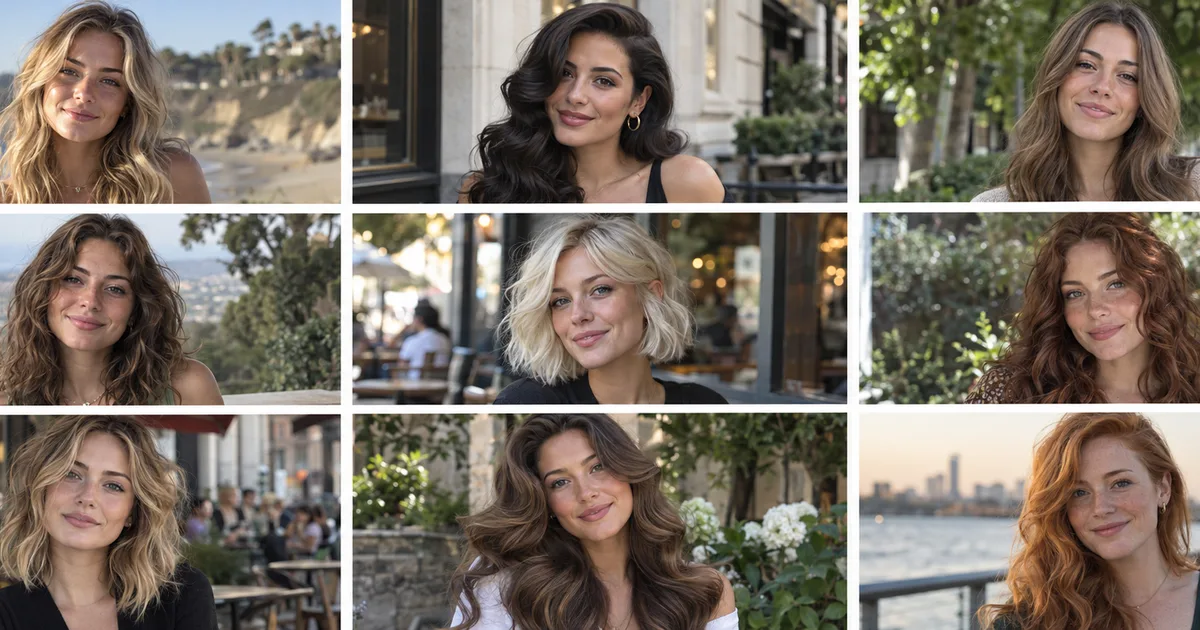
Waves Hair: How to Get Beach, Loose and Hollywood Waves That Last
Waves hair is about what you leave straight. How to get beach, loose, Hollywood and heatless waves, which wave suits your hair type, and why your waves keep falling out.
Women's Haircuts · 15 min
Fino Hair Mask: Who It Suits, How to Use It, and Its Limit
The Fino hair mask makes dry, bleached and frizzy hair smooth and shiny in one use, mostly by coating it. Here is what is in the jar, which hair types it suits, exactly how to use it, and what to do when the ends are past a mask.