History, technique, and costume notes
1930s Hairstyles
Soft waves and controlled curls frame the face in an age of screen glamour.
How to cite this page
HairstyleAtlas. “1930s Hairstyles.” https://hairstyleatlas.com/historical-hairstyles/1930s. Accessed October 20, 2026.
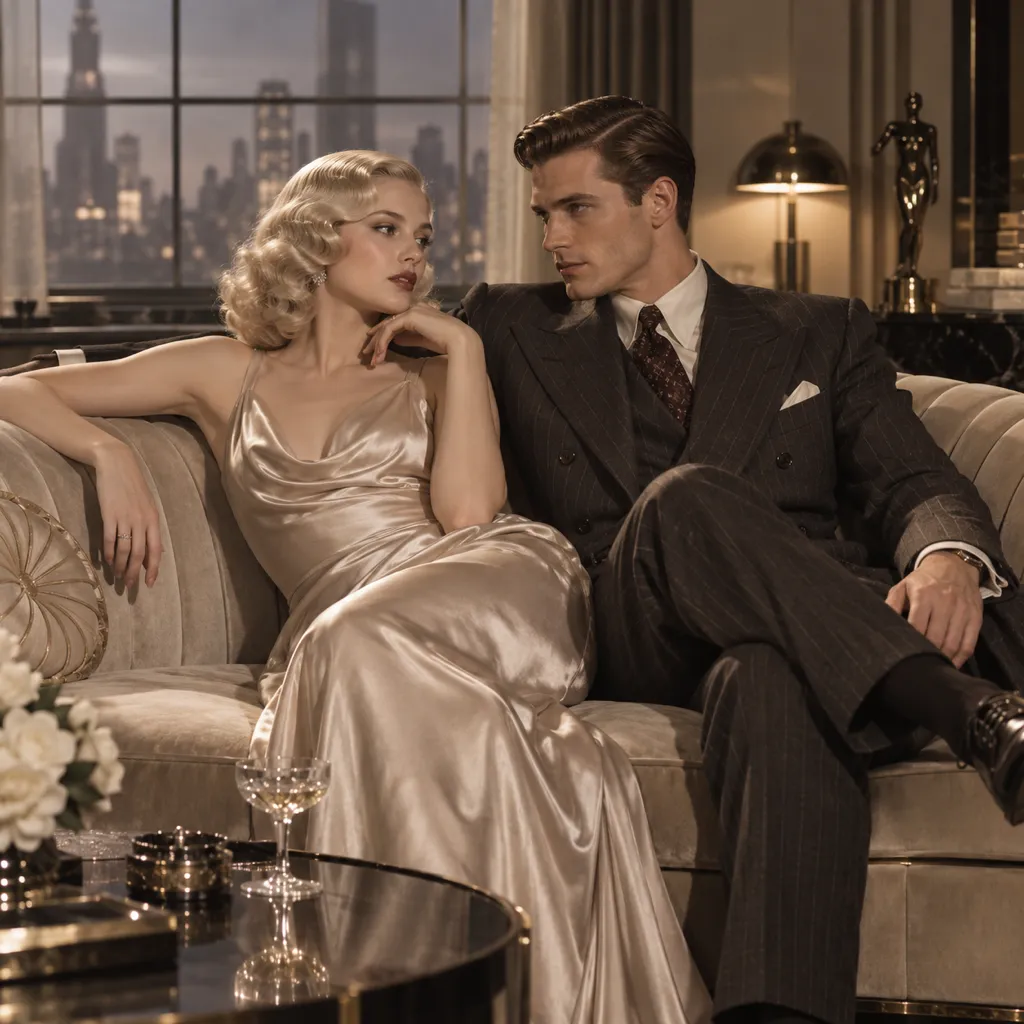
Hair in the 1930s
The 1930s are often remembered through cinema’s polished images, but the Depression made cost and upkeep central to ordinary grooming. Fashion favored a softer line around the face than the most severe 1920s crops. Hair could be short at the sides yet look fuller through waves and curled ends. The relationship between hair, a tilted hat, and the longer lines of dress is useful when studying a complete costume rather than an isolated hairstyle.
A glossy studio photograph records an aspiration as much as an everyday routine. Salon permanent waving could provide a lasting foundation, while pin curls and other wet sets shaped the visible arrangement between washes. Setting required time even when the tools were inexpensive. For stage work, establish whether the character is preparing for an evening out, keeping up appearances on a restricted budget, or simply getting through a working day; the same haircut can communicate all three through finish.
Women’s signature styles
Soft waved bob
Short hair continued into the 1930s, often with a softer outline and more visible movement around the cheeks. The severe geometric impression of some earlier bobs gave way to curved, dressed shapes. A side part and a smooth crown could coexist with substantial curl around the perimeter.
How it was done: A wet set arranged the front in waves and the lower sections in curls. Pin curls or heated waving tools helped control direction, and brushing joined individual curls into a flowing surface. Setting lotion added hold; the final shape depended on where the curls were placed, not only on their size.
Recreating it for stage & costume: Set a short wig in a consistent direction, then brush it into connected curves. Keep the crown flatter than a 1950s bubble cut. If the first brush-out is too fluffy, smooth the surface over your hand and clip the wave temporarily while preparing the rest of the costume.
Sculpted finger waves
Finger waves remained useful well beyond the 1920s. During the 1930s they could shape a close, polished front while the back carried softer curls. Their continued use is a reminder that decade boundaries are cataloging devices: techniques rarely disappeared when the calendar changed.
How it was done: Damp hair was combed into alternating ridges and hollows with the fingers, using a setting preparation to help it hold. The front was dried in that position before dressing out. Separate curled sections at the back could add softness without disturbing the clear wave pattern near the face.
Recreating it for stage & costume: Draw the desired wave path on a head diagram before setting. Work from a photograph with a similar part and hairline, since copying only the number of ridges can produce a different silhouette. Modern clips and a carefully dried wig set allow the style to survive repeated performances.
Longer hair with curled ends
Not every fashionable 1930s arrangement stopped at the jaw. Longer lengths could be dressed with a smooth upper section and curls concentrated lower down. The result suited the flowing lines associated with evening glamour, while still looking composed rather than casually air-dried.
How it was done: Hair was sectioned and set in pin curls, with the ends rolled to establish the intended direction. Once thoroughly dry, brushing softened the individual curls into an organized edge. A permanent wave could support the curl, but the final visible pattern still required setting and dressing.
Recreating it for stage & costume: Concentrate the movement below the cheekbones and check where the curls meet the collar. A wig with excessively long modern layers may refuse to form a unified edge. Test the set with the actual garment: a high collar or heavy coat can push the ends upward during a scene.
Men’s signature styles
Tapered side part
The neat side-parted haircut remained widely useful in the 1930s. It worked with business suits and formal clothes without demanding a dramatic new silhouette. Differences in top length, wave, and shine allowed variation within an apparently conventional grooming pattern.
How it was done: The sides and nape were tapered while the top remained long enough to comb across. Pomade, brilliantine, or a grooming cream helped the hair lie smoothly. Combing on damp hair established direction; brushing could soften obvious comb tracks for a less theatrical finish.
Recreating it for stage & costume: Retain a visible but natural part and keep the temples controlled. A very high fade can make a period suit look like modern retro styling. Use the least product that keeps the shape through the scene, and check the result in profile as well as straight on.
Brushed-back top
A swept-back top exposed the forehead and gave a clean line under a hat. Depending on the wearer’s texture, it could look smooth or retain a broad natural wave. It was a grooming arrangement with earlier roots rather than a hairstyle exclusive to the 1930s.
How it was done: The top was kept sufficiently long to brush toward the crown, with shorter sides blended underneath. Dressing controlled the surface and supplied shine. A comb could direct the hair backward in sections, avoiding an abrupt ridge between the upper hair and the sides.
Recreating it for stage & costume: Aim for a compact sweep rather than the high front of a later rock-and-roll pompadour. On hair that springs forward, prepare the direction while drying and add a modest amount of pomade afterward. Rehearse with hats, since repeated handling can split the surface into an unintended part.
Side part with a front wave
A controlled wave above the forehead softened the otherwise orderly men’s silhouette. Screen portraits often made the wave especially visible through lighting and careful grooming. The shape could reflect natural texture, so it should not be assumed that every wearer used the same setting method.
How it was done: The front needed extra length relative to the sides. Combing, brushing, and dressing guided that section upward and back into a shallow curve. Where more control was needed, setting could establish the bend before the hair was blended into the remainder of the top.
Recreating it for stage & costume: Use a small roller or a controlled blow-dry to suggest the front curve, then let it cool before combing. These are modern rehearsal shortcuts, not evidence of a particular historical routine. Keep the height proportionate to the reference and photograph the finished shape under the production’s lighting.
Notable products & tools
- Pin curls and setting lotion allowed precise placement of curls. A brushed-out set could look soft even though its preparation was carefully organized and time-consuming.
- Salon permanent-wave equipment and electric dryers coexisted with home setting. Men’s pomades and grooming creams provided a range of finishes; a museum appliance documents availability, not universal use.
Regional & cultural variations
Screen glamour should be compared with local street photographs, workplace images, and portraits of different ages. Economic hardship affected access to salons without erasing interest in fashion. Hair texture, race, occupation, and community expectations also shaped grooming. For an ensemble, vary the amount of curl and polish while keeping the silhouettes consistent with your chosen year and place; avoid treating every woman as a film star or every man as an executive.
See it on your own face
Try a hairstyle free with one selfie. Explore a modern interpretation of a cut; the preview is a starting point for your design, not a historical reconstruction.
Sources & further reading
These museum, archive, library, and editorial resources provide historical context and further research. The stage and costume suggestions above are modern interpretations. Consult dated images for a specific year, place, and wearer.
- 1930-1939. Fashion History Timeline (FIT). https://fashionhistory.fitnyc.edu/1930-1939/
Overview essay on 1930s fashion, covering the bias-cut silhouette and the longer, softly waved hair of the decade.
- Elegance in an Age of Crisis: Fashions of the 1930s. The Museum at FIT. https://exhibitions.fitnyc.edu/fashions-of-the-1930s/
Online companion to the Museum at FIT's 1930s exhibition, with curatorial texts and garments from the decade.
- A 1930s Fashion History Lesson: Goddess Gowns, Surrealism, and More Trends of the Escapist Era. Vogue. https://www.vogue.com/article/1930s-fashion-history-lesson
Vogue's survey of 1930s fashion, from Hollywood goddess gowns to Surrealist couture.
- Celebrating Jean Harlow's Birthday: The Original Blonde Bombshell. Vogue. https://www.vogue.com/article/jean-harlow-birthday-platinum-blonde-bob-hollywood-icons
Vogue piece on Jean Harlow's platinum-blonde look and the 1930s peroxide craze it set off.
- The "Magnet" hair dryer, c.1933. Science Museum Group Collection. https://collection.sciencemuseumgroup.org.uk/objects/co48439/the-magnet-hair-dryer
Museum object record for a 1930s GEC electric hair dryer, useful for period-accurate salon and dressing-table detail.