Chestnut Brown Hair: 14 Shades and the One That Suits You
Oleh Onysko 19 November 2026 12 min read
In this article
Chestnut brown hair is a warm medium brown, usually a level 4 to 6 on the 1 to 10 scale colorists use, with a warm red-gold reflect that shows up when light hits it. The reflect is the whole point: take the red-gold out and you have plain mid brown, push it too far and you have auburn.
That makes chestnut a tone more than a shade, and it changes how you get it. From dark brown hair it is one of the easiest colors there is. From blonde or gray it is one of the easiest to get wrong. This guide shows 14 versions side by side, which one suits your skin and starting color, and the exact words to say in the chair.
Which cut makes you look best?
Find out in 60 seconds.
A few quick taps and one selfie, and you'll know. Free account, no card for your first render.
What color is chestnut brown hair?
Chestnut brown is a warm medium brown with red and gold undertones, named after the shell of a ripe chestnut. In daylight it reads brown first, then throws a soft copper-red glow at the edges and through any wave.
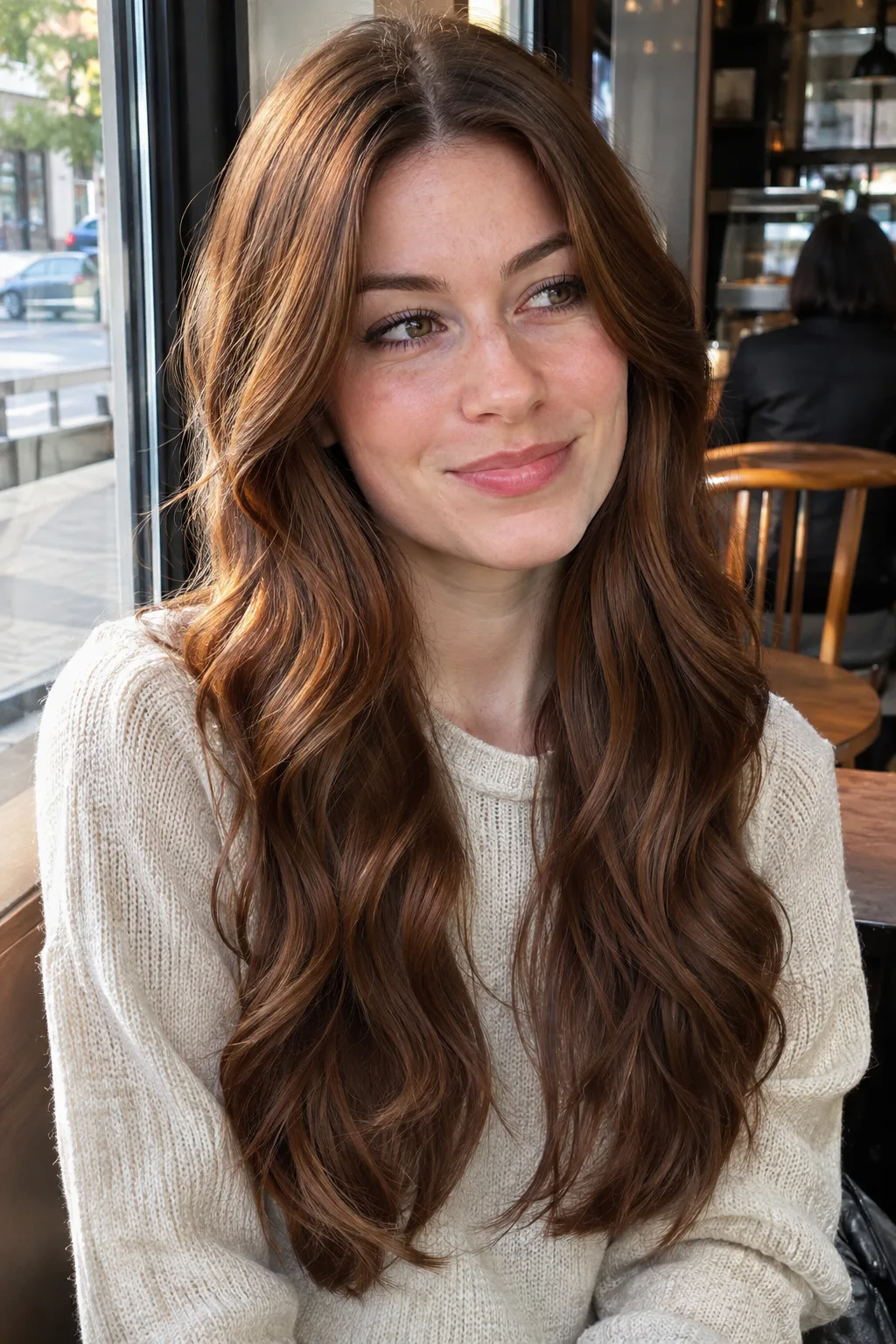
Three things define it:
- Depth: level 4 (medium brown) to level 5 (light brown) for the classic version. Light chestnut sits at 6, dark chestnut at 3.
- Tone: warm. Red-gold, never ash, never violet.
- Finish: glossy. Chestnut looks flat and muddy on dry, porous hair, because the reflect needs a smooth surface to bounce off.
What it is not: it is not auburn (auburn is a red with brown in it, chestnut is a brown with red in it), and it is not chocolate brown, which is darker and more neutral.
Want to see it first? See balayage on your face with the balayage try-on.
Chestnut vs auburn vs chocolate vs ash brown
Most of the confusion around this color comes from its neighbors. Here is where each one sits.
| Color | Usual level | Undertone | Reads as | Best starting point |
|---|---|---|---|---|
| Chestnut brown | 4 to 6 | Warm red-gold | Brown with a red glow | Natural dark or medium brown |
| Auburn | 4 to 6 | Strong red-copper | Red with brown in it | Medium brown or light brown |
| Chocolate brown | 3 to 5 | Neutral to slightly warm | Rich, deep brown | Any brown |
| Caramel brown | 6 to 7 | Gold | Light, sunny brown | Light brown or dark blonde |
| Ash brown | 4 to 6 | Cool, smoky | Matte, muted brown | Medium brown with little warmth |
If you can't decide between chestnut and auburn, look at your hair in direct sun. If the first word that comes to mind is "brown", it is chestnut. If it is "red", it is auburn.
14 shades of chestnut brown, side by side
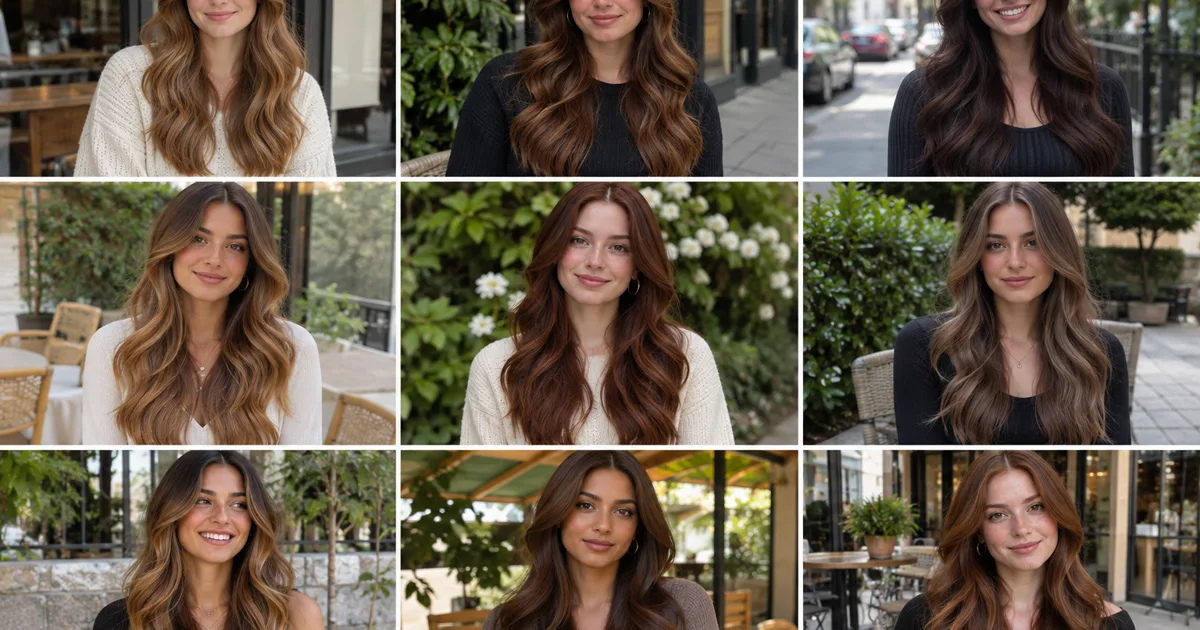
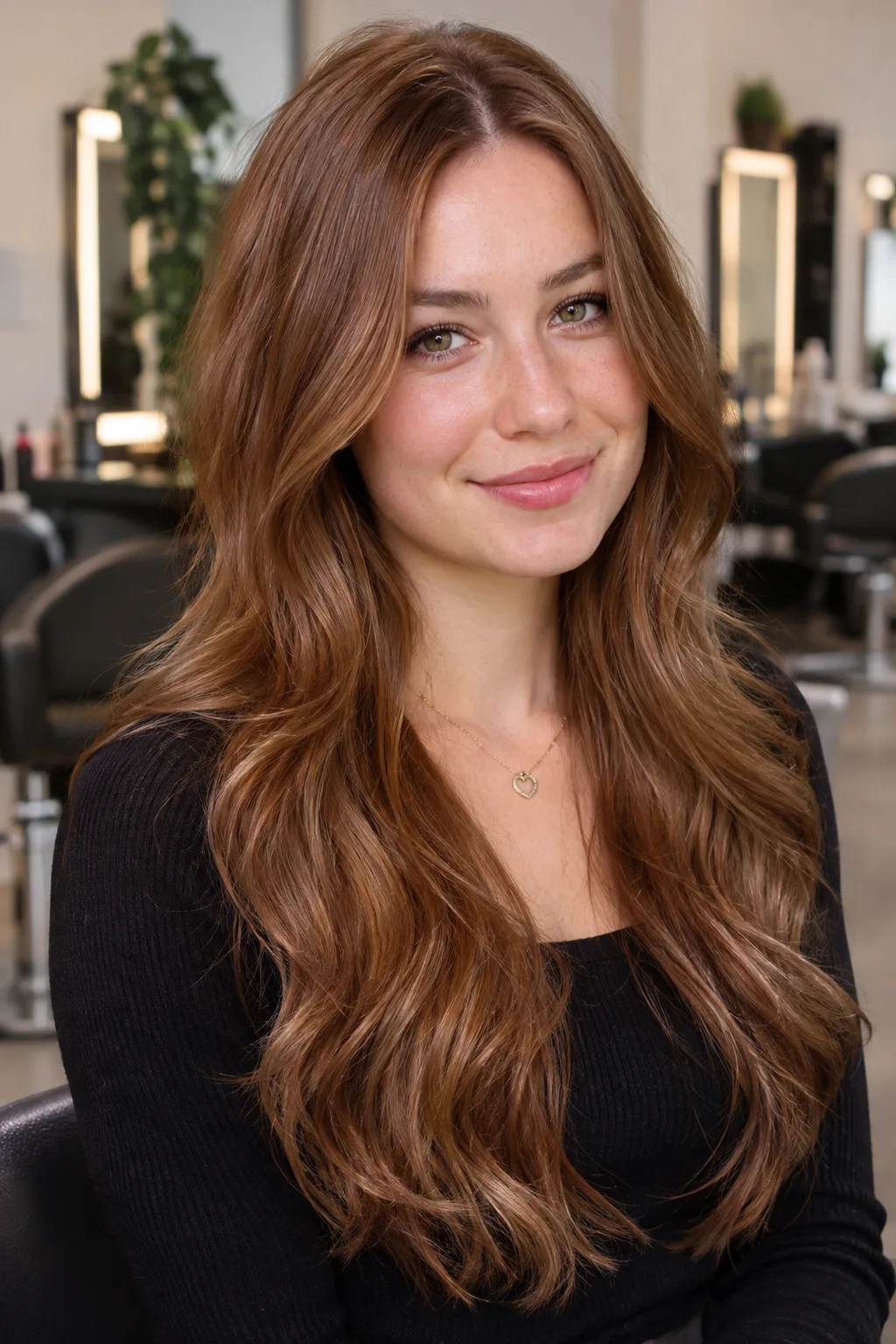
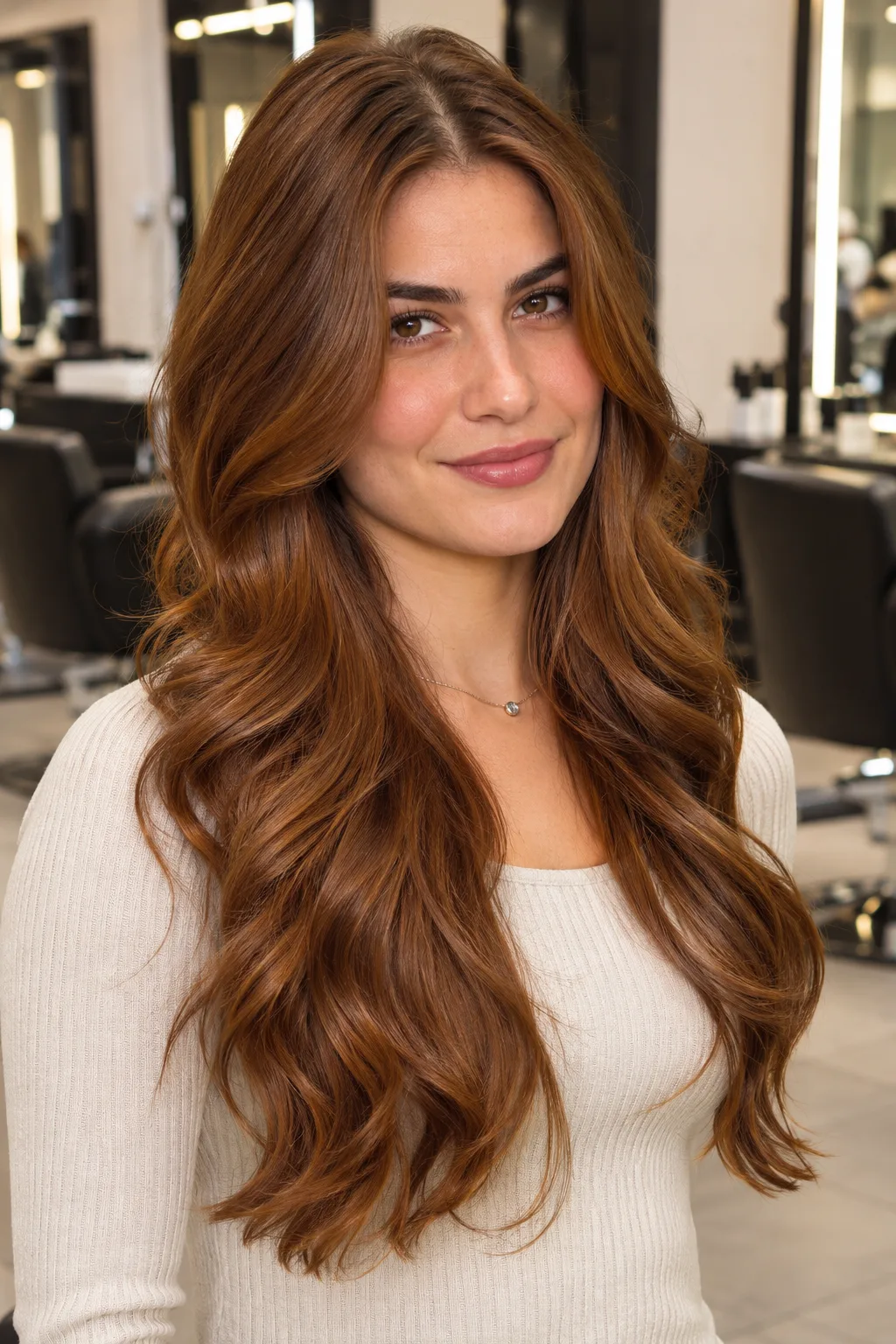
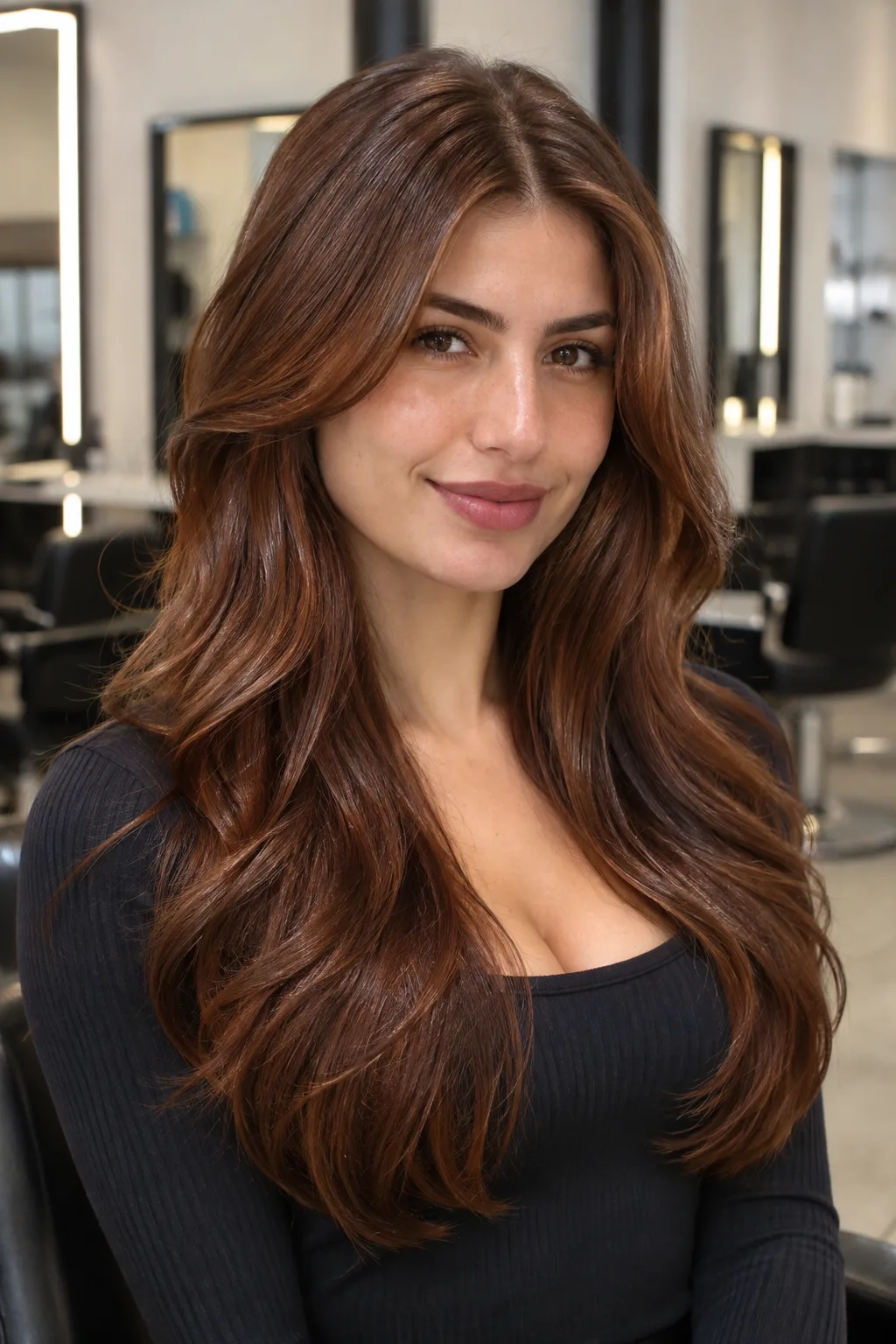
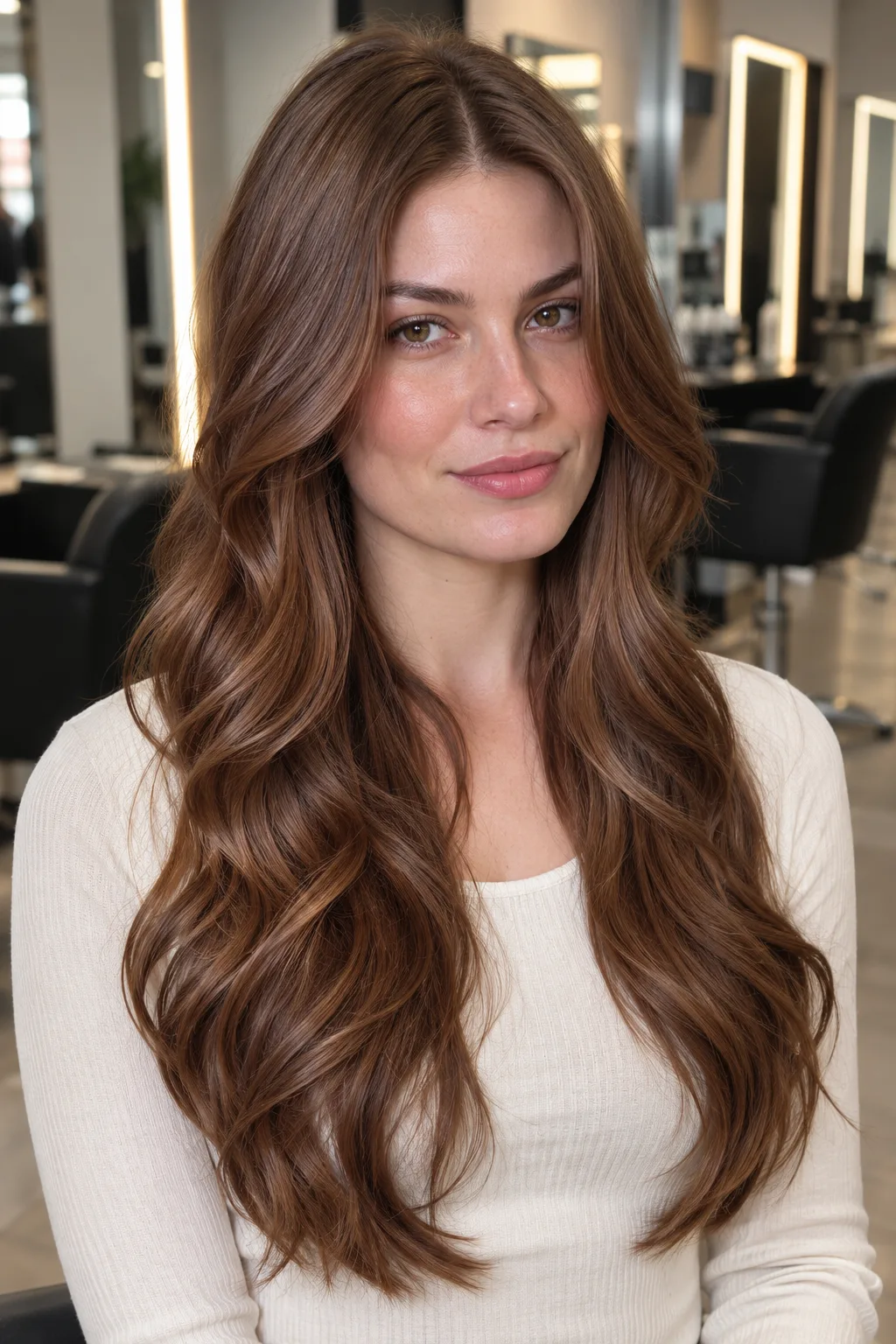
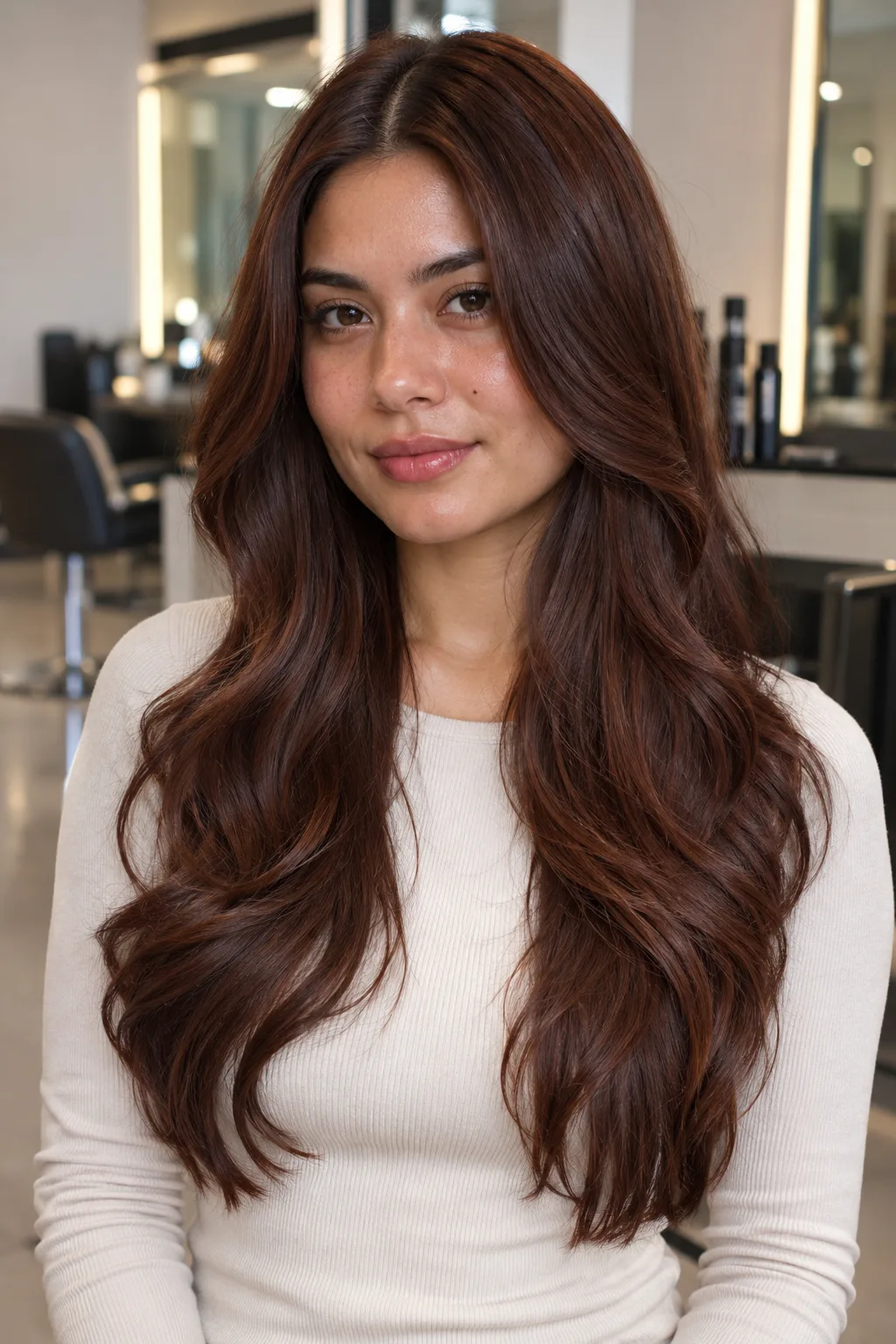
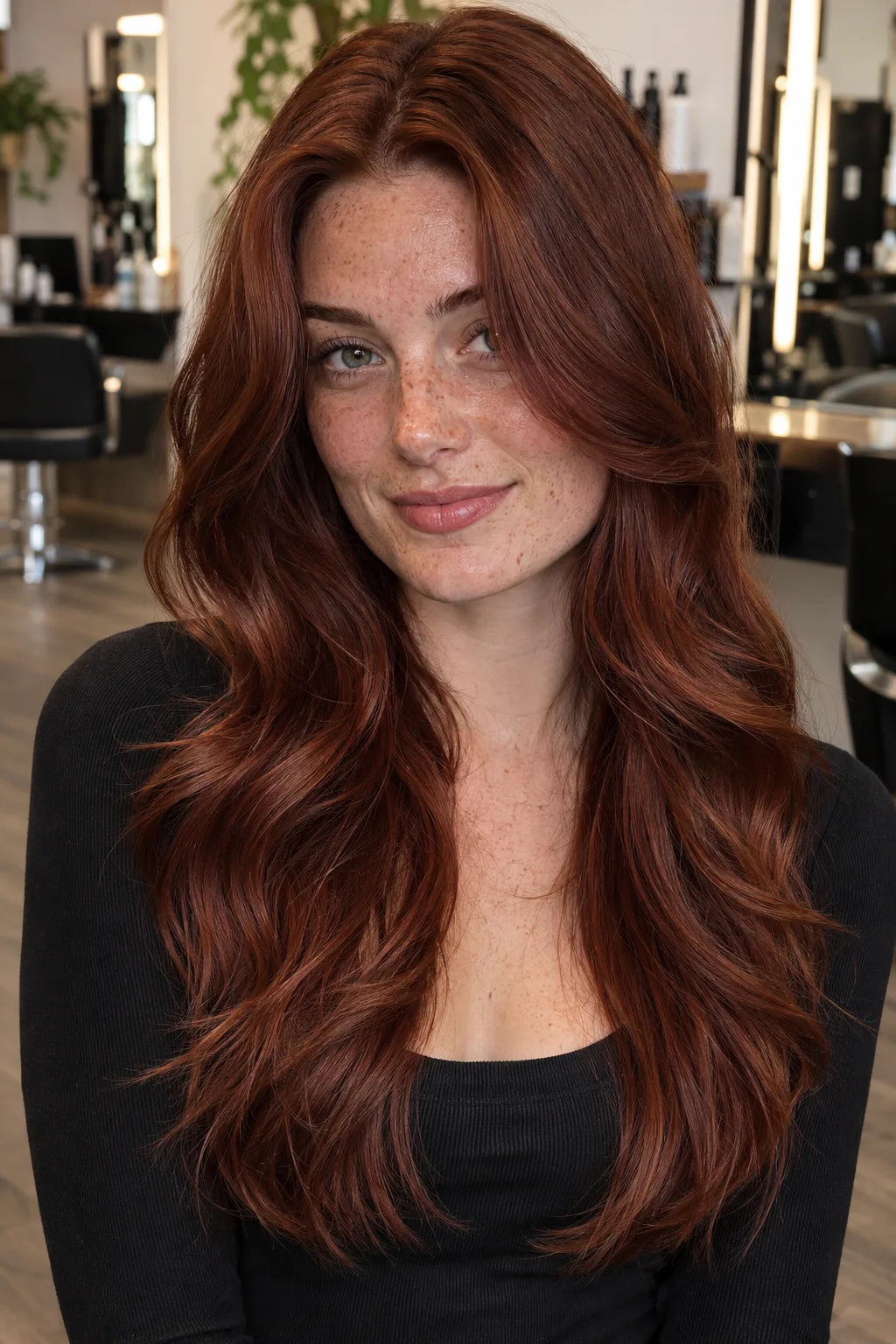
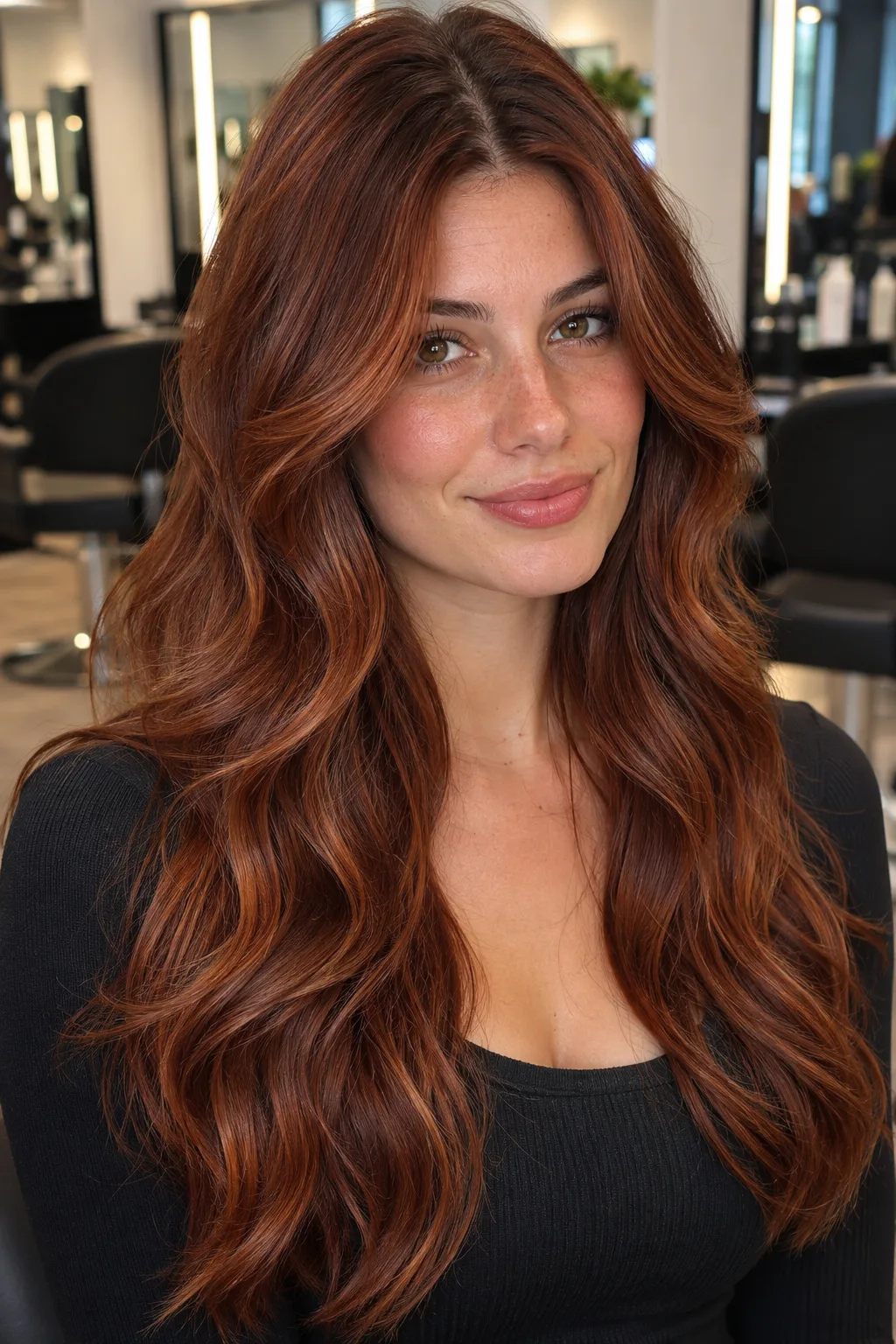
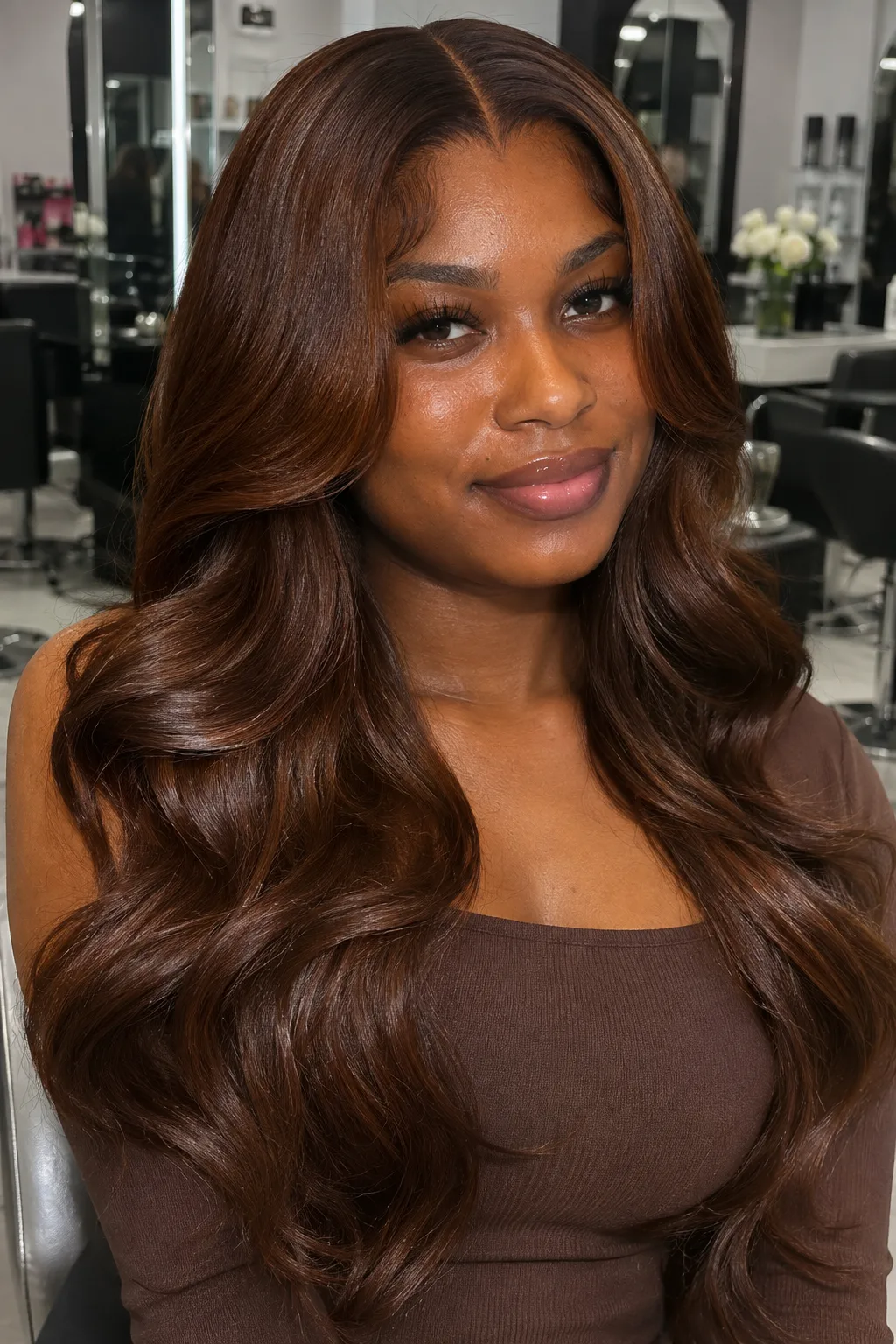
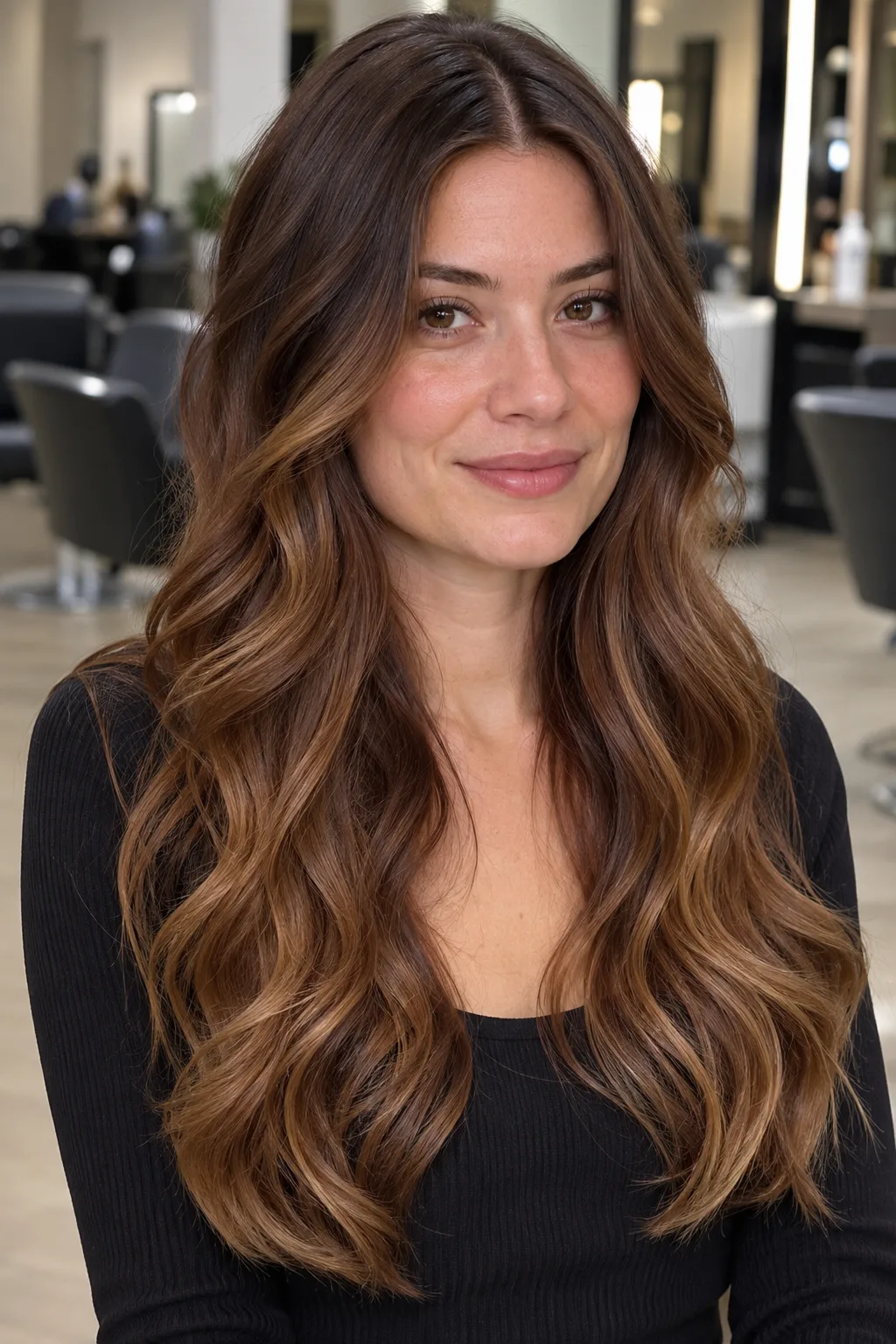
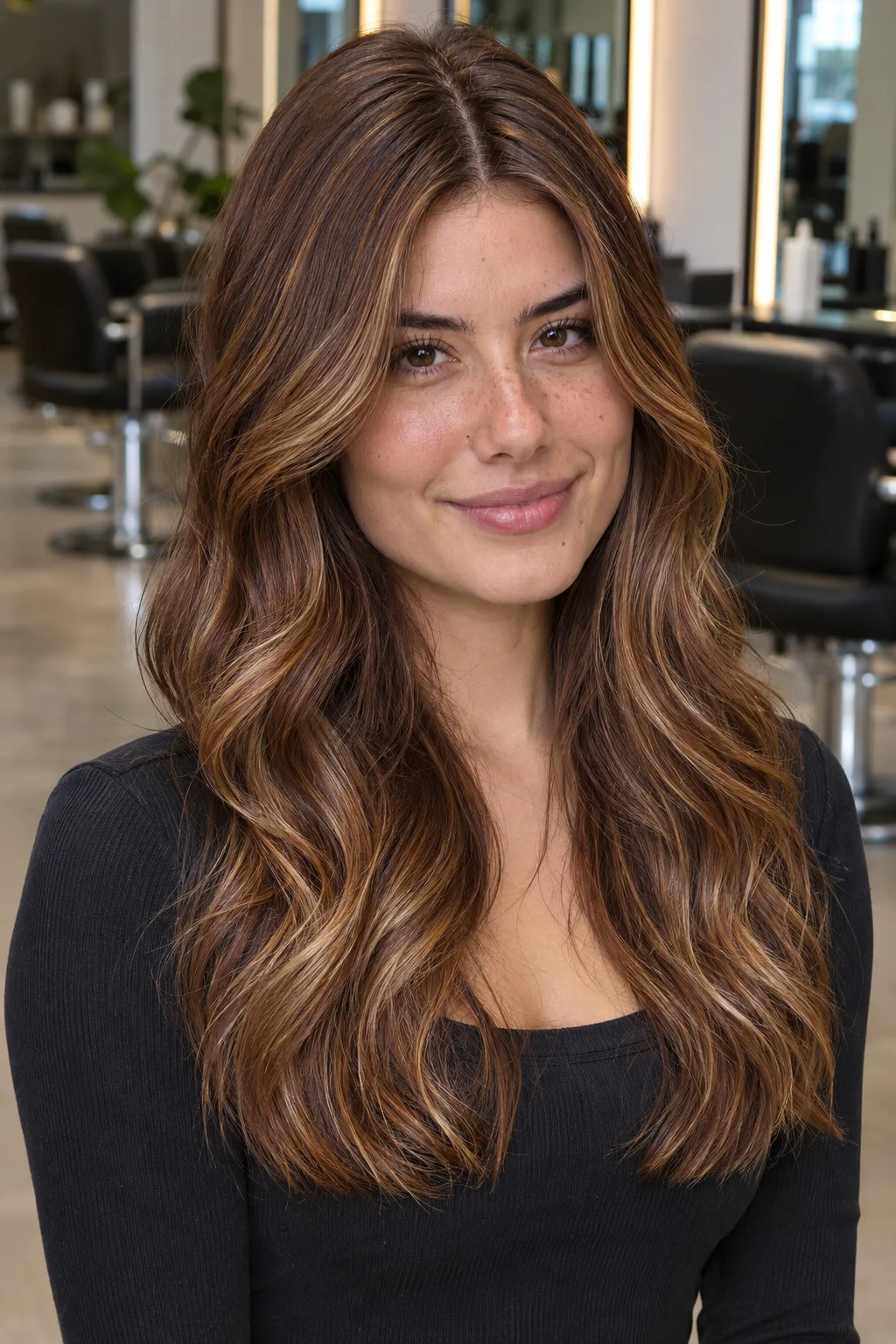
Every picture below has the same cut, the same long waves and the same salon light. The only thing that changes is the shade, so you can compare the color itself rather than the styling. Tap any one to see it on your own face.
Gallery14 photos · tap to enlarge
 Would this suit me?
 Would this suit me?
 Would this suit me?
 Would this suit me?
 Would this suit me?
 Would this suit me?
 Would this suit me?
 Would this suit me?
 Would this suit me?
 Would this suit me?
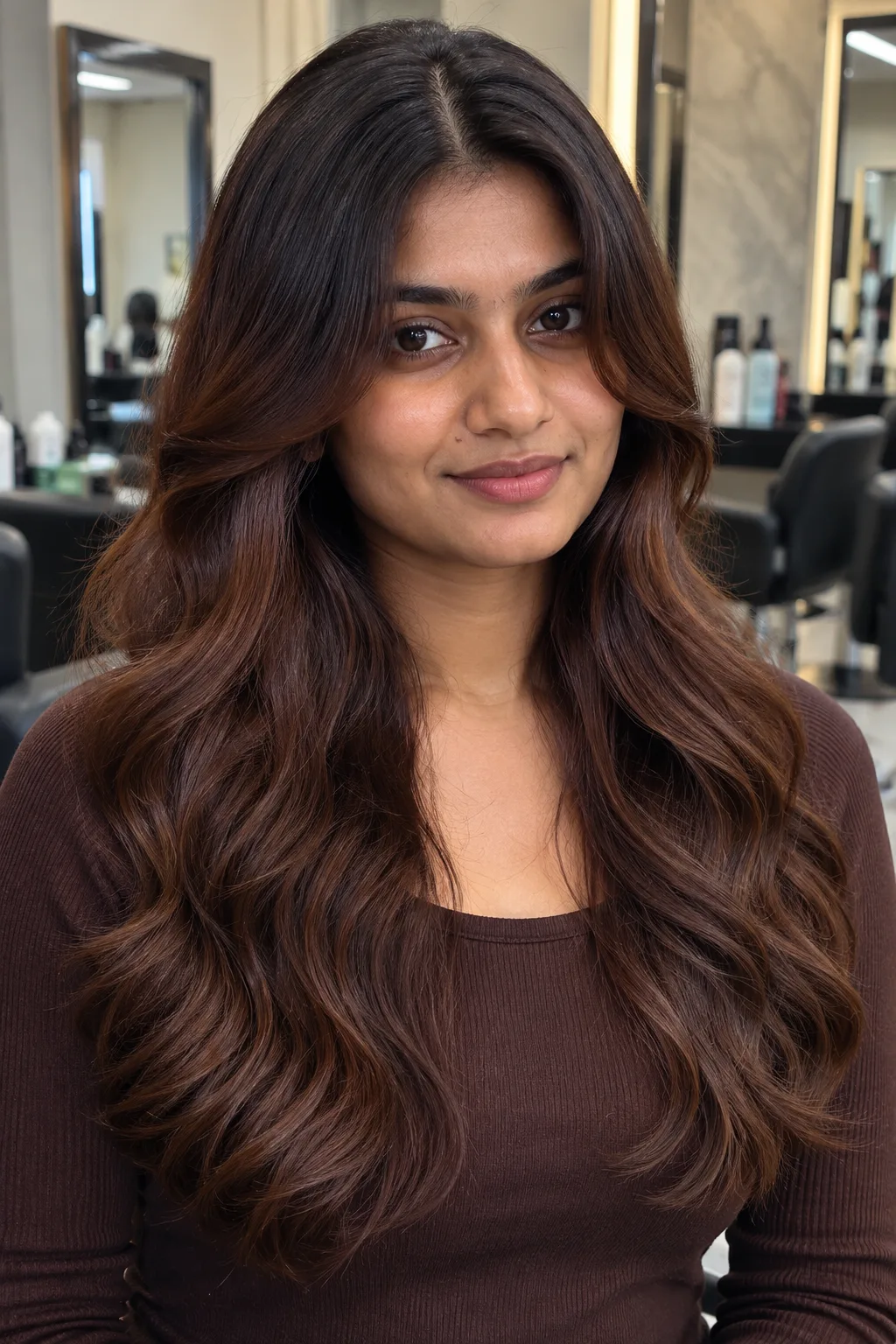 Would this suit me?
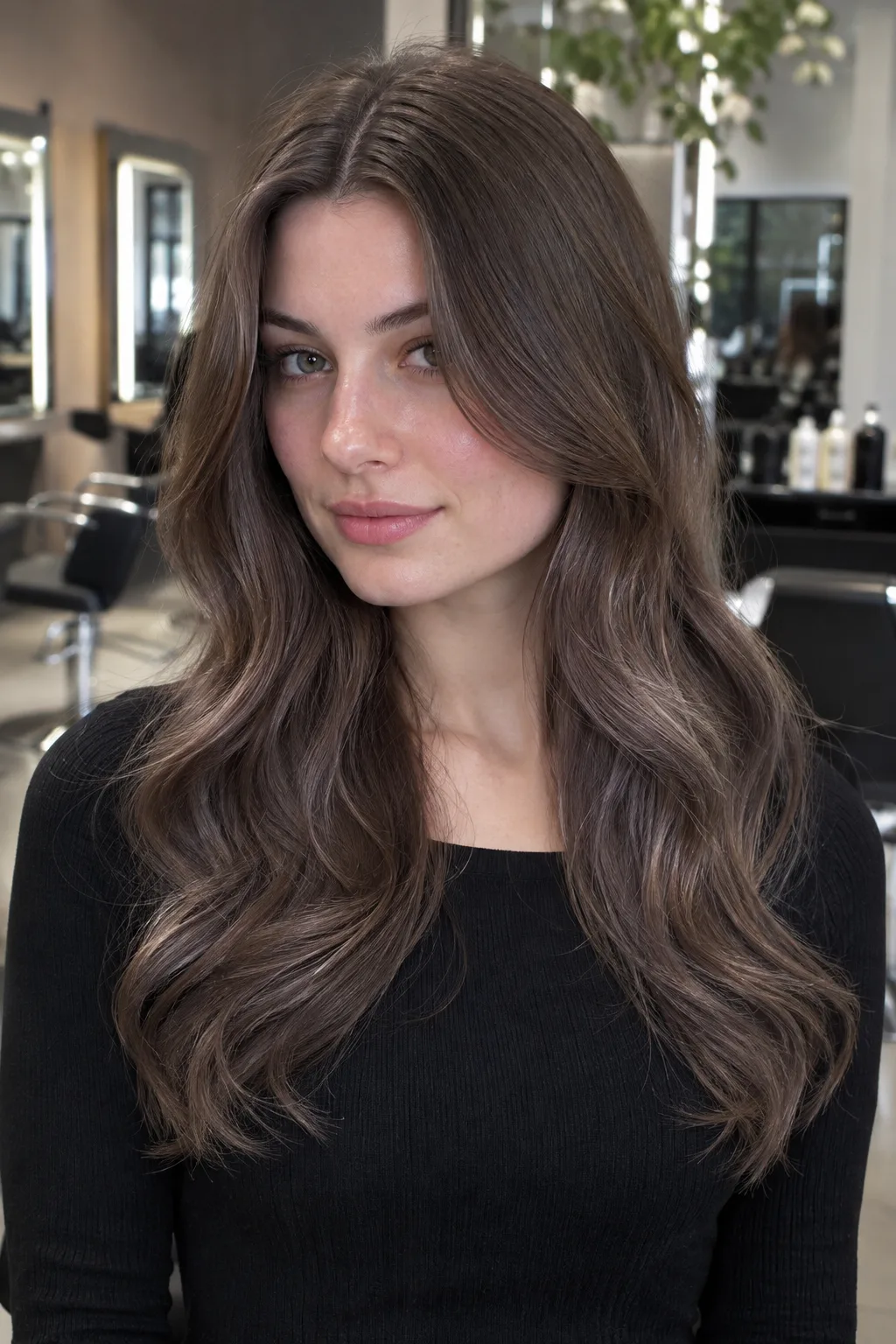 Would this suit me?
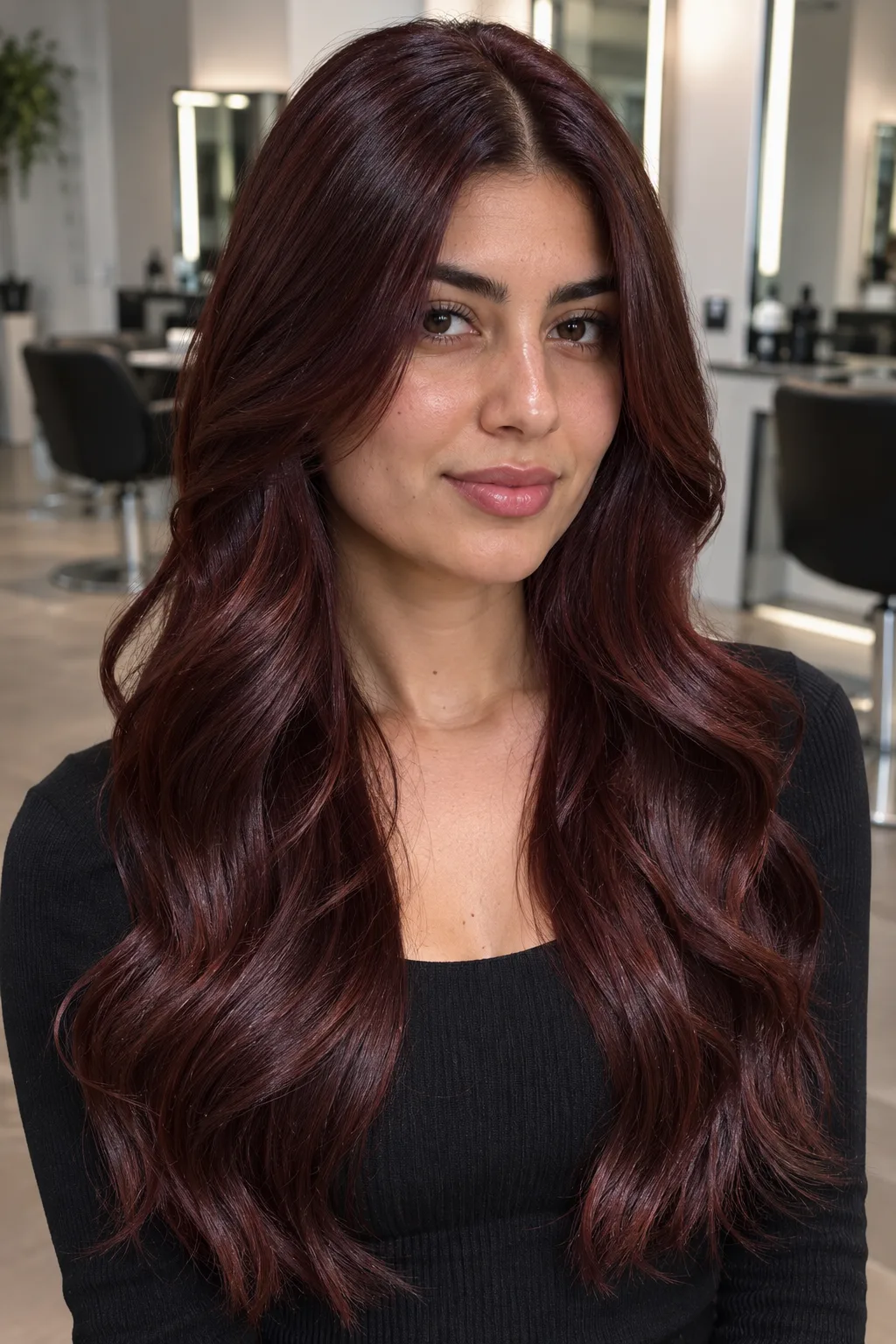 Would this suit me?
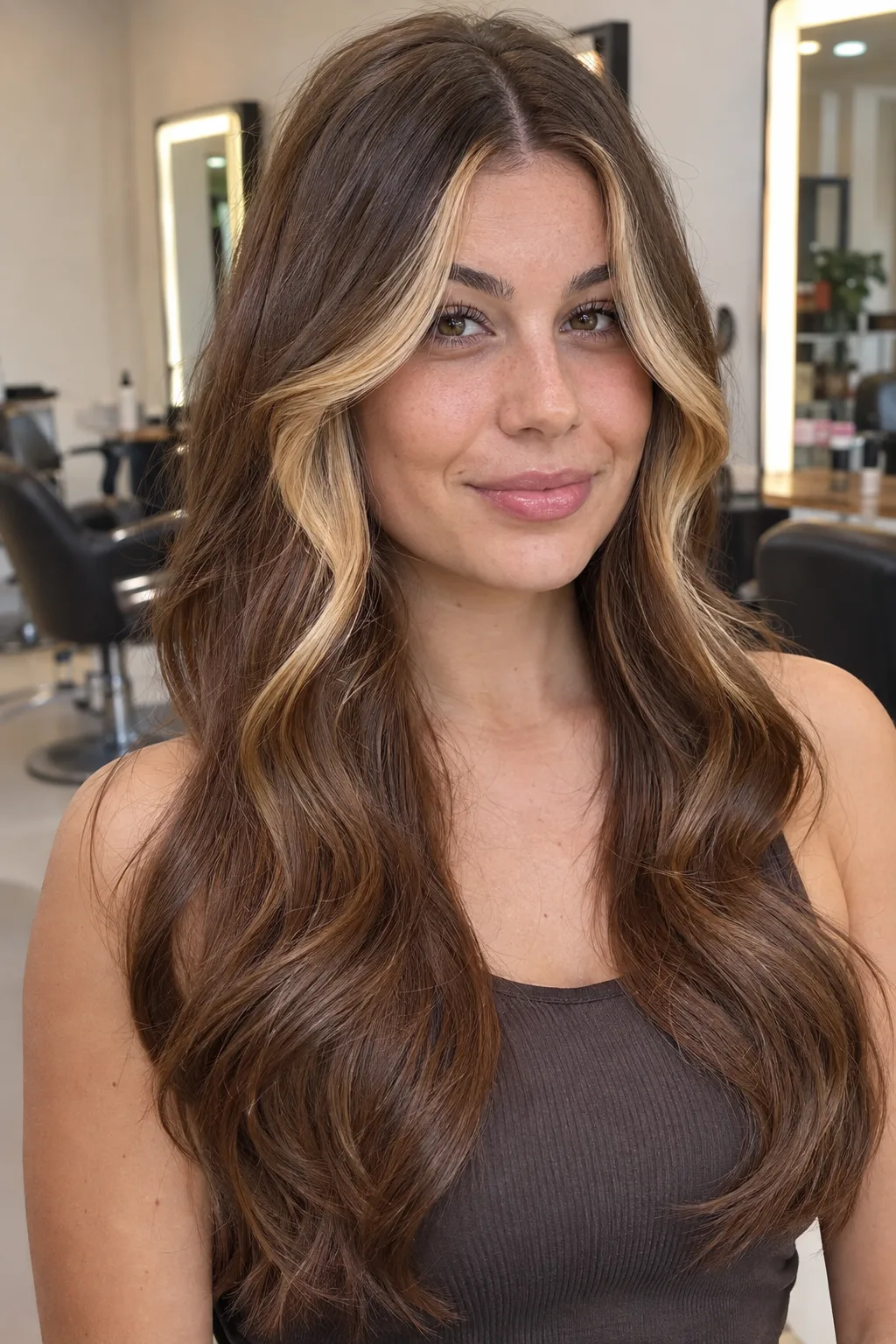 Would this suit me?
Two things jump out. Red chestnut and copper chestnut sit right on the border with auburn, so ask for them by name if that is what you want. And ash chestnut barely looks chestnut at all, which is exactly why it suits people who look sallow in warm browns.
Which cut makes you look best?
Find out in 60 seconds.
A few quick taps and one selfie, and you'll know. Free account, no card for your first render.
Will chestnut brown suit my skin tone?
Yes, almost certainly. Chestnut is one of the few colors that works across fair, olive and deep skin, because you can slide its depth and its warmth independently. The trick is matching the version to your undertone, not just your skin depth.
| Your skin | Best chestnut | Avoid |
|---|---|---|
| Fair, cool or pink | Light or golden chestnut | Red chestnut (can make redness look worse) |
| Fair, warm or freckled | Golden, copper or red chestnut | Ash chestnut (washes you out) |
| Light to medium, neutral | Classic medium chestnut | Very dark versions that flatten your features |
| Olive | Rich medium-dark chestnut | Golden chestnut (pulls olive skin green) |
| Medium to deep, warm | Dark, chocolate or mahogany chestnut | Light chestnut (can look brassy) |
Fair skin
On fair skin, lighter and more golden is safer. A light golden chestnut adds warmth without the full-on red that can make pink skin look flushed.
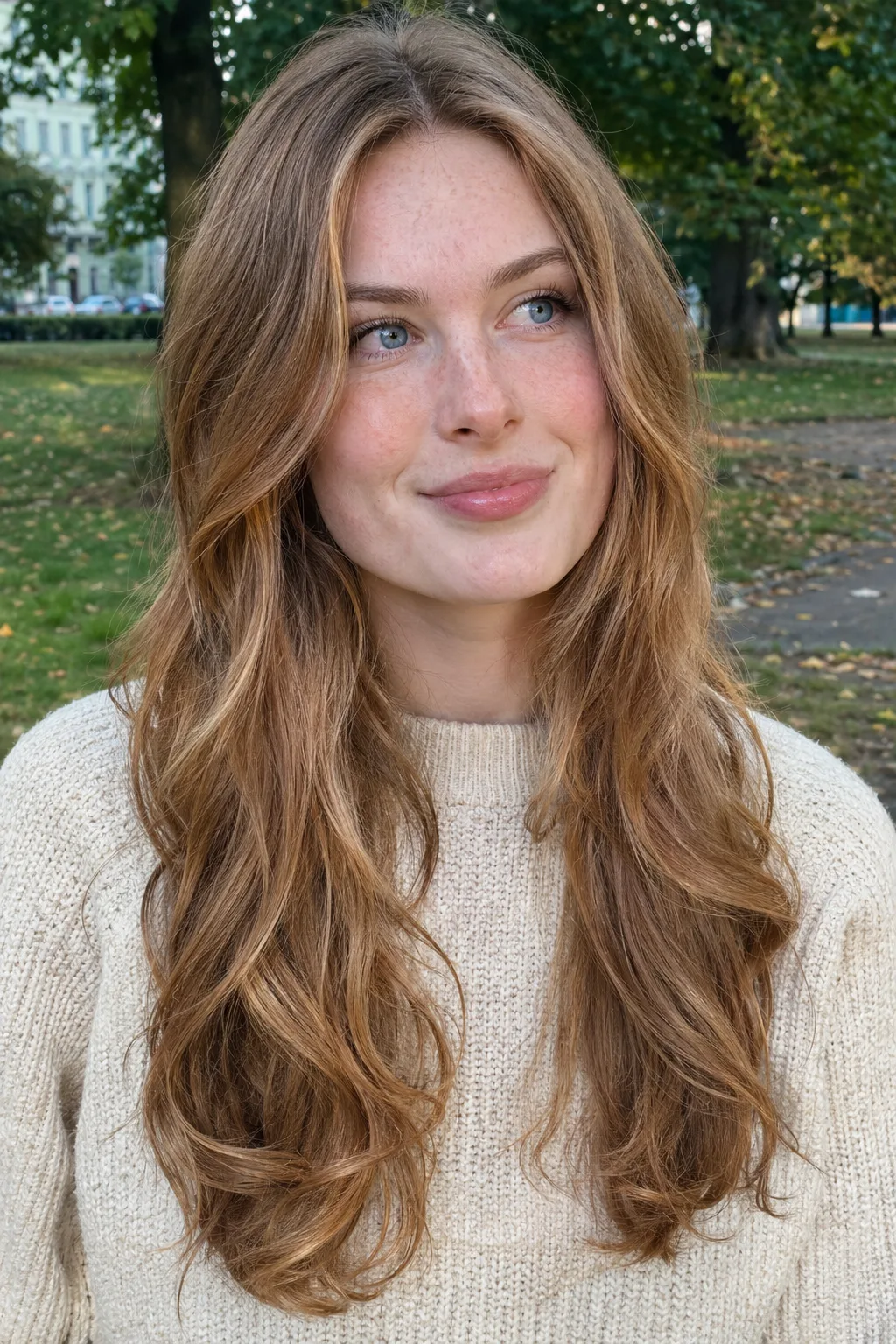
If you have freckles, you can go warmer than you think: copper chestnut picks up the freckles and makes the color look like your own. Our light brown hair guide covers the shades just above this one if you want to stay lighter still.
Olive and medium skin
Olive skin carries green-yellow undertones, so the gold in light chestnut can make it look tired. Go one or two levels deeper and lean red instead of gold. A rich medium-dark chestnut warms the face without fighting the olive.
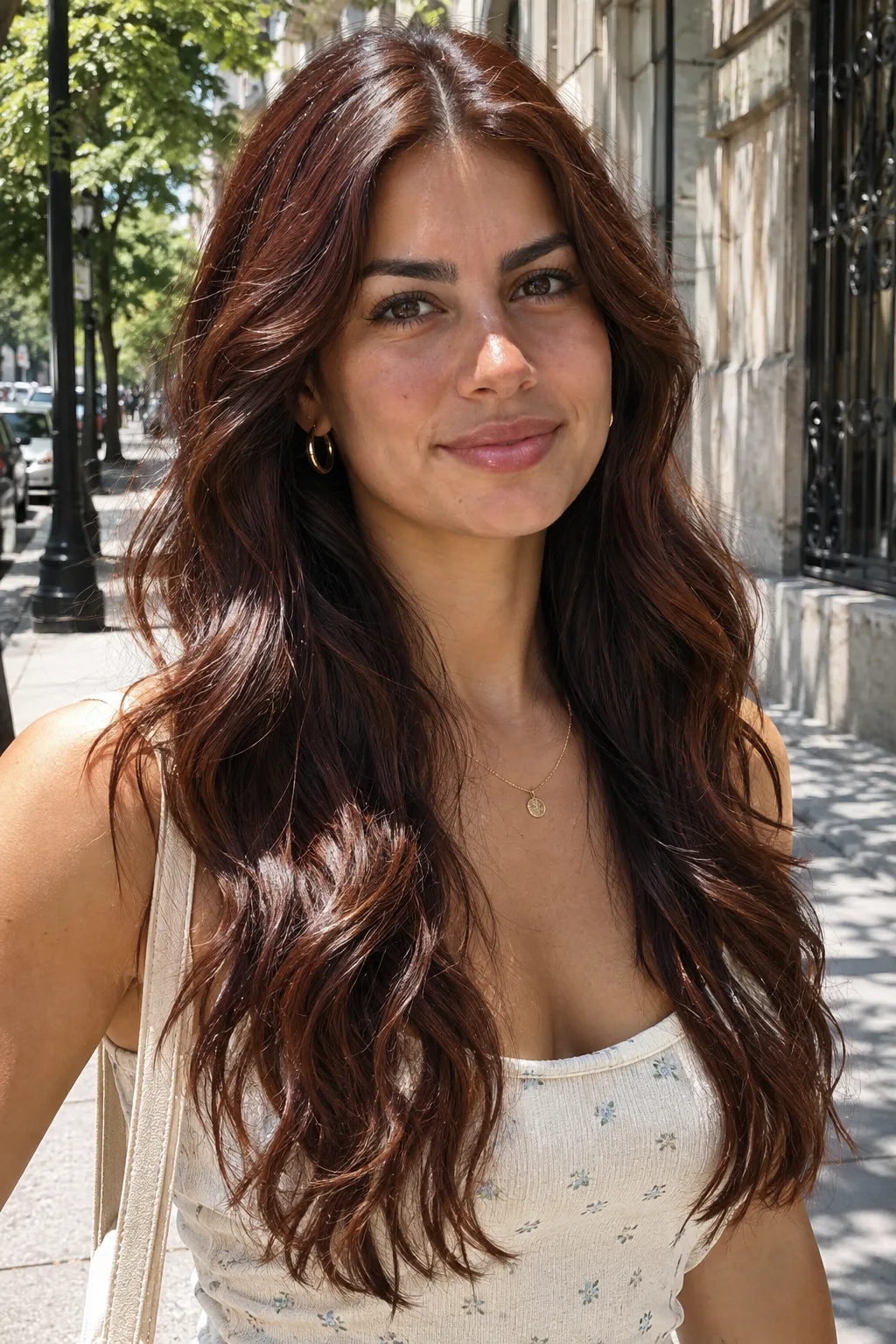
Deep skin
On deep skin, chestnut works best as a dark, glossy red-brown at level 3 or 4. It reads warm and expensive and needs only a little lift from natural black hair, which keeps the hair healthier.
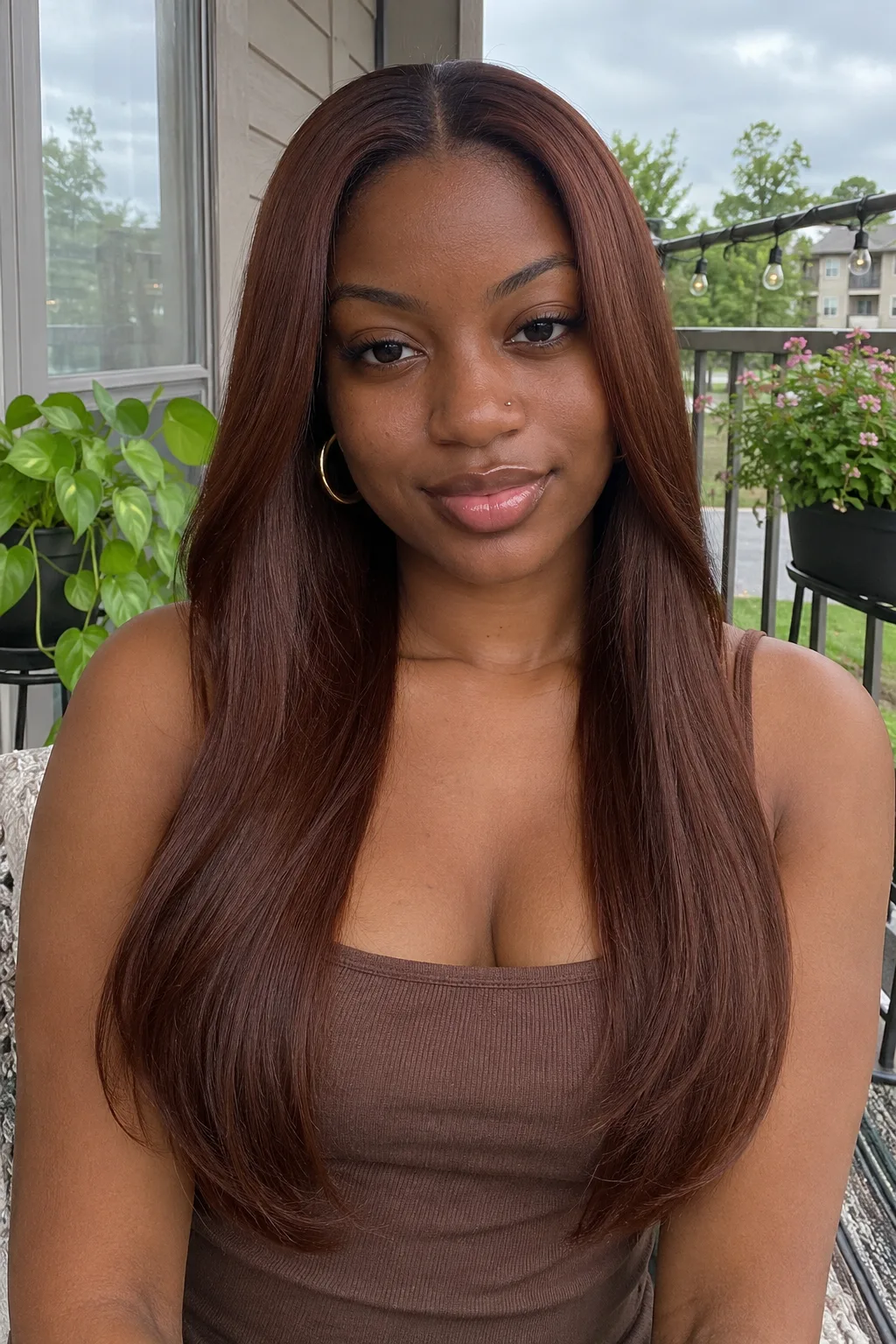
Sleek, smooth styles show chestnut best, because the reflect needs a flat surface. On coils and tight curls the color reads darker, so go a level lighter than the swatch you like.
Your starting color decides everything
Here is the part most guides skip. Chestnut is easy or hard depending on where you start, not on which box or brand you buy.
| Starting color | How hard | What it takes |
|---|---|---|
| Natural dark brown (level 3 to 4) | Easy | Lift 1 to 2 levels. The warmth that shows up is the chestnut. |
| Natural medium brown (level 5) | Easiest | A warm deposit or gloss, no lift needed |
| Light brown or dark blonde (6 to 7) | Medium | Deposit color down 1 to 2 levels with a warm red-gold formula |
| Blonde or highlighted (8+) | Hard | Fill with red-gold pigment first, then color, or it turns muddy or khaki |
| Black (level 1 to 2) | Medium to hard | Lift 2 to 3 levels, usually a salon job |
| Gray coverage | Medium | Needs a formula built for gray, or the grays read pinkish |
The counterintuitive bit: lifting dark hair exposes warm red-orange pigment that you normally fight against. For chestnut, that warmth is the color. Going from blonde is the opposite problem. Blonde hair has lost those warm pigments, so a brown dye on top looks flat and cool unless a colorist puts the warmth back first with a filler.
If you're coming down from blonde, ask for a filler by name. Skipping it is the most common reason chestnut from a box goes wrong.
Chestnut with highlights or balayage
Plain chestnut is beautiful, but highlights stop it reading as one flat block of color, especially on long hair.
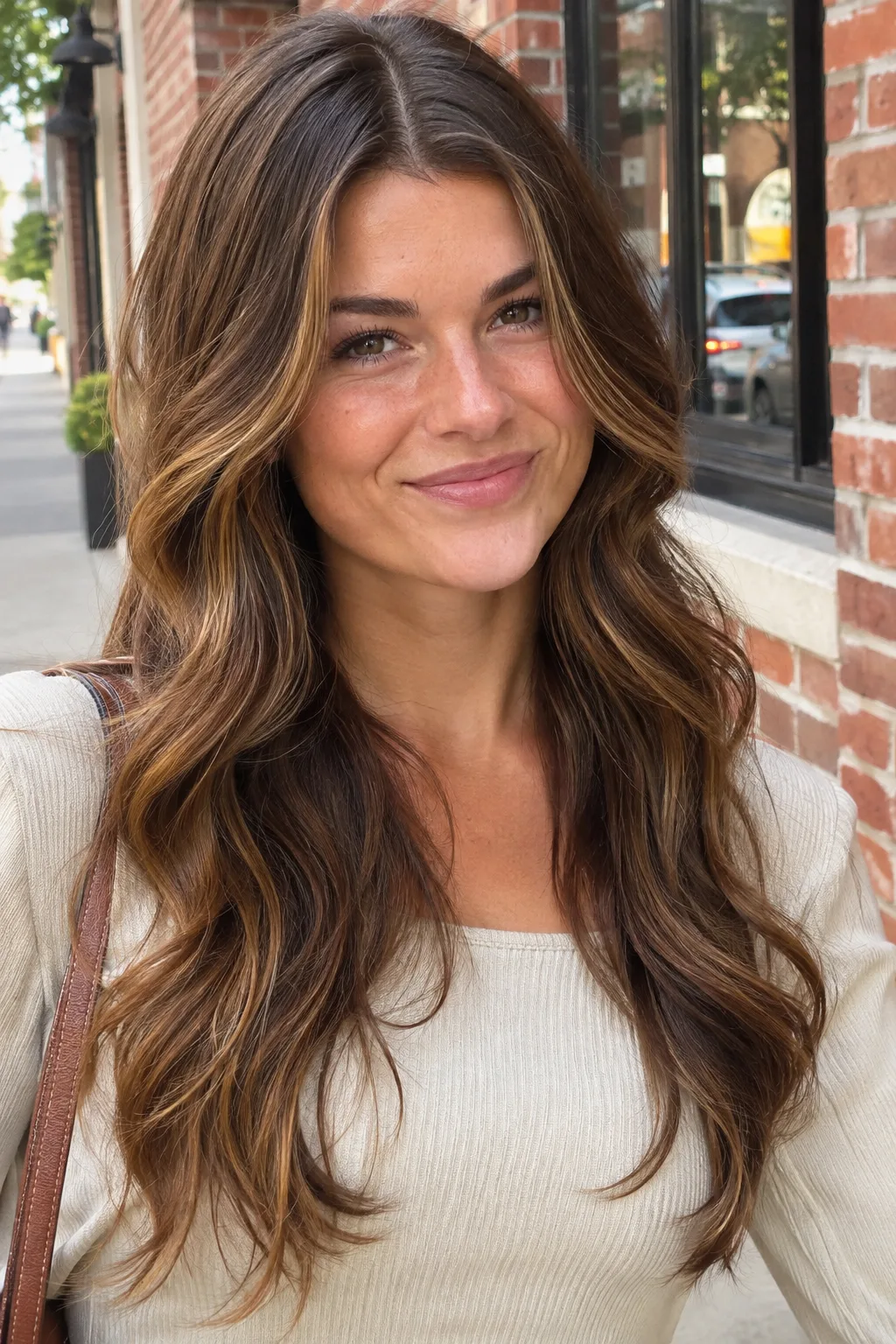
The three combinations that work best:
- Caramel face-framing pieces. Brightens the face, keeps the rest chestnut. Lowest maintenance.
- Honey babylights. Fine, scattered, warm. Grows out softly. See our brown hair with highlights guide for placement ideas.
- Chestnut to caramel balayage. Darker at the root, lighter at the ends. Longest gap between appointments, often 3 to 4 months. Our caramel hair color guide shows the lighter end of this range.
Keep highlights in the same warm family. Ashy or icy highlights on a chestnut base clash and make the base look brassy by comparison.
How to ask your colorist for chestnut brown
Most color mistakes are language mistakes. "Brown with some warmth" means ten different things to ten colorists.
Say this to your barber
I'd like a warm chestnut brown around a level 5, brown first with a soft red-gold reflect, not auburn and not ashy, finished with a gloss.
How to ask for chestnut brown hair
- Bring three photos
One of the exact chestnut you want, one that is too red, one that is too flat. The "too far" pictures tell your colorist more than the goal picture does.
- Say the level and the tone
Name a level (5 for classic, 6 for light, 4 for dark) and say "warm red-gold, not copper". Level plus tone is the colorist's own language.
- Tell them your history
Box dye, henna, highlights or a recent gloss all change the formula. Be honest about the last two years.
- Ask about a filler if you're blonde
If you're going down from blonde or heavy highlights, ask whether they'll pre-pigment first. If they say no, ask why.
- Book a gloss for 6 to 8 weeks out
Chestnut's red-gold fades first. A gloss between full appointments brings the reflect back.
Mistakes that cost you the color
- Picking the box shade by the name. "Chestnut" on one brand is another brand's auburn. Judge by the swatch on the back and by your own starting level, not the photo on the front.
- Going from blonde without a filler. It comes out khaki or muddy and costs a salon correction to fix.
- Going too dark too fast. A shade that looks warm on the box can read near-black on dark, porous ends. Start lighter: going darker later is easy, going lighter is not.
- Hot water and clarifying shampoo. Both strip the red-gold first, leaving a dull mid brown within a few weeks. Use lukewarm water and a sulfate-free shampoo.
- Skipping the patch test. Hair dye can cause allergic reactions. The American Academy of Dermatology recommends a patch test before every color, even with a brand you've used before.
If you want lower commitment, a demi-permanent color gives you chestnut for 4 to 6 weeks and fades out softly instead of leaving a hard line.
Can you see chestnut on yourself before you dye?
The manual way works up to a point: hold photos next to your face, check your undertone in daylight, or buy a cheap demi-permanent and see. But a swatch on a model's face tells you nothing about yours. Your skin, your eyes and your current hair are exactly the variables a reference photo can't show, and that is the wall: you only find out after the dye is on.
That is what a virtual hair color try-on fixes. Upload a selfie and see chestnut, or its neighbors like ash brown or copper, on your actual face before you book. Your first look is free, one hairstyle and one color on it, with no card. Plans start at $9 a month if you want to compare more shades; see the pricing page for the full details.
The verdict
If you have natural medium or dark brown hair, chestnut is the safest warm color you can pick: it uses the warmth your hair already has instead of fighting it. Start with classic level 5 chestnut, add caramel face-framing pieces if it looks flat, and book a gloss every 6 to 8 weeks. If you're blonde, go to a salon and ask for a filler. Either way, see it on your own face first: the difference between chestnut and auburn is a few percent of red, and you'll want to know which side of it suits you.
Frequently asked questions
Chestnut brown is a warm medium brown, usually level 4 to 6, with red and gold undertones. It reads as brown in normal light and shows a soft copper-red glow in sunlight.
Look at it in direct daylight. If it reads brown with a red glint, it's chestnut. If it reads red with brown underneath, it's auburn. Auburn has noticeably more red pigment.
Yes. Red and gold undertones are what make it chestnut rather than plain brown. The amount varies by brand, so check the swatch, and ask for "red-gold, not copper" if you want it softer.
Chestnut is a type of brown. Plain or neutral brown has no strong undertone, while chestnut always carries visible red-gold warmth.
There's no single answer, but warm mid browns like chestnut suit the widest range of skin tones because both the depth and the warmth can be adjusted. The best one is the one that matches your undertone.
Softer, slightly lighter warm browns tend to look fresher than very dark or flat shades, which can emphasize lines and contrast with gray regrowth. A light chestnut with face-framing highlights blends gray well.
You need lift, not just dye. A permanent color with developer can lift natural dark brown 1 to 2 levels, and the warmth that appears is often chestnut. For more than 2 levels, see a colorist.
Bring a goal photo plus a "too far" photo, name the level and the tone, and share your color history. "Level 5, warm red-gold, not auburn" is clearer than "warm brown".
Preview it on your own photo: Balayage Try-On.
Share article
About the author
Related posts
Women's Haircuts · 13 min
Partial Highlights: 14 Looks and When to Go Full Instead
Partial highlights lighten only the top layer and face frame, so they look full worn down and patchy worn up. See 14 base colors, partial vs full compared, and what to ask for.
Women's Haircuts · 12 min
Black Cherry Hair Color: 14 Looks and Why Dark Hair Wins
Black cherry is a near-black red that looks black indoors and wine red in the sun. See 14 ways to wear it, what your base color gives you, and how to keep it from fading rusty.
Women's Haircuts · 13 min
Copper Brown Hair: 14 Shades and How to Pick Yours
Copper brown is brown first and copper second. See 14 shades from light golden to deep auburn brown, which one works on your starting color and skin tone, and what to say to your colorist.
Women's Haircuts · 13 min
Caramel Hair Color: 14 Shades and How to Get Yours
Caramel hair color is a warm golden brown around level 6 to 7. See 14 shades and placements, the route from your starting color, what suits your skin tone, and the mistakes that turn it orange.
Women's Haircuts · 12 min
Cherry Cola Hair Color: 14 Looks, Who It Suits, No Bleach
Cherry cola is a dark brunette with a cool black-cherry tint: brown in the shade, red in the sun. See 14 looks, which version your hair can take without bleach, who it suits and what to tell your colorist.
Women's Haircuts · 13 min
Short Pixie Cuts: 14 Looks and How to Pick Yours
The sides of a short pixie barely change. The top decides everything. See 14 short pixie cuts side by side, which one suits your face shape and hair type, and the exact words to say in the chair.