Brown Hair With Highlights: 14 Colors and Which Suits Your Base
Oleh Onysko 26 October 2026 13 min read
In this article
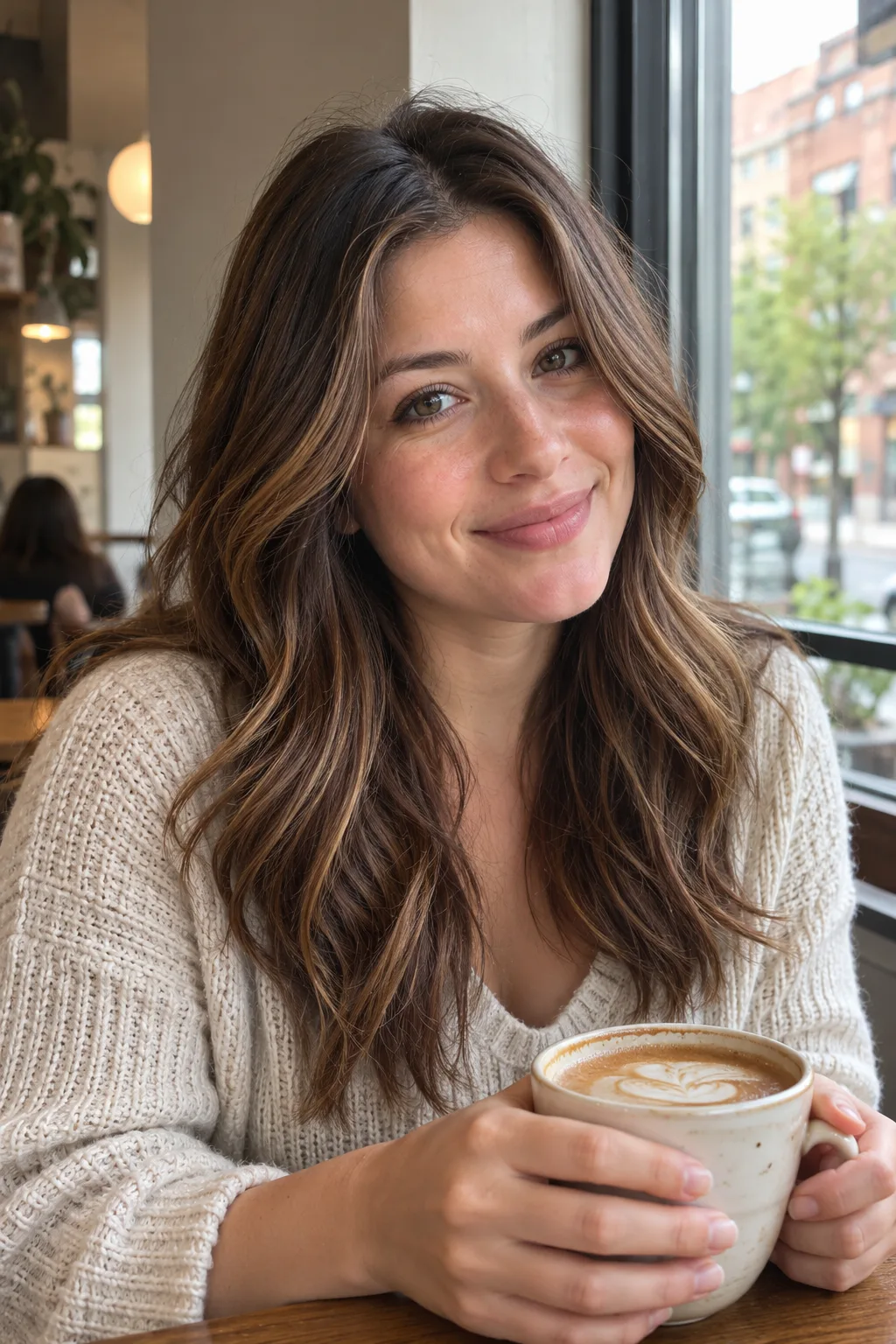
The best highlights for brown hair are the ones your brown already wants to turn into. Lift any brown and it passes through red, orange and gold before it ever reaches pale blonde, so caramel, honey, copper and red sit on the way and cost you one session, while ash, beige and silver sit past it and cost you toner for as long as you wear them.
That is the whole trick, and almost nobody picks this way. People pick a shade from a photo, then find out at the salon that the shade they saved needs two appointments and a gloss every six weeks. Pick the family first: warm, red or cool. Then pick the exact shade.
What highlights on brown hair actually are
A highlight is a strand of your own hair lifted lighter than the base around it. A lowlight is the reverse, a strand taken darker. Balayage is not a color at all, it is a hand-painted placement that starts lower on the strand, so it grows out without a line.
Colorists rate hair from level 1 (black) to level 10 (palest blonde). Most brown sits between level 3 and level 7. The number of levels between your base and the highlight is what your eye reads first, more than the shade name: two or three levels looks like sun, five or more looks like a deliberate stripe. If you only want blonde and want the full shade-by-base breakdown, our guide to brown hair with blonde highlights covers just that color. This page covers all of them.
Every highlight color on brown hair, compared
The color you choose sets your upkeep bill, not just your look. Here is what each family costs to get and to keep.
| Highlight color | Best on | Levels of lift | Toner or gloss | How it fades |
|---|---|---|---|---|
| Caramel | Dark to medium brown | 2 to 3 | Rarely | Warms slightly, still looks right |
| Honey and golden | Medium brown | 2 to 4 | Rarely | Goes more golden |
| Copper | Chestnut and medium brown | 1 to 3 plus deposit | Every 4 to 6 weeks | Fastest fade of any family |
| Red and mahogany | Dark brown, espresso | 0 to 2 plus deposit | Every 4 to 6 weeks | Washes out to a dull brown-red |
| Ash and beige blonde | Light brown | 3 to 5 | Every 6 to 8 weeks | Turns brassy |
| Silver and grey ribbons | Dark brown | 6 or more | Every 4 weeks | Yellows, needs purple care |
Read the toner column before you fall for a photo. Warm families on dark and medium brown are close to free to maintain. Cool families on dark brown are a subscription.
14 brown hair with highlights ideas, sorted by color
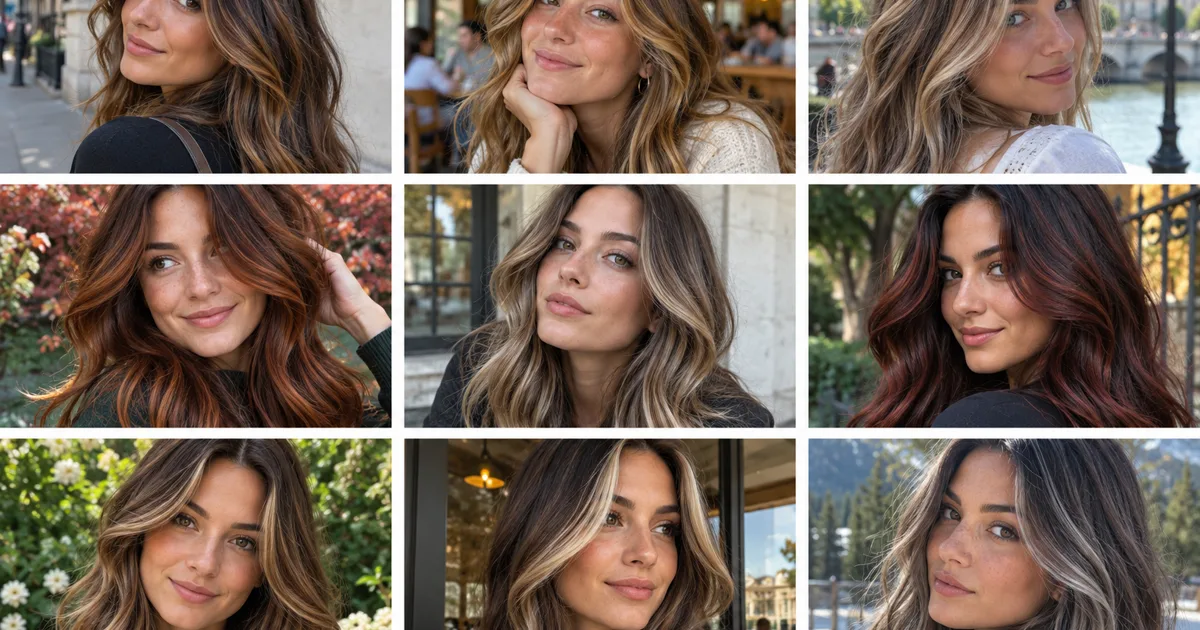
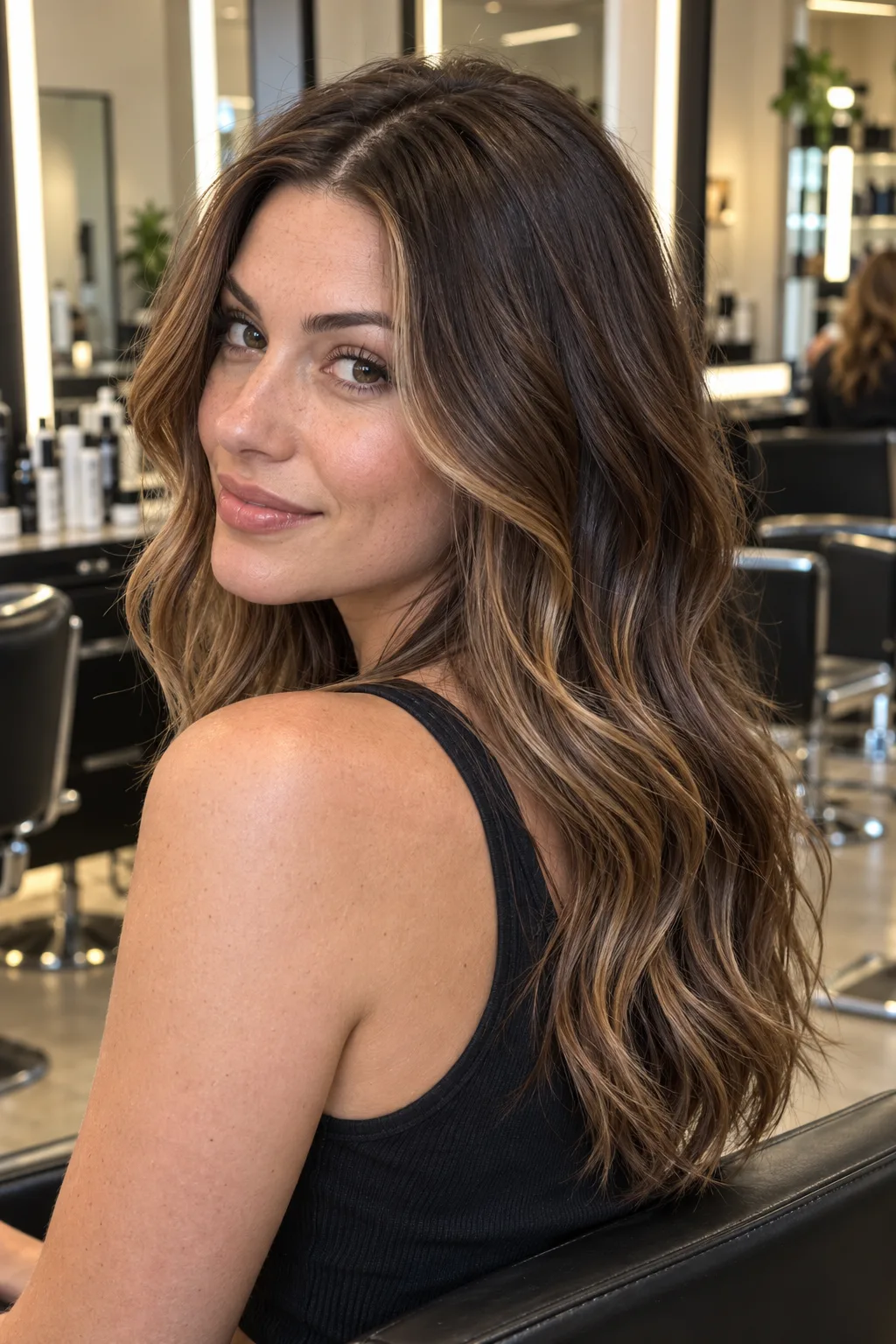
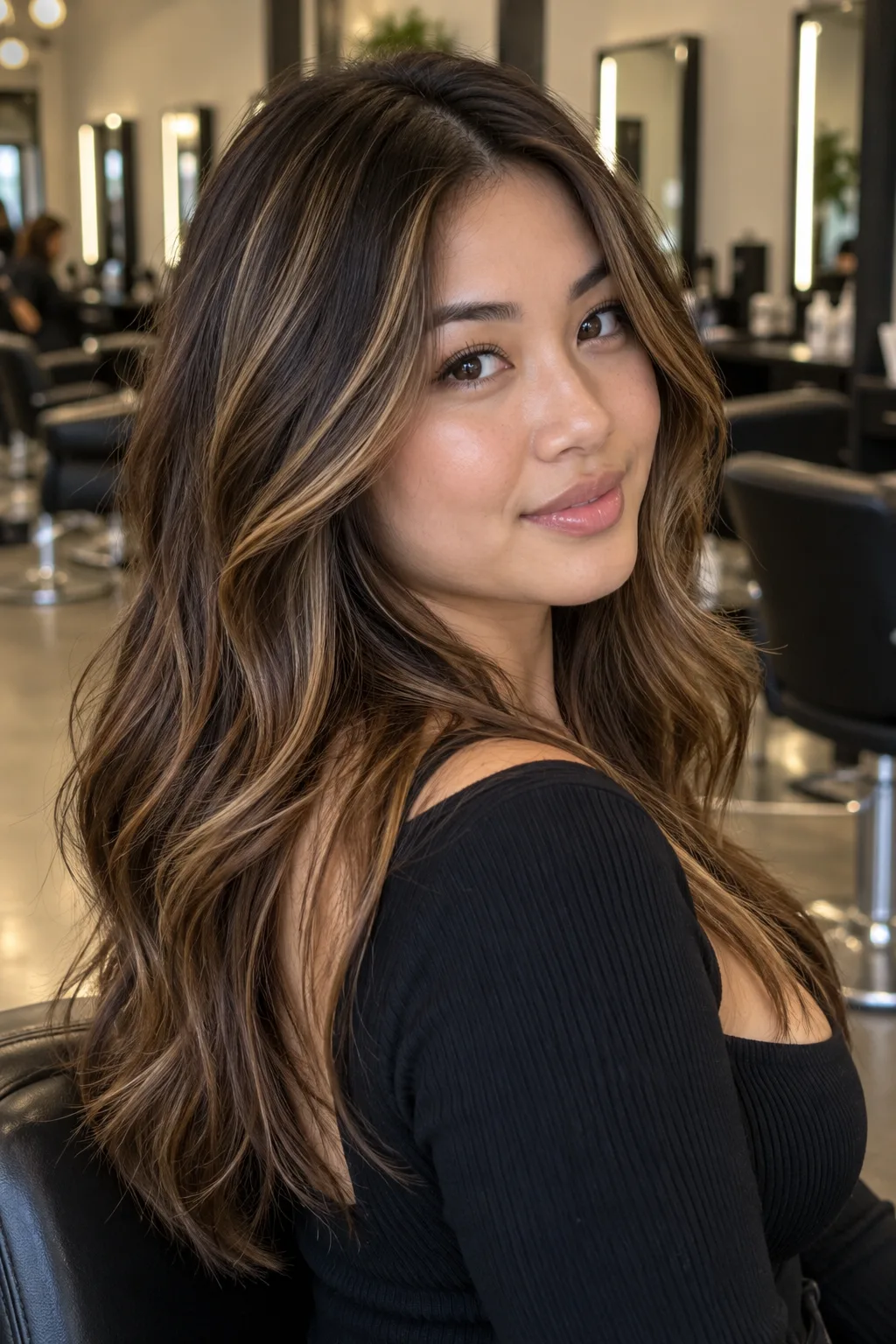
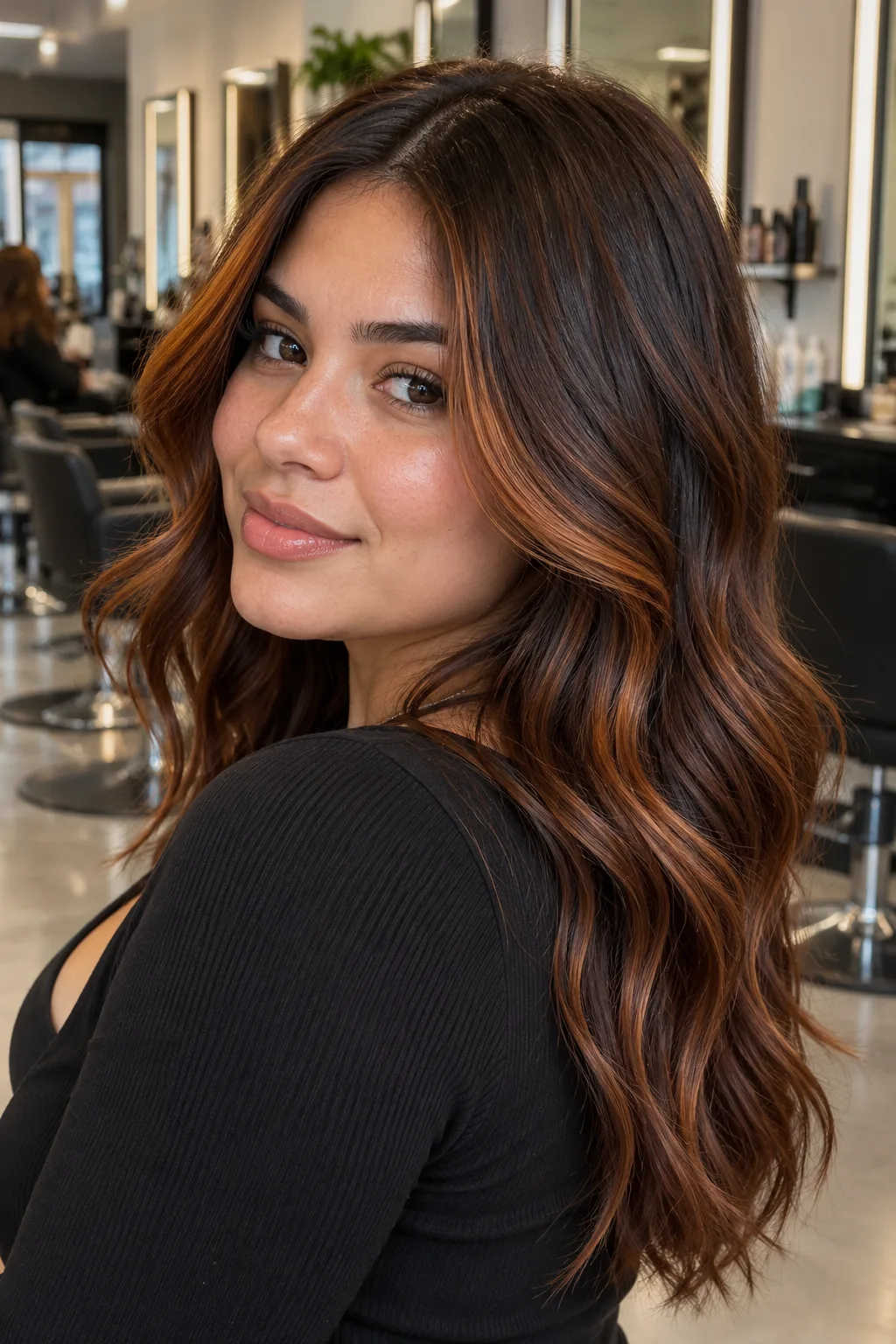
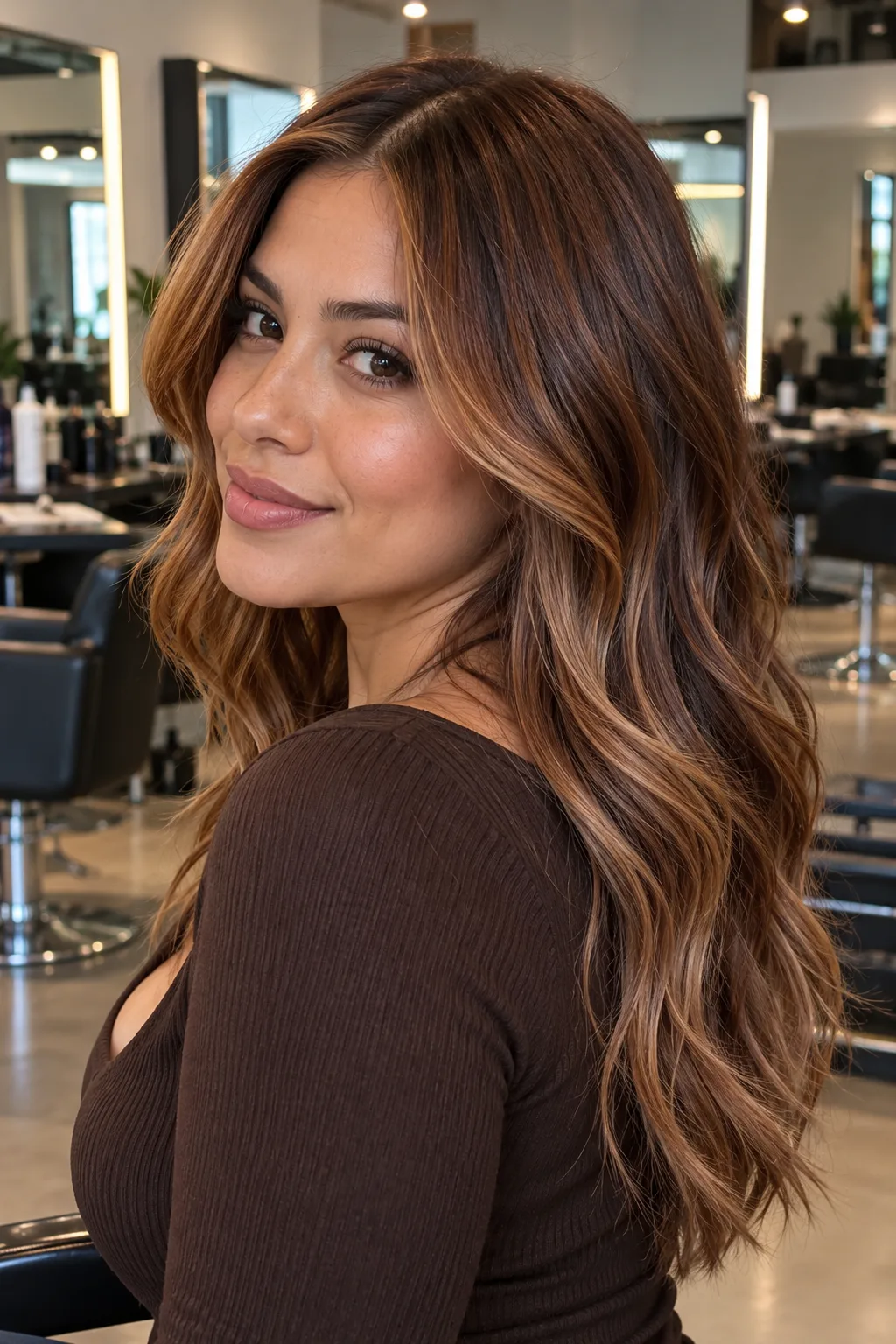
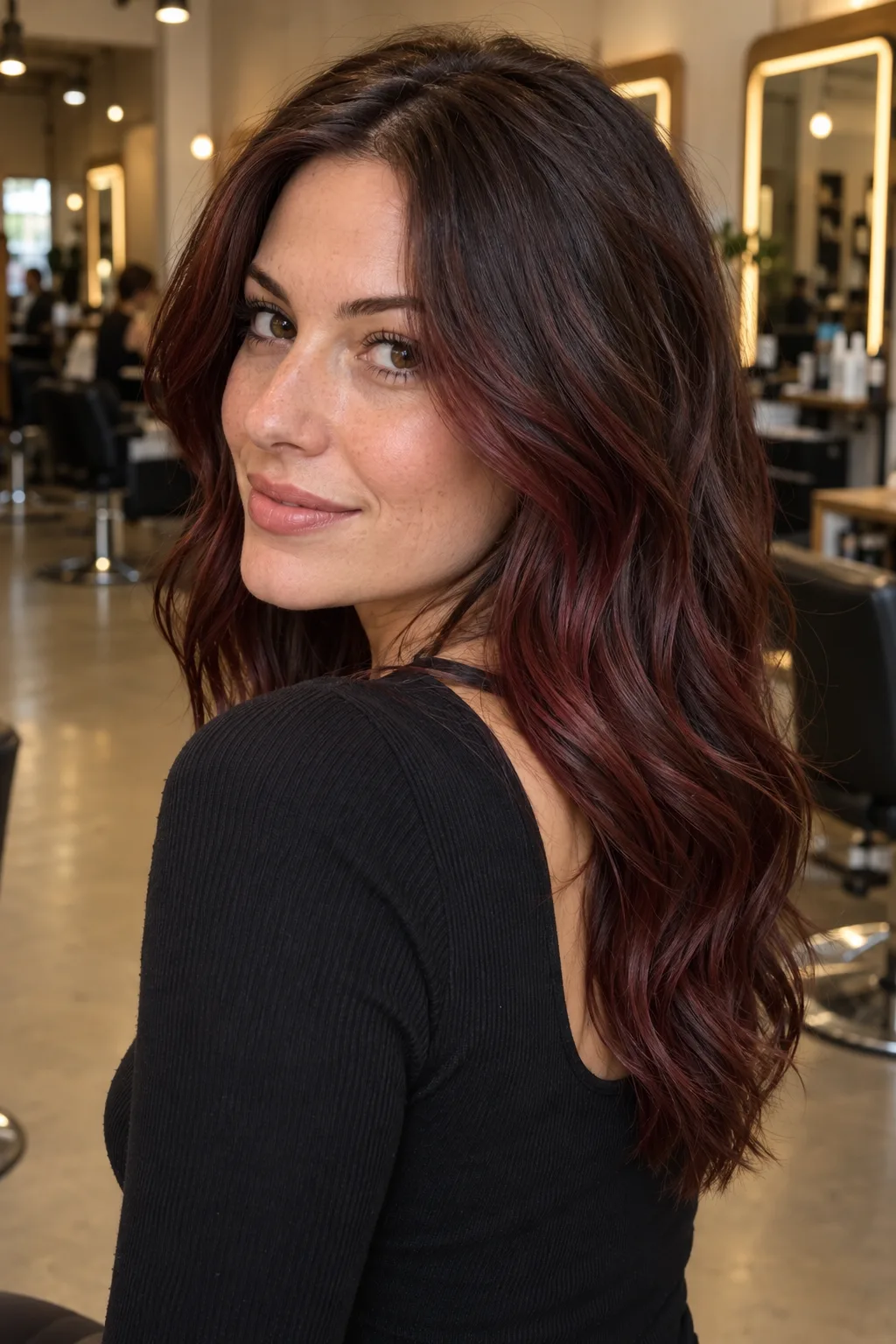
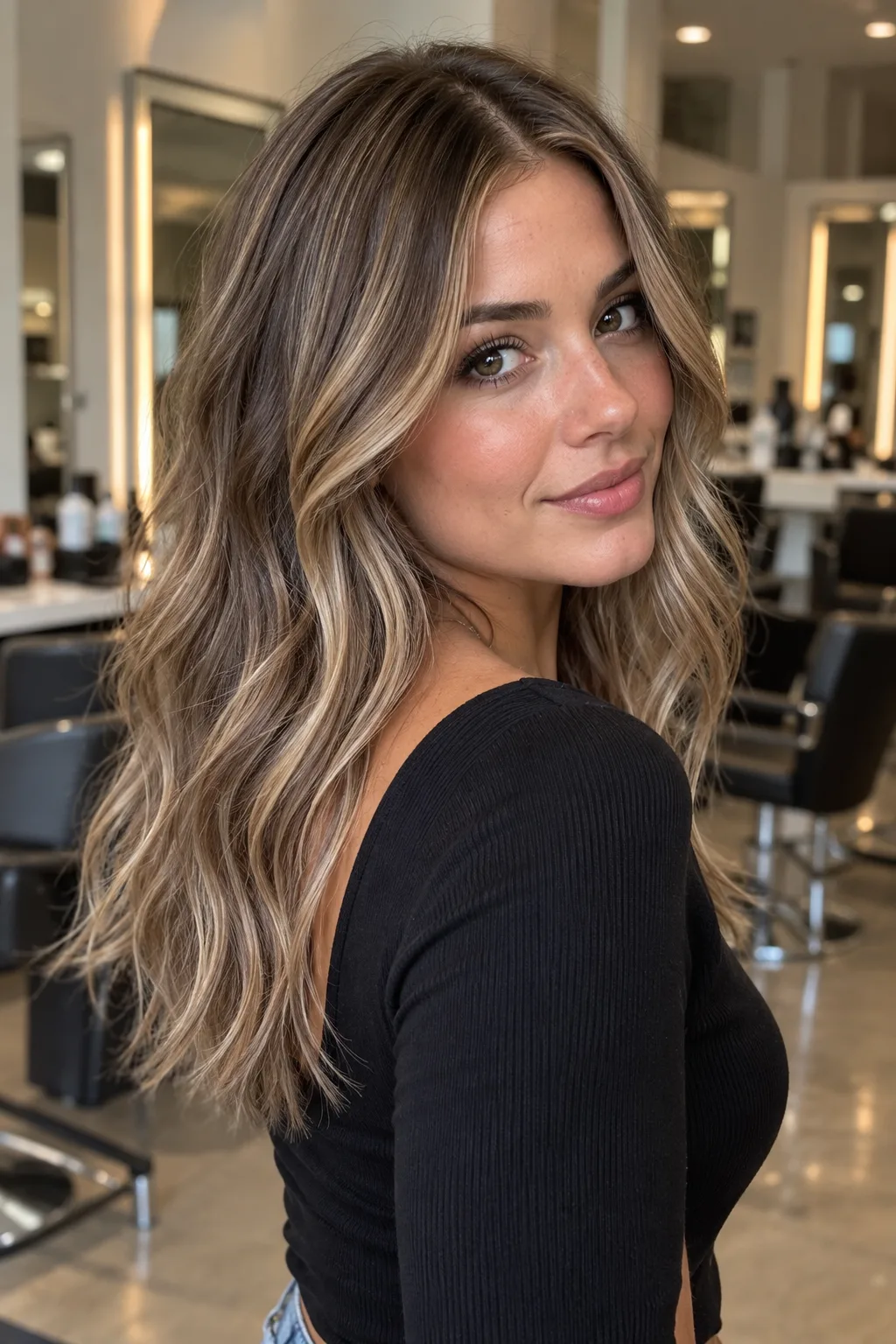
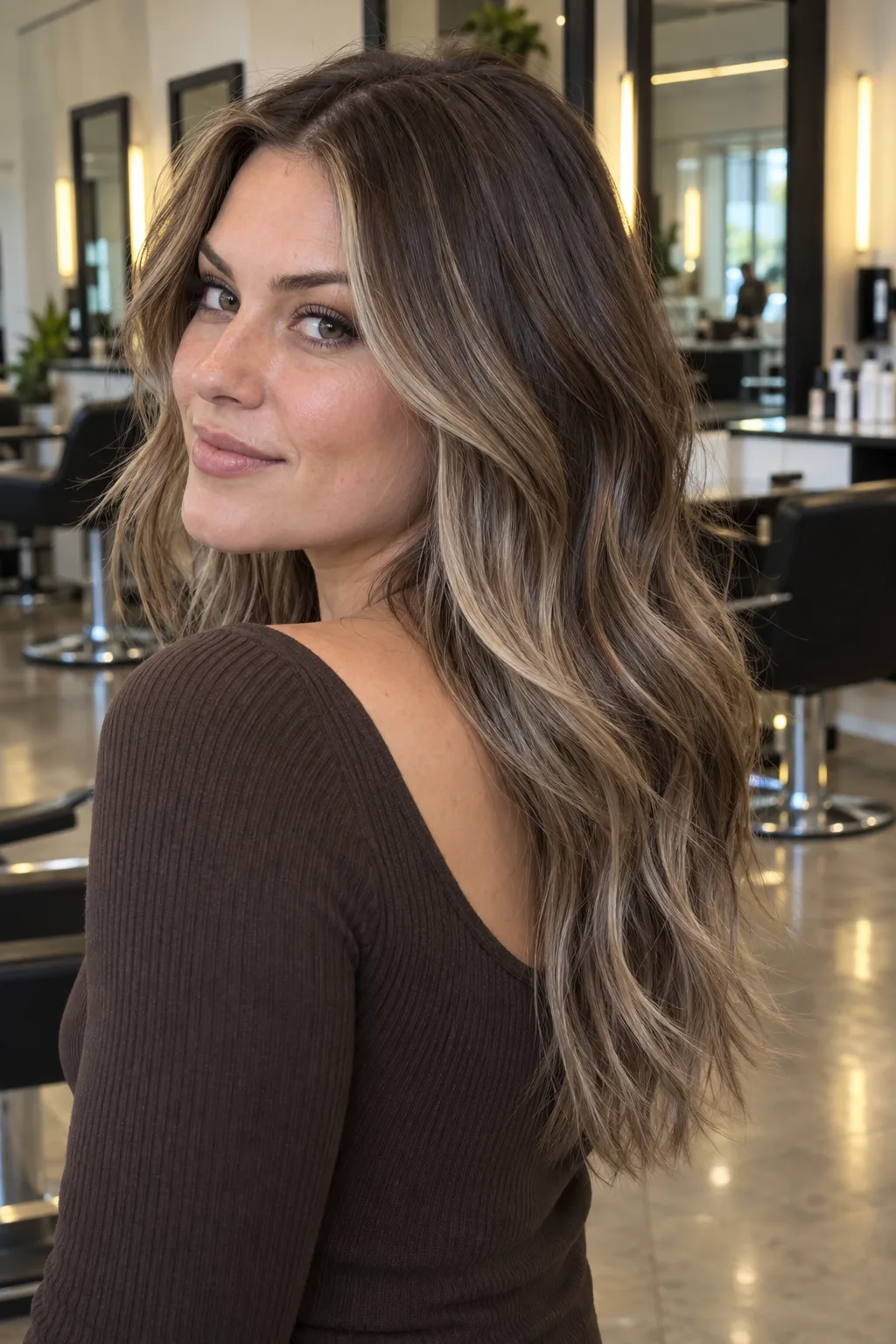
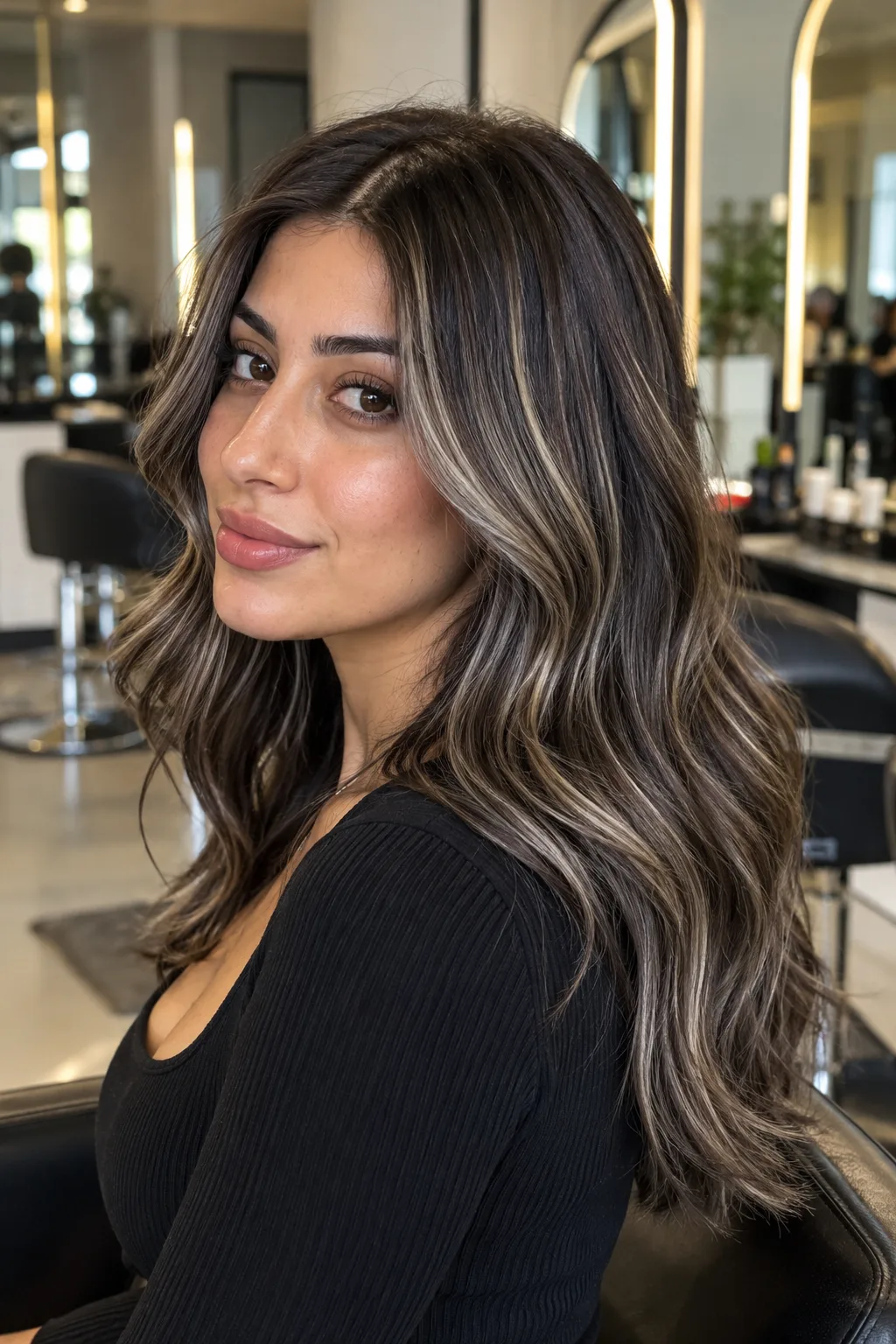
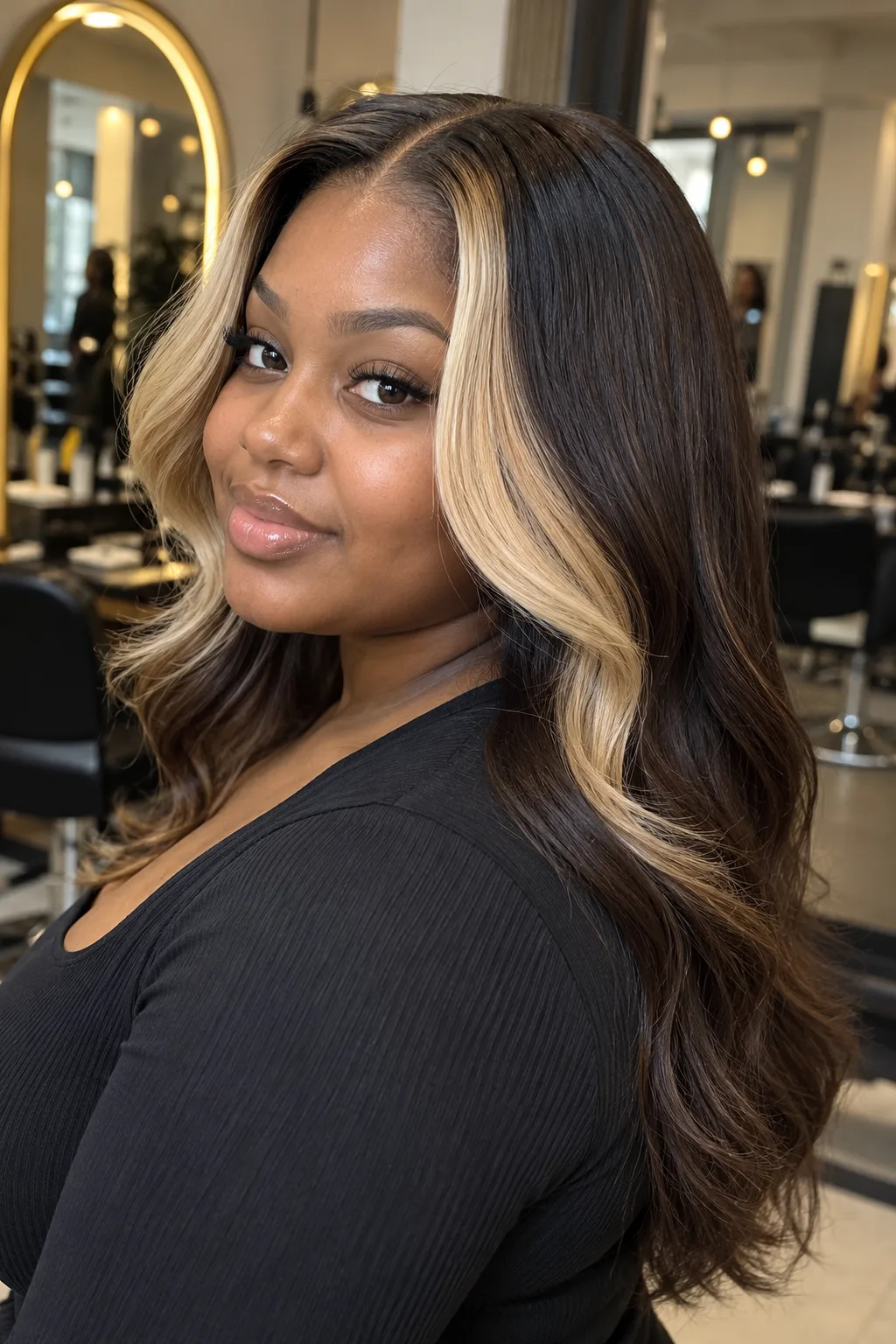
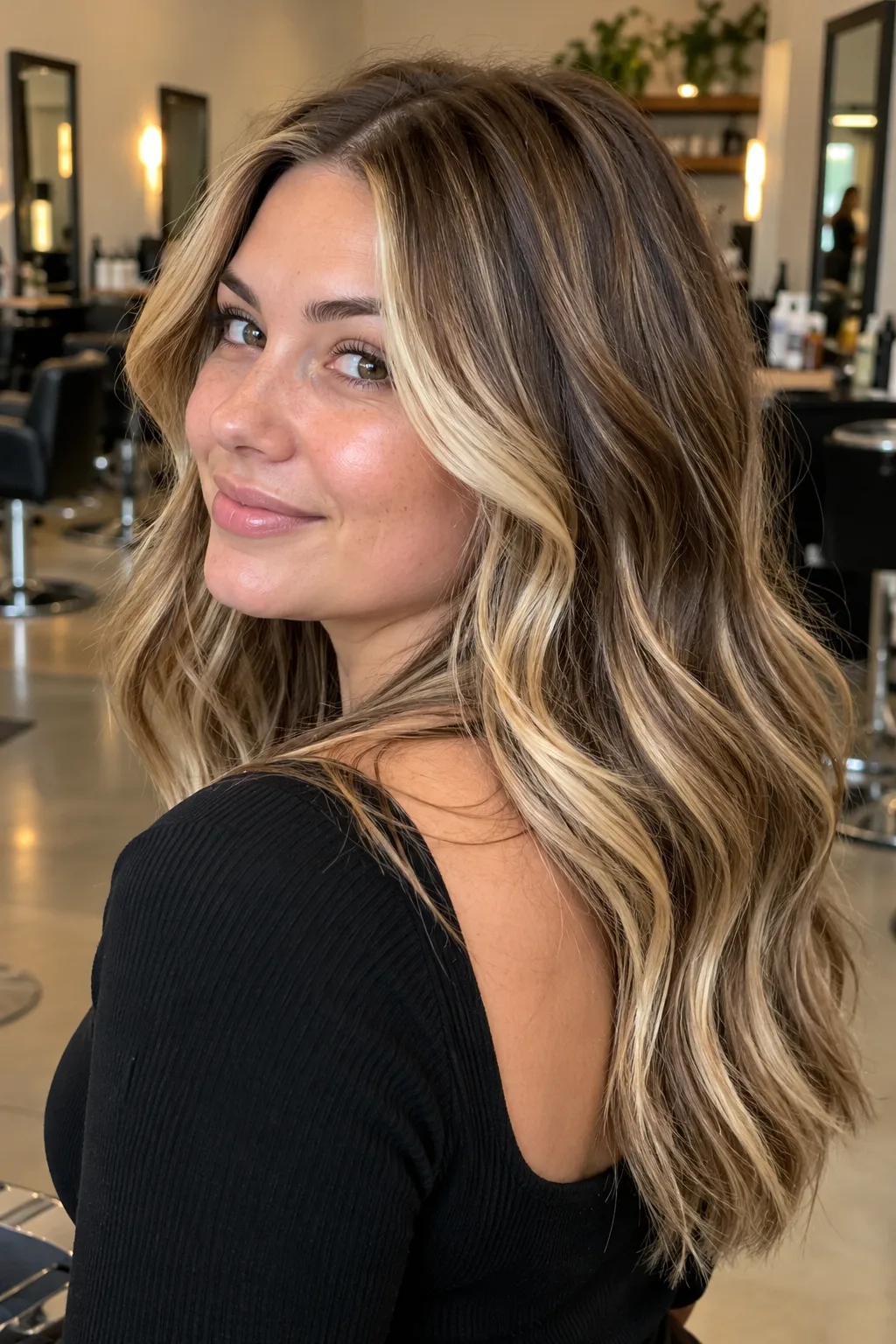
Same length, same waves and the same placement in every frame, so the only thing that changes is the highlight color against the brown. Start with your own base and look across the row for the shade you like.
Gallery14 photos · tap to enlarge
 Try this on me
 Try this on me
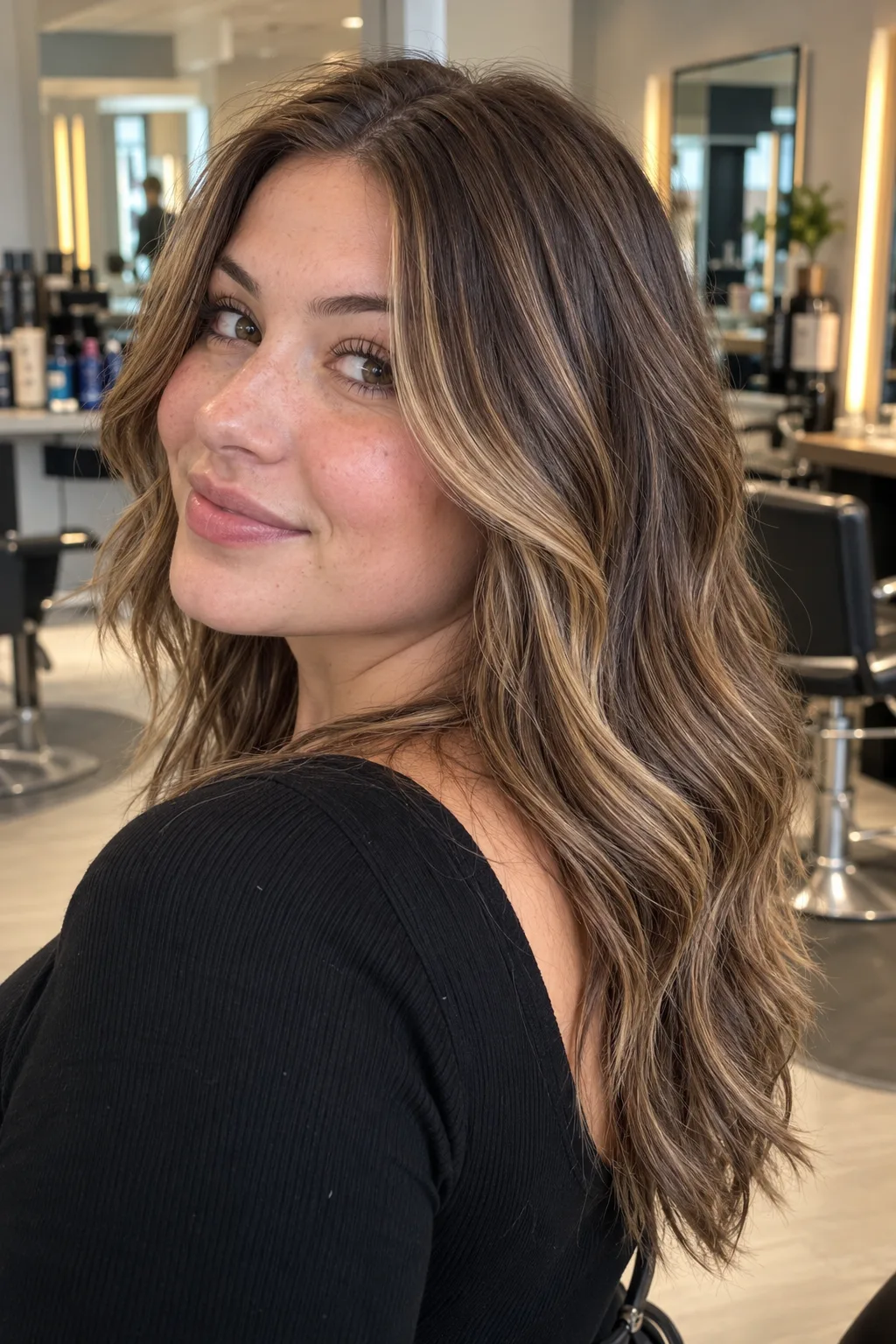 Try this on me
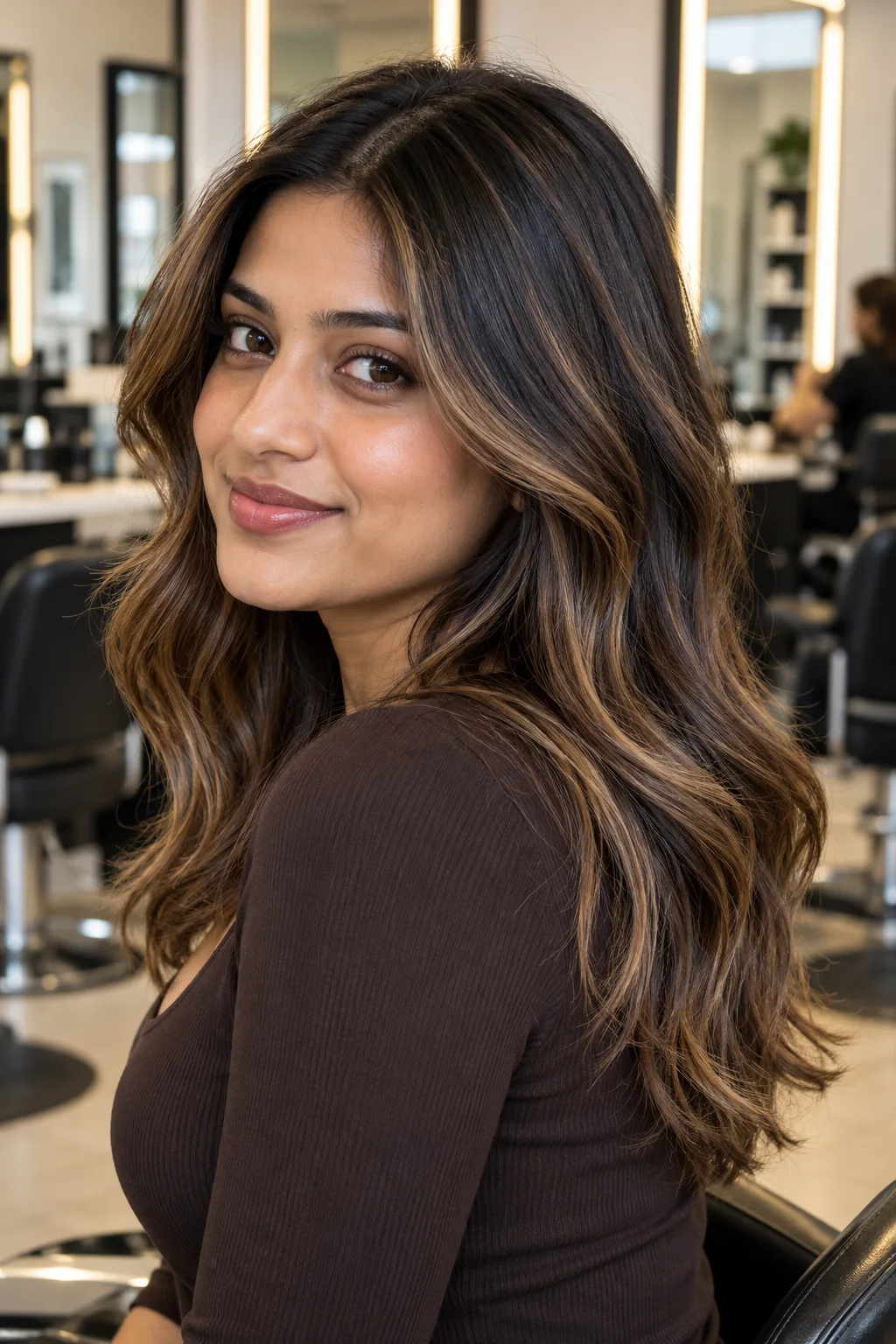 Try this on me
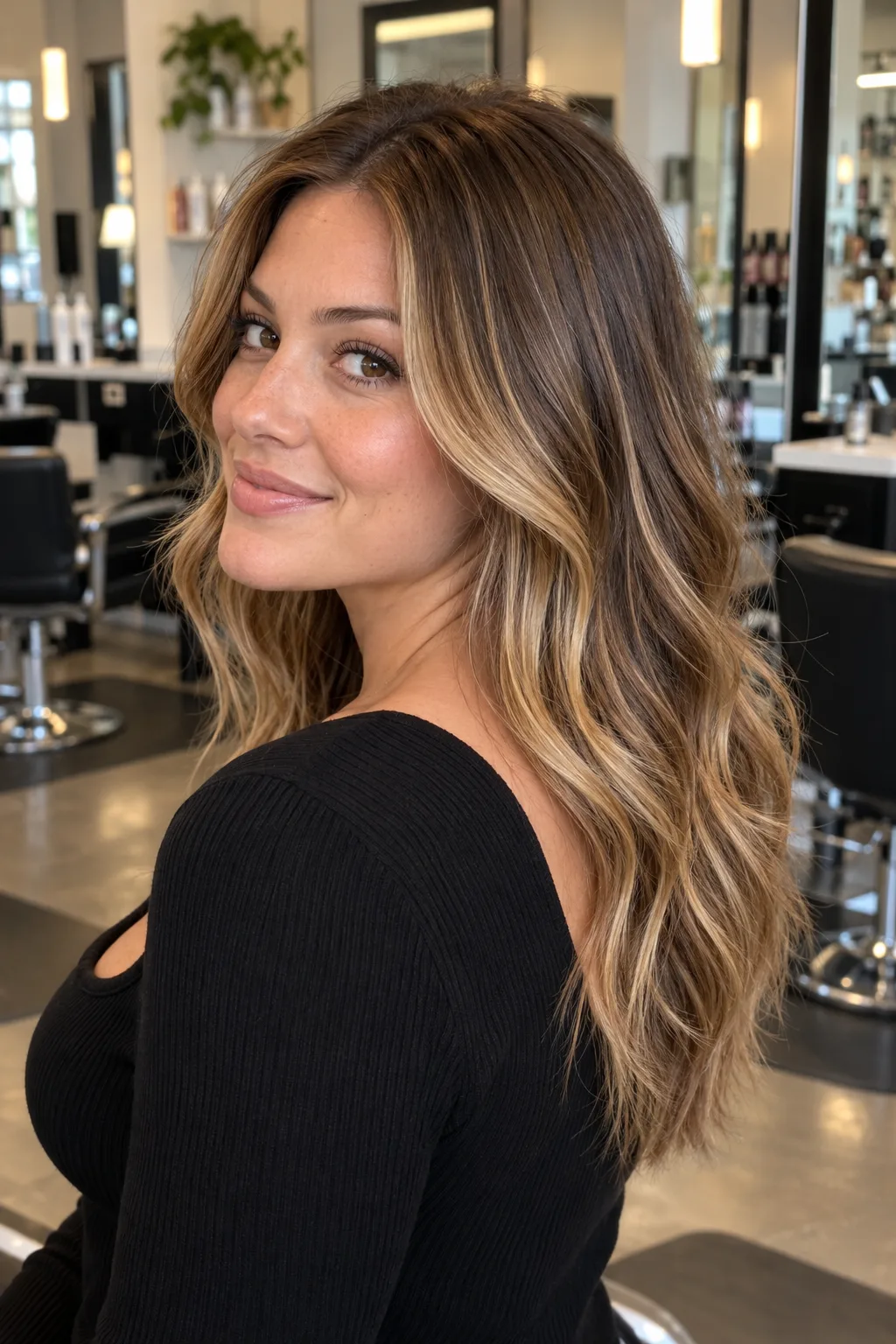 Try this on me
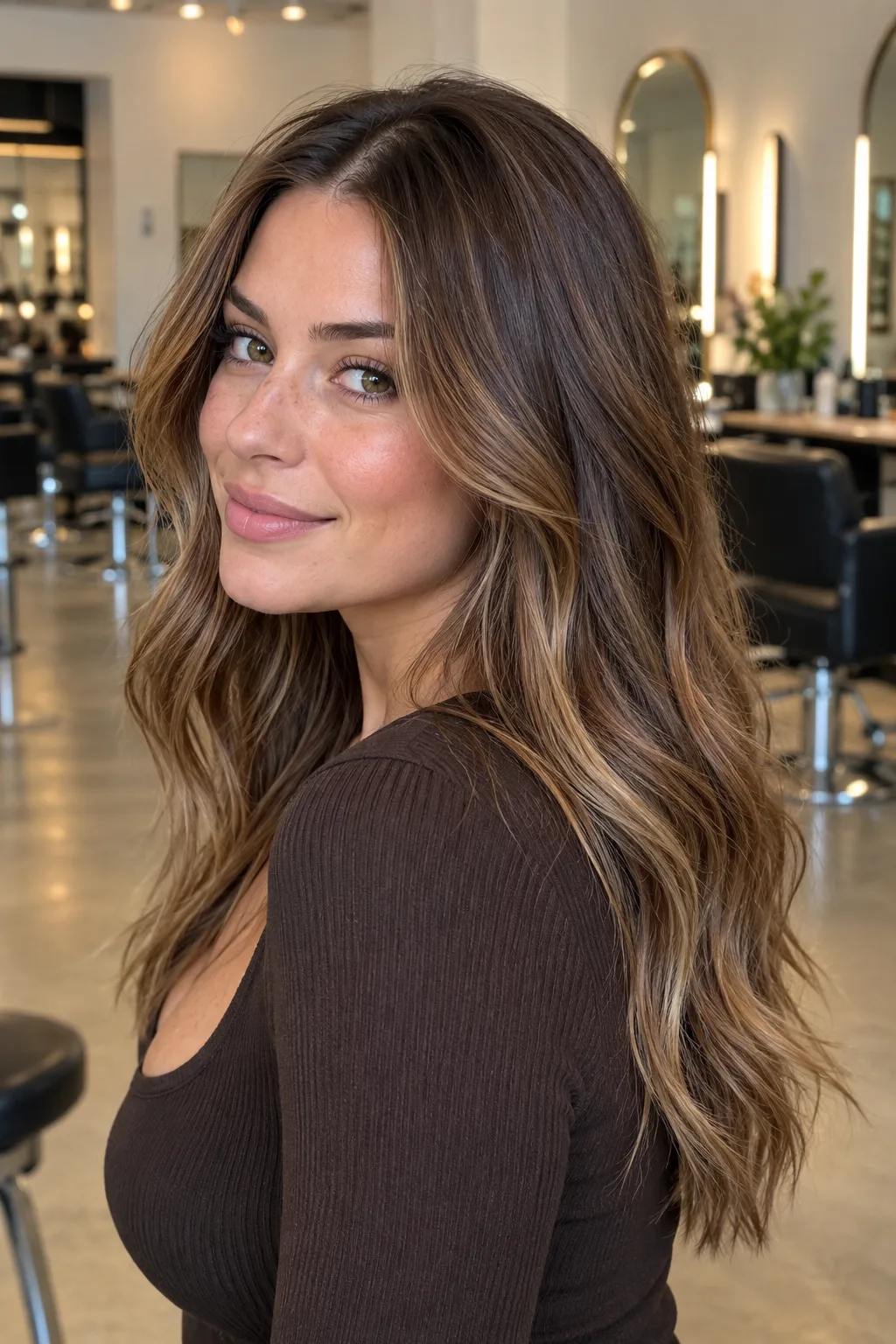 Try this on me
 Try this on me
 Try this on me
 Try this on me
 Try this on me
 Try this on me
 Try this on me
 Try this on me
 Try this on me
The three families: warm, red and cool
Warm: caramel, honey, toffee, bronze
This is the default for a reason. Brown hair carries red and orange pigment underneath, and a few levels of lift lands right in caramel or honey territory, so the result looks intentional without fighting the hair. Caramel is the go-to on dark brown, honey and golden are the easiest win on medium brown. If honey is your shade, our honey blonde guide shows how far to take it before it stops reading as brown with highlights.
The risk here is overshooting. Warm highlights look expensive at two or three levels of lift and brassy at five, so keep them close to the base.
Red: copper, auburn, mahogany
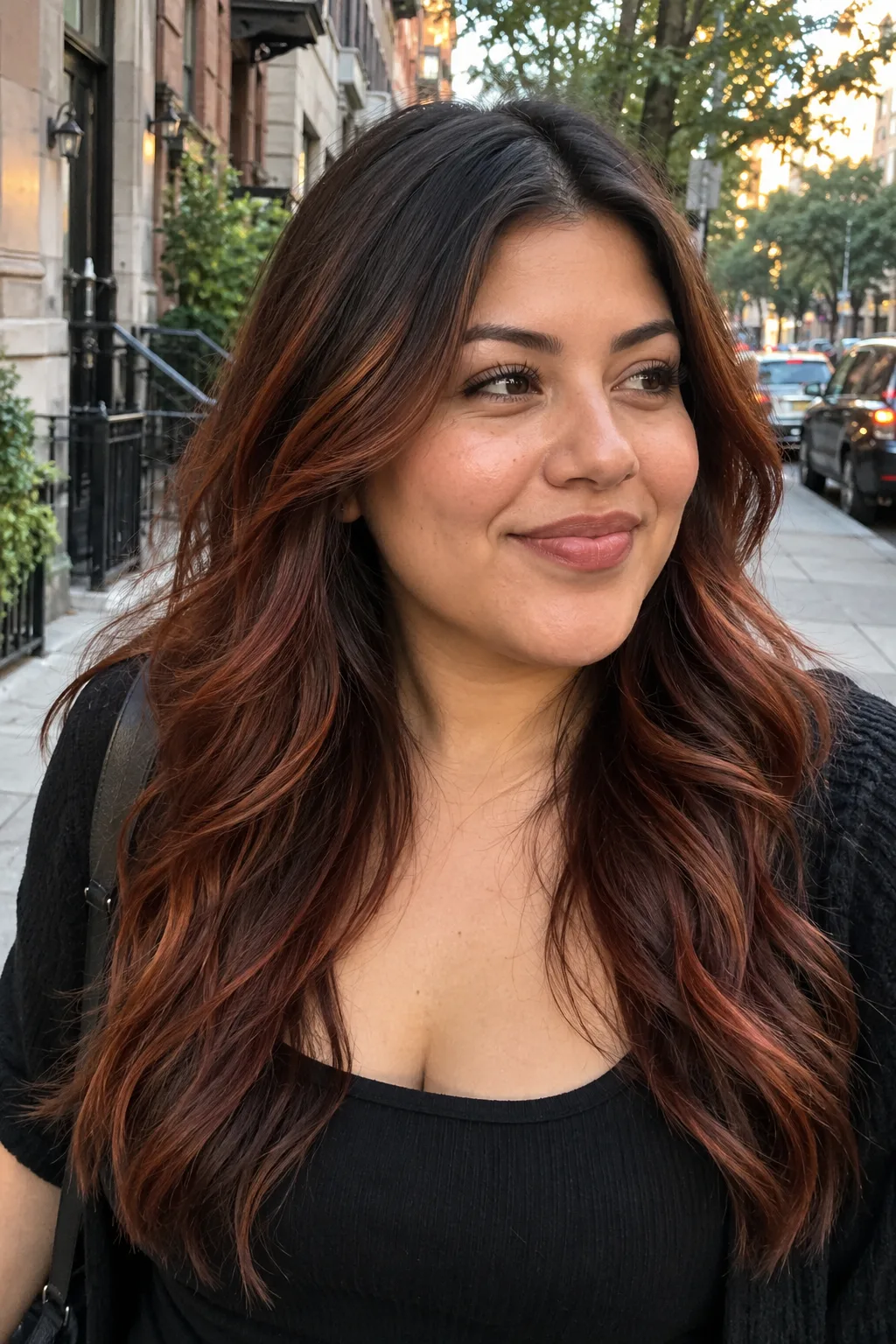
Red highlights on brown hair barely need lift. On dark brown they are mostly deposit, which makes them gentle on the hair and dramatic in sunlight. Copper suits warm and olive skin; mahogany and burgundy, which lean blue-red, suit cool skin.
The cost is fade. Red molecules are large and wash out faster than any other color, so a red highlight that looks vivid in week one is a muted brown-red by week five. Sulfate-free shampoo, cool rinses and a color-depositing conditioner buy you a few extra weeks. A demi permanent gloss between appointments is the cheapest way to bring it back.
Cool: ash, beige, mushroom, silver
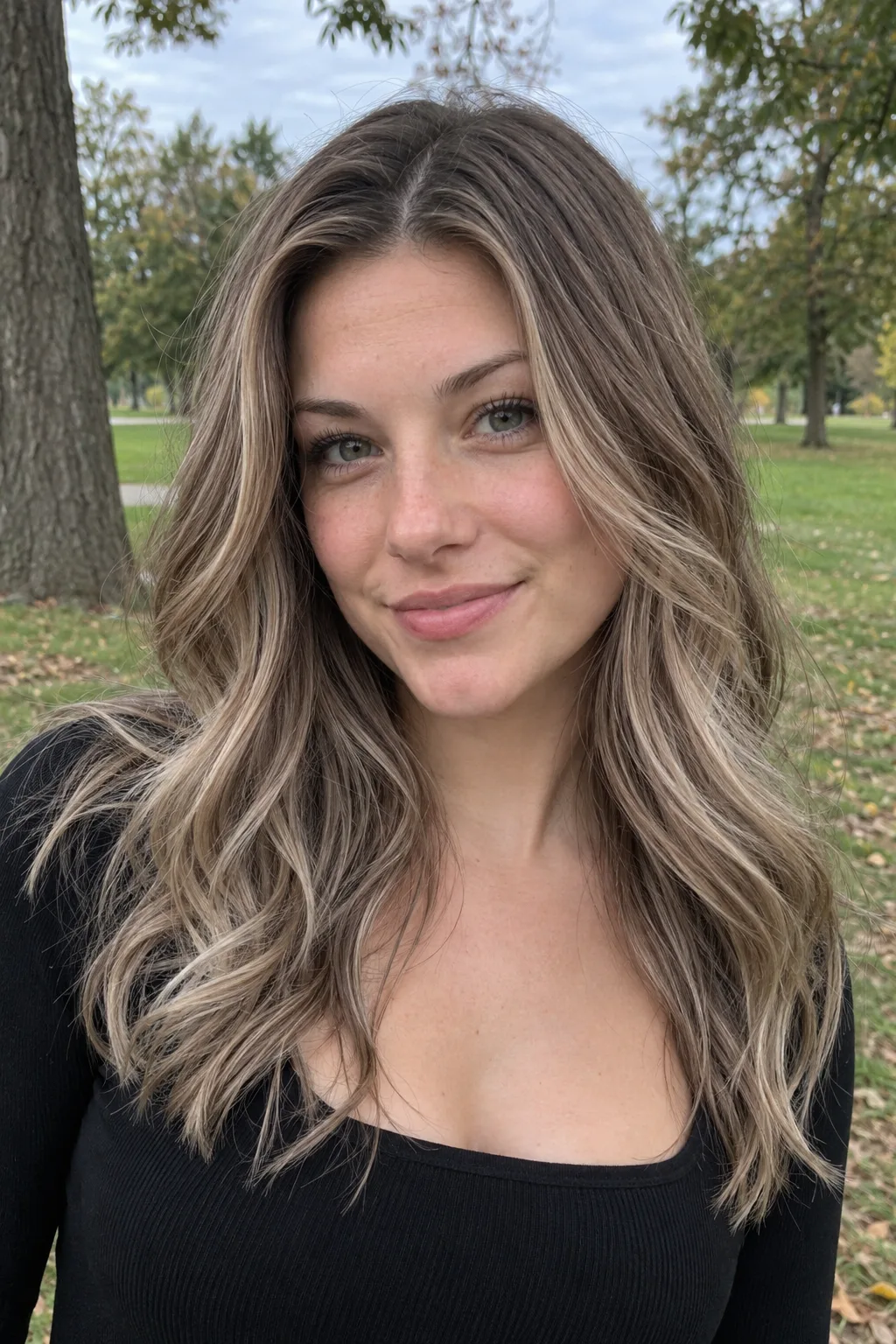
Cool highlights suit light brown best because light brown has less warm pigment to cancel. On dark brown, ash means lifting past the orange stage and then toning out what is left, and it creeps warm again within six to eight weeks.
Silver and grey ribbons are the extreme version: six or more levels of lift and a toner every month. They look striking on dark brown and they also blend real greys, which is why people transitioning to grey often start with them.
Match the highlight to your base
This is where readers actually differ. Find your base depth first, then your skin, and the table narrows the choice to two or three shades.
| Your base | Warm skin | Cool skin | Skip unless you will tone monthly |
|---|---|---|---|
| Dark brown or espresso, level 2 to 4 | Caramel, toffee, copper | Mahogany, cool mocha, silver ribbons | Ash blonde |
| Medium brown, level 4 to 5 | Honey, golden, bronze | Beige, soft ash, burgundy | Platinum |
| Light brown, level 6 to 7 | Butter, strawberry blonde | Ash, beige, mushroom | Copper on cool skin |
To find your skin tone, look at the veins inside your wrist in daylight: green leans warm, blue or purple leans cool, a mix means neutral and you can wear both. If you are still deciding on the base itself, see our light brown hair guide for which brown suits which skin.
Highlights on curly and textured brown hair
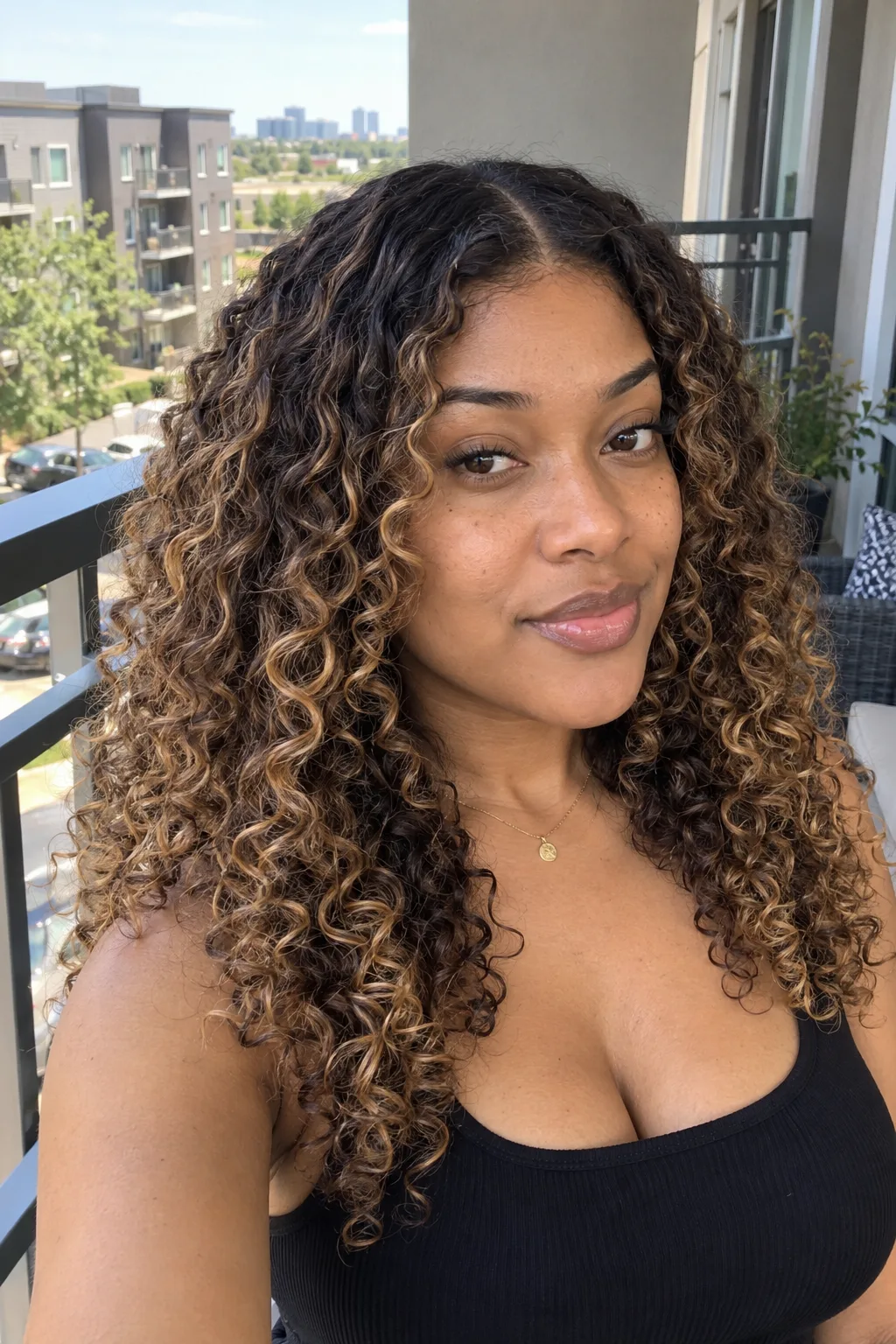
Curls change the rules in two ways. First, curly hair shows highlights in spirals rather than lines, so bigger pieces than you would choose on straight hair still look soft. Second, curly hair is drier and more porous to start with, and bleach makes both worse, so keep the lift to three levels or less and put the brightest pieces where the curl is strongest, usually the outside layer and the ends.
Ask for pintura or hand-painted curl-by-curl placement rather than foils if your colorist offers it. It follows each curl, so the color never lands as a stripe across a ringlet.
Highlights and lowlights together
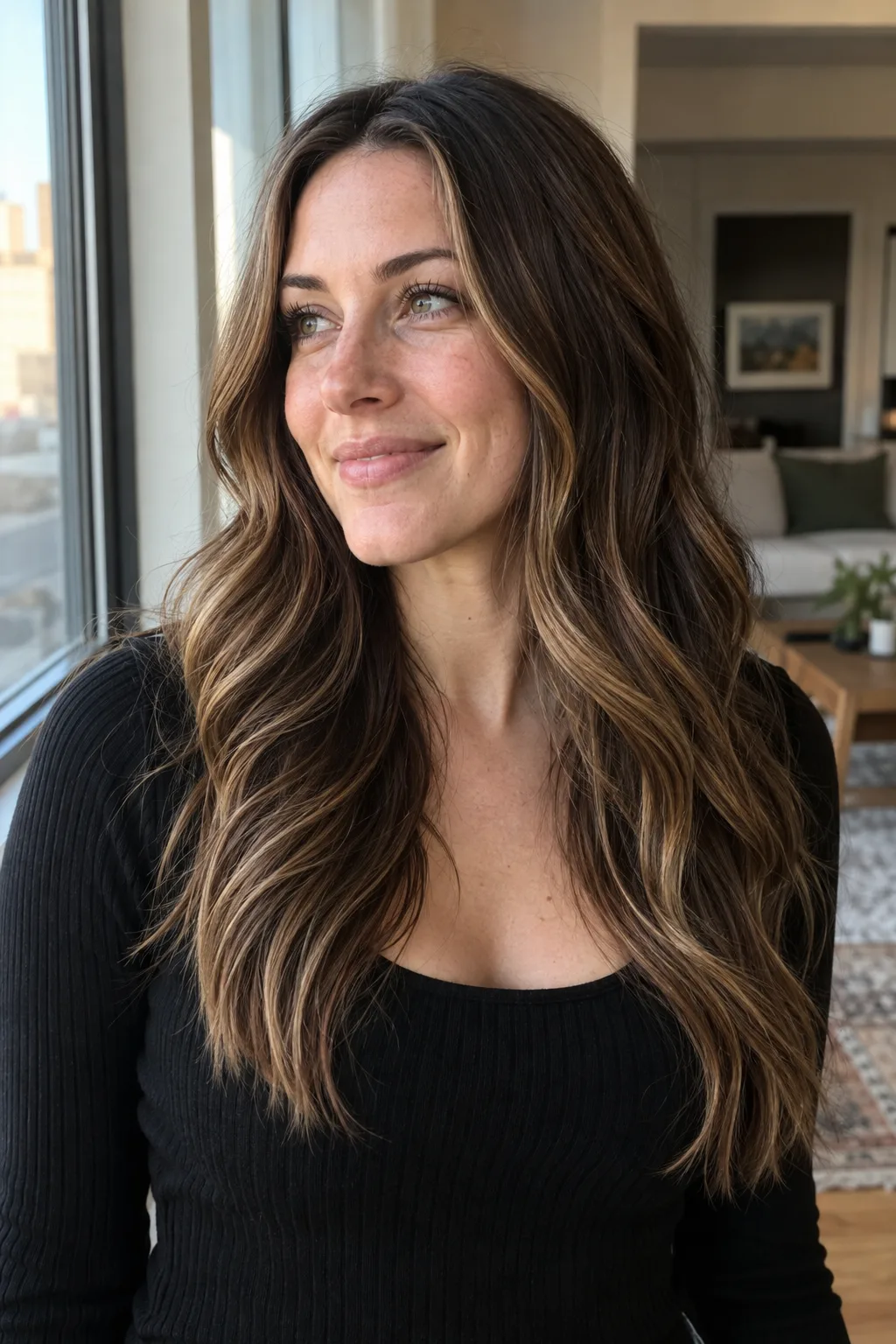
Every set of highlights loses depth over time, because you only ever add lighter pieces. Three appointments in, the brown that made the highlights visible is mostly gone. A lowlight puts it back: a few fine sections one or two levels darker than your base, woven through the middle of the hair.
Highlights and lowlights together give you three visible tones instead of two, which is what makes brown hair look dimensional rather than streaked. Lowlights use no bleach, so they are also the gentler of the two. Ask for them every second or third appointment.
Mistakes that make highlights look cheap
Picking the shade before the family
A cool beige photo on a level 3 base is two sessions and a monthly toner. Decide warm, red or cool first, against the table above.
Too much lift for the look you want
Five levels on dark brown reads as stripes, not sun. Ask for the number of levels, not "subtle".
Highlighting only the surface
Color on the top layer looks painted on the moment your hair moves. A few pieces have to sit underneath for the top to read as dimension.
Bright pieces right at the part on a dark base
Regrowth on level 3 hair against bright highlights is the most visible root line there is. Keep the brightest pieces from the cheekbone down, or go with balayage.
Ignoring the face frame
The two sections in front are the only ones anybody judges against your skin. A brighter money piece there does more than a full head of fine highlights.
How to ask your colorist
Name four things: your base, the color family, how many levels of lift, and how often you will come back. Then show one photo you like and one you hate.
Say this to your barber
My base is a level 4 medium brown. I want warm caramel highlights about two to three levels lighter, hand-painted so there is no root line, with a few mocha lowlights for depth. I want to come back in three months.
How to ask for highlights on brown hair
- Find your base level
Look at your roots in daylight and compare them to a level chart. Most brown is level 3 to 7.
- Choose the color family
Warm for low upkeep, red for drama with fast fade, cool only if you will tone every six to eight weeks.
- Set the lift
Two to three levels for sun-kissed, four to five for a visible highlight.
- Pick the placement
Foils for a bright part, balayage for soft regrowth, babylights for the most natural blend.
- Book a strand test if you are switching families
One hidden section, lifted and toned, shows how your brown actually reacts before you commit the whole head.
Can you see it on your own hair first?
The free way is a strand test, and it is honest: your colorist lifts one hidden piece and you check it in daylight. The wall it hits is scale. A strand is half an inch of hair, not your whole head next to your face, and nobody books six consultations to compare caramel, copper and ash.
That is what the try-on is for. Upload one selfie and put each highlight color on your own hair, side by side, before you book anything.
Yours could be here.
Start with one selfie.
One photo, twenty seconds, and you'll know. Free account, no card for your first render.
Your first look is free and needs no card, and it includes one cut with one color on it. After that, Plus is $9 a month for 150 credits, a hairstyle costs 10 credits and a color on that cut costs 5. If you only want to swap colors on your current cut, go straight to the hair color try-on, or the balayage try-on for painted highlights.
The short answer
Go warm unless you have a reason not to. Caramel on dark brown, honey on medium brown and butter or beige on light brown are the three combinations that look good in week one and still look good in week ten. Red is the pick for drama if you accept the fade, and cool is the pick only if a toner appointment every six to eight weeks sounds fine to you. Whatever you choose, keep the lift to two or three levels and put lowlights back every few appointments.
Frequently asked questions
Caramel and honey suit the most people, because brown hair lifts naturally toward those warm tones and needs little or no toner to keep them. Pick caramel on dark brown and honey on medium brown. Light brown can carry ash or beige without much fight.
Highlights are strands lifted lighter than your base, usually with lightener. Lowlights are strands colored darker than your base, with no bleach. Highlights add brightness; lowlights add depth back so the highlights still show.
Caramel or toffee balayage kept two to three levels above the base. It starts below the root, so it grows out with no line, and warm tones on dark hair barely need toner. Expect to go 12 weeks or more between appointments.
Yes, especially on dark brown, where copper, auburn or mahogany show up in sunlight without much lift. Copper suits warm and olive skin, mahogany suits cool skin. Plan for faster fading than any other color.
Warm golden-brown strands about two to three levels lighter than a dark or medium brown base. They are the most common highlight on brown hair because they match the warm pigment brown hair shows when lifted.
Usually, yes. Lowlights deposit darker color without bleach, while highlights need lightener that opens the cuticle and weakens the protein structure of the hair. Adding lowlights also lets you skip a highlight appointment without the color looking flat.
Wide, bold sections of a contrasting color, often blonde on brown, instead of fine woven strands. They are a deliberate high-contrast look and show regrowth fast, so they suit people who like obvious color and book often.
It is one of the most requested color looks because blonde a few levels above brown imitates natural sun. It works best when the gap stays at two to four levels. Blonde on brown is covered shade by shade in the guide linked near the top of this page.
Preview it on your own photo: Balayage Try-On.
Share article
About the author
Related posts
Women's Haircuts · 13 min
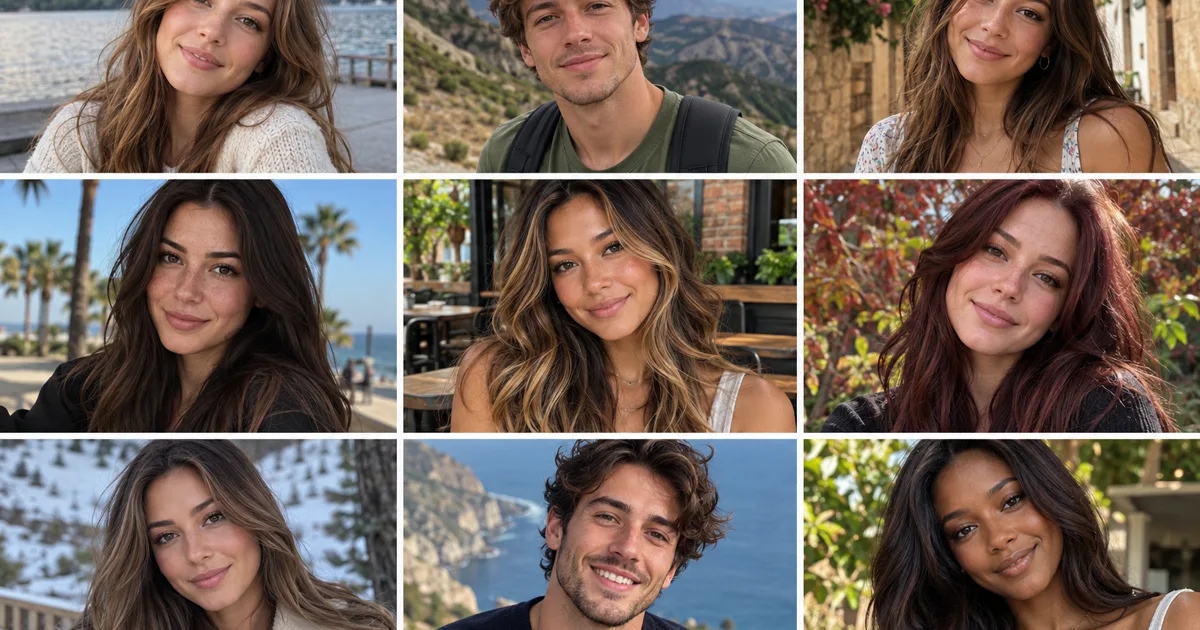
Chocolate Brown Hair: 14 Shades and Who Each One Suits
Chocolate brown is a level 3 to 5 brunette with a rich, neutral to warm tone. See 14 shades side by side, which suits your skin tone, and why your starting color matters more than the box.
Women's Haircuts · 13 min
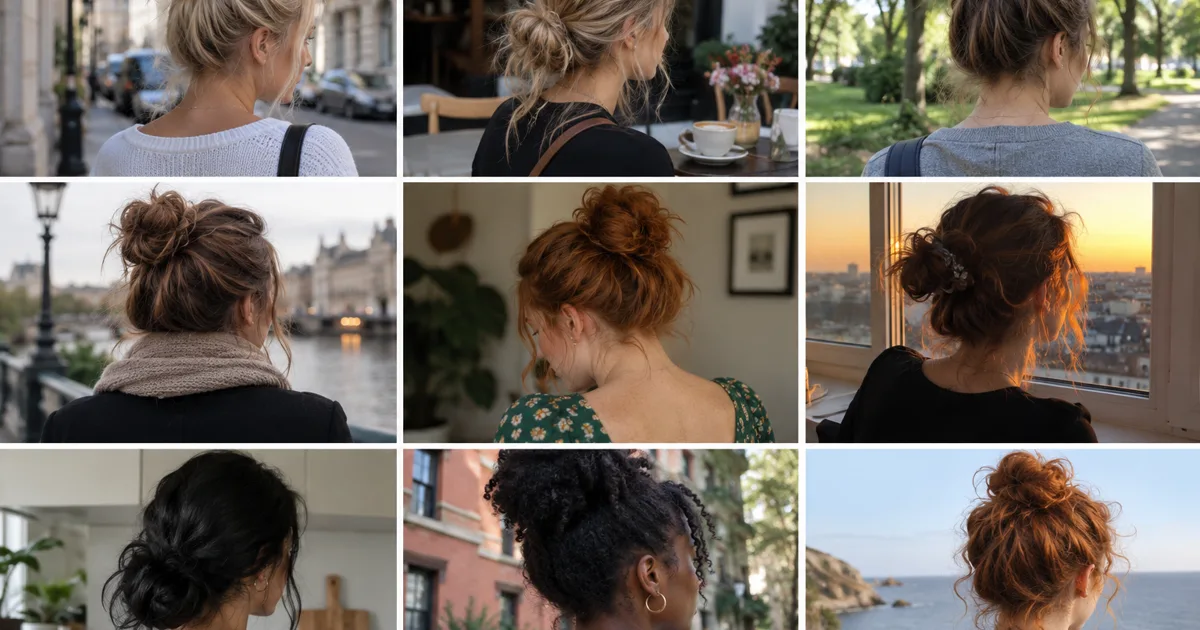
Messy Bun: How to Do It in 2 Minutes on Any Hair Type
A messy bun takes two minutes and one hair tie. The part tutorials skip: the messy look comes from your haircut and texture, not your hands. See it on 13 hair types and find the version that holds on yours.
Women's Haircuts · 13 min
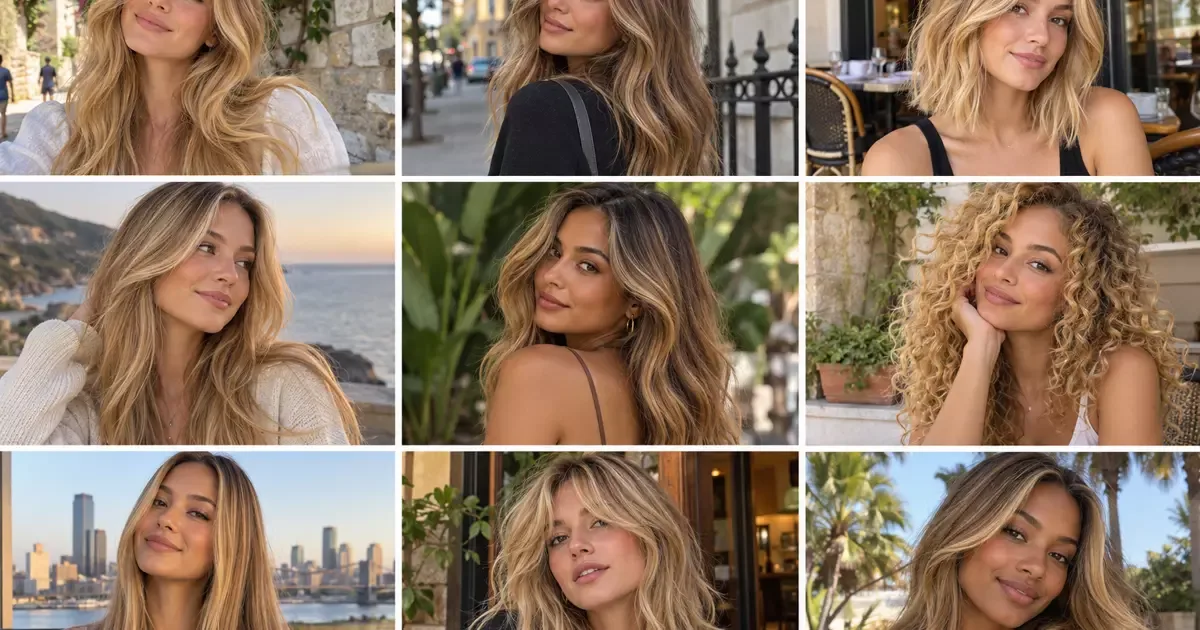
Honey Blonde Hair: 14 Shades and How to Get It From Any Base
Honey blonde is a warm golden blonde around level 7 to 8. See 14 versions, how it compares to caramel and golden blonde, the route from your starting colour, and the mistakes that turn it brassy.
Women's Haircuts · 15 min
Bixie Haircut: 14 Looks, Who It Suits and What to Ask For
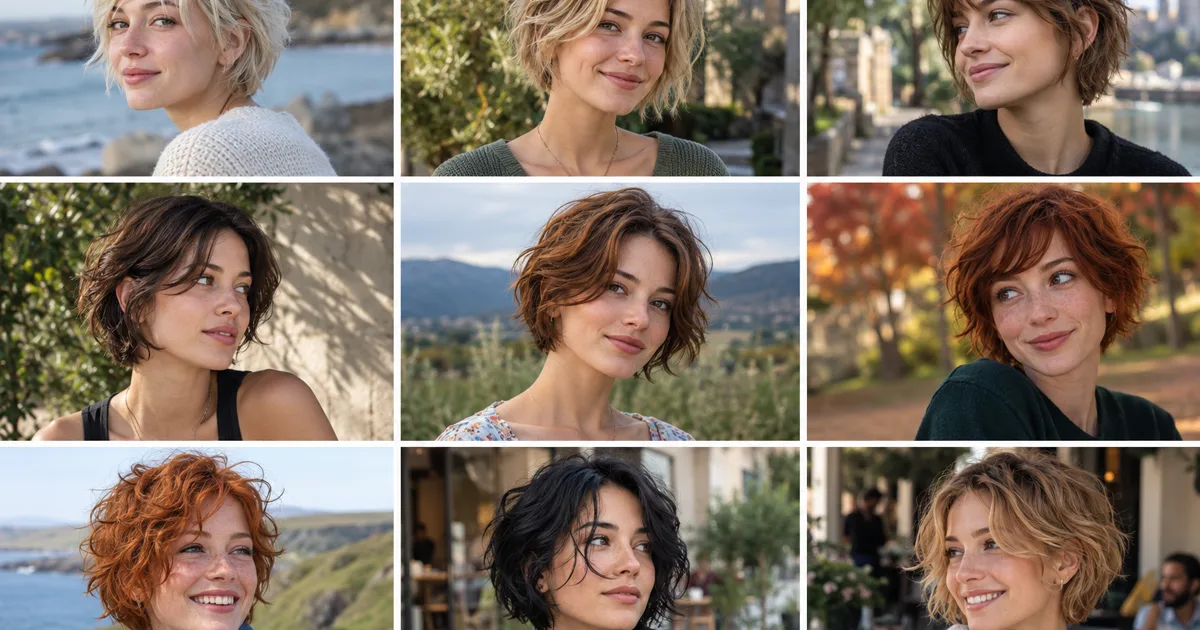
A bixie is the shaggy cut between a pixie and a bob. See 14 versions, which one suits your face shape and hair type, how it compares to a pixie, and the exact words to say in the salon.
Women's Haircuts · 15 min
Type 4 Hair: How to Tell 4a, 4b and 4c Apart and What Actually Matters
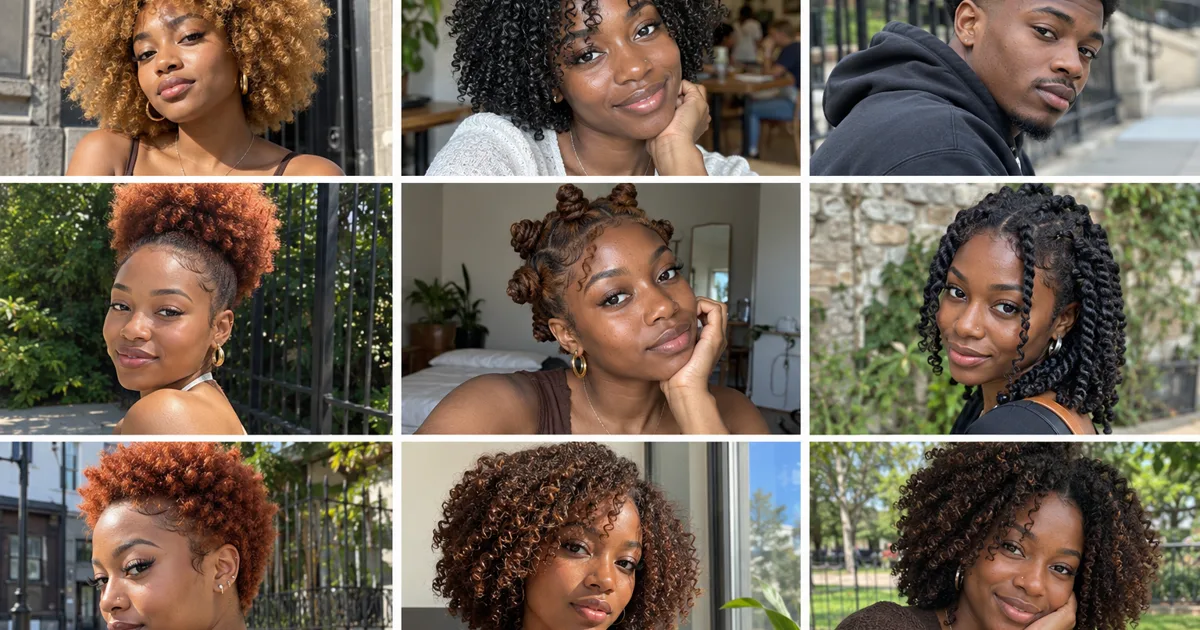
Type 4 hair is the tightest natural texture, split into 4a, 4b and 4c. How to tell type 3 from type 4, how to read your letter, the porosity test that matters more than it, a wash day that works on any type 4 head, type 4 hair on men, and fourteen ways it is worn.
Women's Haircuts · 13 min
Thick Hair: What It Is, the Cuts That Work and How to Manage It
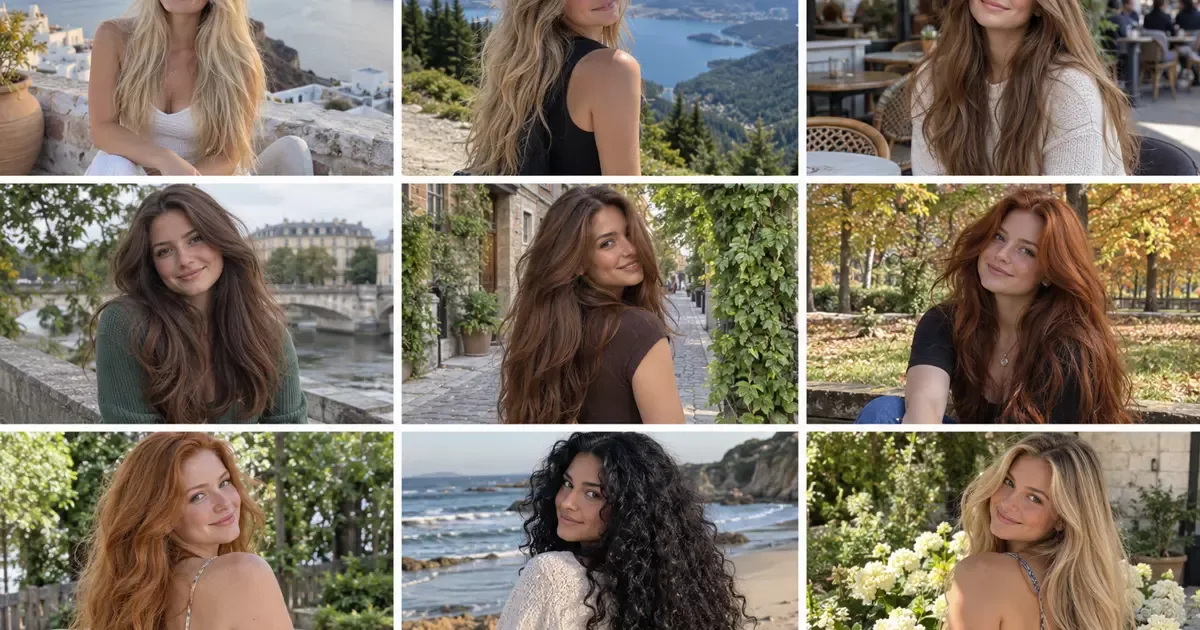
Thick hair is a weight problem before it is a frizz problem. How to tell dense from coarse, 13 cuts that handle the bulk, how to thin it without ruining it, and the words to say to your stylist.