Chocolate Brown Hair: 14 Shades and Who Each One Suits
Oleh Onysko 26 October 2026 13 min read

In this article
Chocolate brown hair is a medium to dark brown, usually a level 3 to 5 on the 1 to 10 scale colorists use, with a neutral to slightly warm tone that reads rich and glossy rather than flat. It is darker than light brown hair, lighter than black, and it shows its warmth only when light hits it.
The shade is the easy part. What decides whether chocolate brown looks expensive or muddy is the color you are starting from: going darker onto blonde or highlighted hair fails in a way most people never see coming, and going lighter from black is a job box dye cannot do. This guide shows 14 shades side by side, which one suits your skin, the starting-color rules that save you a correction appointment, and how to see it on your own face before you commit.
What is chocolate brown hair?
Chocolate brown is a rich brunette at level 4, give or take one level, with a balanced tone: not ashy enough to look grey, not red enough to read as auburn. On box dye it is usually sold as a 4 (medium brown) or a 4.3 to 4.5 with a hint of gold or red-violet, and the darker versions sit at a 3.
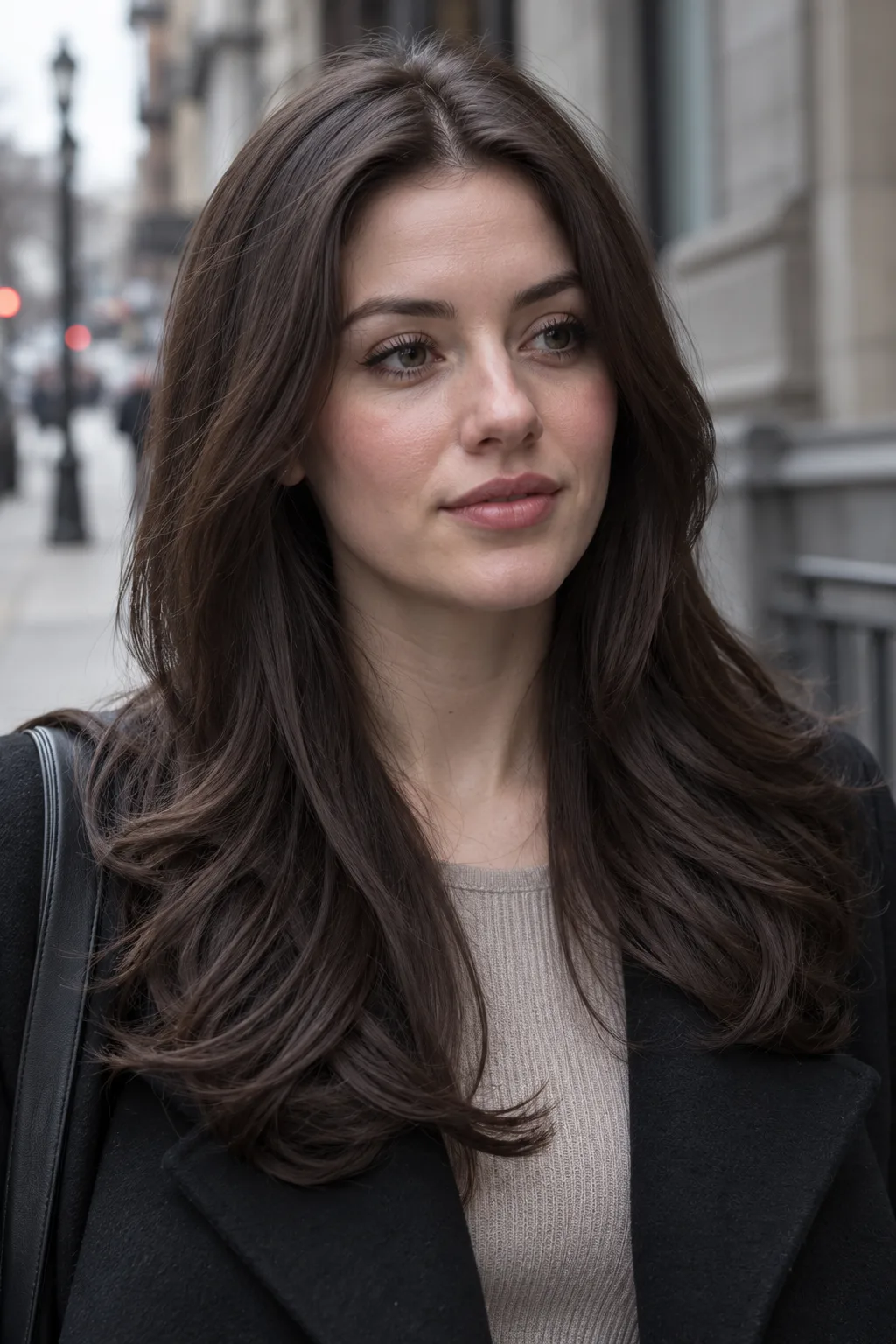
The photo above shows the dark end of the family. On an overcast street it reads almost black at the roots, but where the layers turn, you can see it is clearly brown. That is the whole appeal of chocolate brown: it gives you the depth of very dark hair without the hard, flat look black dye can have against lighter skin.
| Shade | Level | Tone | How it reads |
|---|---|---|---|
| Light chocolate | 5 to 6 | Warm, a little golden | Soft brunette, bright in sun |
| Milk chocolate | 5 | Warm neutral | Friendly mid-brown, never harsh |
| Classic chocolate | 4 | Neutral to warm | The default "rich brunette" |
| Dark chocolate | 3 | Neutral, no red | Near black indoors, brown in daylight |
| Espresso | 2 to 3 | Neutral to cool | Almost black, a brown glint only in direct light |
Chocolate brown vs dark brown
They overlap, but they are not the same thing. Dark brown describes depth only, a level 2 or 3, and it can be ashy, neutral or warm. Chocolate brown describes depth plus tone: it is always rich and slightly warm, and it can be as light as a level 5. So every dark chocolate is a dark brown, but a flat, cool dark brown is not chocolate. If you ask for "dark brown" and want the glossy, warm version, say chocolate.
Want to see it first? Preview balayage on your own photo.
14 chocolate brown hair color ideas, shade by shade
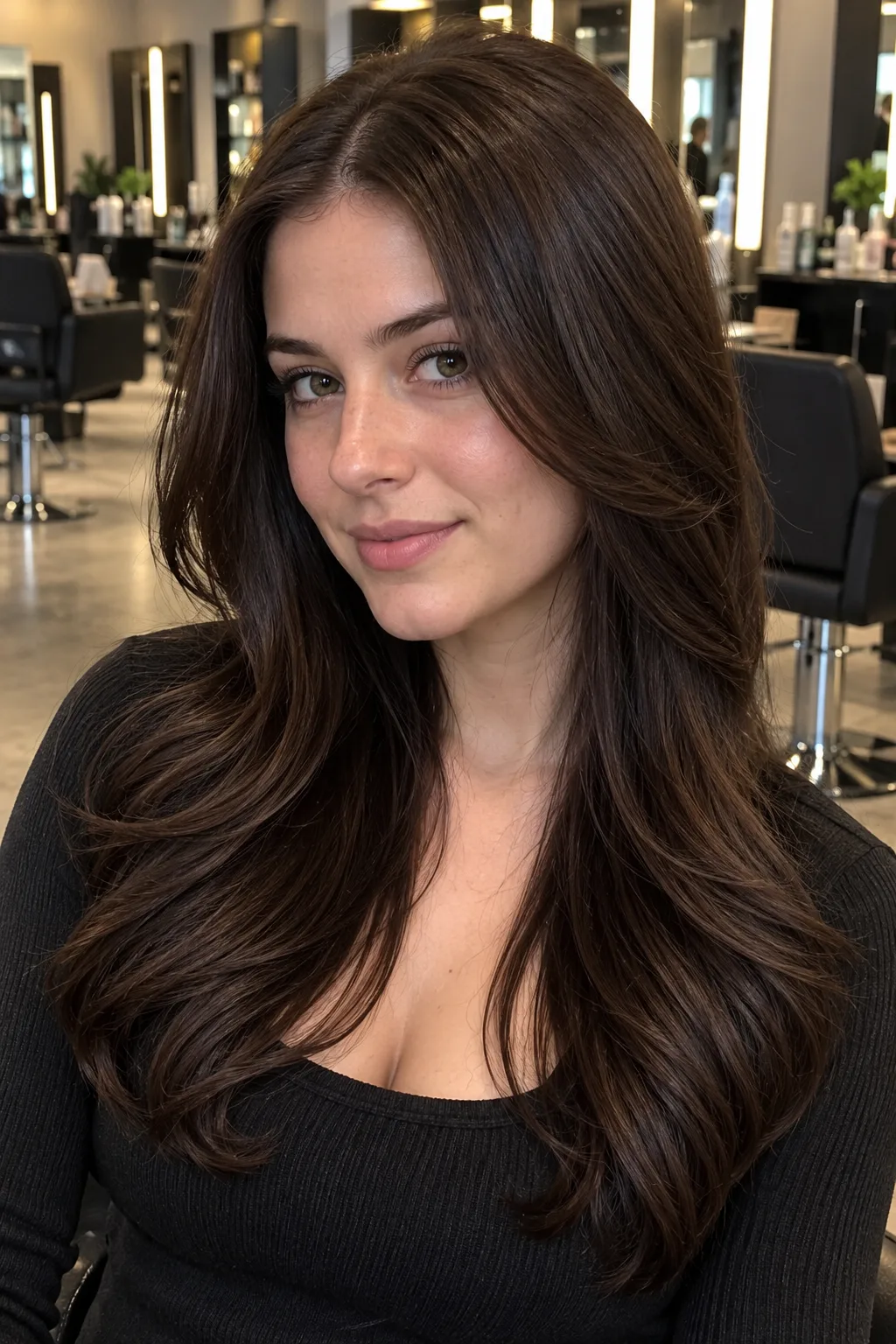
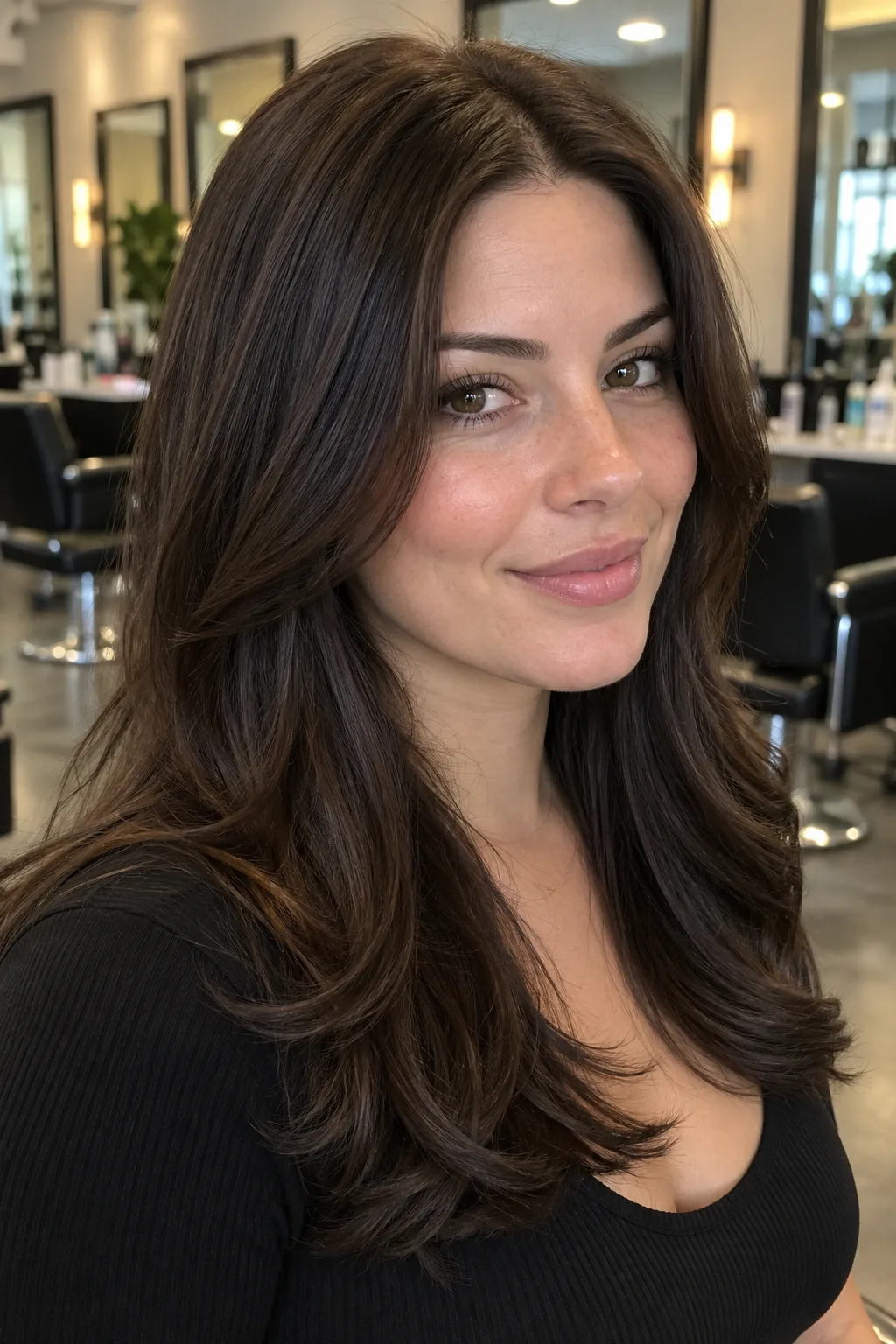
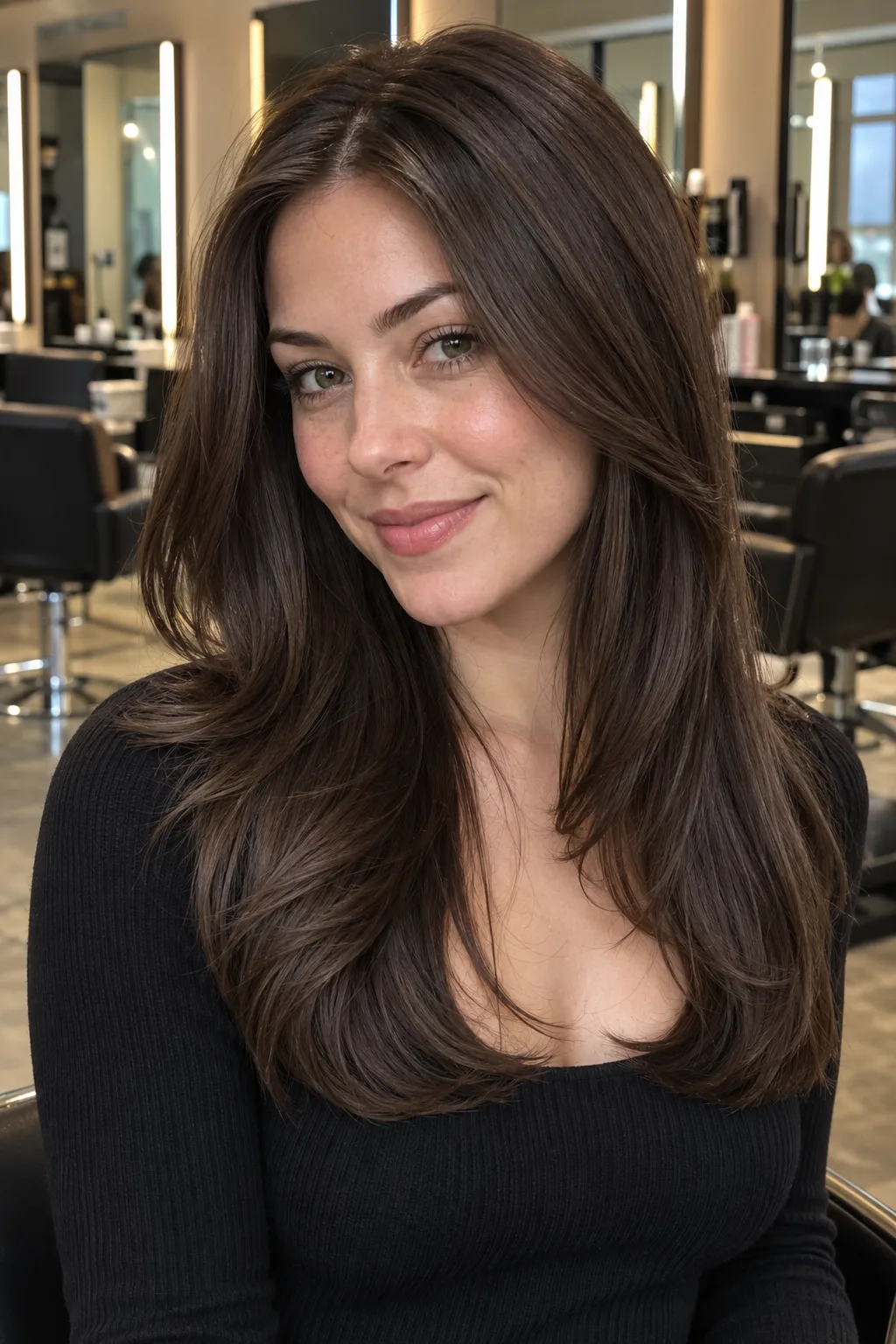
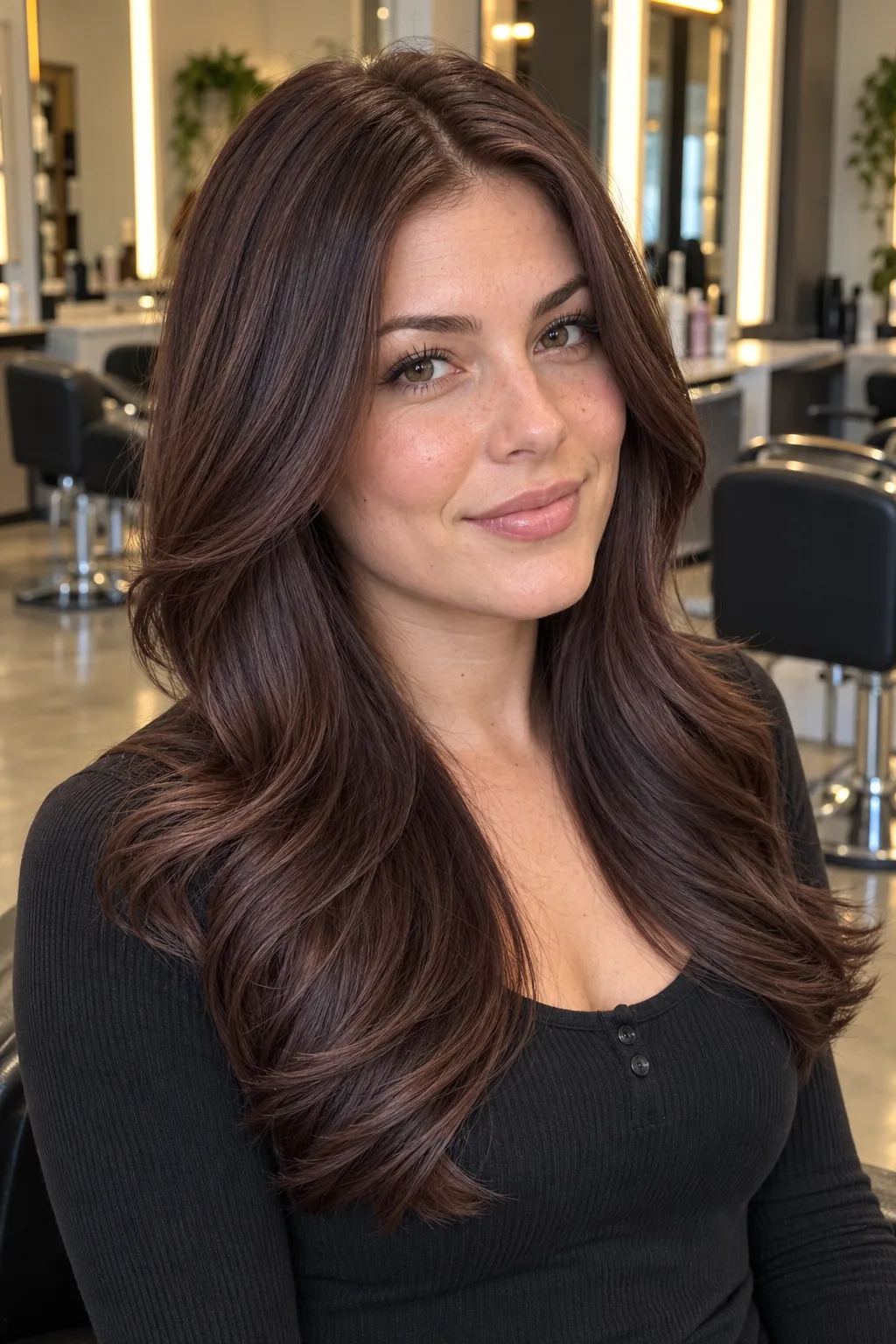
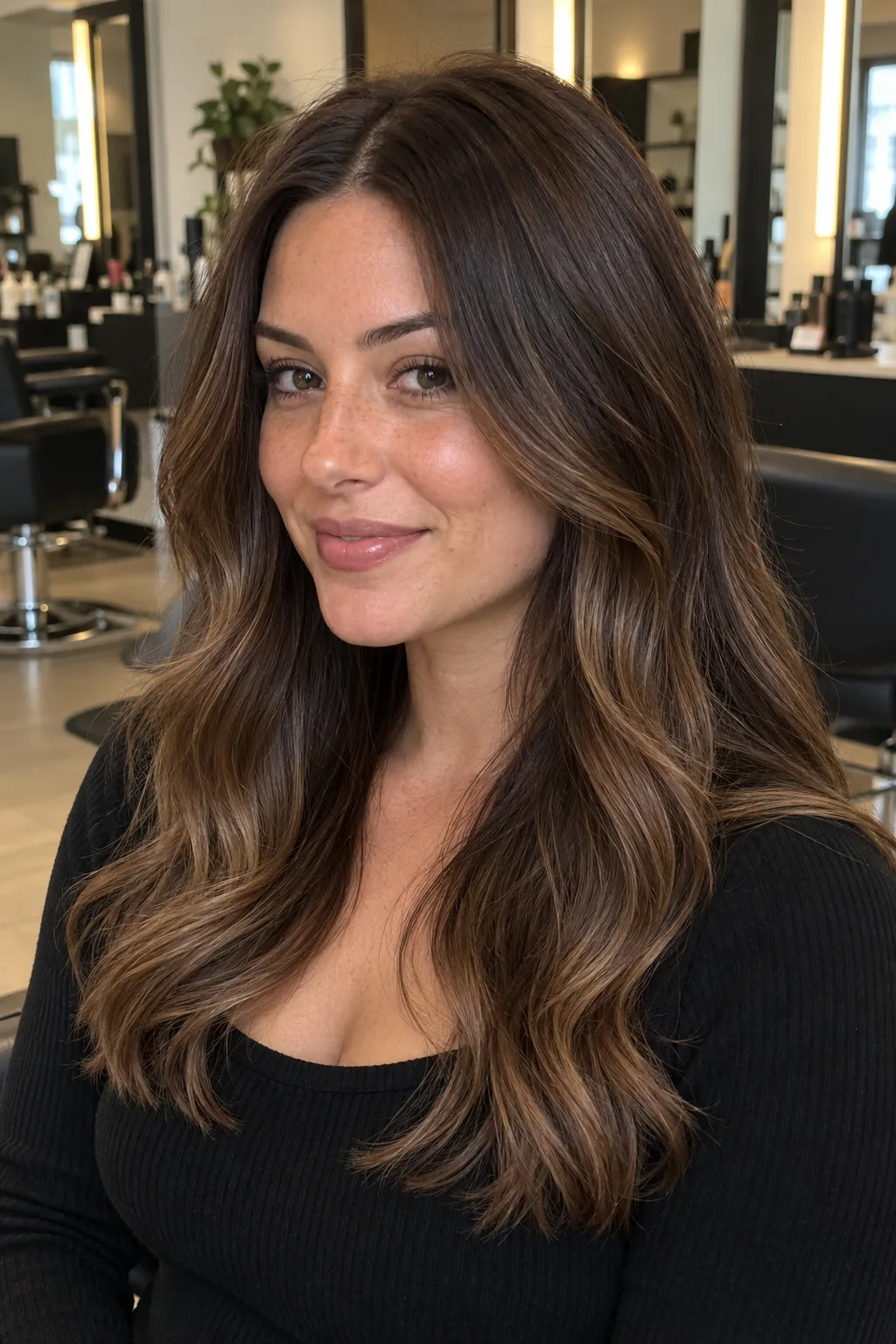
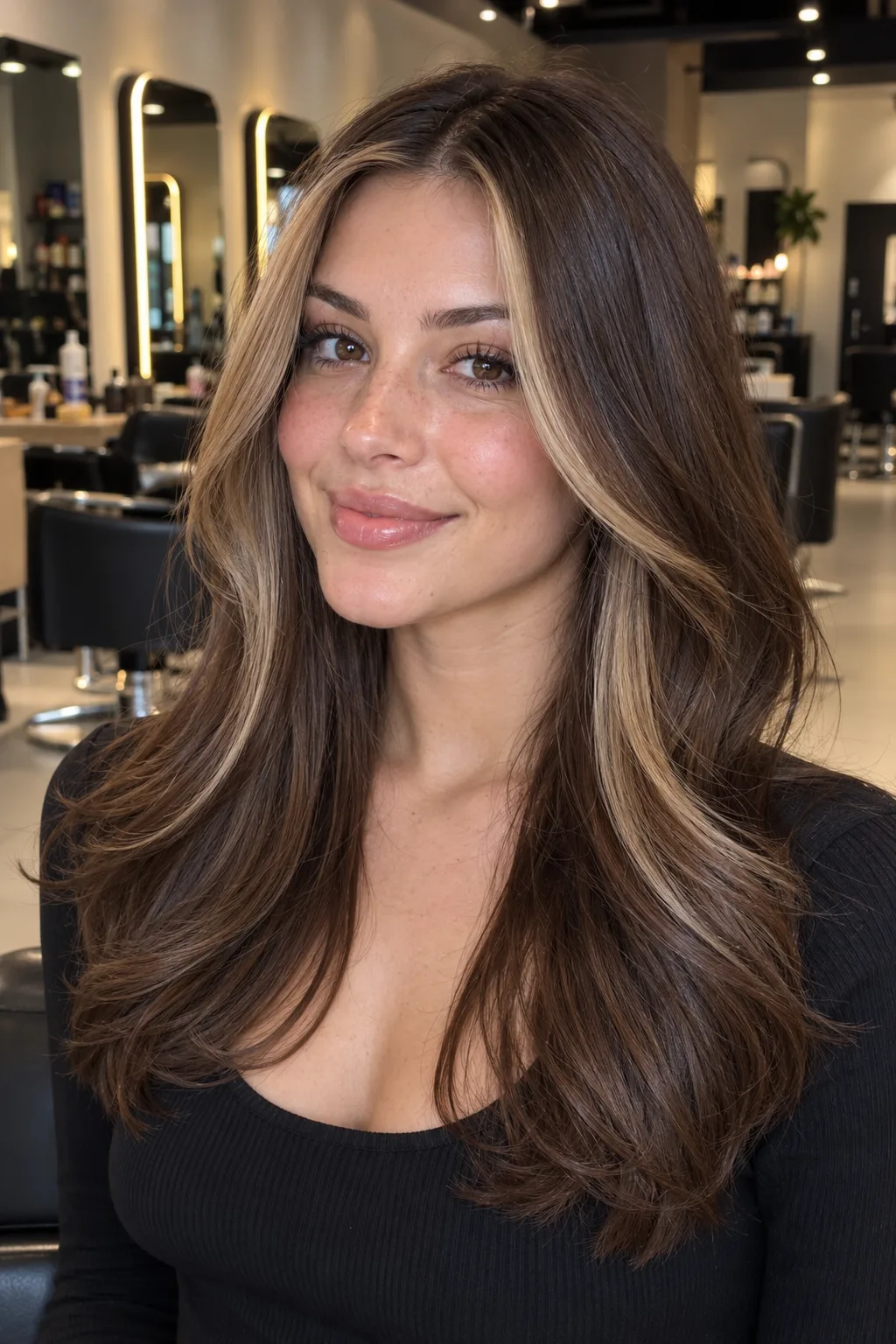
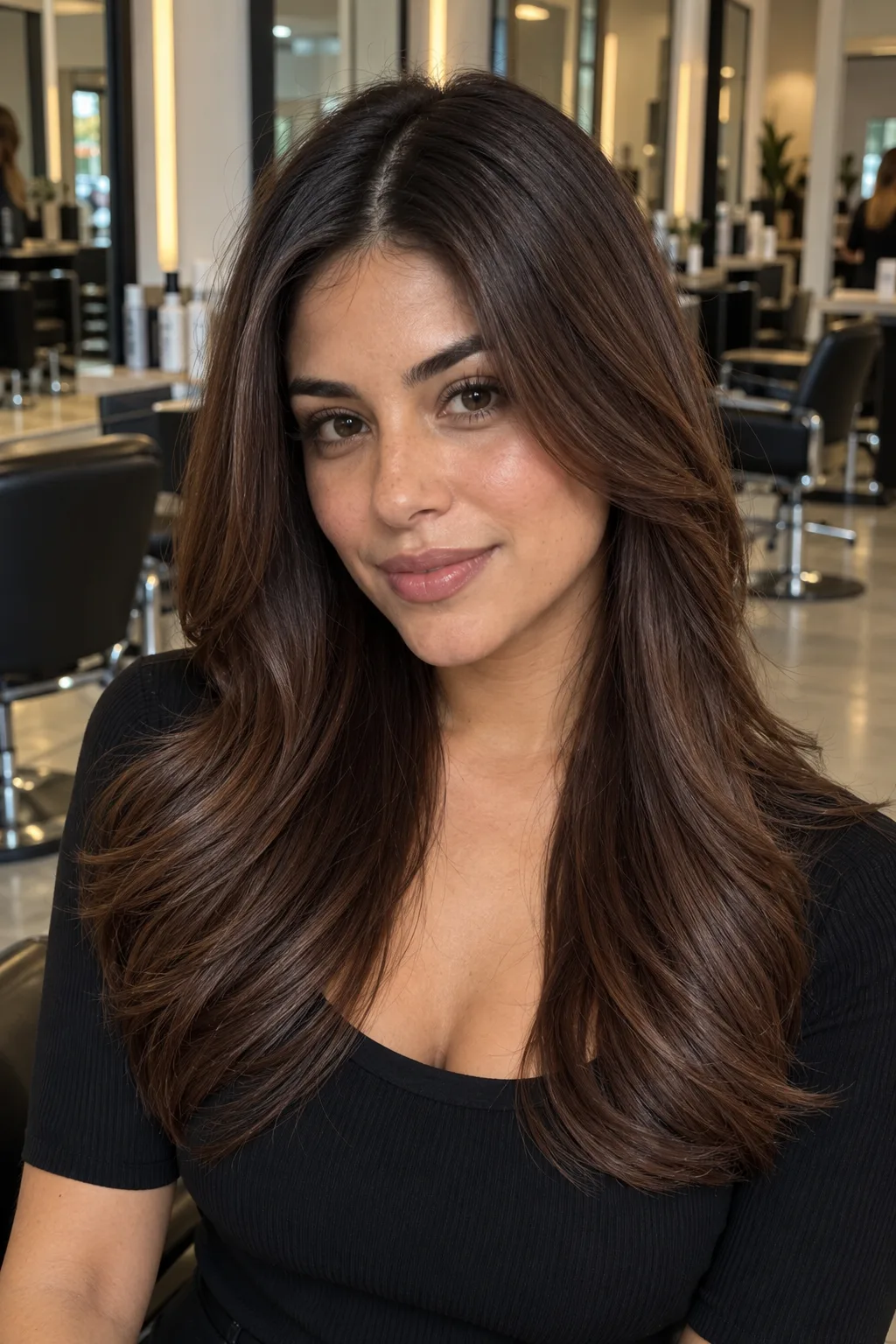
Every picture below keeps the same long layered cut, the same salon light and the same angle, so the only thing that changes is the shade. They run from the lightest chocolate to the deepest, then the cool and tinted versions, then the dimensional ones with highlights and balayage.
Gallery14 photos · tap to enlarge
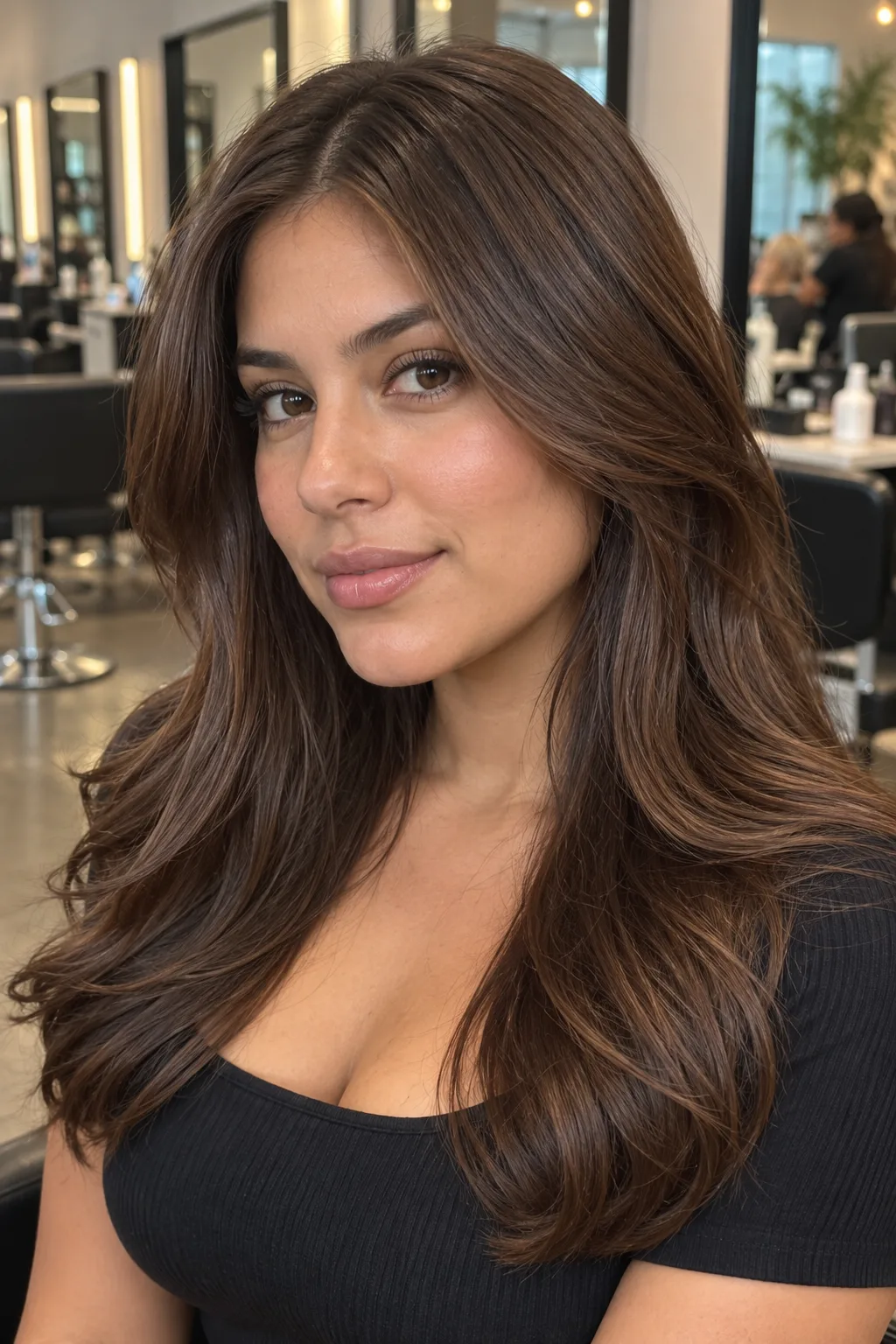 Try this on me
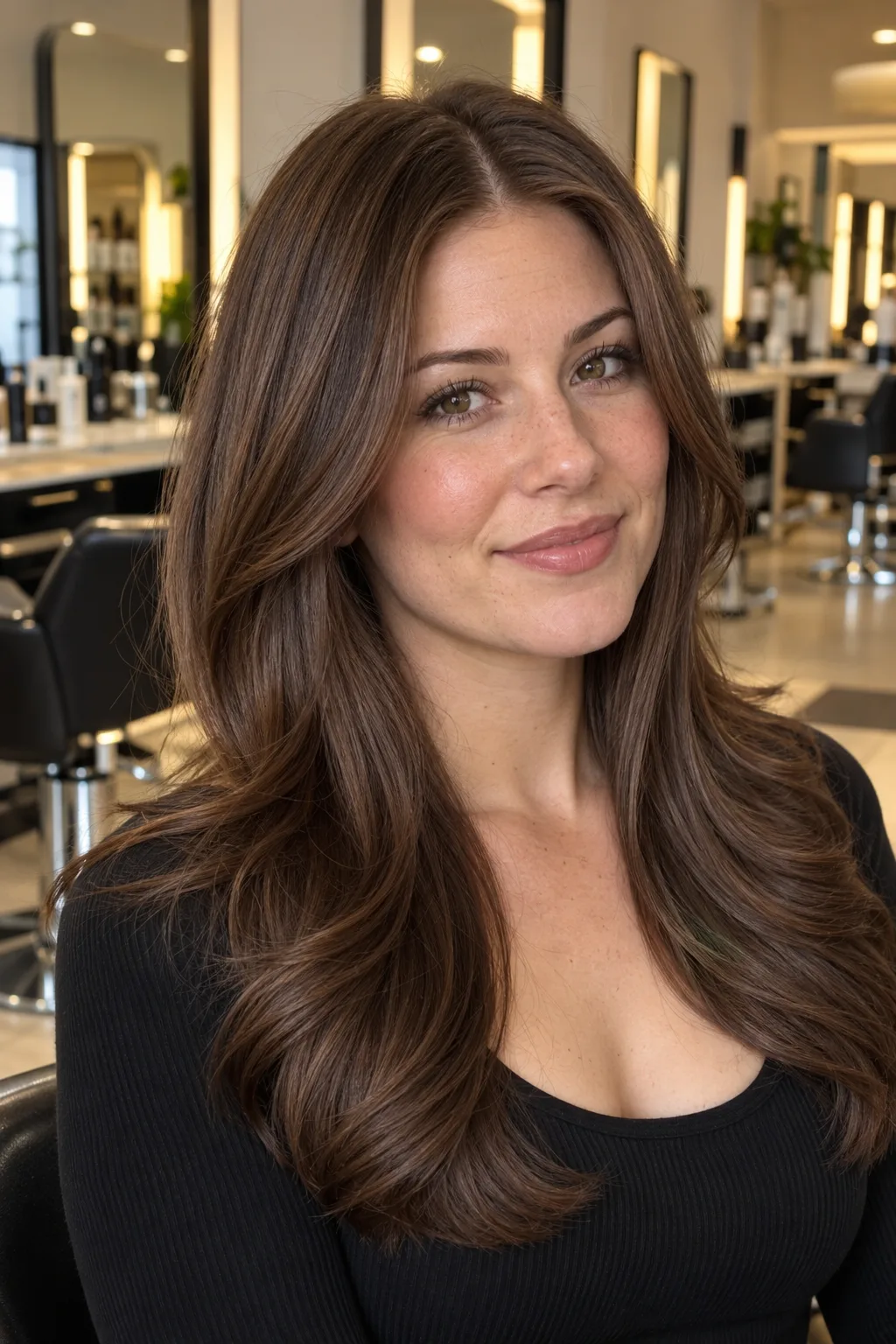 Try this on me
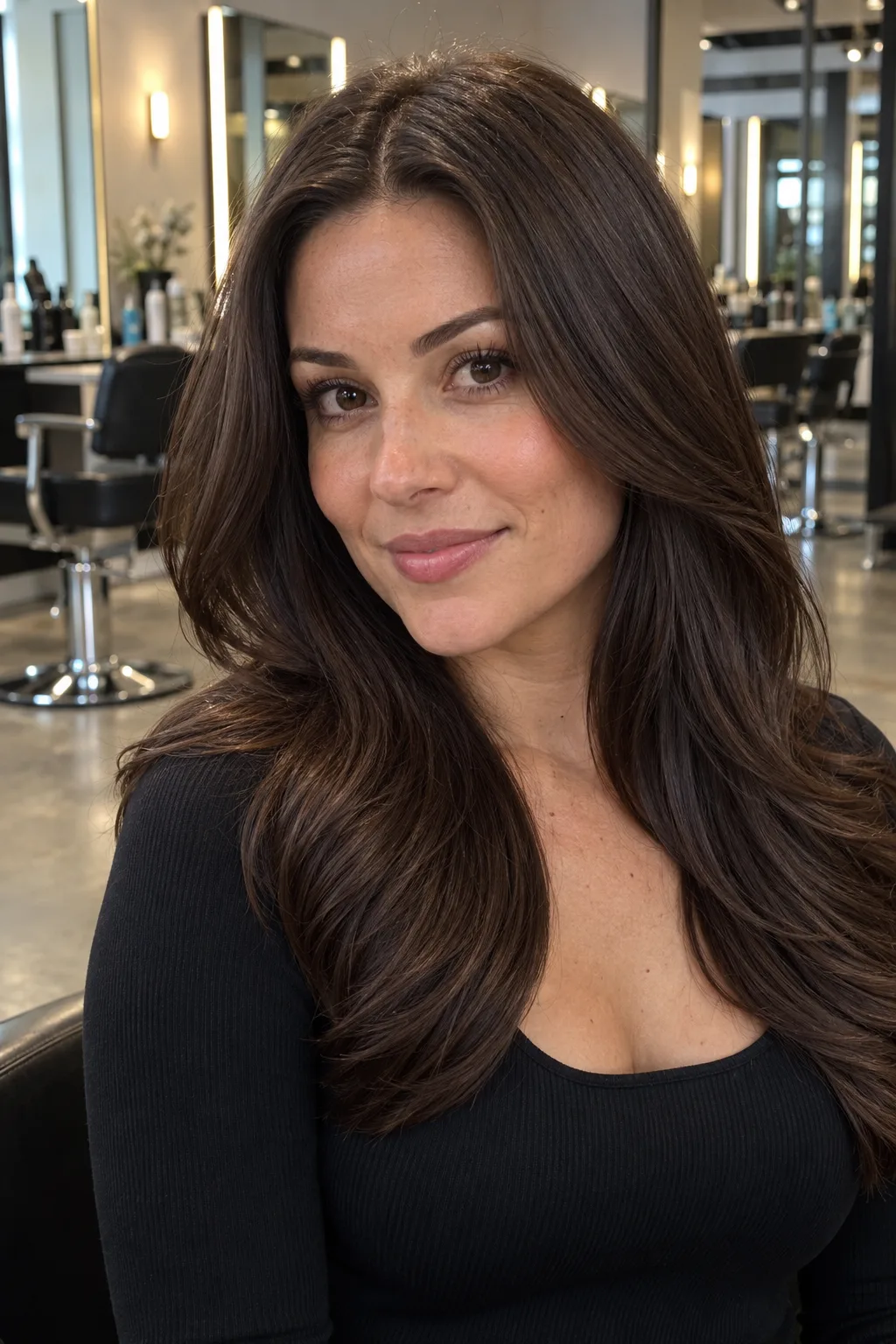 Try this on me
 Try this on me
 Try this on me
 Try this on me
 Try this on me
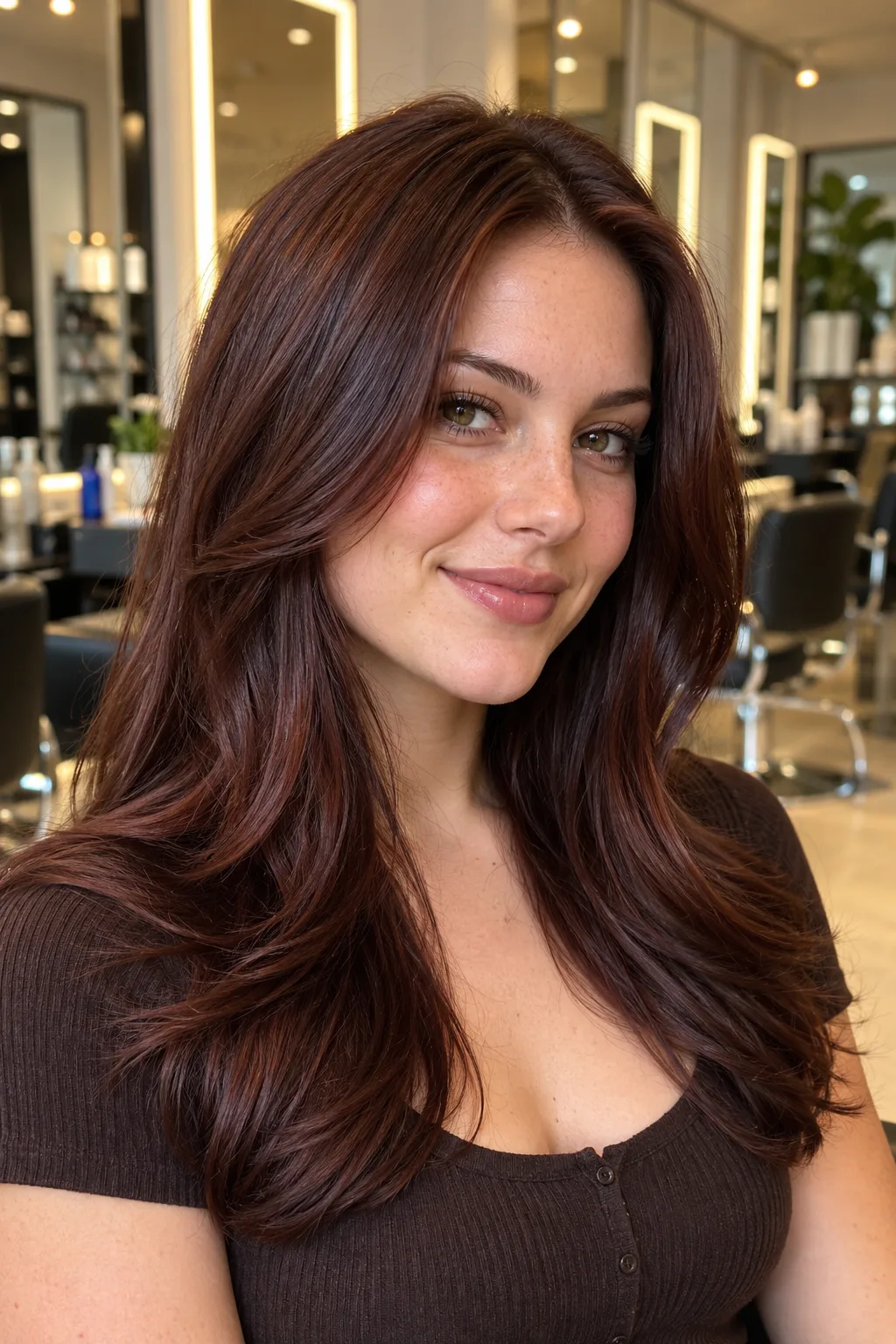 Try this on me
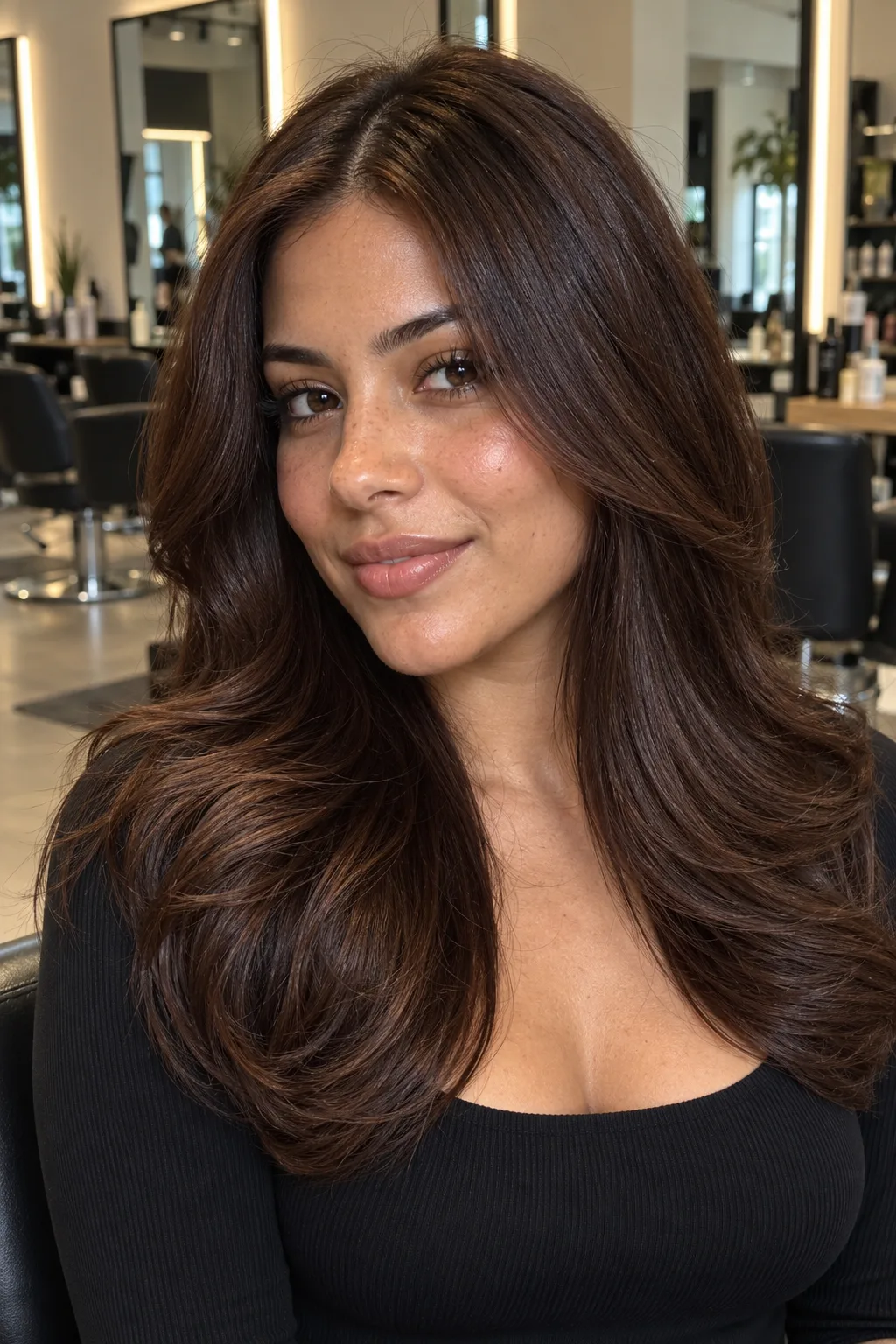 Try this on me
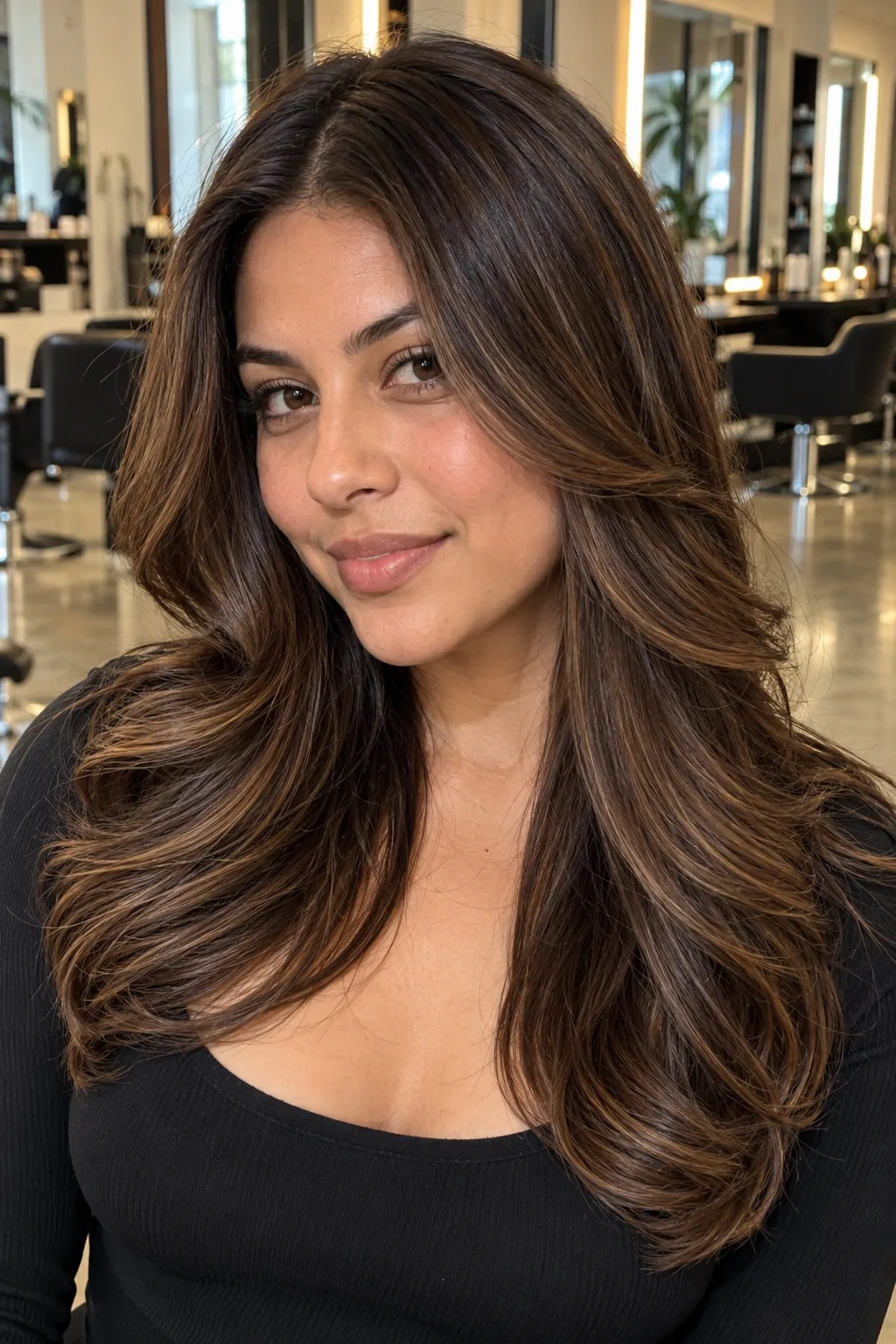 Try this on me
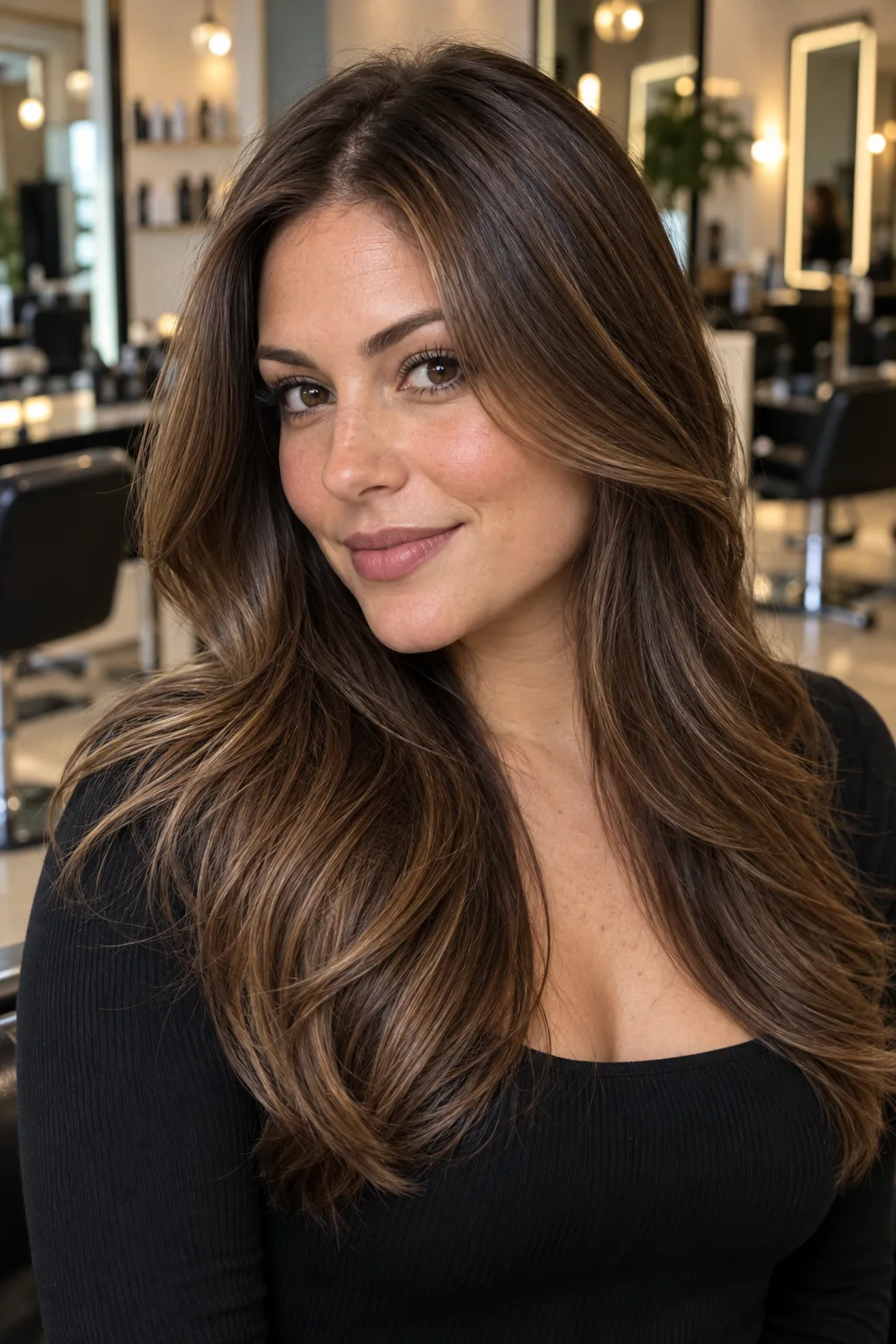 Try this on me
 Try this on me
 Try this on me
 Try this on me
Read across them and one pattern stands out: the single-process shades (milk, classic, dark) look polished but show regrowth within about six weeks on anyone whose natural color is lighter, while the dimensional ones (balayage, root shadow, babylights) hide regrowth because there is no hard line for it to expose.
Yours could be here.
Start with one selfie.
One photo, twenty seconds, and you'll know. Free account, no card for your first render.
Which chocolate brown suits your skin tone?
Match the warmth of the chocolate to the undertone of your skin. Warm and golden skin suits milk chocolate, caramel highlights and copper chocolate; cool and pink skin suits dark chocolate, mocha and espresso; olive and deep skin can carry almost any of them, as long as there is shine.
| Your undertone | How to tell | Best chocolate brown | Be careful with |
|---|---|---|---|
| Cool | Veins look blue, silver suits you, you burn easily | Dark chocolate, mocha, espresso | Copper chocolate, which can make pink skin look flushed |
| Warm | Veins look green, gold suits you, you tan easily | Milk chocolate, caramel highlights, light chocolate | Cool mocha, which can wash you out |
| Neutral | Both metals work | Classic chocolate, root shadow | Very little |
| Olive | Greenish or grey cast, tans deeply | Classic or dark chocolate with a gloss | Flat ash brown, which goes muddy |
| Deep | Rich brown skin, warm or neutral | Warm chocolate, chocolate copper, caramel lights | Espresso, which can read as black from a distance |
Warm and golden skin: milk chocolate
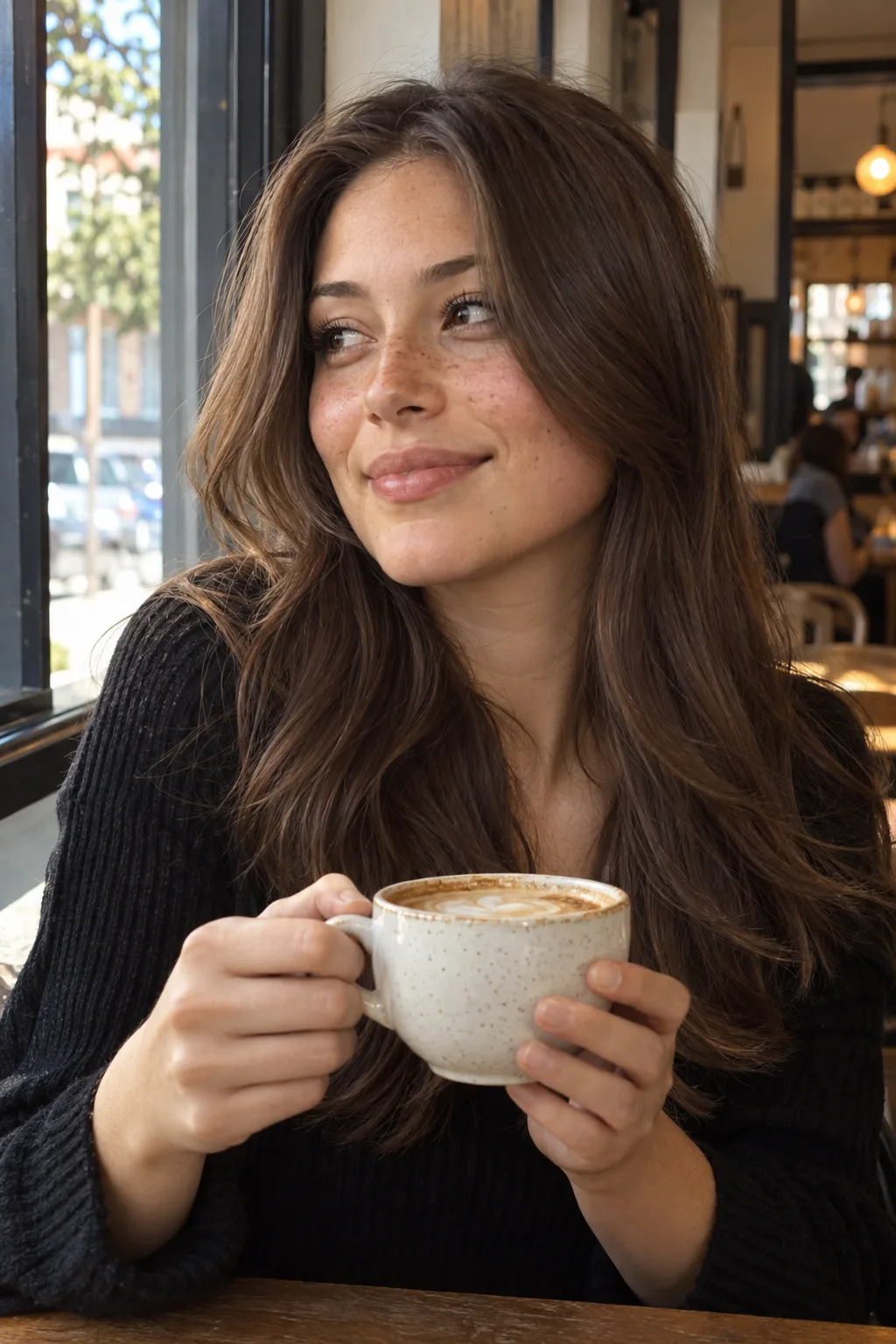
Freckled, golden-toned skin like this is where milk chocolate shines. In the window light the hair reads as a soft mid-brown with lighter, warmer strands around the face, so it brightens the skin instead of framing it in a dark block. If dark chocolate makes you look tired in photos, this is the shade to try next: one level lighter, the same richness, far less contrast.
Deep skin and curls: warm chocolate
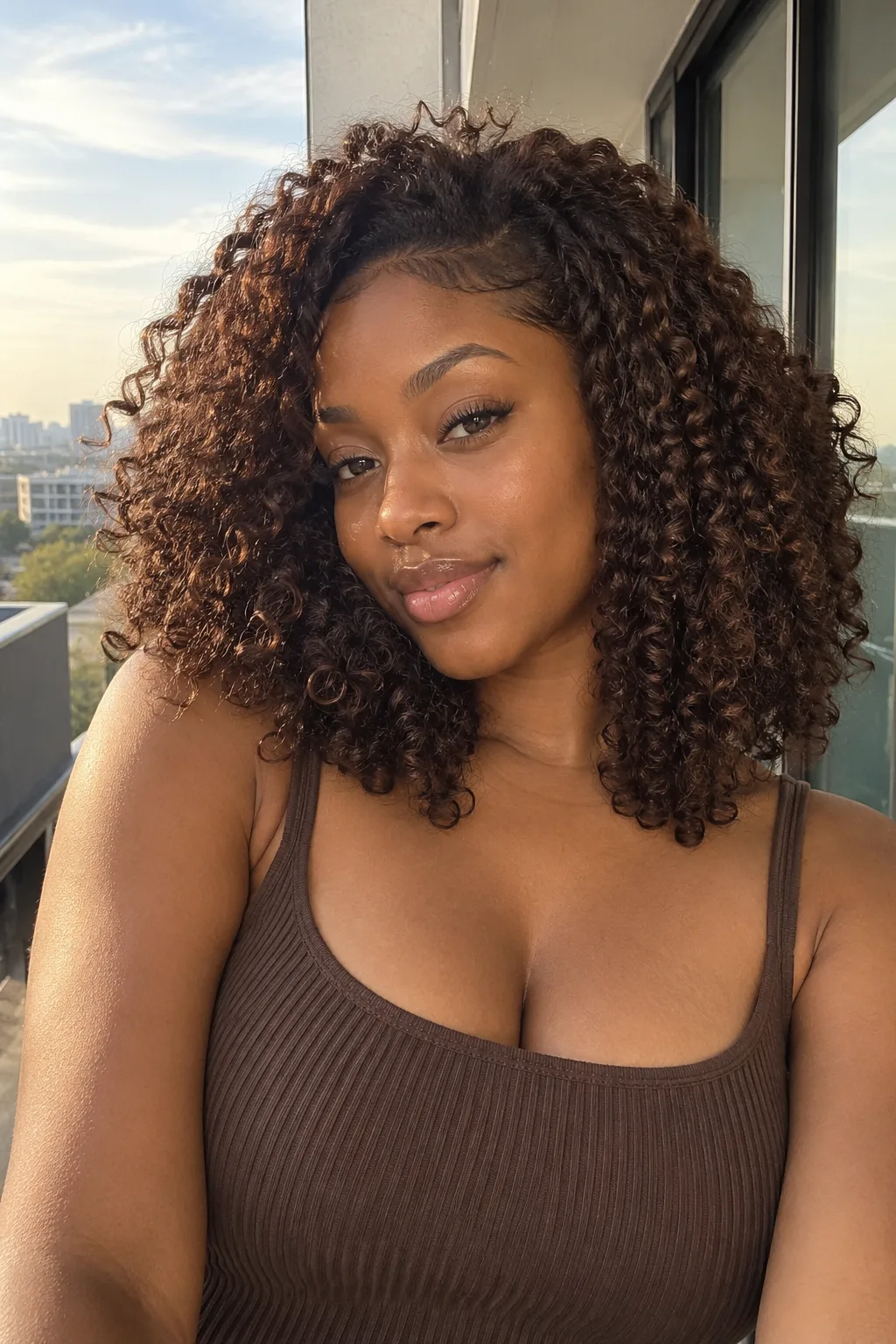
On deep brown skin, a warm chocolate a level or so lighter than natural black hair is the move. In the balcony light above, the curls read clearly brown, and the color sits close enough to the skin's own warmth that it looks like it grew that way. Curly hair also shows dimension for free: every curl has a lit side and a shadow side, so a single all-over chocolate looks multi-tonal. Know your curl pattern before you color, since coils like type 4 hair need a gentler developer and more moisture afterward.
Chocolate brown with caramel highlights
Caramel is the most popular way to add light to chocolate brown because the two share a warm undertone, so the highlights look like sun rather than stripes. Ask for fine pieces woven through the mid-lengths and ends and a slightly brighter pair around the face.
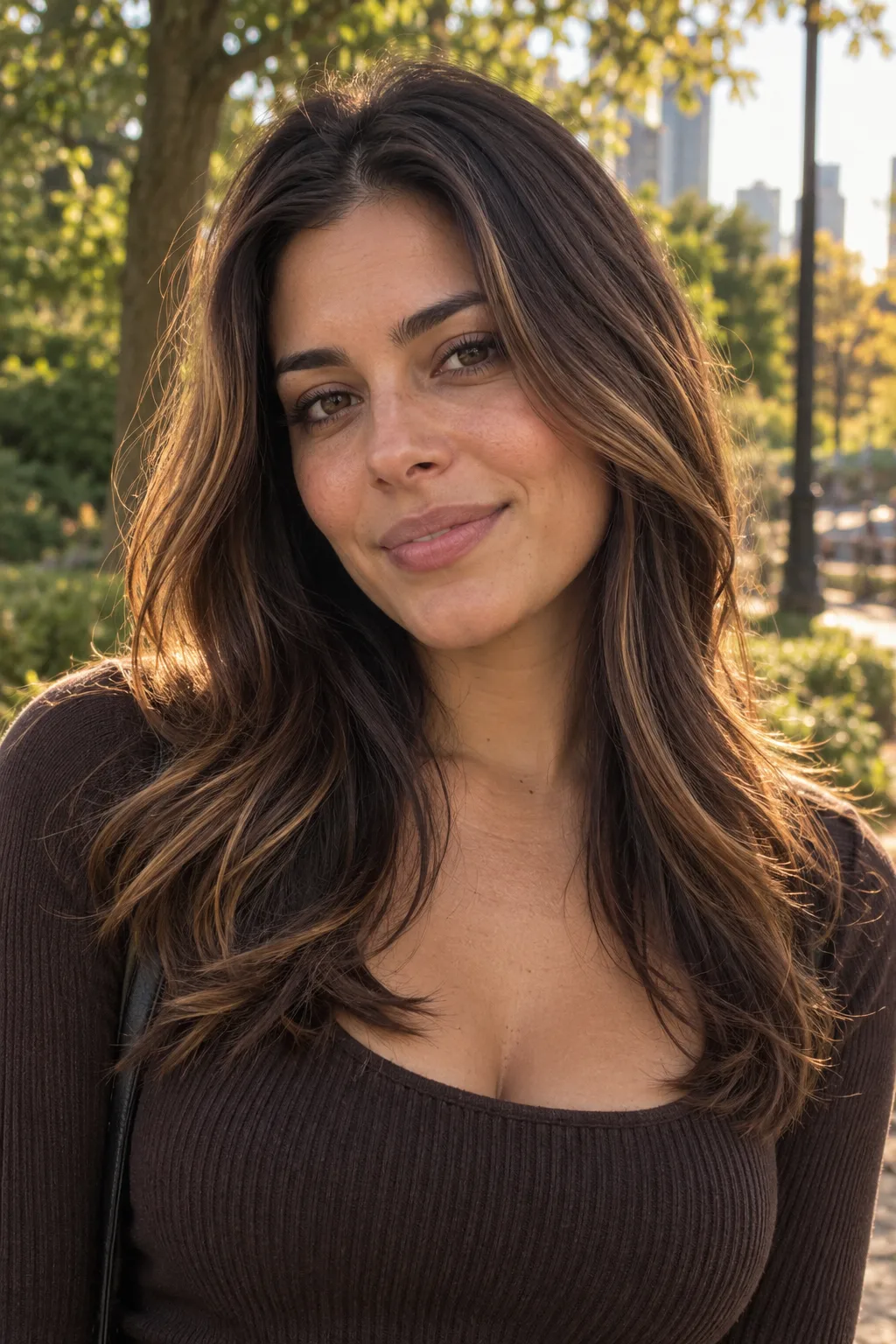
In the park photo, the base is still unmistakably chocolate, and the caramel shows mostly where the light catches the layers around the face. That ratio, roughly one caramel piece to every three or four chocolate ones, is what keeps it reading as chocolate brown with highlights instead of brown hair with blonde highlights. Want only the front lit? A caramel money piece gives you that brightness for a fraction of the time in the chair.
Can you dye your hair chocolate brown at home?
Yes, if your hair is currently light brown, medium brown or dark blonde and has not been lightened. Chocolate brown is a deposit job for those starting points, and a box or a demi-permanent hair color will get you there in one go. The two starting points that fail are pre-lightened blonde and dyed black.
This is the part almost every guide skips. Blonde and highlighted hair has had its warm pigment stripped out. Put a brown dye straight on top and there is nothing underneath for it to hold onto: the result often looks flat, slightly green or grey, and fades back toward blonde within a few washes. Colorists fix this with a filler, a warm red-gold color applied first to put that missing pigment back, then the chocolate on top.
| Starting color | Can you reach chocolate brown at home? | What it takes |
|---|---|---|
| Natural light or medium brown | Yes | Permanent or demi-permanent level 4 |
| Natural dark blonde | Yes | Level 4 or 5, pick a neutral-warm shade |
| Bleached or highlighted blonde | Risky | A warm filler first, then the brown, ideally in a salon |
| Natural dark brown or black | Only if going darker | Lighter chocolate needs lift, which box dye does unevenly |
| Previously dyed black | No | Color remover or lightener in a salon; dye cannot lift dye |
The American Academy of Dermatology recommends you choose a dye within three shades of your natural color to limit damage, which is one more reason chocolate brown is such an easy win for most natural brunettes. If you want the gentlest formula, read our guide to ammonia free hair dye before you buy.
How to dye your hair chocolate brown at home
- Do a patch and strand test
Put a dab of the mixed dye behind your ear and on a hidden strand 48 hours before. The FDA advises a patch test before every hair dye use, and the strand shows you the real color on your hair.
- Pick the level, then the tone
Choose a 4 for classic chocolate, a 3 for dark, a 5 for milk. If your hair runs brassy, choose a neutral 4 rather than a warm one.
- Fill first if you are blonde
On bleached or highlighted hair, apply a warm red-gold filler, rinse, and then apply the brown. Skip this and the brown fades toward green-grey.
- Apply roots last on virgin hair
On never-dyed hair, coat mid-lengths and ends first, then roots for the final 10 to 15 minutes. Heat from the scalp makes roots develop faster.
- Rinse cool and seal with a gloss
Rinse with cool water and use the conditioner in the box. A clear gloss two weeks later keeps the shine that makes chocolate brown look expensive.
Chocolate brown hair for men
Chocolate brown works on short hair too, and it is one of the few colors men can wear without it looking dyed. On a short cut the sides show the most scalp, so stay within one or two levels of your natural color and choose a neutral shade rather than a red-leaning one.
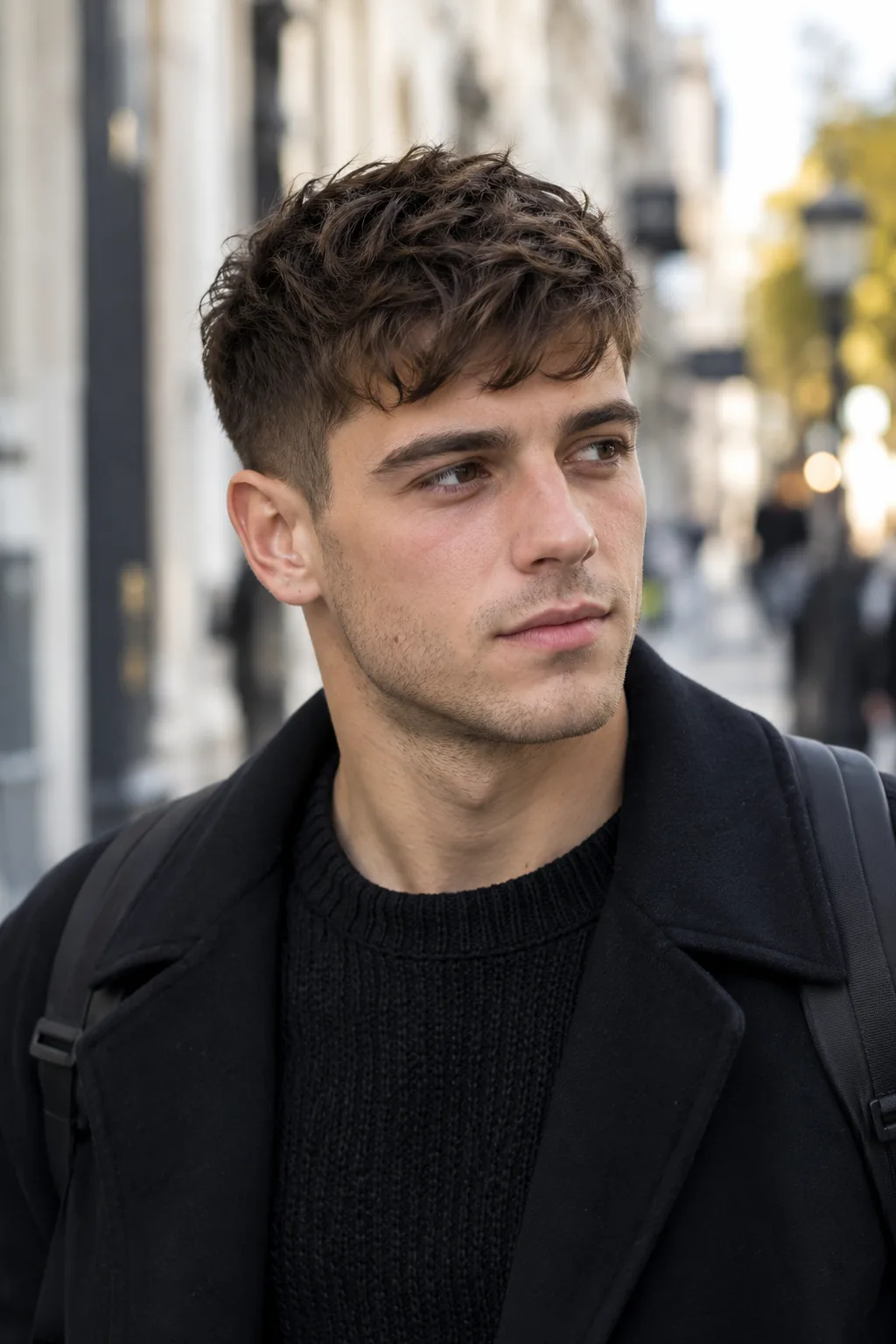
The cut above is a textured crop with a low taper, and the chocolate brown shows mostly in the messy top, where the light picks out warm brown ends. The tapered sides stay darker and close to natural, which is exactly why it does not look dyed. For men going gray early, a demi-permanent chocolate brown blends the first silver strands without the flat, shoe-polish look of permanent black.
Mistakes that cost people their chocolate brown
- Putting brown straight onto bleached hair. Without a filler, it looks hollow and washes out in a week or two. This is the most common reason people say chocolate brown "did not take".
- Going too dark on fair skin. Espresso on pale skin can look harsh and emphasize under-eye shadows. Classic or milk chocolate gives depth without the contrast.
- Expecting dye to lighten dyed hair. If you have box black on your ends, a chocolate brown box will not make them lighter. Dye cannot lift dye.
- Washing in hot water every day. Brown fades warmer as it goes, toward red and orange. Cool water, sulfate-free shampoo and a brown or blue-tinted gloss every few weeks keep it rich.
- Ignoring regrowth on lighter natural hair. If your natural color is dark blonde, solid chocolate brown shows a light root fast. A root shadow or balayage version buys you weeks.
How to ask for chocolate brown hair at the salon
Say the level and the tone, and bring a photo. "Chocolate brown" means a level 3 to one colorist and a level 5 to another, so the numbers do the work.
Say this to your barber
I want a level 4 chocolate brown, neutral to slightly warm, no red, glossy finish, blended at the root so regrowth stays soft.
The words get you the right color in the bowl. What they cannot show you is how that exact shade looks against your skin and eye color, and that is where most color regret comes from: the swatch looked rich, but on you it looks heavy. A photo of a stranger does not solve it either, because the shade is reacting to her skin, not yours.
The short version
Pick the shade by your skin, not the box: milk or caramel chocolate for warm skin, dark chocolate or mocha for cool skin, classic chocolate if you are neutral. Then check your starting color. Natural brunettes and dark blondes can do it at home in one session; bleached hair needs a filler first, and dyed black needs a salon. If you are torn between two shades, try both on your own photo first, it takes a minute and costs nothing to look. And if you want to go the other direction afterward, honey blonde hair is the warm, bright opposite of chocolate.
Frequently asked questions
Dark chocolate brown is a level 3 brown with a neutral tone and little to no red. Indoors it can look close to black, but in daylight it shows clearly as brown, which is what separates it from soft black or 1B hair.
Caramel, honey and toffee are the safest because they share chocolate's warm undertone. For a cooler finish, try mushroom or beige babylights, and for something bolder, copper or a cherry tint through the lengths.
Almost all of them, which is why it is so popular. Warm skin suits milk chocolate and caramel versions, cool skin suits dark chocolate and mocha, and olive and deep skin tones suit classic or warm chocolate with plenty of shine.
There is no single winner, but the shade that looks best is usually one to two levels from your natural color with a tone that matches your skin's undertone. For most people with naturally brown hair, that lands right in the chocolate range.
Going from dark dyed hair to light is the hardest change, because dye cannot lift dye and the hair has to be lightened. For chocolate brown specifically, the hardest start is bleached blonde, because the brown needs a warm filler underneath or it fades out in days.
Softer, slightly lighter shades with dimension tend to look fresher than solid dark ones. A milk chocolate base with caramel or honey pieces around the face softens shadows, while a flat espresso can emphasize lines and grey regrowth, and fine highlights blend early greys instead of exposing them.
Preview it on your own photo: Balayage Try-On.
Share article
About the author
Related posts
Women's Haircuts · 13 min
Brown Hair With Highlights: 14 Colors and Which Suits Your Base
Caramel, honey, copper, red, ash, beige and silver on brown hair, compared by how much lift each needs and what it costs to keep. Find the shade that suits your base and skin.
Women's Haircuts · 13 min
Messy Bun: How to Do It in 2 Minutes on Any Hair Type
A messy bun takes two minutes and one hair tie. The part tutorials skip: the messy look comes from your haircut and texture, not your hands. See it on 13 hair types and find the version that holds on yours.
Women's Haircuts · 13 min
Honey Blonde Hair: 14 Shades and How to Get It From Any Base
Honey blonde is a warm golden blonde around level 7 to 8. See 14 versions, how it compares to caramel and golden blonde, the route from your starting colour, and the mistakes that turn it brassy.
Women's Haircuts · 15 min
Bixie Haircut: 14 Looks, Who It Suits and What to Ask For
A bixie is the shaggy cut between a pixie and a bob. See 14 versions, which one suits your face shape and hair type, how it compares to a pixie, and the exact words to say in the salon.
Women's Haircuts · 15 min
Type 4 Hair: How to Tell 4a, 4b and 4c Apart and What Actually Matters
Type 4 hair is the tightest natural texture, split into 4a, 4b and 4c. How to tell type 3 from type 4, how to read your letter, the porosity test that matters more than it, a wash day that works on any type 4 head, type 4 hair on men, and fourteen ways it is worn.
Women's Haircuts · 13 min
Thick Hair: What It Is, the Cuts That Work and How to Manage It
Thick hair is a weight problem before it is a frizz problem. How to tell dense from coarse, 13 cuts that handle the bulk, how to thin it without ruining it, and the words to say to your stylist.