Flow Haircut: 14 Looks, Grow-Out Timeline and What to Ask For
Oleh Onysko 24 October 2026 15 min read
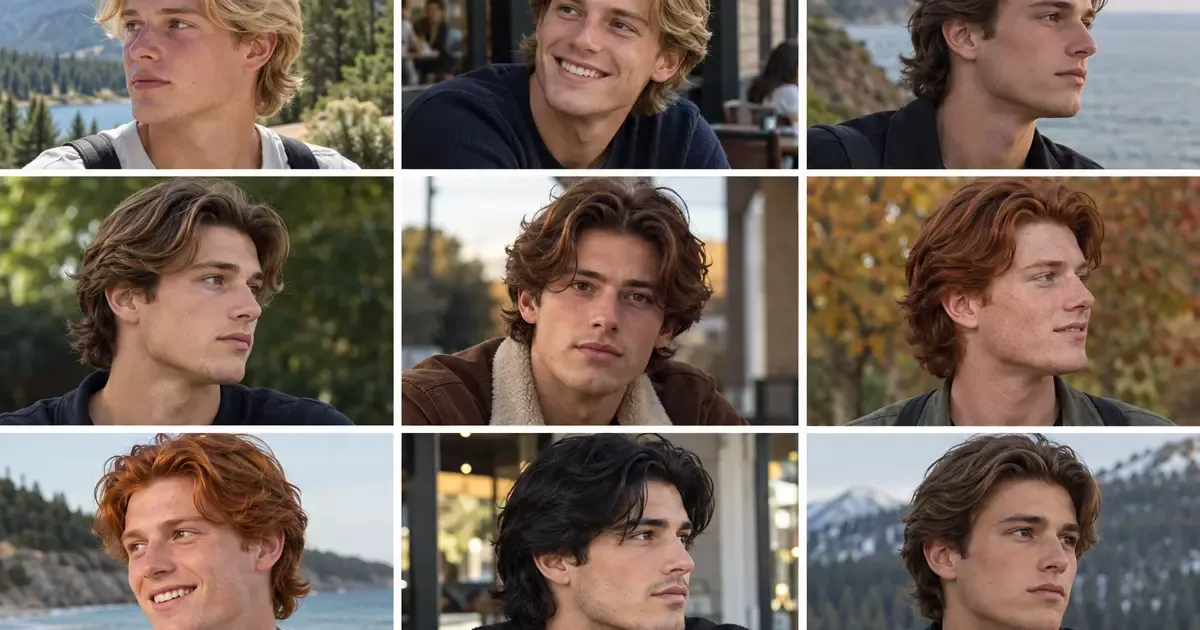
In this article
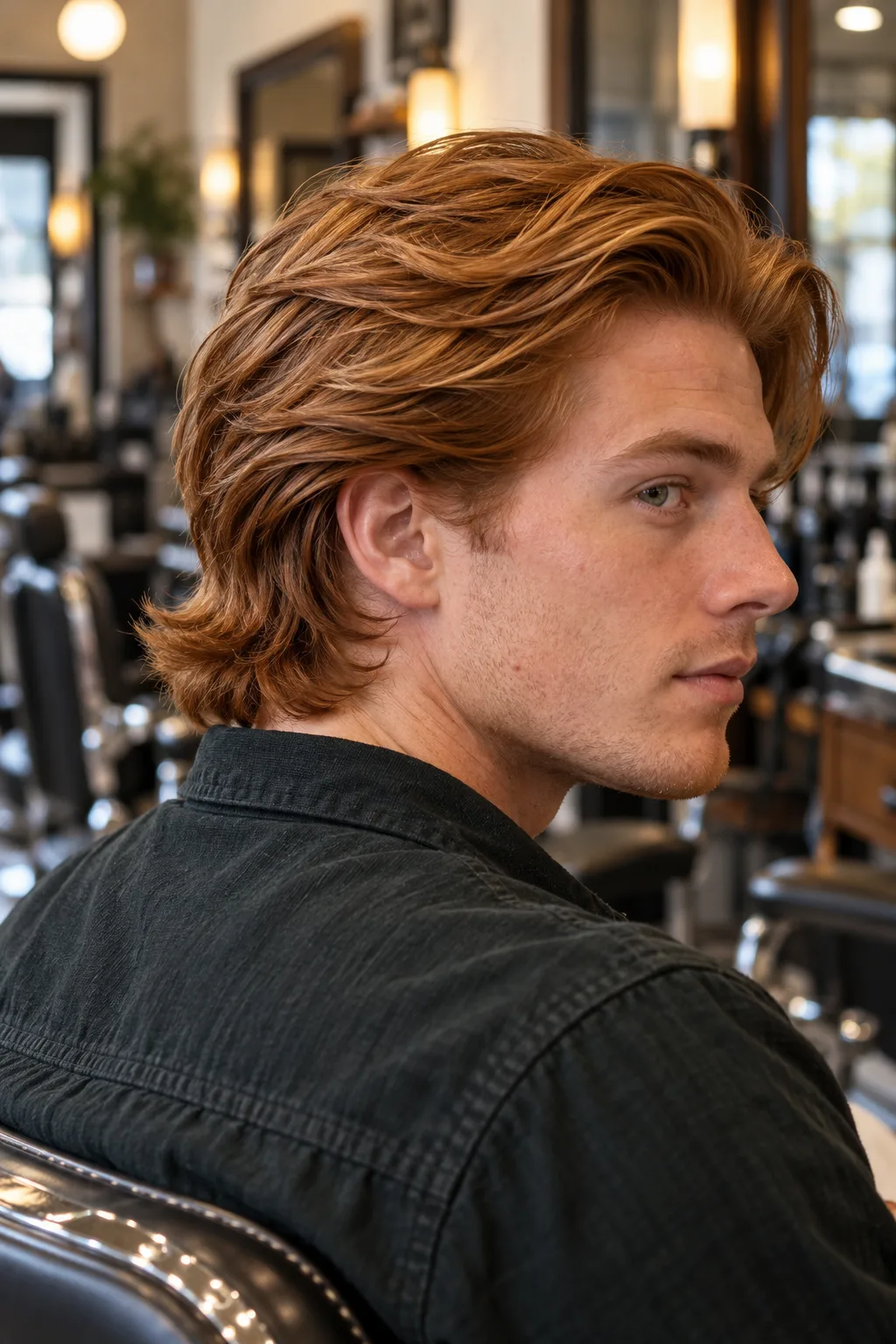
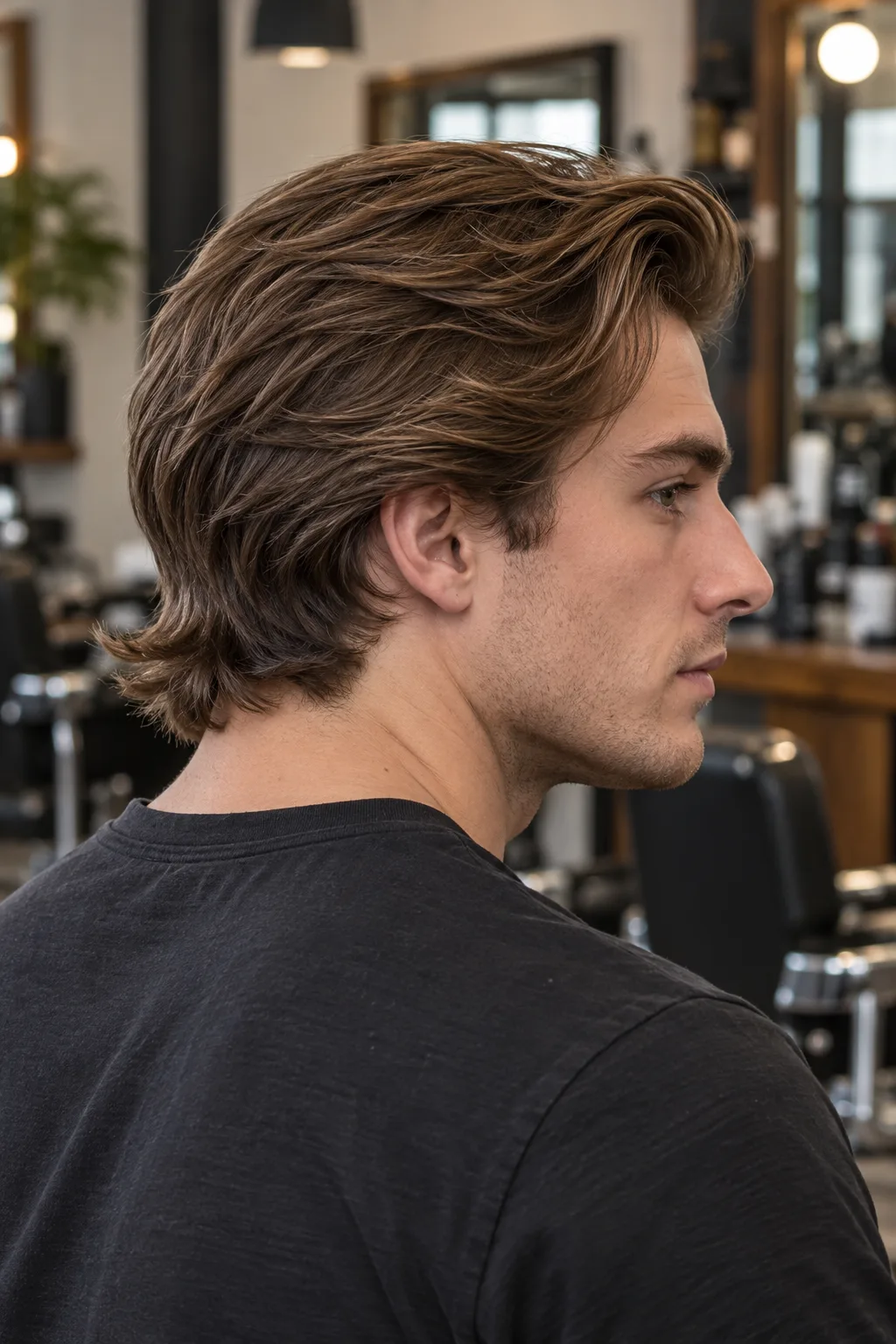
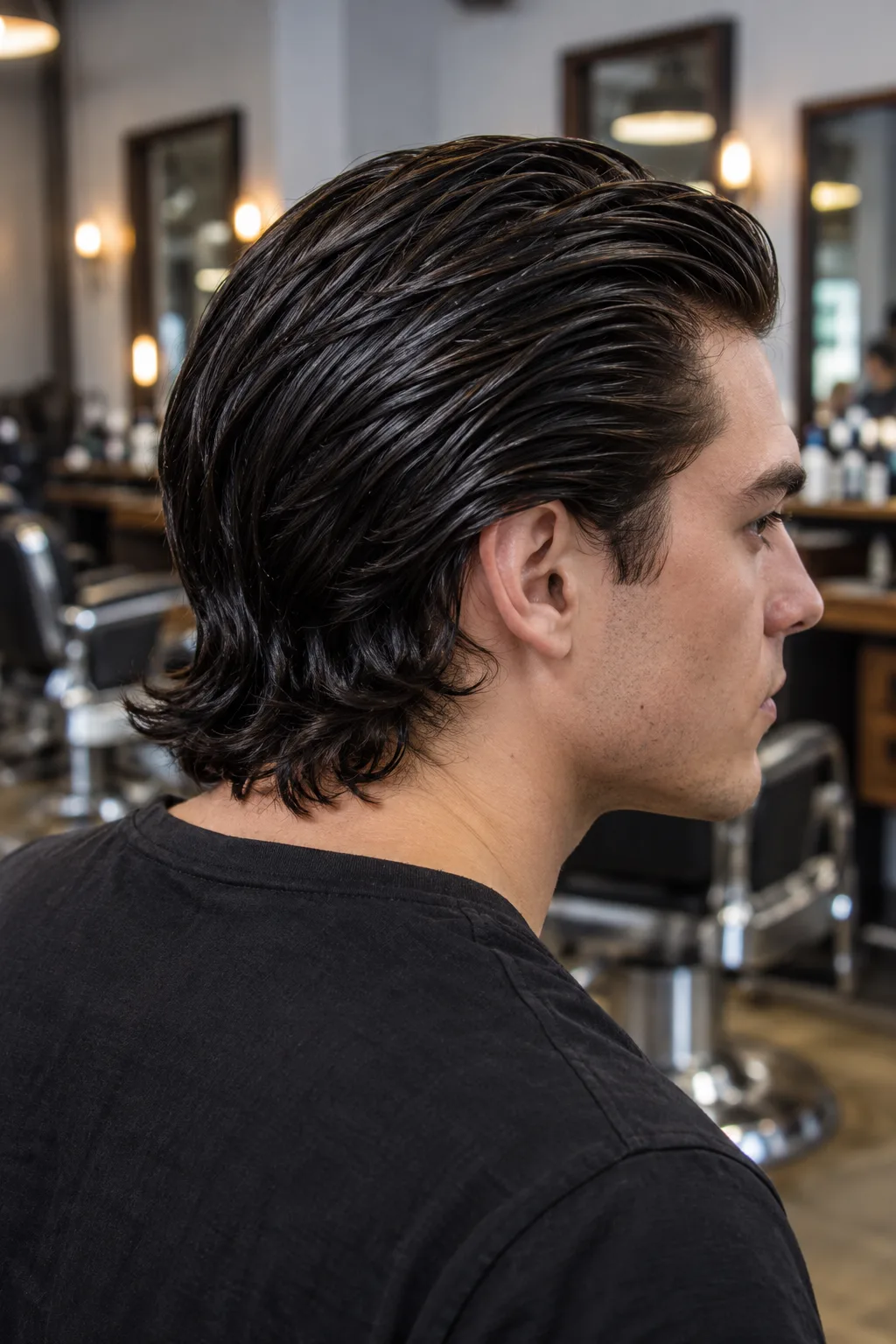
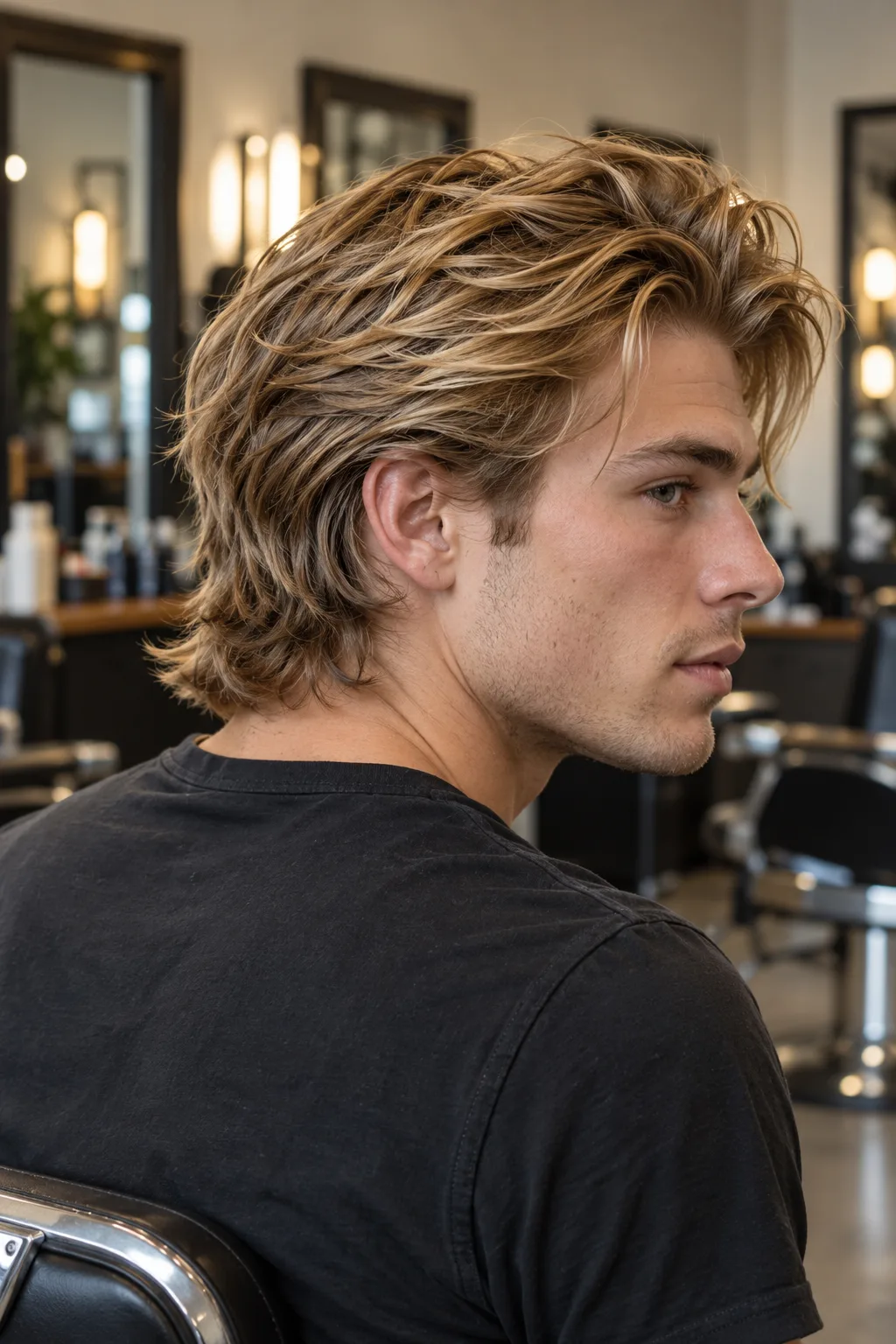
A flow haircut is medium-length men's hair, about 4 to 6 inches on top, worn swept back off the forehead with the sides tucked behind the ears and the back long enough to flick out at the collar. There is no fade and no clippered side: the whole cut is grown out and shaped with scissors, which is why it takes months to get and seconds to style.
The part most guides skip is the one that decides whether yours works: the flow is a growing-out plan first and a haircut second. The barber does not create the length. You do, over about four to six months, and the barber's job is to keep the shape clean while it arrives. Get that order right and the awkward stage mostly disappears.
What is a flow haircut?
The flow (also called the bro flow, hockey flow or hockey hair, and "lettuce" or "salad" in rink slang) is a cut defined by three lengths, not one:
- Top: 4 to 6 inches, long enough to push straight back and stay there.
- Sides: grown past the top of the ear so they can be tucked behind it.
- Back: reaching the collar, with layers that make the ends lift and curl outward.
What it is not: it is not a fade, a taper to skin or an undercut, and it is not shoulder-length long hair. The moment the sides get clippered, it stops being a flow and becomes a slick back on a fade. The moment the back passes the shoulders, it is long hair.
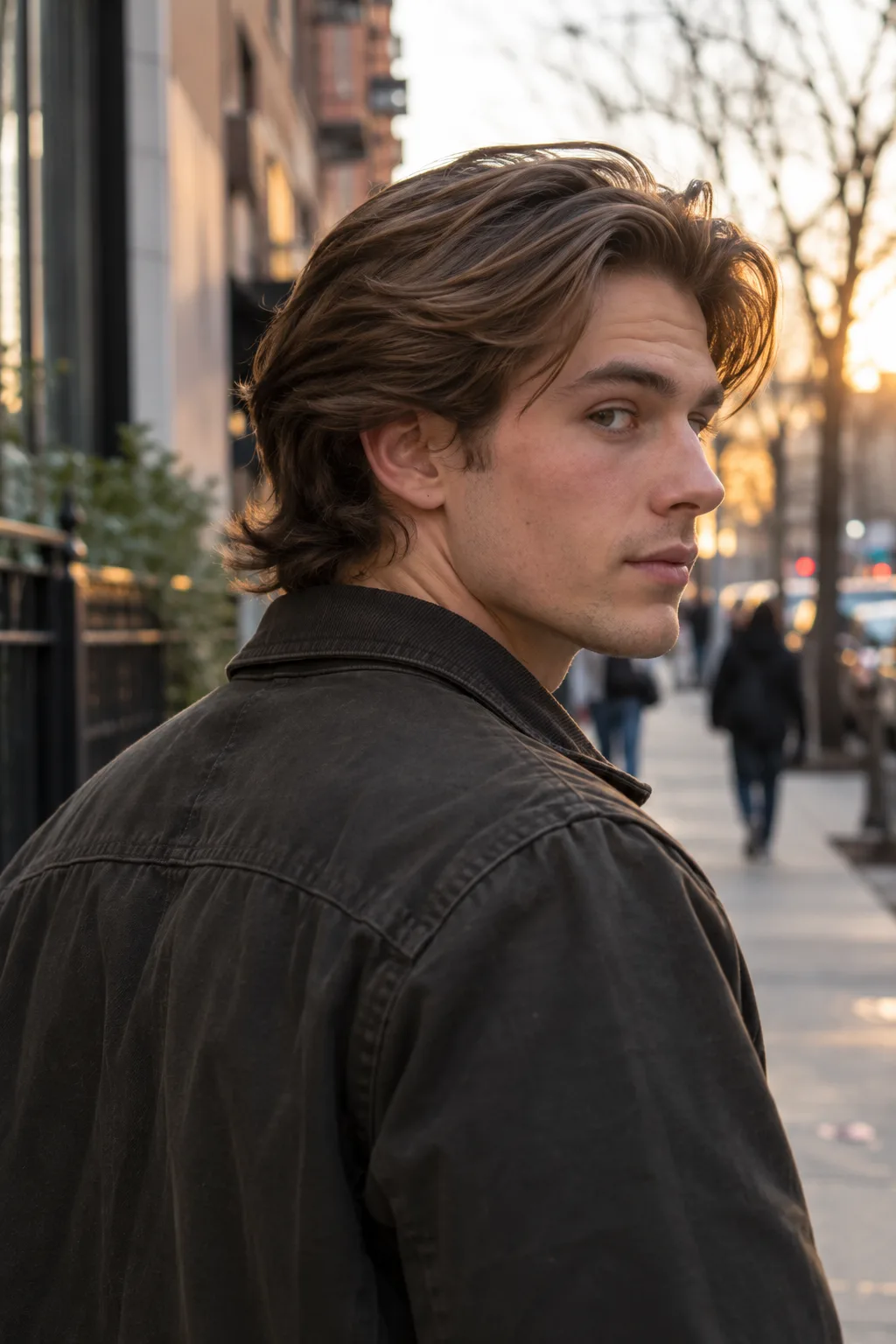
The flick at the nape is the signature. Everything else about the cut (part or no part, texture, product) is a variation on that one shape.
Want to see it first? Try a new hairstyle on your own photo.
Flow vs hockey flow vs bro flow vs mullet
The names overlap, so here is how barbers usually split them.
| Cut | Top | Back | Sides | Feel |
|---|---|---|---|---|
| Short flow | 3 to 4 in | Touches the collar | Just over the ear | Office-friendly, the first wearable stage |
| Classic flow (bro flow) | 4 to 6 in | Reaches the collar, flicks out | Tucked behind the ear | The default version |
| Hockey flow | 4 to 6 in | Clearly longer than the top, big flick past the collar | Tucked or loose | Rink and lacrosse look, more volume at the back |
| Mullet | 1 to 3 in | Long | Short, often faded | Deliberate contrast, a different cut |
The quick test: a flow keeps the length roughly even from the front to the back, a hockey flow lets the back win, and a mullet cuts the sides and top short on purpose. If you want the contrast version, our mullet try-on shows it on your own face.
14 flow haircut variations, from short to long
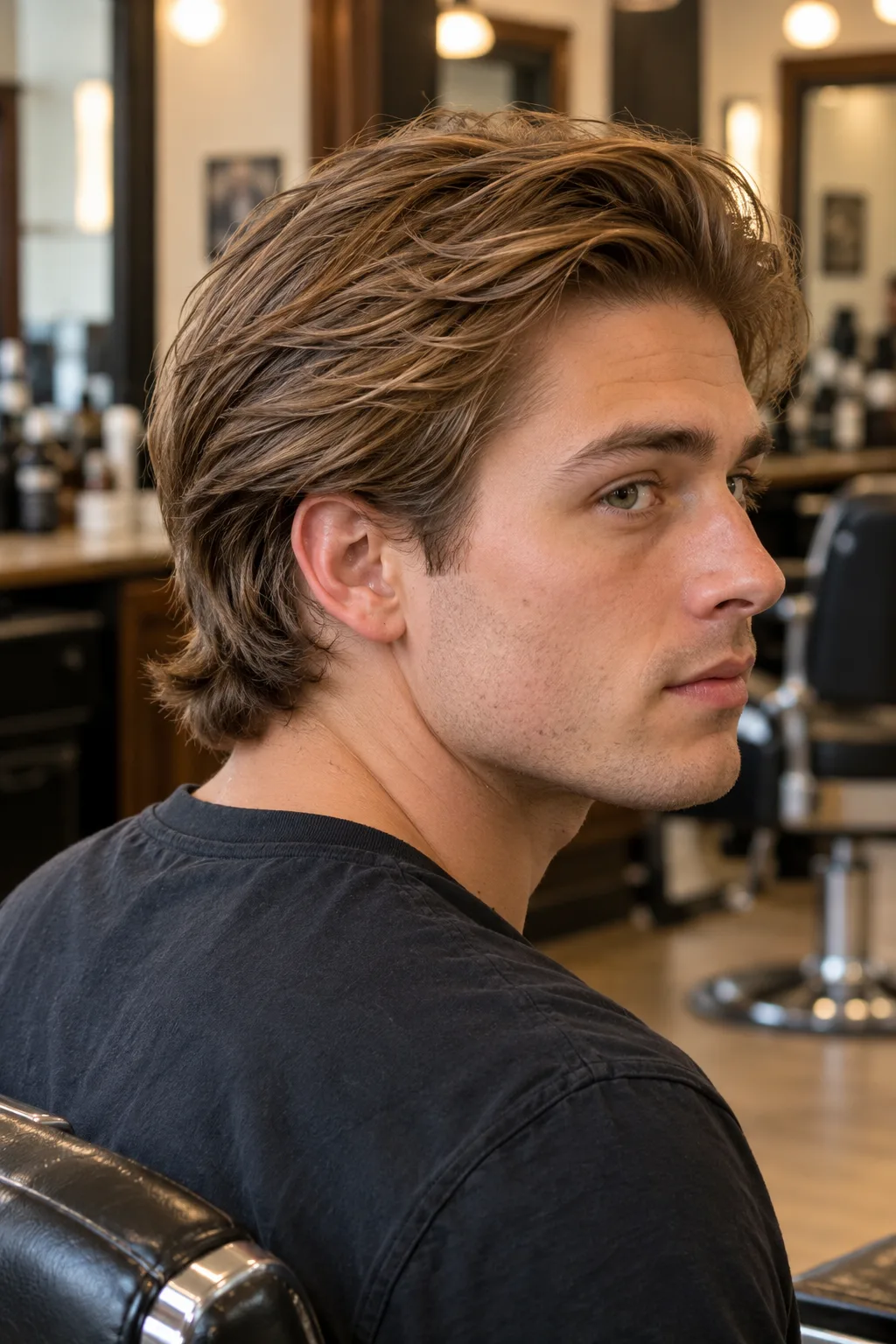
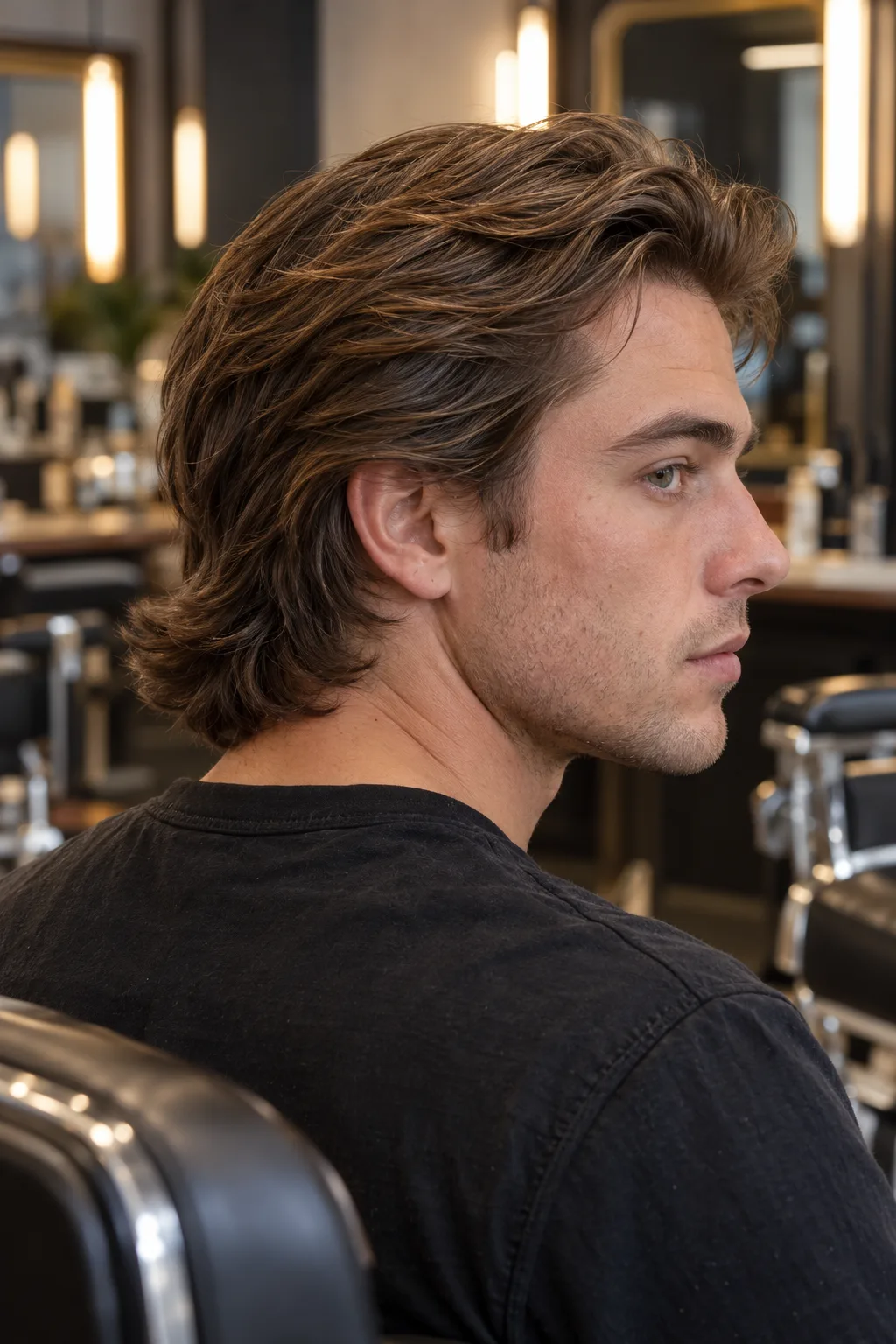
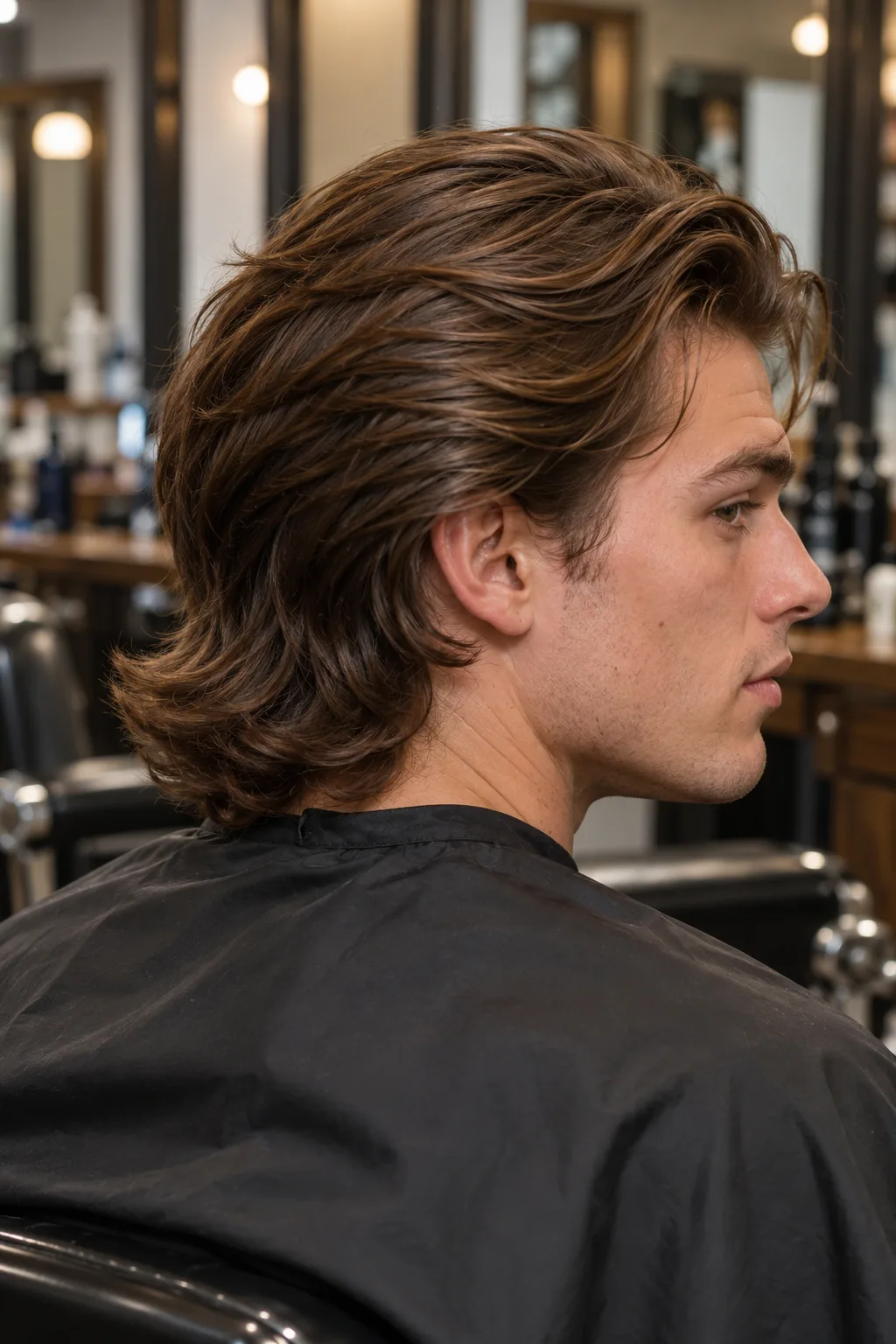
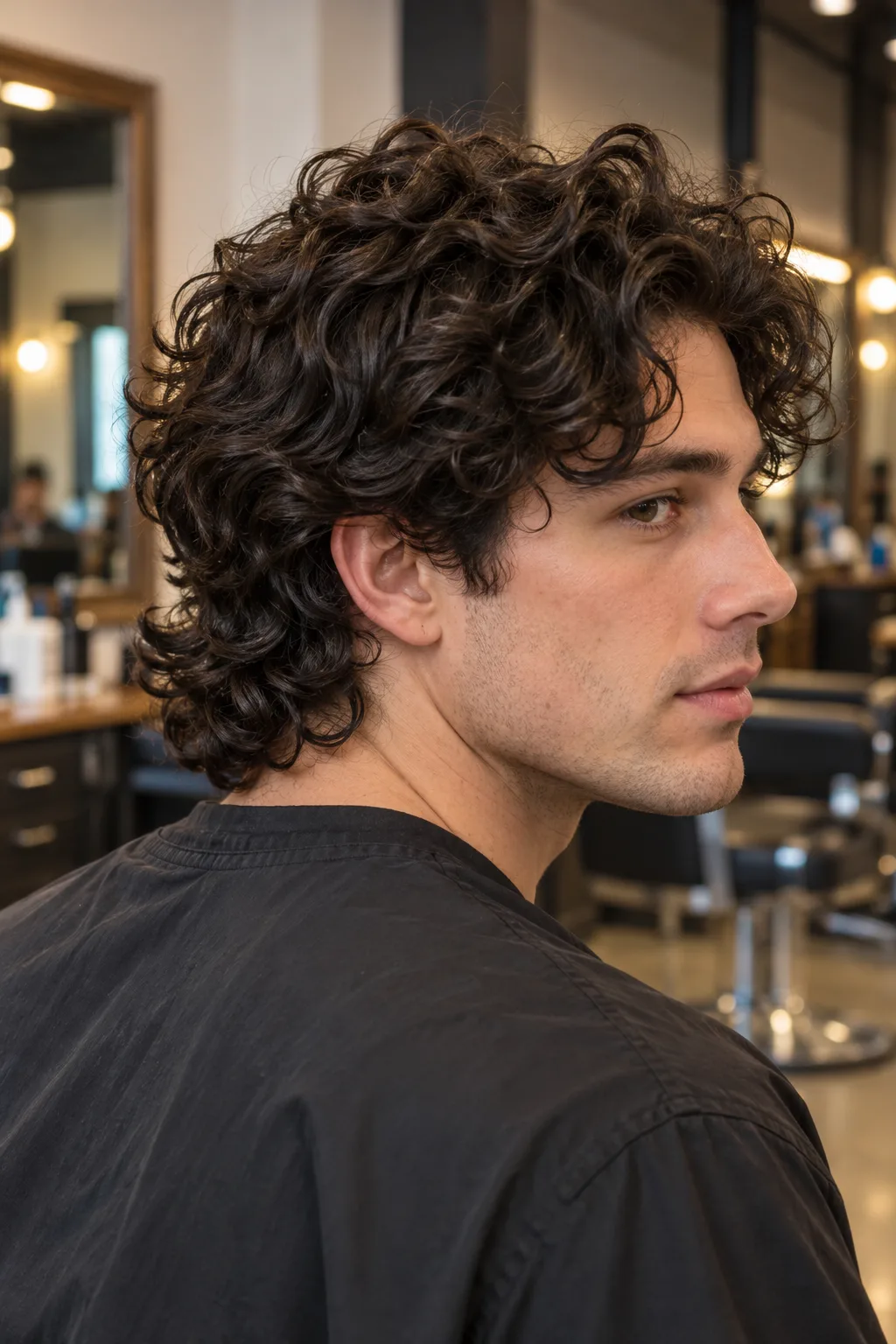
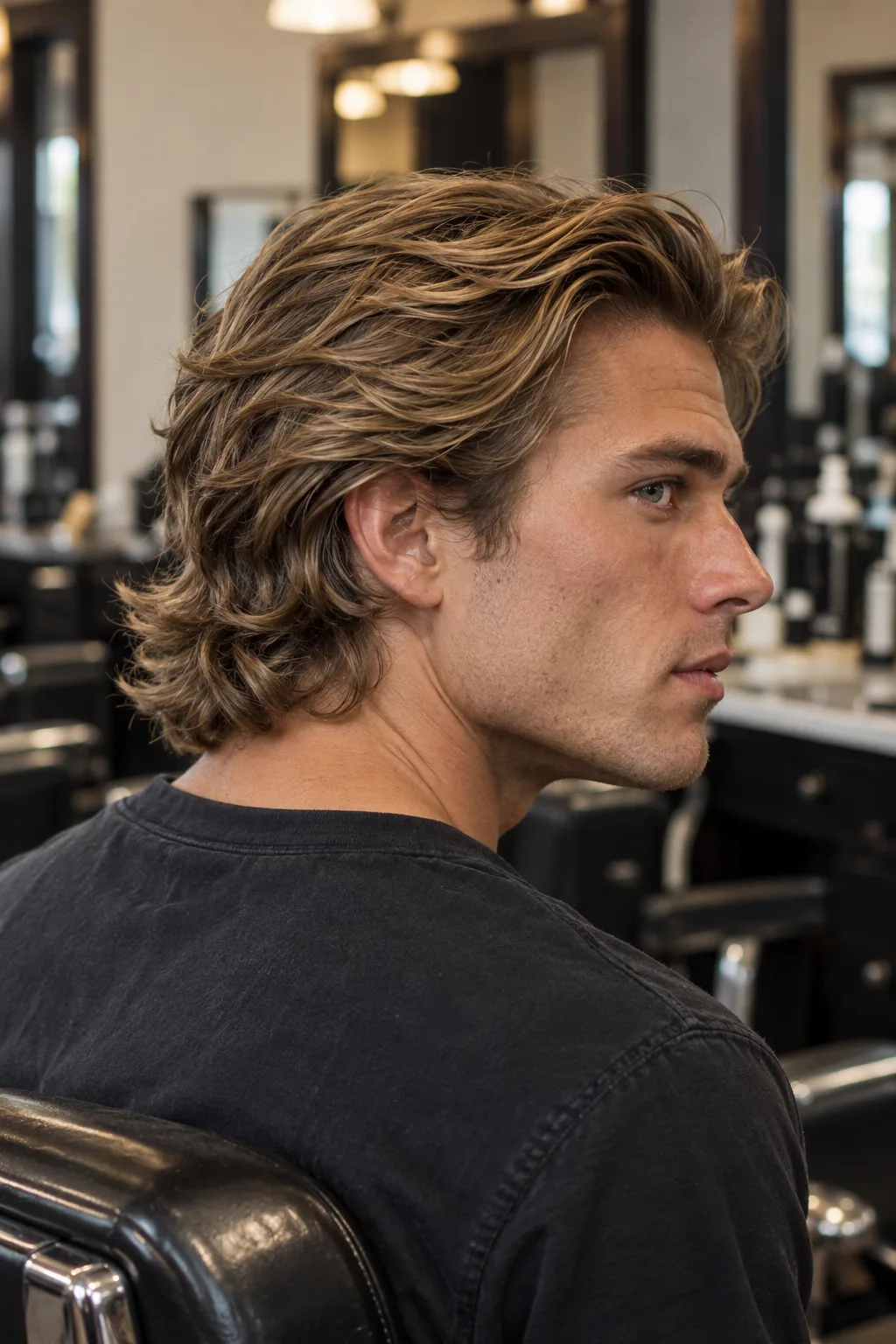
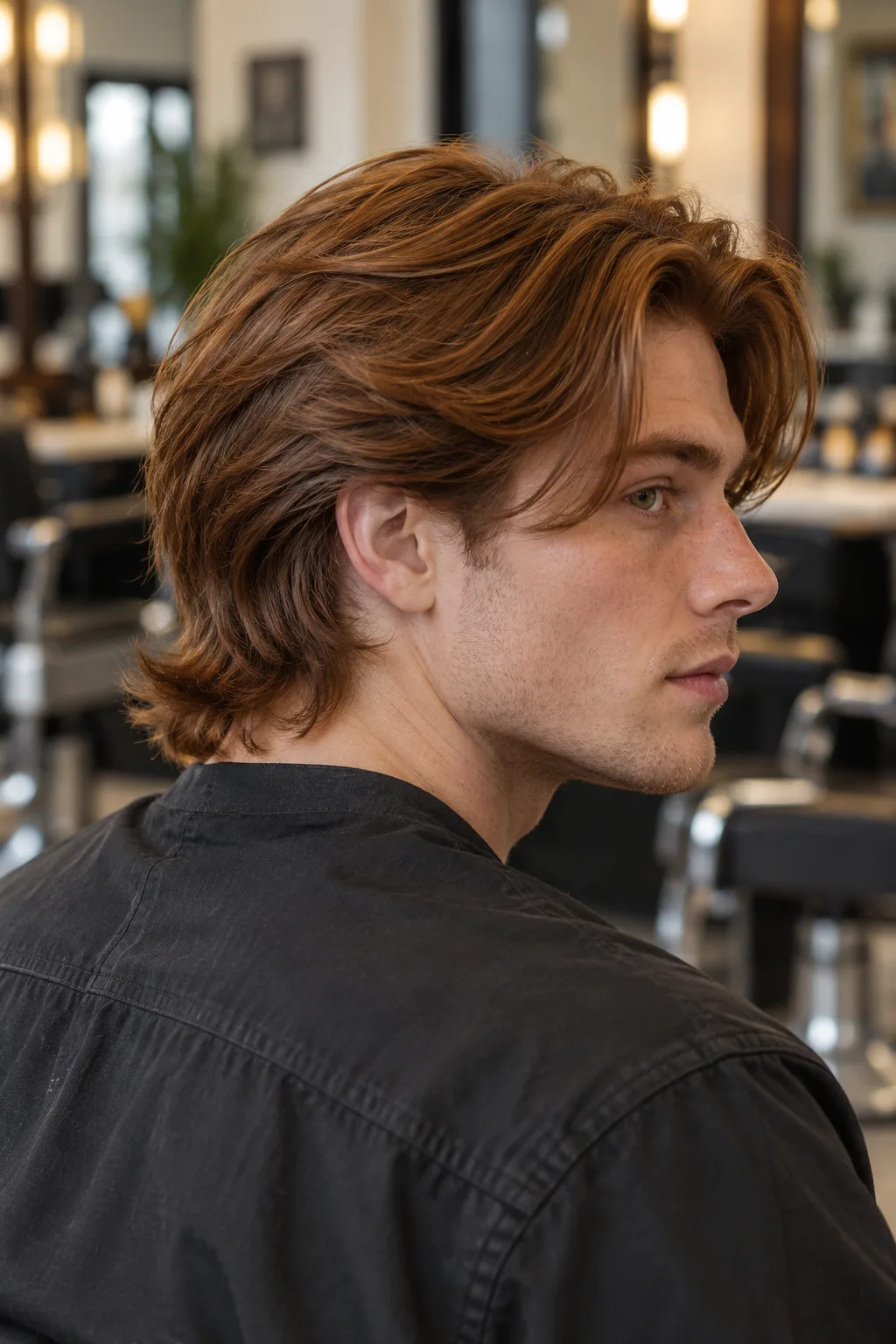
Every photo below is the same basic cut on a man in his twenties, shot from the same three-quarter back angle in a barbershop so you can compare the flick at the nape. What changes is length, texture and how it is styled. Hair colour varies so you can find the closest match to your own.
Gallery14 photos · tap to enlarge
 Try this on me
 Try this on me
 Try this on me
 Try this on me
 Try this on me
 Try this on me
 Try this on me
 Try this on me
 Try this on me
 Try this on me
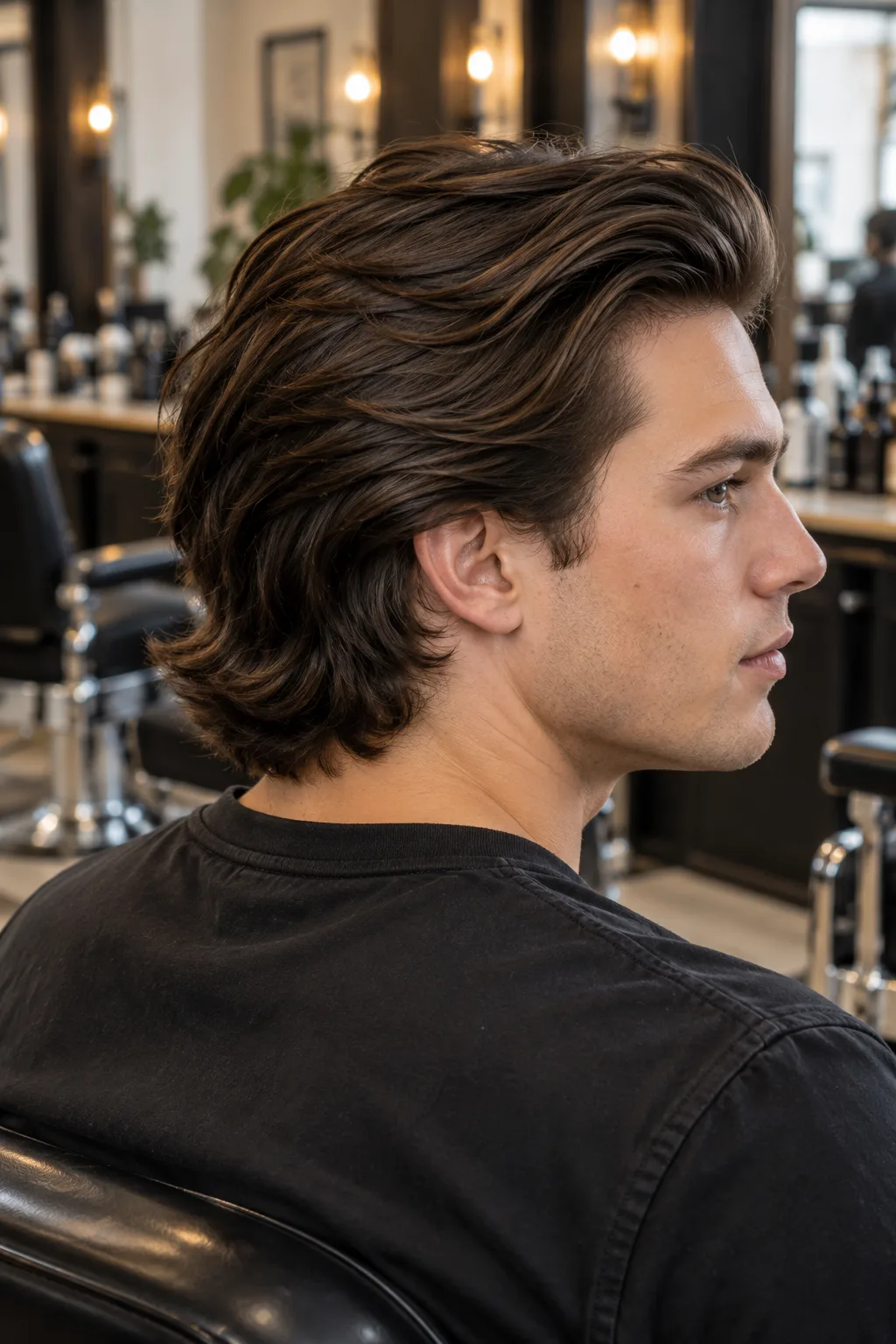 Try this on me
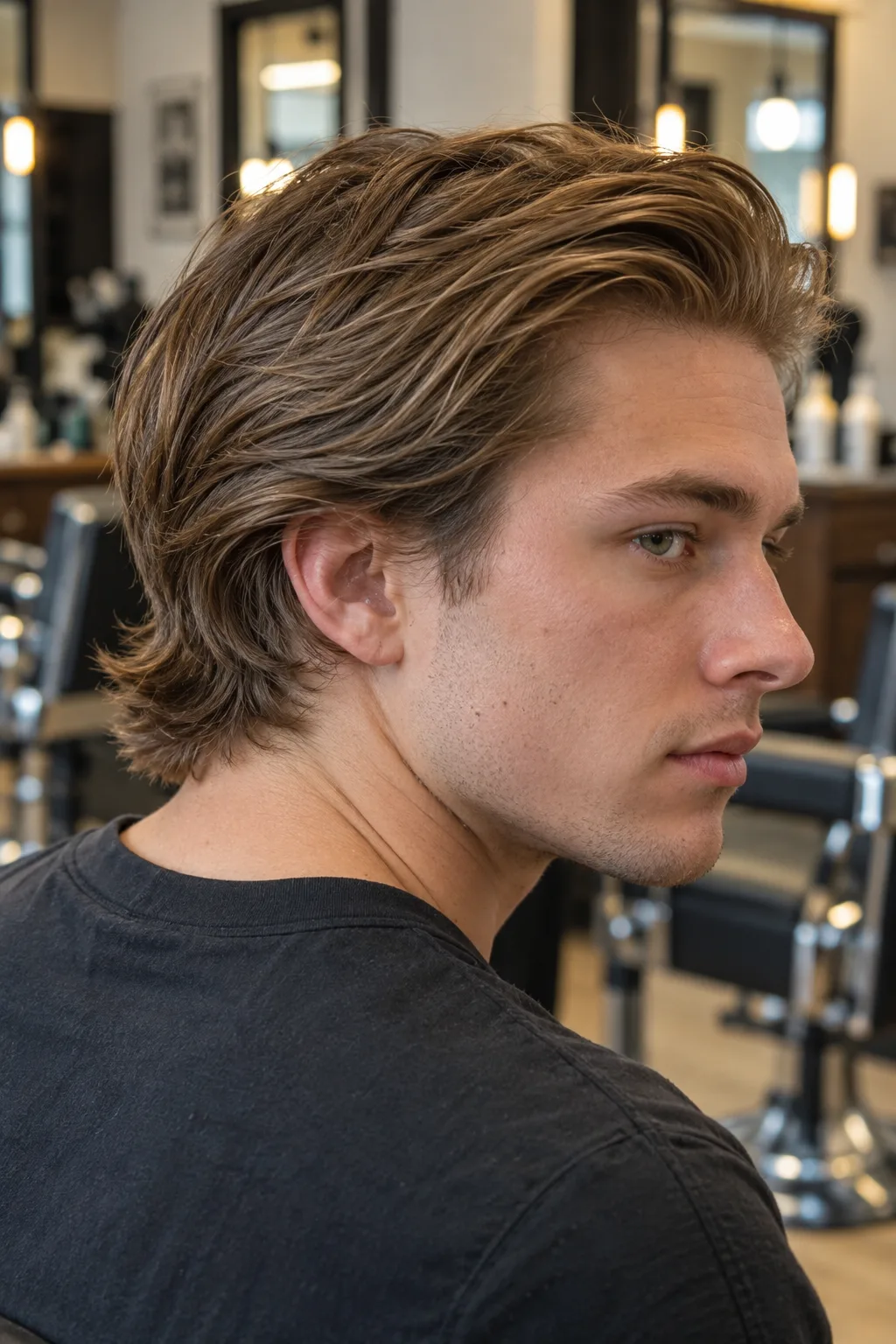 Try this on me
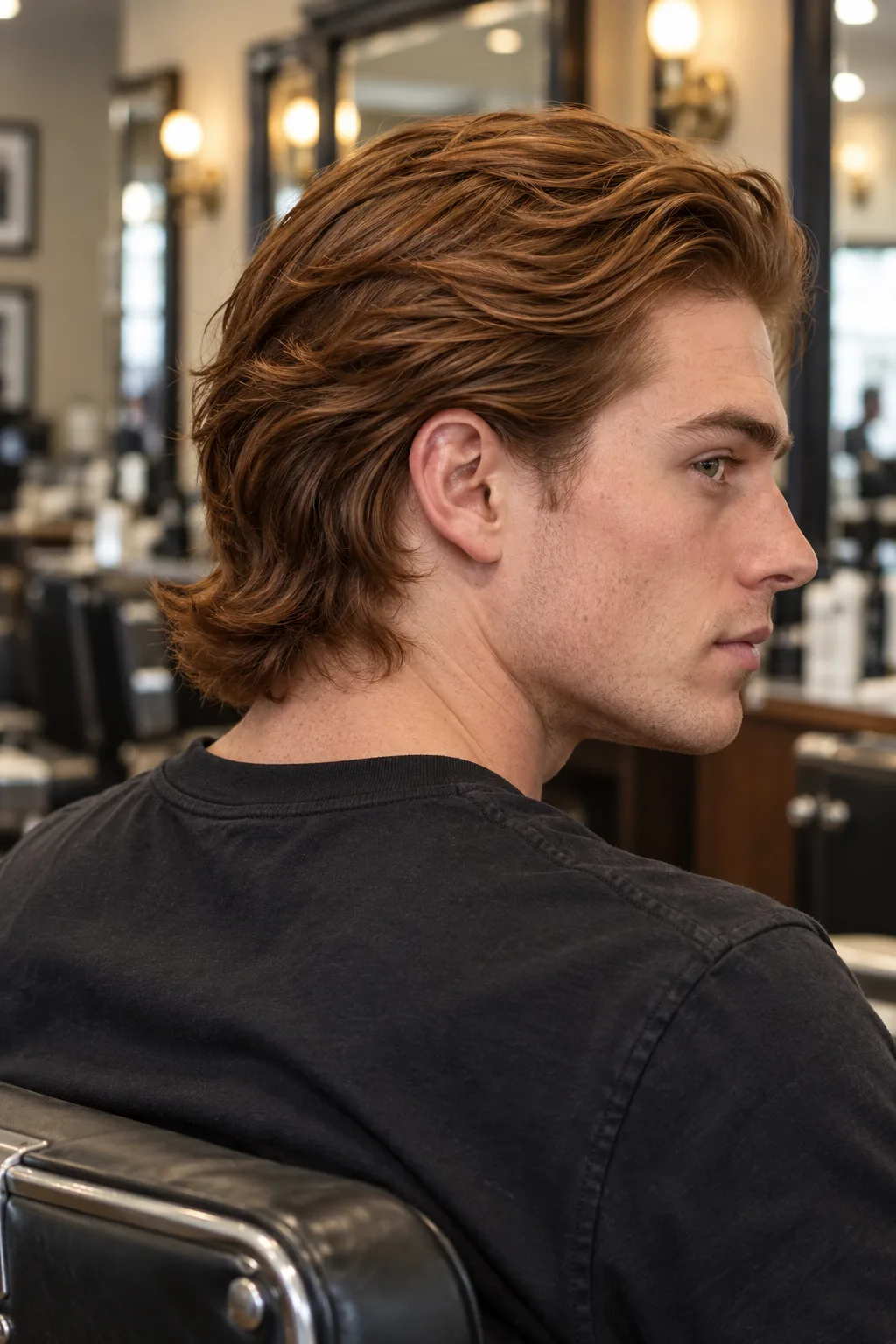 Try this on me
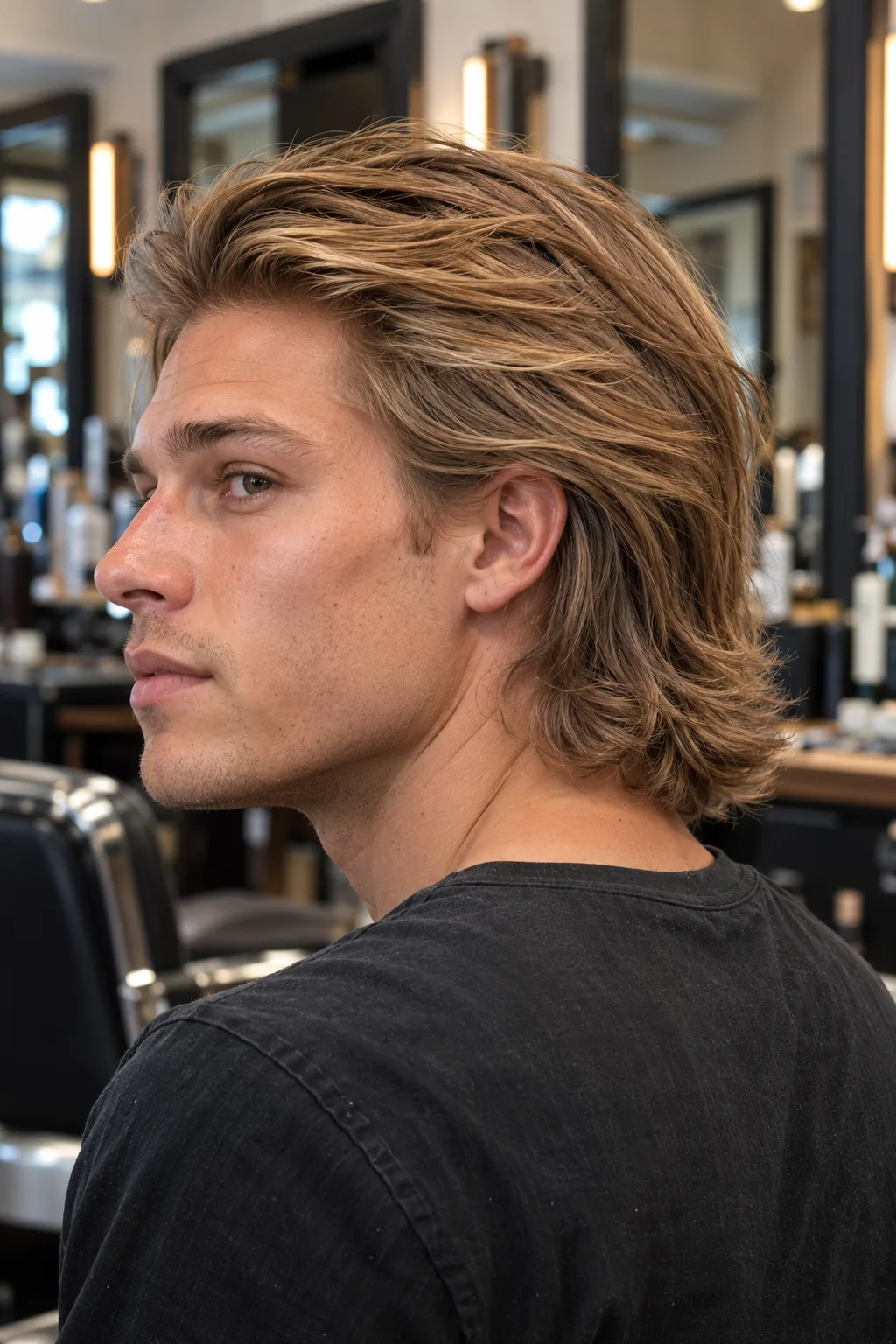 Try this on me
Two things stand out when you look at them side by side. The flick at the back does most of the work, so a flow with a flat back reads as "needs a haircut" no matter how good the top is. And texture matters more than length: the curly and wavy versions look finished at shorter lengths than the straight ones.
How long does it take to grow a flow?
Most men need four to six months from a short cut, and closer to a year if they start from a buzz or a skin fade. Scalp hair grows about half an inch a month on average, according to a board-certified dermatologist cited by USA Today, so the maths is simple: count the inches you need at the back and divide by half an inch.
| Starting point | Inches needed at the back | Rough time to a short flow | Rough time to a full flow |
|---|---|---|---|
| Buzz cut or skin fade | 4 to 5 | 6 to 8 months | 9 to 12 months |
| Short taper, 2 to 3 in on top | 3 to 4 | 3 to 4 months | 5 to 7 months |
| Medium crop, 3 to 4 in on top | 2 to 3 | 2 months | 4 to 5 months |

The awkward stage hits around month two or three, when the sides poke out over the ears and the back sits flat on the neck. Do not skip the barber here. A tidy-up every six to eight weeks that only cleans the neckline and takes weight out of the sides keeps you presentable without costing length on top. If you are still choosing between this and other mid-length options, our guide to medium length hairstyles for men maps the stops along the way.
Which hair type suits a flow?
Almost every hair type can wear a flow, but each one gets there differently. Hair type is a better predictor of success than face shape.
| Hair type | Verdict | What to ask for | Styling |
|---|---|---|---|
| Straight, medium thickness | Great | Point-cut layers at the back for lift | Sea salt spray, blow dry back |
| Wavy | The best | Light layering, keep weight at the back | Air dry with cream |
| Curly (2C to 3B) | Great, needs patience | Dry cut, curl-by-curl at the back | Curl cream, never brush dry |
| Thick or dense | Good with thinning | Texturize and remove bulk from the sides | Light paste |
| Fine or thin | Possible, shorter is better | Stay at the short flow length, blunt ends | Volumizing spray, matte finish |
Straight hair
Straight hair shows every line, so the back needs layering to flick. Without it, the ends hang down your neck in one sheet. Ask for the back to be point cut so the ends lift, and blow dry the top straight back for the first few days until it trains. Our guide to haircuts for men with straight hair covers how straight hair behaves at other lengths.
Wavy and curly hair
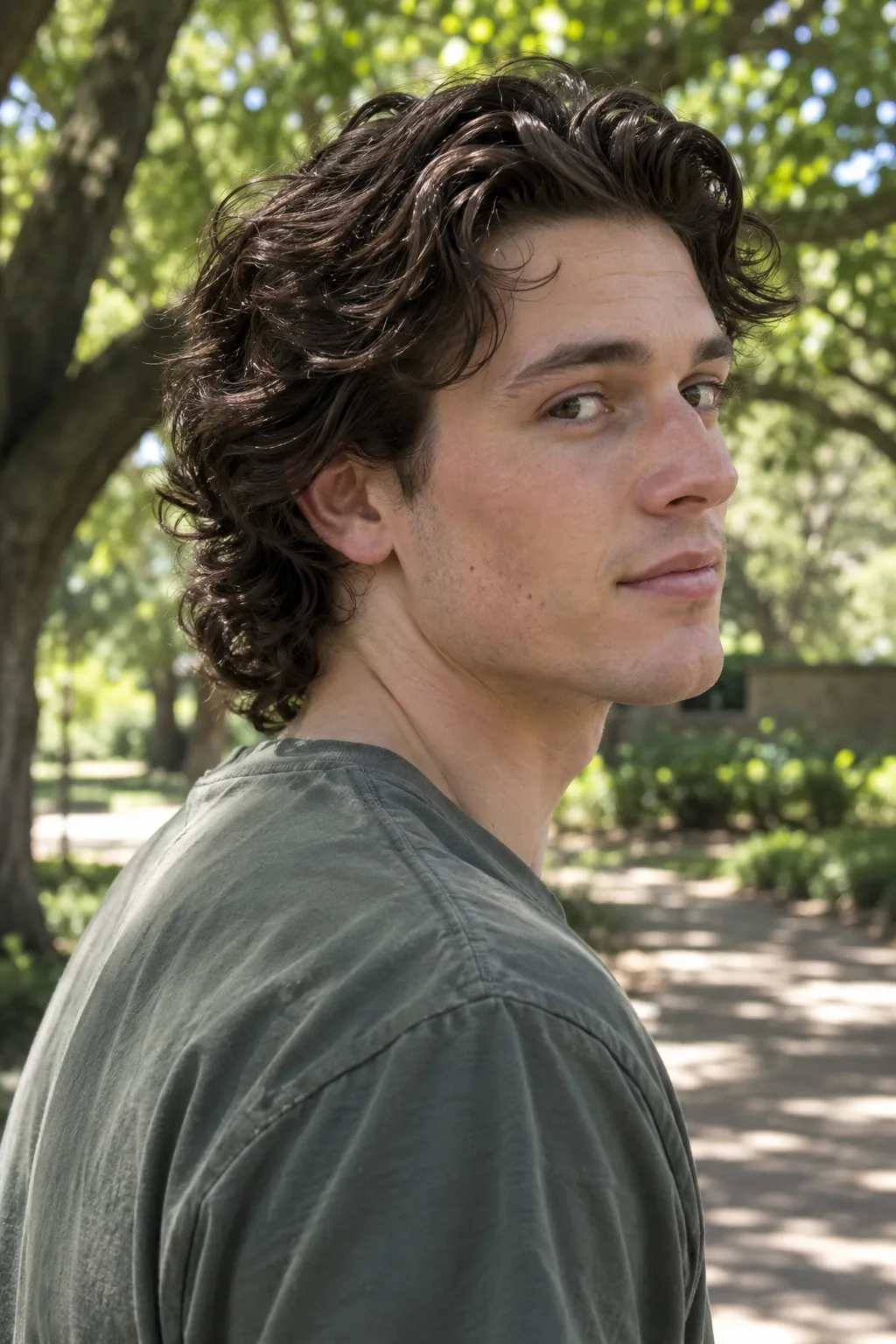
Waves are the easiest route to a flow because the hair lifts on its own. Curls get there too, but the curl pattern eats length: a curl that is 6 inches stretched might sit at 3 inches. Budget an extra two months, ask for a dry cut so the barber shapes the curl as it actually falls, and use a curl cream instead of a paste. You can preview how the length sits on your curl pattern with our curly hair try-on.
Thick hair
Dense hair grows into a helmet before it grows into a flow. The fix is weight removal: have the barber texturize the sides and the interior so the hair lies close instead of puffing out over the ears. Our thick hair guide explains the thinning techniques to ask for.
Fine or thin hair

Is the flow haircut good for thin hair? It can be, at the shorter end. Fine hair at full length lies flat and separates, which shows scalp. Stop at the short flow (3 to 4 inches), keep the ends blunt so they look denser, and use a volumizing spray with a matte finish. A high-shine product will make thin hair look thinner.
Which face shape suits a flow?
Oval, square and long faces suit the classic flow best. Round faces do well with more height and a hockey-style back that adds length to the silhouette. Heart and diamond shapes benefit from the sides kept loose rather than tucked, so they fill out the narrower jaw.
| Face shape | Best version | Why |
|---|---|---|
| Oval | Any | Balanced proportions, no correction needed |
| Square | Classic flow | Softens a strong jaw without hiding it |
| Round | Hockey flow with lift on top | Height and length offset width |
| Long or oblong | Short flow, middle part | Keeps the top flat so the face does not look longer |
| Heart or diamond | Flow with loose sides | Adds width at the jaw |
Not sure which one you have? Measure it below, or upload a photo to our face shape detector.
Measure it instead of guessing
Both numbers in the same unit — the answer is a ratio, so it does not matter which.
Under 1.15 reads round, 1.15 to 1.5 reads oval, over 1.5 reads long. Oval and long split on the jaw rather than the ratio: an oval tapers toward the chin, a long face runs straight down.
Hockey flow: the long-back version
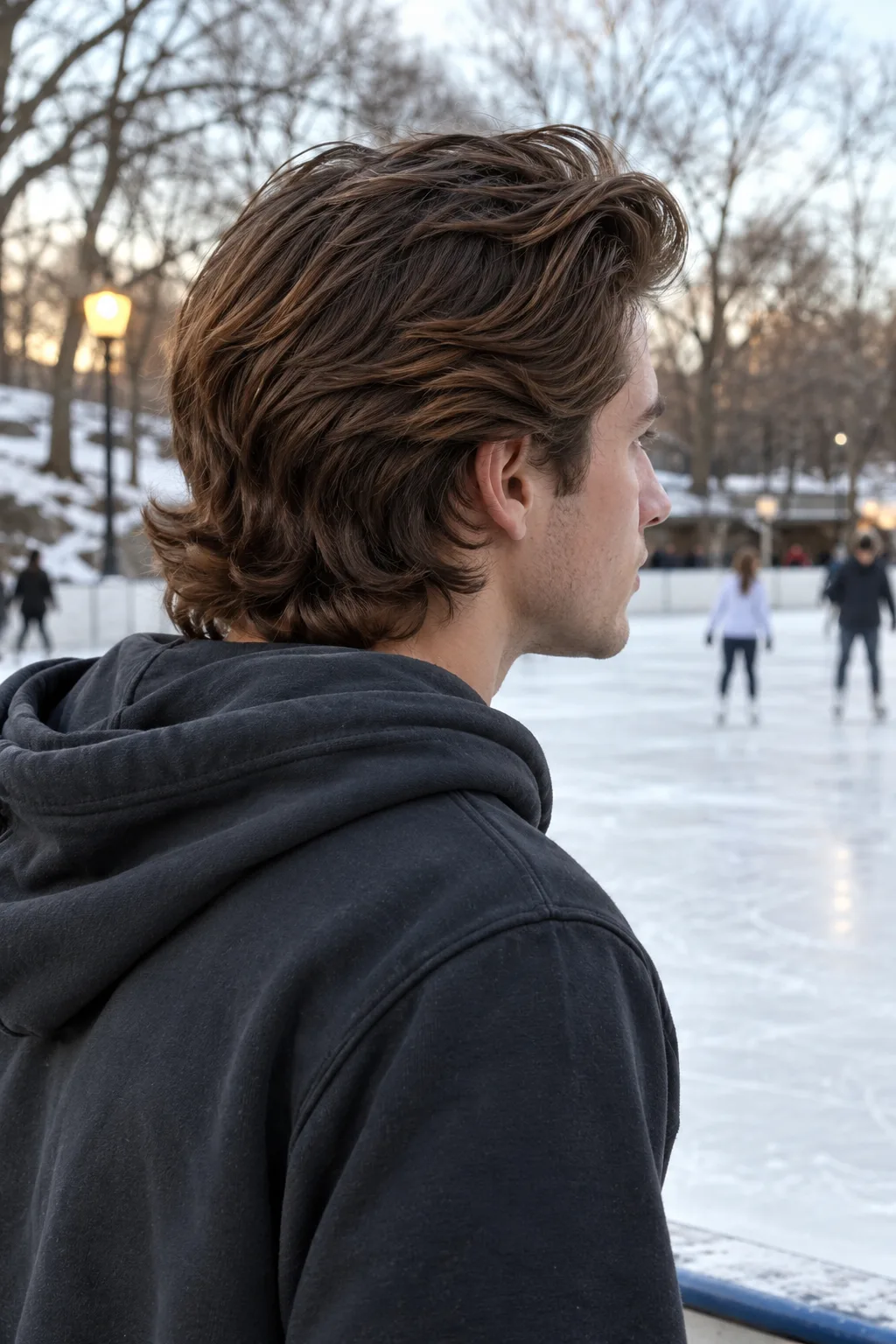
Hockey flow is the classic flow with the back left to grow longer than the top, so the hair spills out from under a helmet in a thick flick. That is the whole point of it on the rink: it is the part of you that shows when the gear is on. If you want this version, tell your barber to leave the back alone and take length only from the top and the sides. Most hockey flows are 5 to 7 inches at the back.
Mistakes that cost you months
- Cutting the sides short to "get through" the awkward stage. This is the big one. Clippered sides take three to four months to catch up, and you are back to the start.
- Letting the barber "even it out". Evening out means taking length off the back. Say the words "clean up only" and point at the neckline.
- No layers at the back. The flick does not happen on its own on straight hair. Without layering, the back hangs flat.
- Heavy wax or gel. The flow should move. Shiny, stiff product looks like a slick back. A matte cream or sea salt spray is the default.
- Skipping trims entirely. Split ends make the flick frizz instead of curl. A trim every six to eight weeks costs about a quarter inch, less than two weeks of growth.
How to ask your barber for a flow haircut
Bring photos, ideally from the side and back, because "flow" means slightly different things to different barbers. Then say this:
Say this to your barber
Scissor cut only, no clippers on the sides. Keep the length on top and at the back, take weight out of the sides so they tuck behind my ears, and point cut the back so it flicks out.
How to ask for a flow haircut
- Bring side and back photos
Show the barber the back of the cut, not just the front. The flick at the nape is what you want, and front photos hide it.
- Say scissors only
Tell them no clippers on the sides or back. This is the line that protects months of growth.
- Ask for weight removal, not length removal
Have them thin the sides and interior so the hair lies flat and tucks behind your ears, while the length stays.
- Ask for point-cut layers at the back
Point cutting breaks up the ends so they lift and curl outward instead of hanging flat.
- Book the next trim in six to eight weeks
Regular clean-ups keep the shape during the grow out and stop split ends from eating the flick.
The problem with growing out a cut you have never seen
All of the above is free, and it works. The wall is this: a flow takes half a year to grow, and you only find out whether it suits your face at the end. Your face shape, hairline and texture decide whether it looks like the photos or like you skipped the barber, and no amount of reading tells you that in advance.
That is the one thing a picture of the cut on your own face fixes. Upload a selfie and see the flow, hockey flow or curly flow on yourself before you commit six months to it.
Yours could be here.
Start with one selfie.
One photo, twenty seconds, and you'll know. Free account, no card for your first render.
Can you try a flow haircut on your own face for free?
Yes. Your first try-on on HairstyleAtlas is free and needs no card: upload a selfie, pick the flow, see the result. After that, plans start at $9.99 a week, you can cancel in two clicks, and there is a seven-day refund. Full details are on the pricing page.
The flow is the best mid-length cut for most men with straight, wavy or curly hair, because it looks good at almost every stage once the back is shaped. Wavy hair has the easiest road, fine hair should stop at the short flow, and everyone should protect the sides from clippers. Decide on the version first (short, classic or hockey), see it on your own face, then give it the four to six months it needs. For more mid-length ideas, browse our list of longer men's haircuts.
Frequently asked questions
It goes by several names: the flow, the bro flow, hockey flow, hockey hair, and "lettuce" or "salad" among hockey players. Barbers may call it a mid-length scissor cut or a swept-back layered cut. All of them describe the same shape: 4 to 6 inches on top, sides tucked behind the ears and a back that flicks out at the collar.
Four to six months from a short taper, and nine to twelve months from a buzz cut. Hair grows about half an inch a month, so count the inches you need at the back and divide. Keep trims to clean-ups only during that time.
Oval, square and long faces suit the classic flow most easily. Round faces look best with extra height on top and a longer hockey-style back, and heart-shaped faces do well with the sides left loose instead of tucked.
It works at the shorter end. Fine or thin hair should stop at the short flow, about 3 to 4 inches, with blunt ends and a matte volumizing product. At full length, thin hair lies flat and shows scalp.
Say "scissors only, no clippers on the sides, keep the length on top and at the back, take weight out of the sides and point cut the back so it flicks out." Bring side and back photos, because the back is what defines the cut.
Bro flow is a nickname for the classic flow haircut: medium-length hair pushed back off the face with the ends curling out at the neck. The name comes from its popularity with college athletes, especially in hockey and lacrosse.
A matte product with light hold: sea salt spray for straight hair, a styling cream for wavy hair and a curl cream for curly hair. Avoid heavy wax and high-shine gel, which stop the hair from moving and turn the flow into a slick back.
Long hair spilling out from under a hockey helmet is called flow, hockey flow or "lettuce". Players often grow it all season, and a big flow is treated as a badge of honour on the rink.
Preview it on your own photo: Men's Hairstyle Try-On.
Share article
About the author
Related posts
Men's Haircuts · 14 min
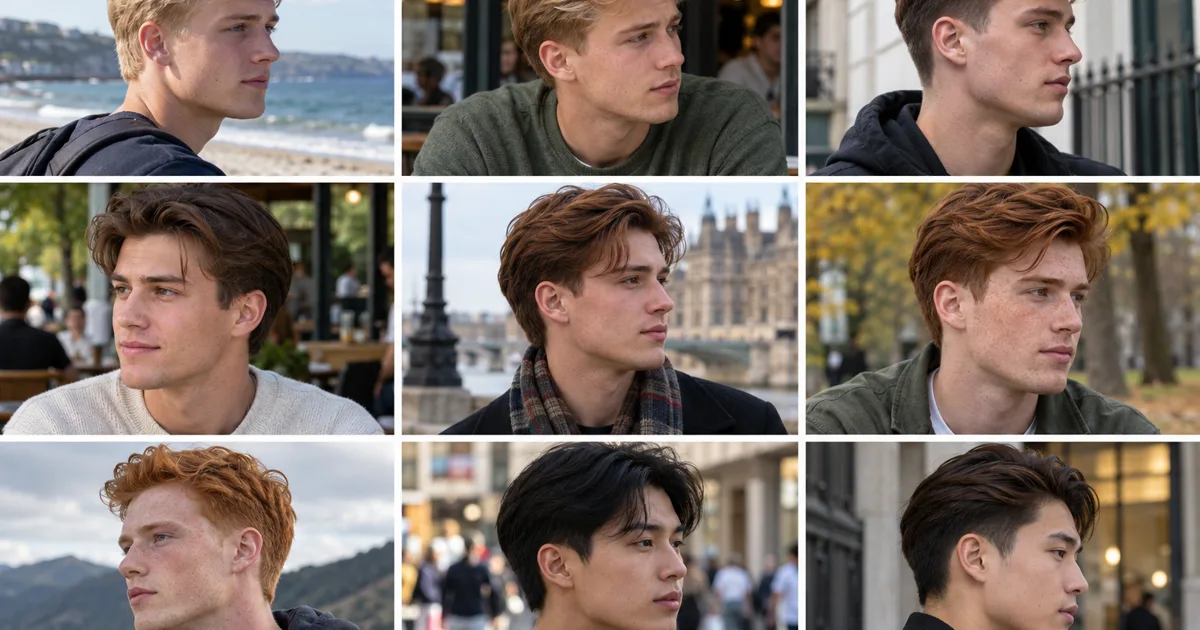
Burst Fade Haircut: 14 Ways to Wear It and What to Ask For
A burst fade curves around the ear and leaves the back long. See it under 14 different tops, which hair type and face shape it suits, and the exact words for your barber.
Men's Haircuts · 14 min
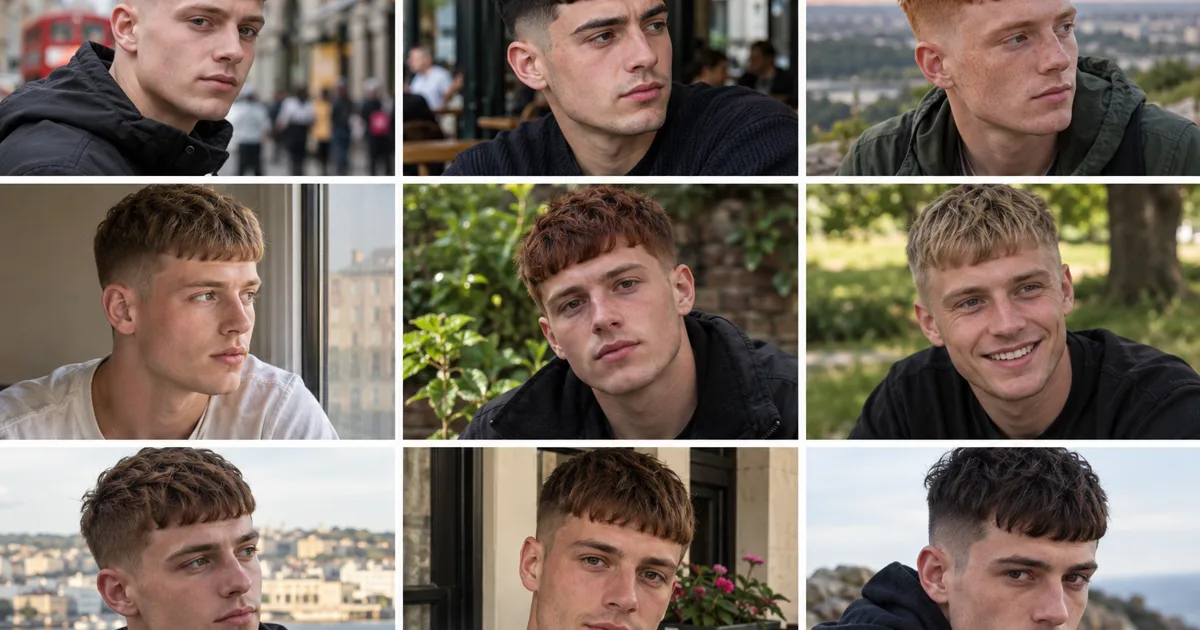
French Crop Haircut: 12 Blunt Fringe Looks and What to Ask For
The French crop is a short forward cut with a blunt, straight fringe. See it with 12 different sides, find the version for your hair type and face shape, and get the exact words for your barber.
Men's Haircuts · 16 min
Low Taper Fade Straight Hair: 14 Tops and the Inch That Matters
A low taper fade suits straight hair, but the inch above the taper decides how it grows out. See it under 14 tops, find the version for fine, thick or long straight hair, and copy the words for your barber.
Men's Haircuts · 14 min
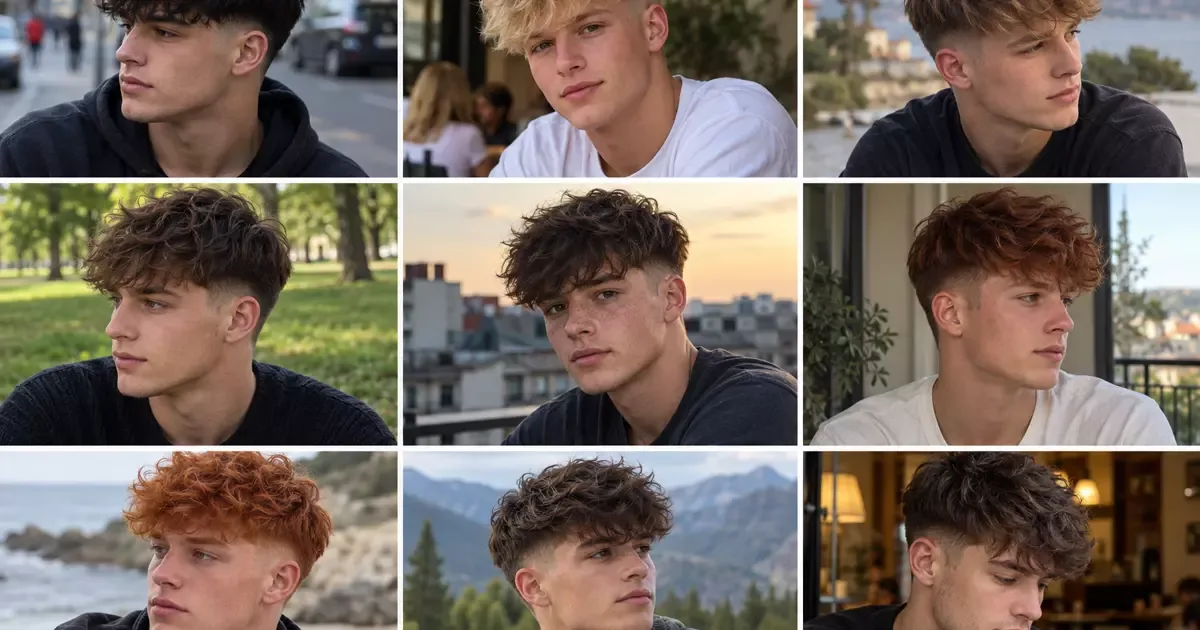
Low Taper Fade with Textured Fringe: 14 Looks and How to Ask
A low taper fade with a textured fringe is a soft taper at the sideburns and nape with about 3 inches of choppy hair pushed forward. See 14 fringes on the same taper, find the one for your face shape, and copy the exact words for your barber.
Men's Haircuts · 14 min
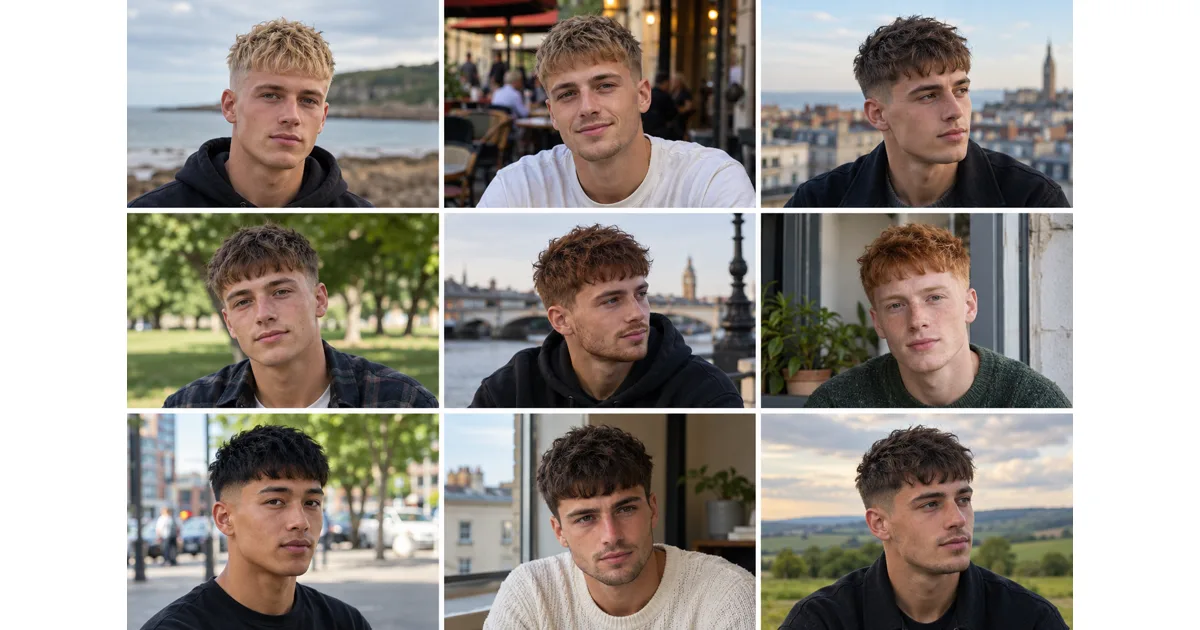
Textured Crop Haircut: 14 Fades, Who It Suits and What to Ask For
A textured crop is 1.5 to 2 inches of choppy hair pushed forward over faded or tapered sides. See it with 14 side cuts, find the version for your hair type and face shape, and copy the exact words for your barber.
Men's Haircuts · 15 min
8th Guard Buzz Cut: How 1 Inch Looks on 14 Hair Types
An 8th guard buzz cut leaves one even inch of hair all over, the longest buzz a clipper set gives you. See it on 14 hair types, which faces and textures suit it, how to add a taper, and the exact words for your barber.