Burst Fade Haircut: 14 Ways to Wear It and What to Ask For
Oleh Onysko 24 October 2026 14 min read
In this article
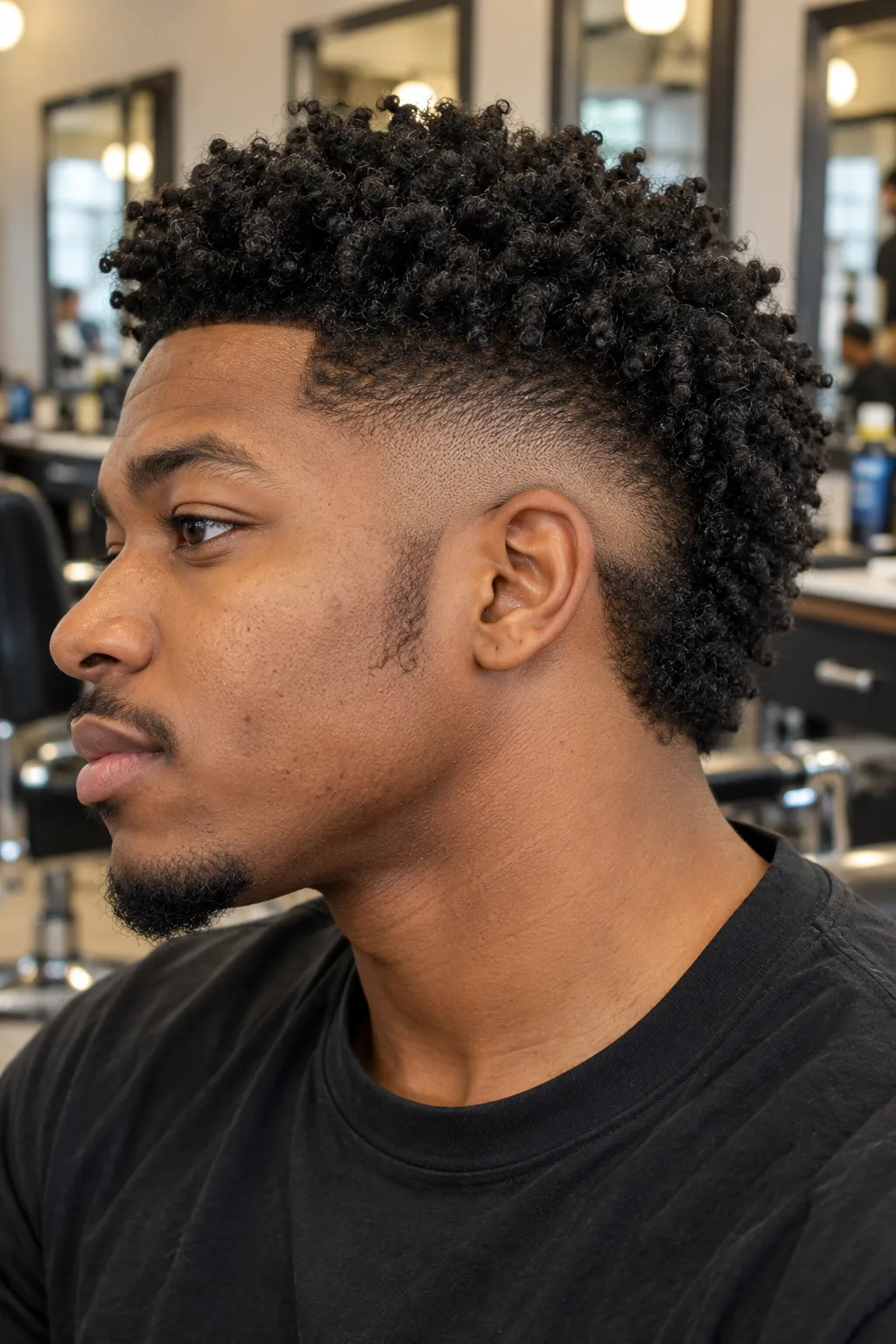
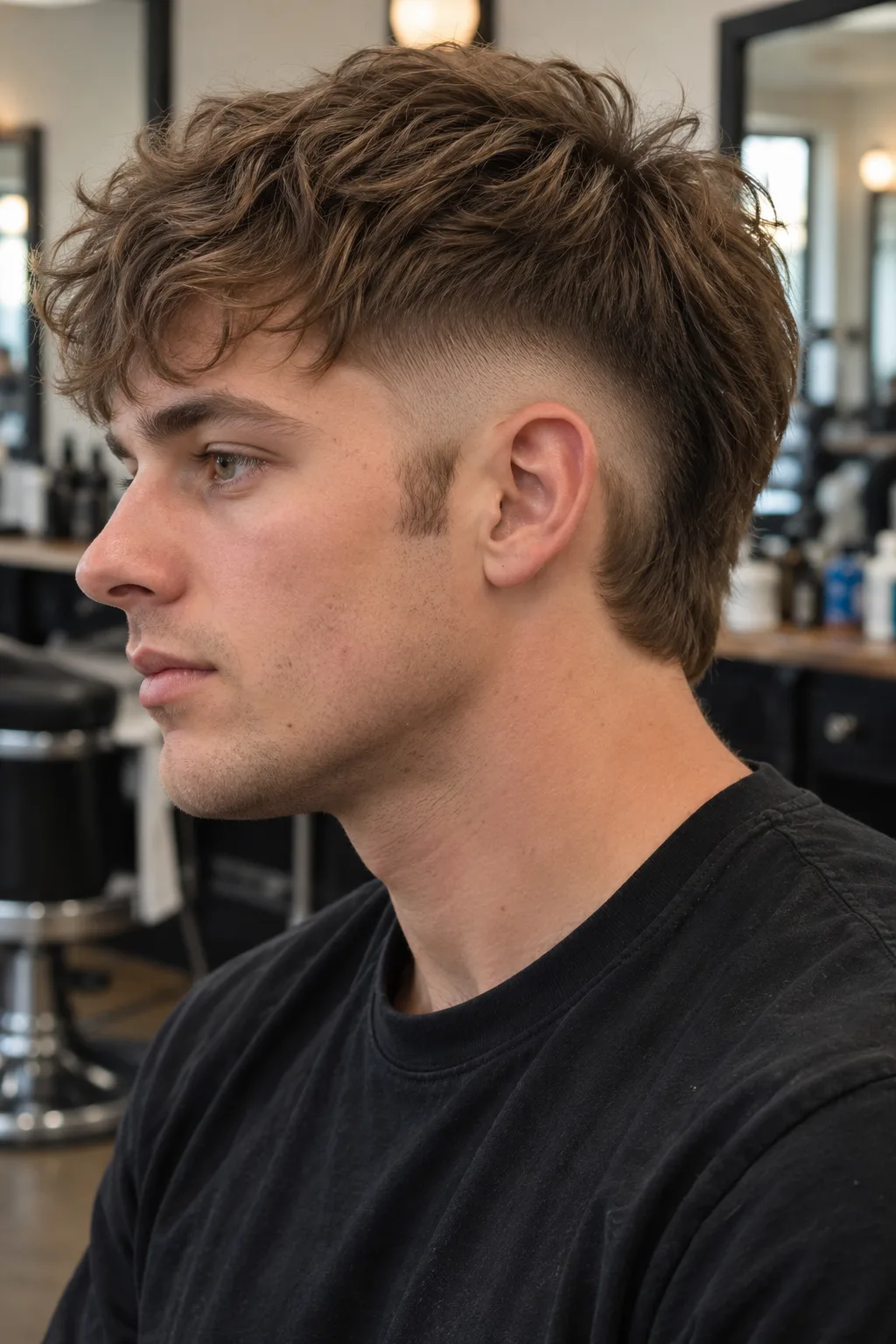
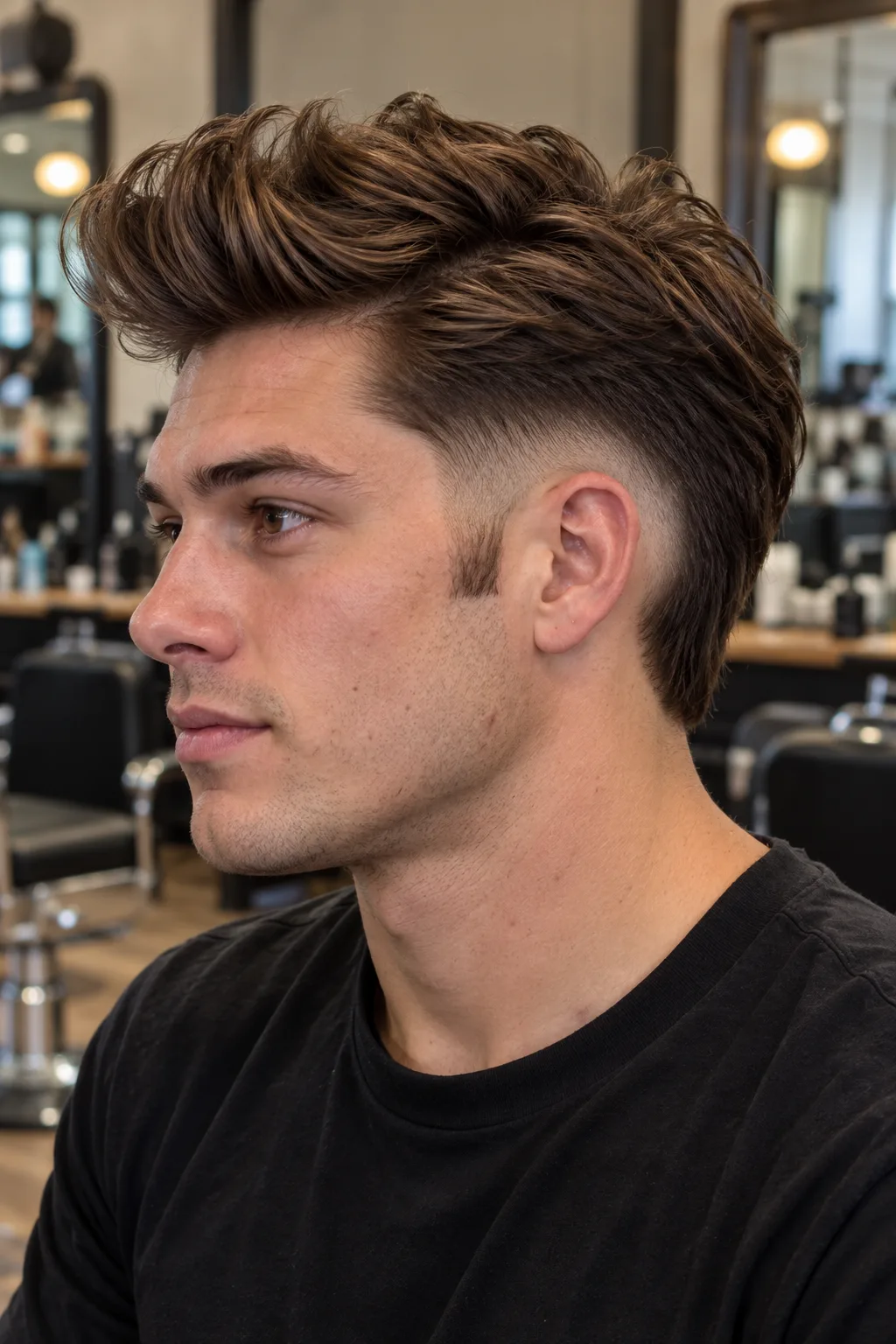
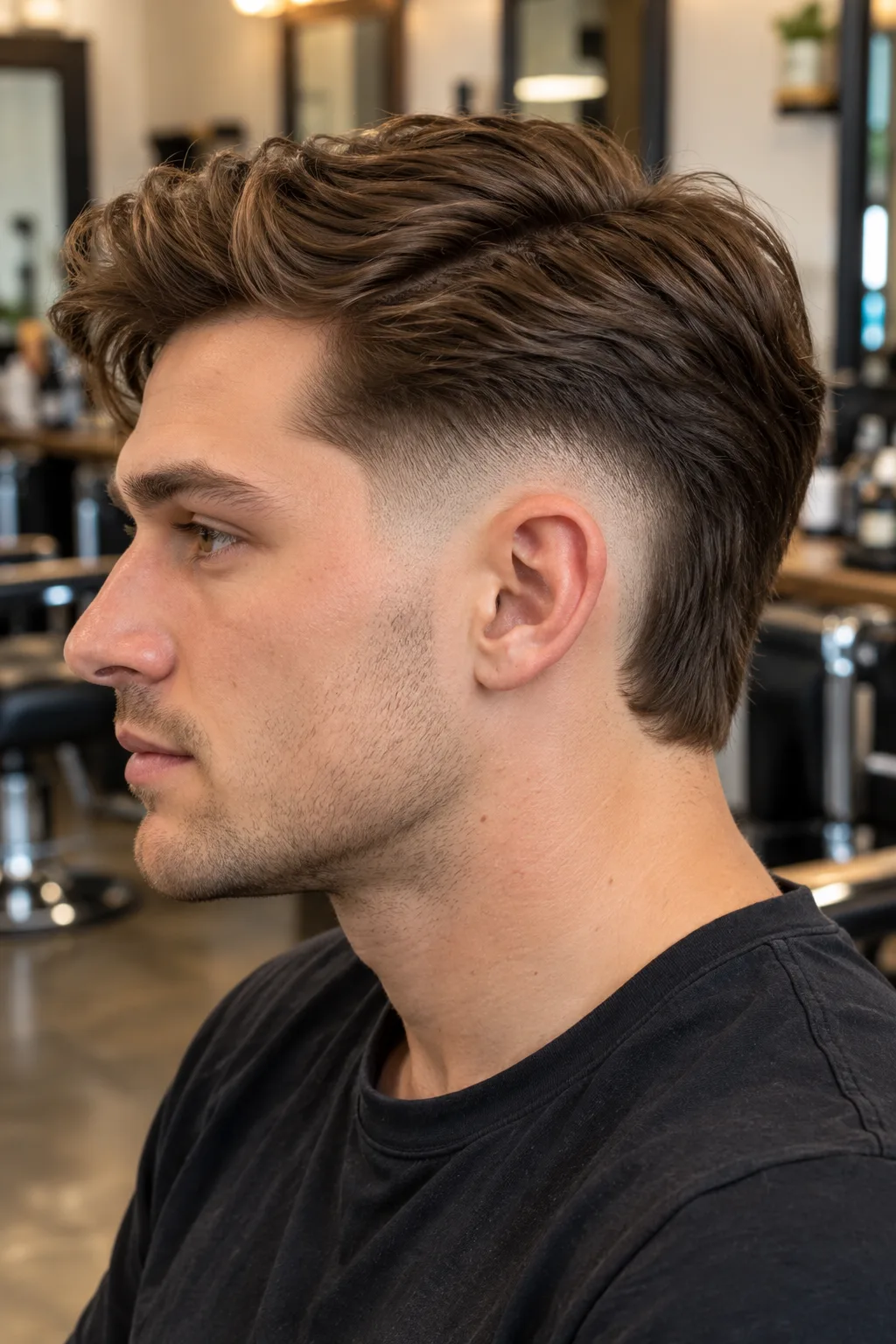
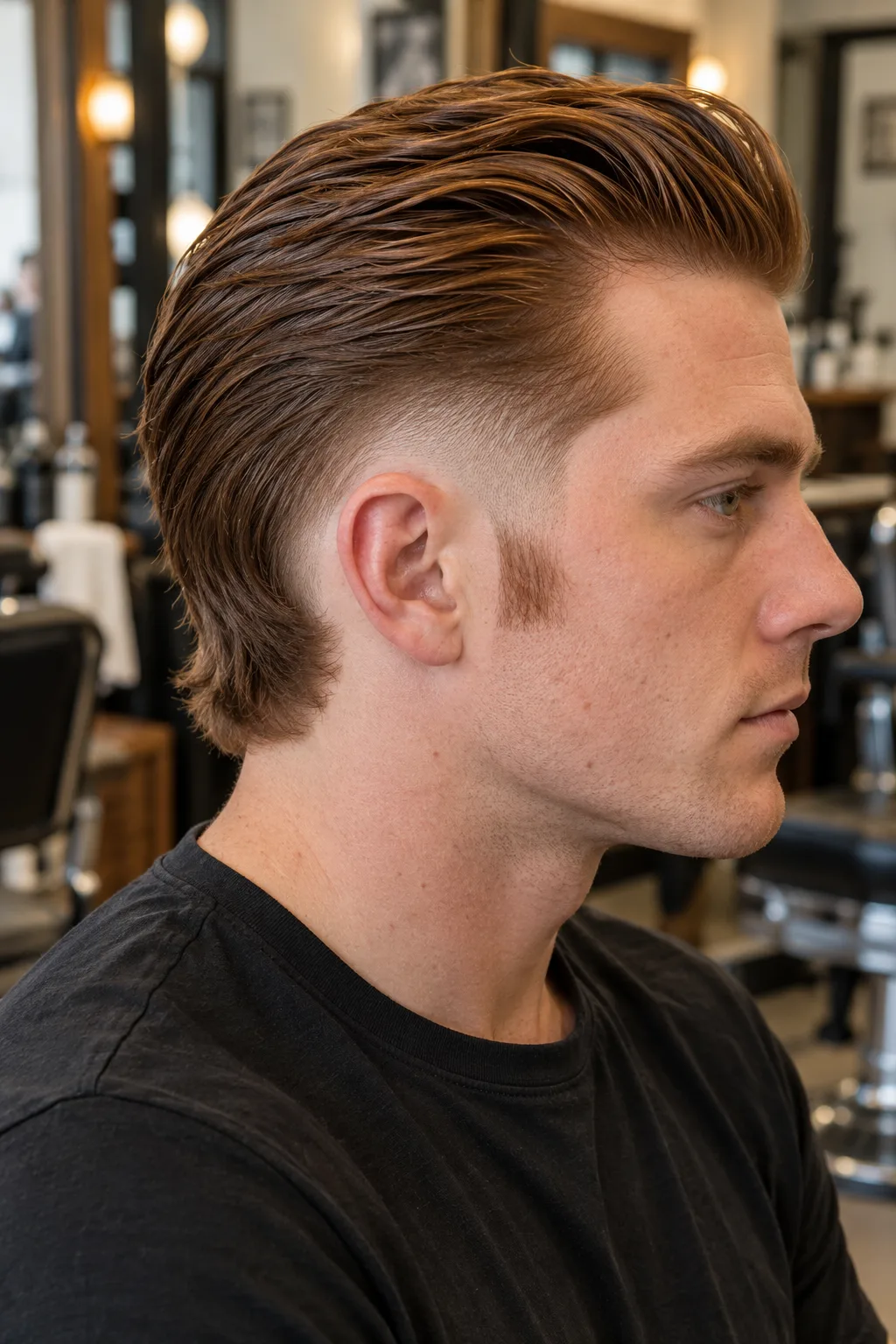
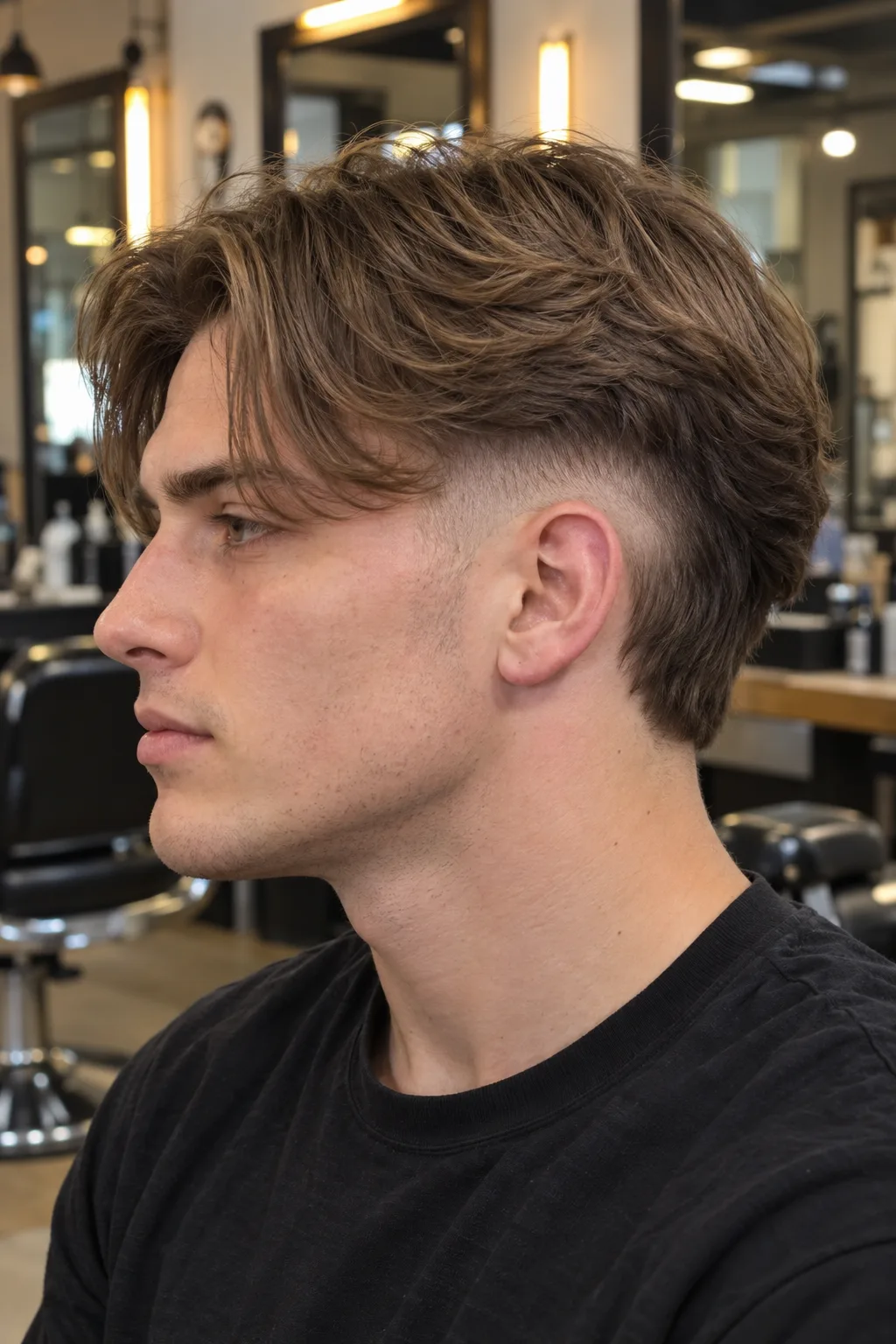
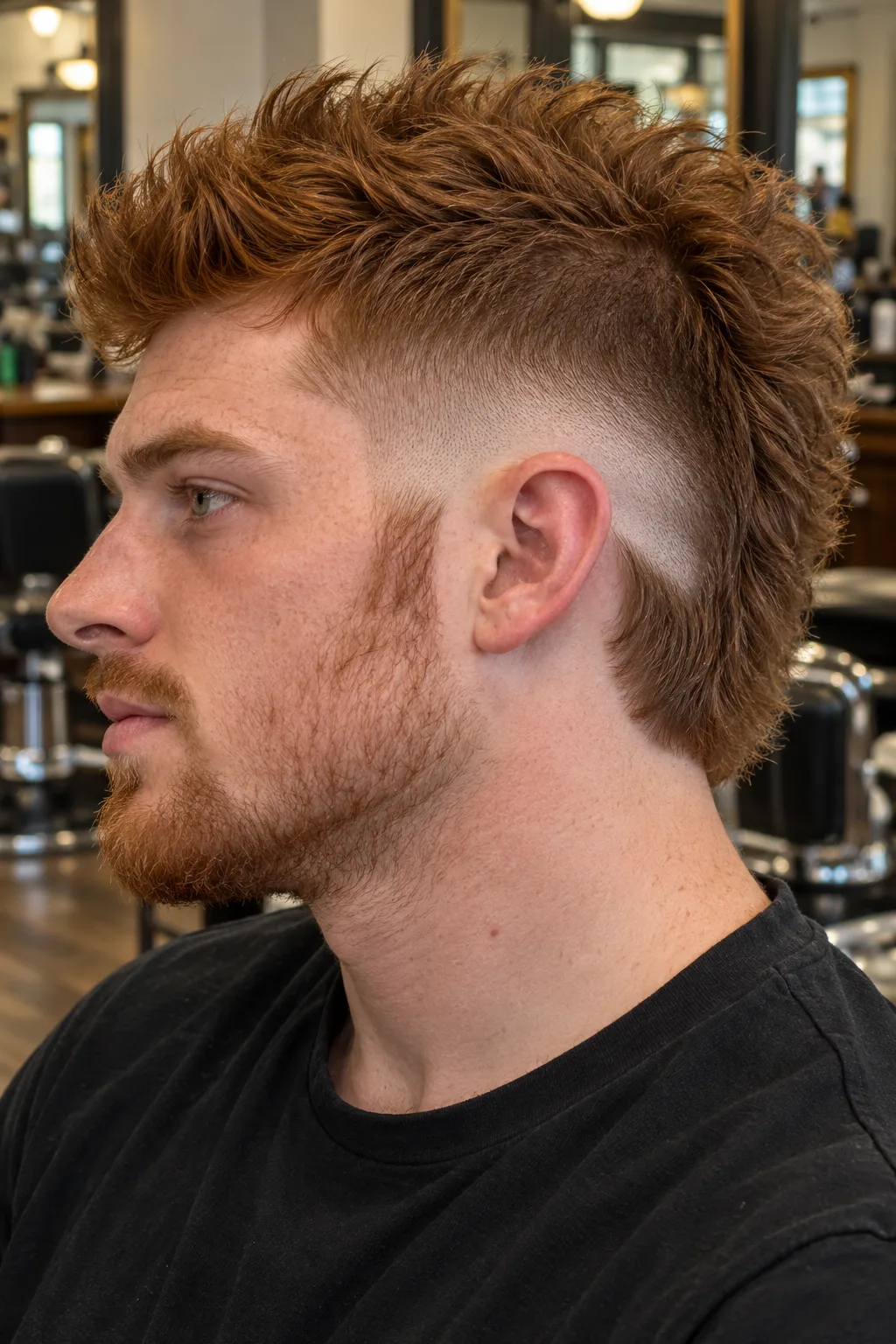
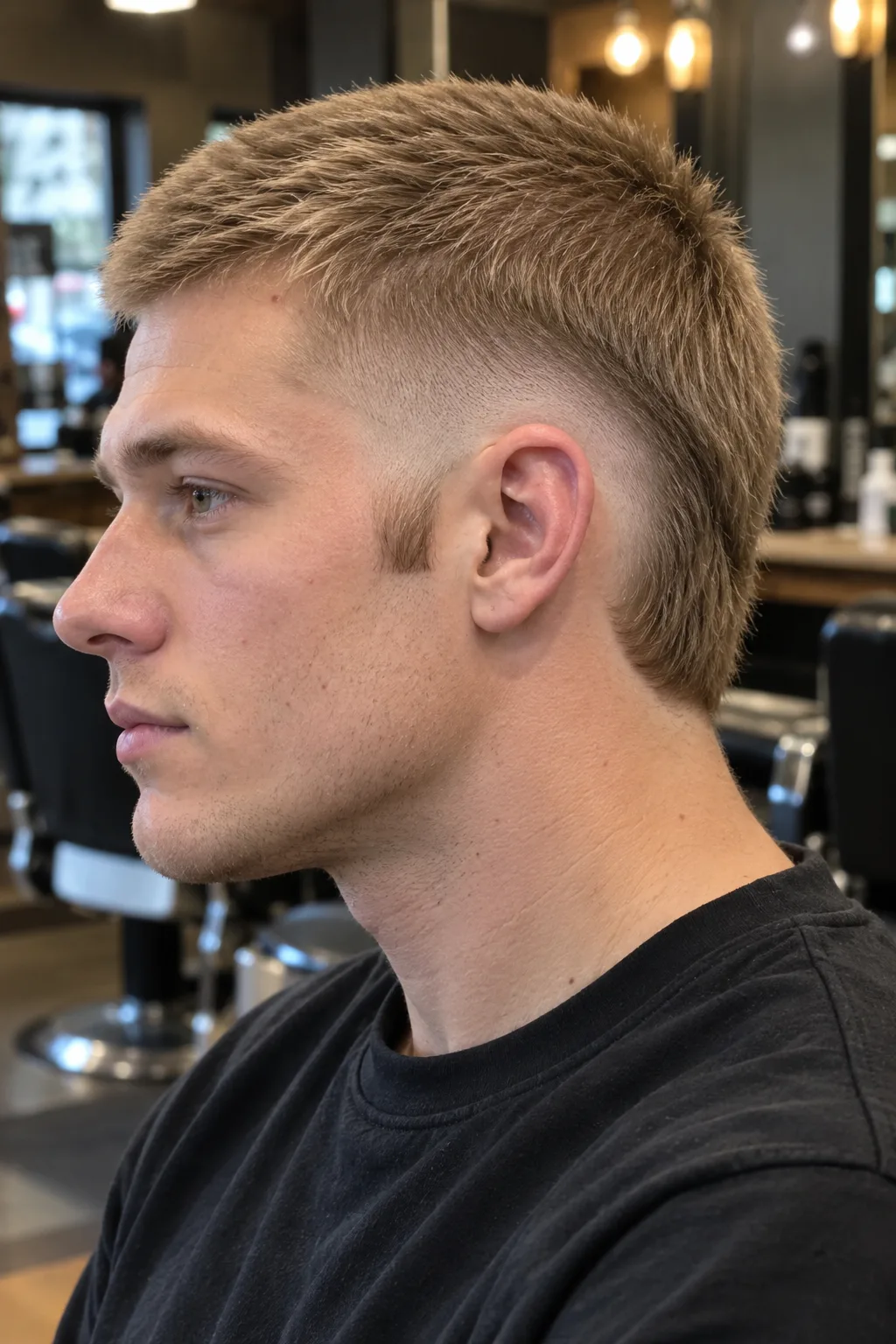
A burst fade haircut is a fade shaped like a half circle around the ear: shortest just above and behind the ear, blending longer in every direction, with the hair at the back of the neck left long. It is the right fade when you want sharp, clean sides but do not want the back of your head buzzed short.
That last part is the whole point, and most guides bury it. A regular fade runs in a straight band around the head. A burst fade stops behind the ear, so the length at the nape stays. That one decision is why it pairs with curls, mullets and textured crops, and why it grows out better than almost any other fade.
What Is a Burst Fade Haircut?
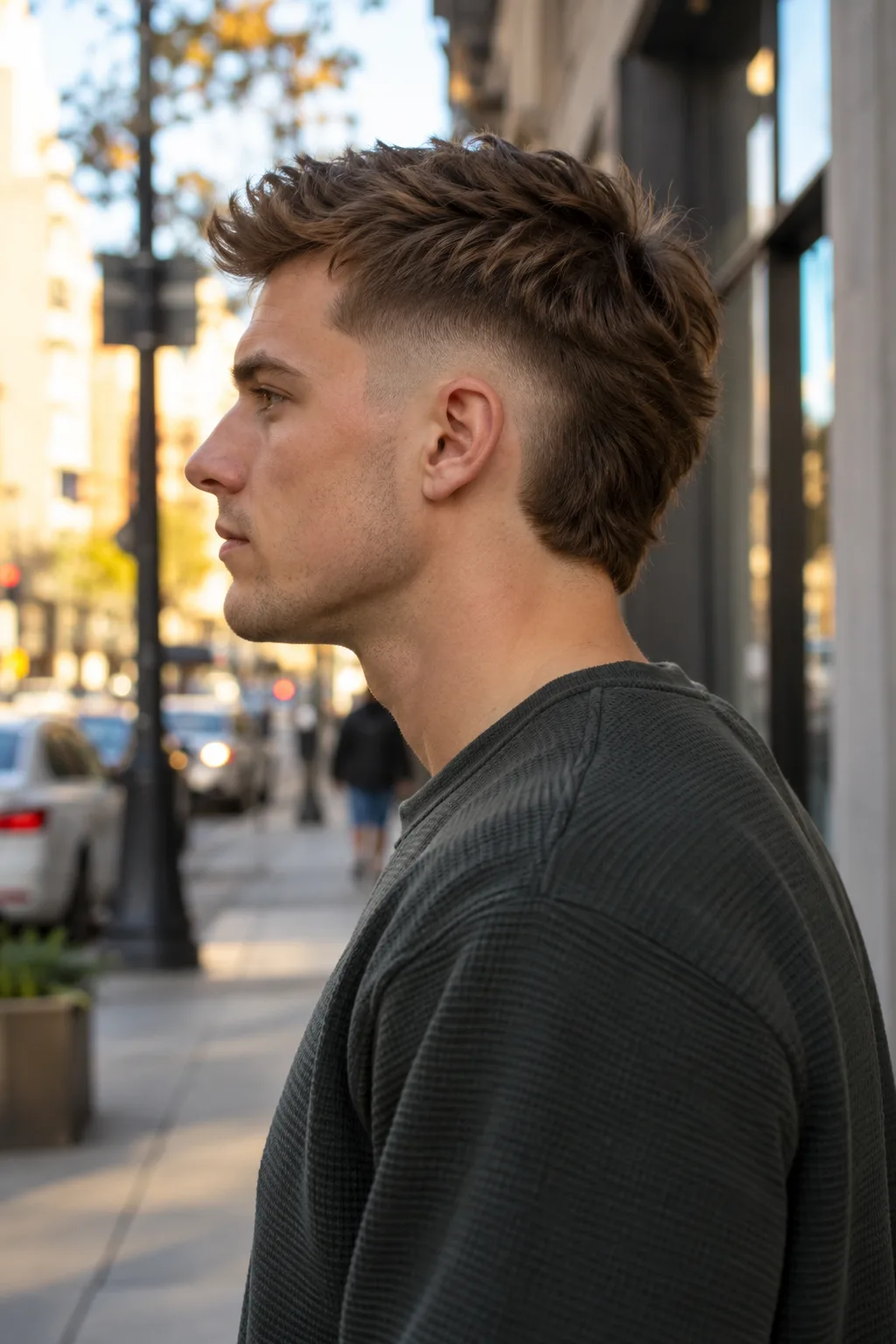
A burst fade is a fade with a curved outline. The barber takes the hair shortest at one point, just above and slightly behind the ear, then blends it longer outward from there: up toward the temple, forward toward the sideburn and back toward the nape. The faded area ends up looking like a half moon wrapped around the ear.
What it is not:
- Not a regular fade. A low, mid or high fade runs in a level band all the way around the back of the head. A burst fade never crosses the back.
- Not a mullet by itself. The burst is only the shape of the fade. Leave the back long and add length on top and you get a burst fade mullet. Keep the back short and tidy and it is just a burst fade.
- Not a taper. A taper only cleans up the sideburns and the neckline. A burst fade takes real length off the side of the head around the ear.
On paper all fades are variations of one idea, a gradual blend from short to long, which is how the short haircut entry on Wikipedia describes it. The burst fade's difference is only where that blend lives.
Want to see it first? See a mullet on your face with the mullet try-on.
Burst Fade vs Taper vs Regular Fade
The fastest way to tell them apart is to look at the back of the head.
| Burst fade | Taper | Regular fade | |
|---|---|---|---|
| Where it is short | A half circle around the ear | Sideburns and neckline only | A straight band around the whole head |
| Back of the head | Left long | Mostly full, clean edge | Faded short |
| Goes down to skin? | Usually at the center point | Rarely | Often (a skin fade) |
| Looks sharp for | 2 to 3 weeks | 4 weeks | 2 to 3 weeks |
| Best with | Curls, mullets, textured crops | Classic and office cuts | Short tops, buzz cuts |
If the person in the photo has bare skin across the whole back, it is a bald fade, not a burst. If the sides are full and only the edges are cleaned, it is a taper.
The burst also comes in heights, the same as any fade. A low burst fade keeps the arc around the bottom of the ear and is the most popular by a long way. A mid burst fade pushes the top of the arc to the temple. A high burst fade takes it above the temple, which is loud and rare. The general rules for picking a height are in the mid fade guide; for a burst, low is the default and the safest first try.
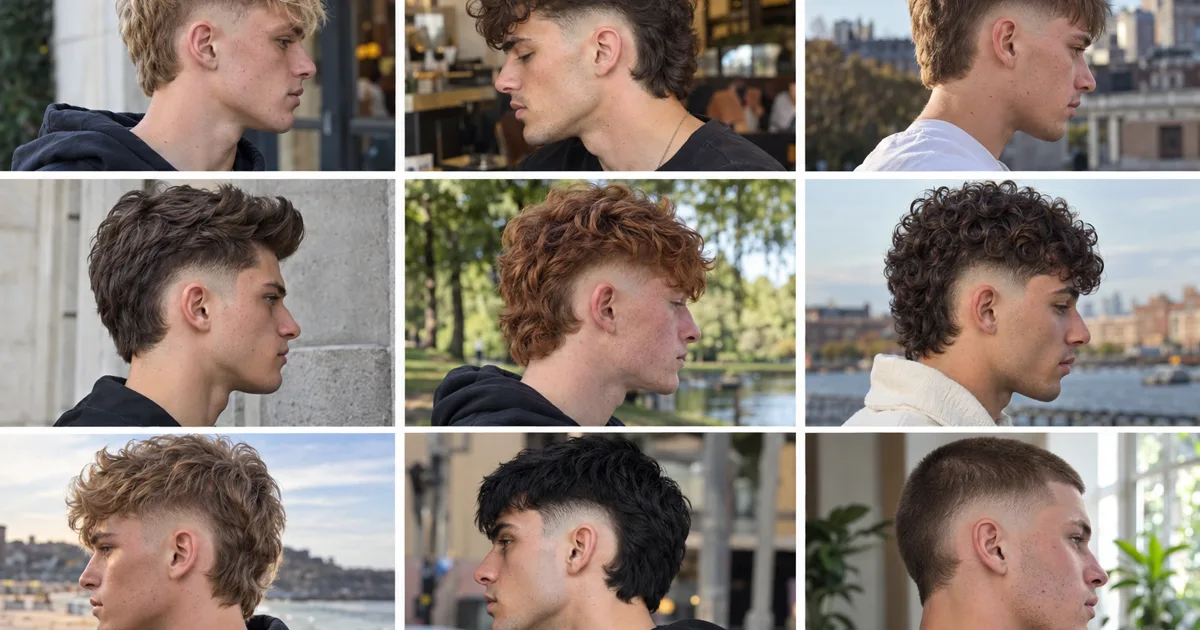
14 Burst Fades: Same Fade, Different Top
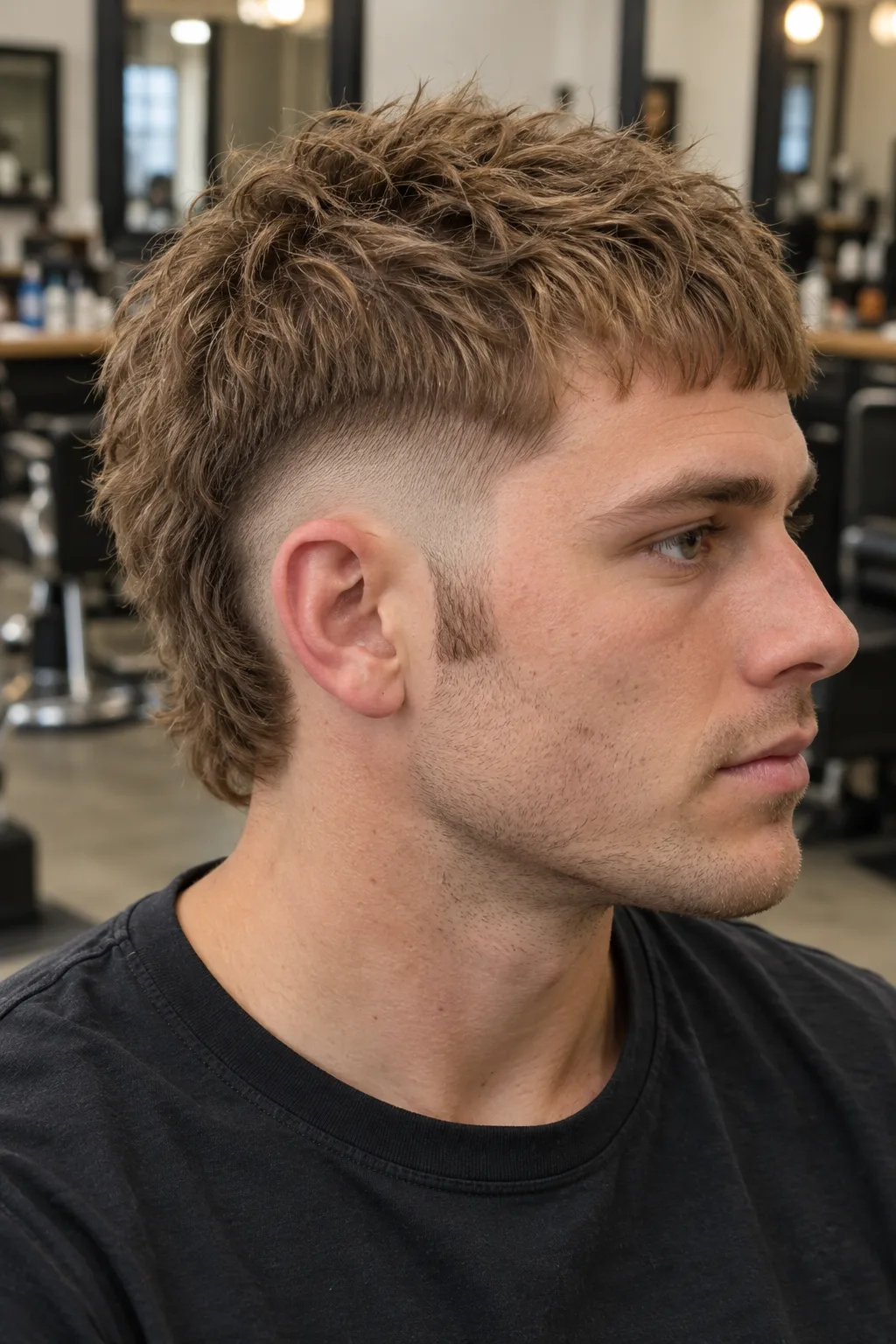
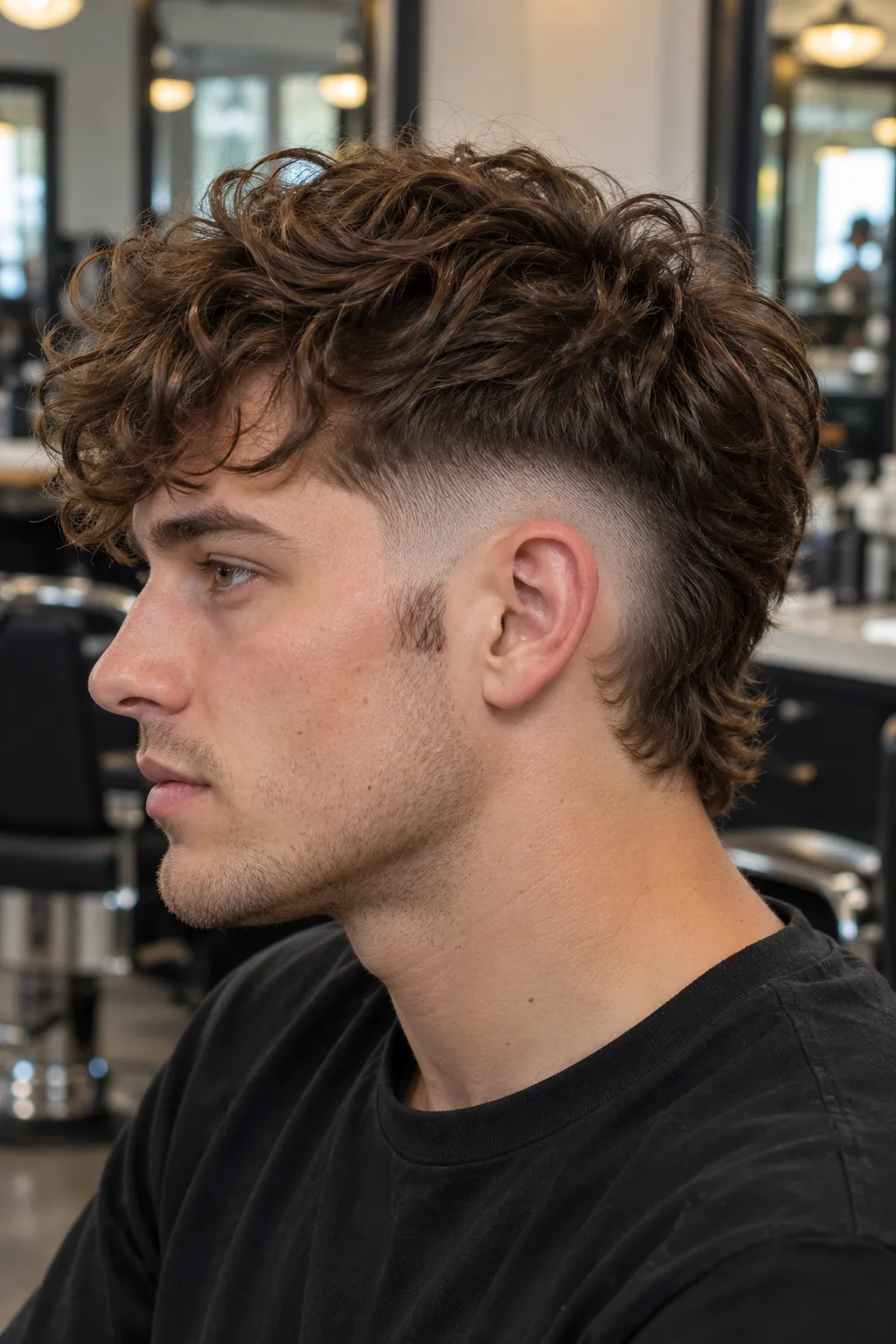
Every cut here has the same burst fade, a half circle around the ear with length kept at the neck. The only thing that changes is what sits on top, because that is the decision you actually make in the chair.
Gallery14 photos · tap to enlarge
 Try this on me
 Try this on me
 Try this on me
 Try this on me
 Try this on me
 Try this on me
 Try this on me
 Try this on me
 Try this on me
 Try this on me
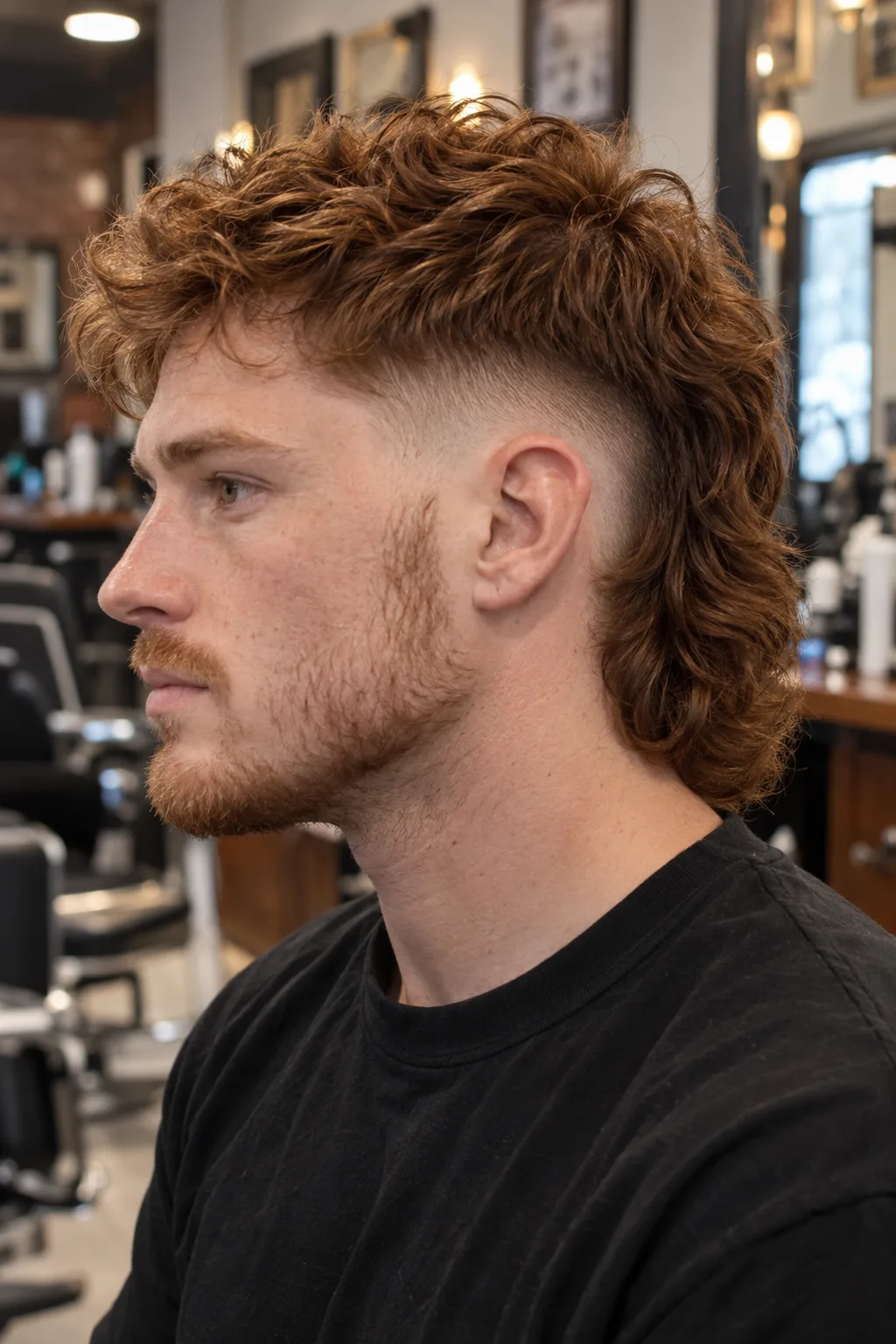 Try this on me
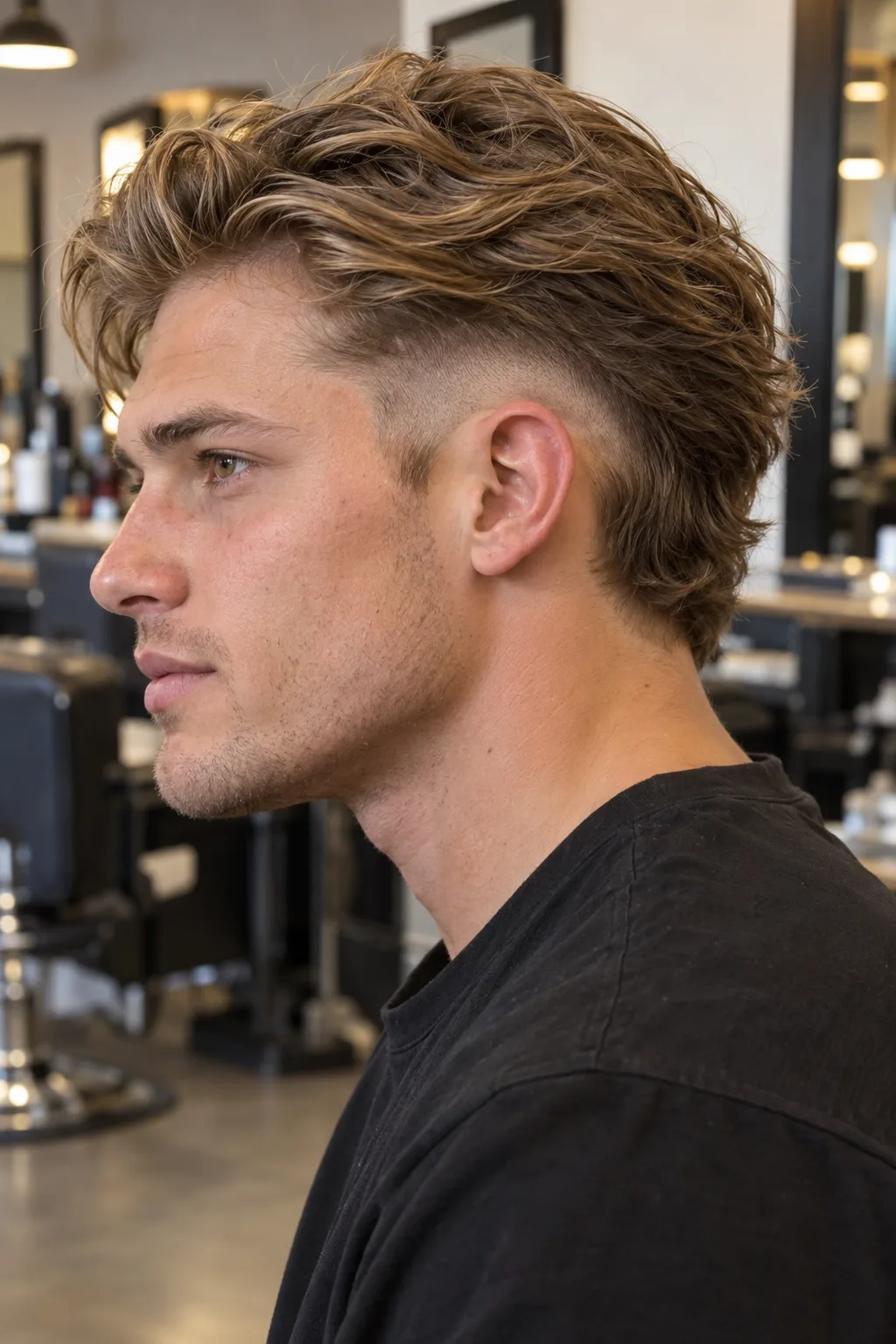 Try this on me
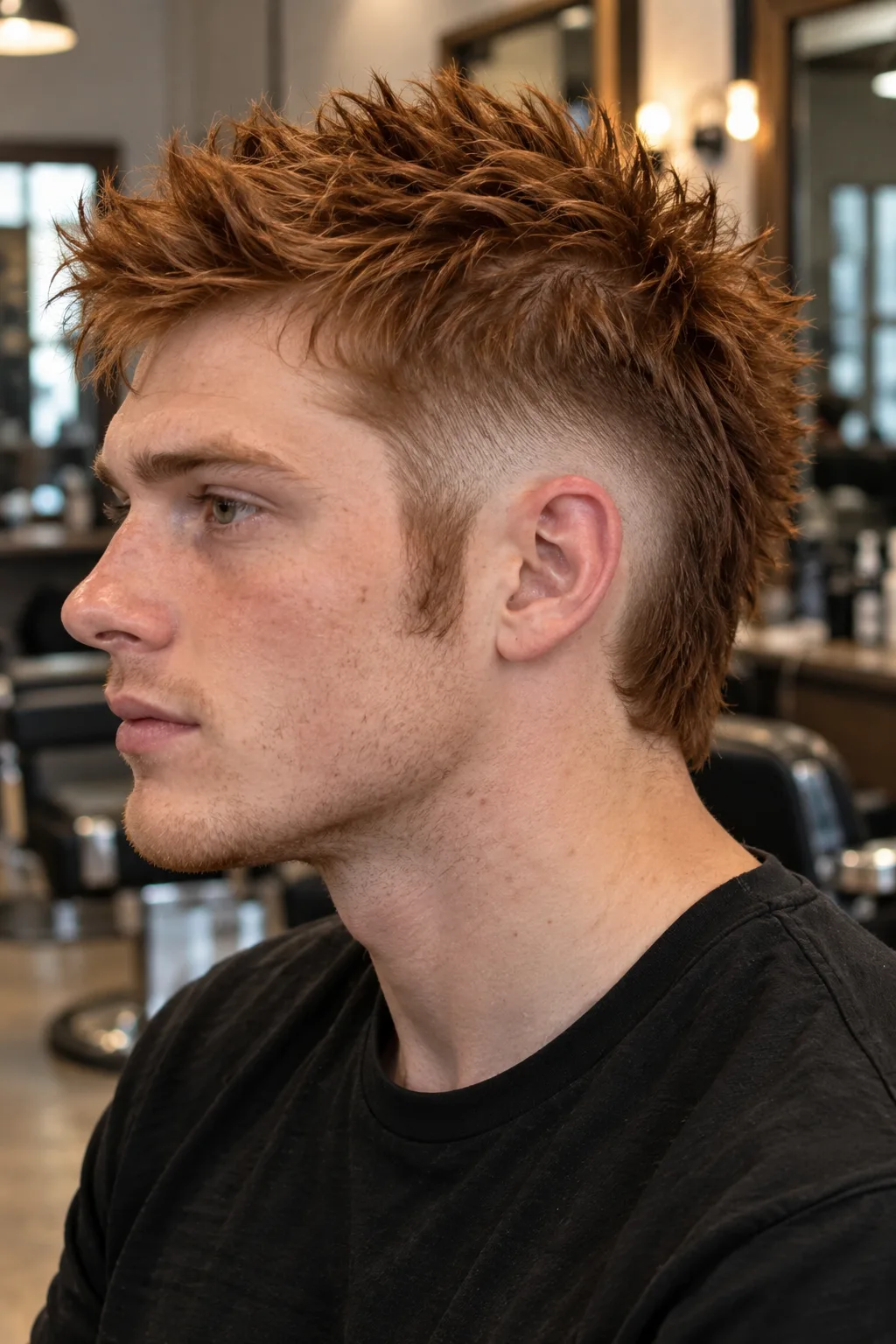 Try this on me
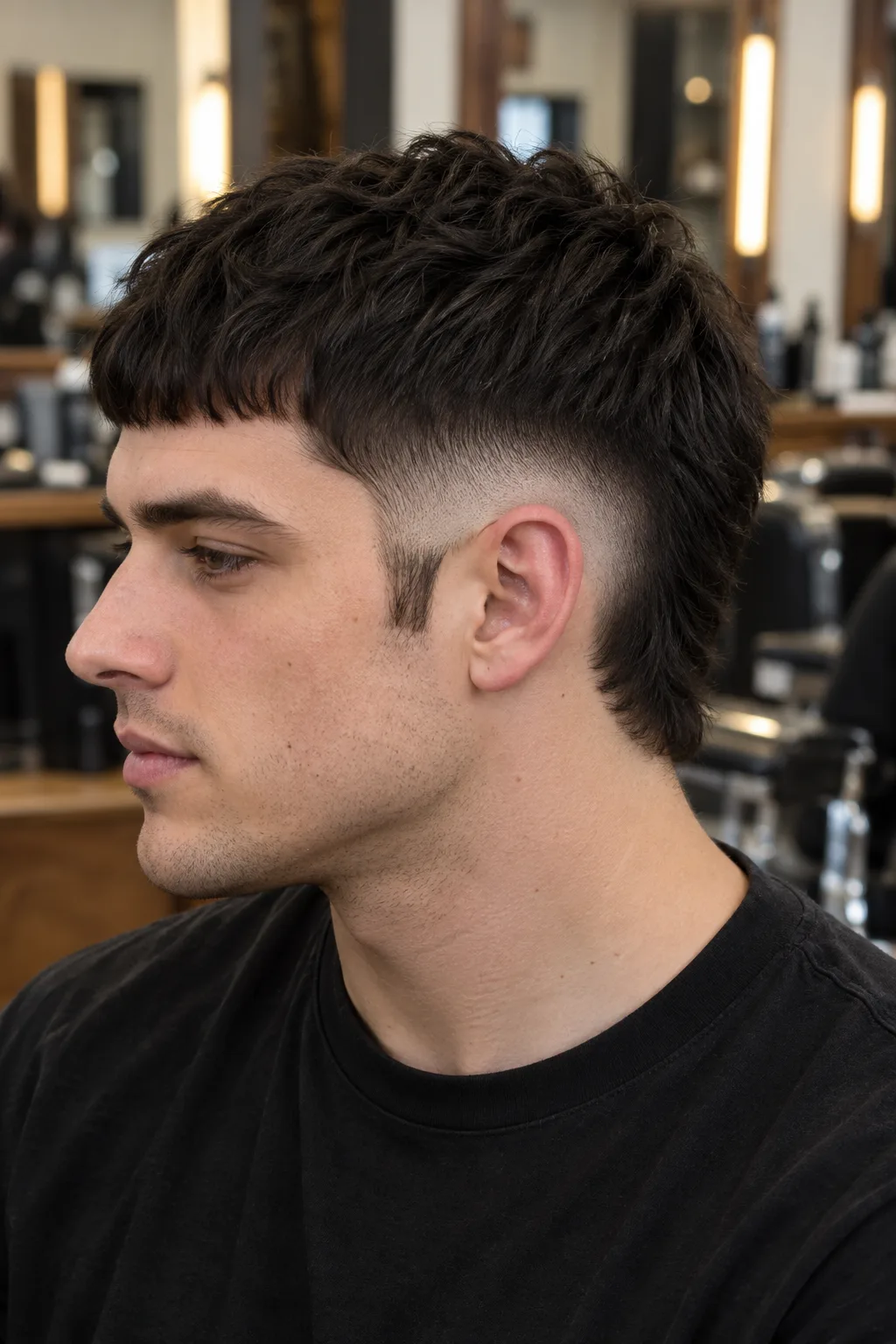 Try this on me
The quick read: the fade is identical in every one, and the top does all the work. Curly and textured tops look the most natural with a burst because the fade frames the volume. Slick and combed tops look sharper but show every week of growth.
Yours could be here.
Start with one selfie.
One photo, twenty seconds, and you'll know. Free account, no card for your first render.
Which Hair Type Suits a Burst Fade?
Every hair type can wear one. What changes is how long the top should be and how fast the fade loses its shape.
| Hair type | Verdict | Keep the top | Recut every |
|---|---|---|---|
| Straight and thick | Great | 3 to 4 inches, pushed back or textured | 3 weeks |
| Curly or coily | Best of all | 2 to 4 inches of natural curl | 2 to 3 weeks |
| Wavy | Great | 4 inches, loose | 3 weeks |
| Fine or thin | Good, with a shorter top | 2 to 2.5 inches, matte texture | 3 weeks |
Straight, thick hair
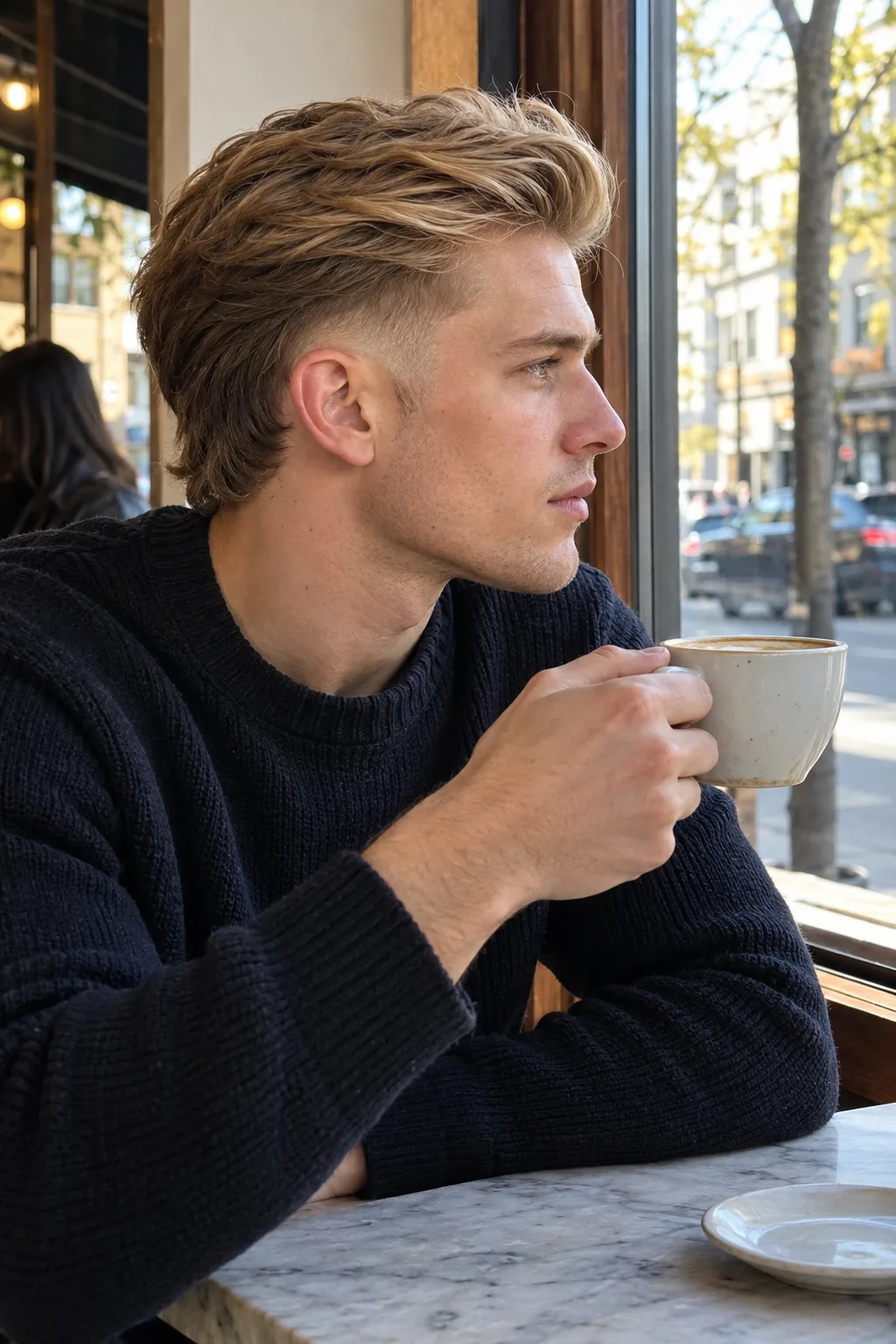
Thick straight hair holds a clean line, so the arc around the ear stays crisp for longer. The risk is the opposite problem: the top can look heavy and flat next to tight sides. Keep 3 to 4 inches and push it back or rough it up with a light product, so the top has some lift to balance the fade.
Curly hair
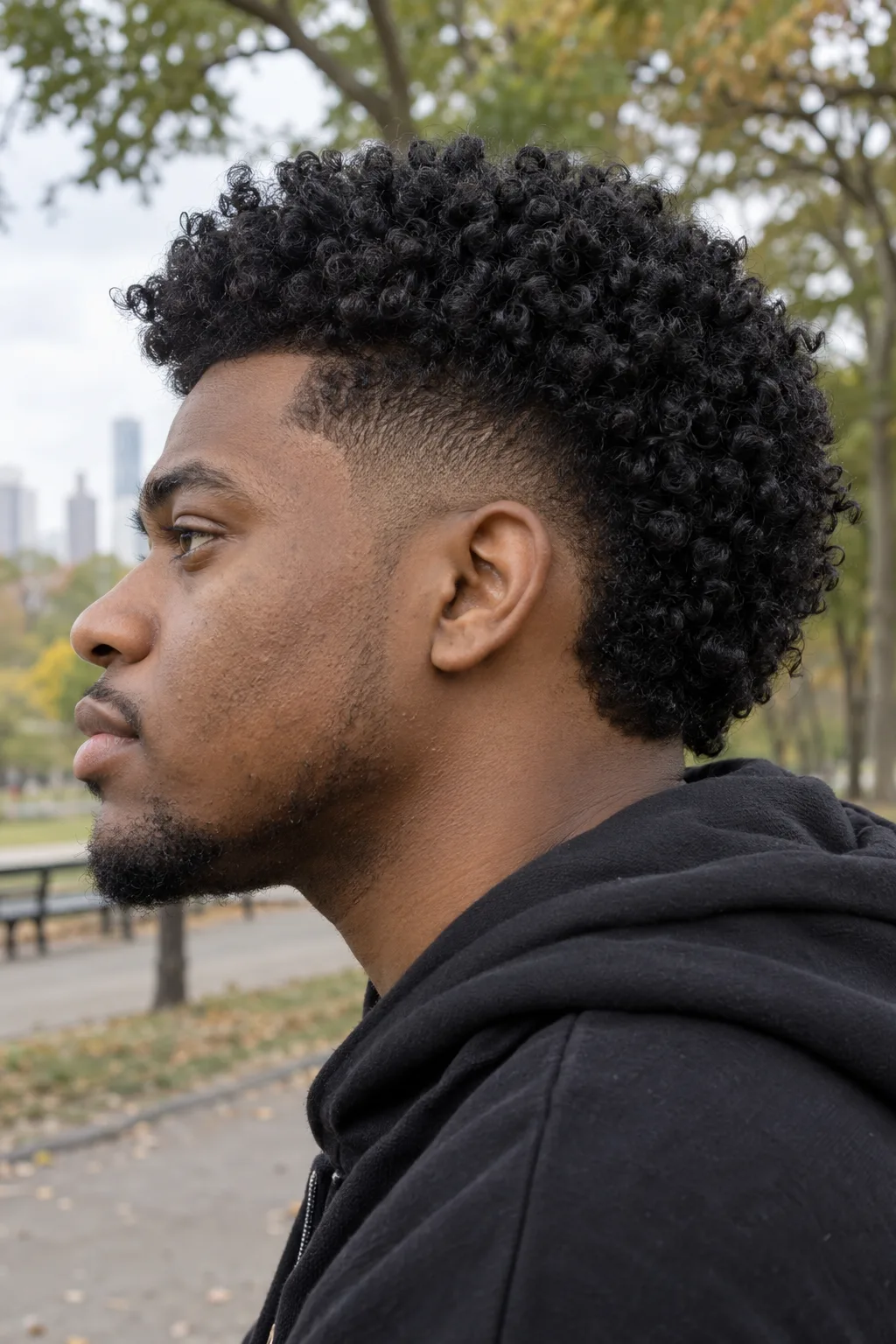
This is the best match, and it is why the burst fade took off. Curls get wide at the sides fast. A burst takes that width away exactly where it bulges, around the ear, while leaving the curls full on top and at the back. Keep 2 to 4 inches of natural curl and do nothing else to it.
Wavy hair

Wavy hair sits between the two. Leave about 4 inches on top so the waves have room to fall, and let the back grow a little. A wavy burst with some length at the neck is the softest version of the cut and the easiest to wear without styling at all.
Fine or thin hair
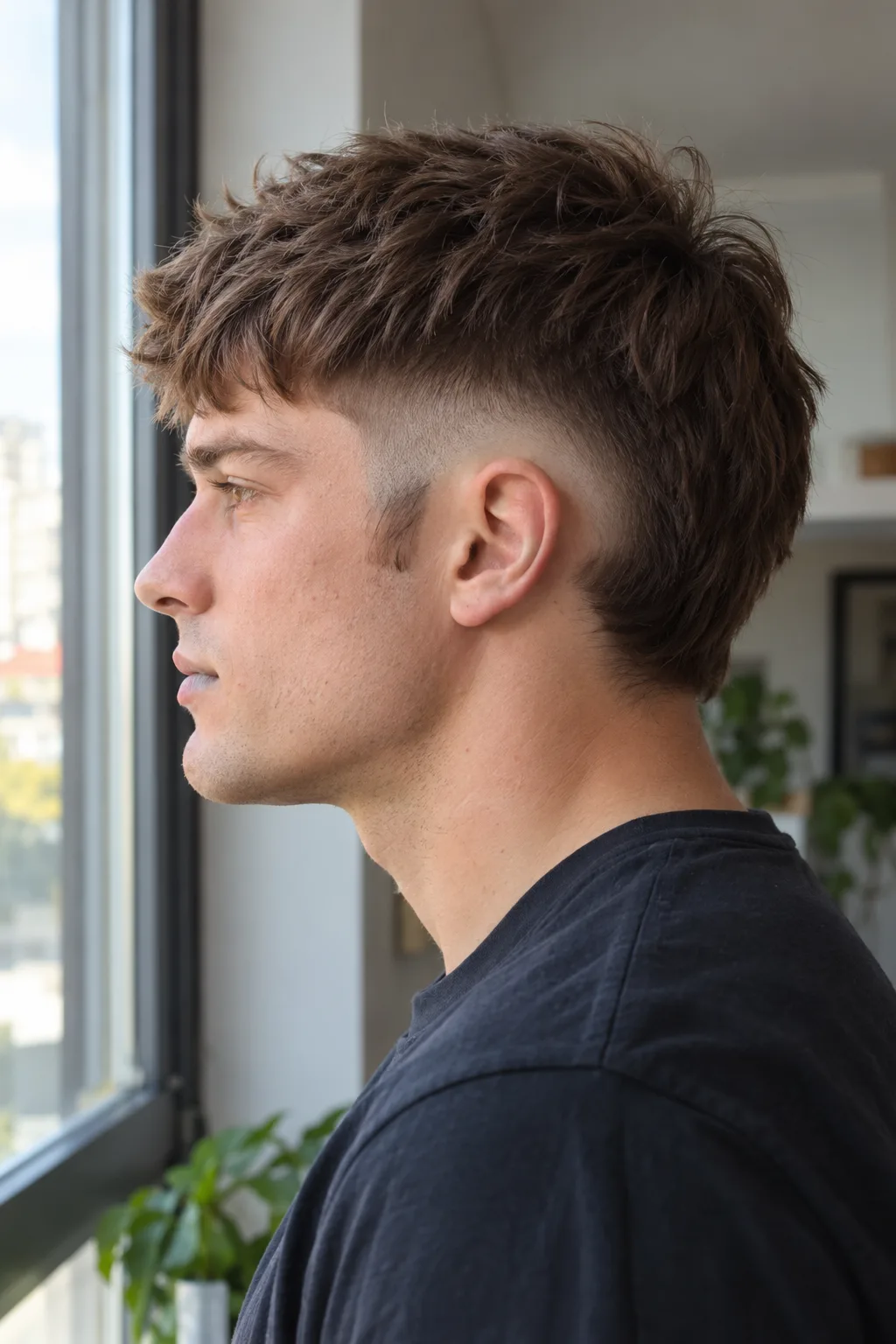
Fine hair can wear a burst fade, but keep the top short, 2 to 2.5 inches, and use a matte clay so it looks fuller. Long fine hair on top next to faded sides makes the top look thinner than it is. A short textured crop with a burst underneath is the version that works best here.
Does a Burst Fade Suit Your Face Shape?
Mostly yes, because a burst only takes width off the sides around the ear and leaves the outline of the head intact. It matters more for the height of the fade than for the fade itself.
| Face shape | Best burst | Why |
|---|---|---|
| Round | Mid burst, some height on top | Tighter sides and lift on top make the face look longer |
| Oval | Any | Already balanced, pick by hair type |
| Long or narrow | Low burst, flatter top | A high arc and tall top add even more length |
| Square | Low or mid burst | A strong jaw handles the contrast |
| Heart | Low burst, fuller top | Keeps a bit of width where the face narrows at the chin |
Not sure which one you are? Measure it instead of guessing.
Measure it instead of guessing
Both numbers in the same unit — the answer is a ratio, so it does not matter which.
Under 1.15 reads round, 1.15 to 1.5 reads oval, over 1.5 reads long. Oval and long split on the jaw rather than the ratio: an oval tapers toward the chin, a long face runs straight down.
The full breakdown is in the face shape guide.
5 Mistakes That Ruin a Burst Fade
- Asking for "a fade" and hoping. Most barbers default to a regular fade, which takes out the back you wanted to keep. Say "burst" and point to the ear.
- Letting the barber fade the nape. Once the back is short, the burst is gone and you are growing it out for two months.
- Going too high on a long face. A high burst plus a tall top stretches the face. Start low.
- Leaving the top too long on fine hair. It goes flat and thin next to the faded sides. Shorter is fuller.
- Skipping the cleanups. The arc is the cut. After three weeks the half circle blurs into a shapeless grown out side, and it just looks like you need a haircut.
How to Ask for a Burst Fade
Barbers read the same words differently, so give them a landmark and the length at the back. A photo of the side of the head helps more than one of the front.
How to ask for a burst fade
- Say "burst fade" and show where
Point to the spot just above and behind your ear. Say you want the fade to curve around the ear in a half circle, not run around the back of the head.
- Name the height
Low burst keeps the arc around the bottom of the ear. Mid burst brings it up to the temple. If in doubt, ask for low.
- Say what happens at the back
Tell the barber to leave length at the nape and not to fade it. Say how much: "an inch" for a tidy back, "leave it long" for a burst fade mullet.
- Give the length on top
Say it in inches, then say how you will wear it: pushed forward, textured, curly, or combed back.
- Skin or no skin
Say whether the shortest point should go down to bare skin or stop at a shadow. Skin looks sharper and grows out faster.
Say this to your barber
Low burst fade please, curved around the ear down to skin, leave about an inch at the back of the neck, and keep 3 inches on top for a textured crop.
Swap the top length and the back length for whatever you picked from the gallery. The same structure works for every variation in the fade haircut guide.
How to Style and Maintain a Burst Fade
Styling is all about the top, because the fade needs nothing. Curly hair needs a leave-in or curl cream and no brushing. Textured crops and fringes want a matte paste or clay worked in with your fingers. Quiffs and slick backs want a pomade and a comb.
Maintenance is about the arc. Book a cleanup every 2 to 3 weeks if you go down to skin, 3 to 4 weeks if you stop at a shadow. If you are growing it into a mullet, keep the fade cleanups and let the back go untouched; the mullet fade guide covers that grow out.
Can You See a Burst Fade on Yourself for Free?
Partly. The free method is to take a side photo of yourself with your hair pushed back, then hold it next to two or three of the gallery shots above with similar hair. It shows you roughly whether your hair type works with the cut.
Where it hits a wall is your own head. A burst fade lives at the side, around your ear, and the right height depends on your face length and your hairline, not on the model's. You cannot see that by comparing photos of someone else.
That is the gap HairstyleAtlas fills. Upload one selfie and see the cut on your own face before you sit down, with the fade haircut simulator or the button below. The first look is free, needs no card and shows the front view, which is enough to judge the top and the overall shape. Plus is $9.99 a week for every cut and color. Side, three quarter and back angles, where you see the arc itself, are in Pro at $21.99 a week. Both cancel in two clicks with a seven day refund.
Get a low burst fade first. It keeps the sides clean, keeps the length at the back, and grows out into a normal haircut if you hate it, which no high fade does. Pair it with whatever your hair already wants to do on top: curls stay curls, straight hair gets a textured crop or a push back.
Only go mid or high once you know you like it and will be back every two weeks. And if you just want tidy edges and nothing more, a low taper with a textured fringe is the calmer cousin.
Frequently asked questions
A burst fade is a fade that curves around the ear in a half circle, shortest just above and behind the ear and longer in every direction from there. The hair at the back of the neck is left long, which is what separates it from a regular fade.
No. The burst fade is only the shape of the fade on the sides. It becomes a mullet when you also leave the back long, a combination called a burst fade mullet. With a short, tidy back it is a plain burst fade.
A regular fade runs in a straight band around the whole head, sides and back. A burst fade only fades the area around the ear, in a curve, and leaves the back of the head full.
A burst fade if you want a sharp, noticeable look and you have curly, wavy or thick hair. A taper if you want something subtle that looks fine for four weeks. The taper is the safer office cut; the burst is the more styled one.
There is no single answer, but the low fades, including the low burst, suit the widest range of faces because they keep the head close to its natural shape. Higher fades suit round and square faces more than long ones.
Style the top, not the fade. Use curl cream on curly hair, a matte paste or clay on textured crops and fringes, and pomade on quiffs or slick backs. The faded sides need nothing.
A blowout fade is a fade with the top blown dry upward and back for volume, often with a sharp line up at the front. It is about how the top is styled. A burst fade is about the shape of the fade, and the two can be combined.
It usually means a short, textured mullet with a burst fade around the ears: some length at the back, a messy or curly top, and clean sides. The burst fade is the reason it looks modern rather than 1980s.
Preview it on your own photo: Men's Hairstyle Try-On.
Share article
About the author
Related posts
Men's Haircuts · 15 min
Flow Haircut: 14 Looks, Grow-Out Timeline and What to Ask For
The flow is medium-length hair swept back with the ends flicking out at the collar. See 14 versions, how long it takes to grow, which hair types suit it, and the exact words for your barber.
Men's Haircuts · 14 min
French Crop Haircut: 12 Blunt Fringe Looks and What to Ask For
The French crop is a short forward cut with a blunt, straight fringe. See it with 12 different sides, find the version for your hair type and face shape, and get the exact words for your barber.
Men's Haircuts · 16 min
Low Taper Fade Straight Hair: 14 Tops and the Inch That Matters
A low taper fade suits straight hair, but the inch above the taper decides how it grows out. See it under 14 tops, find the version for fine, thick or long straight hair, and copy the words for your barber.
Men's Haircuts · 14 min
Low Taper Fade with Textured Fringe: 14 Looks and How to Ask
A low taper fade with a textured fringe is a soft taper at the sideburns and nape with about 3 inches of choppy hair pushed forward. See 14 fringes on the same taper, find the one for your face shape, and copy the exact words for your barber.
Men's Haircuts · 14 min
Textured Crop Haircut: 14 Fades, Who It Suits and What to Ask For
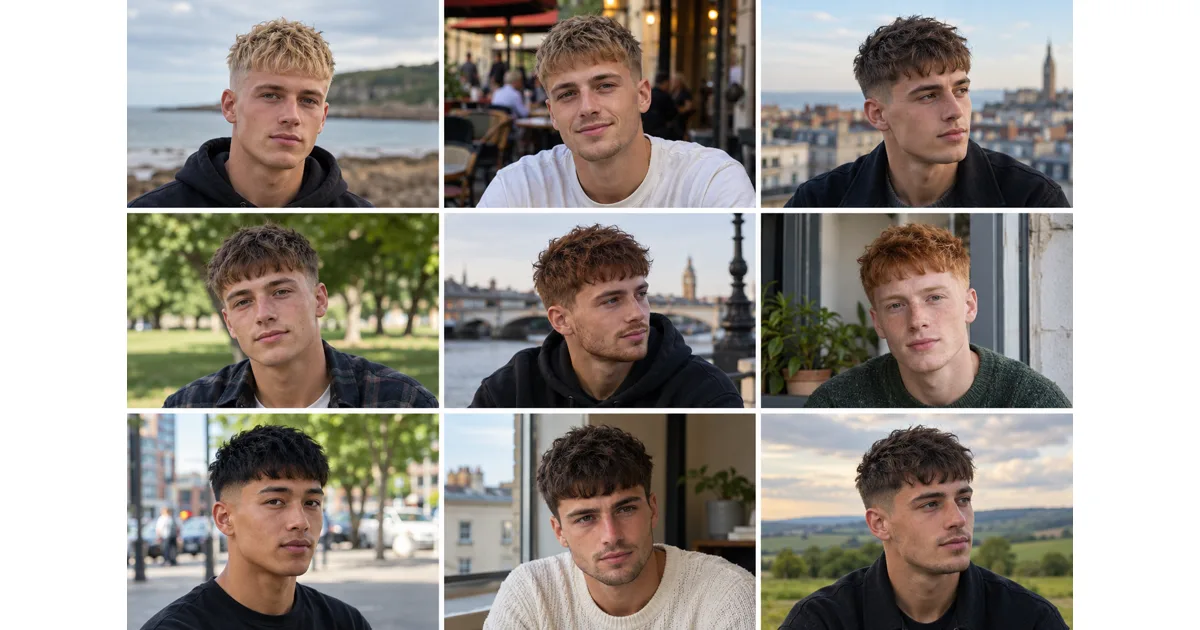
A textured crop is 1.5 to 2 inches of choppy hair pushed forward over faded or tapered sides. See it with 14 side cuts, find the version for your hair type and face shape, and copy the exact words for your barber.
Men's Haircuts · 15 min
8th Guard Buzz Cut: How 1 Inch Looks on 14 Hair Types
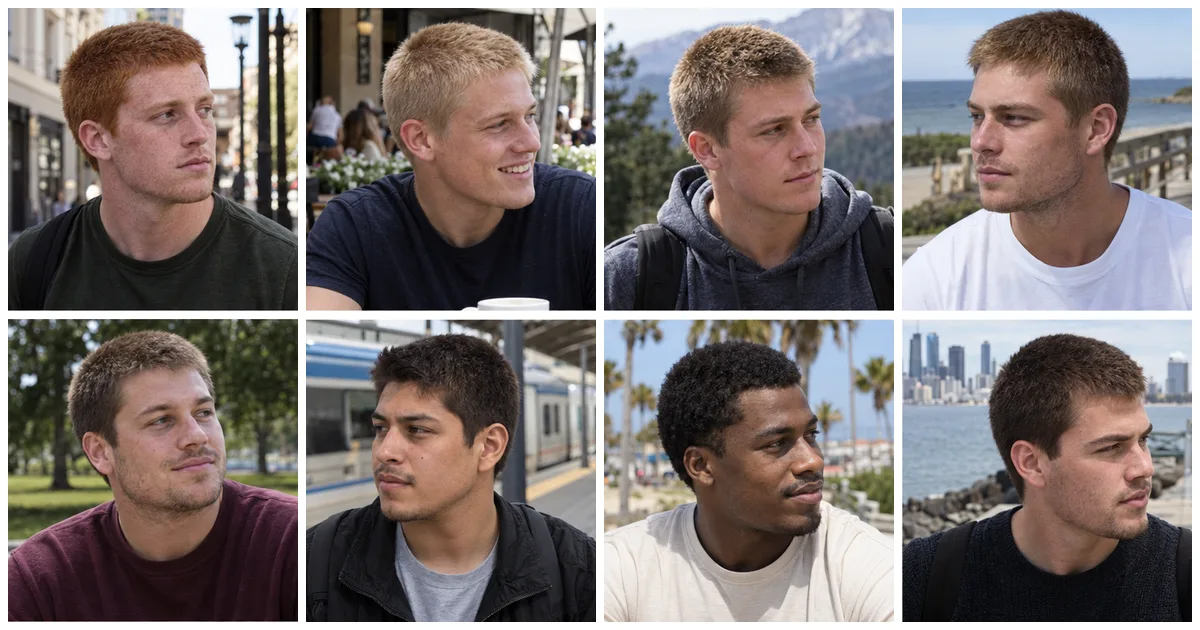
An 8th guard buzz cut leaves one even inch of hair all over, the longest buzz a clipper set gives you. See it on 14 hair types, which faces and textures suit it, how to add a taper, and the exact words for your barber.