Medium Length Hairstyles for Men: 10 Cuts That Work
Oleh Onysko Updated 27 September 2026 18 min read
In this article
Medium length, for men, means roughly three to six inches on top. Long enough that a piece pulled straight down passes your eyebrows, short enough that nothing reaches your shoulders. That is the whole definition, and it is not the part that decides whether the haircut works.
The sides decide. Nearly every medium length cut that goes wrong goes wrong the same way: the sides were left as long as the top, the hair had nowhere to grow but outward, and the head turned into a triangle above the ears. Get that ratio right and medium length suits almost every face and nearly every hair type. Get it wrong and you look like a man who missed an appointment.
Here is what medium actually measures, the ten cuts worth asking for, which one your hair type will hold, the sentence to say in the chair, and the three minutes of styling that stop it collapsing by lunchtime.
How long is medium length hair for men?
Three to six inches on top, one to three inches on the sides and back, and a perimeter at the back that touches the top of your collar without passing it. Under three inches you cannot push the hair back and have it stay, so it is still a short cut. Past six inches it starts behaving like long hair: it parts under its own weight, it needs tying back on a windy day, and it wants a different set of products. Once you are past that point, our guide to long hairstyles for men picks up where this one stops.
| Hair on top | What you can do with it | What it is called |
|---|---|---|
| Under 1 inch | Nothing. It sits where it grows | Buzz or crop |
| 1 to 3 inches | Spike it, push it up, wear a fringe forward | Short |
| 3 to 4 inches | Push it back off the forehead and it stays back | Medium, short end |
| 4 to 6 inches | Part it, tuck it behind an ear, tie half of it up | Medium, long end |
| Over 6 inches | Ponytail, bun, worn down full length | Long |
Getting there takes longer than most men plan for. Scalp hair grows about one centimetre a month, roughly six inches a year, so a grade two buzz is a nine month project and a two inch crop is still six months out. That is not a reason to skip appointments while you wait. It is the reason to book them.
The ratio, not the length

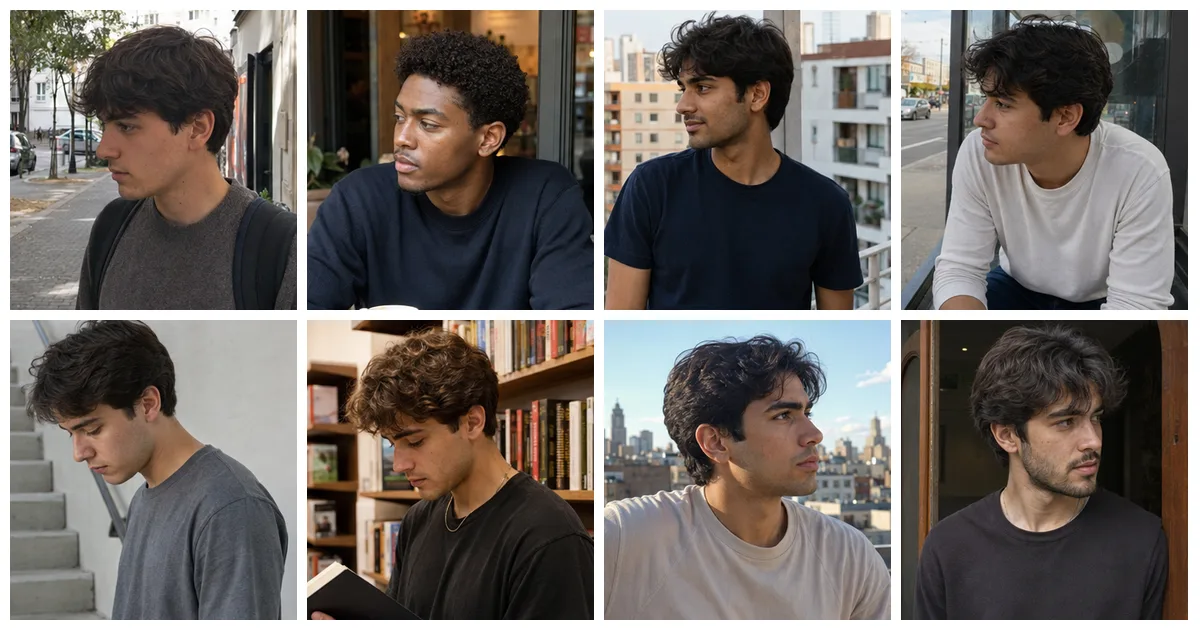
Both men above are carrying about four inches on top. The one on the left had his sides left at the same length as his top, so the hair has nowhere to go but sideways, and the widest point of his head is his ears. The one on the right has sides tapered to roughly half the top, lying flat against the skull, so the widest point is his crown. Identical length of hair. One reads as a haircut and the other reads as an accident. The same arithmetic runs the other way on short parted cuts, where how much scalp shows along your part line decides whether the cut works at all.
The working rule is simple: sides about half the length of the top, shortened with scissors, never taken down to skin. That single instruction fixes more medium length haircuts than any styling product on the shelf.
Note that a taper is not a fade. A taper shortens the hair gradually and leaves the scalp covered everywhere. A fade runs the hair down to bare skin. On medium length hair the taper is almost always the right call, because a fade puts a hard edge underneath a soft heavy top and the two argue with each other every time you look in a mirror. That split between the sides and the top is really the only two decisions in a men's haircut, and medium length is just one answer to the second one.
Which medium length cut suits your hair type
Your hair type decides what the length will actually do once you stop touching it. Pick against it and you will be fighting your own head every morning. Straight hair in particular tends to go heavy rather than full at this length, and getting a straight top to sit fluffy is mostly a question of cutting it shorter than feels right.
| Hair type | Ask for | Skip | Why |
|---|---|---|---|
| Straight | Side part, curtains, slicked back | Heavy blunt layers | Straight hair falls flat, so it needs a parting or a direction to hold shape |
| Wavy | Curtains, pushed back, messy crop | Anything that needs to lie perfectly flat | The wave does the work, so the cut only has to control the width |
| Curly | Curls worn out with a tapered side | A fringe cut forward | Curl shrinks by up to half when it dries, so length cut short vanishes |
| Coily | Worn out on top with a shape-up | Long flat styles | Coils grow up and out, not down, so density on top is the look |
| Fine or thinning | Short end of medium, matte finish | Long, slicked, or shiny | Length exposes the scalp and shine makes strands stick together |
Straight hair

Straight hair is the easiest medium length to cut and the hardest to keep interesting, because it has no built-in shape and gravity wins by mid afternoon. There is a fuller breakdown of that problem, at every length, in the guide to haircuts for men with straight hair. Give it a job: a defined side part, a centre part, or a full push back. All three give the hair a direction and stop it drifting into a curtain over your eyes. Ask for point cutting through the ends so the hair breaks into pieces instead of sitting as one solid sheet.
Wavy hair

Wavy hair is the type medium length was built for. The bend gives the hair volume and separation without a single product, which is why curtains and pushed back styles look effortless on wavy hair and effortful on straight. The only real risk is width: waves push outward as they grow, so the taper on the sides matters more here than anywhere else.
Curly hair
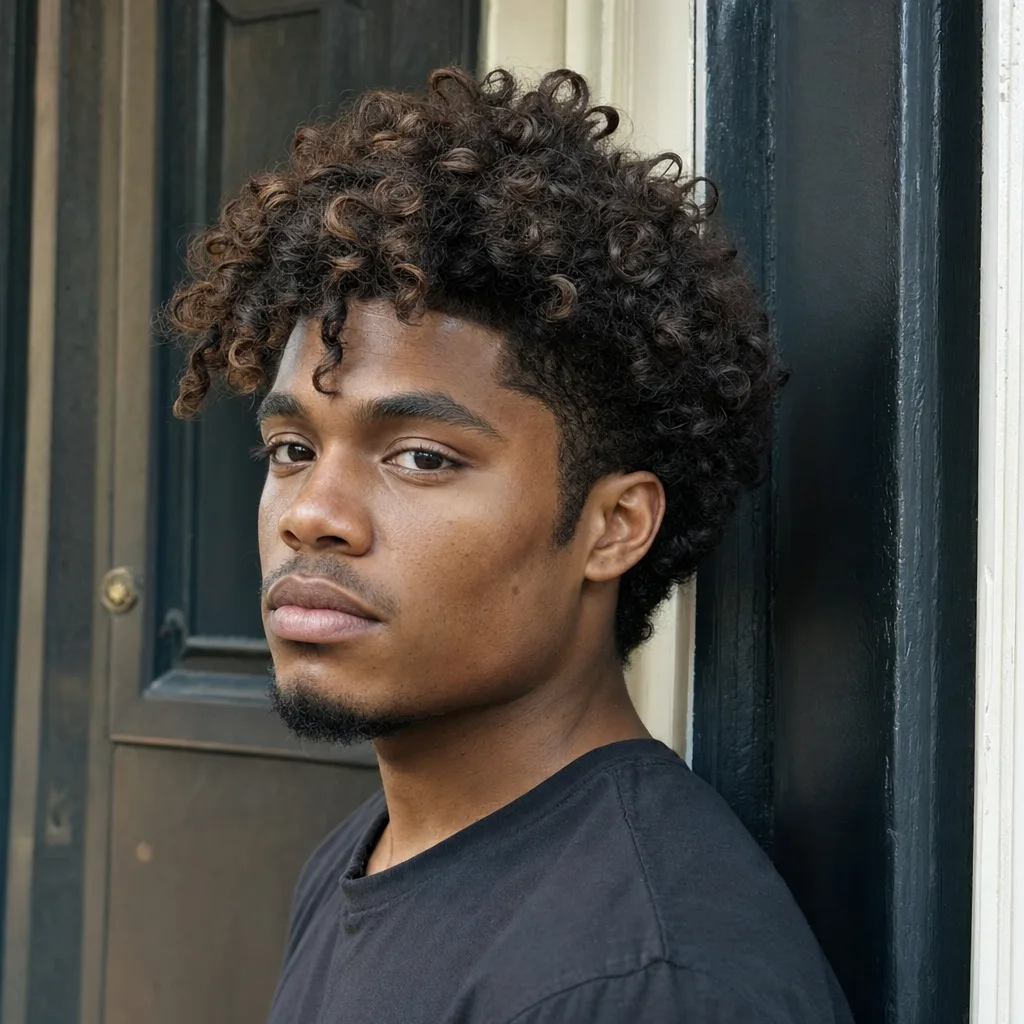
Curly hair looks about half as long as it is, so four inches of curl reads as two. Tell your barber the length you want when it is dry and curled, not when it is wet and stretched, or you will leave with a short cut you did not ask for. Cut dry, in its natural curl pattern, one section at a time. Wet cutting is where curly haircuts go wrong. There are twelve curly cuts worth considering if medium length turns out not to be the answer for your curl type.
Coily hair
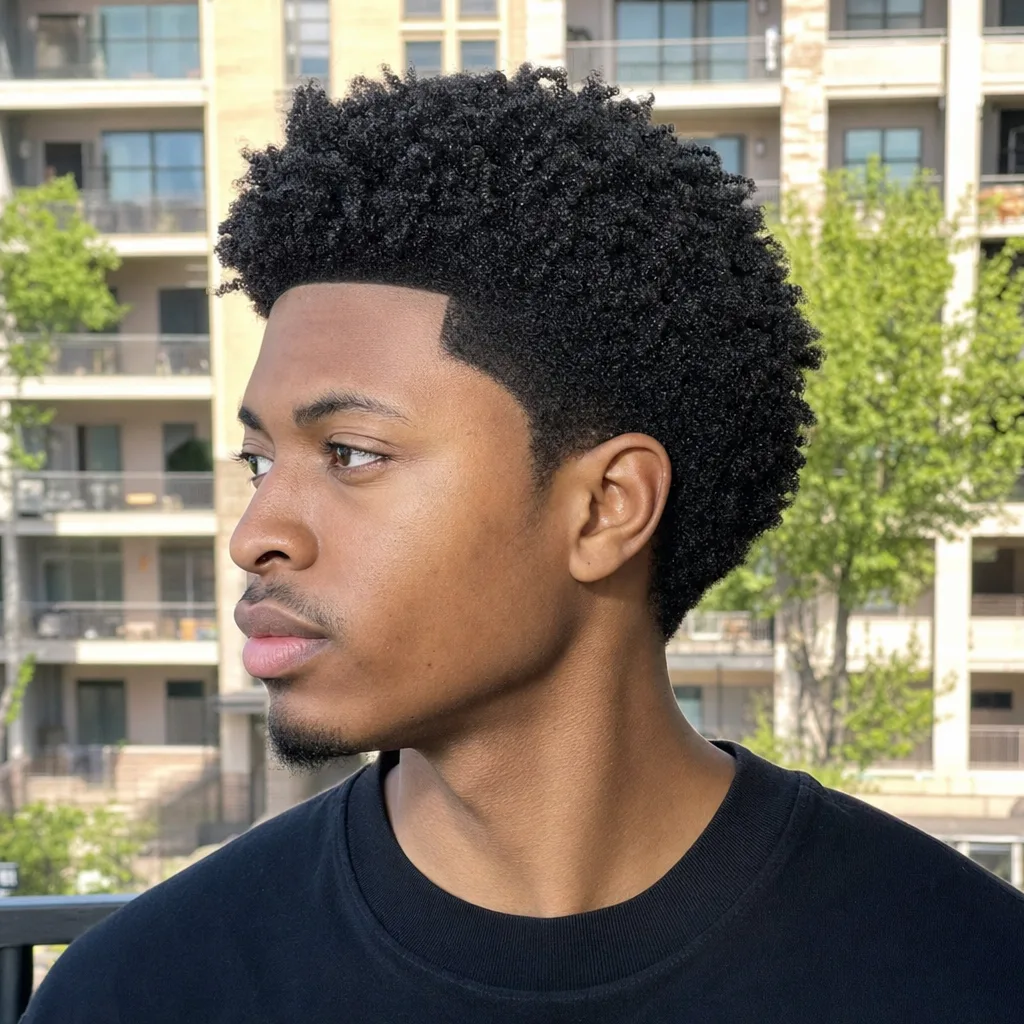
Coils grow up and out rather than down, so medium length here means height rather than drop. Three inches worn out is a full, round shape. What makes it look deliberate rather than overdue is the edge: a shape-up along the forehead and temples, and a taper down the sides that never touches skin. Keep the taper soft, because a hard line under coily hair reads as a fade, which is a different haircut with a different upkeep schedule.
Fine or thinning hair
Length is not automatically your enemy, but shine is. Fine hair grouped into shiny strands separates and shows scalp, which is exactly what you were trying to avoid. Stay at the short end of medium, three to four inches, use a matte clay rather than a pomade, and dry the roots with your fingers pushing against the direction of growth. If the hairline is receding, a fringe worn forward buys you more than any amount of length on top.
Round face, long face, and the two adjustments worth making
Face shape matters less than the internet claims, and it comes down to two moves rather than a chart.
If your face is round or full, you want height on top and control at the sides, because volume at ear level widens what is already wide. Ask for the taper to start a little higher and keep three to four inches on top to add length to the silhouette. If your face is long or narrow, do the opposite: leave the sides fuller, skip the extra height, and let some length fall forward onto the forehead. A textured fringe shortens a long face faster than anything else you can do with scissors.
Measure it instead of guessing
Both numbers in the same unit — the answer is a ratio, so it does not matter which.
Under 1.15 reads round, 1.15 to 1.5 reads oval, over 1.5 reads long. Oval and long split on the jaw rather than the ratio: an oval tapers toward the chin, a long face runs straight down.
10 medium length hairstyles for men
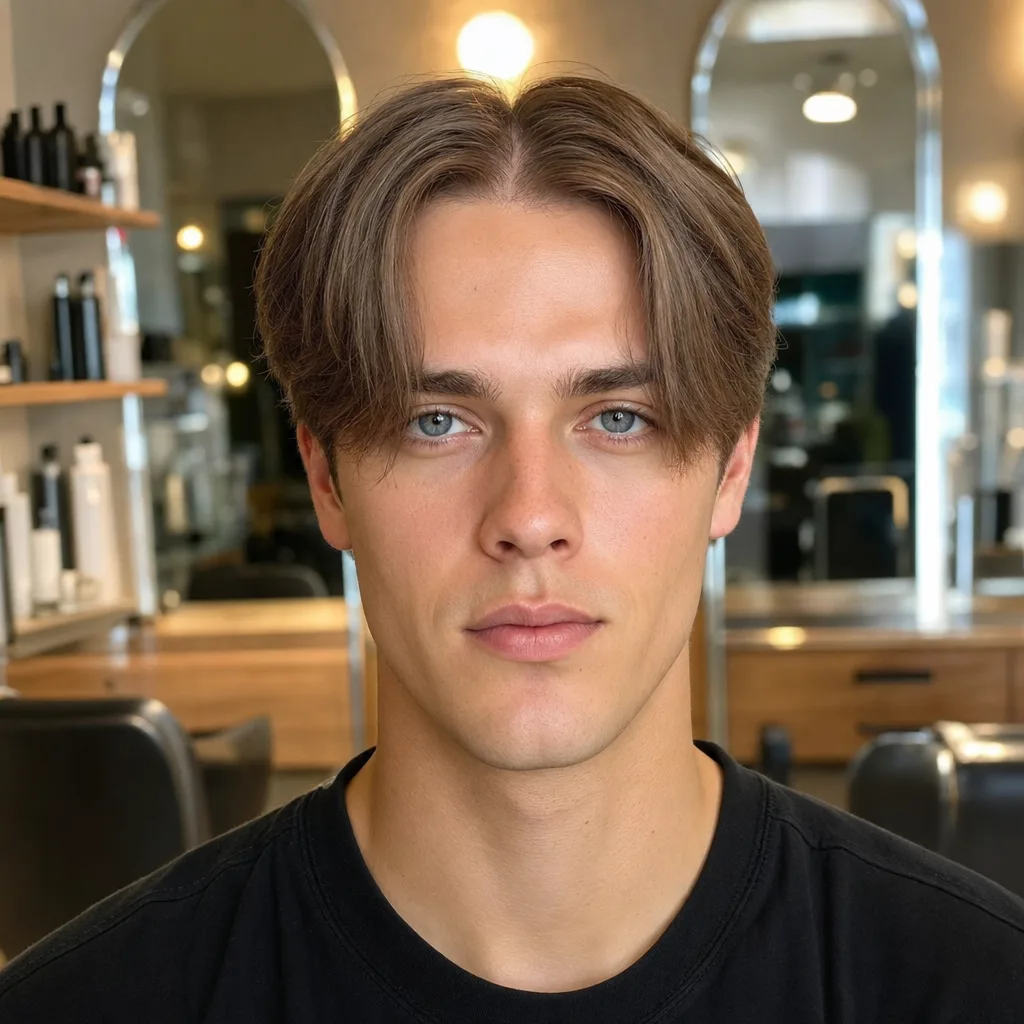
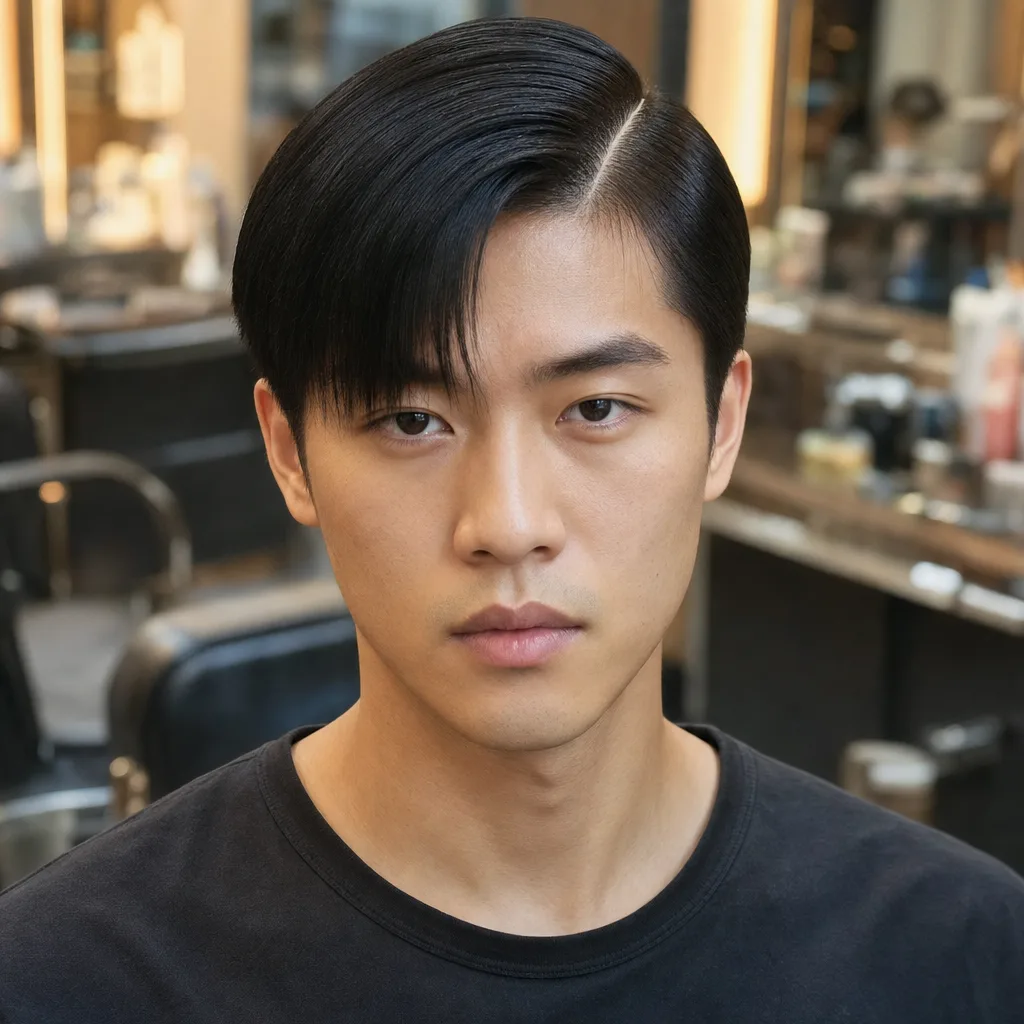
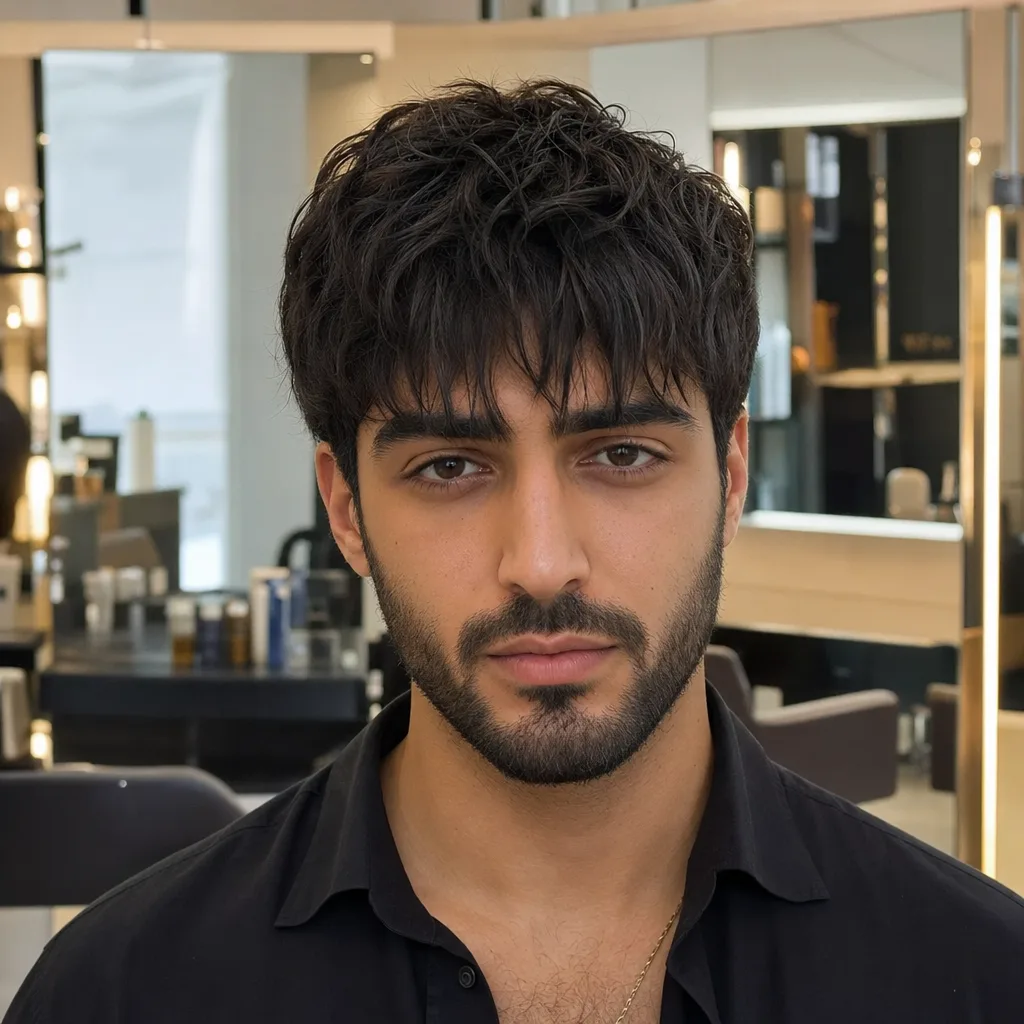
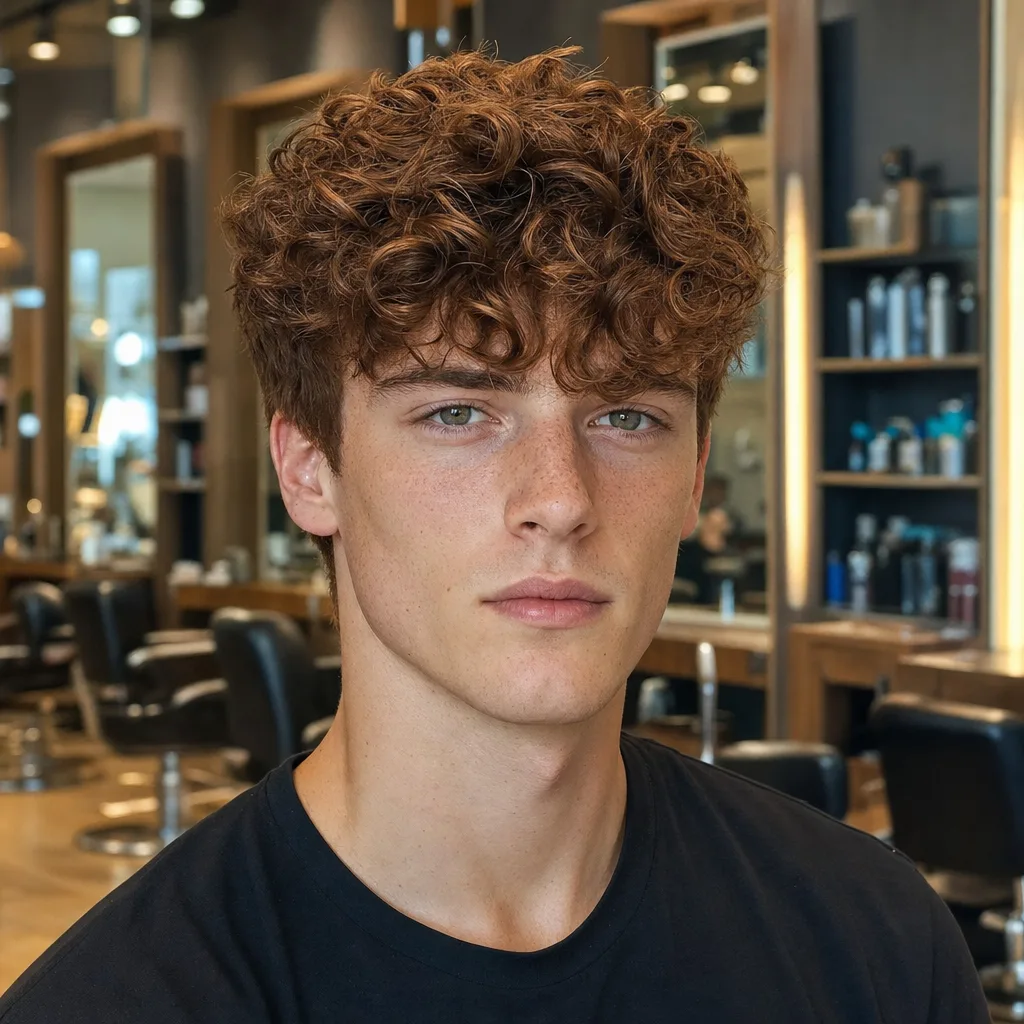
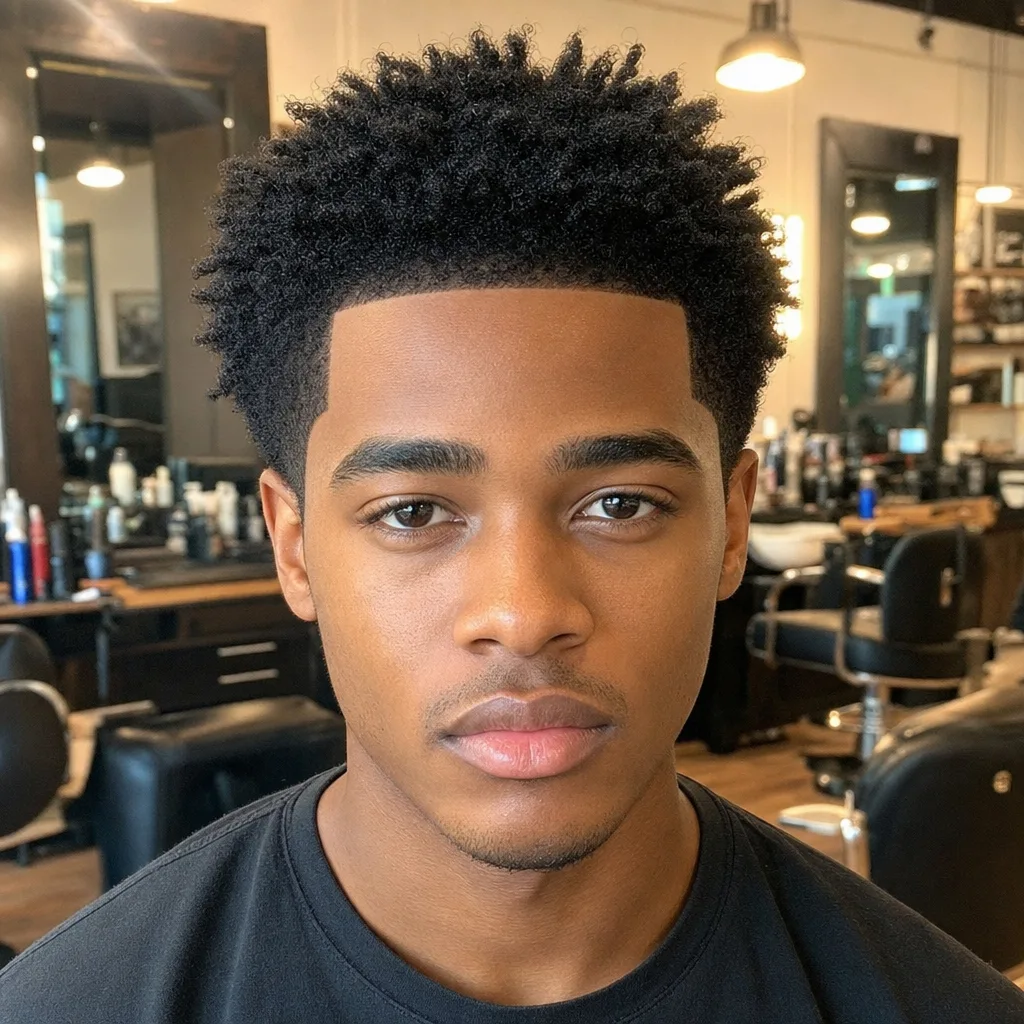
Every cut below is the same three to six inches on top with tapered sides. What changes is what you do with the front: where it parts, which way it travels, and how much shine you leave in it. That is the only variable in this gallery.
Gallery10 photos · tap to enlarge
 Try this on me
 Try this on me
 Try this on me
 Try this on me
 Try this on me
 Try this on me
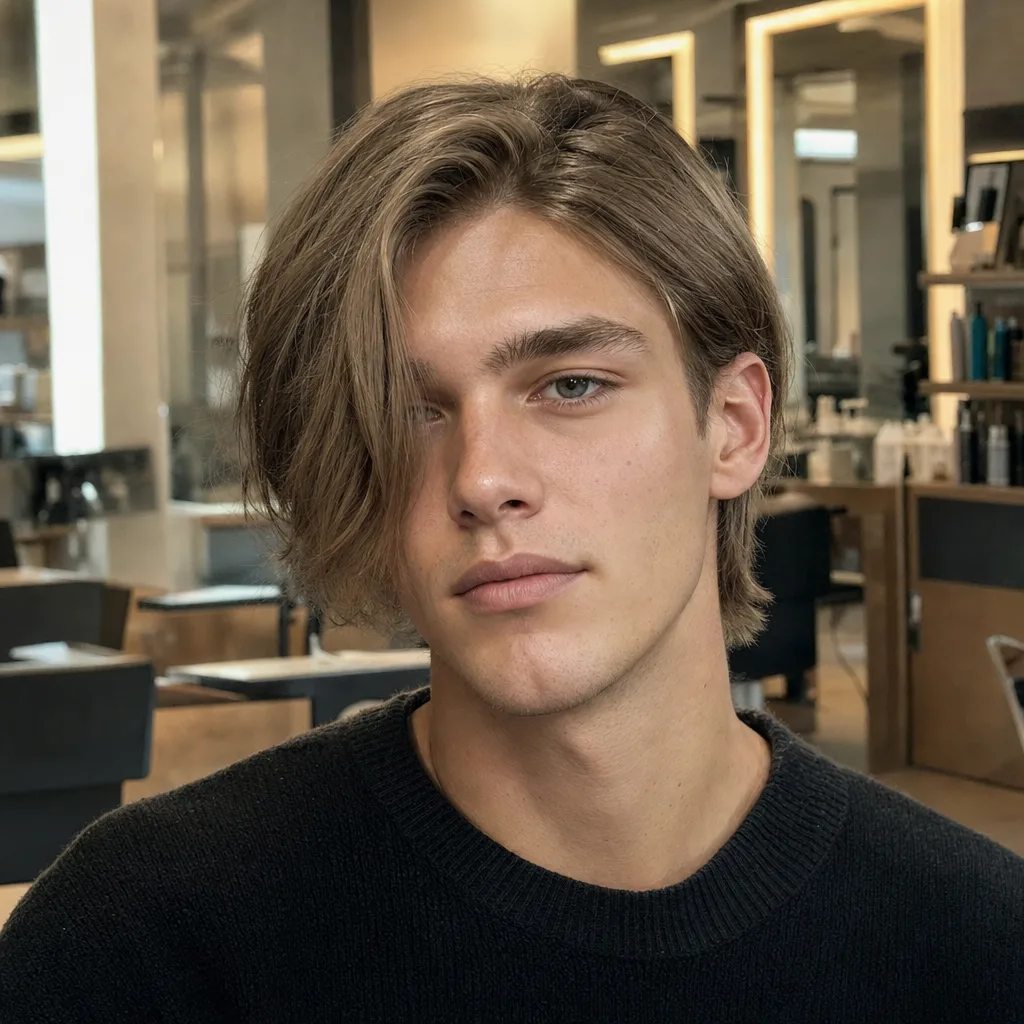 Try this on me
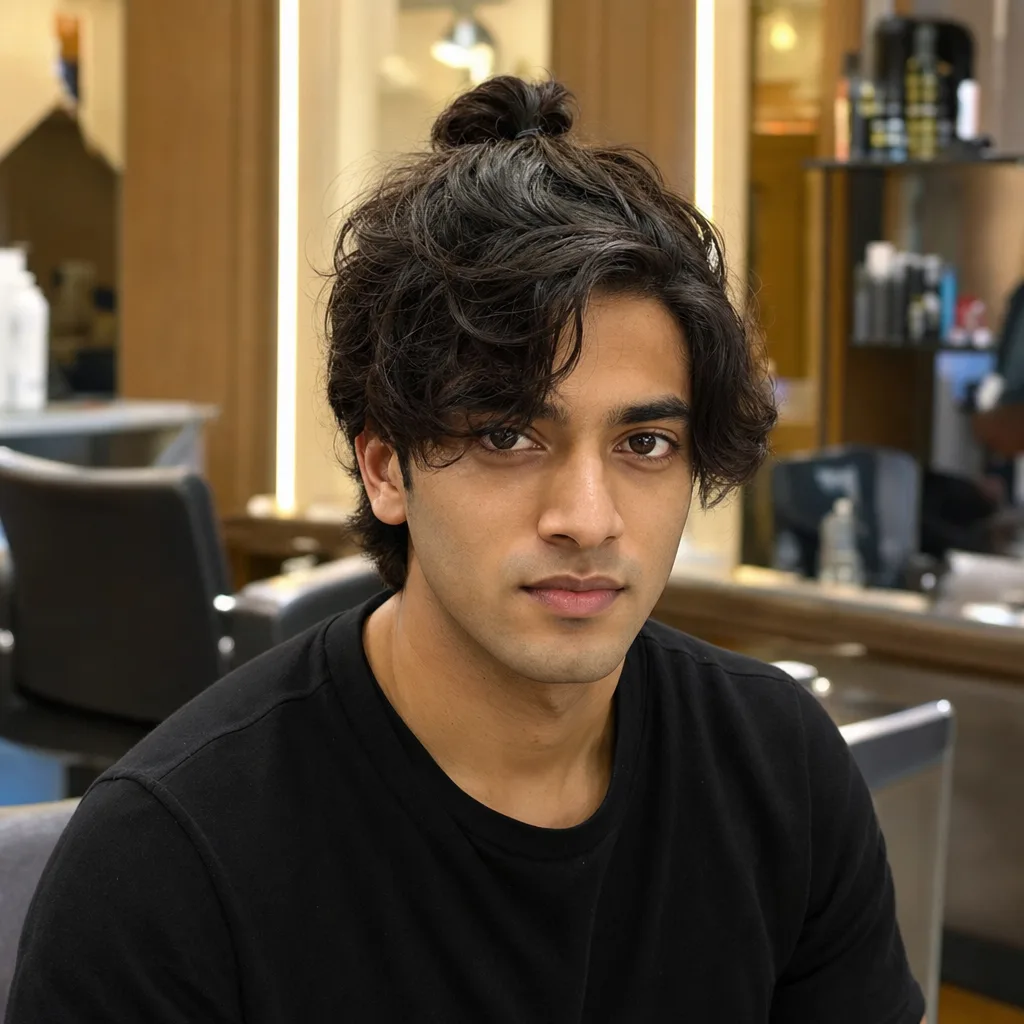 Try this on me
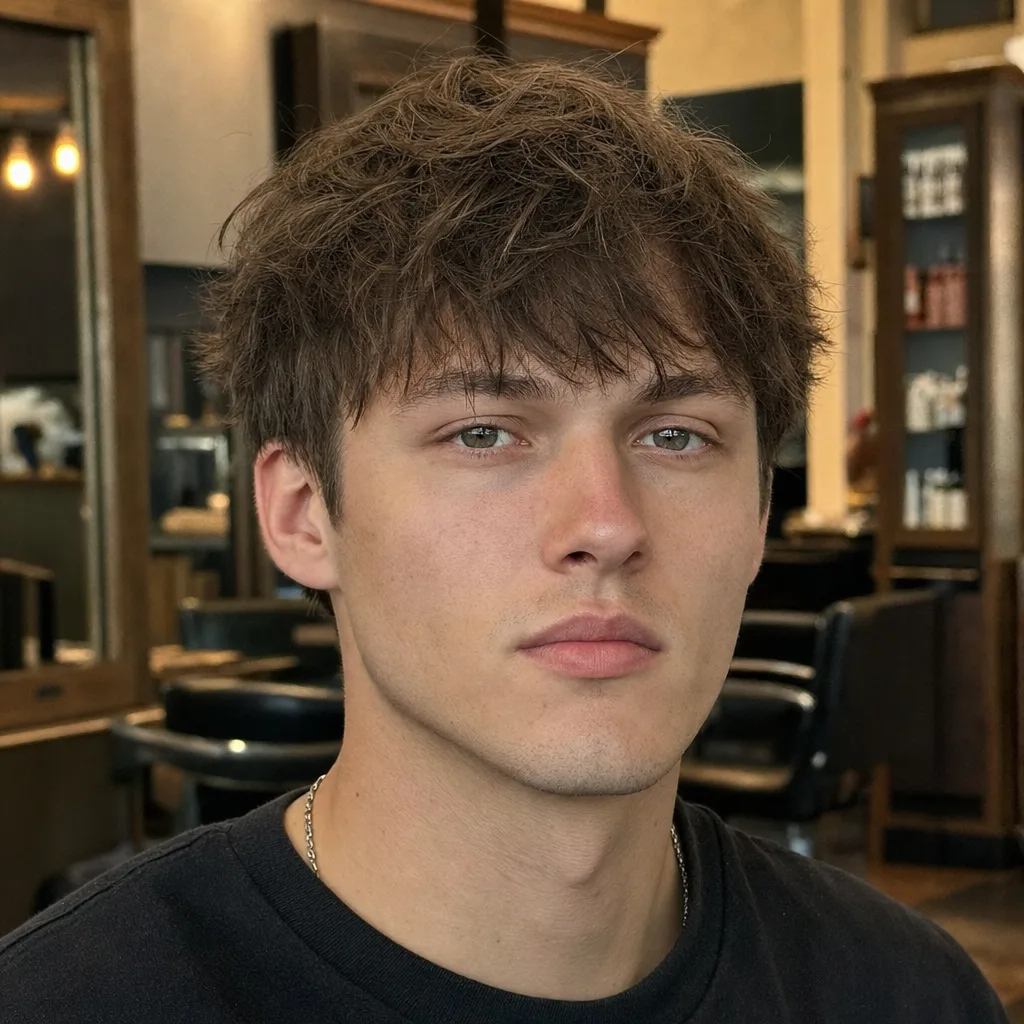 Try this on me
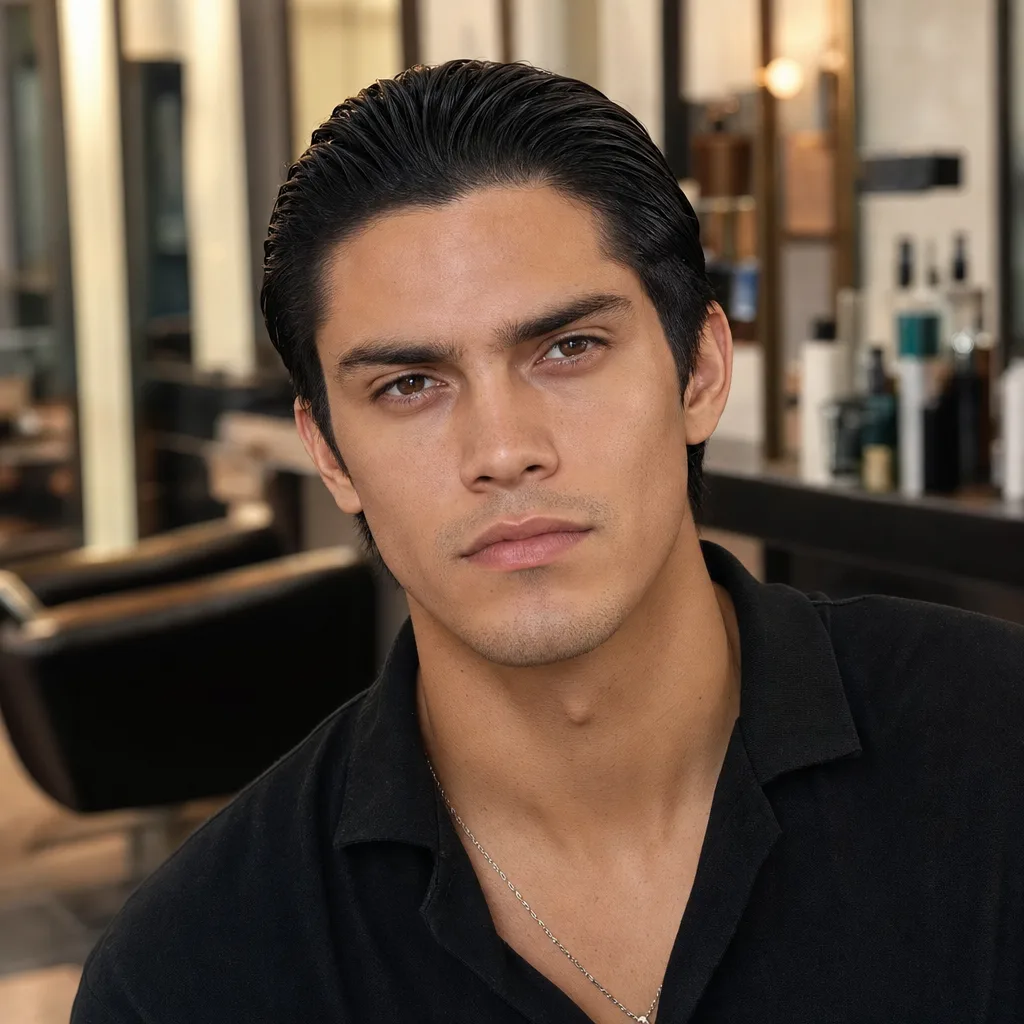 Try this on me
Ten different haircuts is also ten different guesses about your own face, which is the part nobody tells you. Curtains on a photograph of a model tells you nothing about curtains on you.
Yours could be here.
Start with one selfie.
One photo, twenty seconds, and you'll know. Free account, no card for your first render.
How to ask your barber for it
Never say "medium". It is the vaguest word in the shop and it will be interpreted by a person who has already had this conversation nine times today. Say numbers, name the parts, and describe the outline you want.
How to ask for a medium length men's haircut
- Give the top a number in inches
"Leave about four inches on top" is unambiguous. "Medium" is not, and neither is "a bit off the top". If you are not sure what four inches looks like, hold your fingers apart and show them.
- Say taper, not fade
"Taper the sides and back with scissors, down to about two inches, no skin anywhere." That sentence rules out the clippers going too high, the hard line, and the surprise fade in one move.
- Set the perimeter against a landmark
Bones, not measurements: "keep it off my ears" or "cover the top half of the ear", and "let the back reach my collar but not sit on it". Your barber can see those landmarks; they cannot see the picture in your head.
- Ask for the weight taken out, not the length
"Take the weight out through the ends but keep the length" is the request that stops a heavy top from turning into a helmet. It is point cutting or thinning through the interior, and it is what makes hair move.
- Book the next one before you leave
Six to eight weeks. Medium length is the only length where skipping a trim actively makes the haircut worse rather than just longer, because the sides catch up with the top and the shape collapses.
Say this to your barber
Leave about four inches on top, taper the sides and back with scissors to about two inches with no skin anywhere, keep it off my ears, and take the weight out of the ends without losing the length.
Styling it in three minutes
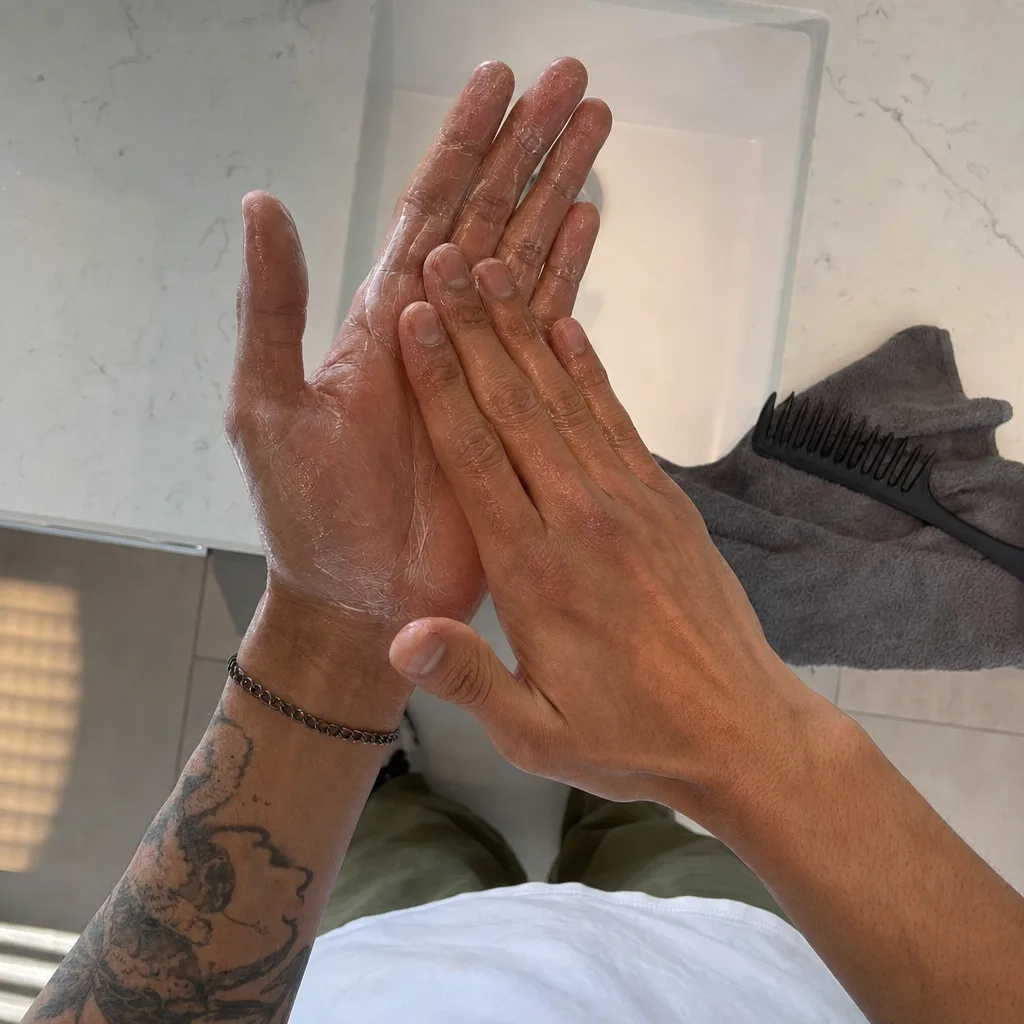
Medium length hair needs less product than short hair, applied to wetter hair, and almost all of the work happens while it is drying rather than after. Straight hair that will not hold any of this is the usual reason men end up getting a perm, where one rod size decides the whole result.
Towel dry until the hair is damp, not wet. Warm a coin sized amount of matte cream between your palms until it disappears, then push it through from the roots with your fingers spread, working against the direction the hair grows. Blow dry on medium heat for ninety seconds with your fingers doing the lifting, pushing the hair back and up. Finish with a small amount of clay on your fingertips to break the front into pieces. Skip the comb unless you want a hard part.
The single biggest upgrade is drying the roots rather than the ends. Damp roots collapse flat within an hour no matter what you put on the ends.
Five mistakes that ruin a medium length cut
Letting the sides catch up. The most common one, and the reason the triangle happens. Sides grow at the same rate as the top but have half the length to hide it in, so they hit the ratio limit first.
Asking for a fade underneath. A skin fade under four inches of soft hair leaves a visible shelf where the two lengths meet, and it grows out badly within two weeks.
Cutting curls wet. Wet curl is stretched to nearly double, so what looked correct in the chair shrinks to a short back and sides in the shower at home.
Too much product, applied too dry. Product on dry hair coats the outside and weighs it down. The same amount on damp hair distributes to the roots and holds the shape.
Growing it out with no trims at all. Trims during a grow-out remove split ends and rebalance the sides without touching the length you are trying to keep. Skipping them costs you months.
The grow-out months, and how to survive them
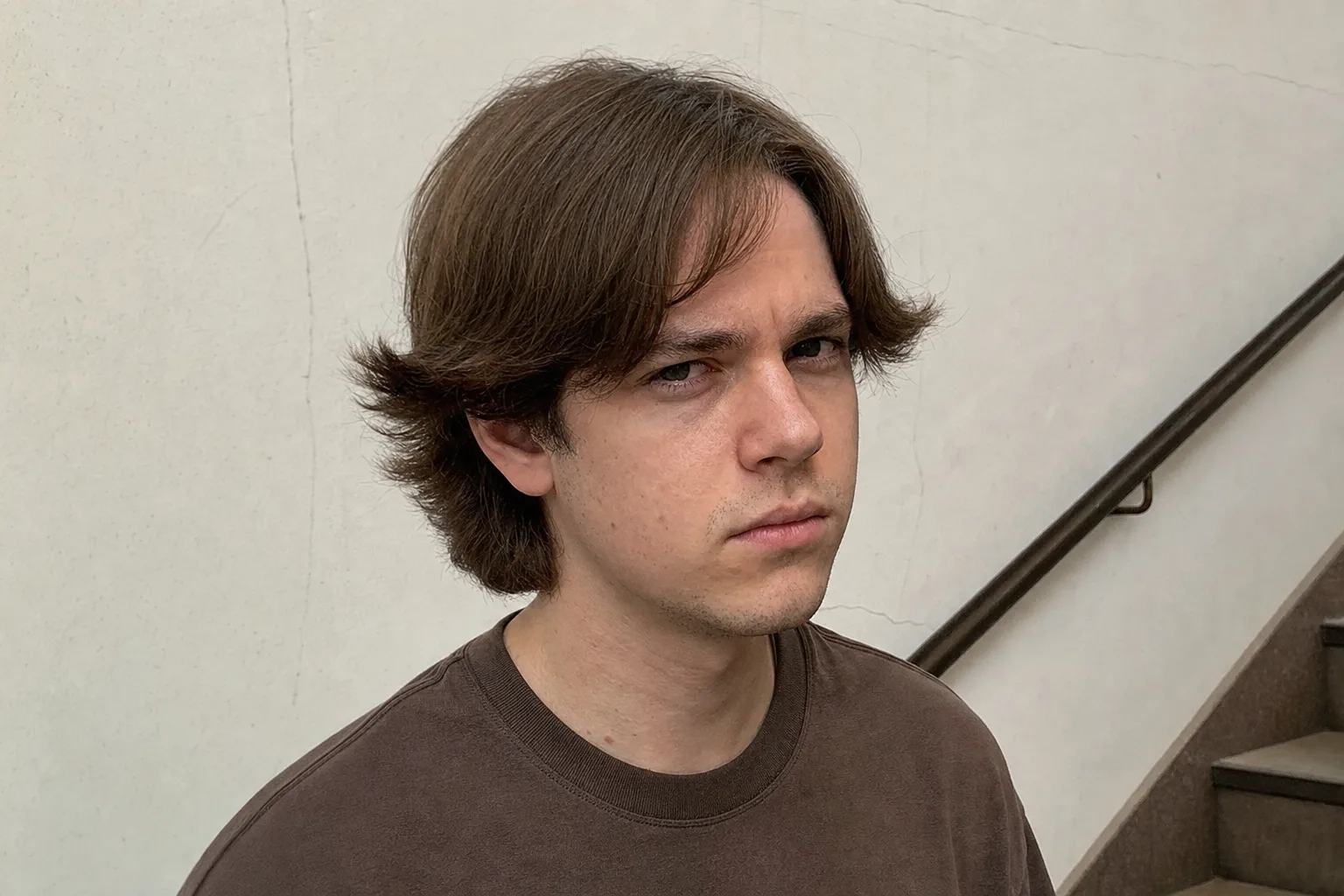
There is a stage, usually between months three and five, where the top is not yet long enough to push back and the sides have grown into wings over your ears. That stage is not a sign the plan is failing. It is the sign that the sides need a taper while the top is left completely alone.
Book a trim every six to eight weeks and say exactly that: sides and back tapered, nothing off the top. If the wings are already out, a barber can clean the outline in ten minutes and buy you another month. If the awkwardness is coming from the back, it is because the perimeter has grown into a blunt shelf on the neck; ask for it softened rather than cut straight across.
If you decide part way through that you want to keep going past six inches, the rules change and the products change with them, and long hair becomes a different maintenance problem. Once it reaches about eight inches you can tie it back into a men's hair bun, which keeps it off your face on the days it will not behave. The endpoint most men picture is the one-length flow Trevor Lawrence wears, which takes roughly two years from a short cut. If you decide to bail, the shortest honest exit from a grow-out is a modern mullet, which keeps the length you earned at the back while the sides go tidy.
Past six inches the timeline stops being a styling question and becomes a genetics one, and the men's hair length chart shows how many years each landmark below the shoulders takes.
Medium length is the most forgiving length a man can wear, and the least forgiving to ask for badly. The length itself is generous: three to six inches suits round faces and long ones, straight hair and coils, twenty two year olds and forty year olds. What it does not survive is a vague instruction. "Medium" gets you a guess, and a guess usually means the sides get left too long.
So bring three numbers to your next appointment: what stays on top, what the sides taper down to, and where the back stops. Then book the next appointment on your way out. That is the whole job.
If you want to know which of the ten looks like you rather than which one looks good on a model, try them on your own photo first with the men's hairstyle try-on, or work backwards from your face with what haircut suits me.
Frequently asked questions
For most men it is a scissor cut with three to four inches left on top, the sides tapered to about half that, and a soft perimeter that covers the top of the ear. Which version you wear depends on your hair type: straight hair takes a side part, wavy hair takes curtains or a push back, curly and coily hair are worn out on top with the sides tapered close. The cut is the same. Only the front changes.
It refers to clipper guard numbers, not inches: a number three guard on top, a two on the sides, and a one around the edges and neckline. It is a short haircut formula and it has nothing to do with medium length hair. A number three guard leaves about three eighths of an inch, roughly one tenth of what "three inches on top" means, so do not say "three" to a barber when you mean three inches.
There is no single answer supported by evidence, and anyone quoting a percentage is quoting a survey of a few hundred people. What is consistent is that a length which is clearly maintained beats a length which is not. Medium length is popular precisely because it reads as a decision rather than as neglect, but only while the sides are kept in ratio to the top.
Three to six inches on top and one to three inches on the sides and back. A practical test: pull a piece at your crown straight down. If it passes your eyebrows and stops well above your shoulders, you are in medium length territory.
A side part or curtains, both cut with the weight taken out through the ends. Straight hair has no natural separation, so it needs a parting to hold shape and point cutting to stop it sitting as one solid sheet. Avoid heavy blunt lines, which make straight hair look like a helmet by the afternoon.
Height on top, control at the sides. Keep three to four inches up top so the silhouette gains length, ask for the taper to start slightly higher so the width at ear level comes in, and skip the centre part, which widens the frame of the face. A soft side part or a push back both work.
A matte cream or clay applied to damp hair. Cream gives movement with light hold and suits wavy and straight hair; clay gives more grip and matte finish and suits fine hair and messier styles. Pomade and gel are the wrong tools at this length for most men, because the shine groups the strands and shows scalp underneath.
Preview it on your own photo: Men's Hairstyle Try-On.
Share article
About the author
More articles
Men's Haircuts · 14 min
Benny Blanco Haircut: The Fake Half Shave and the Real Curls
Benny Blanco did not shave half his head. It was a prosthetic bald cap, and the buzz cuts are AI. Here is what his curly mop actually is, the short version, and exactly what to tell your barber.
Men's Haircuts · 16 min
1A Hair: How to Tell If You Have It + 14 Cuts That Work
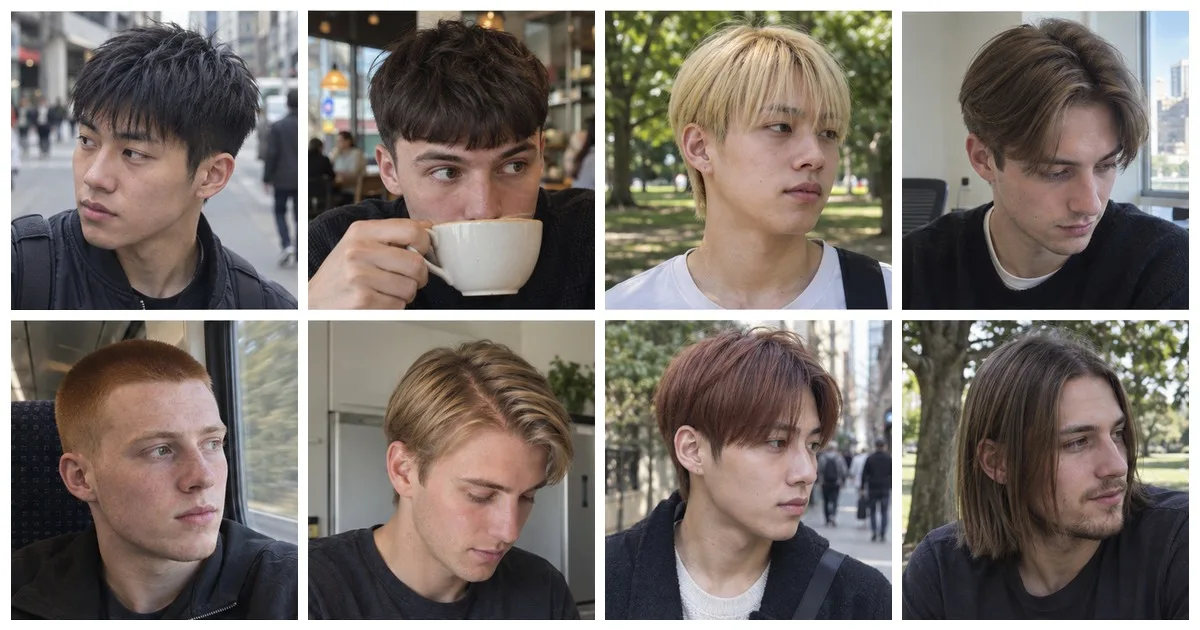
1A hair is pin-straight with no bend from root to tip. How to tell it from 1B and 1C, why it goes flat, 14 haircuts that work on it, and how to style it for volume.
Men's Haircuts · 15 min
High and Tight Haircut: 4 Versions and the Head Shape Rule
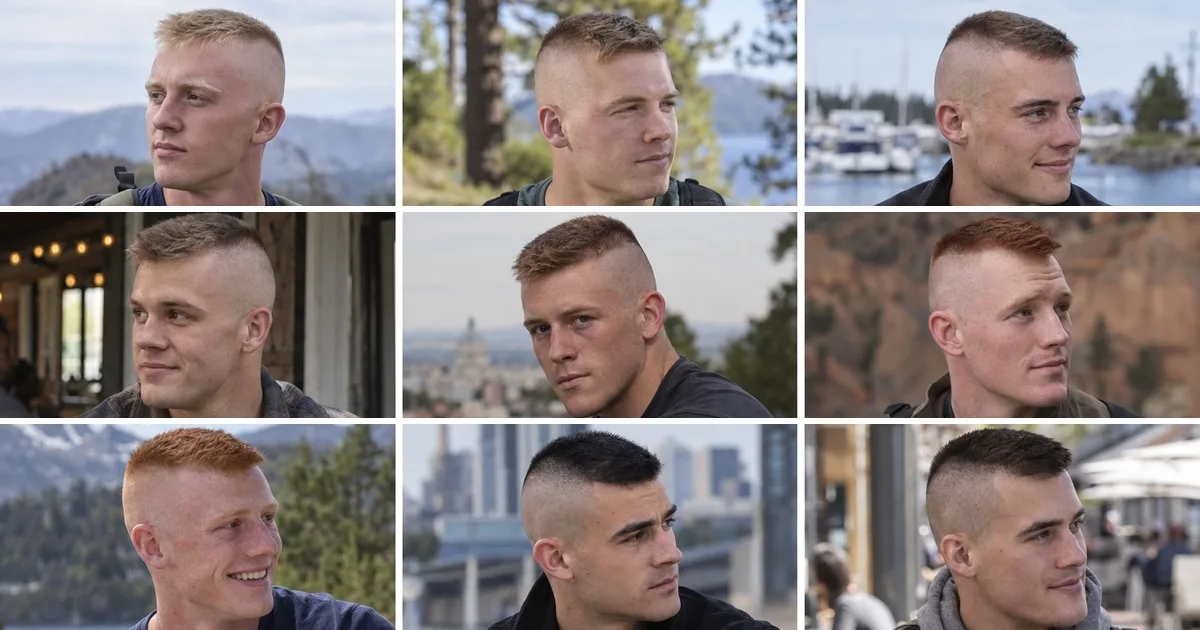
A high and tight clips the sides almost to skin all the way up to the top of the head, so it shows your skull shape more than your face. The 4 versions, 14 photos, what to tell your barber, and how long it lasts.