Low Taper Fade Straight Hair: 14 Tops and the Inch That Matters
Oleh Onysko 22 October 2026 16 min read
In this article
A low taper fade works on straight hair better than on almost any other texture, because straight hair shows a clean blend at the sideburn and the nape with no curl to hide mistakes. The catch is not the taper itself. It is the inch of hair just above it, which on straight hair grows outward and turns into puffy wings within two weeks unless the barber thins it.
So the request has two halves: a low taper at the hairline, and sides above the ear cut close enough to lie flat. Below you will find what the cut looks like on straight hair, 14 tops to wear over it, the version for fine, thick and long straight hair, and the exact words to say in the chair.
Say this to your barber
Low taper fade please: taper only the sideburns and the nape, no skin above the edge, and thin out the sides above my ear so they lie flat. Leave the top long.
What is a low taper fade on straight hair?
A low taper fade on straight hair is a cut where only the bottom edge of the hairline is graduated short: the sideburns in front of the ear and the nape at the back. The shortest point is close stubble right at the edge, and the blend rises no higher than about an inch above the top of the ear. Everything above that stays long enough to cover the scalp.
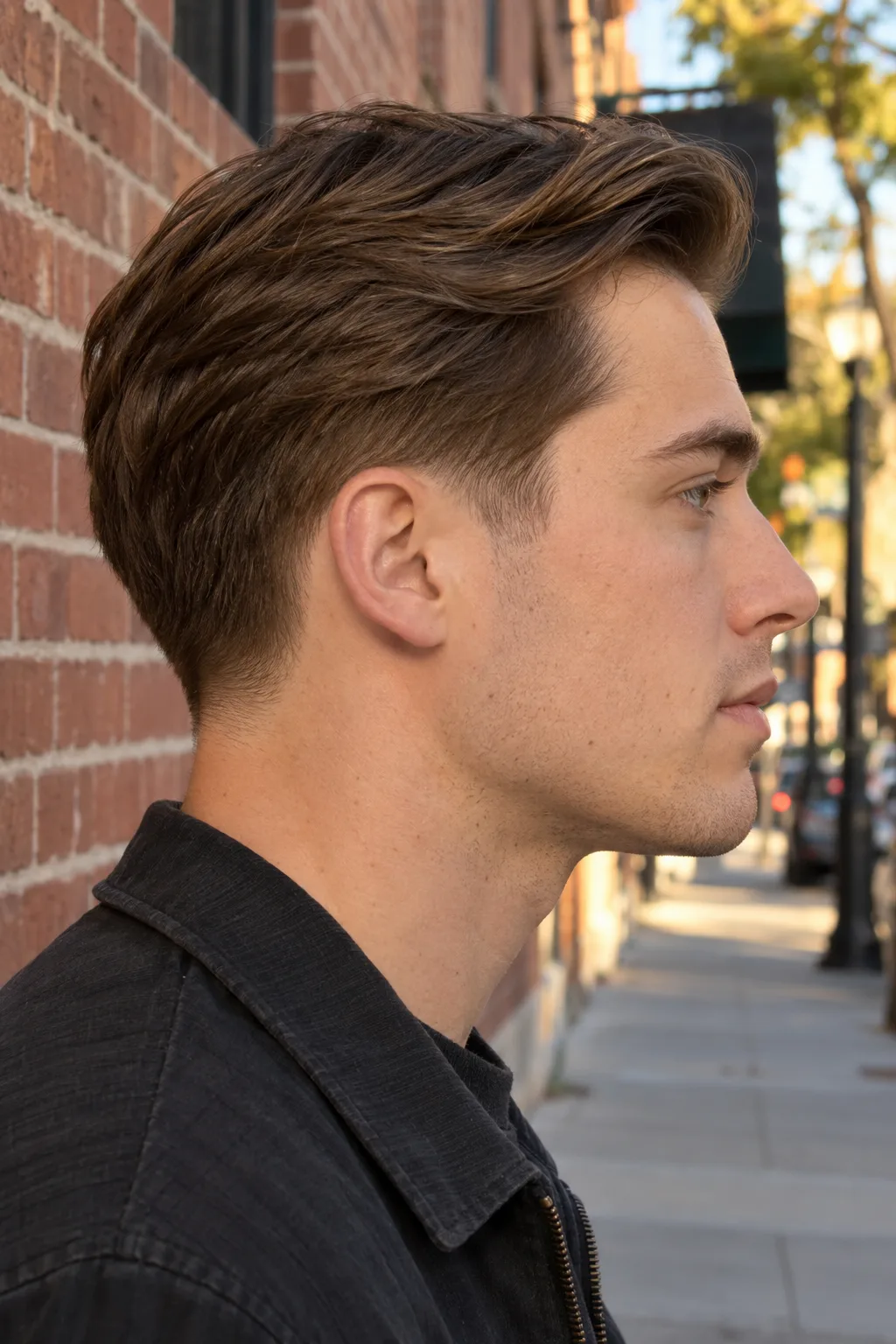
That makes it the quietest cut in the fade family. From the front your head keeps its width. From the side you see a tidy, soft outline instead of a band of skin. It is not a skin fade, it does not climb to the temple like a mid taper fade, and it leaves the hair over the ear alone except for a clean edge.
If you want the general guide to the cut on any hair type, with drop, burst and temple variants, our main low taper fade guide covers it. This page is only about straight hair, because straight hair changes what you need to ask for.
Want to see it first? Try a mullet on your own photo.
Why straight hair changes the cut
Here is the counterintuitive part. On curly or wavy hair, the hard thing about a low taper is the blend: curl hides the graduation, so the barber has to work to make it read at all. On straight hair the blend is easy and shows up crisp on day one. The trouble starts above it.
Straight hair grows out from the head at the angle of the follicle, and on the sides that angle points outward. Wavy hair bends back toward the scalp and curly hair coils into itself. Straight hair does neither. So when a barber tapers only the bottom inch and leaves the sides above the ear long, that hair sticks out sideways and stacks into a shelf. Barbers call it bulk. You will call it the moment your fresh cut started looking like a mushroom.
| Hair type | What the low taper does | What goes wrong | What to ask for |
|---|---|---|---|
| Straight | Shows a sharp, clean blend | Sides above the ear puff out into wings | Thin or scissor-cut the sides so they lie flat |
| Wavy | Blend reads softly | Waves frizz over the taper line | Keep the taper a touch longer |
| Curly | Blend is hard to see | Curl hides an uneven fade | Ask for a taper that goes slightly shorter |
| Coily | Shape comes from the edge | Line-up does the work | Pair it with a sharp line-up |
That table is the whole argument. With straight hair, a perfect low taper and a careless inch above it gives you a cut that looks great for three days. Getting the inch right is what gives you three good weeks. If straight hair is your thing in general, our guide to haircuts for men with straight hair goes through the other cuts that suit it.
Low taper fade straight hair styles: 14 tops on the same taper
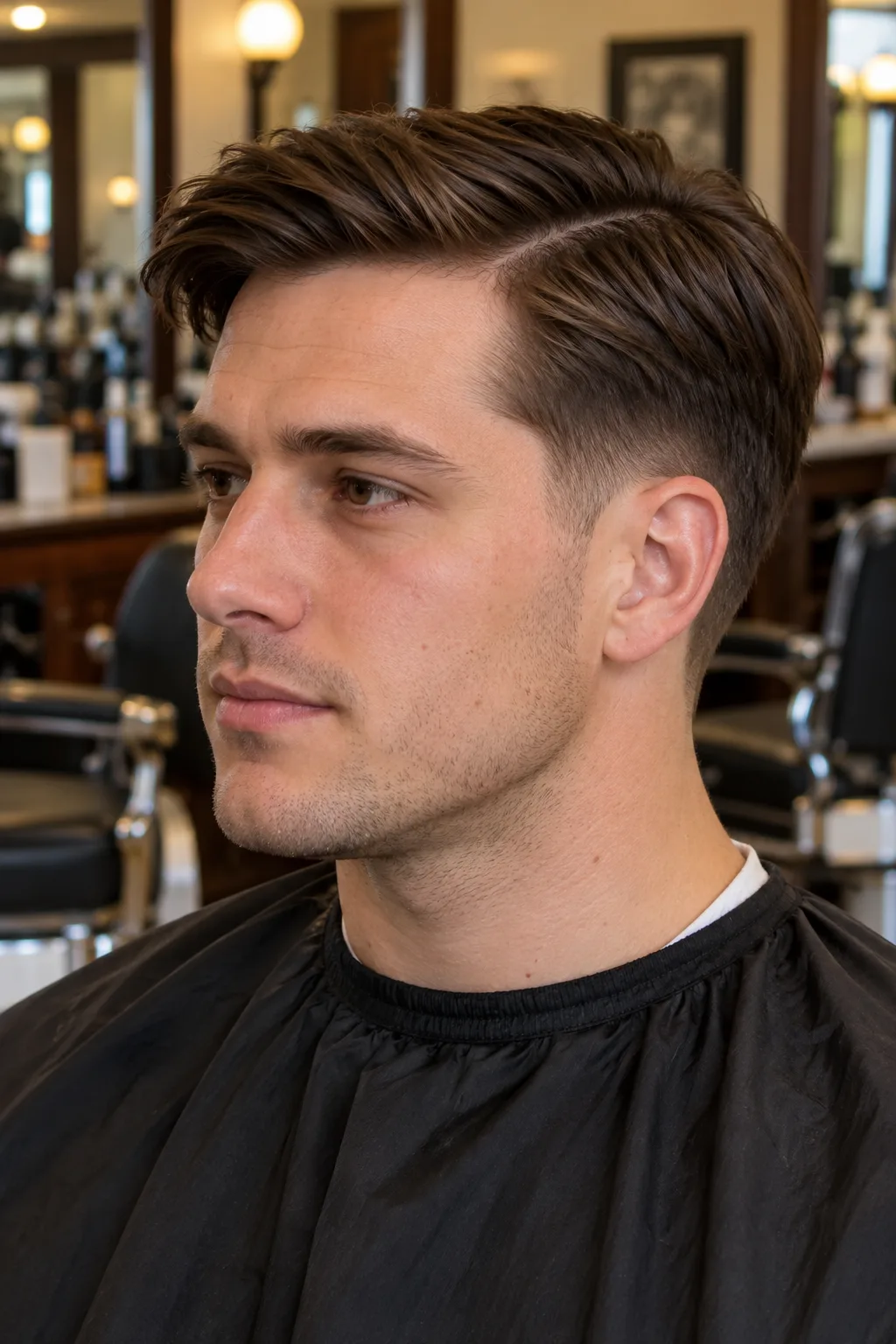
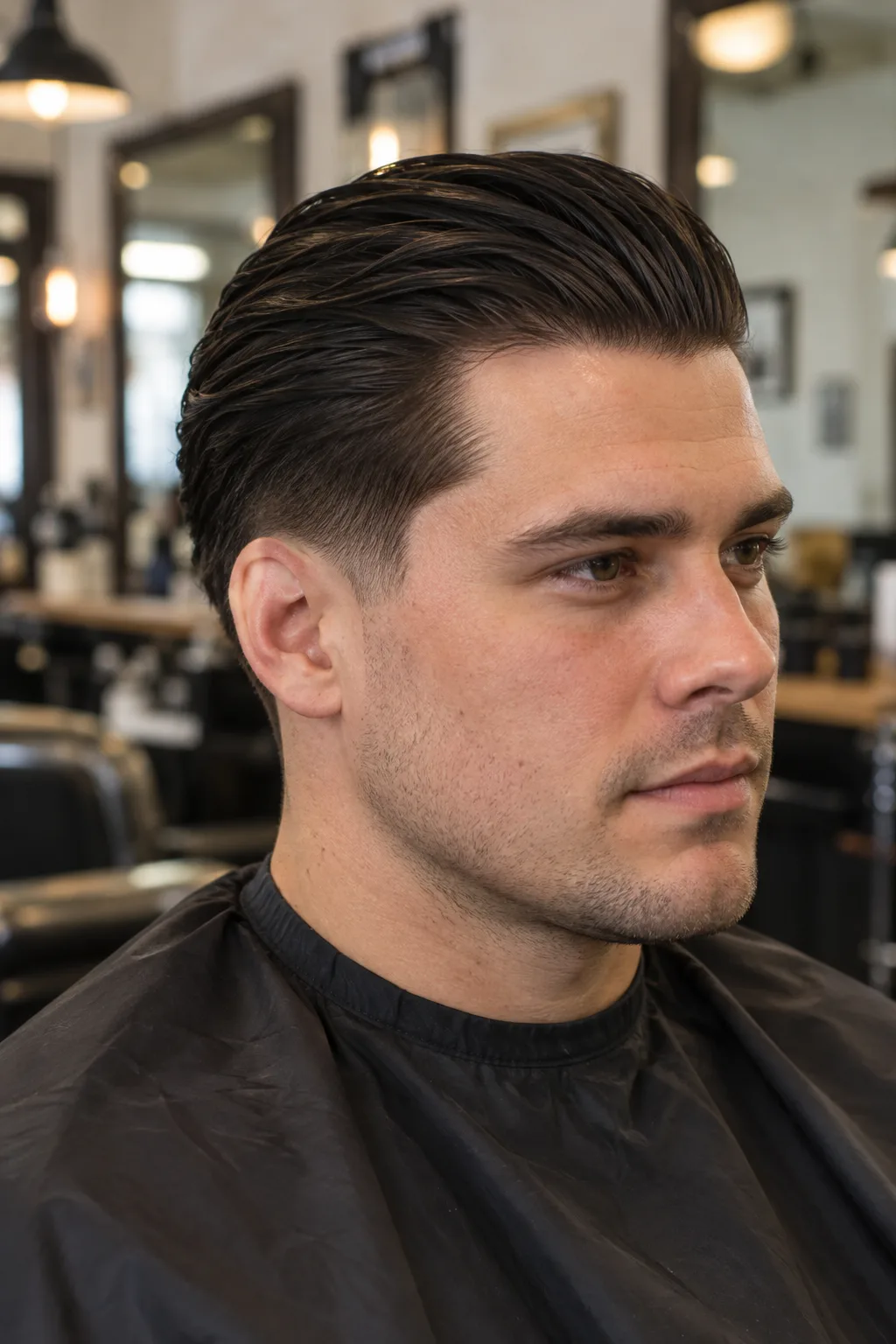
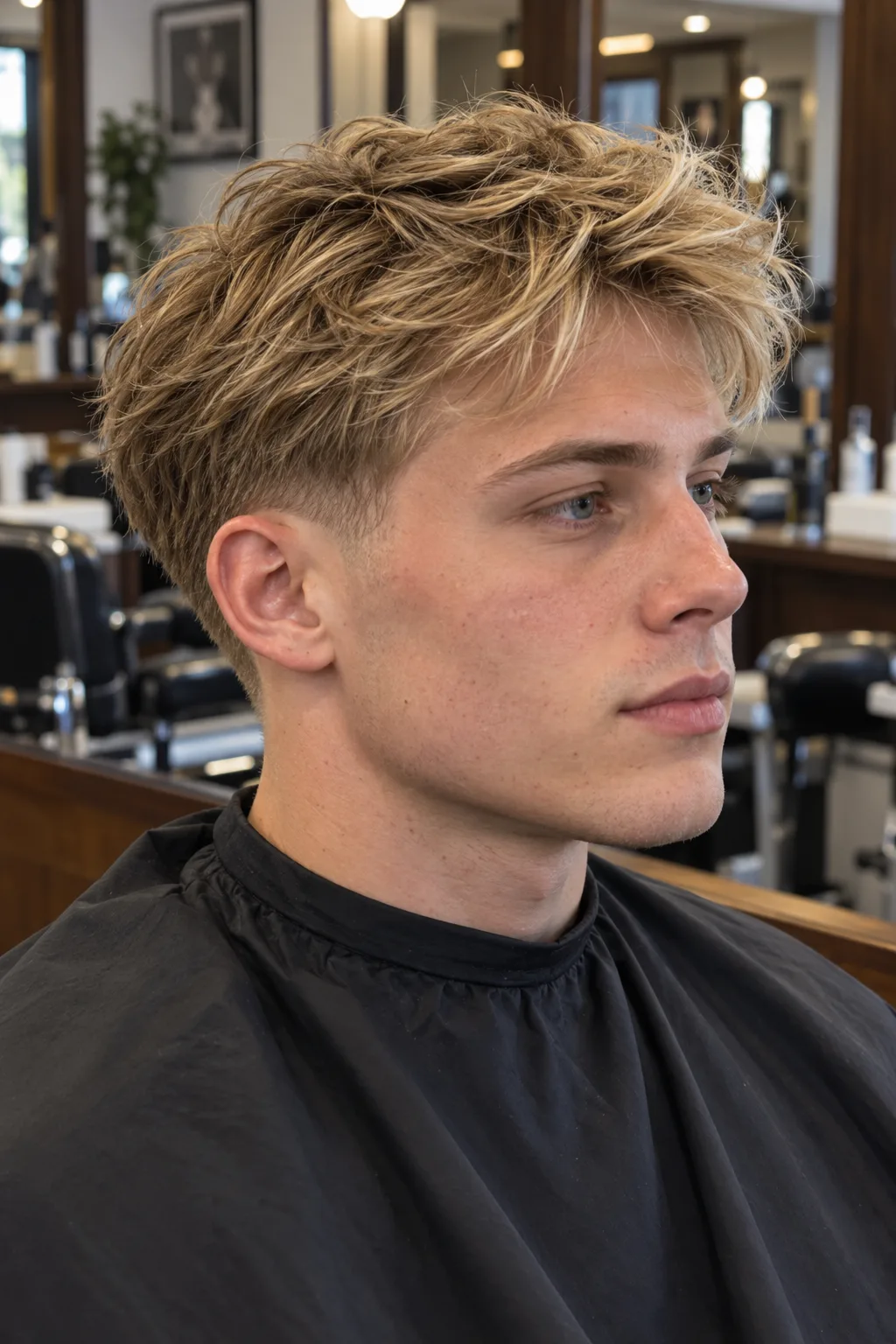
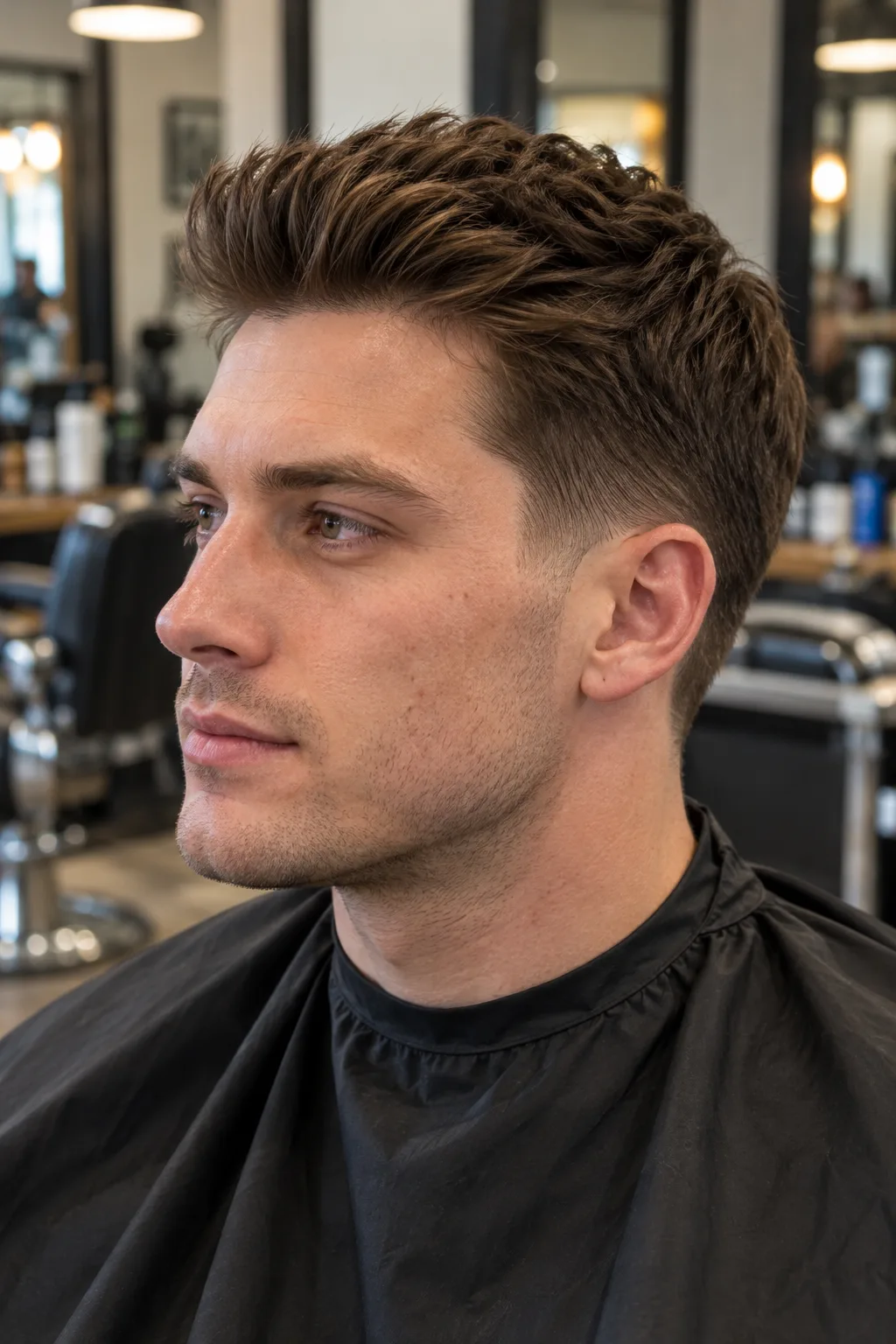
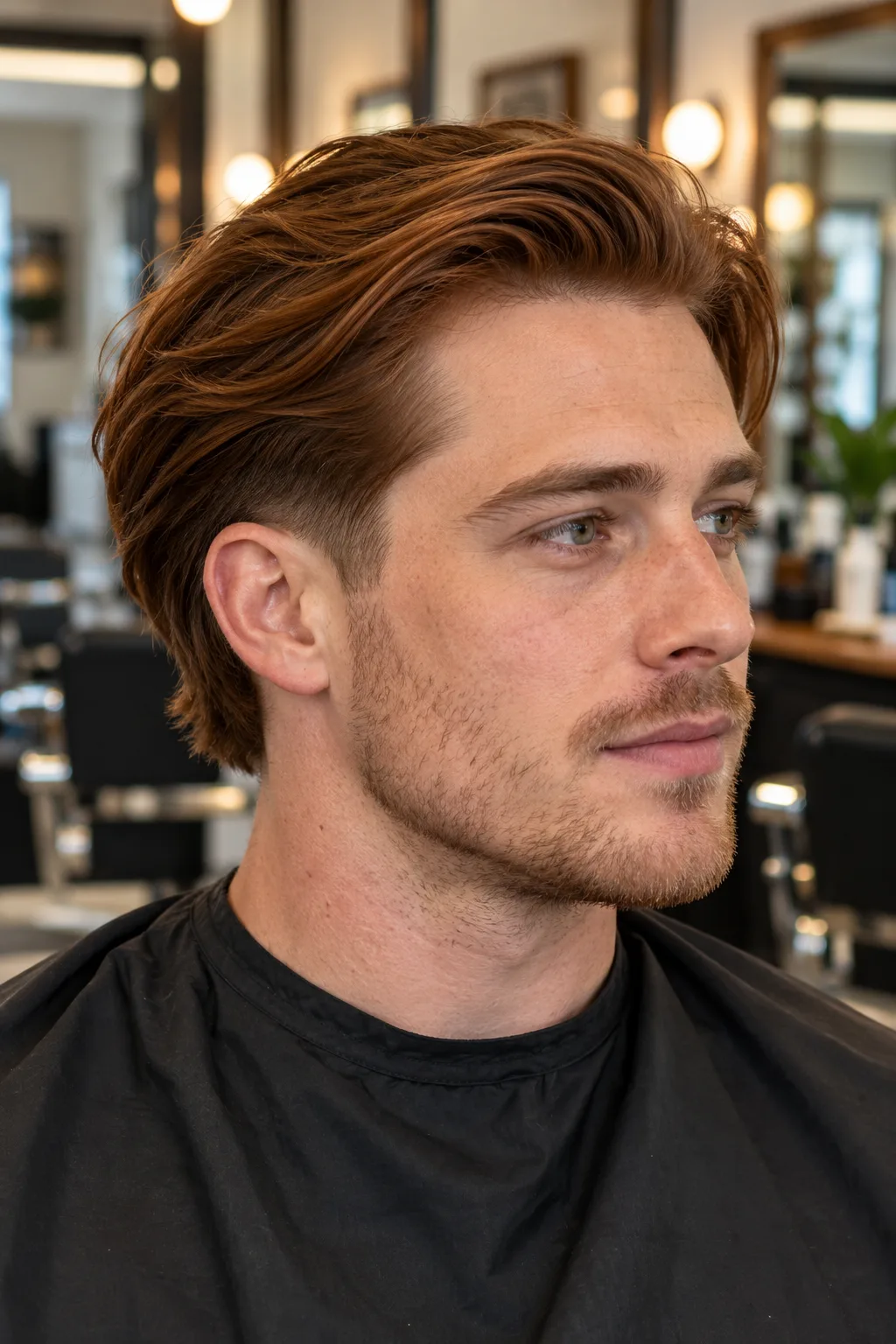
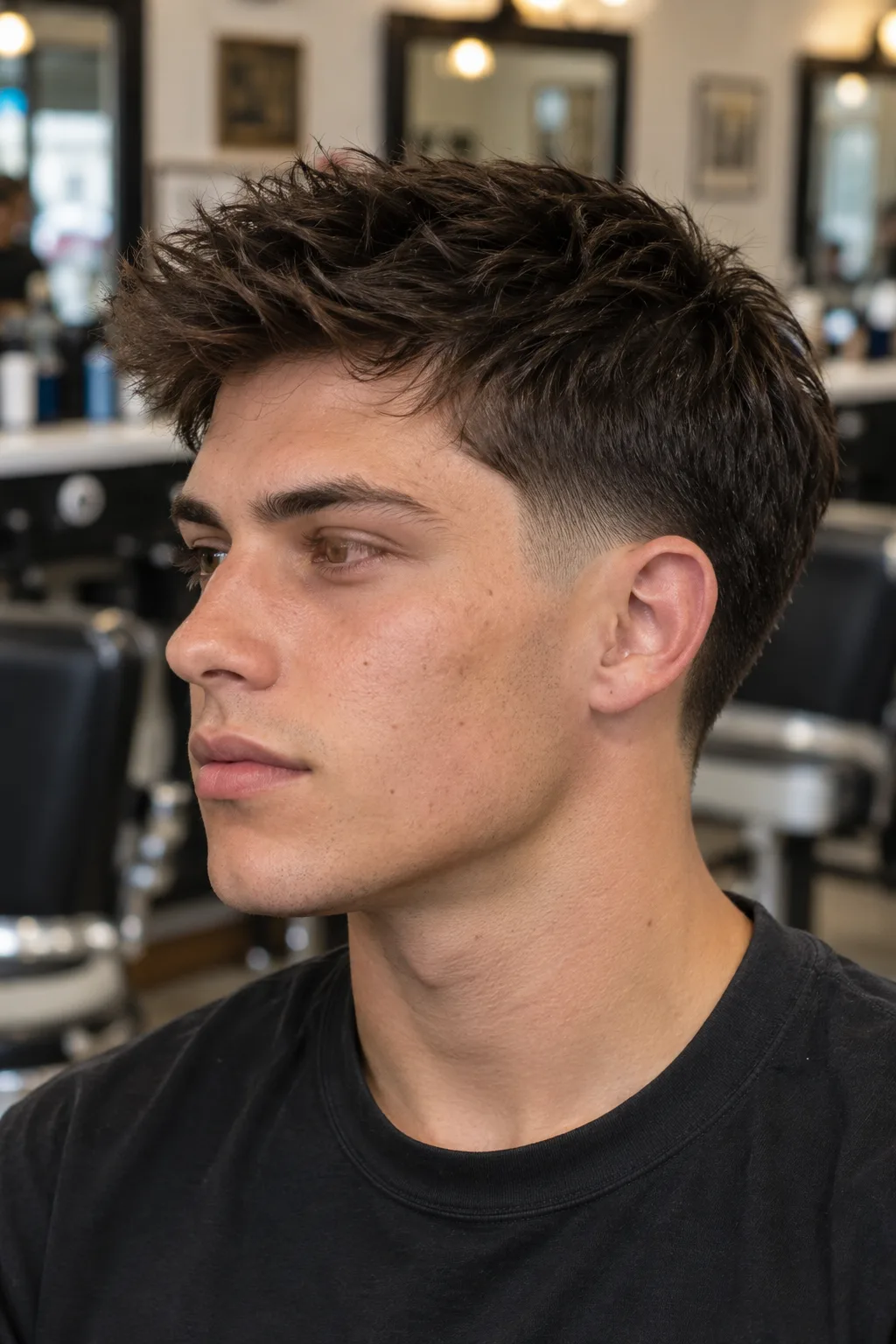
The taper stays identical in every photo below: low, soft, stubble only at the sideburn and nape, sides lying flat. The only thing that changes is how the top is cut and styled. That is the decision you actually have to make, because on straight hair the top sets the whole look.
Gallery14 photos · tap to enlarge
 Try this on me
 Try this on me
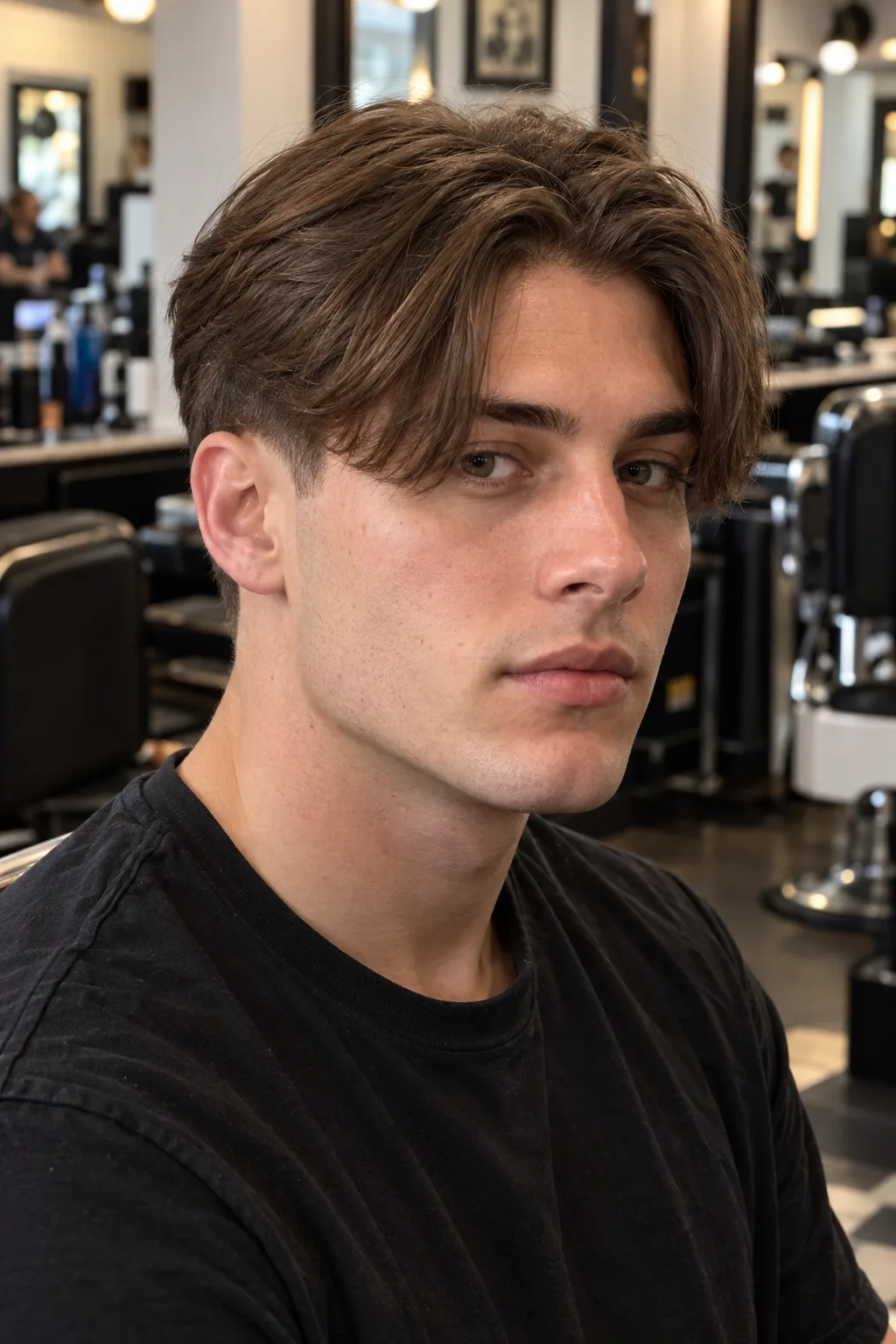 Try this on me
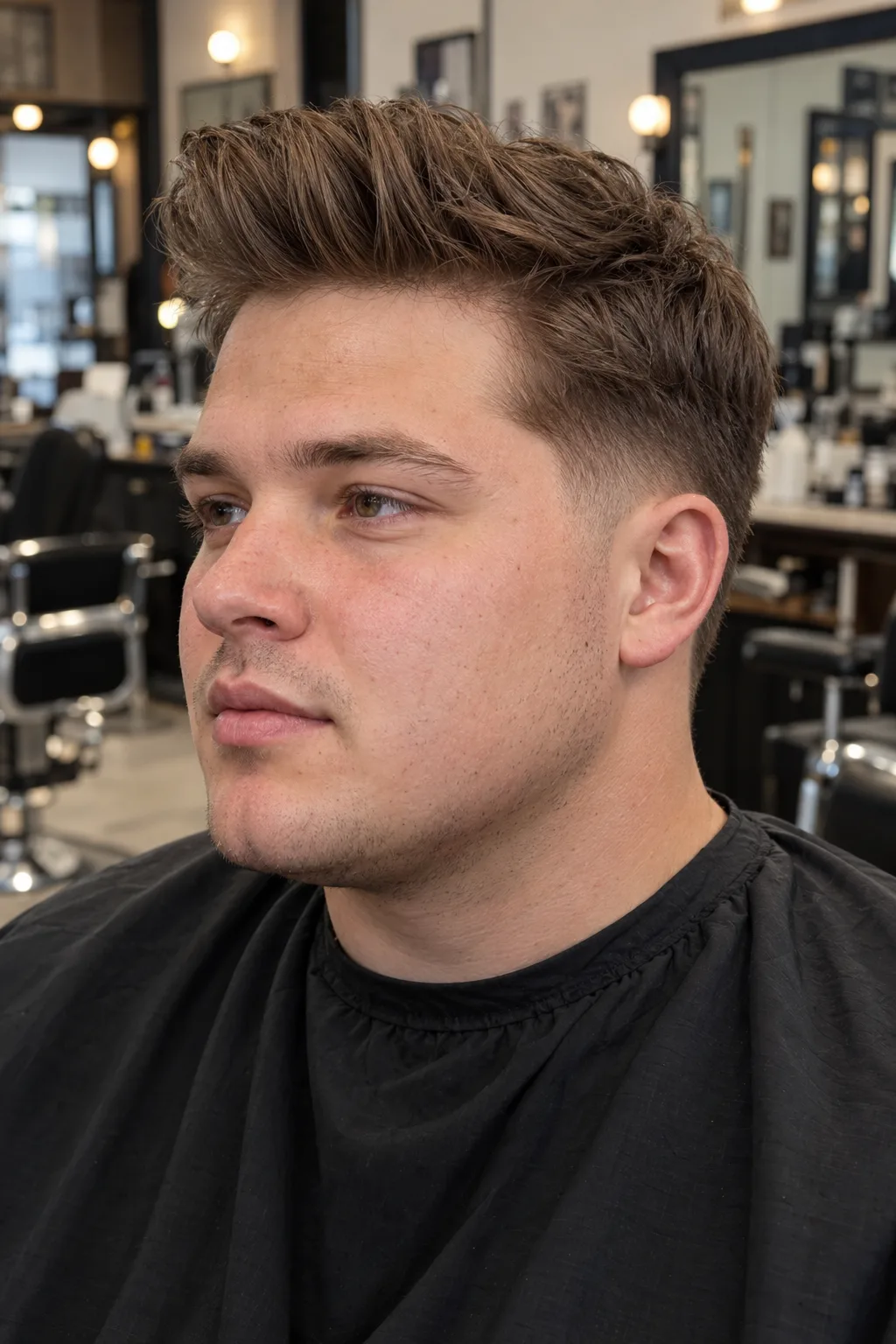 Try this on me
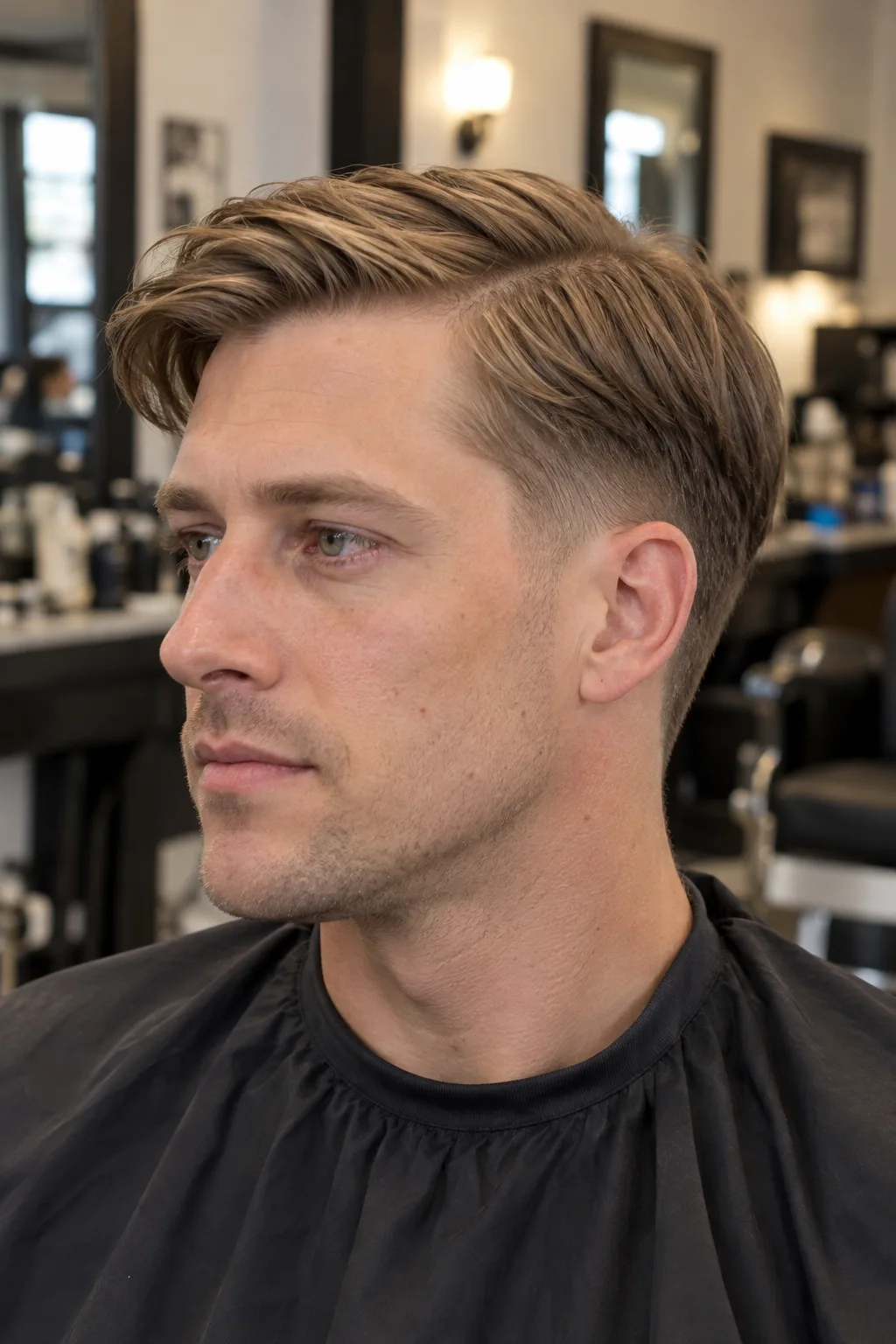 Try this on me
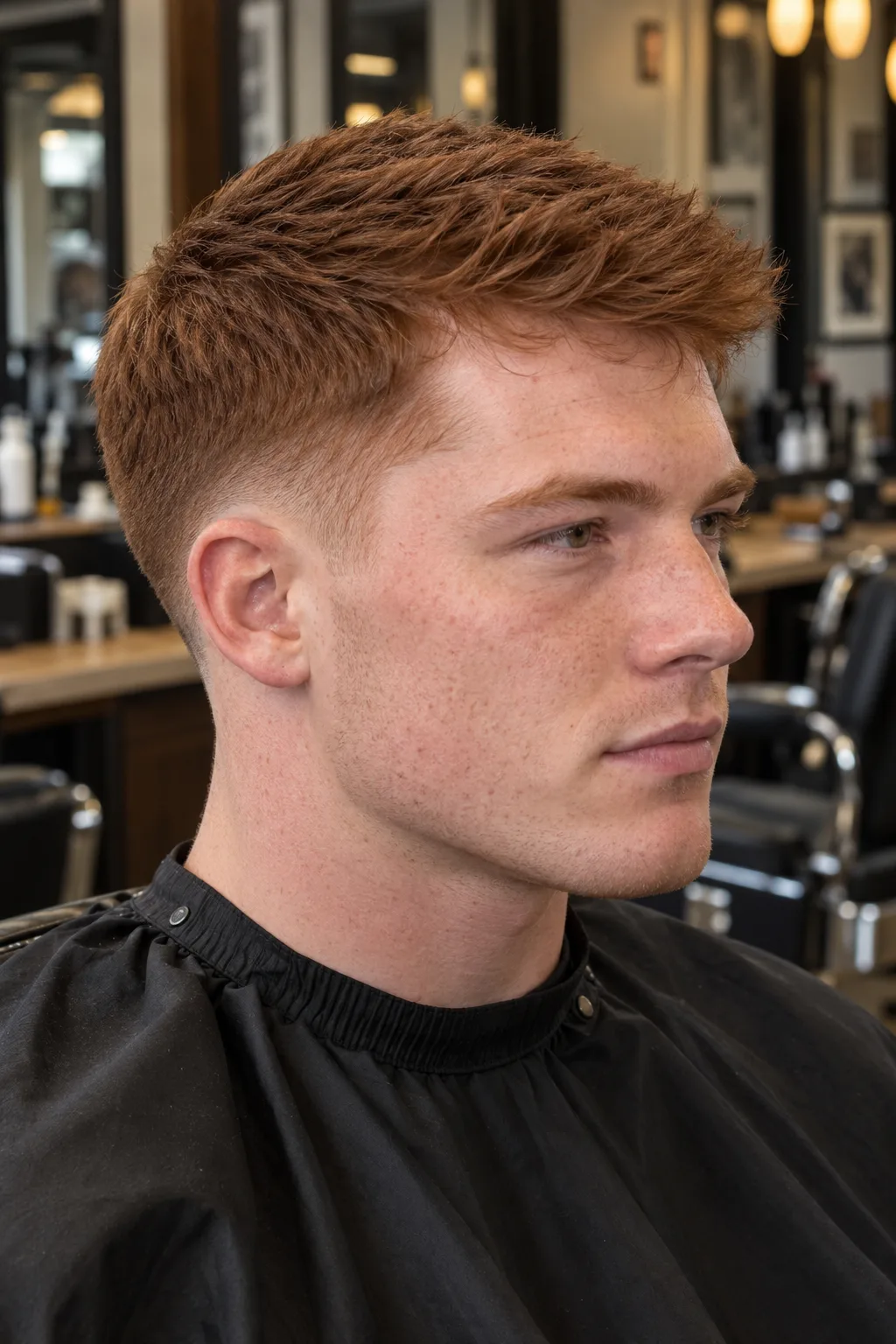 Try this on me
 Try this on me
 Try this on me
 Try this on me
 Try this on me
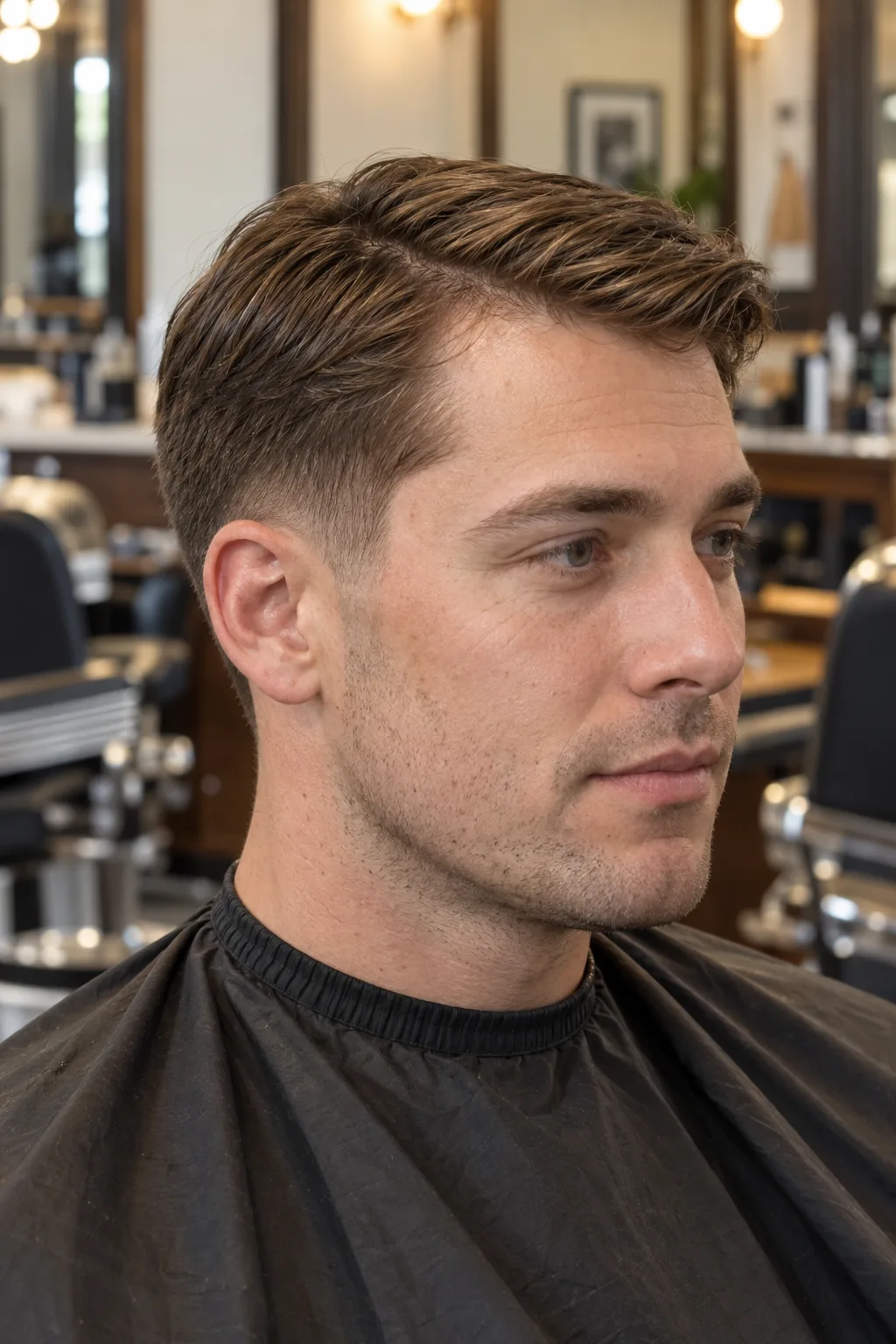 Try this on me
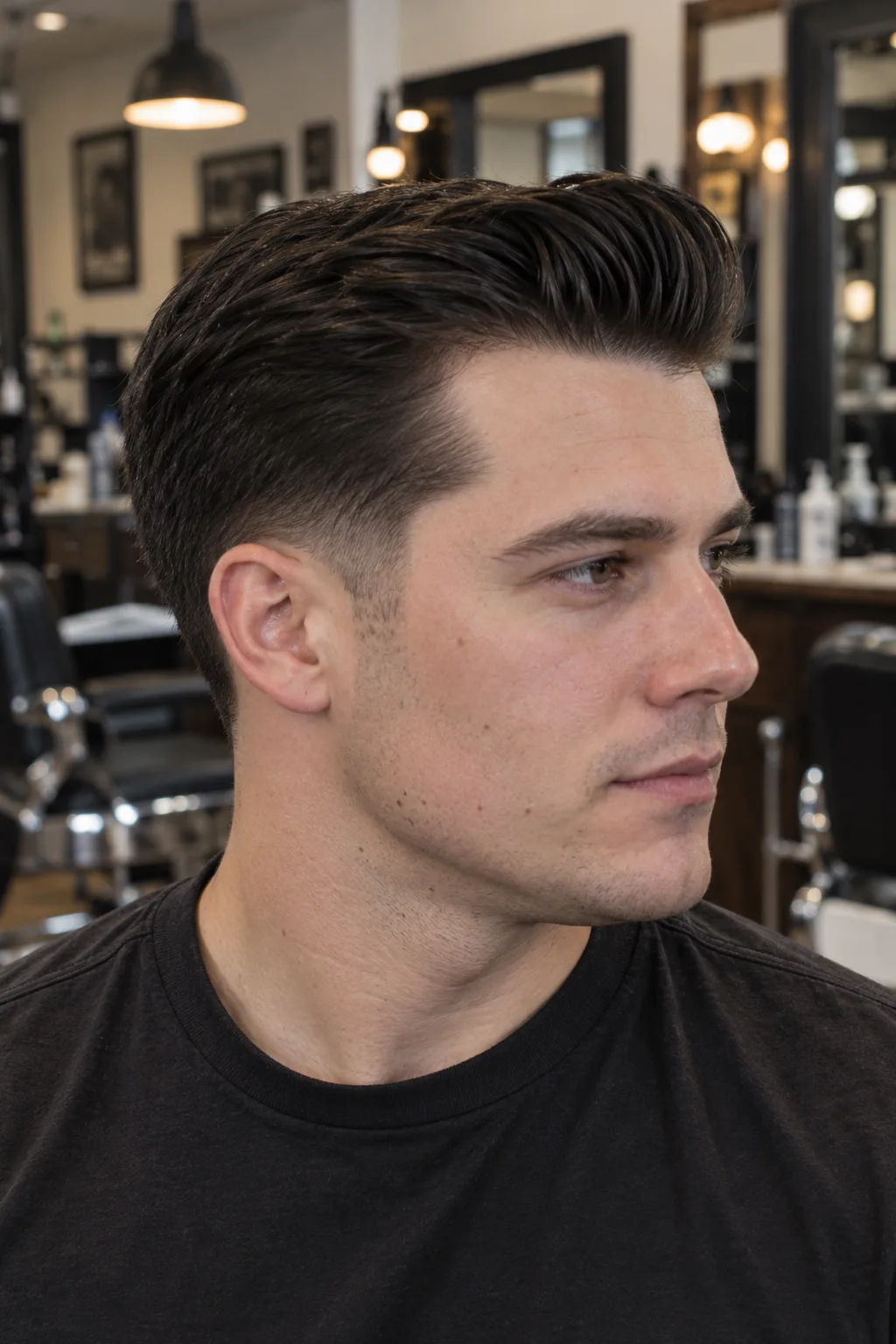 Try this on me
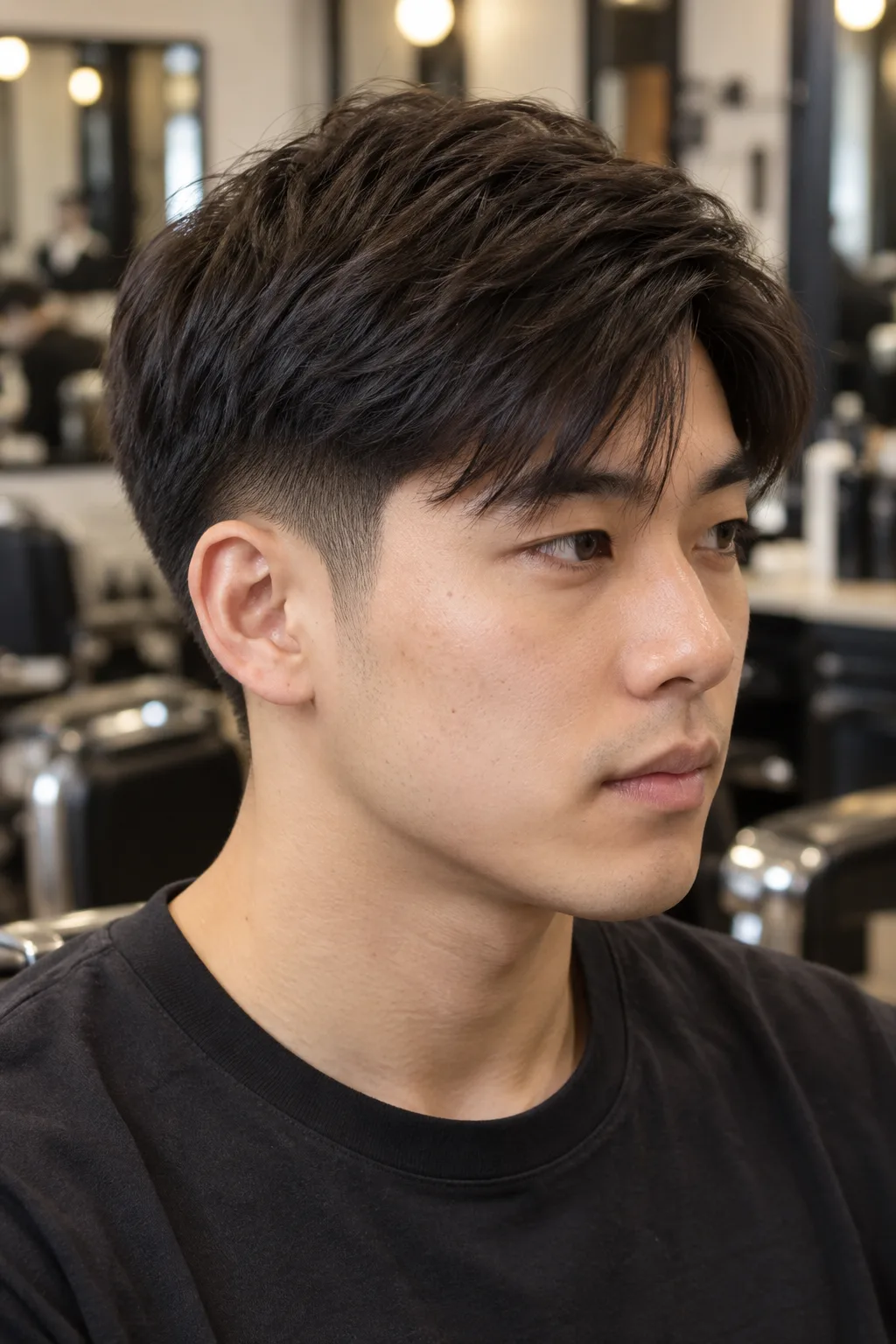 Try this on me
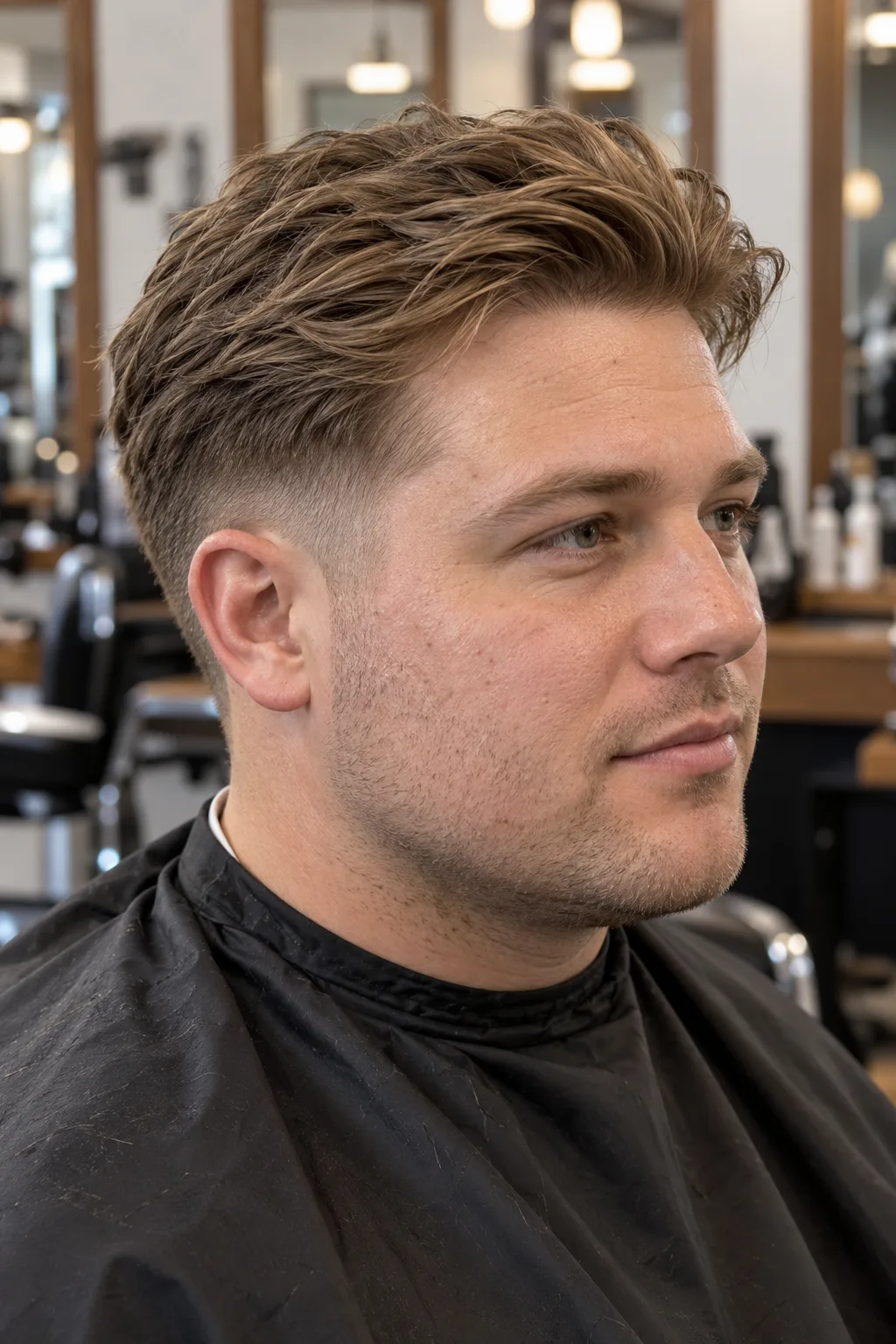 Try this on me
Yours could be here.
Start with one selfie.
One photo, twenty seconds, and you'll know. Free account, no card for your first render.
A pattern to notice: tops with texture cut into them (the messy, brushed up and textured swept back versions) hide regrowth on the sides for longer, because the eye goes to the top. Smooth, shiny styles like the slick back and the pompadour show every millimetre of puff at the sides, so they need a cut every two to three weeks.
Which straight hair type are you?
Straight hair is not one thing. The density and thickness of each strand matter more to this cut than the straightness does. Find your row, then read your section.
| Your straight hair | Best top length | Top styling | Verdict |
|---|---|---|---|
| Thick and dense | 3 to 4 inches | Point-cut texture, matte clay | Great fit, but sides must be thinned |
| Medium | 3 to 5 inches | Side part, quiff, brushed up | Easiest version to get right |
| Fine or thin | 2 to 3 inches | Choppy, matte powder, forward | Good fit; keep the top shorter |
| Long (6 inches plus) | 6 to 7 inches | Swept back, tucked behind ears | Works; the taper keeps it neat |
| Very short (under 2 inches) | 1 to 2 inches | Crew, brushed forward | Fine, but reads close to a crew cut |
Thick straight hair
Thick straight hair is the version where the low taper looks best and goes wrong fastest. The taper itself is easy. The problem is that thick hair packs the most bulk into that inch above the ear, so you need the barber to take weight out with thinning shears or clipper over comb before you leave.
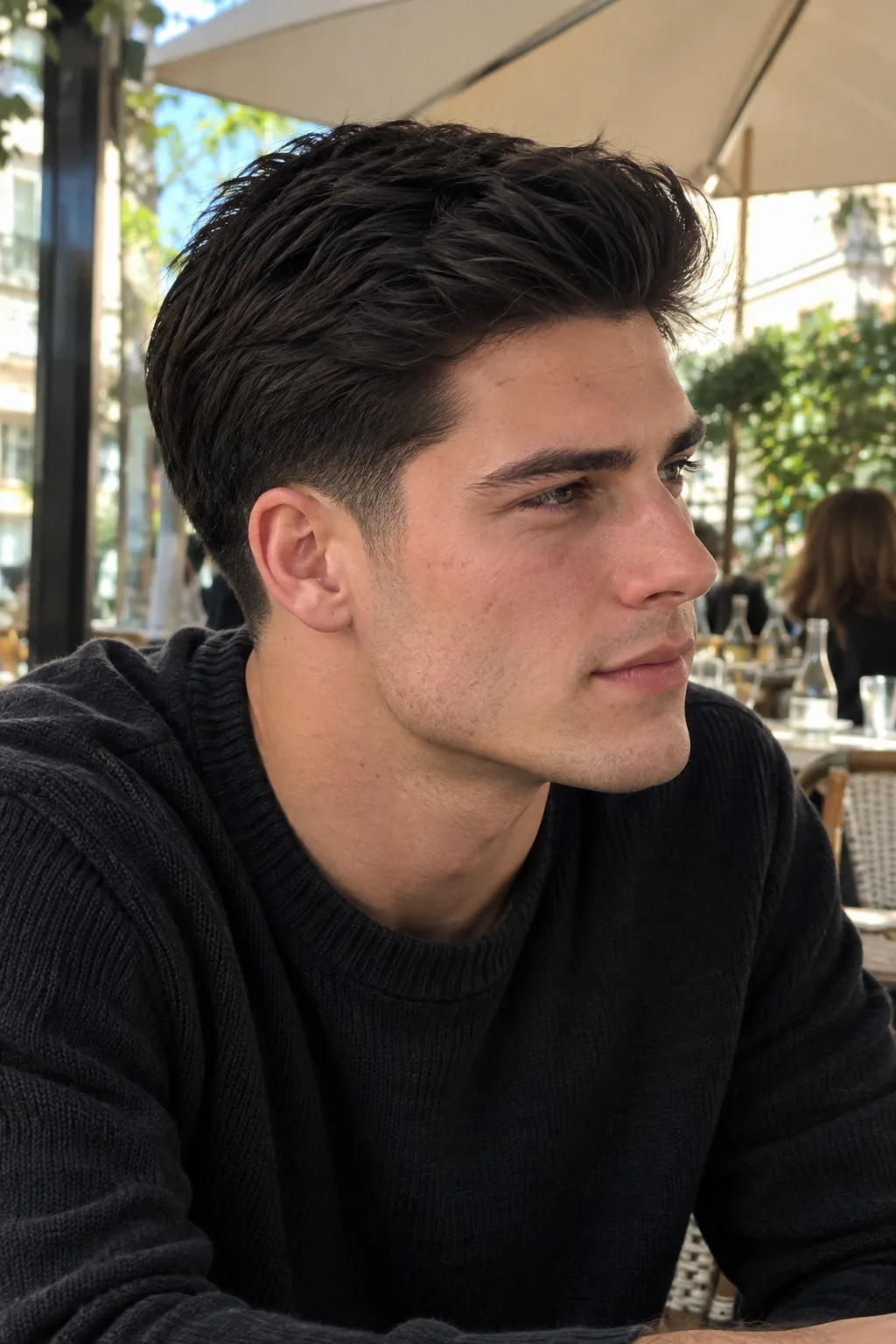
On top, ask for point cutting, which chips into the ends so the hair breaks up instead of sitting as one heavy slab. Style it up and back with a matte clay. Avoid a blunt, heavy fringe: thick straight hair over a soft taper can look like a helmet.
Fine straight hair
Fine straight hair is the opposite problem. You have no bulk to worry about at the sides, but you have limited volume on top, and a long top on fine hair goes flat and separates to show scalp.

Keep the top at 2 to 3 inches, ask for a choppy finish, and style it forward and slightly up with a matte powder or a light sea salt spray. A low taper actually helps fine hair, because keeping the sides fuller makes the top look thicker by comparison. A high fade would do the reverse. If you are not sure whether your strands count as fine, our guide to 1A hair explains how the straightest, finest type behaves.
Long straight hair
Yes, you can wear a low taper with long straight hair, and it is one of the best combinations there is. The taper cleans up the sideburn and the neckline while the length on top falls back past the ears in a flow.

The trick is to let the taper stay very low and very soft, so it reads as a tidy edge rather than a fade. Ask the barber to keep the hair over the ear long enough to tuck. With long hair the bulk problem mostly disappears because the weight pulls the sides down.
Short straight hair
Under about 2 inches on top, the low taper still works, but the cut starts to look like a crew cut with a nice edge. That is not a bad thing. It is the lowest maintenance version on this page. Just know that you lose most of the styling options from the gallery above.
Does a low taper fade suit your face shape?
A low taper suits most face shapes because it barely changes the width of your head. That is also why it does little to fix a face shape: if you want to make a round face look longer, the height on top does the work, not the taper.
| Face shape | Low taper verdict | Top to pair it with |
|---|---|---|
| Oval | Suits it | Anything in the gallery |
| Round | Suits it if the top has height | Quiff, brushed up, pompadour |
| Square | Suits it | Side part, textured swept back |
| Long or oblong | Suits it | Forward styles, avoid tall quiffs |
| Heart | Suits it | Side part or medium length |
Not sure which shape you are? Measure it here, or see the full breakdown in our face shape guide.
Measure it instead of guessing
Both numbers in the same unit — the answer is a ratio, so it does not matter which.
Under 1.15 reads round, 1.15 to 1.5 reads oval, over 1.5 reads long. Oval and long split on the jaw rather than the ratio: an oval tapers toward the chin, a long face runs straight down.
The back: what a good low taper looks like at the nape
Most people check the sides in the mirror and never see the back. On straight hair the nape is where a rushed low taper shows: a hard line, a step, or a neckline cut too high.
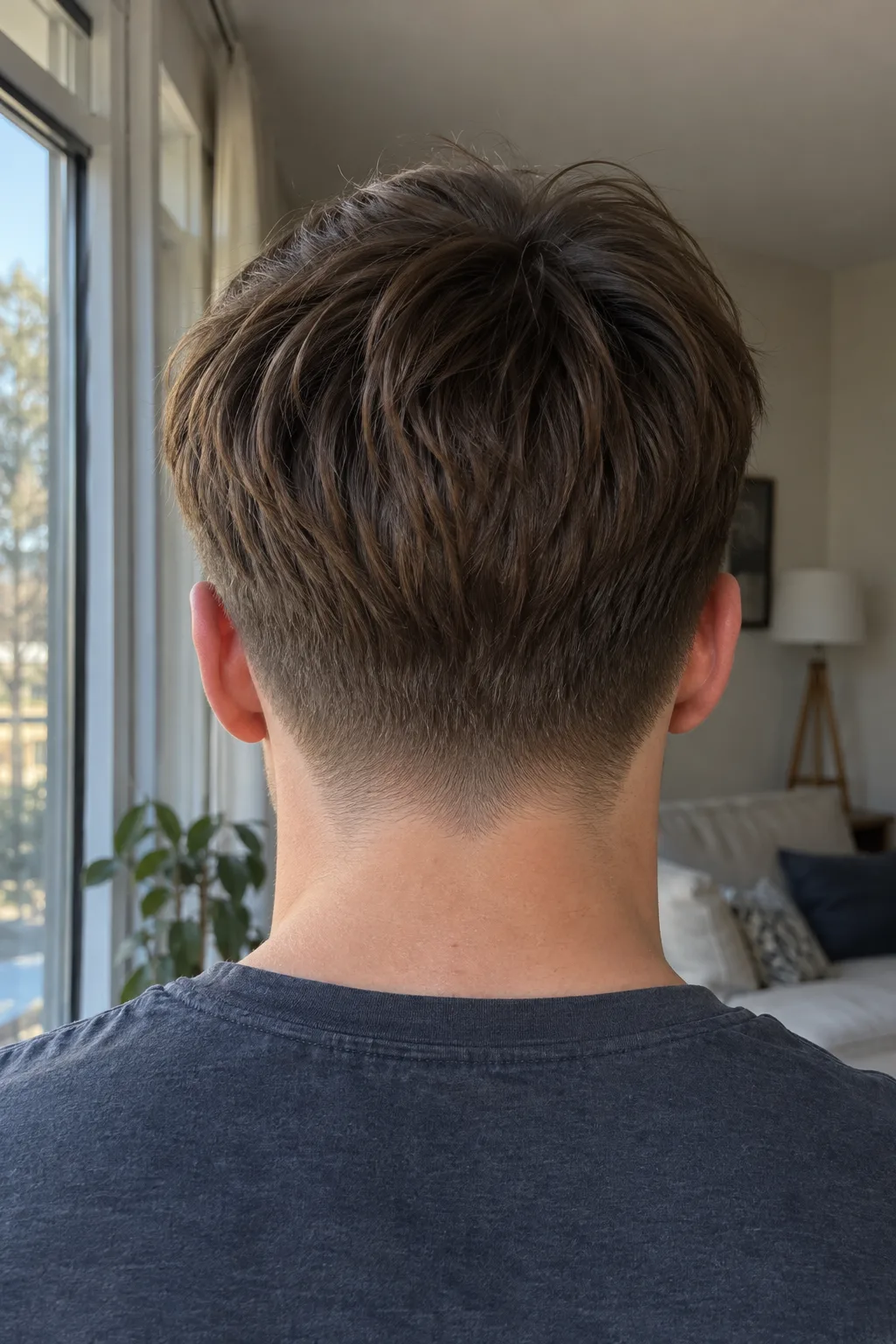
A good one looks like the photo above. Stubble at the very edge, a smooth fade into longer hair within about an inch, and a natural neckline that fades out with no hard edge. Ask for the nape tapered, not blocked. A blocked neckline on straight hair looks sharp for a week and then grows out as a fuzzy shelf.
How to ask for a low taper fade on straight hair
Say the words in the brief at the top of this page, and back them up with these steps. The point is to cover the inch above the taper, which most people forget to mention.
How to ask for a low taper fade on straight hair
- Name the cut and the height
Say "low taper fade" and point to the spot just above the top of your ear. That is the highest the blend should go. Say you want the sideburns and the nape tapered, not the whole side.
- Say no skin above the edge
Ask for the shortest point to be close stubble, usually a guard 0.5 or 1, and only right at the edge. If you say "fade" without this, some barbers will take it to the skin.
- Ask for the sides above the ear to be thinned
This is the straight hair step. Ask the barber to take bulk out of the sides above the ear with thinning shears or clipper over comb, so they lie flat against your head. Say "I don't want wings when it grows."
- Give the top length in inches
Say how much to leave on top, for example "4 inches, take off about half an inch." Ask for point cutting if your hair is thick.
- Show a photo of straight hair
Bring a photo of the cut on straight hair, not curly hair. A low taper on curls looks quite different, and the barber will copy what they see.
- Check the back before the cape comes off
Ask for a hand mirror and look at the nape. You want a soft blend and a rounded neckline, not a hard line.
Mistakes that cost you the cut
Most bad low tapers on straight hair come from one of five errors. Each one costs you between a week of looking off and a full grow out.
| Mistake | What it costs | Fix |
|---|---|---|
| Sides above the ear left long and heavy | Wings within 10 to 14 days | Ask for the sides thinned |
| Taper taken to skin | Reads as a skin fade, 3 weeks of awkward regrowth | Say "stubble at the edge, no skin" |
| Blend starts at the temple | You got a mid taper, not a low | Point to just above the ear |
| Blocked neckline | Fuzzy shelf at the back after a week | Ask for a tapered nape |
| Heavy blunt top on thick hair | Helmet shape over the taper | Ask for point cutting |
The first one is the big one, and it is the reason this article exists. If you take one sentence into the barbershop, take "thin out the sides above my ear so they lie flat."
How long does a low taper fade last on straight hair?
A low taper on straight hair looks sharp for about two weeks and acceptable for three to four. Hair grows around half an inch a month, and at the edge of a taper even a quarter inch is visible because the shortest point started at stubble.
Straight hair shows regrowth faster than curly hair does, because nothing hides the softened blend. Book every three weeks if you wear a smooth style like a side part or slick back, and every four weeks if you wear a textured top. Between cuts, a barber can do a quick edge up of just the sideburns and nape, which is cheaper and resets the clean look.
Can you see a low taper fade on yourself for free?
The free way is what you have already done: look at photos of straight hair like yours, pick a top, and bring the photo to the barber. It works up to a point. The wall it hits is that you are looking at someone else's face and head shape. You cannot see how the taper sits against your own ears and jaw, or whether the top you liked suits your forehead, until the cut is done and the hair is on the floor.
That is the gap our low taper fade try-on fills. Upload a selfie and it renders the cut on your own face. The first look is free and needs no card. After that, more looks, colors and clean downloads are on the Plus plan at $9.99 a week, with a seven-day refund. If you are deciding between this and other fade heights, the fade haircut simulator shows low, mid and high side by side.
A low taper fade is the right default for straight hair. It shows off what straight hair does best, a clean, sharp blend, and it barely changes the shape of your head. The one thing that decides whether it looks good in week three is the inch above the taper. Ask for those sides thinned, pick a textured top if you want to stretch the time between cuts, and check the back before you leave. If you are still unsure which top to pair with it, find what suits your face first, then book.
Frequently asked questions
Yes. A low taper fade works very well on straight hair because the blend shows up clean and sharp. The one thing to ask for is thinning on the sides above the ear, since straight hair grows outward there and puffs out within two weeks if it is left heavy.
For most people with straight hair, a low taper is the best fade because it keeps the sides full and avoids the visible regrowth of a skin fade. If you want more contrast, a mid taper works too. High skin fades on straight hair look sharp but need a cut every two weeks.
A very low taper fade tapers only the sideburn and the nape hairline, with the blend staying below the top of the ear. It is the most subtle version and reads as a clean edge rather than a fade. It suits long straight hair especially well.
Say "low taper fade, taper only the sideburns and nape, stubble at the edge, no skin, and thin out the sides above my ear so they lie flat." Then give the top length in inches and show a photo of the cut on straight hair, not curly hair.
A low taper is fine for a round face, but it does not slim it on its own because it barely changes the width of your head. Pair it with height on top, like a quiff or a brushed up style, to make the face look longer.
A low taper looks fresh for about two weeks and tidy for three to four. On straight hair you see the regrowth sooner than on curly hair, so most people book every three to four weeks or get a quick edge up between full cuts.
A taper is better if you want a subtle cut that grows out softly and works in a conservative job. A fade is better if you want strong contrast and do not mind cutting every two weeks. On straight hair, a taper tends to age better between visits.
The 3 2 1 haircut usually means guard lengths stepping down from 3 to 2 to 1 as you go down the side of the head, creating a gradual fade. For a low taper on straight hair you would only use the shortest steps right at the hairline.
Preview it on your own photo: Men's Hairstyle Try-On.
Share article
About the author

Related posts
Men's Haircuts · 14 min
Low Taper Fade with Textured Fringe: 14 Looks and How to Ask
A low taper fade with a textured fringe is a soft taper at the sideburns and nape with about 3 inches of choppy hair pushed forward. See 14 fringes on the same taper, find the one for your face shape, and copy the exact words for your barber.
Men's Haircuts · 14 min
Textured Crop Haircut: 14 Fades, Who It Suits and What to Ask For
A textured crop is 1.5 to 2 inches of choppy hair pushed forward over faded or tapered sides. See it with 14 side cuts, find the version for your hair type and face shape, and copy the exact words for your barber.
Men's Haircuts · 15 min
8th Guard Buzz Cut: How 1 Inch Looks on 14 Hair Types
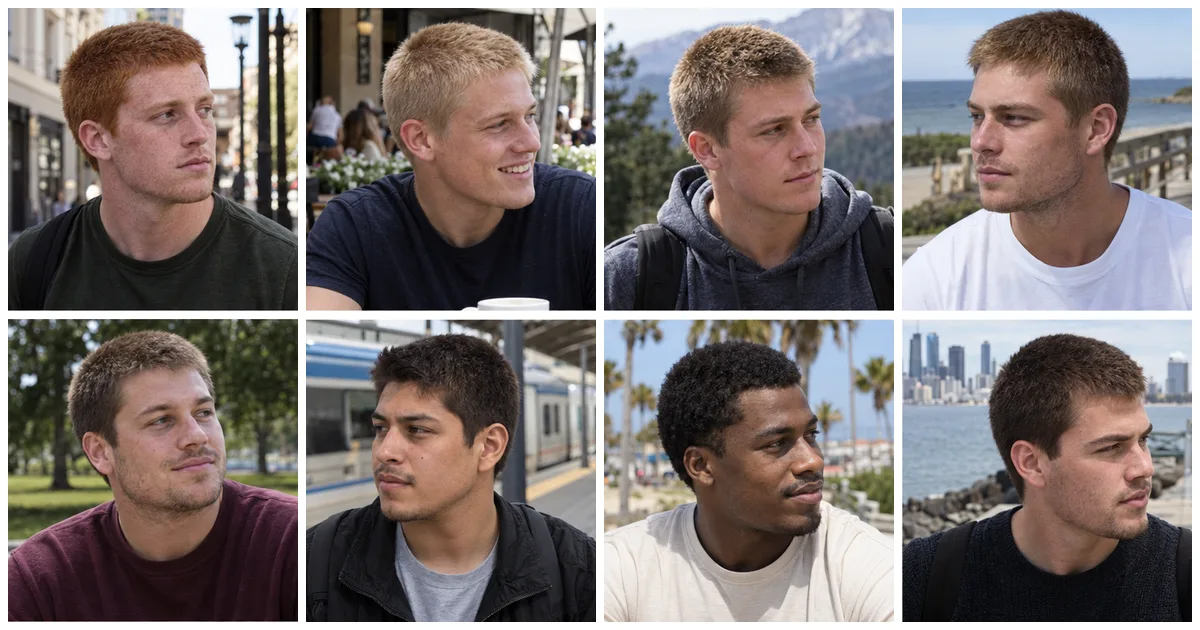
An 8th guard buzz cut leaves one even inch of hair all over, the longest buzz a clipper set gives you. See it on 14 hair types, which faces and textures suit it, how to add a taper, and the exact words for your barber.
Men's Haircuts · 15 min
Best Hairstyle Apps for Men 2026: 10 Apps, Real Prices
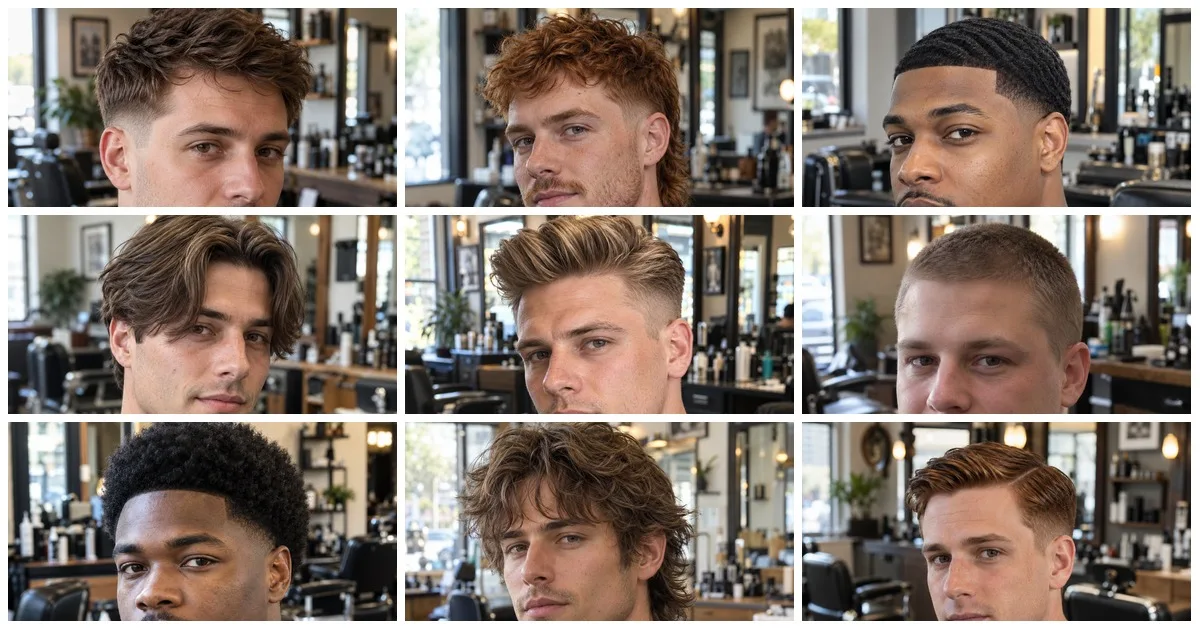
The best hairstyle app for men edits your own photo and knows a low taper from a mid fade. Ten apps compared with prices and free tiers checked October 2026, plus 14 men's cuts worth testing first.
Men's Haircuts · 13 min
How to See a Haircut on Your Face Before the Barber (Free)
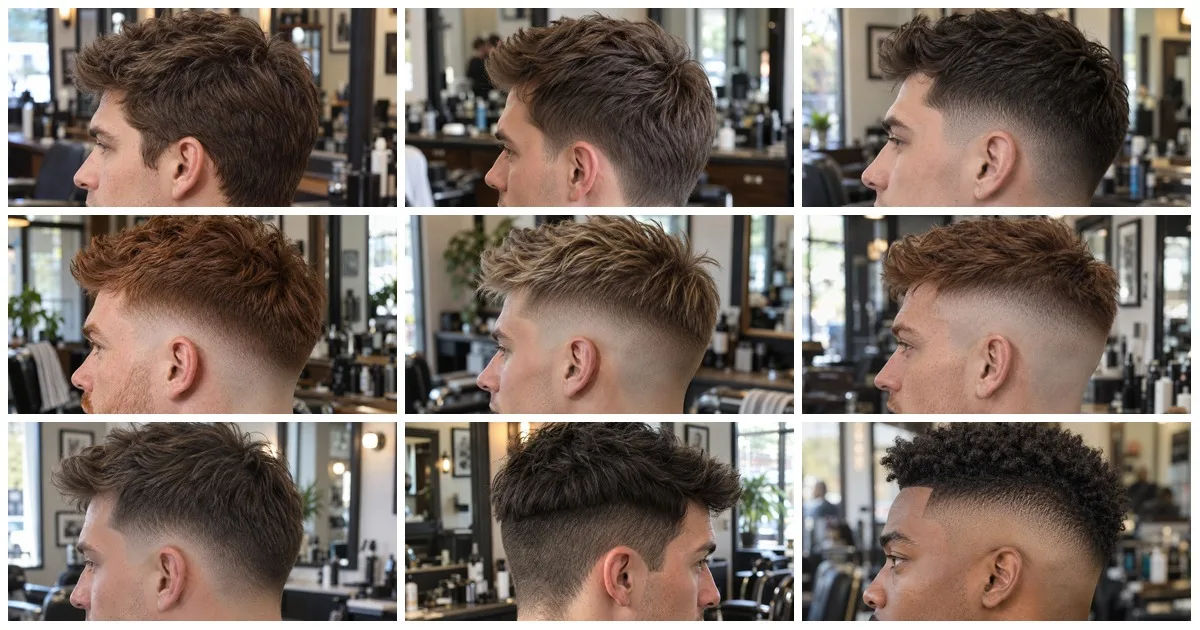
Free ways to see a haircut on your face before the barber, from no-account AI editors to your barber's own portfolio. Which apps are really free, and why the sides matter more than the selfie.
Men's Haircuts · 13 min
Shaggy Haircut for Men: 14 Looks and How to Ask for One
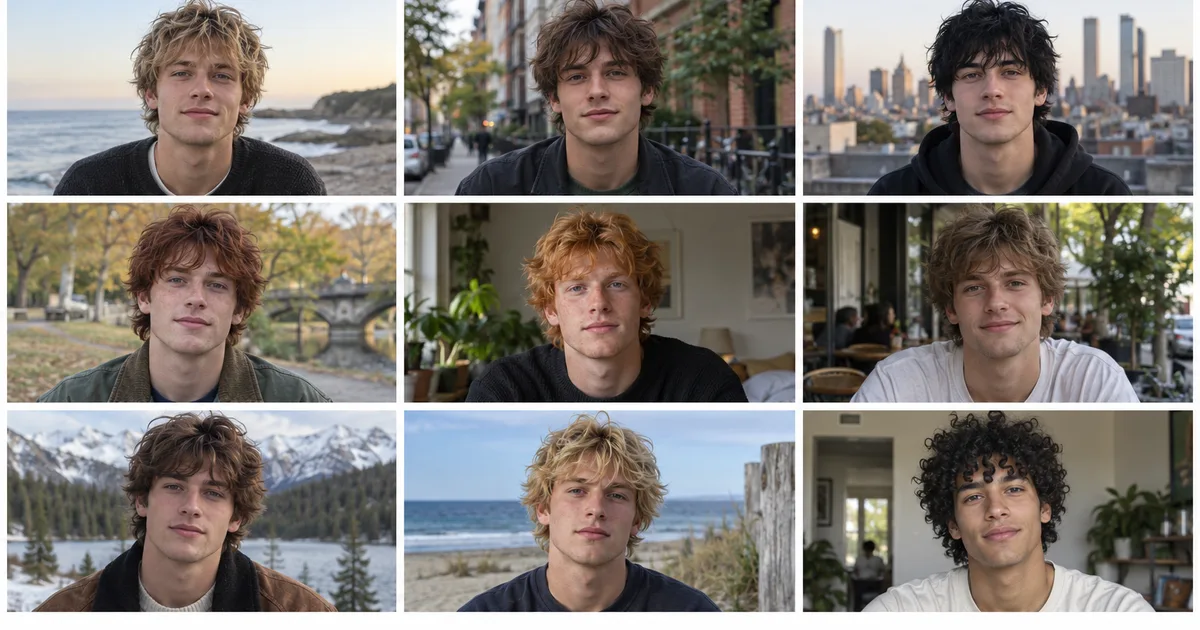
A men's shag is choppy layers, a broken fringe and no clippers. See it on 14 men, find the version that suits your hair type and face shape, and get the exact words for your barber.