Thick Hair: What It Is, the Cuts That Work and How to Manage It
Oleh Onysko 20 October 2026 13 min read

In this article
Thick hair means you have a lot of hair, coarse individual strands, or both, so your hair carries more bulk and weight than average. The good news is that it holds shape, color and styles well. The catch is that the wrong cut turns that weight into a triangle.
Here is the part most guides skip: thick hair is a weight problem before it is a frizz problem. Remove weight in the right places, mostly from the inside and the bottom third, and most of the daily fight goes away. Thin it out everywhere and you trade bulk for puffy, fuzzy ends.
What is thick hair?
"Thick" gets used for three different things, and knowing which one you have changes which cut works.
- Density is how many strands grow per square inch of scalp. High density means you struggle to see your scalp at the part.
- Strand width is how wide each single hair is. Coarse strands feel like thread between your fingers. Fine strands are hard to feel at all.
- Volume is how much space the hair takes up once styled. Texture, layers and humidity all change it.
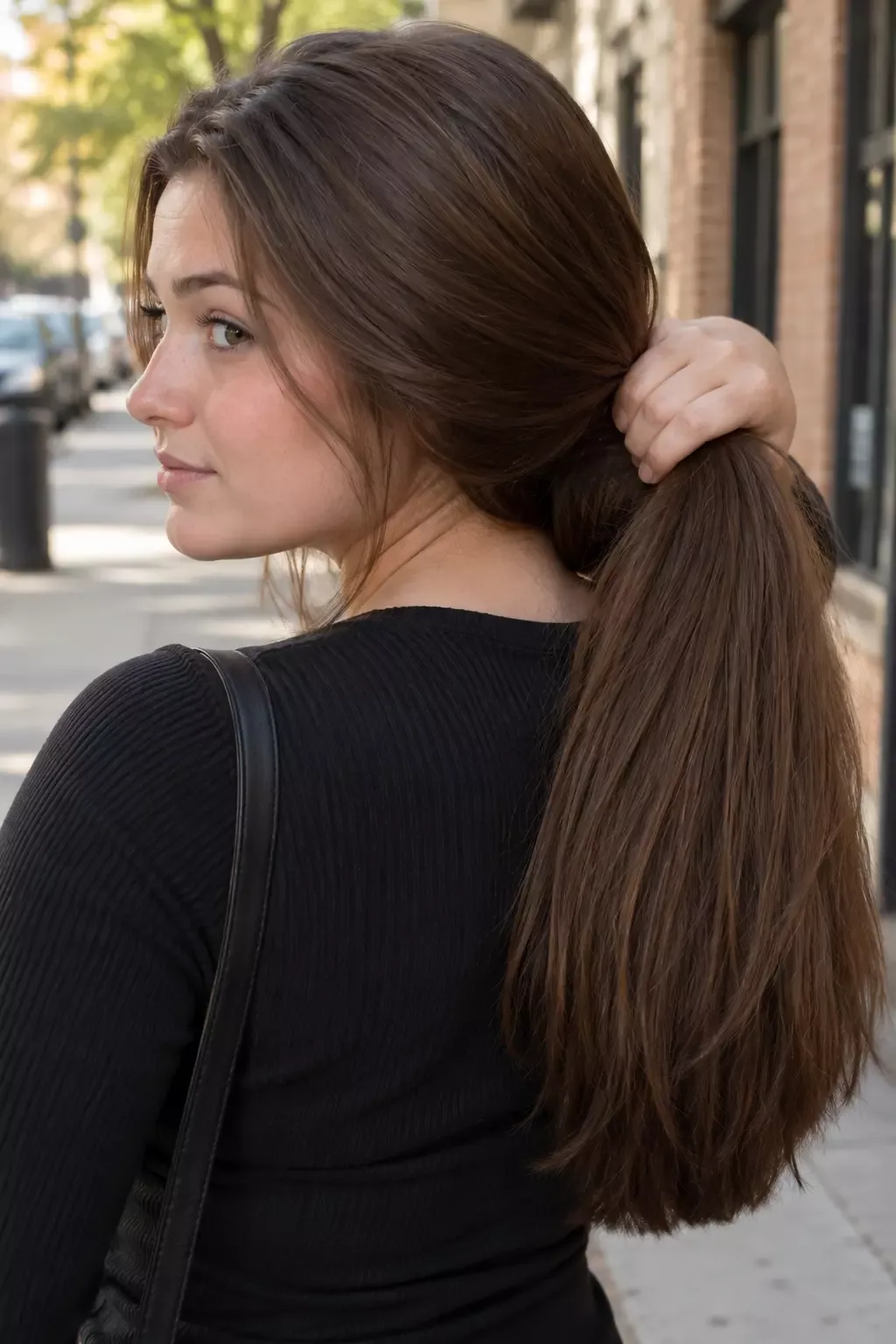
Most people who say "my hair is so thick" have high density, and many also have medium or coarse strands. You can have fine strands at high density too: that hair looks full but tangles easily and goes flat fast. If you are working out your curl pattern as well, our 2B hair guide covers how wave pattern and density interact.
Want to see it first? See a wolf cut on your face with the wolf cut try-on.
Thick hair vs dense hair vs coarse hair
They overlap, but they are not the same thing, and stylists use them differently.
| Term | What it measures | How to check | What it means for your cut |
|---|---|---|---|
| Dense | Strands per square inch | Part your hair; little scalp shows | Needs weight removed from inside, not just the ends |
| Coarse | Width of each strand | Roll one hair between fingers; you can feel it clearly | Holds shape, resists curling irons, can look wiry when dry |
| Thick (everyday use) | Overall bulk | Ponytail feels heavy and wide | Usually both of the above |
| Fine but dense | Thin strands, lots of them | Full ponytail, but strands feel like silk | Avoid aggressive thinning; it shows fast |
The quickest home test is the ponytail. Pull your dry hair into one ponytail at the crown. If it feels heavy and a standard elastic only wraps around twice, your hair is thick by any stylist's measure.
13 haircuts that work on thick hair
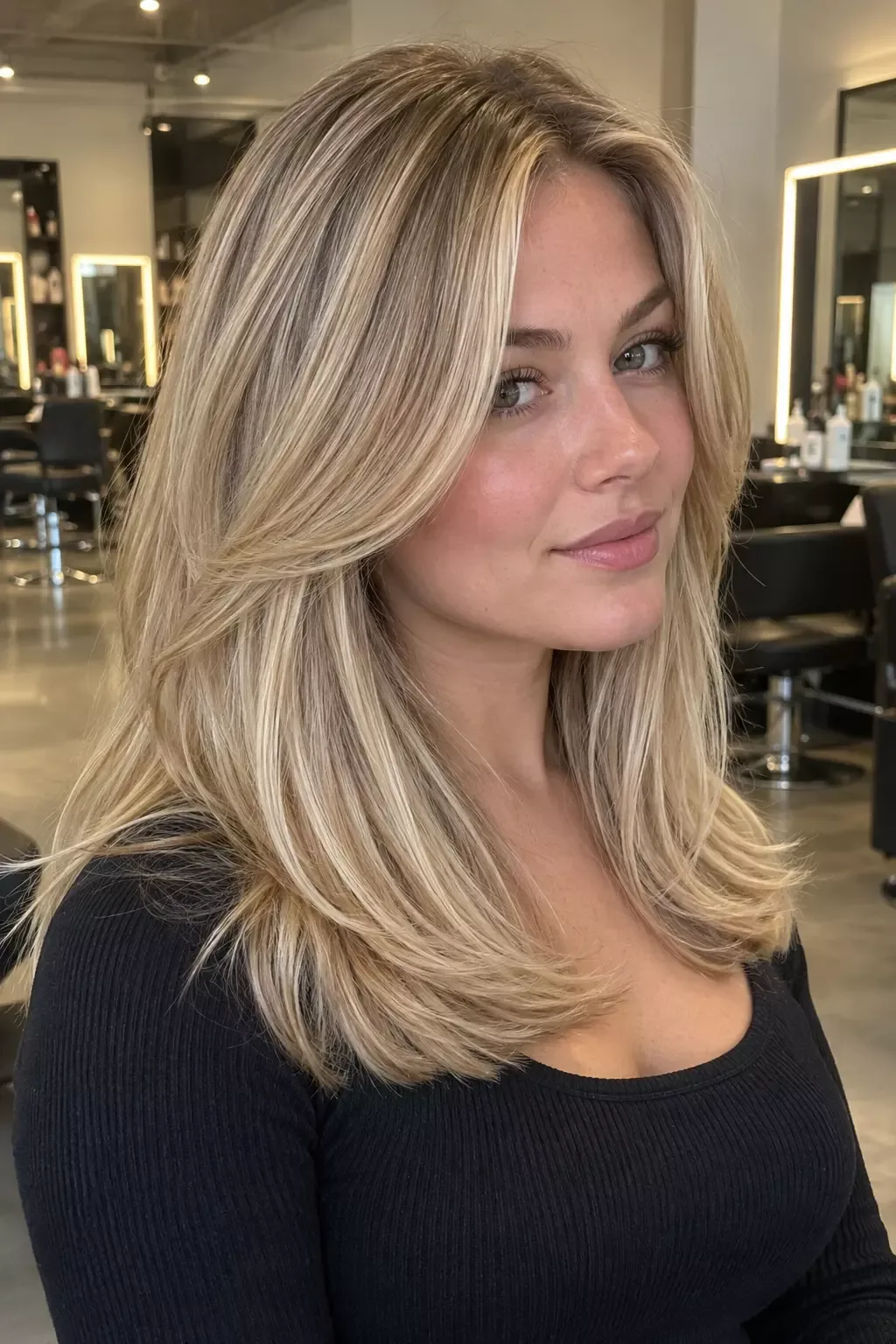
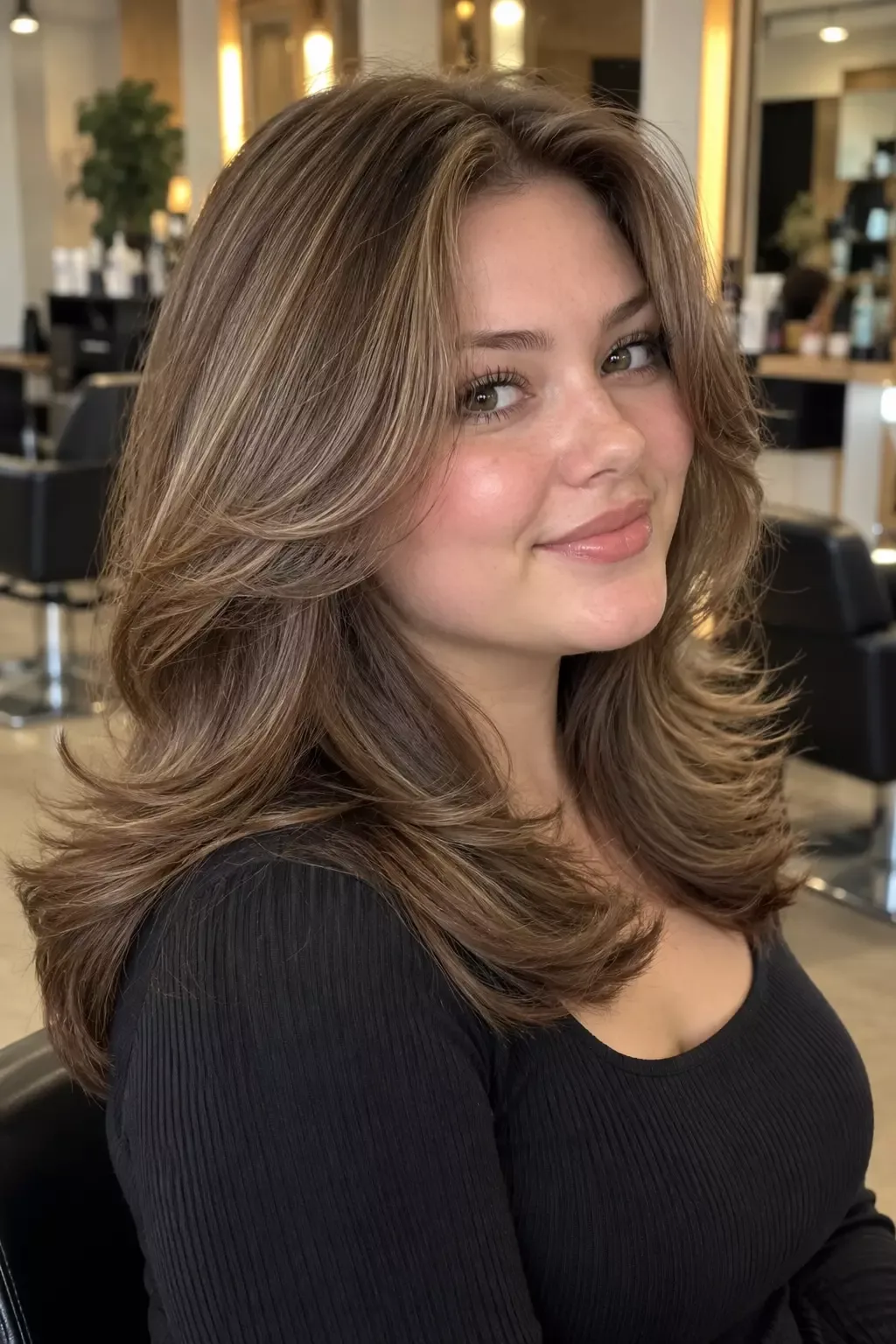
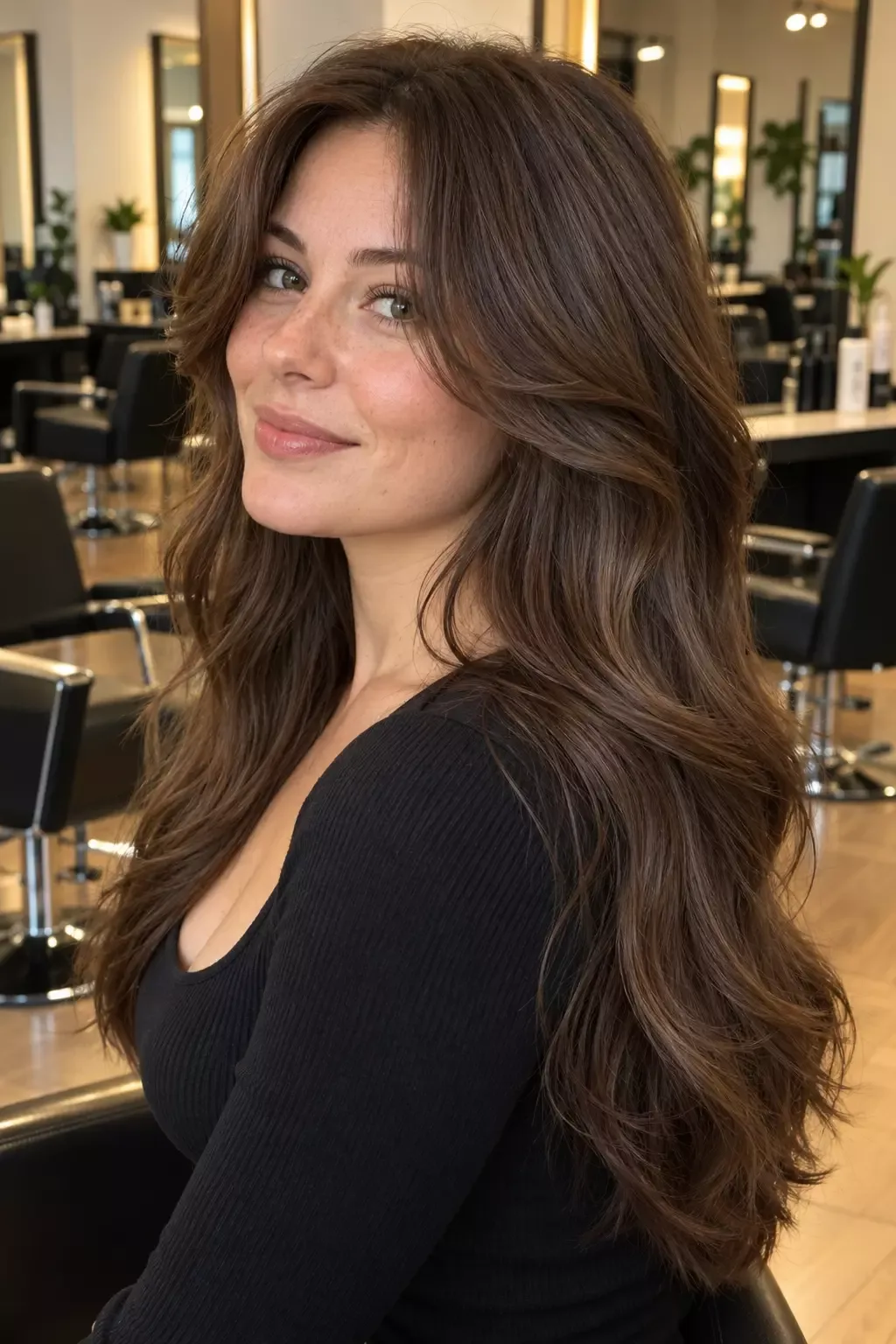
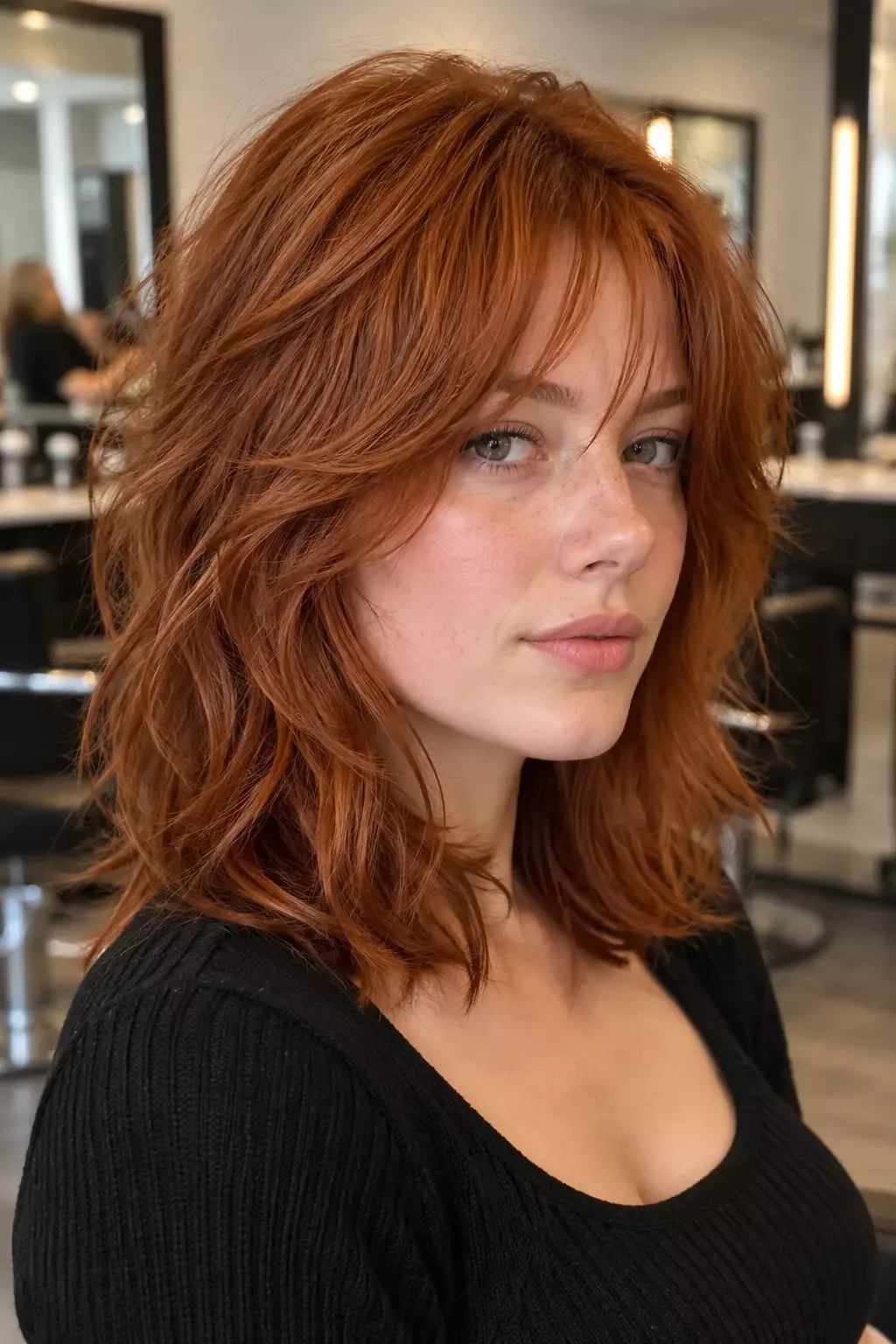
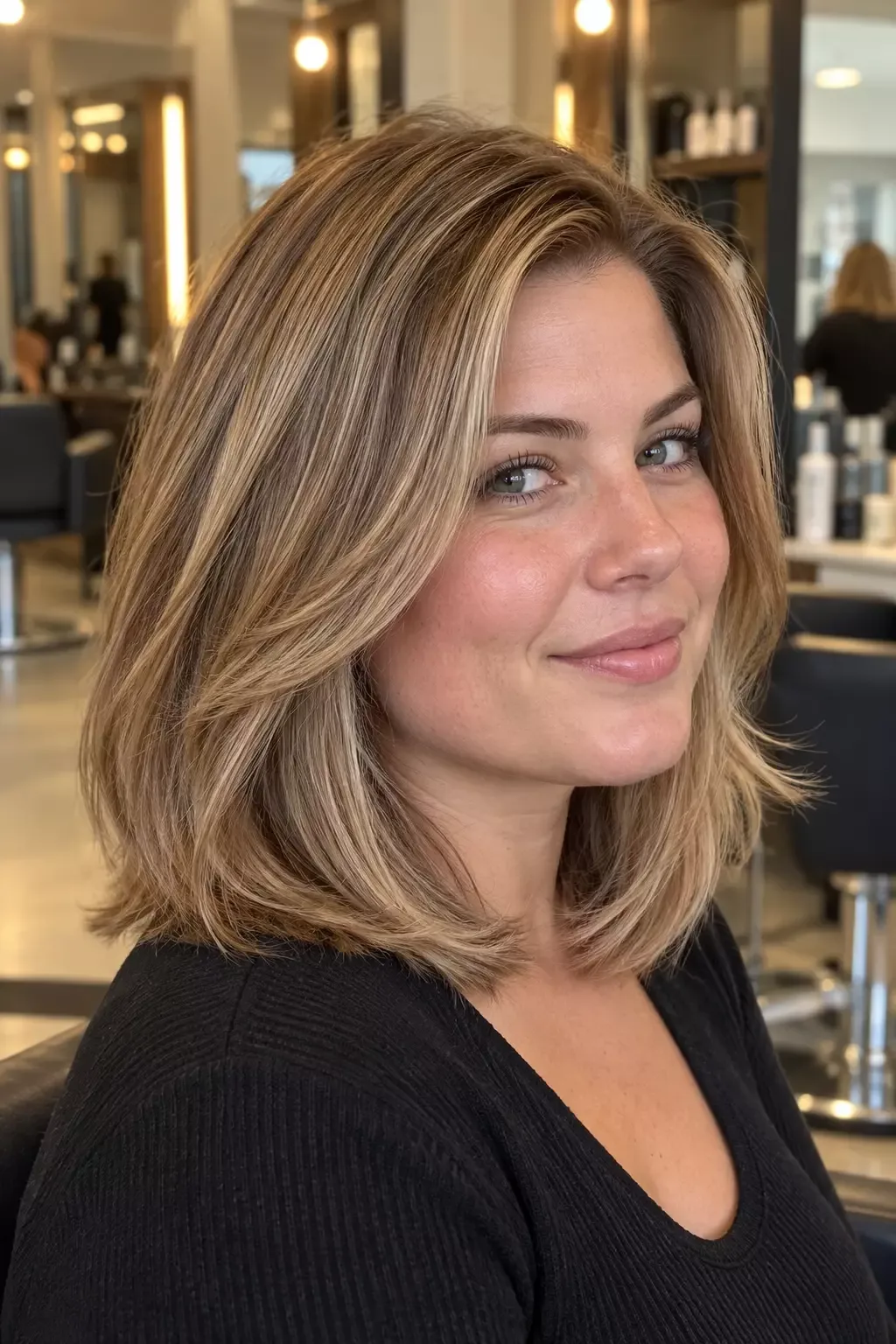
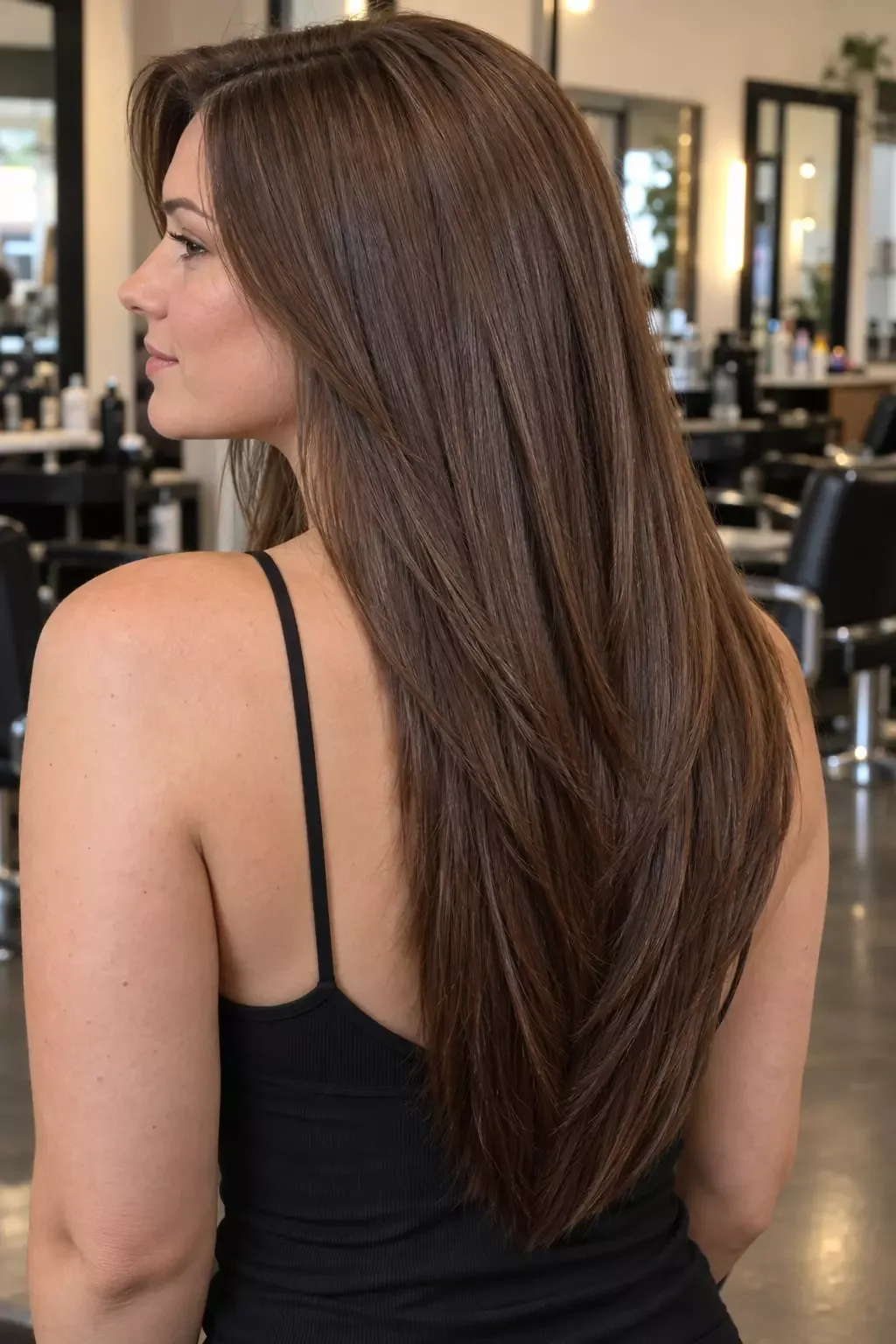
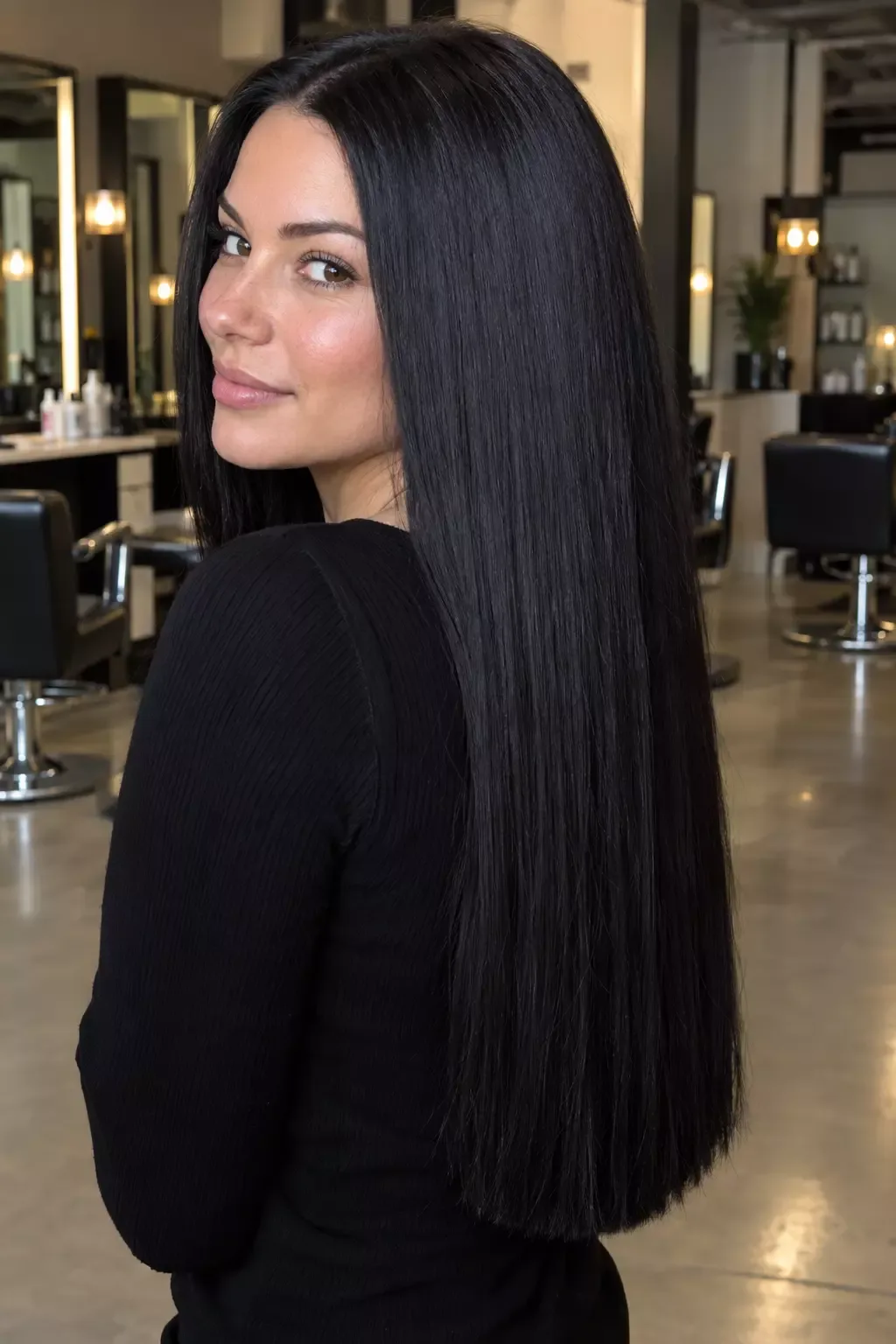
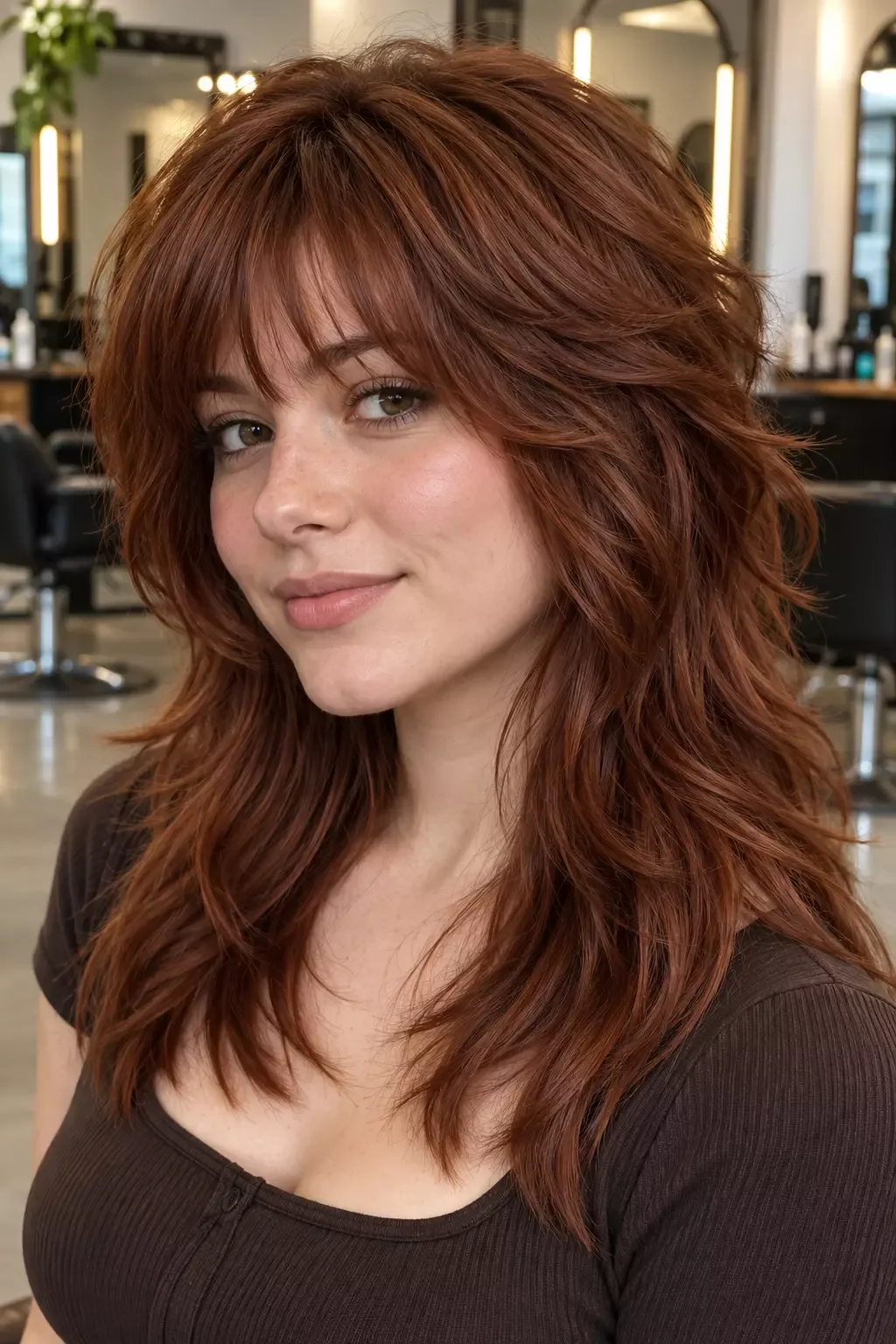
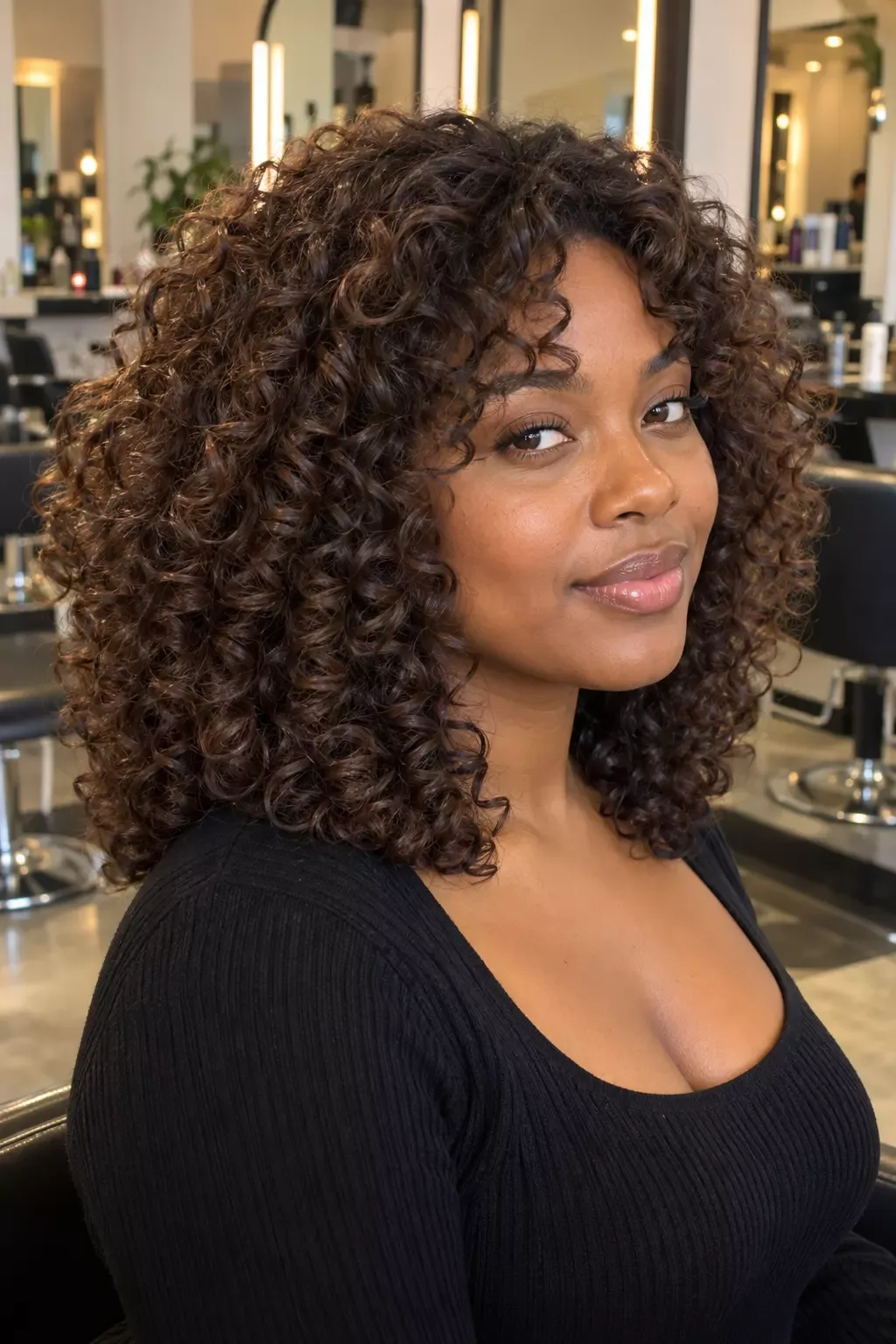
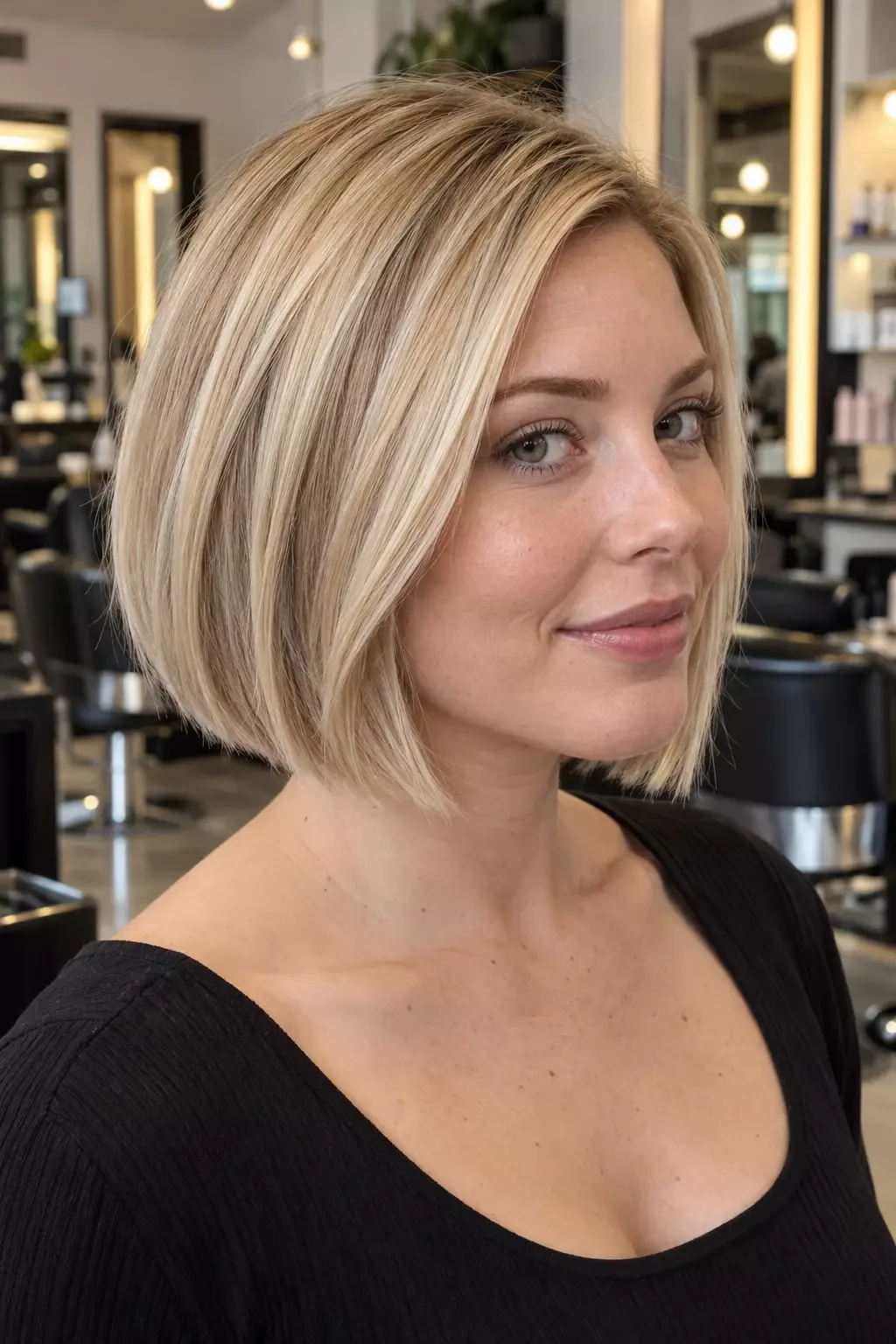
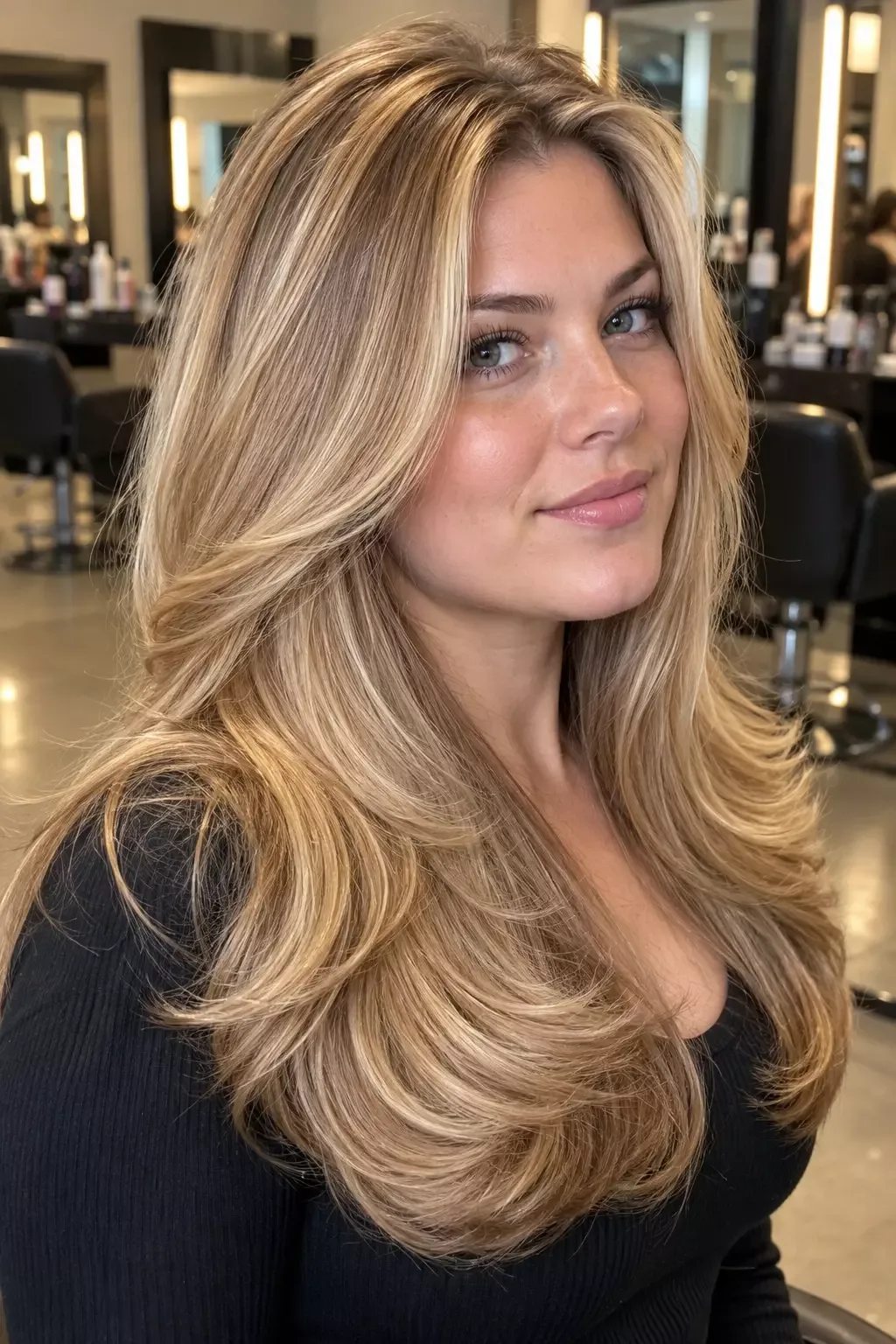
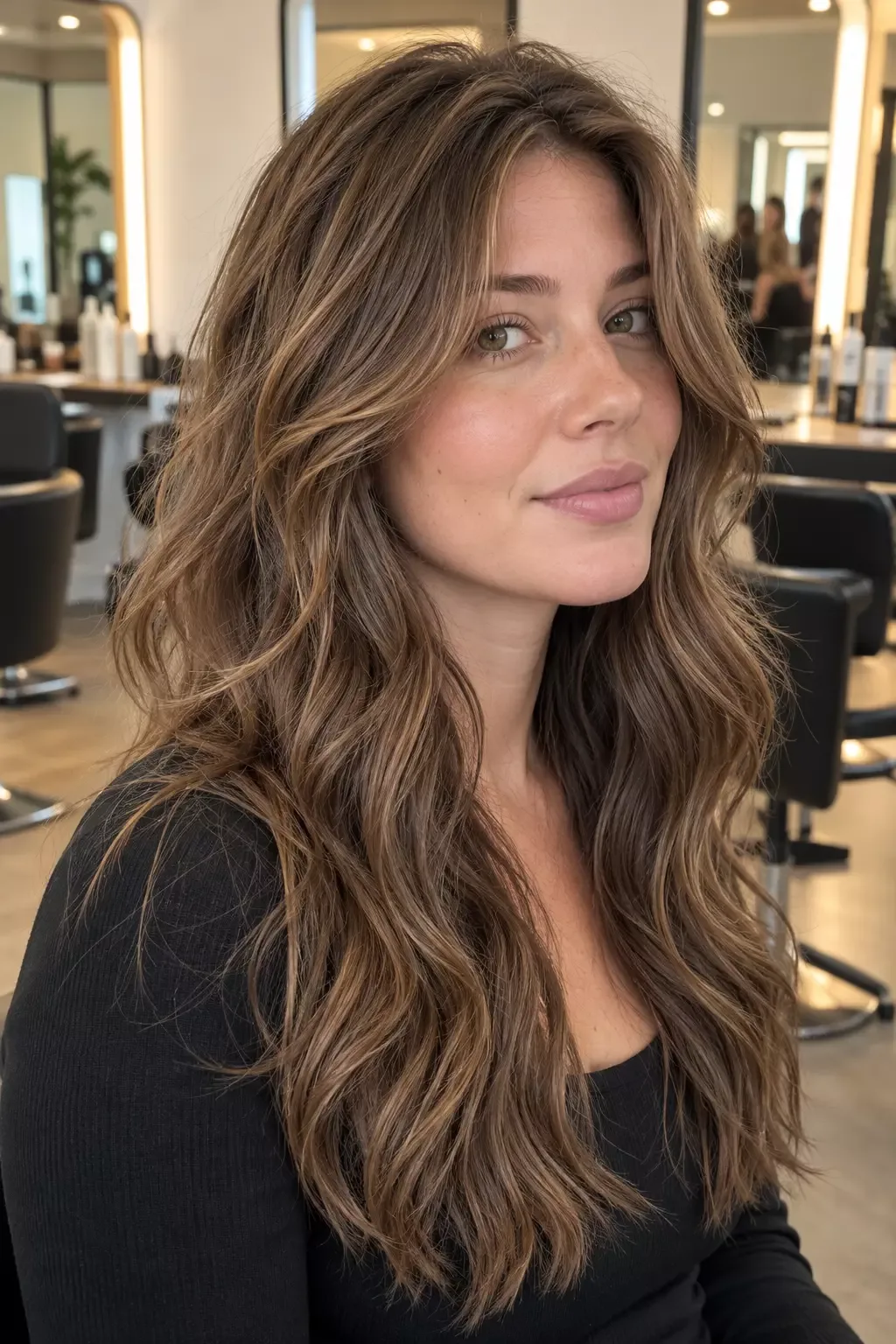
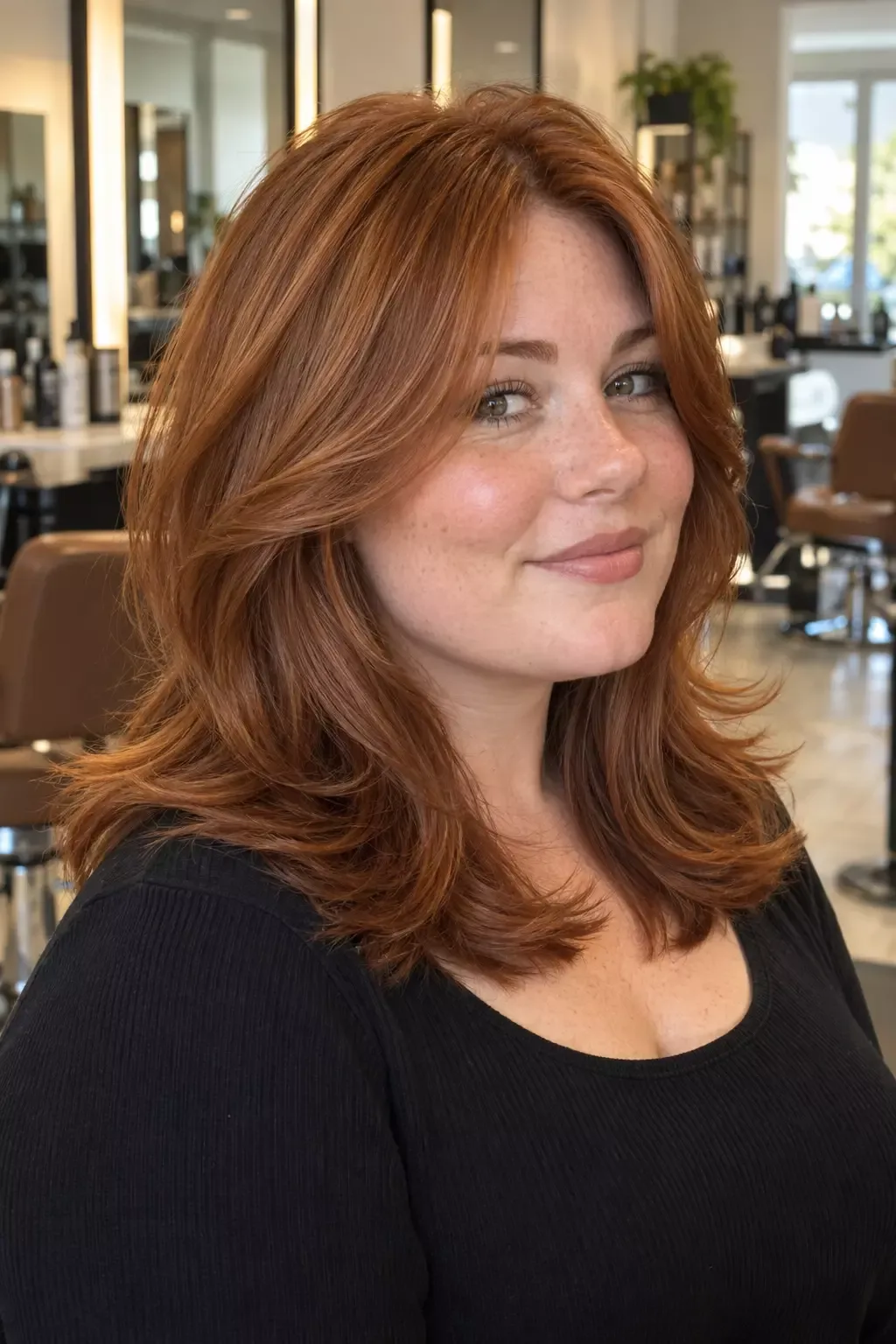
Every photo below shows the same thing held constant: genuinely thick hair, cut and finished in a salon. Only the cut changes, so you can compare how each shape handles the weight. The ones that work best share one habit: the bulk is taken out where you cannot see it.
Gallery13 photos · tap to enlarge
 Try this on me
 Try this on me
 Try this on me
 Try this on me
 Try this on me
 Try this on me
 Try this on me
 Try this on me
 Try this on me
 Try this on me
 Try this on me
 Try this on me
 Try this on me
Notice that the two shortest cuts, the chin bob and the lob, only sit flat because they have been thinned from underneath. The long cuts get away with less because length itself pulls the weight down. For more mid-length options, see our medium layered haircuts roundup.
Which cut suits your thick hair?
Your texture decides more than your face shape here. The same thick hair behaves differently when it is straight, wavy or curly, because each texture stacks its weight in a different place.
| Your thick hair is | Where the bulk collects | Best bet | Avoid |
|---|---|---|---|
| Straight | Bottom third, ends look heavy and flat | Long face-framing layers | Blunt chin-length bob with no internal work |
| Wavy | Sides, from the ears down, into a triangle | Long layers starting below the chin | One-length cuts above the shoulders |
| Curly | Sides and crown, pyramid shape | Rounded curly shag cut dry | Razor thinning, straight-across layers |
| Coarse and frizzy | Halo around the outline | Longer length plus internal thinning | Short choppy cuts that need daily styling |
Thick straight hair
Straight thick hair looks heavy before it looks wide. The fix is long layers that start around the cheekbone or chin and cascade down, so the ends move instead of hanging like a curtain.

This is the cut we recommend first for most thick hair: long face-framing layers. It keeps your length, takes weight off the bottom and gives the front some lift without a fringe to maintain. Ask for the shortest layer at the cheekbone and the longest length a few inches past the shoulders. If you would rather go shorter, these shoulder-length haircuts keep enough length to carry the weight.
Thick wavy hair
Wavy hair that is also thick tends to puff out from the ears down. Layers that start below the chin let the waves stack instead of fighting for space.

Keep the cut at least collarbone length. Shorter than that and every wave pushes the shape outward. A shag haircut also works well on thick waves, as long as the stylist keeps weight at the perimeter.
Thick curly hair
Thick curls need to be cut curl by curl, ideally dry, so the stylist can see where each one springs up. A rounded layered shape avoids the classic pyramid.
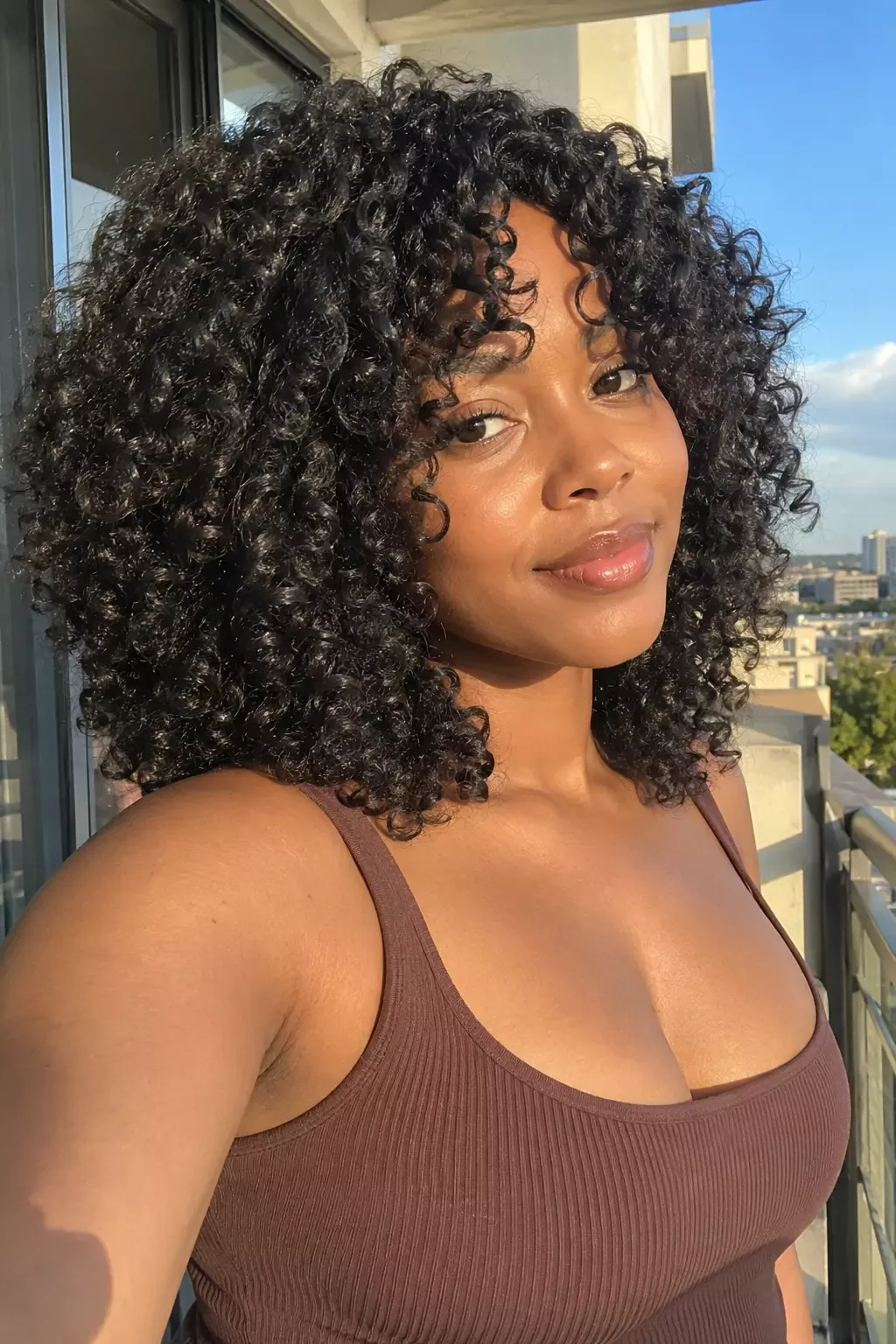
Say no to thinning shears and razors on curls. They create short broken pieces that frizz and stick out. If your curls are tighter, our 3B hair guide covers cutting and care for that pattern.
Yours could be here.
Start with one selfie.
One photo, twenty seconds, and you'll know. Free account, no card for your first render.
Does layering help thick hair?
Yes, layering is the single best tool for thick hair, as long as the layers are long. Long layers remove weight and let the hair move. Short choppy layers on thick hair do the opposite: each short piece adds volume, so the head gets wider.
The best layering for thick hair is done in two parts. Long visible layers shape the outline. Hidden internal layers, sometimes called channel cutting or carving, take bulk out from underneath so the top sits smooth.
How to thin out thick hair without ruining it
The safest way to thin thick hair is to remove weight from the inside and underneath, not from the surface. A good stylist lifts the top section and takes bulk out of the hair below it.
Three methods salons use:
- Internal layers. Shorter pieces cut under the top layer. The surface stays smooth and the hair lies flatter.
- Undercut at the nape. A small section shaved or cut short at the back of the neck, hidden when the hair is down. It removes a surprising amount of weight and keeps ponytails slimmer.
- Point cutting the ends. Snipping into the ends vertically softens a heavy line without shortening it.
Thinning shears are fine in skilled hands, used deep inside a section. Used near the roots on the surface, they leave short spiky regrowth that sticks out through the top layer for months.
Mistakes that make thick hair harder to live with

A blunt short bob with no internal work. Thick hair cut to one length at the chin collects all its weight at the jaw. It looks neat for a day, then sits wide. This is the cut people regret most, and it takes months to grow out.
Thinning from the top. It feels lighter in the chair. Six weeks later the short pieces poke through and the hair looks frizzy rather than thick.
Short layers on wavy or curly thick hair. Each short layer lifts and adds width. You end up with more volume, not less.
Skipping trims to "keep length." Heavy hair drags the ends down and they split faster. Every 8 to 12 weeks keeps the shape working.
Asking for "thinned out" and nothing else. It is too vague. Say where you want the weight removed and where you want it kept.
How to ask for layers for thick hair
The stylist cannot see what your hair feels like day to day. Tell them how it behaves, then where you want weight gone.
Say this to your barber
My hair is thick and gets heavy at the bottom. Please keep my length, add long face-framing layers starting at the cheekbone, and take weight out from underneath, not from the top.
How to ask for layers for thick hair
- Show up with your hair styled the way you wear it
If you usually air-dry, come in air-dried. The stylist needs to see where the bulk collects in real life.
- Name the problem, not just the cut
Say "it goes triangular from the ears down" or "it feels heavy and hangs flat". That tells them where to work.
- Set the length and the shortest layer
Give both numbers: keep it past the shoulders, shortest layer at the chin or cheekbone. Point to the spot on your face.
- Ask for weight out underneath
Use the words "internal layers" or "remove bulk from underneath". Ask them to avoid thinning shears on the top layer.
- Bring one reference photo of thick hair
A photo of fine hair in the same cut will not translate. Show a reference where the hair is as dense as yours.
How to manage thick hair day to day
The cut does most of the work. The routine just keeps it from fighting back.
- Dry it in sections. Thick hair stays damp underneath for hours. Clip the top up and dry the bottom first, or it frizzes and smells musty by evening.
- Use a wide-tooth comb on wet hair. Detangle from the ends up while conditioner is still in.
- Wash less often. The American Academy of Dermatology advises washing based on how quickly your hair gets dirty or oily, and says thick, curly or dry hair can be shampooed when needed, at least once every 2 to 3 weeks.
- Go lighter on products than you think. Thick hair hides product, so people pile it on. Start with a pea-sized amount and add.
- Sleep on it loosely. A loose braid or a silk scrunchie stops the morning bend and saves restyling time.
Can you see a cut on your own thick hair for free?
Yes, for one look. The hard part with thick hair is that a reference photo never shows how the cut will sit with your density and your face. You find out in the chair, and with thick hair a bad chop takes a long time to grow out.
HairstyleAtlas lets you preview a cut on your own selfie first. According to the pricing page, the first look is free with no card: one hairstyle, one color on it, front view. More looks, colors and HD downloads start at $9.99 a week on the Plus plan.
The bottom line on thick hair
Thick hair is the easiest hair to make look good and the easiest to cut wrong. Keep length, use long layers, and take weight out from underneath. For most people that means long face-framing layers, which is where we would start.
Avoid short one-length cuts and surface thinning, cut curls dry, and give your stylist the exact words above. Not sure your face suits face-framing pieces? Our face shape guide shows where layers should start for each shape.
Frequently asked questions
Usually, yes. In everyday use, thick hair means high density, a lot of strands per square inch, often combined with medium or coarse strands. You can also have fewer strands that are each very coarse, which feels thick but shows more scalp at the part.
Density and strand width do most of it. Cut and styling add the rest: blunt ends, root lift and some texture make hair look fuller, while heavy thinning and lots of short layers make it look sparser.
Neither is better; they just have different problems. Thick hair holds styles and color well but takes longer to dry and can get heavy. Fine hair is quick to style but goes flat and shows damage sooner.
Yes, long layers are the best cut for thick hair because they remove weight and add movement. Avoid lots of short layers, which add volume and can make thick hair look wider.
Blow-dry in sections with a round brush, pointing the airflow down the hair shaft to smooth it. Finish with a little light oil on the ends. Long face-framing layers make straight thick hair much easier to style.
Get weight removed from underneath with internal layers or a nape undercut, keep the length past your shoulders, and trim every 8 to 12 weeks. Pair the cut with sectioned drying so the under-layers dry fully.
Mostly genetics. Your density and strand width are largely inherited and can shift with hormones and age. Some people notice fuller hair during pregnancy, then more shedding afterward.
Long layers that start below the chin, a side part and face-framing pieces that fall past the cheeks all lengthen a round face. Avoid chin-length bobs that add width at the jawline, which is exactly where thick hair collects bulk.
Preview it on your own photo: Virtual Hair Color Try-On.
Share article
About the author

Related posts
Women's Haircuts · 13 min
Coily Hair: Types, Care and a Routine That Fits You
Understand coily hair without getting stuck on a subtype. Learn how to detangle, wash and style your coils, plan for shrinkage, and choose an afro shape.

Women's Haircuts · 14 min
1B Hair: How to Tell If You Have It + 14 Cuts That Suit It
1B hair is straight with some body at the crown and a slight turn at the ends. How to tell it from 1A and 1C, why the length of your cut matters most, 14 cuts that suit it and how to style it.

Women's Haircuts · 16 min
1C Hair: How to Tell If You Have It + 14 Cuts That Tame It
1C hair is straight at the root with a loose bend through the lengths, coarse strands and frizz on top. How to tell it from 1B and 2A, why it puffs, 14 cuts that suit it and how to style it.
Women's Haircuts · 14 min
Best Hairstyle Apps for Women 2026: 10 Apps, Real Prices
The best hairstyle app for women changes your hair and leaves your face and density alone. Ten apps compared with real prices and free tiers, what Reddit users complain about, and which app fits your hair type.

Women's Haircuts · 17 min
Long Hair With Bangs: 14 Styles and Which One Suits Your Face
Long hair with bangs suits almost every face, and the bangs matter more than the length. 14 bang styles on long hair, a face shape table, the mistakes to avoid and the exact sentence to say in the chair.
Women's Haircuts · 13 min
Heat Protectant for Curly Hair: Which One for Each Heat Tool
Curly hair needs a different heat protectant for a diffuser, a blowout and a flat iron. Match the product to your tool and curl type, apply it the right way, and keep your curl pattern.