Haircuts for Men With Straight Hair: 10 That Hold Shape
Oleh Onysko Updated 29 September 2026 15 min read
In this article
The best haircuts for men with straight hair are the ones that remove weight from the top instead of just shortening the sides: a textured crop, a quiff, a side part, a crew cut, curtains or a blunt fringe. Straight hair does not hold a shape on its own, so the shape has to be cut into it.
That is the whole problem in one sentence. Curly and wavy hair arrives with structure built in. Type 1 hair falls in flat vertical lines under its own weight and does exactly what gravity tells it to, which is why the same fade that looks sharp on your wavy friend reads as a helmet on you.
Why straight hair goes flat, and what actually fixes it
Most men with straight hair ask for the wrong thing. They ask for shorter sides. Shorter sides are the easy half of the haircut and they change almost nothing about how the top behaves. If what you are actually chasing is volume, the length window that makes hair go fluffy is the number to fix before you touch the sides at all.
On straight hair, the top is the haircut. The sides are maintenance.
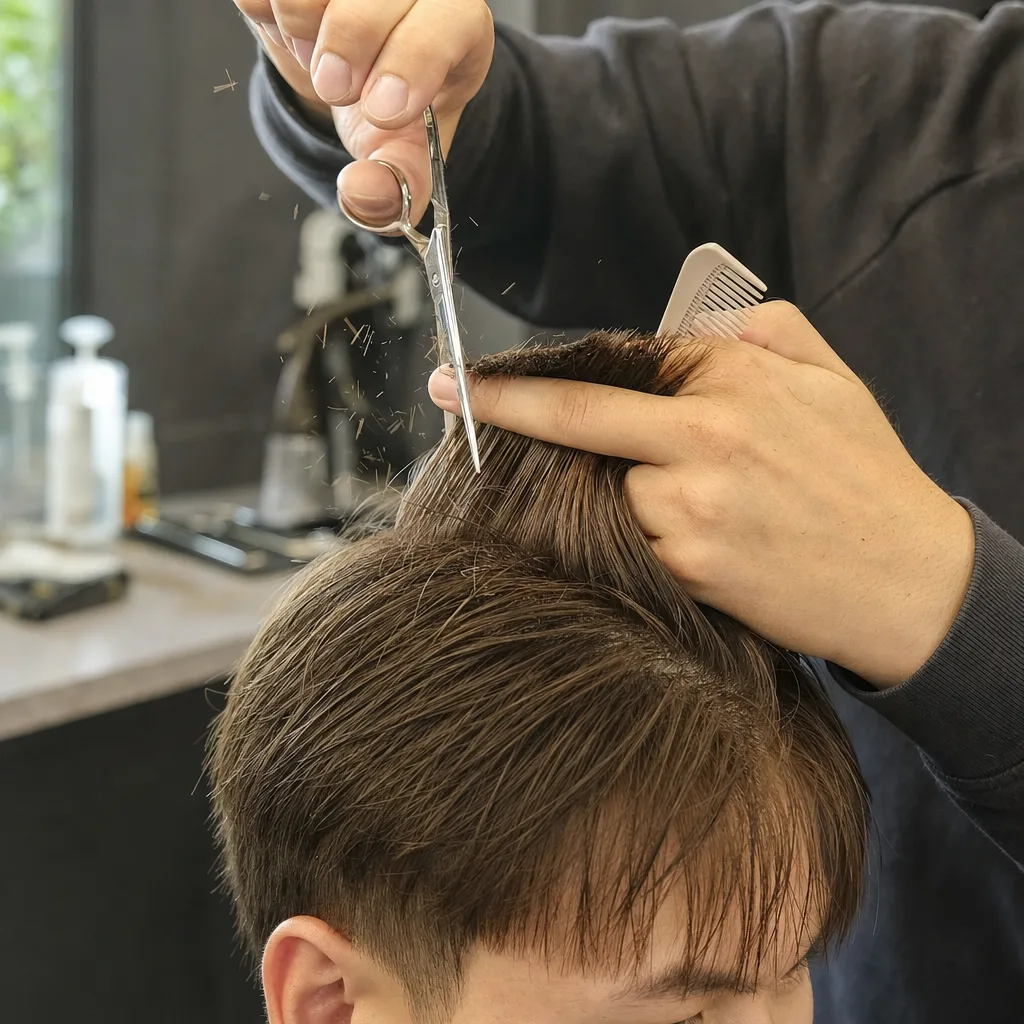
What makes a cut work on type 1 hair is weight removal in the top section: point cutting into the ends, a little internal thinning, layers placed so the hair above supports the hair below. Take the bulk out and the same length that used to lie down starts to stand up and separate. Leave the bulk in and no amount of product will hold it, because you are asking a styling paste to fight a solid slab of hair. If your hair has no bend at all even when it air dries, you have 1A hair, the straightest subtype, and this problem at its most extreme.
The upside nobody mentions: straight hair shows every line you cut into it. A blunt fringe is sharper on straight hair than on any other texture, a side part holds a genuine parting line, a taper looks cleaner. The same honesty cuts both ways, so a rushed cut, a stray scissor line or a thin patch is also visible from across the room.
Start with your density, not your face shape
Every article on this subject sorts cuts by length. Length is not what decides. Two men with identically straight hair can need opposite haircuts depending on how much of it there is and how thick each strand is.
Work out which column you are in before you look at a single photo.
| Your straight hair | What it does wrong | What the cut has to do | Best bets |
|---|---|---|---|
| Fine and sparse | Goes limp and shows scalp by midday | Build the illusion of density with blunt ends and short length | Crew cut, Ivy League, Caesar, buzz cut |
| Fine but plentiful | Separates and looks stringy | Keep ends blunt, add height not texture | Textured crop, quiff, blunt fringe |
| Medium | Behaves, then falls flat after week three | Light point cutting, keep it in the 2 to 4 inch range on top | Quiff, side part, curtains, French crop |
| Thick and coarse | Sticks out at the sides, resists the part, feels heavy | Aggressive weight removal and internal thinning | Textured crop, mid length flow, longer layered top |
Fine straight hair
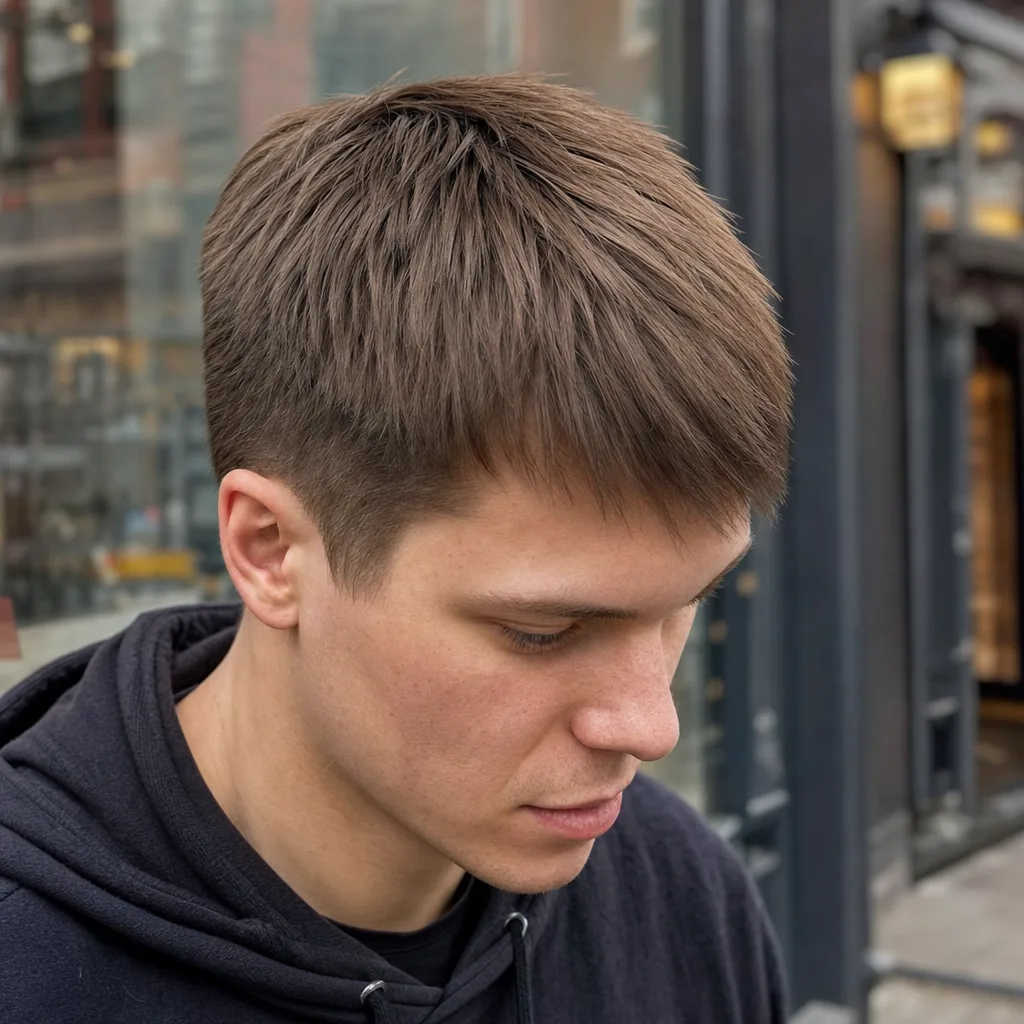
Blunt ends are your friend. Every thinned or point-cut end makes fine hair look thinner, because you are literally removing hair from a head that does not have spare. Keep the top between one and two inches, keep the ends squared off, and take the sides down with a short taper rather than a skin fade so there is no bare scalp to compare against.
Matte clay, never wax. Apply it to dry hair, not damp, and use half of what the tin suggests.
Thick, coarse straight hair
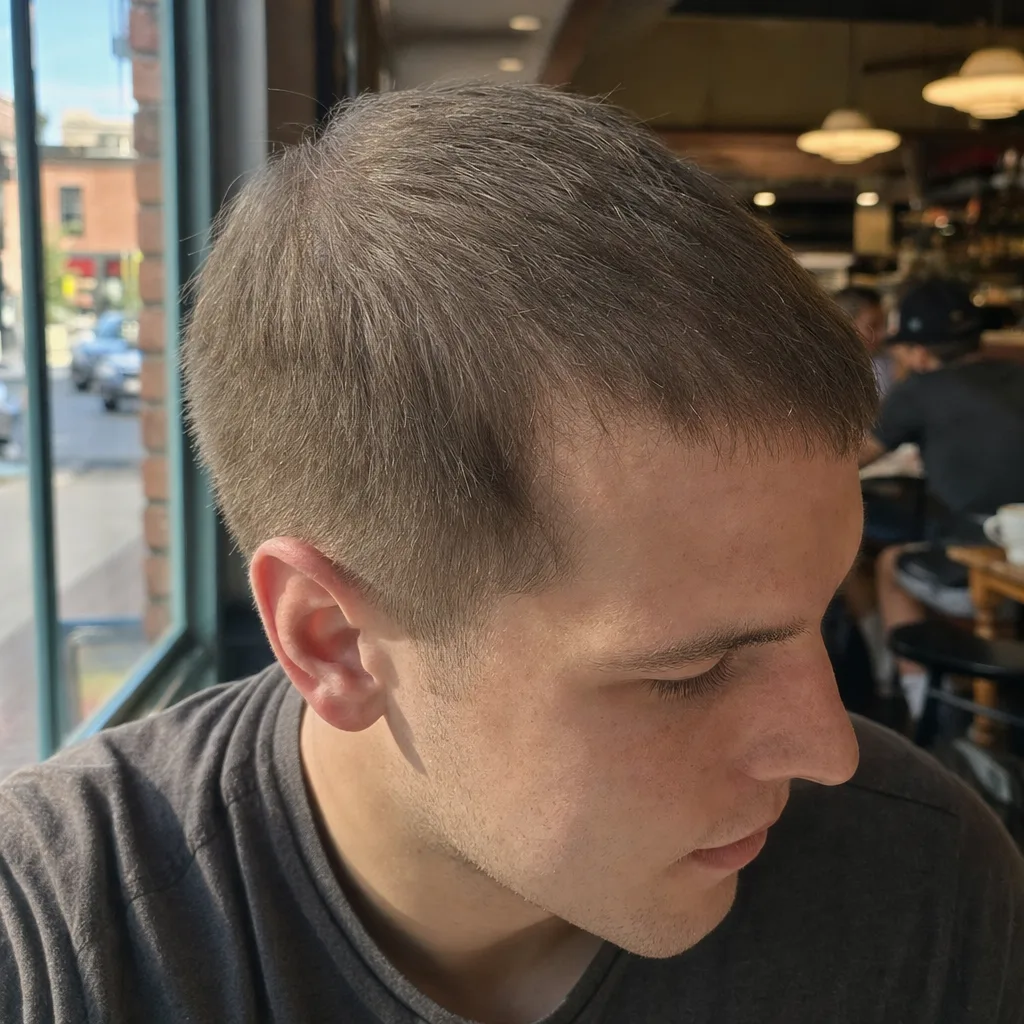
You have the opposite job. There is plenty of hair and the problem is that it behaves like a solid mass. Ask for internal thinning through the top and the crown, and for the weight to come out of the corners above the temples so the sides do not flare. Length at the sides is fine once that weight is gone, and swept back behind the ears it reads as deliberate rather than overgrown.
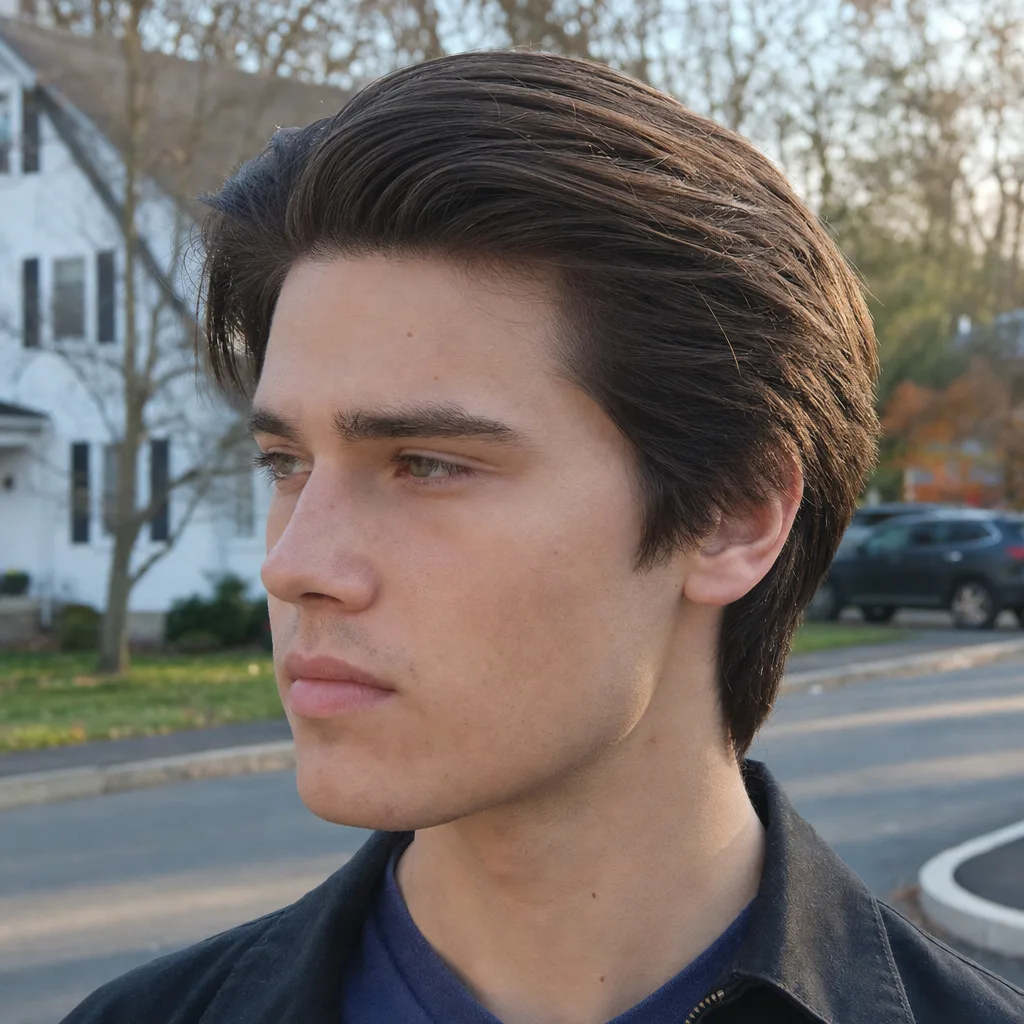
Thick straight hair is also the only version of this texture that can carry real length. Three to five inches on top, layered, is a genuine option here and nowhere else on this list.
10 haircuts for men with straight hair
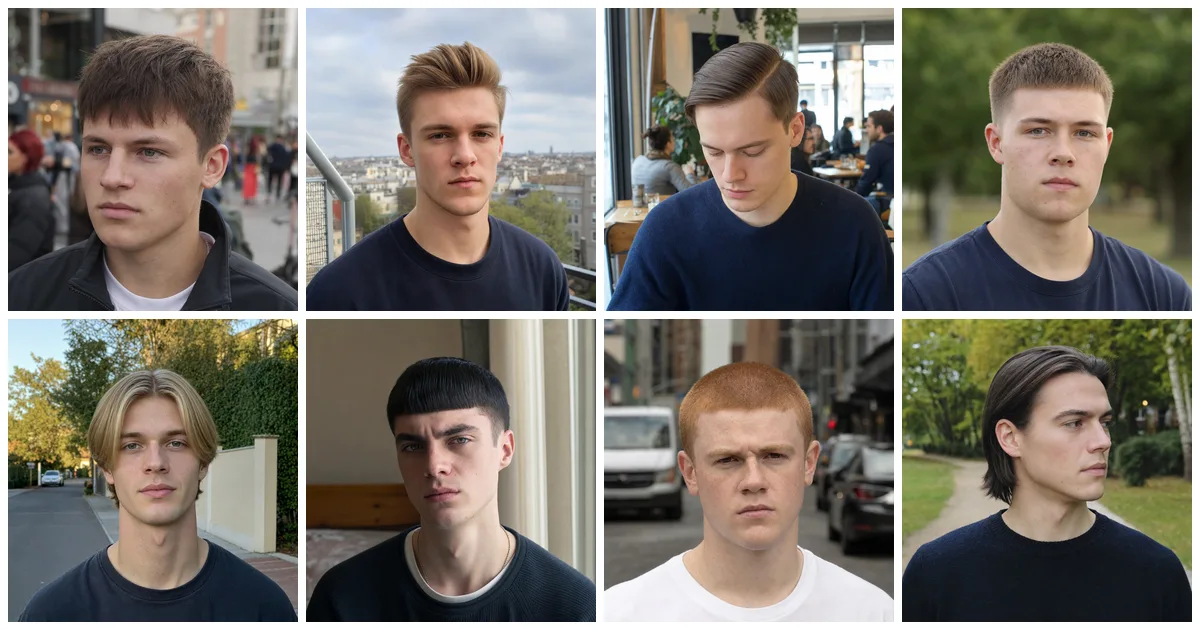
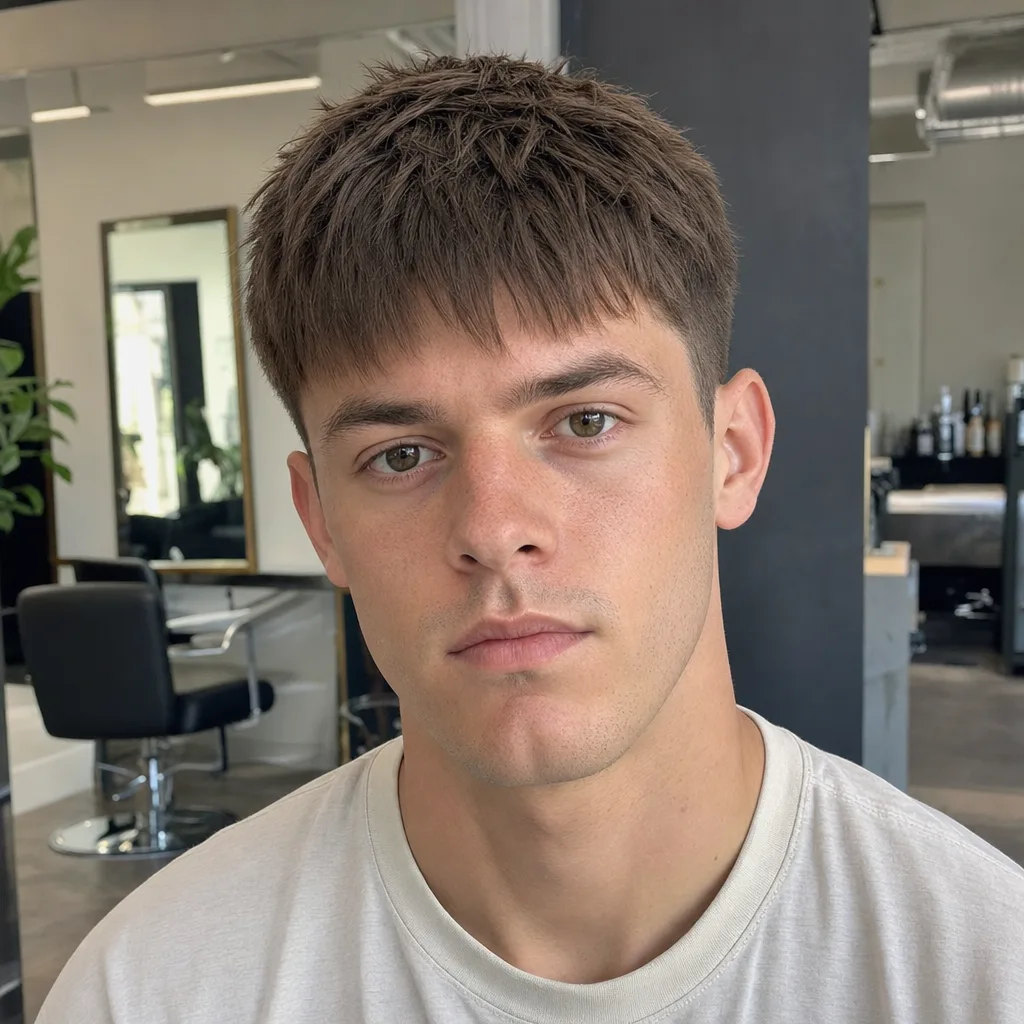
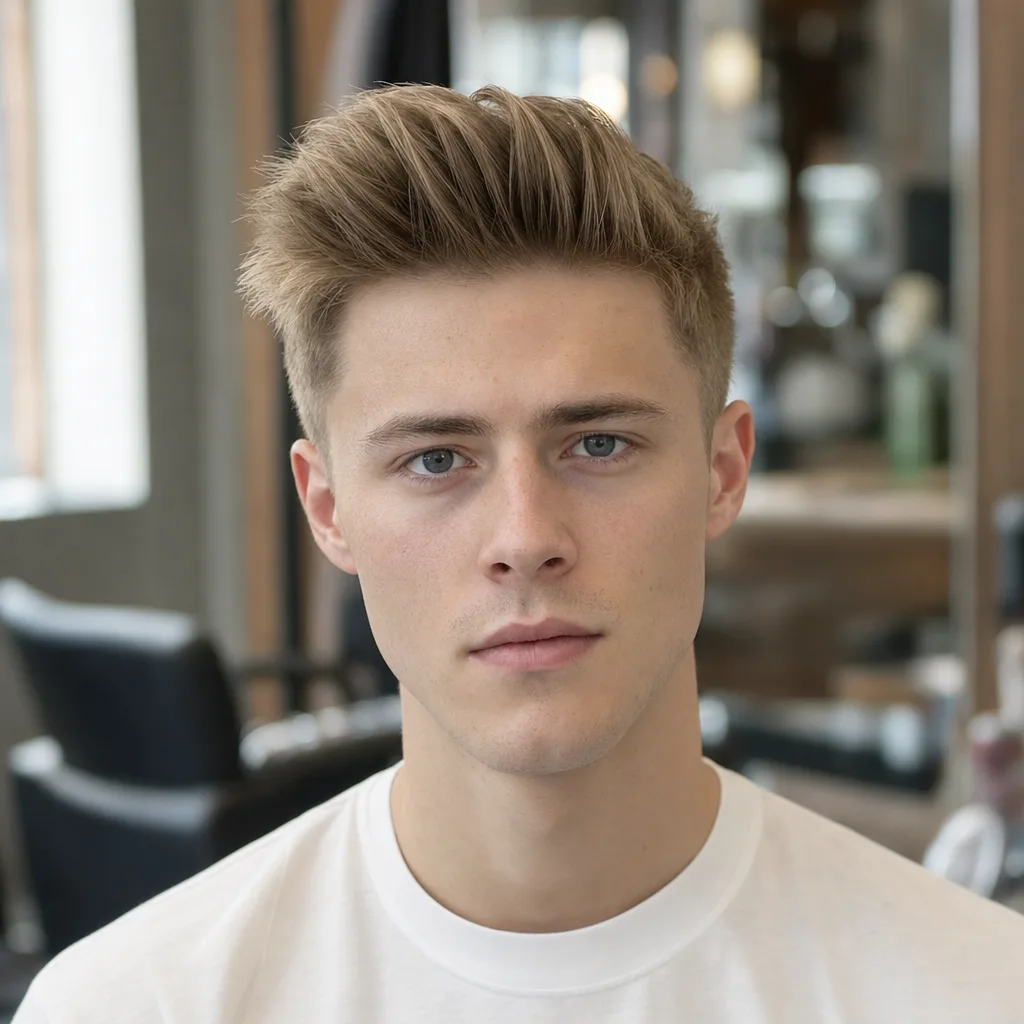
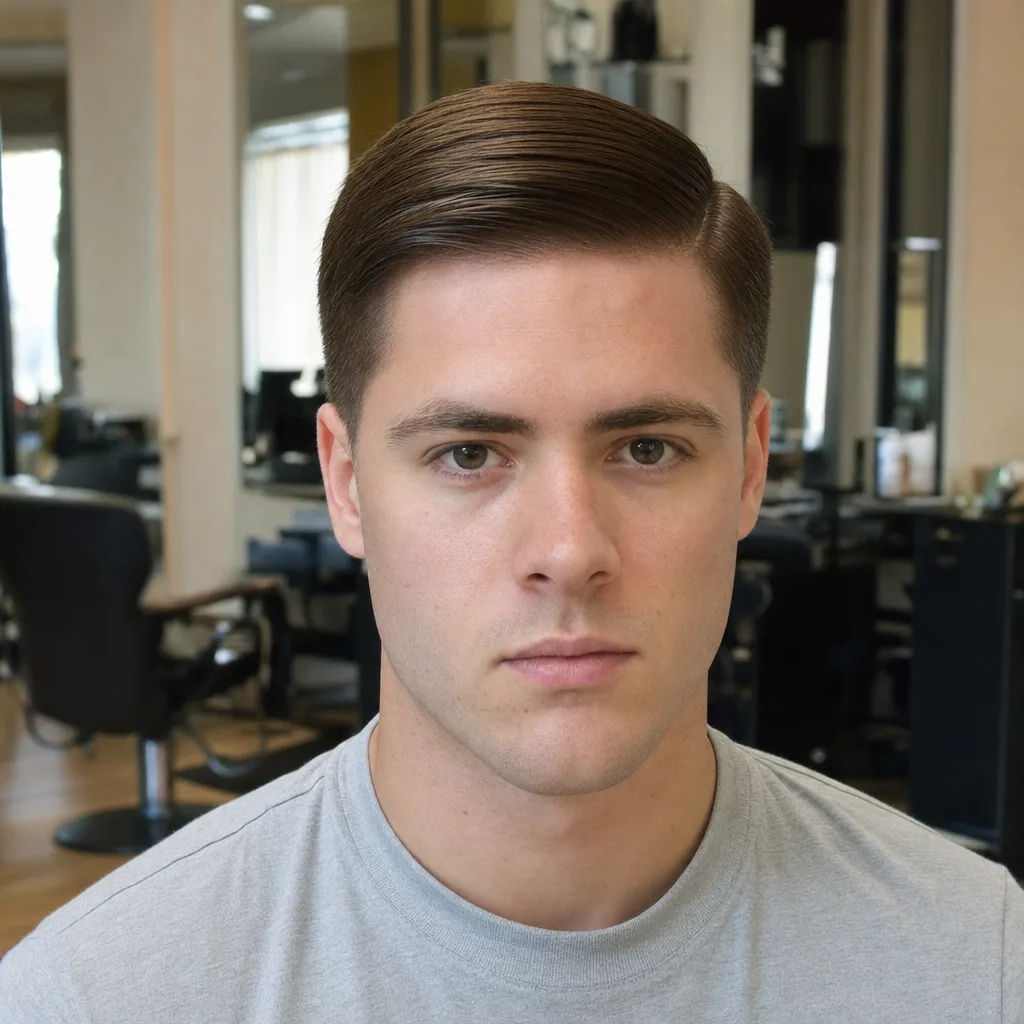
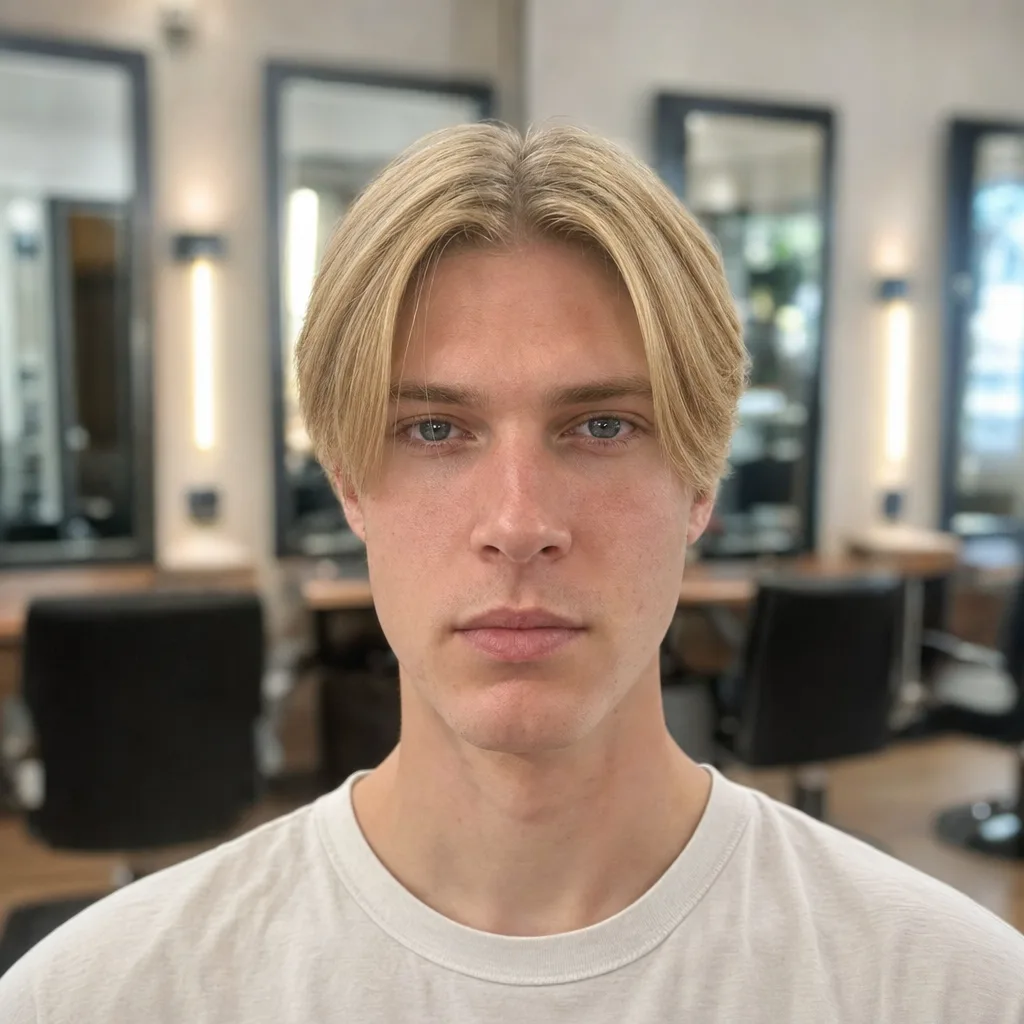
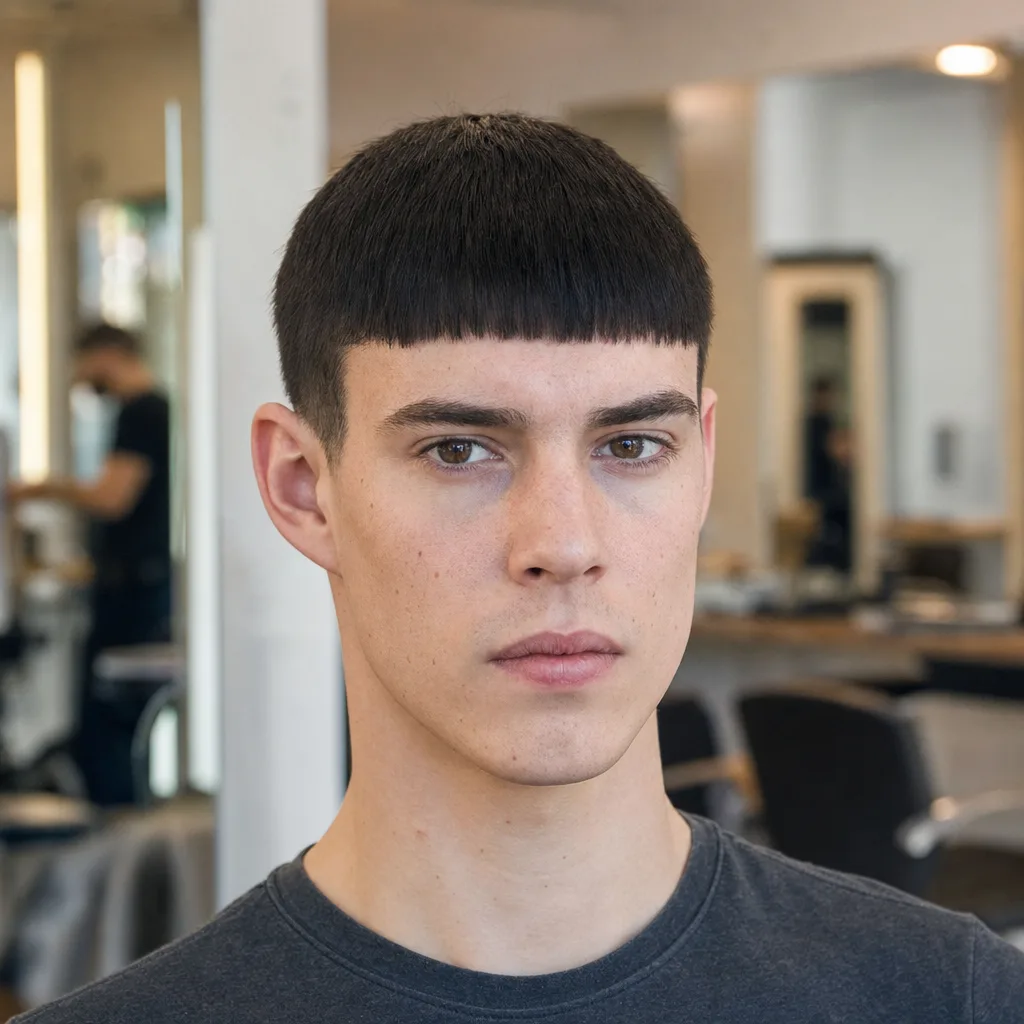
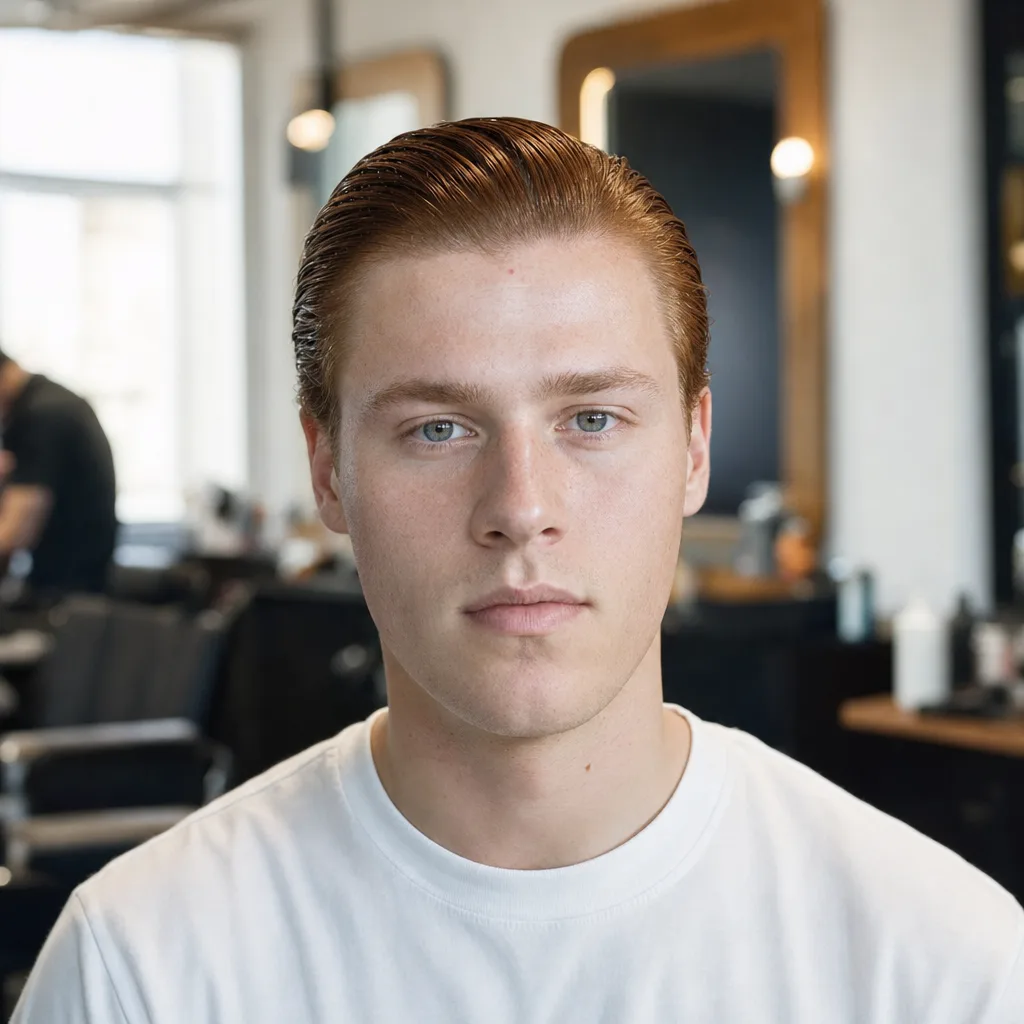
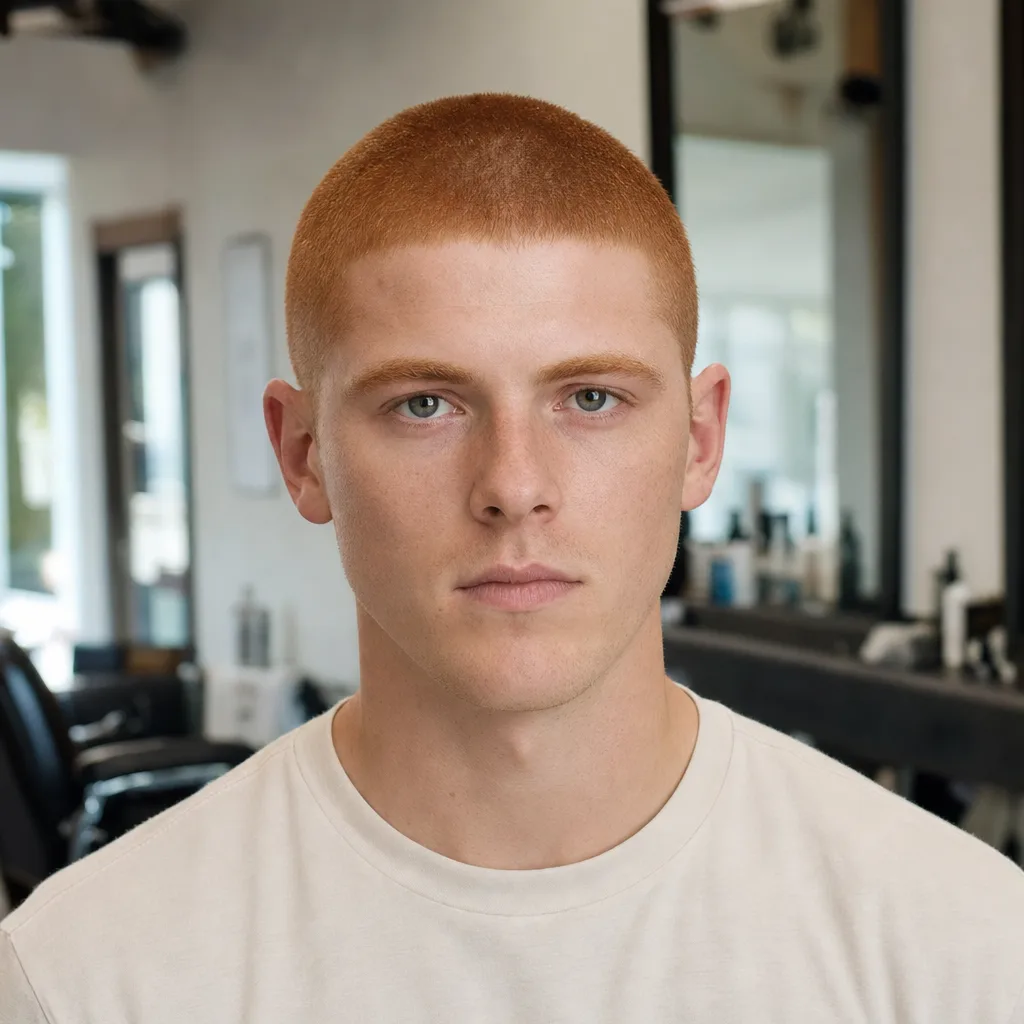
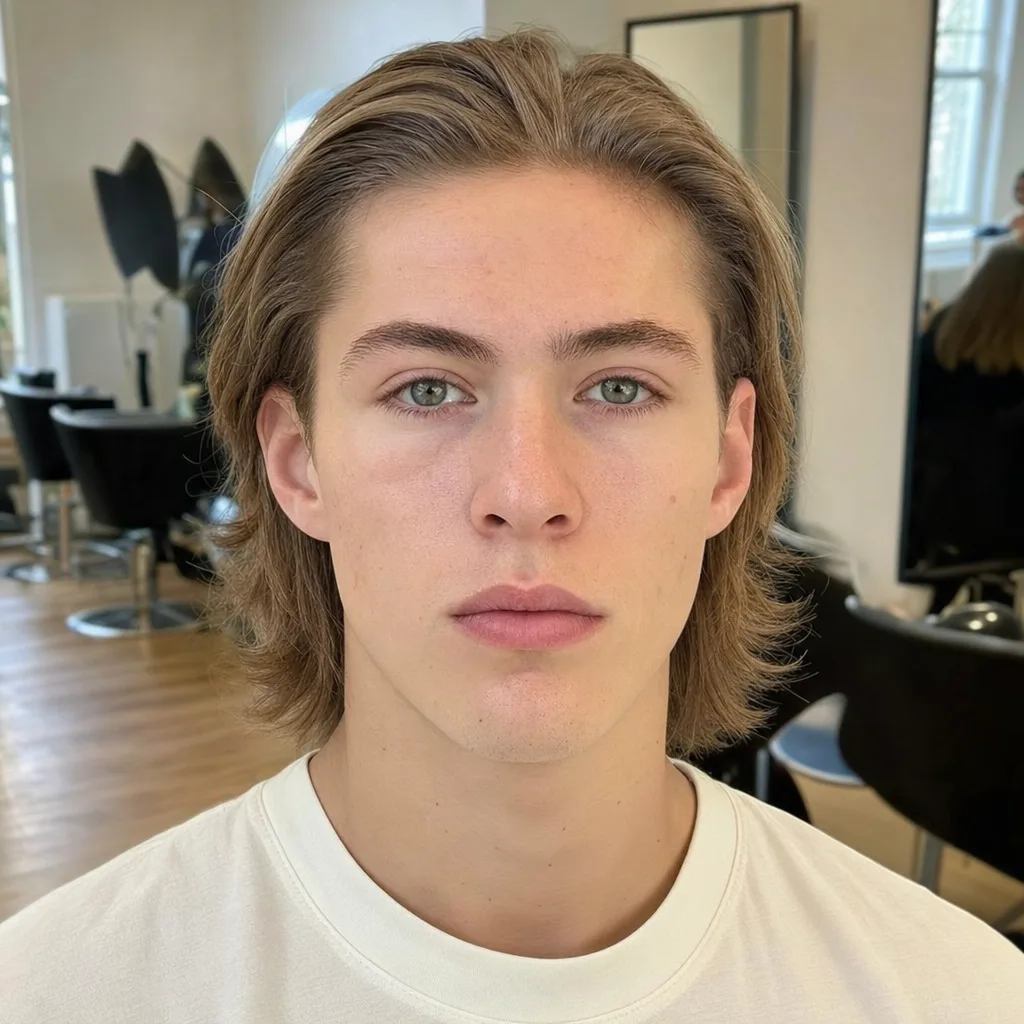
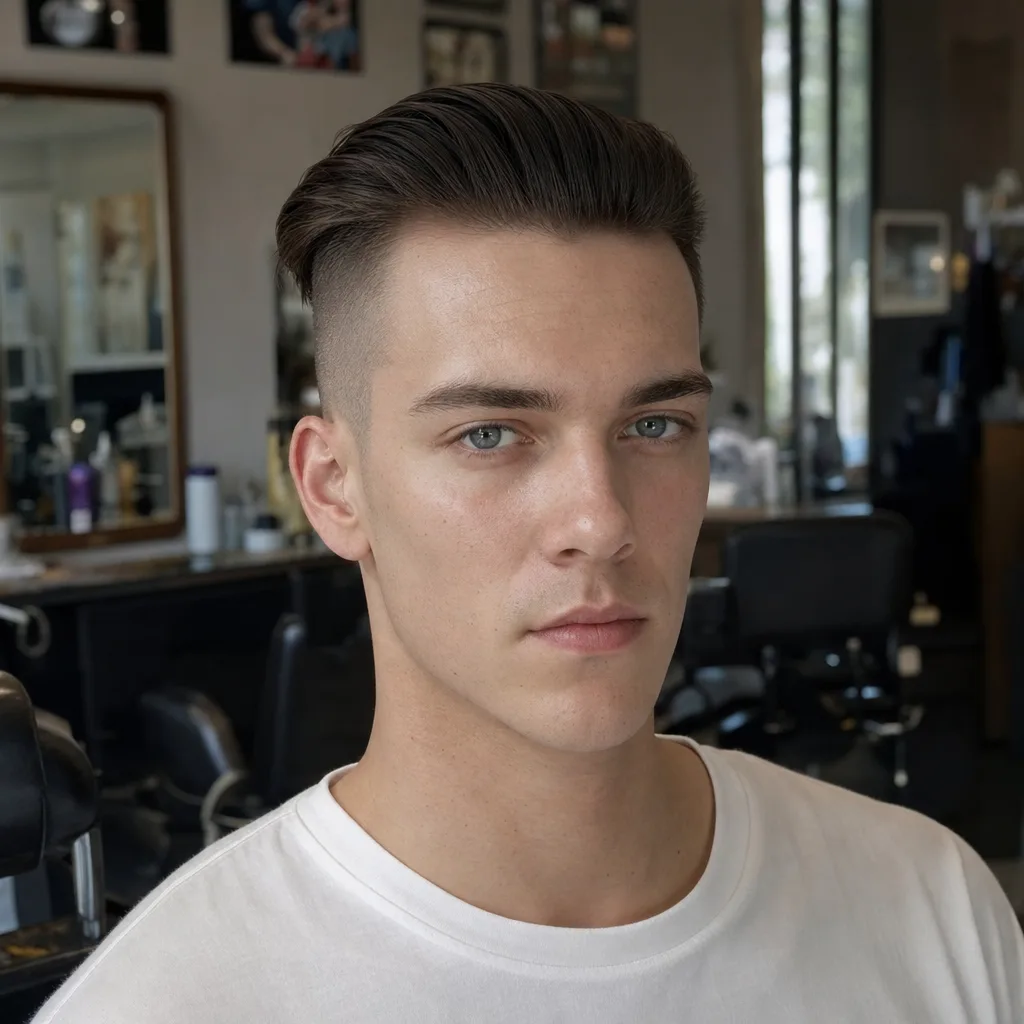
Same texture in every photo below: dead straight, type 1, no wave anywhere. The only thing that changes from tile to tile is how the top is structured, which is the variable that actually decides whether the cut works on you.
Gallery10 photos · tap to enlarge
 Try this on me
 Try this on me
 Try this on me
 Try this on me
 Try this on me
 Try this on me
 Try this on me
 Try this on me
 Try this on me
 Try this on me
If one of those is obviously the answer and you still cannot picture it on your own head, that gap is the entire reason this site exists.
The best short haircuts for straight hair
Short is where straight hair is easiest, because you are working with the grain instead of against it. Three that never misfire:
The crew cut. One to two inches on top, graduated slightly shorter at the front, blunt ends. Works on every density and every face shape and takes ten seconds to style.
The Ivy League. A crew cut with enough length at the front to take a side part. This is the one that reads as deliberate rather than default, and straight hair holds the part line better than any other texture.
The Caesar. Short all over with a straight fringe cut flat across the forehead. Straight hair is the only texture that gives you that line cleanly, and it hides a receding front corner better than anything else here.
Pair any of them with a mid fade if you want the contrast, or a soft taper if you do not want to commit to a fortnightly barber visit.
Medium length straight hair
Two to five inches on top is where straight hair gets interesting and where it gets high maintenance. It needs layering to move at all, and it needs product every single day, because there is enough length for gravity to win and not enough for weight to look intentional.
Curtains, a grown-out quiff and mid length flow all live here. If you are heading in that direction, the wider medium length guide for men covers the growing-out phase in more detail than this page can.
Straight hair and your face shape
Face shape matters less than density, but it decides two things: how much height you want on top and whether you want the sides tight or left soft. If you keep asking what haircut suits me, see the cuts on your own face instead of guessing from photos of other men.
Measure yours rather than guessing, because most men get this wrong by eye.
Measure it instead of guessing
Both numbers in the same unit — the answer is a ratio, so it does not matter which.
Under 1.15 reads round, 1.15 to 1.5 reads oval, over 1.5 reads long. Oval and long split on the jaw rather than the ratio: an oval tapers toward the chin, a long face runs straight down.
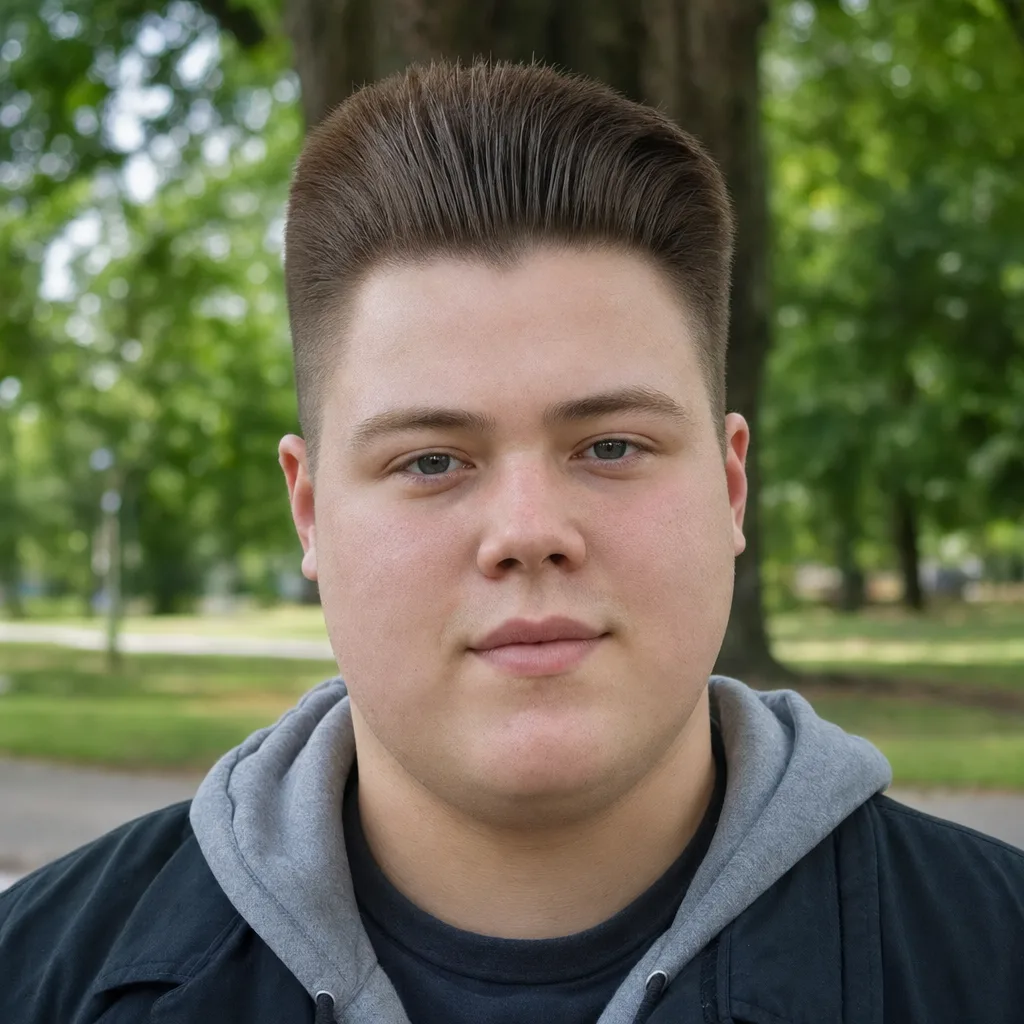
- Round face. You want height, and you want the sides kept close. A quiff, a textured crop with lift at the front, or a short pompadour. Avoid a blunt fringe cut straight across, which widens the face further, and avoid leaving length at the sides.
- Square face. Almost anything works. A crew cut or a side part leans into the jaw you already have.
- Oval face. Also almost anything. This is the shape the fringe styles were designed for.
- Long or oblong face. Kill the height and add a fringe. A Caesar or a blunt fringe shortens the face; a tall quiff lengthens it.
- Heart shape. Some width at the temples and a soft fringe to soften a broad forehead. Curtains are made for this.
How to ask your barber for it
The name of the cut is not the instruction. Barbers hear "textured crop" and produce six different haircuts. What they cannot misread is a length, a technique and a landmark.
How to ask for a haircut on straight hair
- Say the length on top in inches
"Leave about two inches on top" is unambiguous. "Not too short" is not. If you are unsure, ask for more than you want, because you can take it off in the same visit and you cannot put it back.
- Ask for weight out, by name
Say "point cut the ends and take some weight out of the top". This is the request that separates a cut that stands up from one that lies flat, and it is the one almost nobody makes.
- Name the sides as a taper or a fade, and give the height
"A taper that starts just above the ear" or "a mid fade to the temple". Point at the spot on your own head while you say it.
- Say what you do in the morning
"I use clay and thirty seconds" gets you a different haircut from "I blow dry it". A good barber will cut to the routine you actually have.
- Ask them to check the crown and the front corners
Straight hair shows both. Cowlicks at the crown and thinning at the front corners are worth flagging before the cut, not after.
If you want one sentence to say out loud:
Say this to your barber
Two inches on top, point cut so it has some movement, weight out of the top, and a taper on the sides starting just above the ear.
Yours could be here.
Start with one selfie.
One photo, twenty seconds, and you'll know. Free account, no card for your first render.
Five mistakes that ruin straight hair
- Asking for a fade and nothing else. You get tight sides and the same flat slab on top. The fade was never the problem.
- Thinning fine hair. A stylist reaching for thinning shears on fine straight hair is about to make it look thinner. Blunt ends do the opposite job and are what you want.
- Wax and pomade on fine hair. Anything that adds weight or shine drags fine straight hair down to the scalp and makes it look greasy. Matte clay, applied dry.
- Styling wet hair. Straight hair dries into whatever shape it cooled in. Rough dry it to 80 percent first, then product, then shape. Product on soaking hair is product on the floor.
- Leaving it eight weeks. Straight hair does not disguise growing out the way a curly cut does. Every extra week is visible, and the top loses its shape before the sides do. Four to five weeks is the real interval.
Styling straight hair so it stays put
Two rules cover most of it: less product than you think, applied to nearly dry hair. Beyond that, match the product to your density rather than to the cut.
| Density | Product | How much | Finish |
|---|---|---|---|
| Fine | Matte clay or dry texture spray | Pea-sized, or two short bursts | Matte |
| Medium | Matte paste | Pea-sized | Matte to low shine |
| Thick and coarse | Cream or light pomade | Almond-sized | Low shine |
| Any, for a slick back | Pomade on damp hair | Almond-sized | Glossy |
Rub it flat between your palms until it disappears, then work it from the back of the top section forward. Starting at the front is how you end up with a greasy fringe and a flat crown.
Is the try-on free?
The first look is free and needs no card: one hairstyle, one colour on it, front view. After that it is $9 a month or $60 a year for 150 credits and the full catalogue of 120 plus cuts, and a haircut on your photo costs 10 credits. There is a seven-day refund with no conditions.
The free look is enough to settle a single decision, which is usually all you need before a haircut.
If you take one thing from this page, take the request: weight out of the top. That single phrase is the difference between a haircut that holds its shape for four weeks and one that looks like a helmet by the time you get home.
Pick a cut from the ten above, decide whether you are in the fine or the thick column, and go in with a length in inches rather than a style name. The textured fringe and fade guides go deeper on the two variations most men end up choosing.
Frequently asked questions
A short textured crop. It works on every density, it suits most face shapes, and it is built around the one thing straight hair needs, which is weight removed from the top so the hair stands up and separates instead of lying flat.
The cuts that consistently read well on type 1 hair are the ones with structure at the front: a quiff, a textured crop and a side part. All three create height and a visible line, and straight hair holds both more cleanly than wavy or curly hair does. A buzz cut is the reliable fallback if your hairline and head shape are good, and on straight hair it is easy to do at home once you know which clipper guard to use.
Something with height on top and short sides. A quiff or a textured crop with lift at the front adds vertical length and makes the face read longer. Skip a blunt fringe cut straight across the forehead and skip any length left at the sides, since both widen a round face.
Neither on its own, but the cut does. Flat hair combed tight to the scalp, a hard side part and a receding front corner left uncovered all age a face. Some height at the front, a softer parting and a fringe that covers the front hairline read younger.
It is not, particularly. It is easier to photograph and easier to cut a clean line into, which is why it dominates men's grooming imagery, and that exposure is most of the perception. Straight hair also has real disadvantages: it goes flat, it shows oil faster, and it shows a bad cut immediately.
The same cuts, cut shorter. An Ivy League, a crew cut or a short side part all look deliberate at 40 in a way that a long fringe does not. If the hairline has moved, a Caesar or a short crop with a slight fringe covers the front corners without drawing attention to them.
It is an internet shorthand rather than a barbering standard, so it has no single agreed definition. It usually refers to clipper guard numbers graduating up the sides, a number three into a two into a one, which is one way to describe a simple taper. Barbers will understand what you mean, but a length in inches plus where you want the sides to start is a clearer instruction.
Bring a photo, describe it in lengths and techniques rather than style names, and say what you do to your hair in the morning. "About two inches on top, point cut, weight out of the top, taper starting above the ear" is polite and precise at the same time. Asking what they would change about your request is the fastest way to get a better haircut than the one you walked in for.
Preview it on your own photo: Men's Hairstyle Try-On.
Share article
About the author
More articles
Men's Haircuts · 14 min
Benny Blanco Haircut: The Fake Half Shave and the Real Curls
Benny Blanco did not shave half his head. It was a prosthetic bald cap, and the buzz cuts are AI. Here is what his curly mop actually is, the short version, and exactly what to tell your barber.
Men's Haircuts · 16 min
1A Hair: How to Tell If You Have It + 14 Cuts That Work
1A hair is pin-straight with no bend from root to tip. How to tell it from 1B and 1C, why it goes flat, 14 haircuts that work on it, and how to style it for volume.
Men's Haircuts · 15 min
High and Tight Haircut: 4 Versions and the Head Shape Rule
A high and tight clips the sides almost to skin all the way up to the top of the head, so it shows your skull shape more than your face. The 4 versions, 14 photos, what to tell your barber, and how long it lasts.