Fringe Cut: 9 Men's Fringe Types and Which One Suits You
Oleh Onysko 6 November 2026 15 min read
In this article
A fringe cut is any men's haircut where the front of the top is left long enough to fall forward onto your forehead instead of being pushed up or back. Which fringe suits you depends less on your face shape than on your front hairline: a cowlick, a widow's peak or receding temples decide which fringe will actually sit flat, and which one will fight you every morning.
Below are the nine fringe types barbers actually cut, a gallery of all of them on the same taper, a hairline check you can do in a mirror in thirty seconds, and the exact words to say in the chair.
What is a fringe cut?
A fringe cut keeps the hair at the front of your top long, usually 2 to 4 inches, and lets it fall forward so it covers part of the forehead. The sides are almost always shorter, most often a low taper or a fade, so all the shape sits up front. In the US you will also hear it called a "fringe haircut", "bangs" on a man, or by the specific type: textured fringe, crop fringe, curtains.

What it is not: a quiff, a pompadour or a slick back. Those take the same long front and lift it away from the face. A fringe does the opposite. It hangs, and it shortens how much forehead people see. That is the whole trick, and why it can take years off a long face or hide a high hairline.
The word itself is British. The standard definition of a fringe is simply hair cut to fall over the forehead, so on paper "fringe" and "bangs" are the same thing.
Want to see it first? See bangs on your face with the bangs filter.
Fringe vs bangs: is there a difference?
No, not in the cut. "Fringe" is the British word and "bangs" is the American one. In practice, US barbers say fringe for men's cuts and salons say bangs for women's, so the word mostly tells you which chair you are sitting in. If you are after the women's versions, start with our guide to soft wispy bangs. The rest of this page is about men's fringe cuts.
The 9 types of fringe cut, compared
Every fringe below sits on short sides. What changes is the length of the front and how the barber cuts its edge.
| Fringe type | Front length | How it is cut | Best for | Upkeep |
|---|---|---|---|---|
| Textured fringe | 2 to 3 in | Point cut, choppy ends | Straight or wavy, most faces | Trim every 3 to 4 weeks |
| Messy fringe | 3 to 4 in | Layered, broken up | Round and square faces | Low, made to look undone |
| Straight crop fringe | 1.5 to 2 in | One blunt line | Oval faces, thick straight hair | High, the line shows growth fast |
| Side-swept fringe | 3 to 4 in | Longer on one side | Cowlicks, widow's peaks | Medium |
| Curtain fringe | 4 to 5 in | Middle part, falls both ways | Long faces, wavy hair | Medium, needs a blow dry |
| Comma fringe | 3 to 4 in | Curled inward at the tip | Oval faces, thick hair | High, styled daily |
| Long heavy fringe | 4 in, to the brows | Dense, little thinning | Long faces, high foreheads | High, it hits your eyes |
| Curly fringe | 2 to 4 in, shrinks | Cut dry, curl by curl | Curly and coily hair | Low |
| Short crop fringe | About 1 in | Short and choppy | Receding temples, fine hair | Low |
If you want one default, take the textured fringe. It suits the most faces, hides a growing-out week better than a blunt line, and it is the cut most barbers already do well. We break it down style by style in our textured fringe hairstyles guide.
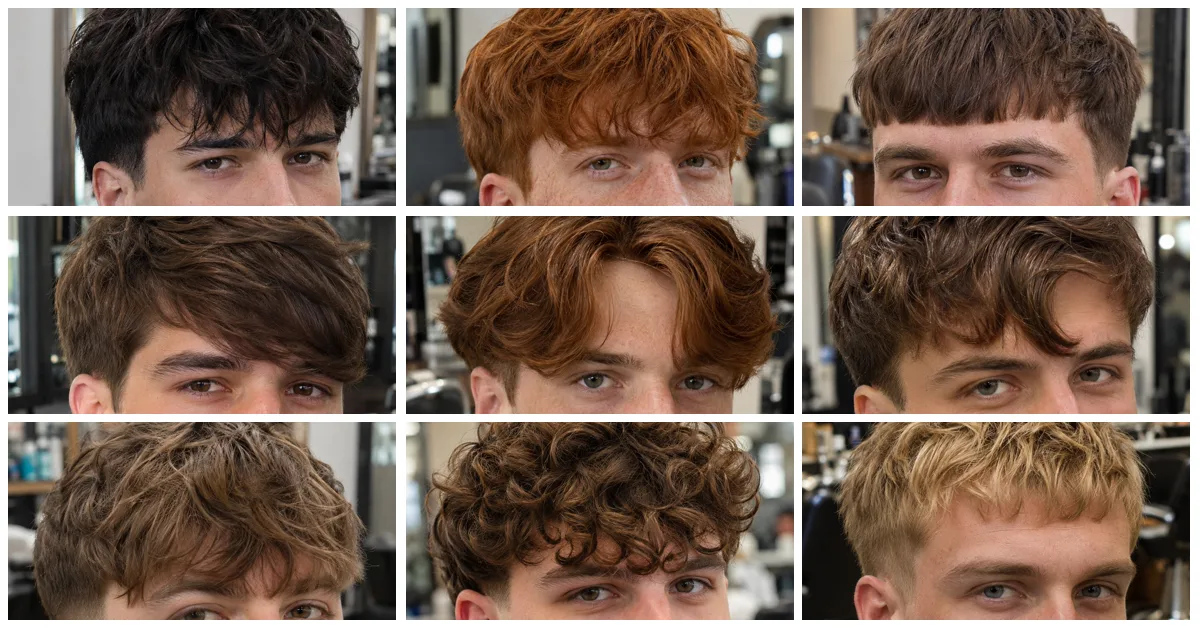
Fringe cut gallery: 14 fringes on the same low taper
Every photo below keeps the sides identical, a low taper that starts just above the ear and never goes to skin, with the camera at the same angle. The only thing that changes is the fringe, so you can compare the shapes and not the haircut around them.
Gallery14 photos · tap to enlarge
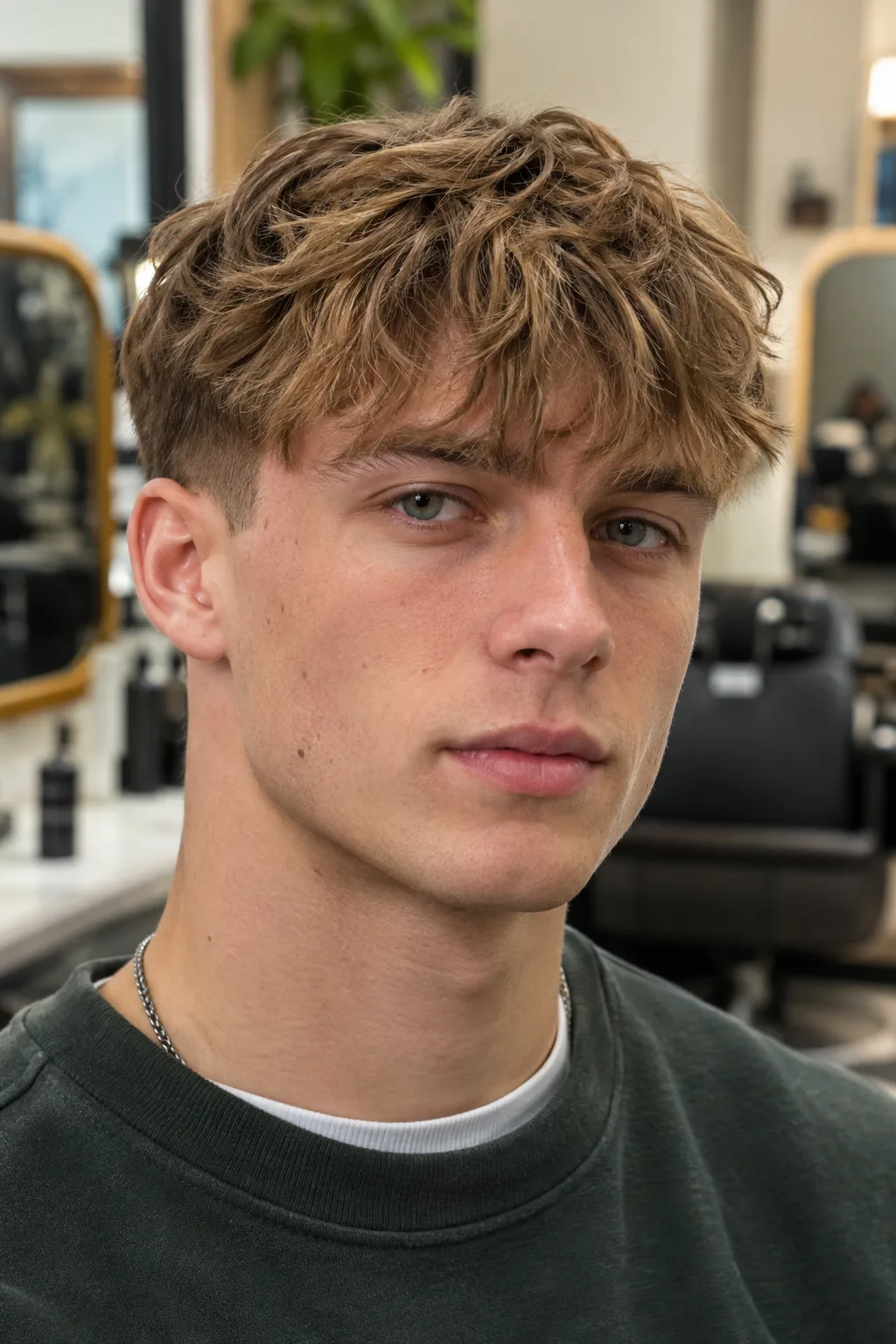
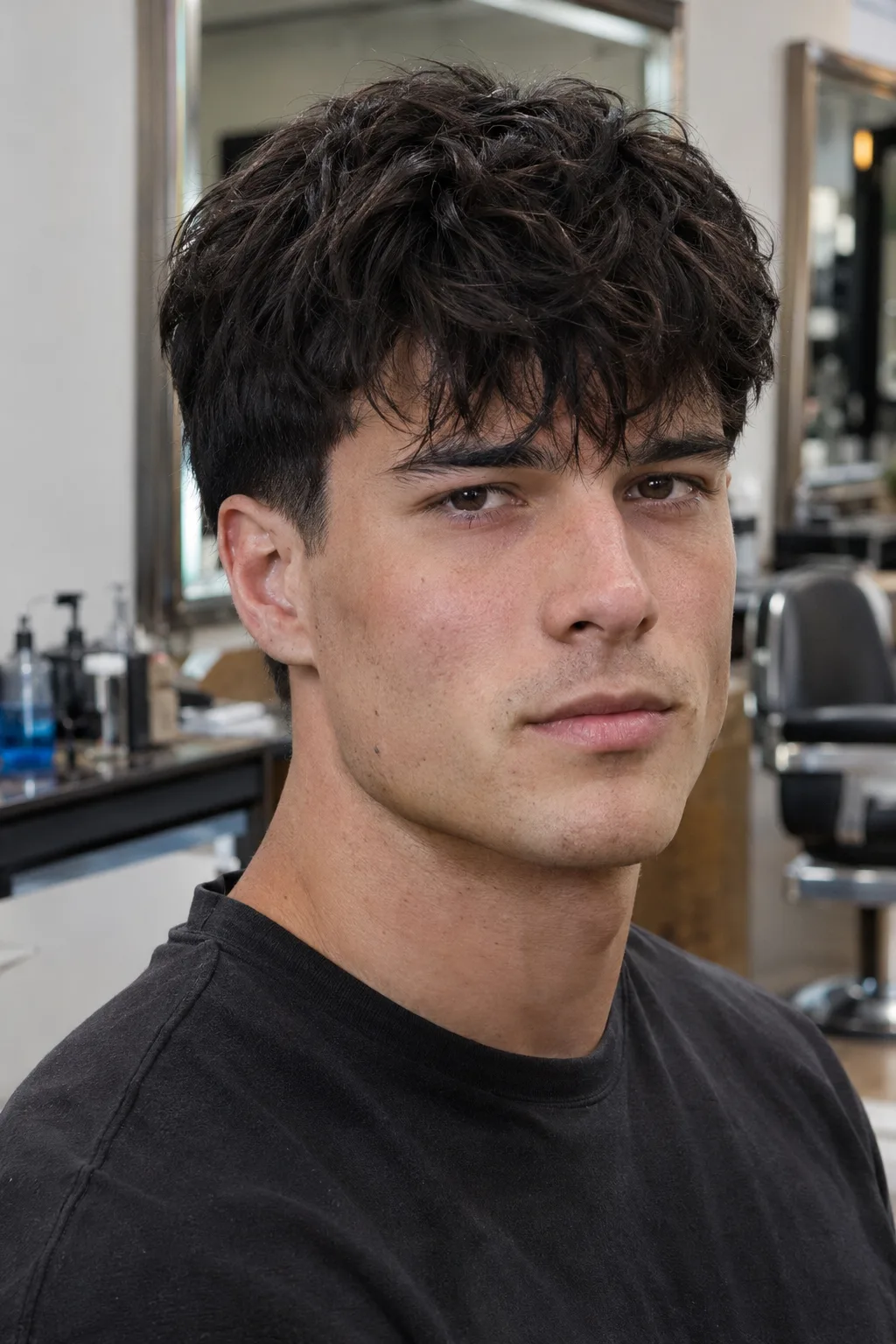
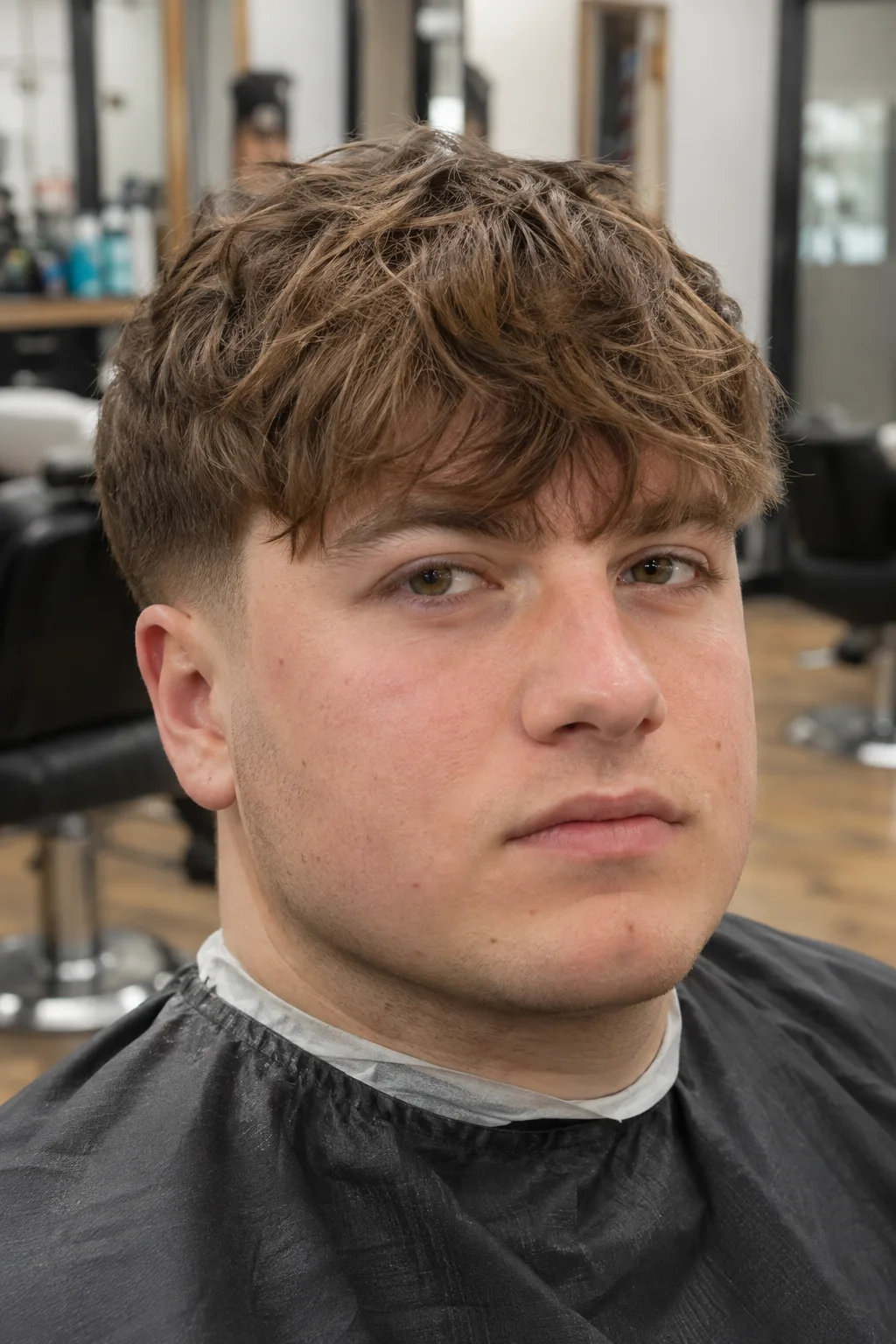
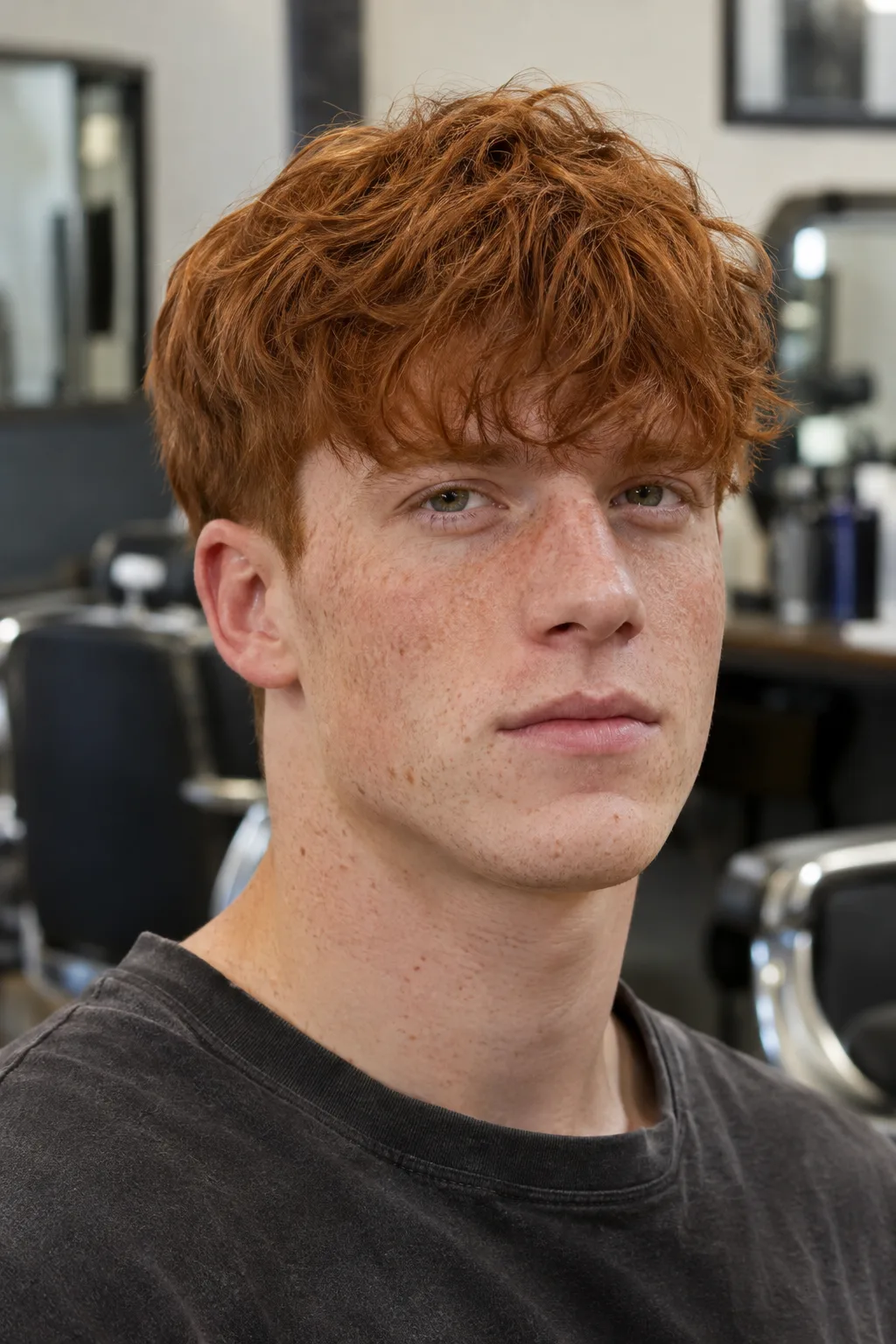
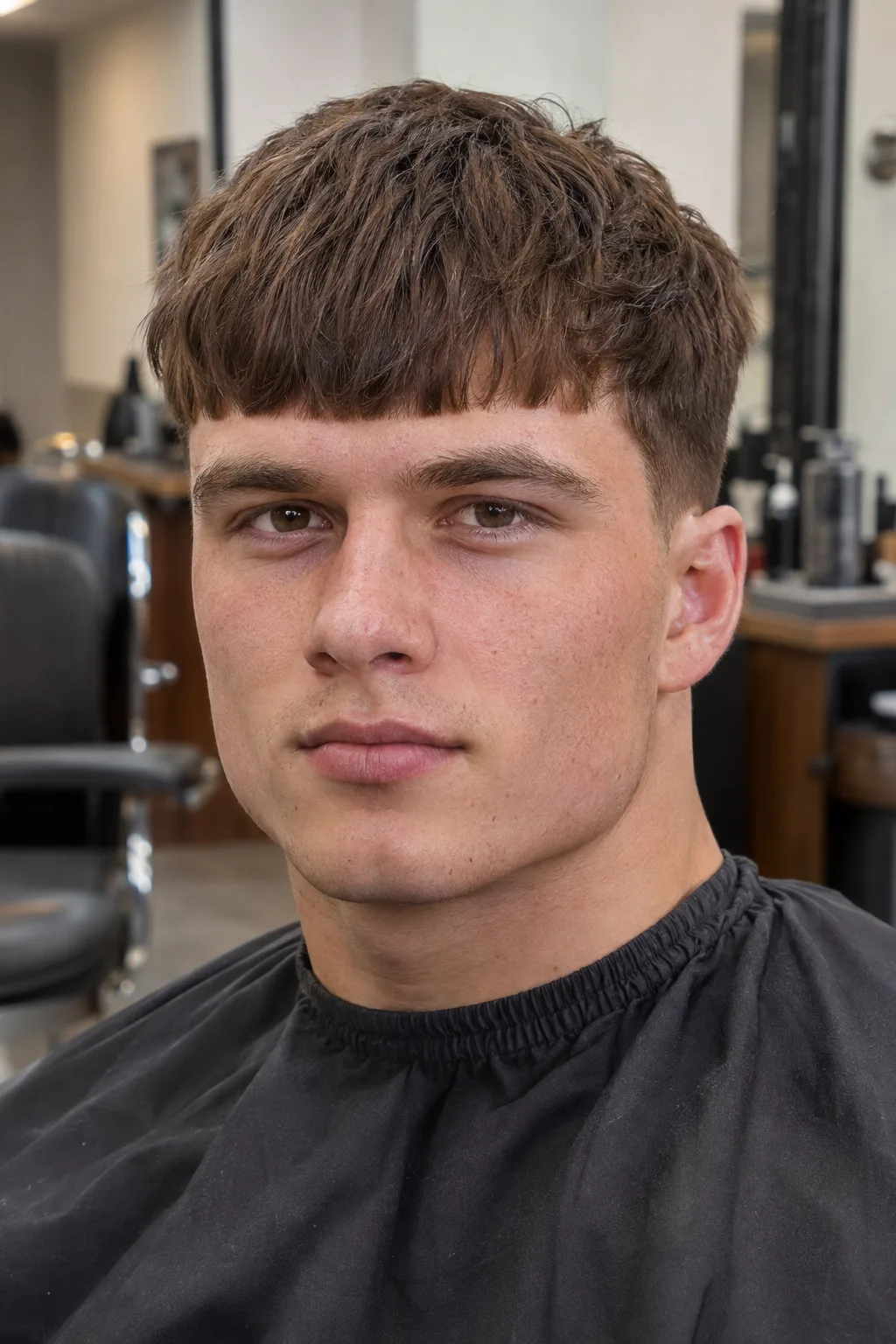
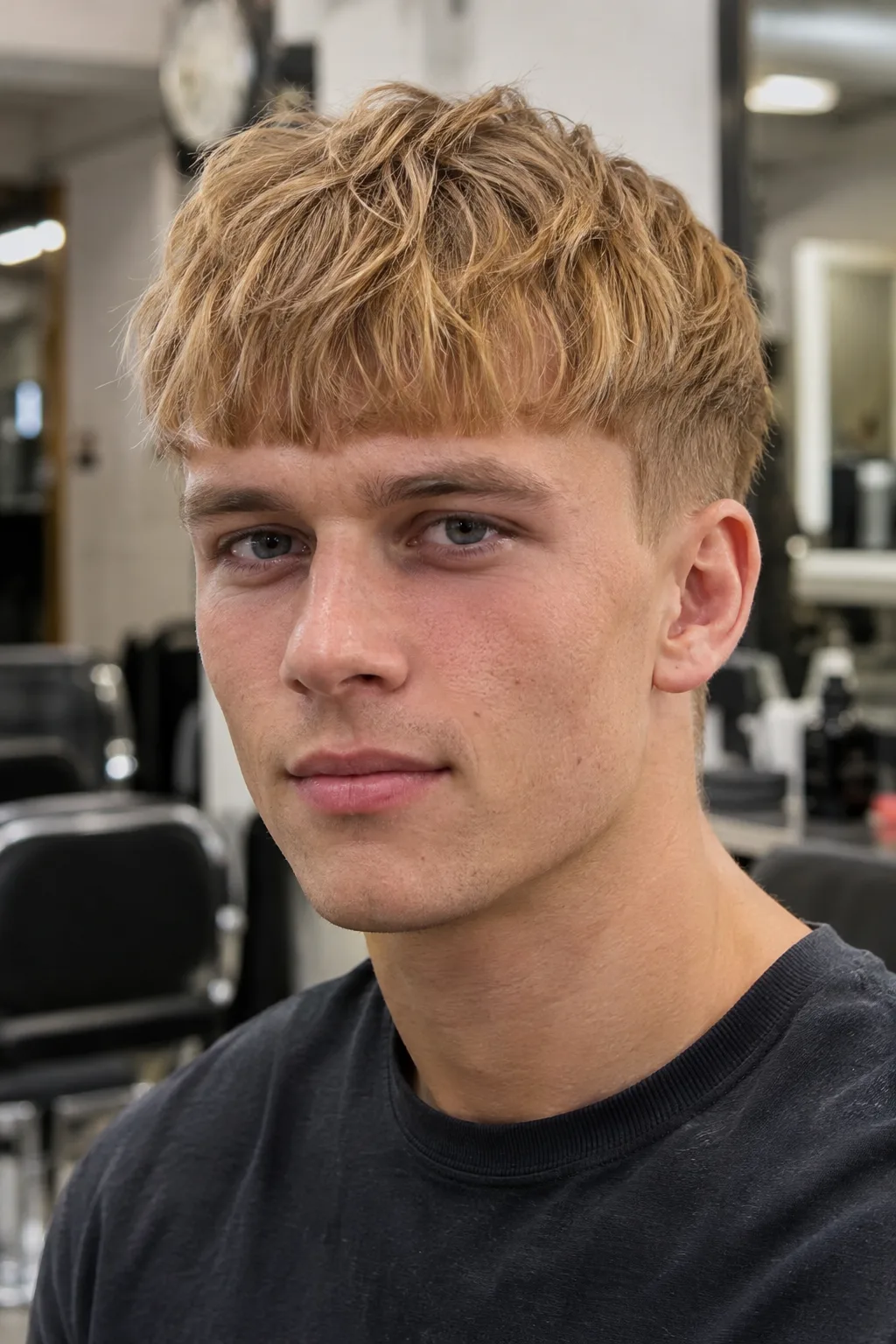
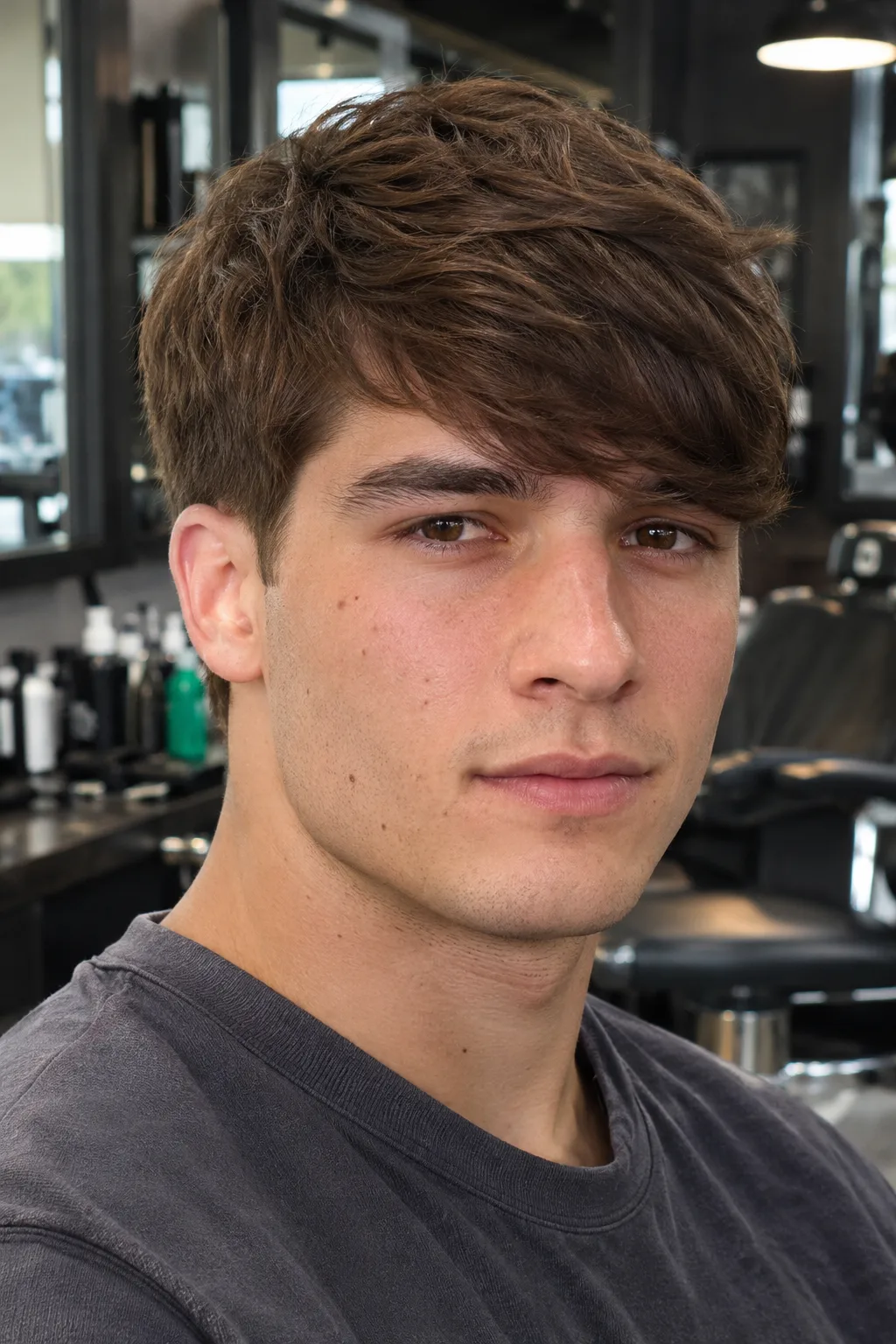
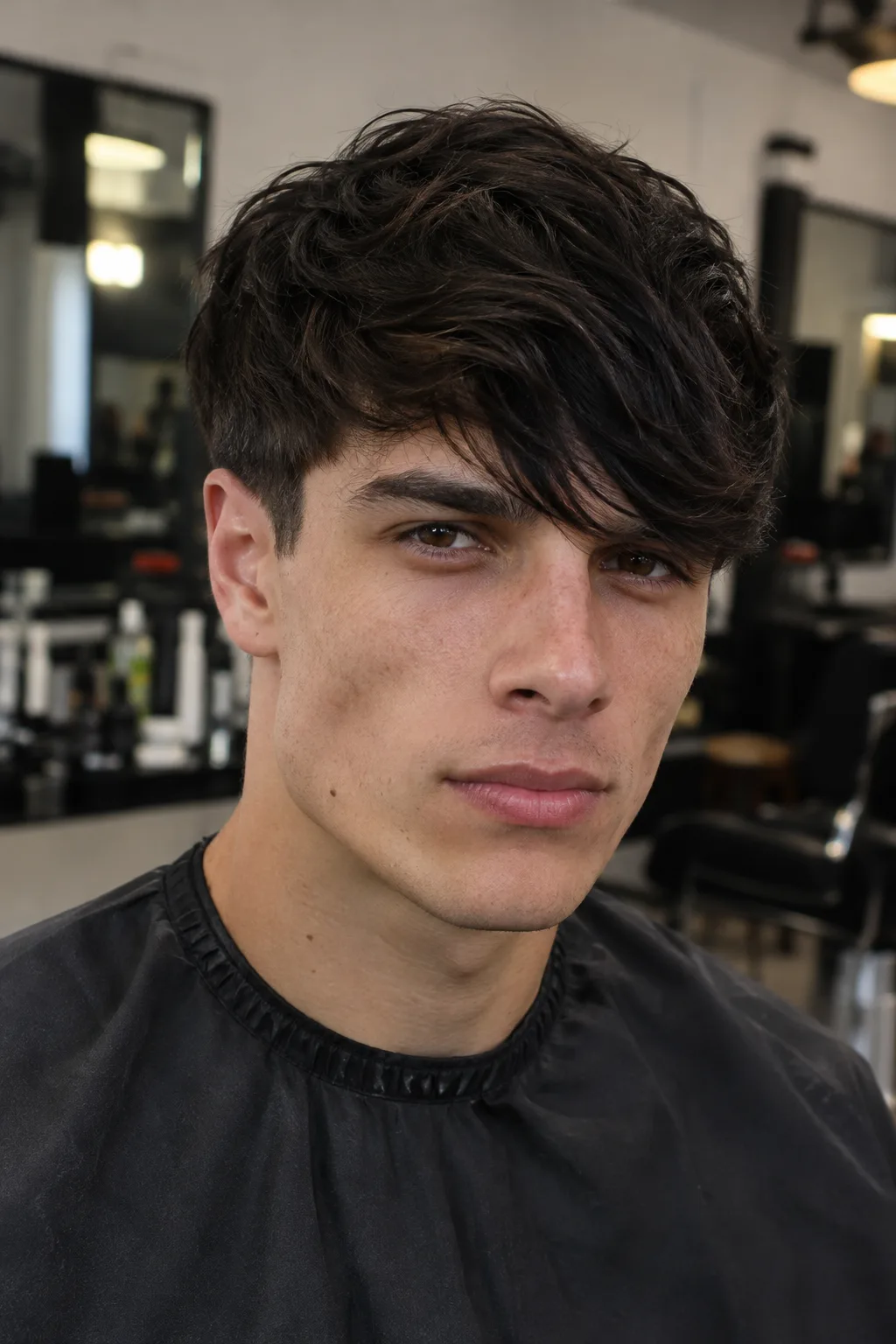
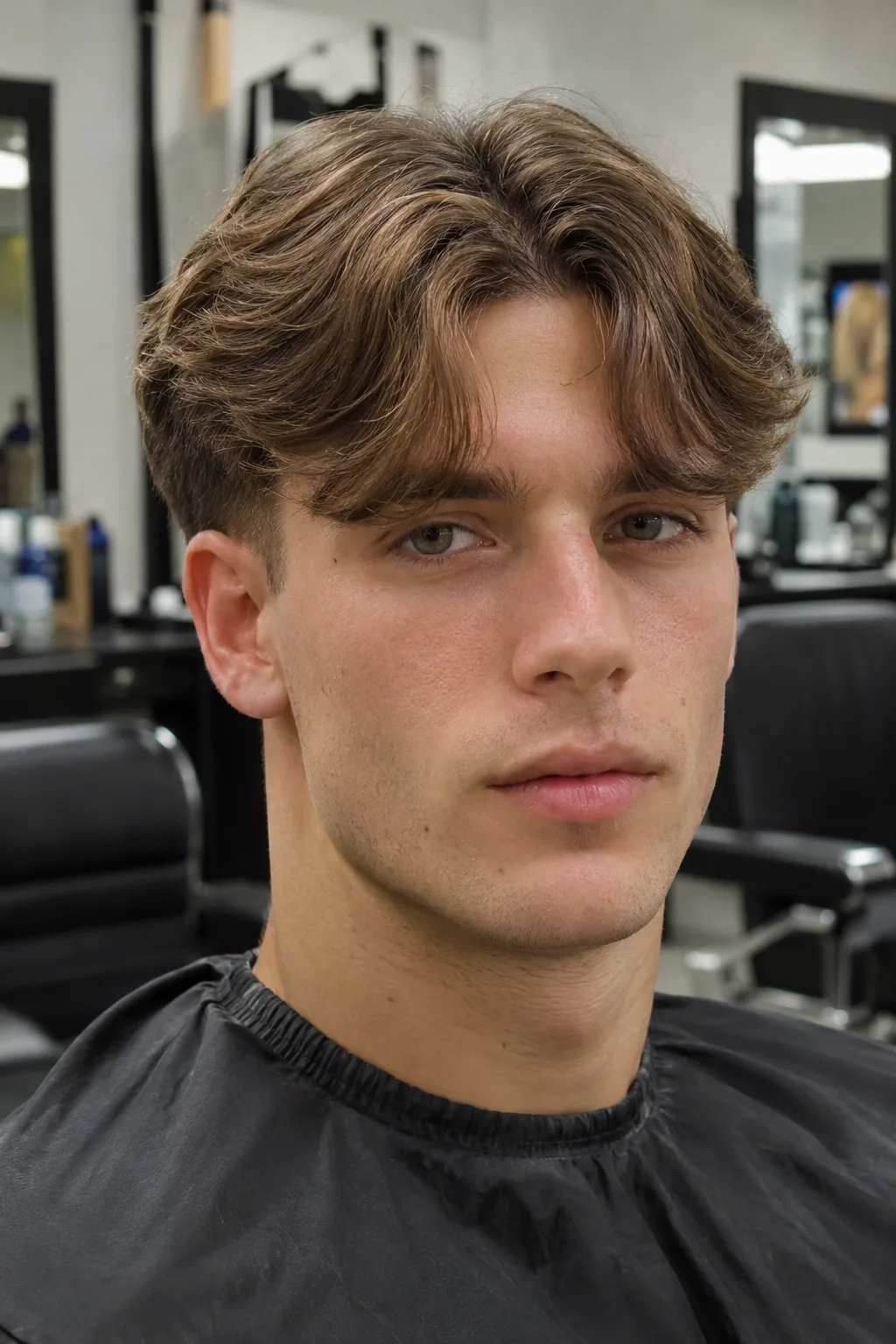
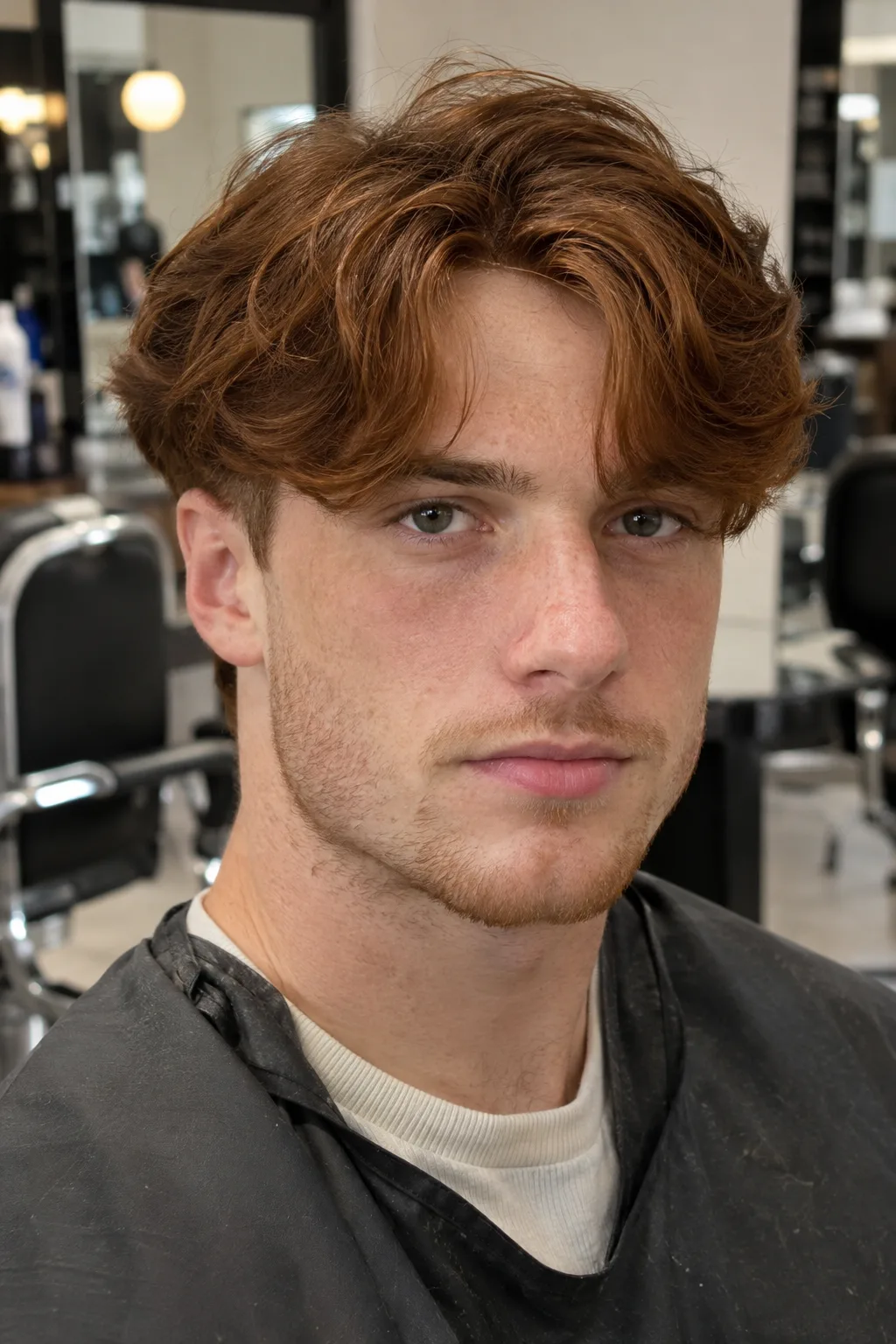
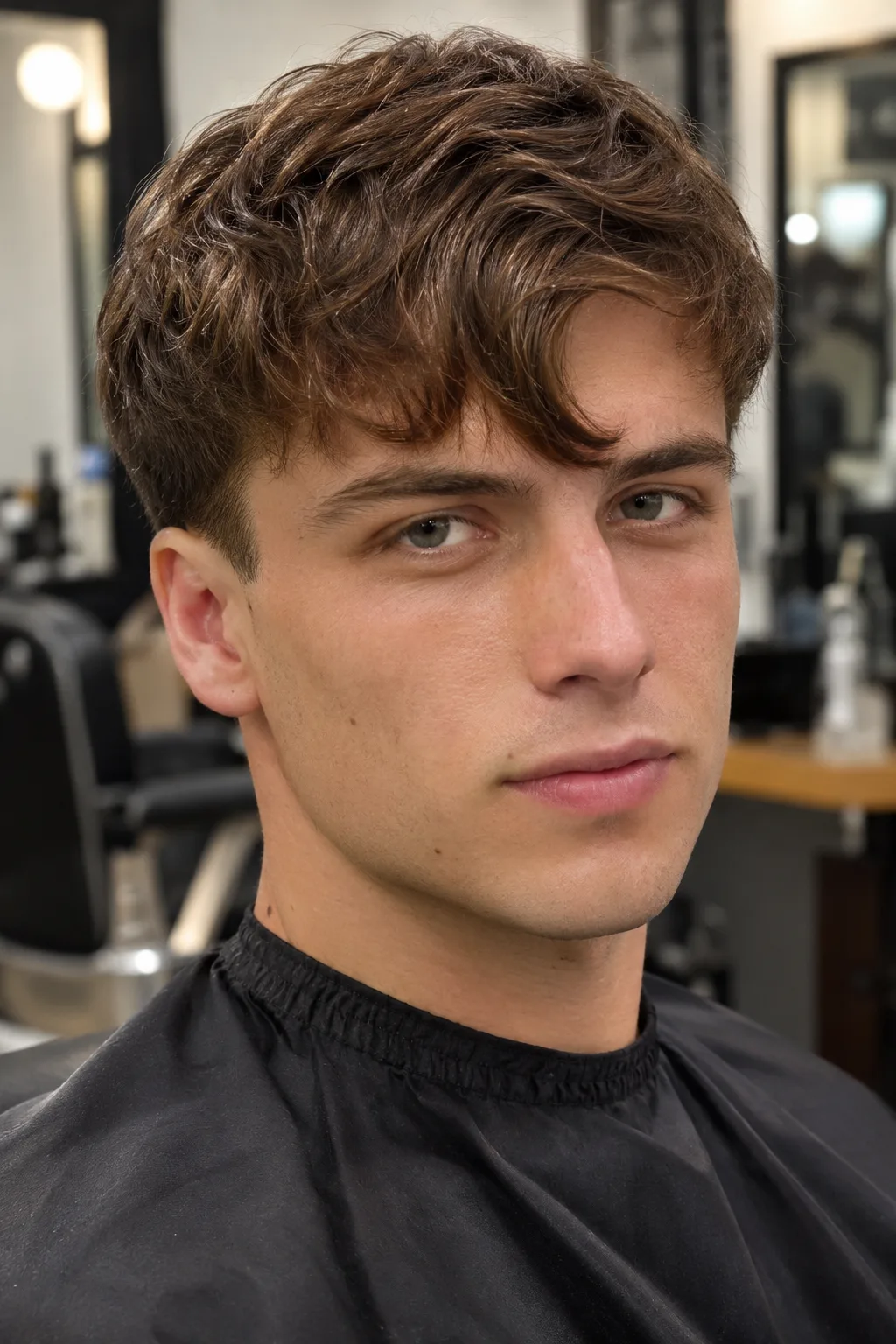
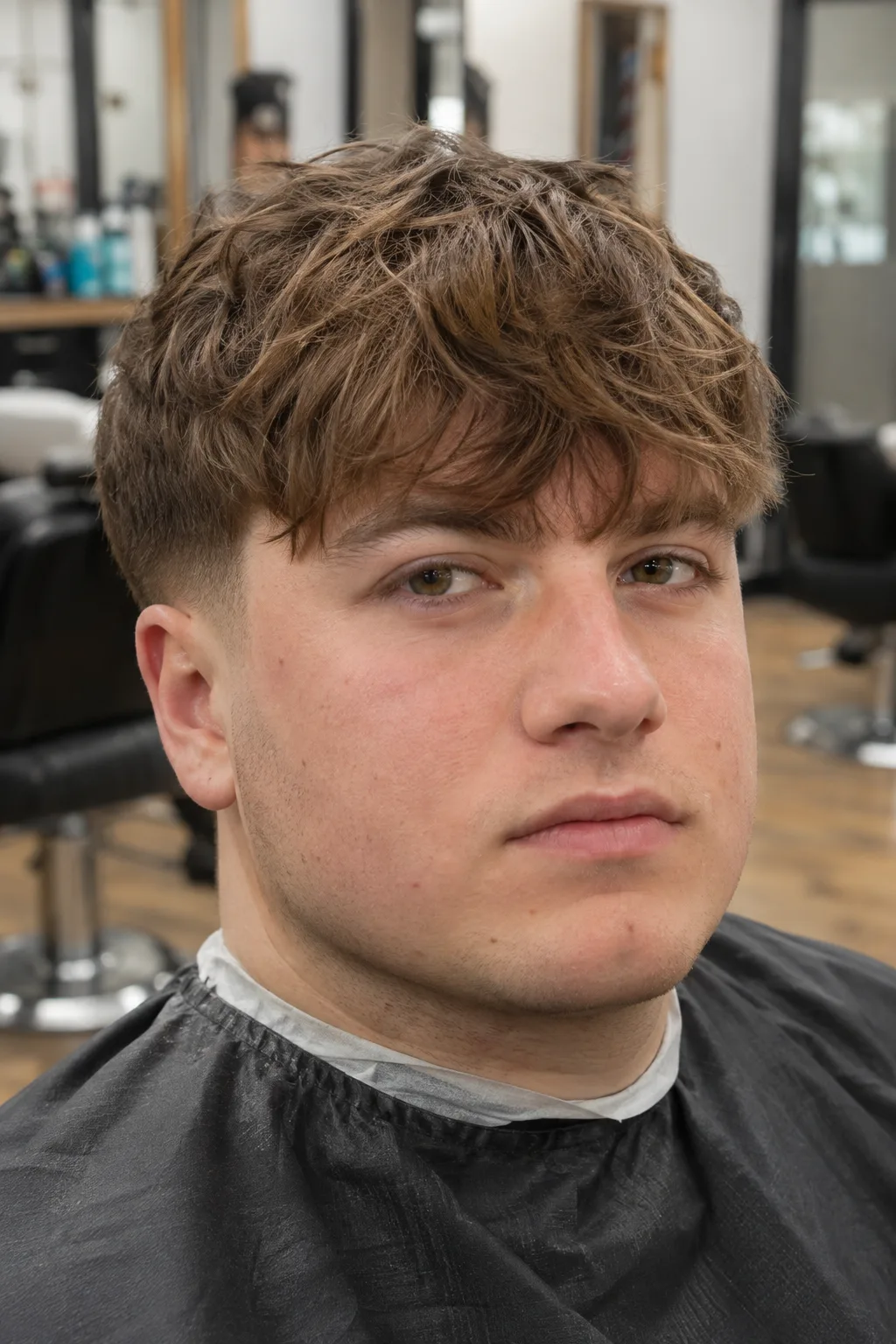
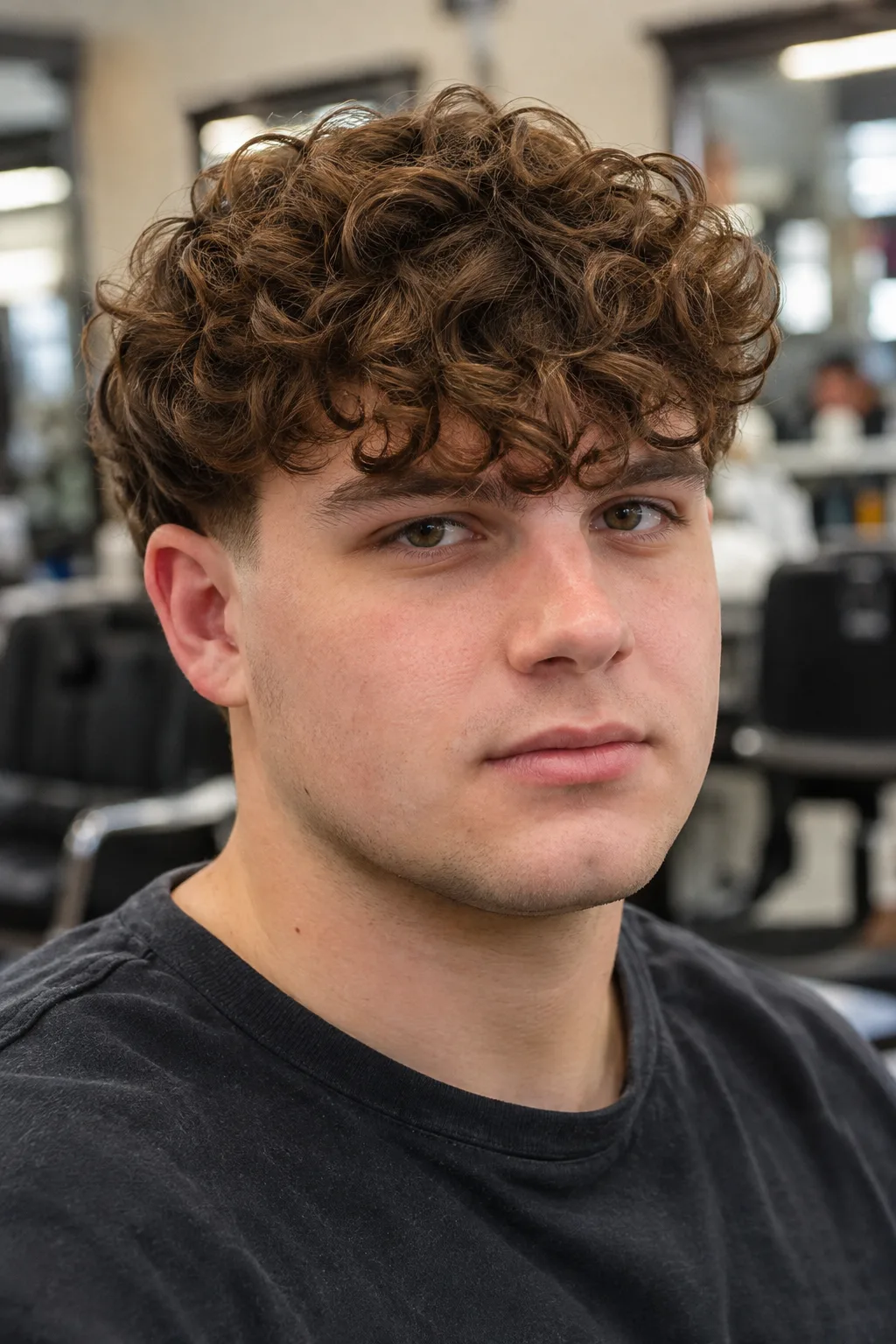
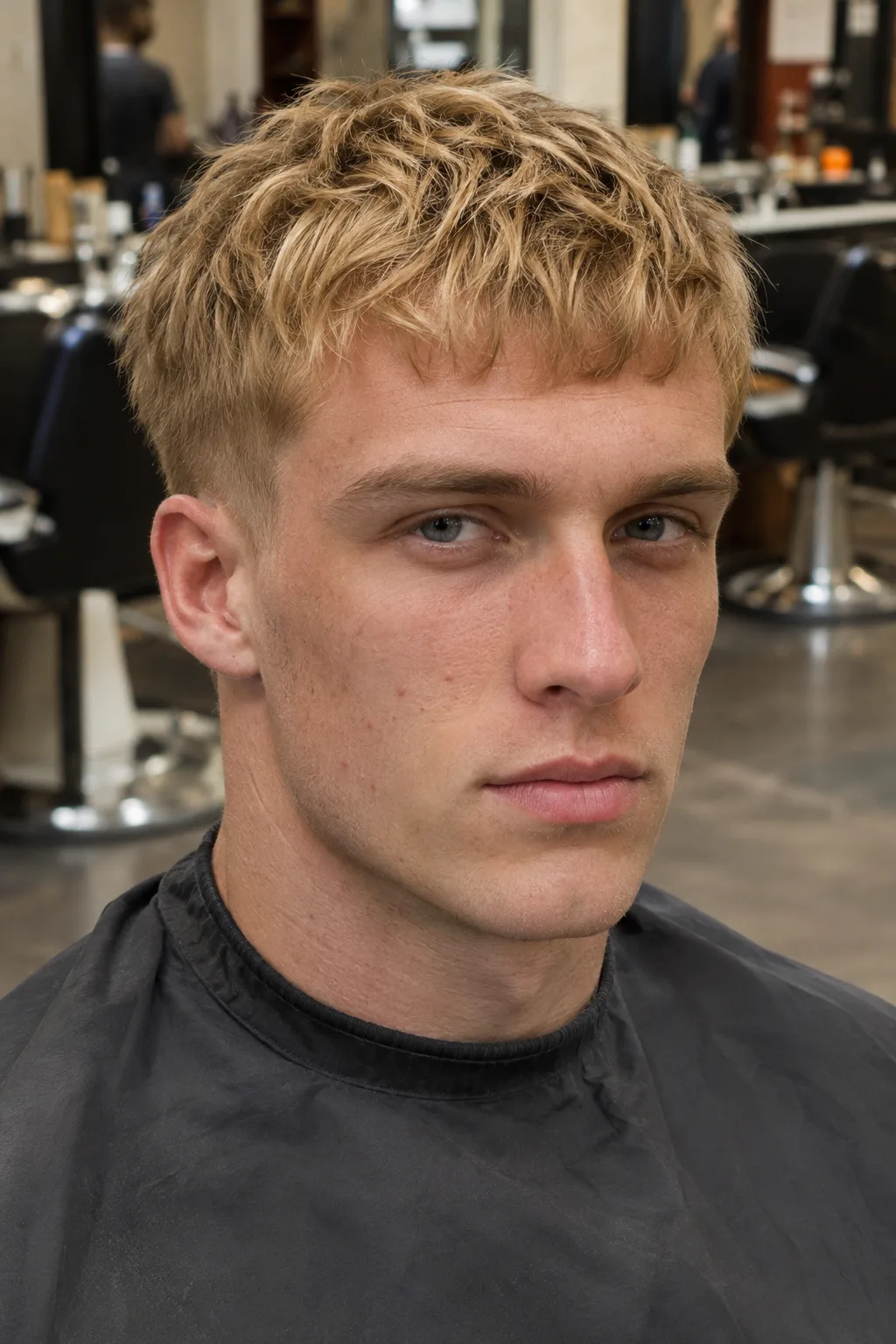
Notice how much the fringe alone changes the face. The long heavy fringe and the straight crop shrink the forehead the most. The curtain fringe opens it back up.
You cannot tell which one works on your own head from someone else's photo. Drop in a selfie and see your face with a fringe before you book.
Which cut makes you look best?
Find out in 60 seconds.
A few quick taps and one selfie, and you'll know. Free account, no card for your first render.
Read your hairline before you pick a fringe
This is the part most fringe guides skip, and it matters more than face shape. A fringe lives right on your front hairline. If the hair there grows in a swirl, a peak or recedes at the corners, the wrong fringe will split, lift or flip no matter how good the cut is.
Check it in thirty seconds: wet your hair, comb the front straight forward, and look at where it wants to go when you let go.
| What you see at the front | What it means | Fringe to get | Fringe to avoid |
|---|---|---|---|
| Hair falls straight forward | No strong growth pattern | Any, including the straight crop | Nothing |
| Hair swirls or stands up in one spot | A front cowlick | Side-swept or textured, with the sweep going the cowlick's way | Straight crop, it splits |
| A V point in the middle | Widow's peak | Side-swept or messy | Curtain fringe, the part lands on the peak |
| Corners recede at the temples | Receding or thinning | Short crop or textured, brought forward | Curtains and long heavy fringes |
| Hair is fine and see-through at the front | Low density | Short crop fringe | Long heavy fringe |
If you have a cowlick
Do not fight it. A cowlick is a swirl in the growth direction and no product holds it flat for a full day. Ask for a side-swept or textured fringe that falls the way the cowlick already pushes, and leave the front a little longer, around 3 inches, so the weight helps it lie down.

If your temples are receding
A fringe is one of the best cuts for a receding hairline, as long as it is short. Bring the front forward and keep it about an inch long with a choppy edge, so it softens the corners instead of drawing a line under them. Long curtains do the opposite: they part right where the hair is thinnest. The French crop is the classic version of this fix.

If you have a widow's peak
A middle part puts the split exactly on the peak and makes it look sharper. Push the fringe to one side or break it up with texture so the point disappears into the shape.
Which fringe cut suits your face shape?
Once the hairline says yes, face shape decides the length. The rule is simple: a fringe shortens the face, so the longer your face, the more fringe you can carry.
| Face shape | Best fringe | Why |
|---|---|---|
| Oval | Any | Balanced already, pick by hairline |
| Round | Messy or textured with height on top | Height adds length, a flat blunt line makes it wider |
| Square | Messy or side-swept | Soft edges offset a strong jaw |
| Long or oblong | Long heavy or curtain | Covering more forehead shortens the face |
| Heart | Side-swept or textured | Breaks up a wide forehead |
| Diamond | Textured or curtain | Adds width at the forehead next to high cheekbones |
Round face
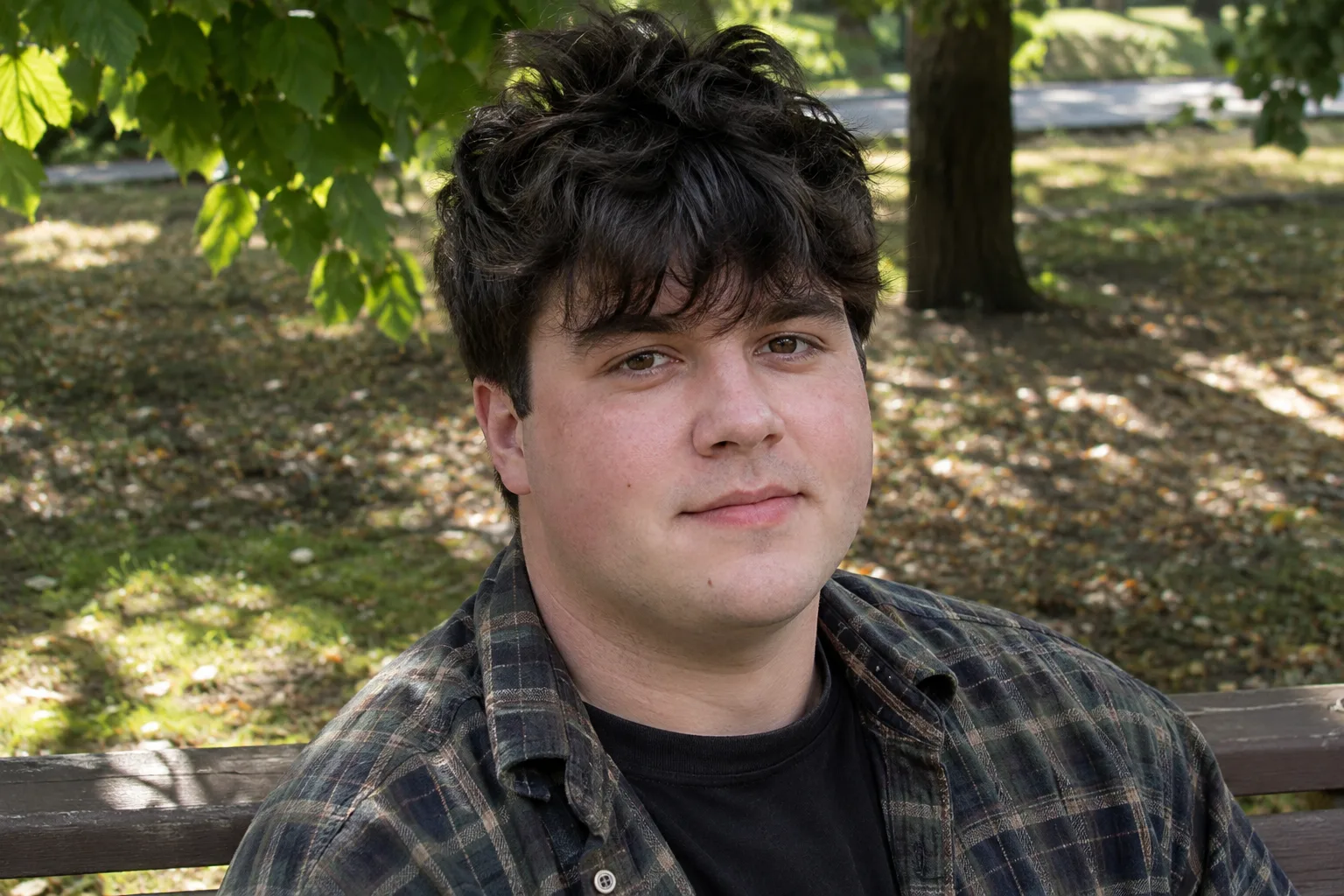
Avoid the straight crop. A flat horizontal line across a round face reads as a circle with a lid. Ask for a messy or textured fringe with an inch or more of height through the crown, and keep the sides tight so the face looks longer.
Long face
You are the person a fringe was invented for. The more forehead it covers, the shorter your face looks, so a long heavy fringe or curtains work, and the sides should not be taken too short.
Square and oval faces
Square faces want softness: messy or side-swept, never a blunt line that echoes the jaw. Oval faces can wear any of the nine. If you are not sure which you are, our guide to the most common face shape shows how to measure it, or use the calculator below.
Measure it instead of guessing
Both numbers in the same unit — the answer is a ratio, so it does not matter which.
Under 1.15 reads round, 1.15 to 1.5 reads oval, over 1.5 reads long. Oval and long split on the jaw rather than the ratio: an oval tapers toward the chin, a long face runs straight down.
Fringe cut by hair type
Hair type changes how short the barber should go, because some hair shrinks and some falls flat.
- Straight hair holds a fringe best and shows every cut line, so texture matters. A point-cut fringe hides growth. See more cuts for men with straight hair.
- Wavy hair is the easiest. A textured or curtain fringe dries with movement on its own.
- Curly hair shrinks up to half its length when dry, so the fringe must be cut dry and left longer than you think. Ask for curls cut one at a time, not thinned with shears.
- Thick hair needs weight taken out of the front or the fringe sits like a helmet.
- Fine hair looks thin when it is long. Keep the fringe short and choppy so it looks denser.
How to ask for a fringe cut
Barbers cut fringes all day, but "a fringe" alone can mean five different lengths. Give three facts: the sides, the length on top, and how the edge is cut. Say it like this:
Say this to your barber
Low taper on the sides, no skin. Leave about 3 inches on top and bring it forward into a textured fringe that sits at mid-forehead, point cut, not a straight line.
How to ask for a fringe cut
- Name the fringe type
Say "textured fringe", "crop fringe", "side-swept fringe" or "curtains". The type tells the barber how to cut the edge, which matters more than the length.
- Say where it should end
Mid-forehead, just above the eyebrows, or an inch below the hairline. Point to the spot on your own forehead, because "short" and "long" mean different things to different barbers.
- Set the sides
A low taper starting above the ear keeps the fringe the focus. Say "no skin" if you do not want a fade down to the scalp. Our low taper with a textured fringe guide covers the pairing in detail.
- Mention your hairline
Tell the barber about any cowlick or receding corners. A good barber will cut the fringe around them, but only if they know before they start.
- Agree the finish
Matte clay for a textured or messy fringe, a light cream for a comma or curtains. Ask them to style it the way you will at home, so you see the real result.
Fringe cut mistakes that cost you a month
A fringe is close to your eyes, so every mistake is on show until it grows out, usually three to four weeks.
- Cutting a blunt line on a cowlick. It splits in the middle by lunchtime. Cost: a month of fighting it with product.
- Going too short on curly hair. Curls spring up and the fringe ends near the hairline. Cost: four to six weeks of regrowth.
- Thinning a fine fringe. It turns see-through and shows the scalp. Ask for point cutting instead.
- Curtains on receding temples. The part sits where the hair is thinnest. Pick a short crop fringe.
- Skipping the trims. A fringe past the eyebrows stops looking like a cut and starts looking like you missed an appointment. Book every 3 to 4 weeks.
- Sides too long. Without short sides the fringe blends into a bowl. Keep the taper clean.
How to style a fringe at home
- Towel dry until damp, not wet.
- Blow dry the front forward and slightly to the side the hair wants to go, using your fingers, not a brush.
- Rub a pea-sized amount of matte clay between your palms and work it into the front from underneath.
- Twist a few pieces at the tip to separate them. For a messy fringe, push it around with your fingers and leave it.
It takes about three minutes. If your fringe needs more than five, the cut is wrong for your hairline, not your styling.
Can you see a fringe on yourself before the cut?
Yes, and it is the only real way to know. Everything above narrows the choice, but there is a wall: you cannot see your own face with a fringe until the hair is already on the floor. A fringe changes how much forehead shows, which changes your whole face, and a photo of someone else does not tell you that.
HairstyleAtlas puts the fringe on your own photo. The first look is free with no card: one hairstyle, front view. After that, Plus is $9 a month for every cut and color, and a before and after sheet you can show your barber. We tested how this works against other apps in our guide to seeing a haircut on your face.
Get the textured fringe unless your hairline says otherwise. It suits the most faces, grows out without a hard line and is the fringe most barbers cut best. Check your hairline first: a cowlick wants a side-swept fringe, receding temples want a short crop, and a long face can carry the long heavy fringe nobody else can. Then name the type, point to where it ends, and say "no skin" on the sides. If you want something even lower effort, a textured crop is a fringe cut taken short.
Frequently asked questions
A men's fringe haircut leaves the front of the top long, usually 2 to 4 inches, and lets it fall forward over the forehead instead of styling it up or back. The sides are kept short, most often with a taper or fade. The textured fringe, crop fringe and curtains are the most common versions.
There is no difference in the cut. Fringe is the British word and bangs is the American one. In the US, fringe is mostly used for men's cuts and bangs for women's.
A fringe that suits your hairline and face shape usually looks younger and softer than a pushed-back cut, which is why it is one of the most requested men's cuts. The ones that look bad are the wrong type for the hairline, such as a blunt line on a cowlick, or a fringe that has grown into the eyes.
Skip a long fringe if you have a strong front cowlick, very fine see-through hair or receding temples, and avoid a straight blunt line on a round face. In most of those cases a short crop or side-swept fringe still works, so it is rarely a flat no.
Usually younger. A fringe covers part of the forehead and softens the hairline, which are two of the first places age shows. A long, heavy fringe on a short face can look boyish rather than younger, so keep the length matched to your face.
It shortens it. Covering the forehead makes a long face look more balanced, softens a square jaw and hides a high or receding hairline. On a round face it can make the face look wider if it is cut flat, so add height on top.
Start with your hairline, not a photo of a celebrity. Comb the front forward while wet and see where it falls, then pick from the hairline table above, then match the length to your face shape. Trying it on a photo of yourself before the cut is the fastest way to check.
Some are. A straight crop fringe or a comma fringe needs a trim every 3 to 4 weeks and daily styling. A messy, textured or curly fringe is low maintenance because it is meant to look undone and hides regrowth.
You can trim one, but it is easy to go too short. Cut dry, point the scissors up into the ends instead of cutting straight across, and take off less than a quarter inch at a time. For the first cut, go to a barber so the shape is right.
Preview it on your own photo: Men's Hairstyle Try-On.
Share article
About the author

Related posts
Men's Haircuts · 12 min
Modern Mod Cut: 14 Variations and How to Ask Your Barber
The modern mod cut is decided at the sides, not the fringe. 14 variations, which hair type and face shape it suits, the mistakes that cost three months, and the exact words for your barber.

Men's Haircuts · 14 min
Man Wolf Cut: 15 Ways to Wear It and How to Ask Your Barber
A men's wolf cut is decided at the sides, not on top. See 15 versions from classic to low taper, which one suits your hair type and face shape, and the exact words for your barber.
Men's Haircuts · 13 min
Fade Fohawk: 14 Faux Hawk Fades and How to Pick Yours
A fade fohawk is a faux hawk with faded sides. The ridge is the easy part; the fade decides how loud it reads. 14 versions compared, which fade suits you, and what to tell your barber.
Men's Haircuts · 15 min
Taper Burst Fade: 14 Looks and the Words That Stop Your Barber Going to Skin
A taper burst fade curves around the ear, never goes to bare skin and keeps the back long. See it on 14 different tops, which hair type it suits, and exactly what to say in the chair.
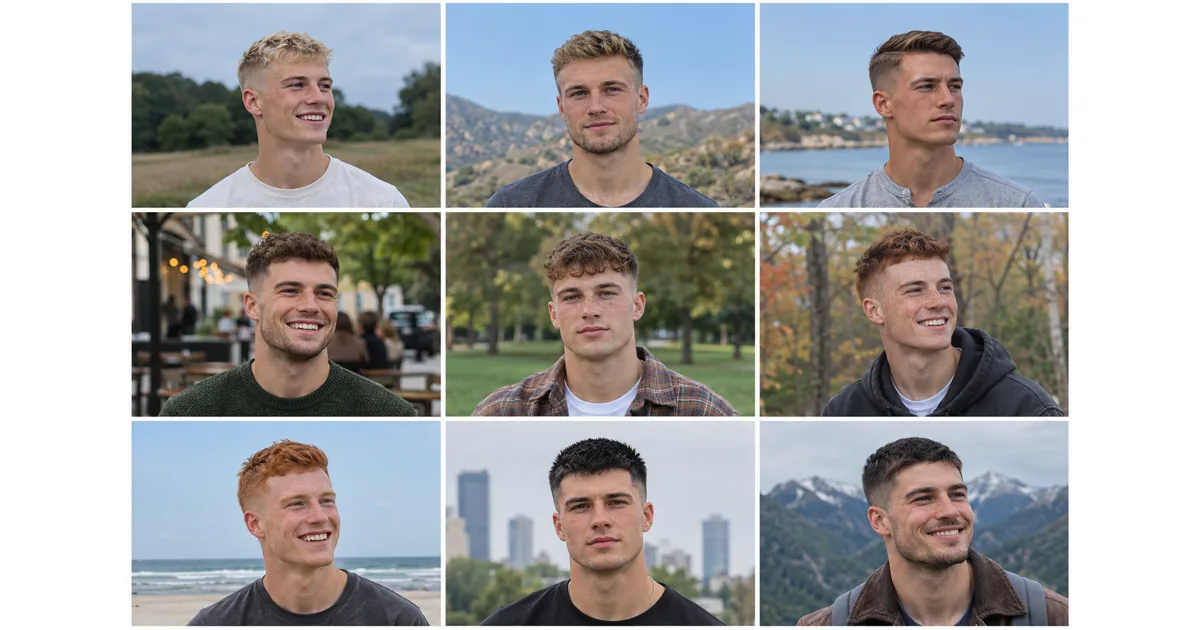
Men's Haircuts · 13 min
Men's Short Fade Cuts: 14 Looks and What to Ask Your Barber
14 men's short fade cuts on the same mid fade, matched to your hair type, plus the fade height rule most guides skip and the exact words to say in the chair.
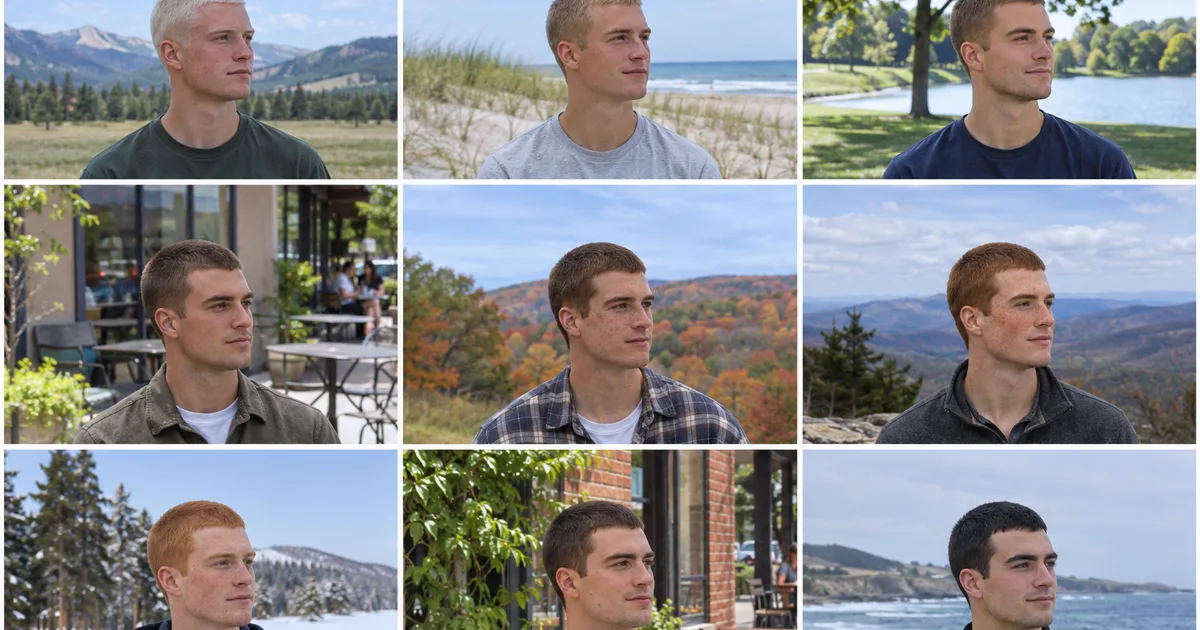
Men's Haircuts · 13 min
Taper Buzz Cut: 14 Looks and the Right Taper for Your Face
A taper buzz cut is one even length on top with the edges tapered shorter. The taper height is the only thing you can shape, so pick it for your face. 14 looks, the 3/2/1 guard recipe and the exact words for your barber.