Wispy Bangs: 14 Looks and the 1-Inch Rule Behind Them
Oleh Onysko 1 October 2026 16 min read
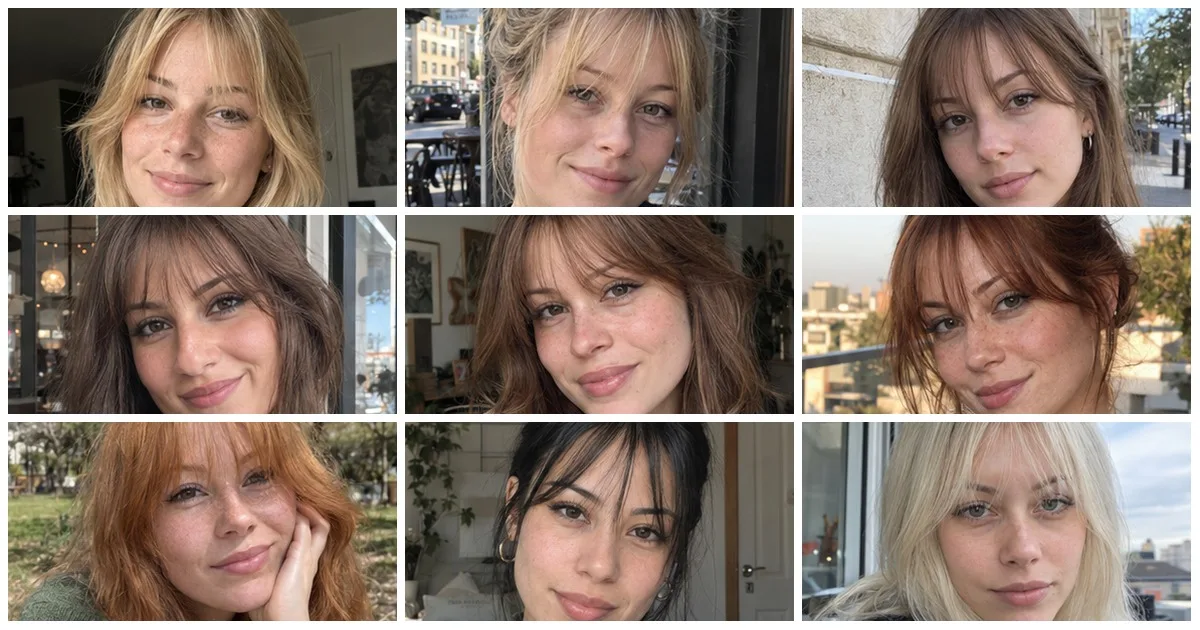
In this article
Wispy bangs are a thin, see-through fringe: you can see your forehead between the pieces, and the ends are feathered instead of cut in a straight line. What makes them wispy is not thinning shears or styling. It is how little hair goes into the fringe in the first place.
That is the part most people never get told, and it is why so many "wispy" requests come out of the salon as a heavy blunt fringe that the stylist then tries to hack lighter. Get the section right and the rest is easy. Below are 14 versions to point at, which one suits your face and hair type, the exact sentence to say in the chair, and how to cut or fix them at home.

What Are Wispy Bangs?
Wispy bangs are a sparse fringe that sits at or just below the eyebrows with visible gaps of skin between the strands. They are lighter than a full fringe, softer at the edge, and usually a little longer at the outer corners so they melt into the hair around your face. You will also see them called see through bangs, the name Korean salons made popular for the same idea.
Here is how they compare with the fringes people confuse them with:
| Fringe | Density | Edge | Where it sits | Grow-out |
|---|---|---|---|---|
| Wispy bangs | Sparse, forehead shows through | Point-cut, feathered | At or just below the brows | Easy, blends in within weeks |
| Blunt bangs | Full, no skin showing | Straight line | Brows or just above | Hard, a visible line for months |
| Curtain bangs | Medium, split in the center | Curved, sweeps outward | Cheekbones at the sides | Easy, becomes layers |
| Side bangs | Medium | Diagonal | Swept across one brow | Easiest |
| Messy bangs | Medium to full | Choppy, piecey | Brows or below | Medium |
Messy bangs and wispy bangs get mixed up most. Messy bangs keep their weight and get their look from choppy ends. Wispy bangs start with less hair. You can have messy wispy bangs, but a full fringe roughed up at the ends is not wispy, it is just messy.
The 1-Inch Rule: Wispy Bangs Are Cut Thin, Not Thinned
The single decision that makes or breaks wispy bangs happens before a single strand is cut: how deep the stylist takes the fringe section.
A standard full fringe is a triangle that reaches about 2 to 3 inches back from your hairline. Wispy bangs need a shallow triangle, roughly 1 inch deep, so only the front row of hair falls forward. Fewer hairs means gaps, and the gaps are the whole look.
The common mistake is the reverse: take a full section, cut it, then run thinning shears through it to "make it wispy". That leaves a fringe full of short broken hairs that stick up and frizz, and it still reads as heavy at the root. You cannot thin your way to wispy.
Two more details matter:
- Point-cut ends. The stylist snips into the ends vertically so they feather, rather than cutting across. A straight line instantly looks blunt, however few hairs are in it.
- Longer at the corners. The outer pieces should be 1/2 to 1 inch longer than the center, so the fringe blends into the hair beside your face instead of ending in a box.
If you already have a full fringe, this is also how you turn normal bangs into wispy bangs: let the back rows of the fringe grow and blend them into the rest of your hair, then point-cut only the front row.
14 Wispy Bangs Looks to Show Your Stylist
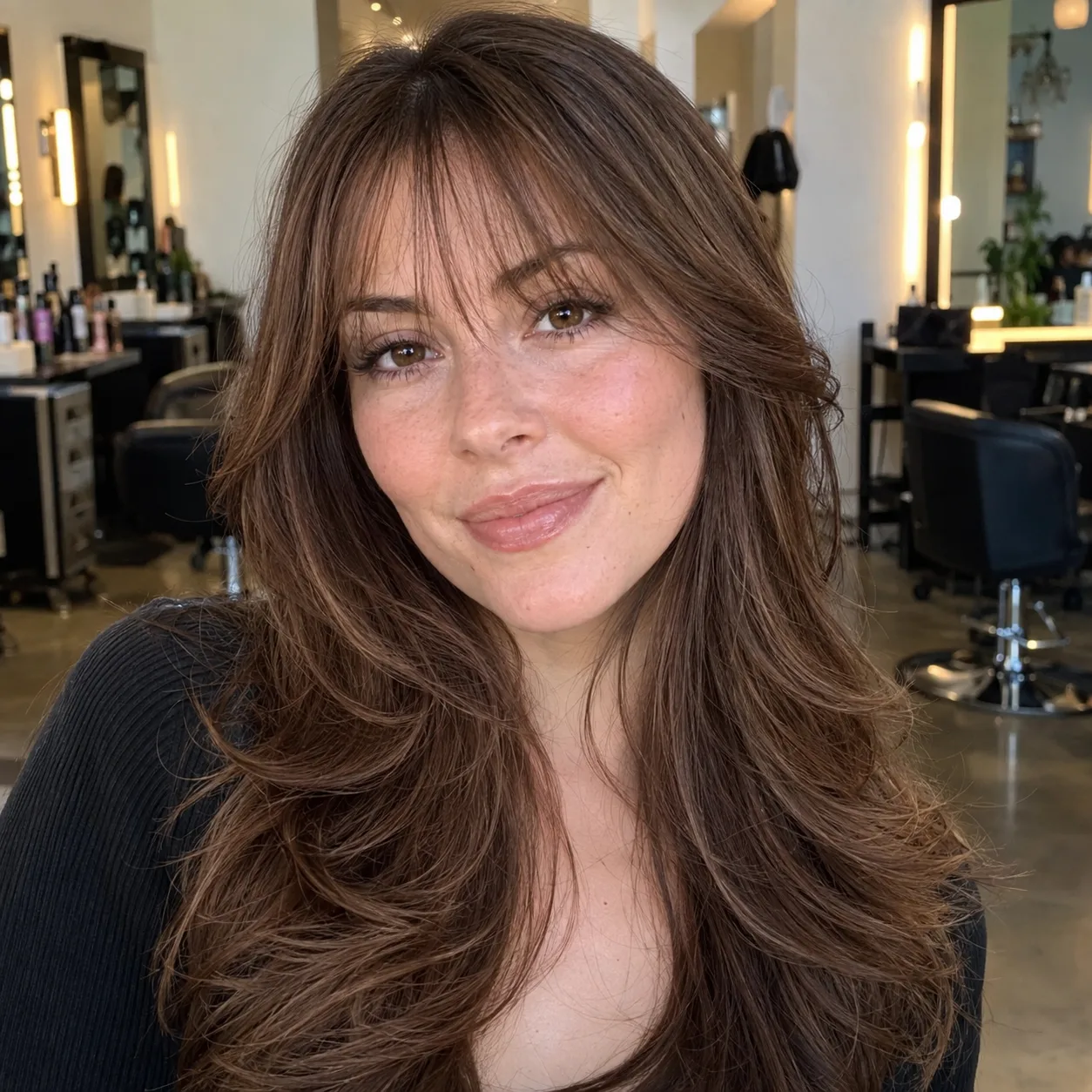
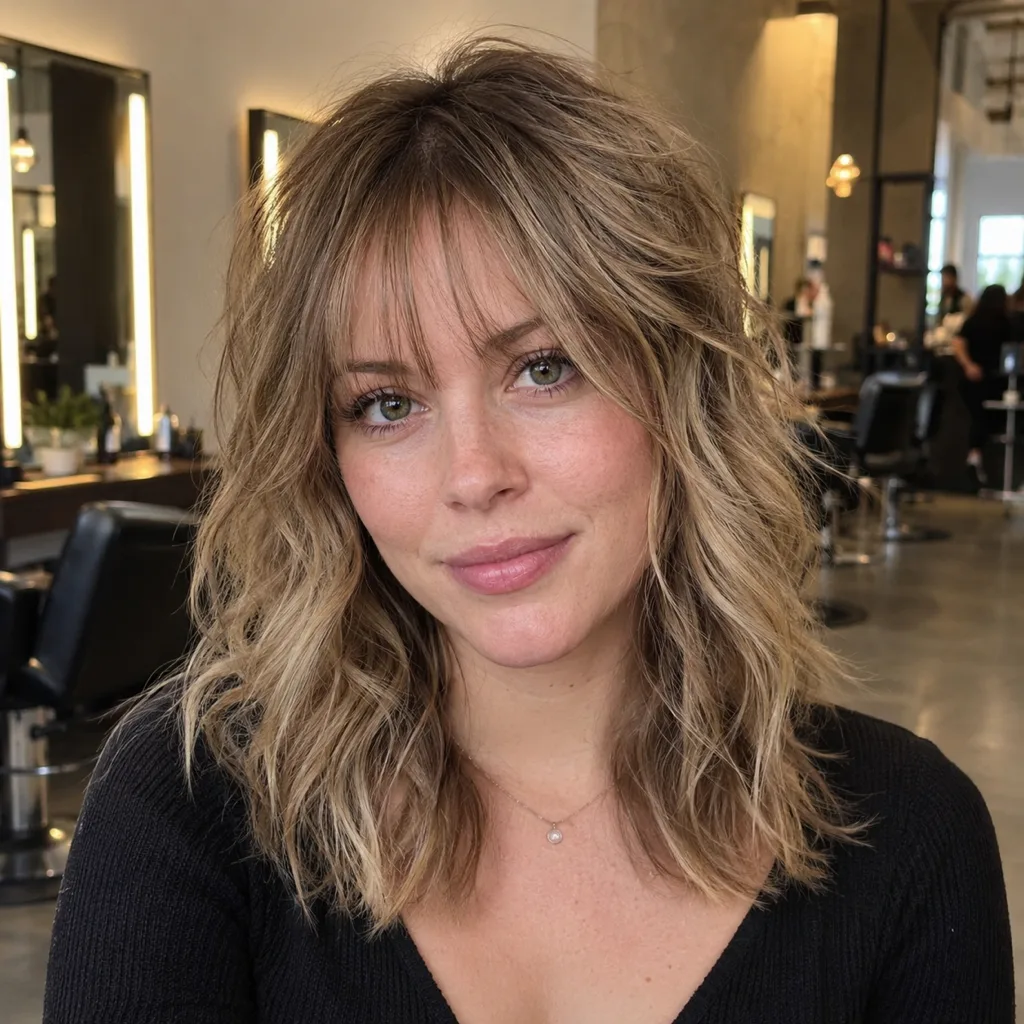
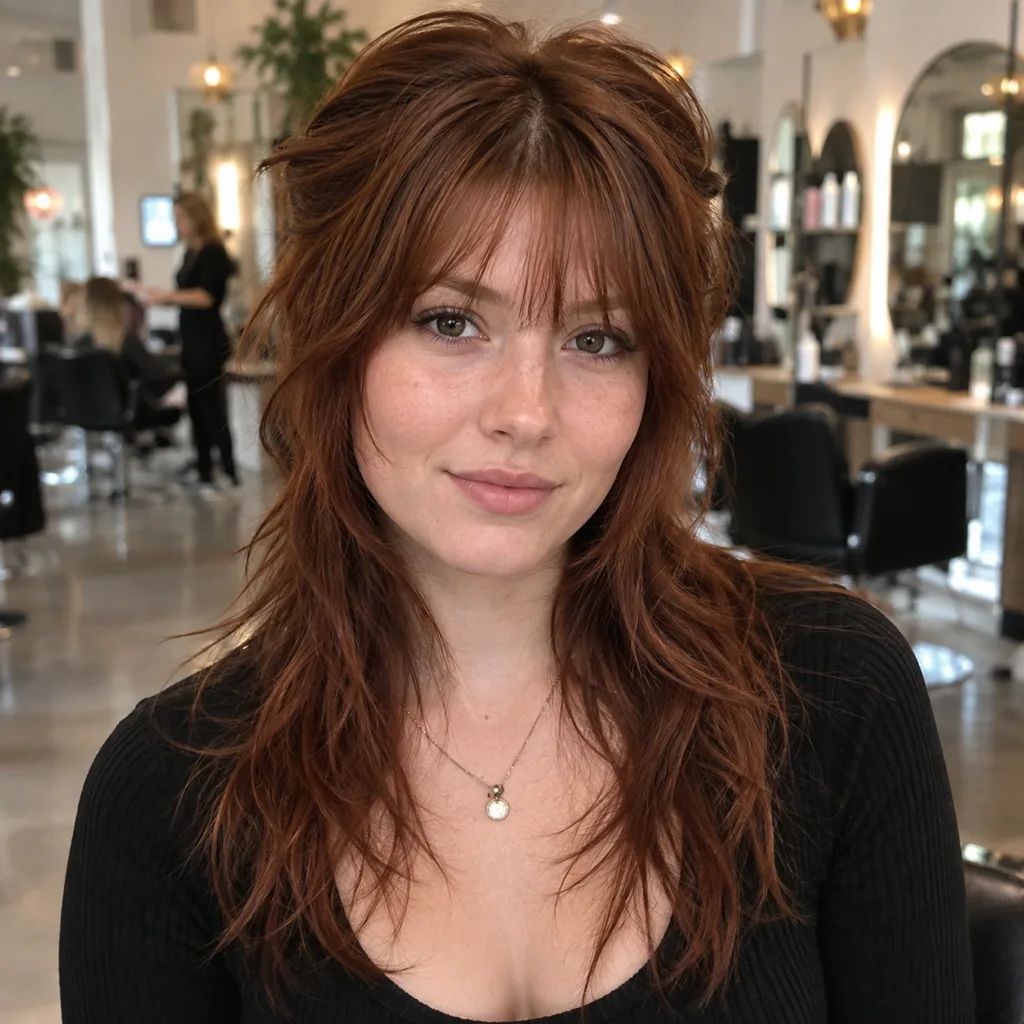
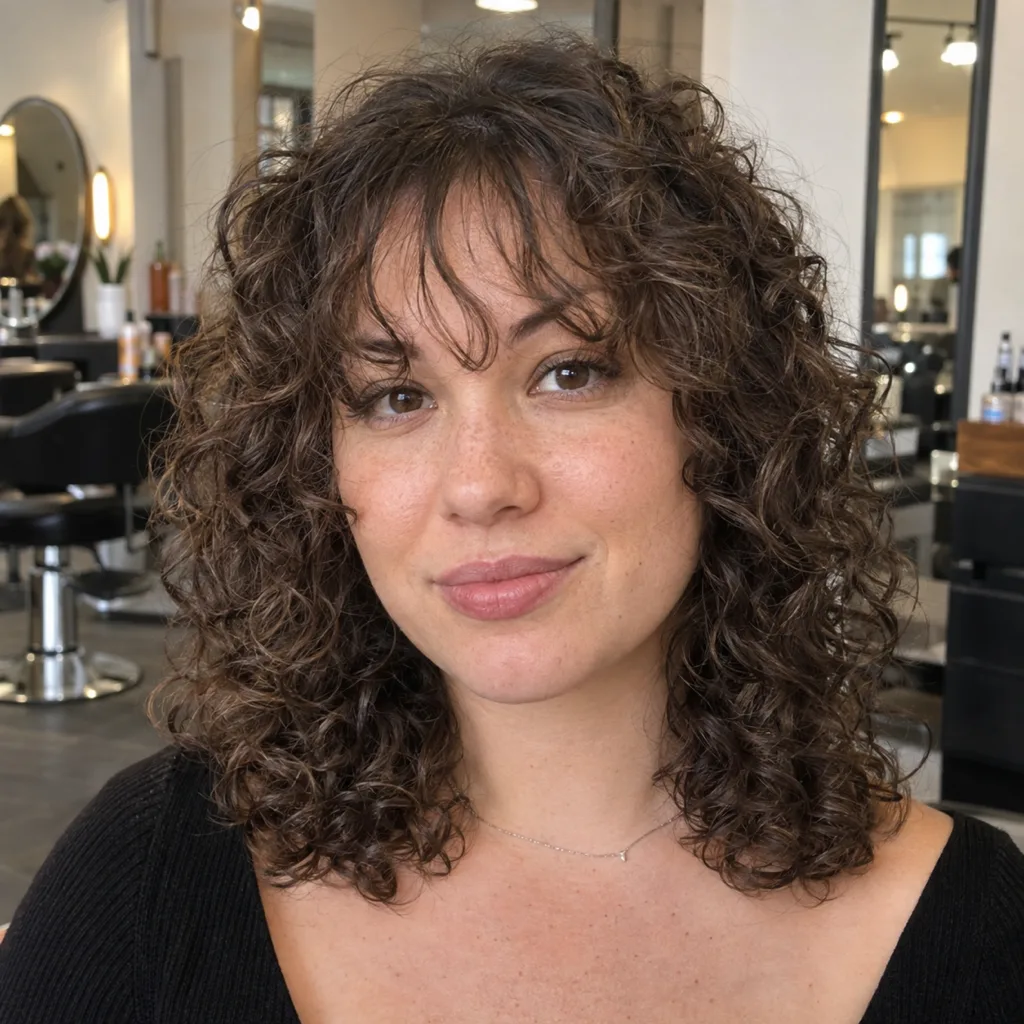
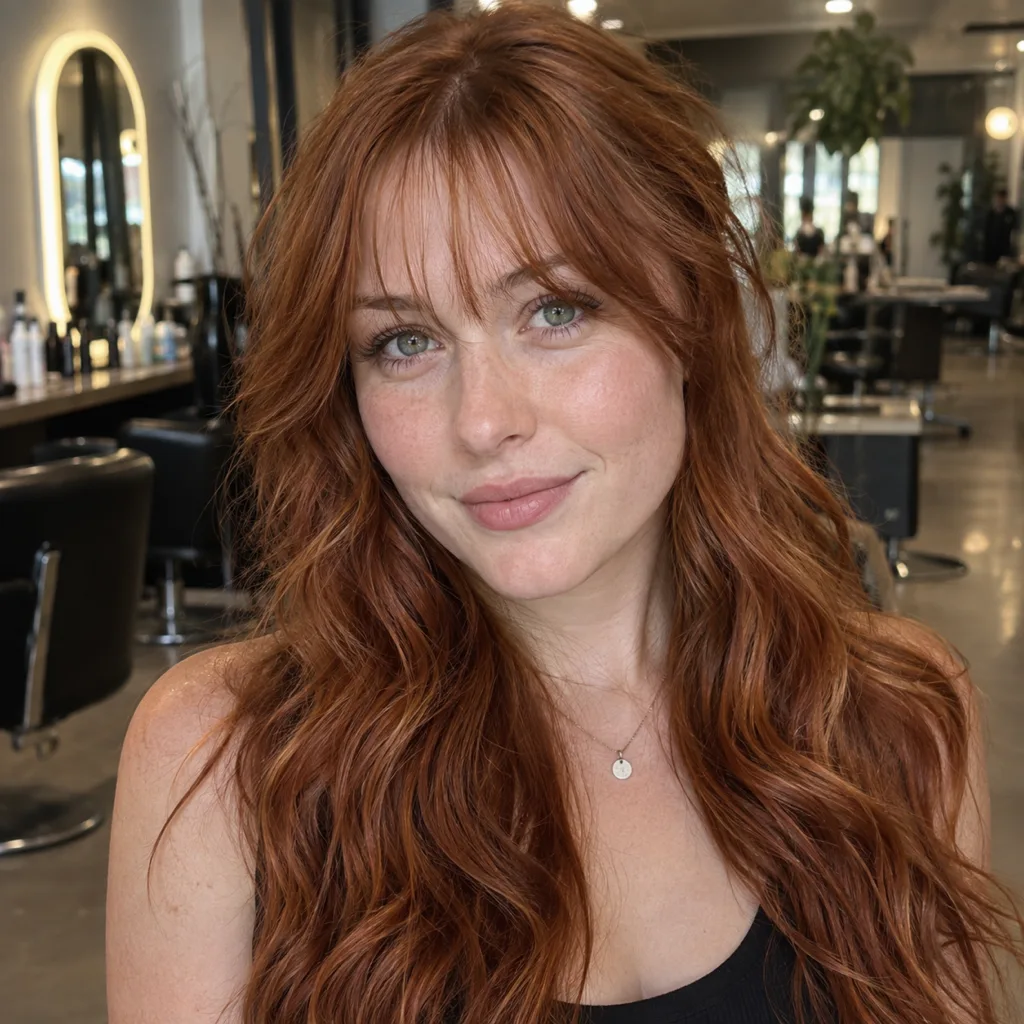
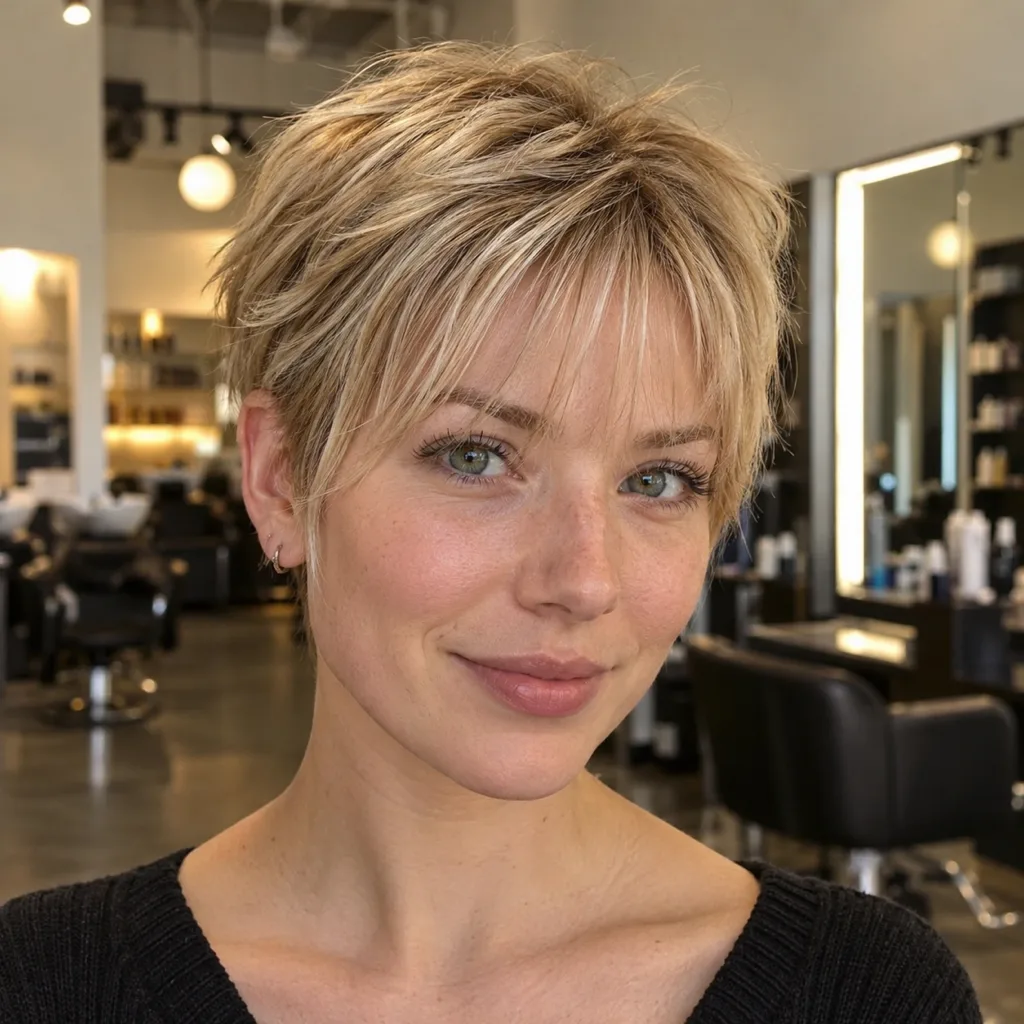
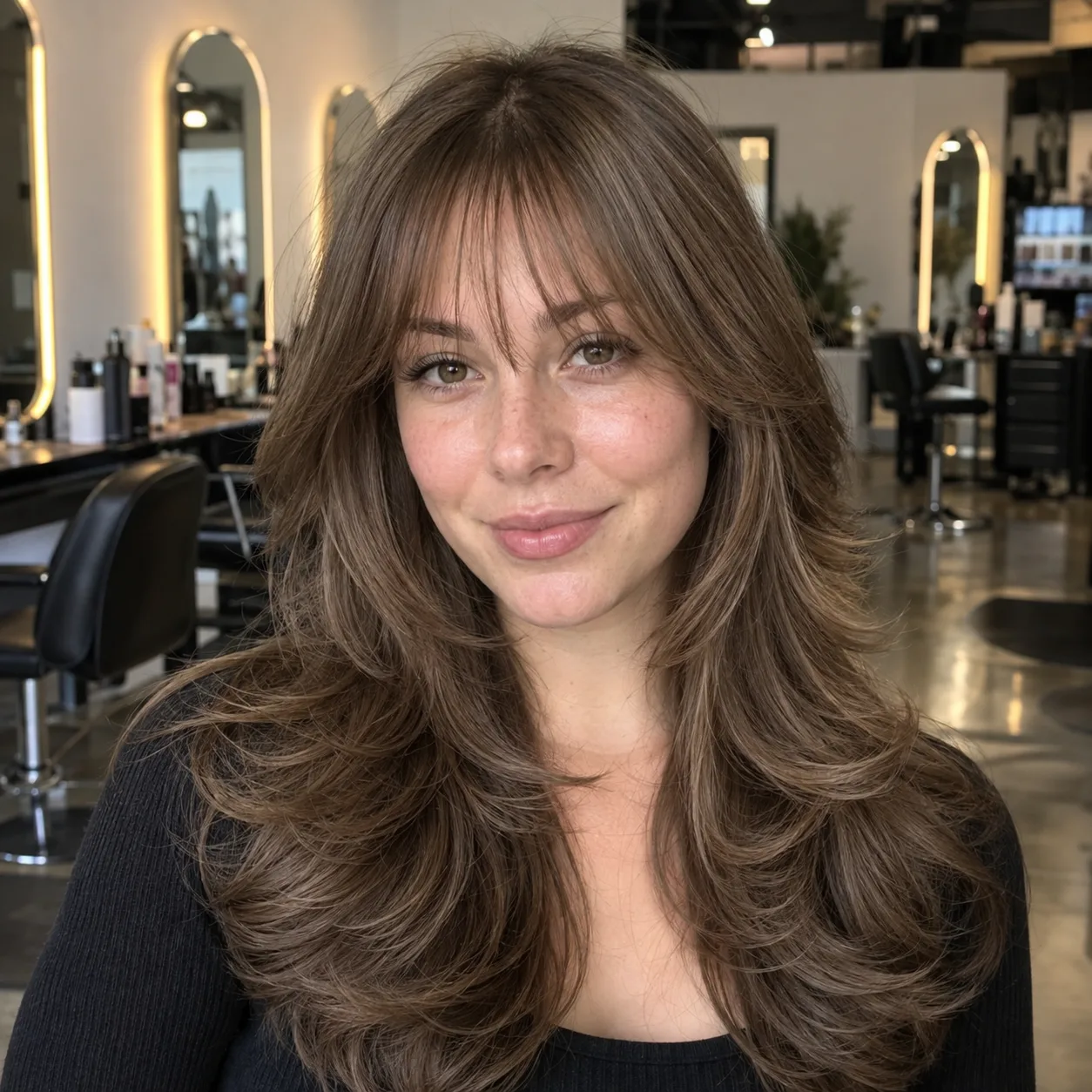
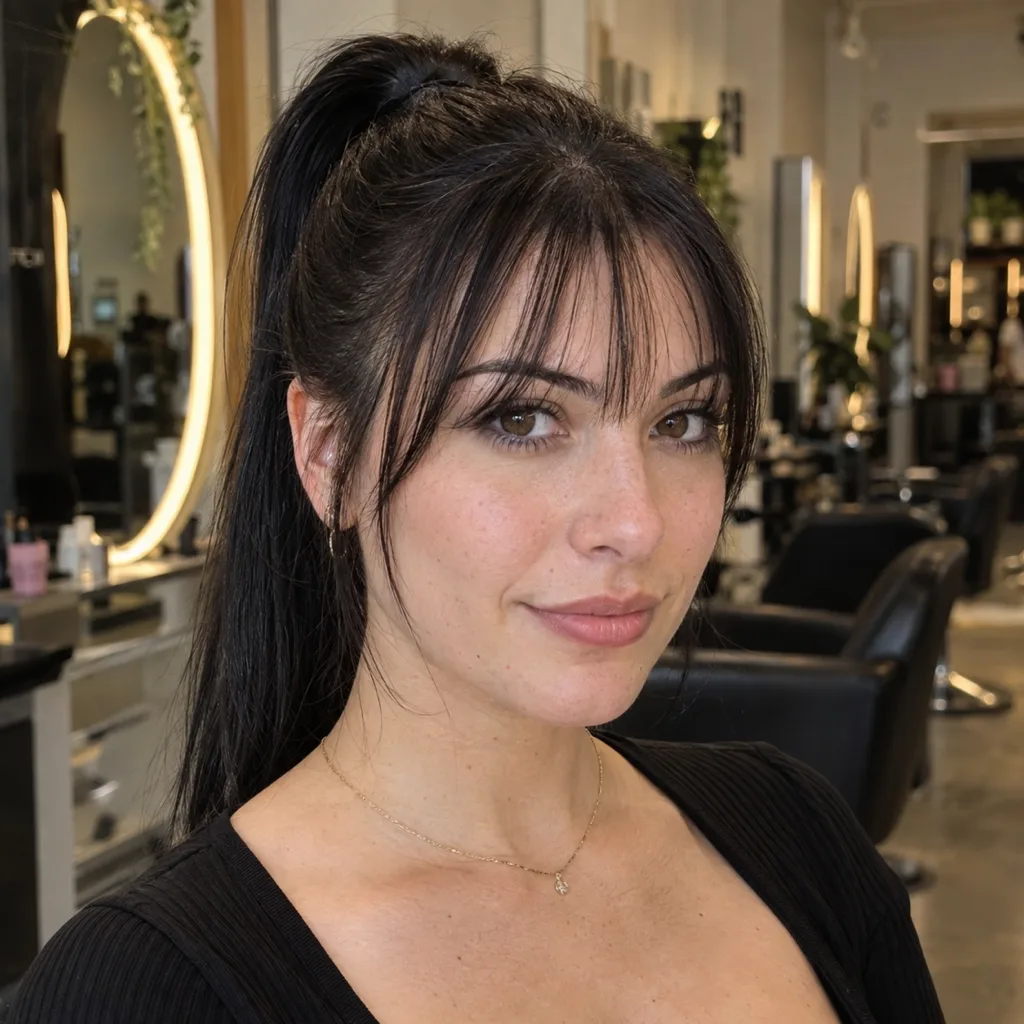
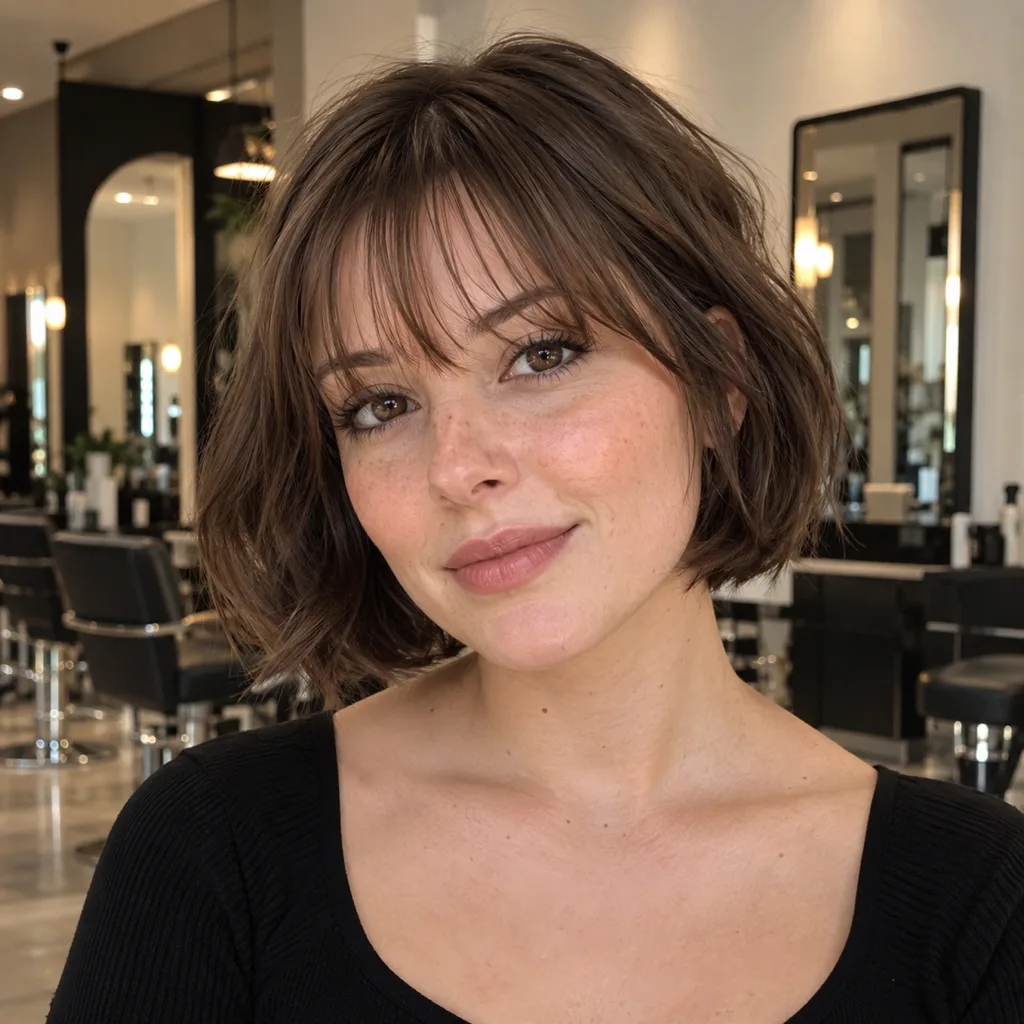
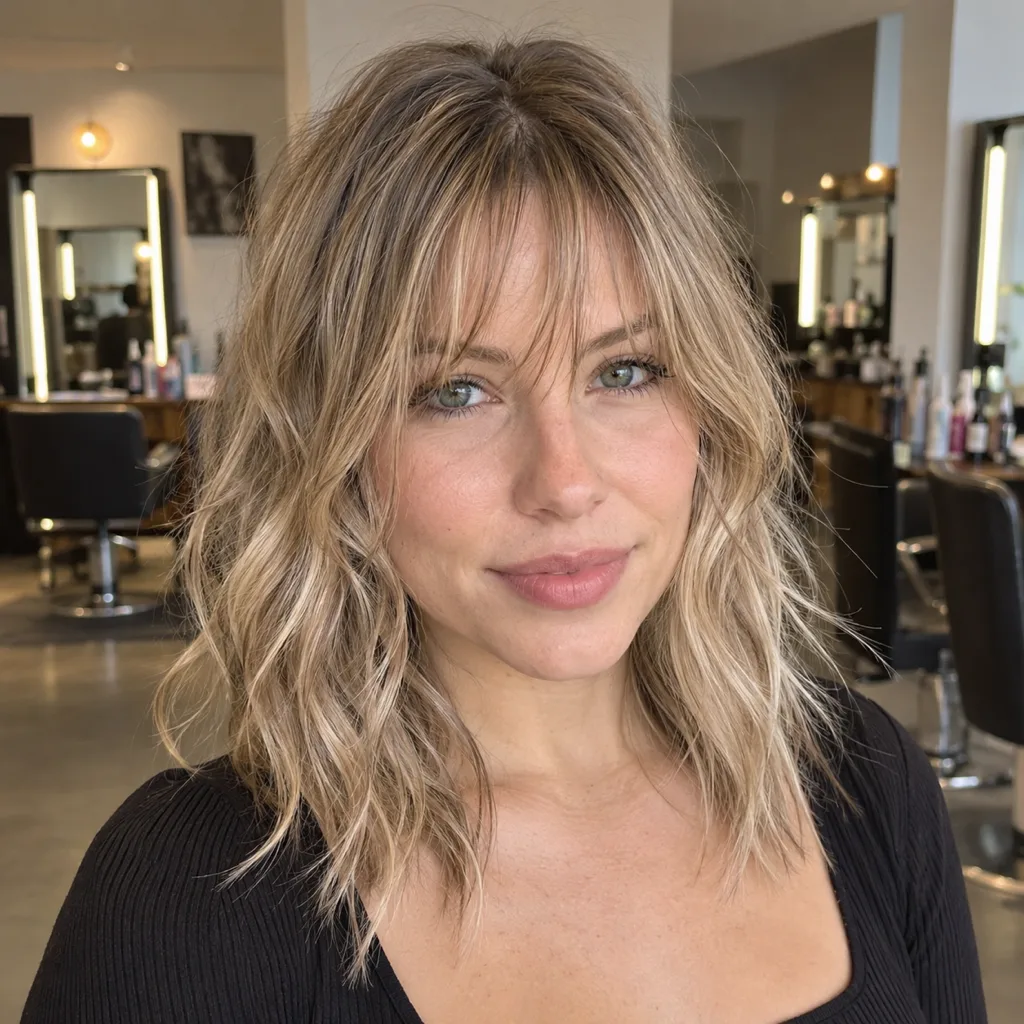
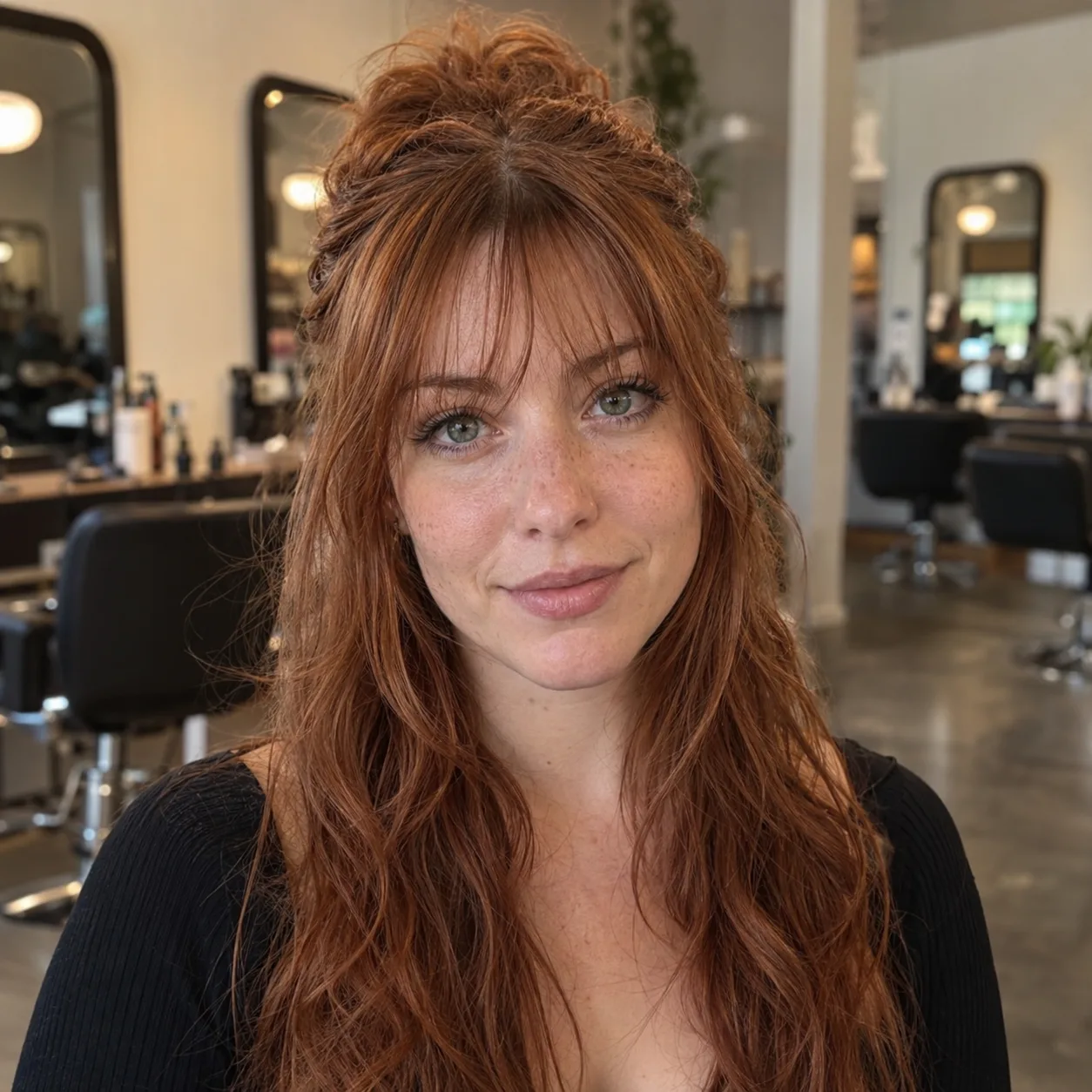
Every look here has the same fringe: shallow section, point-cut, center at the brows, longer at the corners. The only thing that changes is the haircut behind it, from a pixie to a waist-length layered cut, so you can see what the fringe does to each length and texture.
Gallery14 photos · tap to enlarge
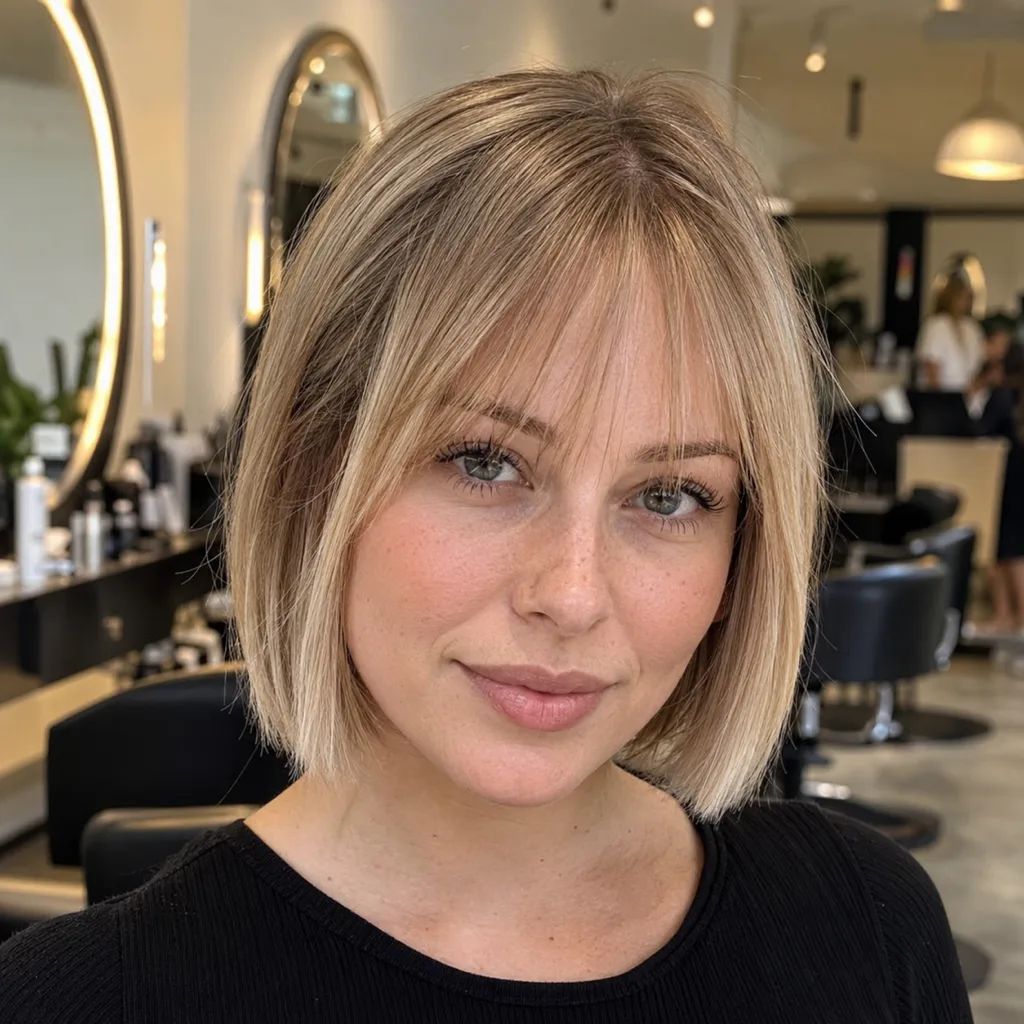 Try this on me
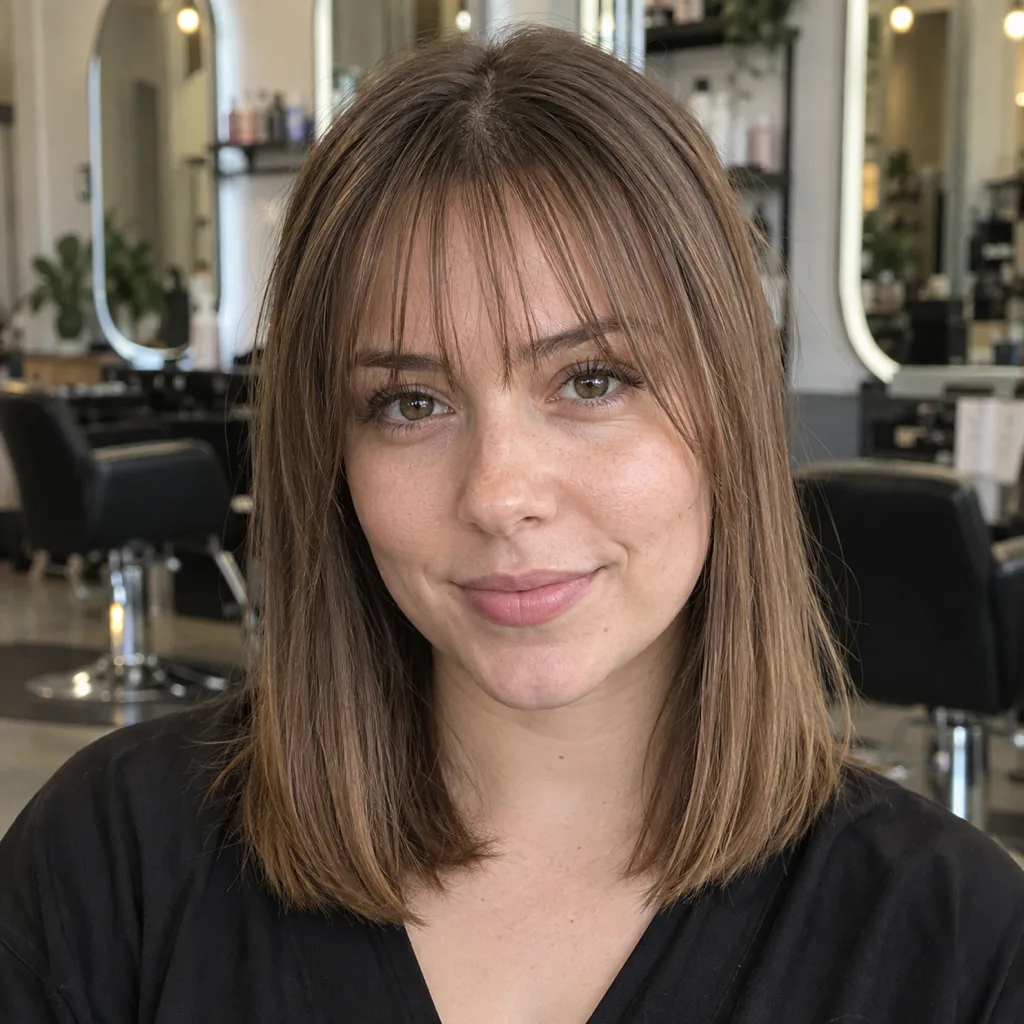 Try this on me
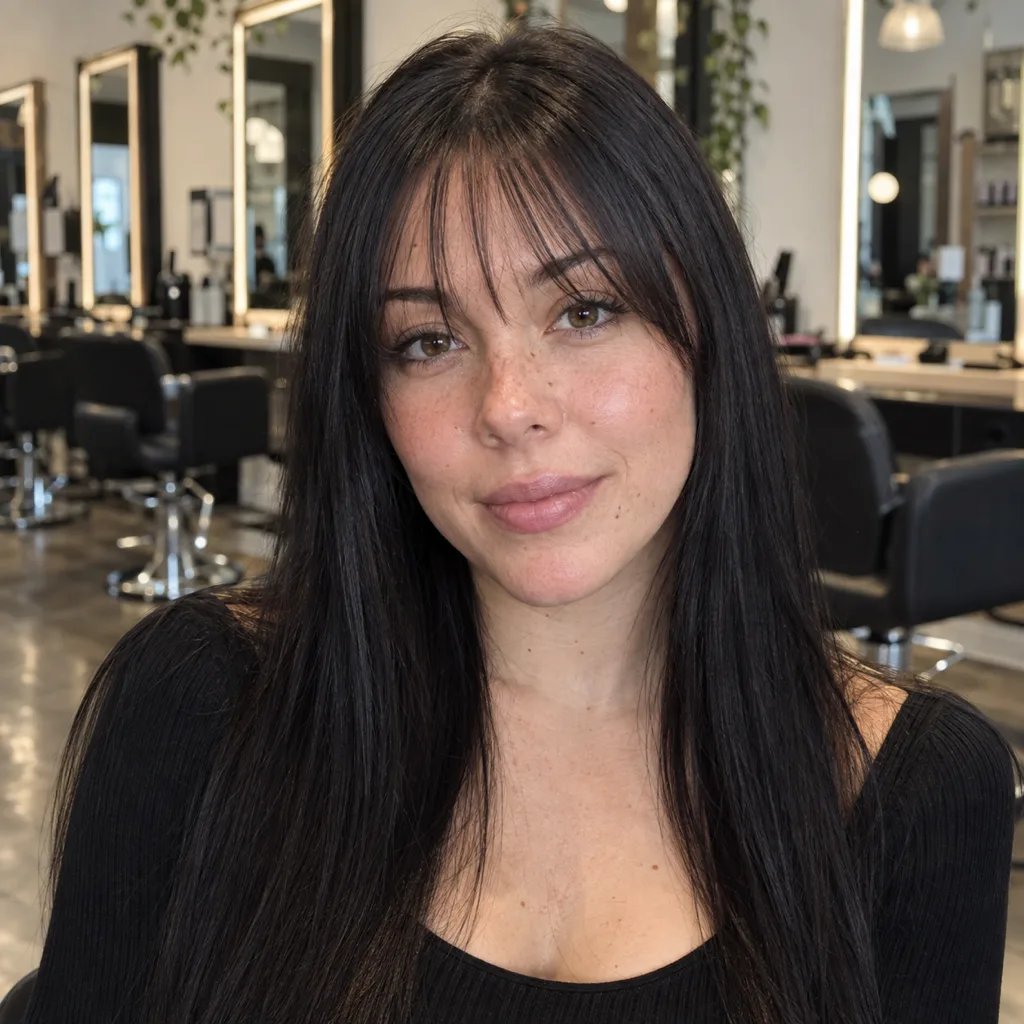 Try this on me
 Try this on me
 Try this on me
 Try this on me
 Try this on me
 Try this on me
 Try this on me
 Try this on me
 Try this on me
 Try this on me
 Try this on me
 Try this on me
A few patterns jump out. Wispy bangs look most natural on hair with some movement already in it (the shag, the wolf cut, the waves) because the fringe matches the texture. On sleek, one-length cuts like the bob or the long straight look, they are the only soft thing on the head, which makes them more noticeable and less forgiving of a bad day. On a shag haircut they almost disappear into the layers, which is exactly the point. That is why wispy bangs with layers are the easiest version to live with: when the fringe grows, it simply becomes the shortest layer.
Yours could be here.
Start with one selfie.
One photo, twenty seconds, and you'll know. Free account, no card for your first render.
Long Wispy Bangs
Long wispy bangs sit at the lash line in the center and reach the cheekbones at the sides. They are the safest first fringe: if you hate them, you tuck them behind your ears the next day and nobody knows you had bangs.

They also work best on long hair, because the longer outer pieces turn straight into face-framing layers. If you have long, mostly one-length hair, this is the version to ask for. Pair them with the cuts in our guide to hairstyles for long hair and the fringe reads as part of the cut rather than an addition.
The tradeoff: at lash length they touch your eyelashes when you blink, and some people find that maddening within a week. Hold a strand at that length for a day before you commit.
Wispy Curtain Bangs
Wispy curtain bangs are curtain bangs cut with the same shallow section. They split in the center and sweep out toward the cheekbones, but stay thin enough that the forehead shows through on both sides.
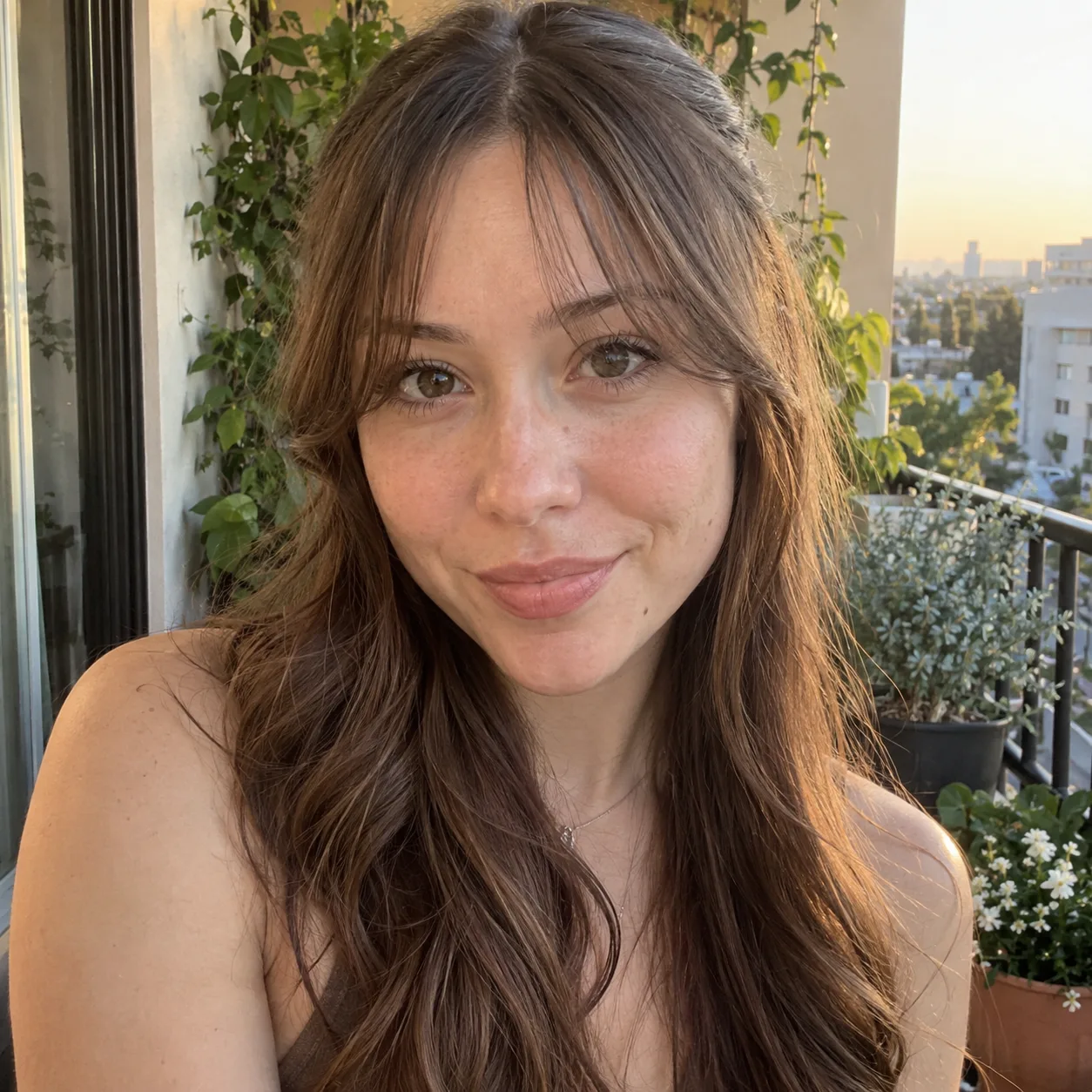
They solve the biggest complaint about classic curtain bangs, which is that a full curtain needs a round brush every morning to stop it collapsing into a center part that looks like two flat sheets. A wispy version weighs so little that it falls into a soft curve on its own.
The closest named cut is bottleneck bangs: short and narrow in the middle, widening and lengthening toward the cheekbones, like the neck of a bottle. Ask for bottleneck bangs if you want a curtain shape that still reads as wispy at the center.
Wispy Side Bangs
Wispy side bangs are the same thin fringe pushed across one brow from a side part. It is the lowest-maintenance version, because a side sweep hides uneven drying and a cowlick better than a fringe that has to fall straight down.
The catch is that a thin fringe swept sideways can disappear into the rest of the hair. Ask for the fringe to start right at the part line and be a touch denser there, then thin out as it crosses the brow. If you want a heavier diagonal, our side bangs guide covers the fuller versions and the right length for each face shape.
Do Wispy Bangs Suit Your Face Shape?
Yes, for most face shapes, because they are see-through. A wispy fringe hides less of your forehead than any other fringe, so it changes the proportions of your face much less. What changes by face shape is where the length goes.
| Face shape | Wispy bangs verdict | Put the length | Avoid |
|---|---|---|---|
| Oval | Yes, any version | Anywhere | Nothing in particular |
| Round | Yes, with longer corners | Outer pieces past the cheekbones | Short, even fringe straight across |
| Square | Yes | Soft, angled corners to the jaw | Very sparse fringe on a wide forehead |
| Heart | Yes, one of the best | Center at the brows, corners at the cheekbones | Very short micro wisps |
| Long | Yes, longer and slightly denser | Center at the lash line | Fringe so sparse it hides nothing |
| Diamond | Yes | Wispy curtain or bottleneck shape | Narrow fringe only over the center |
Not sure which shape you have? Measure it rather than guessing from a mirror:
Measure it instead of guessing
Both numbers in the same unit — the answer is a ratio, so it does not matter which.
Under 1.15 reads round, 1.15 to 1.5 reads oval, over 1.5 reads long. Oval and long split on the jaw rather than the ratio: an oval tapers toward the chin, a long face runs straight down.
Wispy bangs for a round face
Round faces suit wispy bangs, as long as the corners do the work. Keep the center at the brows and ask for the outer pieces to angle down past the cheekbones. Those longer pieces cut a vertical line into the widest part of your face, which makes it read longer. A short wispy fringe cut evenly across does the opposite and adds width.

The one round-face version to skip is the micro wisp sitting high on the forehead. It draws a horizontal line at the widest point. For the full breakdown of cuts that flatter each shape, see our guide to haircuts by face shape.
Wispy Bangs by Hair Type
Face shape decides the length. Hair type decides whether the fringe stays wispy past lunchtime.
Fine and thin hair
Wispy bangs are one of the best fringes for fine hair, and one of the easiest to get wrong. Thin hair is already see-through, so the risk is a fringe so sparse it looks like a few stray hairs. Take the section closer to 1.5 inches deep instead of 1, and skip thinning shears completely.

Fine hair also gets oily at the front first, because your forehead touches it all day. Dry shampoo at the roots of the fringe in the morning, not at night, keeps it separated.
Thick hair
Thick hair needs the shallowest section of all, sometimes under an inch, because each strand carries more weight. Ask the stylist to cut the fringe dry so you both see how much is really falling forward. Wet cutting thick hair is how a wispy request ends up a full fringe.
Wavy hair
Wavy hair suits wispy bangs well because the bend adds separation for free. Cut them slightly longer than you want, since waves shrink up when they dry. Our 2a hair guide covers how much a loose wave pattern typically shrinks and how to dry it.
Curly hair
Curly wispy bangs are a few loose curls resting at the brow rather than a straight sheet. They have to be cut dry, curl by curl, at the length each curl sits when it is fully dry. A stylist who cuts curly bangs wet and straight will leave you with a fringe that springs up to the middle of your forehead.
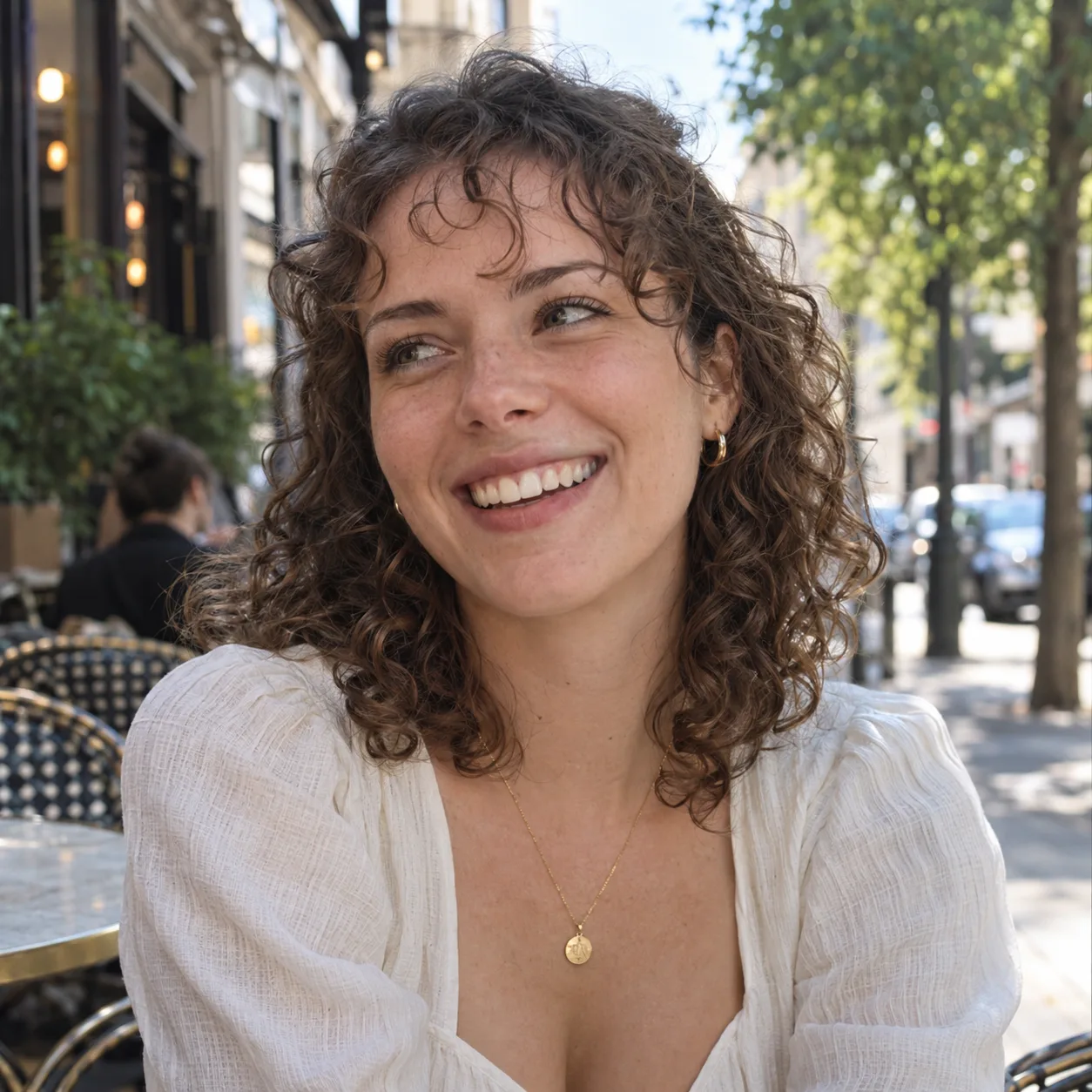
Expect more shrinkage the tighter the curl. For 3a curls, leave at least an extra inch.
How to Ask for Wispy Bangs
Bring a photo, but say the section depth out loud. Photos show the result; the section depth is what gets you there. Copy this:
Say this to your barber
I want wispy bangs: take a shallow section about an inch deep, cut them dry, point-cut the ends, no thinning shears, center at my brows and a little longer at the corners.
If the stylist starts combing back a big triangle of hair from your crown, stop them. That is a full fringe.
How to Cut Wispy Bangs at Home
A trim on existing wispy bangs is a reasonable home job. Cutting a fringe from scratch is not, because the section is the hard part and you cannot see the top of your own head. If you are going to do it anyway, do it this way:
How to cut wispy bangs at home
- Dry and style your hair first
Cut wispy bangs on dry hair styled the way you normally wear it. Wet hair stretches and you will cut too short.
- Section a shallow triangle
Make a small triangle from the outer edges of your brows up to a point about 1 inch behind your hairline. Clip everything else away.
- Twist and cut long
Twist the section lightly, hold it at the bridge of your nose and cut it below your brows. Start longer than you want. You can always take more.
- Point-cut the ends
Untwist, then hold small pieces between two fingers and snip vertically into the ends with the tips of sharp hair scissors. This feathers the edge instead of leaving a line.
- Leave the corners longer
Angle the outer pieces down toward the cheekbones so they blend into the hair beside your face. Shake it out and check before cutting anything else.
Use proper hair scissors, not kitchen ones. Blunt blades fold the hair instead of cutting it and the ends fray within a week.
How to Style Wispy Bangs
Wispy bangs take about two minutes, and most of that is drying them first. Wet the fringe only, then blow-dry it straight down while brushing side to side with a small flat brush or your fingers, so the root lies flat instead of springing up. Finish by pinching the ends apart with your fingertips.
Use as little product as you can. Heavy creams and oils clump a thin fringe together, and the American Academy of Dermatology notes that oils in hair products can cause breakouts along the hairline and forehead, which is exactly where a fringe sits all day. A light texture spray at the mid-lengths is enough.
Five Mistakes That Ruin Wispy Bangs
- A deep section. The most common failure, and you will not notice until you get home and the fringe has a solid top. It costs you three months of growing out the back rows.
- Thinning shears. They leave short broken hairs at the root that stick up and frizz. It looks wispy for a week and fluffy forever after.
- Cutting wet. Every hair type shrinks as it dries, and a fringe 1/2 inch too short sits on the middle of your forehead instead of at the brows.
- A straight line across. Even a thin fringe looks blunt with a horizontal edge. Point-cut or it is not wispy.
- Too much product. Oil, serum and heavy cream glue the pieces together, and five sparse strands become one clump. Our bad haircuts guide has more on what a fringe gone wrong costs to fix.
Can You See Wispy Bangs on Yourself First, and Is That Free?
Yes, and the first look is free. A photo of someone else tells you nothing about how the fringe sits on your hairline, your forehead height or your cowlick, which are the three things that decide whether wispy bangs work on you. That is the wall every reference picture hits.
Hairstyle Atlas puts the cut on your own selfie. Your first try-on is free with no card, and paid plans start at $9 a month if you want more looks. Try the fringe at brow length and at lash length on the same photo before anyone picks up scissors.
The Short Version
Wispy bangs are decided by the section, not the scissors. Ask for a shallow section about an inch deep, cut dry, point-cut ends, no thinning shears, longer at the corners. Put extra length at the corners if your face is round, cut them longer if your hair is wavy or curly, and take a slightly deeper section if your hair is fine. Then use less product than you think. A wispy fringe is the easiest fringe to live with and the easiest to grow out, which makes it the right first fringe for almost everyone.
Frequently asked questions
Almost every face shape. Because wispy bangs are see-through, they change your proportions less than any other fringe. Oval and heart faces can wear any version; round faces should keep the outer pieces long past the cheekbones; long faces do best with a slightly longer, denser fringe.
Yes, if the corners are longer than the center. The longer outer pieces add vertical lines at the widest part of the face. Avoid a short wispy fringe cut evenly across, which adds width.
They often do, mainly because they soften the forehead and draw attention to the eyes without the hard line of a blunt fringe. A heavy fringe can drag the face down; a light wispy one does not.
French bangs are usually fuller and slightly longer, worn just at or past the brows with a tousled, undone finish. Wispy bangs are sparser, so more forehead shows through. Think of wispy bangs as French bangs with half the hair.
Curtain bangs split in the center and sweep out to the cheekbones. Wispy bangs describe density, a thin see-through fringe, and they can fall straight down or be split. Wispy curtain bangs combine the two.
Let the back rows of your fringe grow out and blend into the rest of your hair, so only the front row falls forward. Then have the ends point-cut. Thinning shears will not do it; they leave short frizzy hairs instead.
Yes, they are one of the best fringes for fine or thin hair. Take a slightly deeper section, around 1.5 inches, so the fringe does not look like a few stray strands, and skip thinning shears.
Upload a selfie to a hairstyle try-on tool and render the fringe on your own face. Hairstyle Atlas gives you the first try-on free, which is enough to check brow length against lash length before you book the cut.
Preview it on your own photo: Virtual Hair Color Try-On.
Share article
About the author
More articles
Women's Haircuts · 17 min
2B Hair: Why It Frizzes on Top and the Cuts That Fix It
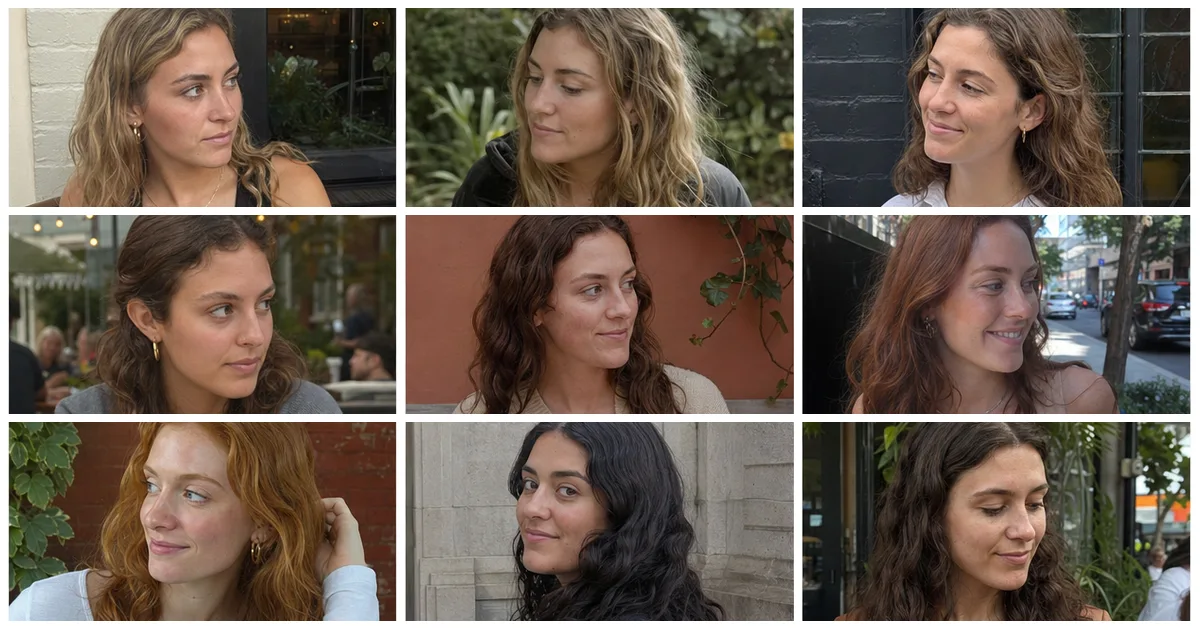
2B hair is wavy from about ear level down, with four or five defined S bends. Most 2B frizz is a roughed up top layer sitting over good waves. Here is how to tell 2B from 2A and 2C, the cut that lets the waves move, 14 haircuts on 2B texture, and a routine that holds.
Women's Haircuts · 16 min
2C Hair: How to Tell, 14 Cuts That Work, and a Routine
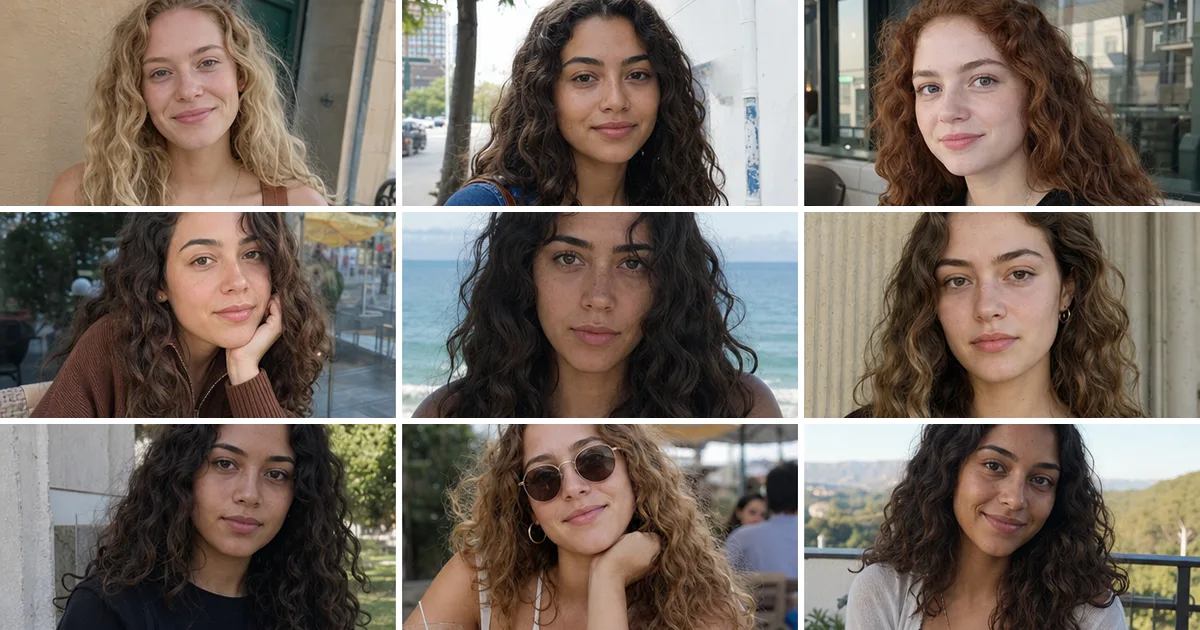
2C is the tightest wave type: thick S waves from the root, a few ringlets, and frizz by noon. Most of that frizz is handling, not hair. Here is how to confirm you are 2C, the cuts that keep it round instead of triangular, a ten minute routine, and the products to skip.
Women's Haircuts · 14 min
Bleached Hair: How Light Yours Can Go, 14 Shades, Aftercare
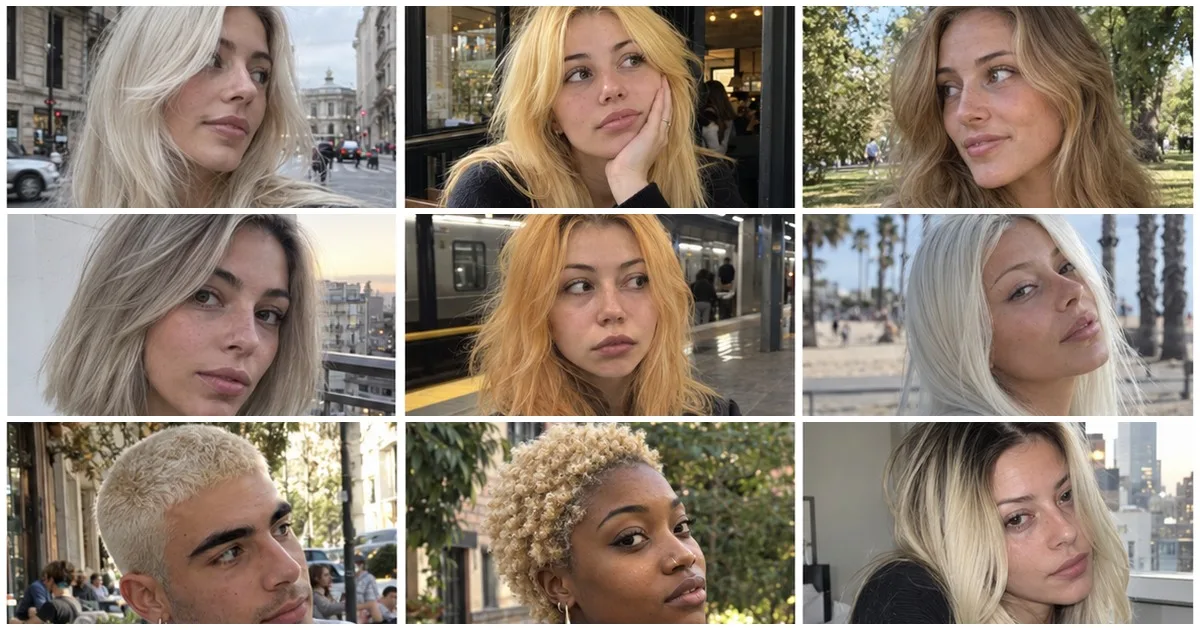
How light your bleached hair can go depends on where it starts. See 14 bleached shades on one cut, what each starting color can reach in one session, how toner finishes the job, and the aftercare that keeps it soft.