Textured Fringe Hairstyles: 8 Looks and How to Ask
Oleh Onysko Updated 27 September 2026 12 min read
In this article
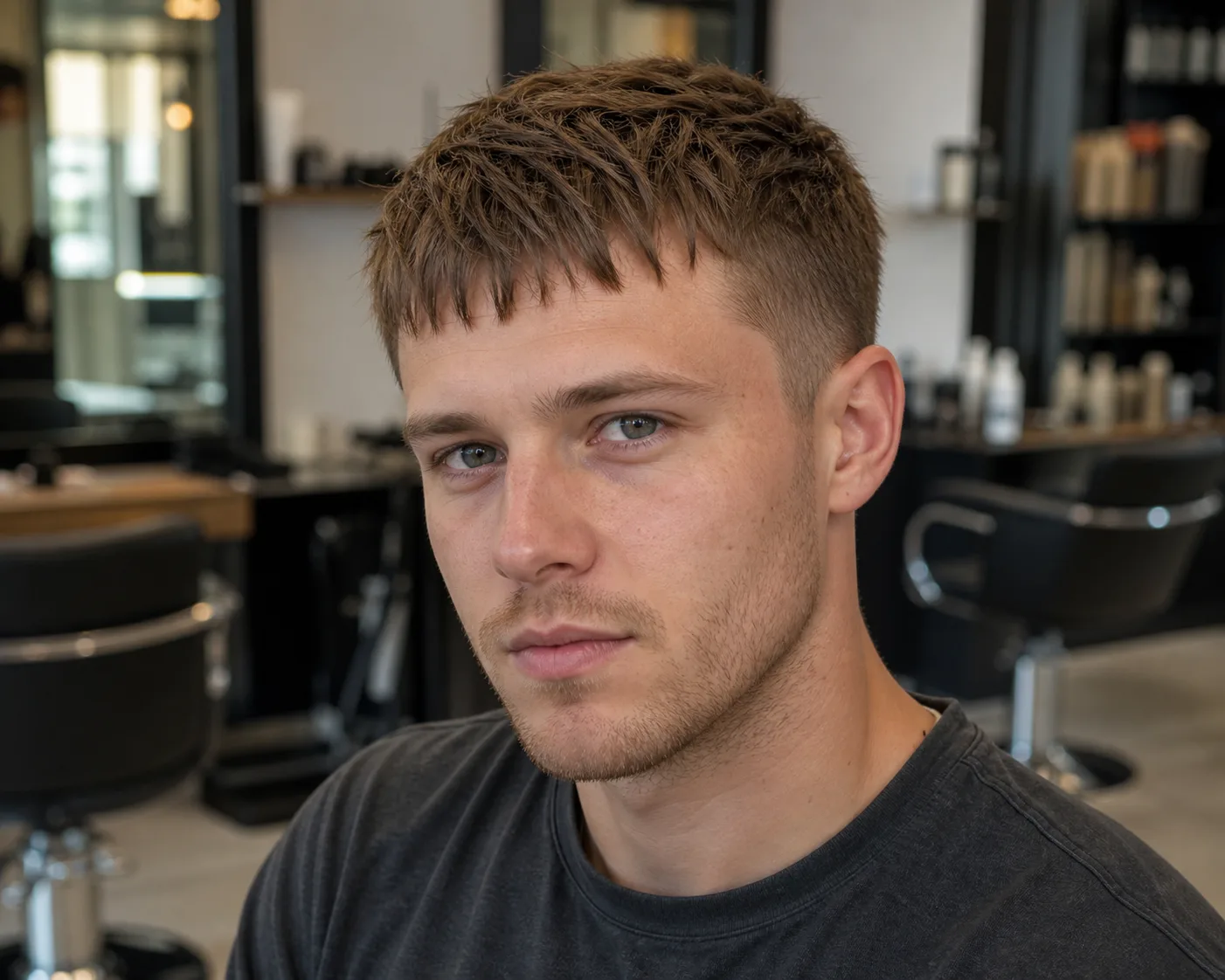
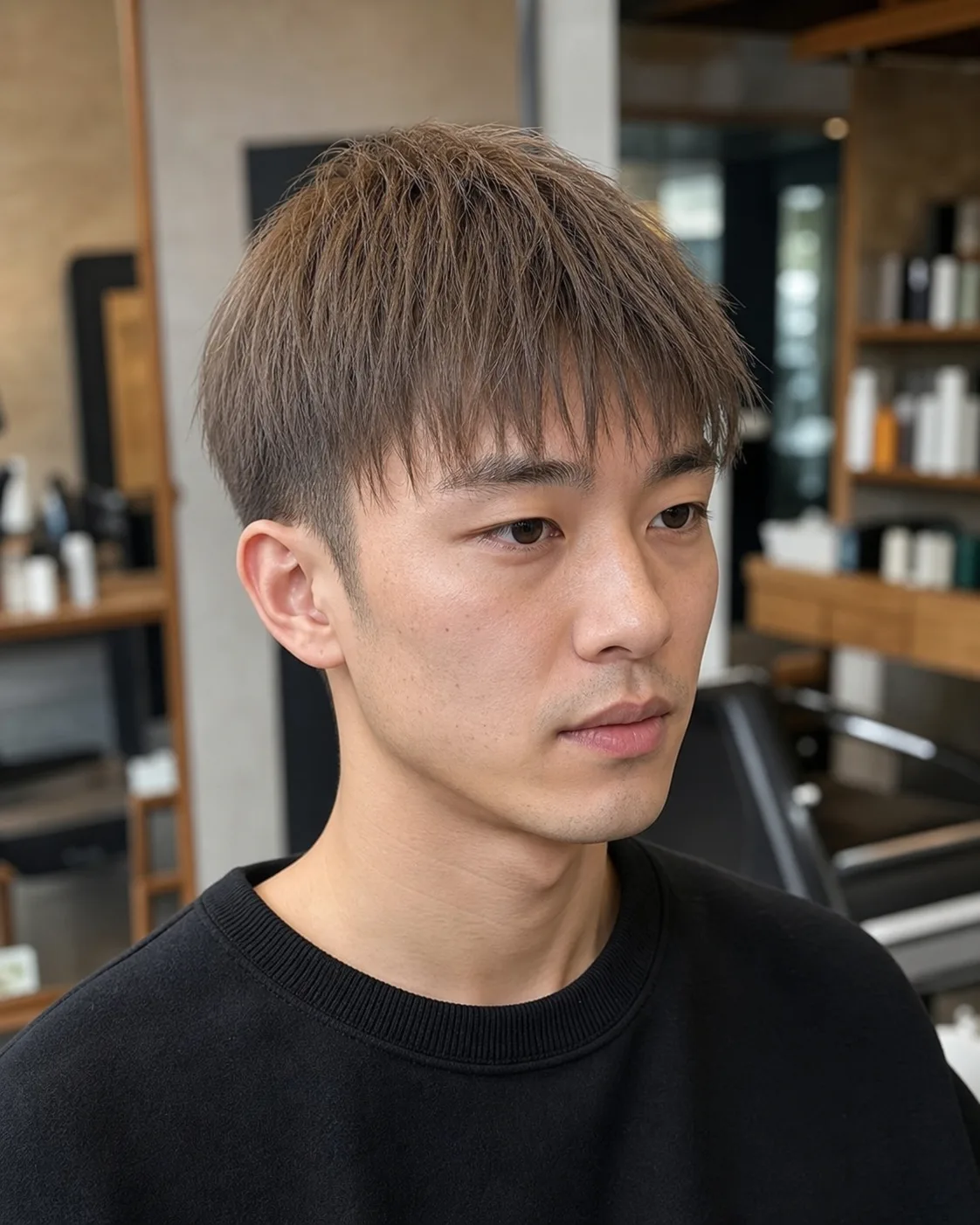
A textured fringe is a men's cut that leaves length on top, cuts it into separated piece-y strands, and lets it fall forward onto the forehead while the sides and back stay short. It reads as messy on purpose. The one decision that makes or breaks it is how much of your forehead the fringe covers, and that comes down to your hair type and face shape, not the photo you screenshotted.
This guide covers the styles worth asking for, exactly what to say to your barber, which version fits your face and hair, and the mistakes that turn a textured fringe into a bowl cut.
What a textured fringe actually is
A textured fringe keeps roughly two to three inches of length through the top and front. A barber removes weight with point cutting or a razor so the ends break into separate pieces instead of sitting as one solid block. The result falls forward and sits across the upper forehead. The sides and back are cut shorter, usually with a taper or a light fade, so all the interest lives up top.
It is not a blunt fringe, where the front is one straight heavy line. It is not slicked back, and it is not a curtain cut parted down the middle. Texture is the whole point: the separation is what keeps it from looking like a helmet.
Face framing works differently in braided styles. The Fulani braids guide shows how a center part and two side braids can frame the forehead without cutting a fringe.

The cut goes by a few names. "Textured crop" usually means a shorter, more cropped version. "French crop" is the same family with a blunter forward fringe. All three share the same idea, and if you want to see any of them on your own face before you commit, you can test a textured fringe on a photo in a couple of minutes.
How to ask your barber for a textured fringe
Walk in with the length, the sides, and the finish decided. The single word "textured" is not enough, because it means five different things to five different barbers.
Say this to your barber
Keep two to three inches on top, point cut for separation, and a low taper on the sides, then style it forward and matte.
How to ask for a textured fringe
- Name the length on top
Ask for two to three inches kept through the front, longer if you want the fringe to reach your eyebrows. Say you want to keep enough to fall forward.
- Ask for point cutting, not a blunt line
Tell the barber to point cut or texturize the ends so the fringe breaks into separate pieces. Say the words "not blunt" if your hair is thick, because thick hair defaults to a heavy line.
- Set the sides
Pick a low taper for a soft finish, or a higher fade for more contrast. If you are not sure, a low taper is the safe default and grows out cleanly.
- Decide the front length
Point at your forehead and show where you want the fringe to end. Mid-forehead is standard. Down to the brows is the grown-out look.
- Confirm the finish
Ask for a matte product like clay or paste, not gel or pomade. Say you want it to look natural and moveable, not wet or shiny.
Textured fringe by face shape
The fringe changes what your face looks like more than any other men's cut, because it sits right on the forehead and controls how much of it shows. Match the version to your face and it does free work.

| Face shape | Best version | Why it works | Avoid |
|---|---|---|---|
| Round | Angled fringe, some height on top | Adds length, breaks the width | A heavy flat fringe straight across |
| Oval | Almost anything | Balanced already, so it is your call | Nothing specific |
| Square | Textured forward fringe, softer edges | Softens a strong jaw and hairline | Hard blunt lines that echo the jaw |
| Heart | Fuller fringe with width at the bottom | Balances a wider forehead | Slicked-back styles that expose the forehead |
| Long or oblong | Fuller, lower fringe | Shortens the face by covering forehead | Extra height on top |
If you are guessing at your own shape, run it through the face shape finder first, then pick the row above. Round and long faces get the biggest change from the fringe, so they are the ones worth being precise about.
Textured fringe by hair type
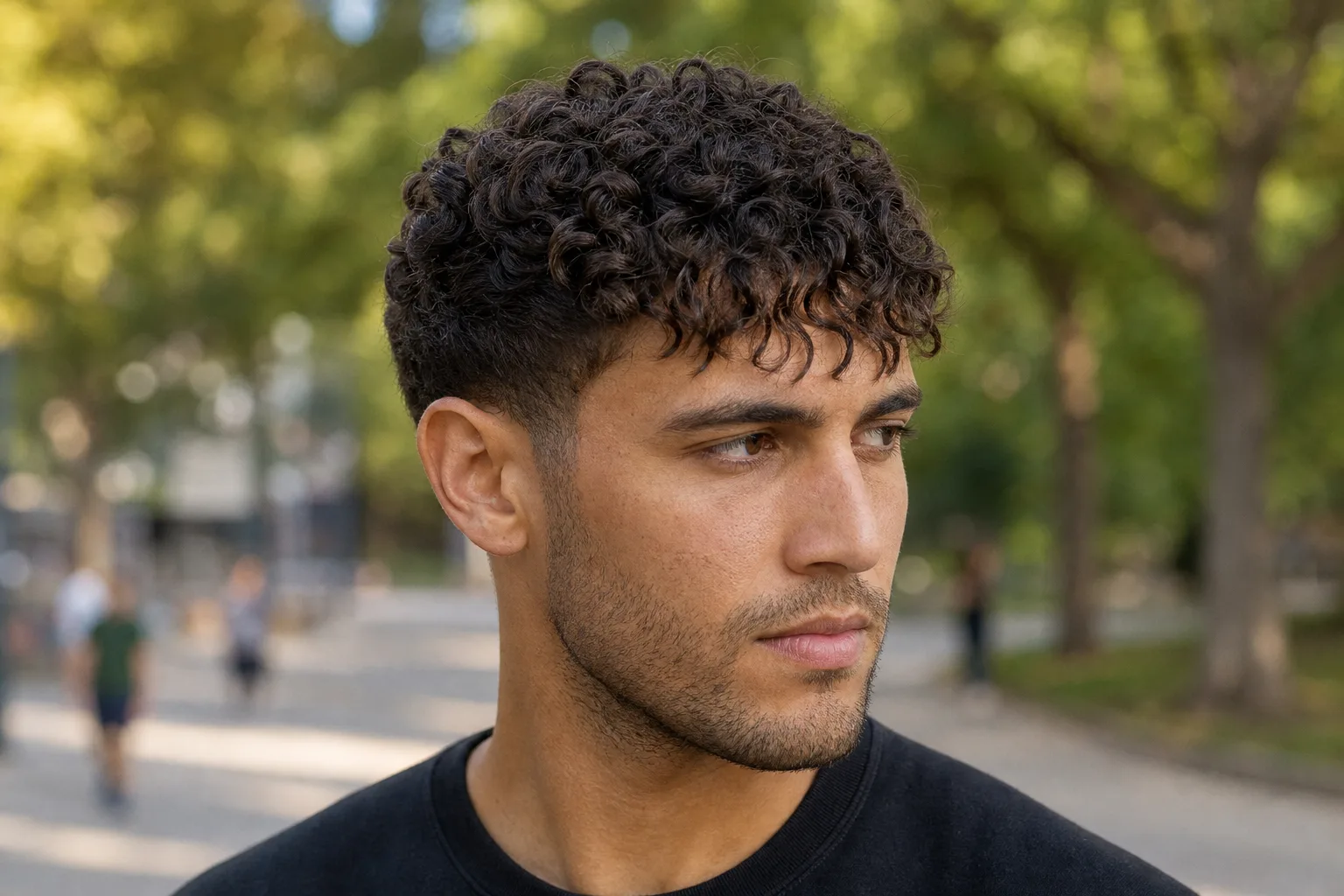
Your hair type decides how much texturizing the fringe needs and how it will fall. This is where most bad results come from, because a version that looks great on wavy hair behaves nothing like it on straight fine hair.
| Hair type | What to ask for | Styling effort | Watch out for |
|---|---|---|---|
| Straight fine | Blunter crop fringe, less texturizing | Low, a little clay | Over-thinned ends that go stringy |
| Straight thick | Heavy point cutting to remove weight | Low to medium | A solid block if it is not texturized enough |
| Wavy | Light texturizing, let the wave separate | Low | Frizz if you use the wrong product |
| Curly | Shape it, remove weight not length | Medium, curl cream | Cutting curls too short and losing the shape |
| Coily | Keep density, define the front edge | Medium | Losing the shape with a taper that is too high |
Straight fine hair needs the least work from the scissors and the most from product. Curly and coily hair already has texture, so the barber's job is to shape it and remove bulk, never to thin it into nothing. That principle runs through every cut in the guide to what to ask a barber for on curly hair, fringe or no fringe.
How short should the sides be
The sides set the contrast. A low taper keeps things subtle and professional and is the version that suits the most people. Take it higher and the fringe pops harder against the short sides, which photographs well but grows out faster. Our guide to choosing a fade height walks through what each one does to the shape of your head. If you would rather keep hair on the sides than clipper them, the same fringe sits happily on top of a scissor-tapered medium cut instead.
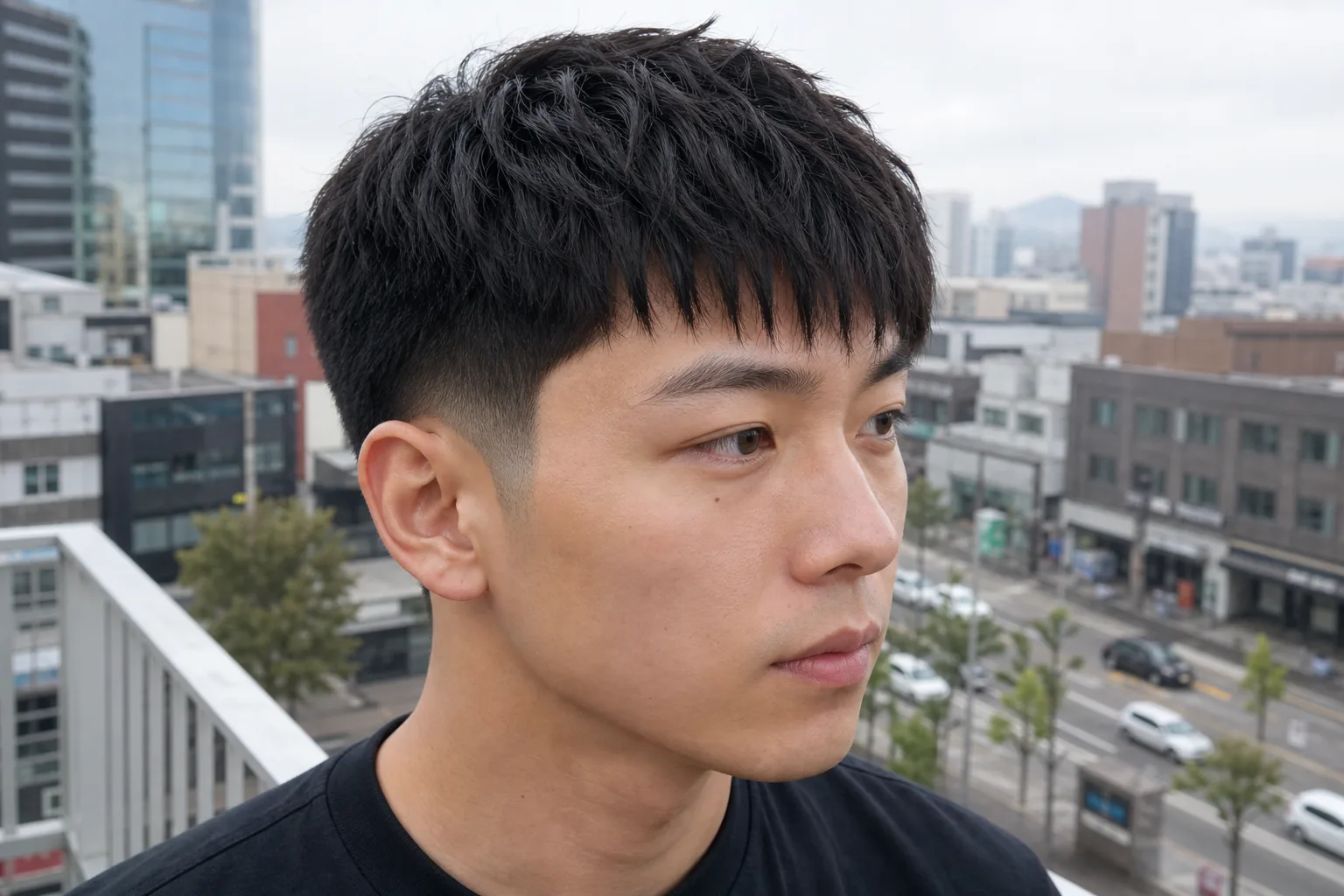
If you want the crisp barbershop contrast, a low taper fade under the fringe is the most popular pairing right now. If you want more of a statement, read up on where to set the fade height before you sit down, because mid and high fades change the whole balance of the cut. You can also preview it over a taper to see how much contrast you actually want.
The styles worth asking for
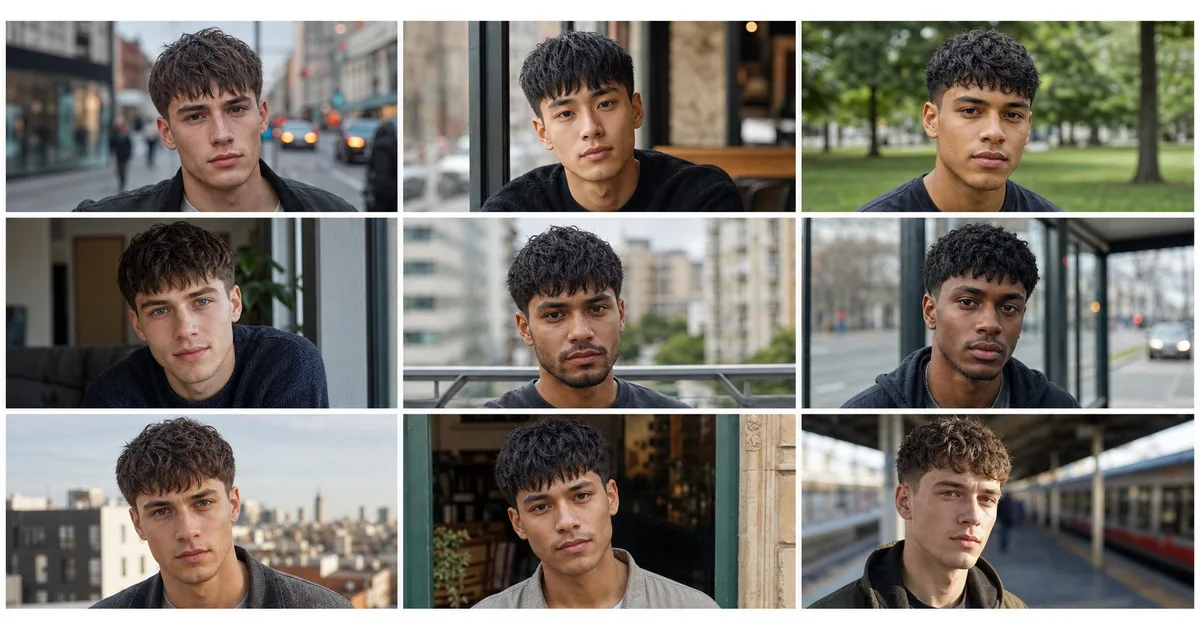
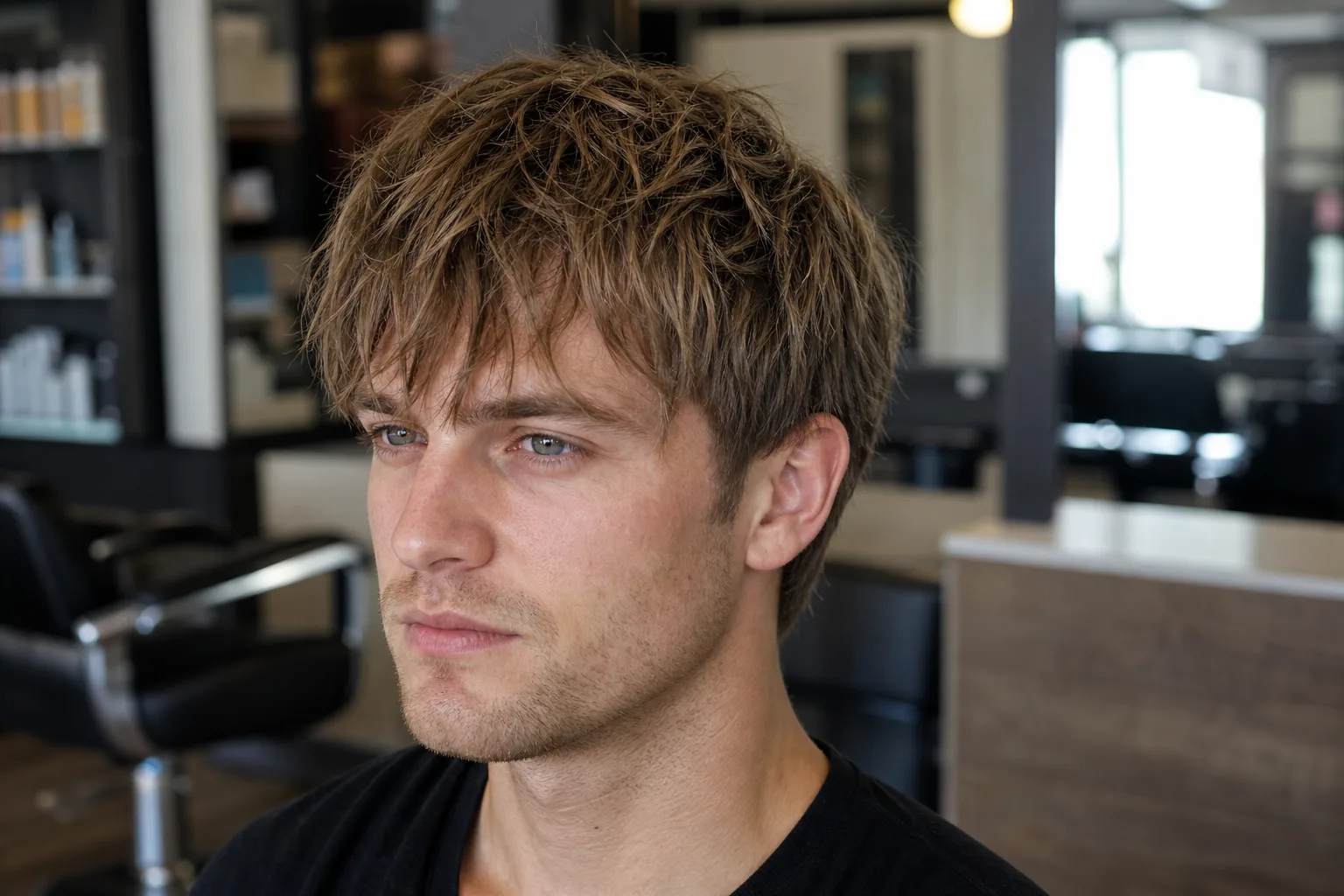
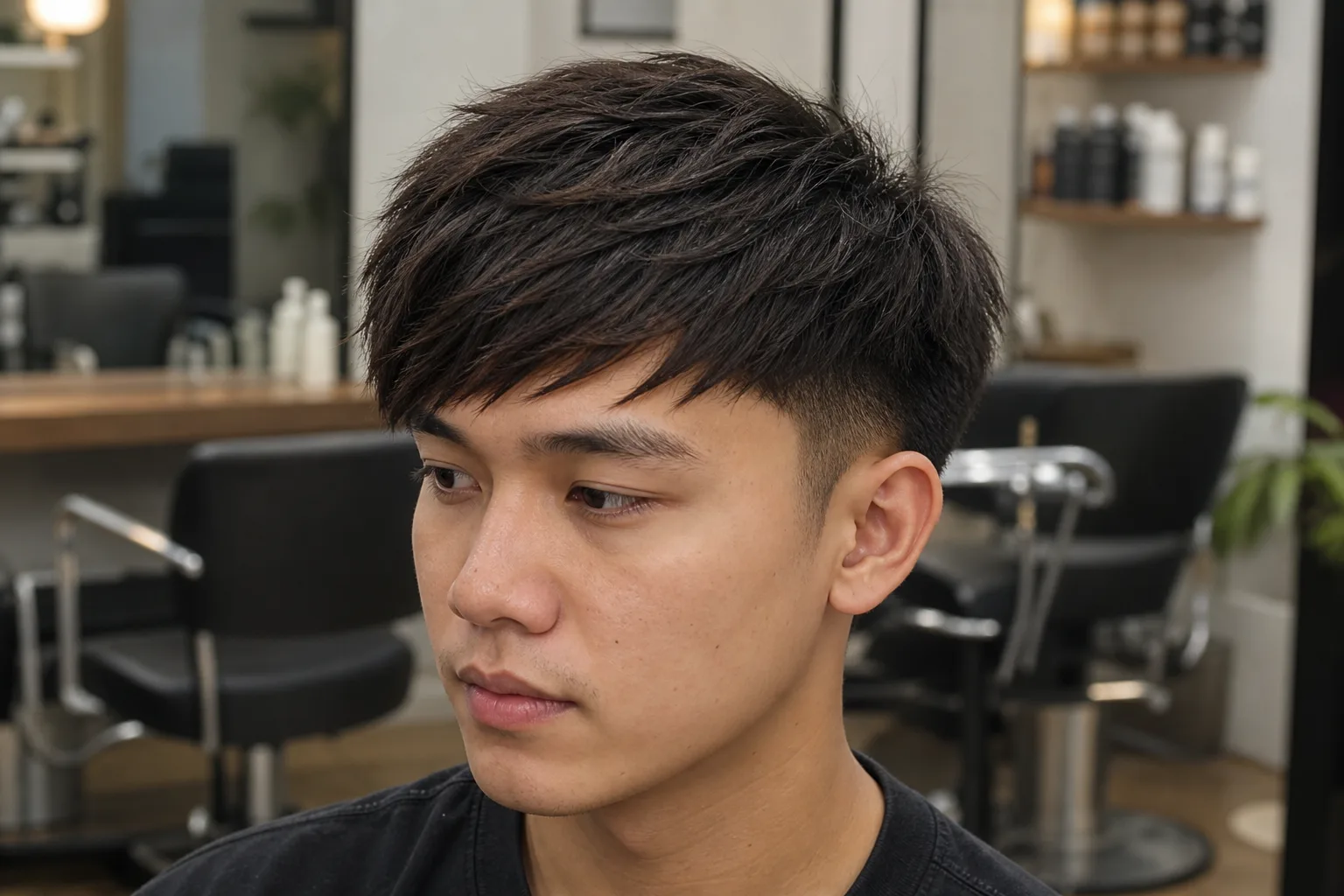
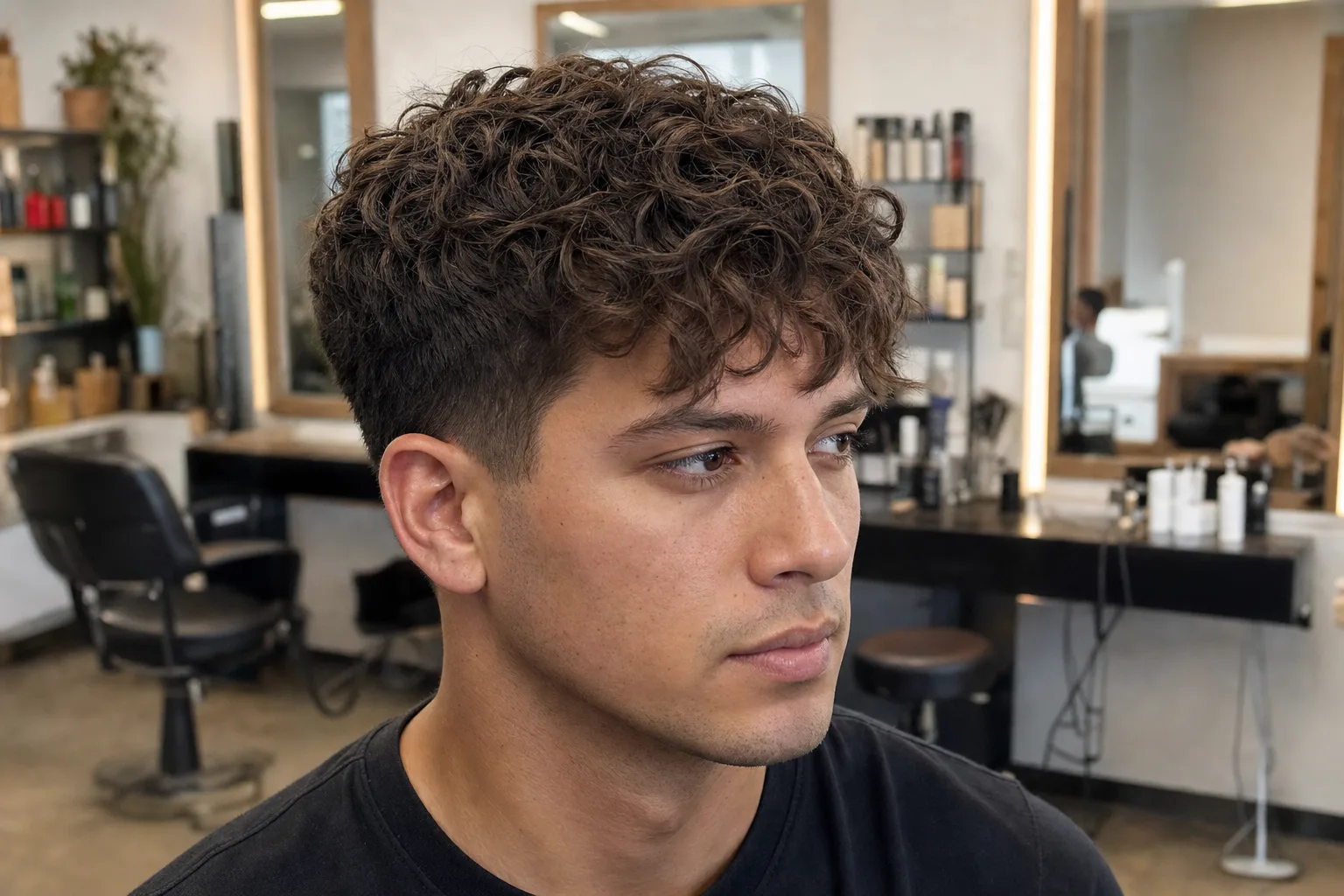
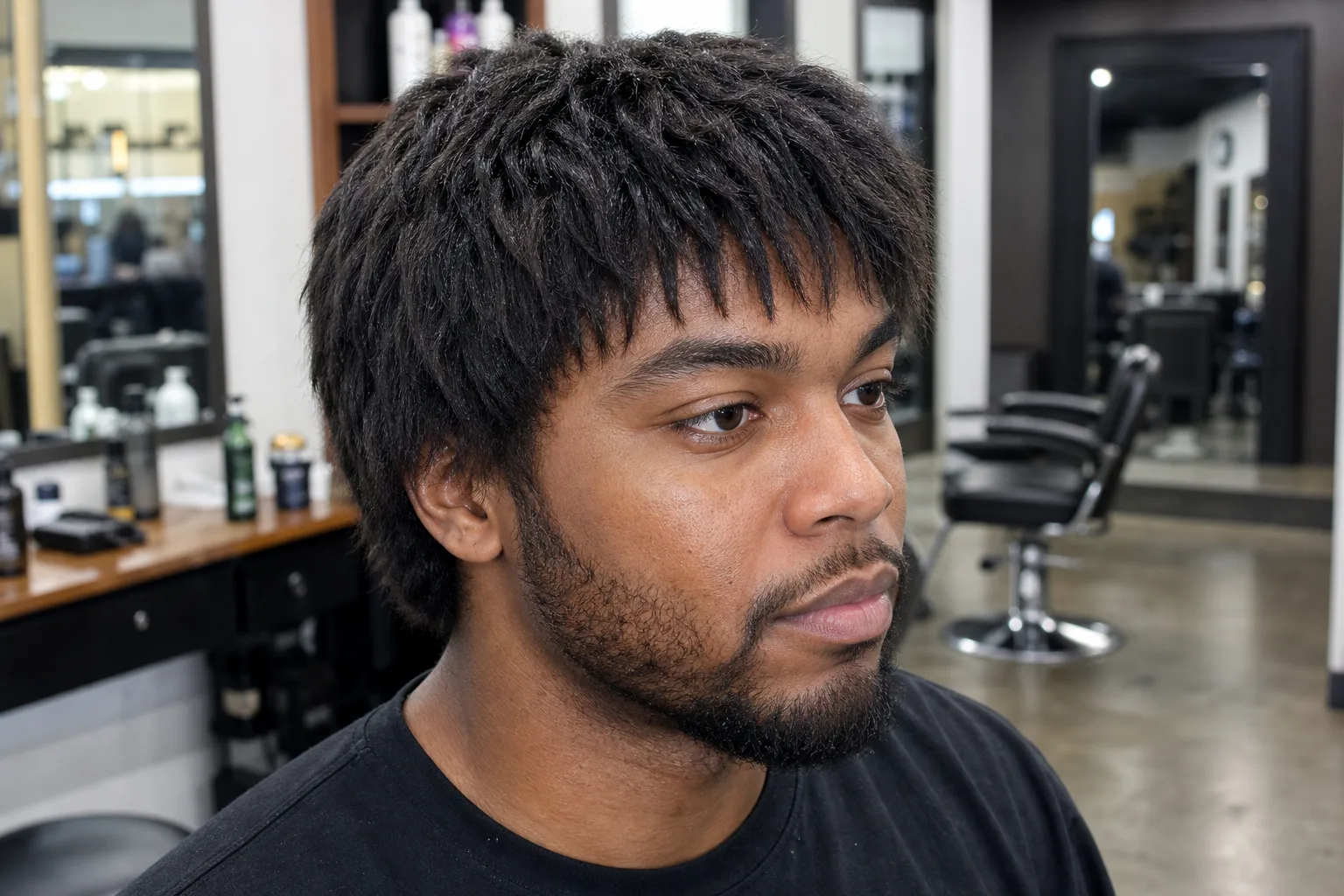
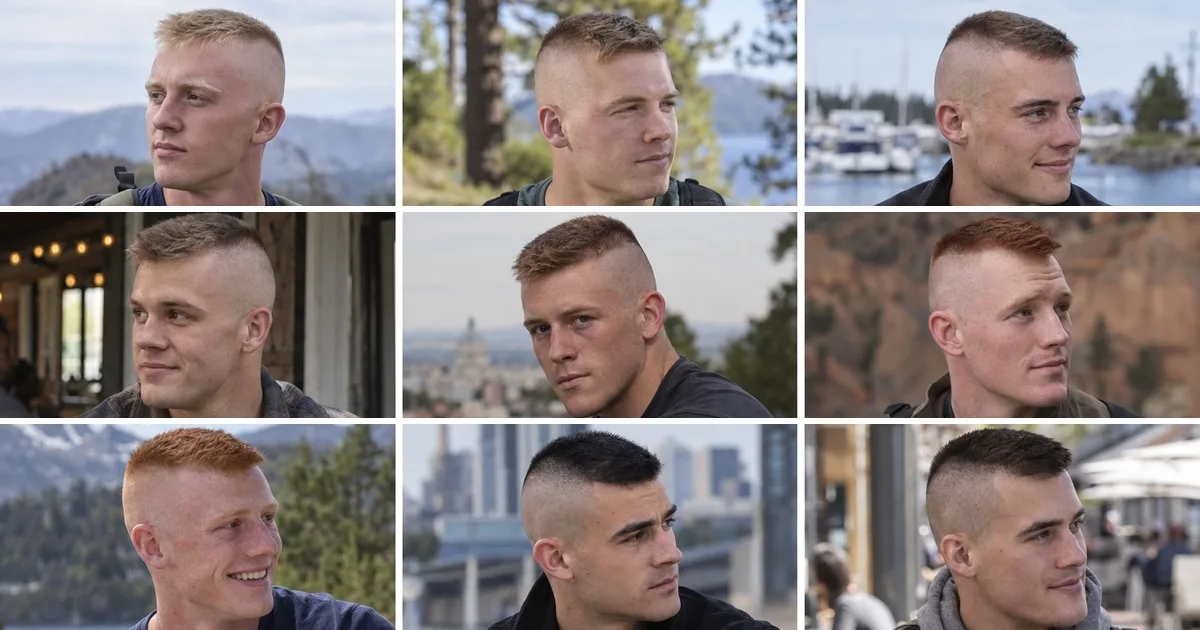
Same cut, different lengths and hair types. This is the range a textured fringe covers, so find the one closest to your hair and take it in.
Gallery10 photos · tap to enlarge
 Try this on me
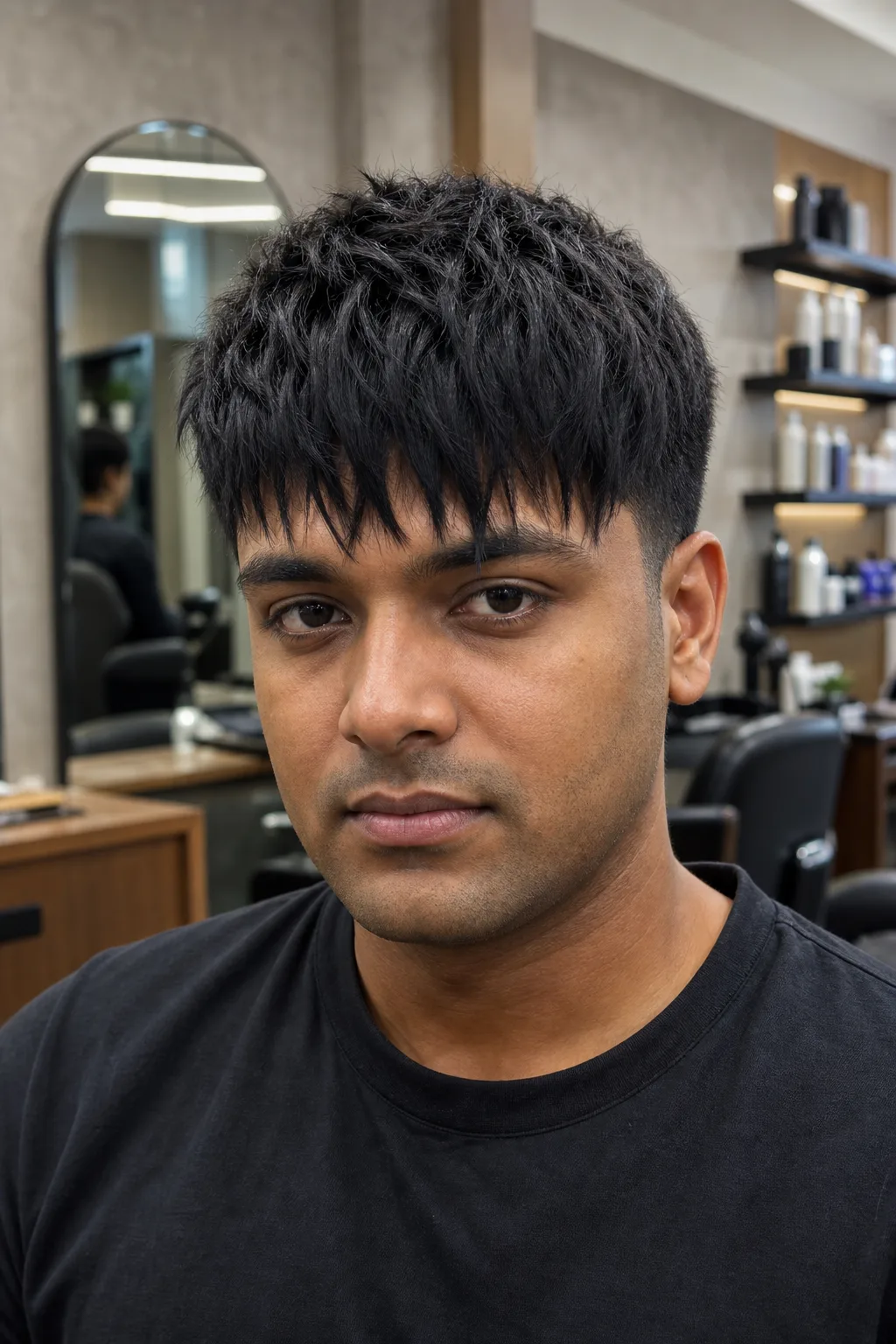 Try this on me
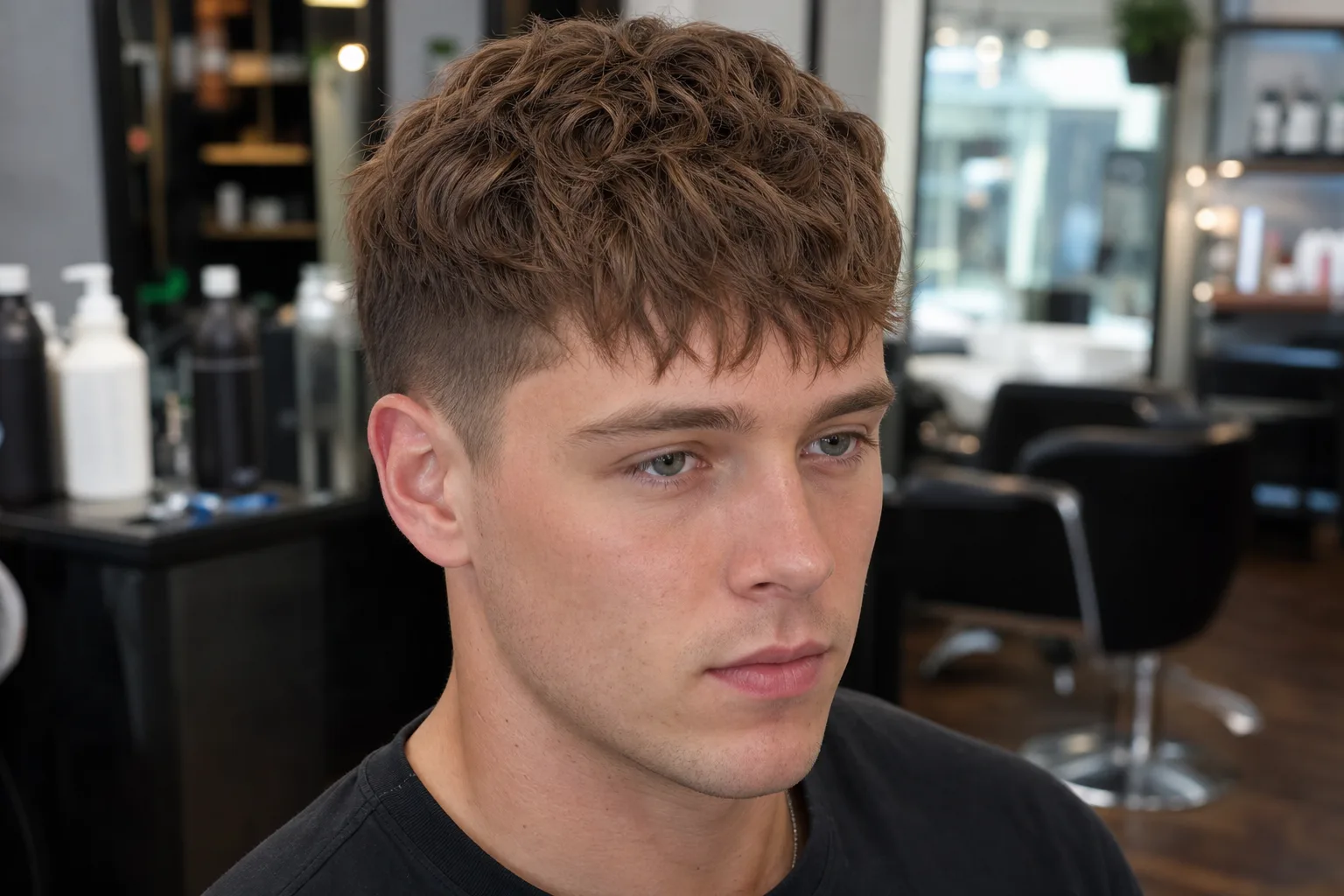 Try this on me
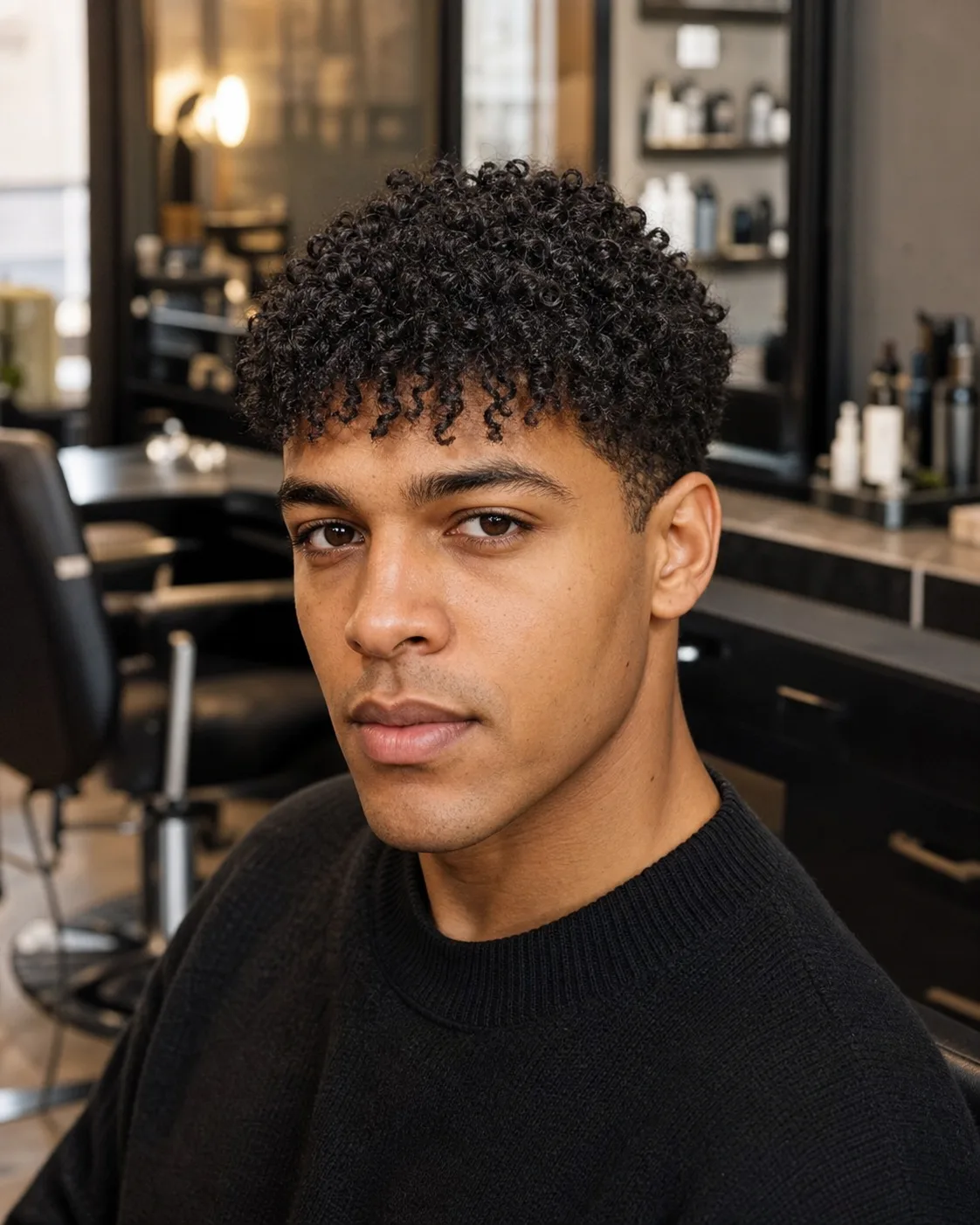 Try this on me
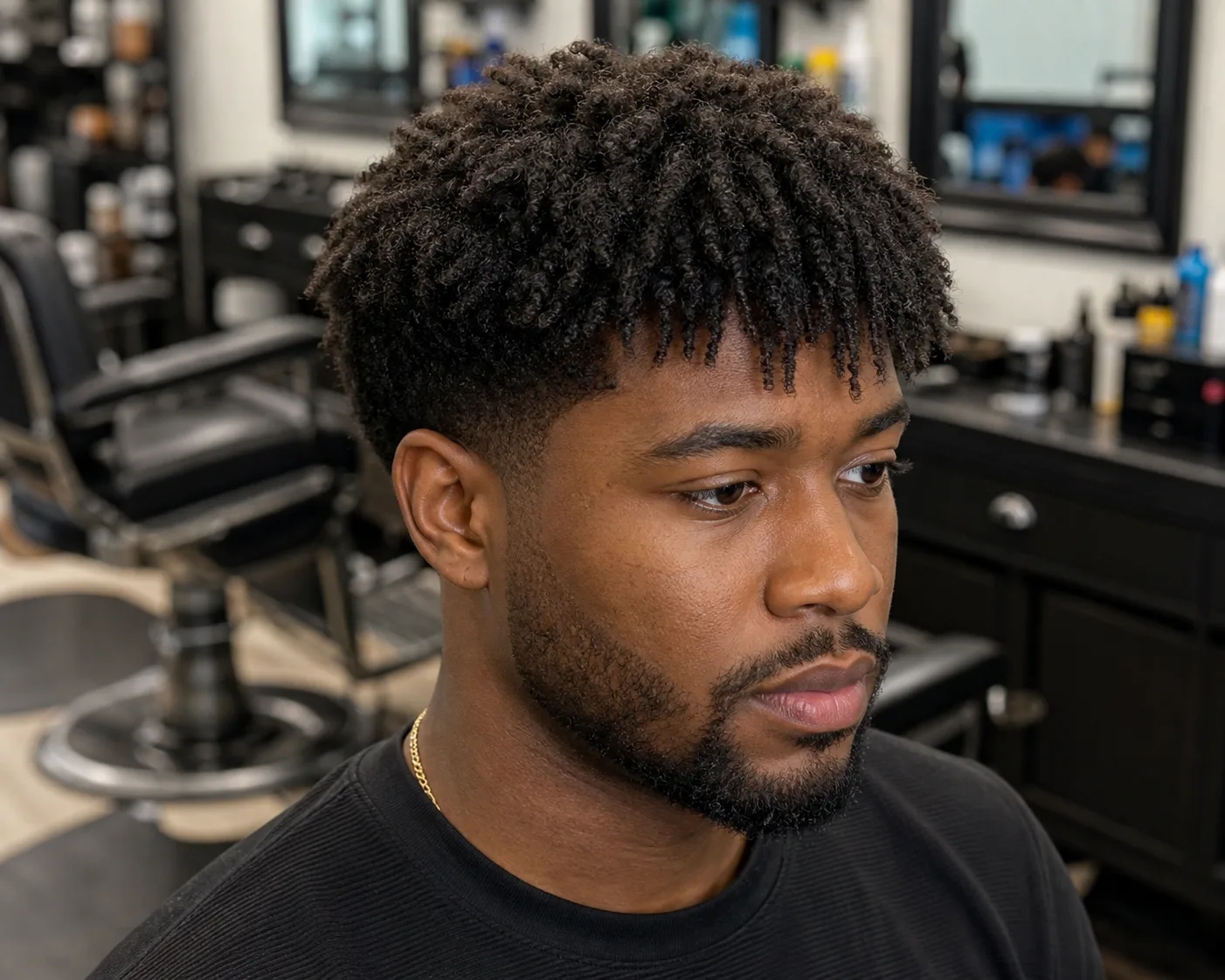 Try this on me
 Try this on me
 Try this on me
 Try this on me
 Try this on me
 Try this on me
 Yours could be here.
Start with one selfie.
One photo, twenty seconds, and you'll know. Free account, no card for your first render.
Common mistakes that ruin a textured fringe
Most bad textured fringes come from the same few errors. Each one has a cost.
- Over-thinning the ends. Ask for too much texturizing and the fringe goes stringy and see-through. It looks thin and takes weeks to grow back into shape.
- A blunt line on thick hair. Skip the point cutting and thick hair falls as one solid slab. That is a bowl cut, and everyone will call it that.
- Sides too high for the top. A high fade under a short fringe leaves almost no hair, so the cut has nowhere to sit and the fringe looks stranded.
- Wrong product. Gel and pomade make it wet and clumped, which kills the separation the whole cut is built on. Matte clay or paste is the fix.
- Growing it out with no plan. A textured fringe hits an awkward stage at about six weeks. Book the next trim before you leave, or it turns shapeless. Hair grows about half an inch a month on average, so plan the timing around that. See the American Academy of Dermatology on hair basics.
If length at the back is what you actually want, that is a different cut. A modern mullet keeps the party at the back, where a textured fringe keeps everything up front.
Styling it at home
Rough dry the hair forward with your fingers or a towel until it is about eighty percent dry. Warm a small amount of matte clay between your palms and work it through from back to front, pushing the fringe forward. Break the front into pieces with your fingertips. Do not comb it flat. The finish should look like you did almost nothing, which is the trick that takes the most product control to pull off.
The short version
A textured fringe is length on top, cut into separated pieces, worn forward, with short sides. Ask for two to three inches on top, point cutting for separation, a low taper on the sides, and a matte finish. Match the length and shape to your hair type and face, skip the gel, and book the next trim before the awkward stage hits. Get those right and it is one of the easiest men's cuts to wear.
Frequently asked questions
Ask for two to three inches of length kept on top and at the front, point cut or texturized so the ends separate, with a low taper or fade on the sides. Say you want to wear it forward with a matte finish. The words "textured crop" or "French crop" also get you into the same family if your barber does not know "textured fringe."
Almost all of them, with small changes. Round and long faces get the most benefit, using an angled or fuller fringe to adjust the proportions. Oval faces suit nearly any version. Square and heart shapes do best with a softer forward fringe rather than hard blunt lines.
Yes, if you angle it and keep a little height. A fringe that is angled across the forehead with some lift on top adds length and breaks up the width of a round face. Avoid a heavy flat fringe cut straight across, because it widens the face further.
Use the technique words, not just the adjective. Ask for point cutting, a razor, or texturizing to remove weight and separate the ends. Say "not blunt" if your hair is thick. Point to your forehead to show where the fringe should end.
It covers part of the forehead and draws the eye up and forward, which can shorten a long face, soften a strong hairline, or add movement to a flat style. Because it sits directly on the forehead, it changes your proportions more than a cut that only touches the sides.
It is medium maintenance. Styling takes a minute or two with matte clay. The catch is the trim schedule: the cut looks best fresh and hits an awkward stage around six weeks, so most people book a trim every four to five weeks to keep the shape.
Yes, and curly hair often wears it best because the texture is built in. The barber shapes it and removes weight rather than thinning it, and you keep the length so the curls form the fringe. Use a curl cream instead of clay to hold the shape.
They are close cousins. A French crop usually has a shorter, blunter fringe sitting straight across the upper forehead. A textured fringe keeps more length and more visible separation, so it falls with more movement. Many barbers use the terms interchangeably.
Preview it on your own photo: Men's Hairstyle Try-On.
Share article
About the author
More articles
Men's Haircuts · 14 min
Benny Blanco Haircut: The Fake Half Shave and the Real Curls
Benny Blanco did not shave half his head. It was a prosthetic bald cap, and the buzz cuts are AI. Here is what his curly mop actually is, the short version, and exactly what to tell your barber.
Men's Haircuts · 16 min
1A Hair: How to Tell If You Have It + 14 Cuts That Work
1A hair is pin-straight with no bend from root to tip. How to tell it from 1B and 1C, why it goes flat, 14 haircuts that work on it, and how to style it for volume.
Men's Haircuts · 15 min
High and Tight Haircut: 4 Versions and the Head Shape Rule
A high and tight clips the sides almost to skin all the way up to the top of the head, so it shows your skull shape more than your face. The 4 versions, 14 photos, what to tell your barber, and how long it lasts.