Dark Brown Hair Color: 14 Shades and the One That Suits You
Oleh Onysko 20 November 2026 14 min read
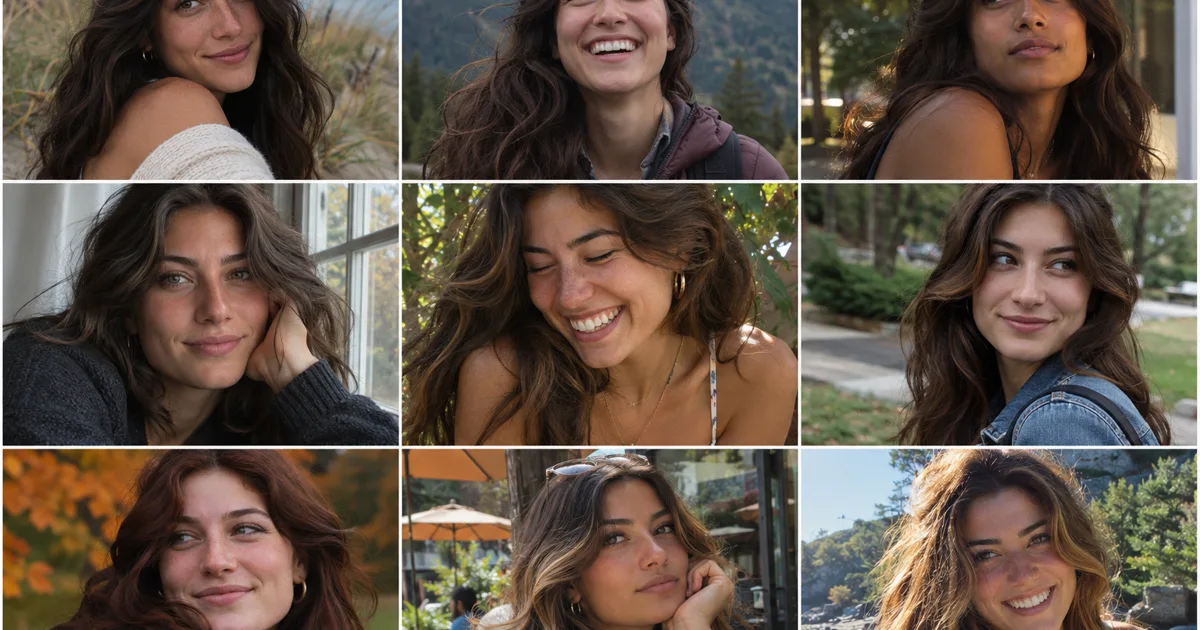
In this article
Dark brown hair color is a deep brown at level 2 to 4 on the 1 to 10 scale colorists use, where 1 is black and 10 is the lightest blonde. It is the most forgiving dye there is if you start from brown, and the easiest to overshoot: on your own head, dark brown almost always comes out one level darker than the box.
That second point is what this guide turns on. Pick the shade one step lighter than the one you want, choose the undertone for your skin rather than the name on the box, and dark brown looks rich instead of flat. Below are 14 versions side by side, which one suits your skin tone, how to do it at home, and the words to say in the salon chair.
Which cut makes you look best?
Find out in 60 seconds.
A few quick taps and one selfie, and you'll know. Free account, no card for your first render.
What is dark brown hair color?
Dark brown is any brown deep enough to read almost black indoors and clearly brown in daylight. On the level system that means level 4 (dark brown at the lighter end), level 3 (classic dark brown) and level 2 (the darkest brown, often sold as espresso). Level 1 is black.
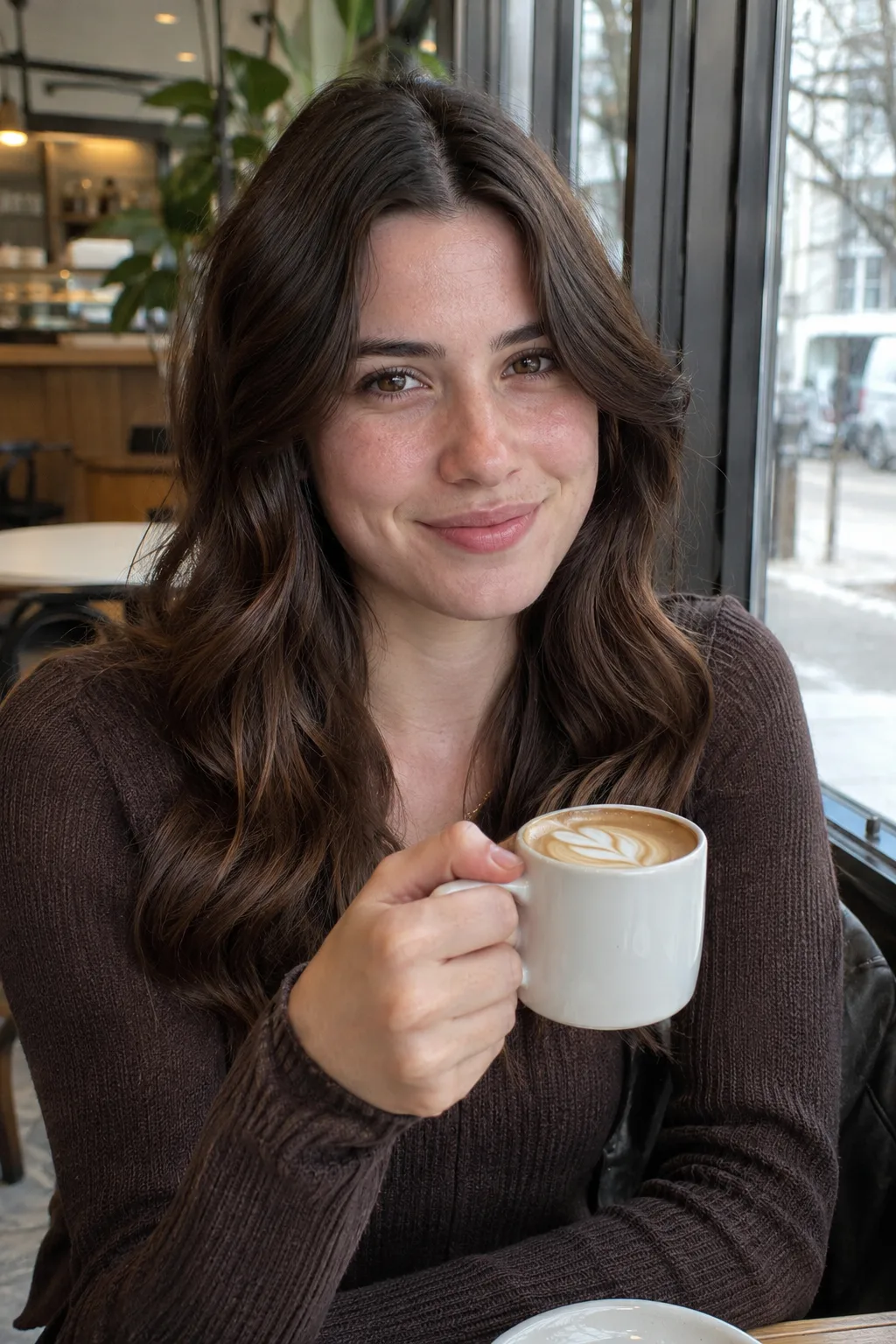
Two things decide how it looks on you:
- Depth. How dark it is, from level 2 to 4. This is what the number on a box dye means: a "3" is dark brown on almost every brand.
- Tone. Which way it leans: ash (cool, smoky), neutral, or warm (gold, red). This is the letter or second number after the level, and it matters more for your face than depth does.
Neutral dark brown is the safe default. Ash flattens warm skin, and warm can look brassy on very fair, pink skin. The chestnut brown guide covers the warmer, lighter level 4 to 6 territory if you want more red-gold than dark brown gives you.
Dark brown vs black, chocolate, chestnut and medium brown
Most people who ask for dark brown actually want one of its neighbors, or would be happier with one. Here is where each one sits.
| Color | Usual level | Undertone | Reads as | Choose it if |
|---|---|---|---|---|
| Black | 1 | Blue-black or neutral | Solid, no brown in sunlight | You want maximum contrast |
| Espresso (darkest brown) | 2 | Neutral to cool | Near-black, brown only in sun | You want black without the harshness |
| Dark brown | 3 | Neutral | Deep brown indoors and out | You want the low-risk classic |
| Dark chocolate | 3 to 4 | Slightly warm | Rich, glossy brown | You have olive or warm skin |
| Ash dark brown | 3 to 4 | Cool, smoky | Matte, muted brown | You have pink or cool skin |
| Dark chestnut | 3 to 4 | Warm red-gold | Brown with a red glow | You want warmth without going red |
| Medium brown | 5 | Neutral | Soft brown, visibly lighter | Dark brown feels too heavy |
If you are torn between dark brown and black, pick dark brown. Black is unforgiving on fair skin, shows every gray root within three weeks, and is the hardest color to get out later. Dark brown gives you most of the depth with none of those costs. For the warmer middle of this table, see chocolate brown hair.
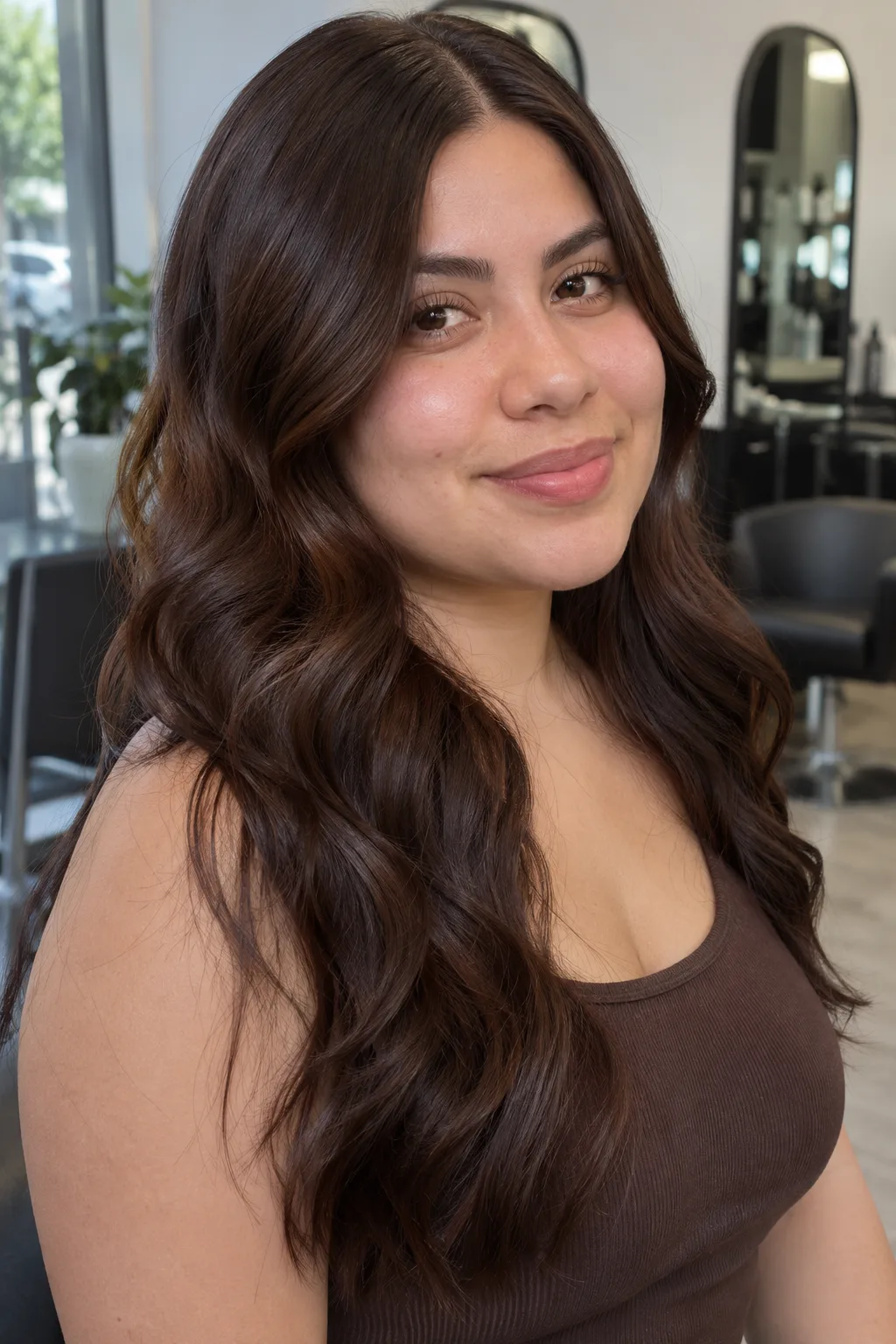
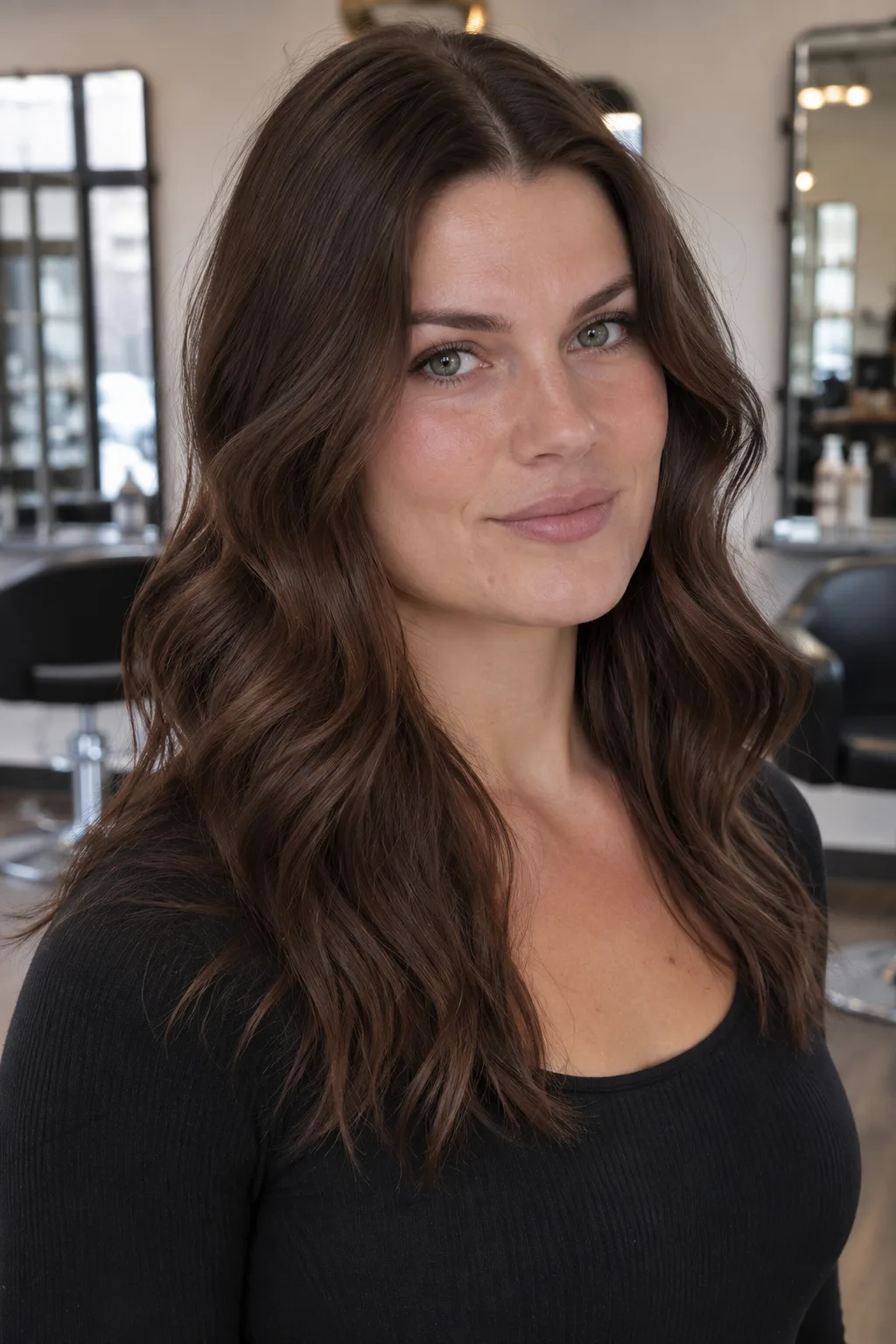
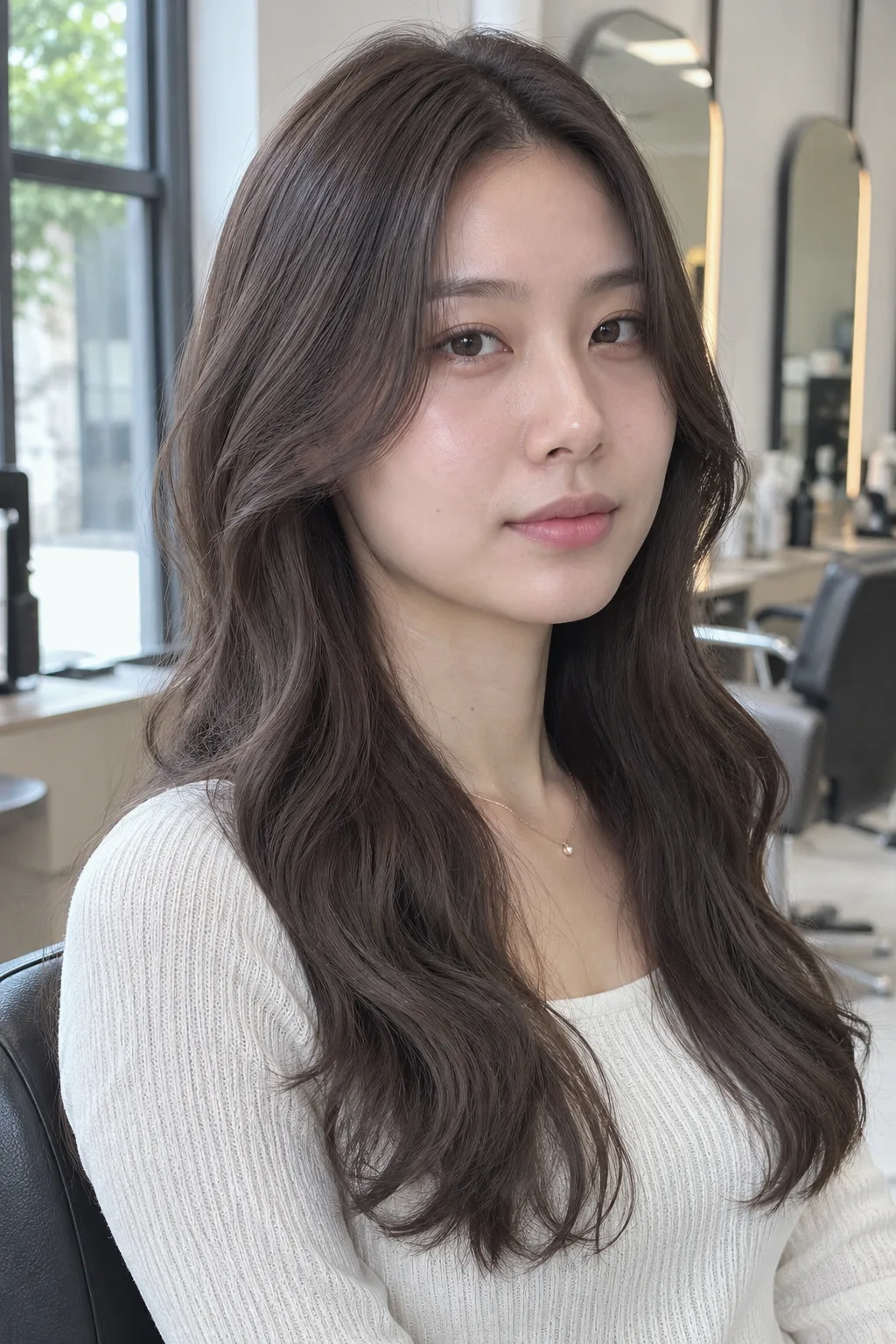
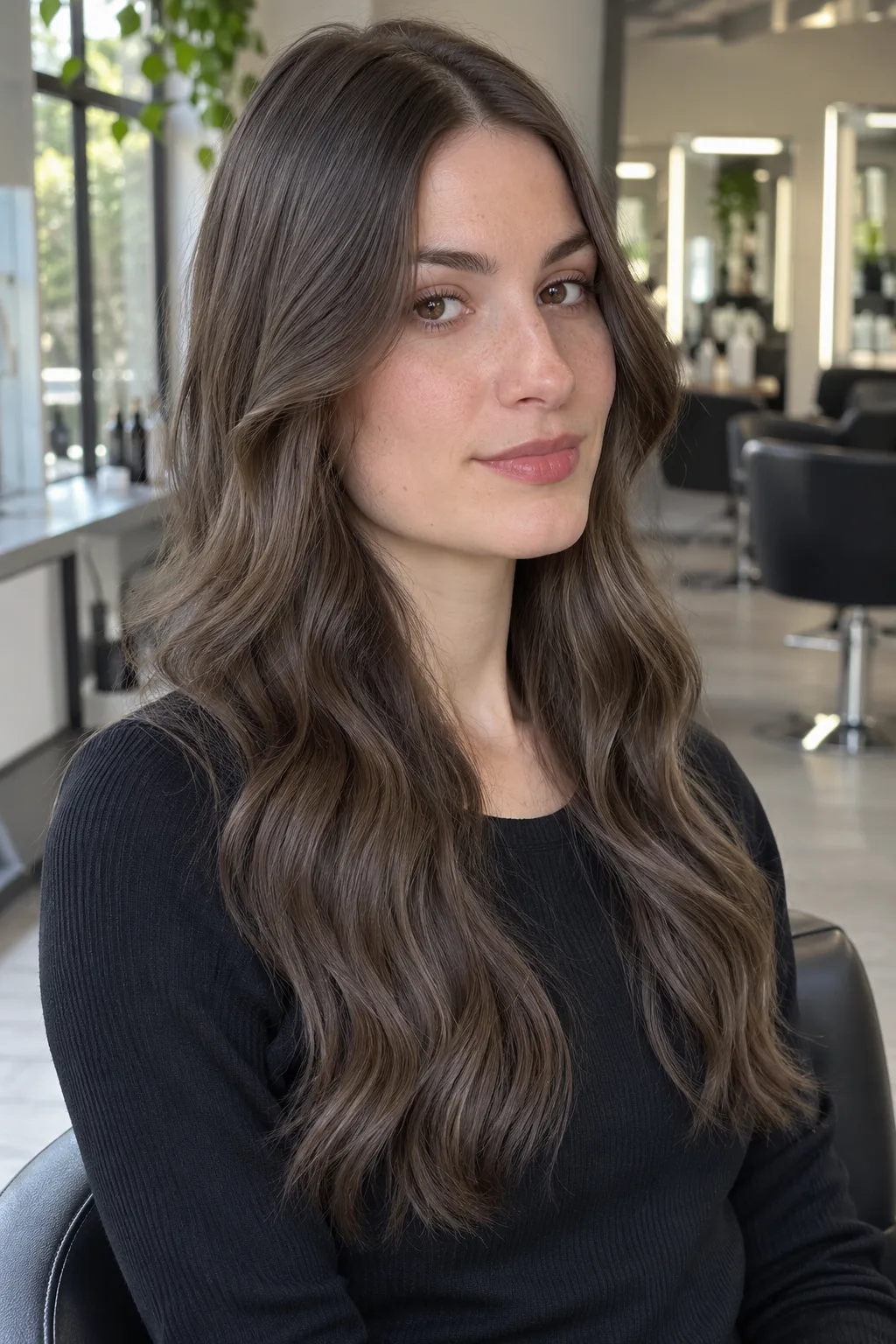
14 dark brown hair color ideas, from espresso to caramel balayage
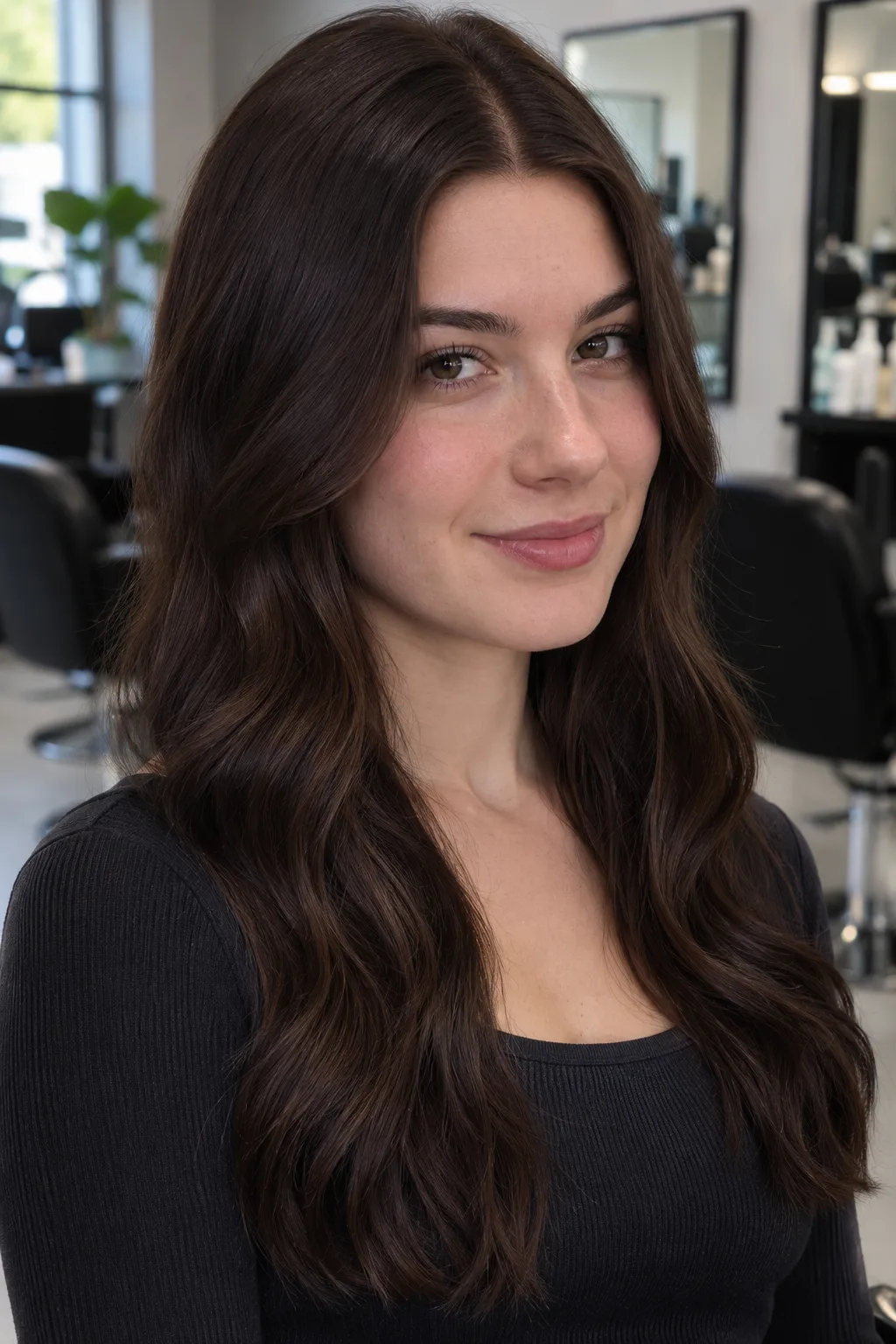
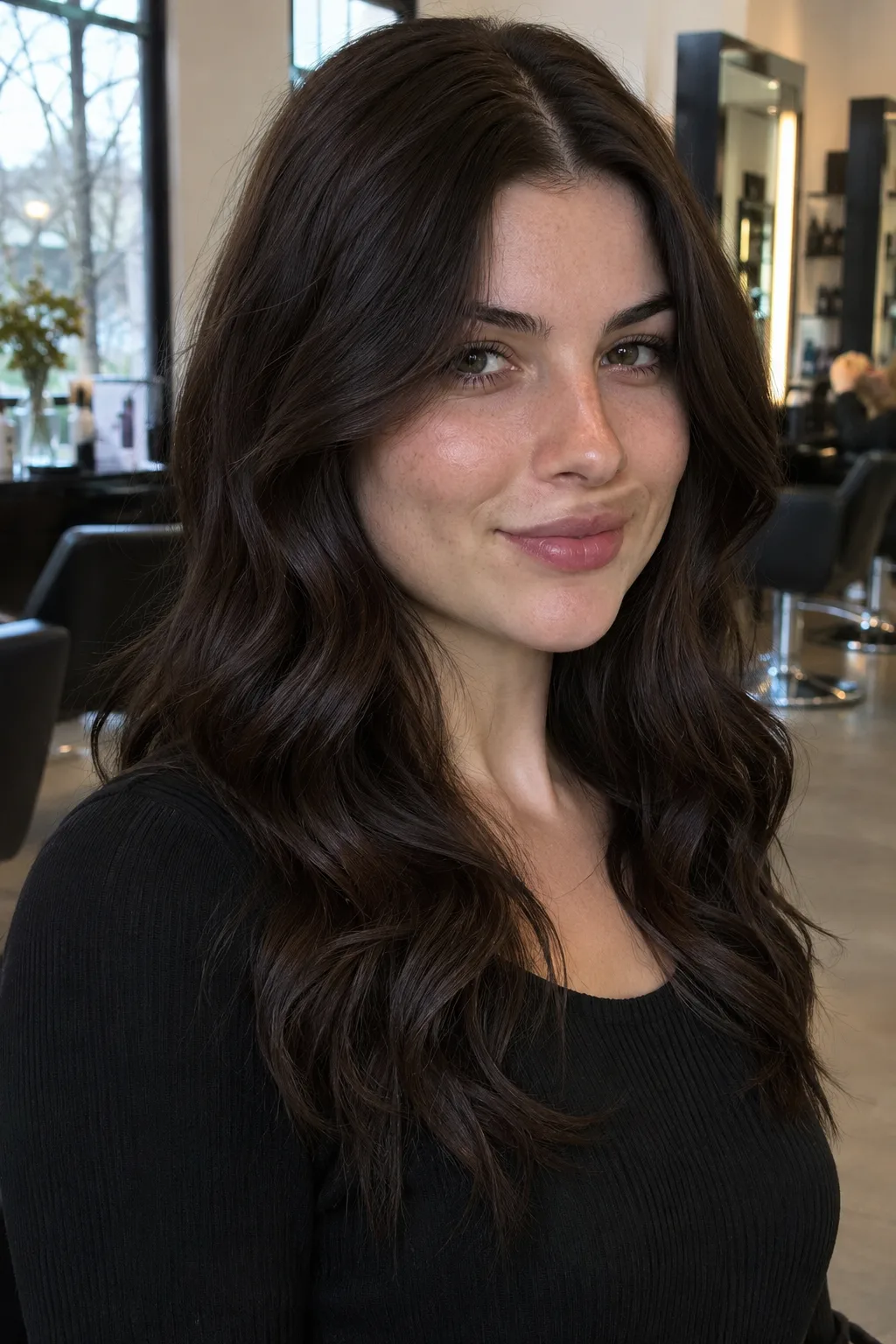
Every photo below holds the same long, softly waved cut with a center part, so the only thing that changes is the color. The first nine run from the darkest brown to the warmest. The last five add light on top of a dark brown base, which is how most people wear it once the first box wears off.
Gallery14 photos · tap to enlarge
 Would this suit me?
 Would this suit me?
 Would this suit me?
 Would this suit me?
 Would this suit me?
 Would this suit me?
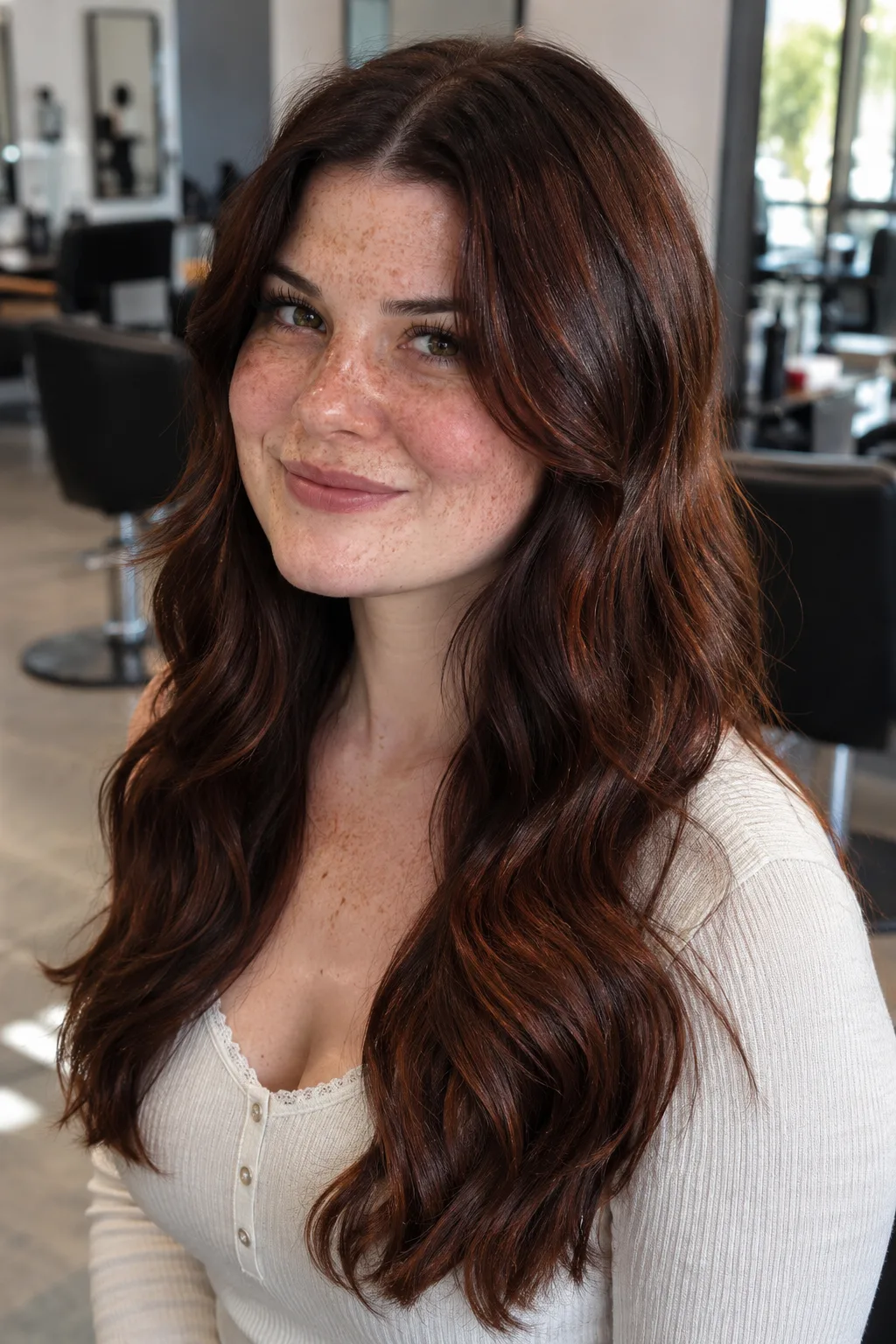 Would this suit me?
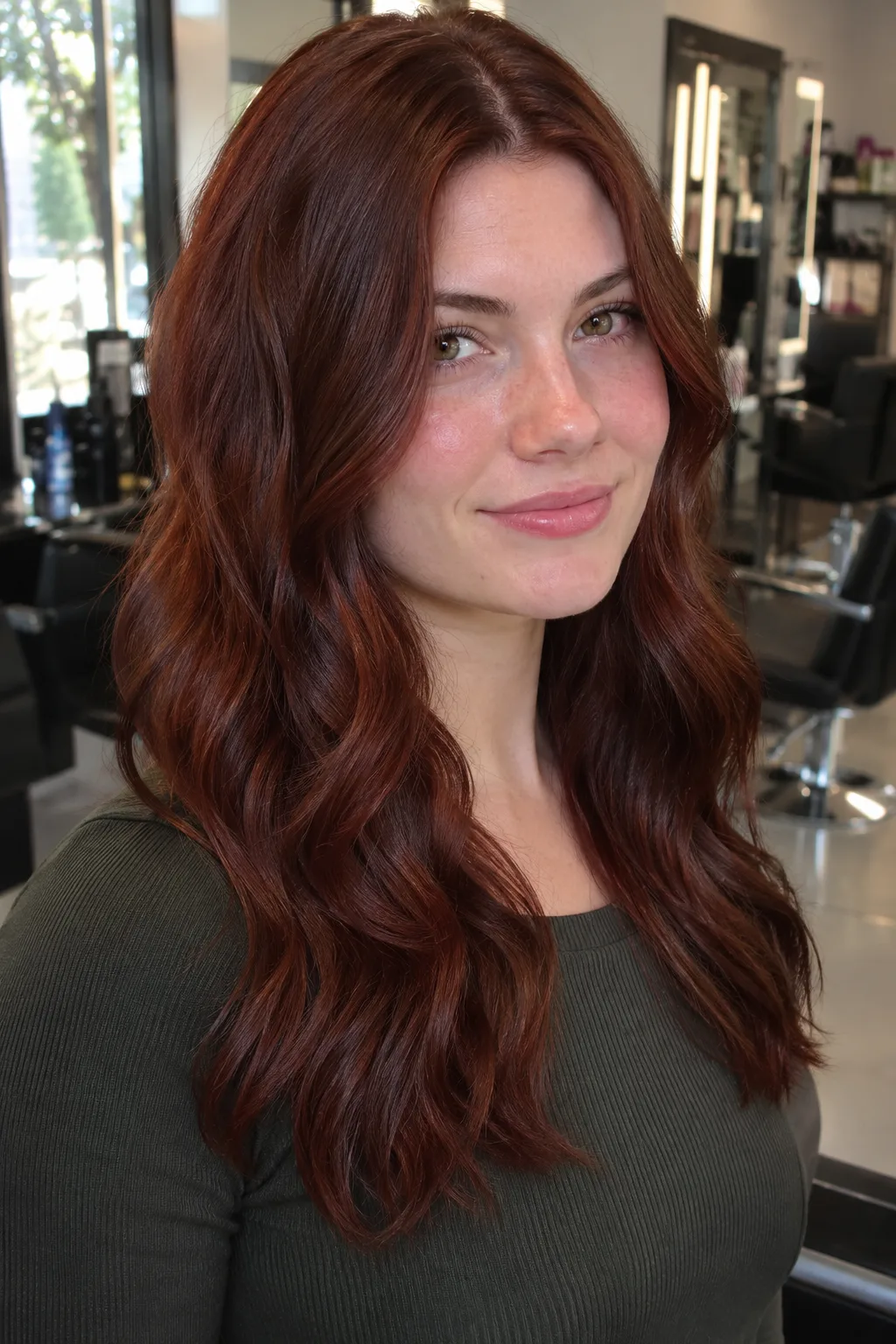 Would this suit me?
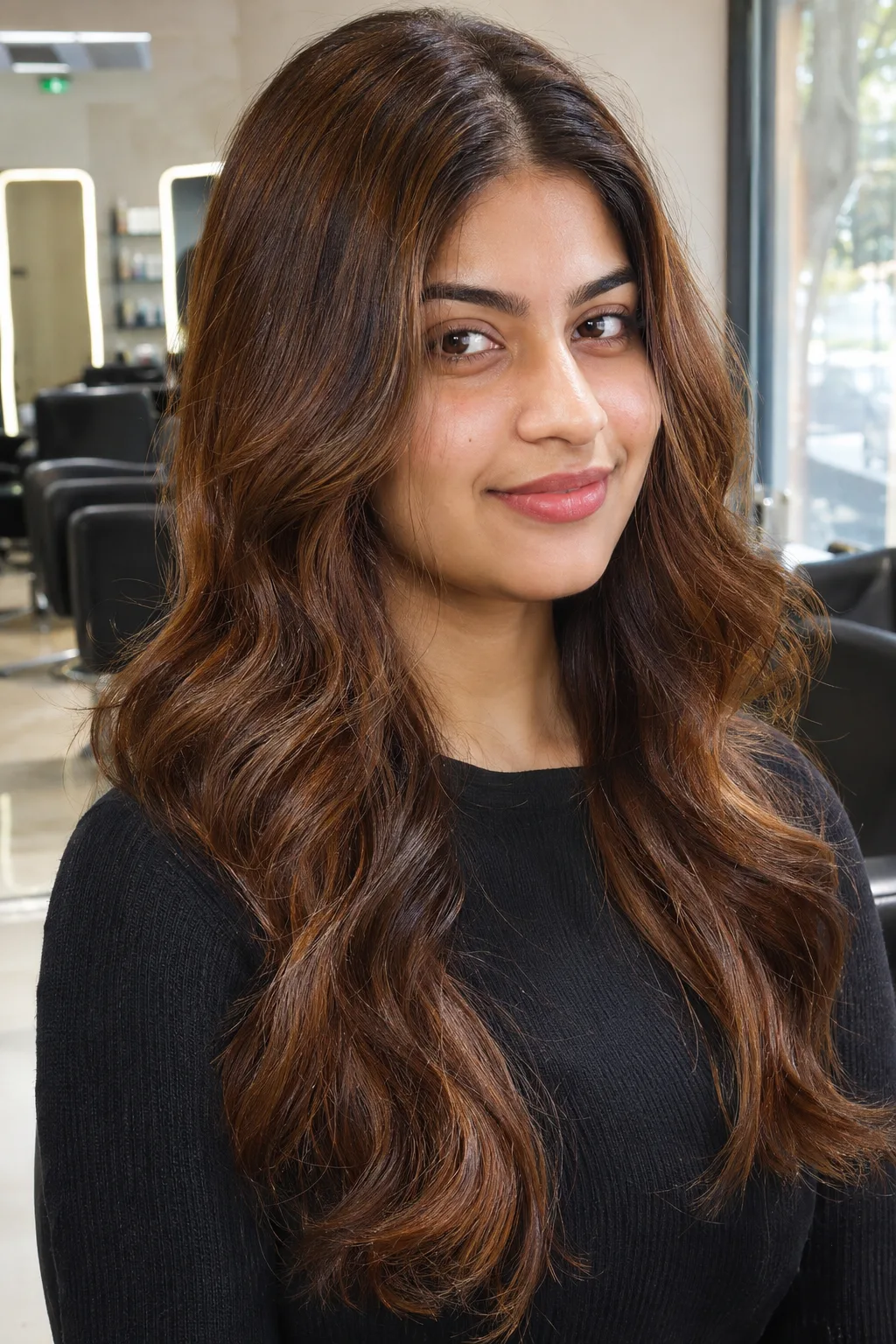 Would this suit me?
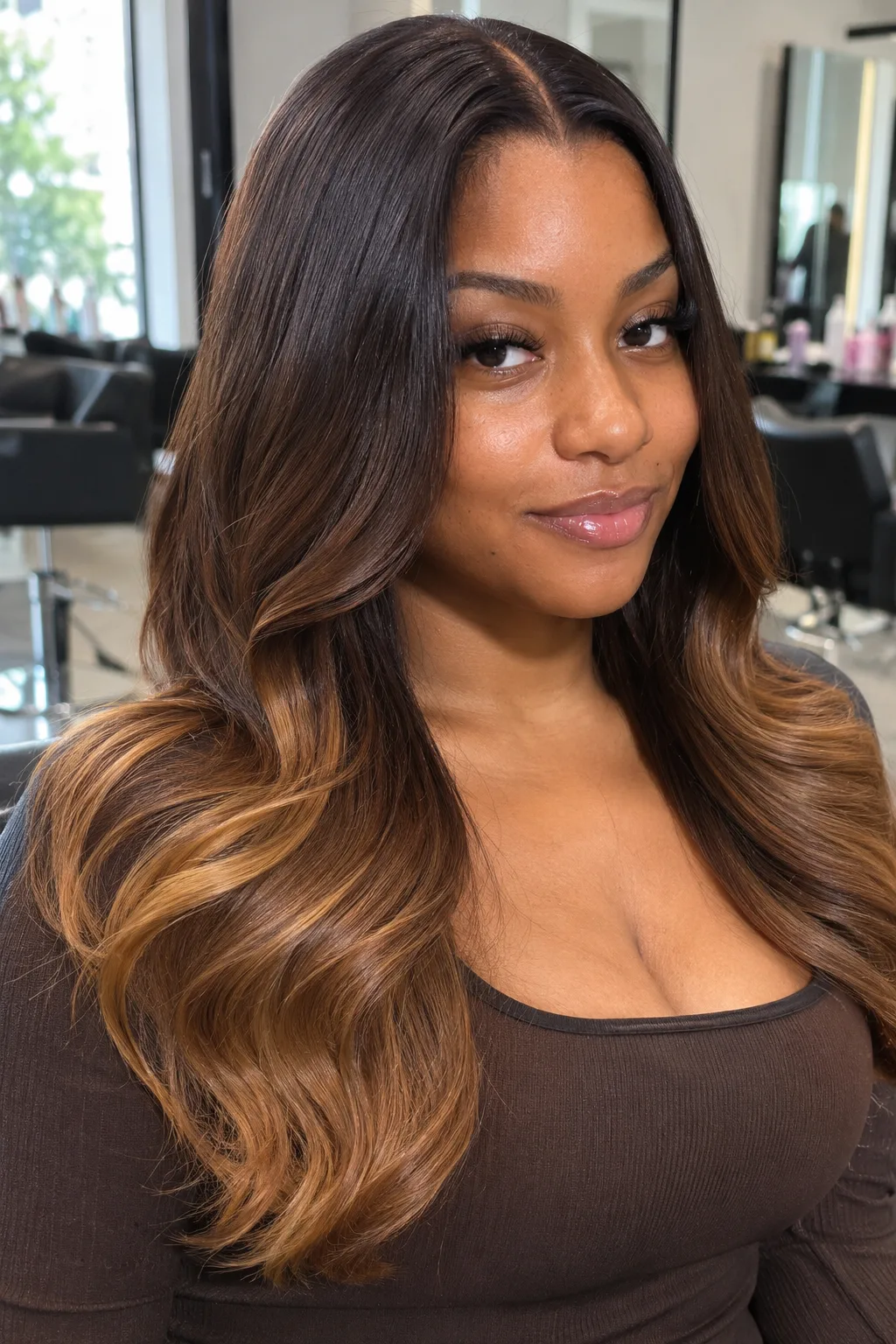 Would this suit me?
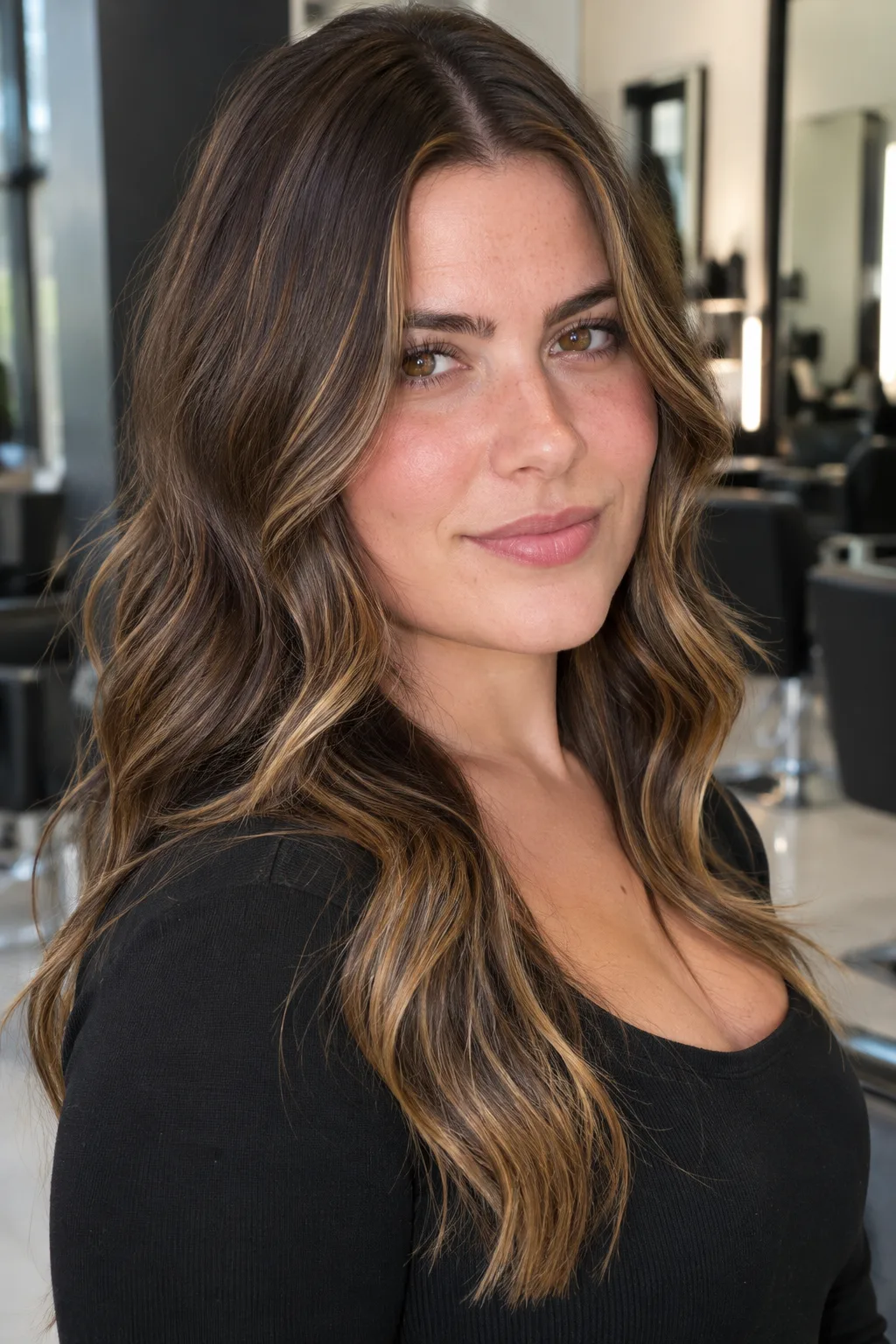 Would this suit me?
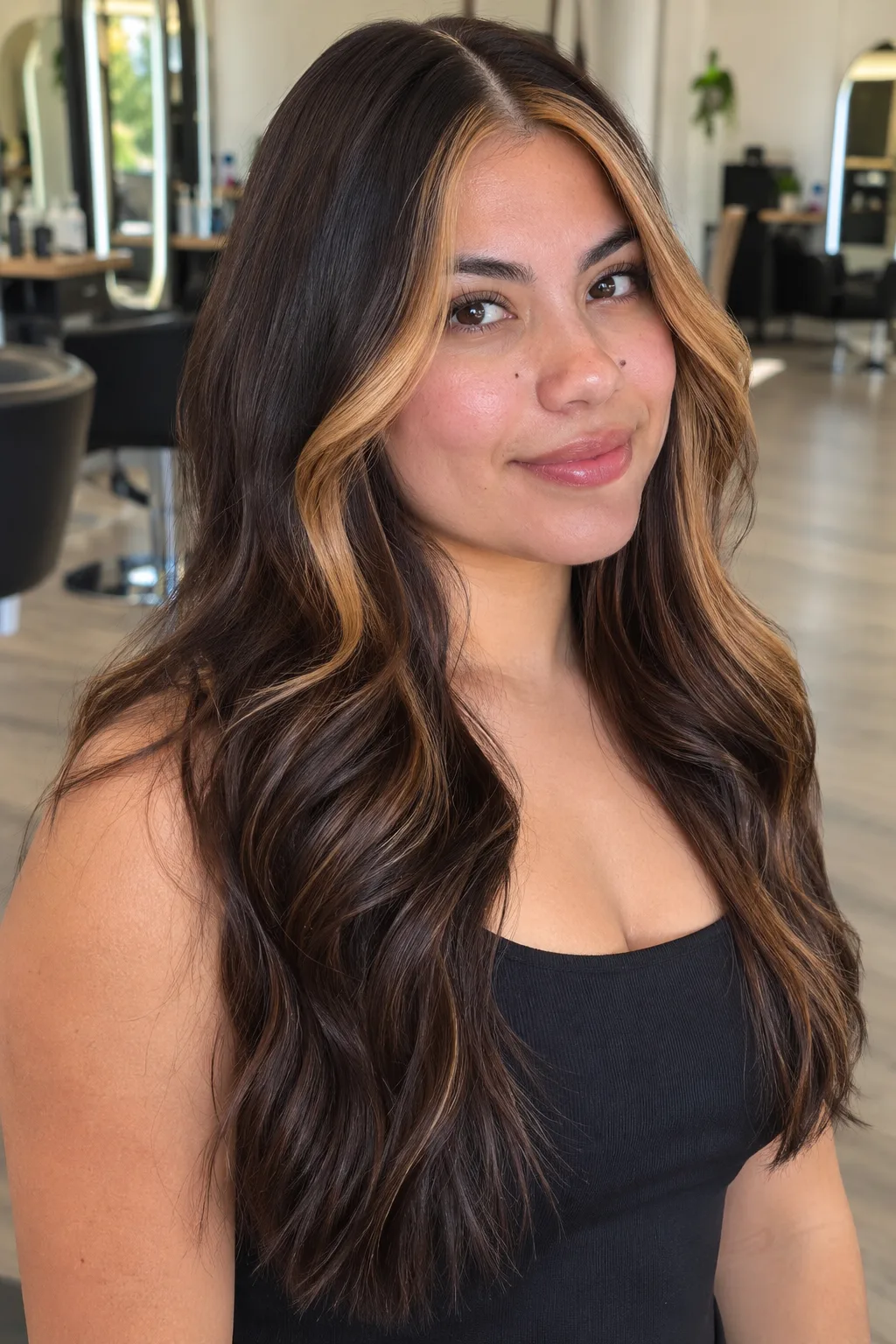 Would this suit me?
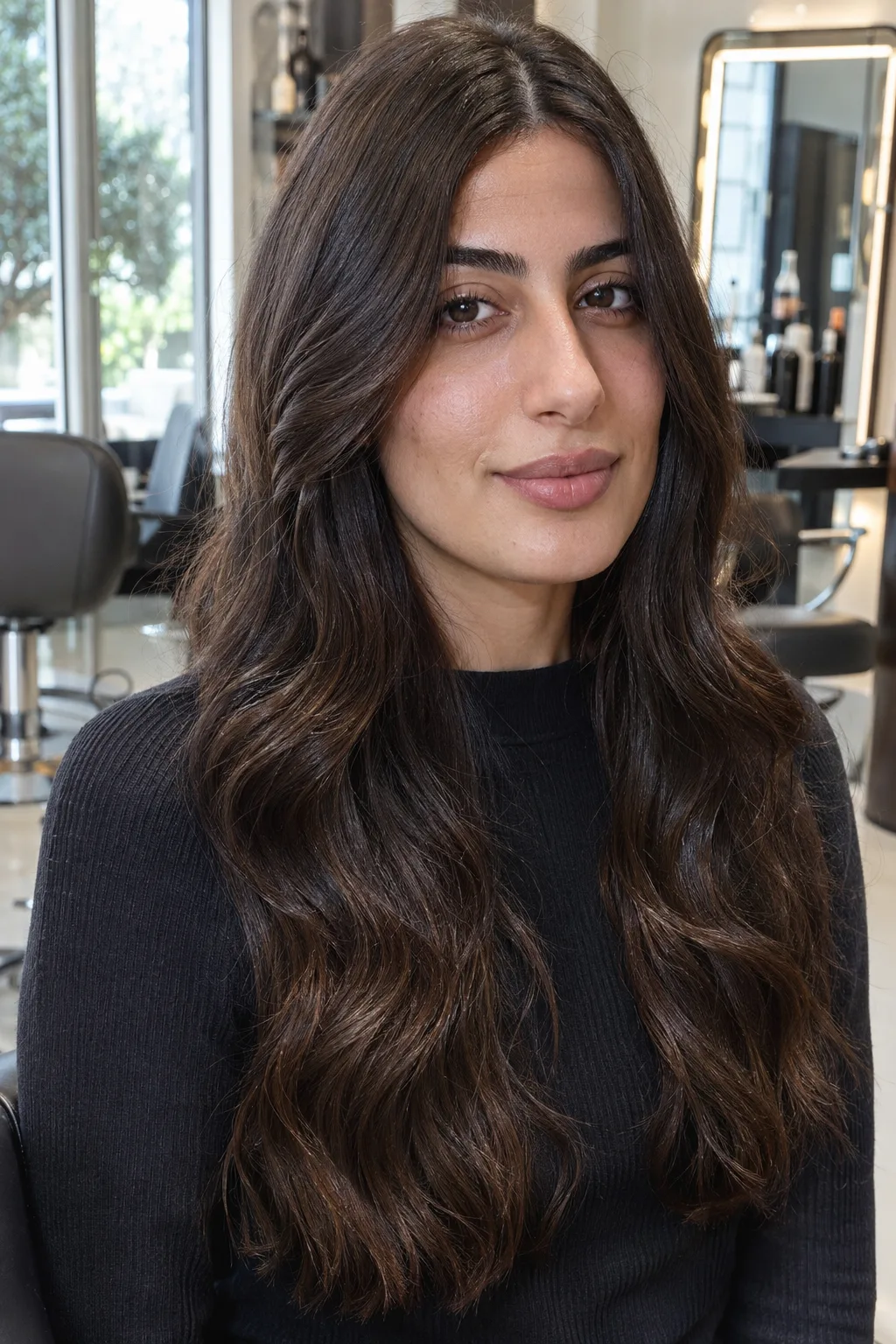 Would this suit me?
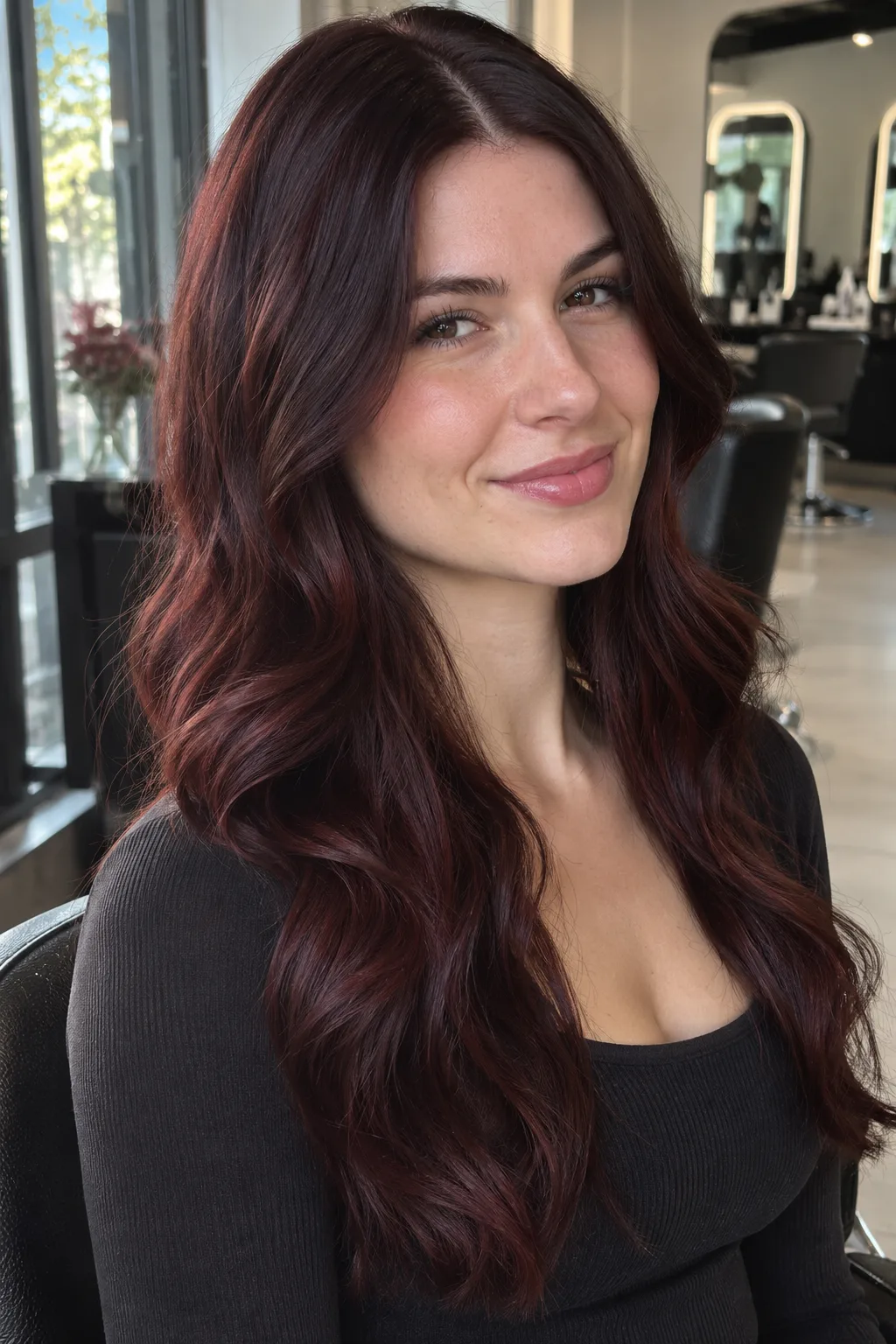 Would this suit me?
Which cut makes you look best?
Find out in 60 seconds.
A few quick taps and one selfie, and you'll know. Free account, no card for your first render.
Which shade of dark brown suits your skin tone?
Match the undertone of the brown to the undertone of your skin. Depth is secondary: almost every skin tone can wear level 3, but the wrong tone at level 3 makes you look tired.
| Your skin | Undertone | Best dark brown | Avoid |
|---|---|---|---|
| Fair, pink or rosy | Cool | Ash dark brown, mushroom, espresso | Strong red or gold, which reads brassy |
| Fair to light, peachy | Warm | Dark golden brown, dark chestnut | Flat ash, which looks gray |
| Medium or olive | Warm or neutral | Dark chocolate, mocha, caramel balayage | Very ashy shades, which look green-gray on olive |
| Deep | Warm or neutral | Rich dark brown, dark cherry brown, honey highlights | Jet black with no reflect, which hides the hair |
Not sure of your undertone? Look at the veins on your inner wrist in daylight. Blue or purple means cool, green means warm, both or neither means neutral.
Fair skin with cool undertones
Ash dark brown is the one. The smoky, gray-leaning tone sits quietly next to pink skin, where a warm brown would pull out redness. Keep it at level 3 or 4. Espresso at level 2 can look severe against very fair skin, especially in winter.
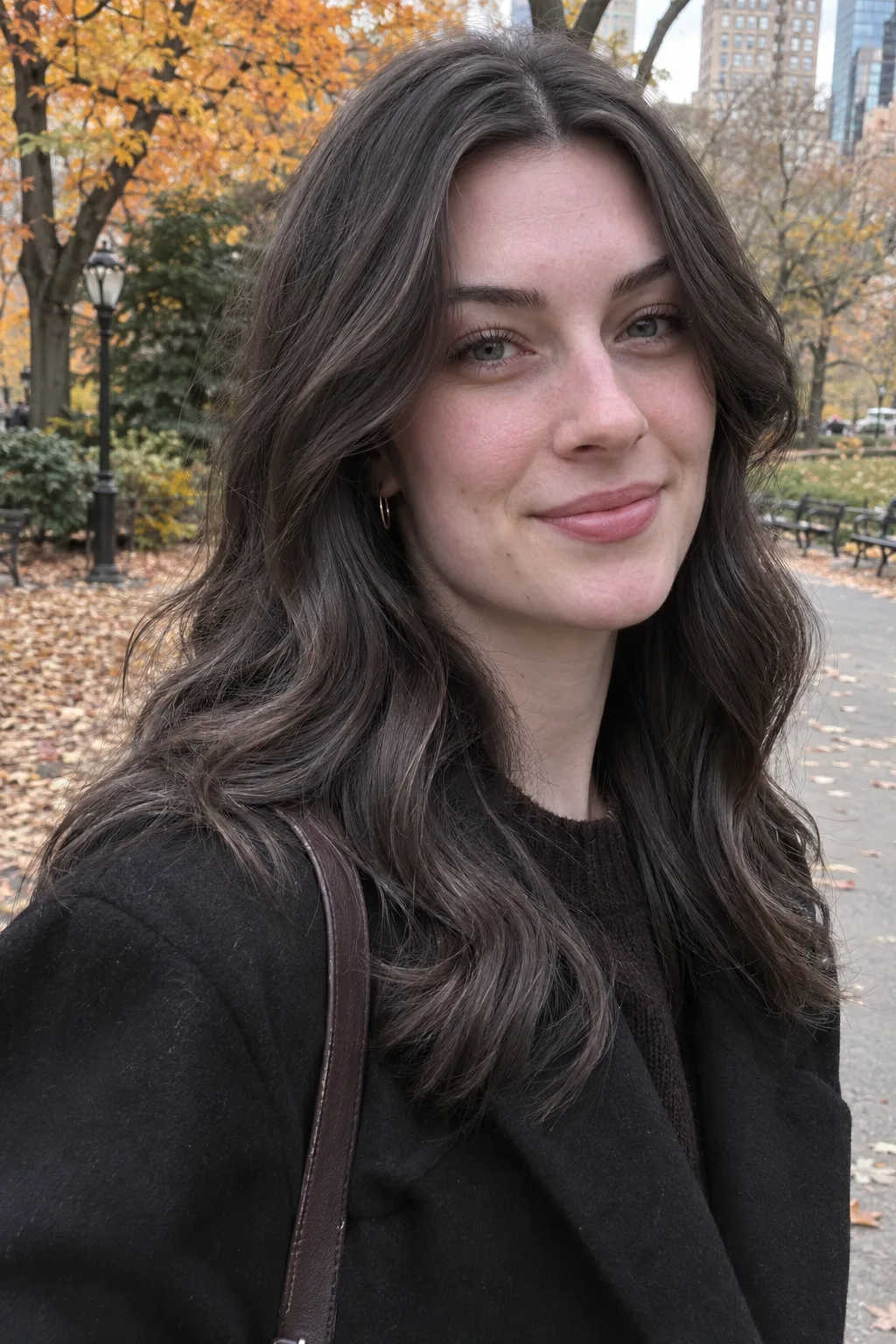
Medium and olive skin
This is the skin tone dark brown flatters most. Go warm: dark chocolate or mocha add a glow that ash takes away. Olive skin has a green undertone, so ash brown on olive skin often reads gray. If you want dimension, caramel highlights on a dark chocolate base are the most requested version of this look for a reason.
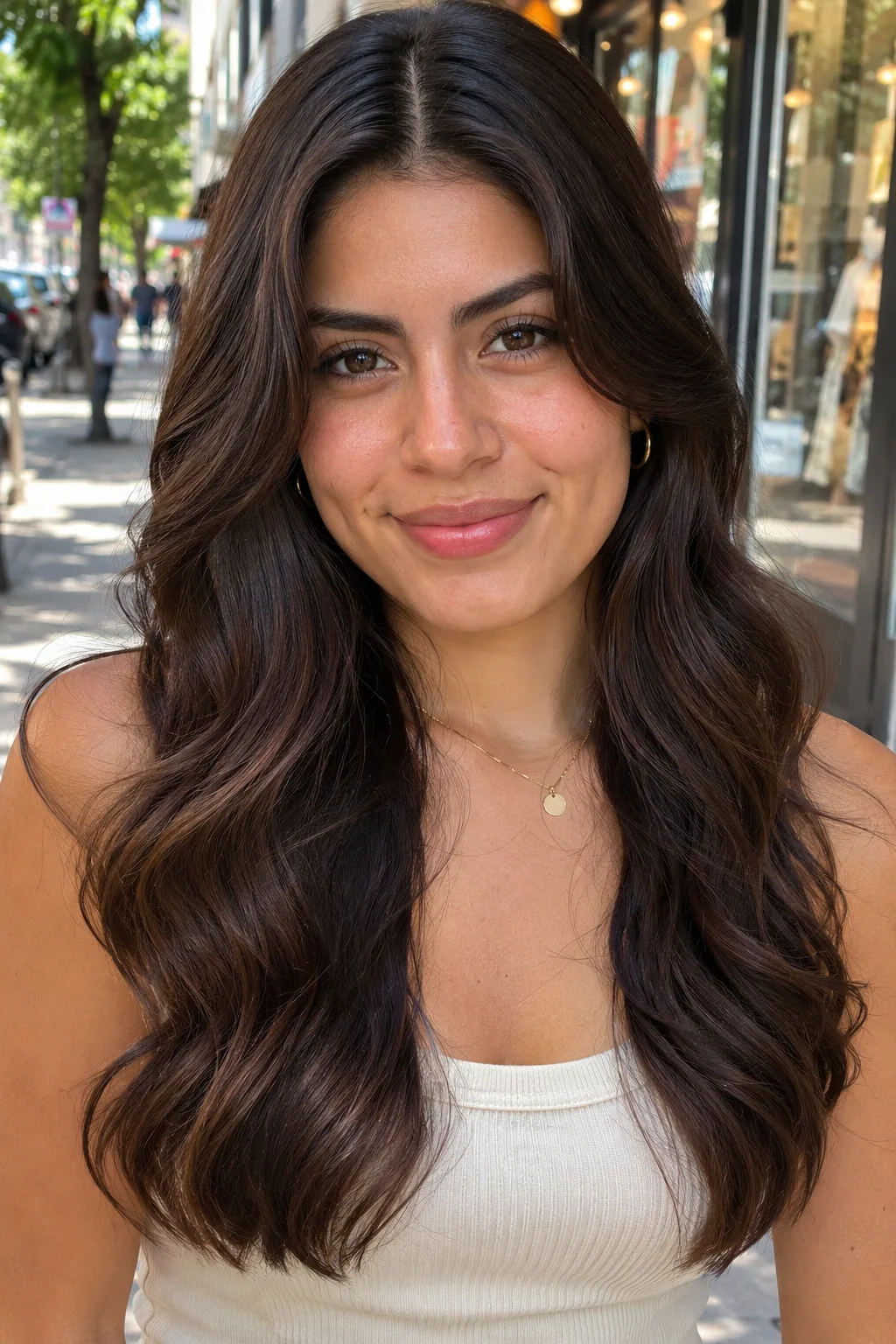
Deep skin
Dark brown reads as softer, warmer black on deep skin, which is exactly why it works: it gives the hair visible movement in the light that jet black hides. Rich neutral dark brown, a dark cherry brown or fine honey highlights all work. Natural hair is often already a level 1 or 2, so dark brown dye on virgin hair will barely show; you need a lift first, which is a salon job.
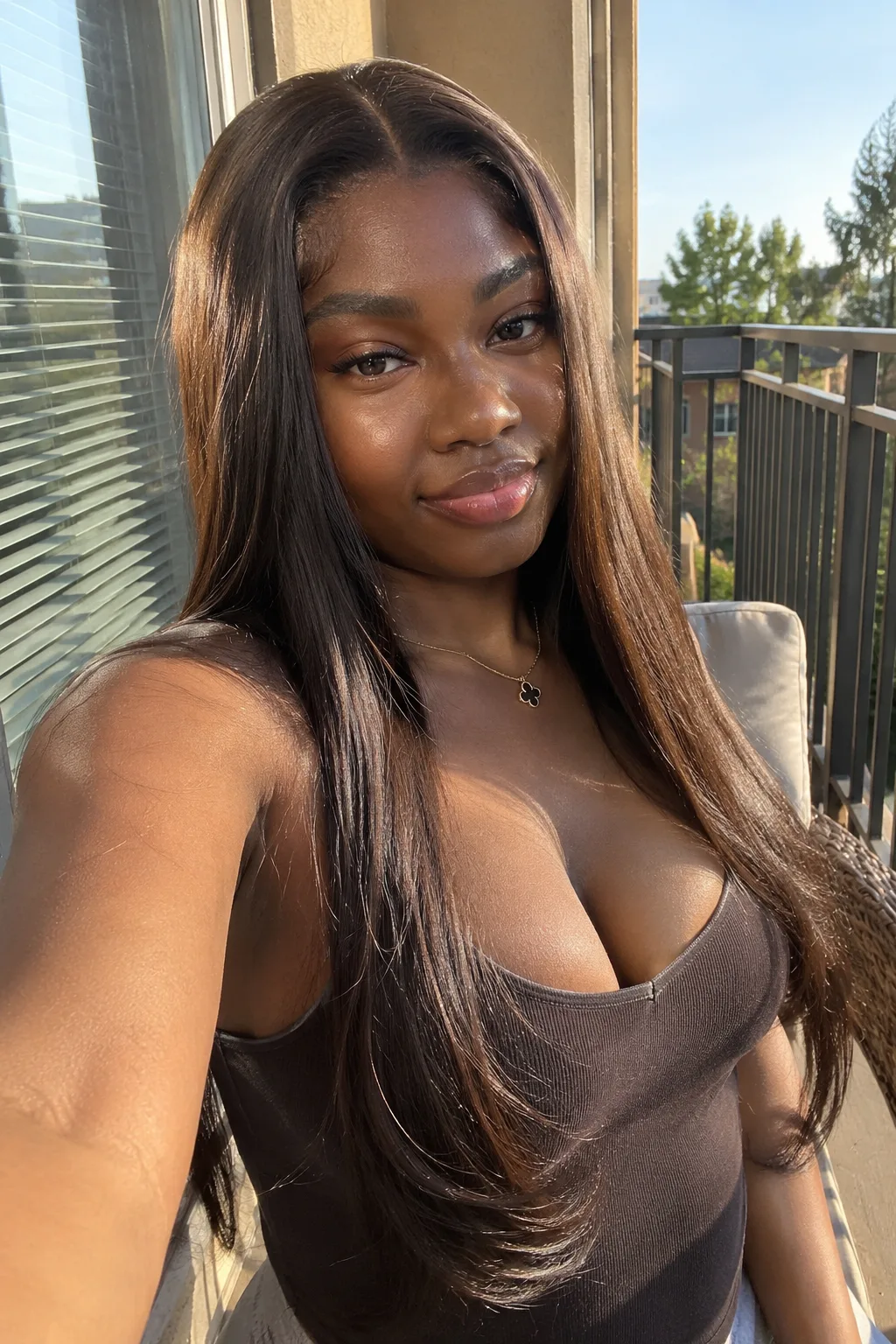
What is the darkest brown hair color called?
The darkest brown is usually called espresso, darkest brown or level 2. It sits one step lighter than black. Indoors it reads as black, and in sunlight it shows a brown sheen.
Brands rename it constantly (dark espresso, black brown, deep brown), so ignore the name and read the number on the box: a 2 or 2N is darkest brown, a 1 is black. If you want black without the harsh edge, espresso is the answer. If you want people to see brown in your hair, go to level 3.
Dark brown hair with highlights and balayage
A dark brown base holds highlights better than almost any other color, because there is enough depth for the lighter pieces to show contrast. The three versions worth knowing:
- Caramel balayage. Hand-painted ribbons through the lower half, grown-out roots by design. The lowest maintenance option, and the one in the photo below.
- Face-framing money piece. Two bright panels at the front only. The most impact for the least bleach.
- Babylights. Very fine, soft, close to the base color. Reads as sun, not as highlights.
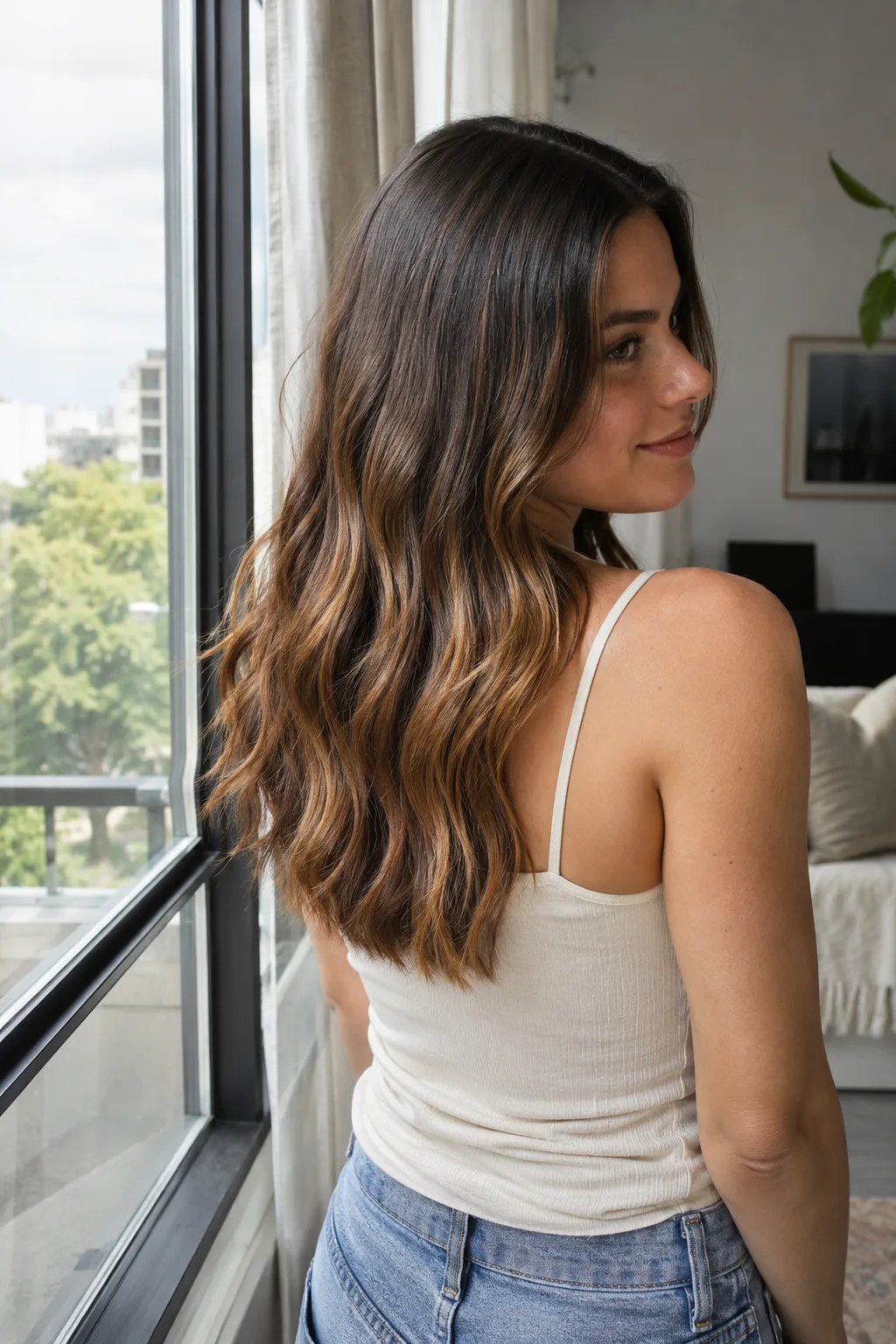
Dark brown lifts warm when you lighten it: it passes through red and orange before it reaches caramel. That is why the warmer highlight shades are cheaper and kinder to your hair than icy blonde on dark brown. The full set of options is in our guide to brown hair with highlights. Partial highlights give you dimension with half the foils.
How to get dark brown hair at home
If your hair is natural (never dyed) and level 4 or lighter, dark brown is one of the few colors you can safely do at home. You are only adding pigment, never lifting. Here is the method that avoids the classic mistakes.
How to dye your hair dark brown at home
- Pick one level lighter than your goal
If you want level 3 dark brown, buy a level 4. Porous ends soak up more dye and come out darker than the box, so starting lighter lands you where you wanted.
- Choose the tone for your skin
Ash (A or .1) for cool skin, neutral (N) for most people, warm (G, W or .3) for olive or warm skin. When in doubt, buy neutral.
- Do a patch test 48 hours before
Dab a little mixed dye behind your ear and wait two days. Hair dye can cause allergic reactions even with a brand you have used before.
- Start on dry, unwashed hair
Hair washed a day or two before gives the scalp some protection. Section it into four and apply with gloves, roots to mid-lengths first.
- Add the ends for the last 10 minutes only
Ends are the most porous part of your hair. Leaving them for the full processing time is what turns dark brown into black at the tips.
- Rinse cool and wait 72 hours to shampoo
Rinse until the water runs clear, use the conditioner in the box, and leave the first shampoo for three days so the color sets.
If your hair is already dyed darker than your goal, stop here. Dye does not lift dye, so putting dark brown over black does nothing. You need a color remover first, which is a salon job if you care about the condition of your hair. If you want a softer first try, a demi-permanent color gives you dark brown for 4 to 6 weeks and fades out without a hard regrowth line.
Mistakes that make dark brown look flat or too black
- Buying the shade on the front of the box. The model on the box started with lighter hair. Read the swatch on the back against your own starting level instead.
- Going one level too dark. The single most common complaint. Dark brown on porous ends goes near-black, and going darker is easy while going lighter costs a bleach or a color remover.
- Choosing ash on olive skin. It reads gray-green and makes the skin look sallow. Neutral or warm is safer.
- Painting the full length every time. Each re-dye builds up on the ends. After the first time, color the roots only and pull it through for the last five minutes.
- Skipping the patch test. The American Academy of Dermatology recommends one before every color.
- Hot water and clarifying shampoo. Both strip the reflect out of dark brown first, which leaves it looking dull and flat within weeks.
At the salon, say this:
Say this to your barber
I'd like a neutral dark brown, around level 3 at the root and a touch softer at the ends, glossy, nothing ashy or red.
Swap "neutral" for "cool ash" or "warm chocolate" to match the skin tone table above.
Can you see dark brown on yourself before you dye?
The manual way works up to a point: hold the photos above next to your face in daylight, check your wrist veins, or try a demi-permanent shade first. All of these tell you about the color. None of them tell you about the color on your face, with your skin, your eyes and your eyebrows, and that is the wall: with dark brown, the risk is going too heavy, and you only find out once the dye is on.
That is the gap our virtual hair color try-on closes. Upload one selfie and see dark brown, espresso or a caramel balayage on your own face before you book or buy a box. If you are leaning toward highlights, the balayage try-on shows the painted version. Your first look is free, with no card. Plans start at $9 a month if you want to compare more shades; the pricing page has the details.
The verdict
For most people, the best dark brown hair color is a neutral level 3, bought as a level 4 if you dye at home. Go ash if your skin is fair and pink, chocolate or mocha if it is olive or warm, and a rich neutral or warm dark brown with some reflect if your skin is deep. Choose espresso only if you really want near-black, and add caramel balayage once the base is in place if you want it to look expensive.
The one rule that matters most: go lighter than you think. Dark brown never fails by being too light. It fails by turning black. If you want more warmth than dark brown gives, chestnut is the next step up, and a medium or light brown is the move if you want to go lighter overall.
Frequently asked questions
Depth. Dark brown sits at level 2 to 4 and reads almost black indoors. Plain brown, or medium brown, is around level 5 and looks clearly brown in any light. Dark brown is a deeper, more dramatic version of the same color family.
Espresso, darkest brown or level 2. It is one step lighter than black: it looks black indoors and shows a brown sheen in sunlight. Check the number on the box rather than the name, since a 2 or 2N is darkest brown on most brands.
Warm and neutral dark browns: dark chocolate, mocha and rich neutral dark brown. They add glow where ash shades can look gray. Caramel or honey highlights on a dark brown base add dimension that suits brown skin well.
Yes, but not with regular dye. Dye does not lift dye, so dyed dark brown needs a color remover or bleach to go lighter. Natural dark brown can be lifted a level or two with a permanent color, but anything more takes bleach and will pass through red and orange first.
Mainly because one box has to work for everyone, so it is formulated strong, and because people apply it to their full length every time. That builds up on the ends and goes too dark. For a simple dark brown on natural hair, box dye is fine if you pick a level lighter and do the roots only on repeat.
Do not wash it the same day, do not skip the patch test 48 hours before, and do not use a deep conditioner or oil treatment right before coloring, since a coating can block the dye. Also avoid going darker if you plan to go lighter soon after.
It depends on contrast. Very dark, flat hair on fair skin can look harsh and emphasize shadows, which reads older. Dark brown with some warmth or soft highlights around the face usually looks younger than jet black, which is one more reason to choose dark brown over black.
Highlights are pieces colored lighter than your base, lowlights are pieces colored darker. On dark brown hair you almost always want highlights. Lowlights are for people with light hair who want to add depth back.
Preview it on your own photo: Balayage Try-On.
Share article
About the author
Related posts
Women's Haircuts · 15 min
Blunt Cut: 14 Lengths, Who It Suits and How to Ask for It
A blunt cut is one length with a straight, solid line at the ends. See 14 lengths from earlobe to mid-back, which hair types and face shapes suit it, and the exact words to say in the chair.
Women's Haircuts · 13 min
Ash Brown Hair Color: 14 Cool Shades and Who Each Suits
Ash brown is a cool level 4 to 7 brown with the red and gold canceled out. See 14 shades side by side, which one suits your skin and starting color, and how to stop it going brassy.
Women's Haircuts · 12 min
Chestnut Brown Hair: 14 Shades and the One That Suits You
Chestnut is a warm level 4 to 6 brown with a red-gold reflect. See 14 shades side by side, which one suits your skin and starting color, and the exact words to say to your colorist.
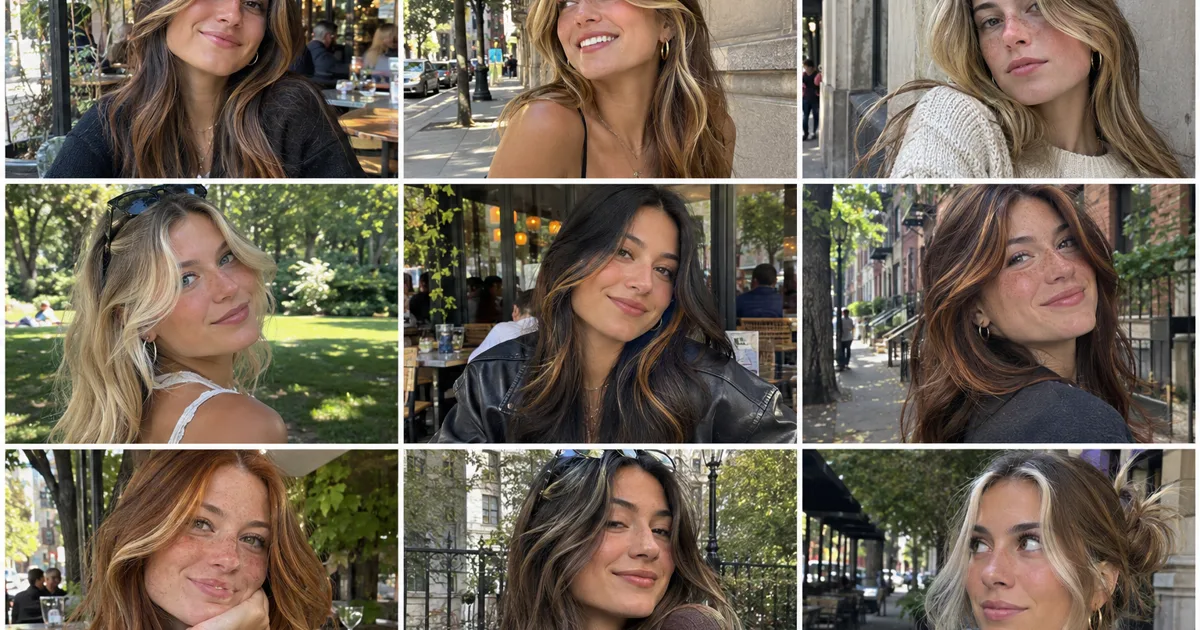
Women's Haircuts · 13 min
Partial Highlights: 14 Looks and When to Go Full Instead
Partial highlights lighten only the top layer and face frame, so they look full worn down and patchy worn up. See 14 base colors, partial vs full compared, and what to ask for.
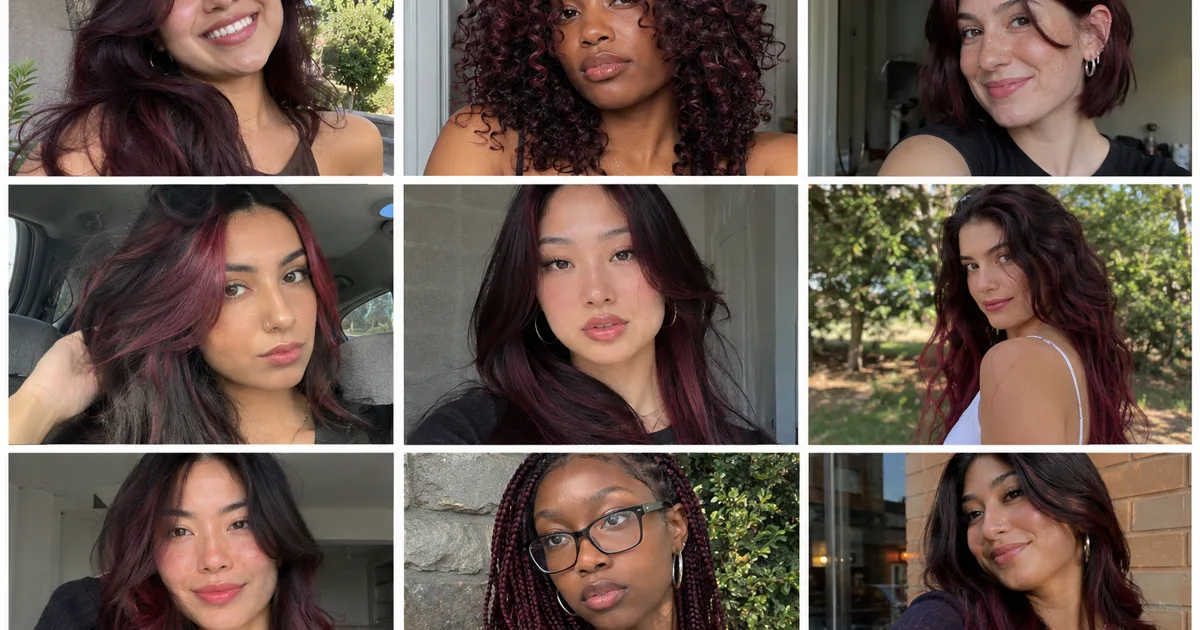
Women's Haircuts · 12 min
Black Cherry Hair Color: 14 Looks and Why Dark Hair Wins
Black cherry is a near-black red that looks black indoors and wine red in the sun. See 14 ways to wear it, what your base color gives you, and how to keep it from fading rusty.
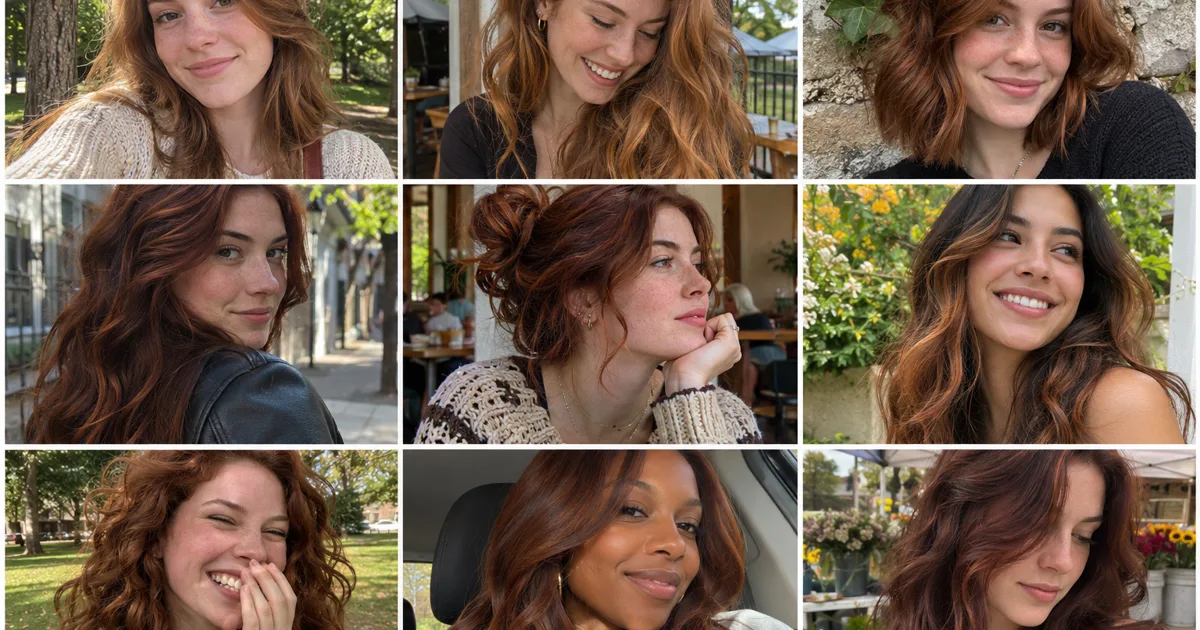
Women's Haircuts · 13 min
Copper Brown Hair: 14 Shades and How to Pick Yours
Copper brown is brown first and copper second. See 14 shades from light golden to deep auburn brown, which one works on your starting color and skin tone, and what to say to your colorist.