Blunt Cut: 14 Lengths, Who It Suits and How to Ask for It
Oleh Onysko 21 November 2026 15 min read
In this article
A blunt cut is a haircut where every strand is cut to the same length, so the ends finish in one straight, solid line with no layers. It works best on fine and straight hair, because putting all the weight in one place makes thin hair look thicker at the ends.
That is the part most guides get backwards. The blunt cut is often sold as a look for thick, glossy hair, but thick hair is where it goes wrong most often: without some hidden weight removal it puffs out into a triangle. Below you will find what the cut is, the full range of lengths, which hair types and face shapes it suits, the mistakes that cost people a good cut, and the exact words to say in the chair.
Which cut makes you look best?
Find out in 60 seconds.
A few quick taps and one selfie, and you'll know. Free account, no card for your first render.
What is a blunt cut?
A blunt cut means the hair is cut straight across at one length, with no layering and no thinning at the ends. The stylist holds each section flat with little or no elevation and cuts it in a single line, so the bottom edge looks heavy and crisp, like the hem of a curtain.
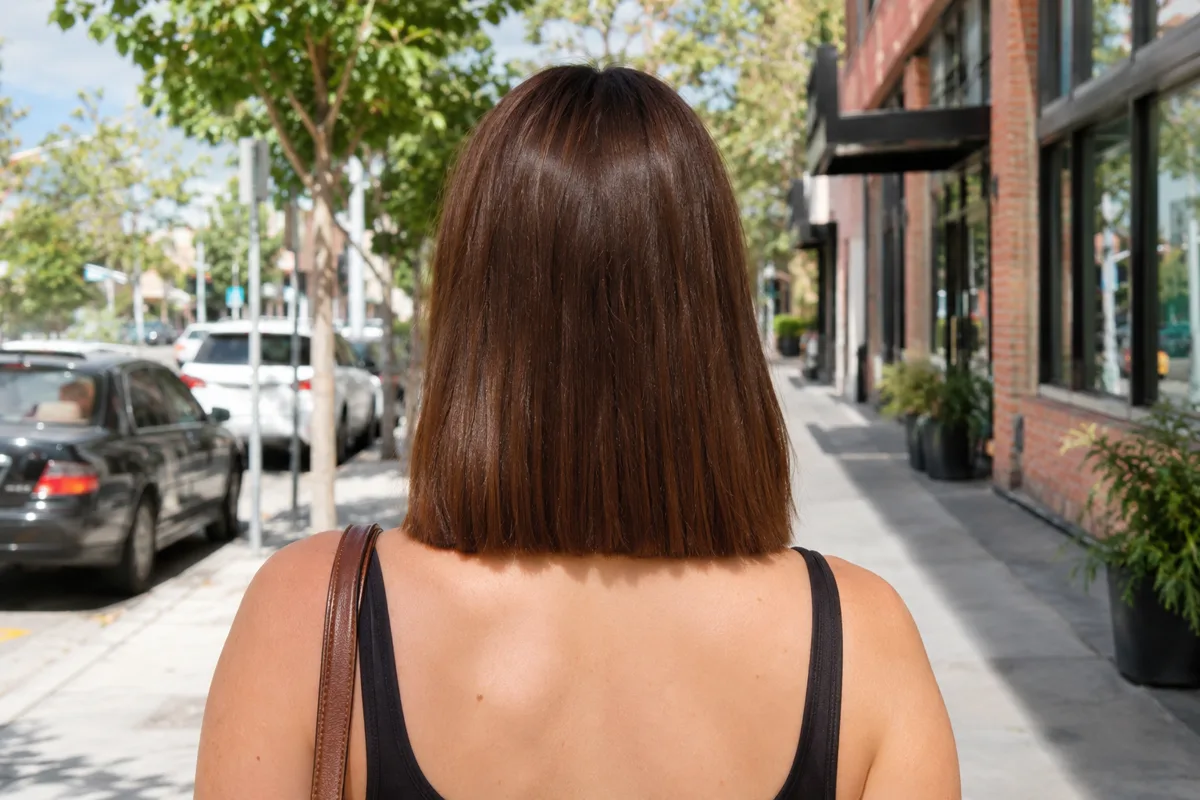
What a blunt cut is not: it is not a layered cut, where shorter pieces sit on top of longer ones to add movement. It is not a graduated or stacked bob, where the back is cut shorter and angled up into the nape. And it is not point cut or texturized at the ends, which softens the line into something feathery. If you can see one clean edge all the way round, it is blunt. If the ends look wispy or step up in tiers, it is something else, like the cuts in our guide to layered hair.
A blunt cut is also not a length. "Blunt" describes the ends, so it can be an earlobe-length bob, a collarbone lob or long hair to the middle of your back. The length changes the look far more than any other choice, which is why the gallery below is organised by where the line sits.
Want to see it first? See a new hairstyle on your face with the AI hairstyle changer.
Blunt cut vs layers: which should you get?
Neither is better in general. A blunt cut gives weight, shine and a sharp shape; layers give movement, lift and less bulk. The right one depends almost entirely on how much hair you have.
| Blunt cut | Layered cut | |
|---|---|---|
| Ends | One solid line, full weight | Tapered, lighter, varied lengths |
| Makes fine hair look | Thicker and fuller | Thinner at the ends |
| Thick hair | Can puff into a triangle unless thinned inside | Removes bulk, lies flatter |
| Movement | Swings as one piece | Bounces and flips |
| Styling time | Short on straight hair, 5-10 minutes | Longer, needs product to show layers |
| Trims | Every 6-8 weeks to keep the line sharp | Every 8-12 weeks |
| Grows out | Clean, the line just gets longer | Shapes can collapse in between |
The quick verdict: fine or thin hair, straight hair, or hair that splits easily at the ends should go blunt. Very thick, coarse or heavy hair should either go layered or ask for a blunt outline with internal weight removal, which is covered in the hair type section.
Blunt cut lengths: from earlobe to mid-back
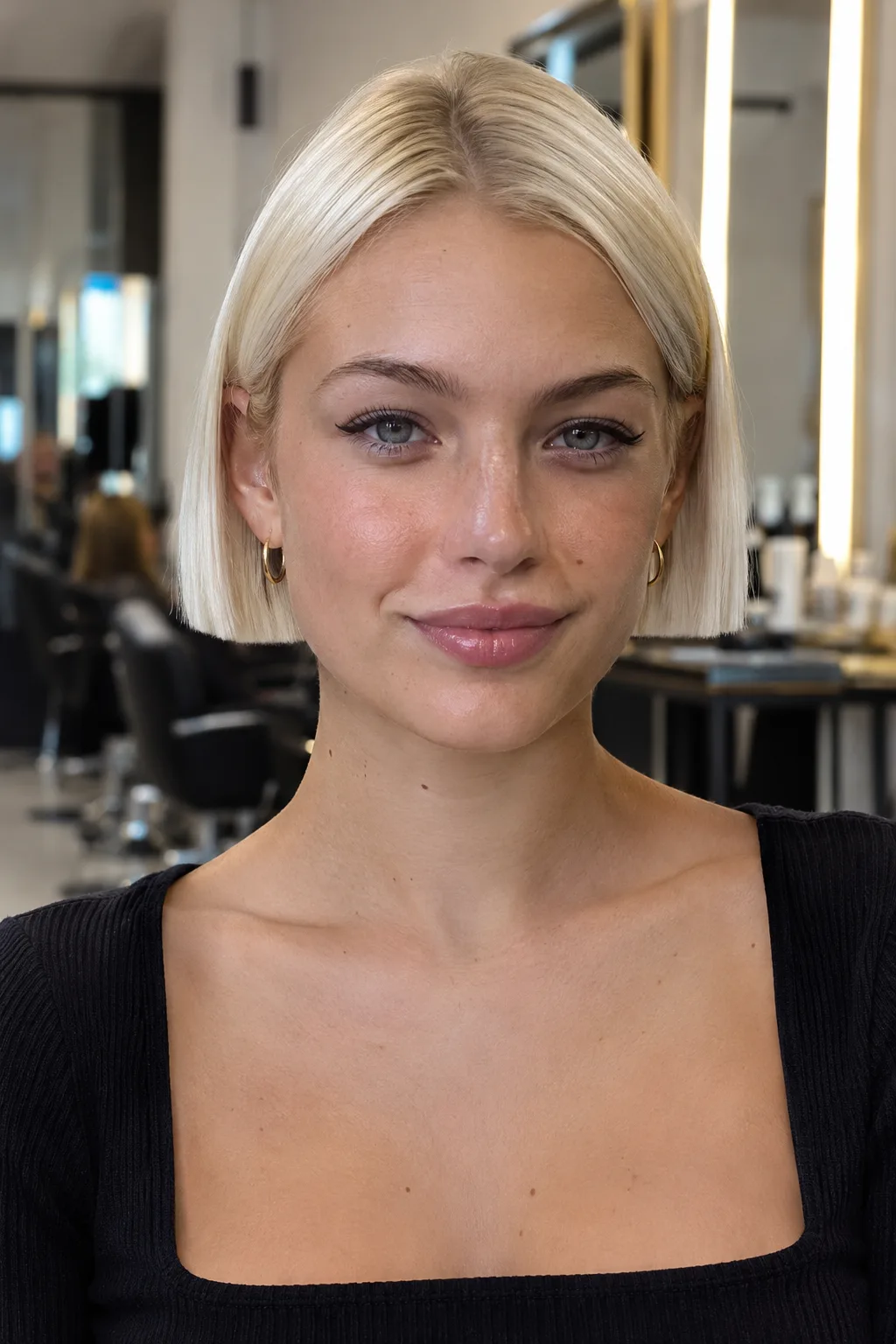
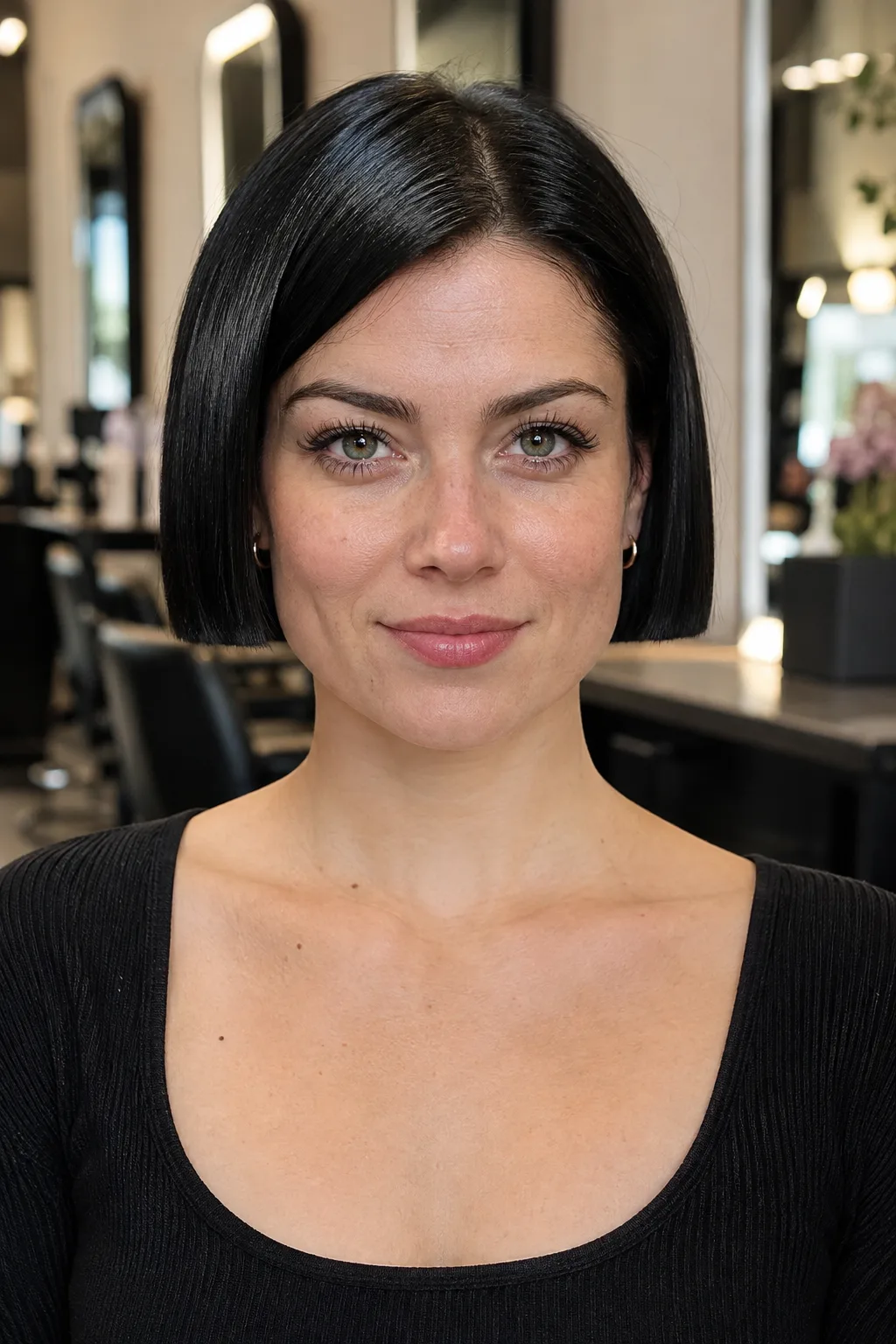
Every picture below is a true blunt cut, one length with a straight hemline. The only thing that changes is where that line sits, from just below the ear to the middle of the back. Shorter lines show off the jaw and neck; longer ones read as polished rather than bold. Tap any photo to see whether that length would suit you.
Gallery14 photos · tap to enlarge
 Would this suit me?
 Would this suit me?
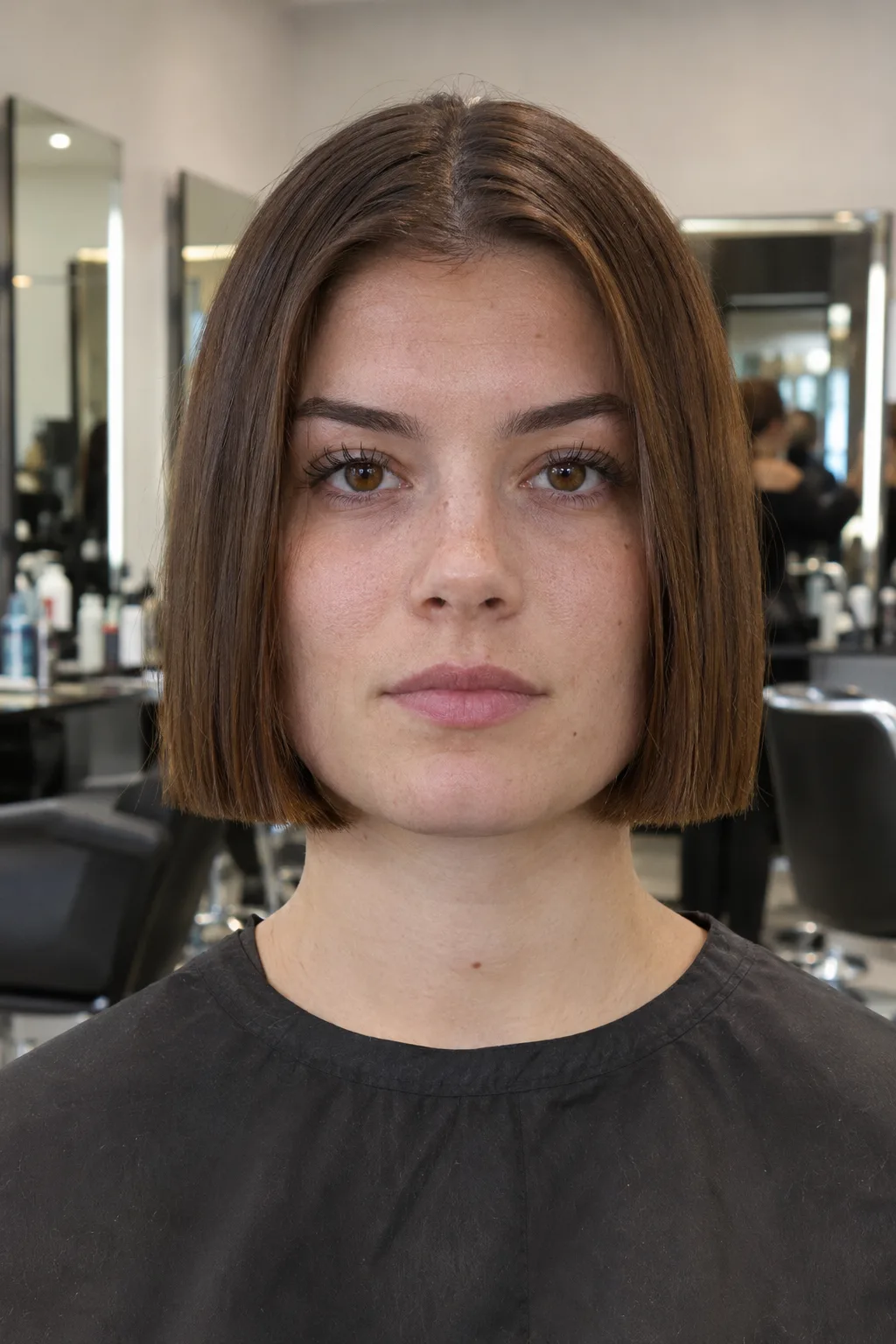 Would this suit me?
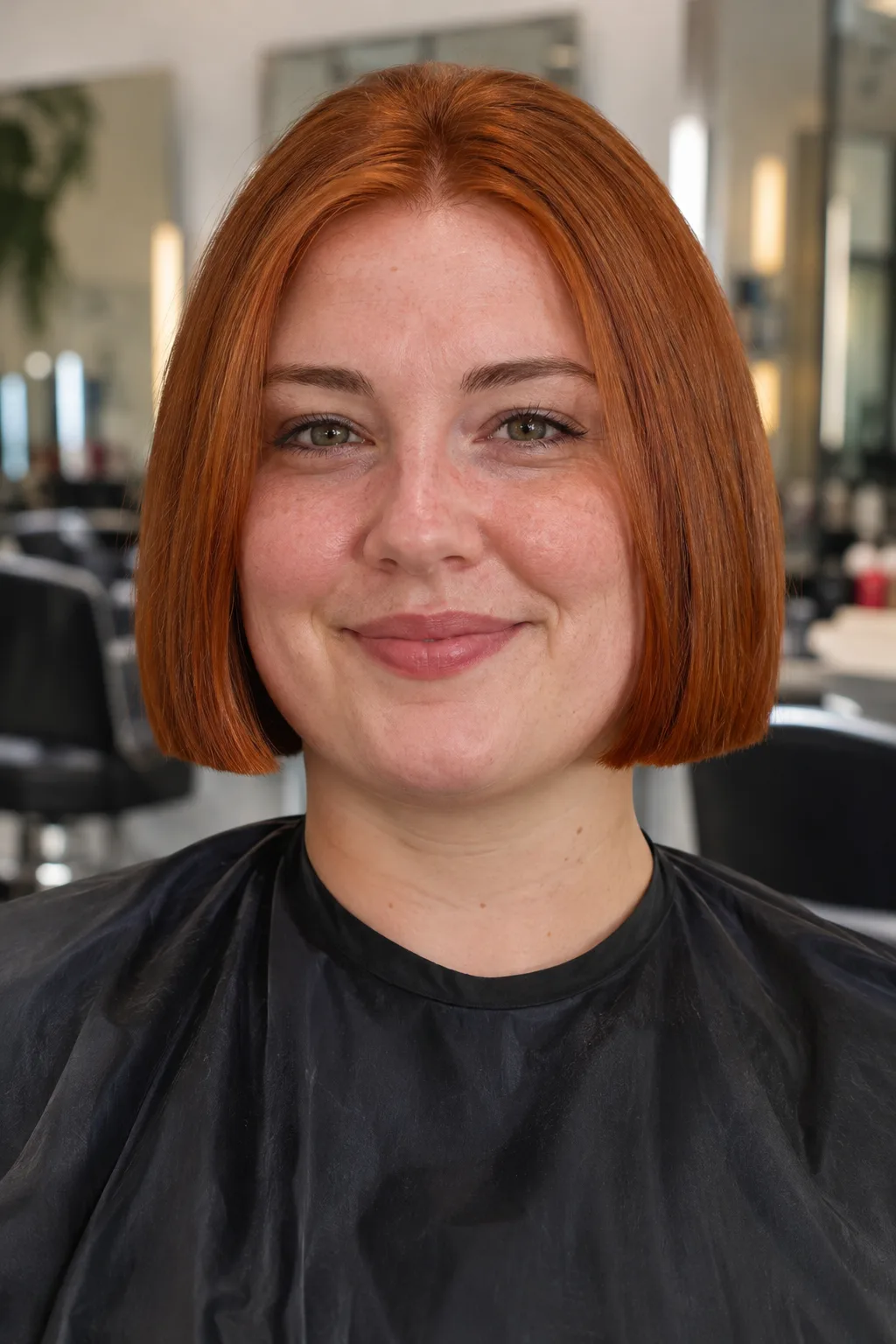 Would this suit me?
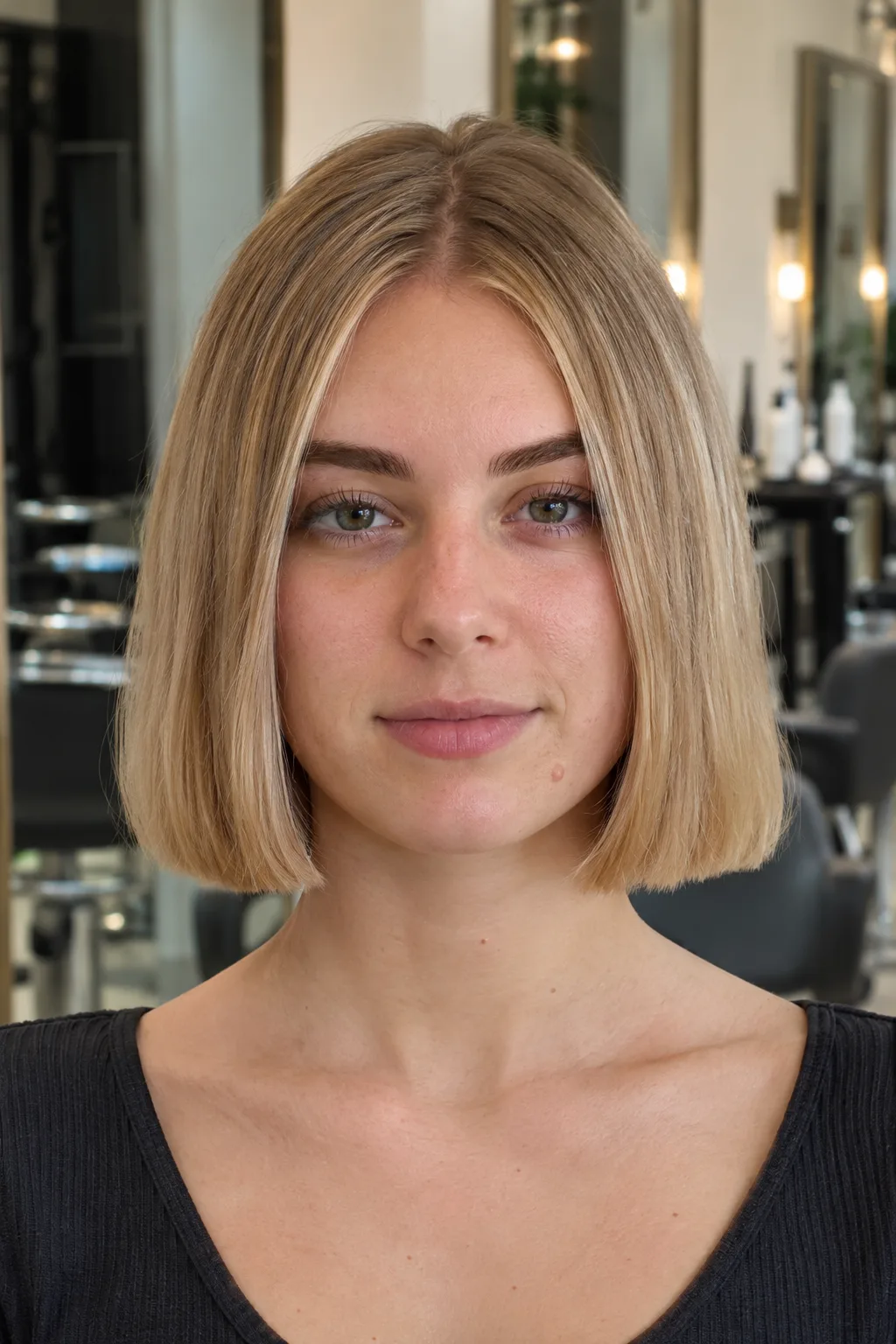 Would this suit me?
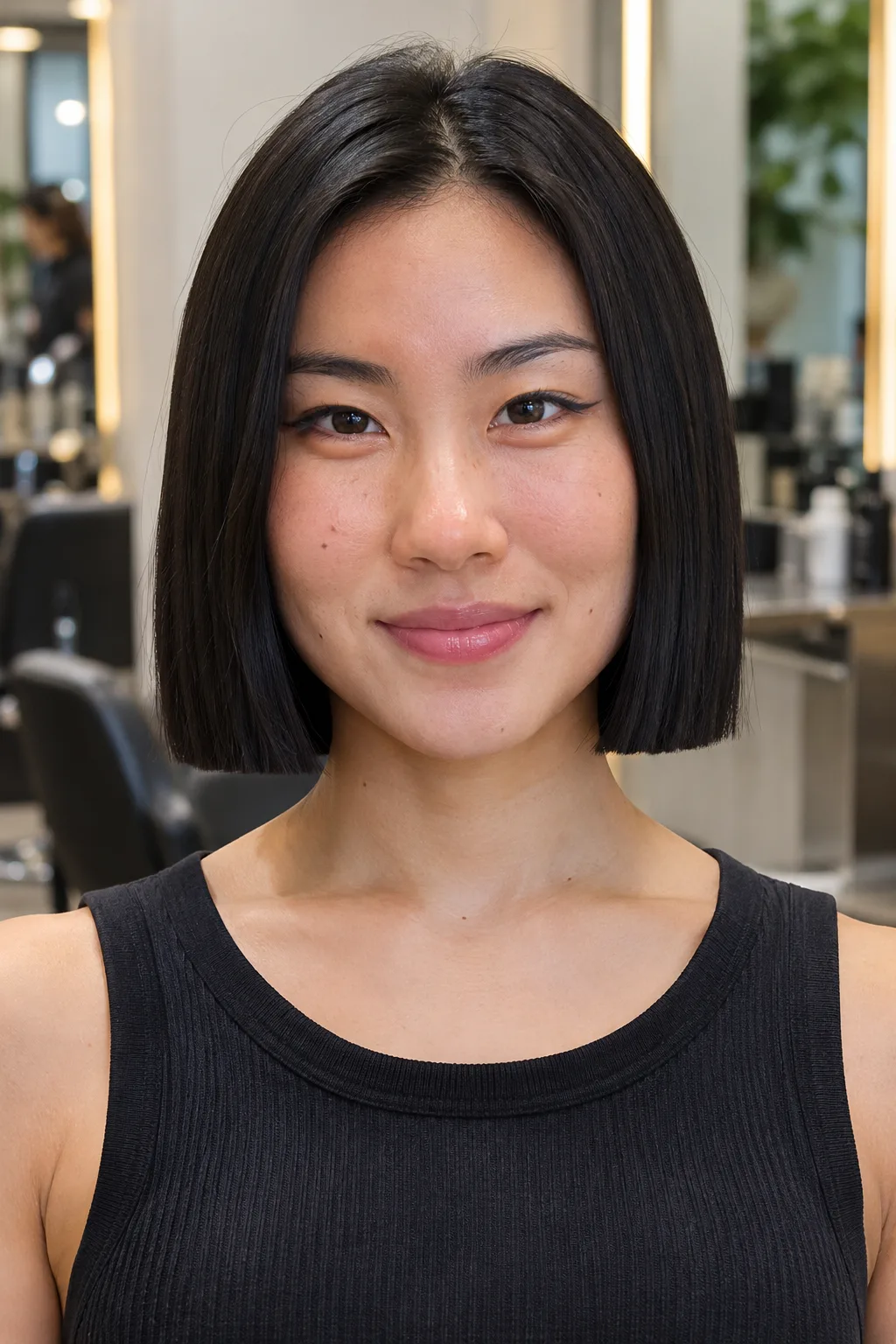 Would this suit me?
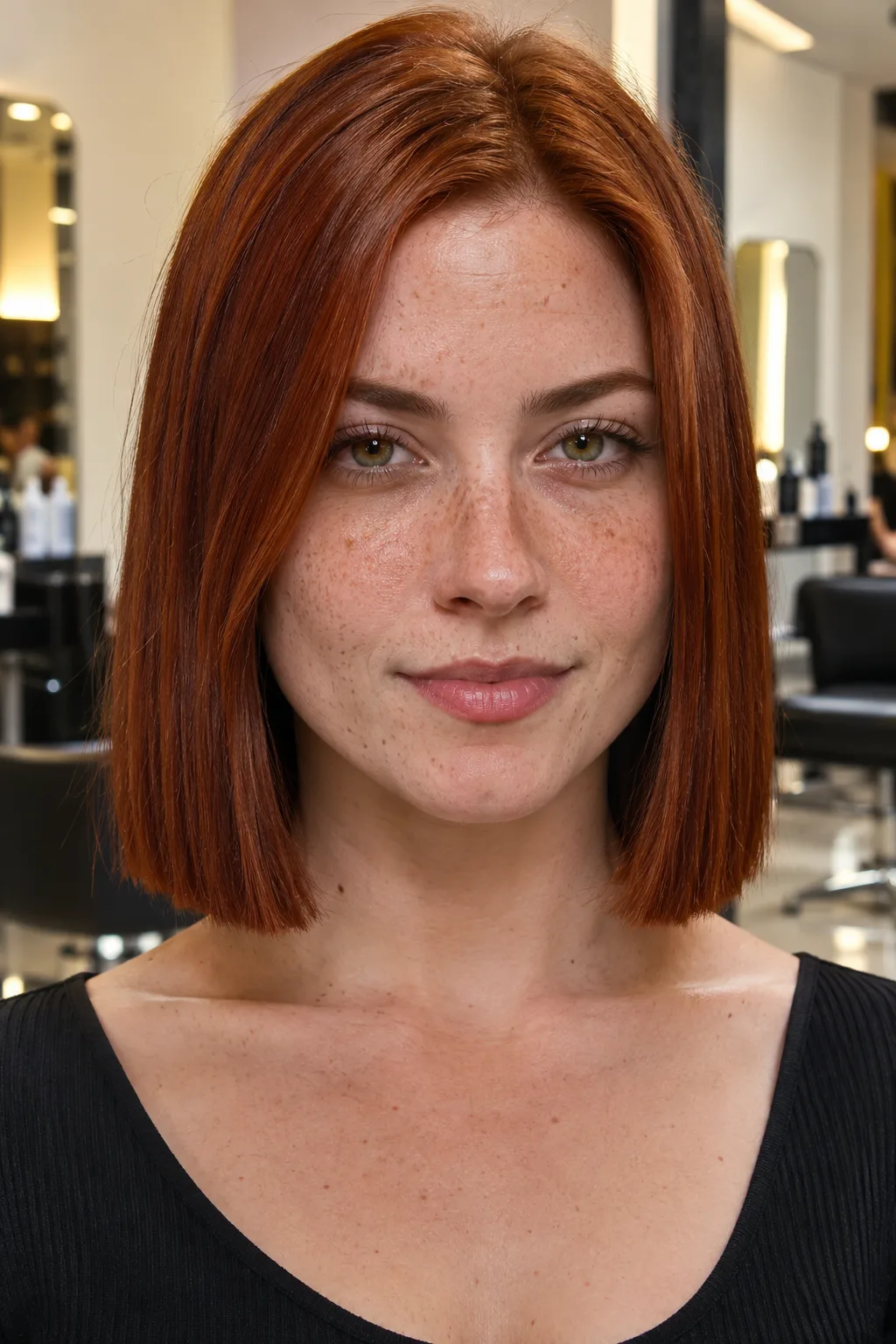 Would this suit me?
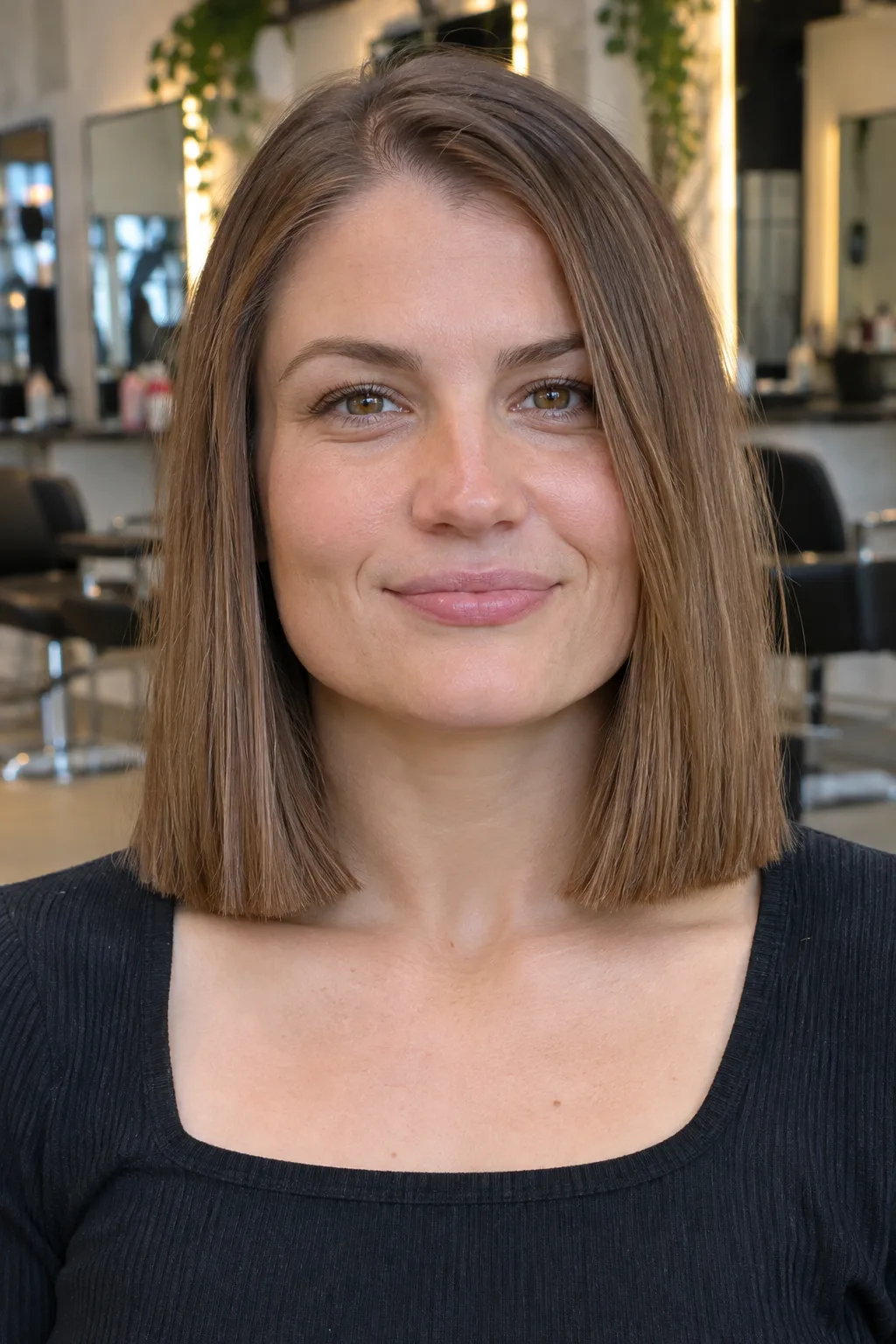 Would this suit me?
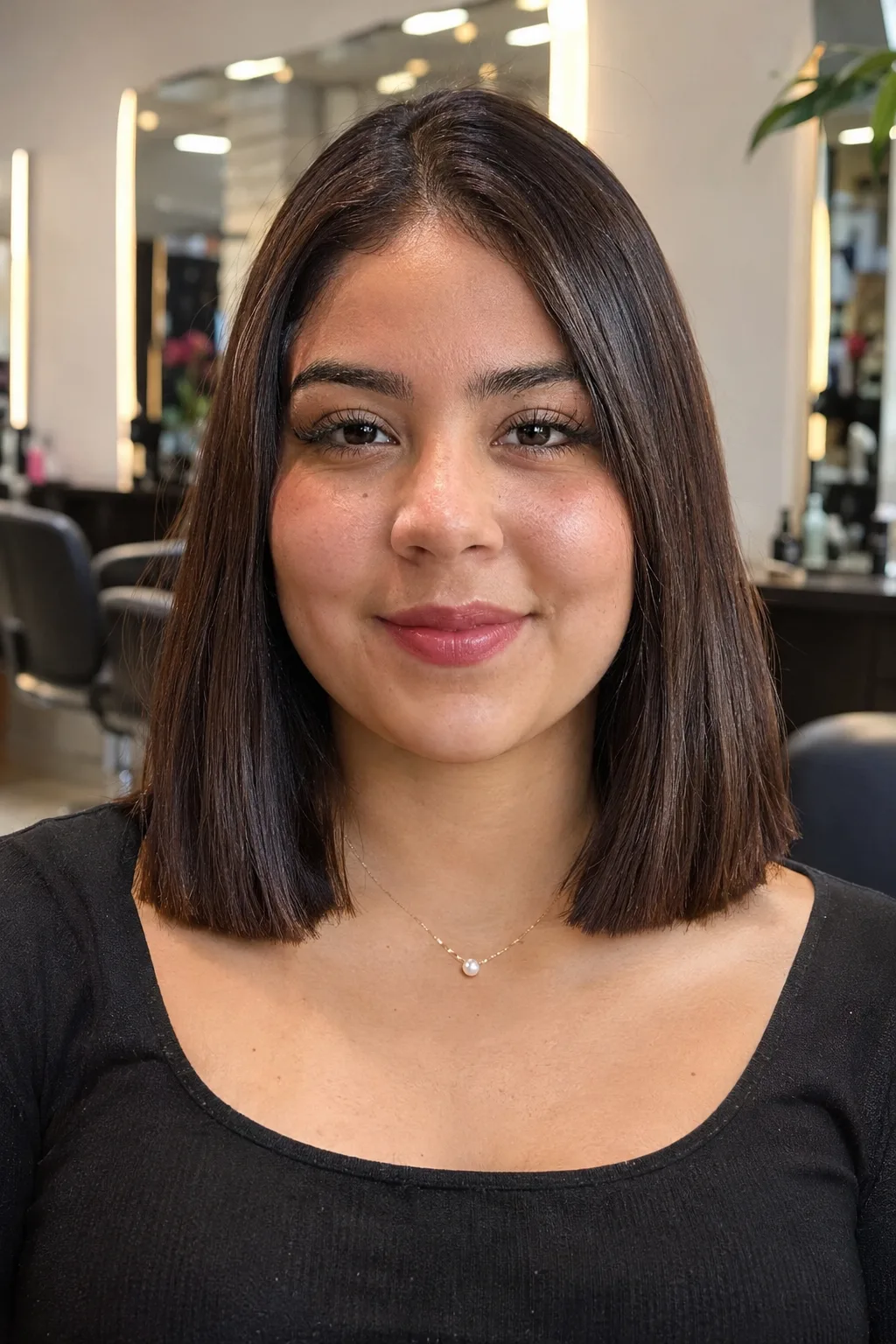 Would this suit me?
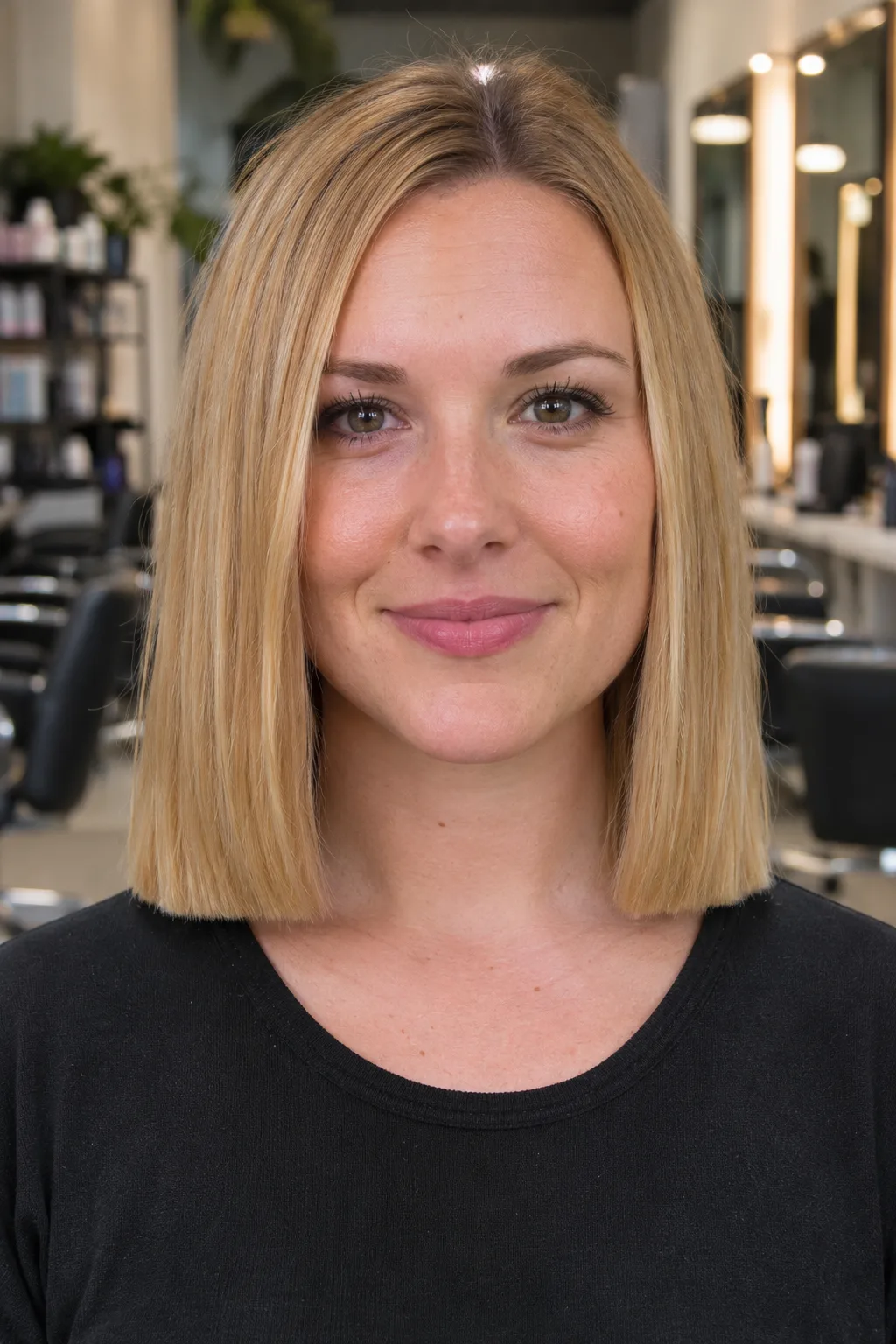 Would this suit me?
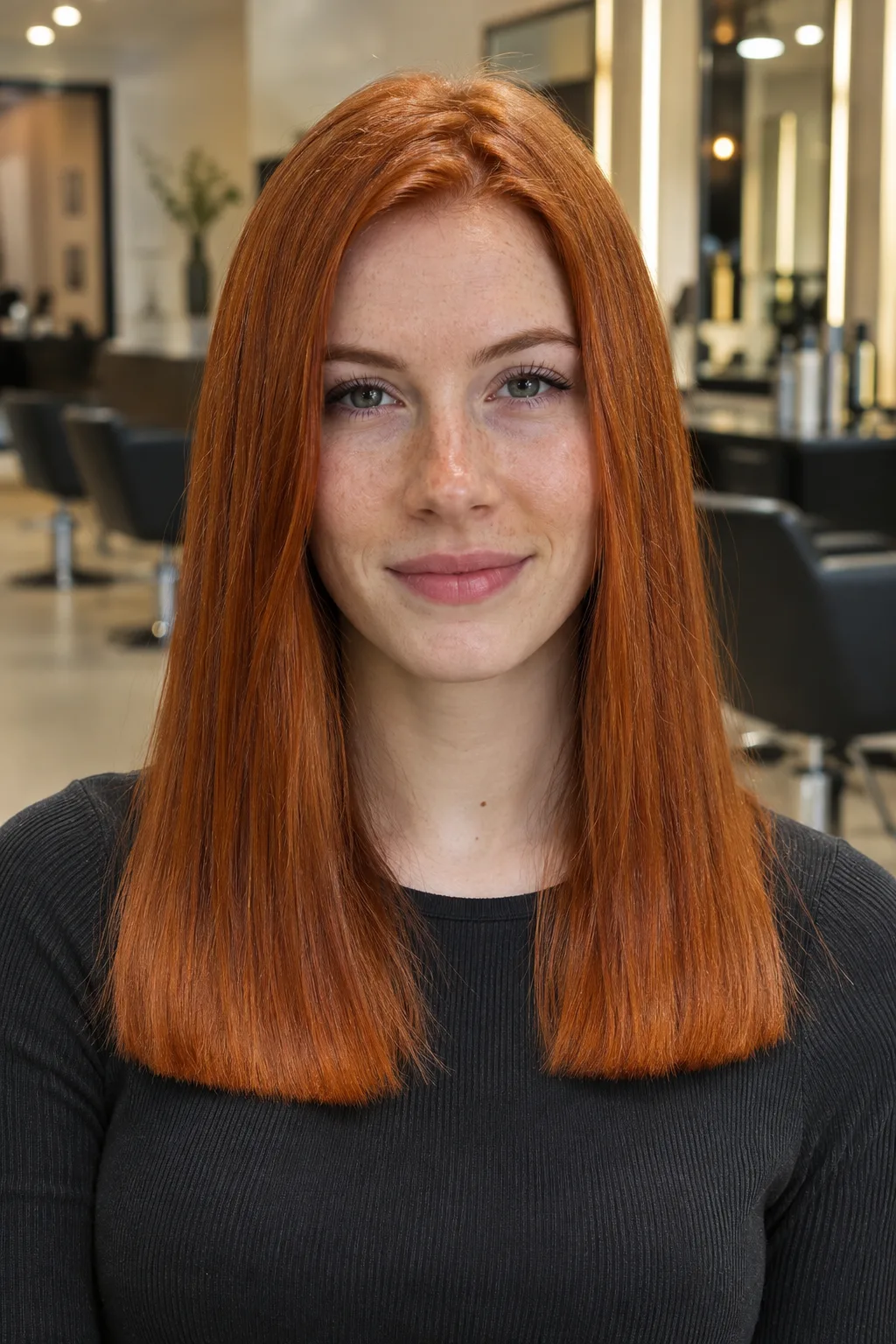 Would this suit me?
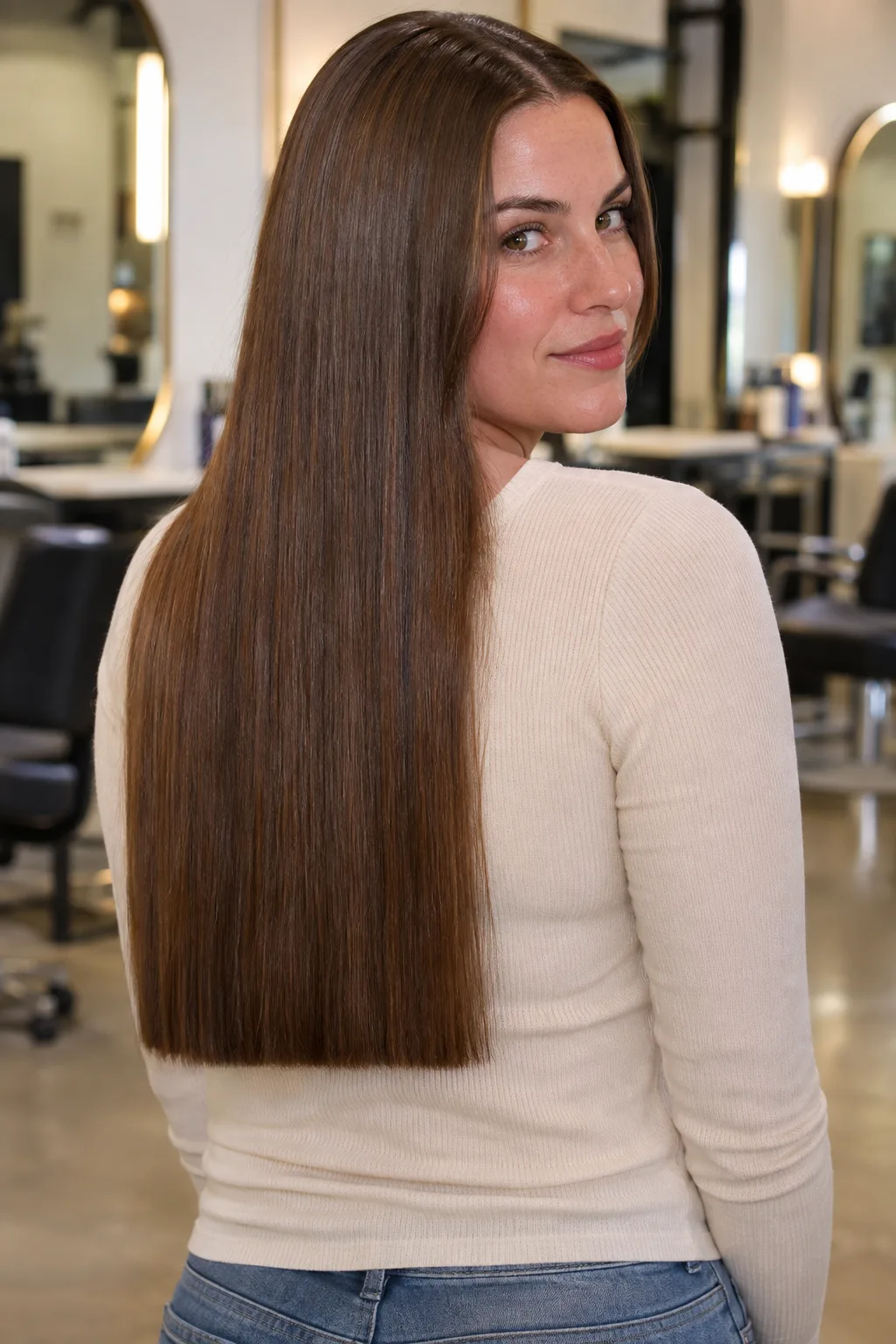 Would this suit me?
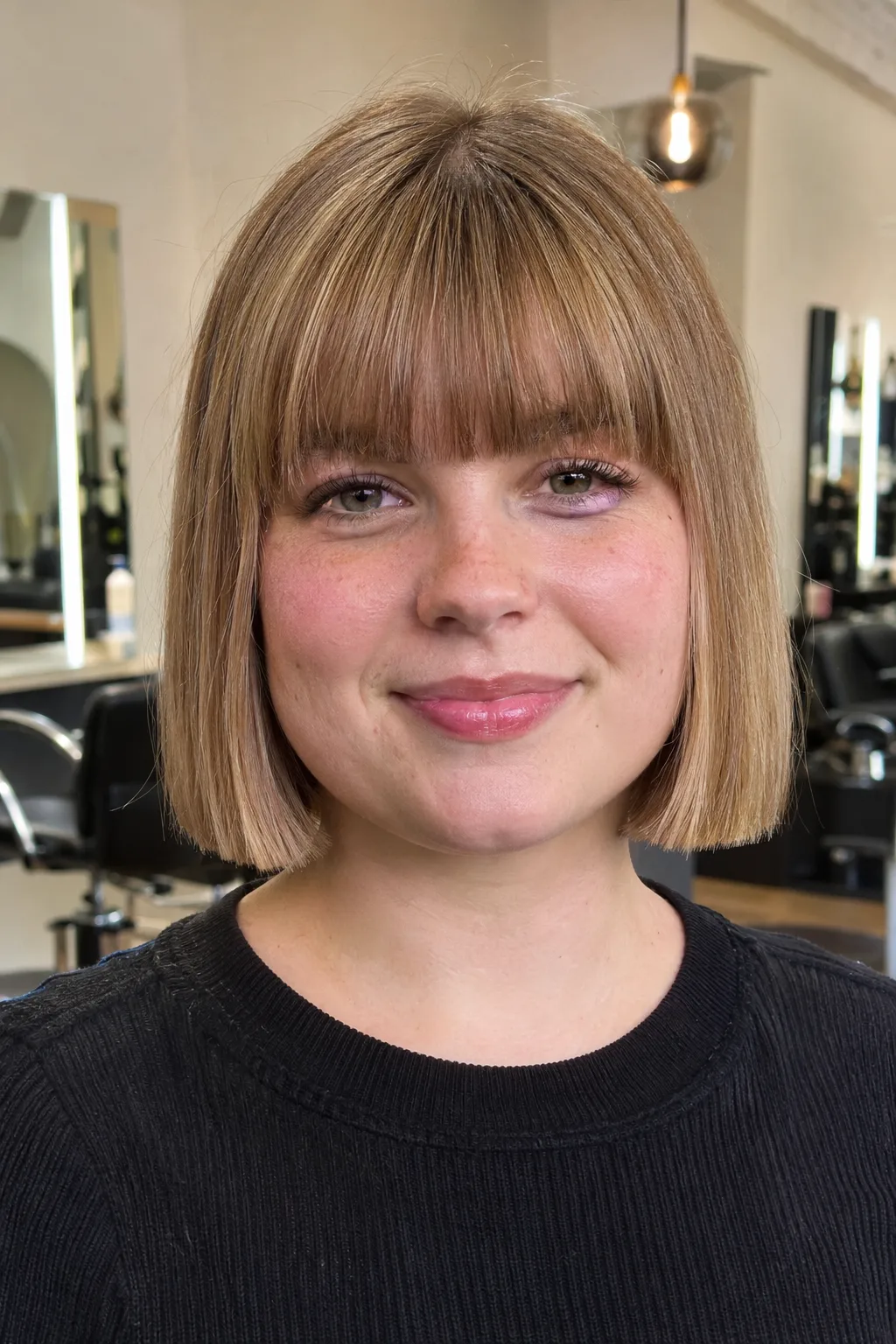 Would this suit me?
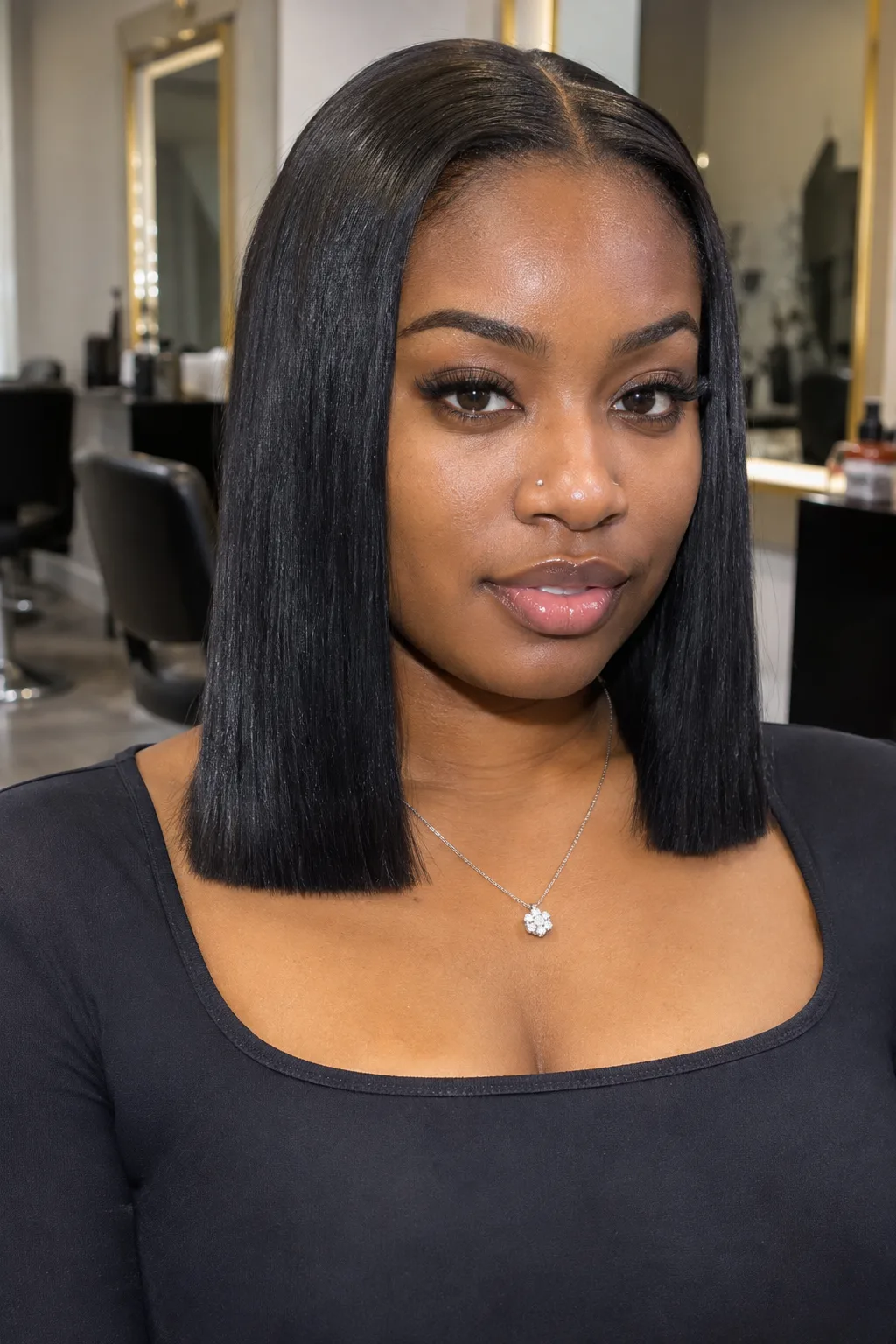 Would this suit me?
The shorter the cut, the more the line frames the face, and the more an inch matters. At chin length, half an inch decides whether the line hits the widest or the narrowest part of your jaw. At collarbone length and below, the line sits against your neck and shoulders instead, which is why longer blunt cuts suit almost everyone. Our guides to the lob haircut and the shoulder-length bob go deeper on those two in-between lengths.
Which cut makes you look best?
Find out in 60 seconds.
A few quick taps and one selfie, and you'll know. Free account, no card for your first render.
Which hair types suit a blunt cut?
Fine and straight hair suits a blunt cut best, and thick hair needs the most care. Here is the verdict by hair type:
| Hair type | Verdict | What to ask for |
|---|---|---|
| Fine or thin, straight | Best match | One length, no thinning shears anywhere |
| Medium density, straight | Great | Classic blunt line at any length |
| Thick or coarse | Works with help | Blunt outline plus internal weight removal |
| Wavy (2a to 2c) | Good | Cut dry or half an inch longer than the target |
| Curly (3a to 3c) | Good with the right stylist | Cut dry, curl by curl, into a rounded shape |
| Coily (4a to 4c) | Usually styled straight | A blunt cut on silk-pressed hair, or a rounded tapered shape worn natural |
Fine or thin hair
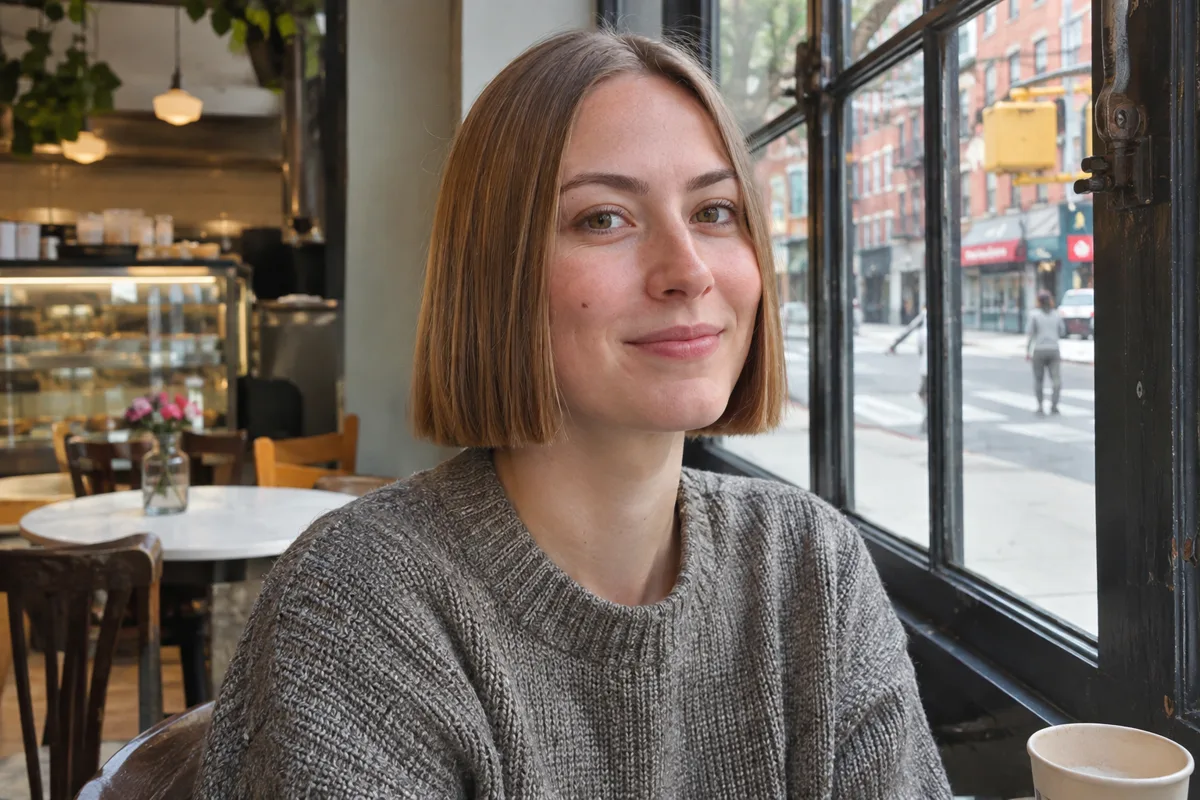
This is where a blunt cut earns its reputation. Fine hair looks thin mostly at the ends, where layers and wear leave fewer strands. Cutting everything to one length puts every strand at the bottom edge, so the ends look as dense as the roots. A chin to collarbone length is the sweet spot: long enough to hide the scalp, short enough that the ends stay thick. Ask for no thinning shears and no point cutting at all.
Thick or heavy hair
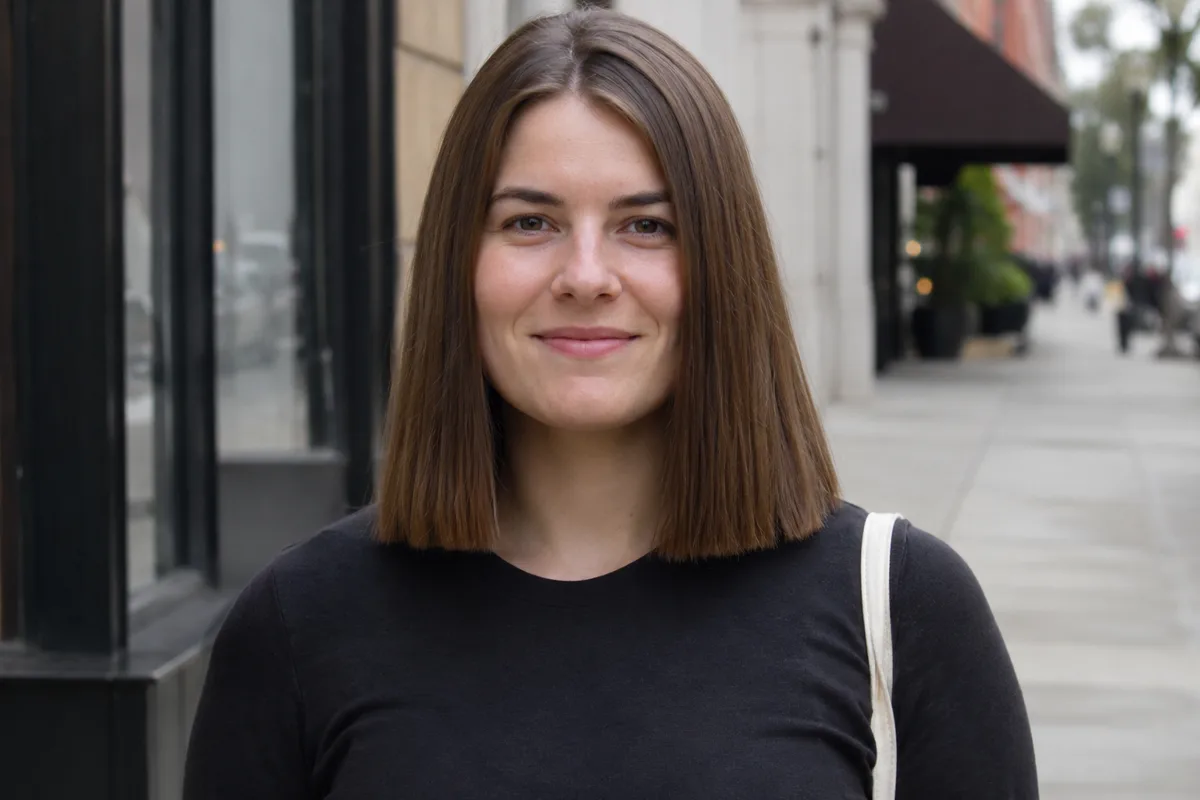
Thick hair holds a blunt line beautifully, but only if the stylist removes some weight from the inside first. Left alone, the bulk pushes the hair out at the sides and the cut turns into a triangle. Ask for a blunt outline with weight taken out underneath, which keeps the outside edge sharp while letting the hair lie flat. Our guide to thick hair explains the techniques by name. Longer lengths, collarbone and below, are easier here because the weight pulls the hair down.
Wavy hair
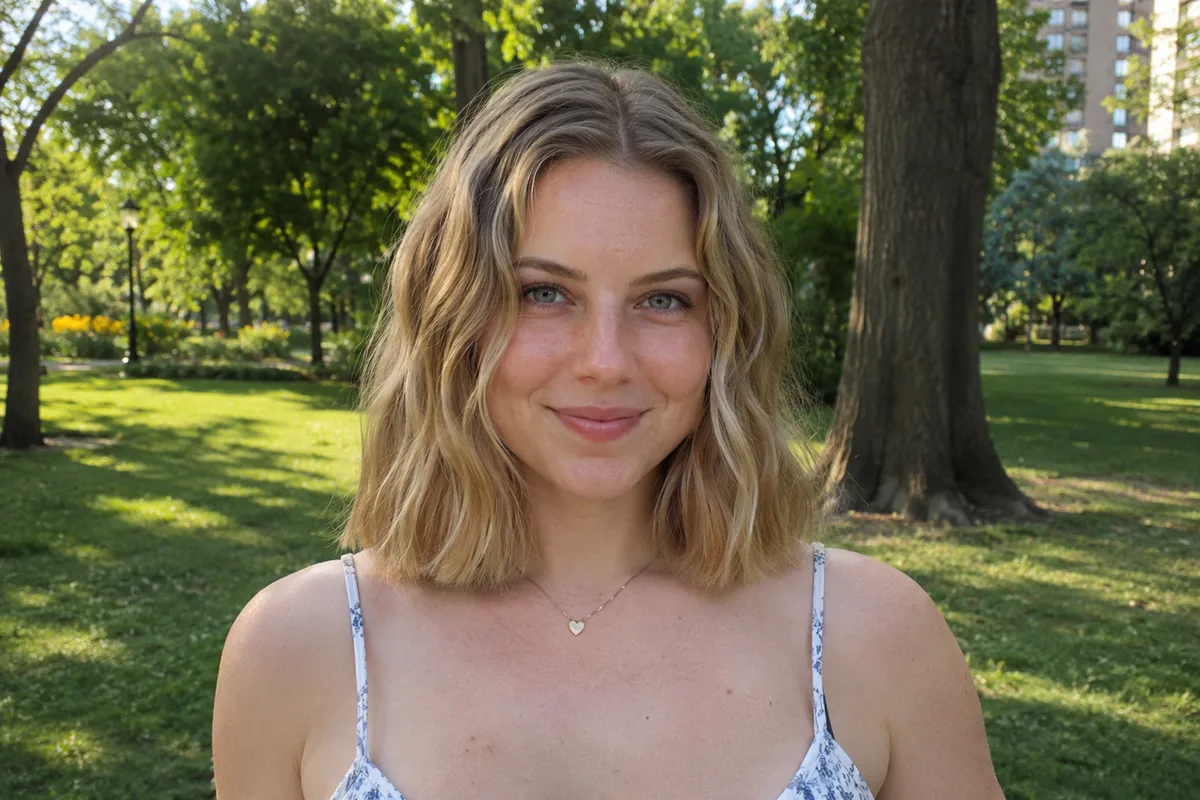
Waves bend the line, but a blunt cut on wavy hair still finishes level, which looks softer and more lived-in than on straight hair. The catch is shrinkage: waves can pull up half an inch to an inch as they dry. Ask your stylist to cut dry, or to leave it longer than the length you want. If you are not sure how much your hair bends, our guide to 2b hair shows what a typical wave pattern looks like.
Curly hair
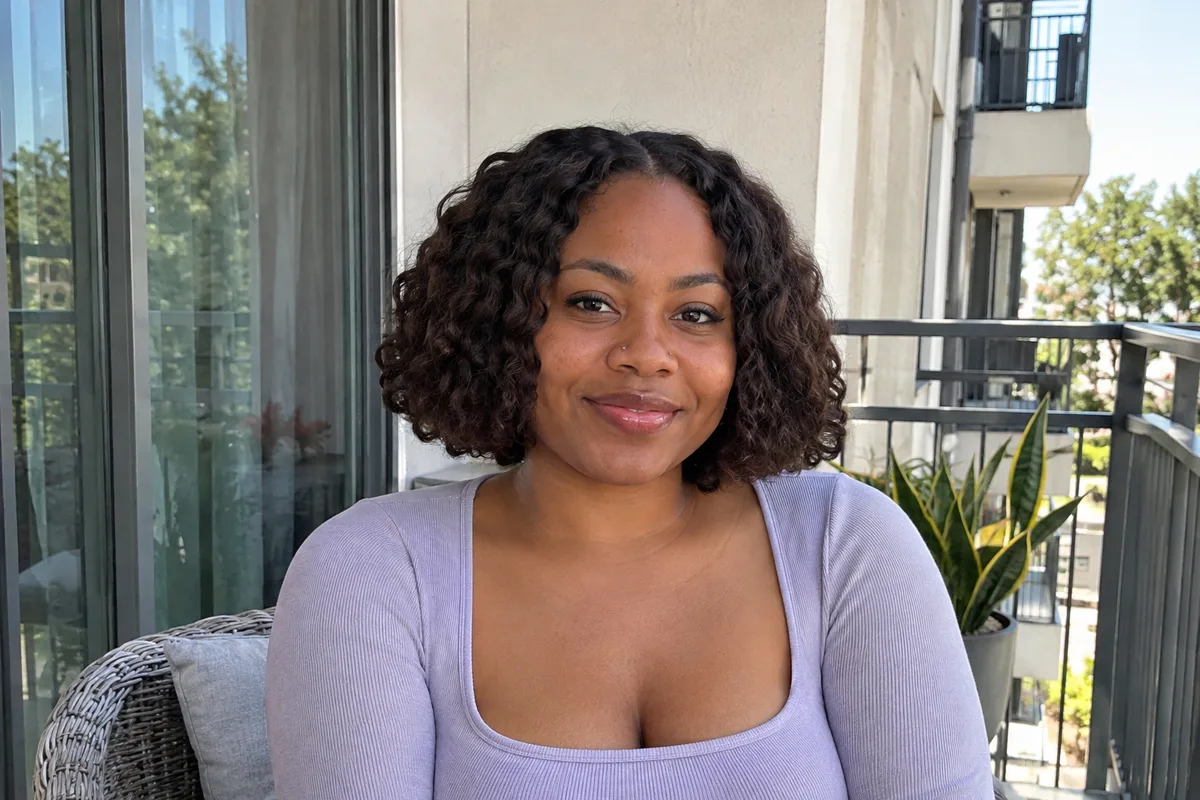
A blunt cut on curly hair is not cut straight across while wet. It is cut dry, curl by curl, so every curl ends at the same length when it springs up. Done that way it gives a full, rounded shape with no thin, stringy ends. Done wet with a straight line, it shrinks unevenly and comes out as a triangle. Find a stylist who cuts curls dry, and say "blunt curly bob" so they know you want one even outline, not layers.
Blunt cut for your face shape
A blunt cut suits oval, heart and long faces most easily. Round and square faces can wear it too, but the length has to be chosen around the jaw.
| Face shape | Best blunt length | Avoid |
|---|---|---|
| Oval | Any length, including micro bobs | Nothing in particular |
| Round | Collarbone or longer, side part | A line right at the chin or cheeks |
| Square | Below the jaw, or long with bangs | A line exactly at the jaw corner |
| Heart | Chin to collarbone | Very long, flat lengths with no bangs |
| Long | Chin or jaw length, plus bangs | Long hair with a center part |
The rule behind the table: a blunt line draws the eye to wherever it sits, so put it below the widest part of your face, not across it. Not sure which shape you have? Measure it with the calculator below, or read our guide to haircuts for every face shape.
Measure it instead of guessing
Both numbers in the same unit — the answer is a ratio, so it does not matter which.
Under 1.15 reads round, 1.15 to 1.5 reads oval, over 1.5 reads long. Oval and long split on the jaw rather than the ratio: an oval tapers toward the chin, a long face runs straight down.
Blunt cut with bangs
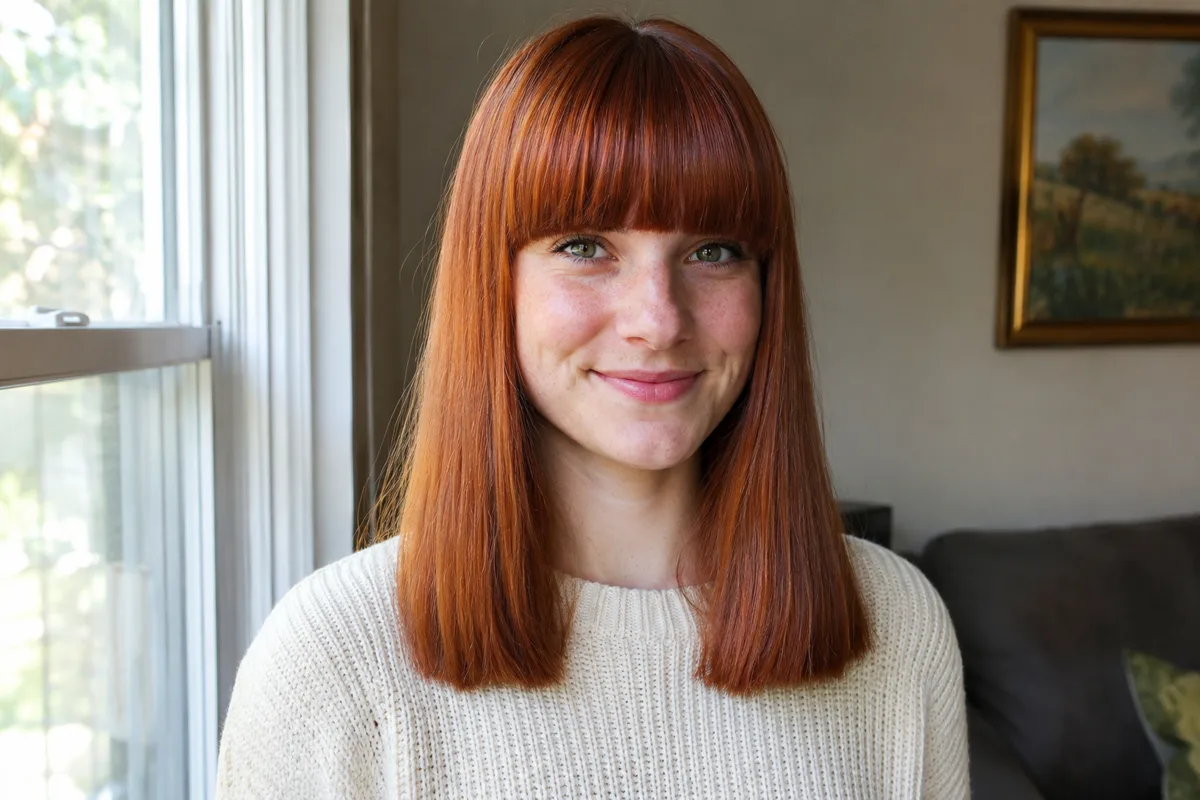
Blunt bangs cut straight across at the eyebrows are the boldest version of this look, and the easiest way to make long blunt hair feel like a new haircut. They suit oval, long and heart-shaped faces best and need a trim every three to four weeks, because half an inch of growth puts them in your eyes. On a round face, cut them a little longer and slightly curved at the sides. If you want ideas for pairing bangs with length, see our guide to long hair with bangs.
Blunt cut mistakes that cost you a good cut
- Thinning shears on fine hair. It removes exactly the weight that made the cut worth getting. The ends go see-through and the line disappears.
- No weight removal on thick hair. The classic triangle. The hair sits wide at the bottom and the cut looks dated within a week.
- Cutting curls or waves wet. Shrinkage is uneven, so the line comes out shorter and crooked once it dries.
- Putting the line on your widest point. A chin-length line on a round face or a jaw-length line on a square face frames the very thing you wanted to soften.
- Skipping trims. A blunt line loses its edge after 6-8 weeks as the ends split and grow unevenly. After three months it just looks like hair that needs a cut.
- Too much heat. A blunt cut shows every split end because they all sit on one line. The American Academy of Dermatology recommends keeping heat styling low and infrequent to limit damage.
How to ask for a blunt cut
Bring a photo, name the length by a body landmark rather than in inches, and say "one length" out loud. Stylists hear "blunt" and still reach for the texturizing shears out of habit. This is the sentence to say:
Say this to your barber
I want a blunt cut, one length all the way round, the line sitting at my collarbone, no layers, no thinning shears and no point cutting on the ends.
How to ask for a blunt cut
- Pick the length by a landmark
Choose earlobe, jaw, chin, collarbone, shoulder or mid-back. Landmarks are harder to misread than inches.
- Show a photo of the exact line
Use a front photo where the hemline is clearly visible, ideally from the gallery above or a try-on of yourself.
- Say one length, no thinning
Ask for one length all the way round, no layers, no thinning shears and no point cutting.
- Mention your hair type
Thick hair: ask for internal weight removal. Wavy or curly hair: ask for a dry cut. Fine hair: ask them to keep all the weight.
- Check the line before you leave
Look at the back in a hand mirror. The line should be level, not a V or a U, unless you asked for that.
How do you style and maintain a blunt cut?
On straight hair, blow dry with a flat paddle brush, pulling the hair down and slightly under, then run a flat iron over the last two inches to sharpen the edge. That takes five to ten minutes. For a softer day-two look, put a loose bend through the middle of each section and leave the ends straight. Book a trim every six to eight weeks: the line is the whole cut, and it is only as sharp as your last appointment.
Can you see a blunt cut on yourself before you cut it?
Yes, and the first look is free. Upload a selfie to HairstyleAtlas, pick a blunt cut and see it on your own face, with no card needed. Plans start at $9 a month if you want to compare more lengths.
Here is why that matters. Everything above, the tables, the gallery and the face-shape advice, still shows the blunt cut on someone else. Where the line lands depends on your jaw, your neck length and your shoulders, and the difference between a flattering line and an unflattering one is often a single inch. A try-on on your own photo lets you compare chin length with collarbone length, with and without bangs, before anything is cut. Want to compare blunt with other bob shapes? The bob haircut try-on covers those.
The bottom line
The blunt cut is the best haircut there is for fine, straight hair, and one of the riskiest for thick hair cut without care. Choose the length by where you want the line to land, below the widest part of your face. Then make the decision that actually matters: keep all the weight if your hair is fine, ask for internal weight removal if it is thick, and insist on a dry cut if it waves or curls. Book the trims, because the line is the whole look. And see it on your own photo first, because an inch either way decides whether the line flatters you or frames the wrong thing.
Frequently asked questions
A blunt cut means the hair is cut to one length with the ends cut straight across, so they form a single solid line with no layers or thinning. The term describes the ends, not the length, so a blunt cut can be a short bob or long hair.
For a stylist, a straight blunt cut is one of the basic cuts, but getting a perfectly level line takes care, especially on thick, wavy or curly hair. For you, it is one of the easiest cuts to live with: straight hair needs a quick blow dry, and the main upkeep is a trim every six to eight weeks.
It is better for fine, thin or straight hair, because it keeps all the weight at the ends and makes hair look thicker. Layers are better for very thick or heavy hair that needs bulk removed, or for anyone who wants more movement and volume at the crown.
No. A bob is a length, roughly between the ears and the shoulders. A blunt cut is a way of cutting the ends. A blunt bob is a bob cut to one length, but a bob can also be layered or stacked, and a blunt cut can be long.
Blunt. A blunt bob keeps every strand at the same length, so the bottom edge looks dense instead of see-through. Layered bobs remove weight from the ends, which thin hair cannot spare. Keep it between the chin and the collarbone for the fullest look.
Oval, heart and long faces suit a blunt cut at almost any length. Round and square faces suit it too when the line sits below the jaw, at the collarbone or longer, ideally with a side part.
Yes, in a sense. A stylist can keep a blunt outline at the ends while removing weight from the inside, often called internal or invisible layers. From the outside you still see one solid line, but thick hair lies flatter and moves more.
A blunt cut. Layers take length and weight away from the ends, while a blunt cut keeps every strand ending at the same line, so the ends look as full as the roots. That is why stylists recommend blunt cuts for fine and thinning hair.
Preview it on your own photo: Virtual Hair Color Try-On.
Share article
About the author
Related posts
Women's Haircuts · 14 min
Dark Brown Hair Color: 14 Shades and the One That Suits You
Dark brown is level 2 to 4, and on your head it almost always comes out a level darker than the box. See 14 shades side by side, which one suits your skin tone, and how to get it right.
Women's Haircuts · 13 min
Ash Brown Hair Color: 14 Cool Shades and Who Each Suits
Ash brown is a cool level 4 to 7 brown with the red and gold canceled out. See 14 shades side by side, which one suits your skin and starting color, and how to stop it going brassy.
Women's Haircuts · 12 min
Chestnut Brown Hair: 14 Shades and the One That Suits You
Chestnut is a warm level 4 to 6 brown with a red-gold reflect. See 14 shades side by side, which one suits your skin and starting color, and the exact words to say to your colorist.
Women's Haircuts · 13 min
Partial Highlights: 14 Looks and When to Go Full Instead
Partial highlights lighten only the top layer and face frame, so they look full worn down and patchy worn up. See 14 base colors, partial vs full compared, and what to ask for.
Women's Haircuts · 12 min
Black Cherry Hair Color: 14 Looks and Why Dark Hair Wins
Black cherry is a near-black red that looks black indoors and wine red in the sun. See 14 ways to wear it, what your base color gives you, and how to keep it from fading rusty.
Women's Haircuts · 13 min
Copper Brown Hair: 14 Shades and How to Pick Yours
Copper brown is brown first and copper second. See 14 shades from light golden to deep auburn brown, which one works on your starting color and skin tone, and what to say to your colorist.