Low Taper Fade: 16 Looks and Exactly What to Ask For
Oleh Onysko Updated 27 September 2026 23 min read
In this article
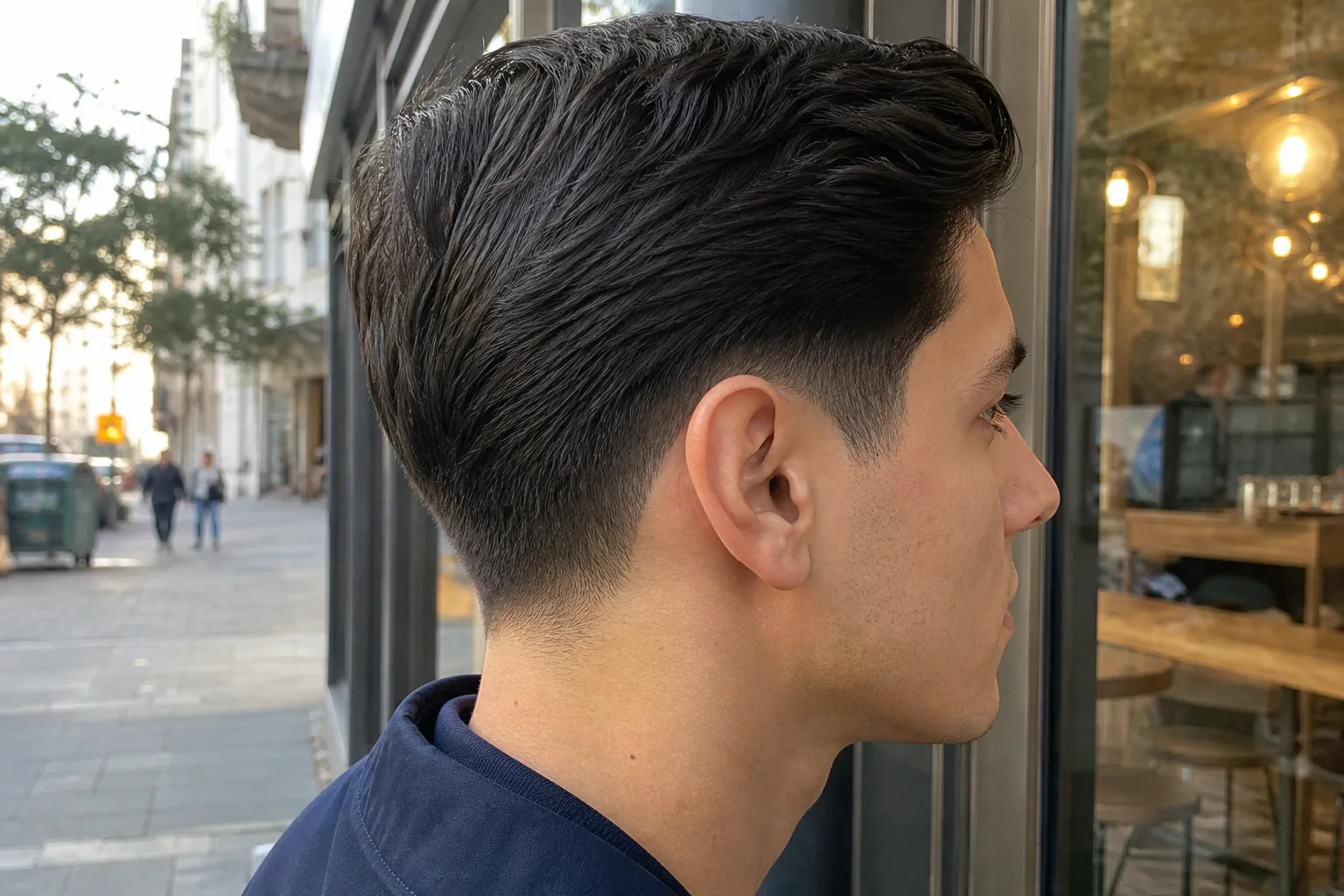
A low taper fade is a haircut where the hair is graduated shorter in a narrow band that follows your hairline, starting just above the ear and blending down to the sideburn and neckline. The word low describes where the gradient begins. On a low taper it begins about an inch above the ear, which leaves the sides of your head full, and it is the most conservative fade a barber can give you.
That last part is why it is the most searched fade in the world. It is short enough to look deliberate and long enough that nobody at work notices you got a haircut. Below: the one landmark to point at, sixteen tops it sits under, the variants a barber will offer you, how to find a barber who can actually blend one, and how long it lasts.
Say this to your barber
Low taper fade please, keep the length on top, start the taper just above my ear and blend it soft into the nape.
What makes a taper different from a fade
These two words get used as if they mean the same thing, and the confusion is the single biggest reason people walk out with a cut they did not want. If you want the full taxonomy rather than just this one cut, we lay out all eight fade types side by side with the fade line marked on each.
| Taper | Fade | |
|---|---|---|
| Where it happens | A narrow band along the hairline, around the ear and the nape | The whole side and back of the head |
| Shortest point | Never bare skin, usually a guard 0 or 1 | Often skin, a true zero |
| How much length comes off | Very little above the band | Most of the side |
| Grows out | Softly, over six to eight weeks | Obviously, in two to three weeks |
| Reads as | Tidy | Cut |
A taper fade is both: a graduated band that fades down to very short at the hairline. Before you commit to the low version, it is worth knowing what a plain taper haircut does and why its neckline outlasts a fade by about three weeks. Add low and you have fixed where that band starts. Take that same starting height and carry it around the whole side and back instead of a narrow band and you have a low fade, which is the cleaner and less forgiving of the two.
So a low taper fade is the smallest version of the idea. The gradient sits low, stays narrow, and leaves everything above it alone.
Low taper or low fade?
Pick the low taper unless you want the sides visibly short. Both start at the same height, about an inch above the ear. The low taper only works the hairline, around the ear and down the nape, so from the front your head looks the same width. A low fade carries that gradient around the whole back and side, so more scalp shows and the grow-out line comes back in two to three weeks instead of five. Neither is better in the abstract; the taper is the one that forgives a missed appointment.
Low, mid or high
This is the actual decision, and it takes ten seconds once you see it laid out. The only variable is the height where the gradient begins.
| Height | Gradient starts | Leaves you | Best if |
|---|---|---|---|
| Low | About an inch above the ear | Full sides, soft outline | You want it subtle, or your workplace is conservative |
| Mid | At the temple, level with the top of the ear | Visibly narrower head, clear contrast | You want the cut to read as a haircut |
| High | Near the corner of the head | Strong contrast, boxy top | You want maximum shape and do not mind the upkeep |
Low is the default for a reason. It suits nearly every head shape because it barely changes your silhouette, and it is the only one of the three that still looks intentional after five weeks.
If you want more contrast than this gives you, the next step up is a mid taper fade, which moves the same gradient up to the temple.
The low taper under sixteen different tops
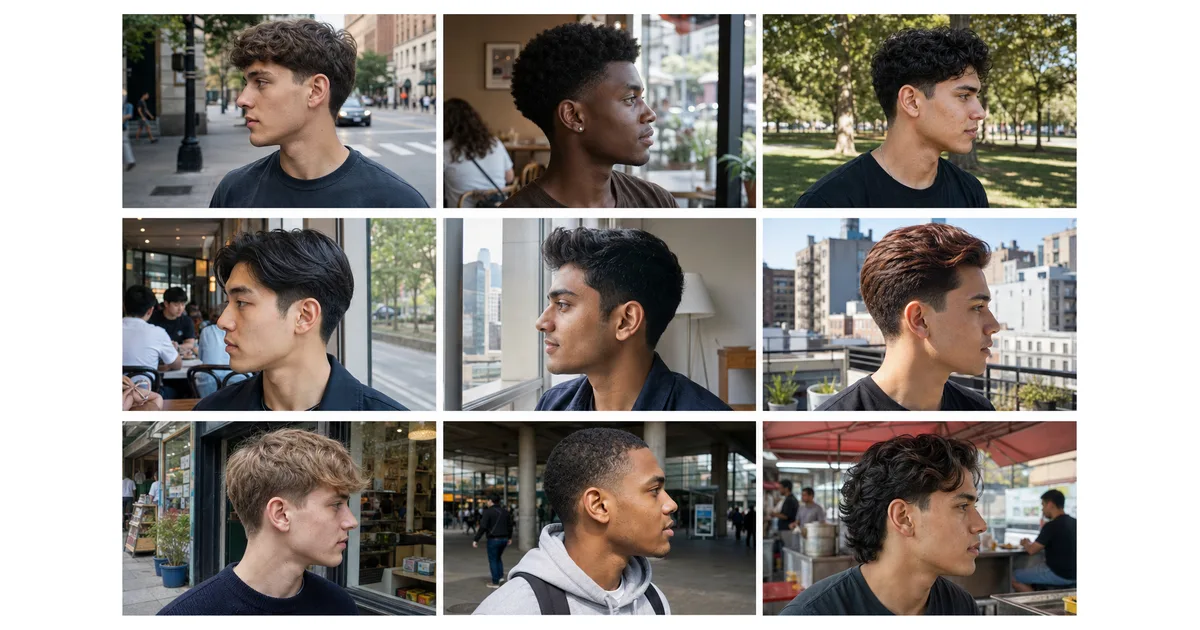
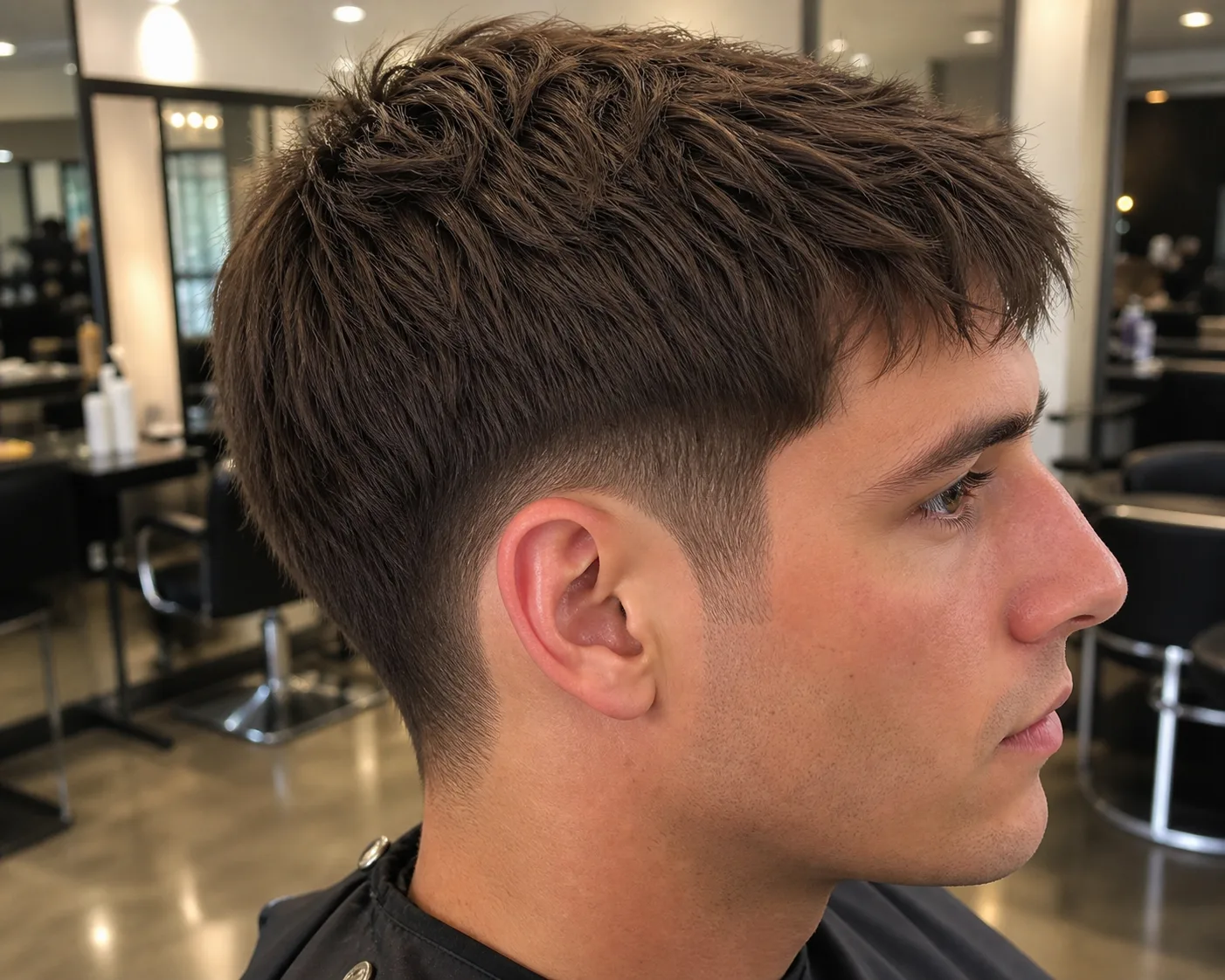
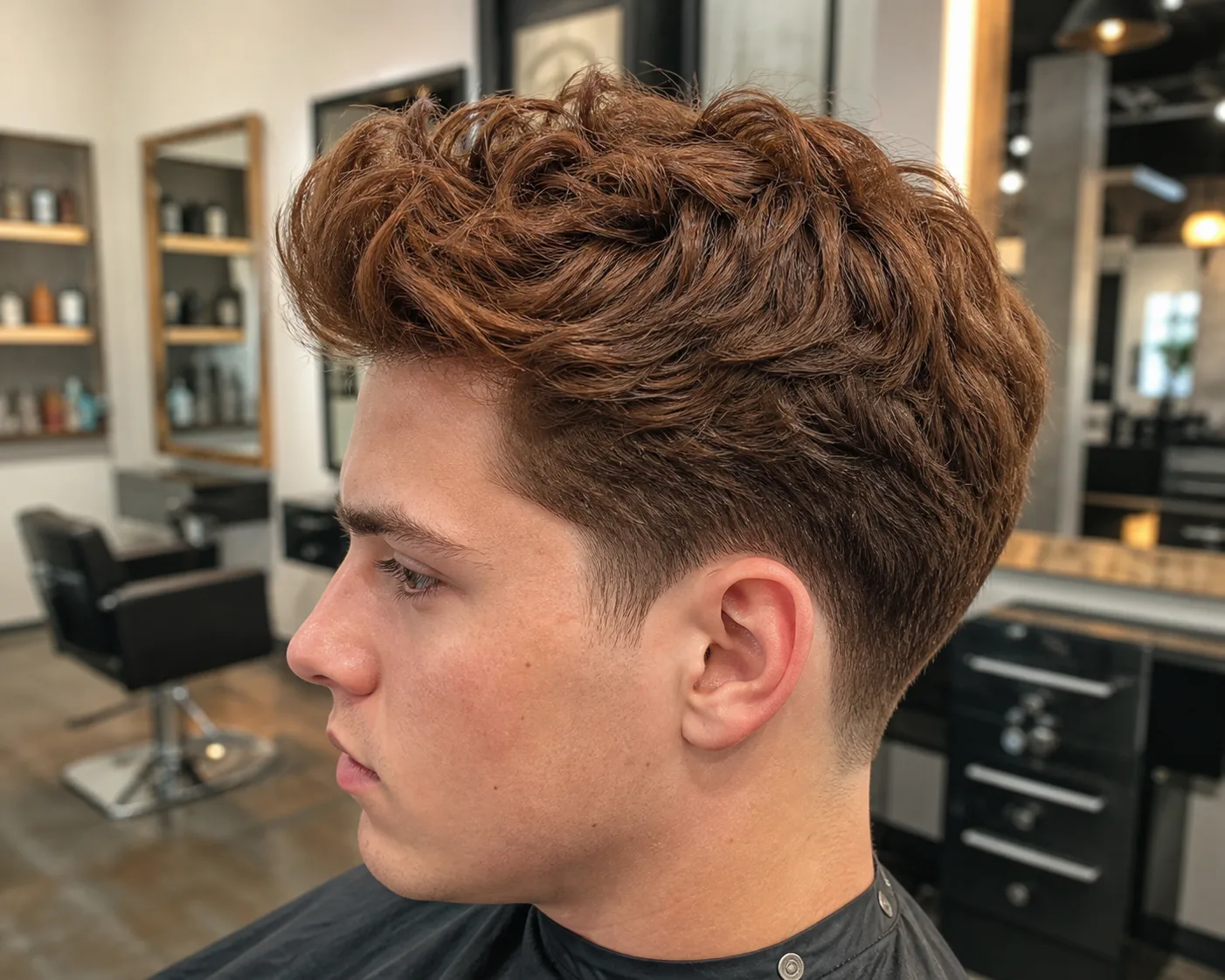
The taper is identical in all sixteen: it starts an inch above the ear and never reaches skin, and only the top changes. This is the range it disappears into, which is the whole argument for choosing it. It is also why the taper is the version that holds volume up: if the top you want is a big soft one, the 3 to 4 inch rule behind fluffy hair explains why a high fade kills it and a low taper does not. The first of them, the textured crop, has become a cut in its own right, so if that top is the one you keep coming back to, read the full guide to textured fringe styles and how to ask for one. One of them is permed curl, and if that is the top you want, read how men's perms are actually specified before you book the two appointments.
Gallery16 photos · tap to enlarge
 Try this on me
 Try this on me
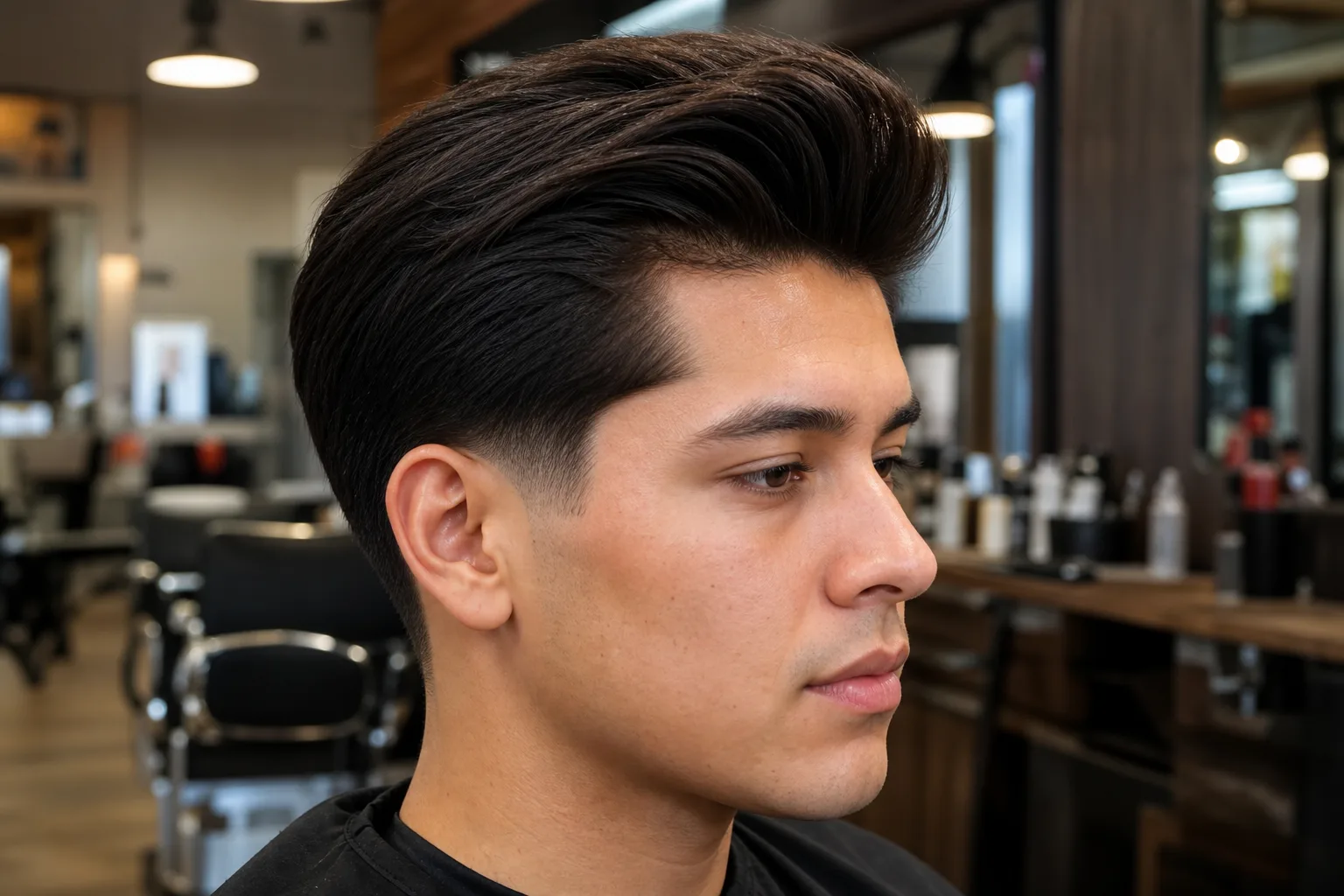 Try this on me
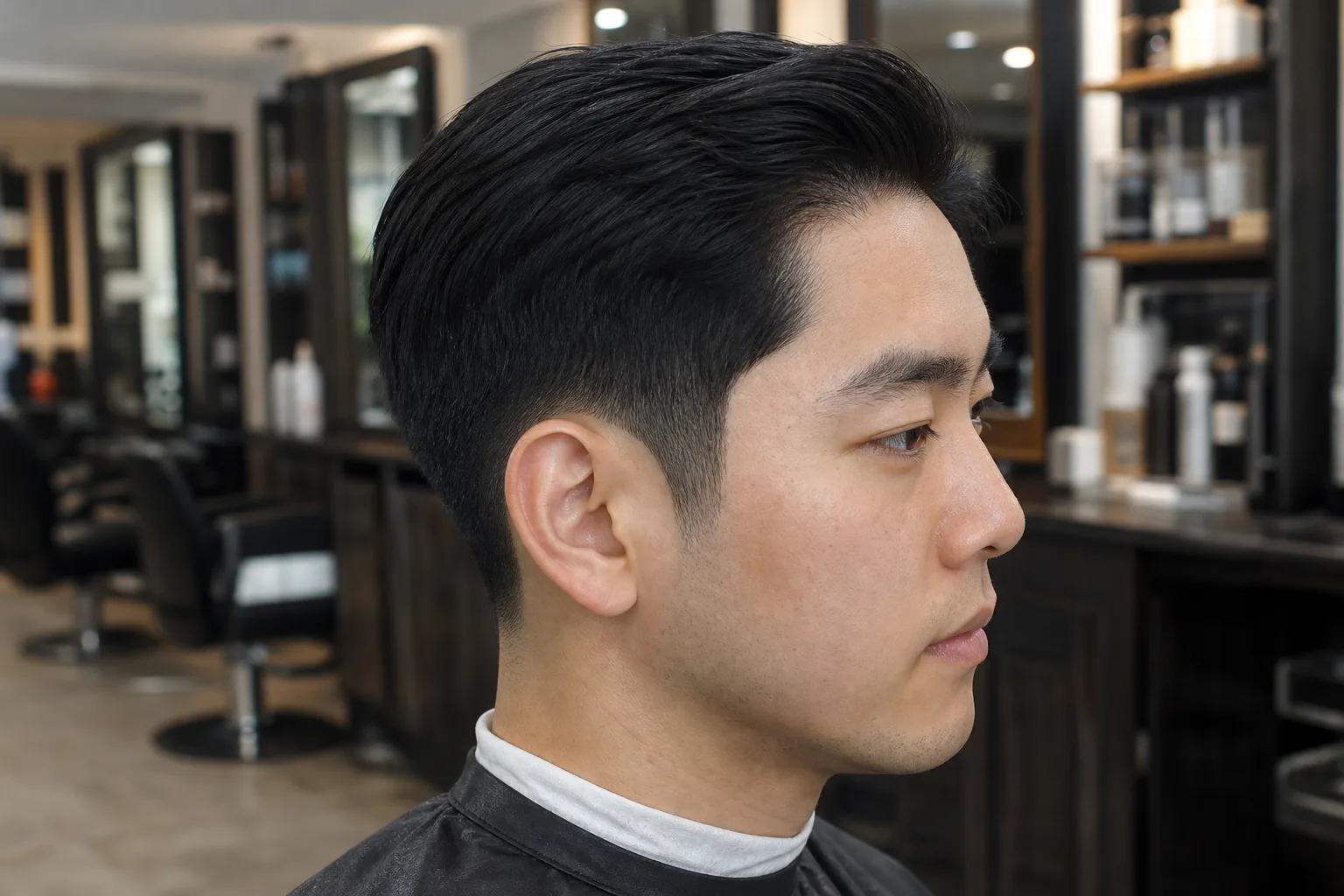 Try this on me
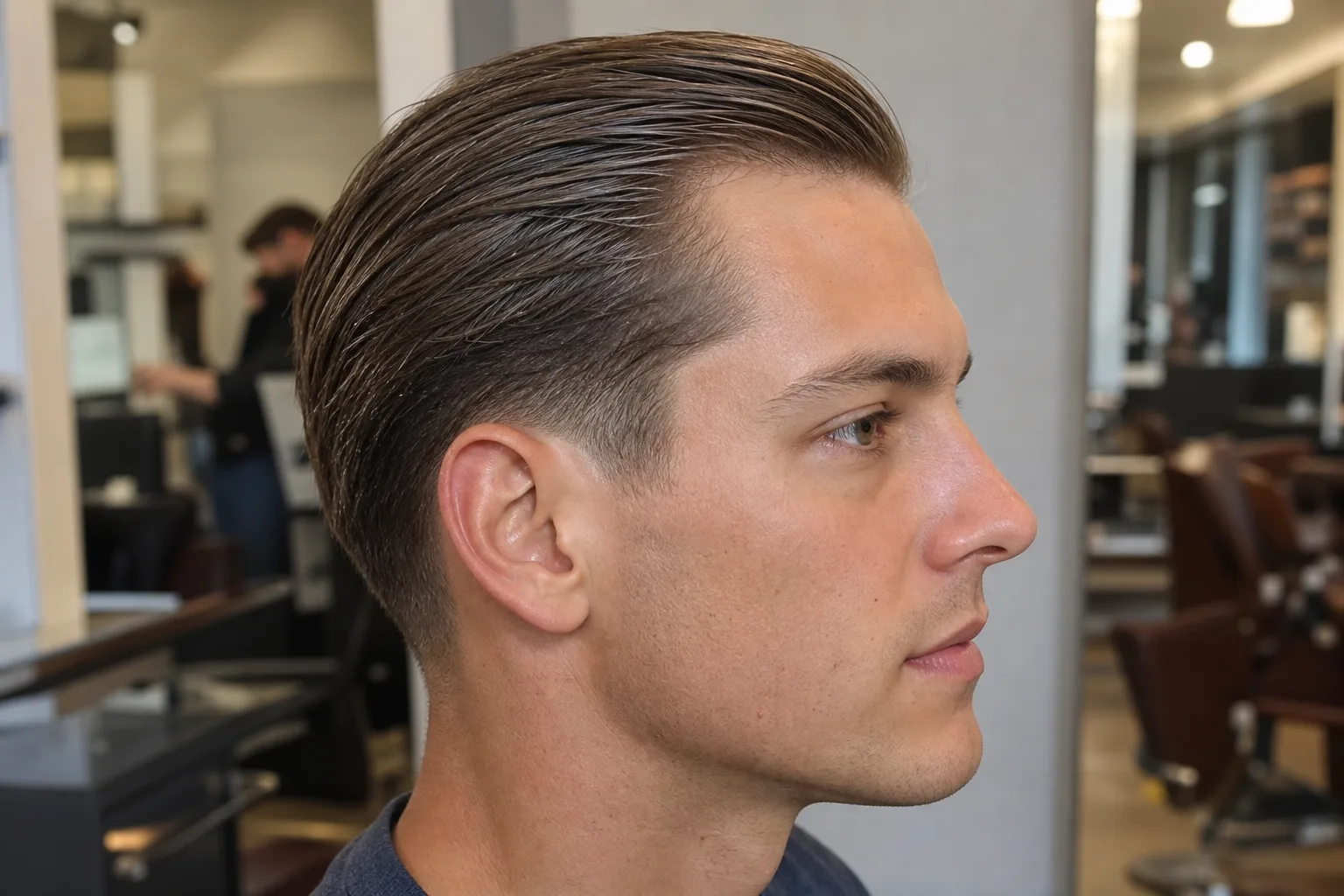 Try this on me
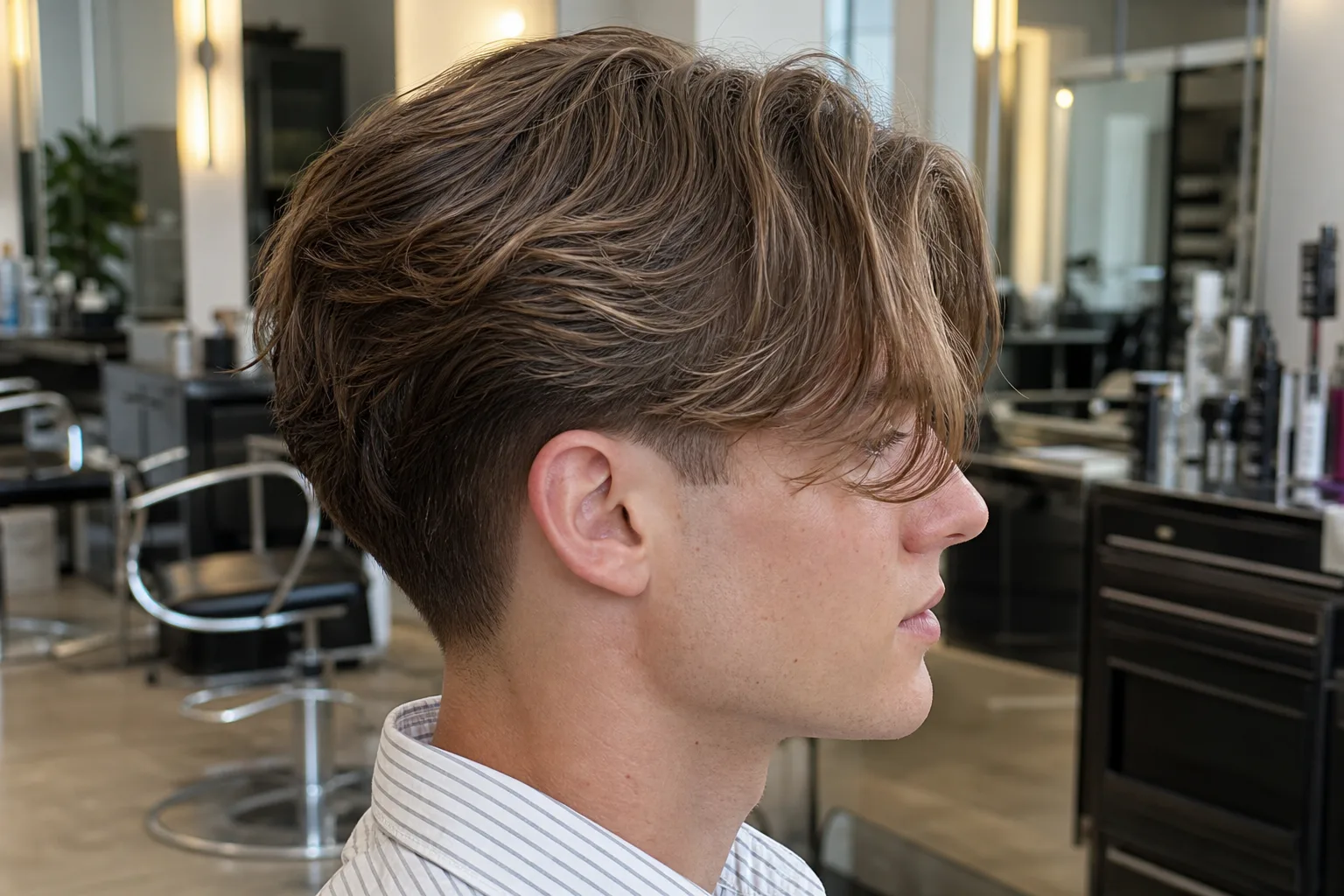 Try this on me
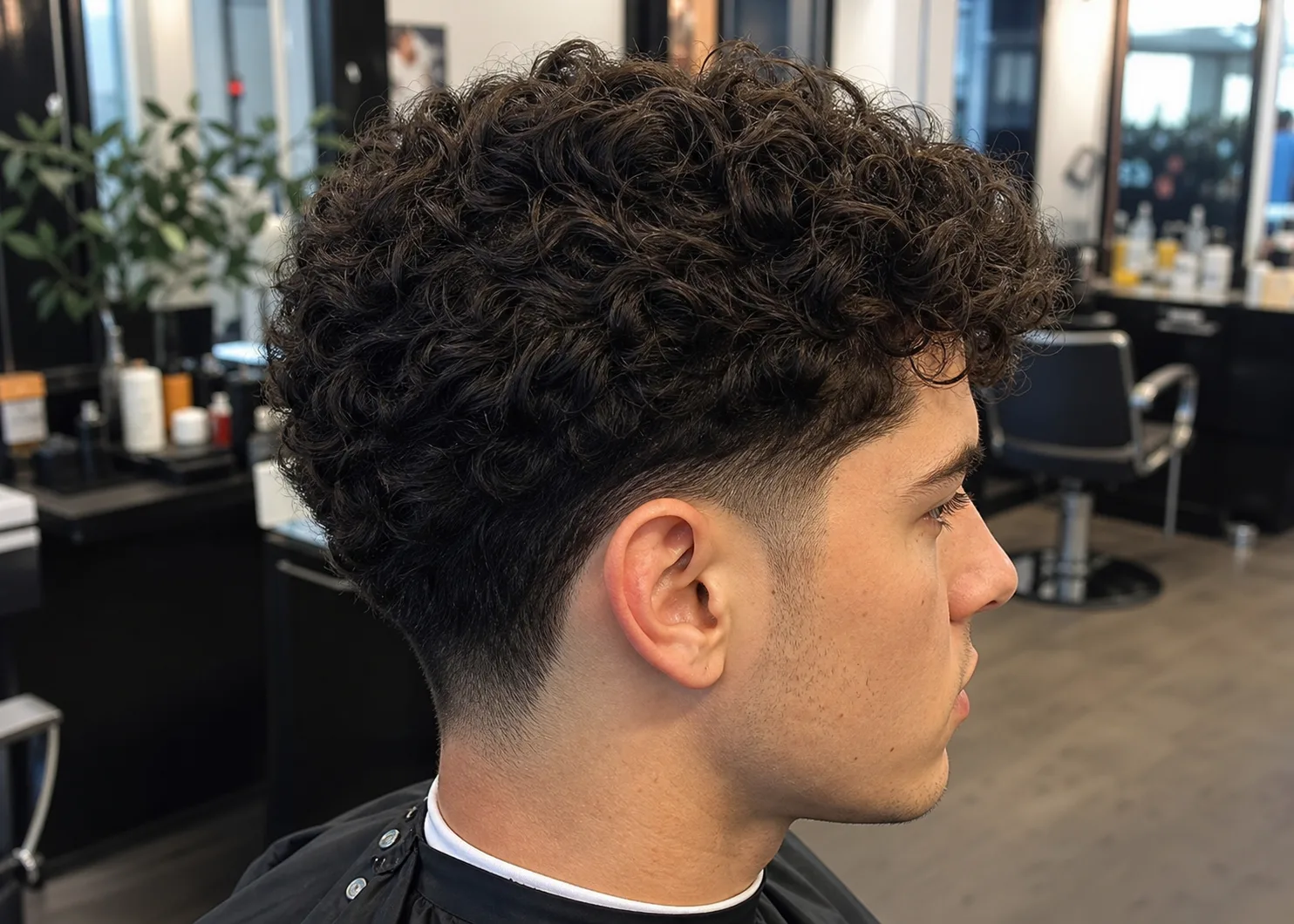 Try this on me
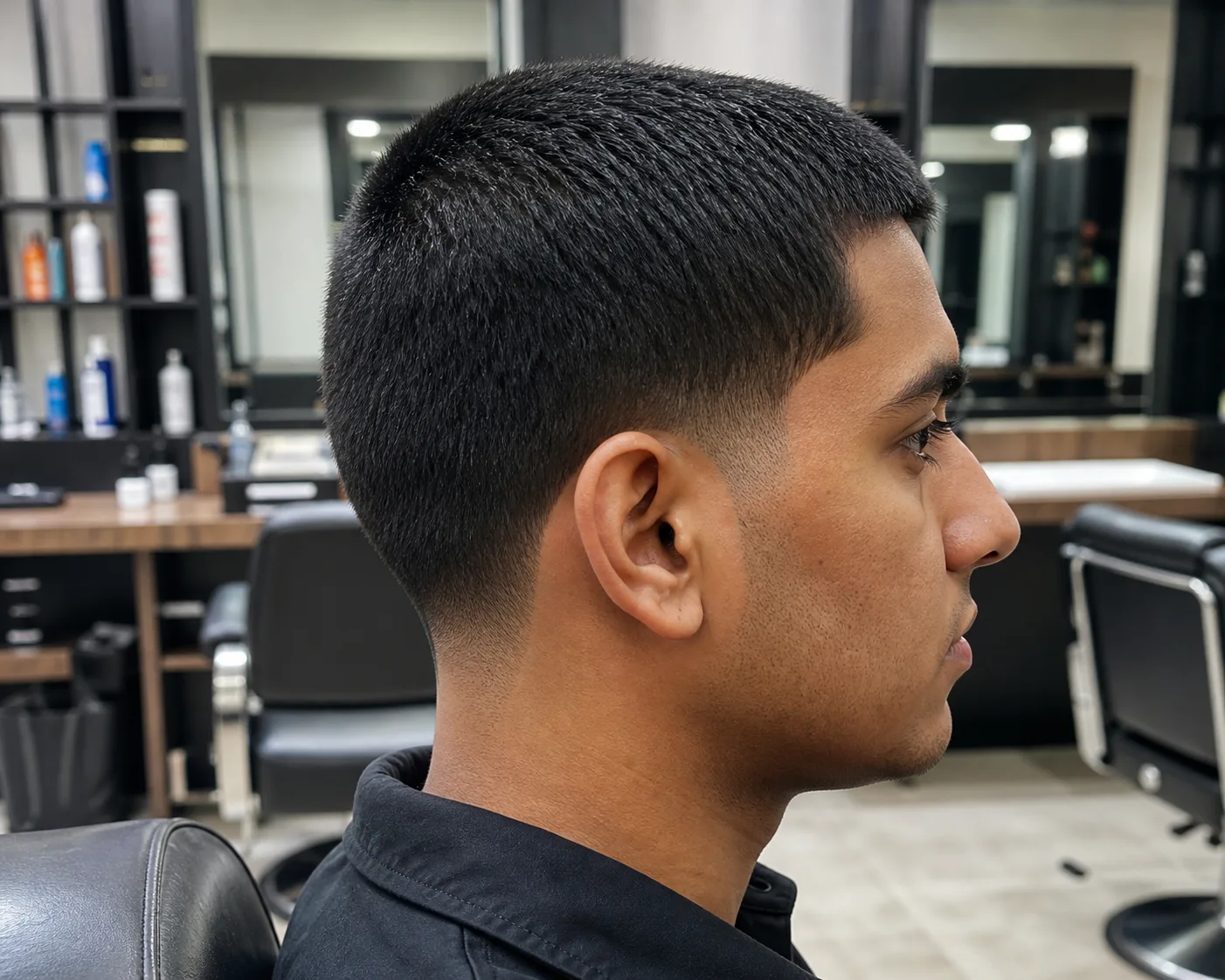 Try this on me
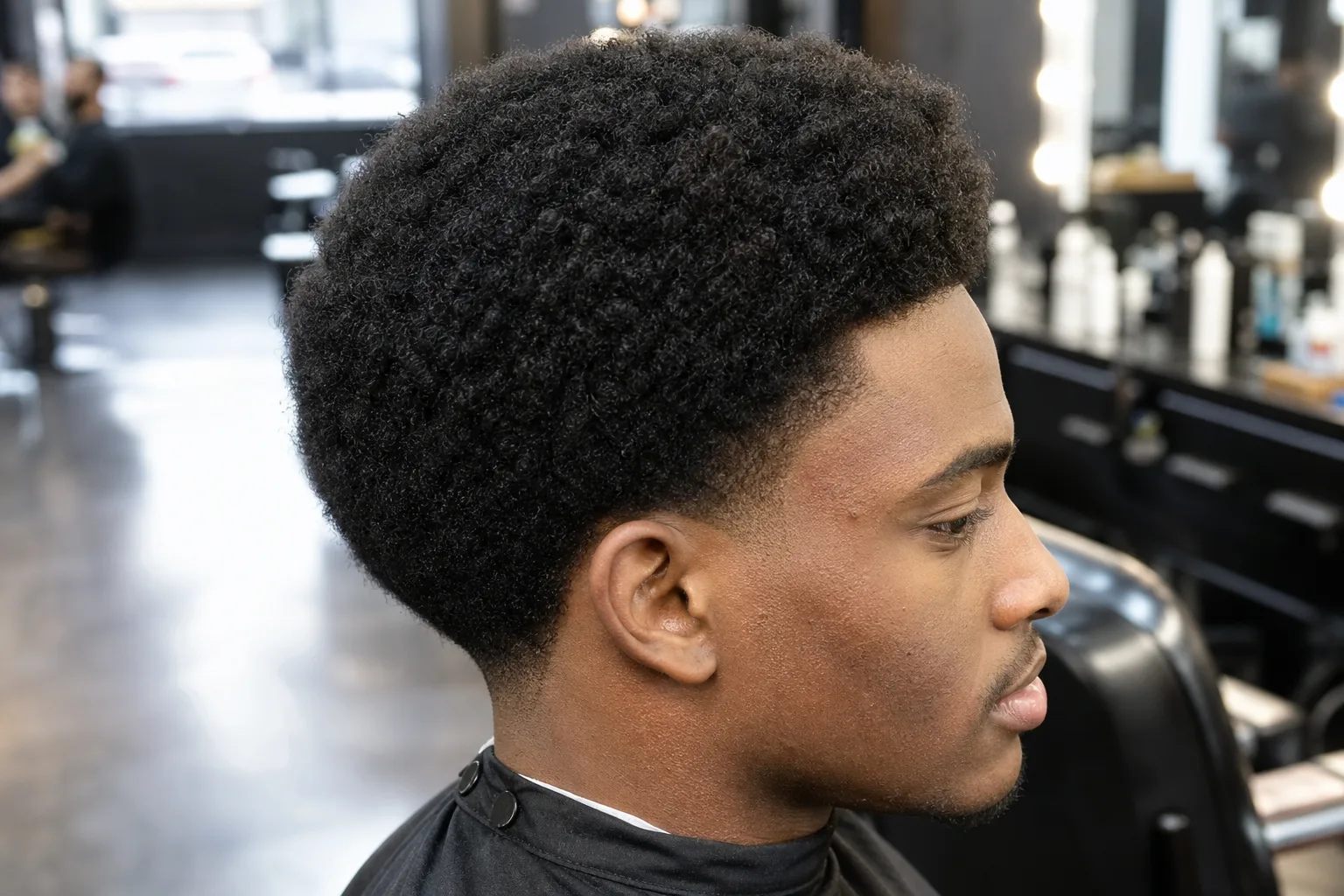 Try this on me
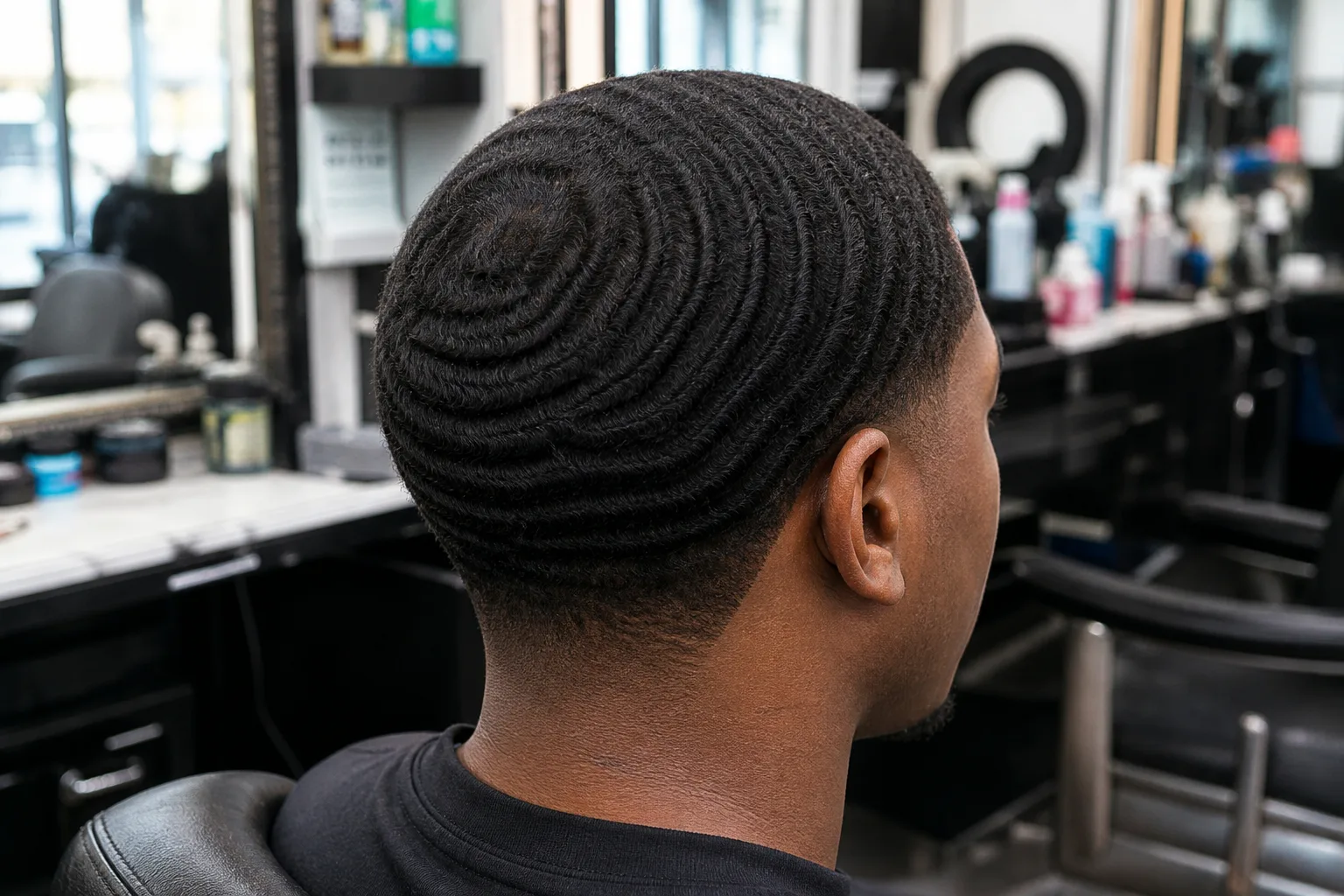 Try this on me
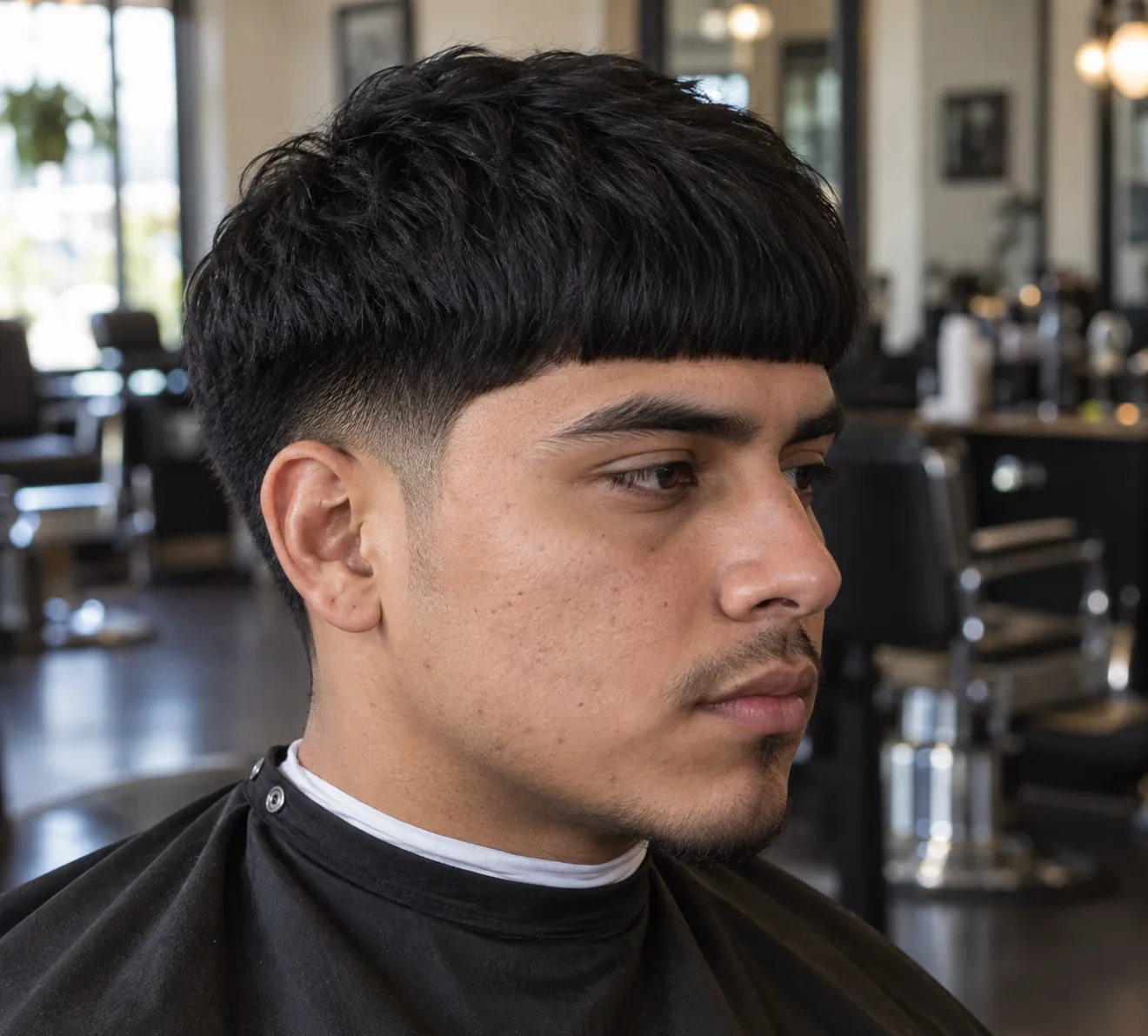 Try this on me
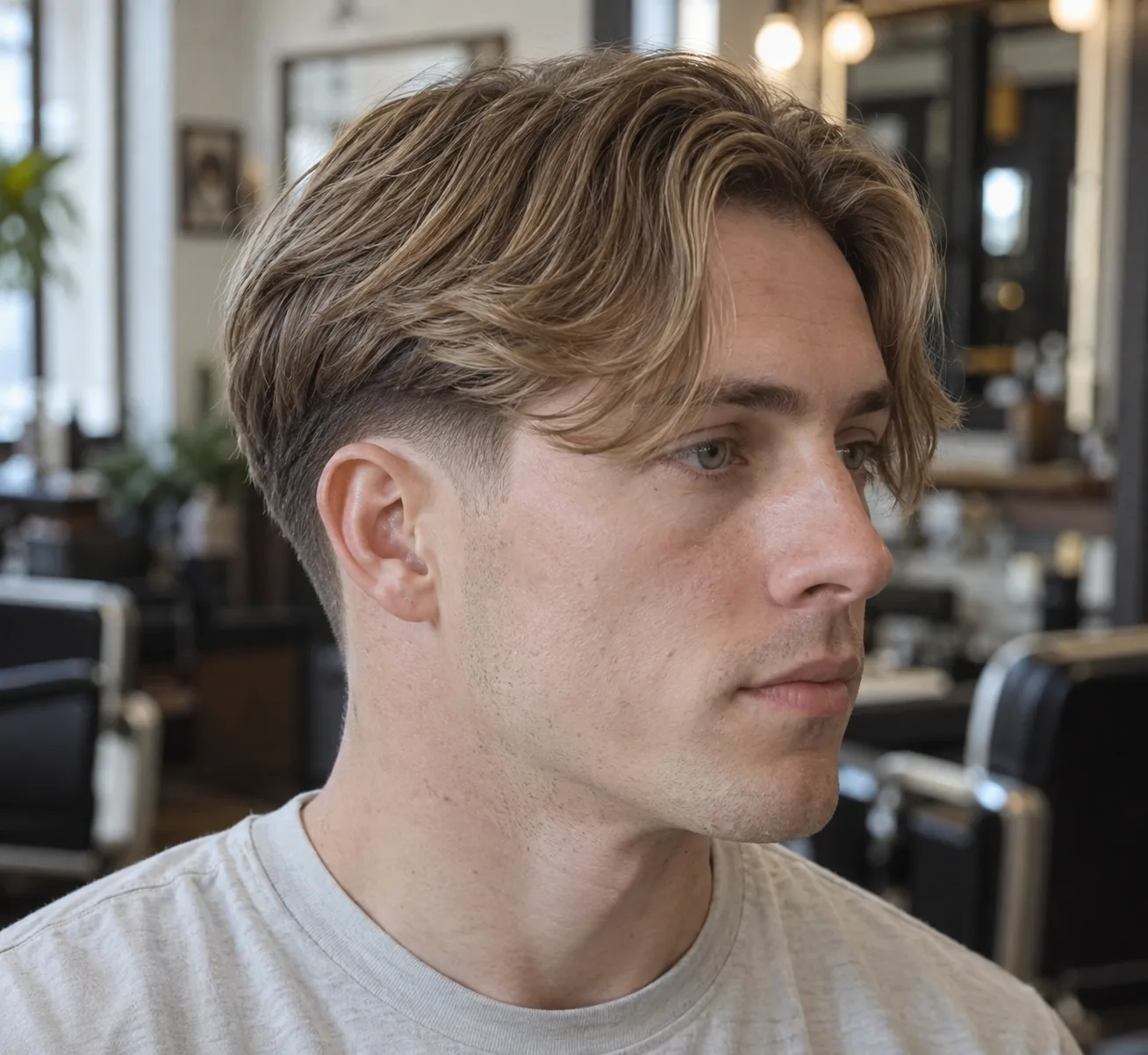 Try this on me
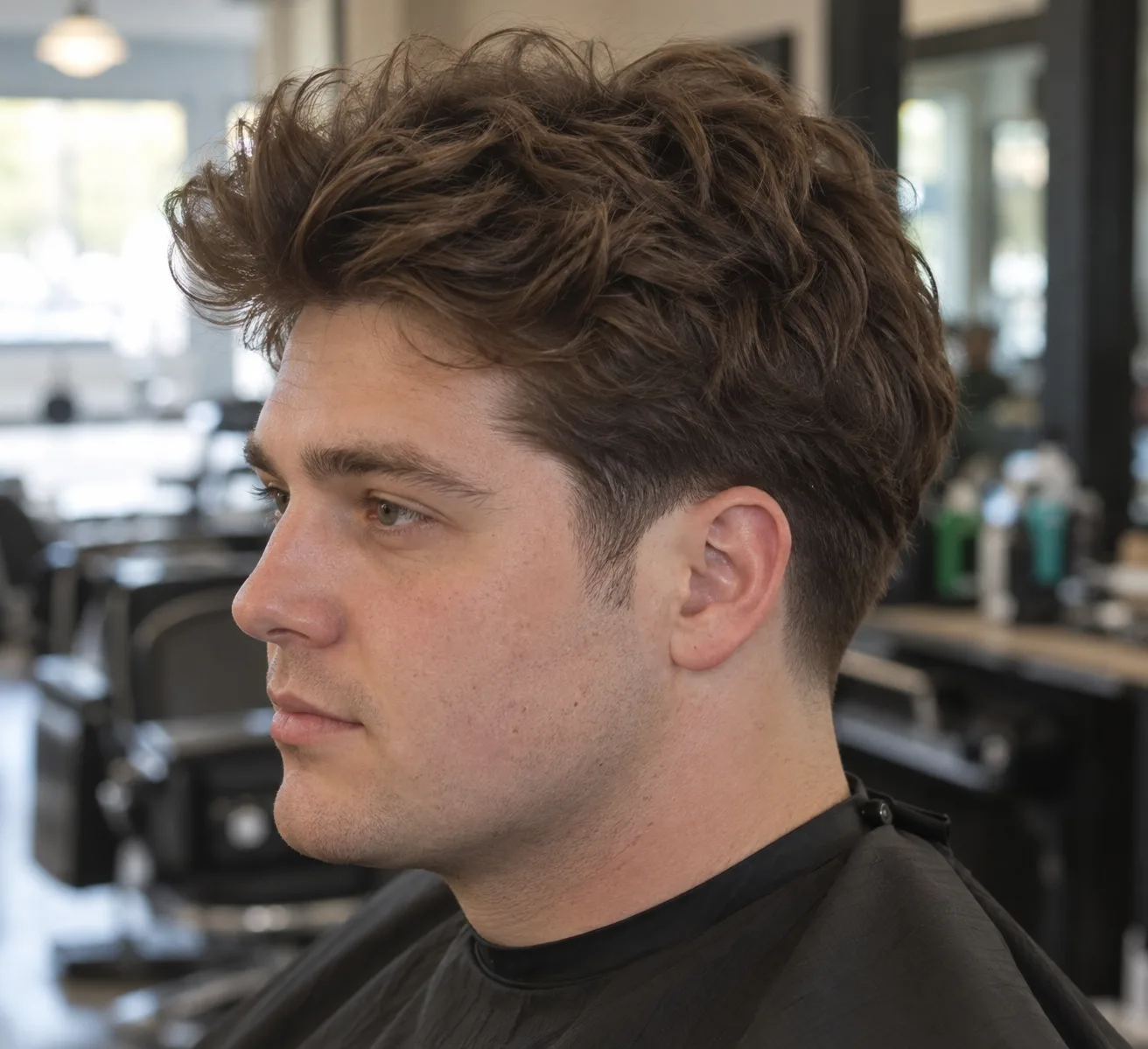 Try this on me
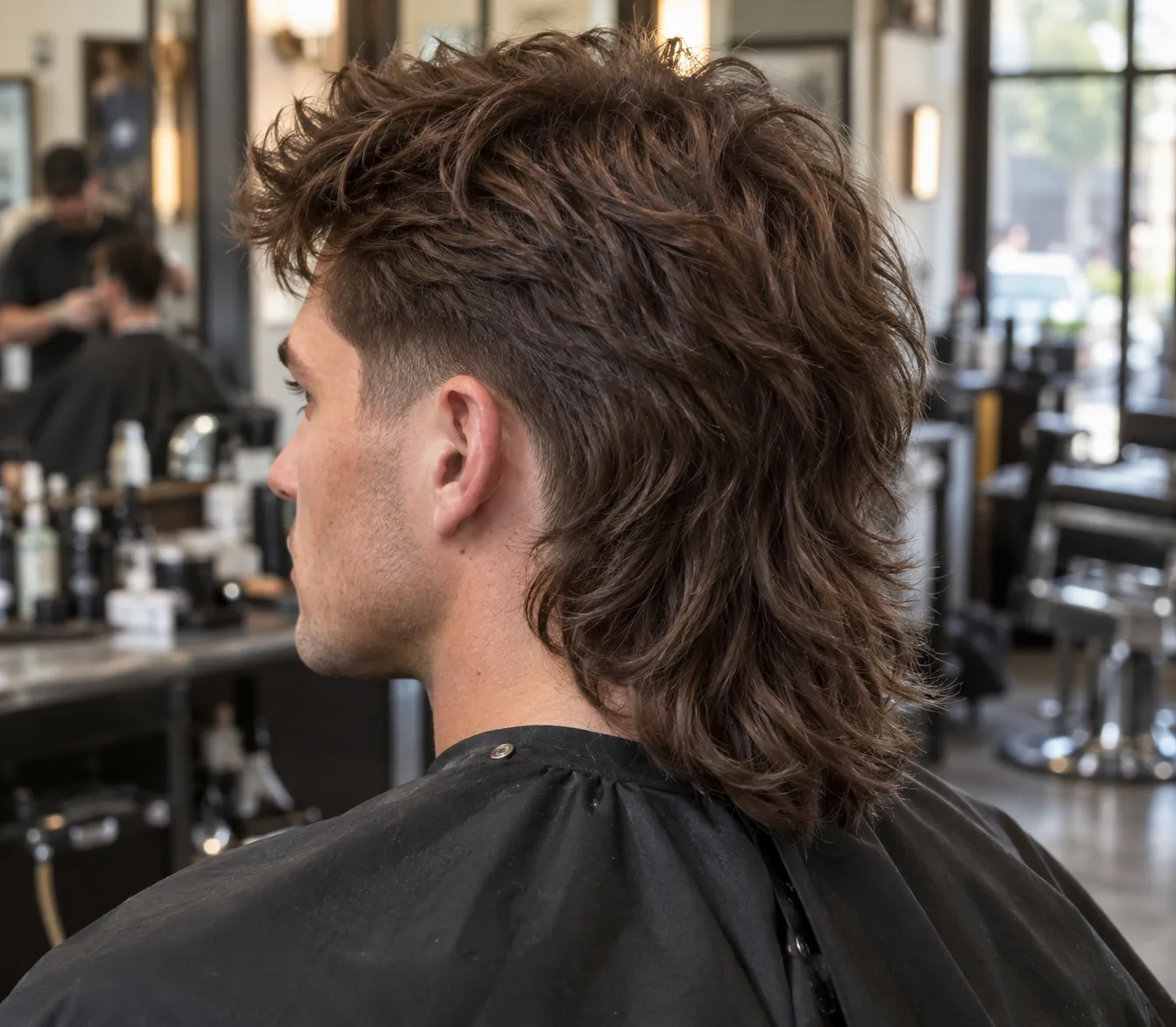 Try this on me
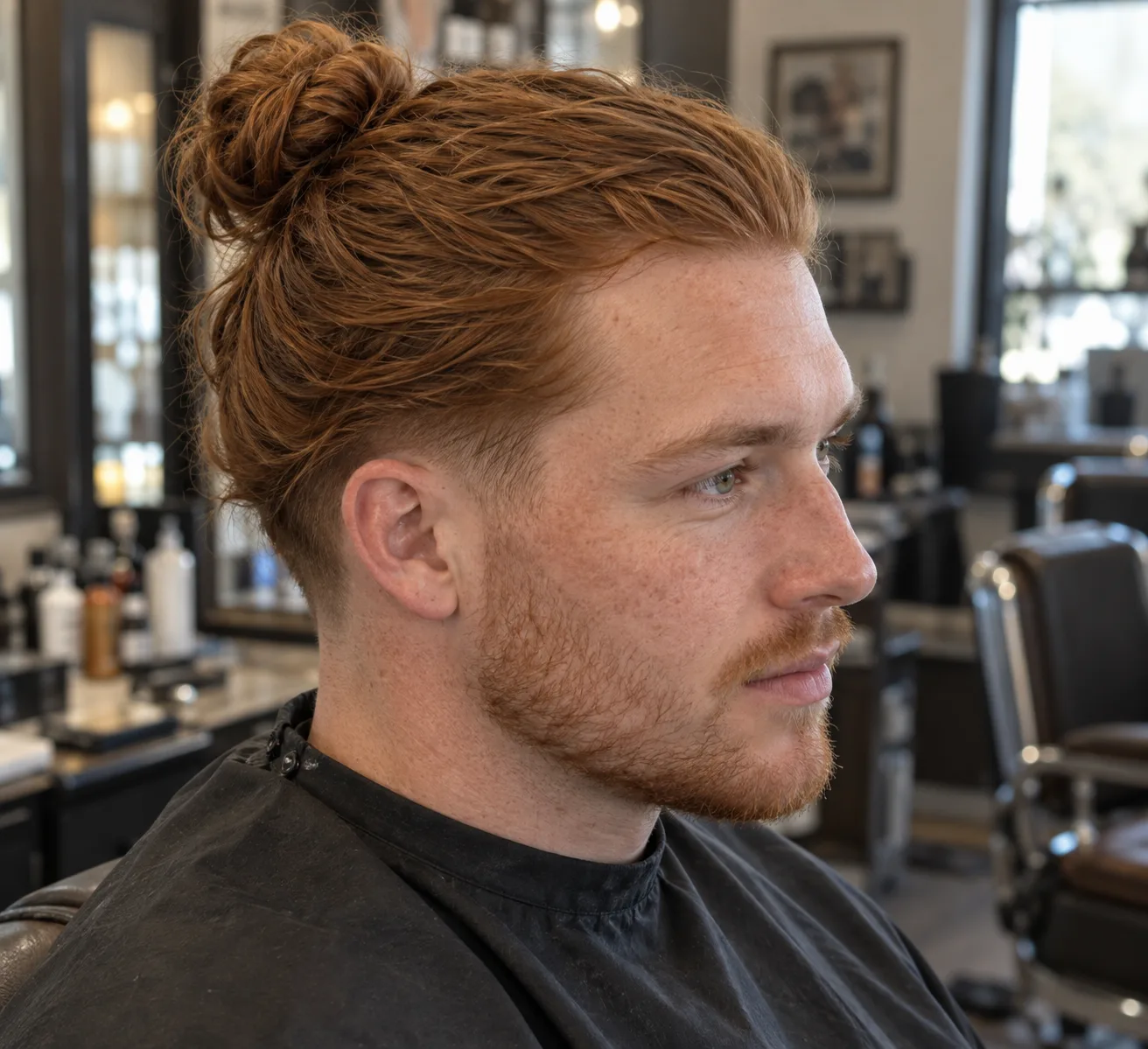 Try this on me
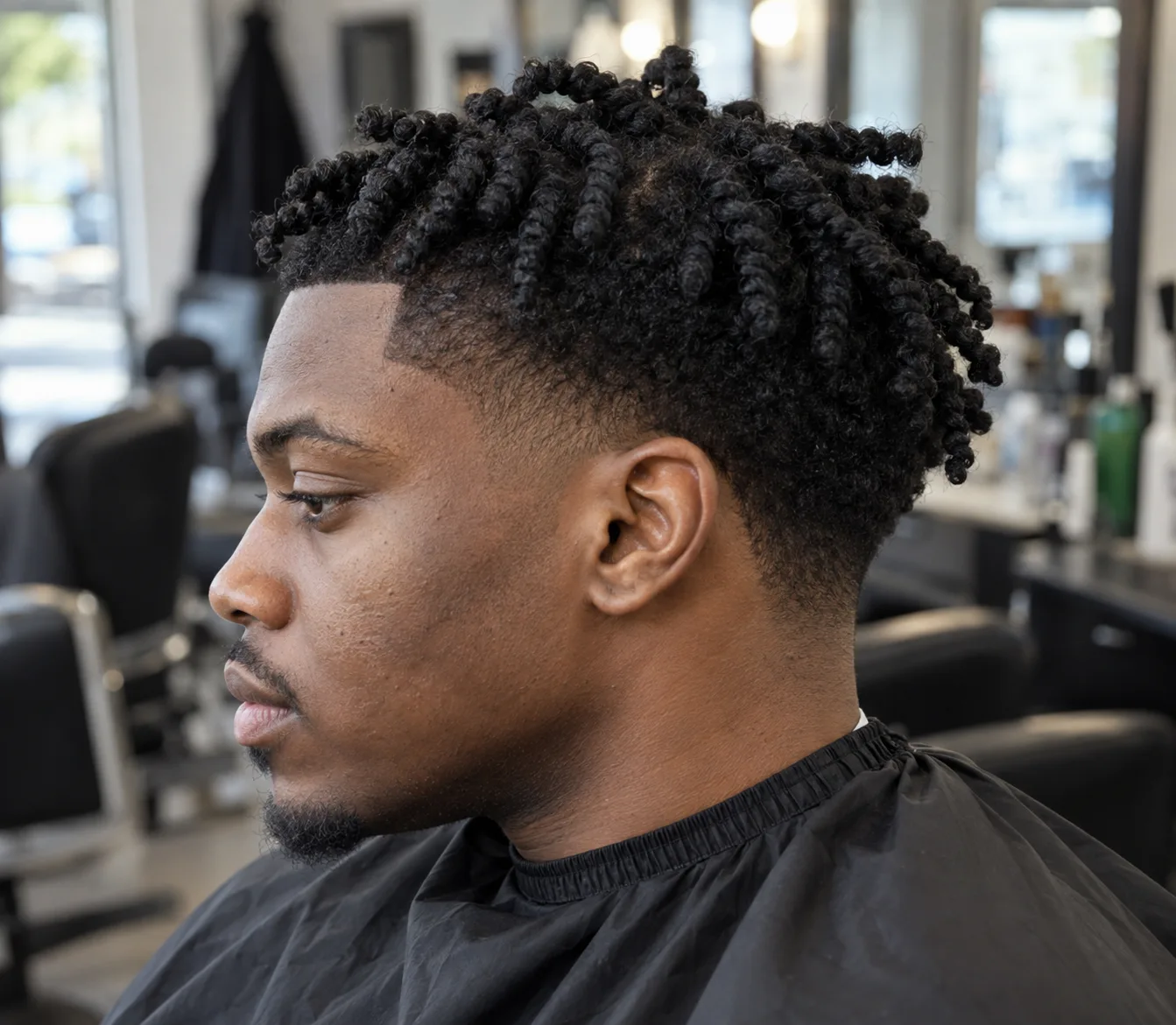 Try this on me
 Yours could be here.
Start with one selfie.
One photo, twenty seconds, and you'll know. Free account, no card for your first render.
What to ask for
Say "low taper fade", point to a spot about an inch above the top of your ear, and ask for a guard 1 at the shortest with a natural nape. Barbers work from landmarks, not adjectives. Give them the landmark and you get the cut. If what you actually want is a taper under a hard side part rather than texture on top, the height advice below is identical and only the top changes.
How to ask for a low taper fade
- Name the cut and the height
Say "low taper fade". Then immediately point: "start it about here", with a finger an inch above the top of your ear. The number of people who say low and get mid is enormous, and it is always because nobody pointed.
- Show two photos: side and back
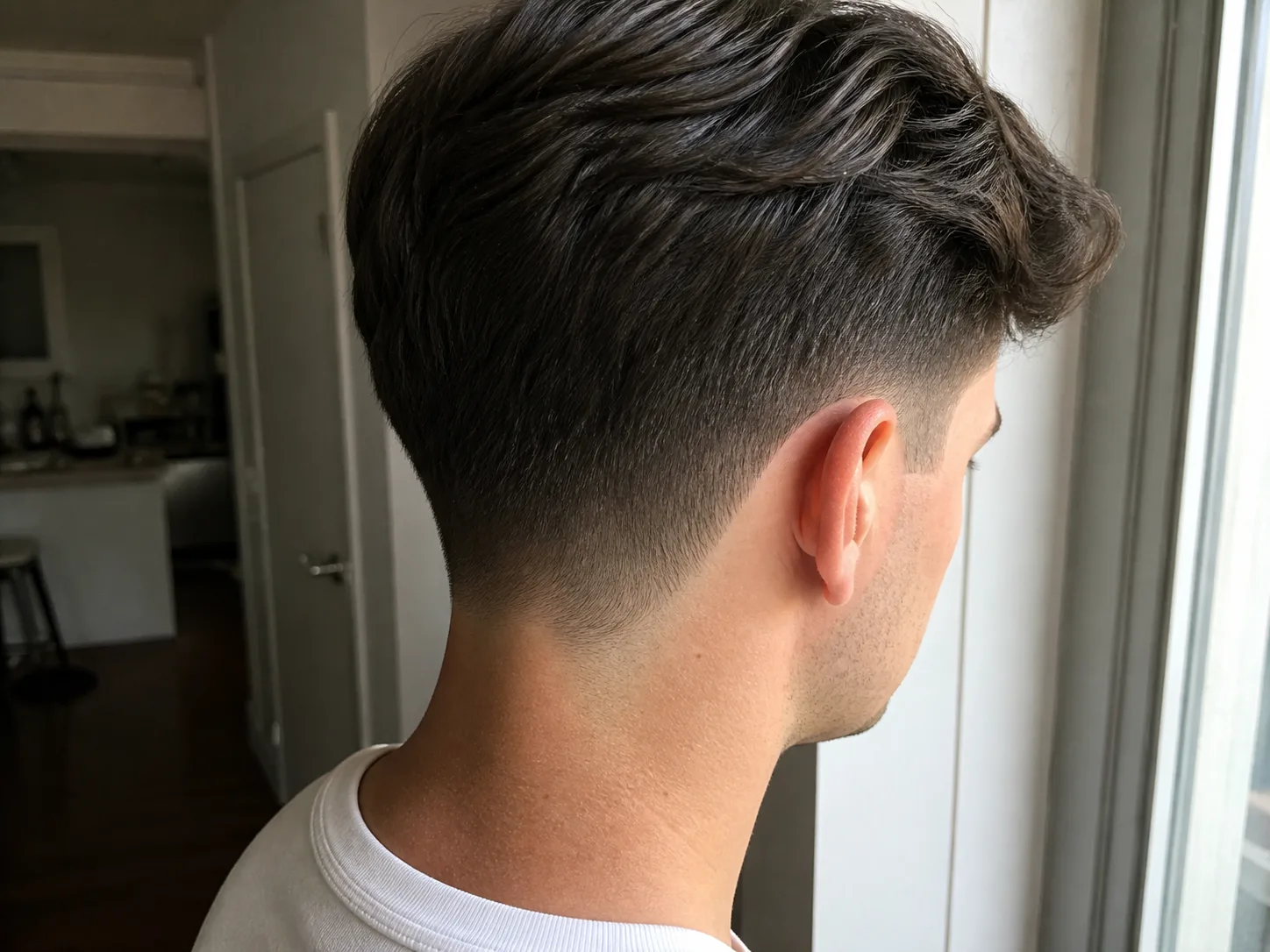
One photo of the side, one of the back, both of a low taper on hair like yours. The side shows where the band starts; the back shows the nape shape, which is the half of the cut you never see. Front-on photos are useless here, because a low taper is invisible from the front.
- Say how short at the bottom
A guard 1 at the shortest keeps a shadow of hair at the skin. A guard 0 goes closer. Skin is a different cut and is no longer a taper. If you are unsure, ask for a 1 the first time. You can always go shorter next visit; you cannot go back.
- Ask for the nape to stay natural
This is the one that separates a good low taper from a cheap one. A blocked nape is cut into a hard straight line and grows out as a visible ledge in about ten days. A natural or rounded nape fades out into the skin and stays tidy for a month.
- Say what you want left on top
The taper says nothing about the top. Give a number in inches or in fingers, and say how you wear it: back, forward, or messy.
- Check it in the mirror before the cape comes off
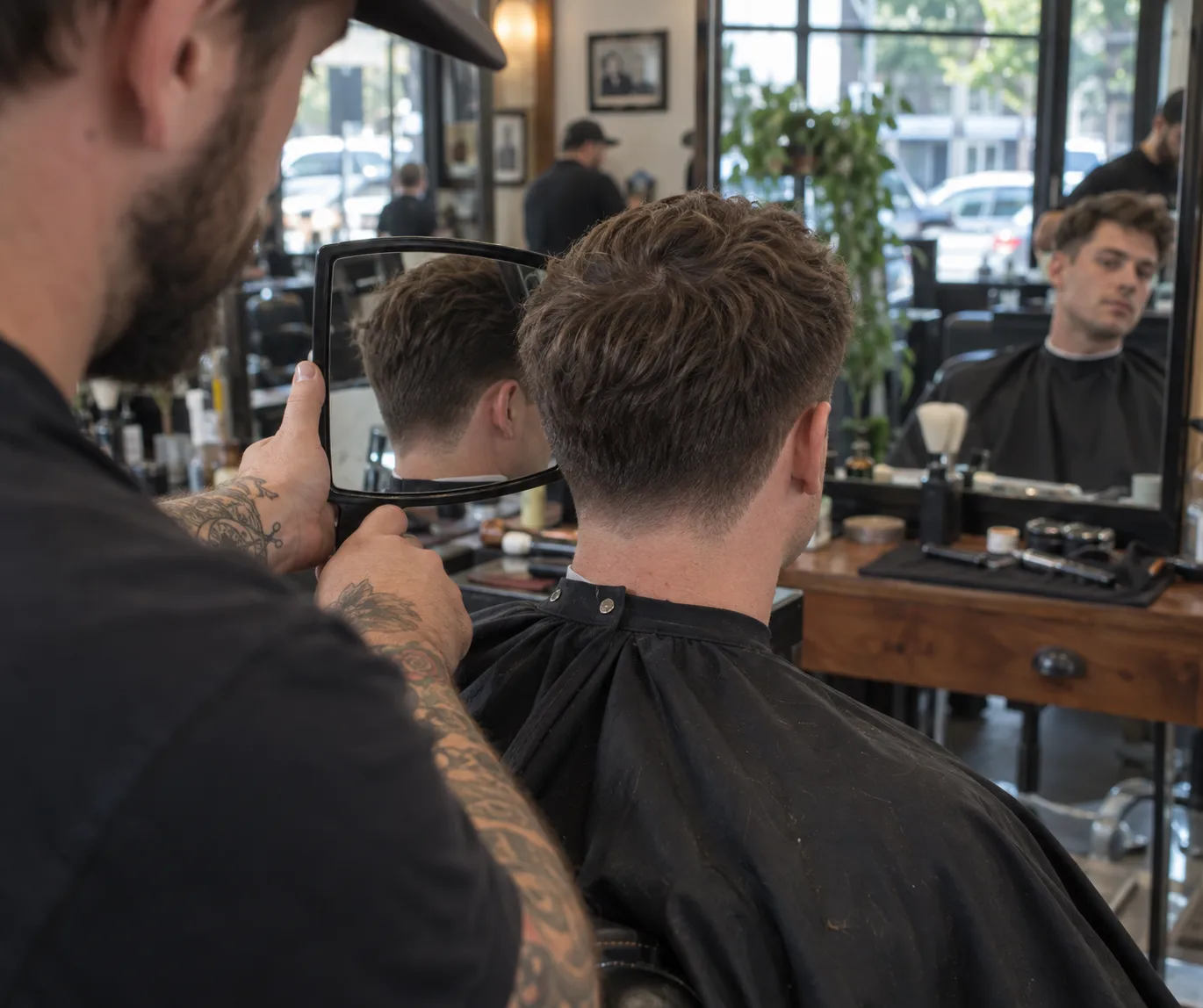
Ask them to show you the back. You are looking for one thing: no visible line anywhere in the gradient. If you can see where one length stops and the next begins, it is not blended, and that is a two minute fix while you are still in the chair.
How to find a barber who can cut a clean low taper
Look at the barber's portfolio, not the star rating. A clean low taper is a blending job in the least forgiving spot on the head, and plenty of shops that do a sharp skin fade leave visible lines in a taper, because a skin fade hides mistakes at the bottom and a taper does not.
Search the work, not the shop. Search Instagram or TikTok for "low taper" plus your city, or scroll the photos on the barber's booking page. You want side and back shots of low tapers, ideally on hair like yours. A feed of front-on selfies and skin fades tells you nothing about this cut.
Check the photos in daylight. Shop lighting flatters a blend. Photos by a window or outdoors show whether there is a shadow line where one guard ends and the next begins.
Match your hair type. Straight, light-colored hair is the hardest to blend because every line shows. Coily hair needs a barber who can taper without pushing the line-up back. If your hair is either, look for a barber who posts it.
Treat the first visit as the test. Book a standard cut, bring your two photos, and watch for three things: they ask where you want it to start, they do not reach for the foil shaver unless you asked for skin, and they show you the back before the cape comes off. If they pass, book the same barber next time. Consistency matters more than finding someone slightly better.
Burst, drop, temple and skin: the low taper variants
Four versions sit under the same name, and a barber may offer one without saying so. The height stays low in all of them; what changes is the shape of the band or how short it goes.
| Variant | What changes | Pick it if |
|---|---|---|
| Classic low taper | Band follows the hairline around the ear and across the nape | You want the default, and the longest gap between cuts |
| Low drop taper | The band dips lower behind the ear and follows the skull down to the nape | Your head is flat at the back, or you want the back to look shaped |
| Low burst taper | A half circle around the ear only; the nape keeps its length | You are keeping length at the back, as in a mullet fade |
| Temple taper | Only the temples and sideburns are cleaned up, the nape is left alone | Your hair is coily and you want the line-up sharp without touching the back |
| Low skin taper | The bottom of the band goes to bare skin | You want more contrast and will rebook at three weeks |
The burst is the one to know if you are growing your hair out: it keeps everything at the back, which is why it sits under nearly every modern mullet. The skin taper looks sharpest on day one and shows its grow-out fastest.
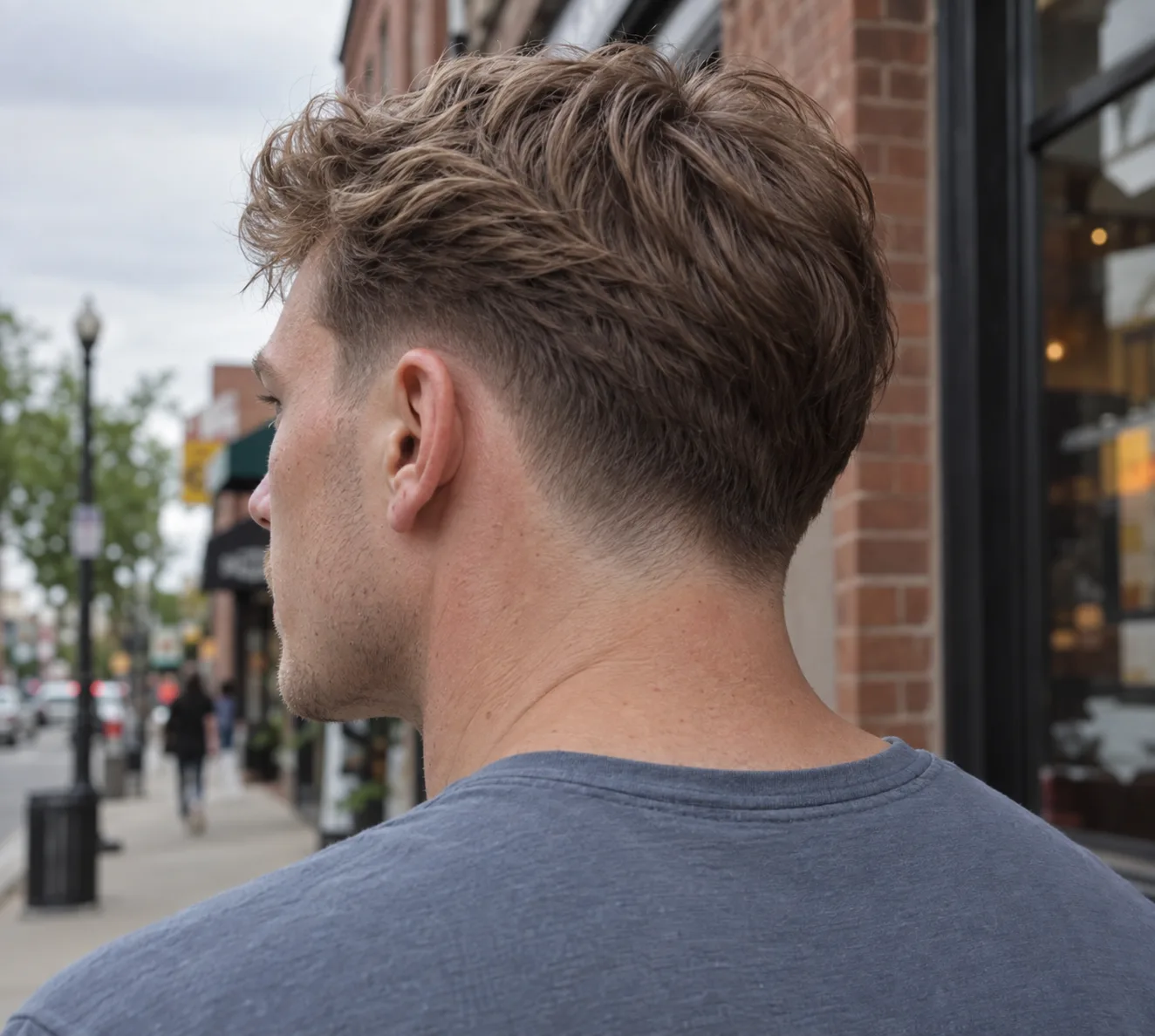
How it works on your hair
The low taper is unusually forgiving across hair types, which is the other reason it out-searches every other fade. What changes is not whether it works but what it does for you.
Straight hair. The most demanding version, because straight hair shows every line. There is nowhere for a bad blend to hide. On the other hand it holds the shape of the gradient perfectly, so a good one looks precise for weeks, and the rest of the straight hair playbook explains what to ask for above the taper. Ask for the blend to be checked in daylight rather than under the shop lights.
Wavy hair. The easiest. The waves hide small blending mistakes, and a low taper stops the sides from puffing out as the wave builds between cuts. Keep two to three inches on top and let it dry with a little sea salt spray.
Curly and coily hair. The best pairing there is. A low taper takes the weight out of the narrow band by your ear and along your neck, which is exactly where curly hair collects bulk and starts to look wide, and it leaves the entire curl pattern above it intact. You keep all the volume and lose the fluff. This is why the low taper is the standard maintenance cut on an afro or a short curly top. If it is the length on top you are still undecided about rather than the taper under it, the run of curly haircuts for men sorts them by curl type and length.
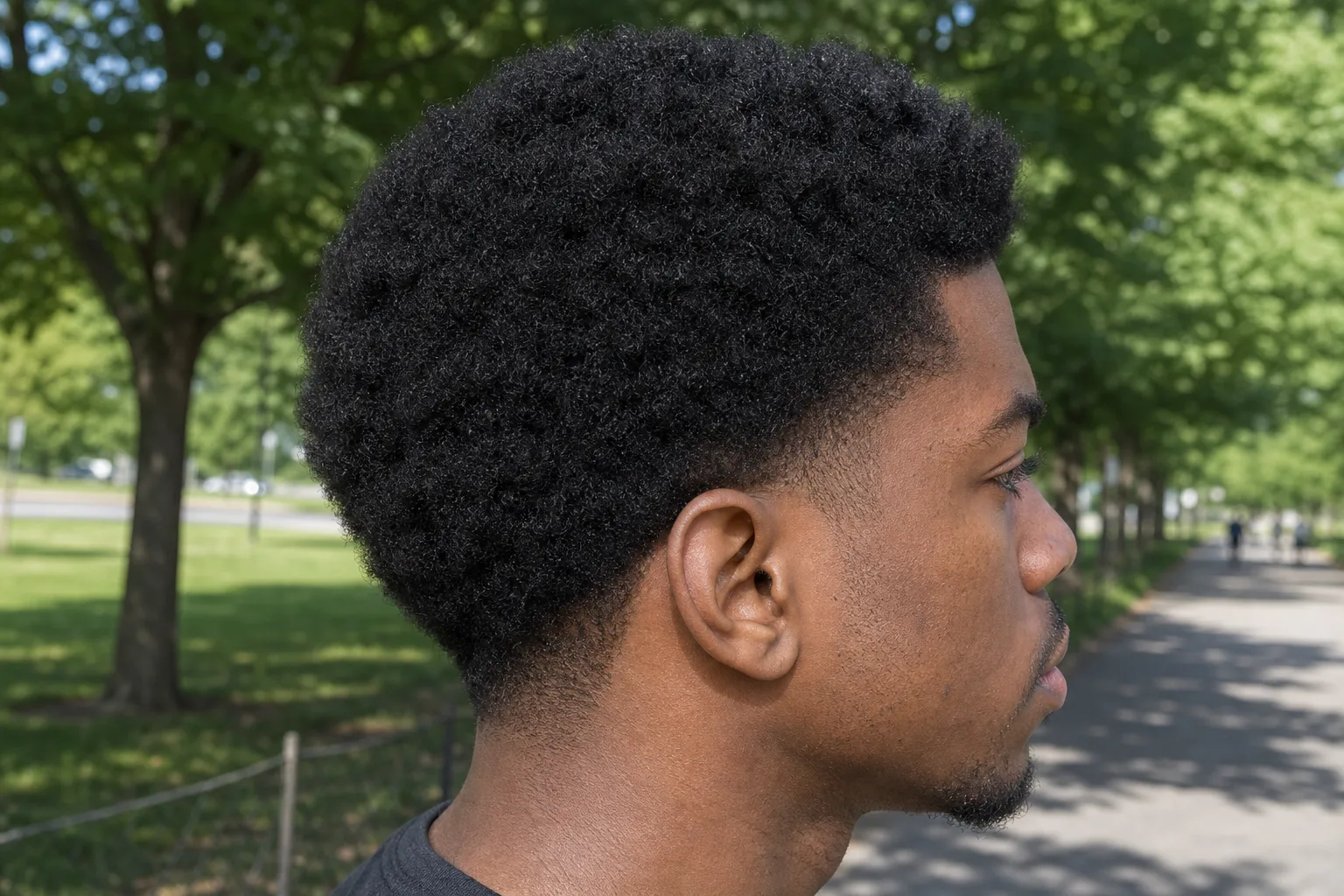
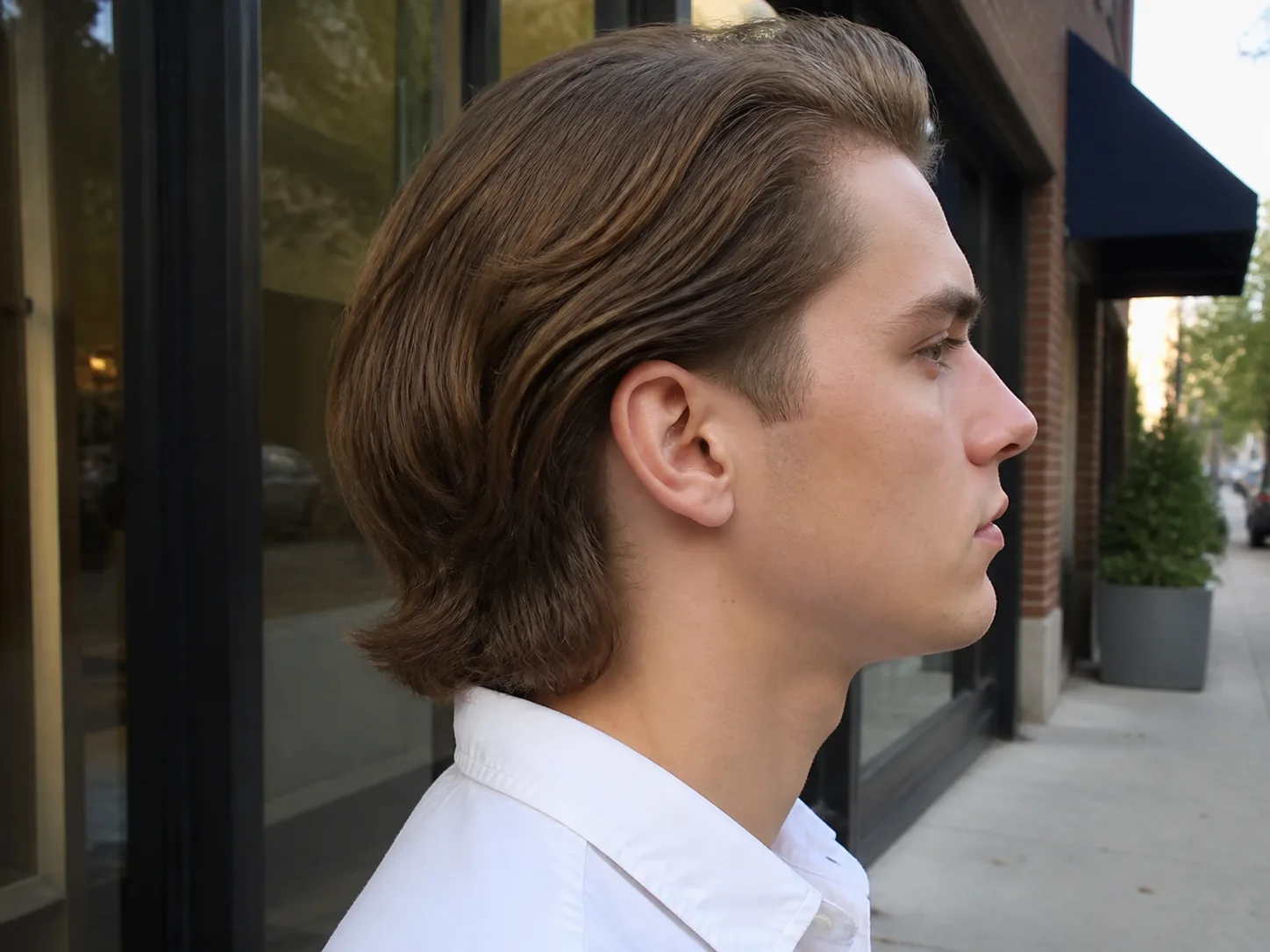
Long hair. Genuinely underrated. If your hair is five inches or more on top, a low taper hidden behind and around the ears gives you clean edges without touching the length. The hair falls over the taper and covers it. You look tidy from the front and you have lost nothing.
Thinning at the temples. Be careful. A taper draws the eye to the hairline. If your temples are receding, going low is right, but keep the shortest point at a 1 or a 2 rather than a 0, because contrast at the hairline advertises the recession.
Which face shapes suit a low taper
Nearly all of them, because a low taper barely changes the width of your head. It is the top that does the work for your face shape, so choose the top by face shape and keep the taper low. If you are not sure which shape you are, the calculator below works it out, and the full face shape guide pairs each one with its best cuts.
Measure it instead of guessing
Both numbers in the same unit — the answer is a ratio, so it does not matter which.
Under 1.15 reads round, 1.15 to 1.5 reads oval, over 1.5 reads long. Oval and long split on the jaw rather than the ratio: an oval tapers toward the chin, a long face runs straight down.
| Face shape | Low taper verdict | Top to pair with it |
|---|---|---|
| Oval | Works with anything | Any of the sixteen above |
| Round | Works, but add height | Quiff, blowout or textured crop; mid if you want the sides narrower |
| Square | Works well | Softer texture or curtains to take the edge off the jaw |
| Long | The best choice, it keeps width at the sides | A fringe or curtains, never a tall pompadour |
| Heart or triangle | Works, keeps the sides balanced | Medium length with some fullness around the ears |
Low taper fade with a beard
The rule is that the sideburn and the beard meet at the same length. Ask the barber to taper the sideburn down to your beard length and blend the two, rather than taking the sideburn to a 0 and leaving a gap above a full beard. A low taper suits a beard better than a high fade, because it leaves enough hair at the sides to carry the line down into the jaw.

The 3 2 1 question
People search for "3 2 1 haircut" constantly and it is simpler than it sounds. Those are clipper guard numbers, and they describe a gradient built in three steps: a 3 at the top of the band, a 2 in the middle, a 1 at the bottom, then blended so the steps disappear.
It is a recipe, not a style. A barber can build a low taper with 3 2 1, or with 2 1 0, or with scissors and no clippers at all. What matters is where the band sits and whether it is blended. If you like precision, asking for a "3 2 1 low taper" is a perfectly good way to communicate. If you do not, "low taper, guard 1 at the shortest" gets you to the same place.
Mistakes that cost you the cut
Saying low and not pointing. Covered above and worth repeating, because it is the most common failure by a wide margin. Low is relative. Your finger is not.
Letting them block the nape. A hard line at the neck undoes the entire point of choosing a taper. Say "natural" or "rounded" before they start.
Going to skin on the first visit. A skin taper is a different commitment: sharper, and visibly grown out in about ten days. Try a 1 first.
Booking the next one too late. A low taper is at its best from week one to week four. It does not fall apart after that, it just stops looking cut. Four to five weeks is the honest interval.
Treating it as a whole haircut. It is an edge treatment. If the top is not designed, a perfect taper will not save it. Decide the top first. Deciding the top is the larger half of the job, and the full range of men's hairstyles, ordered by length on top, is the fastest way to work out which lengths your hair will actually hold.
How long does a low taper fade last?
Four to five weeks before it needs a full recut, and it looks sharpest for the first two to three. Many shops sell a quick edge-up or neck cleanup between cuts, which buys you another two weeks if you want it looking fresh.
| Week | What you see | What to do |
|---|---|---|
| 1 to 2 | Sharp, the band is crisp | Nothing |
| 3 | The nape and sideburns soften | Optional neck cleanup |
| 4 to 5 | The band blurs into the sides | Book the full cut |
| 6+ | Reads as a scissor cut | Recut, or keep growing it out on purpose |
This is the low taper's real argument. Because the gradient is narrow and never reaches skin, there is no hard line to reappear as it grows. The band simply gets softer and the whole thing drifts toward a scissor cut over about six weeks.
Compare that with a high skin fade, which has an obvious edge that reappears within two weeks and looks unfinished until you go back. If you dislike sitting in a barber's chair, the low taper is the cut that respects that. That patience is also why the low taper is the taper most men grow into medium length hair with: it keeps the sides in ratio while the top gets its three to six inches.
Styling it day to day
The taper needs no styling. The top does, and the product follows the look: a matte clay or paste for a textured crop, curtains or a messy fringe; a water-based pomade for a side part or slick back; sea salt spray and a blow dryer before the clay for a blowout; a curl cream or leave-in on curls and coils, and nothing else. Use less than you think, working it in from the back.
If you are not sure whether you want the length on top that a taper implies, see what different lengths look like on your own face before you book.
Is it worth it
If you want one haircut that works at a wedding and at the office, that suits straight, curly and long hair, that costs a standard cut and not a specialist one, and that still looks acceptable in week five, this is it. It is popular because it is genuinely the safest good decision in men's hair.
If you want your haircut to be noticed, get a mid or high fade instead, or move the length to the back with a mullet fade. The low taper is not trying to be seen. That is the whole product.
You can try a low taper on your own photo before you commit, which is a faster way to settle the low-versus-mid question than describing it to a barber.
Frequently asked questions
A haircut where the hair is graduated shorter in a narrow band following the hairline, beginning about an inch above the ear and blending down to the sideburn and the nape. It leaves the sides of your head full and never goes to bare skin, which makes it the most subtle fade available.
Low if you want it subtle, if your workplace is conservative, or if you want the longest possible gap between haircuts. Mid if you want the cut to be visible and your head to read narrower. The difference is roughly an inch of height on where the gradient starts, and it changes the look more than that sounds.
There is no single answer, but the low taper is the safest. It flatters nearly every head shape because it does not change your silhouette, and it is the least likely of the fades to look wrong on you. A mid or high fade delivers more impact and carries more risk.
Clipper guard numbers describing a three-step gradient: a number 3 at the top of the faded band, a 2 below it, a 1 at the bottom, then blended so the steps are invisible. It is one recipe for building a taper, not a style in itself.
It is arguably the best cut for curly and coily hair. It removes the bulk that collects around the ears and the nape while leaving the curl pattern on top completely intact, so you keep the volume and lose the width.
Yes, and it is one of the most useful things you can do with long hair. A low taper behind and around the ears tidies the edges while the length falls over it and hides it. You get a clean outline without losing any length.
Four to five weeks. It looks its sharpest for the first three, then softens gradually rather than breaking, because there is no hard line to grow out. A skin fade needs redoing in half that time.
Almost every face shape, because a low taper keeps the sides full and barely changes your silhouette. It is the best choice for a long face, since it keeps width at the sides. On a round face, pair it with height on top or go mid for a narrower head.
For most people, yes. A low taper only shortens the hairline around the ear and nape, so it grows out softly over five weeks. A low fade takes the whole side and back shorter, shows more scalp and needs a recut in two to three weeks. Pick the low fade only if you want the sides visibly short.
It became a meme. In 2024 the phrase "imagine if Ninja got a low taper fade" spread across TikTok among Gen Alpha and turned "low taper fade" into a running joke, which is part of why the search volume exploded. The haircut itself was already a barbershop staple.
A cut with the number 2 clipper guard, which leaves the hair about a quarter of an inch long. On a low taper a 2 is usually the top of the band, blended down to a 1 or a 0 at the hairline.
A taper is a narrow graduated band along the hairline, around the ears and the nape. A fade takes the whole side and back of the head shorter, often down to skin. A taper fade is a taper that fades close at the hairline, which is why the two words end up glued together.
Preview it on your own photo: Men's Hairstyle Try-On.
Share article
About the author

More articles
Men's Haircuts · 14 min
Benny Blanco Haircut: The Fake Half Shave and the Real Curls
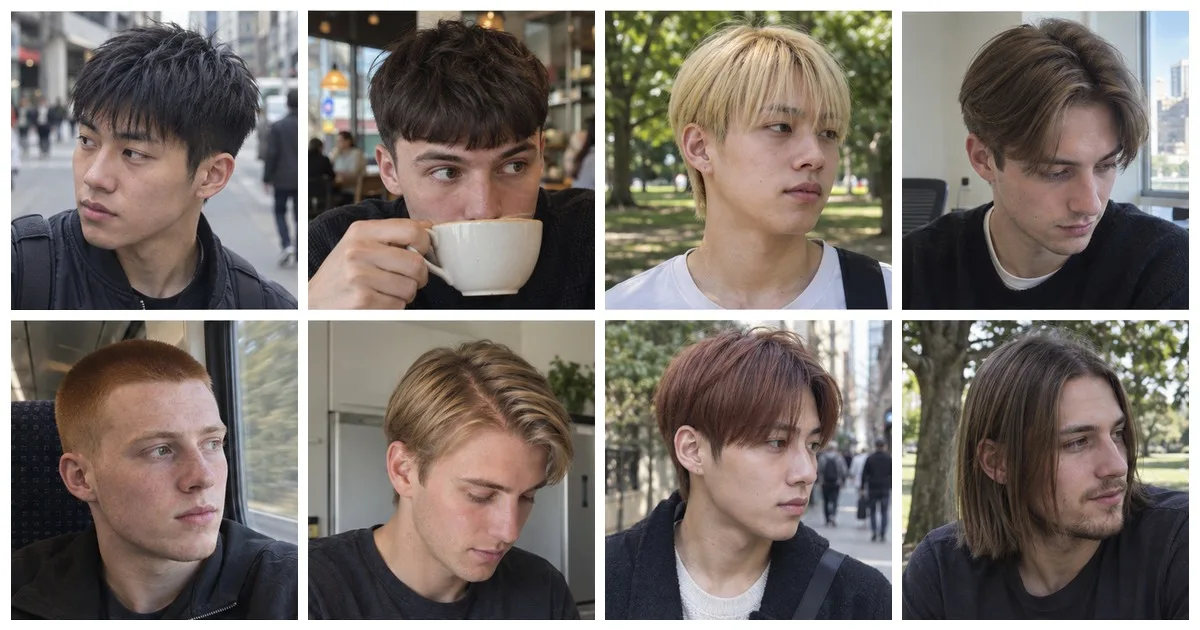
Benny Blanco did not shave half his head. It was a prosthetic bald cap, and the buzz cuts are AI. Here is what his curly mop actually is, the short version, and exactly what to tell your barber.
Men's Haircuts · 16 min
1A Hair: How to Tell If You Have It + 14 Cuts That Work
1A hair is pin-straight with no bend from root to tip. How to tell it from 1B and 1C, why it goes flat, 14 haircuts that work on it, and how to style it for volume.
Men's Haircuts · 15 min
High and Tight Haircut: 4 Versions and the Head Shape Rule
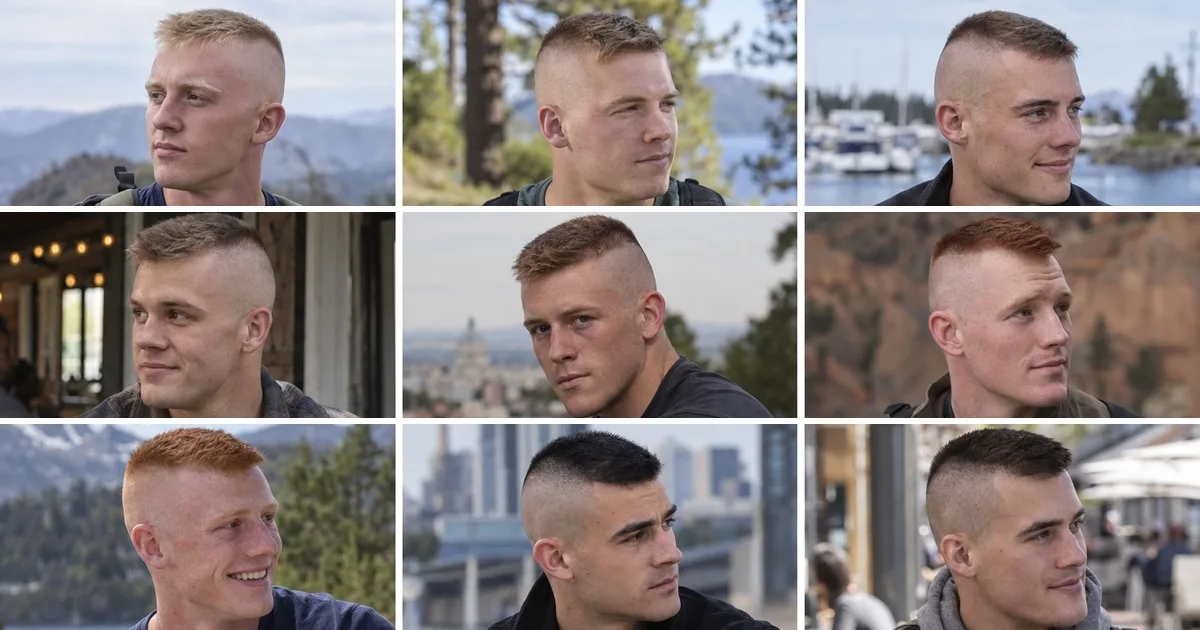
A high and tight clips the sides almost to skin all the way up to the top of the head, so it shows your skull shape more than your face. The 4 versions, 14 photos, what to tell your barber, and how long it lasts.