1A Hair: How to Tell If You Have It + 14 Cuts That Work
Oleh Onysko 29 September 2026 16 min read
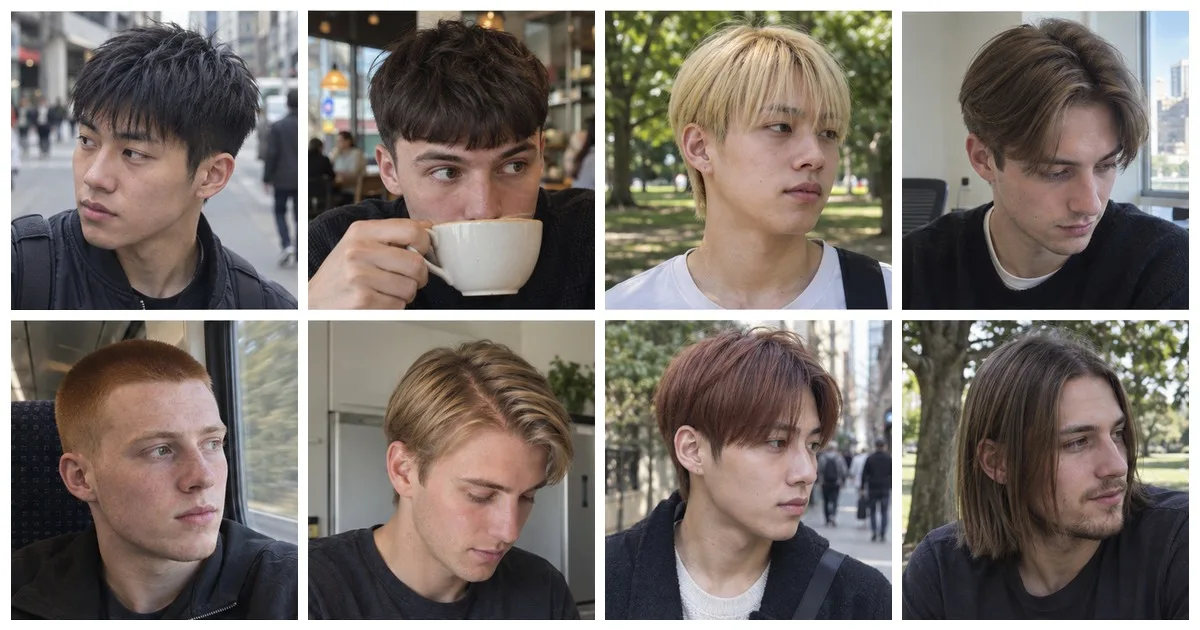
In this article
1A hair is the straightest hair there is: fine, silky strands with no bend, wave or curl anywhere from root to tip, even when it air-dries with nothing in it. It is the first subtype of type 1 in the hair typing chart, and its one real problem is volume, because nothing in the strand pushes it up off the scalp.
Here is what most 1A guides get wrong. They treat flat hair as a product problem and send you shopping for volumizing shampoo. 1A hair is not usually thin. It is flat, and flat hair shows the scalp, so it looks thinner than it is. The fix is structure from the haircut and from the direction you dry it, and the right cut does more in one visit than a shelf of product does in a year.
This guide covers how to tell whether you are 1A, 1B or 1C, why 1A behaves the way it does, fourteen cuts that suit it, how to pick one for your density and hairline, and the mistakes that leave 1A hair looking limp.
What is 1A hair?
1A hair is type 1 hair with no bend at all. The strands come out of the scalp and fall straight down with gravity, lie close to the head at the root, and keep that line all the way to the ends. It usually has a strong natural shine, because light bounces off a perfectly straight strand in one clean line.
The typing chart comes from stylist Andre Walker, whose system sorts hair from type 1 (straight) to type 4 (coily). The letters that split each type into A, B and C came later, and the hair typing system is now the shared shorthand stylists and forums use. Within type 1, the letter tells you how much bend and body the hair has, and 1A has the least of both.
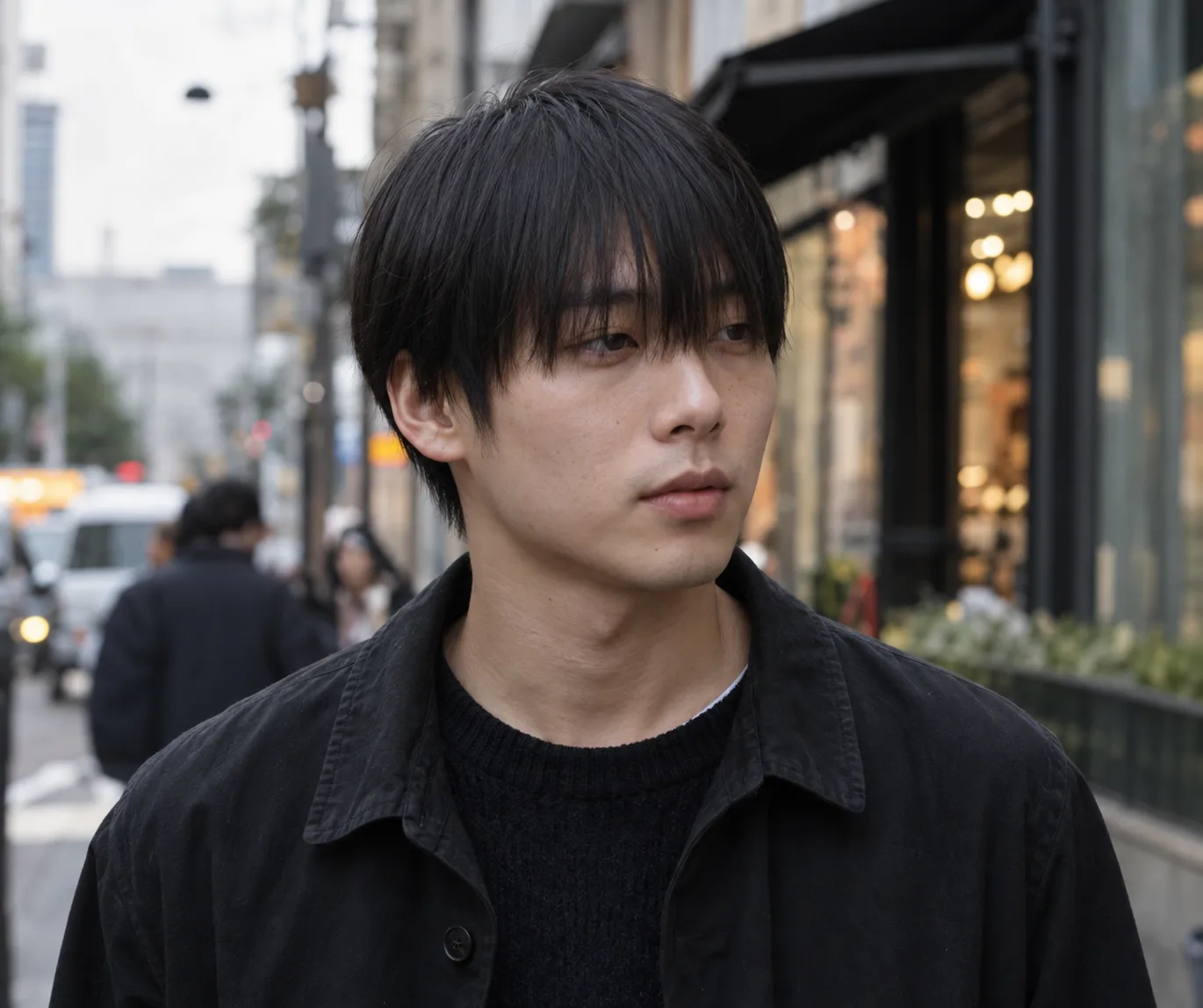
What 1A hair does in daily life:
- It will not hold a curl. Curl it with an iron and the curl drops out within an hour or two.
- It gets oily fast. Scalp oil slides down a straight strand easily, so 1A hair can look greasy a day after washing.
- It shows every cut line. There is no wave to hide a choppy section or a bad blend.
- It lies flat at the crown, and a cowlick or a part shows as a clear gap.
How to tell if you have 1A hair
The only reliable test is the air-dry test. Wash your hair, skip conditioner on the roots and use no product, then let it dry fully without brushing, blow-drying or touching it. Look at it in daylight.
- 1A: no bend anywhere, not even at the ends. It dries flat to the head, and a strand held up to the light is a perfect straight line.
- 1B: mostly straight, but with a slight bend or flick at the ends and a little more body at the crown.
- 1C: straight at the root with a loose S-bend showing in places, a coarser feel and some frizz in humidity.
- 2A: a visible flat S-wave from mid-length down. If that is you, the 2A hair guide is the better page.
If your hair only looks pin-straight after a blow-dry or a flat iron, it is probably not 1A. 1A is straight when you leave it alone.
1A vs 1B vs 1C hair
The three type 1 subtypes differ in bend, strand width and how much volume the hair holds. That is the difference between a cut that works and one that goes flat by lunch.
| 1A | 1B | 1C | |
|---|---|---|---|
| Bend | None, root to tip | Slight bend at the ends | Loose S-bend in places |
| Strand | Fine, silky | Medium | Coarser |
| Volume | Very little, lies flat | Some at the crown | Most of type 1 |
| Holds a curl | Barely | For a while | Yes |
| Frizz | Almost none | Little | Some in humidity |
| Main problem | Flatness, oil | Uneven ends | Frizz, puffiness |
| Cuts that suit it | Short, blunt, point-cut | Most cuts | Longer layered cuts |
Most people who call themselves "super straight" turn out to be 1B, because a tiny bend at the ends is easy to miss. That matters, because 1B hair can carry cuts that fall apart on 1A.
Is 1A hair thin or thick?
1A describes the shape of the strand, not how much hair you have. Two other things decide whether your hair looks thin: strand width and density.
1A strands are usually fine, meaning each hair is narrow. Density is how many hairs grow per square inch of scalp, and it varies a lot. Many people with 1A hair have high density: a full head of fine, straight hair. The problem is that fine straight hair lies flat, so even a dense head can show scalp at the part and the crown. Pick your cut by density, not by the fact that your hair is 1A.
14 haircuts for 1A hair
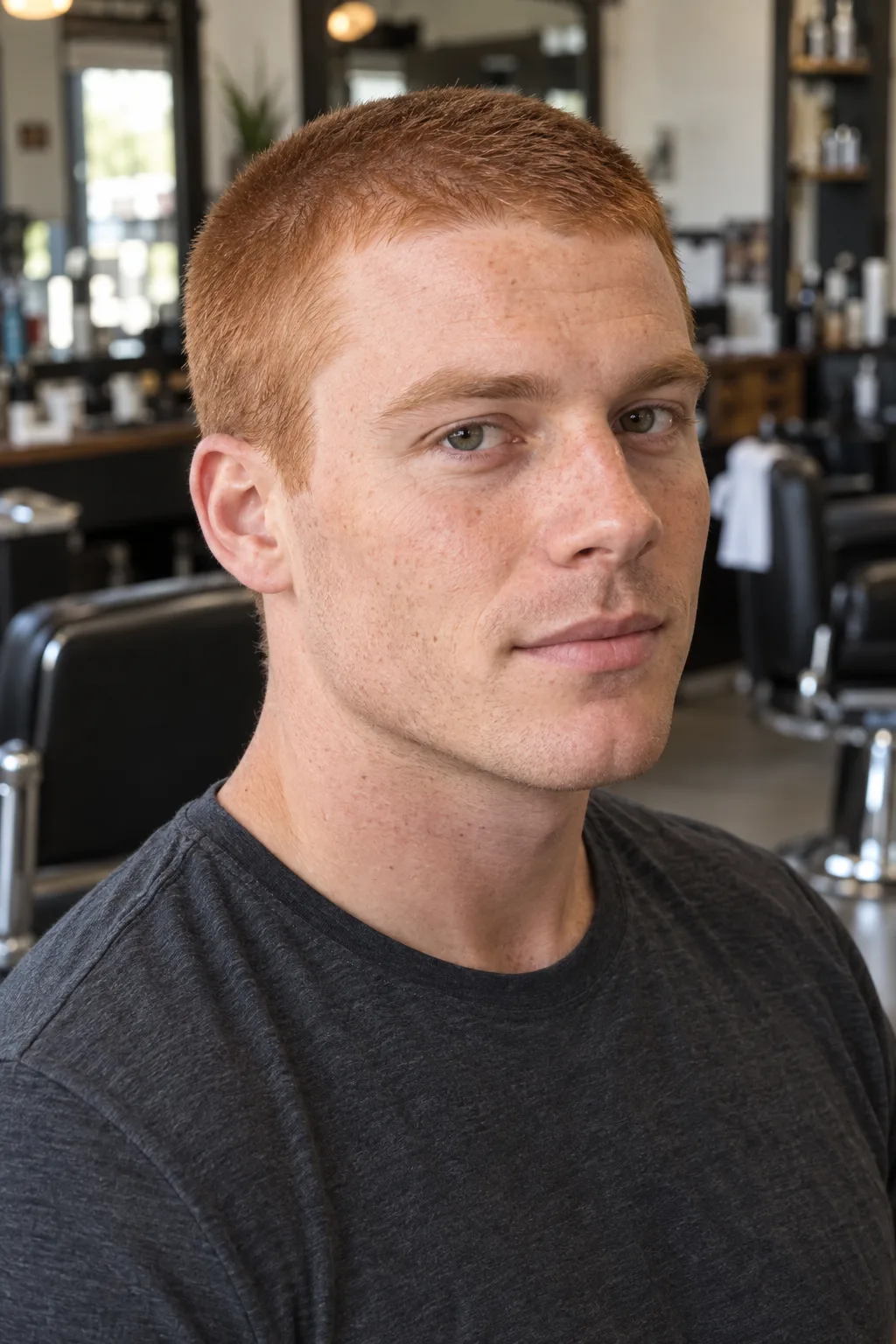
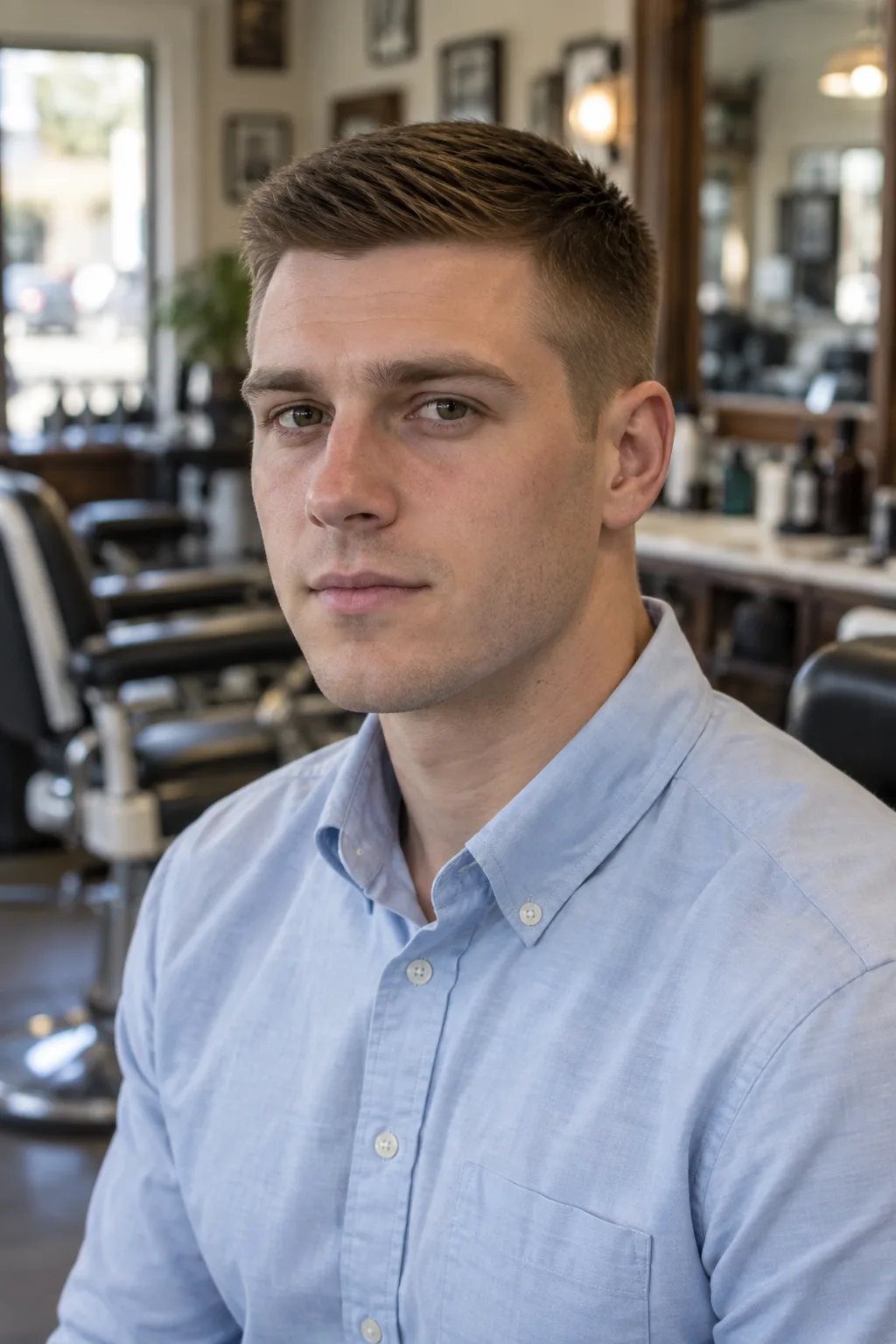
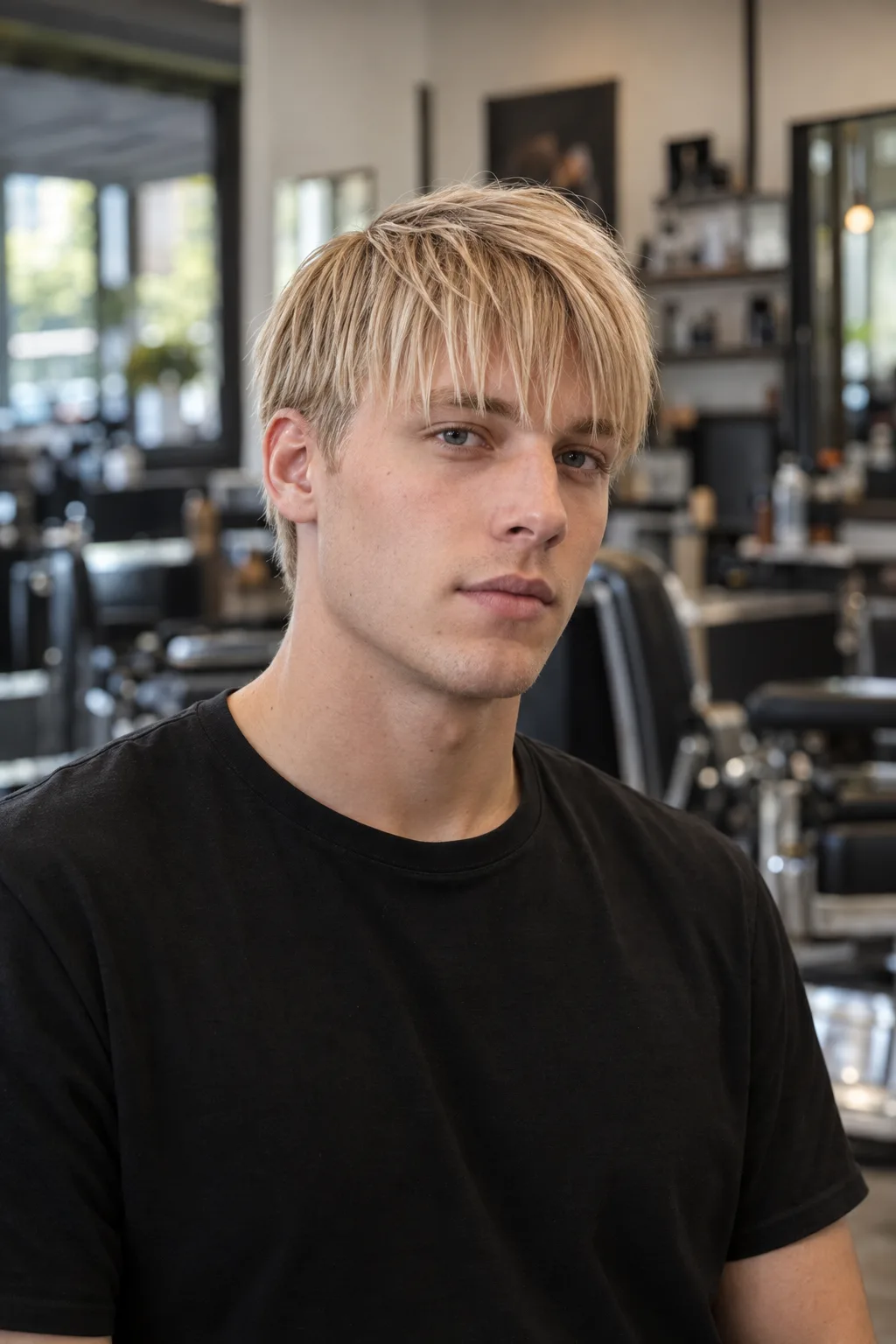
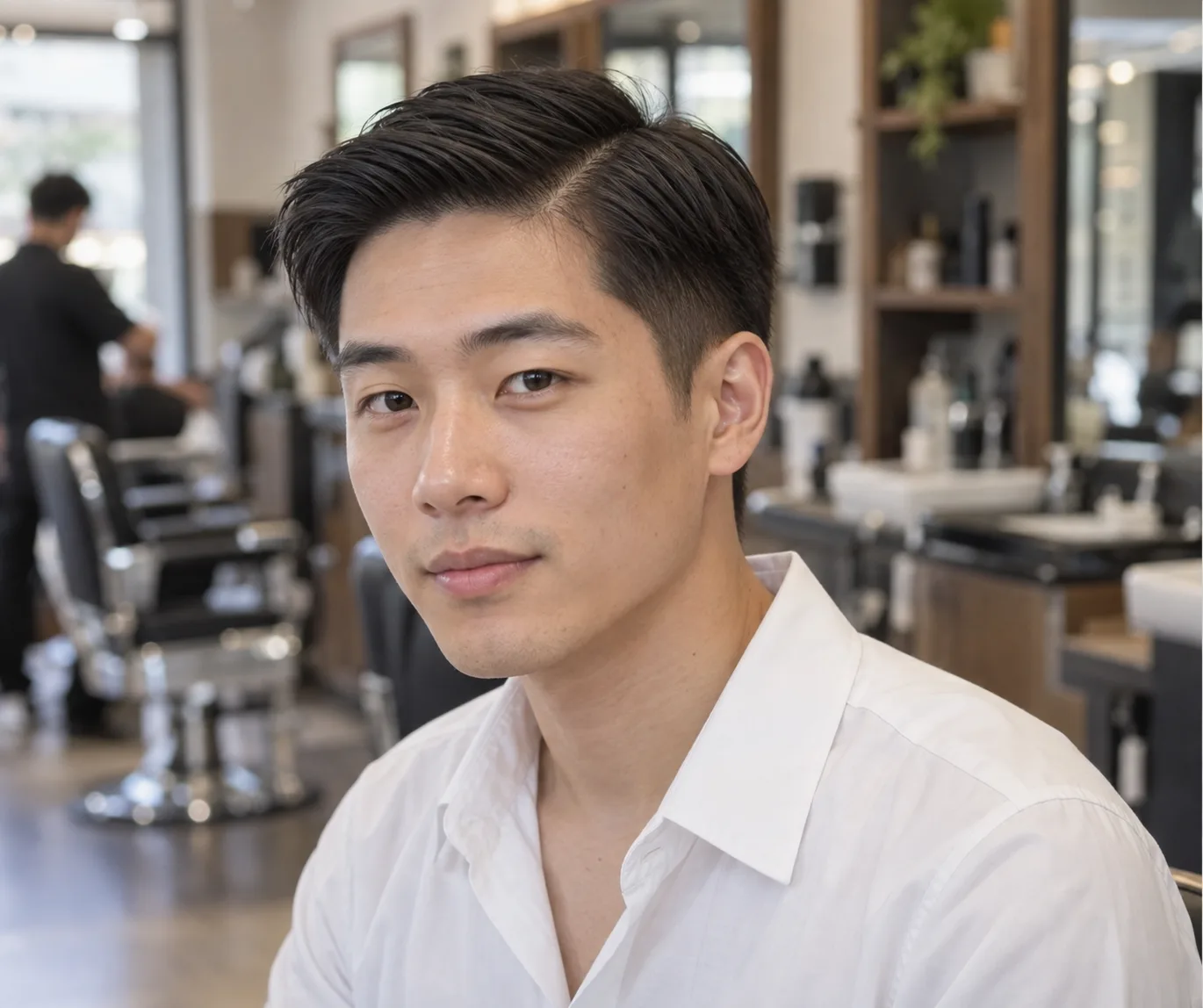
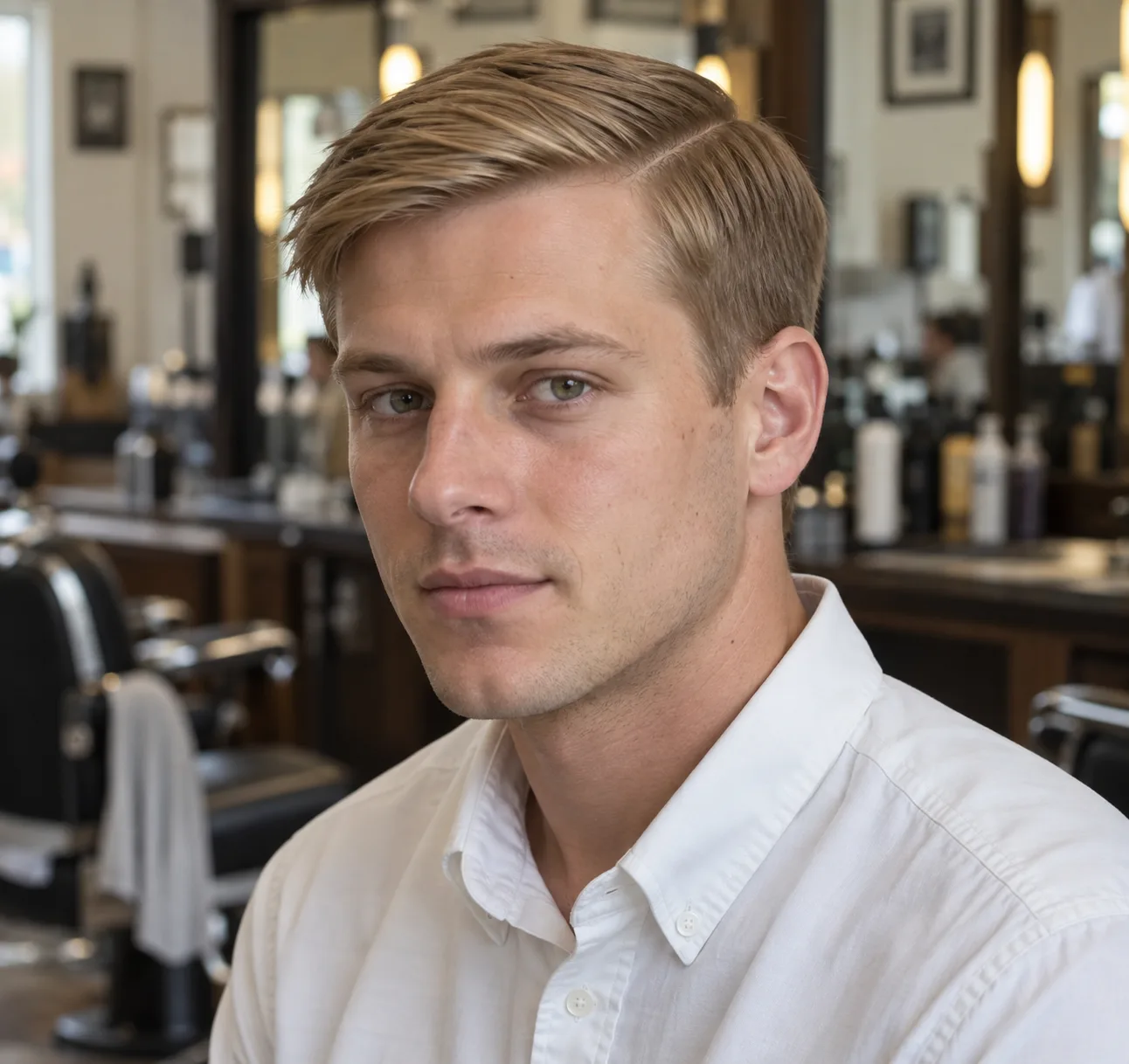
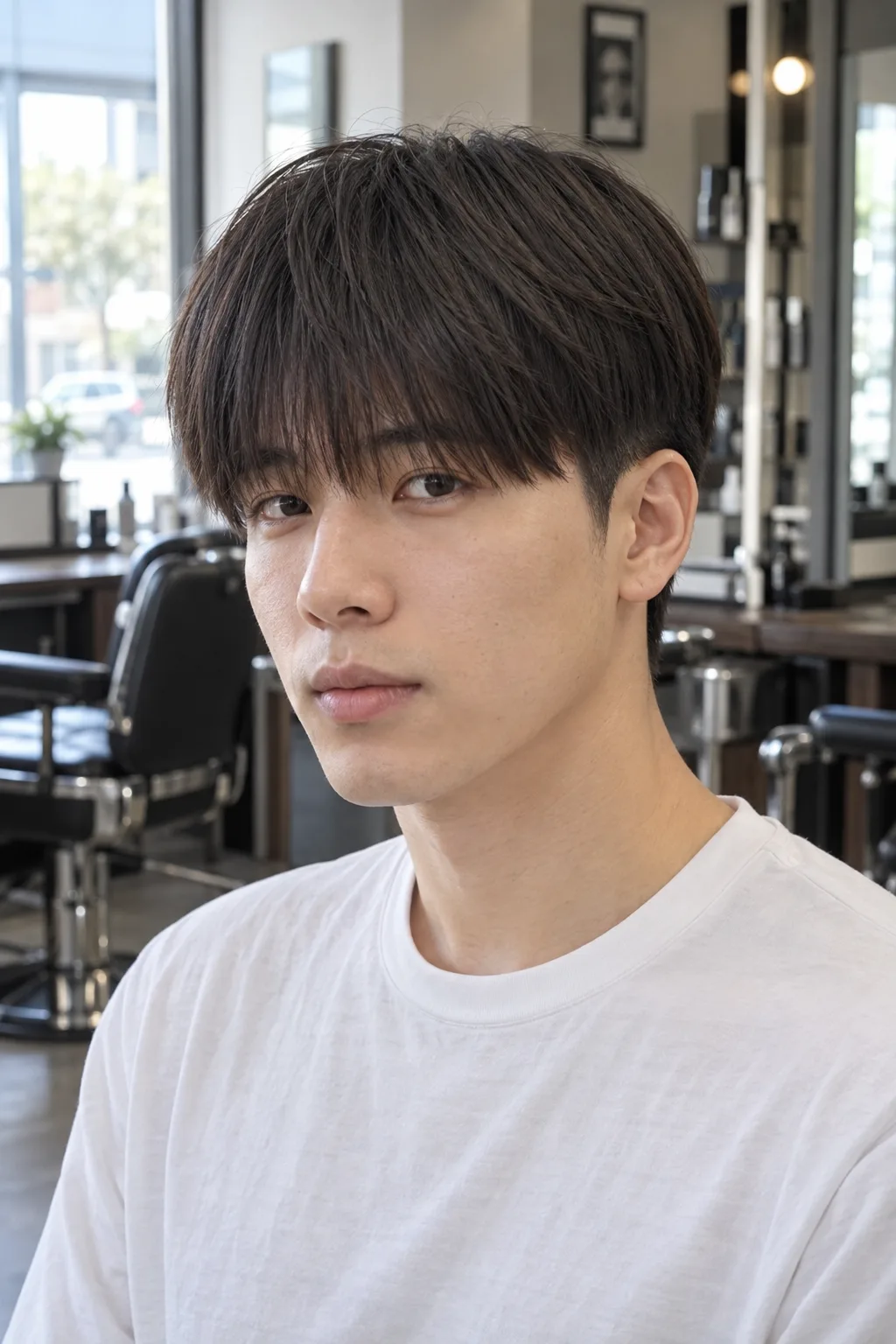
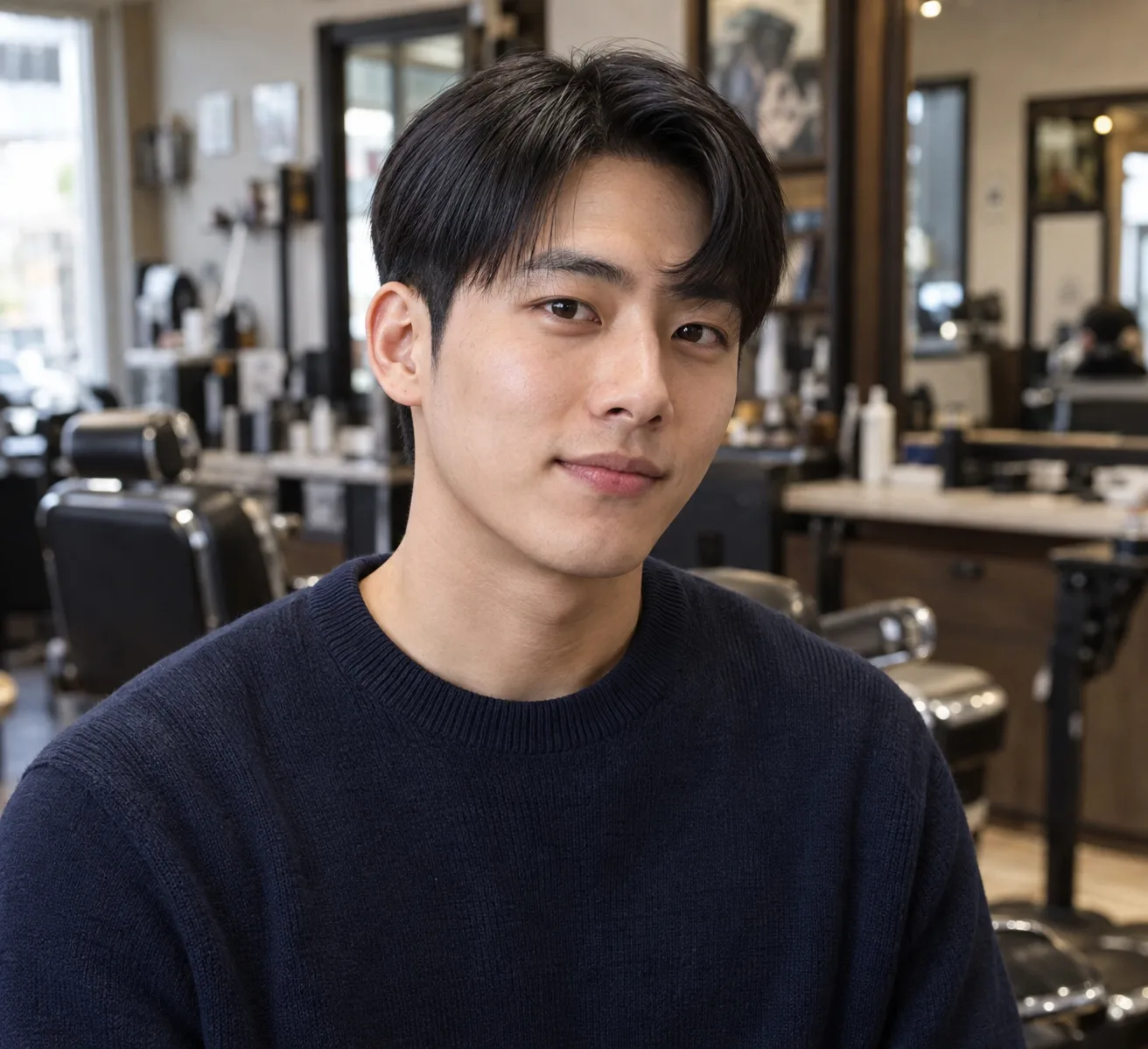
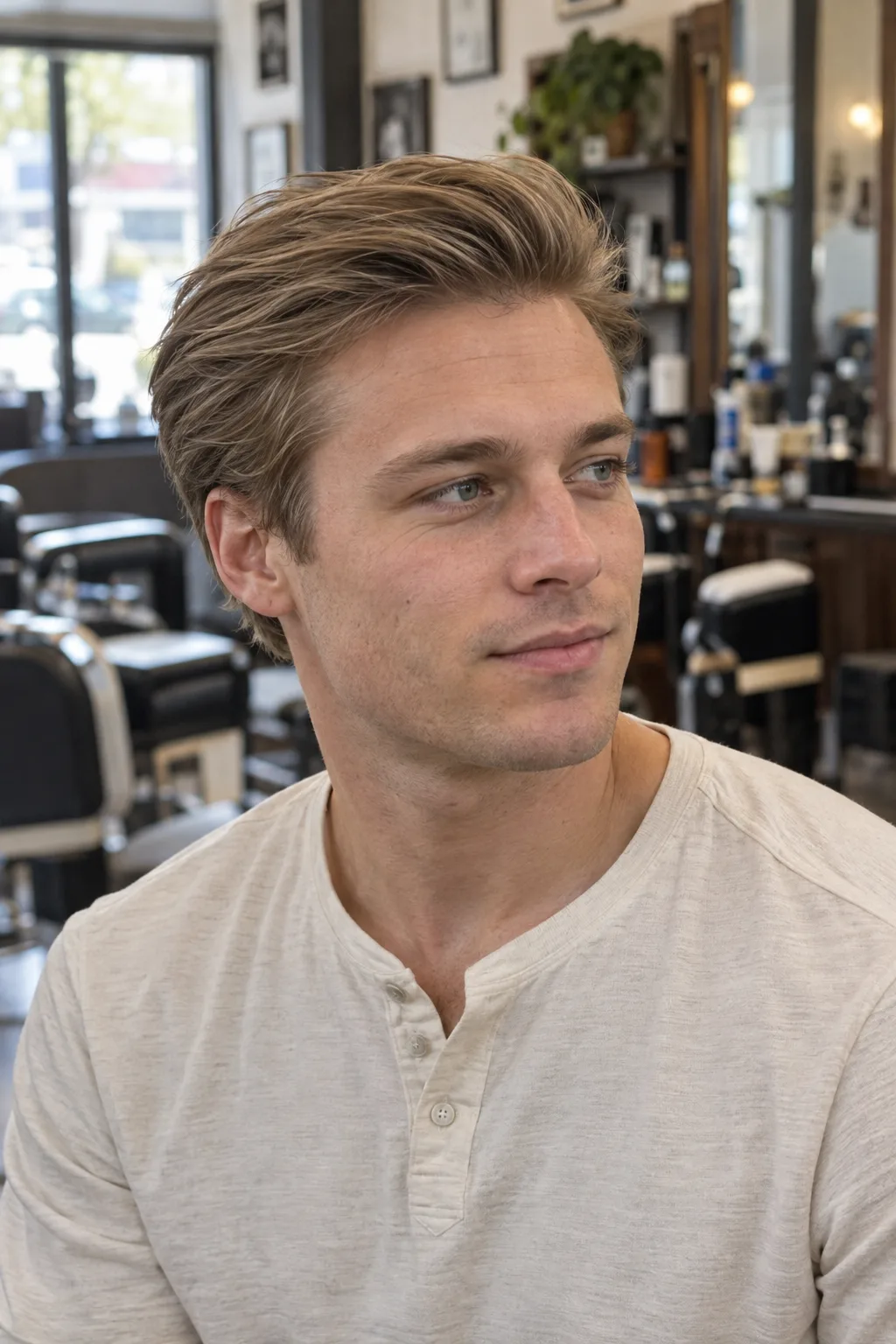
Every cut below is on the same hair type: pin-straight 1A with no bend. Only the cut changes, so you can see what each shape does to hair that will not add volume on its own. The short, blunt and point-cut shapes near the start are the easiest to live with; the longer ones near the end need more density to look full.
Gallery14 photos · tap to enlarge
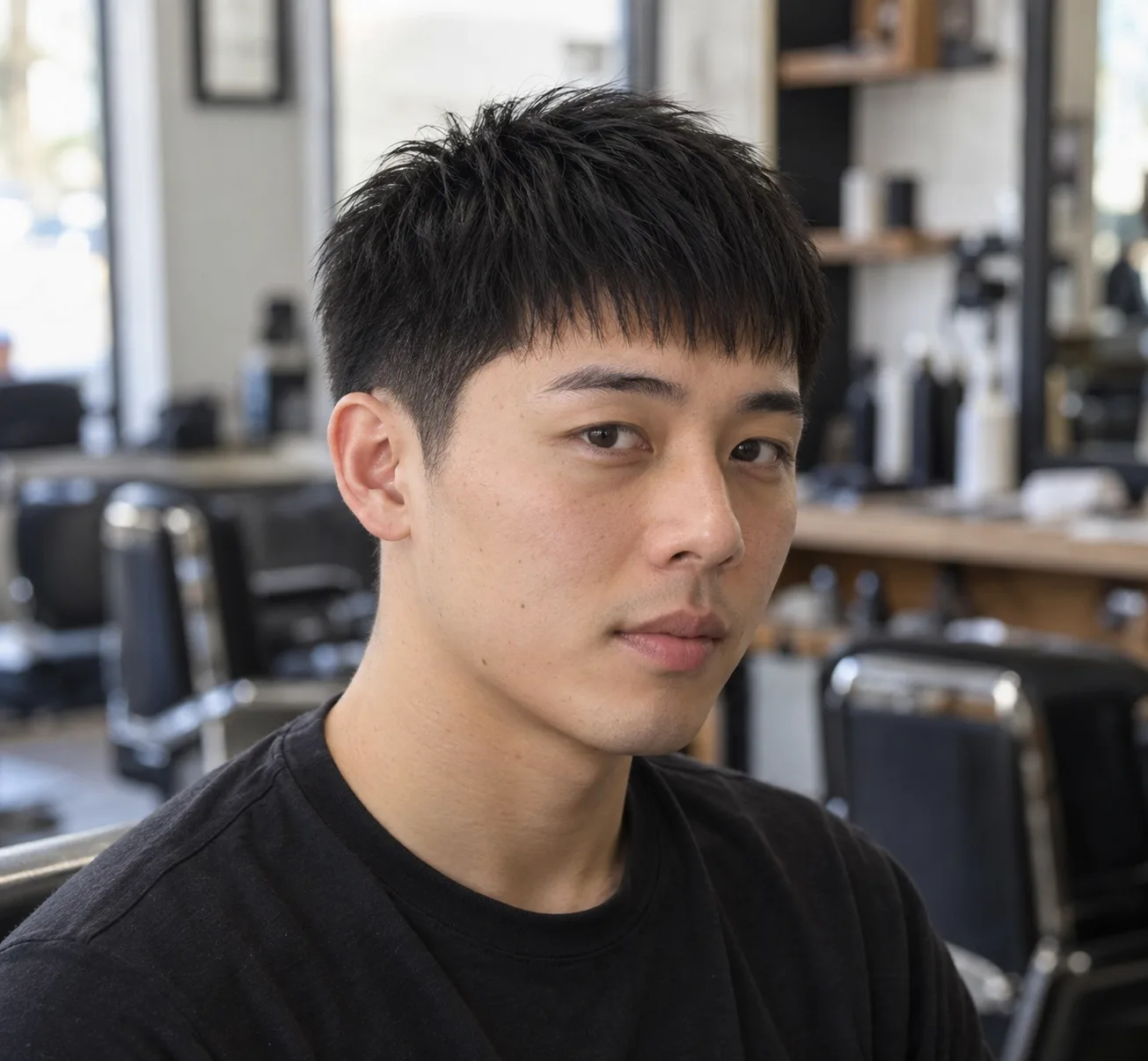 Try this on me
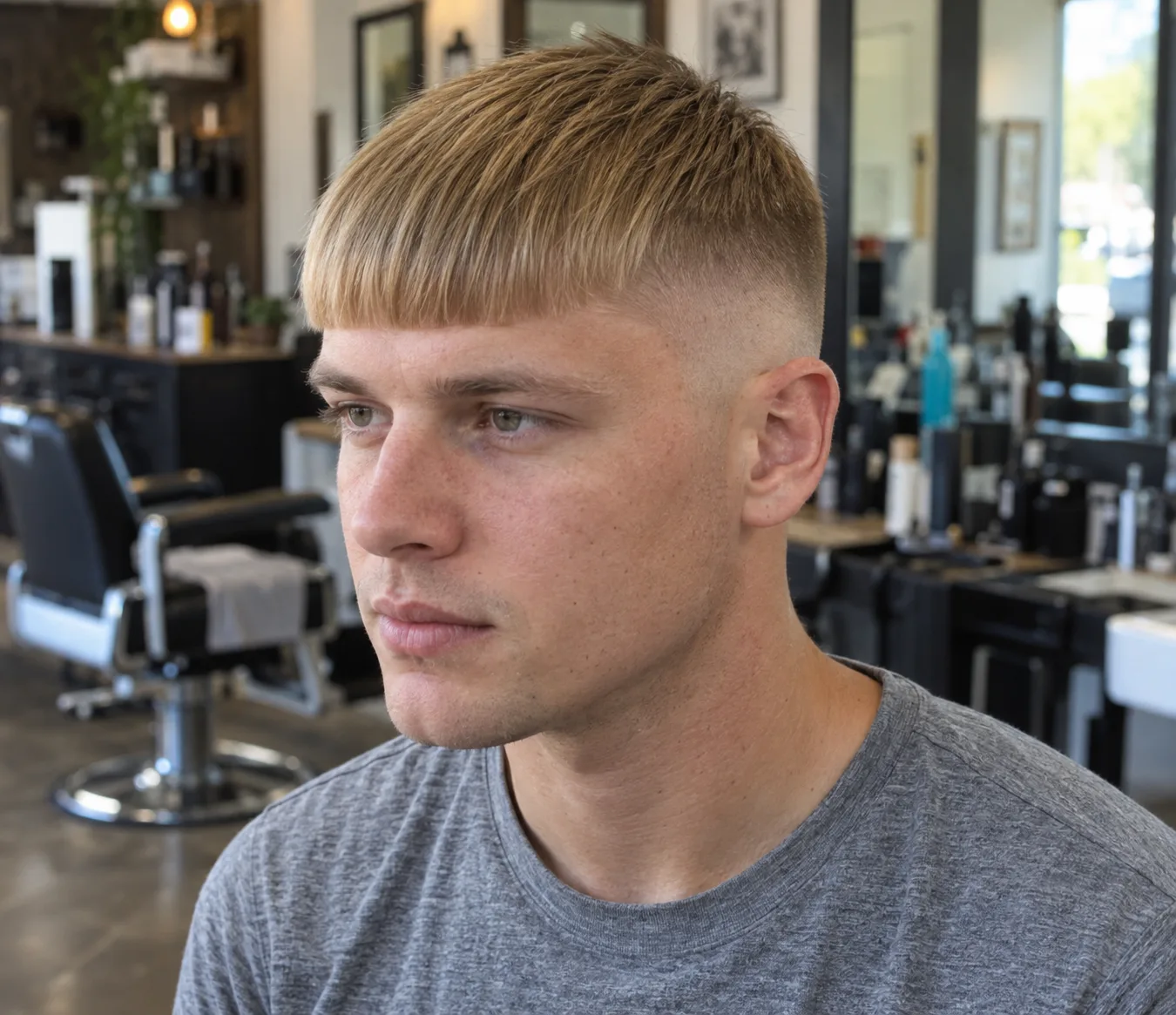 Try this on me
 Try this on me
 Try this on me
 Try this on me
 Try this on me
 Try this on me
 Try this on me
 Try this on me
 Try this on me
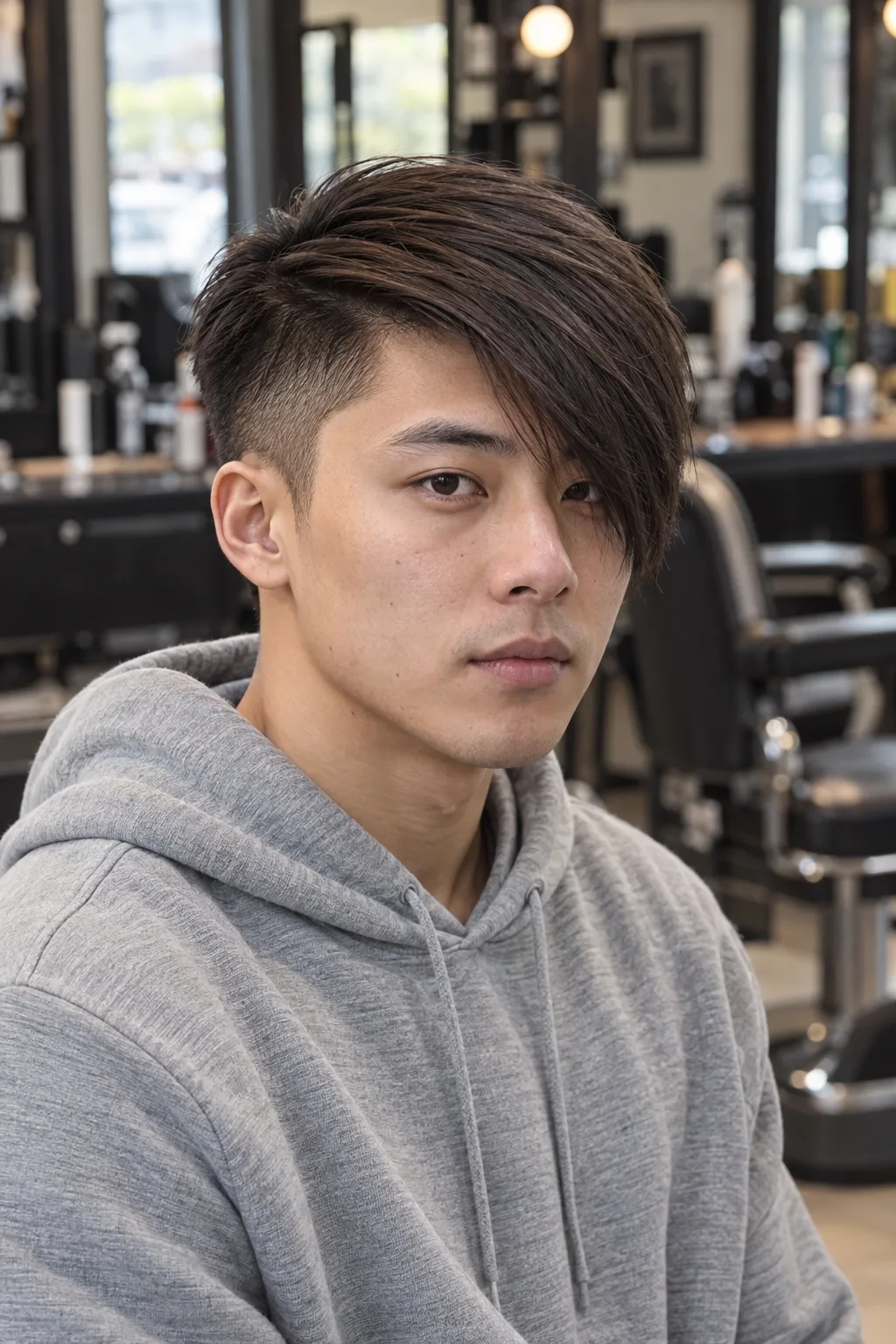 Try this on me
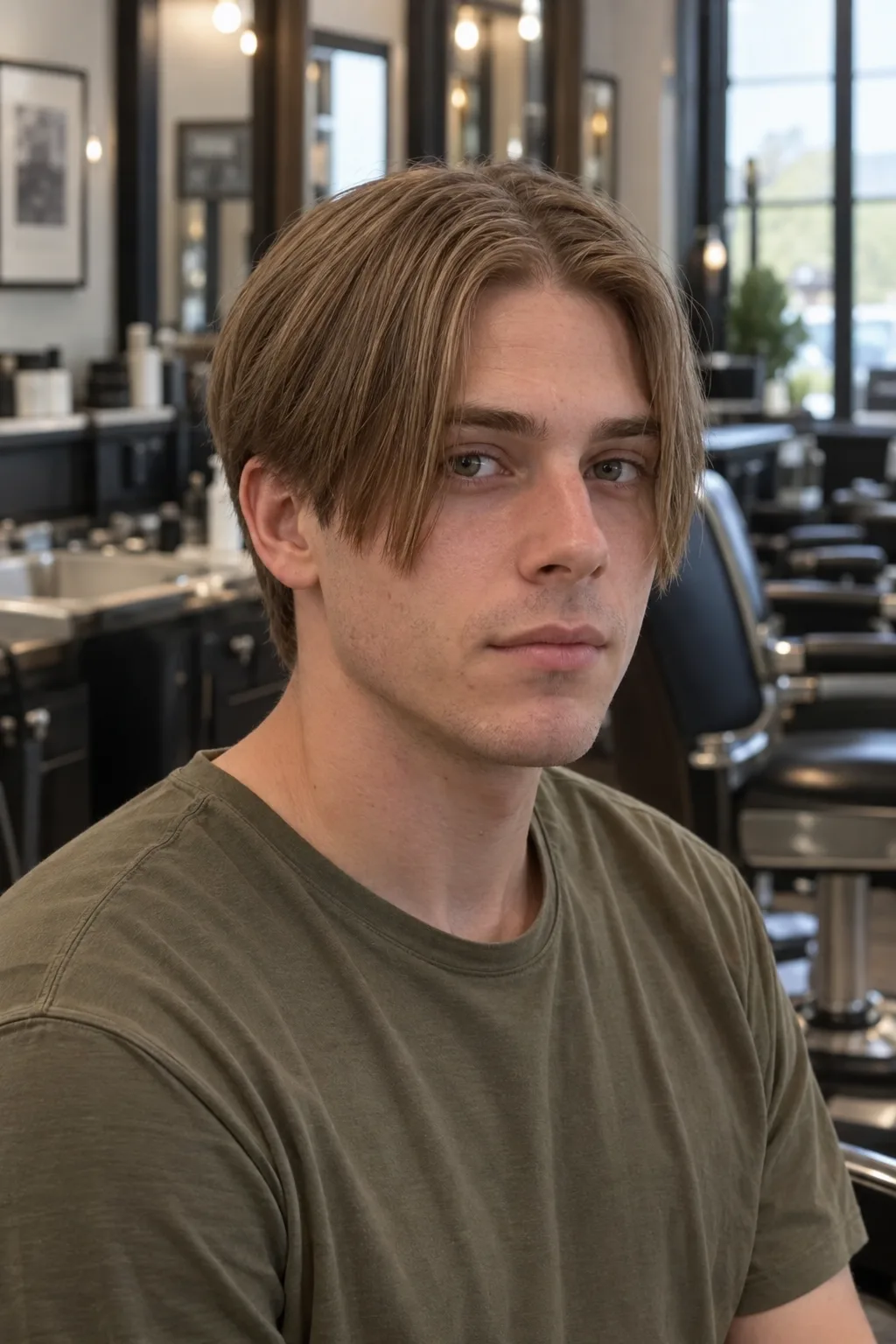 Try this on me
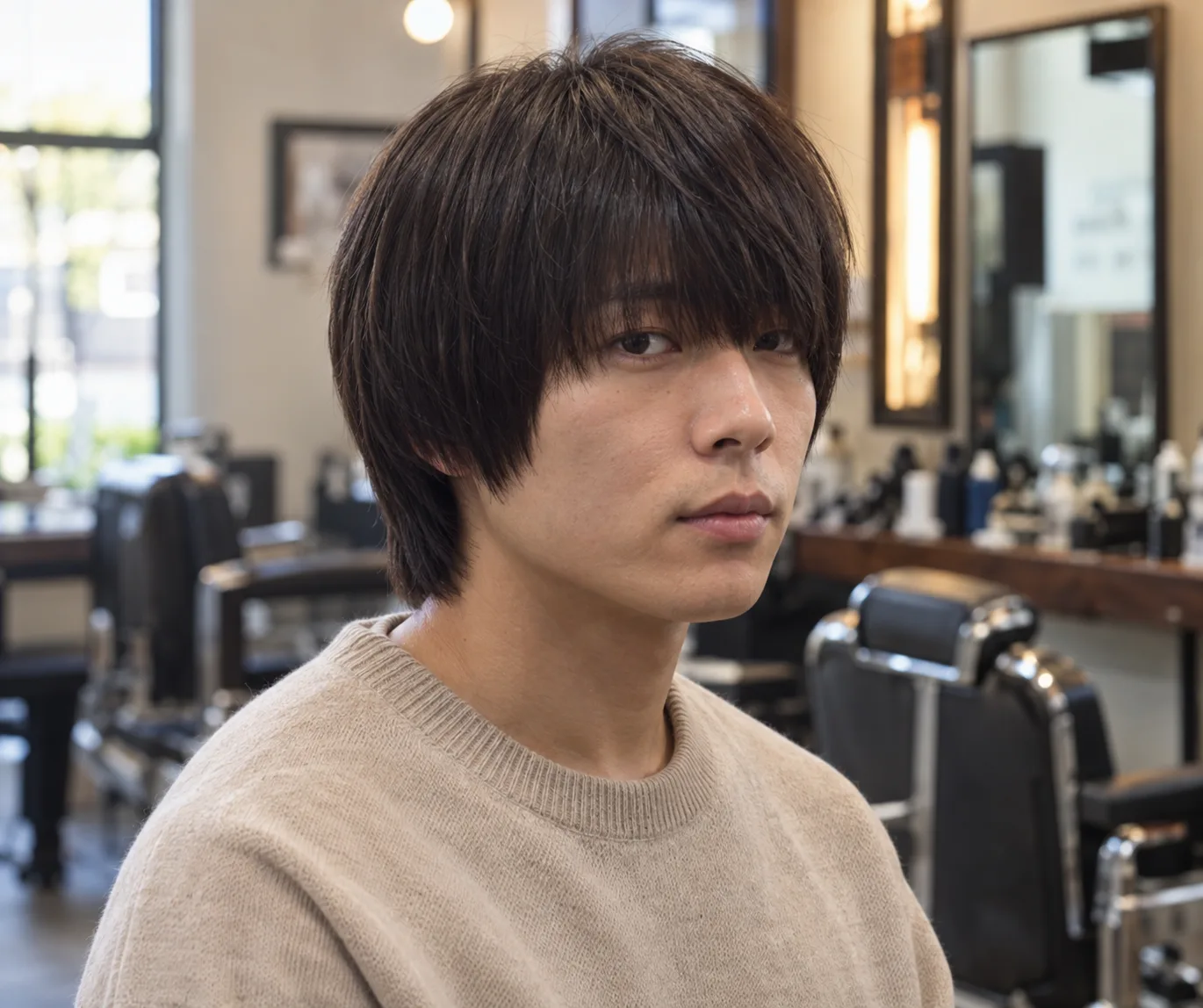 Try this on me
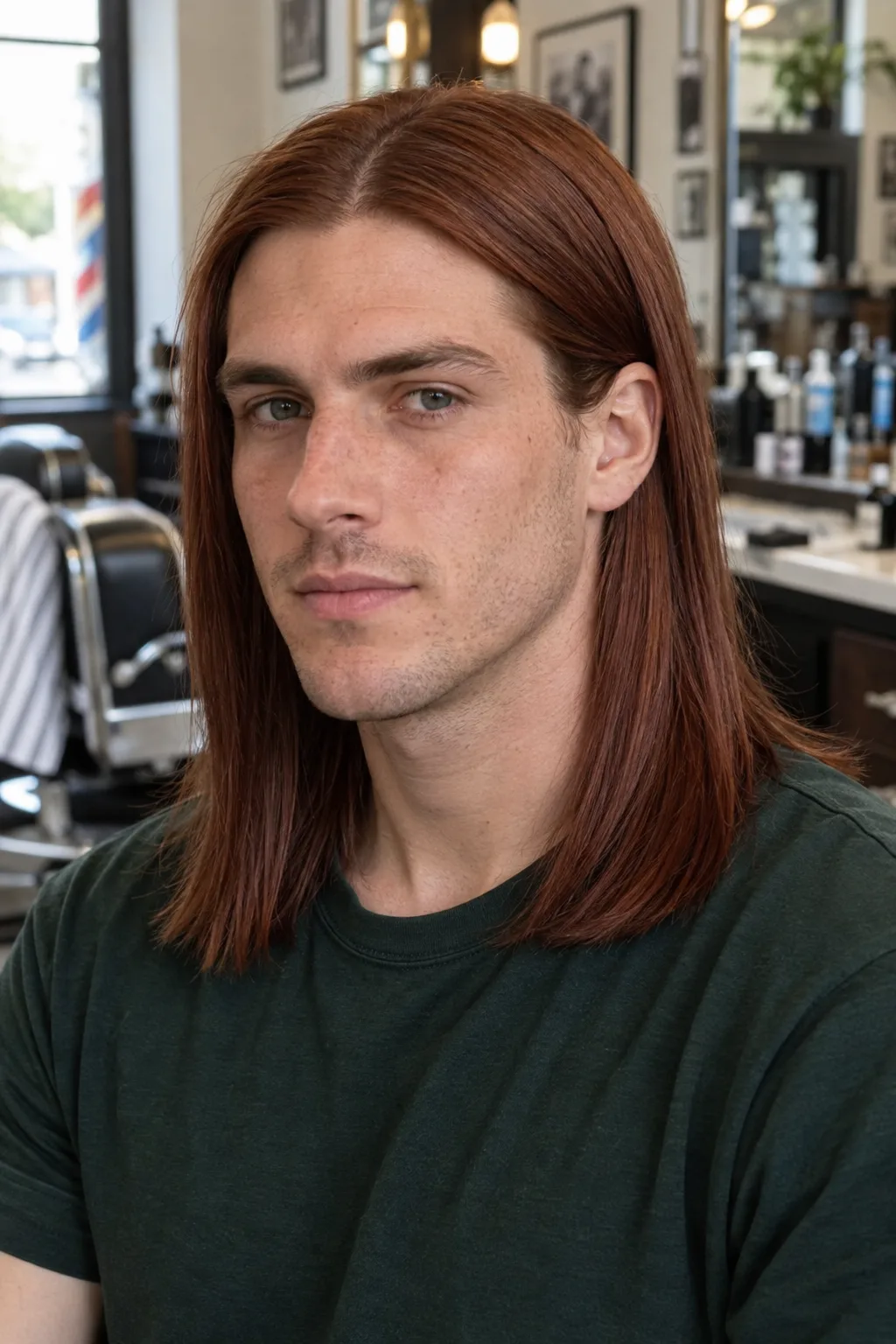 Try this on me
Which cut suits your 1A hair?
Pick by the thing that actually differs between people with 1A hair: how much of it there is, and what your hairline is doing. The hair type is the same for everyone reading this; density and hairline are not.
| Your situation | Best cuts | Avoid |
|---|---|---|
| Fine and thin, scalp shows | Textured crop, crew cut, buzz | Anything over 3 inches on top |
| Fine but dense | Two-block, textured fringe, mod cut | Heavy thinning out |
| Receding at the temples | French crop, textured crop | Slicked back, center part |
| You want length | Curtains, shoulder length with blunt ends | Long hair with thinned, wispy ends |
Fine and thin 1A hair
Go short. Under two inches, fine hair stands up on its own instead of lying down, and point-cut ends give the top a broken, choppy outline that hides the scalp. The textured crop is the safest cut in this whole guide for thin 1A hair, and a buzz cut is the answer when even a crop shows too much scalp.

The length that fails is the in-between: three to four inches on top with no structure. It is too long to stand up and too short to hang, so it collapses into a flat cap.
Dense 1A hair
If you have a lot of fine straight hair, you can carry length, and the two-block cut is built for you. The top stays long and falls forward, and the sides are clipped short underneath, so the weight that would make your head look wide disappears without thinning the top. A textured fringe works for the same reason.

1A hair with a receding hairline
Straight hair is honest: combed back, it shows exactly where the hairline is. Bring the hair forward instead. A French crop puts a short, blunt fringe across the forehead and covers the corners at the temples, and on 1A hair the fringe lies exactly where it is cut, so it stays put all day.

Growing 1A hair long
Long 1A hair looks best when the ends are cut blunt. Thinned or razored ends turn wispy and see-through on fine hair, and the length starts to look stringy. Keep the ends heavy, trim every eight to ten weeks, and let the natural shine do the work. The medium length hairstyles guide covers the grow-out stage.

Yours could be here.
Start with one selfie.
One photo, twenty seconds, and you'll know. Free account, no card for your first render.
Mistakes that make 1A hair look limp
- Thinning shears all over. A barber sees a lot of hair and thins it out. On fine straight hair that removes the bulk that was holding the shape, and the scalp shows within a week. Ask for point cutting instead.
- Growing it to four inches with no plan. This is the flat cap stage. Either keep it under two inches or commit to a shape, like curtains or a two-block, that is designed to hang.
- Heavy product. Wax, pomade and oily creams glue fine strands together into clumps with gaps between them. Use a light matte paste or a texture powder, and use less than you think.
- Air-drying flat. 1A hair dries in whatever direction it is lying. Towel it, let it fall, and it sets flat to the head. Two minutes with a hair dryer changes the whole shape.
- Copying a photo of wavy hair. Most "messy" and "fluffy" cuts you see online are on wavy hair. The same cut on 1A hair falls flat. If you want that look, a perm is the honest route; the fluffy hair guide shows what it takes.
Say this in the chair to avoid the first two:
Say this to your barber
Short on the sides, about an inch and a half on top, point cut for texture, no thinning shears, and keep the fringe blunt.
How to style 1A hair for volume
1A hair holds whatever shape it dries in, which is the whole trick. Set the root direction while the hair is damp, and it stays there.
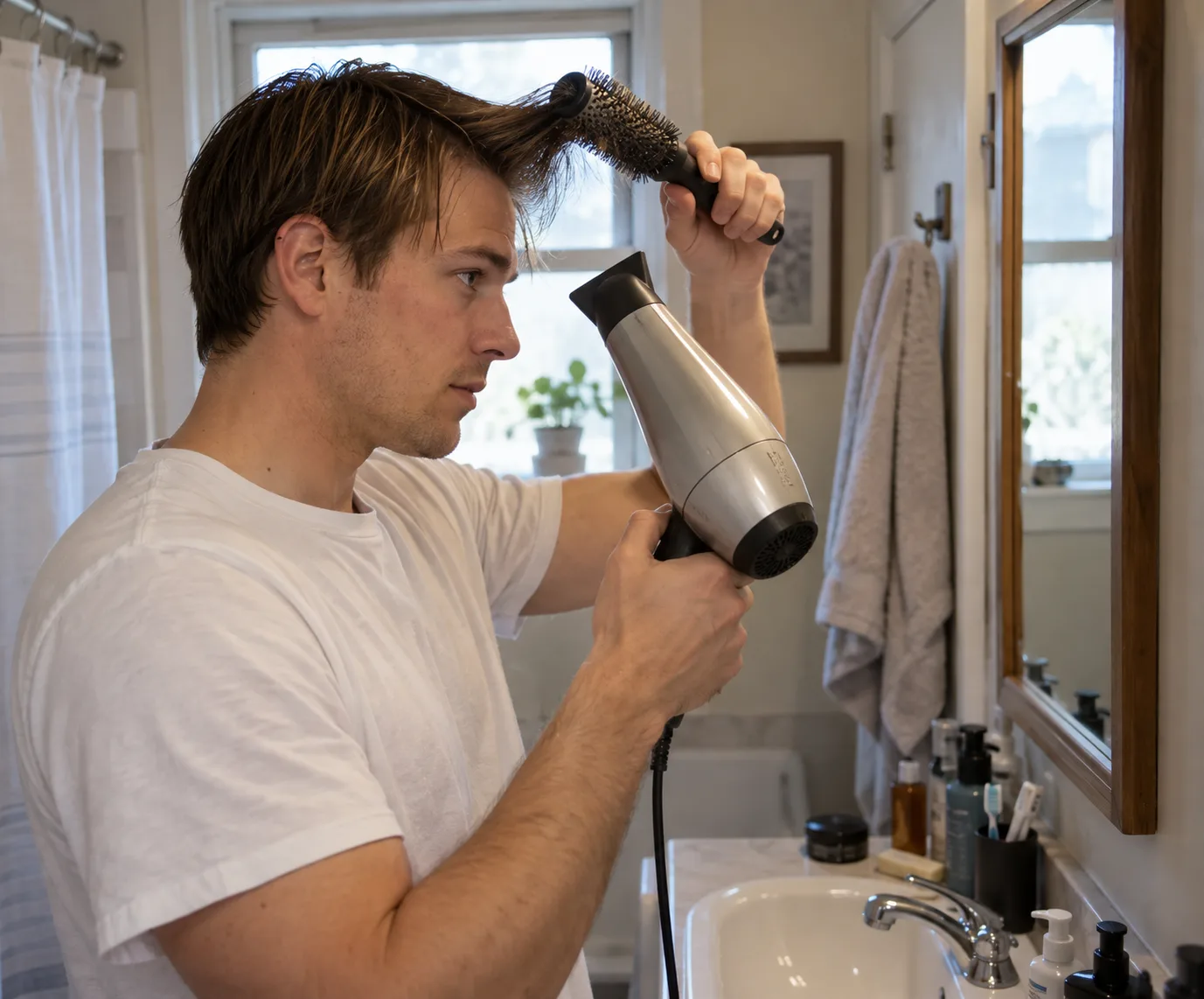
How to style 1A hair for volume
- Towel dry to damp
Squeeze out the water rather than rubbing. Hair that is dripping takes too long to dry, and hair that is already dry cannot be reshaped.
- Dry the roots against the way they fall
Point the dryer up at the roots and push the hair the opposite way to where it wants to lie. Then flip it back. The roots set standing slightly up.
- Lift the front with a brush
Hold a round brush or your fingers under the front section and dry it upward. This is where most of the height comes from.
- Lock it with a cool shot
Finish each section with cool air. Heat shapes the hair; cool air sets the shape.
- Add a small amount of matte product
Rub a pea-sized amount of matte paste or a shake of texture powder into the roots, not the ends. Shape with your fingers and stop.
How to care for 1A hair
Wash often and keep everything light. Because oil travels down a straight strand so easily, most people with 1A hair need to wash every day or every other day, and that is fine with a gentle shampoo.
- Shampoo: a gentle, lightweight one. A volumizing shampoo helps a little, but the cut and the blow-dry do far more.
- Conditioner: on the ends only, never the roots, and rinse it well.
- Clarifying shampoo: once every week or two if you use product, to strip the buildup that weighs fine hair down.
- Skip: heavy oils, butters and leave-in creams made for curly hair. They are built for hair that is dry because oil cannot travel down a curl. 1A hair has the opposite problem.
Is 1A hair rare?
1A hair is not rare worldwide. It is the most common hair type among East Asian people, and it also shows up in people of every other background, often as very fine, light hair. It feels rare in American and European hair spaces because most people there who call their hair straight have a slight bend and are really 1B, 1C or 2A.
It is also the hair type most often misjudged. Plenty of people with 1B or 2A hair blow-dry it straight every day and assume they are 1A.
Can you see a cut on your own 1A hair first?
Here is the wall with every tip above. A cut on 1A hair looks exactly like it will look, with no wave to soften it and no way to style your way out of a bad call. The photo you show your barber was almost certainly on different hair, and the only way to find out whether a French crop or a two-block suits your face is to get one and live with it for six weeks.
A try-on takes the guessing out of that. Upload a selfie and see the cut on your own face before anyone touches your hair.
Is the try-on free?
Yes, the first look is free and needs no card: one hairstyle, one colour on it, front view. After that, Plus is $9 a month or $60 a year for 150 credits and every cut in the catalogue, and a hairstyle on your photo costs 10 credits. Every plan has a seven-day refund with no conditions.
One free look is enough to settle a single decision, like crop or two-block, and that is usually the decision that matters.
1A hair is not a curse and it is not thin hair. It is hair with no bend, which means it will do exactly what the cut and the dryer tell it to do and nothing more. Keep it short and point-cut if you are fine and thin, use a two-block or a fringe if you are dense, bring it forward if your hairline is going, and keep the ends blunt if you grow it.
If you are still deciding between shapes, the full guide to haircuts for men with straight hair goes deeper on each one, and what haircut suits me matches cuts to your face shape.
Frequently asked questions
1A is the straightest hair type on the hair typing chart. The strands are fine and have no bend, wave or curl anywhere, even when the hair air-dries with no product. It tends to be shiny, gets oily quickly and struggles to hold volume.
Do the air-dry test: wash, use no product, and let your hair dry without brushing or heat. If it dries dead straight to the ends and flat to the head, it is 1A. If the ends flick or bend slightly and there is a little lift at the crown, it is 1B.
No. 1A hair is common worldwide and is the most common hair type among East Asian people. It seems rare in Western hair spaces because many people who call their hair straight actually have a slight bend and are 1B, 1C or 2A.
1A hair is most common among East Asian people, including Chinese, Japanese and Korean. It also appears in people of European and other backgrounds, often as very fine, light-coloured hair. Hair type is not tied to one ethnicity.
No. 1A hair is the easiest type to cut precisely, it frizzes the least, and it needs very little product. Its one weakness is volume, and a short, point-cut haircut plus two minutes with a hair dryer fixes most of it.
1A strands are usually fine, but the amount of hair varies. Many people with 1A hair have high density, meaning a lot of fine hairs. It often looks thinner than it is because straight hair lies flat and shows the scalp.
Short, blunt, point-cut shapes suit 1A hair best: a textured crop, French crop, crew cut or buzz cut. With dense hair, a two-block cut or a textured fringe works well. Avoid three to four inches on top with no structure, which falls flat.
Blow-dry the roots against the direction they fall, lift the front with a brush, finish with cool air, then add a small amount of matte paste or texture powder at the roots. Heavy wax and oils do the opposite and flatten fine straight hair.
Preview it on your own photo: Men's Hairstyle Try-On.
Share article
About the author
More articles
Men's Haircuts · 14 min
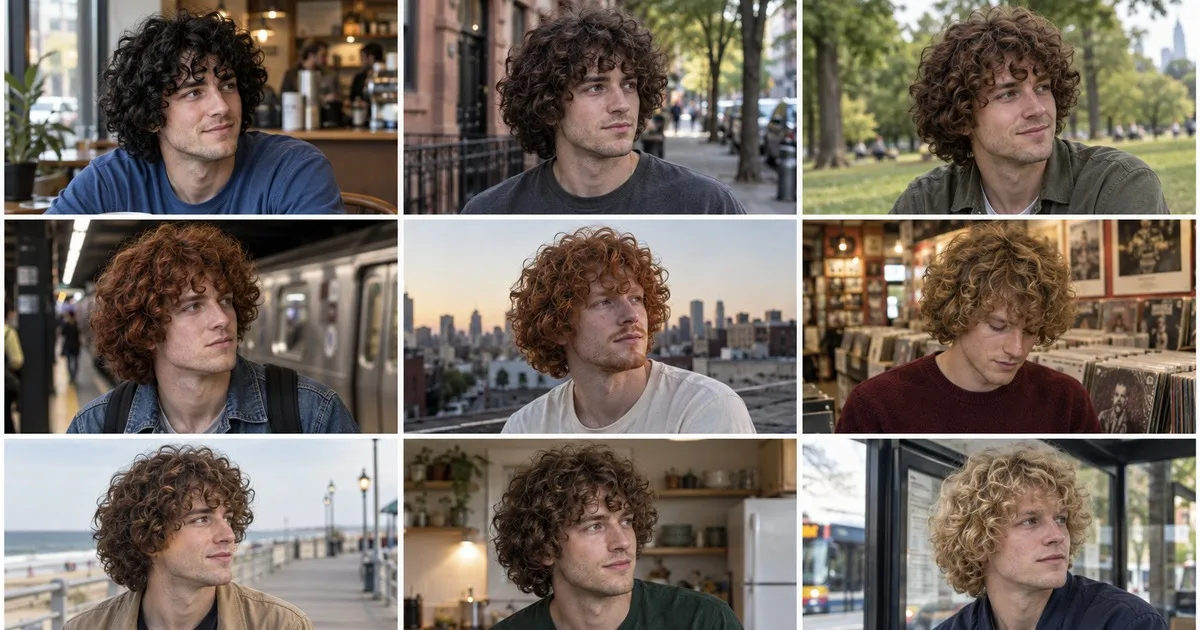
Benny Blanco Haircut: The Fake Half Shave and the Real Curls
Benny Blanco did not shave half his head. It was a prosthetic bald cap, and the buzz cuts are AI. Here is what his curly mop actually is, the short version, and exactly what to tell your barber.
Men's Haircuts · 15 min
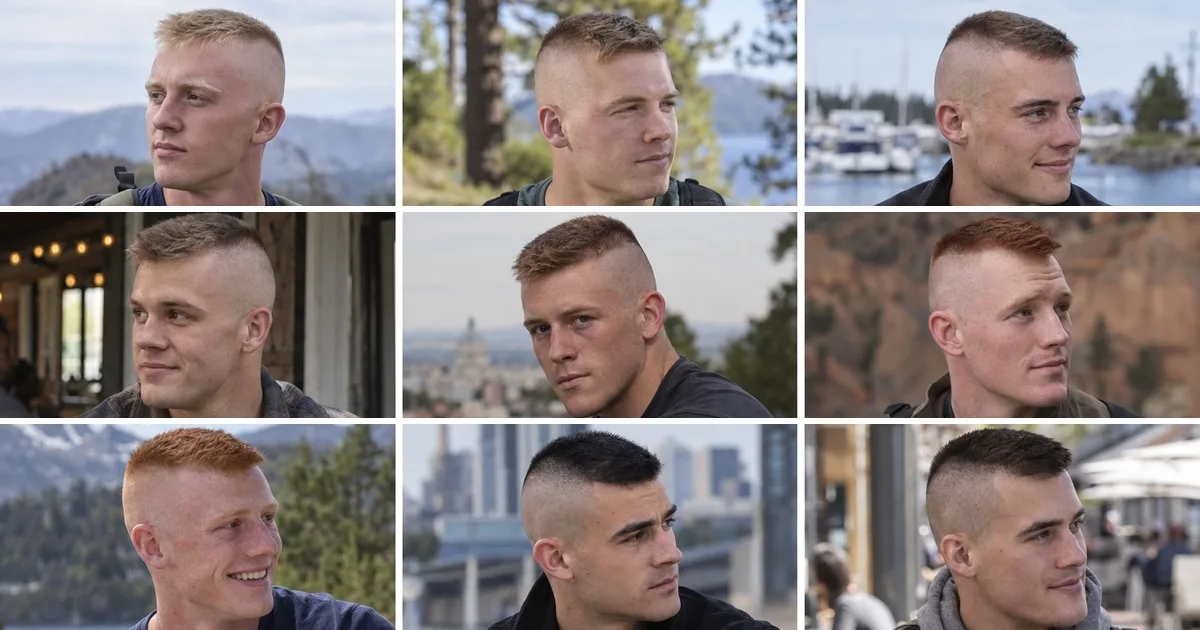
High and Tight Haircut: 4 Versions and the Head Shape Rule
A high and tight clips the sides almost to skin all the way up to the top of the head, so it shows your skull shape more than your face. The 4 versions, 14 photos, what to tell your barber, and how long it lasts.
Men's Haircuts · 15 min
Mullet Fade: 14 Looks and the One Line That Makes It Work
A mullet fade is a mullet with faded sides and a long back. The fade height matters less than where it stops behind the ear. Low, mid, high, drop and burst compared, 14 looks, and the exact words for your barber.