Haircuts for Face Shape: The Best Cut for All 6 Face Shapes
Oleh Onysko 27 September 2026 16 min read
In this article
The best haircut for your face shape puts volume where your face is narrow and keeps it off the spot where your face is widest. That one rule explains every chart you have ever seen: round faces want height, long faces want width at the sides, square faces want softness at the jaw, heart faces want fullness at the chin, diamond faces want width at the forehead.
This guide shows you how to tell your face shape in two minutes, gives you the best and worst cuts for all six shapes in one table, then walks through each shape for women and men with the cuts to ask for and the ones to skip.
One warning before the charts: face shape matters less than they pretend. Hair texture, density and your hairline can overrule it, and most people are a blend of two shapes. Use your shape to rule out the two or three cuts that will fight you, not to find the one cut you are allowed to wear.
How to tell your face shape
Pull your hair back, stand square to a mirror or take a straight-on photo, and compare three widths (forehead, cheekbones, jaw) with the length of your face. Which width is biggest, and whether your jaw is angular or rounded, decides your shape.
How to find your face shape
- Get your hair off your face
Tie it back or push it behind your ears with a headband. You need to see your hairline, both cheekbones and both corners of your jaw.
- Measure the length
Run a soft tape or a ruler from the middle of your hairline to the tip of your chin. Write it down.
- Measure three widths
Forehead: across the widest part, about halfway between your eyebrows and hairline. Cheekbones: across the highest point, just below the outer corners of your eyes. Jaw: from the corner below one ear to the same corner on the other side.
- Compare the numbers
If the length is about one and a half times the cheekbone width, you are oval or long. If length and width are close, you are round or square. If the forehead is widest, you are heart. If the cheekbones are clearly widest and the forehead and jaw are both narrow, you are diamond.
- Check the jaw
Run a finger along your jawline. Sharp corners point to square (or long, if the face is also long). A soft curve points to round or oval. A narrow, pointed chin points to heart or diamond.
If you would rather not do the arithmetic, enter your measurements here:
Measure it instead of guessing
Both numbers in the same unit — the answer is a ratio, so it does not matter which.
Under 1.15 reads round, 1.15 to 1.5 reads oval, over 1.5 reads long. Oval and long split on the jaw rather than the ratio: an oval tapers toward the chin, a long face runs straight down.
Photos are the other route, and they lie in one direction. A phone held at arm's length widens the middle of the face and shrinks the jaw, which is why so many people decide they are round when they are oval. Prop the phone at eye level about three feet away and use the 2x lens. Or skip the tape measure: find your face shape from a selfie and get a shortlist of cuts that suit it in the same step.
The 6 face shapes at a glance
| Face shape | How to spot it | Best cuts | Cuts to avoid |
|---|---|---|---|
| Oval | Length about 1.5x the width, jaw a little narrower than the forehead, rounded chin | Almost anything: long layers, textured quiff, bobs at any length | Heavy fringes that hide your best proportion; very tall styles if your face is at the long end of oval |
| Round | Width close to length, full cheeks, soft jaw with no corners | Long layers past the chin, side part, pixie with height, quiff with tight sides | Chin-length round bobs, blunt full bangs, buzz cut or bowl cut with no height |
| Square | Forehead, cheekbones and jaw close to equal, sharp jaw corners | Soft waves, curtain bangs, crew cut, textured crop, slick back | Blunt bob ending at the jaw, heavy straight bangs, flat center part with no layers |
| Long (oblong) | Clearly longer than 1.5x the width, tall forehead, straight cheek line | Chin-length bob with bangs, volume at the sides, side part with a fringe | Long straight hair with no layers, tall quiffs and pompadours, skin-tight sides |
| Heart | Wide forehead and cheekbones, narrow pointed chin | Lob with side bangs, volume at chin level, textured fringe | Volume at the crown, slicked-back tops, very short sides with height |
| Diamond | Cheekbones clearly widest, narrow forehead and narrow chin | Side-swept bangs, chin-length bob, fringe crop | Sleek center part, tight sides with height on top, hair scraped back off the forehead |
The best cut for each face shape, women and men
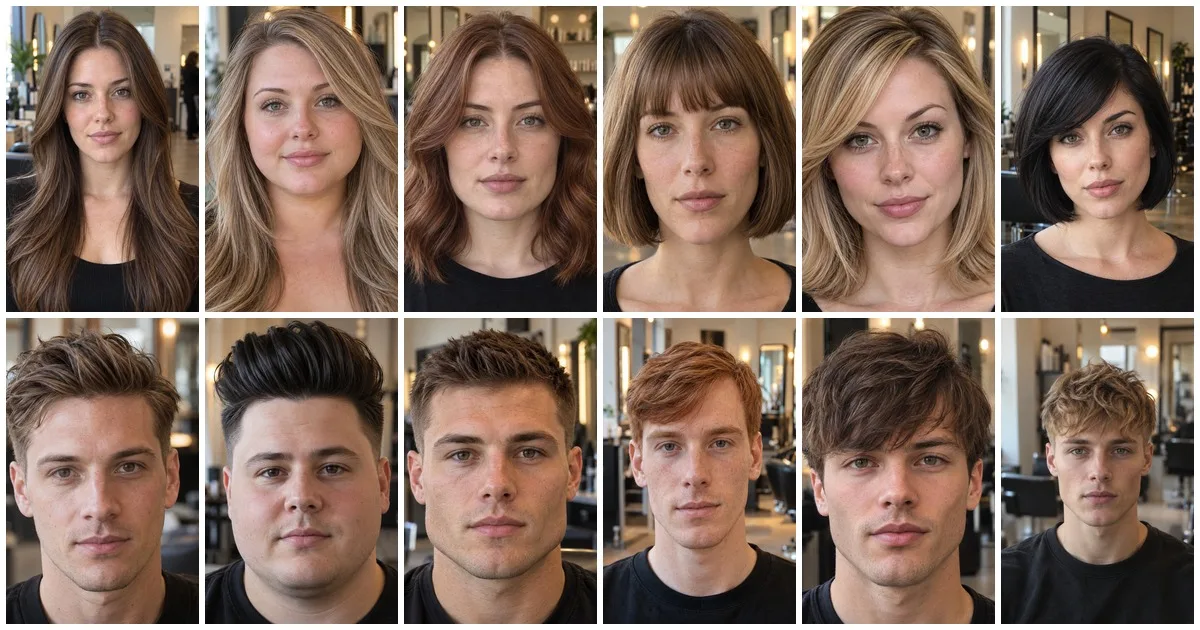
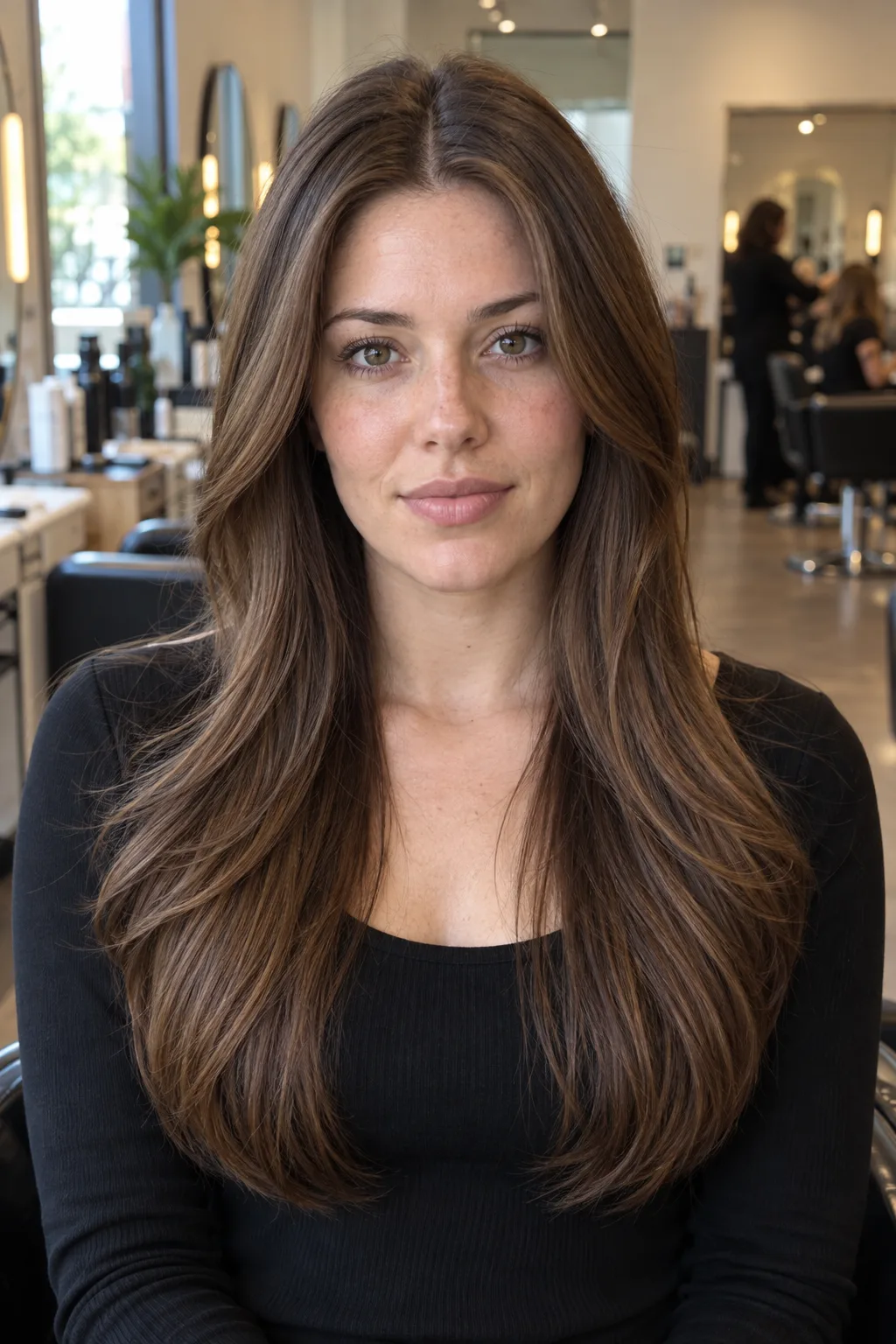
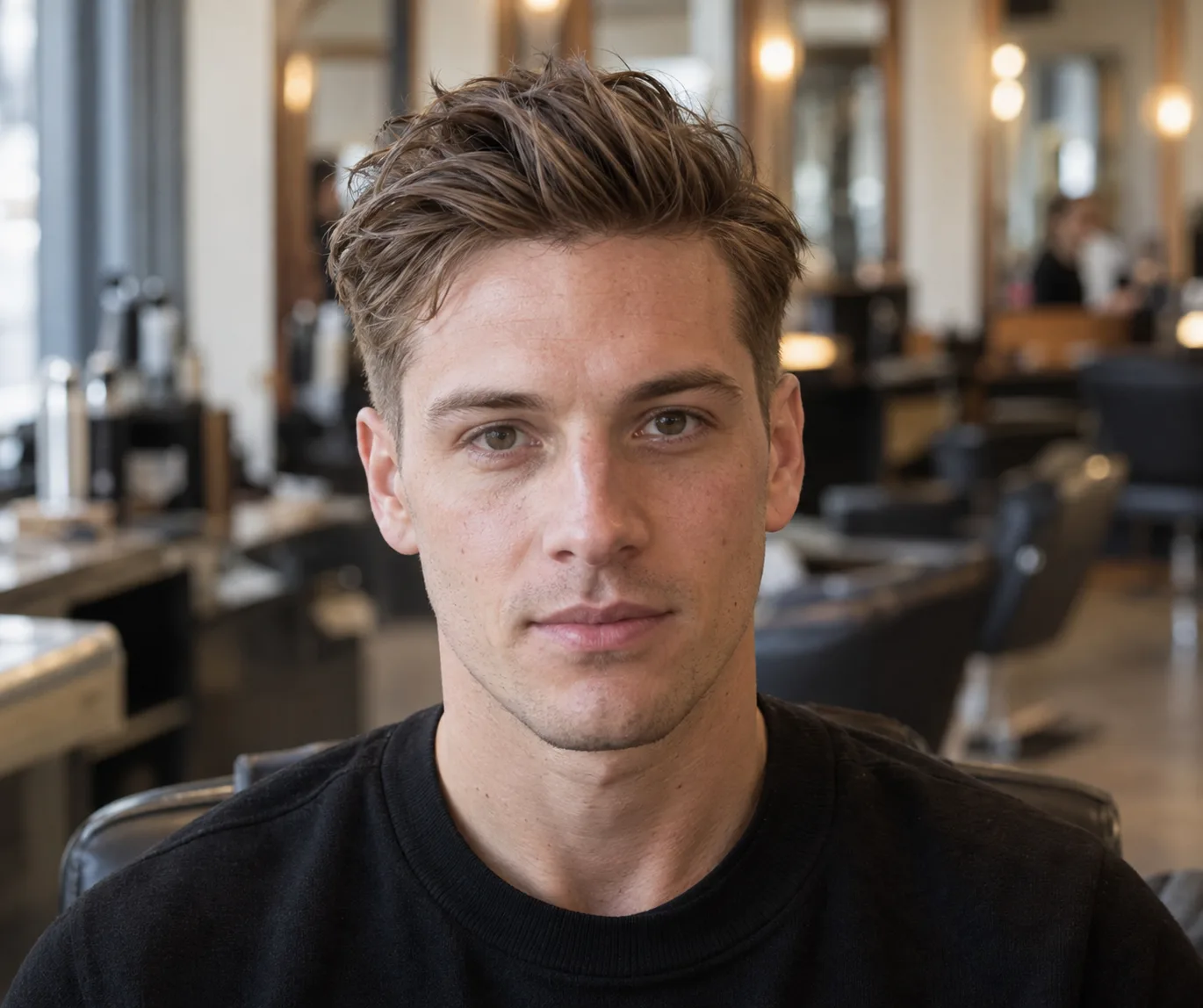
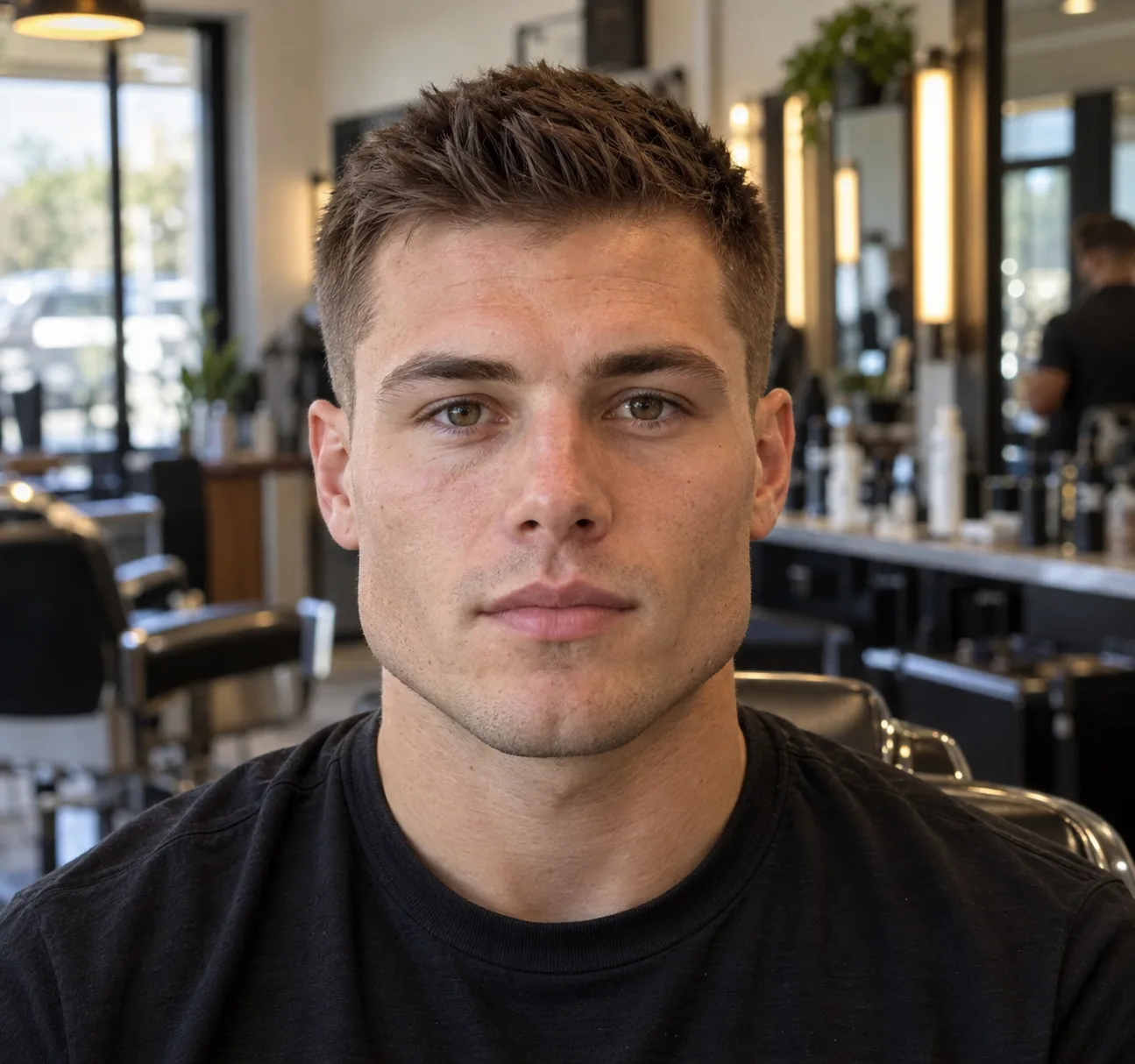
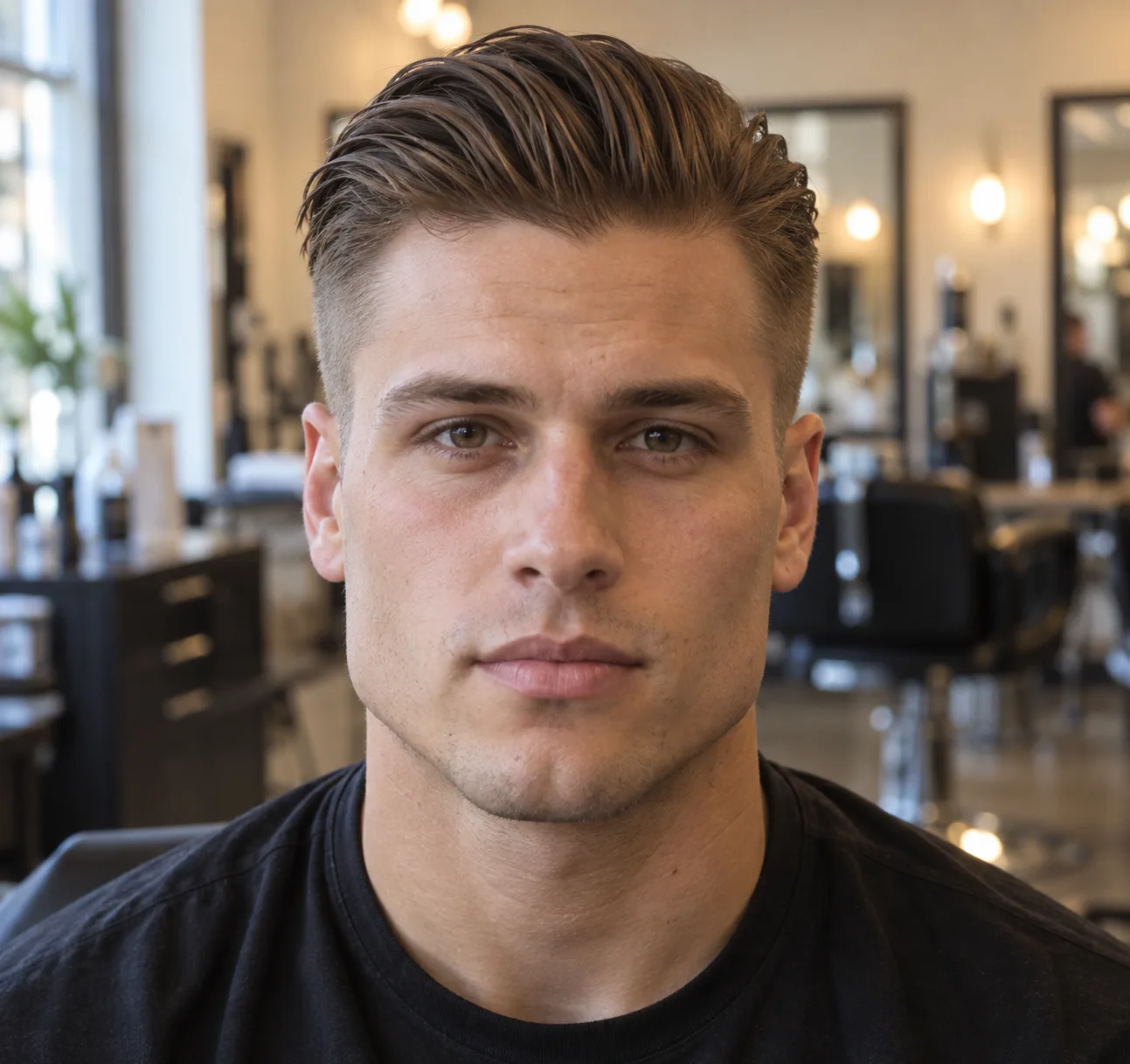
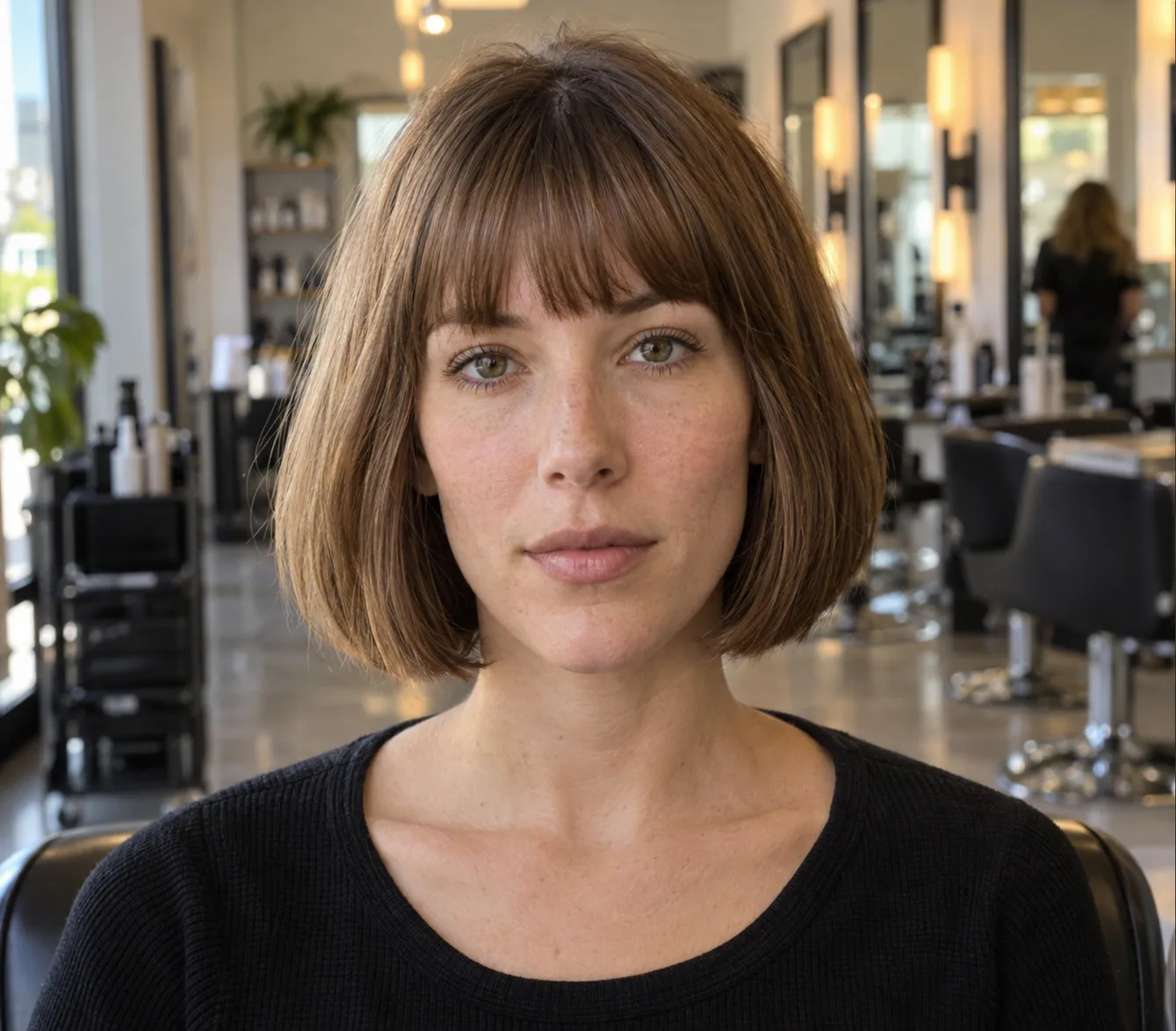
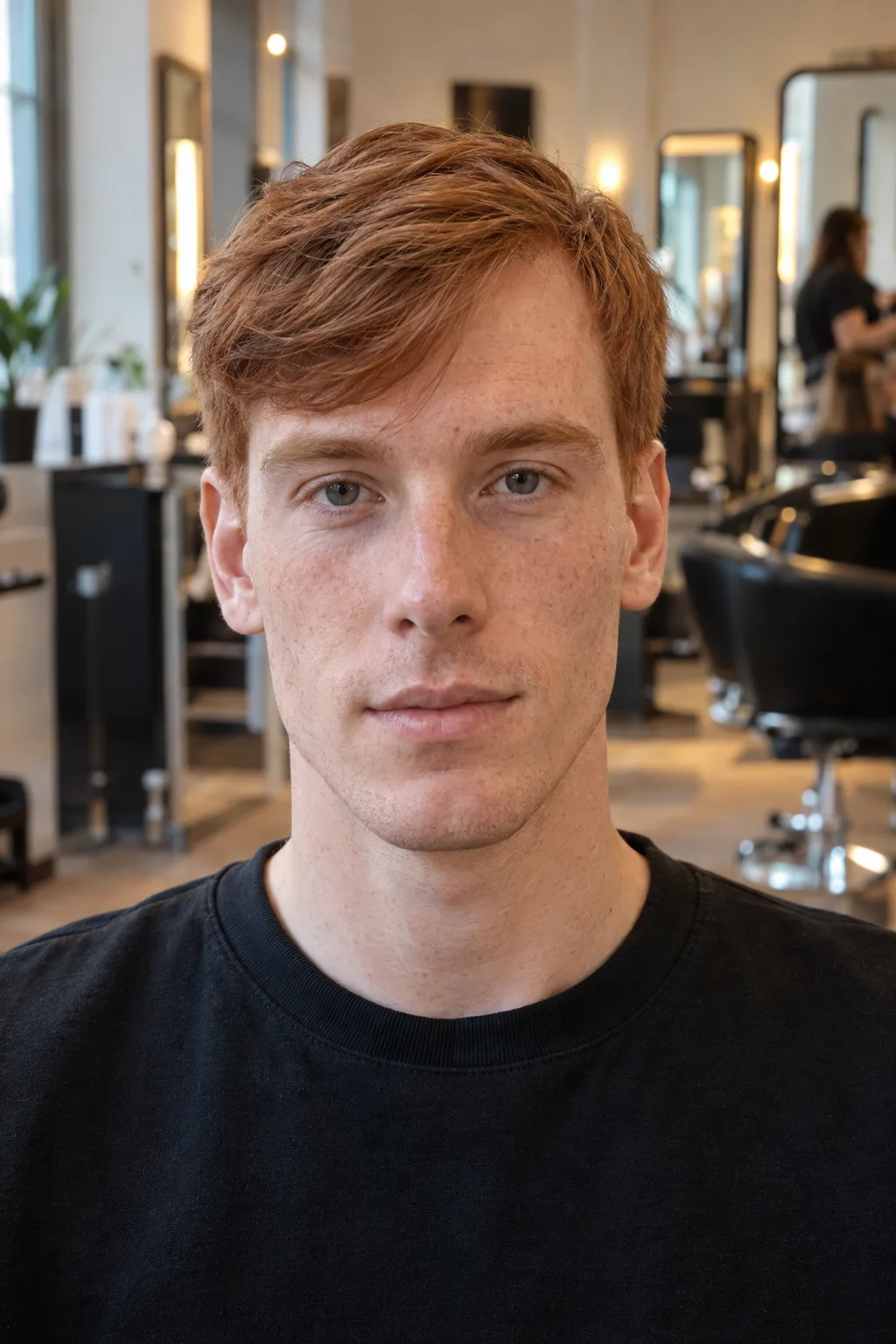
Every photo below is framed the same way, straight on in the same salon light, so the only thing that changes is the face shape and the cut chosen for it. Look at where each cut adds width or length and you will see the rule from the top of this page working fourteen times.
Gallery14 photos · tap to enlarge
 Try this on me
 Try this on me
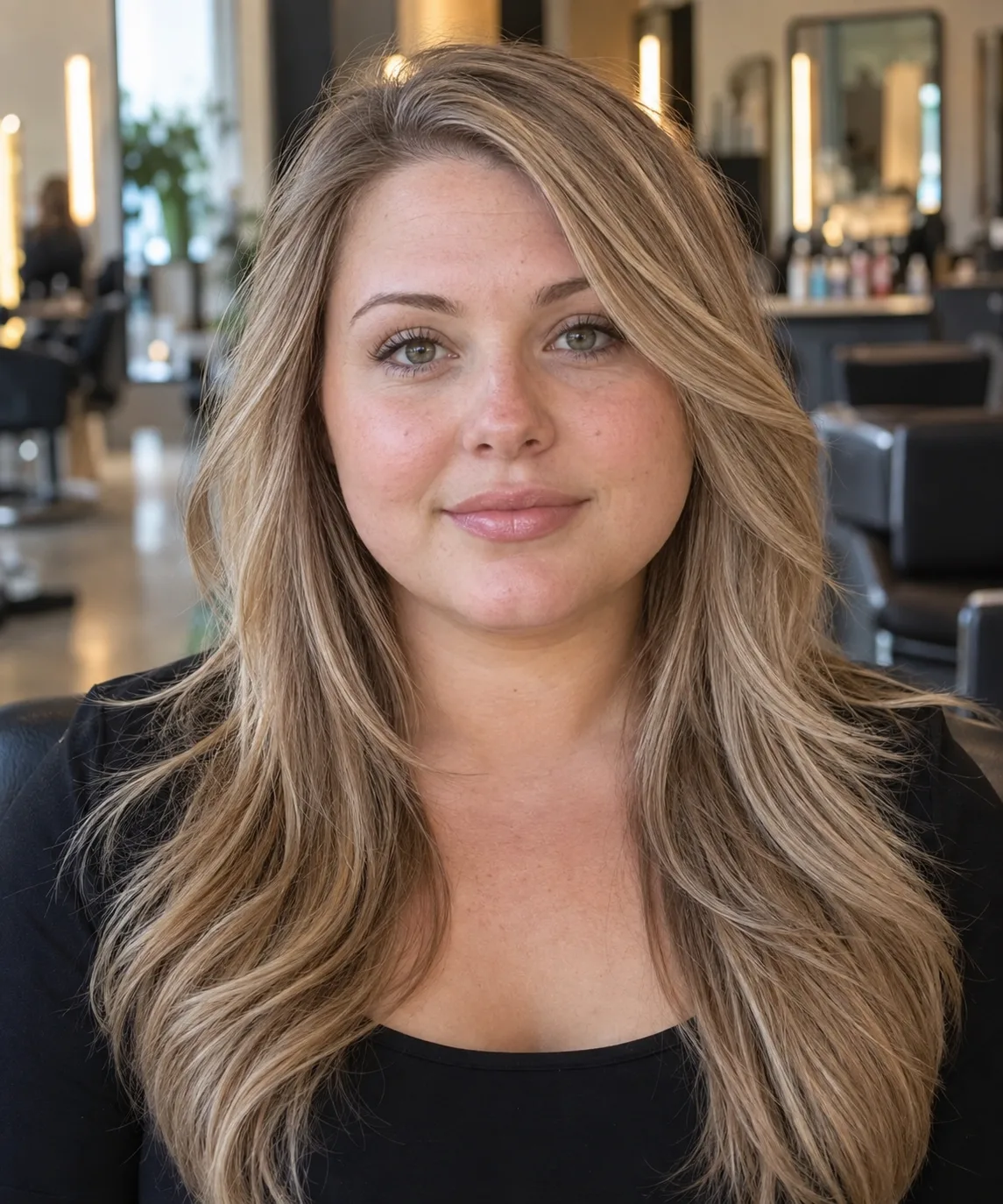 Try this on me
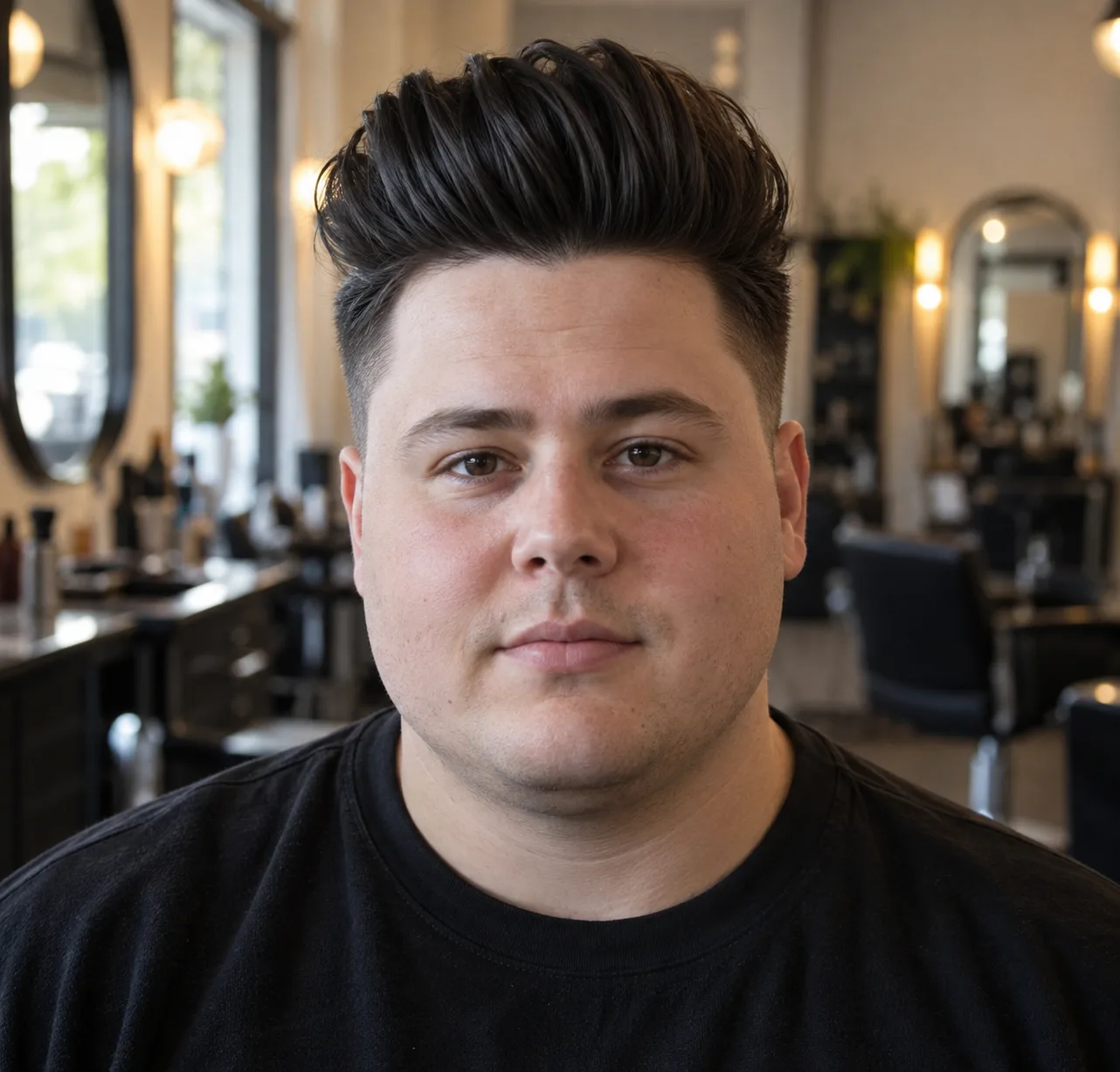 Try this on me
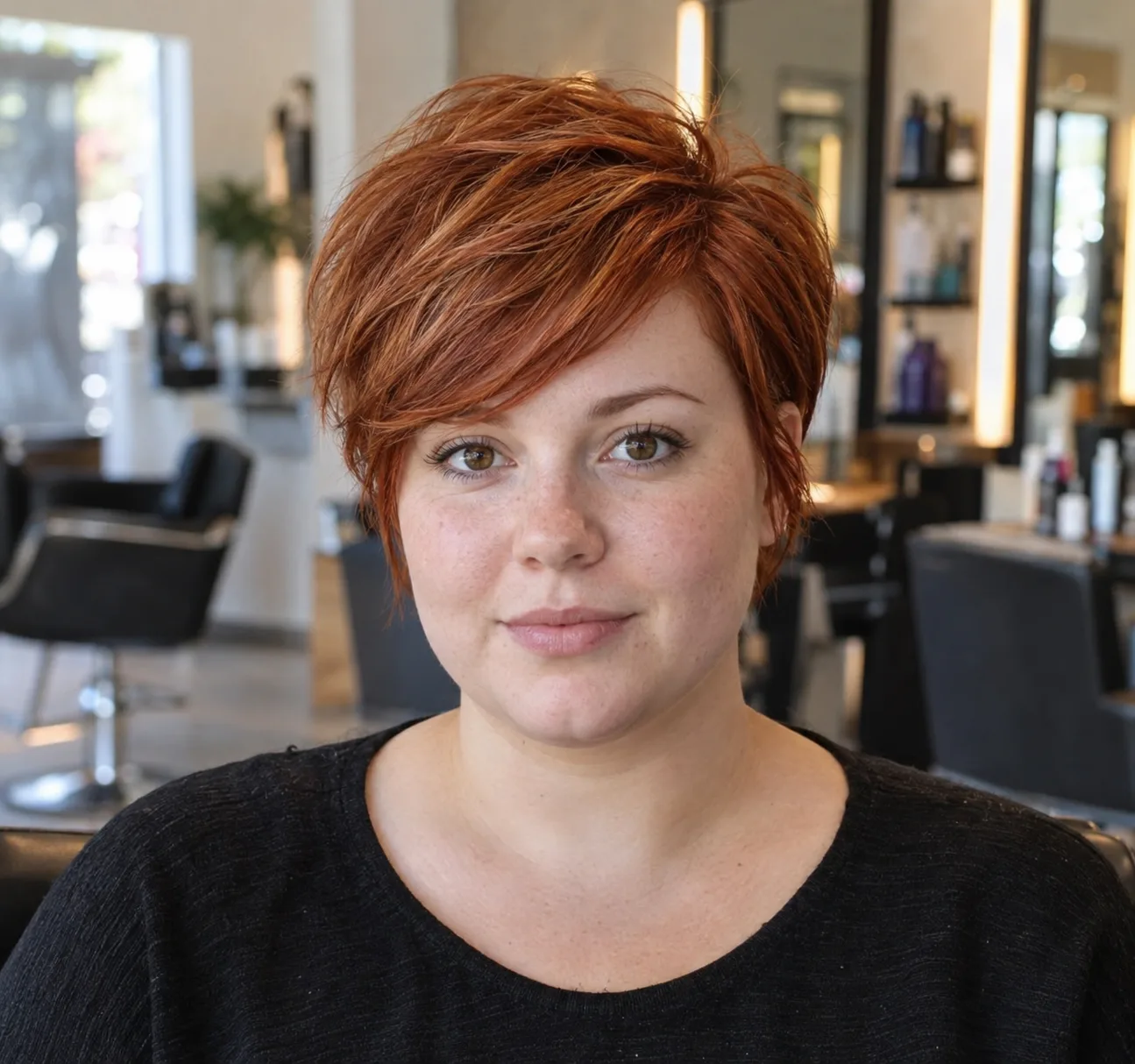 Try this on me
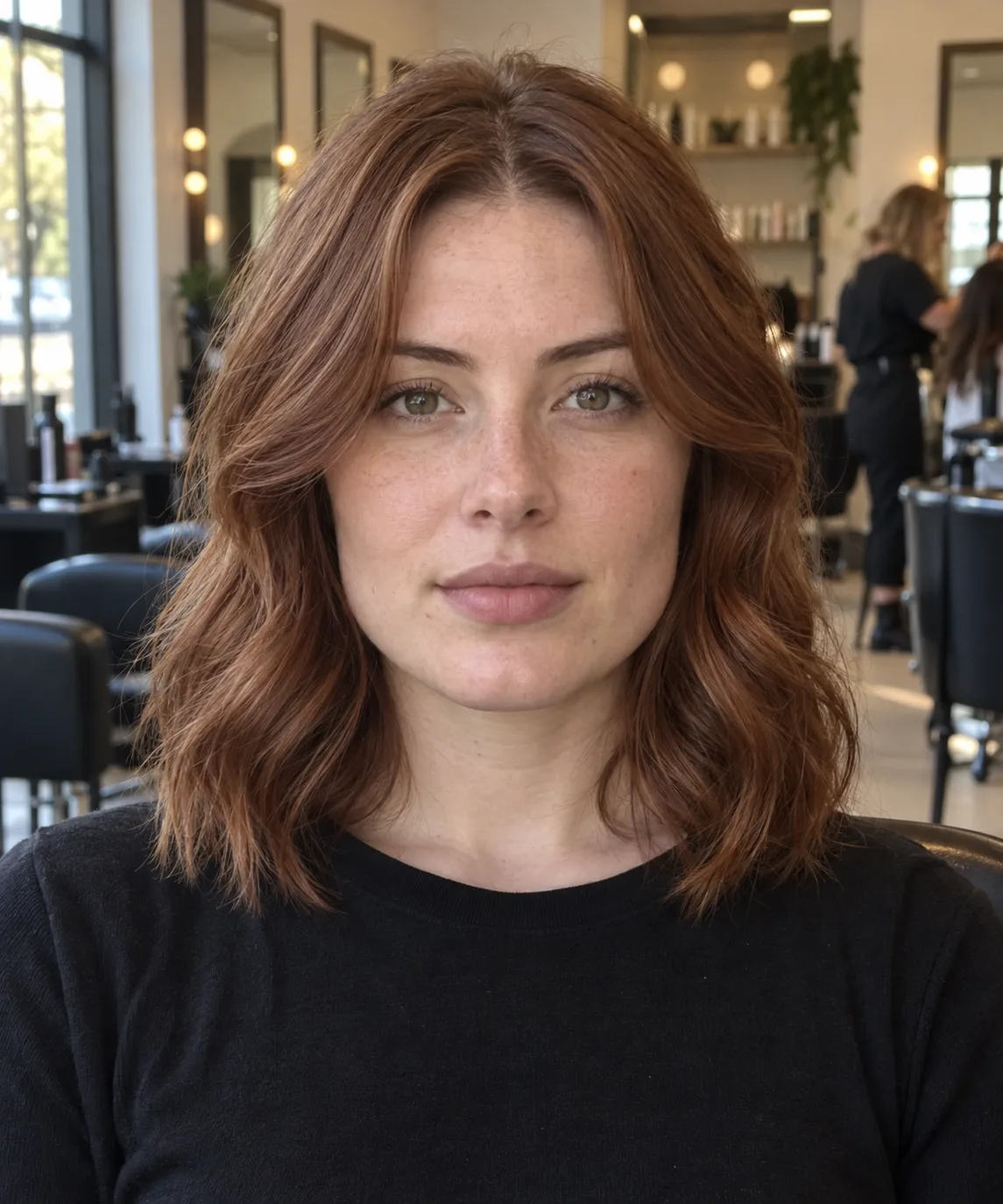 Try this on me
 Try this on me
 Try this on me
 Try this on me
 Try this on me
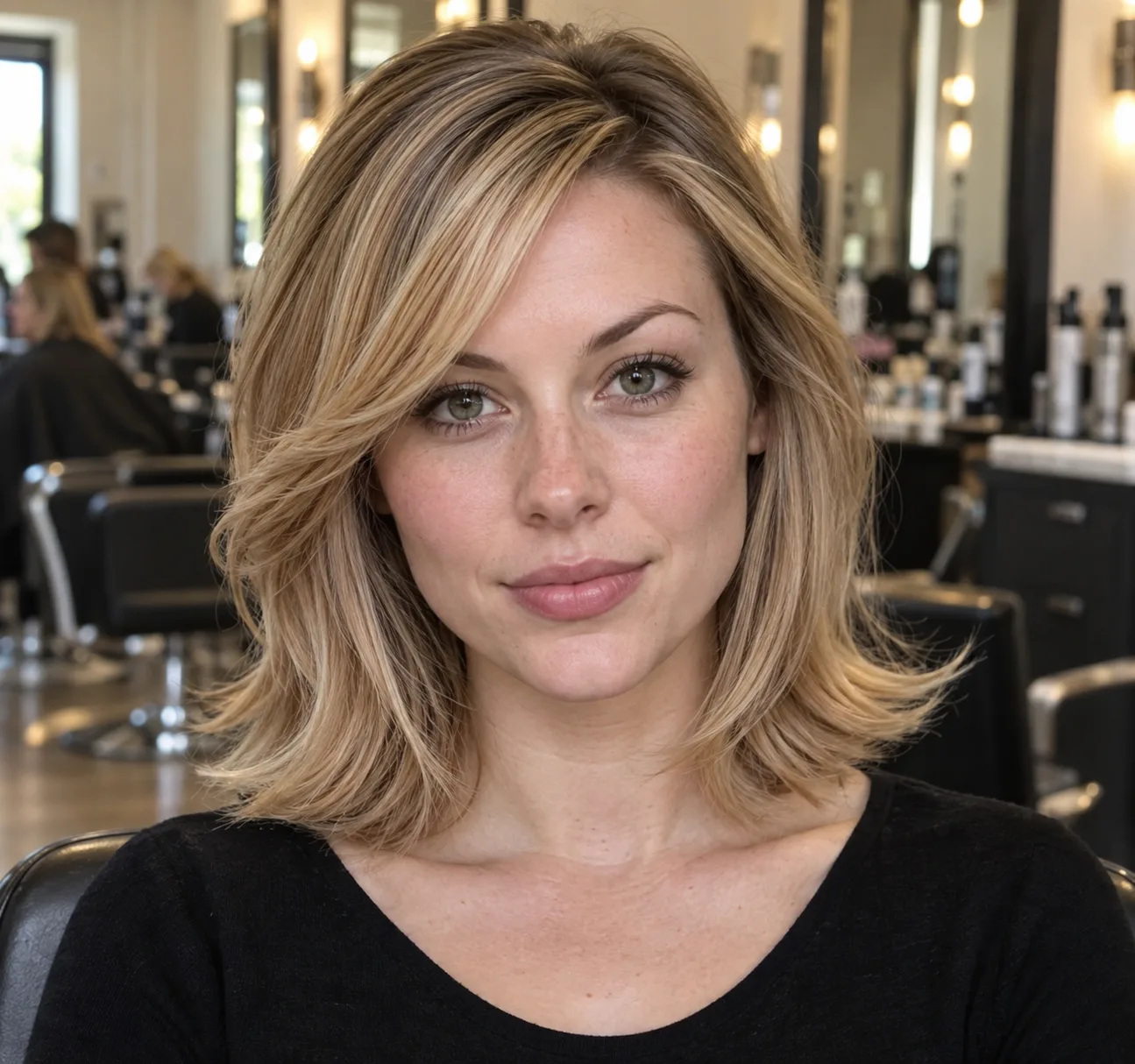 Try this on me
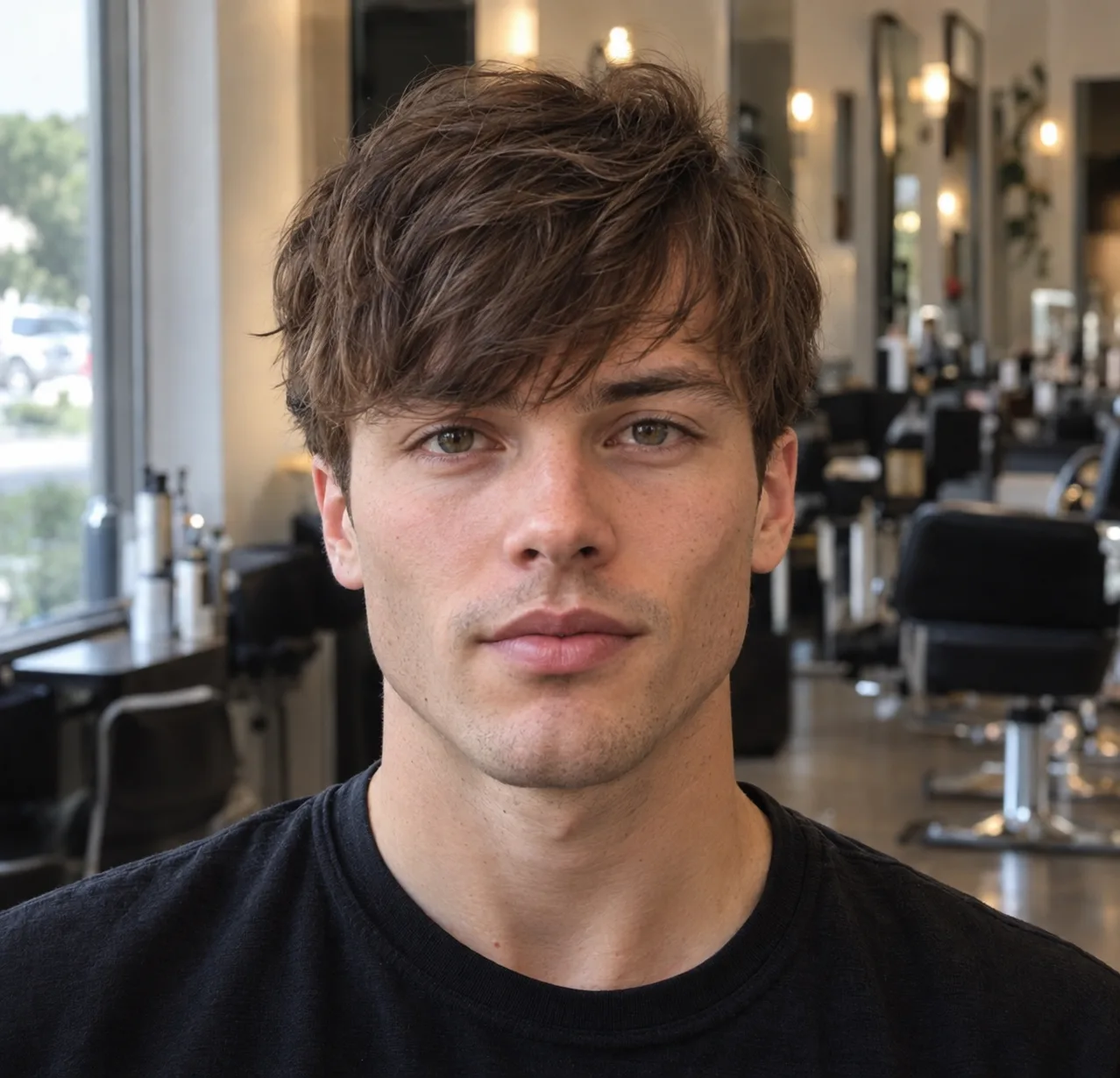 Try this on me
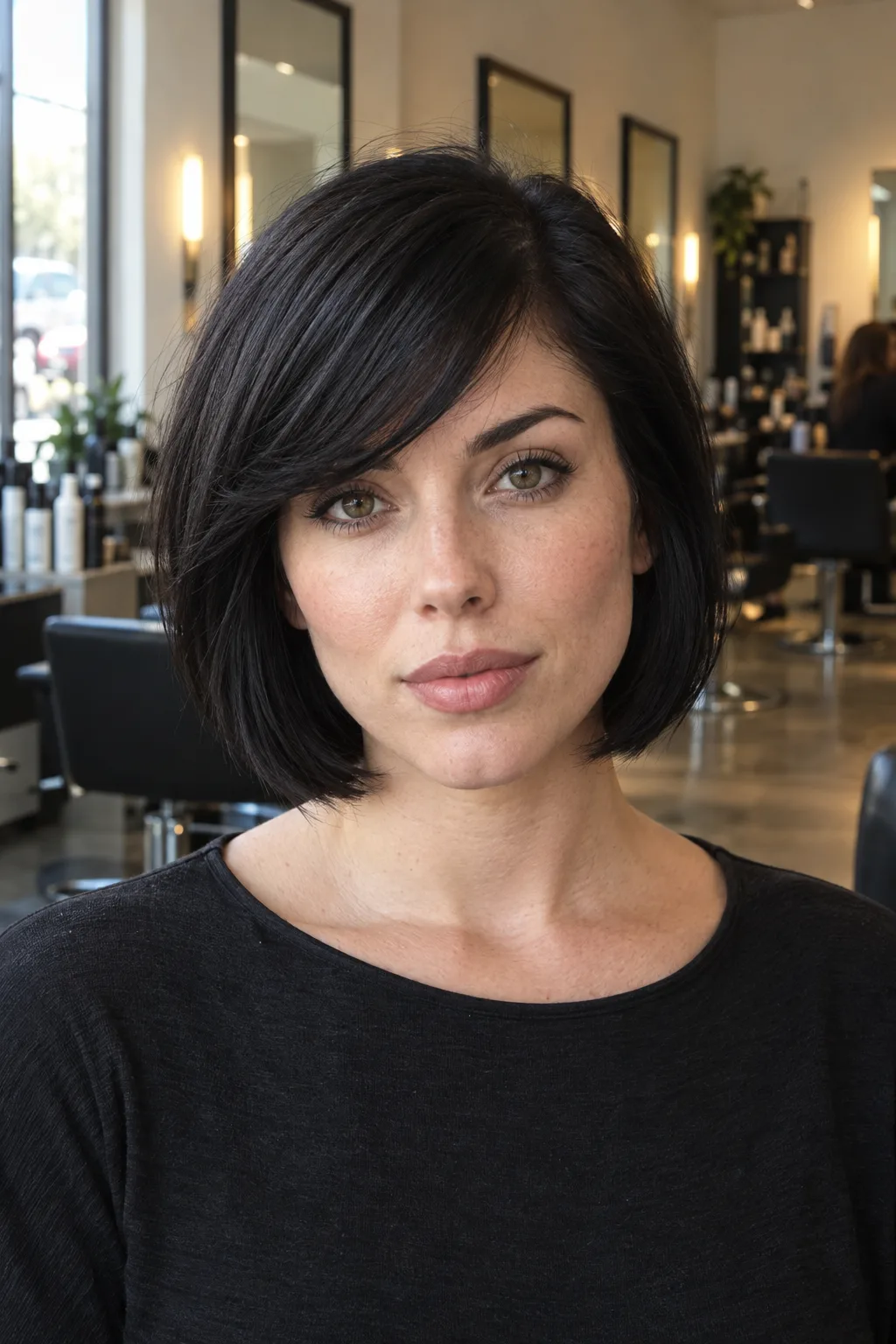 Try this on me
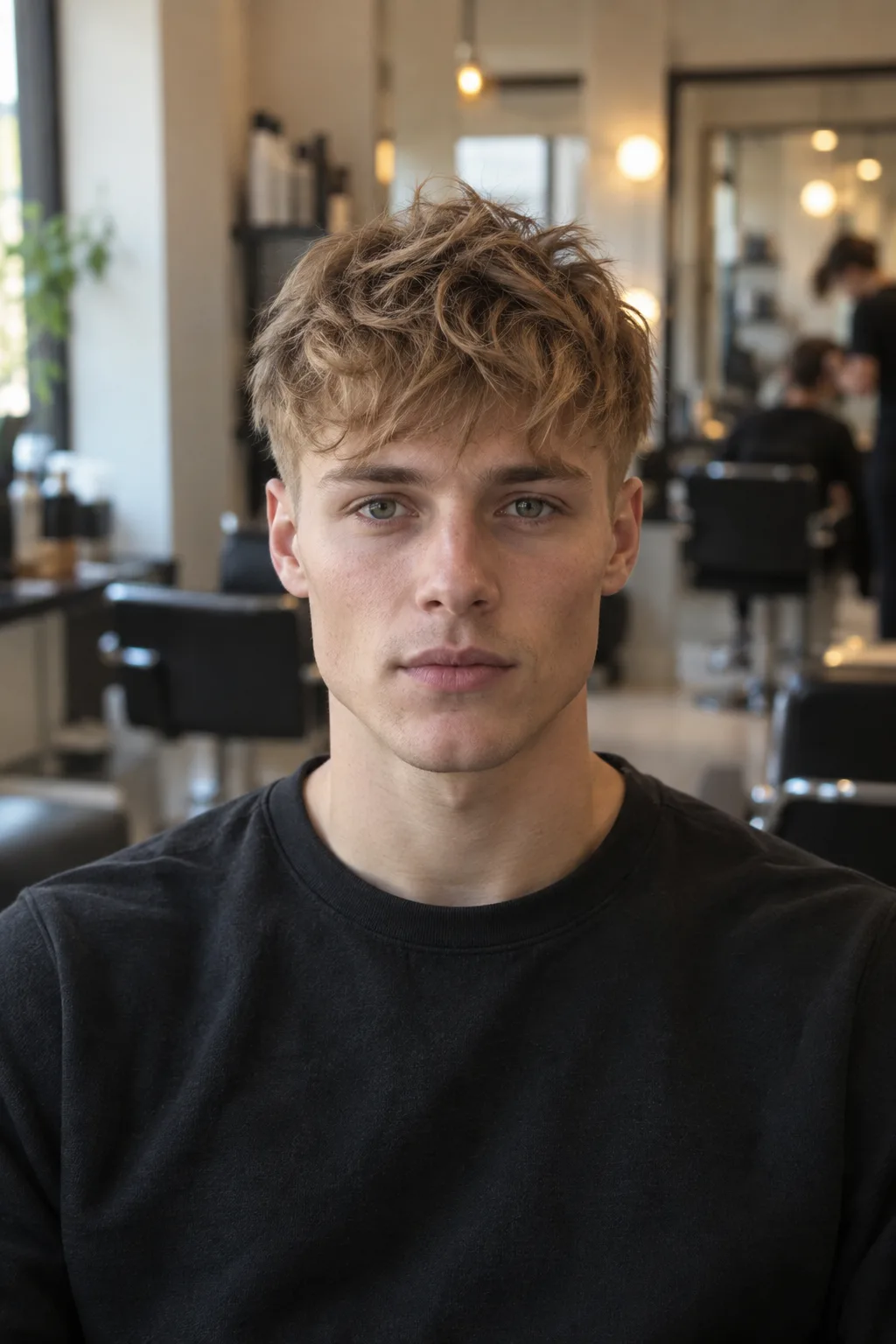 Try this on me
Best haircuts for an oval face
An oval face can wear nearly any cut, so the real question is what you want to show off. Choose by hair type and upkeep, not by shape, and only watch out for cuts that add length if your oval runs long.

For women
Long layers, a blunt shoulder-length cut, a chin-length bob and a pixie all work. If you want one pick, go for layers that start at the collarbone: they keep the balance you already have and move well. Our guide to layered bob haircuts covers the shorter end.
For men
A textured quiff, a side part, a crop or a medium-length cut with movement all suit you. You can go short on the sides without the face looking long, and you can grow the top without it looking round.
What to avoid
Not much. A very heavy, blunt fringe hides the proportion you have, and a tall pompadour can tip an oval face toward long. That is the whole list.
Best haircuts for a round face
A round face needs length and lift, not width. Cuts that end below the chin or build height on top draw the eye up and down, while anything that ends at the cheeks or adds bulk at the sides makes the face look wider.
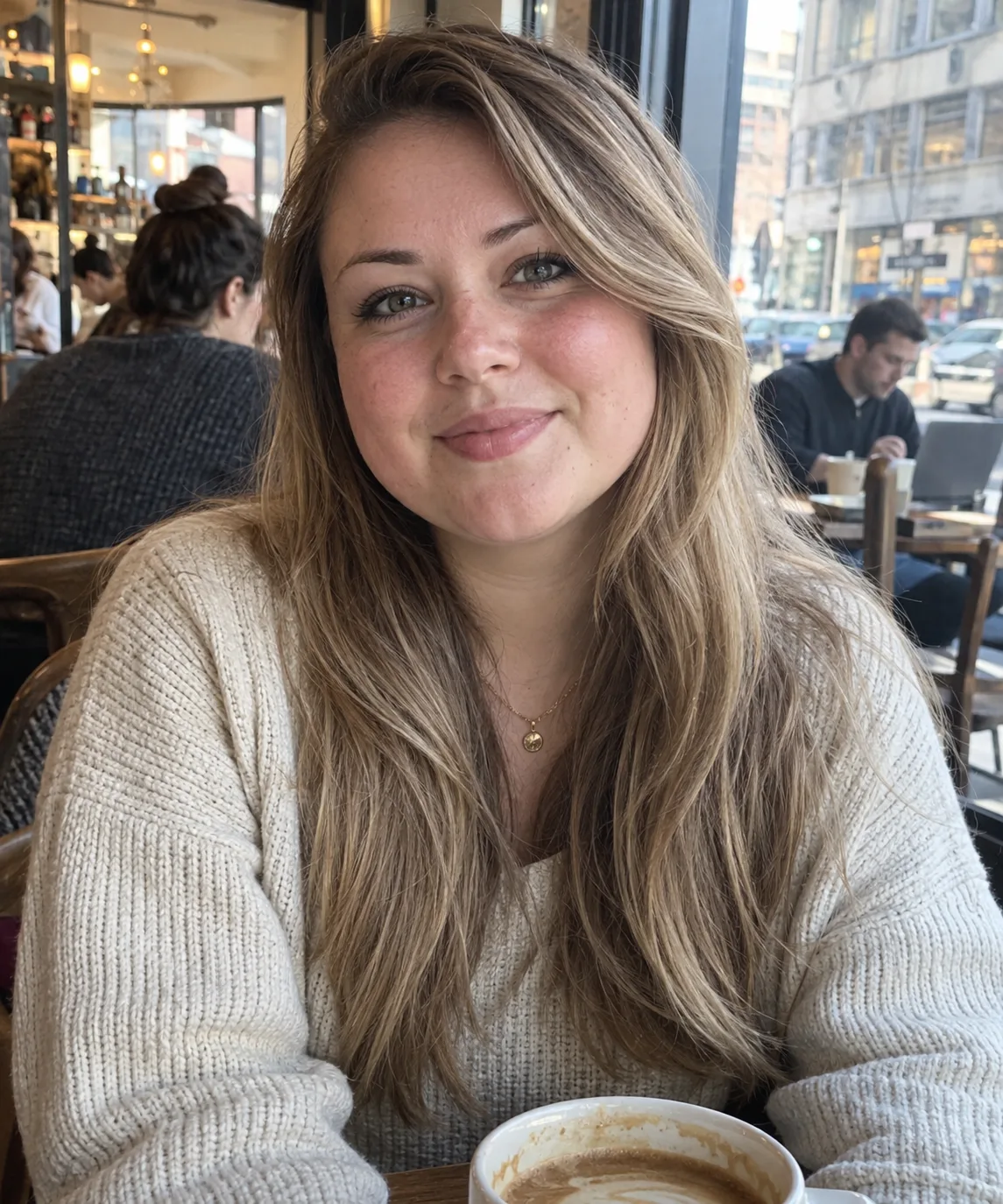
For women
Long face-framing layers with the shortest piece at or below the chin, a deep side part, and a long pixie with height at the crown. A pixie sounds wrong for a round face, but a short cut with lift on top and close sides lengthens it better than a chin bob does. See the long pixie cut guide if you are tempted.
For men
Height on top with tight sides: a quiff, a pompadour, a faux hawk, or a textured top over a fade. The shorter the sides, the longer the face reads. A mid taper fade with 3 to 4 inches on top is the safe version.
What to avoid
Chin-length rounded bobs, blunt full bangs, center parts on flat hair, and a buzz cut all over. Each one either draws a horizontal line across the widest part of the face or takes away the height that was doing the work.
Best haircuts for a square face
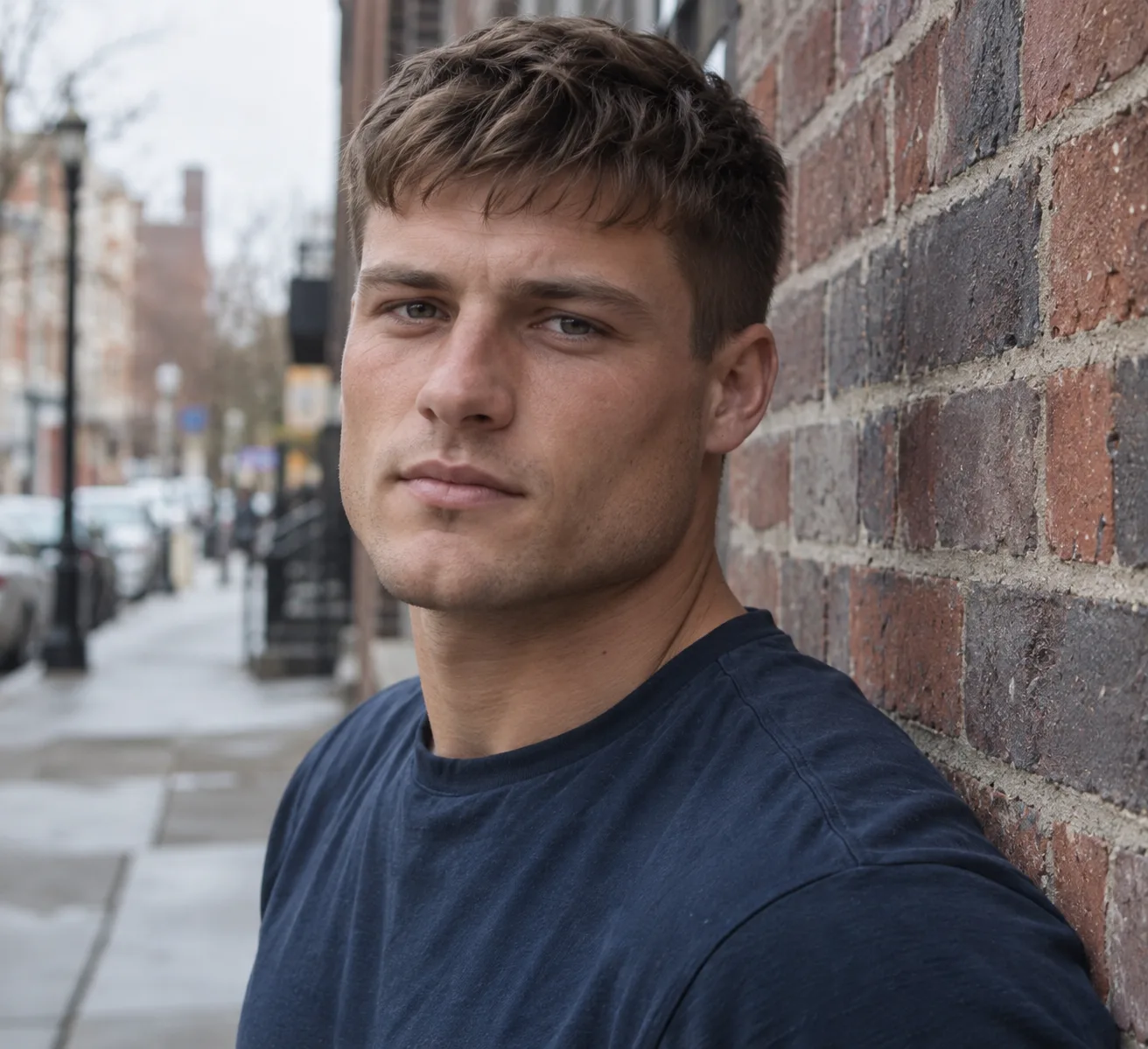
The best haircuts for a square face soften the jaw corners instead of framing them. Waves, layers and texture that fall past the jaw work; hard lines that end right at it make it look heavier.
For women
Soft waves at shoulder length or longer, curtain bangs, side-swept bangs, and long layers that start below the jaw. A side part breaks up the symmetry that makes a square face read boxy. Shoulder-length haircuts are the sweet spot: long enough to fall past the jaw, short enough to keep movement.
For men
Men usually want to keep the jaw, not hide it, so short classic cuts are the move: a crew cut, a textured crop, a slick back or a side part. A little texture at the fringe stops the whole head from looking like a block.
What to avoid
A blunt bob that stops exactly at the jawline, heavy straight bangs, and a flat center part with no layers. For men, a rounded bowl shape on top fights the jaw instead of matching it.
Best haircuts for a long face
The best haircuts for a long face add width at the sides and break up the length with bangs. Chin-length cuts, side volume and a fringe all shorten the face; long straight hair and height on top stretch it.

For women
A chin-length bob with full bangs is the single best cut for a long face: the bangs cut the forehead down and the bob adds width exactly where the face is narrow. Shoulder-length waves and curtain bangs work too. If you love long hair, keep it with layers and waves at cheek level, as in our guide to hairstyles for long hair.
For men
A side part with a fringe that falls onto the forehead, a textured crop with a forward fringe, or a medium cut with fullness over the ears. Keep the sides at an inch or more rather than faded to skin.
What to avoid
Long straight hair with no layers, tall quiffs and pompadours, slicked-back tops that show the whole forehead, and skin fades. Anything that adds height or strips the sides makes a long face longer.
Best haircuts for a heart-shaped face
A haircut for a heart-shaped face balances a wide forehead with a narrow chin. Side-swept bangs shrink the forehead, and cuts with fullness at chin level fill in the lower half of the face.

For women
A collarbone-length lob with ends that flick out, long side bangs, a chin-length bob with a side part, and layers that start at the chin. The flick at the ends is the detail that matters: it puts width where the chin is narrow.
For men
A textured fringe brushed forward, a medium-length cut with fullness over the ears, or a side part with some length at the sides. A beard is a real option here because it adds width at the chin; our beard styles for face shape tool shows which shapes work.
What to avoid
Volume at the crown, slicked-back tops, very short sides with a tall top, and pixie cuts with no bangs. They all widen the forehead and leave the chin looking smaller.
Best haircuts for a diamond face
A diamond face is widest at the cheekbones, so the best haircuts add width at the forehead and the chin and keep the sides soft. Bangs and chin-length cuts do both.

For women
Side-swept bangs, a chin-length bob, a lob with layers at the jaw, and deep side parts. Tucking one side behind the ear shows off the cheekbones, which are the best feature of a diamond face.
For men
A fringe crop, a textured fringe, or a messy top pushed forward. Keep some length on the sides so the cheekbones do not stick out past the hair.
What to avoid
A sleek center part, tight sides with height on top, and hair scraped back off the forehead. Each one narrows the forehead and makes the cheekbones look even wider.
Mistakes that cost people a good haircut
Most bad cuts are not the stylist's fault. They come from one of these:
- Measuring from a close-up selfie. The phone's wide lens makes almost everyone look rounder than they are, so you pick cuts built for a face you do not have.
- Treating the chart as a rule and ignoring texture. A chin-length bob on thick, curly hair adds width a long face needs; the same bob on fine, straight hair can fall flat and add nothing. Texture decides how much volume a cut really builds.
- Forgetting the hairline. A high or receding hairline makes any face read longer. That changes the advice more than the jaw does.
- Choosing the cut on the model, not on you. A cut that suits your shape on someone else's face can still look wrong with your features, which is why seeing it on your own face first saves the most regret.
- Skipping glasses. Frames draw a horizontal line across the face. If you wear them every day, check the cut and the frames together with our glasses for face shape tool.
Take this to the chair, with your own shape and target filled in:
Say this to your barber
My face is on the round side, so keep the sides close and give me height on top, and nothing that ends at my cheeks.
See the cut on your own face before you commit
The charts get you to two or three good options. The wall they hit is that you still cannot picture those cuts on your own face, with your own hairline, texture and features, and a haircut is not something you can undo on the way home.
That is the gap the try-on closes. Upload one front-facing photo and see the cuts that suit your face shape rendered on you, then take the one you like to your stylist.
Yours could be here.
Start with one selfie.
One photo, twenty seconds, and you'll know. Free account, no card for your first render.
If you only want the answer to what shape you are, the face shape detector reads it from one photo.
If you remember one thing, make it this: add volume where your face is narrow and take it away where your face is widest. Round and diamond faces need height or fringe, long faces need width at the sides, square and heart faces need softness at the jaw and fullness at the chin. Oval faces can ignore most of it.
Measure once, at eye level, with your hair off your face. Then use your shape to cross off the two or three cuts that fight it, and pick from what is left by texture and upkeep. When you are down to two, find your face shape from a selfie and see both before anyone picks up the scissors.
Frequently asked questions
Pull your hair back and measure your face length, then the width of your forehead, cheekbones and jaw. Compare the widest point with the length and check whether your jaw is angular or rounded. If you would rather not measure, a straight-on photo taken at eye level from about three feet away works too.
Most guides use six: oval, round, square, long (oblong), heart and diamond. Seven-shape lists usually add triangle, also called pear, where the jaw is wider than the forehead. Treat triangle like a heart face in reverse: add width at the forehead and keep the jaw soft.
No reliable study has counted face shapes across a population, so any percentage you see is a guess. Diamond is the shape most guides call rare. In practice most people are a blend of two shapes, such as oval-long or round-square.
Both work if the length does not end at the jaw. For women, hair that falls past the jaw with waves or layers softens the corners; for men, short classic cuts like a crew cut or textured crop suit a square jaw well. The one length to avoid is a blunt cut stopping right at the jawline.
Mid-length usually wins. A chin-length to shoulder-length cut with bangs or side volume adds width and breaks up the length. Very long, straight hair with no layers drags the face down, so if you keep it long, add layers and waves at cheek level.
Chin-length to collarbone-length is the most flattering range, because it adds fullness right where the chin is narrow. Long hair works if the layers start at the chin. Very short cuts without bangs show off the widest part of the face.
Side-swept bangs and soft curtain bangs. They add width at the forehead, which is the narrow part of a diamond face, without the heavy horizontal line of blunt bangs.
Yes, if it is a straight-on photo at eye level with your hair pulled back. Close selfies distort the face, so tools that read a photo work best with a camera held at arm's length or more. You can find your face shape from a selfie on our site and get matching cuts at the same time.
Share article
About the author