Medium Layered Haircuts: 14 Looks and Where Layers Should Start
Oleh Onysko 3 October 2026 12 min read
In this article
A medium layered haircut is any cut that ends between your collarbone and the top of your shoulder blades, with shorter pieces cut into it so the hair moves instead of hanging in one block. The detail that decides whether it flatters you is not how many layers you get, it is where the shortest layer starts.
Start it at the chin and the volume lands at your cheeks. Start it at the collarbone and the cut pulls your face longer. Most bad layered cuts are good layers starting at the wrong height. Below: the layer types side by side, 14 cuts on the same length, which ones suit your face shape and hair type, and the exact sentence to say in the chair.
What is a medium layered haircut?
A medium layered haircut keeps most of its length, about 11 to 14 inches at the back, and removes weight with layers cut at different heights. The perimeter can look soft and feathered or almost blunt. What makes it "layered" is that the hair underneath and around the face is shorter than the hair at the ends.
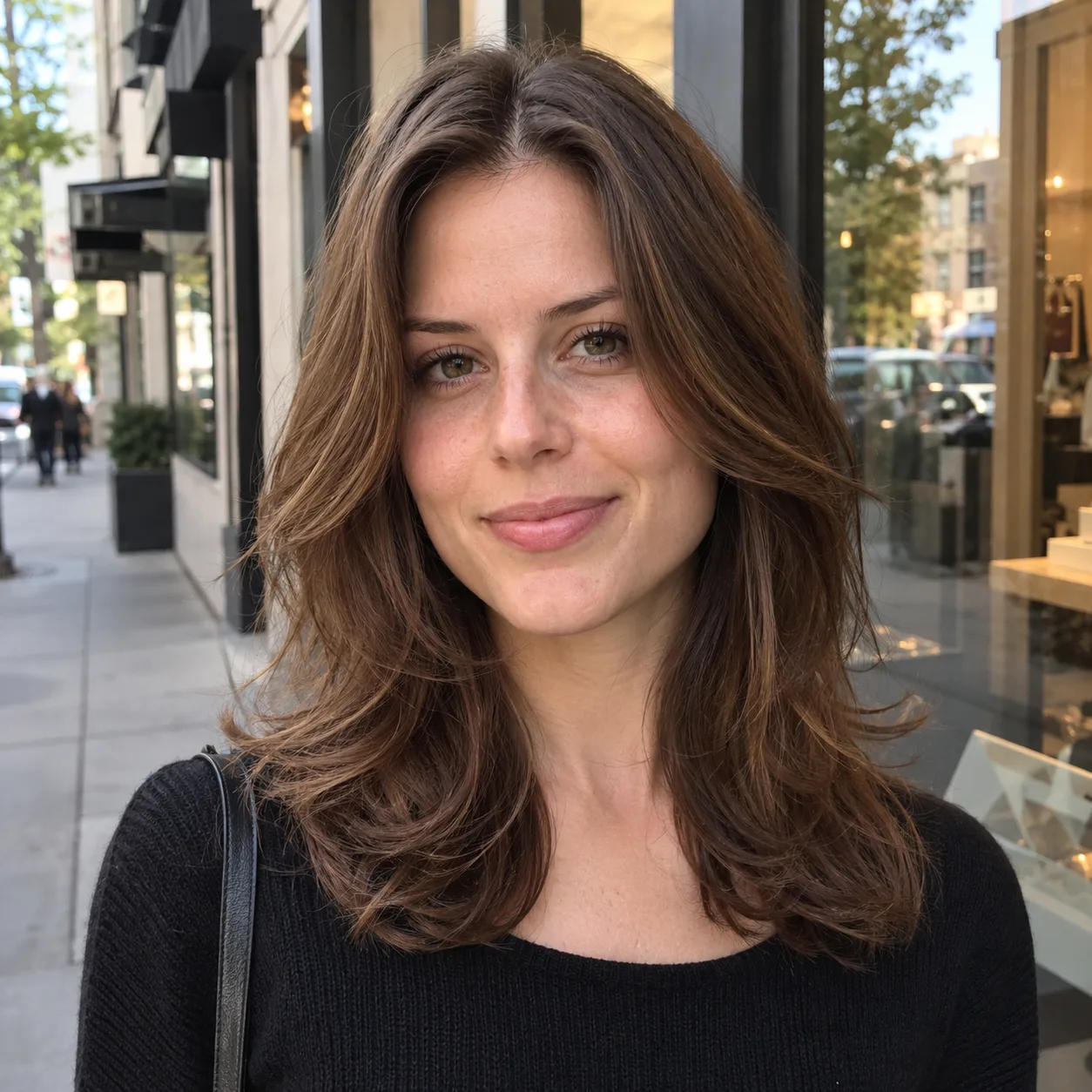
It is not a shoulder-length haircut by default, which can be one length with no layers at all. It is not a lob either, though a layered bob is its shorter cousin. And it is not a shag, which pushes short choppy layers up to the crown. A medium layered cut can borrow from a shag, but the classic version keeps the top smooth.
Three things define any version you see:
- Where the shortest layer starts. Chin, cheekbone, collarbone. This is the one that changes your face.
- How the layers are cut. Point cutting and slide cutting give soft, separated ends. Blunt scissor lines give a heavier, stacked look.
- How much weight is left at the bottom. More weight looks fuller and more polished. Less looks airy and lived in.
Medium layered haircut types compared
The names stylists use mostly describe where the short pieces go. Here is what each one actually changes.
| Layer type | Shortest layer starts | Volume lands | Upkeep | Best for |
|---|---|---|---|---|
| Face-framing layers | Chin | Around the face | Trim every 8 to 10 weeks | Almost everyone, the safe first cut |
| Curtain bangs with layers | Cheekbone | Forehead and cheeks | Bangs trim every 4 to 6 weeks | Long and oval faces |
| Butterfly layers | Chin, very short in front | Crown and sides | Needs a round-brush blowout | Fine to medium hair that wants lift |
| Soft shag | Crown | Top and sides | Low, built for air-drying | Wavy hair, thick hair |
| Wolf cut | Crown, choppy | Top, with wispy ends | Low | Thick, textured hair |
| Ghost layers | Hidden under the top | Movement, not width | Low | Fine hair that cannot lose its perimeter |
| Long layers only | Collarbone | Ends | Lowest | Round faces, fine hair |
14 medium layered haircuts, sorted by where the layers start
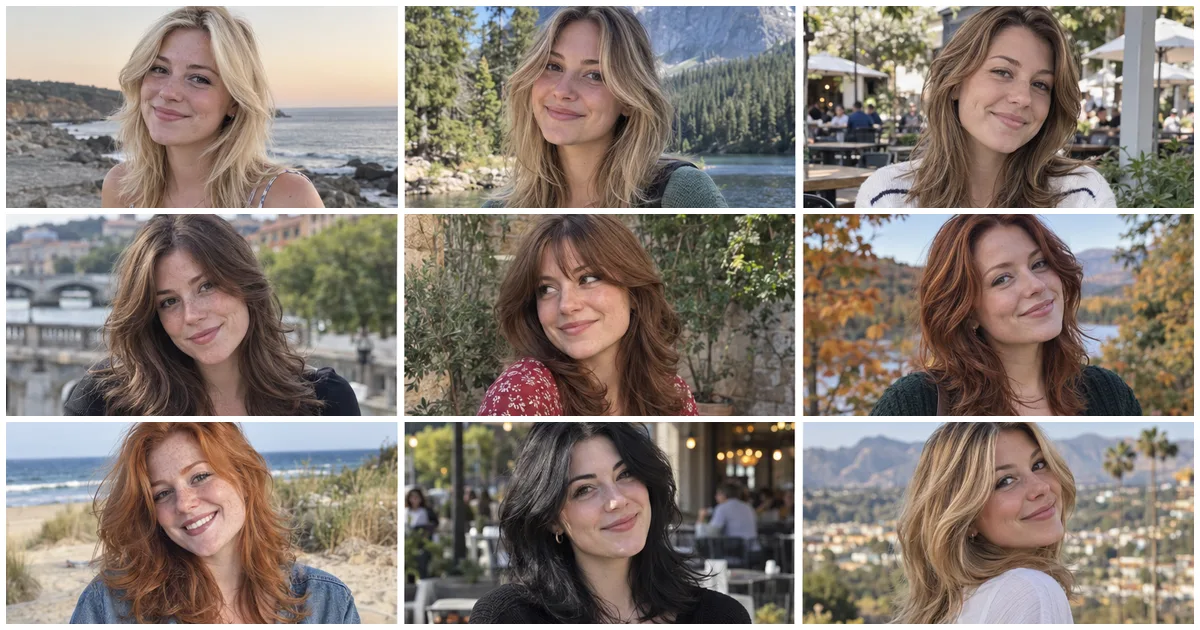
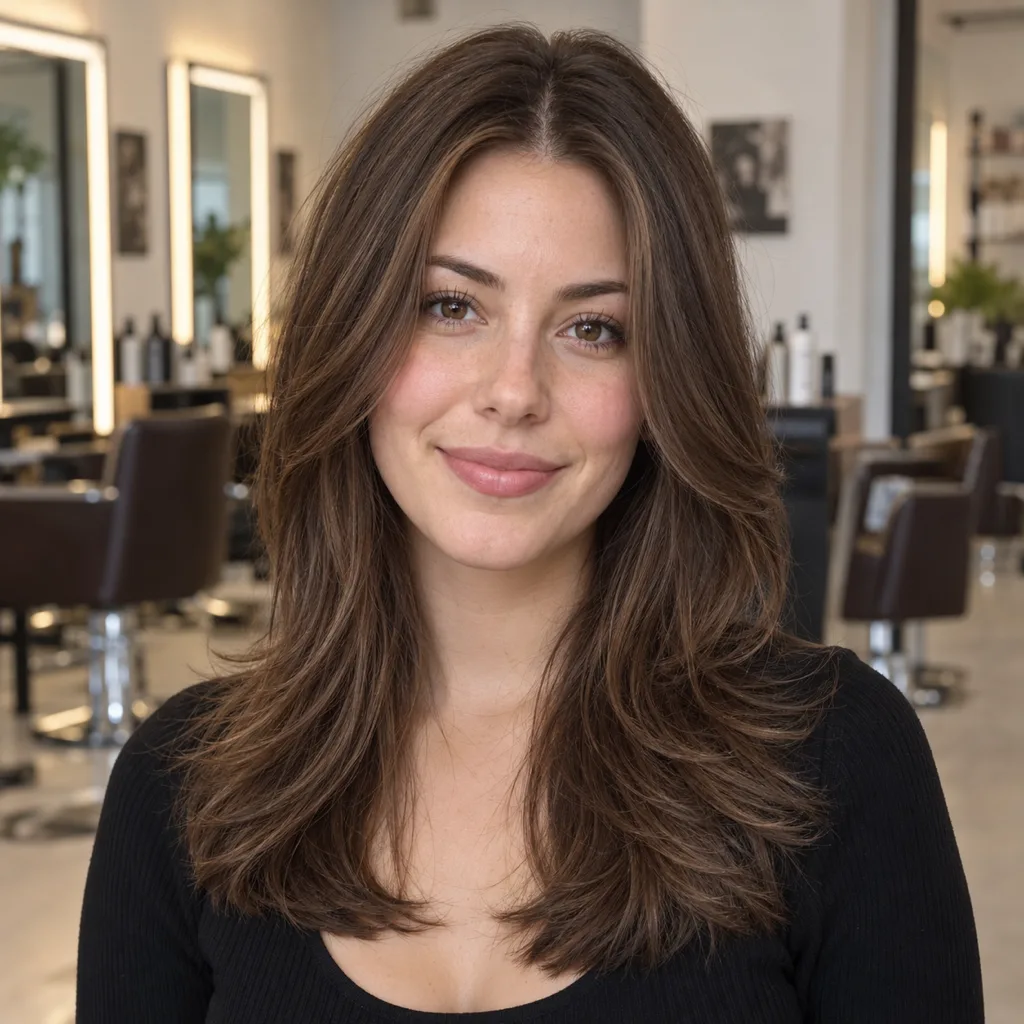
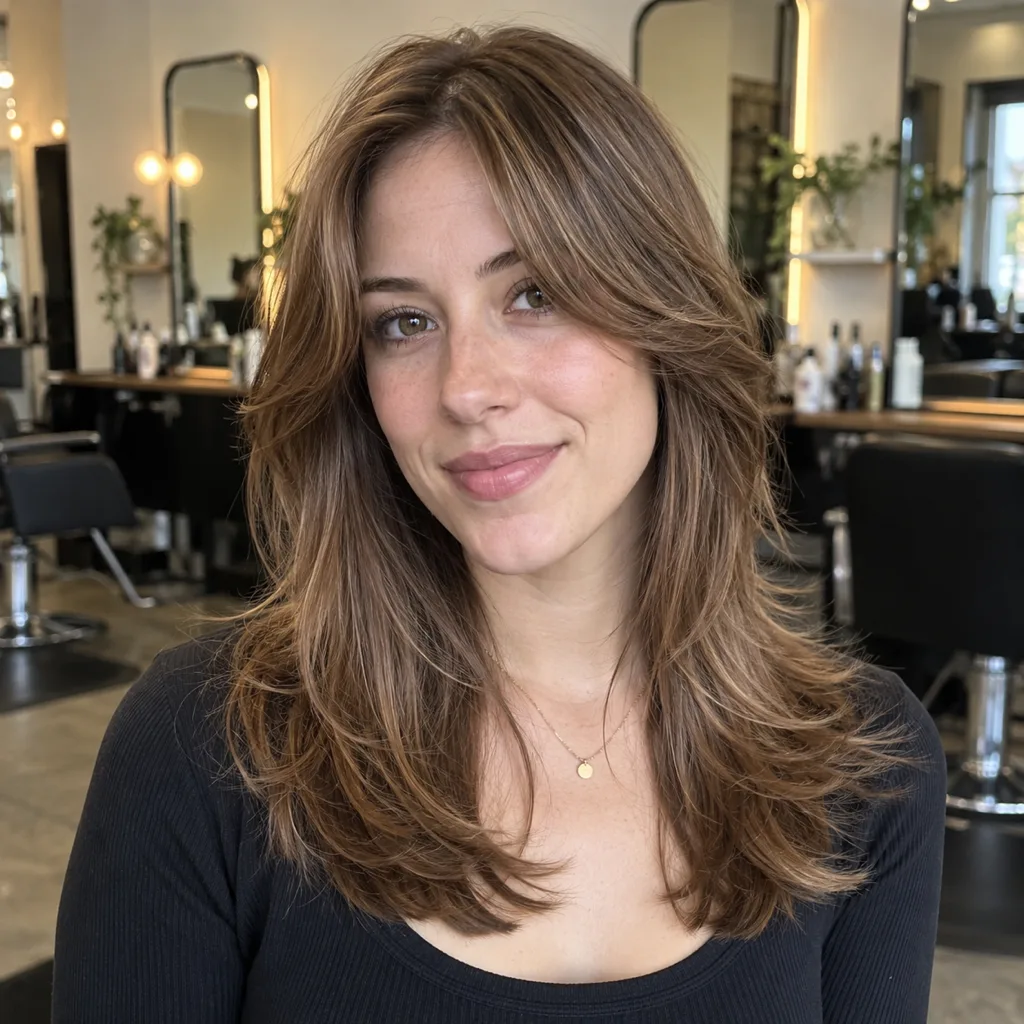
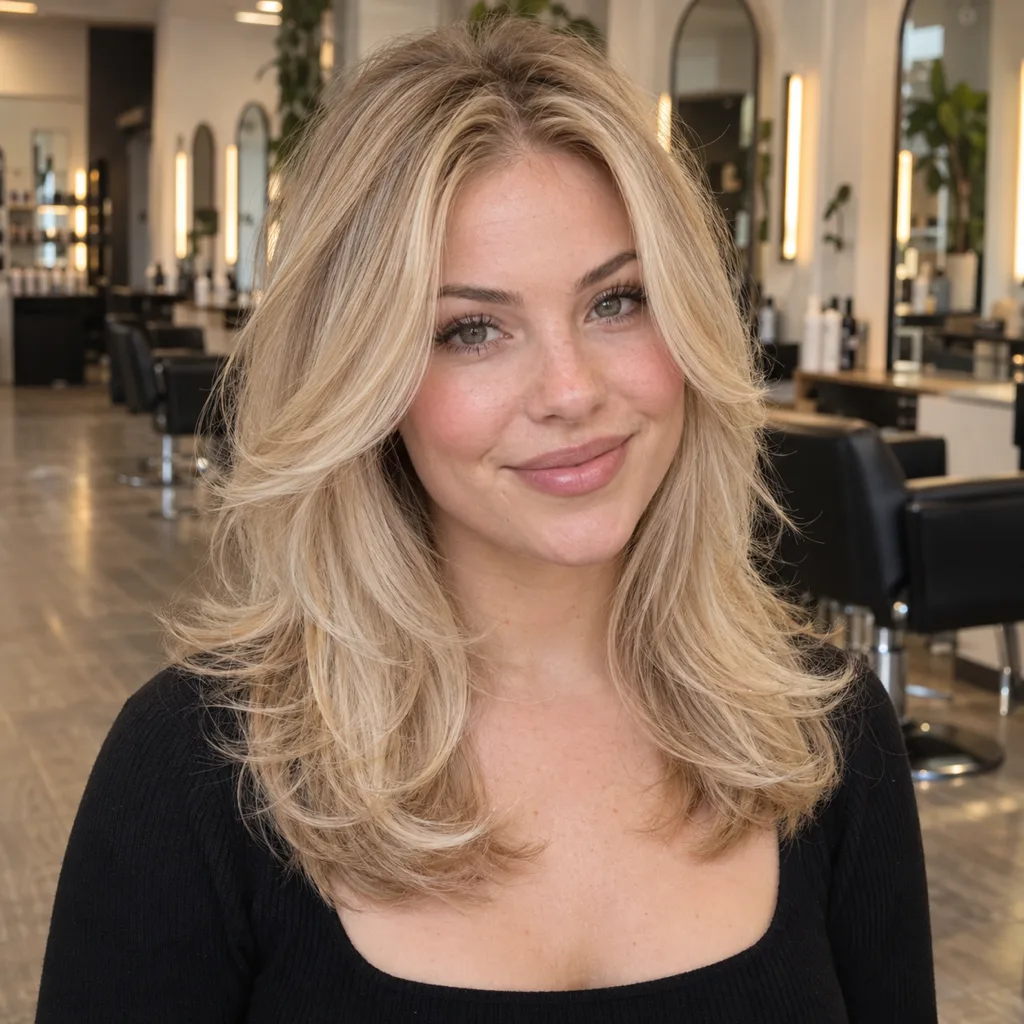
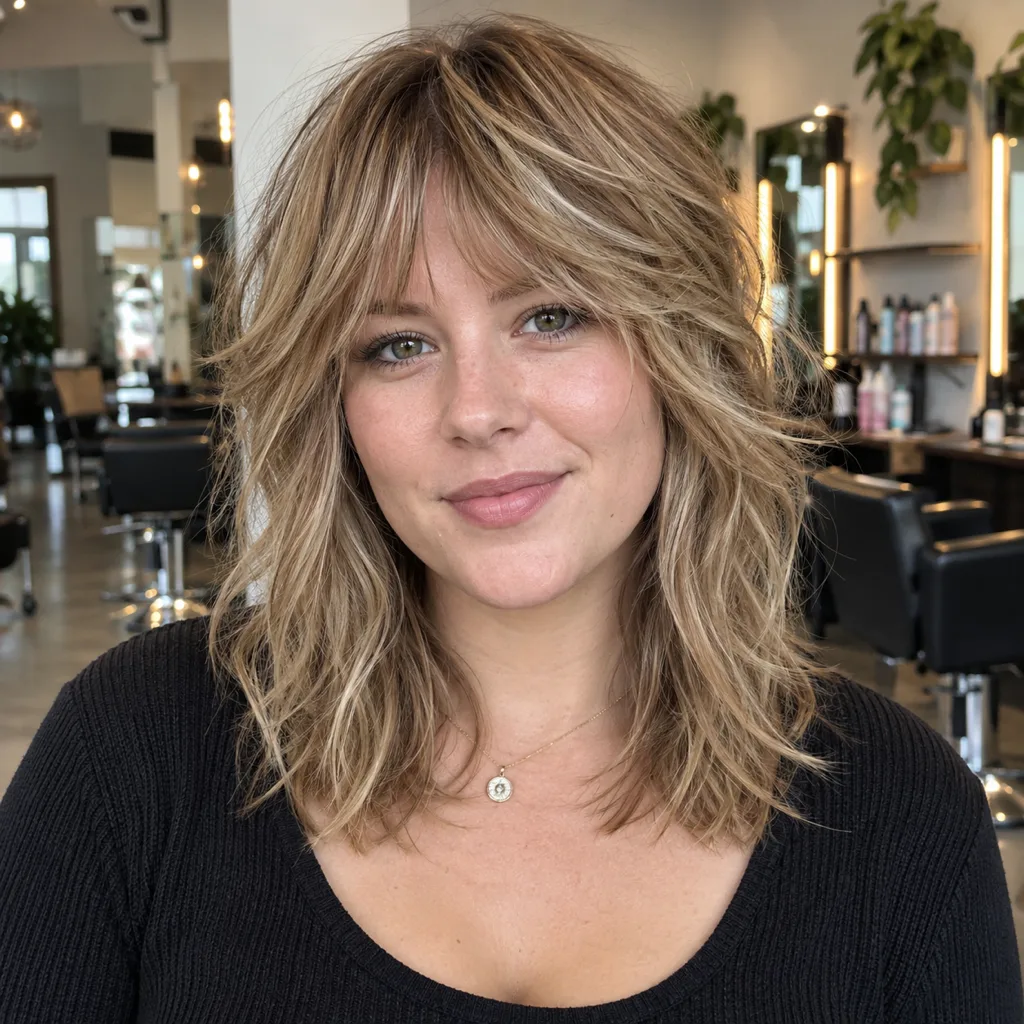
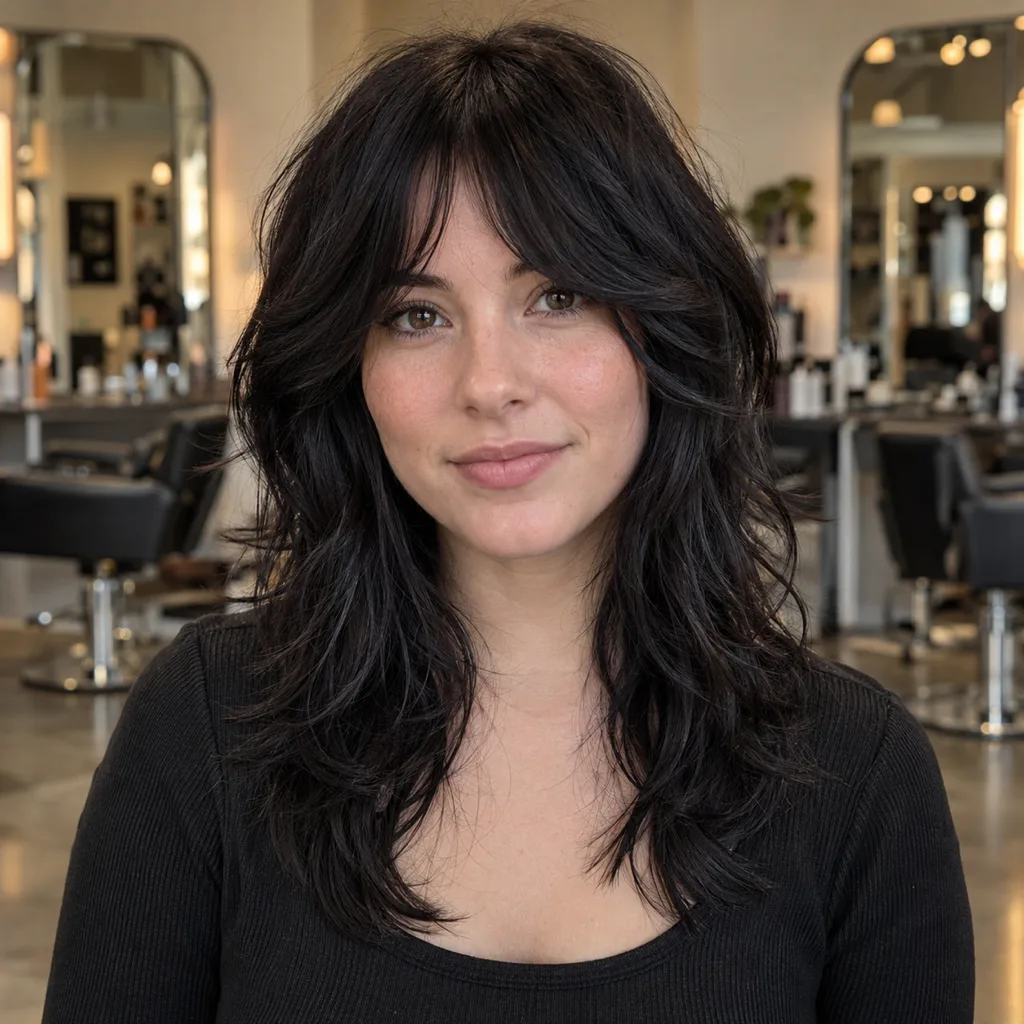
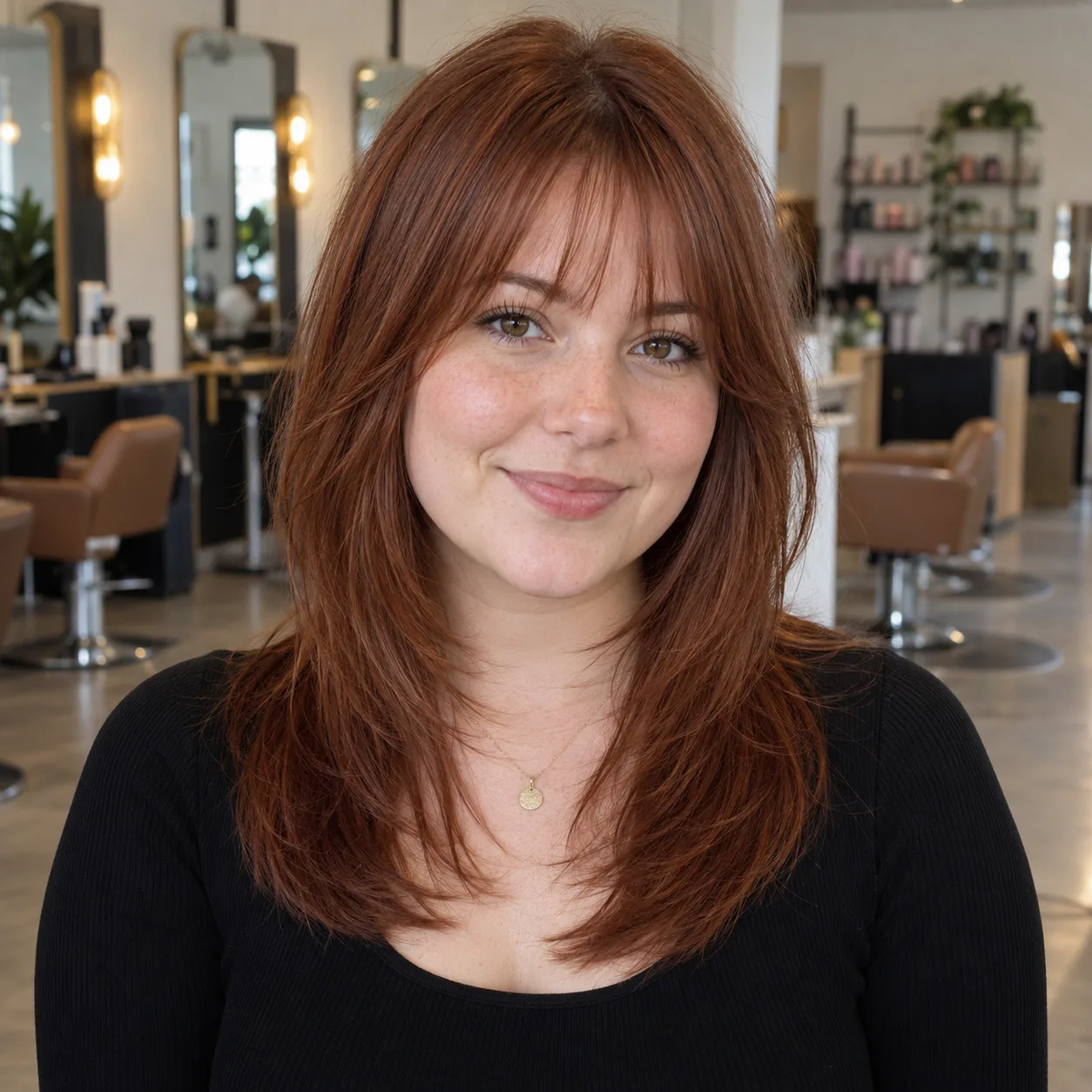
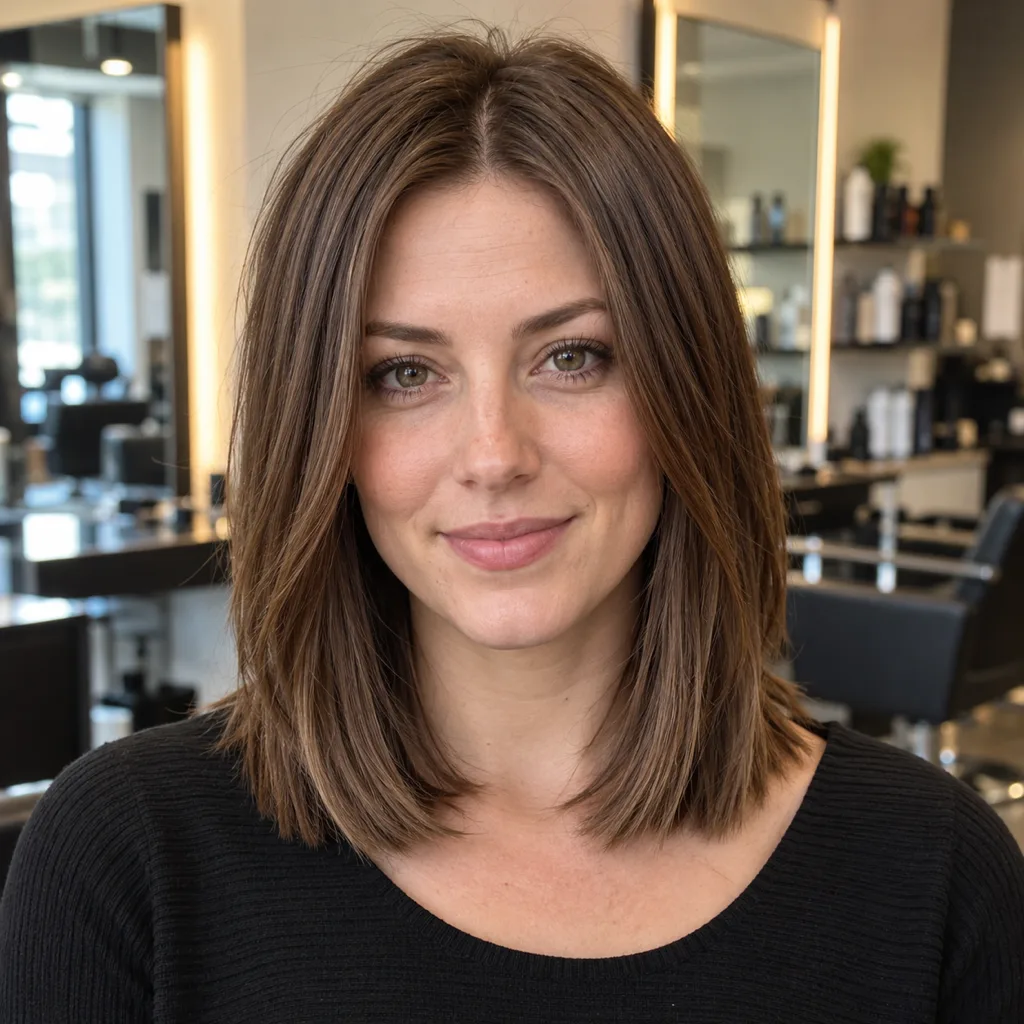
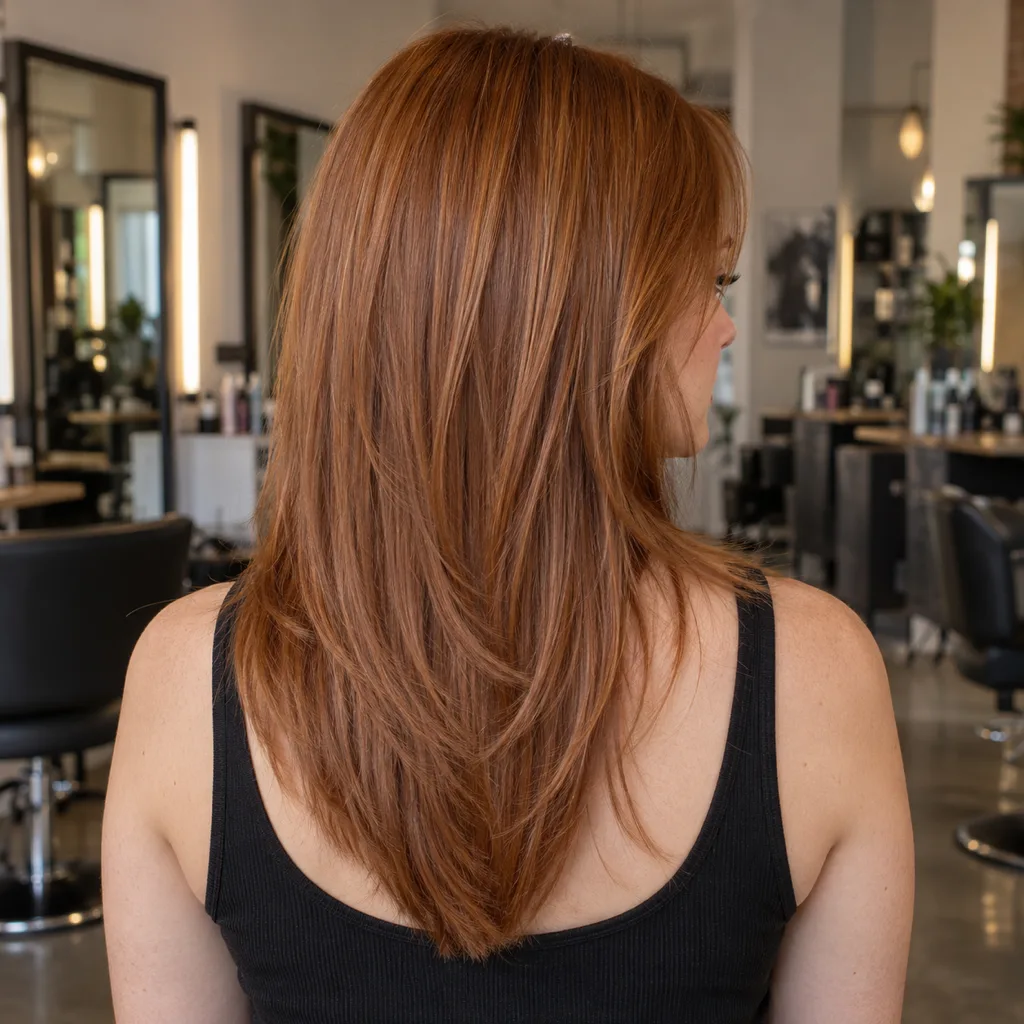
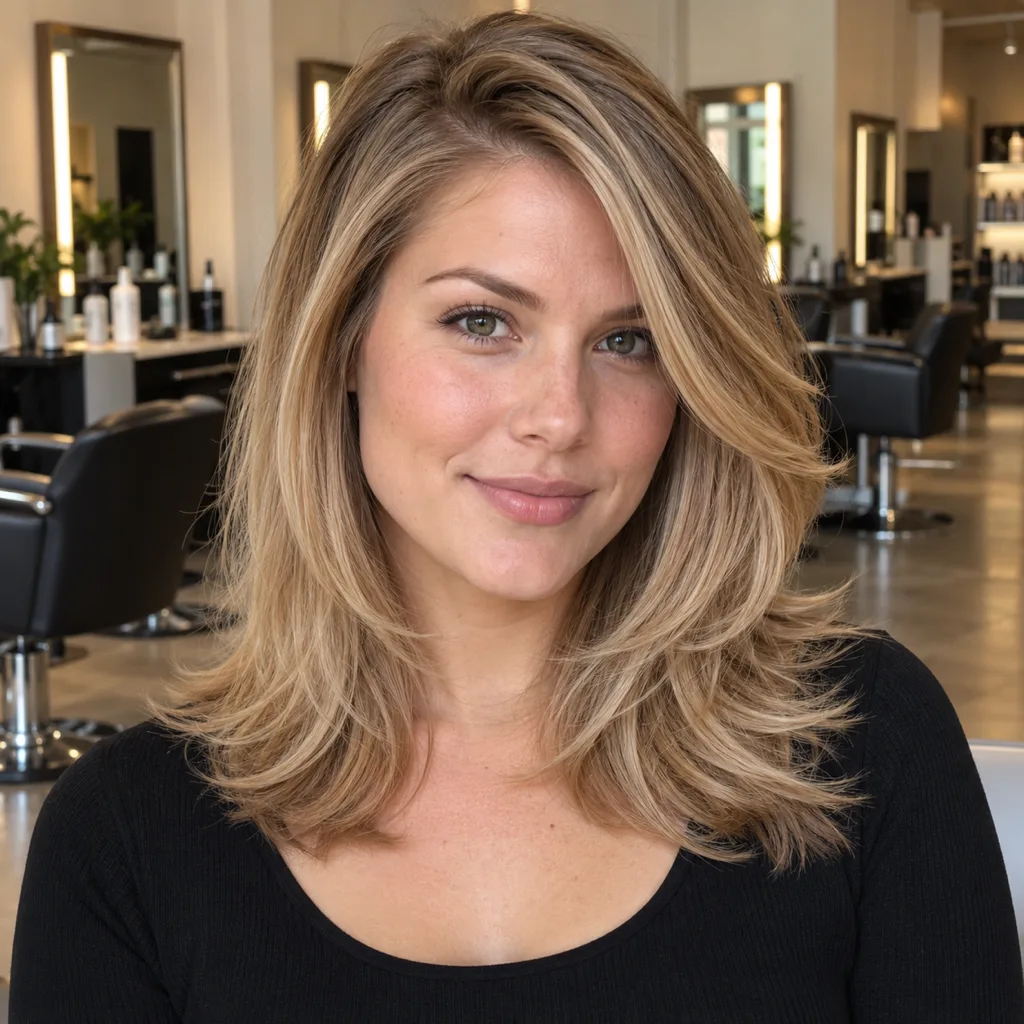
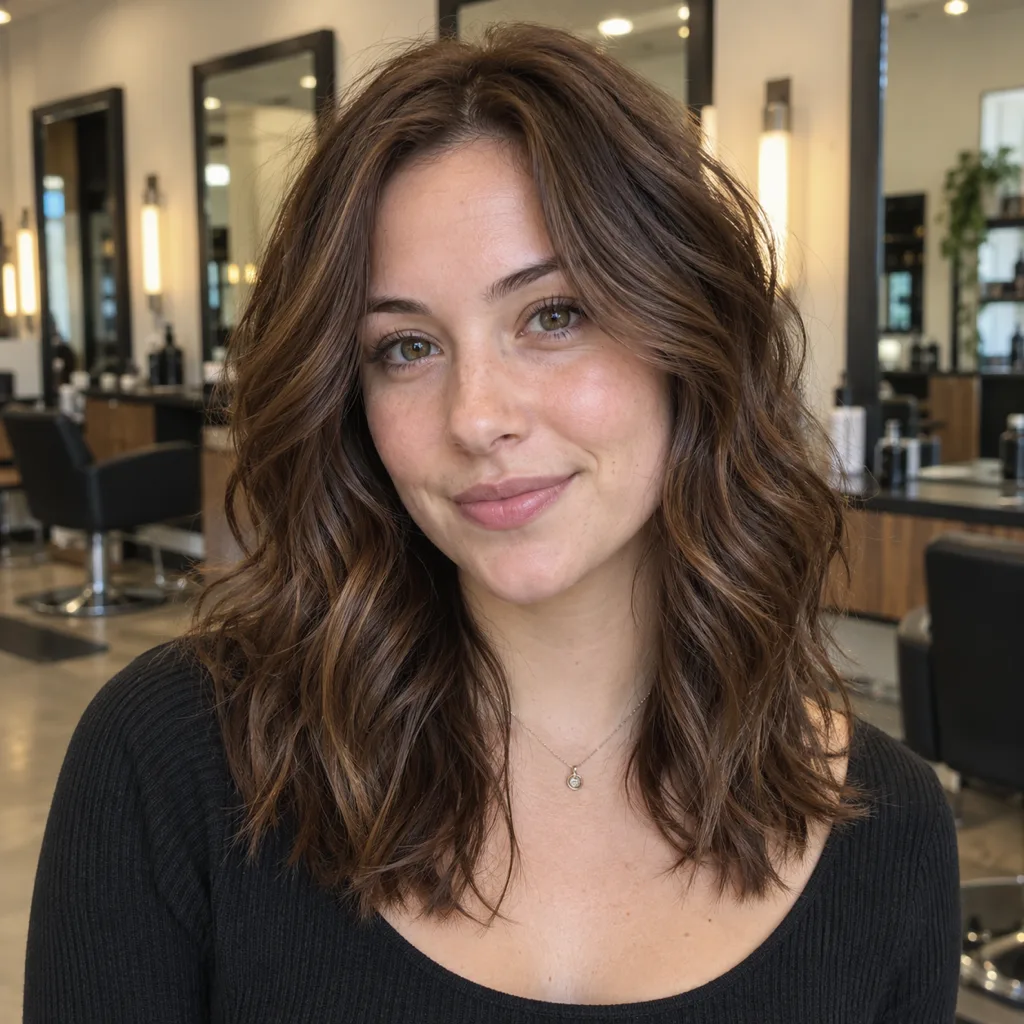
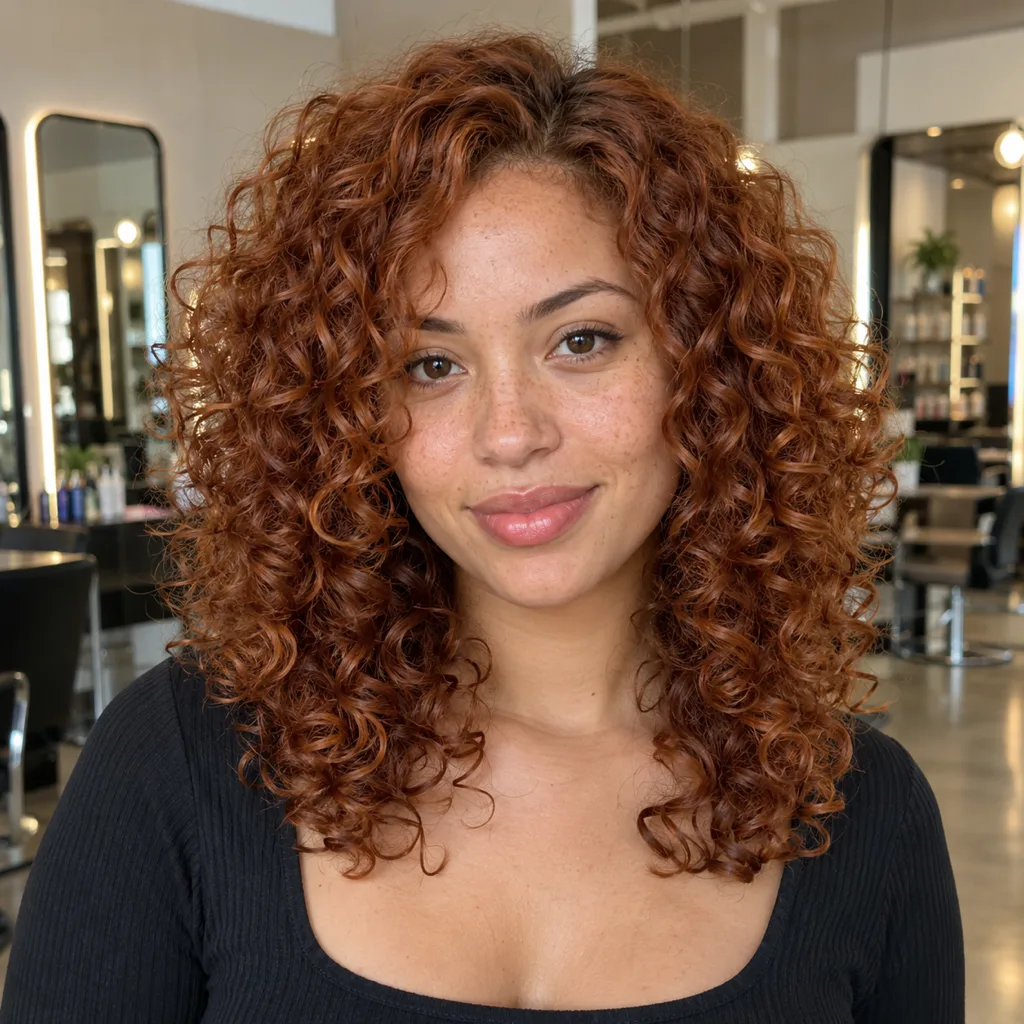
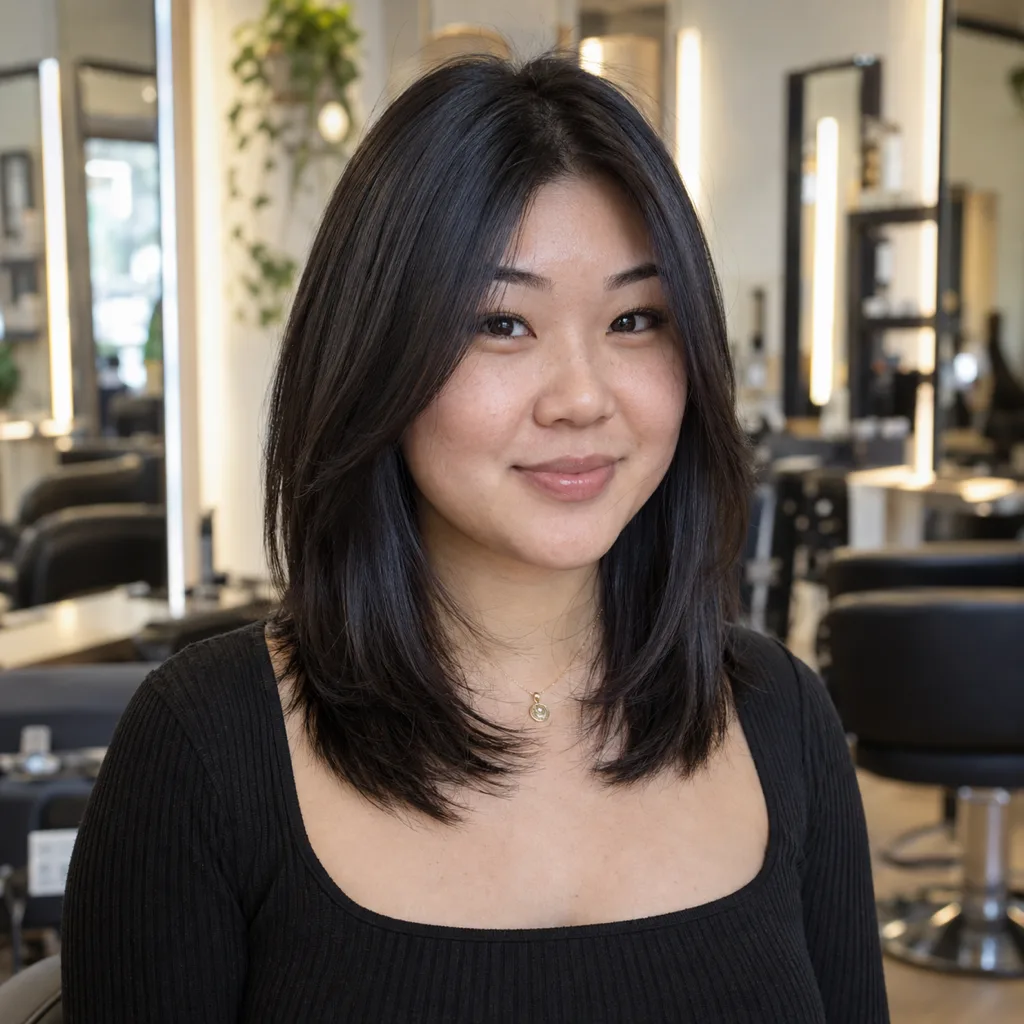
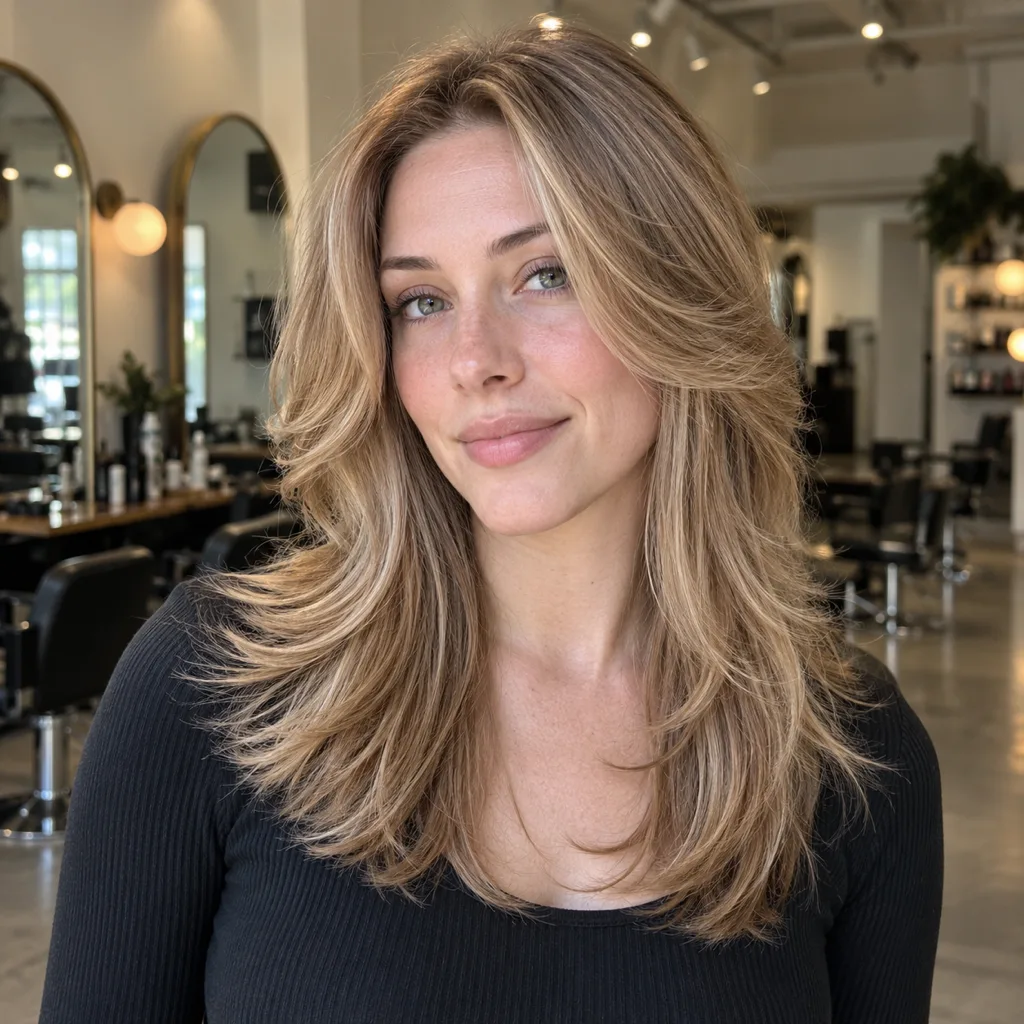
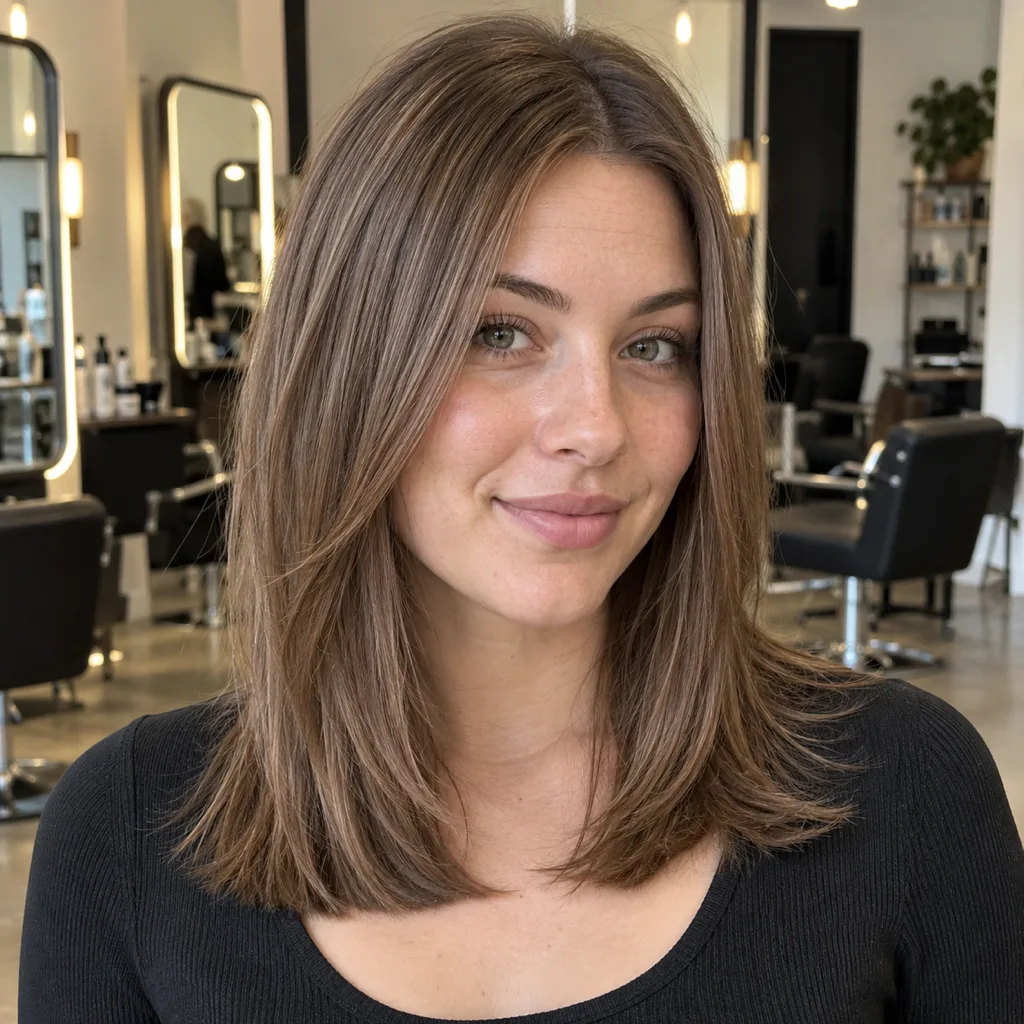
Every look below sits in the same length band, collarbone to just past the shoulders, so the only thing that changes from tile to tile is the layering. Read them as a menu of where the short pieces can go. Tap any one to try it on your own photo.
Gallery14 photos · tap to enlarge
 Try this on me
 Try this on me
 Try this on me
 Try this on me
 Try this on me
 Try this on me
 Try this on me
 Try this on me
 Try this on me
 Try this on me
 Try this on me
 Try this on me
 Try this on me
 Try this on me
If you only take one thing from the gallery: the face-framing, curtain bang and side-swept versions change your face the most, because their short pieces sit right next to it. The lob, ghost layers and V-cut barely touch your face at all. They change how the hair moves, not how wide or long your face reads.
Yours could be here.
Start with one selfie.
One photo, twenty seconds, and you'll know. Free account, no card for your first render.
Which medium layered haircut suits your face shape?
Match the shortest layer to the part of your face you want to soften. Short pieces add width where they end, so put them where you want width and keep them away from where you do not.
| Face shape | Shortest layer should start | Go for | Skip |
|---|---|---|---|
| Round | 2 inches below the chin | Long layers, deep side part | Layers ending at the cheeks, blunt full bangs |
| Oval | Anywhere | Curtain bangs, butterfly, shag | Nothing, pick by hair type |
| Square | Chin, cut soft | Face-framing, wavy layers | Blunt ends at the jaw |
| Heart | Chin or just below | Wavy layers, curtain bangs | Big volume at the crown |
| Long | Cheekbone | Curtain bangs, feathered layers | Long layers only, middle part with flat sides |
The full breakdown for each shape is in our face shape guide. Here are the two that ask the most questions.
Medium layered haircuts for a round face
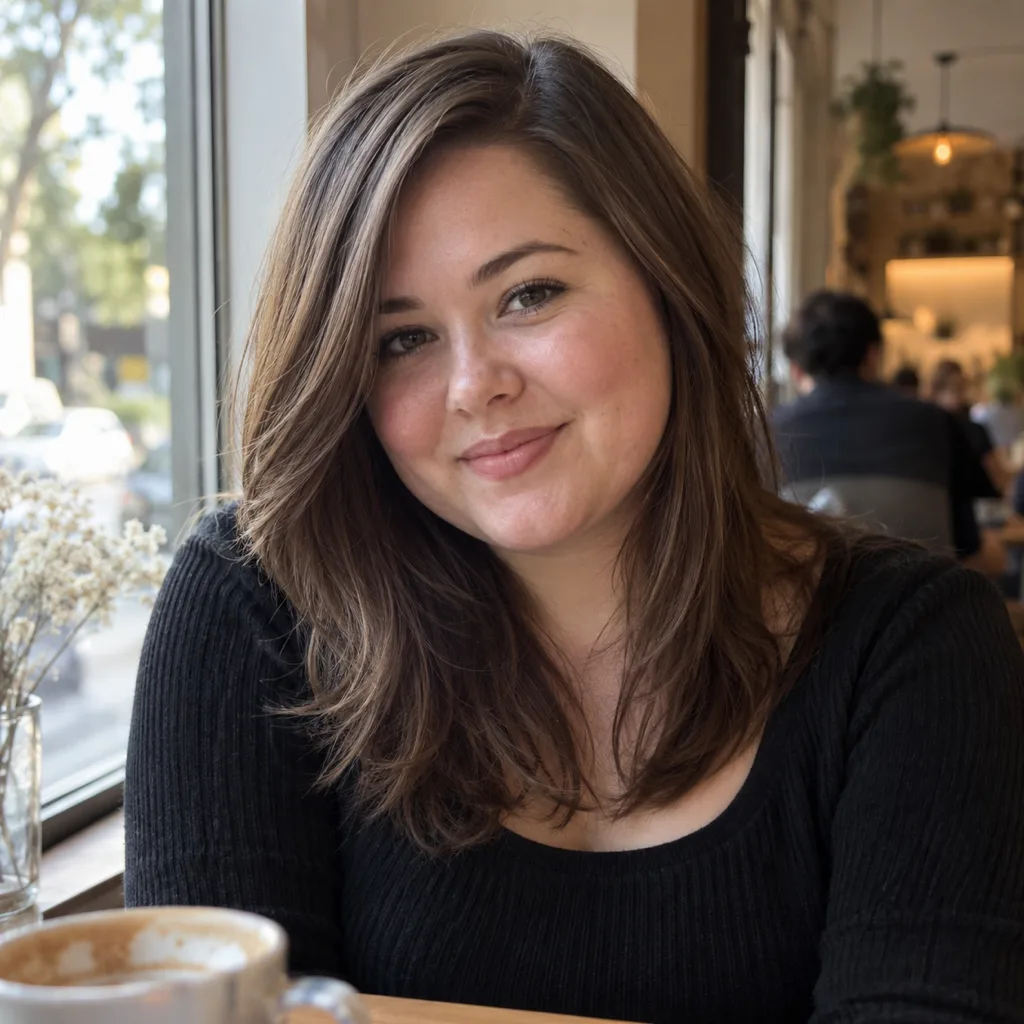
Keep every layer below the chin. The moment a short piece ends at cheek level, it adds width exactly where a round face already has it. A deep side part breaks the symmetry, and long layers falling past the collarbone draw the eye down. Skip heavy blunt bangs. If you want bangs, long side bangs work better than a straight-across fringe.
Medium layered haircuts for a long face
A long face wants width at the cheekbones and less height on top. Curtain bangs that end at the cheekbone do both. Feathered layers flicked back from the face add the same width without the bang commitment. Avoid a flat middle part with all your volume at the ends, which makes the face read longer.
Not sure which face shape you have?
Most people guess wrong, usually between oval and long, or round and square. Measure instead of guessing:
Measure it instead of guessing
Both numbers in the same unit — the answer is a ratio, so it does not matter which.
Under 1.15 reads round, 1.15 to 1.5 reads oval, over 1.5 reads long. Oval and long split on the jaw rather than the ratio: an oval tapers toward the chin, a long face runs straight down.
Medium layered haircuts by hair type
Face shape decides where the layers start. Hair type decides how many you can afford. This is the part people skip, and it is why the same cut that looked full on Pinterest looks thin on you.
Fine or thin hair

Fewer layers, not more. Every layer removes hair from the ends, and fine hair has none to spare. Ask for long layers only near the bottom, or ghost layers hidden underneath, so the perimeter still looks thick at the shoulders. A heavily layered butterfly cut on fine hair often turns see-through at the ends by the second wash.
Thick hair
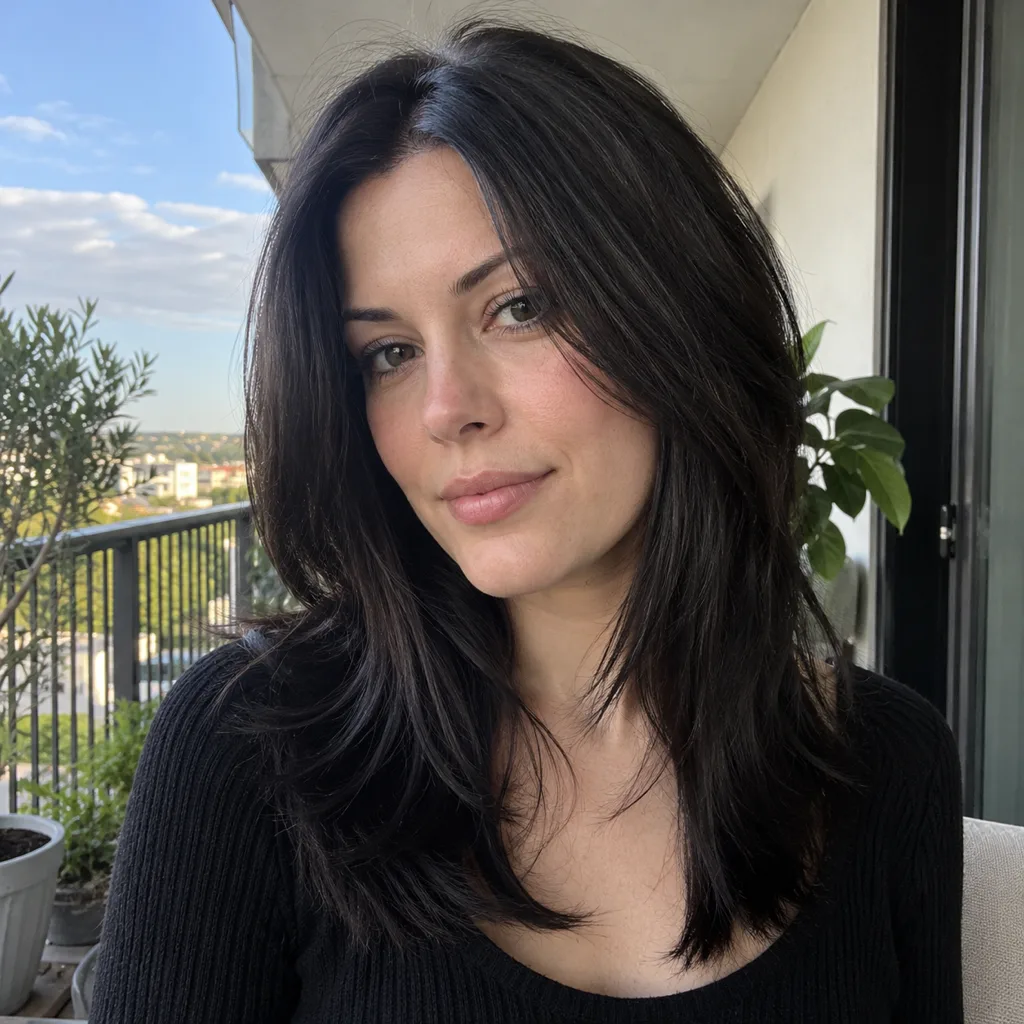
Thick hair is the opposite problem: without layers it puffs out into a triangle. Ask for internal or removal layers, cut inside the hair rather than on top, so the sides lie flat and the ends move. A shag or a wolf cut also works, because their choppy layers break up the bulk.
Wavy and curly hair
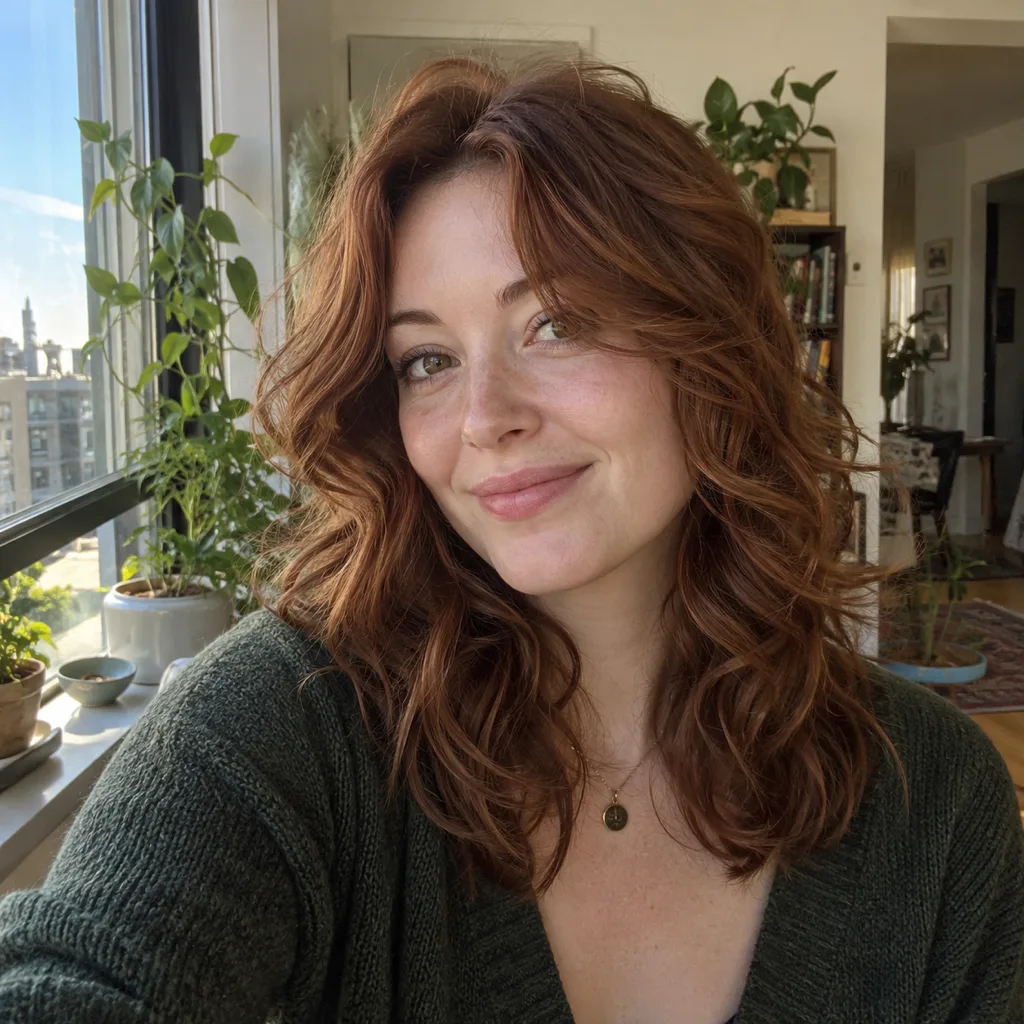
Waves and curls need layers more than straight hair does. One length pulls the top flat and leaves all the volume at the bottom. Layers starting at the chin let the waves stack around your face. Curls should be cut dry, curl by curl, so the stylist sees where each one lands. If you are not sure of your pattern, start with our 2b hair guide.
Mistakes that cost you a grow-out
Layers grow out slowly. A wrong one takes four to six months to disappear, so these are the expensive ones.
- Layers starting too high. A layer at the cheekbone on a round face adds width you then wait months to lose. Say the landmark out loud: "nothing shorter than my chin."
- Too many layers on fine hair. The ends turn wispy and the cut looks shorter than it is.
- Choppy layers on hair you never blow-dry. Butterfly and feathered layers need a round brush. Air-dried, they look unfinished.
- Bringing one photo of a different hair type. A curly cut photographed on straight hair will not land the same on yours. Bring photos of your own texture.
- Skipping the trim. Face-framing layers lose their shape after about 10 weeks, and frayed ends from heat styling make it worse. The American Academy of Dermatology recommends going easy on heat for exactly that reason.
How to ask for a medium layered haircut
Stylists hear "layers" and pick their own height. Give them the landmarks instead. This is the line to say:
Say this to your barber
I want to keep the length at my collarbone, with soft layers starting at my chin and face-framing pieces around the front, point cut so the ends stay soft, not choppy.
How to ask for a medium layered haircut
- Name the length
Say where the longest hair should land: collarbone, shoulders or just past them. Point to it.
- Name where the shortest layer starts
Chin, cheekbone or collarbone. This one sentence decides how the cut frames your face.
- Say how soft the ends should be
"Point cut" or "slide cut" for soft, separated ends. "Blunt" if you want weight at the bottom.
- Say how you style it
Tell them if you air-dry or blow-dry. Butterfly and feathered layers only work with a blowout.
- Show two photos
One of the cut you want and one of what you do not want, both on hair like yours.
Can you see it on your own face first?
The manual method above works. You can measure your face, match the layer height, bring good photos and say the right sentence. The wall it hits is that you still cannot see the cut on your own face until it is done, and layers take months to grow out if you guessed wrong.
That is what HairstyleAtlas is for. Upload one selfie and see a layered cut, or curtain bangs on your face, before anyone picks up scissors. The first look is free and needs no card. After that, plans start at $9 a month.
If you want one medium layered haircut that works for nearly everyone, ask for face-framing layers starting at the chin, point cut, with the length at your collarbone. Then adjust one thing: drop the shortest layer lower for a round face, raise it to the cheekbone with curtain bangs for a long face, use fewer layers if your hair is fine and internal ones if it is thick. Where the shortest layer starts matters more than any name on the menu.
Frequently asked questions
Face-framing layers starting at the chin are the safest pick for most people, because they add movement without changing the length. If your hair is fine, a lob with ghost layers keeps more fullness. If it is thick or wavy, a soft shag removes bulk better.
A butterfly cut is a layered haircut with very short layers around the face, often starting at the chin, and longer layers underneath. Blown out with a round brush, the short layers flip out like wings and add volume at the crown and sides. It needs styling to look like the photo.
Yes, if there are few of them. Long layers near the ends or ghost layers hidden underneath add movement without thinning the perimeter. Many short layers on fine hair make the ends look wispy and see-through.
Long layers that start at or below the collarbone, and ghost layers cut under the top section. Both keep the outline of the cut solid. Skip butterfly and shag layers unless you blow-dry every day.
Cuts with volume or short layers ending at the cheeks, heavy blunt bangs, and a chin-length bob with a middle part all make a round face look wider. Keep layers below the chin and use a side part.
Name three landmarks: where the longest hair ends, where the shortest layer starts, and how soft the ends should be. For example: "length at my collarbone, layers starting at my chin, point cut." Bring a photo on hair like yours.
It depends on where the layers sit. Face-framing layers, butterfly cut, shag, wolf cut, feathered cut and ghost layers are all layered haircuts. At medium length, most stylists just call it a medium layered cut and ask where you want the layers to start.
The common home method is the ponytail cut: brush the hair into a ponytail at the front of the head, slide it forward and trim straight across, then point cut the ends to soften them. It gives rough face-framing layers but no control over where each one starts, so for a first layered cut a stylist is worth it.
Preview it on your own photo: Virtual Hair Color Try-On.
Share article
About the author
More articles
Women's Haircuts · 13 min
Demi Permanent Hair Color: 14 Shades and the One Rule
Demi permanent hair color deepens, tones and adds shine for about 24 to 28 shampoos, then fades with no root line. It cannot lighten. 14 shades, who it suits, and how it compares to semi and permanent dye.
Women's Haircuts · 13 min
Light Brown Hair: 14 Shades and Which One Suits Your Skin
Light brown is a level 5 or 6, but the tone decides whether it flatters you. See 14 shades from ash to caramel, match one to your skin, and learn what to say in the chair.
Women's Haircuts · 15 min
3B Hair: How to Tell, 14 Cuts for Spiral Curls, and a Routine
3B hair is springy spiral curls about the width of a marker, and it is longer than it looks: shrinkage hides inches, which is why wet cuts go wrong. Here is how to confirm you are 3B, fourteen cuts on 3B curls, a wash day routine and the products to skip.