Blowout Hair: 14 Looks and How to Do a Salon Blowout at Home
Oleh Onysko 11 November 2026 12 min read
In this article
Blowout hair is hair dried smooth with a round brush and a hair dryer, so it comes out lifted at the root, glossy down the lengths and bent softly at the ends. The whole look is set in the last minute of drying: hair keeps the shape it has when it cools, so the cool shot matters more than the heat.
Below: the blowout types side by side, 14 finishes on different lengths and textures, a step by step routine for doing it at home, which version suits your hair type, and how to make it last until day four.
What is a blowout?
A blowout is a styling finish, not a haircut. You wash the hair, then dry it section by section over a round brush while the dryer airflow points down the hair shaft. The brush gives tension (which smooths), the heat makes the hair pliable, and the cool shot locks the bend in place.
It is not a silk press, which uses a flat iron after drying to get bone straight hair. It is not curls from a curling iron either. A blowout keeps air and movement in the hair: you can run your fingers through it and it falls back into shape.
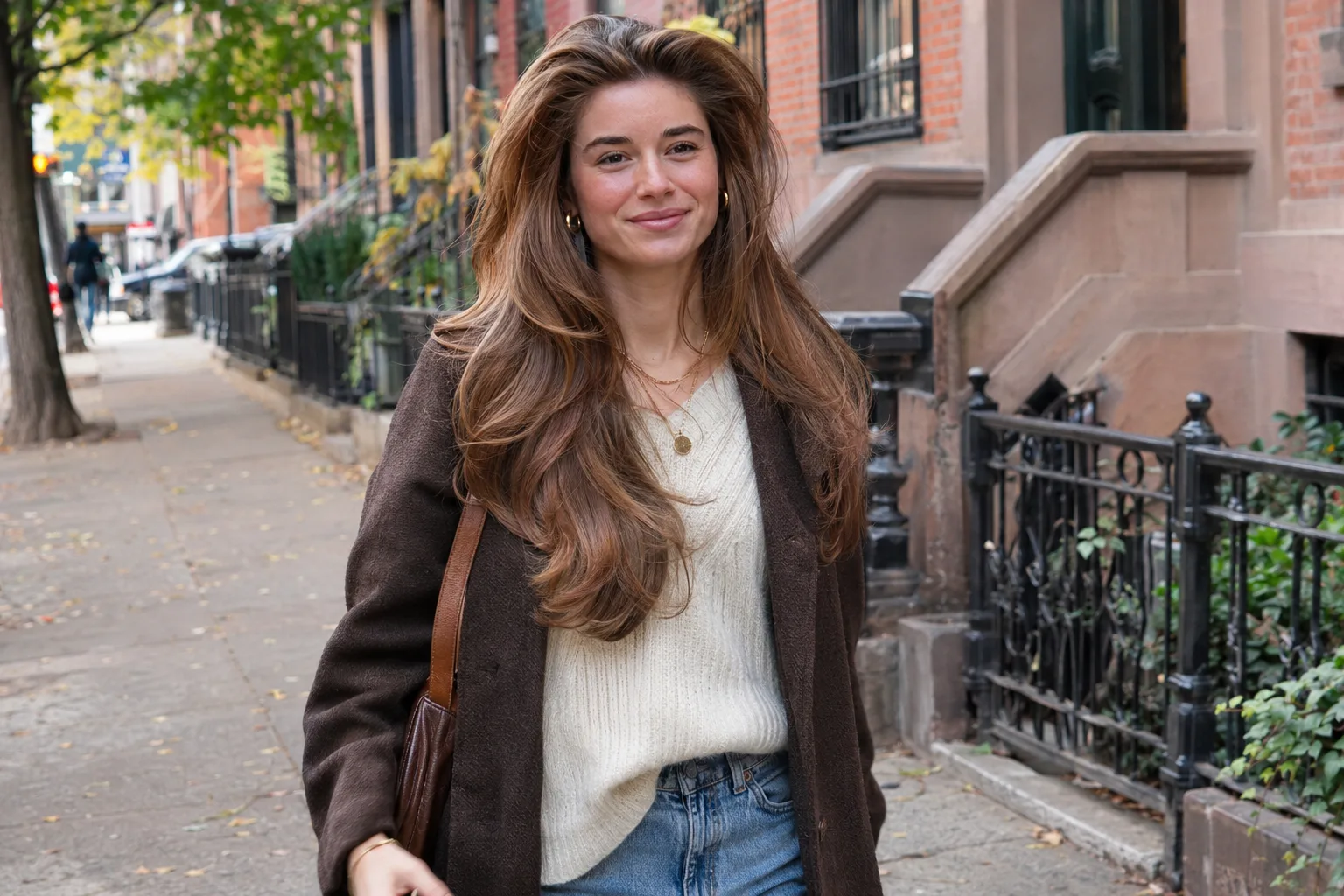
The 90s version you see all over your feed is the same technique pushed further: a bigger brush at the crown for more lift, and the front sections dried away from the face so they swoop back like the woman above. If you like the decade, our look at 1990s hairstyles shows where it came from.
Want to see it first? Try a new hairstyle on your own photo.
Types of blowout compared
Every blowout is one of a few finishes. The difference is mostly brush size and where you aim the lift. Pick the finish first, then the tools follow.
| Blowout type | Brush | Finish | Best on | Lasts |
|---|---|---|---|---|
| Sleek | Paddle, then a medium round | Smooth, flat at the root, slight bend at the ends | Thick or coarse hair | 3 to 5 days |
| Bouncy (90s) | Large round, 2 to 3 inches | Big crown lift, ends swept away from the face | Medium to long, fine to medium density | 2 to 4 days |
| Volume | Large round plus velcro rollers | Maximum lift, fullness wider than the shoulders | Fine or flat hair | 1 to 3 days |
| Flipped | Medium round, rolled outward | Ends flick out and up | Shoulder length and bobs | 2 to 3 days |
| Stretched (coily hair) | Paddle or comb attachment | Roots blown straight, full soft lengths, no flat iron | Type 3 and 4 hair | Until the next wash or the first humid day |
The "Lasts" column is a range, not a promise. Oily scalps, humidity and sleeping on cotton pull it down.
14 blowout hair looks, from sleek to 90s bounce
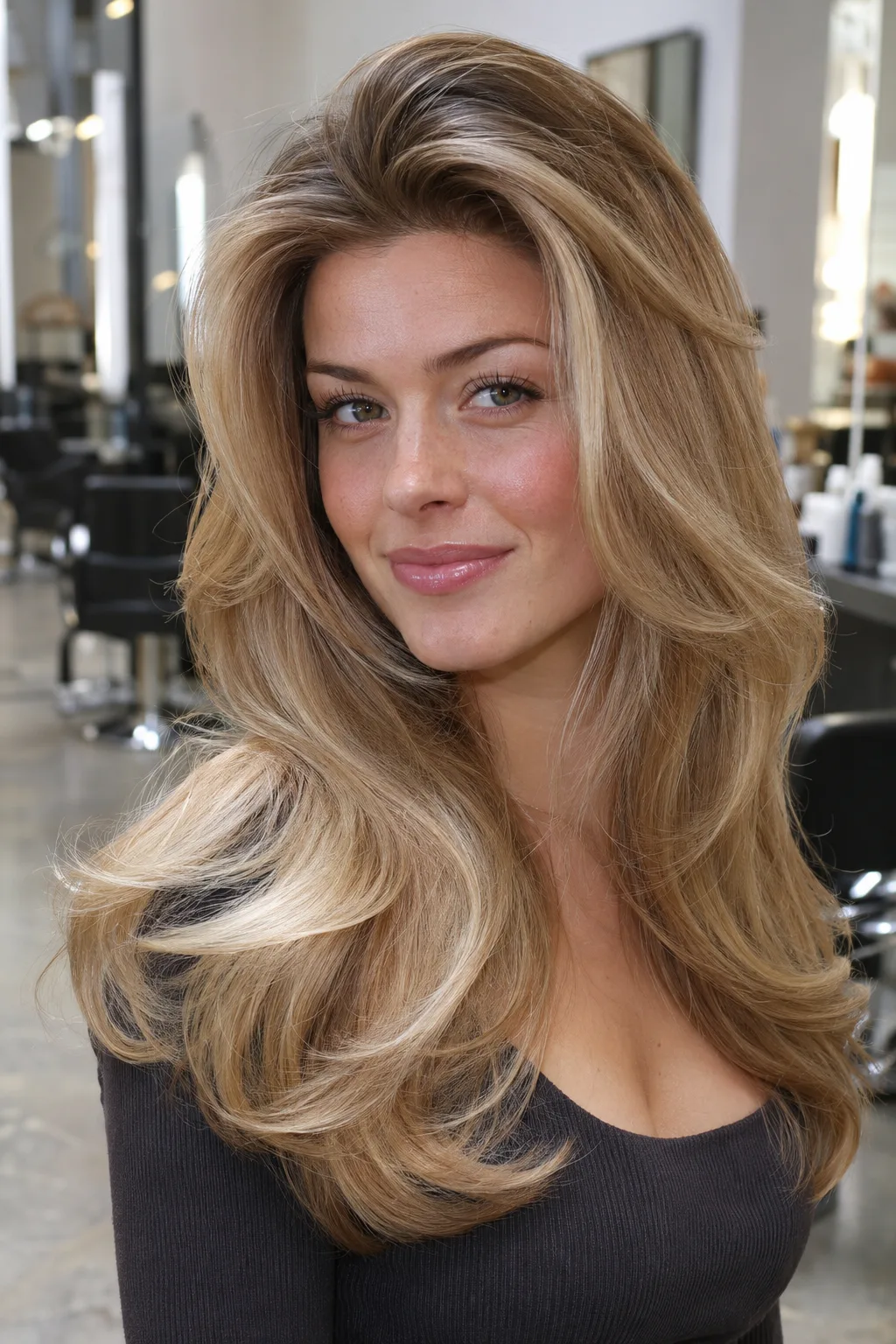
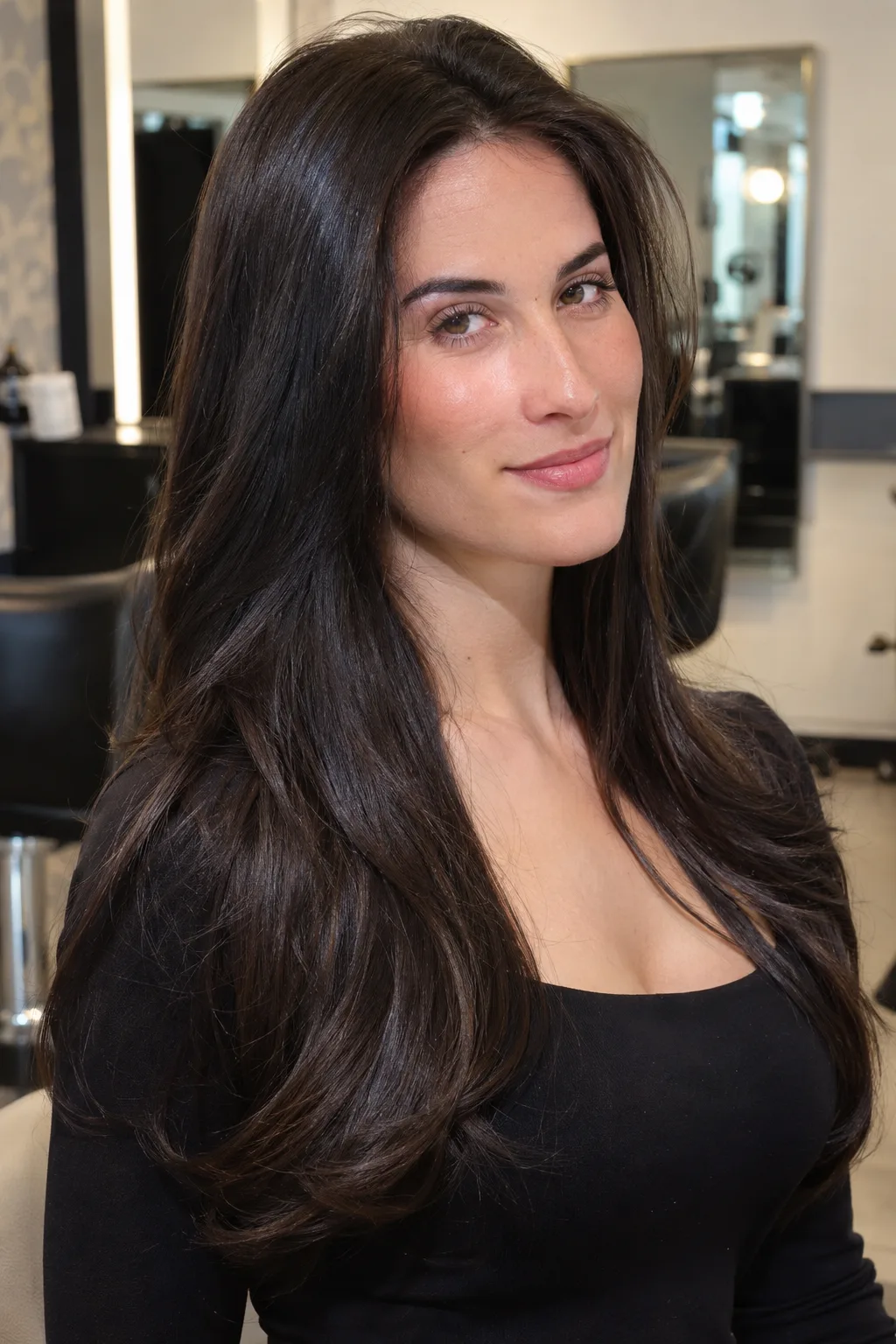
Every picture below is the same technique on a different length, texture and part. The variable is the finish: watch where the lift sits and which way the ends turn. Tap any look to try it on your own photo.
Gallery14 photos · tap to enlarge
 Would this suit me?
 Would this suit me?
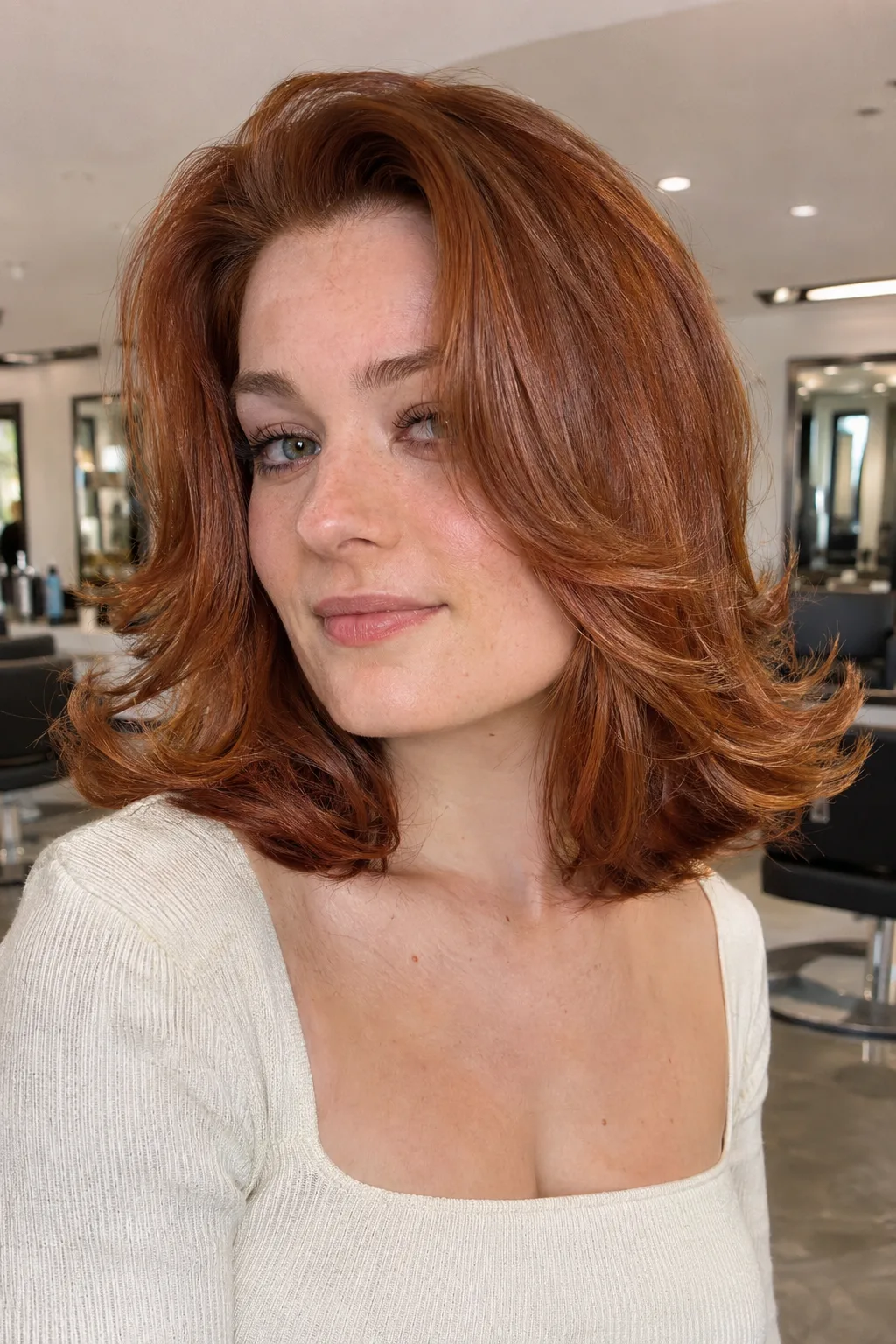 Would this suit me?
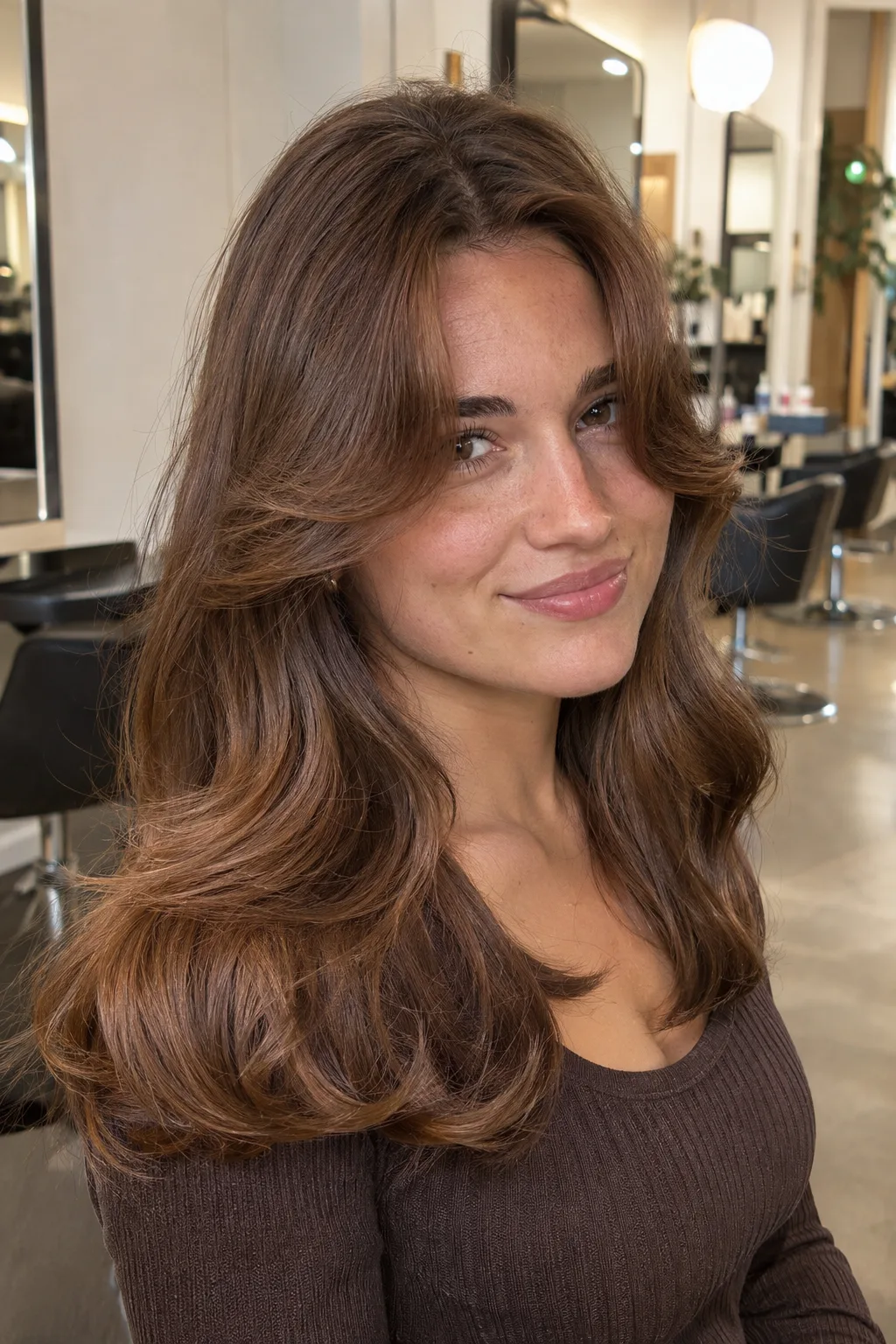 Would this suit me?
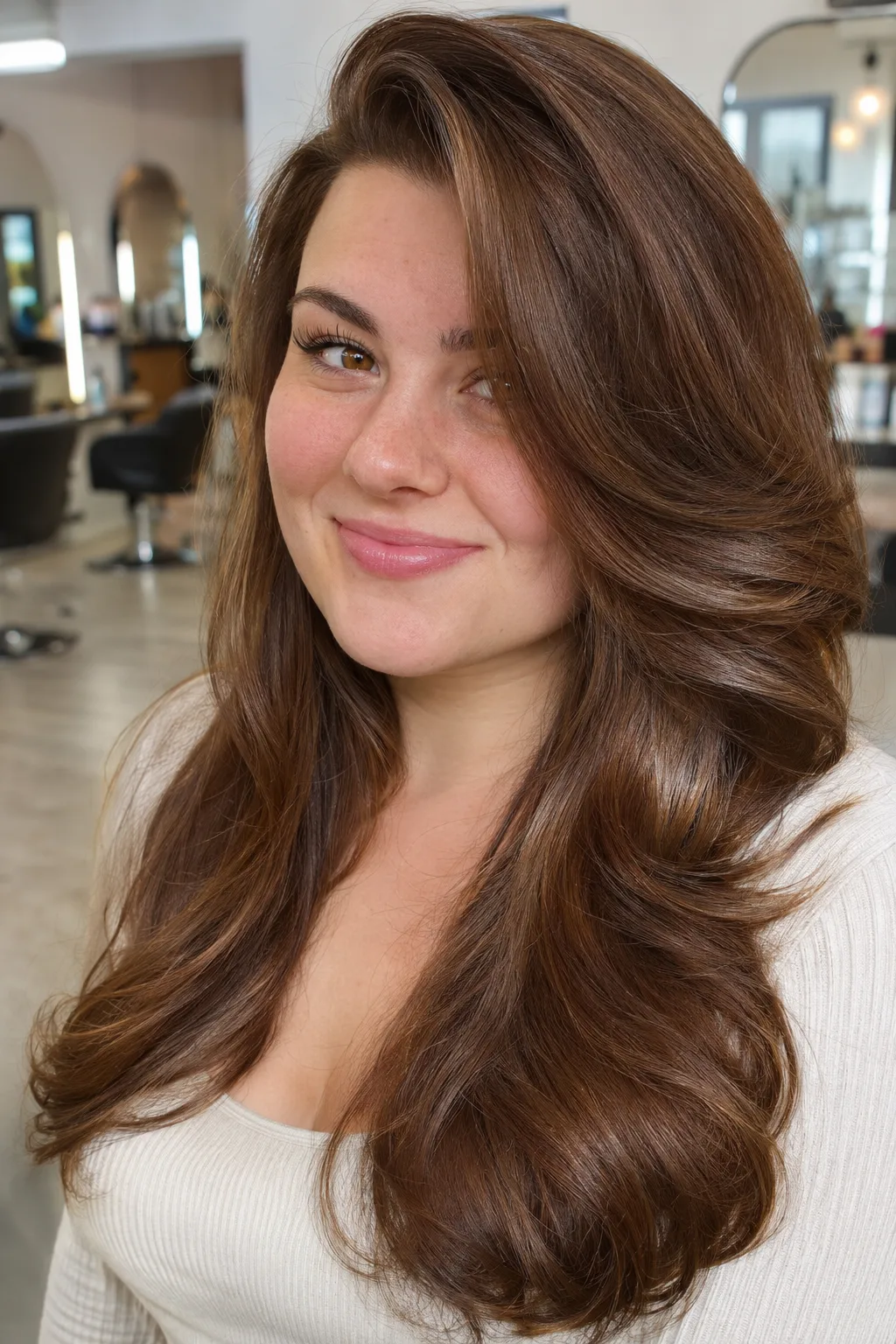 Would this suit me?
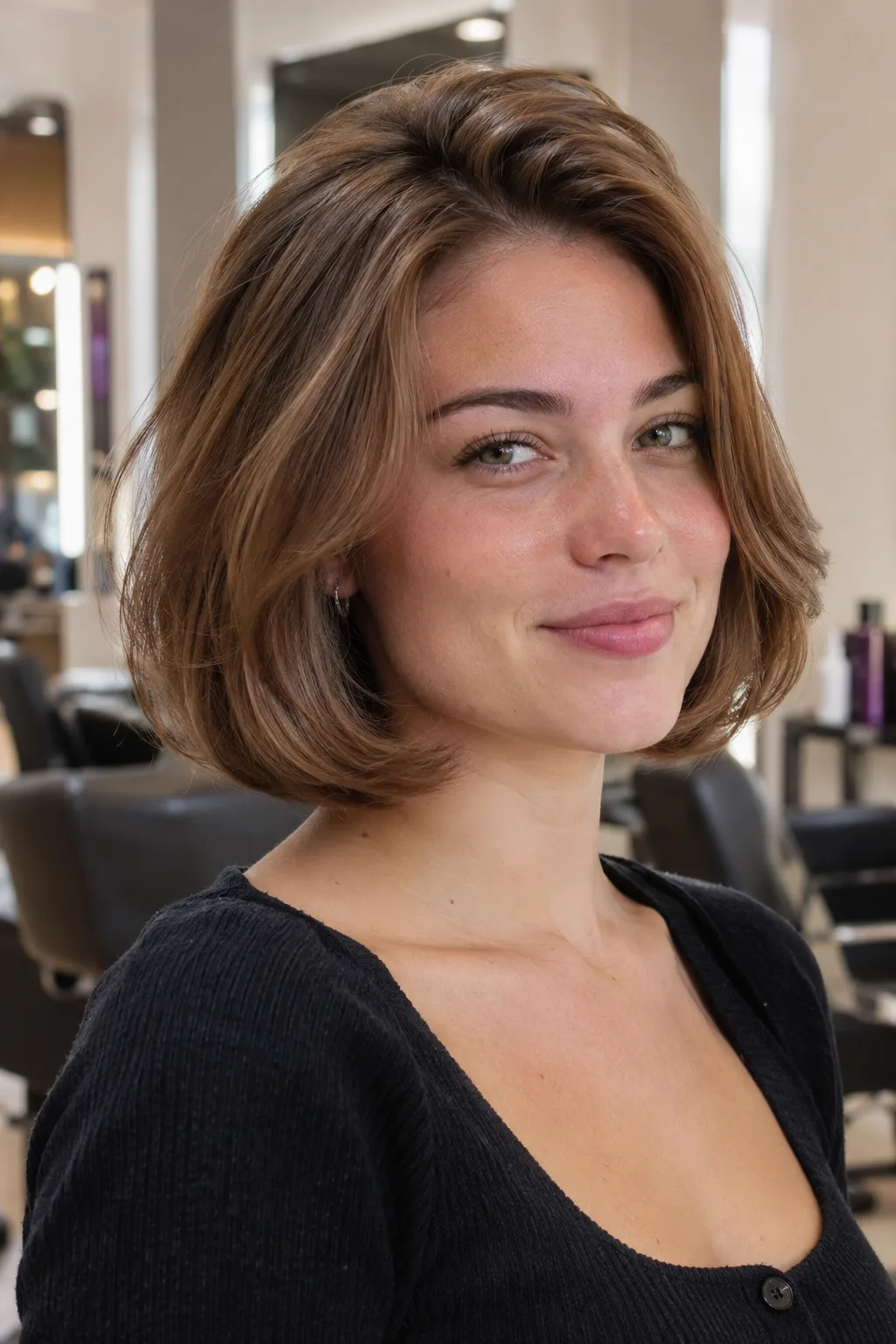 Would this suit me?
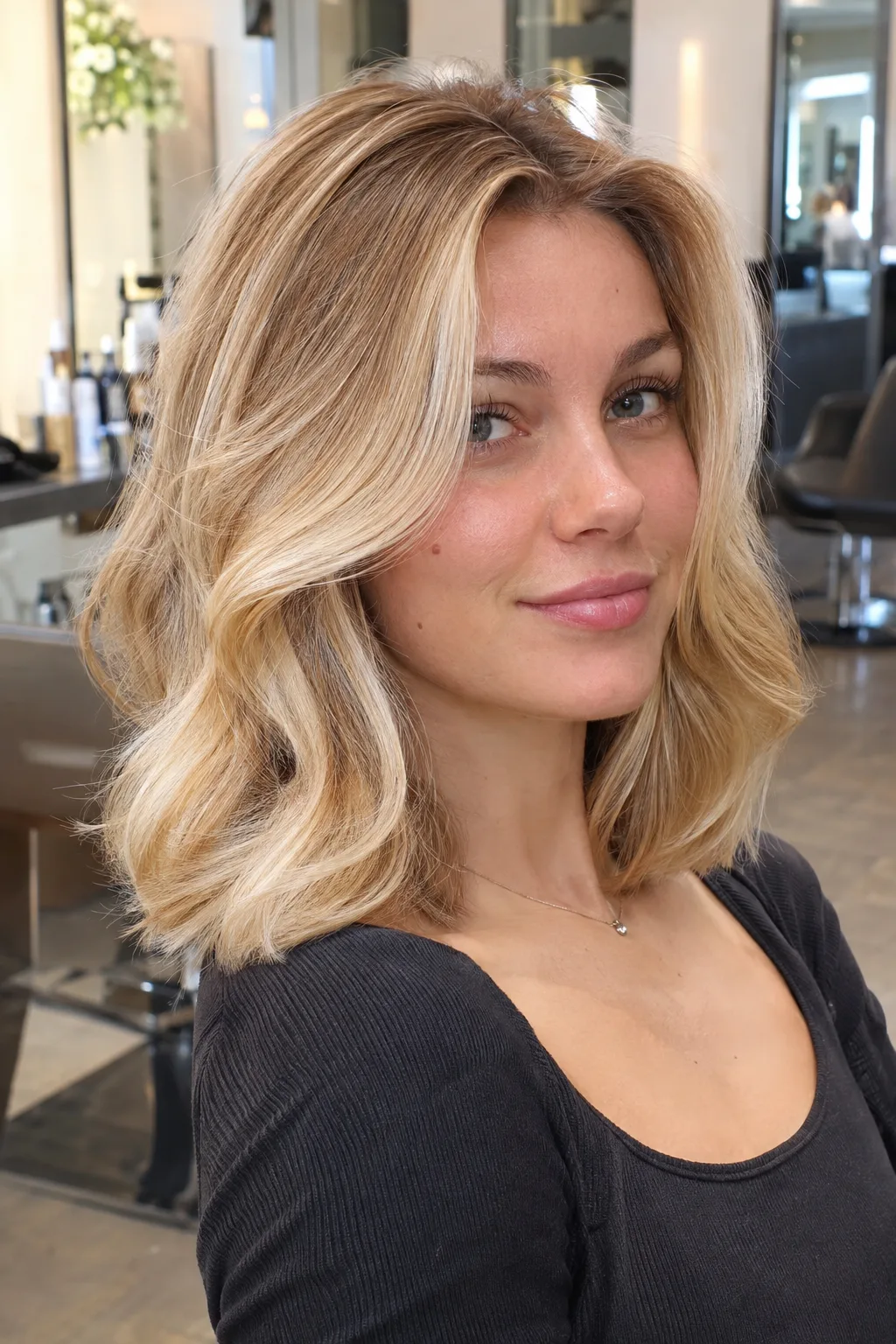 Would this suit me?
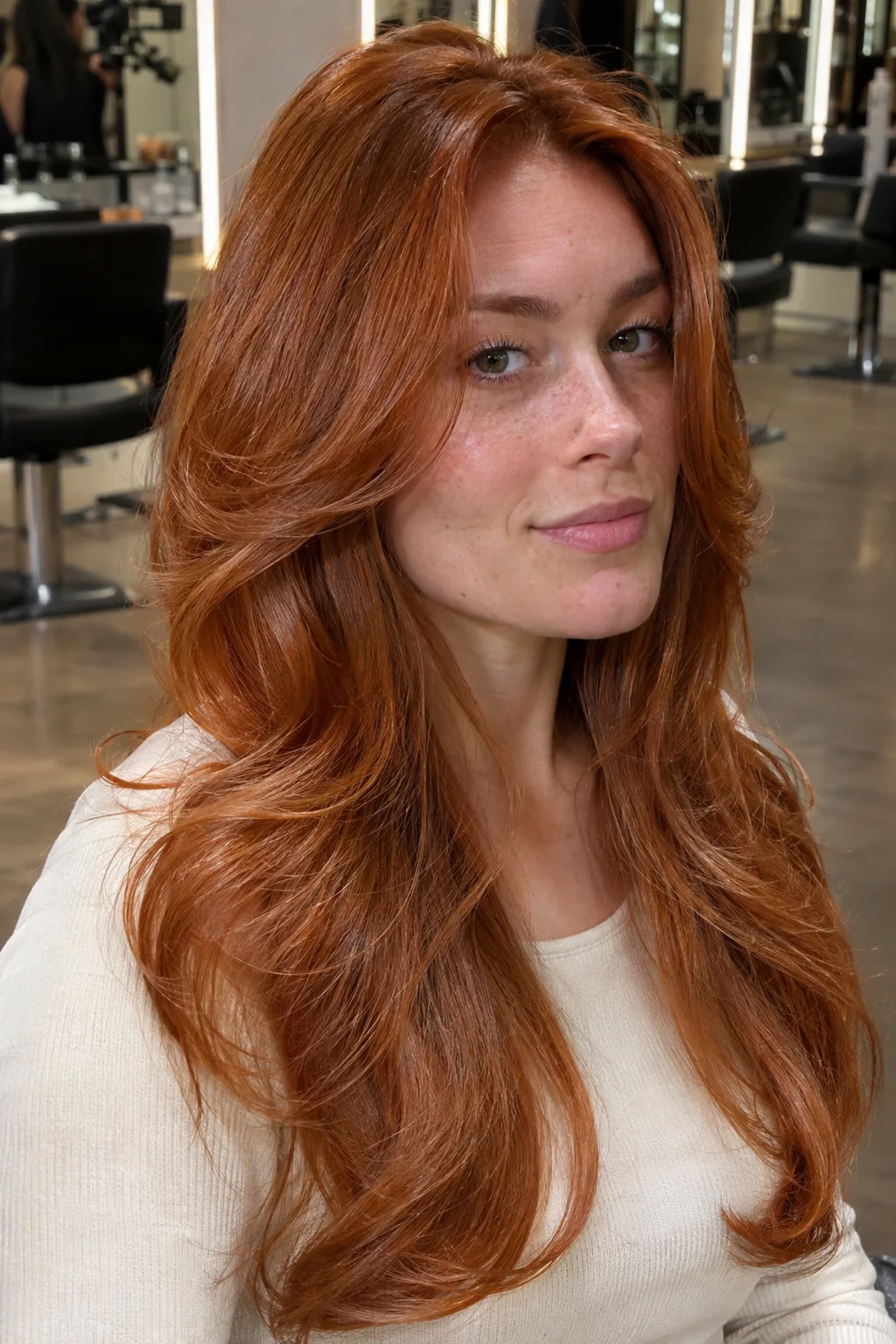 Would this suit me?
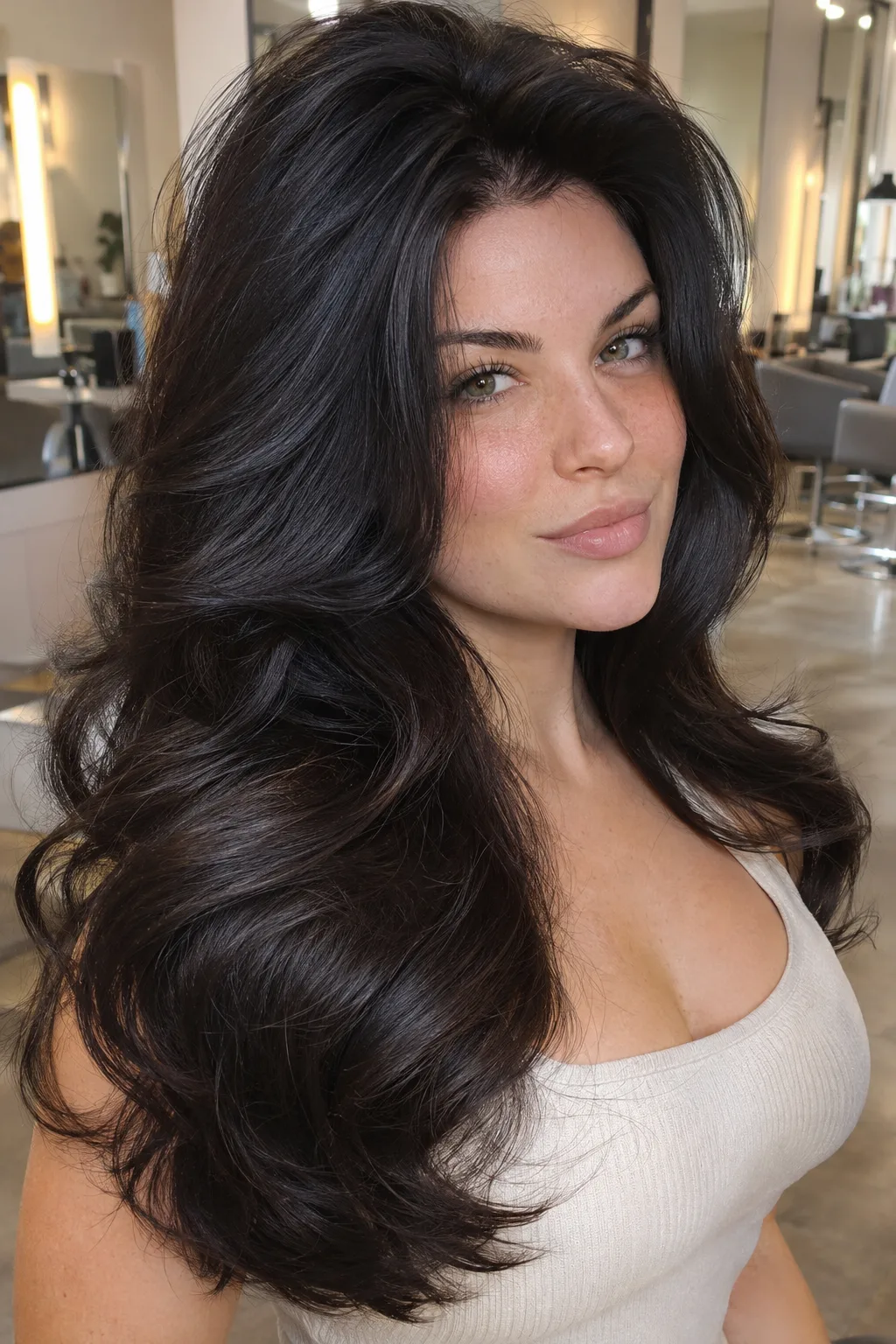 Would this suit me?
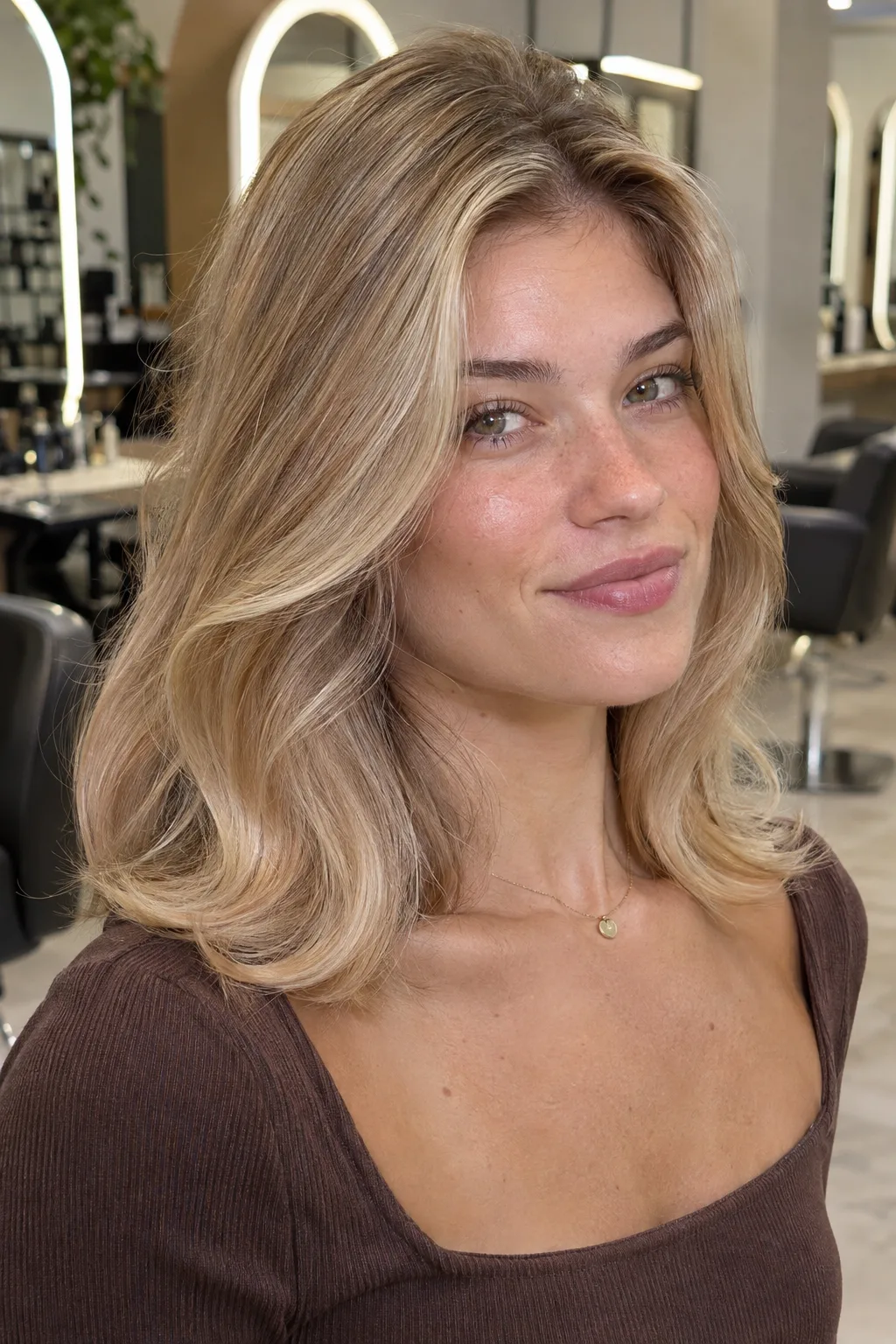 Would this suit me?
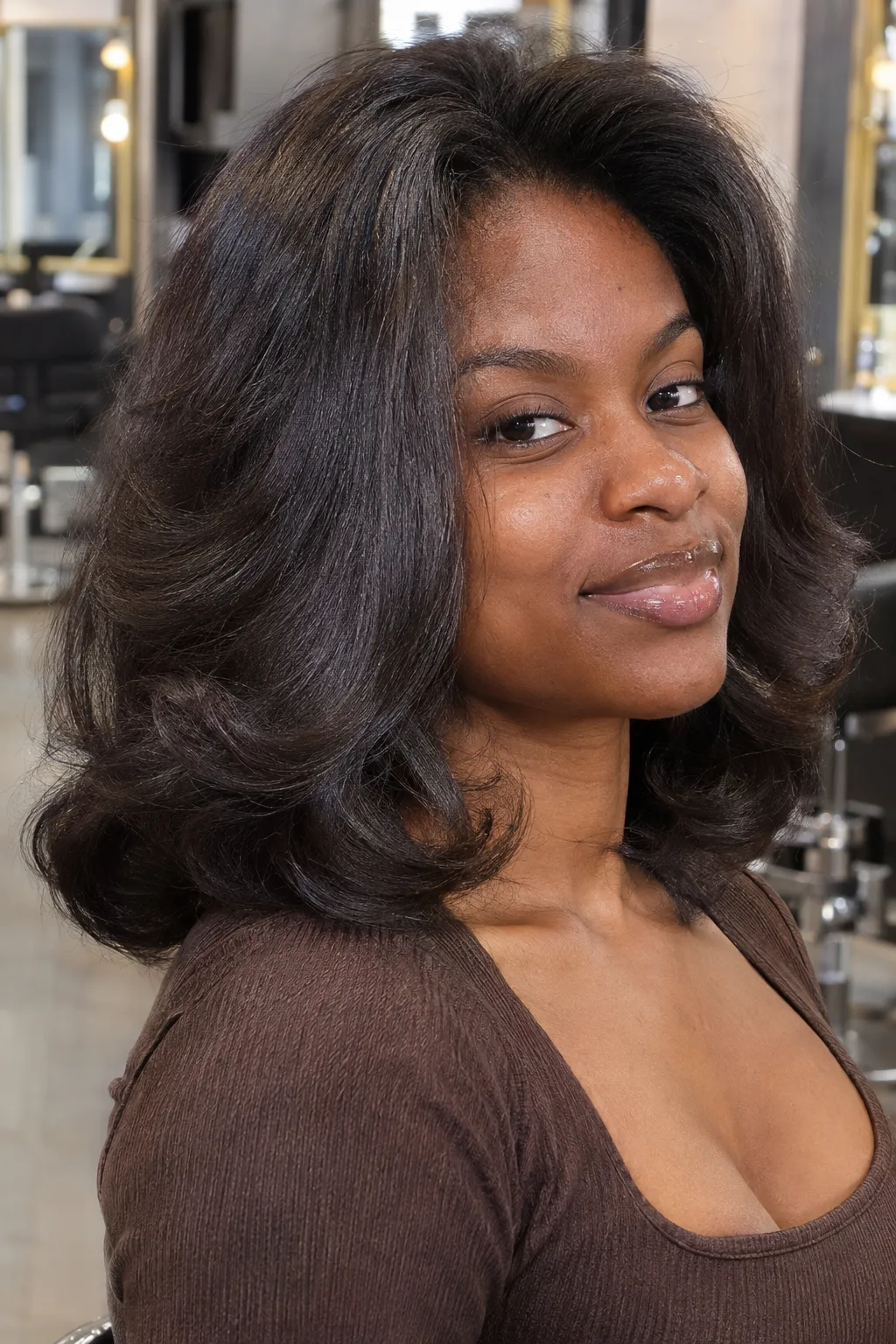 Would this suit me?
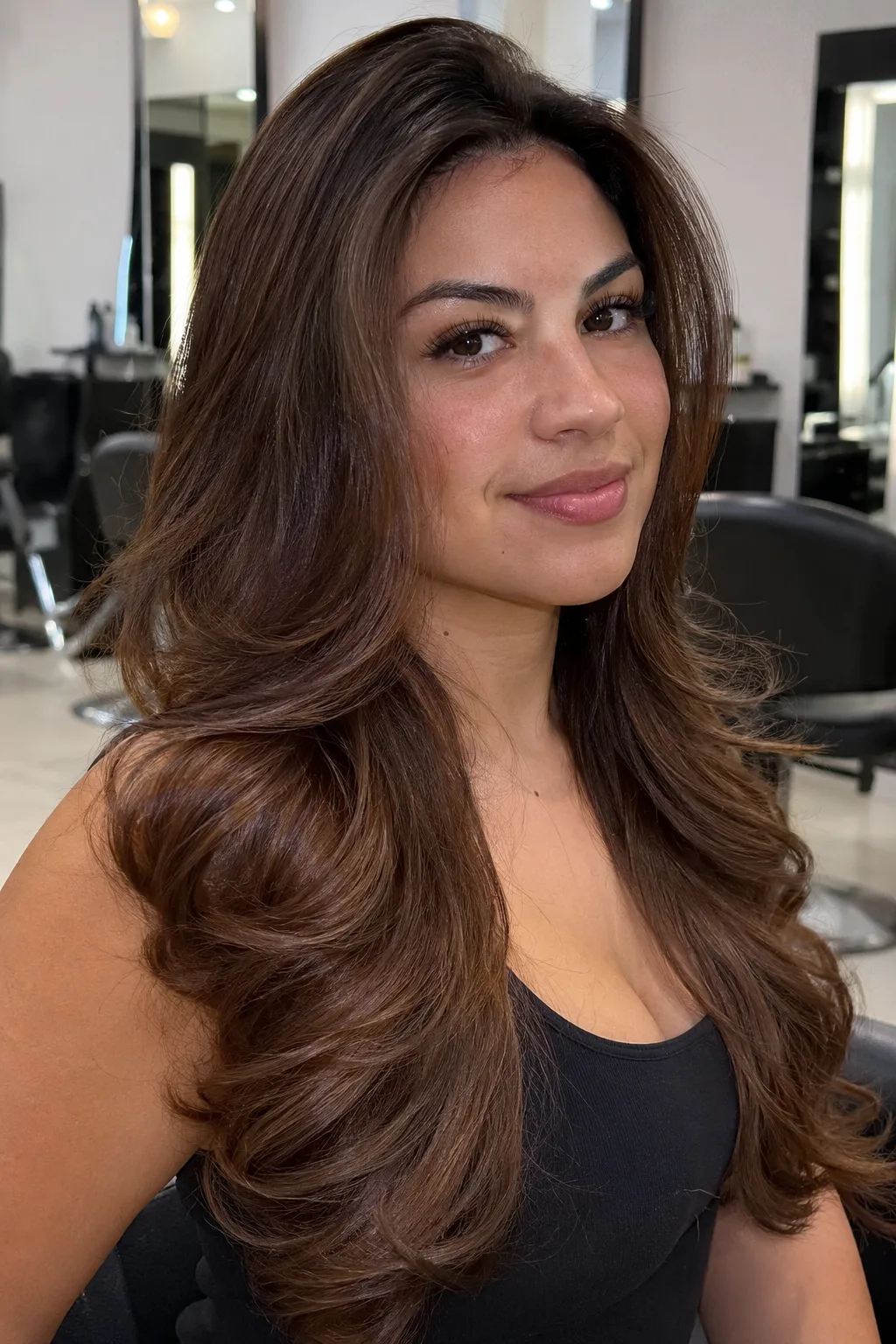 Would this suit me?
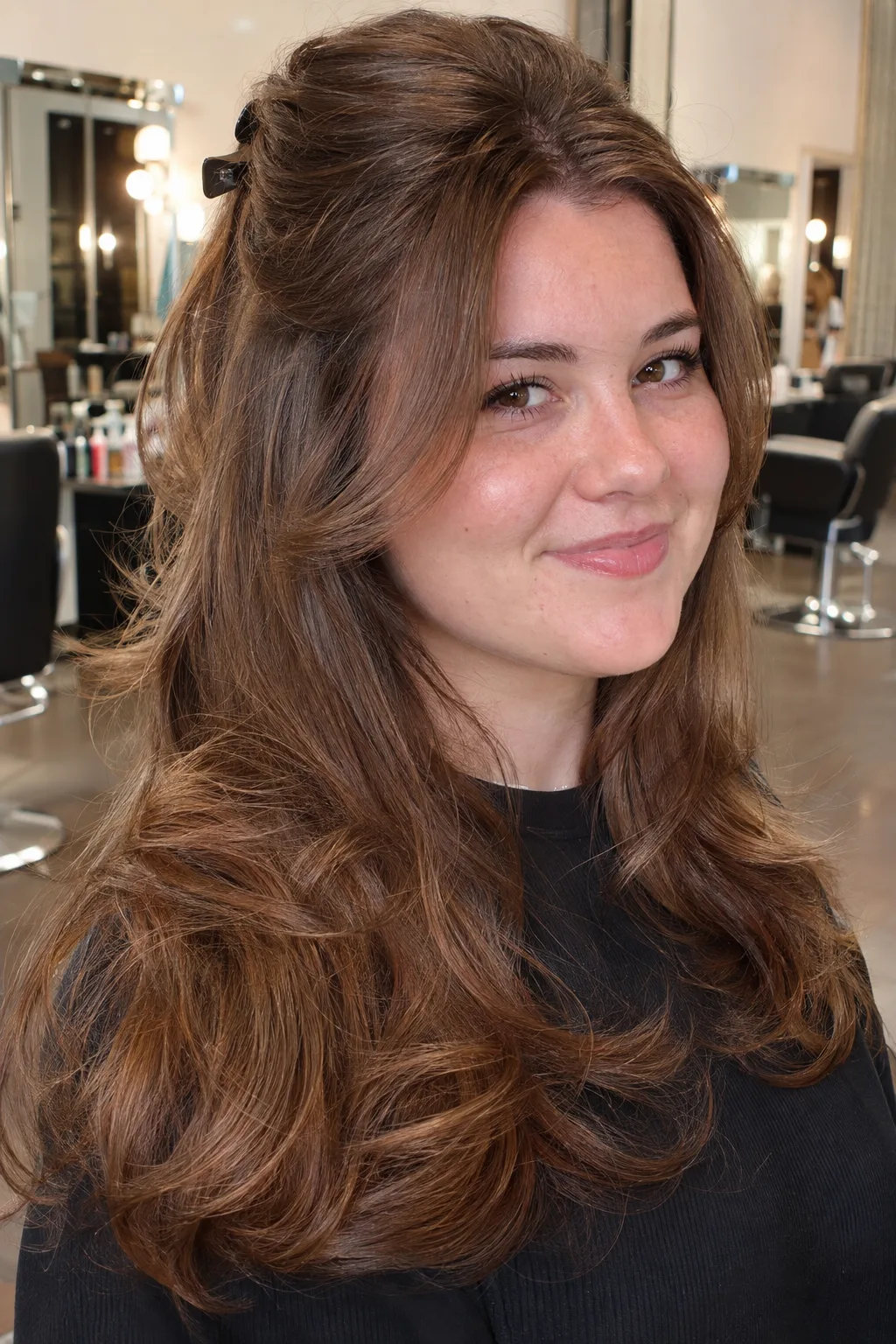 Would this suit me?
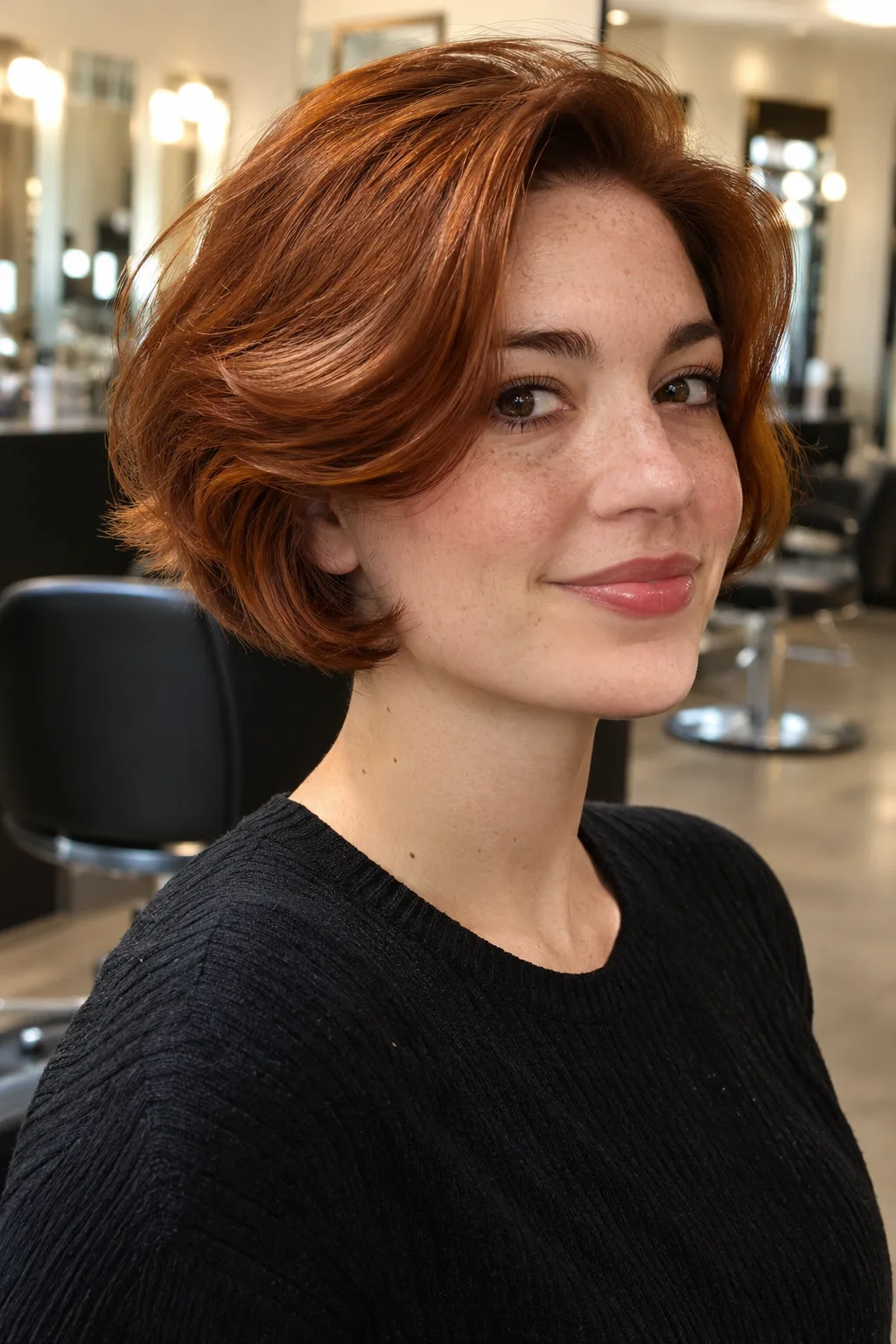 Would this suit me?
Which cut makes you look best?
Find out in 60 seconds.
A few quick taps and one selfie, and you'll know. Free account, no card for your first render.
How to do a blowout at home
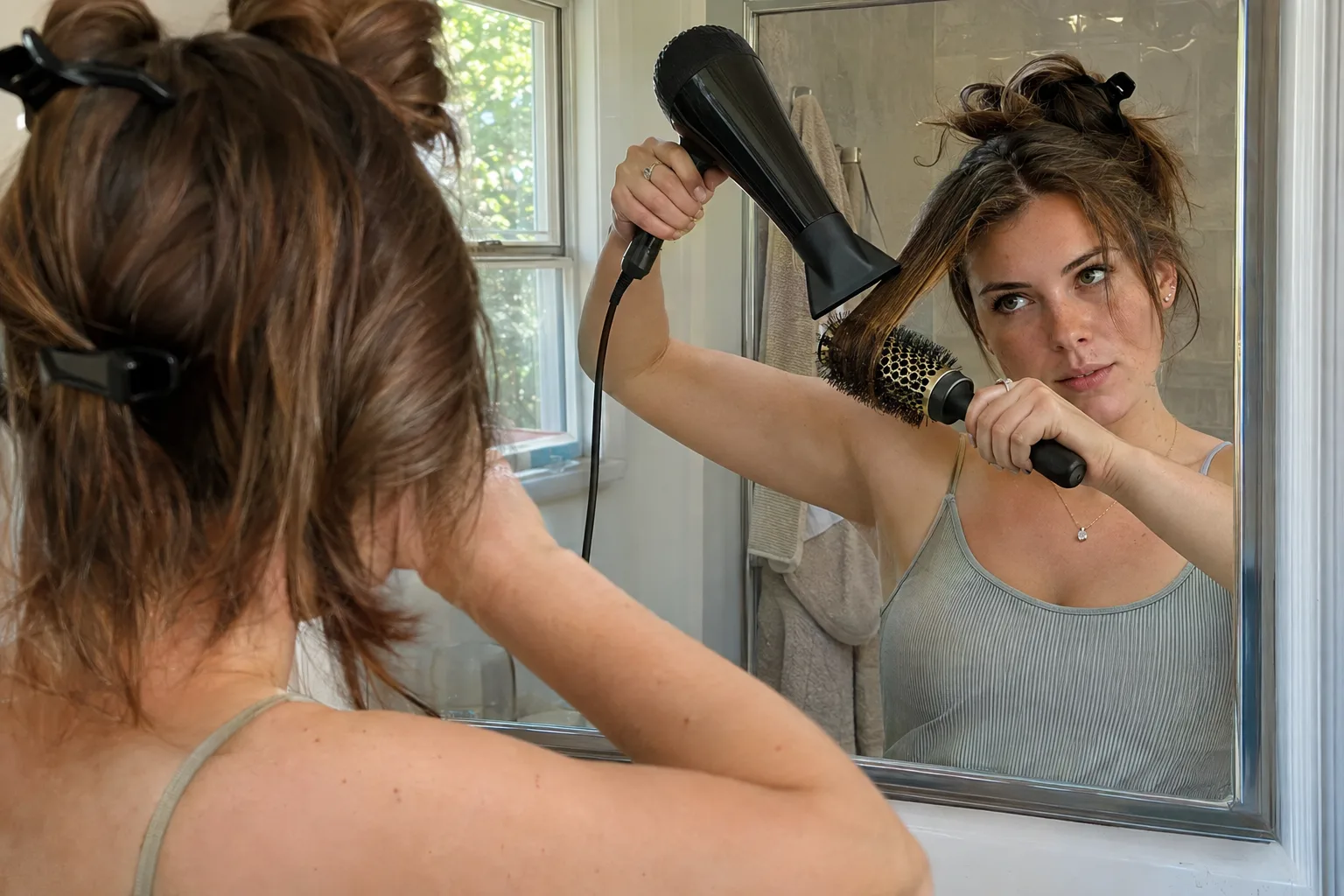
The routine below is the one most stylists teach. The step people skip is the cool shot: if you let go of a section while it is still warm, it drops in an hour. Use a heat protectant first. The American Academy of Dermatology says excessive heat damages every hair type and recommends low or medium heat settings, so you do not need the hottest setting your dryer has.
How to do a blowout at home
- Prep damp hair
Towel blot, never rub. Spray heat protectant through the lengths and a root lift spray at the crown.
- Rough dry to 80 percent
Dry with your fingers and no brush until the hair is about 80 percent dry. This saves ten minutes and a lot of heat on the brush.
- Section it
Clip the hair into four parts: two at the back, two at the sides. Work in sections no wider than your brush.
- Brush and dry each section
Roll the round brush under a section at the root, lift it straight up from the scalp, and pull slowly to the ends with the nozzle pointed down the hair. Repeat until the section is fully dry, not almost dry.
- Cool shot before you let go
Hold the brush still in the ends, hit the cool button for 5 to 10 seconds, then slide the brush out. This is where the bend sets.
- Finish the front last
Dry the front sections away from the face. Let everything cool for two minutes before you touch it, then shake it out with your fingers.
If your hair is long, do the back first while your arms are fresh. A round brush with a ceramic barrel heats up and helps on short hair; a boar bristle brush gives more shine on long hair.
Which blowout suits your hair type?
Short answer: fine hair needs lift, thick hair needs tension, and coily hair needs patience with low heat. The verdict table, then the detail.
| Hair type | Go for | Avoid | Brush size |
|---|---|---|---|
| Fine or thin | Volume or bouncy | Sleek (it looks flat by noon) | 1.5 to 2 inches |
| Thick or dense | Sleek or bouncy | Maximum volume (it gets wide, fast) | 2 to 3 inches |
| Wavy | Bouncy with a smooth finish | Stopping at 90 percent dry | 2 inches |
| Curly or coily | Stretched blowout | High heat, tiny sections | Paddle or comb attachment |
| Short (bob or shorter) | Flipped or turned under | A big brush that cannot grip | 1 to 1.5 inches |
Blowout on fine hair

Fine hair takes a bend fast and loses it fast. Use a smaller brush so the hair wraps around it more than once, dry the crown first while it is still damp, and skip heavy oils. A dry shampoo at the roots on day two buys you another day.
Blowout on thick hair
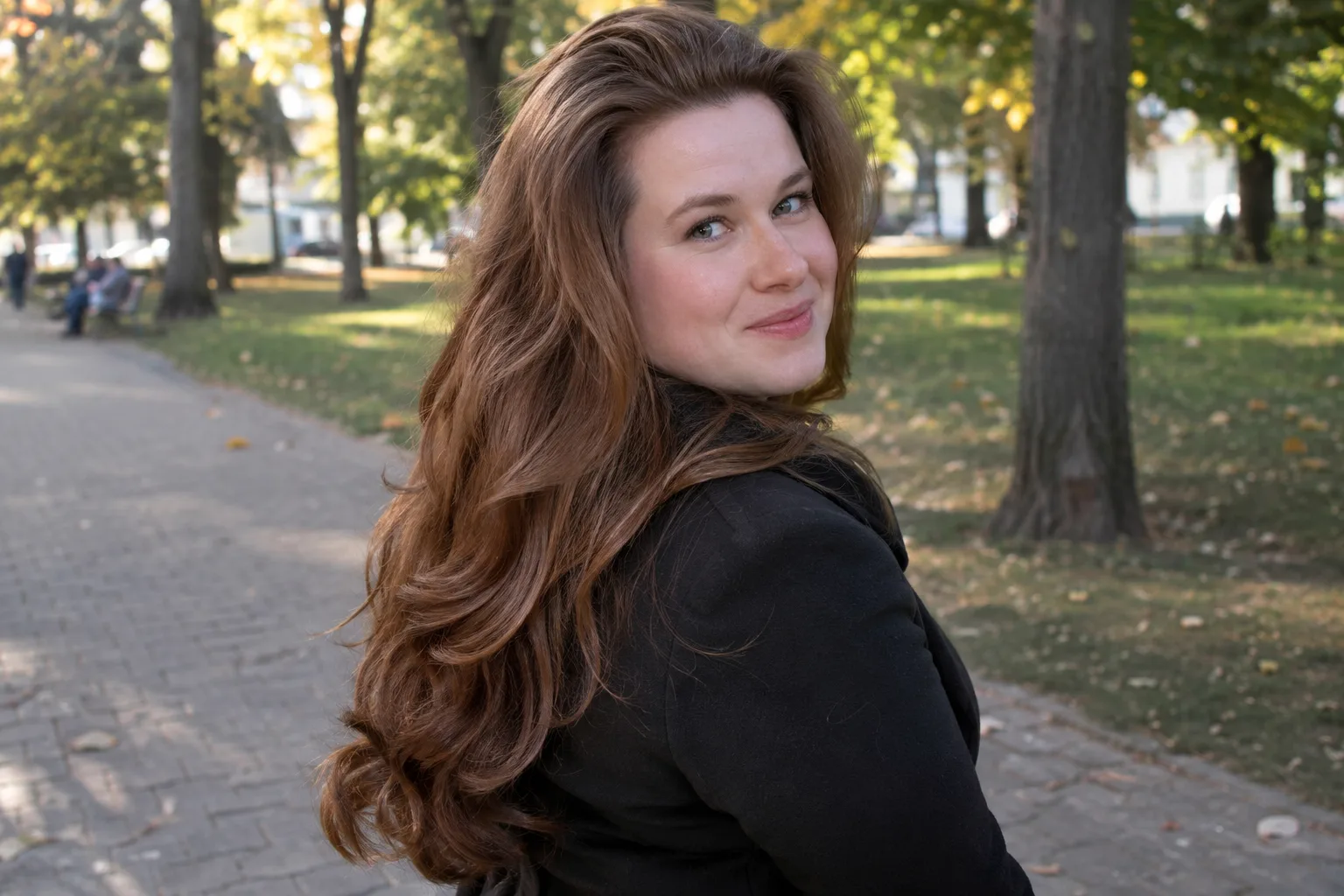
Thick hair holds a blowout longest, but only if every section is fully dry. Rough dry longer, use smaller sections than you think, and use more tension than on fine hair. Our guide to thick hair covers cuts that make blow drying faster.
Blowout on curly and coily hair
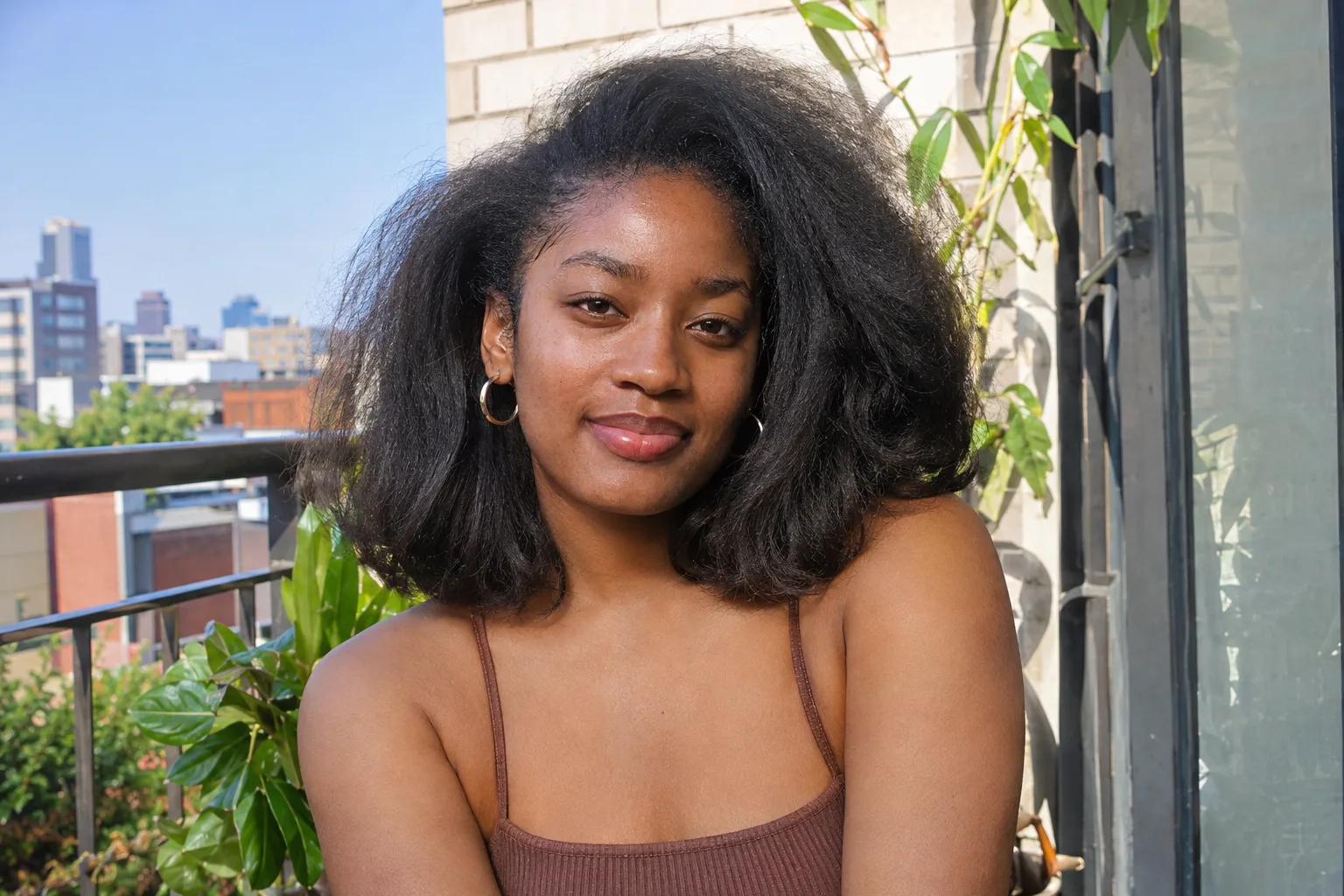
On curly and coily hair a blowout means stretching, not straightening. Dry with a paddle brush or the comb attachment on medium heat, in small sections from the ends up to the roots. If you want bone straight, that is a silk press, and it costs more heat. Read up on type 4 hair and pick a heat protectant for curly hair before you start.
Blowout on short hair
Short hair needs a small brush, 1 to 1.5 inches, or the brush just slides out. Turn the ends under for a classic bob, or roll the brush outward for a flip. If you are deciding between lengths, the shoulder length bob is the length that shows a blowout best.
Blowout for your face shape
Where you put the lift changes the shape of your face in the mirror. A round face looks longer with lift at the crown and the front swept away from the cheeks. A long face looks better with fullness at the sides and less height on top. Heart shapes suit volume below the chin, like a flipped end. Not sure which shape you have? Measure it here.
Measure it instead of guessing
Both numbers in the same unit — the answer is a ratio, so it does not matter which.
Under 1.15 reads round, 1.15 to 1.5 reads oval, over 1.5 reads long. Oval and long split on the jaw rather than the ratio: an oval tapers toward the chin, a long face runs straight down.
How long does a blowout last?
Three to five days on most hair, one to two on fine or oily hair. Humidity, sweat and sleeping on cotton are what end it early.
To stretch it:
- Sleep on a silk or satin pillowcase, or a loose silk scrunchie on top of your head.
- Use dry shampoo on night one, before the roots get oily, not after.
- Wrap it in a loose bun for 20 minutes in the morning to bring the bend back.
- Skip the gym or tie it up high for it.
Blowout mistakes that flatten it by lunch
- Stopping at 90 percent dry. Damp hair inside the section collapses as it dries. Dry every section all the way.
- Skipping the cool shot. The hair sets as it cools. Let go warm and you lose the bend.
- Sections too big. The brush cannot grip, so the outside is smooth and the inside is frizz.
- Pointing the nozzle up the hair. It roughs up the cuticle. Always aim down from root to end.
- Heavy product on the roots. Oil and serums go on the ends only; on the roots they kill the lift.
- The wrong brush size. A 3 inch brush on a bob does nothing; a 1 inch brush on long hair makes ringlets.
What to say at the salon
If you book a blowout at a salon, name the finish and where you want the lift. This line works in most chairs:
Say this to your barber
I'd like a bouncy blowout with lift at the crown, the front dried away from my face, and the ends bent under, not curled with an iron.
Can you see a blowout on yourself first?
A blowout is low risk: it washes out. The cut underneath is not. A bouncy blowout only works if your layers start in the right place, and you cannot see that on your own face before the scissors come out. That is the wall every at-home routine hits.
HairstyleAtlas fixes that part. Upload a selfie and see the finish on your own face before you book the cut or the blowout. The first look is free with no card needed; paid plans start at $9 a month if you want more. You can also try a whole length on the women's hairstyle try-on or test a fringe with the curtain bangs try-on.
If you only change one thing, dry every section all the way and hold the cool shot before you let go. That is the gap between a salon blowout and one that falls by lunch. Match the finish to your hair: volume for fine hair, sleek or bouncy for thick hair, a stretched blowout for coily hair. Then try the look on your own photo before you change the cut underneath it.
Frequently asked questions
A blowout smooths the cuticle, lifts the roots and puts a soft bend in the ends, so hair looks fuller and shinier than if it air dried. It changes the shape only until the next wash or the next humid day.
At most salons and blow dry bars, yes: the service starts with a shampoo and conditioner, because a blowout sets best on clean, damp hair. Some offer a cheaper dry styling option, so ask when you book.
Three to five days on most hair if you sleep on silk and keep it dry. Fine or oily hair usually needs a refresh or a wash after one or two days.
Not from fully dry. A blowout needs damp hair to reshape. If your hair is already dry, mist each section with water or a heat protectant spray first, then brush and dry it.
Rough dry to 80 percent, then dry each section fully over a round brush with the nozzle aimed down, and cool each section before you let go. Large velcro rollers on the crown while it cools add the salon lift.
Most stylists split them into sleek (smooth and straight with a slight bend), bouncy (big lift and swept ends, the 90s look) and voluminous (maximum lift and width). A stretched blowout for coily hair is a fourth.
Preview it on your own photo: Virtual Hair Color Try-On.
Share article
About the author

Related posts
Women's Haircuts · 15 min
Lob Haircut: 14 Long Bob Ideas and the One Call That Decides If It Suits You
A lob is a long bob that ends between the jaw and the collarbone. Fourteen versions at the same length, which one suits your face and hair type, and the exact words to say in the chair.
Women's Haircuts · 11 min
Layered Hair: 14 Looks and the One Number That Decides Each
Layered hair comes down to one number: the gap between your shortest piece and your longest. See 14 layered looks sorted by that gap, which suits your face and hair type, and what to say in the chair.
Women's Haircuts · 13 min
Copper Hair Color: 14 Shades and Which One Suits Your Skin
Copper is a bright orange-red, like a new penny. See 14 copper shades side by side, which one suits your skin tone, what to say at the salon, and why maintenance matters more than your complexion.
Women's Haircuts · 14 min
Miracle Knots Hair: 12 Looks, How It Works and How Long It Lasts
Miracle knots loop curly human hair into small plaits of your own hair: boho braids in 2 to 3.5 hours, with less weight. How it works, how many bundles, which hair it suits and how long it lasts.
Women's Haircuts · 14 min
Braided Ponytail: 14 Styles and How to Do One That Lasts
The braid is the easy part. 14 braided ponytail styles side by side, which one suits your hair type, how many packs of braiding hair to buy, and how to keep the base from pulling out your edges.
Women's Haircuts · 14 min
Black Short Hairstyles for Women: 14 Cuts Sorted by Upkeep
Fourteen short hairstyles for Black women, from the TWA and tapered cut to the pixie, braided bob and buzz cut, sorted by how much upkeep each one really takes.