Shoulder Length Haircuts: 10 Cuts That Won't Flip Out
Oleh Onysko Updated 27 September 2026 13 min read
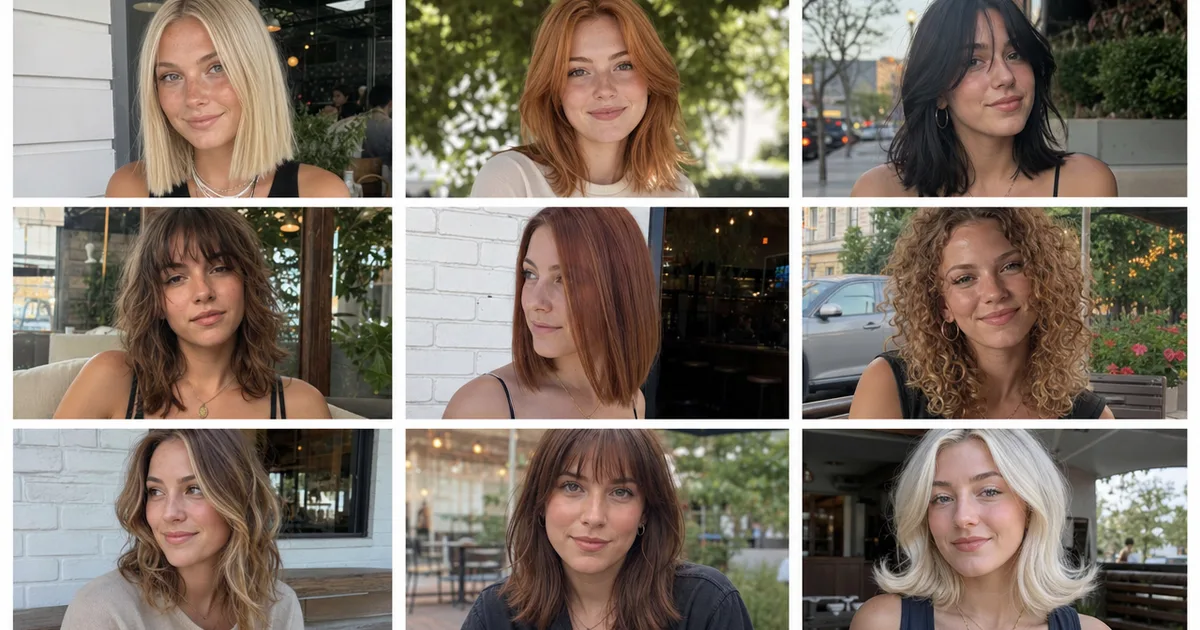
In this article
The best shoulder length haircuts do not actually end on the shoulder. They stop about an inch above it or fall just past it to the collarbone, because hair that lands right on the shoulder gets shoved outward every time you move and flips in a way no blow dry fixes.
Get that one number right and almost any cut works at this length: blunt, layered, curly, with bangs. Below you will find where to set the length, which cut fits your hair type and face, ten cuts to show your stylist, and the exact sentence to say in the chair.
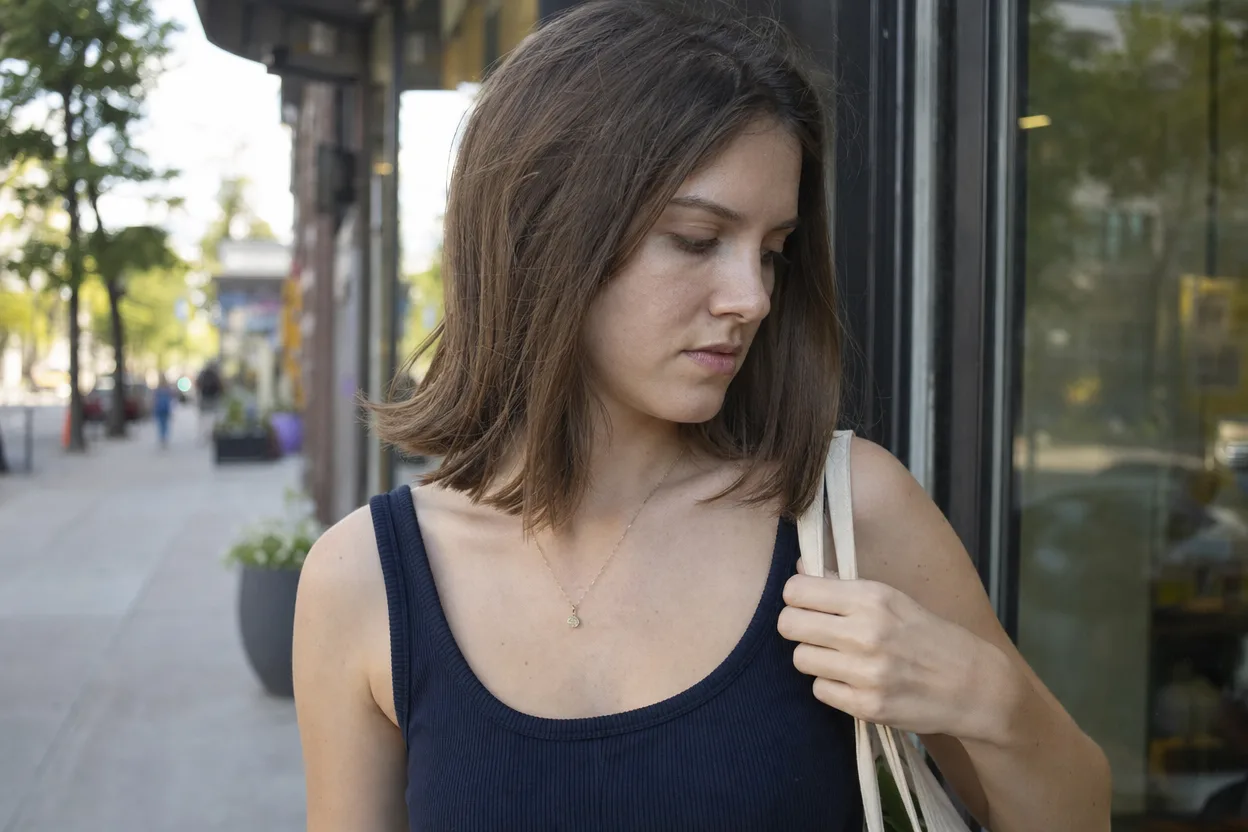
Where should a shoulder length haircut end?
Set the length by where the ends sit against your body, not by inches off. An inch above the shoulder or an inch or two below it both look deliberate. Right on the shoulder is the only spot that fights you.
Your shoulders act like a shelf. Every time you turn your head or lift a bag, the ends hit that shelf, bend outward and stay bent. Straight and fine hair shows it most. Curly hair hides it better because the curls already move in every direction.
| Where the ends sit | What it does | Best for |
|---|---|---|
| 1 inch above the shoulder | Swings freely, never touches, reads as a long bob | Fine or straight hair, anyone who hates the flip |
| Right on the shoulder | Ends get pushed out and flip unevenly | Only curly hair, or if you want a styled 60s flick |
| At the collarbone, 1 to 2 inches below | Ends fall past the shelf and lie flat on the front of the chest line | Thick hair, wavy hair, round faces, anyone growing out |
If you are unsure, go to the collarbone. It is the safer of the two, and hair grows about half an inch a month, so a cut that ends one inch above the shoulder is on the shelf within two months. The collarbone version buys you three or four months before it drifts into the awkward zone.
Shoulder length haircuts by hair type
Your hair type decides the cut far more than your face shape does. The same A-line that looks crisp on thick straight hair collapses into two flat panels on fine hair.
| Hair type | Best cut | Avoid | Length |
|---|---|---|---|
| Fine or thin | Blunt one length, maybe a few face-framing pieces | Heavy layers, razor cuts, choppy shag | 1 inch above the shoulder |
| Thick or dense | Internal layers, long layers, shag | Blunt one length with no weight removed | Collarbone |
| Wavy | Long layers, curtain bangs, soft shag | Short stacked layers at the crown | Collarbone |
| Curly | Rounded layered shape cut dry | Thinning shears, one-length blunt cut wet | On the shoulder or just below, measured dry |
Shoulder length haircuts for thin hair
Go blunt. A single straight line at the ends makes fine hair look twice as thick, because every strand ends in the same place instead of tapering off into see-through wisps. If you want movement, ask for a few long pieces around the face only, starting at the chin, and leave the back solid.

Keep the length about an inch above the shoulder so the blunt line never gets bent out of shape. The American Academy of Dermatology suggests that people with fine or straight hair apply conditioner to the ends only, which keeps the roots from going limp at this length.
The wall with fine hair is that you cannot tell from a photo of someone else whether a blunt cut will look full or just short on you. That is where a try-on earns its place.
Shoulder length haircuts for thick hair
Thick hair cut one length at the shoulder turns into a triangle: flat on top, wide at the ends. The fix is internal layers, cut underneath and through the middle so they take weight out without showing as steps from the outside.
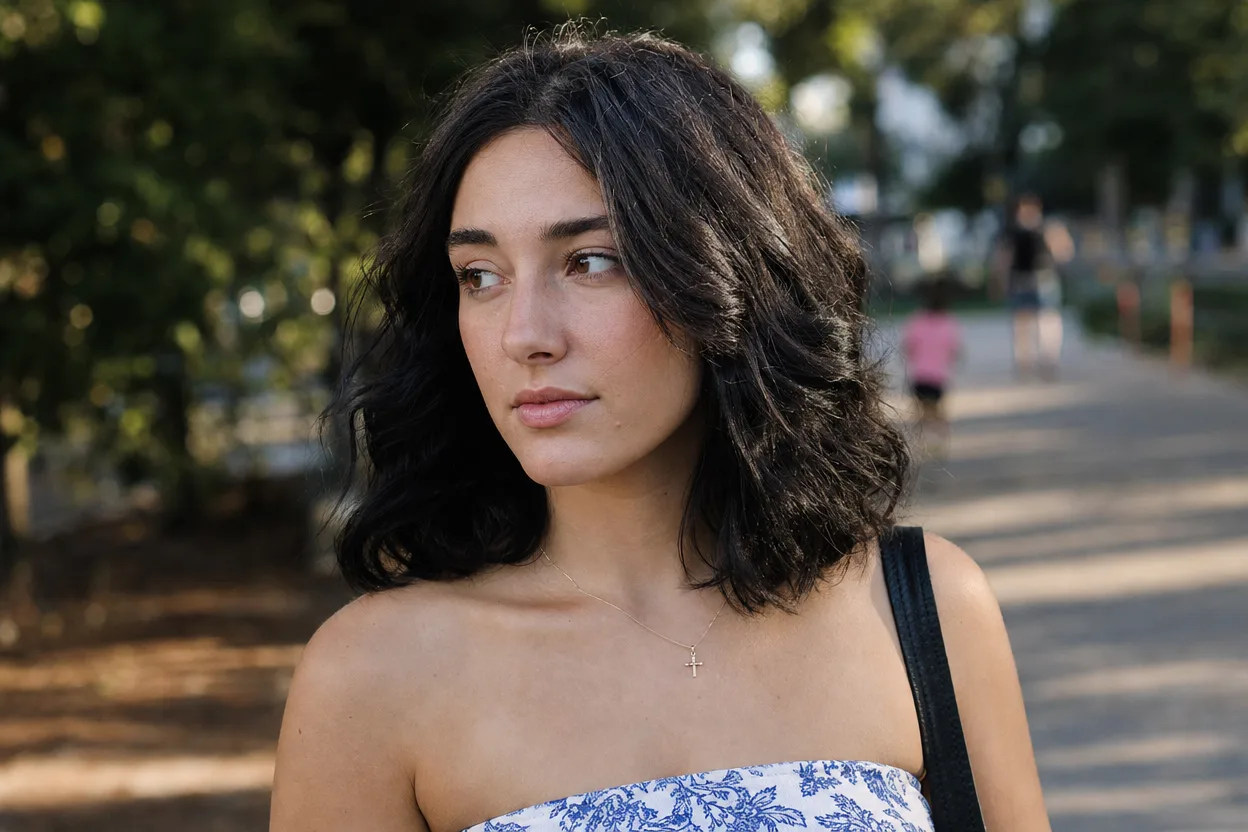
Ask for the length at the collarbone, not the shoulder. The extra inch lets the weight pull the ends down past the shelf so they lie flat. A shag haircut is the other good route if you want the texture on show rather than hidden.
Shoulder length haircuts for wavy hair
Wavy hair suits long layers at this length. They let the wave form without the weight of one length pulling it straight at the root. If your waves are loose S-shapes, the 2a hair guide covers routine and product, and the cut advice there carries straight over: layers that start at the chin, nothing stacked short at the crown.
Curtain bangs work especially well here, since a wave in the bang pieces does half the styling for you. Try them digitally with the bangs filter before anyone picks up scissors.
Shoulder length haircuts for curly hair
Ask for the length measured dry. Curly hair can shrink by several inches as it dries, so a cut that looks like it hits the collarbone when wet can spring up to the chin. A stylist who cuts curls dry, one curl at a time, will shape it to the length you actually see.
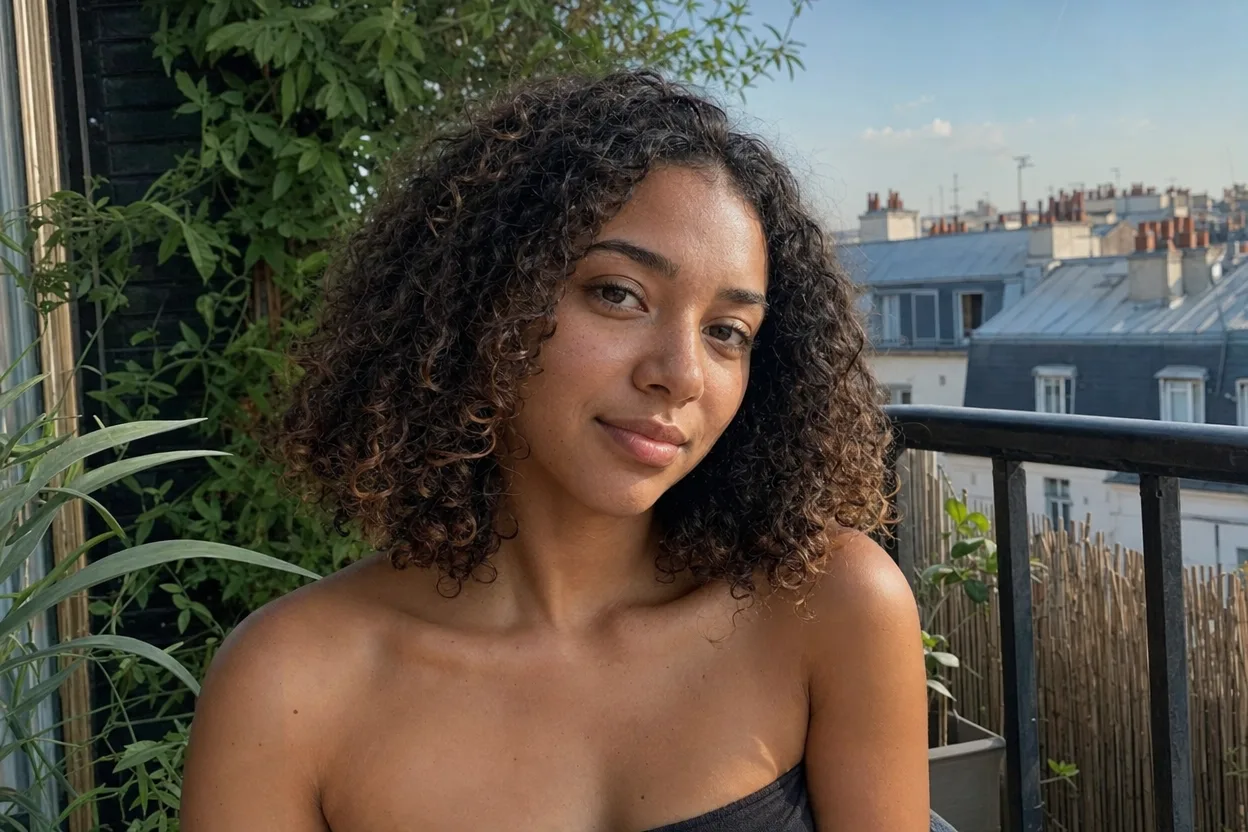
Curly hair is the one type that can live right on the shoulder, because the curls absorb the push instead of flipping. Skip thinning shears: they create short frizzy pieces inside the curl pattern. For more on looser curls, see the 3a hair guide, and use the curly hair try-on to see a shape on your own curls.
Shoulder length haircuts for round faces
Shoulder length is one of the best lengths for a round face, as long as the shortest layer starts below the chin. Pieces that end at the cheek widen the face at exactly its widest point. Pieces that fall past the jaw draw a vertical line and make it look longer, the same rule that decides the best cut for your face shape at any length.
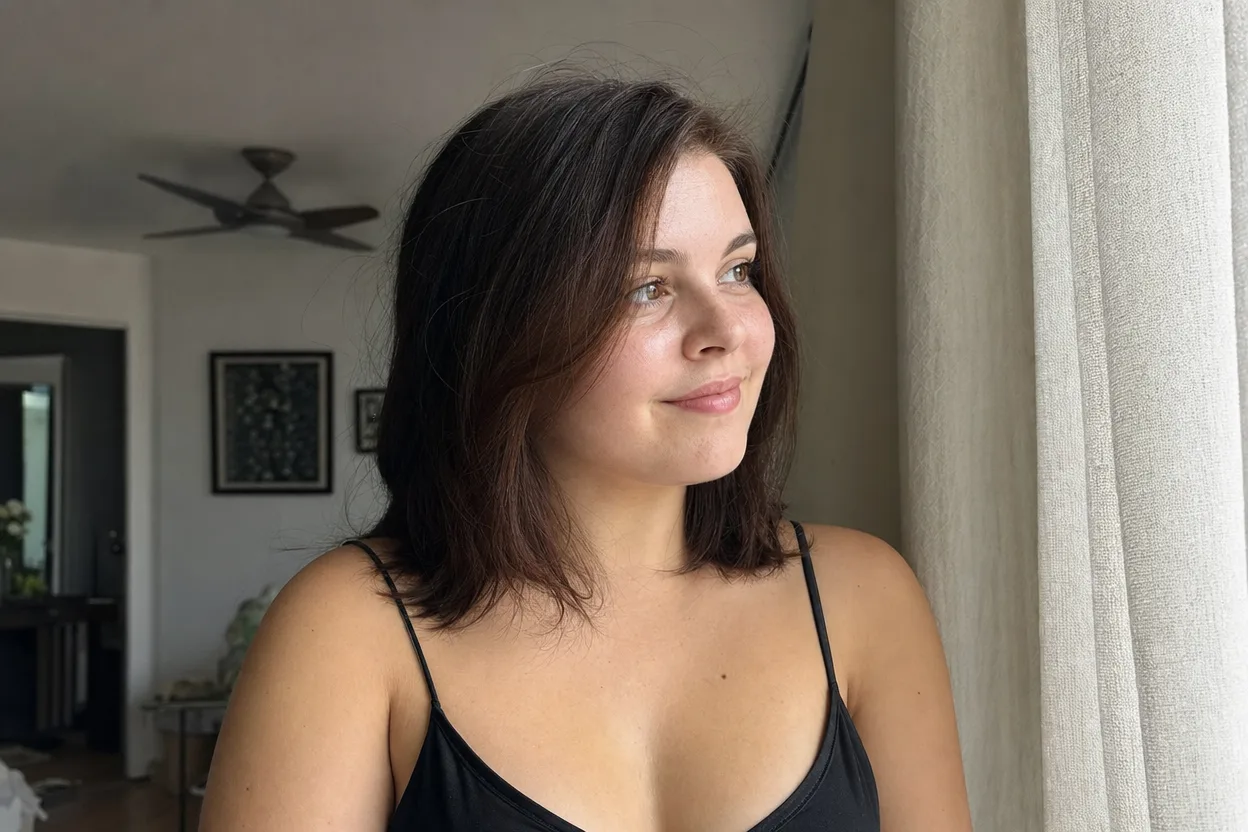
A deep side part helps too: it breaks the symmetry that makes a round face look rounder. Add a side-swept bang that ends at the cheekbone and the diagonal does even more of that work. Avoid a blunt chin-length line and full bangs cut straight across, which both add horizontal lines. If you are not sure your face is round, measure it:
Measure it instead of guessing
Both numbers in the same unit — the answer is a ratio, so it does not matter which.
Under 1.15 reads round, 1.15 to 1.5 reads oval, over 1.5 reads long. Oval and long split on the jaw rather than the ratio: an oval tapers toward the chin, a long face runs straight down.
The what haircut suits me tool runs the same idea across every length if you want to compare.
10 shoulder length haircuts to show your stylist
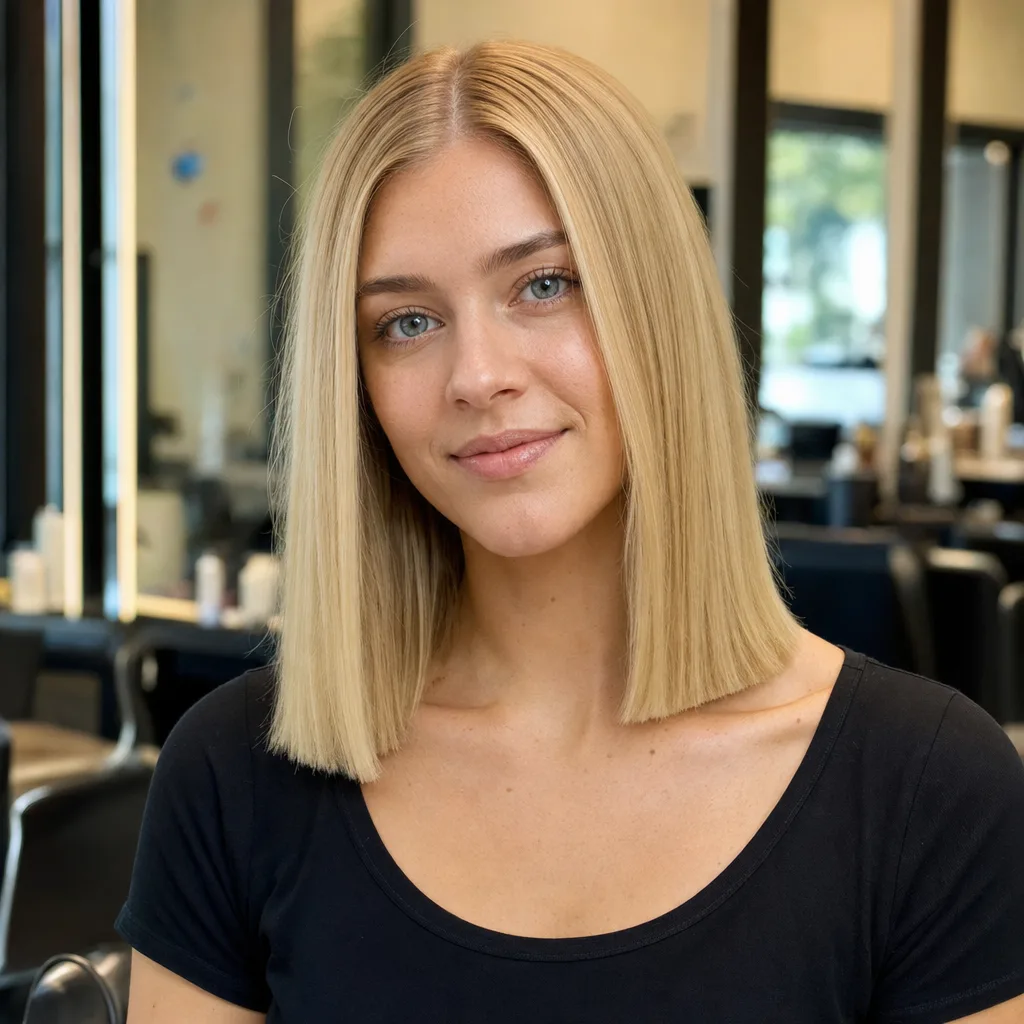
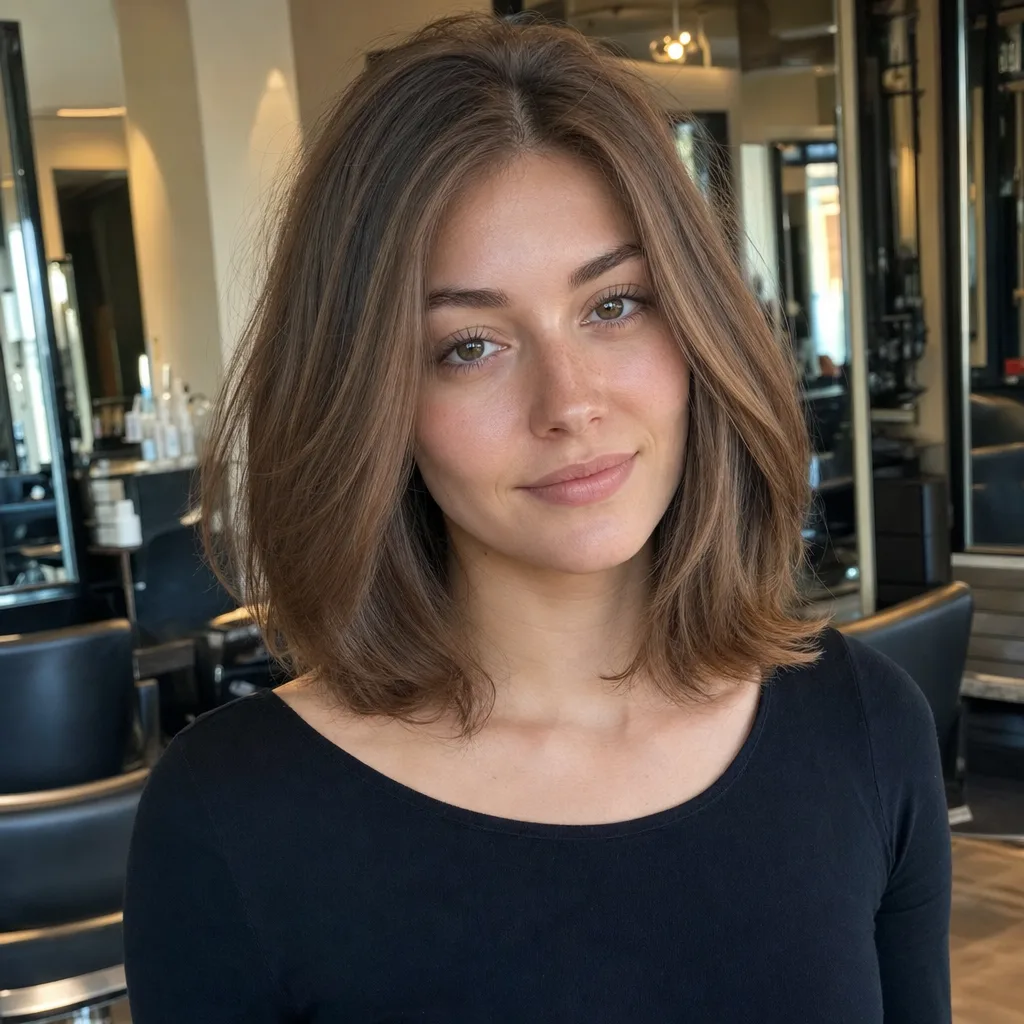
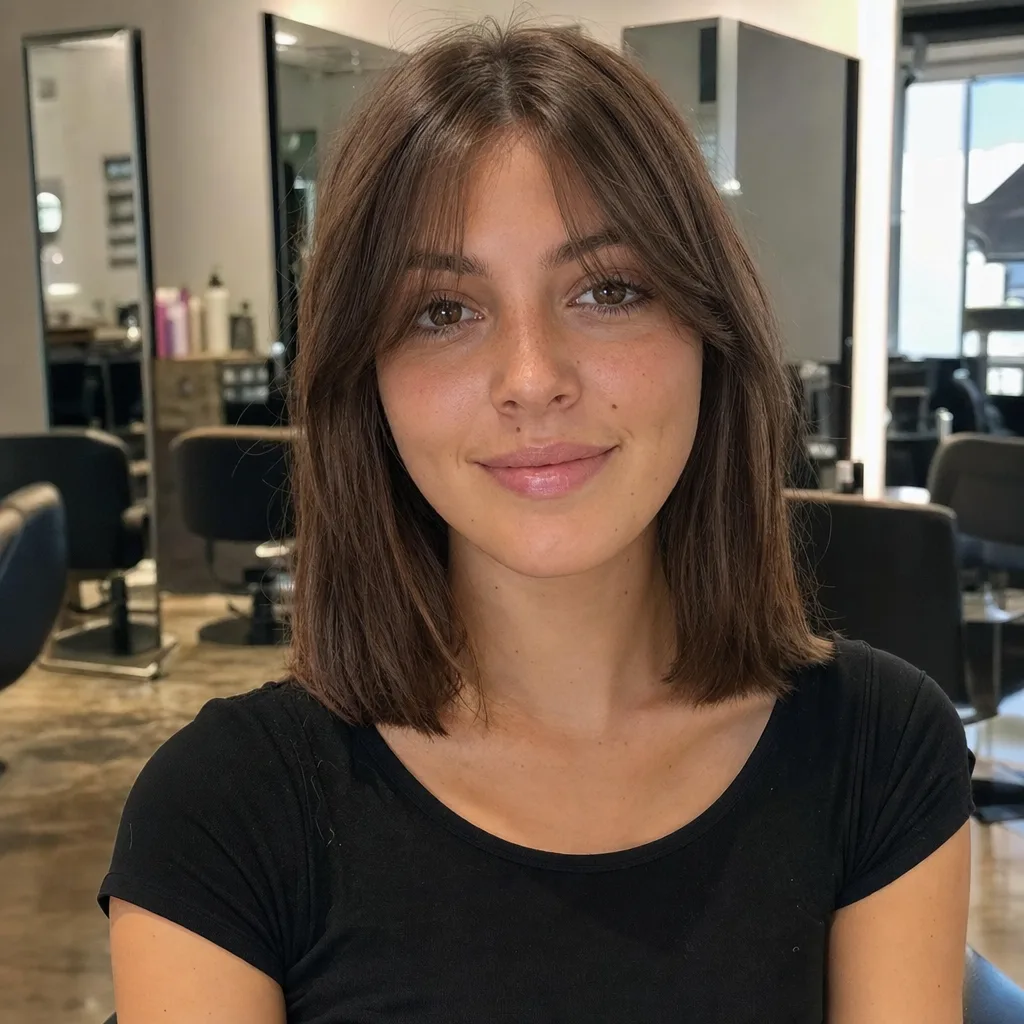
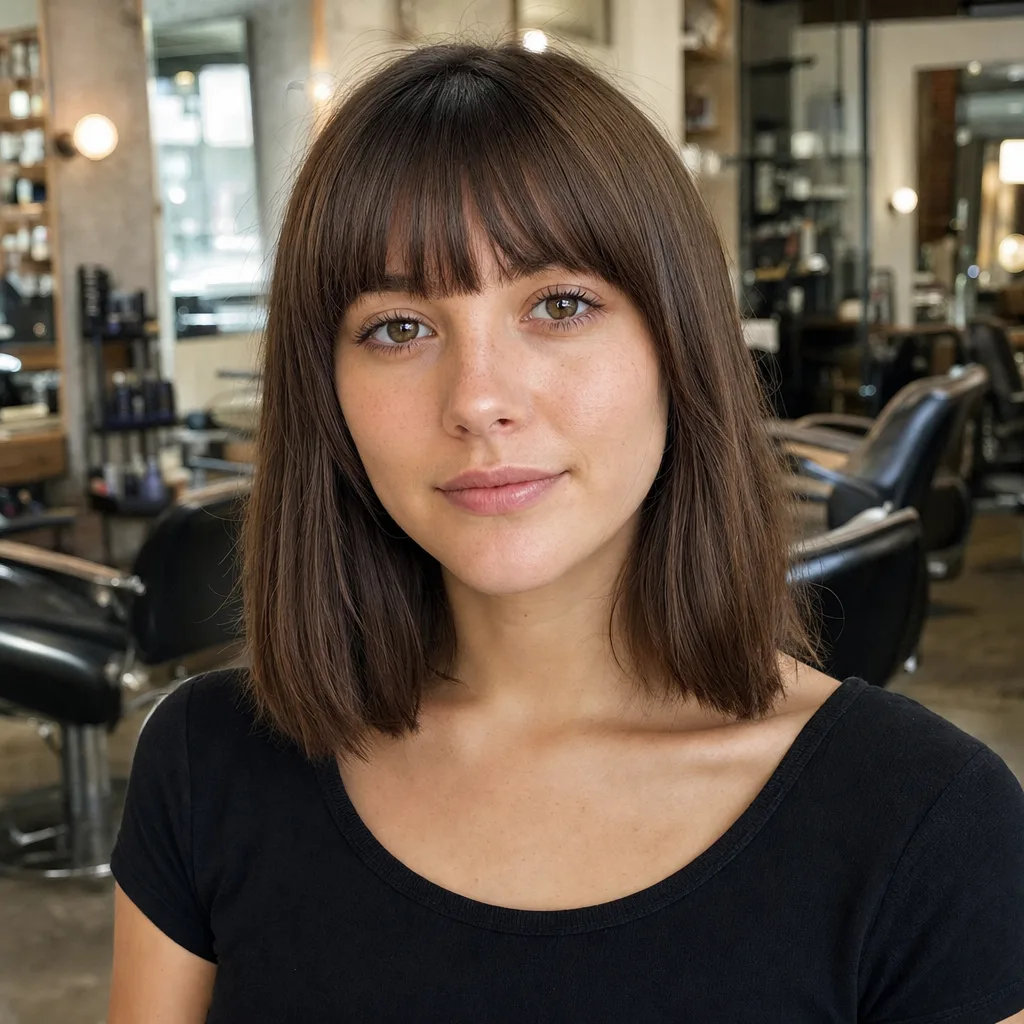
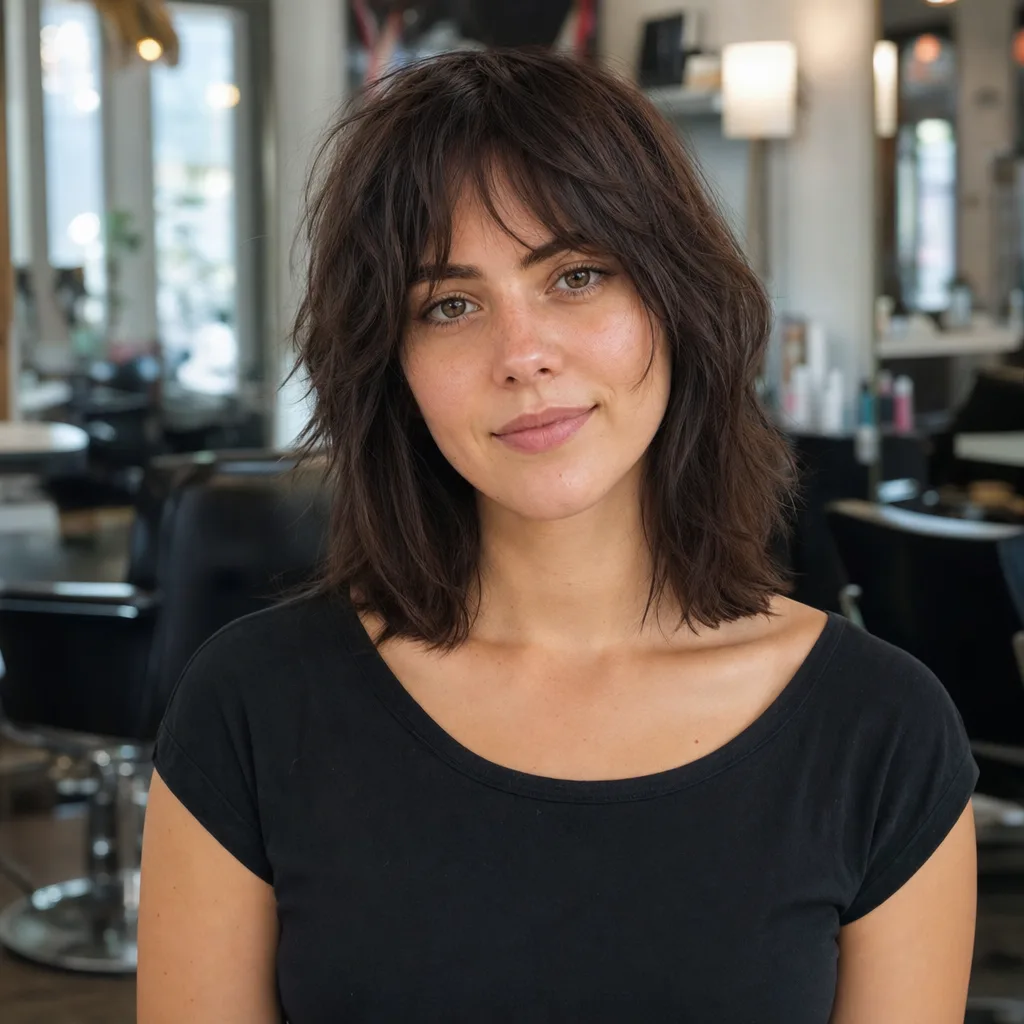
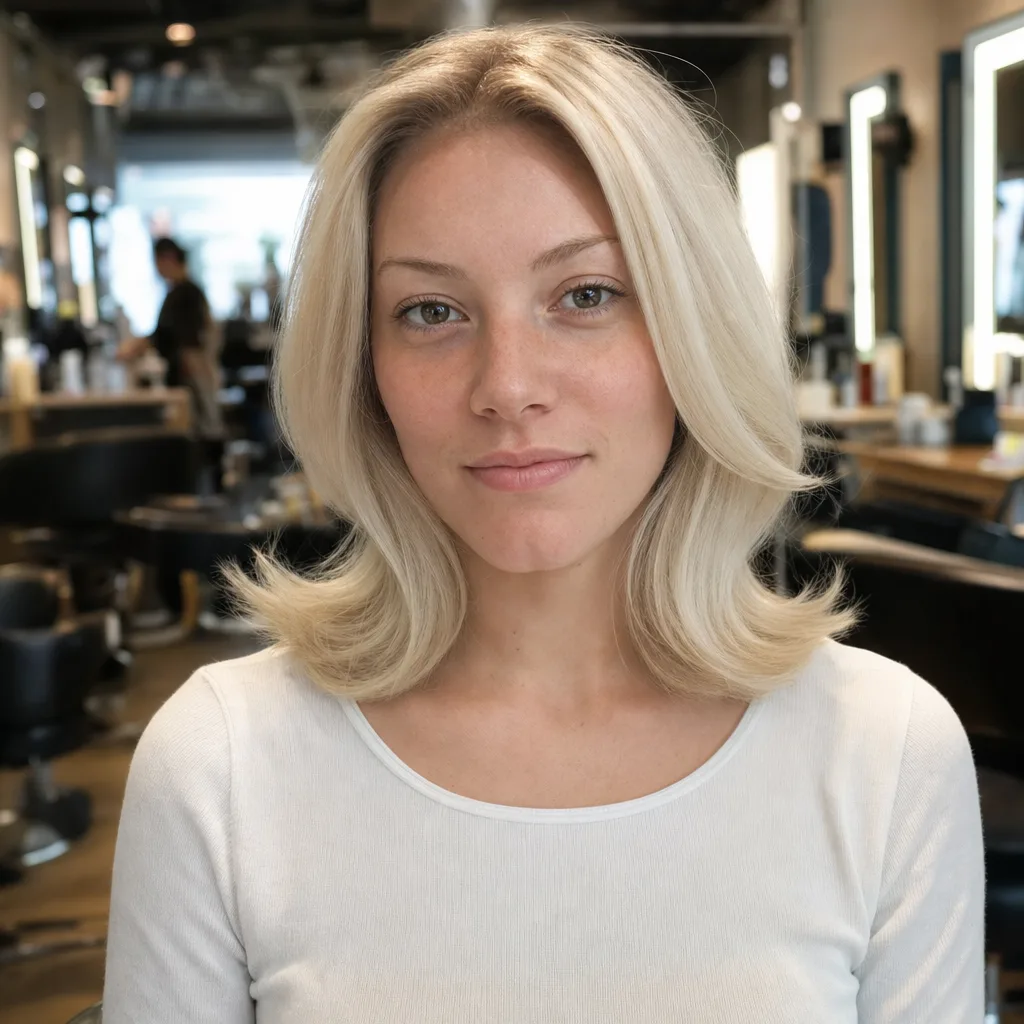
Every picture below holds the length constant, with ends at the shoulder line, and changes only the shape of the cut. That is the decision you are actually making, so compare them side by side before picking one.
Gallery10 photos · tap to enlarge
 Try this on me
 Try this on me
 Try this on me
 Try this on me
 Try this on me
 Try this on me
 Try this on me
 Try this on me
 Try this on me
 Try this on me
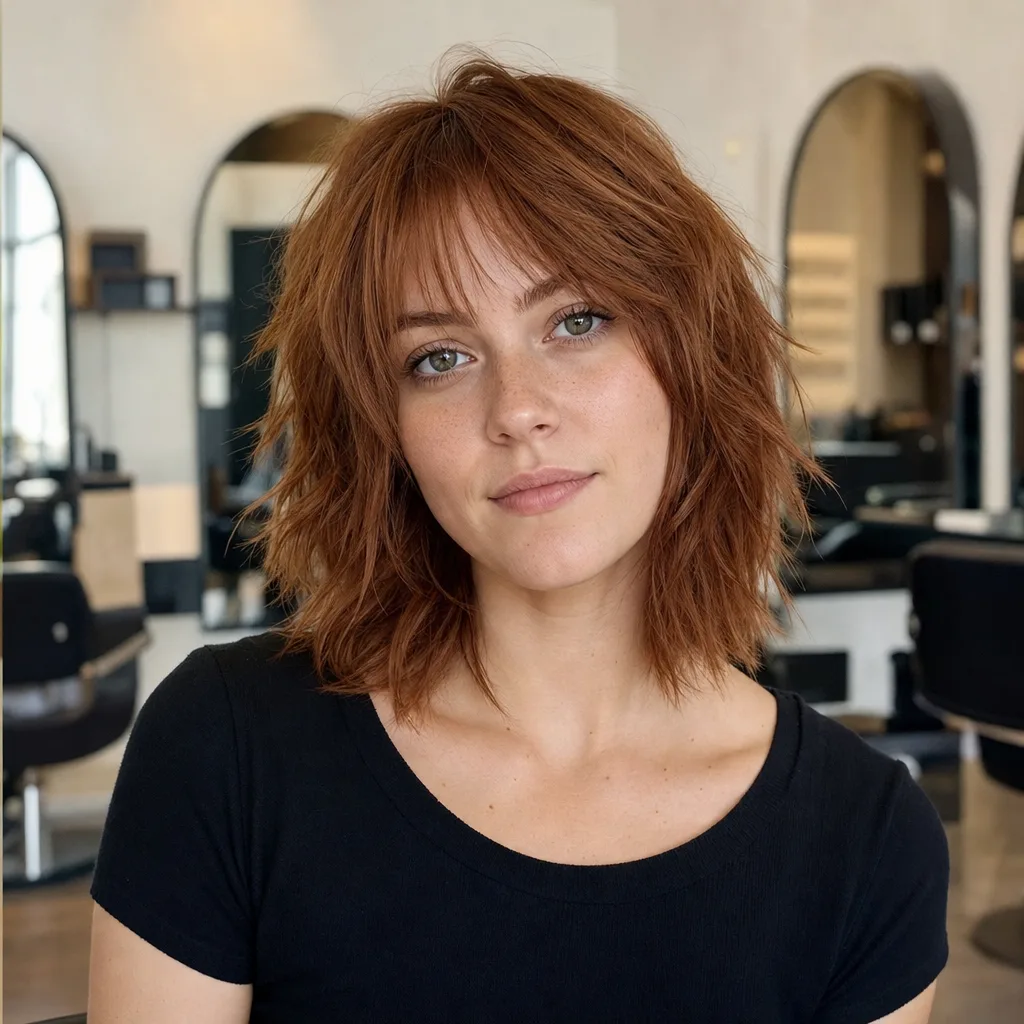
Blunt cut
One length, one sharp line. The best choice for fine and straight hair, and the lowest-maintenance cut on this list: a trim every 8 to 10 weeks keeps the line clean.
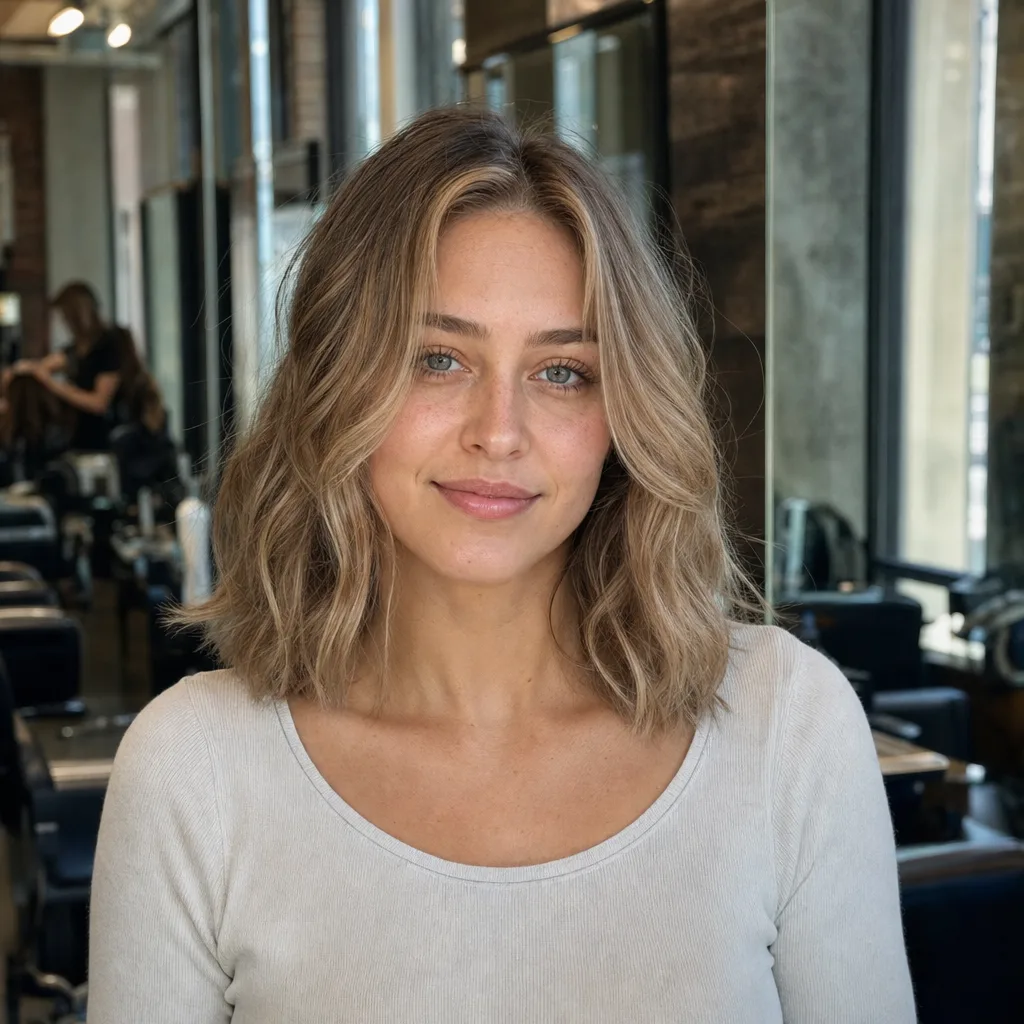
Soft layers
Layers that start at the chin and graduate down to the shoulder. Works on almost every hair type and gives the bounce people picture when they say "shoulder length". Style with a round brush, ends turned under.
Curtain bangs
Middle-parted bangs that end at the cheekbones and sweep into the sides. The easiest bangs to grow out, since they are already long enough to tuck away.
Choppy shag
Short textured layers at the crown and around the face, piecey ends. Best on thick or wavy hair. On fine hair it can look thin, so ask for fewer, longer layers.
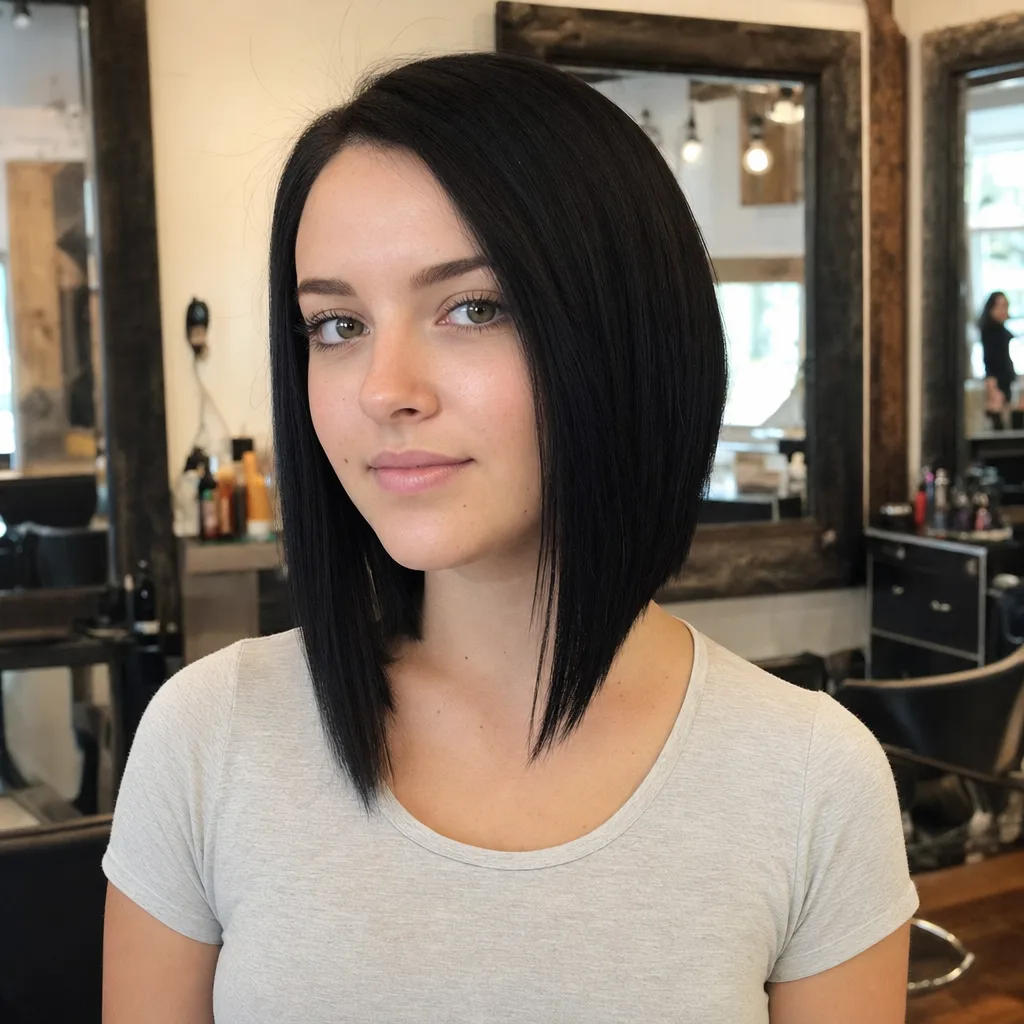
A-line
Shorter at the nape, longer at the front. The angle keeps the front pieces off the shoulder shelf, which is why it rarely flips. Needs thick or medium hair to hold its shape.
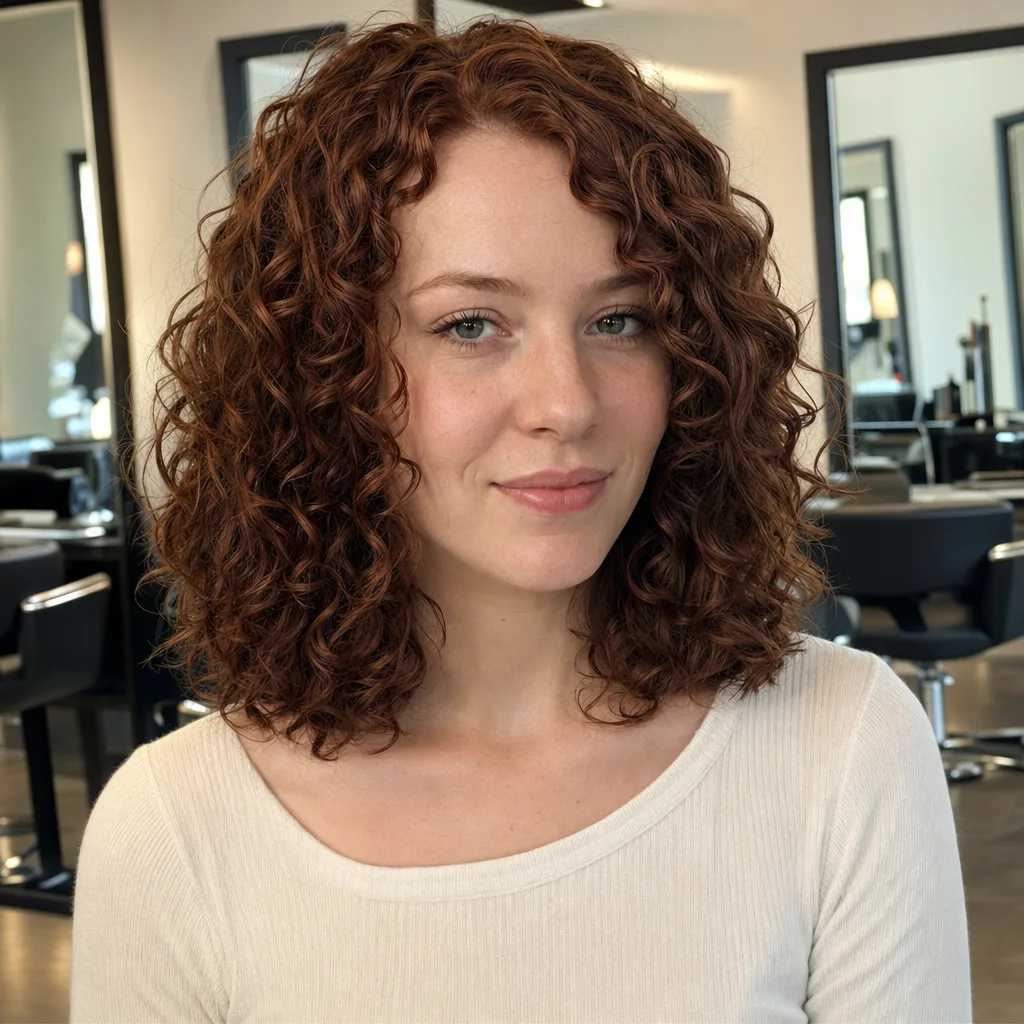
Rounded curls
A curly cut shaped dry into a round silhouette. Volume sits at the sides instead of the ends, which avoids the triangle.
Face-framing layers
The back stays one length, only the front is layered. The safest way to add movement to fine hair and the most flattering option for round faces when the layers start below the chin.
Full bangs
Blunt bangs at the eyebrows with one-length hair behind. Best on oval and long faces. Expect a bang trim every 3 to 4 weeks.
Wolf cut
Heavy layers on top, thinner ends, lived-in texture. Needs thick hair and a daily bit of texture spray. See it on your face first with the wolf cut try-on.
Flipped ends
The one cut that turns the shoulder flip into the point. One length at the shoulder, ends curled outward on purpose with a round brush or a flat iron. Takes five minutes a day to look intentional instead of accidental.
Yours could be here.
Start with one selfie.
One photo, twenty seconds, and you'll know. Free account, no card for your first render.
How to ask for a shoulder length haircut
Name the landmark, not the inches. "Take two inches off" means something different to every stylist and depends on where your hair is now. "Ends one inch above my shoulders, measured dry" does not. If you are getting cut before a party, decide the styling first, because what holds at a Christmas party depends more on the length you walk out with than on the products you own.
How to ask for a shoulder length haircut
- Pick the landmark
Decide on above the shoulder, or at the collarbone. Point to the spot on your body while you say it.
- Say how you want the ends
Blunt for one sharp line, soft layers for bounce, internal layers to remove bulk without visible steps.
- Name the shortest layer
Tell the stylist where the shortest layer should start. For most faces, at or below the chin.
- Ask for dry length
Ask them to check the length dry before finishing, especially with wavy or curly hair.
- Bring a picture
Bring one photo of the cut, ideally on hair like yours, or better, on your own face.
Here is the sentence to say:
Say this to your barber
Shoulder length, ends about one inch above my shoulders measured dry, soft face-framing layers starting at my chin, keep the back solid.
Mistakes that ruin a shoulder length haircut
- Ending exactly on the shoulder. The ends flip out within an hour of leaving the salon, and they will keep doing it until the cut grows past the shelf or you cut it again.
- Heavy layers on fine hair. The ends go see-through and the hair looks thinner than it did before the cut. You need four to six months of growth to get the weight back.
- One length on very thick hair. You get a triangle: flat roots, wide ends. It costs you a second appointment to have weight removed.
- Cutting curls wet to a wet length. The hair shrinks to the chin as it dries. There is no fix except waiting.
- Asking in inches. "Two inches off" from someone with uneven ends can mean four inches off at the front.
Will a shoulder length haircut suit you? See it before you cut
The free method works: find a photo of the cut on someone with your hair type and face shape, bring it in, and use the sentence above. The gallery here and a look through short haircuts or long hairstyles will show you the lengths either side if you are still deciding.
The wall is that the photo is always someone else. You cannot tell from another person whether a blunt line will hit your jaw at the wrong point or whether curtain bangs will fight your cowlick.
That is what the Hairstyle Atlas try-on is for. You upload one selfie and see the cut on your own face. The first look is free and needs no card. After that, plans start at $9 a month if you want to try every cut and color.
Choose the landmark first: an inch above the shoulder for fine or straight hair, the collarbone for thick, wavy hair or a round face, right on the shoulder only for curls or a deliberate flip. Then choose the cut by hair type, bring a photo, and say the sentence. If you want to know how it looks on you before anyone cuts, try it on first.
Frequently asked questions
Shoulder length tends to look younger than very long hair because it lifts the weight off the face and shows the neck and jaw. Soft layers and face-framing pieces help most. A severe one-length cut with no movement can look more formal, so add a few face-framing pieces if that is the worry.
It is usually called a shoulder length cut, a mid-length cut, a collarbone cut when it falls just past the shoulder, or a lob (long bob) when it ends just above the shoulder. Stylists understand all of them, but naming a landmark such as "one inch above my shoulders" is clearer than any label.
Yes. Shoulder length is one of the best lengths for thin hair because there is less weight pulling the roots flat and the ends stay thick. Keep it blunt, about one inch above the shoulder, and limit layers to a few pieces around the face.
Mostly one length. Heavy layers take away the weight that makes fine hair look full, leaving see-through ends. If you want movement, ask for long face-framing pieces that start at the chin and keep the back solid.
Yes, as long as the shortest layer starts below the chin. Layers and length that fall past the jaw draw a vertical line and make a round face look longer. Avoid blunt chin-length lines and straight-across bangs, which add width.
Tell the stylist where the shortest layer should start and where the longest should end, using landmarks on your body. For example: "Longest pieces at my collarbone, shortest layer starting at my chin, keep it soft, no choppy ends." Bring a photo and ask for the length to be checked dry.
A collarbone-length cut with soft face-framing layers is the closest thing to universal. It works on most face shapes and hair types, avoids the shoulder flip, and grows out gracefully for three or four months.
Preview it on your own photo: Virtual Hair Color Try-On.
Share article
About the author
More articles
Women's Haircuts · 14 min
Bleached Hair: How Light Yours Can Go, 14 Shades, Aftercare
How light your bleached hair can go depends on where it starts. See 14 bleached shades on one cut, what each starting color can reach in one session, how toner finishes the job, and the aftercare that keeps it soft.
Women's Haircuts · 16 min
Waves Hair: How to Get Beach, Loose and Hollywood Waves That Last
Waves hair is about what you leave straight. How to get beach, loose, Hollywood and heatless waves, which wave suits your hair type, and why your waves keep falling out.
Women's Haircuts · 15 min
Fino Hair Mask: Who It Suits, How to Use It, and Its Limit
The Fino hair mask makes dry, bleached and frizzy hair smooth and shiny in one use, mostly by coating it. Here is what is in the jar, which hair types it suits, exactly how to use it, and what to do when the ends are past a mask.