Mullet Fade: 14 Looks and the One Line That Makes It Work
Oleh Onysko 27 September 2026 15 min read
In this article
A mullet fade is a mullet with the sides faded short around the ear while the back stays long. The fade height matters less than you think. What decides whether it looks sharp or looks like a mistake is where the fade stops behind the ear.
Stop it at the back corner of the ear and the long back reads as one connected shape. Carry it round the back of the head like a normal fade and you get a short haircut with a tail stuck on. Everything below builds on that one line.
What is a mullet fade?
A mullet fade combines two haircuts. The sides get a fade, short at the bottom and blending longer as it climbs. The top keeps 2 to 3 inches of texture. The back keeps 3 to 5 inches that falls past the nape and touches the collar.
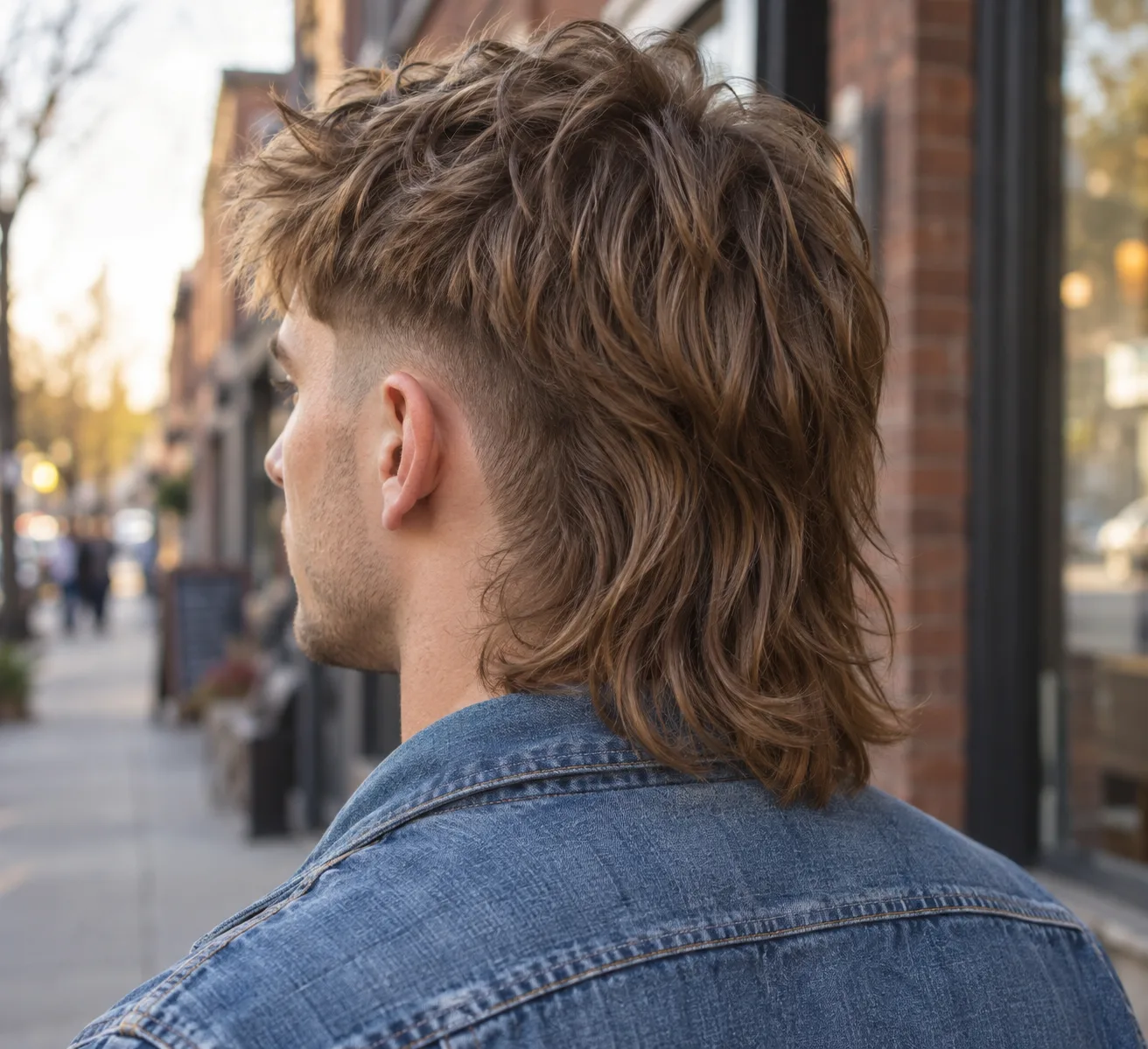
The fade is on the sides only. That is the part people miss. A normal fade haircut wraps all the way around the head at the same height. A mullet fade curves down behind the ear and hands over to the long back, so from behind you see a full curtain of hair, not a shaved nape.
The contrast is the point. Tight sides make the back look longer and more deliberate than the same length on an unfaded mullet, which is why this version took over from the 1980s shape. If you want the full story of how the mullet itself changed, read our guide to the modern mullet. This page is about the fade.
Mullet fade vs modern mullet vs taper mullet
These three names get used for the same haircut, and they are not the same.
| Name | What the sides do | Bare skin? | How loud it looks | Looks fresh for |
|---|---|---|---|---|
| Modern mullet | Blended, can be scissor cut | Not required | Medium | 4 to 6 weeks |
| Taper mullet | Short only at the hairline around the ear | No | Quiet | 4 to 5 weeks |
| Mullet fade | Faded, usually to skin at the bottom | Usually | Loud | 2 to 3 weeks |
| Burst fade mullet | Fade in an arc around the ear only | Yes, around the ear | Loud | 2 to 3 weeks |
So a taper mullet is a mullet fade with the volume turned down. If you work somewhere conservative or you only see a barber once a month, start there. The difference between a taper and a fade is exactly the difference here: a taper leaves weight at the bottom, a fade removes it.
14 mullet fades, from barely there to bare skin
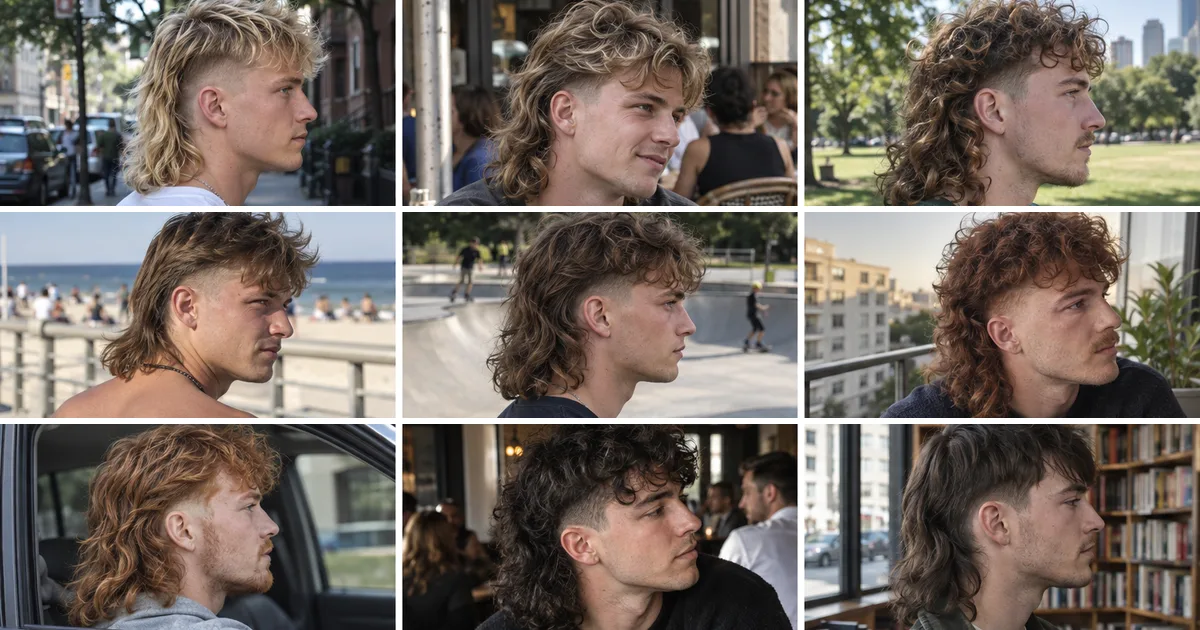
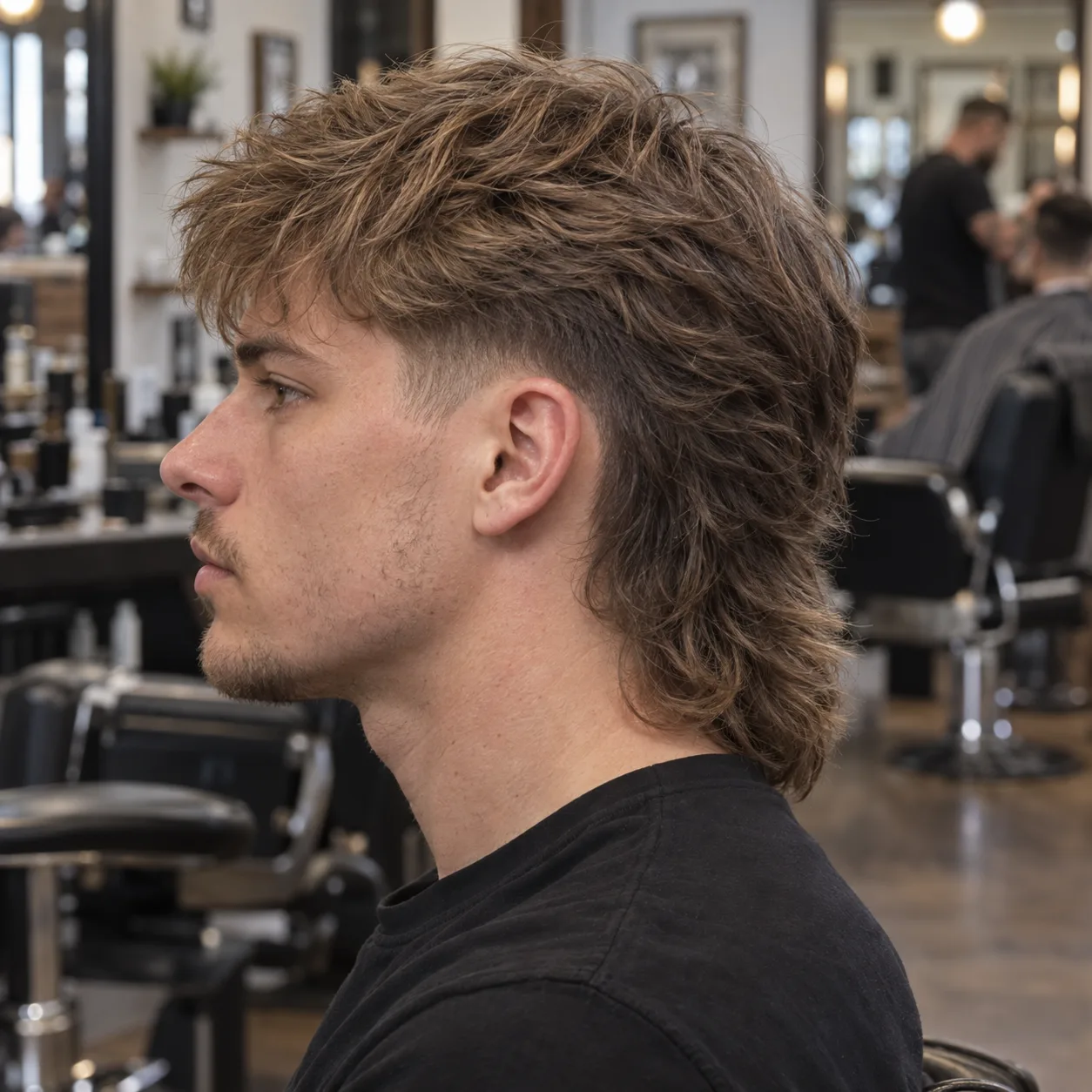
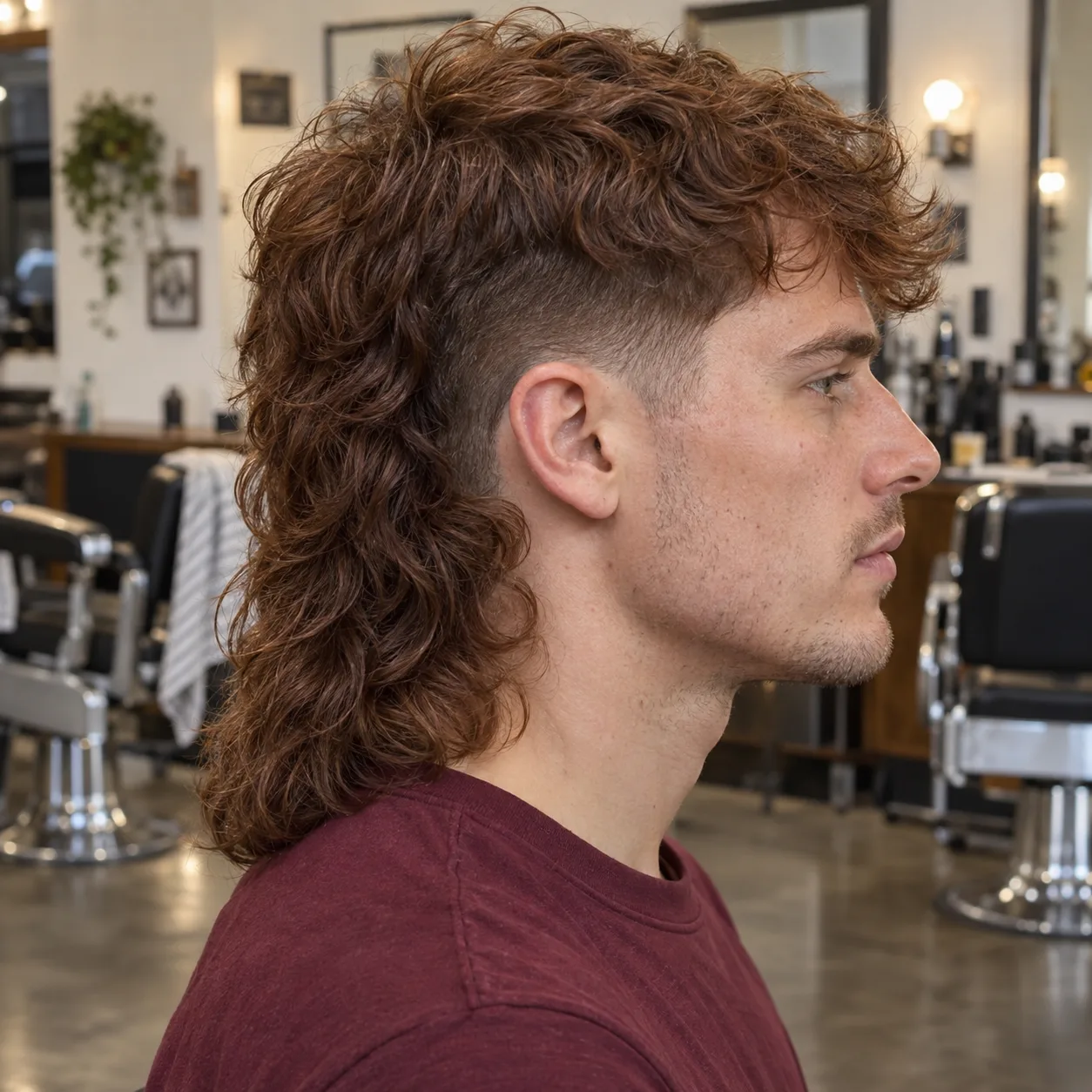
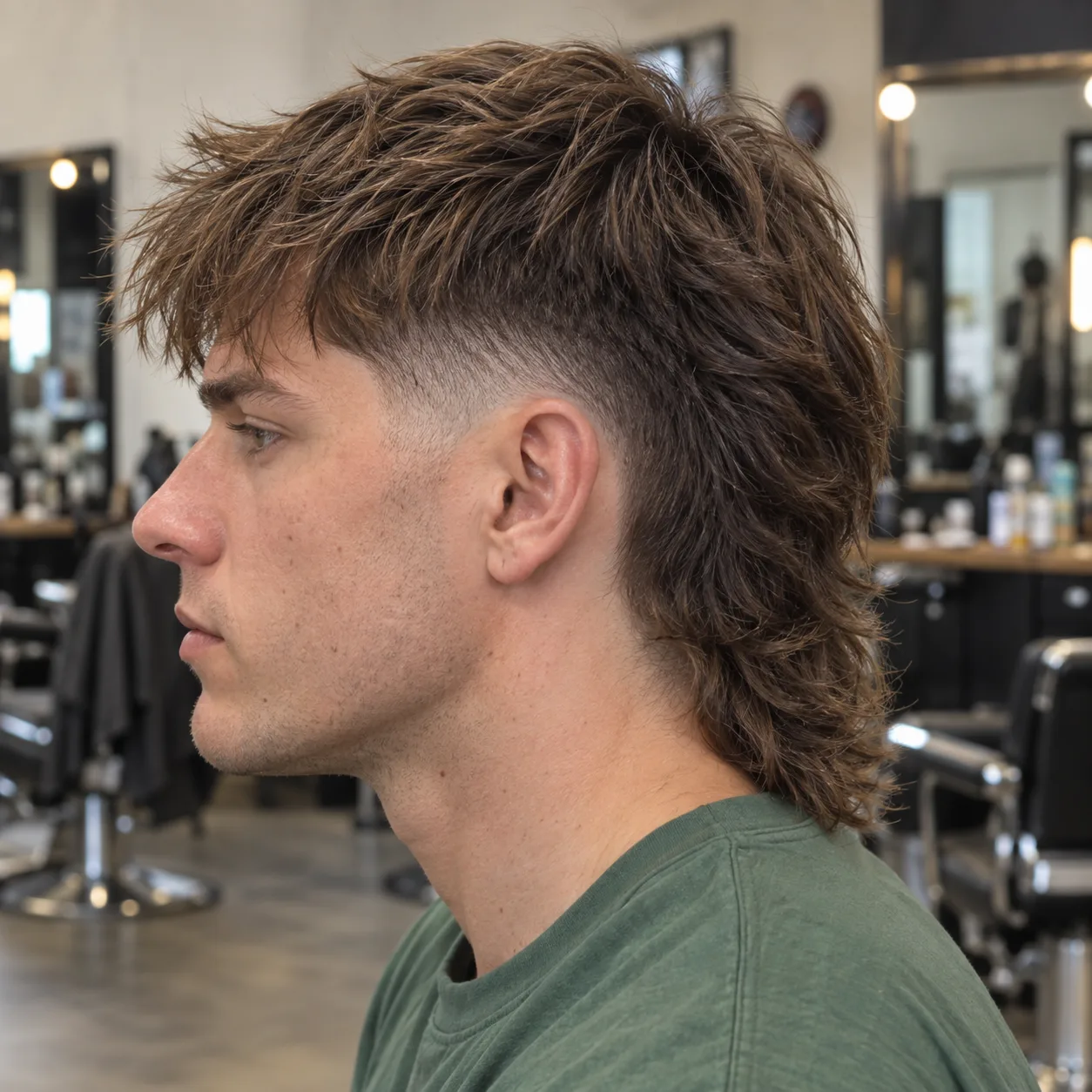
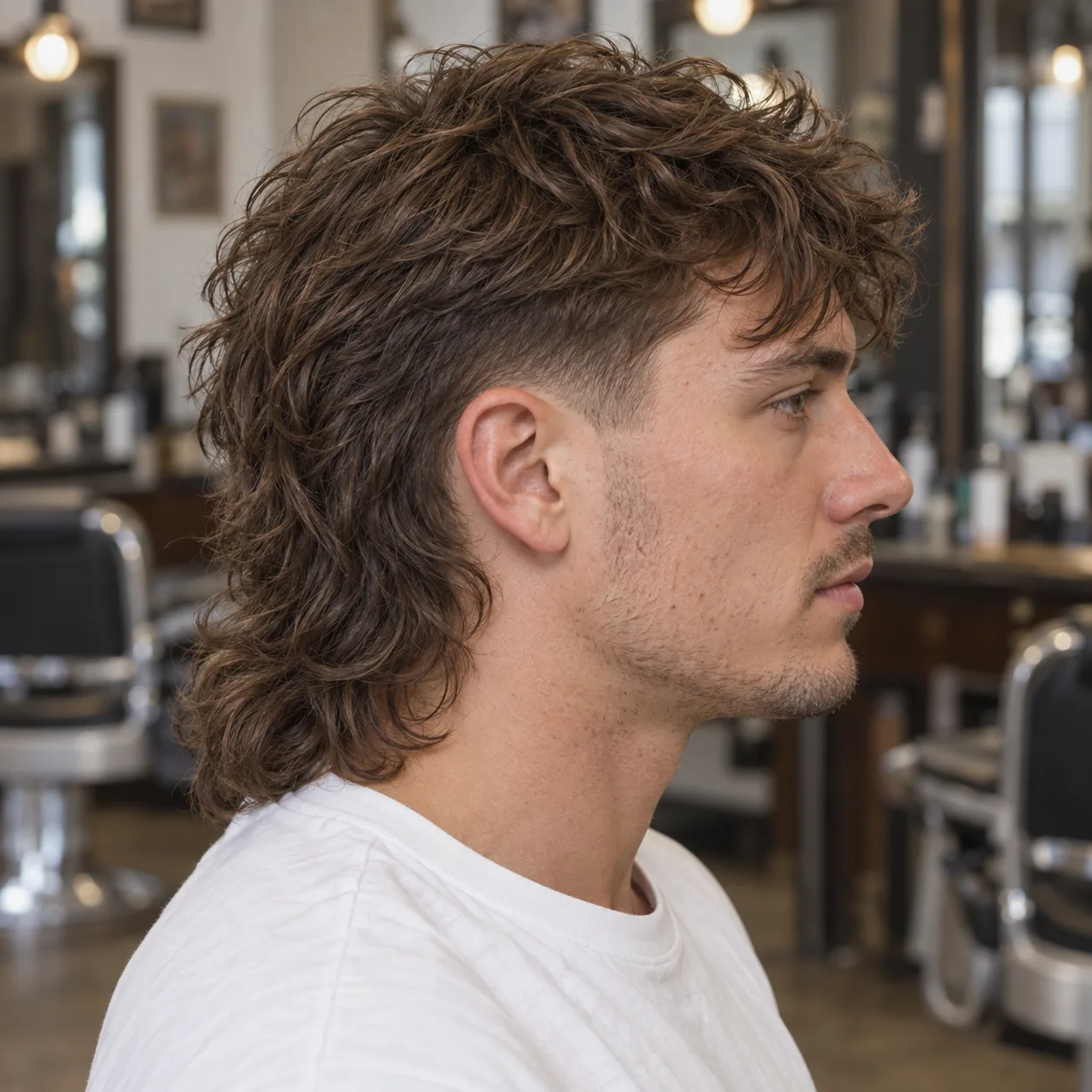
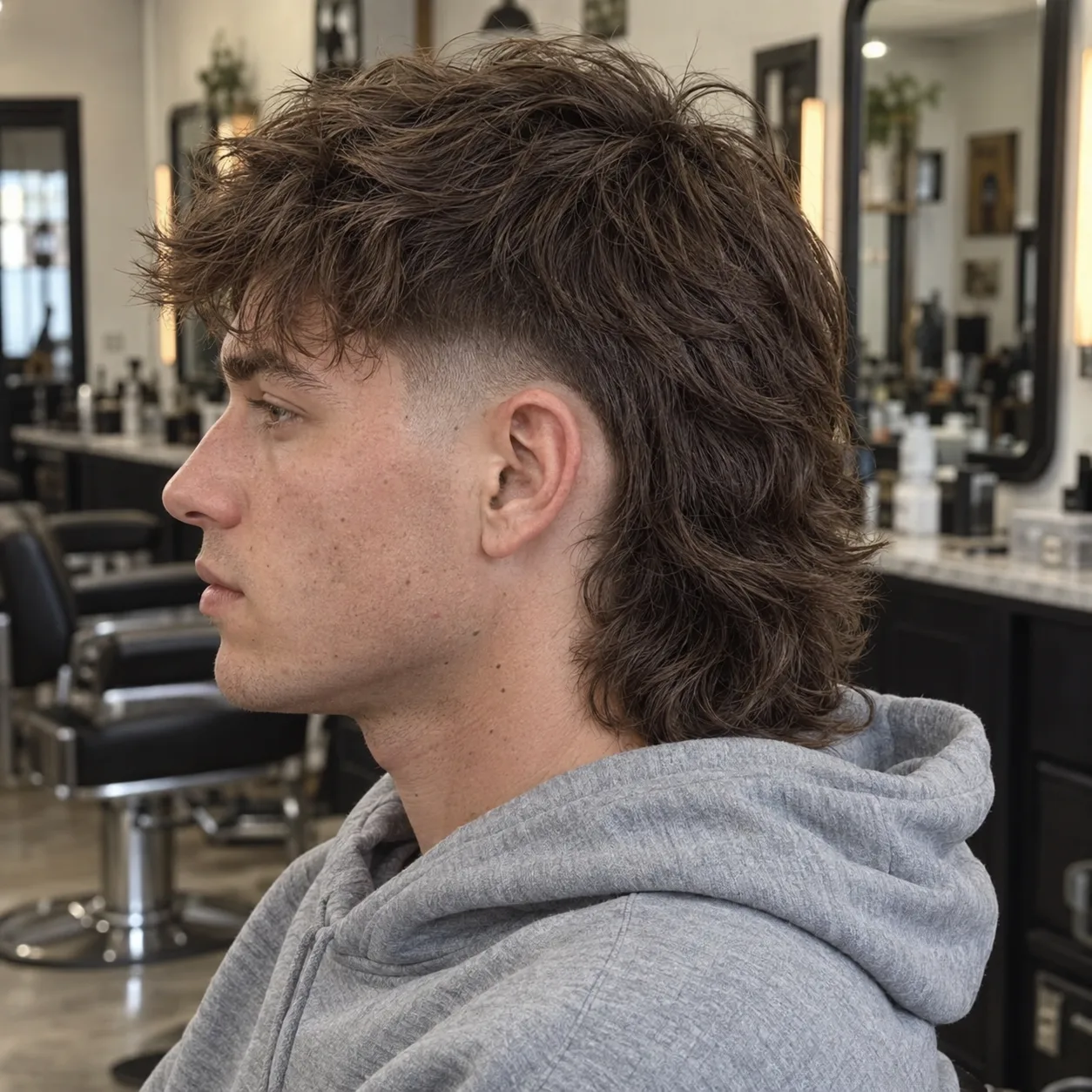
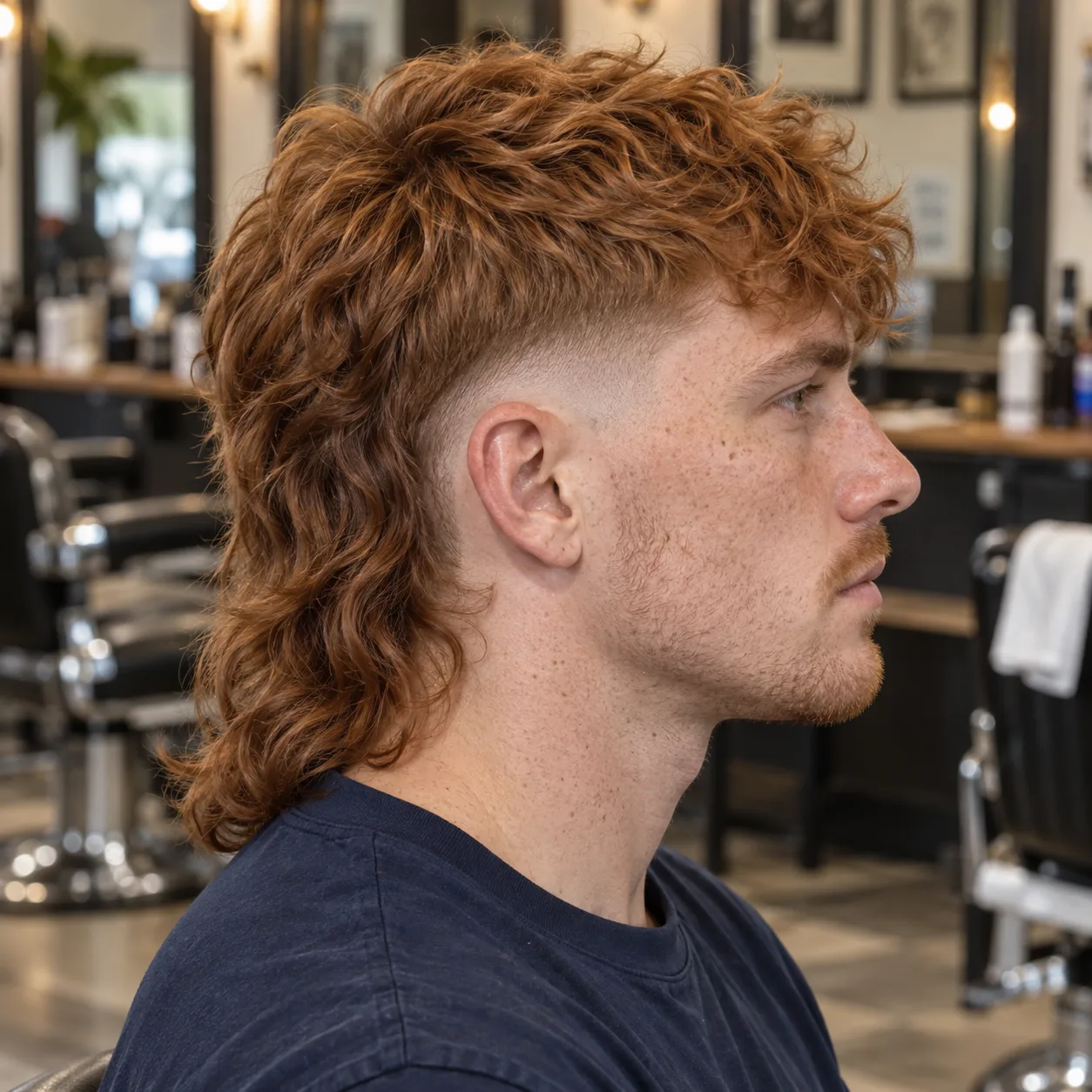
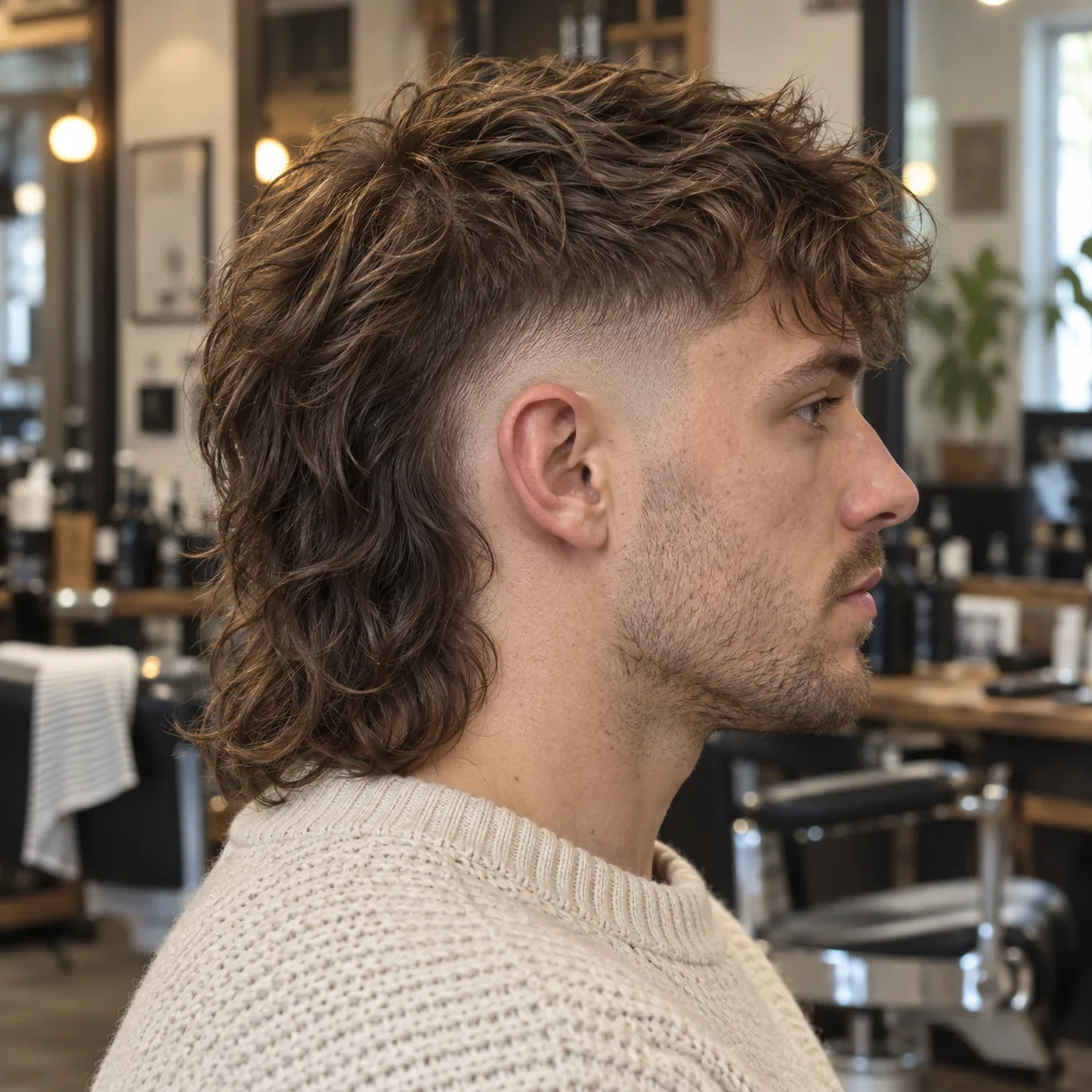
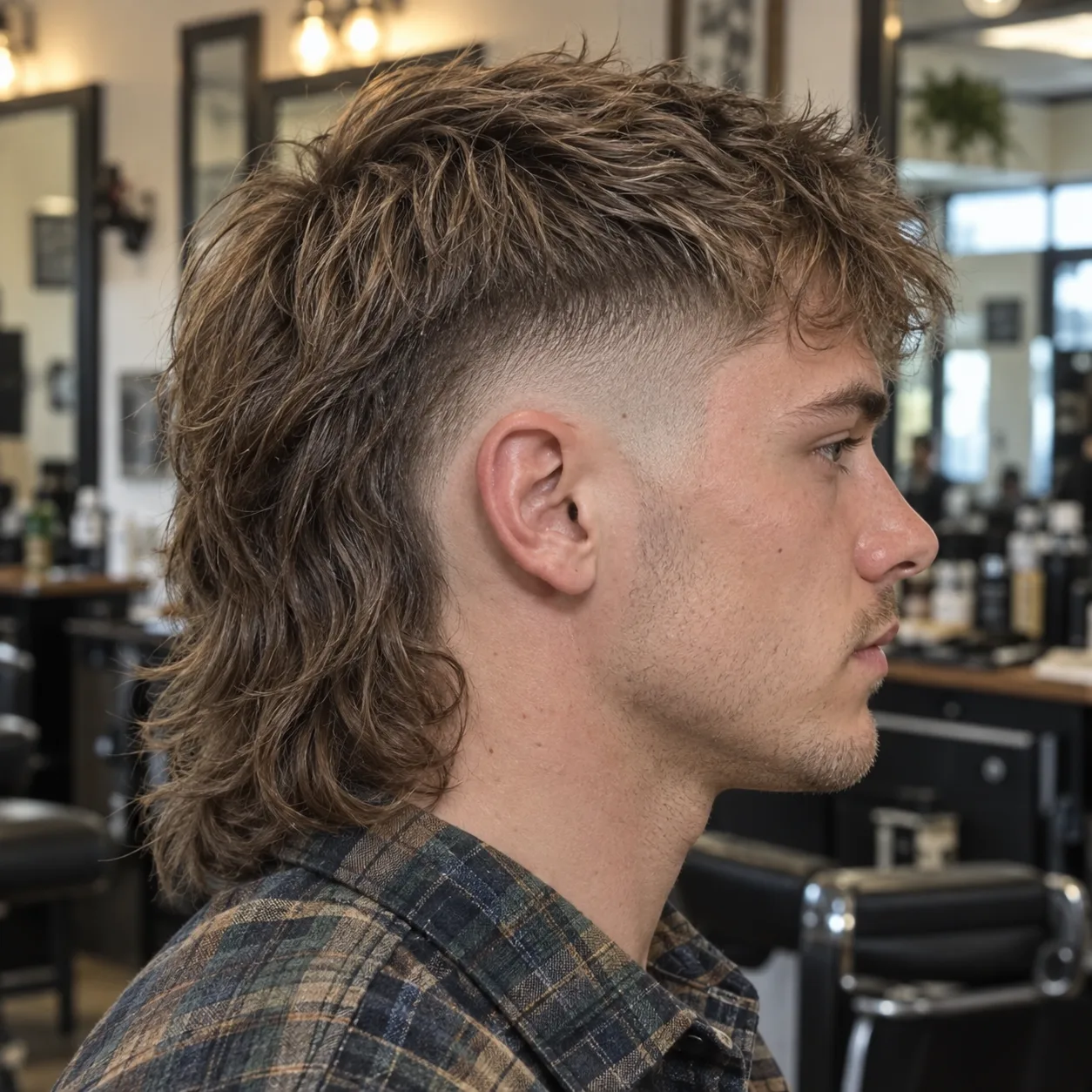
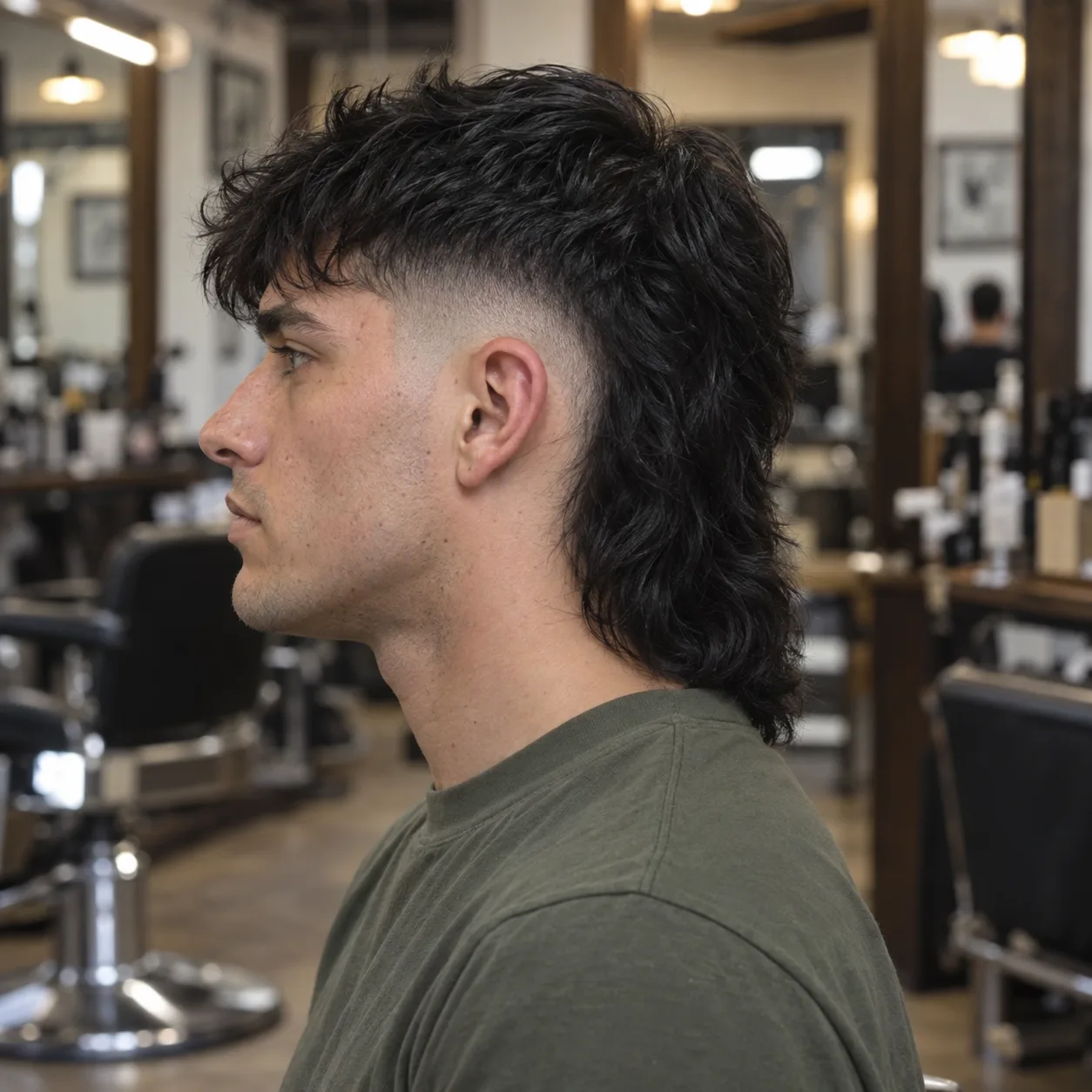
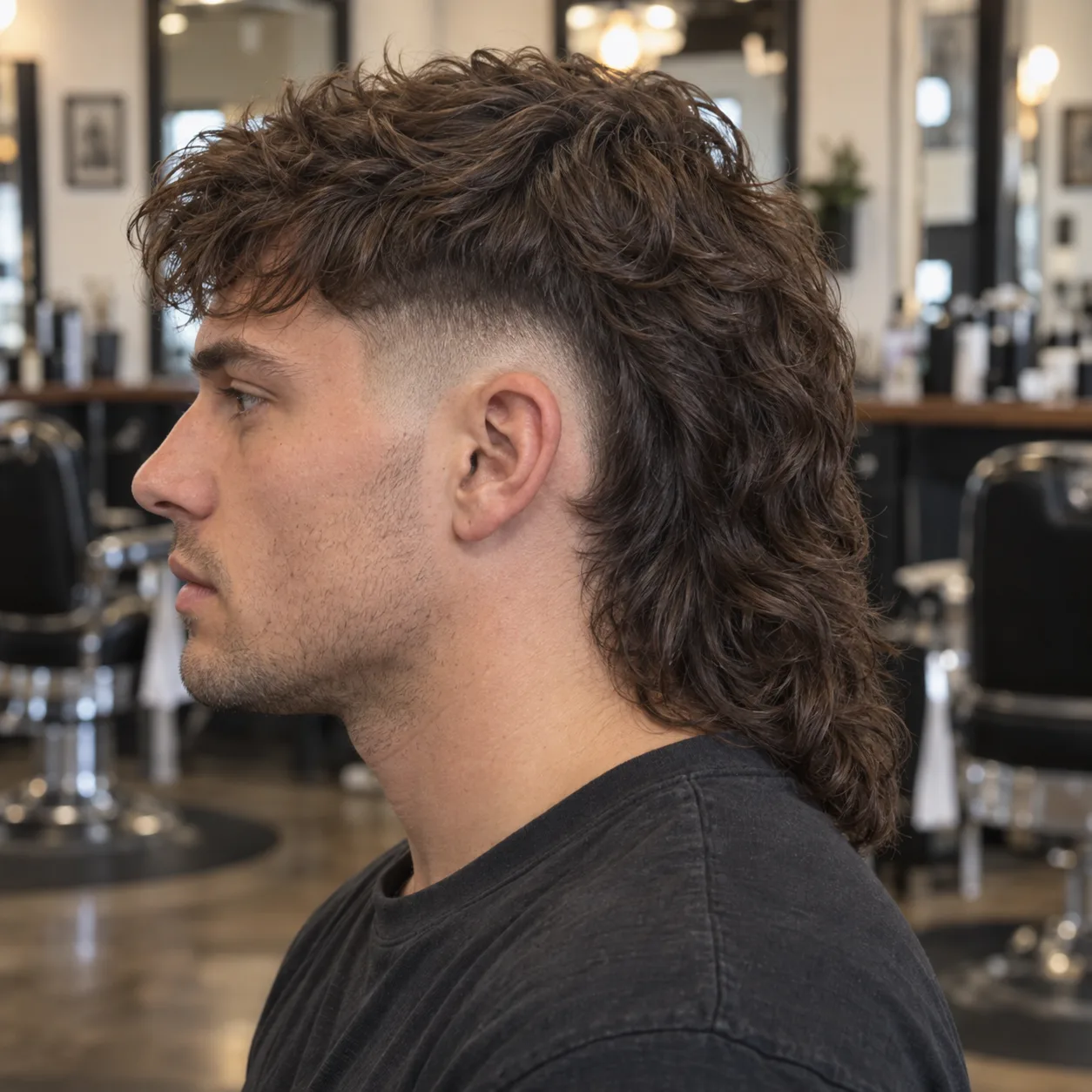
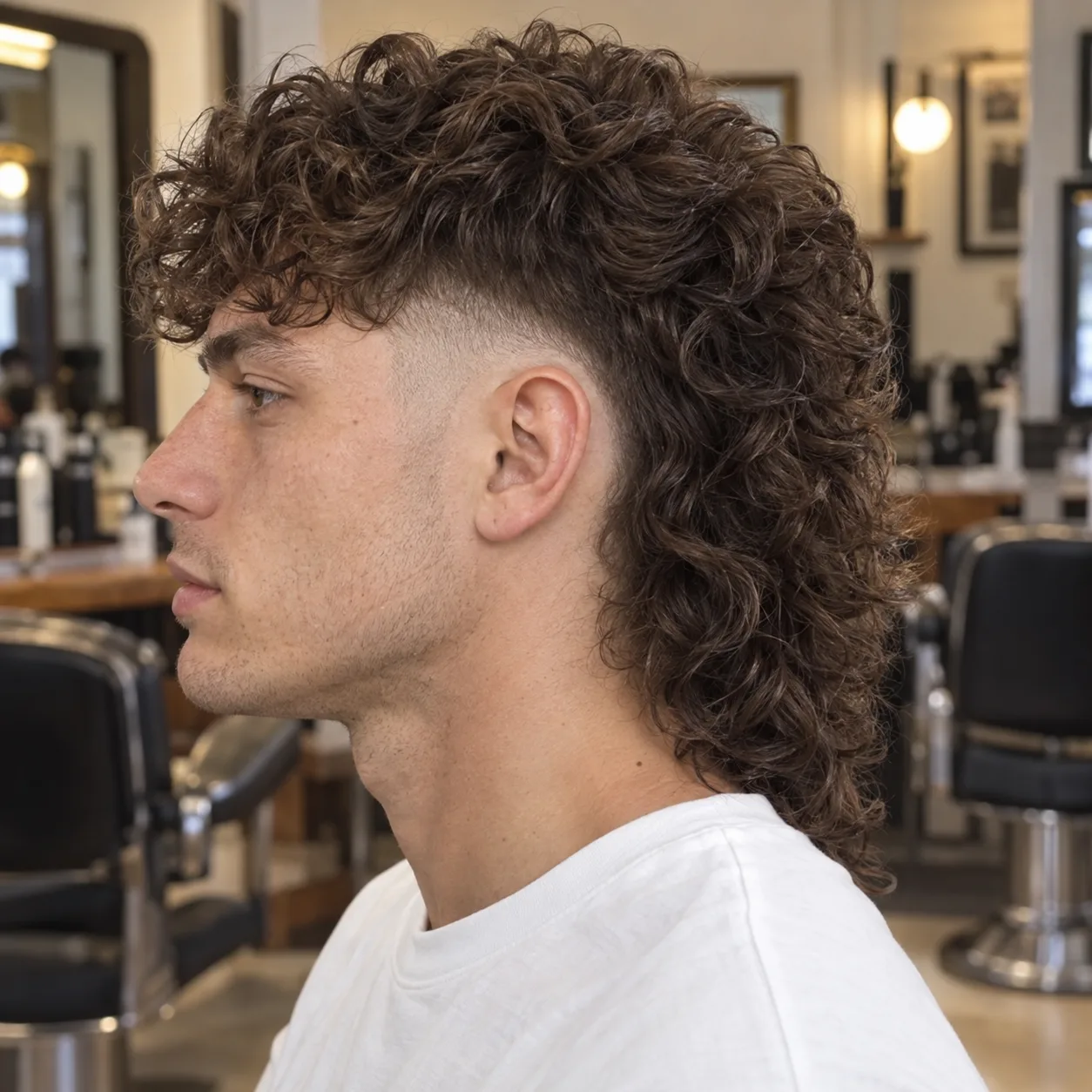
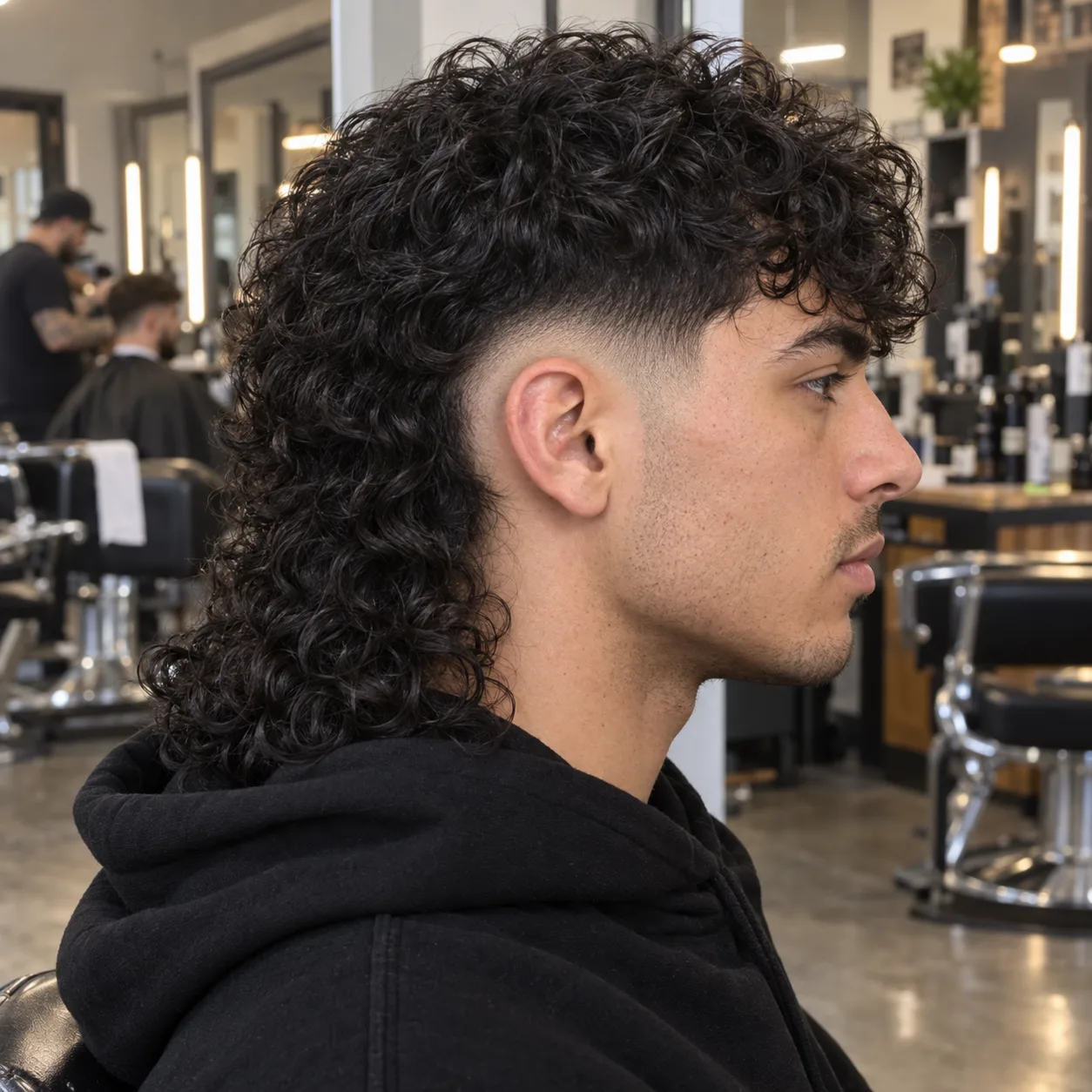
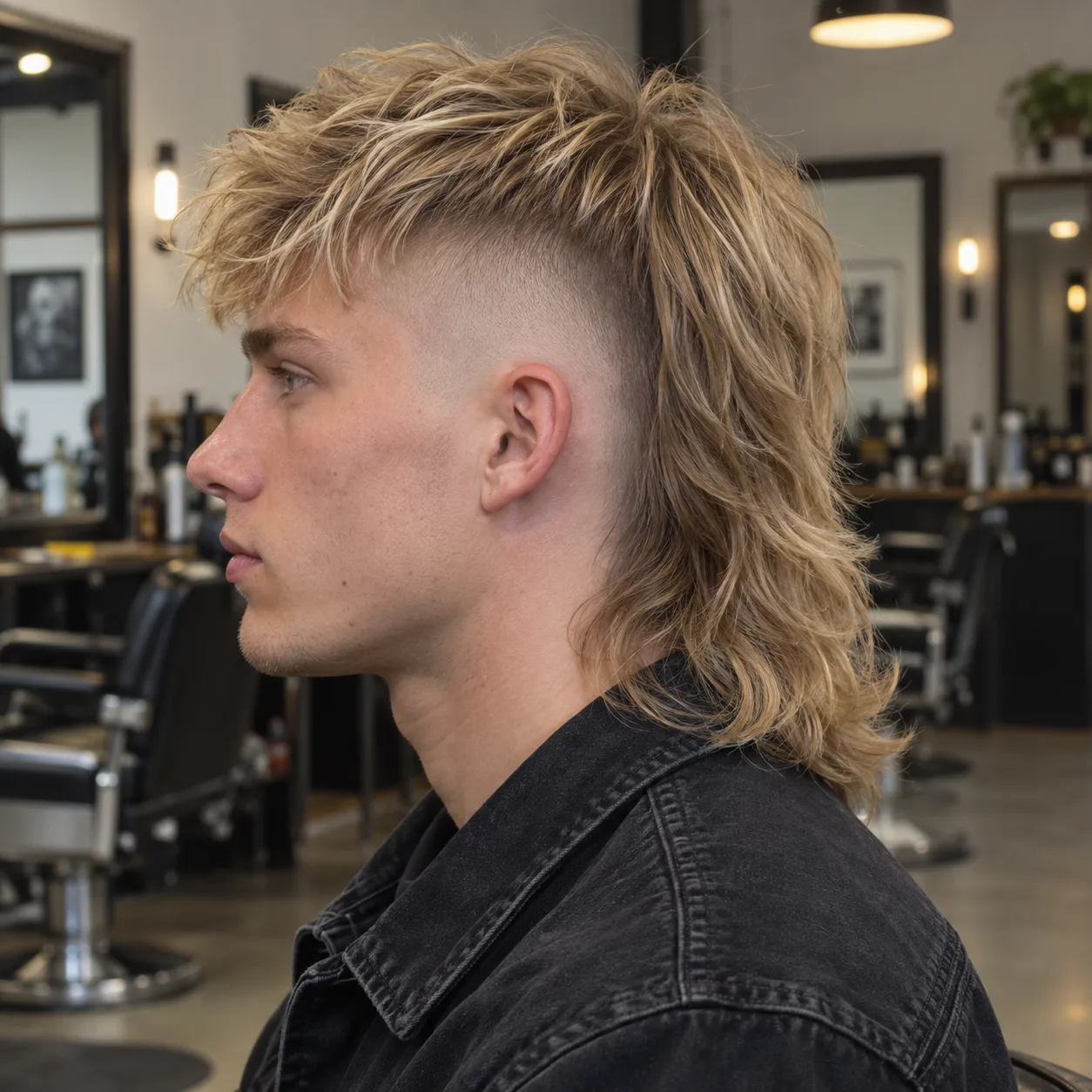
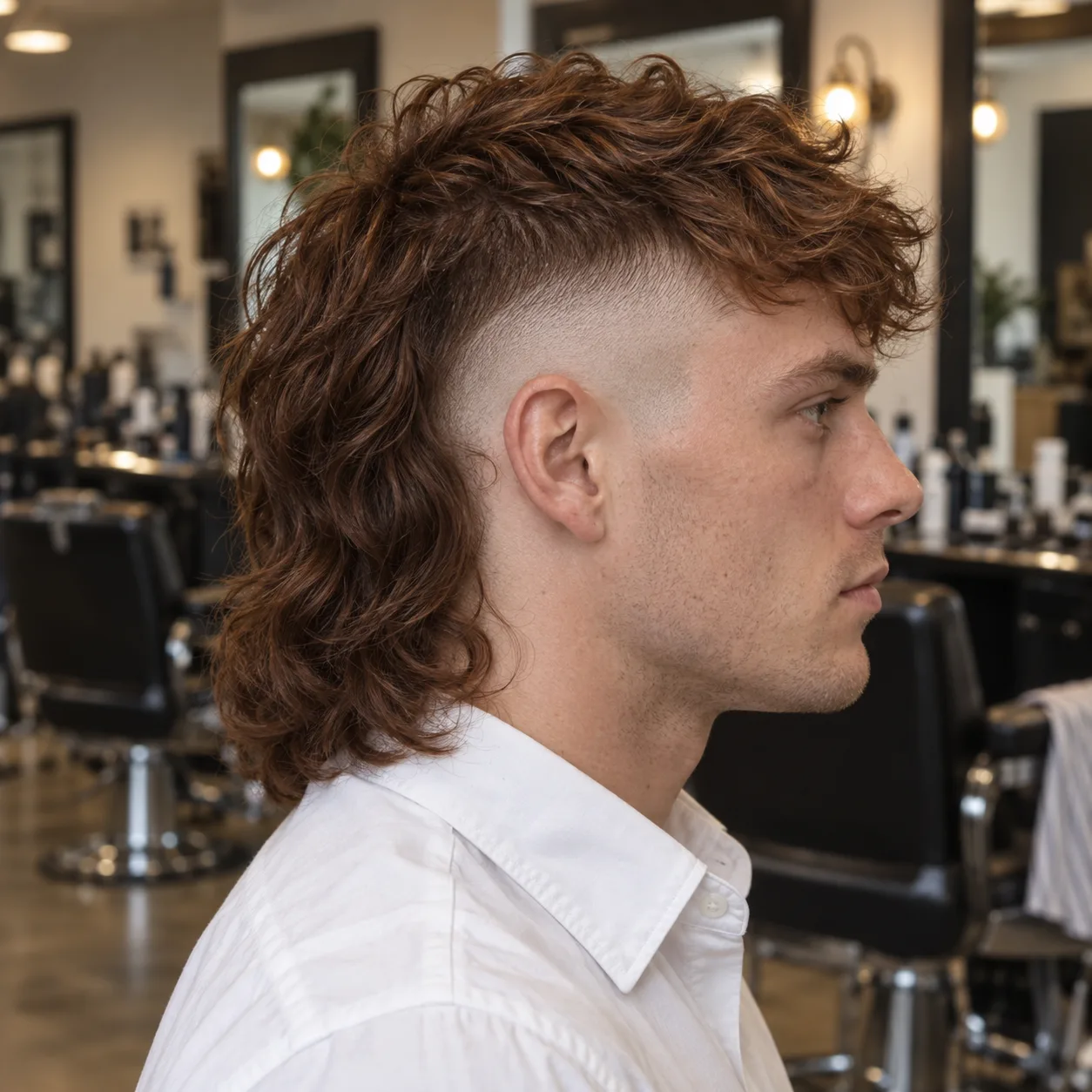
Every look below is the same mullet: textured top, fringe forward, long back past the collar. The only thing that changes is the fade on the side, from a low taper that barely shows to a high skin fade that takes almost the whole side. Scan it for the height you would actually wear on a Monday.
Gallery14 photos · tap to enlarge
 Try this on me
 Try this on me
 Try this on me
 Try this on me
 Try this on me
 Try this on me
 Try this on me
 Try this on me
 Try this on me
 Try this on me
 Try this on me
 Try this on me
 Try this on me
 Try this on me
Which fade height should you get?
Pick the height by how often you will go back to the barber and how much contrast you want between the sides and the back. Face shape comes second.
| Fade | Where it tops out | Contrast with the back | Pick it if |
|---|---|---|---|
| Low taper | Just above the ear | Low | It is your first mullet |
| Low fade | Top of the ear | Medium | You want it visible but safe |
| Mid fade | The temple | High | You get cut every 2 to 3 weeks |
| High fade | The parietal ridge | Maximum | You want it loud and you keep it up |
| Drop fade | Dips down behind the ear | High | You want the back to look heavier |
| Burst fade | Arc around the ear only | High | You want skin without losing the side |
Low taper mullet

The low taper only cleans up the hairline around the ear and the sideburn. No skin shows above the ear, so from the front it looks like a tidy medium cut, and the mullet only reveals itself from the side.
This is the version to start with. It grows out gracefully, it survives a missed appointment, and if you hate the back you can cut it off and walk away with a normal haircut. The same logic drives the low taper fade on shorter styles.
Low fade and mid fade mullet
A low fade takes the bottom band above the ear to skin and blends up to about the top of the ear. A mid fade climbs to the temple. The mid is the one most barbers do by default when you say "mullet fade" with no other detail, so if you want low, say low.
Mid is where the look gets its punch. It is also where upkeep starts to bite: the skin section fills in within about a week and the contrast is visibly softer by week three. Our mid fade guide covers that height in more depth.
High fade mullet
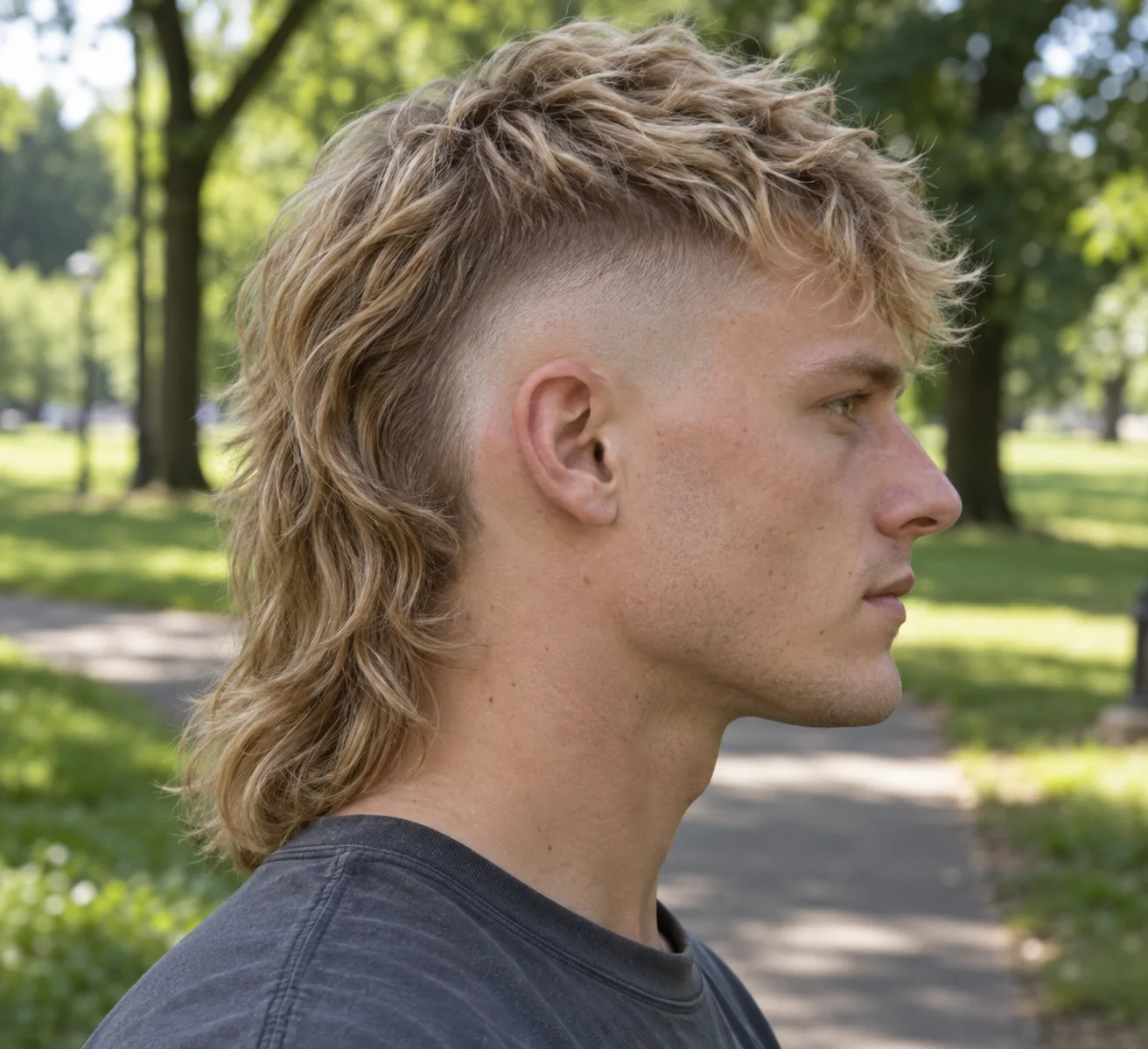
A high fade takes the side to skin up past the temple, nearly to where the head curves into the top. With almost nothing on the side, the back looks dramatically longer than it is.
It is the loudest mullet fade and the least forgiving. It needs a cut every two weeks to stay crisp, and taking skin that high means clippers and shavers work the same patch of scalp often. If you get bumps after a cut, the American Academy of Dermatology describes how folliculitis shows up in exactly those areas. For the full breakdown of skin-level fades, see our bald fade guide.
Drop fade and burst fade mullet
A drop fade dips down behind the ear in an arc before it stops. That curve makes the back look heavier and lower, which suits a longer mullet. A burst fade goes the other way: skin in a semicircle around the ear only, with full hair kept above the temple and behind the ear. The burst is the fade you see most on mullets in barber videos right now, and it gets its own section in the modern mullet guide.
Both depend on the barber reading your head shape, so show a picture rather than trusting the name.
Which mullet fade suits your hair type?
Hair type changes how the back behaves far more than it changes the fade.
| Hair type | Best fade | Back length | Watch out for |
|---|---|---|---|
| Straight | Low or mid | 3 to 4 inches | A flat, stringy back |
| Wavy | Any | 3 to 5 inches | Nothing much, this is the easy one |
| Curly | Mid or burst | 4 to 5 inches wet | Curls shrinking the back to nothing |
Straight hair
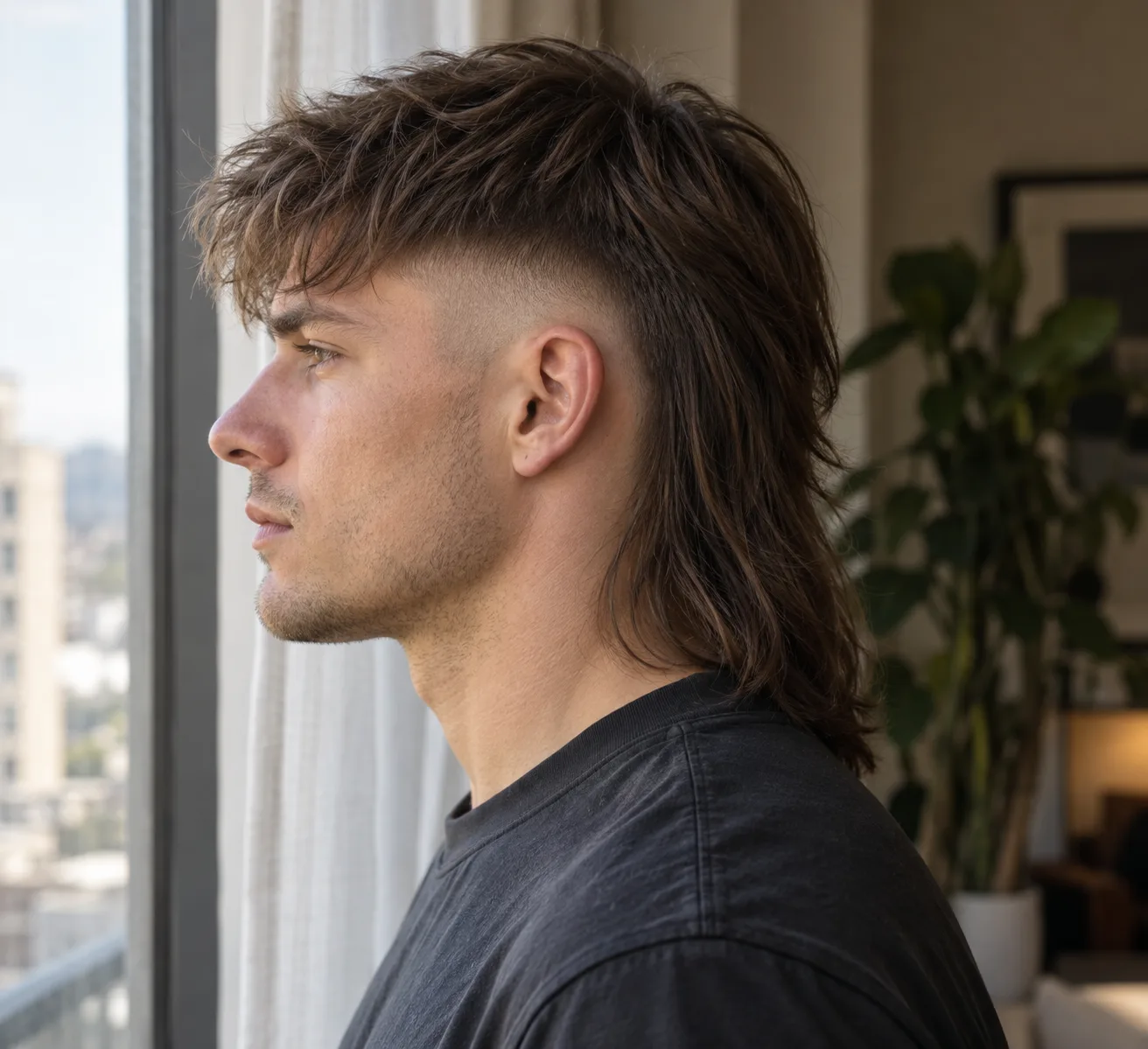
Straight hair makes the cleanest fade line and the flattest back. Ask for the back to be point cut or texturized so it has movement, and use a sea salt spray or light paste on the top. Our guide to haircuts for straight hair covers the products.
Wavy hair
Waves are the easiest texture for a mullet fade. The back flicks out on its own, the top holds shape without much product, and every height from low taper to high fade works. Most of the gallery above is wavy for that reason.
Curly hair
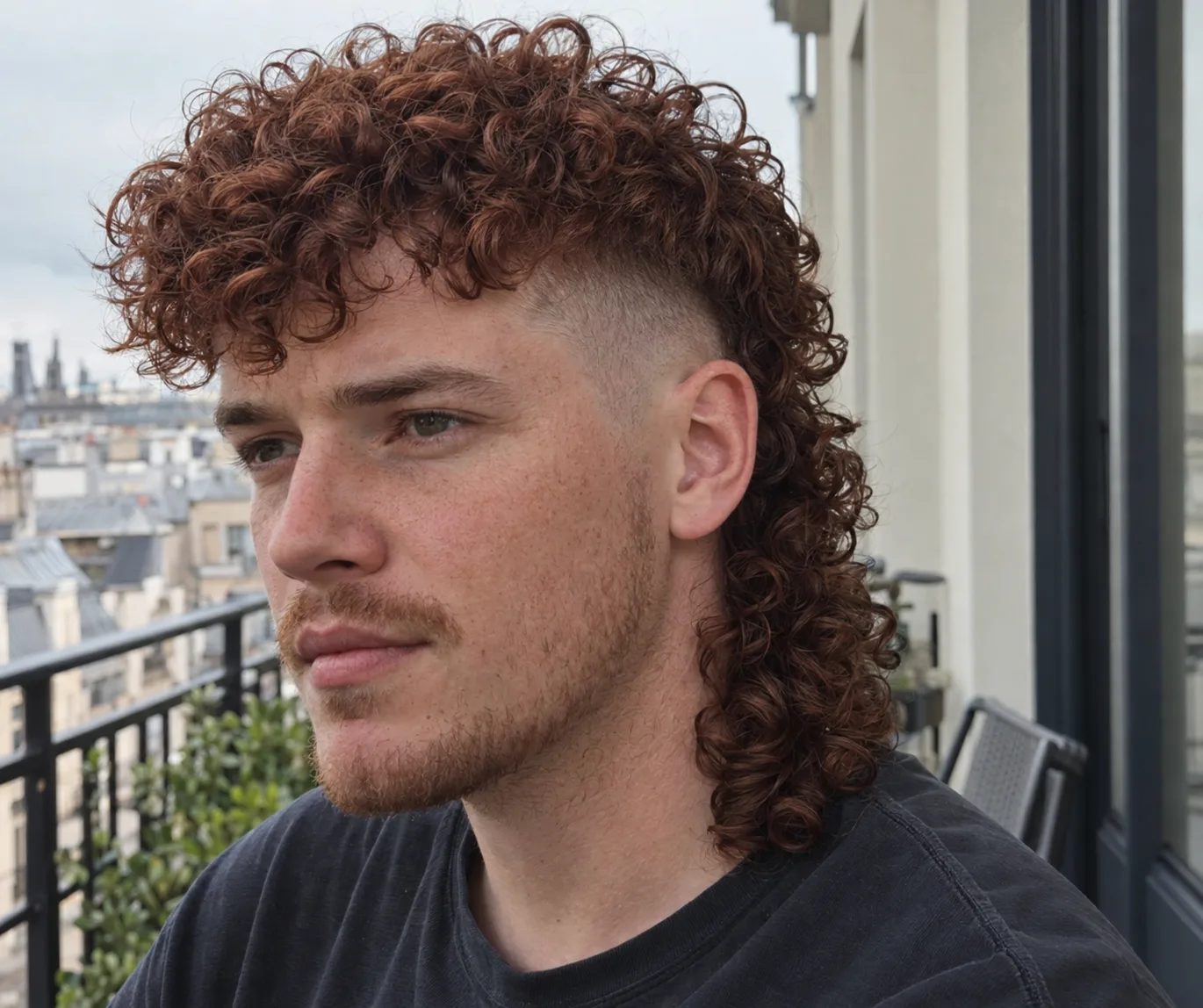
Curls shrink as they dry, so the back has to be cut longer than it will sit. Ask for length measured wet, and keep the fade at mid or burst so the sides do not look disconnected from a round, full top. More options in haircuts for curly hair.
Mistakes that ruin a mullet fade
- The fade wraps around the back. The barber runs it round the head like a normal fade, the nape gets taken short, and the back turns into a thin strip. That is a rat tail, not a mullet. Say "stop the fade behind the ear" out loud.
- Too much fade, not enough back. A high skin fade on a back that only reaches the nape looks like a regular cut that is overdue. The higher the fade, the more length the back needs.
- Blunt back. Cut straight across, the back looks like a helmet edge. It should be point cut so it breaks up.
- Booking a high fade on a monthly schedule. You will spend two of every four weeks wearing a blurry version of what you asked for.
- Asking for "a mullet fade" and nothing else. That phrase covers everything in the gallery. The result depends on what your barber thinks it means. Plenty of bad haircuts start with an instruction that vague.
Say this to your barber
A mullet fade: low skin fade on the sides that stops behind the ear, not around the back. Keep 3 to 4 inches at the back, point cut, and leave 2 to 3 inches textured on top pushed forward.
How to ask for a mullet fade
- Name the height
Say low, mid or high, and point to the spot on your head where the fade should top out. Words drift between barbers. A finger on your temple does not.
- Say where it stops
"Stop the fade behind the ear, keep the back full." This one sentence prevents the most common mistake on the list above.
- Give the back a number
Say the length in inches, or show where it should land on your collar. Curly hair: ask for it measured wet.
- Ask for texture
Point cut the back and the top so neither looks blunt, and ask what product to use at home.
- Bring a picture
Show a side profile, not a front shot. The side is where a mullet fade lives.
Can you see a mullet fade on yourself before the cut?
Pictures of other people only tell you so much. The questions that matter are about your head: whether a high fade makes your face look longer, whether your back grows long enough, whether the contrast suits you or just looks loud. A barber cannot answer that until the clippers are already moving. You can try the fade heights on a simulator or put the mullet itself on your own photo.
Yours could be here.
Start with one selfie.
One photo, twenty seconds, and you'll know. Free account, no card for your first render.
So which mullet fade should you get?
If it is your first one, get a low taper and stop it behind the ear. You keep a haircut you can wear anywhere and you learn how your back grows. If you already know you like it, move up to a mid or burst fade and book every two to three weeks. Whatever the height, the line behind the ear is the line that makes it a mullet fade.
Frequently asked questions
A low or mid fade suits most people. A low taper is the safest first choice because it grows out cleanly. A burst fade is the one you see most right now because it gets skin around the ear while keeping hair above the temple and at the back.
No. A taper fade is just a way of cutting the sides. It becomes a mullet when the back is left long past the nape. A taper fade with a long back is a taper mullet, the quietest version of a mullet fade.
Not on its own. A burst fade is a semicircle of skin around the ear. Paired with a long back it is a burst fade mullet, which is one of the most common mullet fades.
Name the fade height, say the fade should stop behind the ear and not go around the back, give the back length in inches and ask for texture on top. Bring a side profile photo.
The barber sections off the back first so it stays long, fades the sides from the ear up to the chosen height, then curves the fade down behind the ear and blends it into the back section. The top and back are then point cut for texture.
A low taper lasts longest, about four to five weeks before it looks overdue. Skin fades, especially high ones, look soft after one to two weeks because the bare section grows back first.
It depends on the fit, not the name. A mullet fade looks deliberate when the back is long enough to balance the faded sides and the fade stops behind the ear. It looks unattractive when the back is thin or the fade has grown out. Seeing it on your own photo first is the quickest way to know.
A wolf cut mullet borrows the shaggy layers of a wolf cut, with volume at the crown, and keeps the longer back of a mullet. It usually has little or no fade. If you want layers everywhere rather than faded sides, try a wolf cut instead.
Preview it on your own photo: Men's Hairstyle Try-On.
Share article
About the author

More articles
Men's Haircuts · 14 min
Benny Blanco Haircut: The Fake Half Shave and the Real Curls
Benny Blanco did not shave half his head. It was a prosthetic bald cap, and the buzz cuts are AI. Here is what his curly mop actually is, the short version, and exactly what to tell your barber.
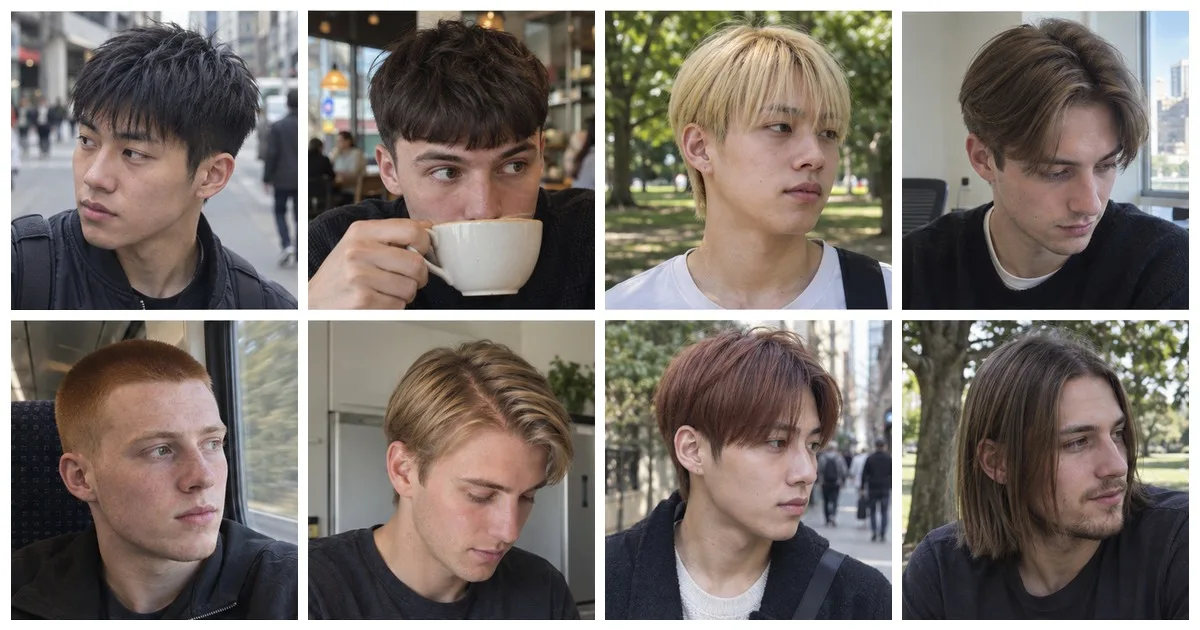
Men's Haircuts · 16 min
1A Hair: How to Tell If You Have It + 14 Cuts That Work
1A hair is pin-straight with no bend from root to tip. How to tell it from 1B and 1C, why it goes flat, 14 haircuts that work on it, and how to style it for volume.
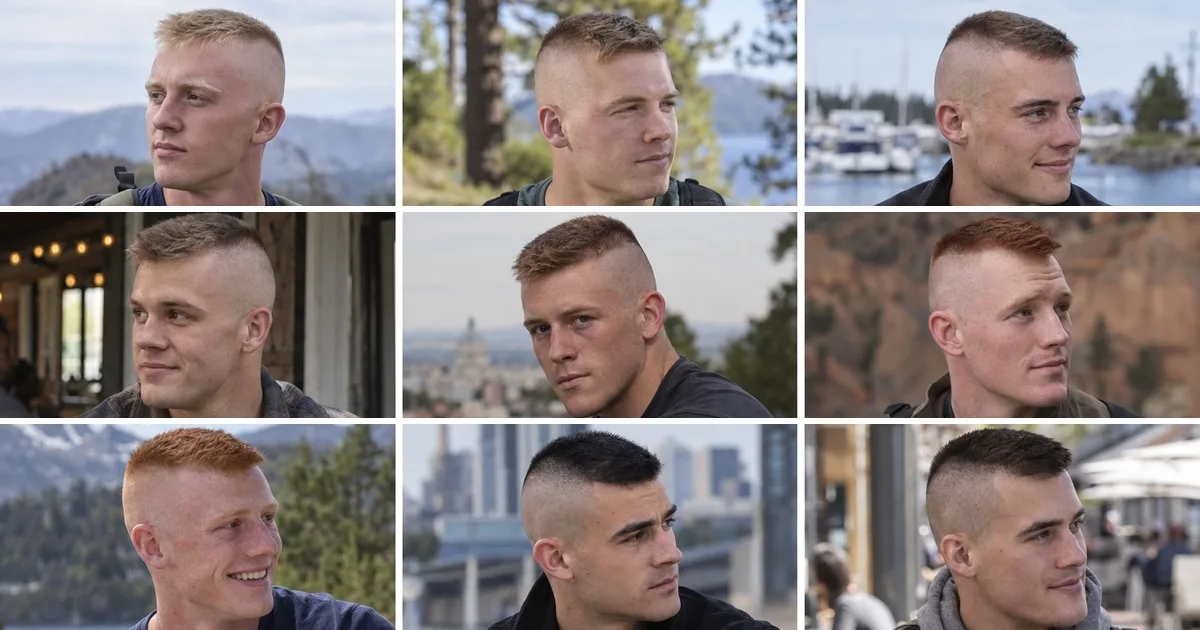
Men's Haircuts · 15 min
High and Tight Haircut: 4 Versions and the Head Shape Rule
A high and tight clips the sides almost to skin all the way up to the top of the head, so it shows your skull shape more than your face. The 4 versions, 14 photos, what to tell your barber, and how long it lasts.