Mid Fade Haircut: Where the Line Sits and Who It Suits
Oleh Onysko Updated 28 September 2026 17 min read
In this article
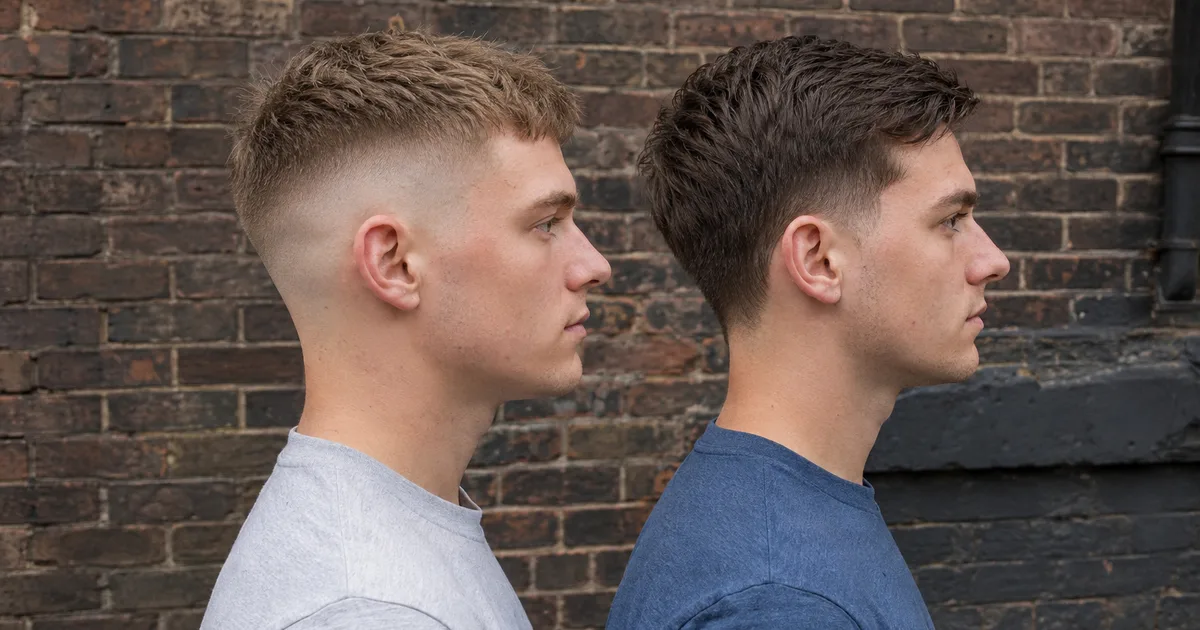
A mid fade is a full fade whose top line stops halfway up the side of your head, level with your temple. Everything below that line is graduated down to skin or close to it. Everything above it keeps its length.
The word "mid" tells you where the clipper work stops. It tells you nothing about how much hair comes off, and that is the part most men get wrong. A mid taper and a mid fade both stop at the temple, and they are not the same haircut.
Where a mid fade stops, and why that line decides the cut
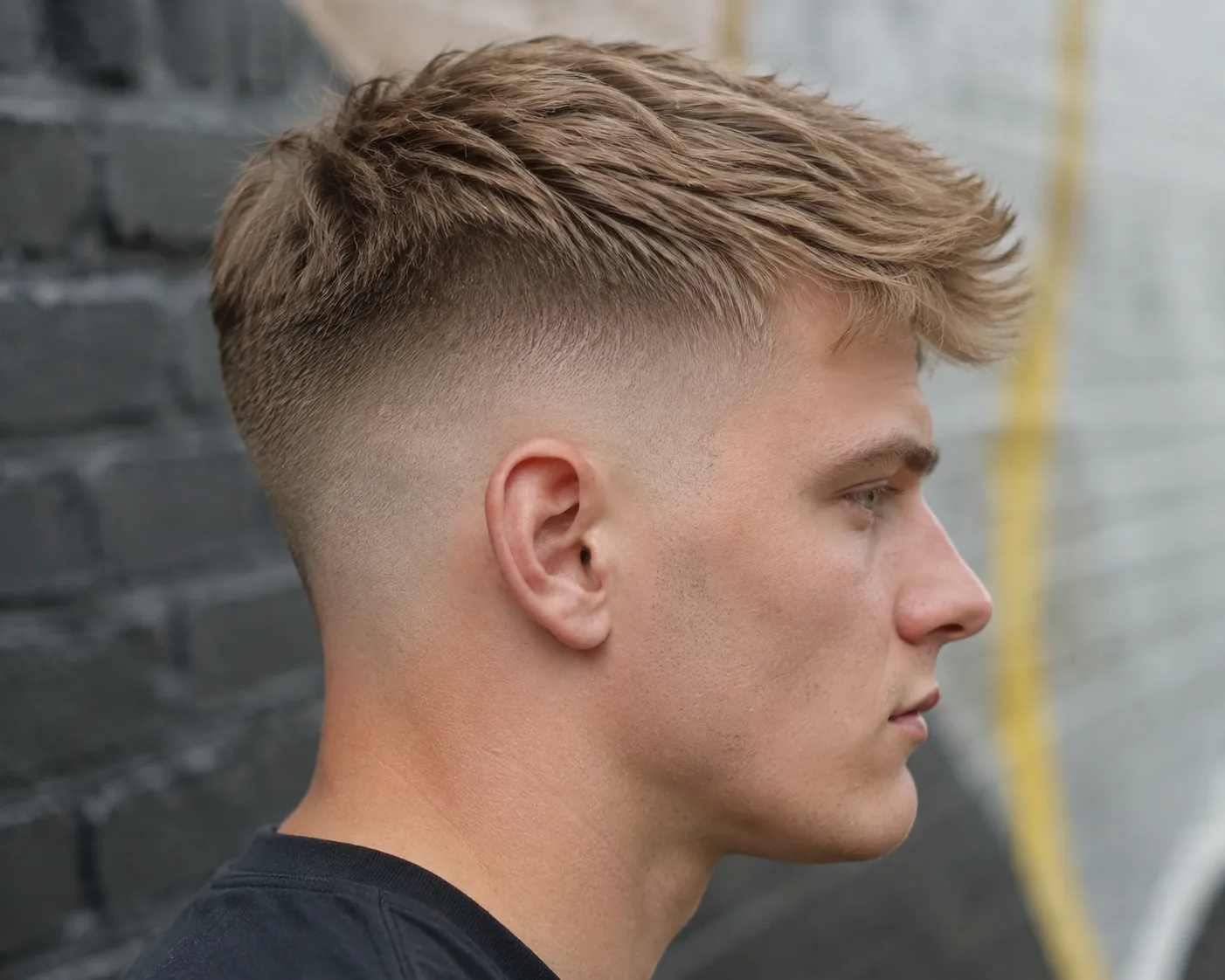
Put two fingers flat above your ear. The top finger sits roughly where a mid fade ends. That is about an inch and a half above the ear, level with the corner of your eyebrow, and clearly below the parietal ridge, the corner where the side of your skull turns into the top.
That line matters more than the guard number, because it lands on the widest part of your head. Take the hair down to skin there and you visibly narrow the skull at its broadest point. This is the mechanical reason a mid fade slims a round face and can make a long, narrow face look longer. A low fade keeps the short work down near the ear where nobody reads width, which is why it changes your shape far less.
The fade also wraps. It runs from the sideburn, around behind the ear, across the nape and back up the other side as one continuous band. If your barber only touched the strip around your ear, you did not get a fade.
Mid fade vs mid taper: same height, opposite haircut
This is the single confusion worth clearing up, because both cuts are sold under the word "mid" and they look nothing alike from six feet away.
A taper is a narrow band. It follows your hairline around the ear and down the nape, maybe an inch or two deep, and it leaves the bulk of your side hair alone. A mid taper fade puts the top of that band at the temple, but above and behind it the side still has weight, length and a shape you can comb.
A mid fade is a panel. The entire side of your head below the temple comes off, from the hairline all the way up to the line, and it is graduated from skin or a #0.5 at the bottom to full length at the top. There is no weight left down there to comb.
| Mid taper | Mid fade | |
|---|---|---|
| Top of the short work | Temple | Temple |
| How deep it goes | A band of one to two inches along the hairline | The whole side panel below the line |
| Shortest point | Usually a #1 or #0.5, often not skin | Skin or near skin, most of the time |
| Weight left on the sides | Yes | None |
| Looks like | A tidy haircut | A fade |
| Grows out | Softly, still fine at week five | Visibly, blurred by week three |
| Barber cycle | 4 to 5 weeks | 2 to 3 weeks |
Read the last two rows before you read anything else on this page. The taper is the cut you choose when you cannot get to a barber every fortnight. The mid fade is the cut you choose when you can.
If you are still deciding between heights rather than between styles, the full map of fade types covers low, mid, high and skin in one place.
Mid fade vs low fade vs high fade
Height is one variable, and it only sets where the cut stops.
| Fade | Stops at | Face it flatters | Reads as |
|---|---|---|---|
| Low | Just above the ear | Round, wide, thinning hairlines | Conservative, almost deniable |
| Mid | The temple, level with the eyebrow corner | Round, square, most average faces | Balanced and obviously a fade |
| High | The parietal ridge | Long, oval, faces with height to lose | Sharp, military, high contrast |
Mid is the default for a reason. It gives you the contrast a low fade never delivers without the severity that a high fade forces on you, and it is the version you can grow into a low fade in about ten days if you decide you hate it. That escape route does not exist in reverse. Go one step past a high fade, with the sides held at one close guard and a hard line on top, and you are into the military high and tight.
The four mid fades barbers actually cut
The word covers four real cuts. Naming the right one saves you the conversation in the chair.
Mid skin fade
The bottom finishes on bare scalp with a foil shaver, then blends up to the temple. Highest contrast, cleanest for about six days, and the version most of the photos you have saved actually are. Ask for it by name or you will get a #0.5 and wonder why it looks softer than the picture. Everything that applies to taking a fade all the way to bare skin applies double at mid height.
Mid drop fade
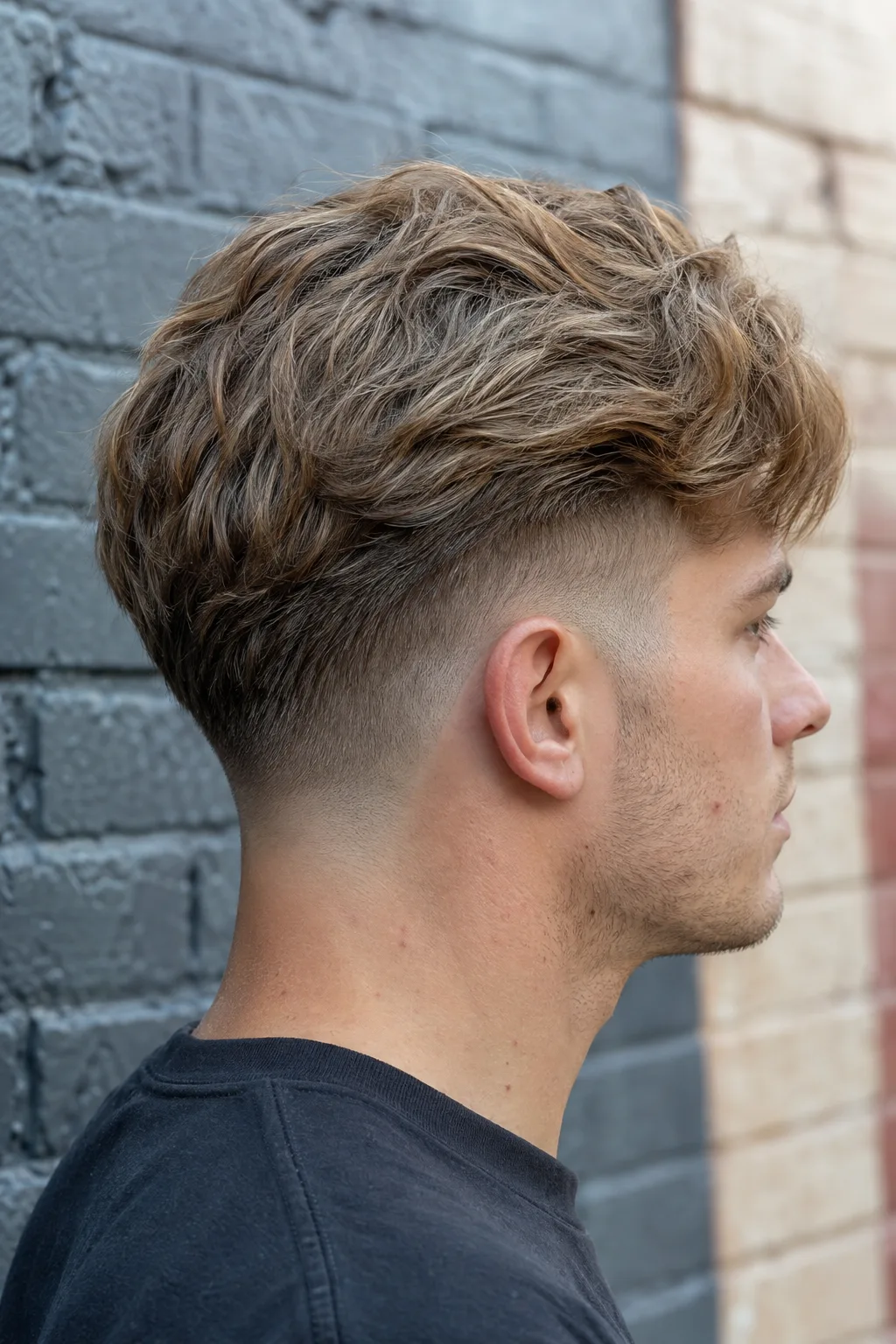
The line does not stay level. It drops behind the ear and follows the curve of your skull down toward the nape, so the fade sits lower at the back than at the temple. It suits round heads and anyone with a flat occipital bone, because it adds a visual curve where there isn't one.
Mid burst fade
The fade radiates around the ear in a semicircle and stops there, leaving the back long and untouched. This is the fade under most mullets and most of what you see on football pitches. If you like the modern mullet shape, this is the fade it sits on.
Mid shadow fade
A blend that never touches skin, bottoming out at a #1 with the guard left on. It reads as a fade at conversational distance and as a very short taper up close. The right pick if your scalp shows through easily or if you have scarring you would rather not put on display.
Which top goes on it
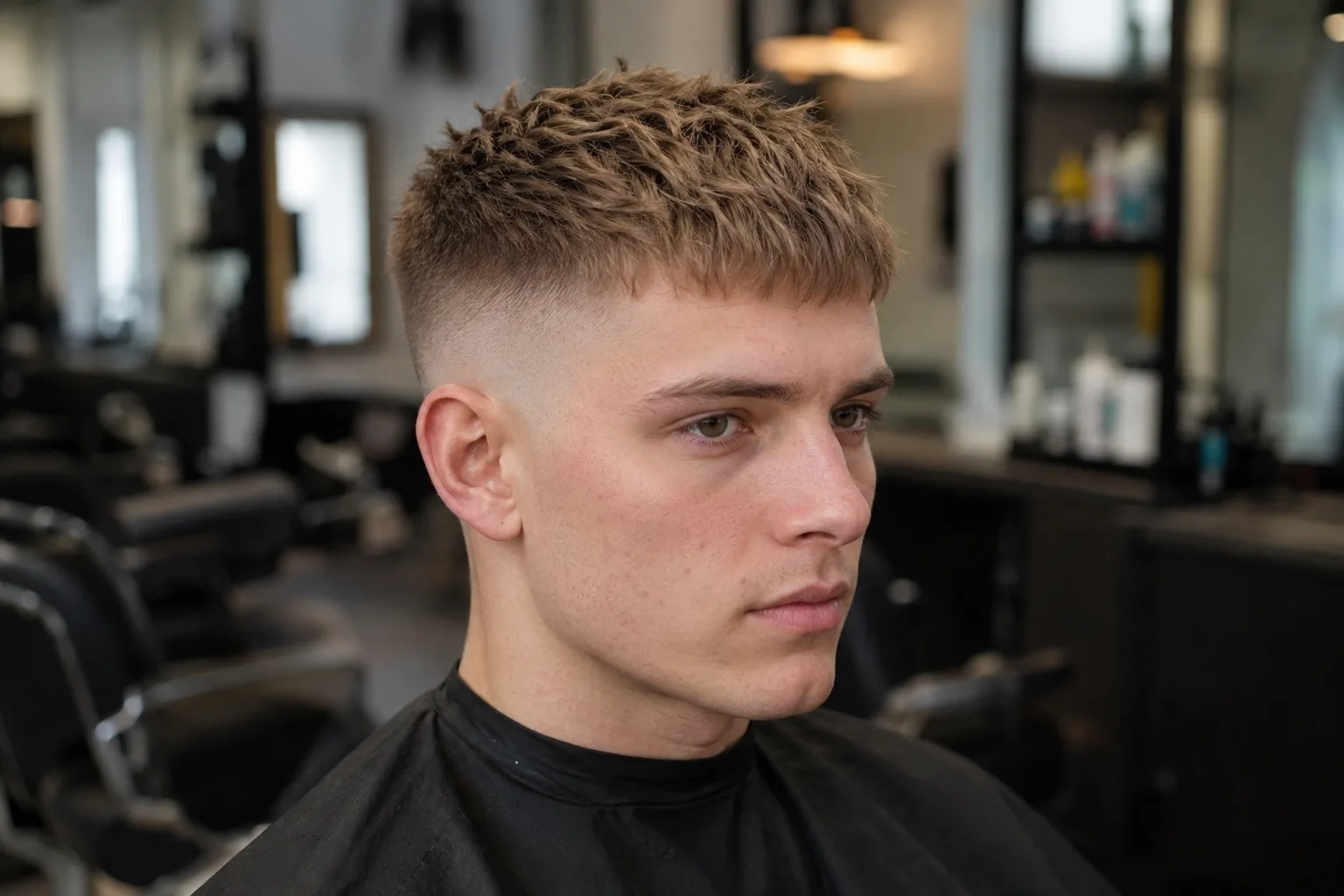
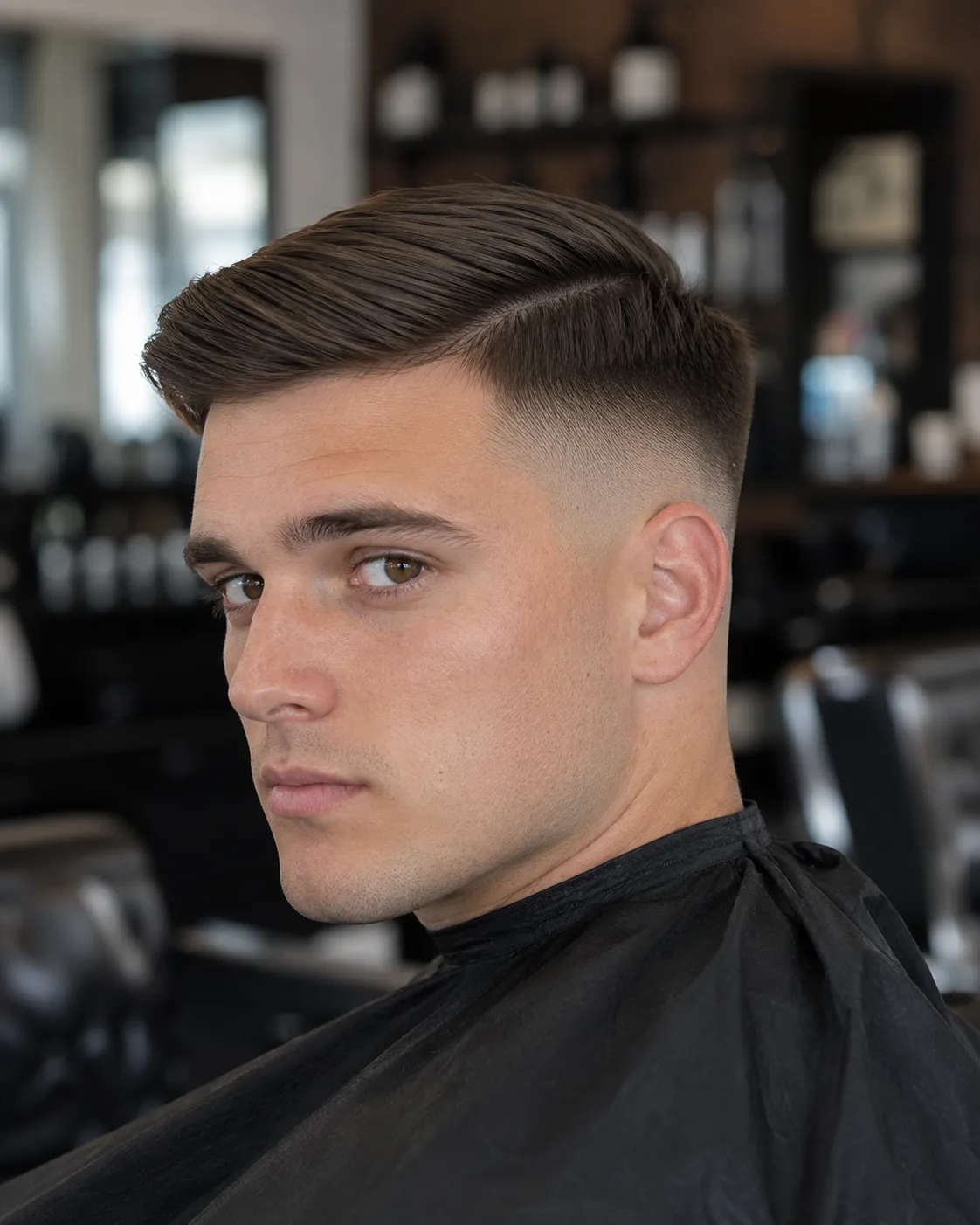
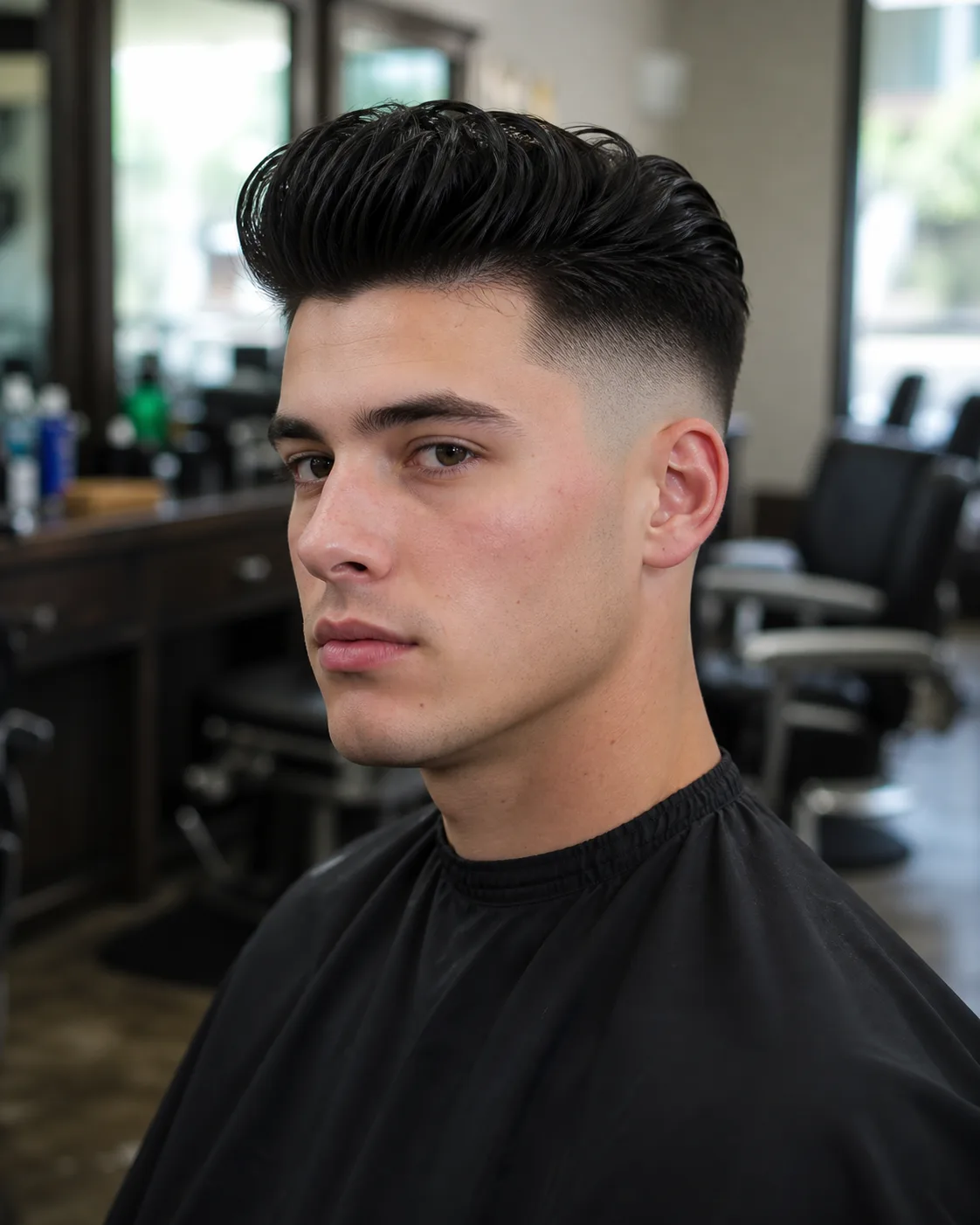
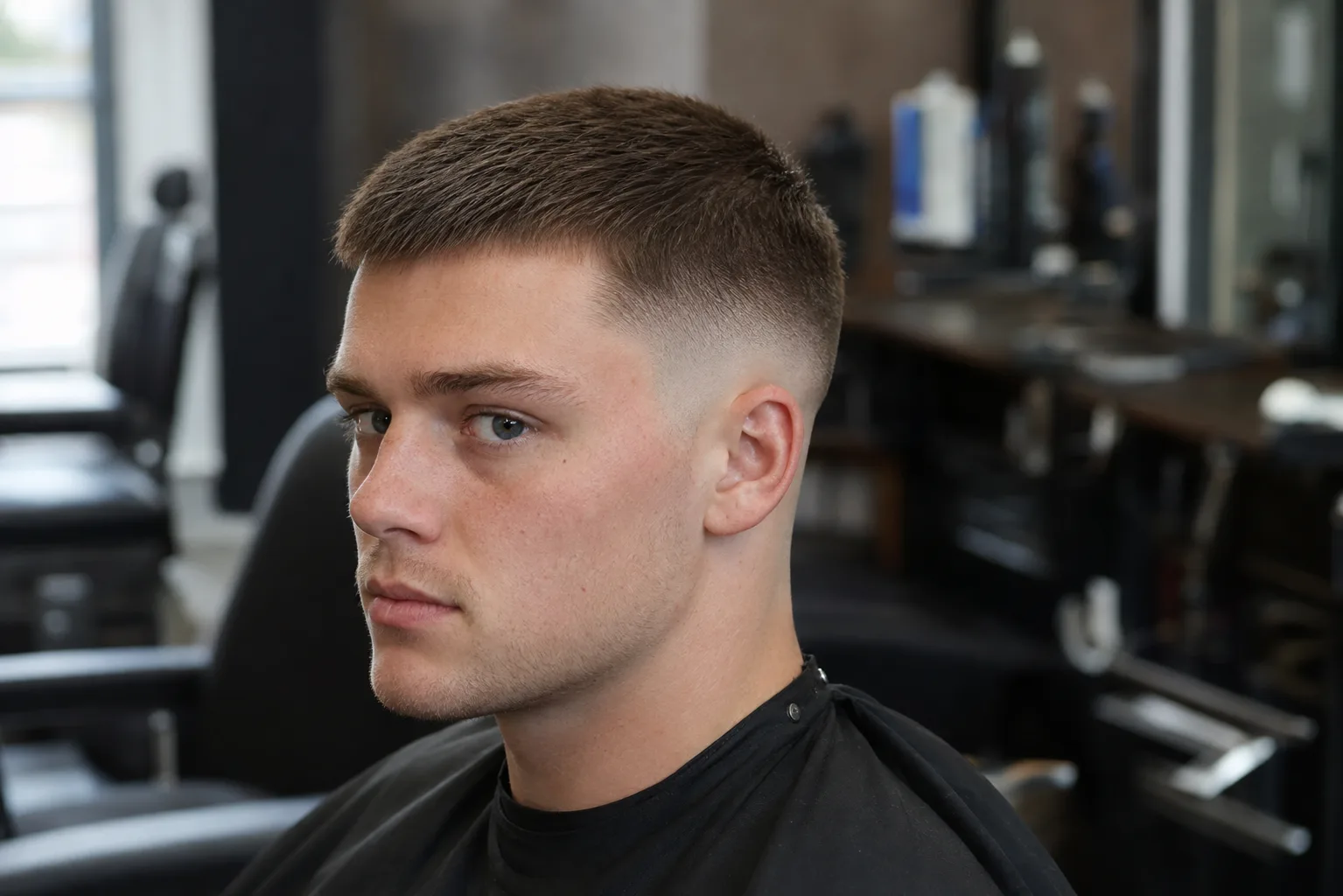
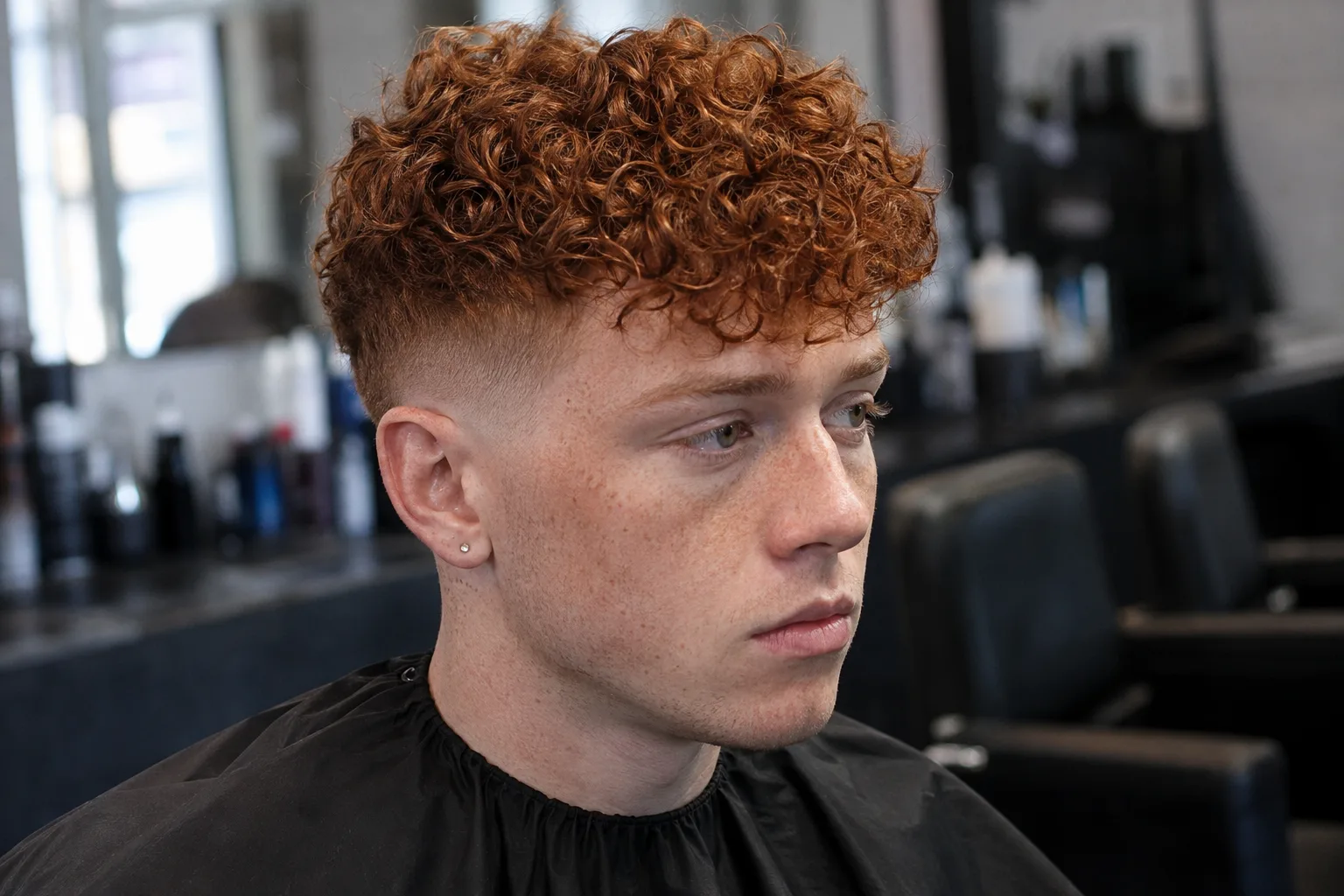
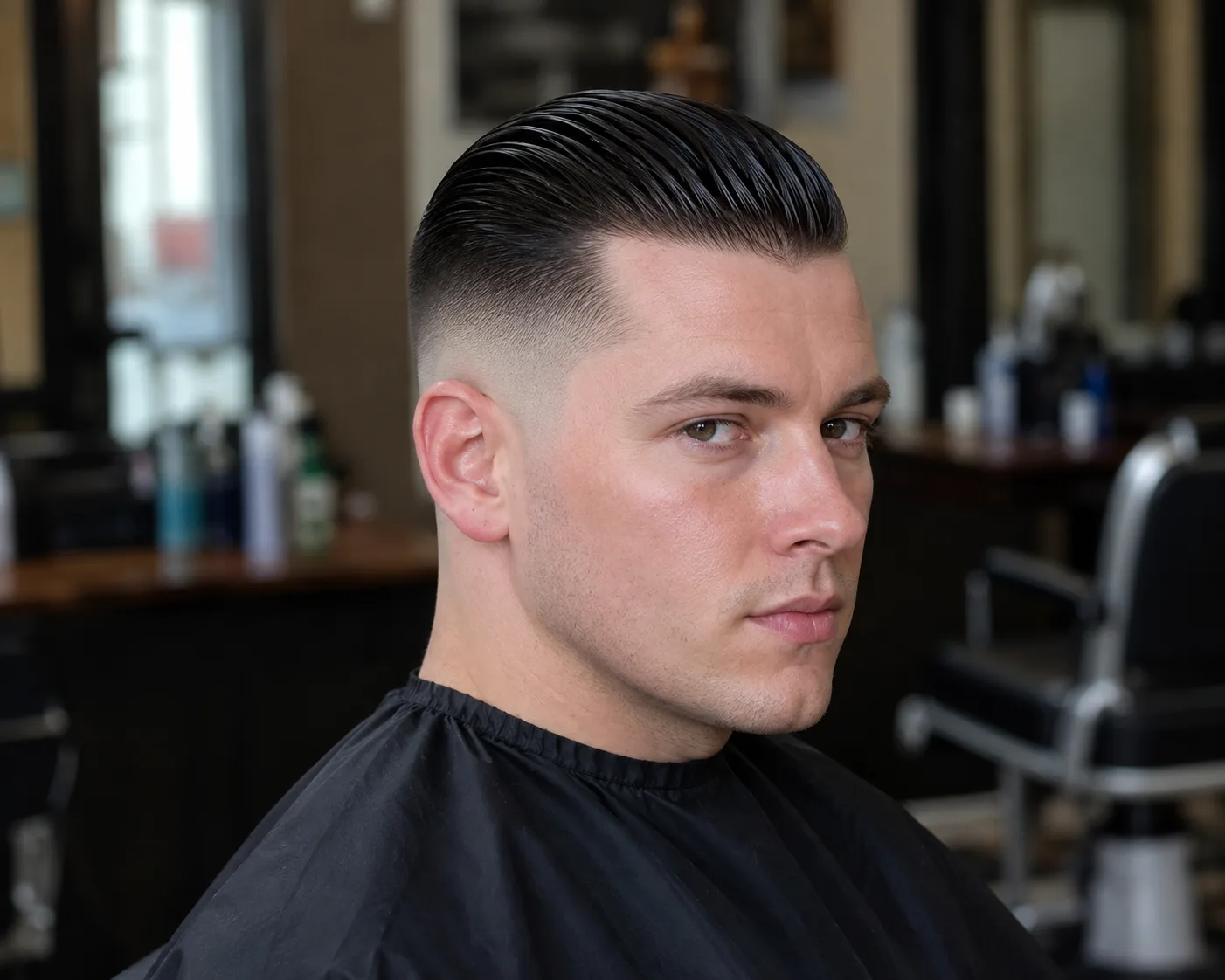
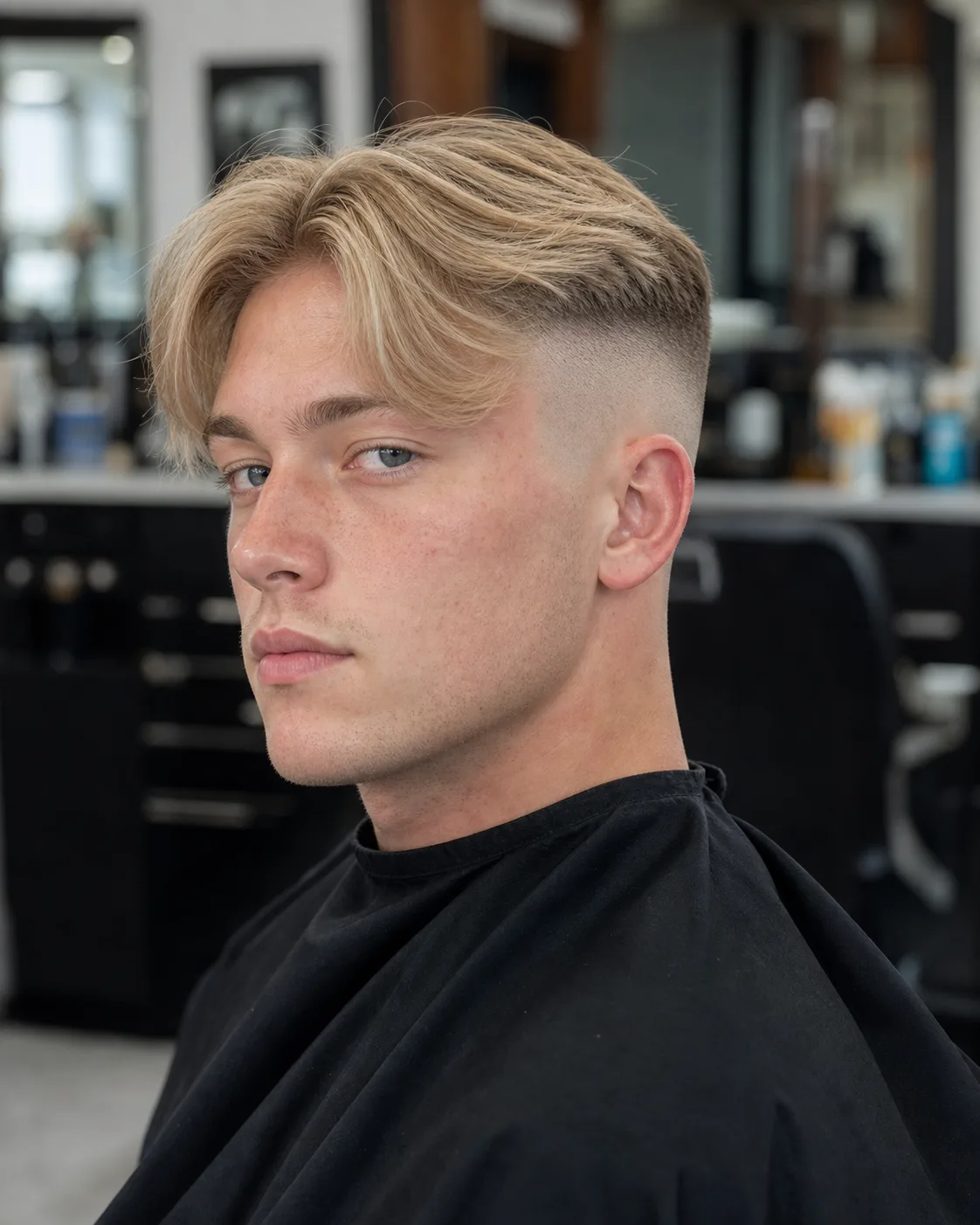
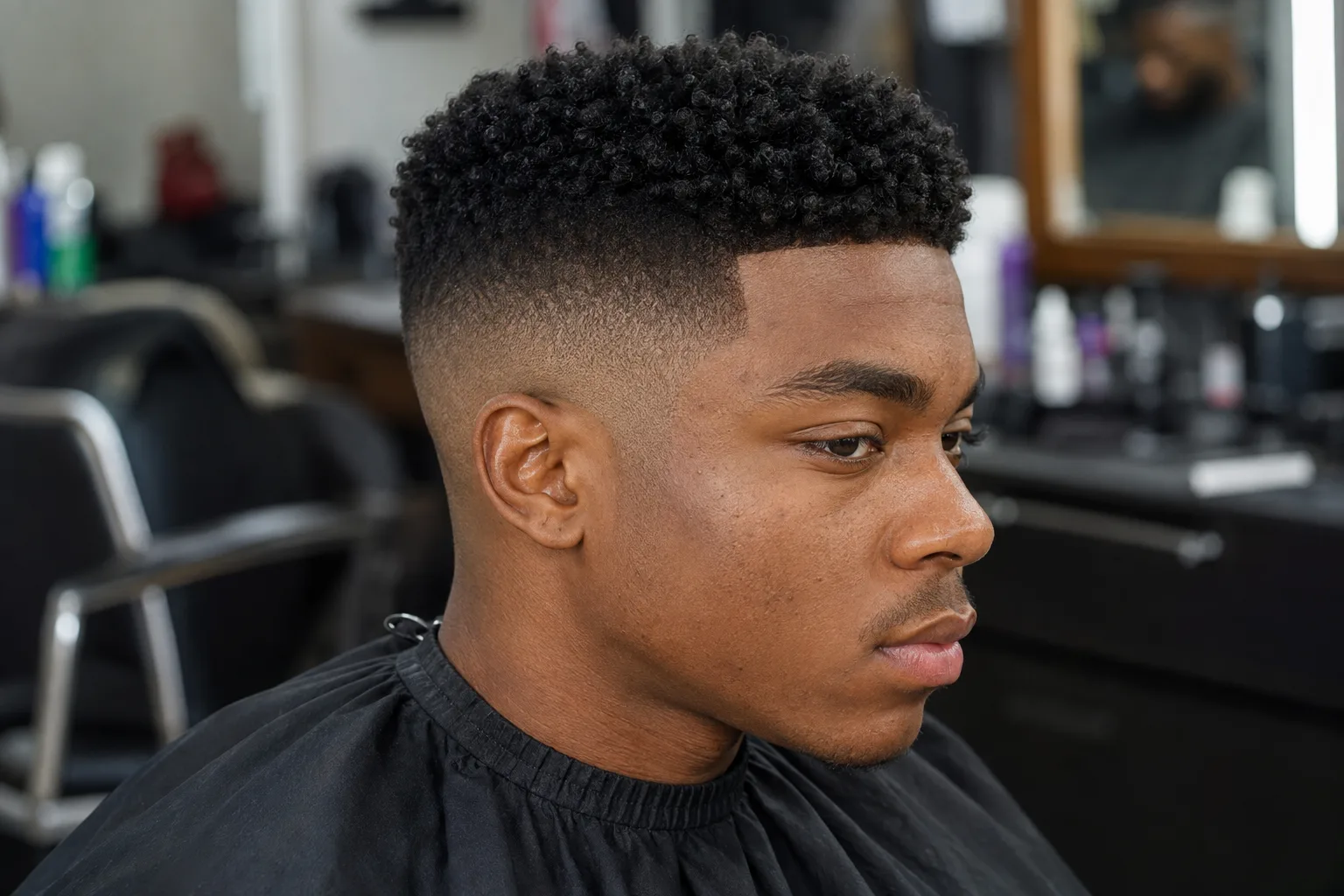
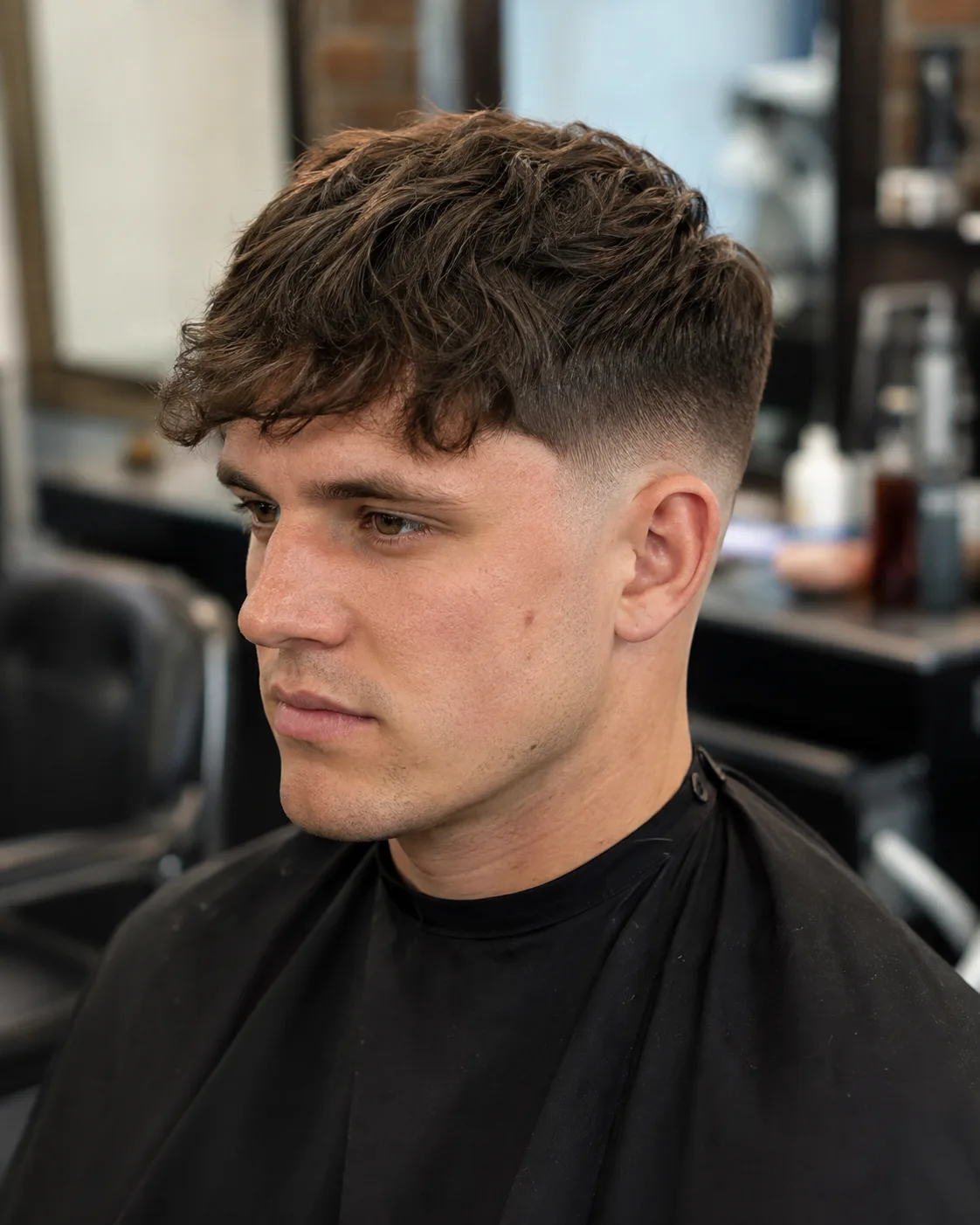
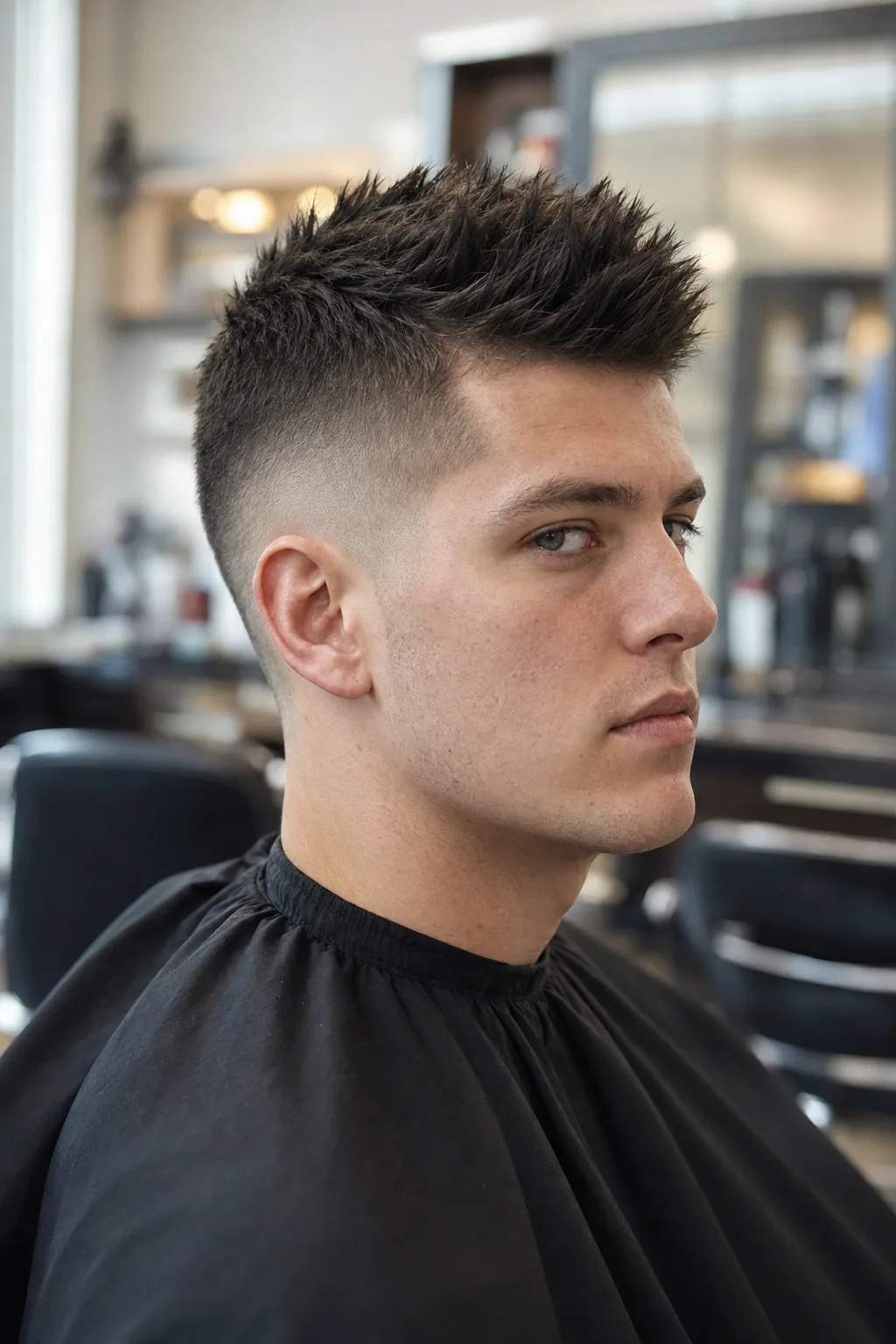
The fade is half the haircut. The top is what people actually see, and it is the only variable in the ten photos below.
Gallery10 photos · tap to enlarge
 Try this on me
 Try this on me
 Try this on me
 Try this on me
 Try this on me
 Try this on me
 Try this on me
 Try this on me
 Try this on me
 Try this on me
 Yours could be here.
Start with one selfie.
One photo, twenty seconds, and you'll know. Free account, no card for your first render.
Which mid fade suits your face and hair
| Your situation | The call | Why |
|---|---|---|
| Round or full face | Mid skin fade, height on top | The short work at the widest point narrows you, the top adds length |
| Long or narrow face | Low fade instead, or a mid shadow fade | A mid skin fade removes width you cannot spare |
| Square jaw | Mid fade, textured top | Contrast at the temple and softness up top keeps it from reading blocky |
| Curly hair | Mid fade, curl left long on top | Removing the side bulk is the whole reason curly hair looks heavy |
| Coily, type 4 hair | Mid fade, sponge or twist the top | Fades were built on this texture and hold their line the longest |
| Thinning at the crown | Mid shadow fade, not skin | Skin at the sides plus thin at the top makes the top look thinner |
| Receding temples | Low or mid drop fade | A level mid line runs straight into a receding corner and highlights it |
If your face does not fit one row cleanly, work out what haircut suits you on your own photo before you book.
Curly hair
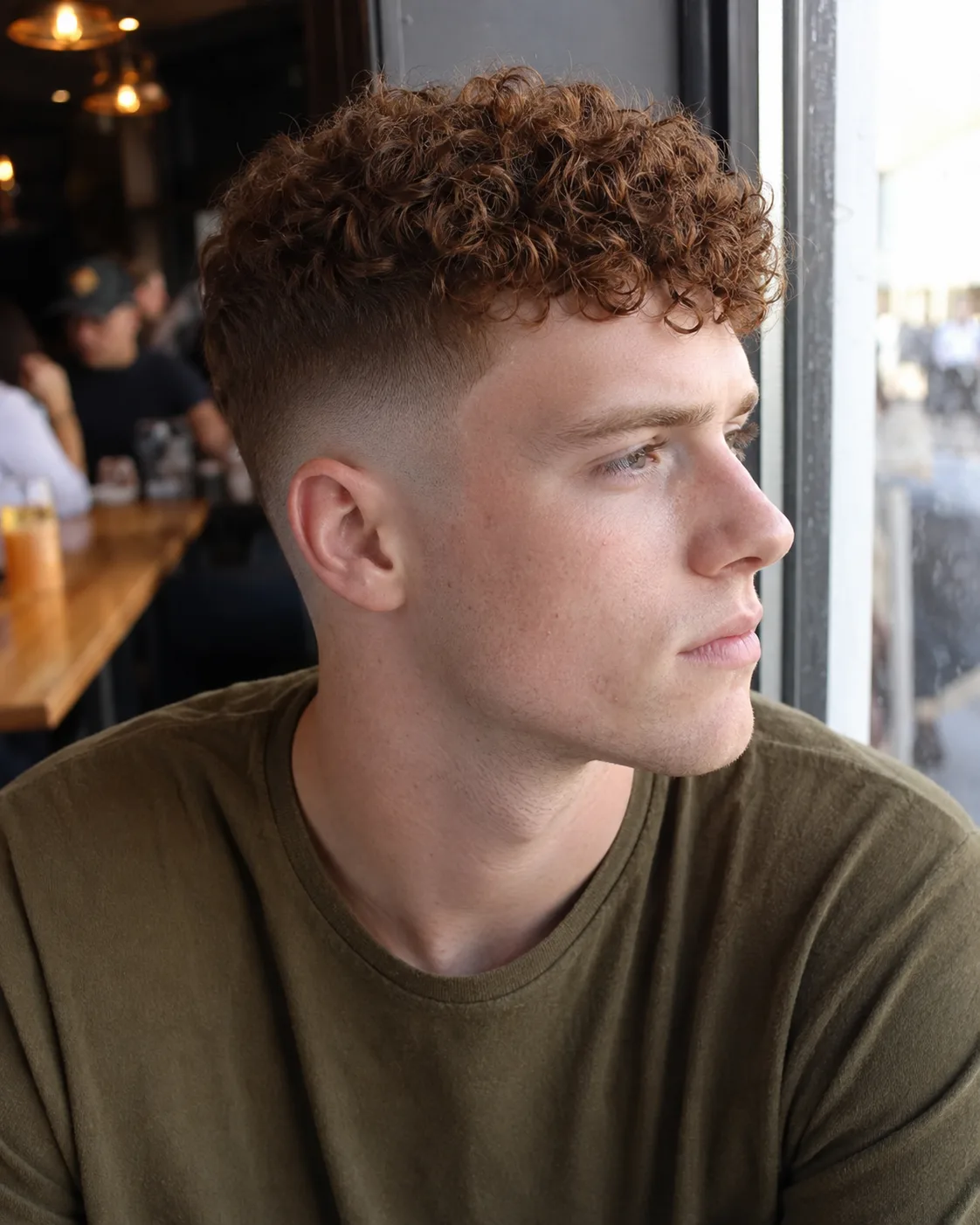
Curly hair carries most of its bulk on the sides, which is what makes it read as a triangle by week four. A mid fade takes that bulk off in one move and leaves the curl pattern intact where it does the work. Cut it dry if your barber will, because curl springs up and a wet-cut mid fade sits an inch higher than you asked for once it dries. There is more on that in the guide to cutting curly hair on men.
Thinning hair
A mid skin fade is the wrong instinct here, and it is the most common mistake in this whole category. Bare scalp at the sides gives the eye a reference for scalp, and it then reads the thin patch on top as the same thing. A mid shadow fade at a #1 keeps some density everywhere and the top looks better by comparison.
Straight, fine hair
The fade will look immaculate and the top will fall flat within two hours. This is a styling problem, not a cutting one. Ask for a bit more length than feels right, keep it around three inches, and use a matte clay rather than a pomade. A textured fringe is the easiest top to make fine hair hold.
How to ask for a mid fade
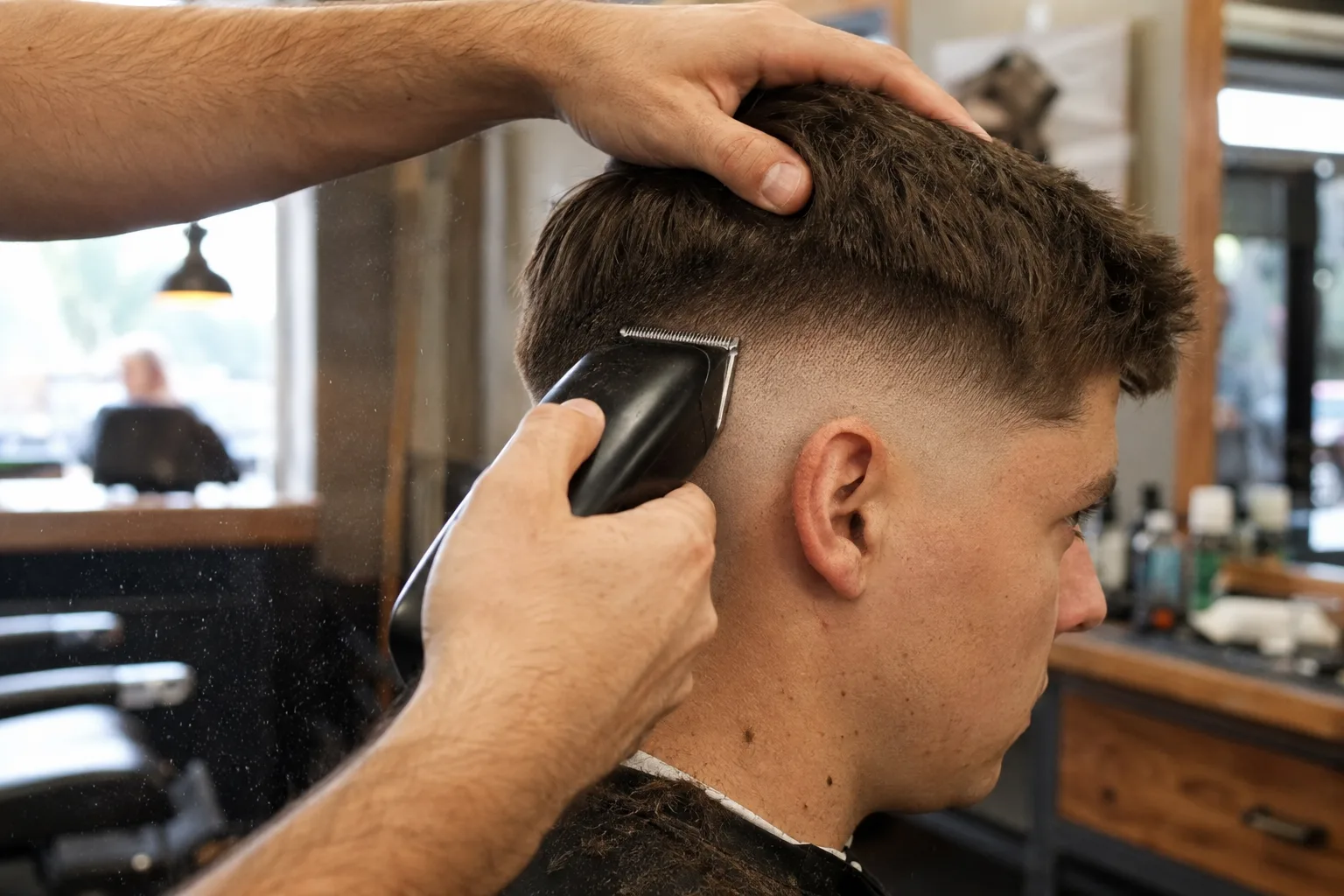
Barbers do not disagree about what a mid fade is. They disagree about where your temple is. Point, do not describe.
How to ask for a mid fade
- Say fade, not taper
The first word decides how much hair comes off. "Fade" means the whole side panel. "Taper" means a band around the hairline. If you say taper and show a photo of a fade, most barbers cut the taper.
- Point to the line
Put your finger where you want the fade to stop, about an inch and a half above the ear, level with the eyebrow corner. Say "the fade tops out here." Do not say "mid" and leave it there.
- Name the bottom
"Skin" or "a one" or "a half." This is the difference between a mid skin fade and a mid shadow fade, and it is the number most people forget to say.
- Say what stays on top
Give a length in inches and a styling word. "Leave three inches, textured, I wear it forward." Without this, the top gets cut to match the sides.
- Check the back with the mirror
Look for the fade wrapping around the nape at the same height it sits at the temple, unless you asked for a drop. Say something before the cape comes off, not after.
Say this to your barber
Mid fade please, skin at the bottom, the fade tops out about an inch and a half above my ear level with my eyebrow, and leave three inches on top textured.
What it costs to keep
A mid fade has the shortest honest lifespan of any fade you can ask for, and nobody selling you one says so.
- Days 1 to 6. The line is crisp, the skin section is genuinely bare, and this is the haircut you paid for.
- Days 7 to 14. The skin section fills in to a shadow. Still good. Most people prefer week two to week one.
- Days 15 to 21. The line blurs upward and the contrast collapses. It now reads as a slightly short haircut.
- Week four onwards. The fade is gone. What is left is a mid taper you did not ask for.
That gives you a real barber cycle of two to three weeks, at whatever your local rate is. If your honest cadence is five or six weeks, you want a low taper fade instead, and you will be happier with it for four of those six weeks.
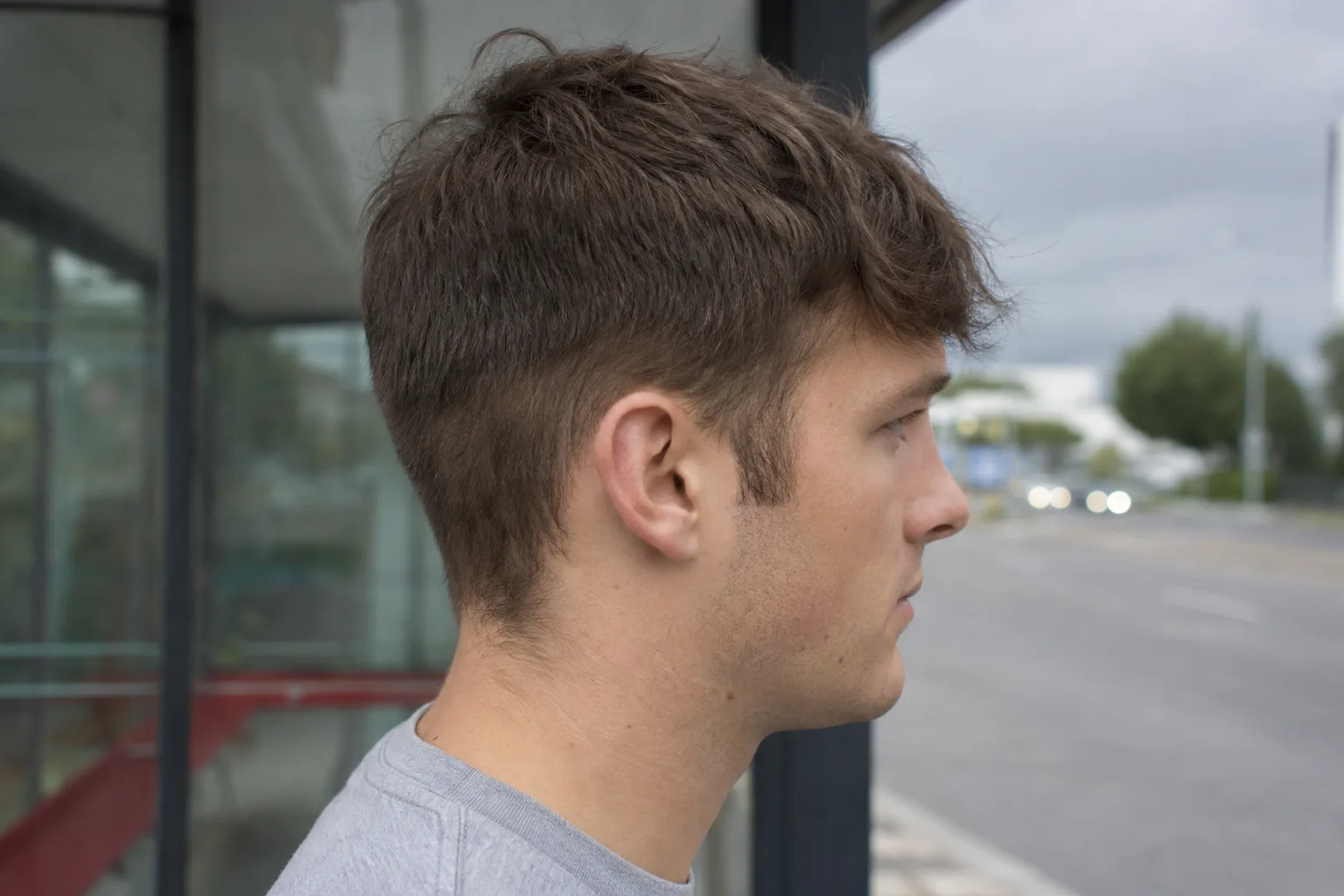
Five mistakes that ruin a mid fade
Each of these is a common route to one of the bad haircuts men end up growing out, and each one starts with the brief rather than the clippers.
- Asking for "mid" and nothing else. You get whatever that barber's default is. Two shops, two haircuts, same words.
- Skin sides with thinning on top. The contrast advertises the thin patch. Shadow fade instead.
- A level mid line on a receding hairline. The line runs straight into the receding corner and draws a diagram of it. A drop fade curves away from the problem.
- A wet cut on curly hair. It dries an inch shorter and the line ends up higher than you pointed. Ask for a dry cut or a dry check before the finish.
- Booking on a five-week cycle. You will spend more days in a blurred mid taper than in a mid fade. Either shorten the cycle or pick the taper on purpose.
See it on your face before you sit down
The photo you saved is on someone else's head. Mid fades read very differently depending on how wide your skull is at the temple and how far back your hairline sits, and neither of those is visible in a reference photo of another man.
The free way to check is real and worth doing first: find a barber who will cut a low fade one week and a mid the next, and take a photo each time. It costs two haircuts and six weeks, and it is the only method that gives you a completely honest answer.
The wall it hits is that you have already booked by then. If you want the answer before the appointment, the fade haircut simulator renders a mid fade onto your own photo. The first look is free with no card, and it gives you one hairstyle in one colour on a front view. From there it is $9 a month if you want the other heights, the other tops and a before and after sheet to hand your barber.
The short version
A mid fade stops at your temple and takes the whole side panel with it. A mid taper stops in the same place and takes a band. If you can get to a barber every two to three weeks, take the fade. If you cannot, take the taper and stop feeling bad about it.
The mid fade is the default men's fade in the US right now for a good reason: it gives you obvious contrast without committing you to a high fade's severity, and it works on more face shapes than either neighbour. The cost is the calendar. Say "fade" not "taper", point at the line, name the bottom guard, and book the next appointment on your way out.
Frequently asked questions
A mid fade if you want the haircut to be visible and you can get to a barber every two to three weeks. A taper if you need it to still look intentional at week five. They are not competing versions of one cut. The fade removes the whole side panel, the taper removes a band along the hairline and leaves the weight.
Mid, for most faces. A high fade stops at the parietal ridge and removes width from the top third of your head, which makes a long face longer and needs a strong jaw to balance. A mid fade puts the contrast at the temple, where it narrows a round or square face instead of stretching it.
A mid skin fade with a textured crop on top is the version that suits the widest range of faces and hair types. It gives you the full contrast at the temple and enough movement up top to keep it from looking severe. If your hair is fine or thinning, take the same fade at a #1 instead of skin.
Low if your face is long or narrow, if your hairline is receding at the temples, or if you get a haircut every five weeks. Mid if your face is round or square and you want the cut to actually read as a fade. Mid is the more common answer, which is why barbers default to it.
There is no ranking that survives contact with an actual face. The fade that suits you is the one whose line sits where your face needs width removed, and that is a mid fade for round and square faces and a low fade for long ones. Contrast that fights your face shape looks worse than a plain haircut, however sharp the blend is.
No. What has changed is the top. The very short, heavily gelled tops that came with fades five years ago have gone, and the fade now sits under longer, looser, more textured shapes: crops, fringes, curls left long, mid-length styles with the sides taken down. The fade itself is still the default men's haircut in the US.
Yes, and it is arguably the best use of one. Curly hair puts its bulk on the sides and starts reading as a triangle by week four. A mid fade removes that bulk and leaves the curl where it is doing something. Ask for a dry cut, because curl springs up and a wet cut lands higher than you pointed.
Four things in this order: the word "fade", where the fade stops (point at it), the guard at the bottom, and the length on top. Skipping any one of the four is where mid fades go wrong. Clipper guard sizes are standard across brands, and Wahl publishes the guard-to-length chart if you want the exact millimetres before you go in.
You can, and you will get that barber's house default, which in most US shops is a mid fade at a #1. If that is what you want, that is fine. If you have a picture in mind, the word "fade" on its own is not enough information to reproduce it.
Preview it on your own photo: Men's Hairstyle Try-On.
Share article
About the author

More articles
Men's Haircuts · 14 min
Benny Blanco Haircut: The Fake Half Shave and the Real Curls
Benny Blanco did not shave half his head. It was a prosthetic bald cap, and the buzz cuts are AI. Here is what his curly mop actually is, the short version, and exactly what to tell your barber.
Men's Haircuts · 16 min
1A Hair: How to Tell If You Have It + 14 Cuts That Work
1A hair is pin-straight with no bend from root to tip. How to tell it from 1B and 1C, why it goes flat, 14 haircuts that work on it, and how to style it for volume.
Men's Haircuts · 15 min
High and Tight Haircut: 4 Versions and the Head Shape Rule
A high and tight clips the sides almost to skin all the way up to the top of the head, so it shows your skull shape more than your face. The 4 versions, 14 photos, what to tell your barber, and how long it lasts.