Bald Fade: 3 Heights, 10 Styles, and the 2-Week Rule
Oleh Onysko Updated 28 September 2026 14 min read
In this article
A bald fade is a fade taken all the way down to bare skin, with no guard left at the bottom edge. Pick the height by how often you sit in a barber's chair, not by your face shape: a low bald fade still looks intentional at week four, a high one looks unfinished by week two.
That single fact decides more outcomes than anything else on this page. The skin section is the first thing to disappear, and when it goes the whole gradient goes with it.
What a Bald Fade Actually Is
A bald fade means the clippers come off entirely at the bottom. The barber takes the hair to bare scalp along the nape and around the ear with a foil shaver or a zero-gapped blade, then climbs back up through every guard length so there is no line, no step and no visible jump anywhere in the blend.
Skin fade and bald fade are the same haircut. Barbers in the US use both names interchangeably, and the SERP treats them as one thing. What they are not is a taper. A taper haircut shortens the hair gradually and leaves weight at the bottom; a bald fade removes the bottom entirely.
| Where it ends | How stark | Looks sharp for | |
|---|---|---|---|
| Bald fade / skin fade | Bare scalp | Maximum contrast | 7 to 10 days |
| Regular fade | A number one or two guard | Strong but softer | 2 to 3 weeks |
| Taper | Short but never bare | Subtle, conservative | 3 to 5 weeks |
If you want the contrast without the maintenance, the honest answer is that you cannot have both. Read the rest of the fade family before you commit.
The 2 Week Rule Nobody Mentions in the Chair
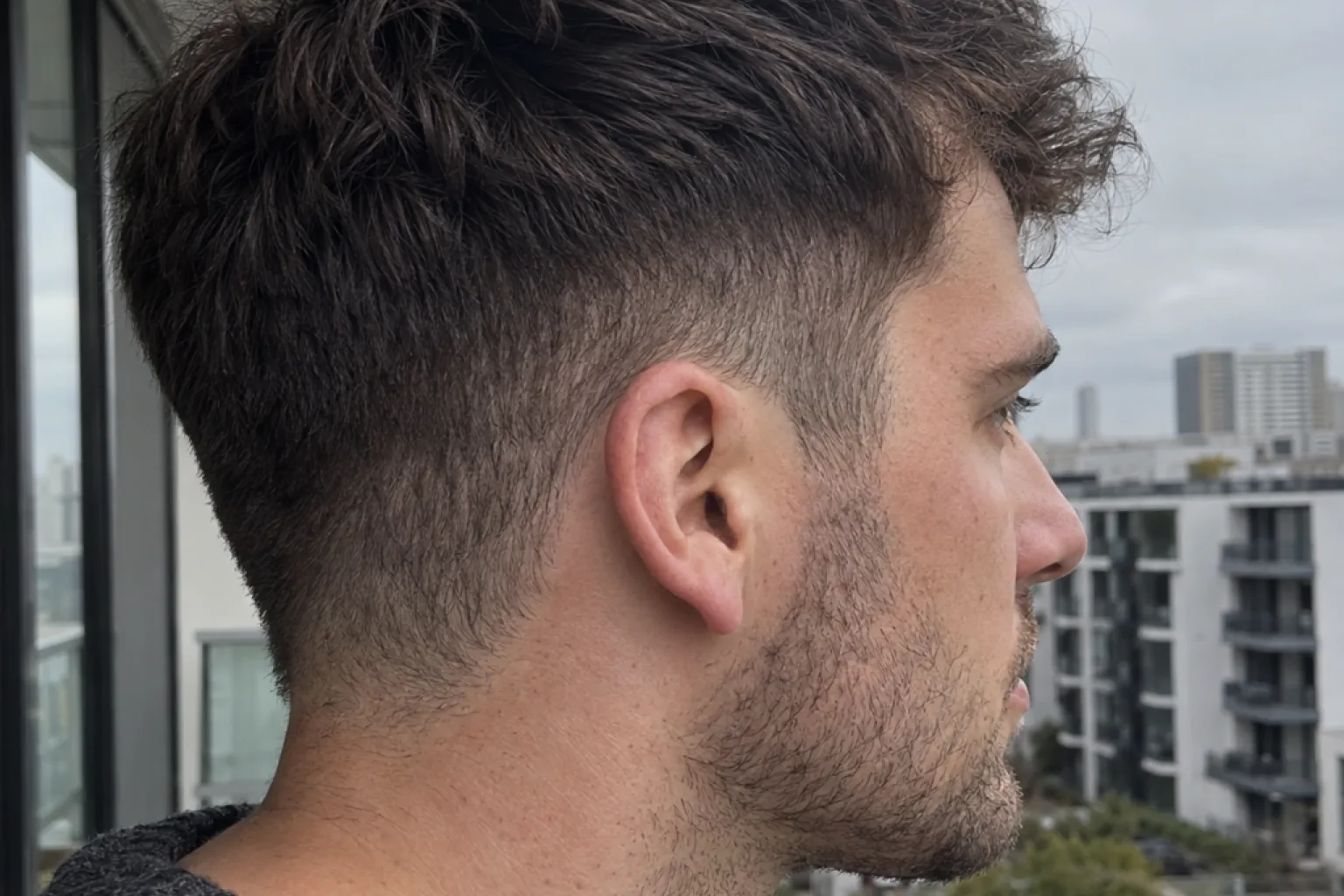
A bald fade peaks on day one and is visibly softer by day seven. The shaved zone fills in first, so the bottom edge that gave the cut its punch turns into a grey shadow, and the beautiful gradient above it flattens into one uniform short length.
That is what the picture above shows. Three weeks out, that is no longer a bald fade. It is a short back and sides that needs cutting.
So before you choose a height, answer this honestly: how often will you actually go back? Every two weeks is the price of a mid or high bald fade. Every four to five weeks and you want a low one, or a taper. Choosing a high skin fade on a five week schedule means you spend three of those five weeks wearing a haircut you did not ask for.
Two other costs that are real. Barbers charge per visit, so a bald fade is roughly double the annual spend of a taper. And running a blade over the same strip of scalp twice a month irritates it: the American Academy of Dermatology notes that folliculitis and razor bumps show up on the back of the neck and scalp exactly where clipper and shaver work is heaviest.
Low Bald Fade
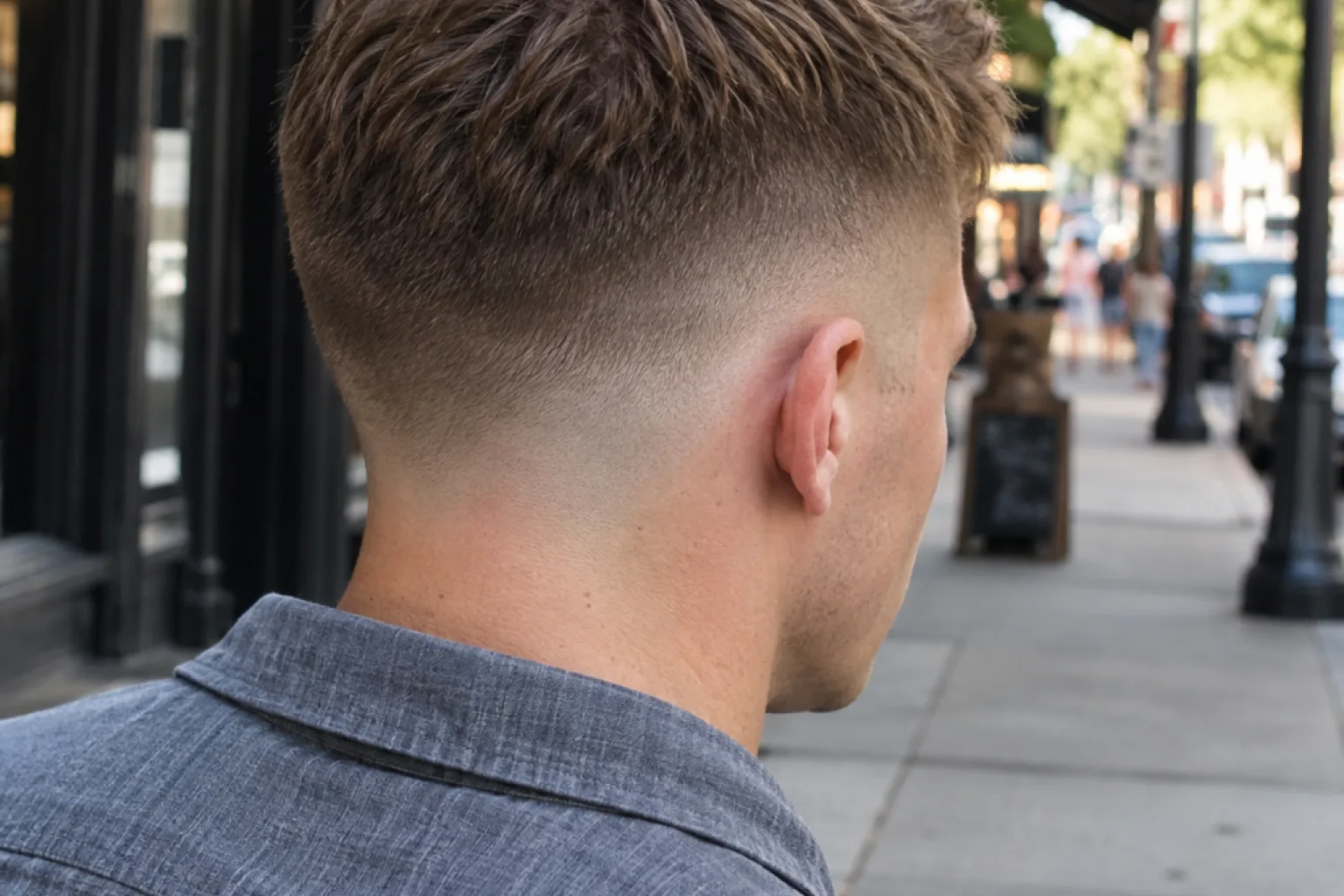
The blend tops out just above the ear, well below the temple. Most of the side of your head keeps its hair, so the bare strip sits low and mostly out of sight when you are facing someone.
This is the version to pick if you are new to skin fades, work somewhere conservative, or cut every four weeks. It is also the most forgiving: when it grows out it reads as a normal short back and sides rather than a mistake. The close relative worth comparing is the low taper fade, which stops short of skin entirely.
Mid Bald Fade
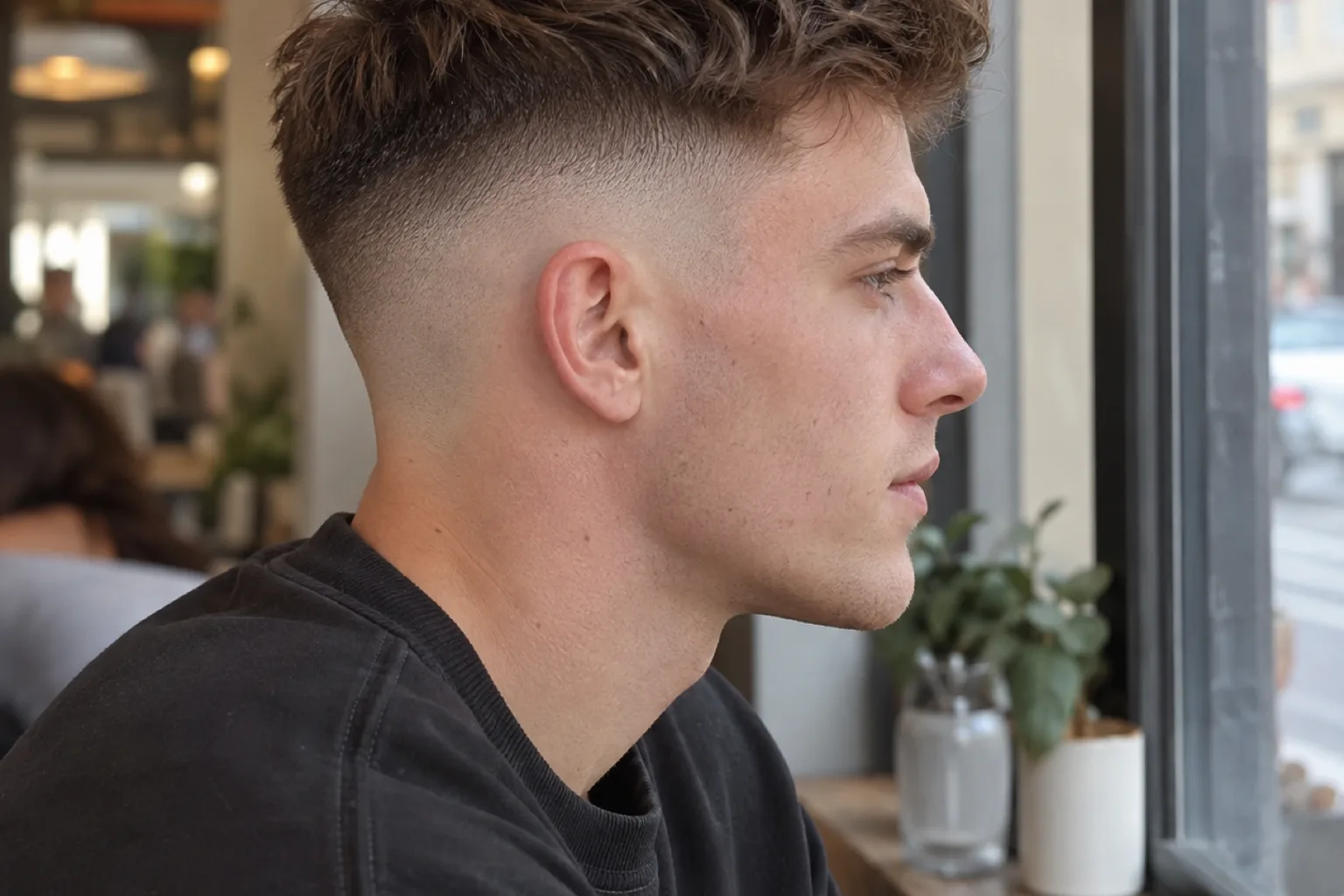
The blend reaches temple height, so bare skin covers the bottom half of the side and the gradient runs through the middle of your head. This is the default. If you walk into a shop and say "skin fade" with no other instruction, this is usually what you get.
It gives you the contrast people actually want from a bald fade while leaving enough hair on the side that your head shape still reads normally. Everything in the mid fade family applies here, just taken two guards further down.
High Bald Fade
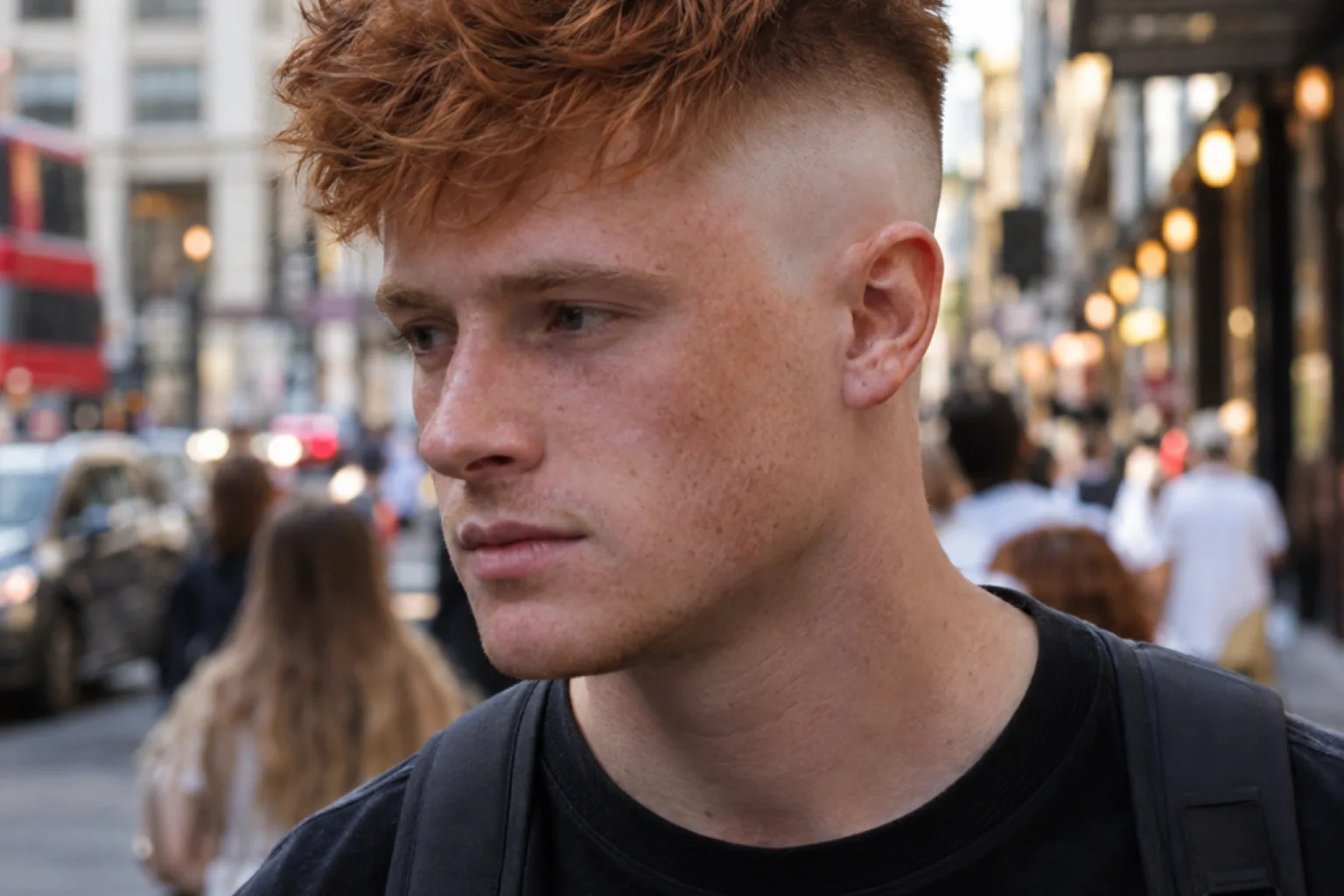
The blend climbs to the parietal ridge, where the side of the head turns into the top. Skin covers most of the side and only a narrow band of blended hair separates it from whatever is left up top.
Look closely at the picture: the change from skin to hair is nearly a step. That is the high bald fade's whole character, and it is why it goes wrong faster than the other two. It needs a strong top section to balance it, and it needs recutting every two weeks without exception. Get both right and nothing looks sharper. If you want that step on purpose, with one close guard all the way up instead of a blend, the cut you are describing is a high and tight.
Which Height Suits Your Face and Hairline
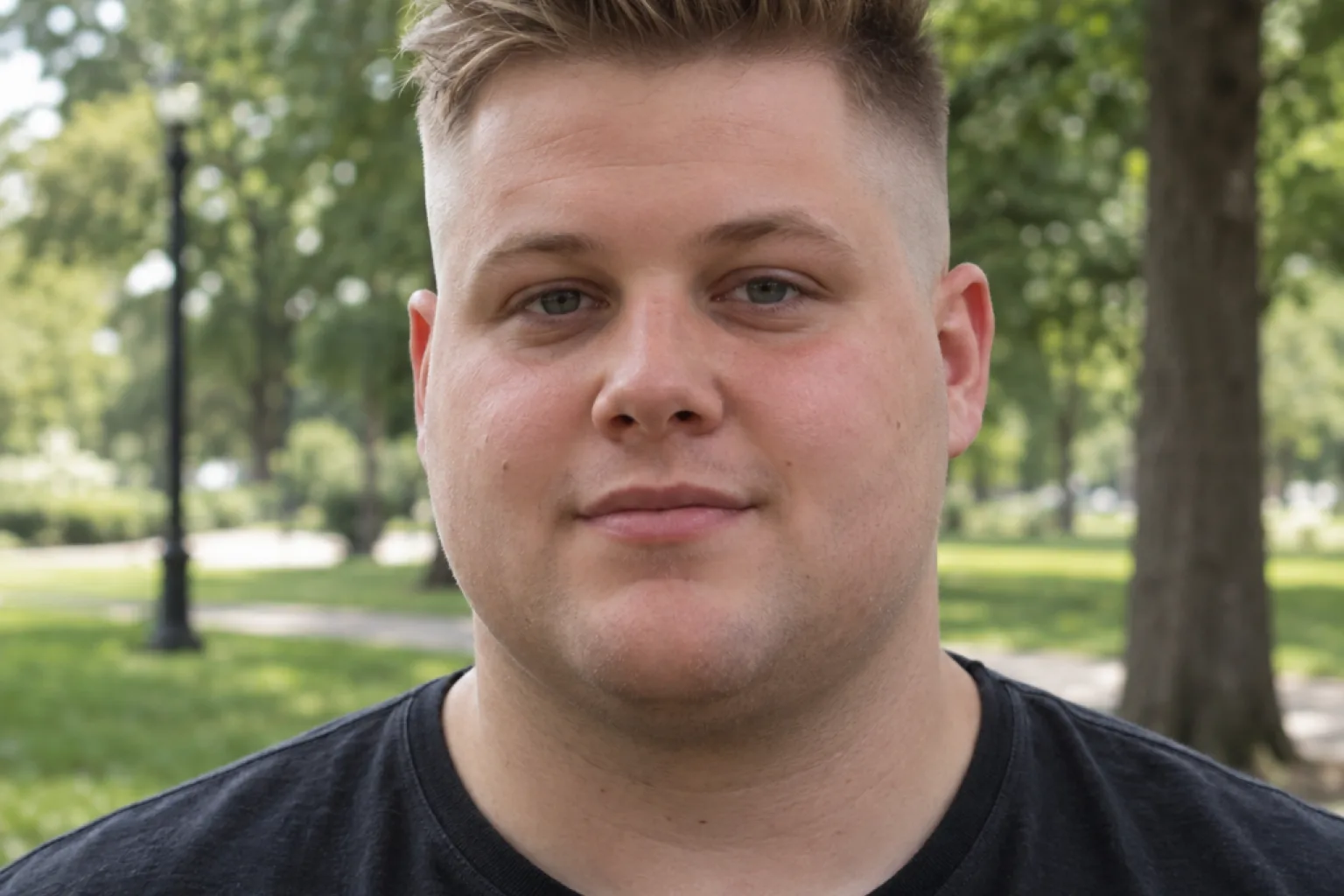
Face shape matters less than the internet claims, and hairline matters far more. Here is the short version.
| Your situation | Best height | Why |
|---|---|---|
| Round or full face | Mid or high | Tight sides narrow the widest part, but only if you keep 3 inches or more on top for height |
| Long or oval face | Low | A high fade stretches the face further; keeping side weight balances it |
| Square jaw | Any, high looks best | Strong jaw carries the hard contrast |
| Receding temples | Low | A high fade points straight at the recession by exposing the corners |
| Thinning on top | Low, or skip it | Maximum contrast against a sparse top makes the top look sparser |
| Flat back of head | Mid | Length left above the blend fakes the projection you are missing |
| Coarse or curly hair | Mid or high | Dense texture needs the contrast, and the blend hides the density change |
The picture above is the round face case, and it also shows the mistake. The sides are tight, which works, but with almost nothing left on top the face has nowhere to go but sideways. Add height and the same haircut reads completely differently.
If you genuinely do not know your face shape, measure it rather than guess.
Measure it instead of guessing
Both numbers in the same unit — the answer is a ratio, so it does not matter which.
Under 1.15 reads round, 1.15 to 1.5 reads oval, over 1.5 reads long. Oval and long split on the jaw rather than the ratio: an oval tapers toward the chin, a long face runs straight down.
Curly hair changes the calculation more than face shape does, because the blend has to pass through a texture change as well as a length change. The curly hair playbook for men covers how that is handled.
Connecting a Bald Fade to a Beard
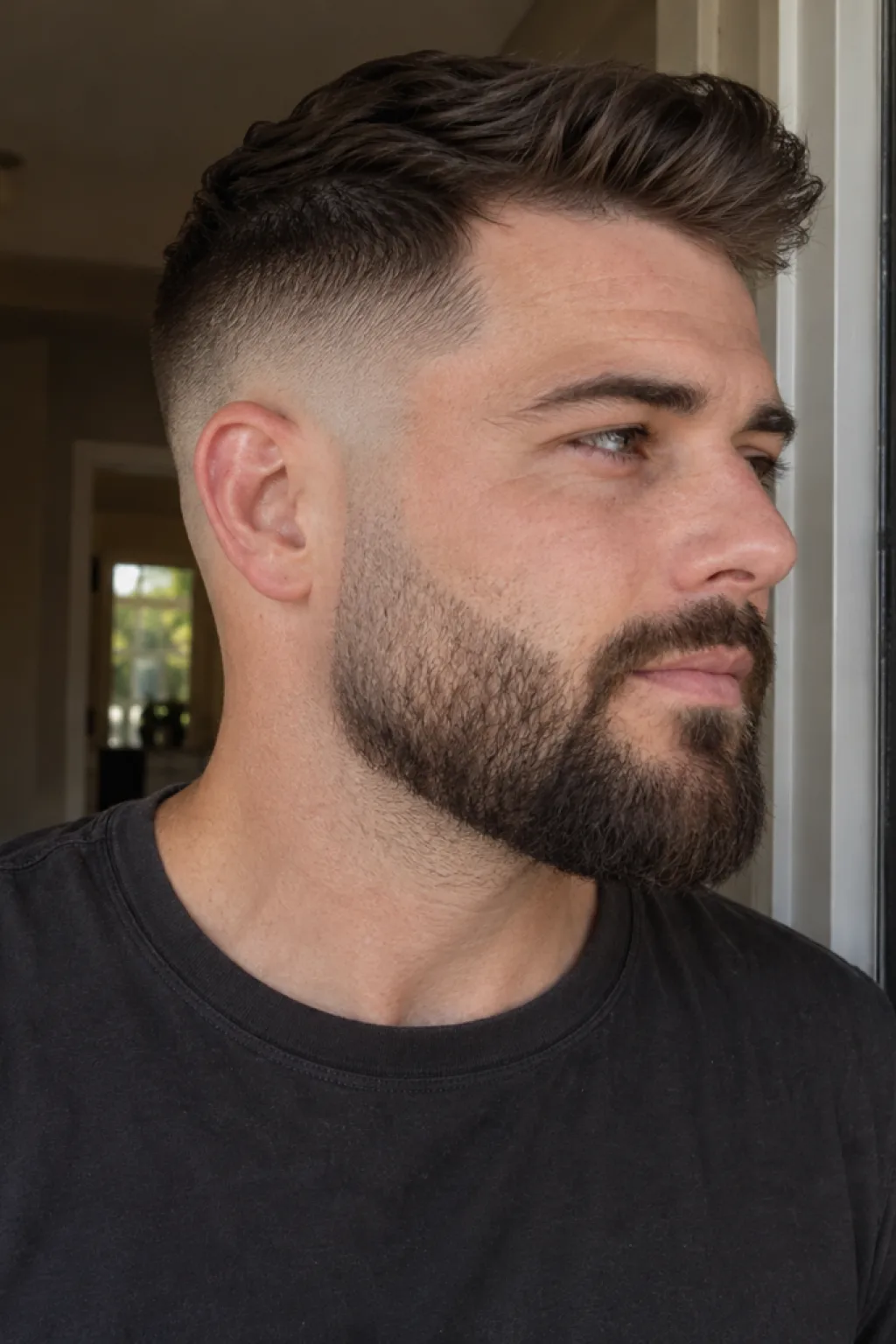
If you have a beard, the bald fade has to meet it. Two ways to do that, and they look nothing alike.
Connected means the bare skin runs forward and picks up the beard at the sideburn, so haircut and beard read as one continuous gradient. That is the picture above. Disconnected means the skin section stops and the beard starts separately, with a visible gap of bare cheek between them.
Connected is the harder cut and the better one on most faces, because it keeps the jaw looking wide and deliberate. Disconnected suits you if your beard is patchy at the cheek line, since a connection only works when there is enough hair there to fade into. Say which one you want before the clippers start, because you cannot undo a connection halfway through.
How to Ask a Barber for a Bald Fade
Vague instructions are how people end up with a fade two guards higher than they wanted. Be specific about three things and nothing else matters much.
How to ask for a bald fade
- Say bald or skin, and mean it
Say "a bald fade, taken to skin at the bottom". If you say "a fade" you will get a guard fade. If you say "short on the sides" you will get whatever the barber likes cutting.
- Name the height against a landmark
Point at your head. "Skin up to just above the ear" is a low. "Skin up to the temple" is a mid. "Skin up to where the side turns into the top" is a high. Landmarks beat adjectives every time.
- Say what stays on top
Give a number in inches and a finish. "Leave 3 inches on top, textured, no hard part." This is the part most people forget, and it is the part that decides whether the fade flatters you.
Say this to your barber
Bald fade please, taken to skin up to the temple, leave 3 inches on top with texture, and connect it into the beard.
If you would rather stop short of skin, the low taper fade guide walks through the same script for a softer cut.
10 Bald Fades, Lowest to Highest
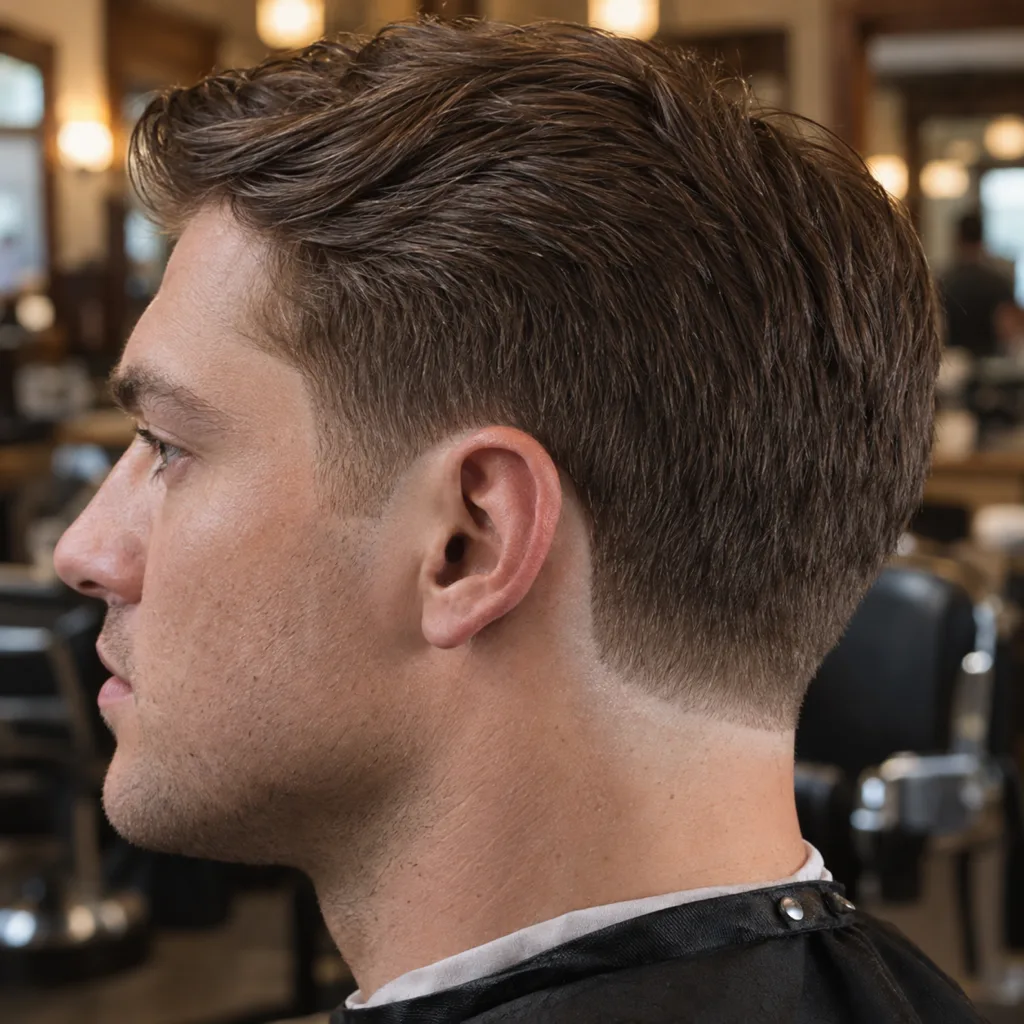
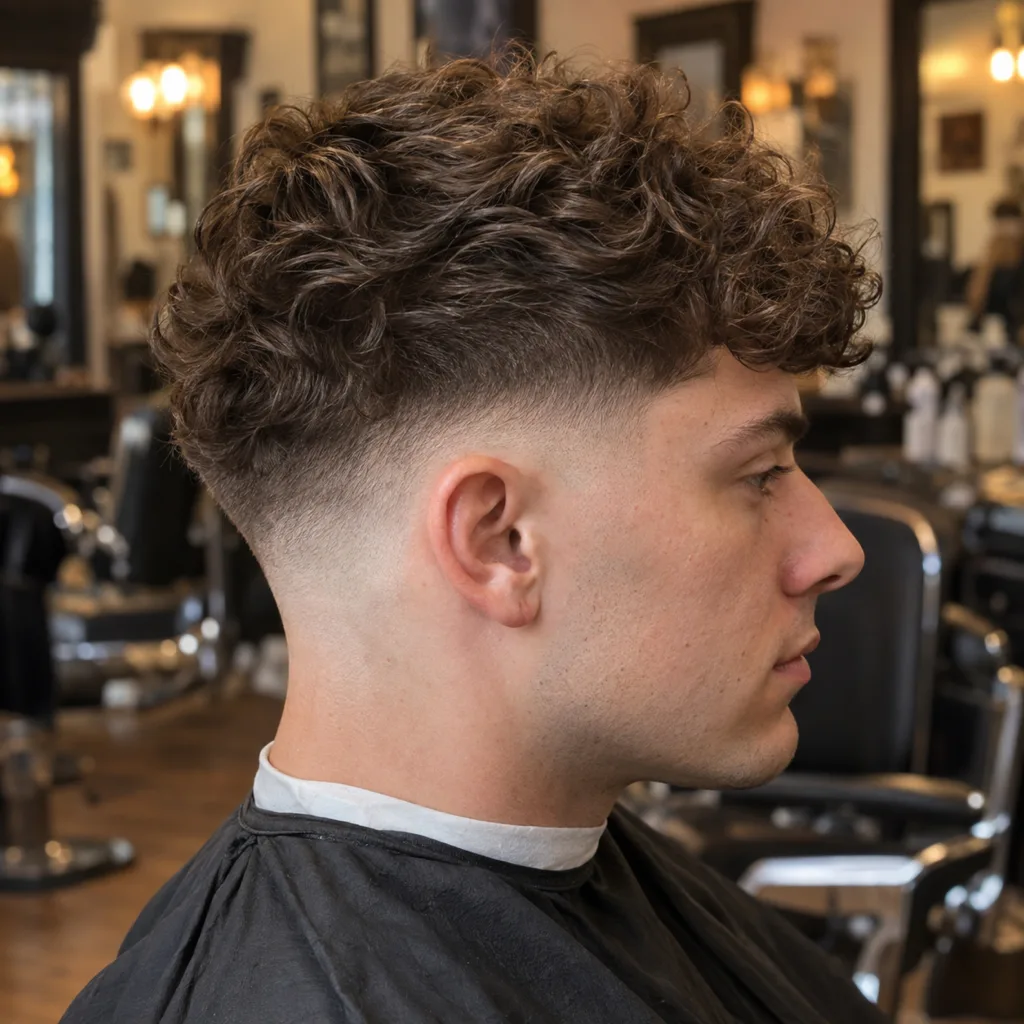
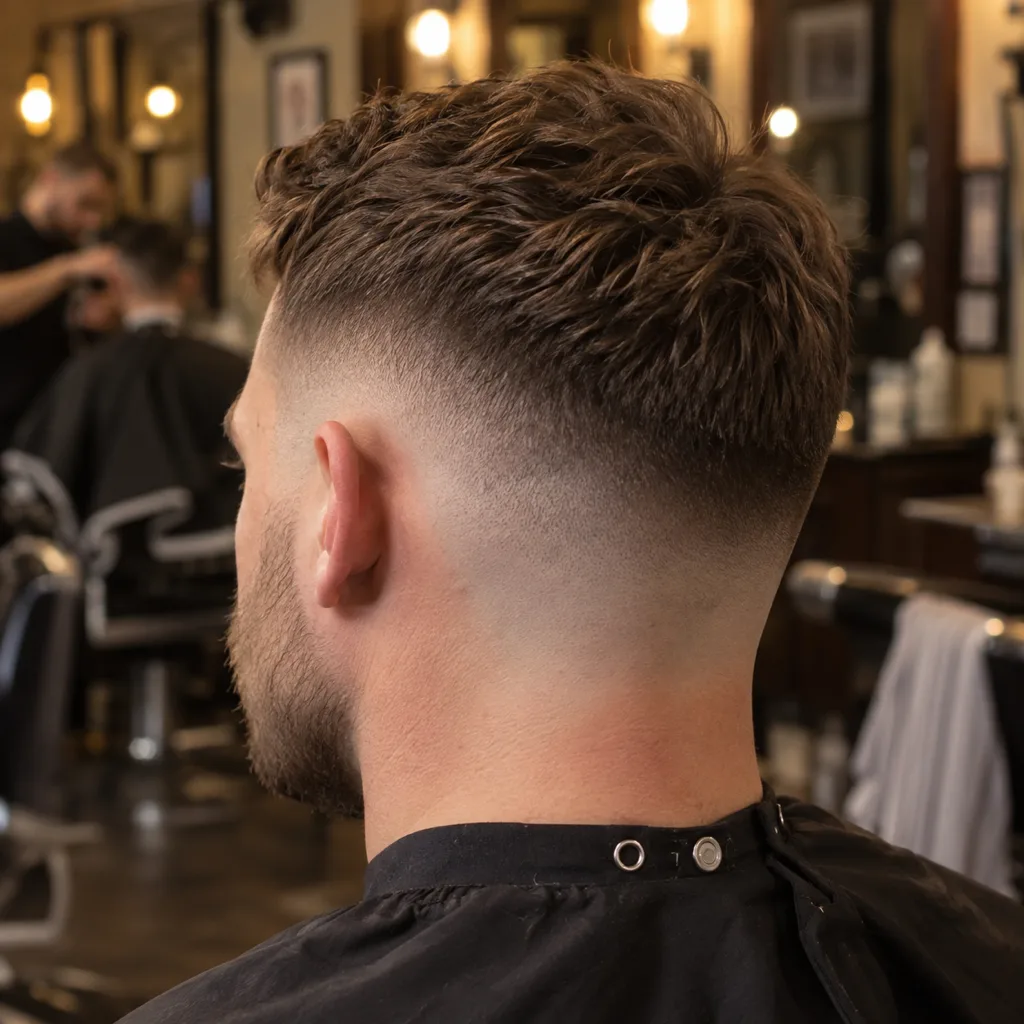
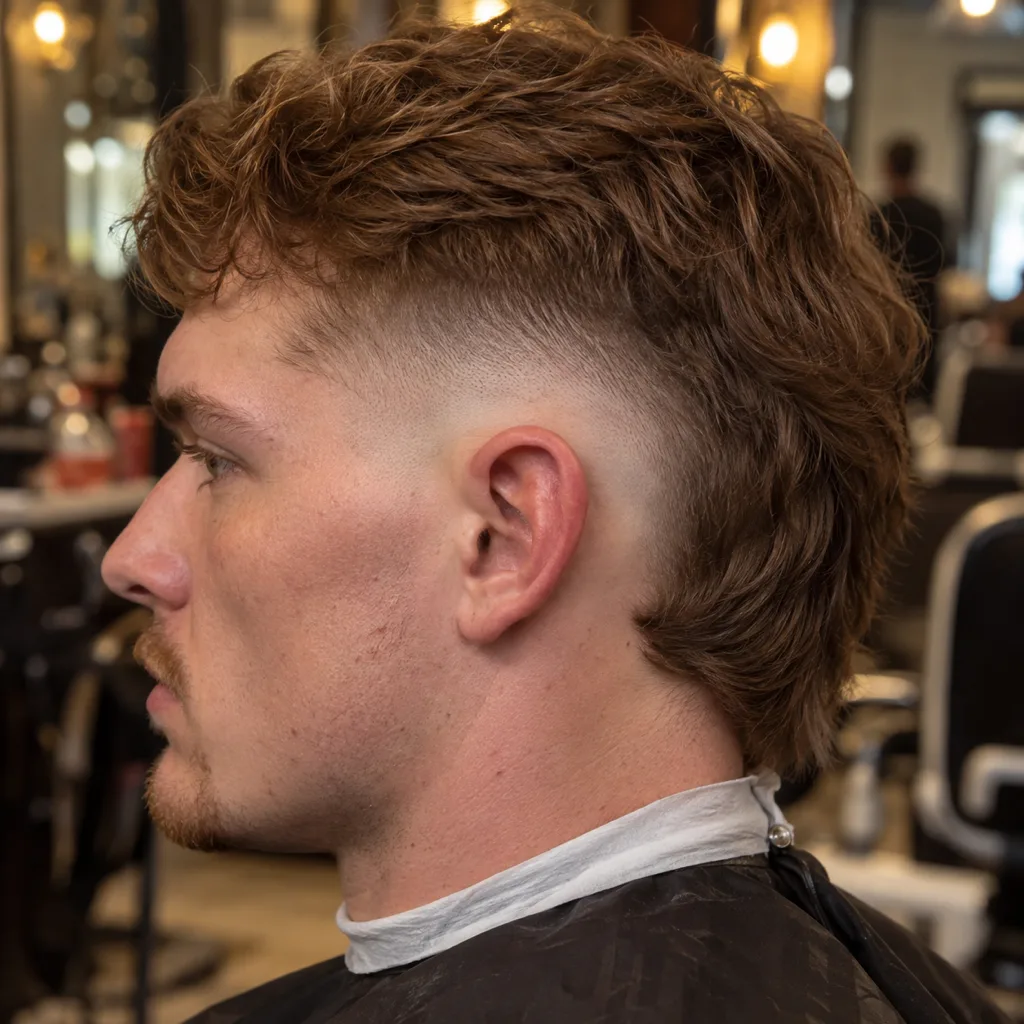
One variable across all ten: where the skin stops and the blend begins. Everything else stays put so you can see what an inch of fade height actually changes.
Gallery10 photos · tap to enlarge
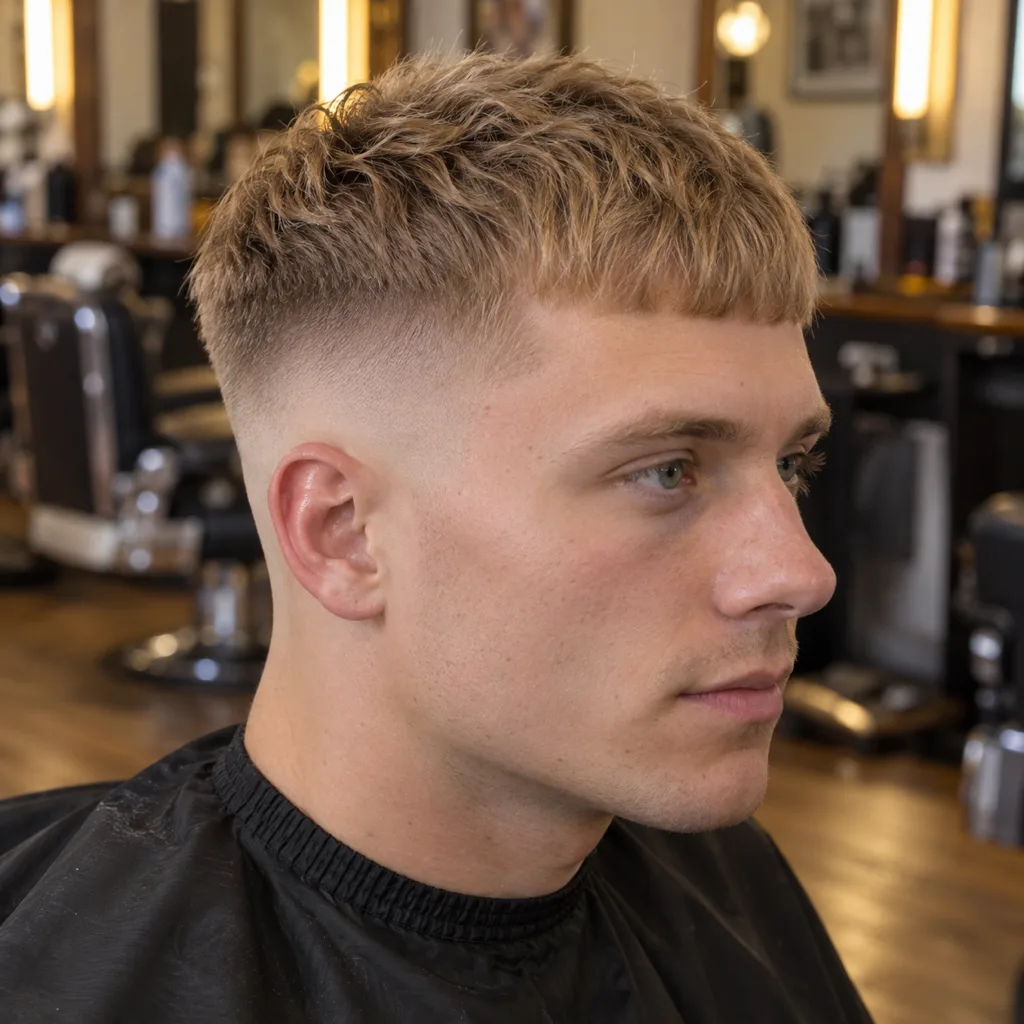 Try this on me
 Try this on me
 Try this on me
 Try this on me
 Try this on me
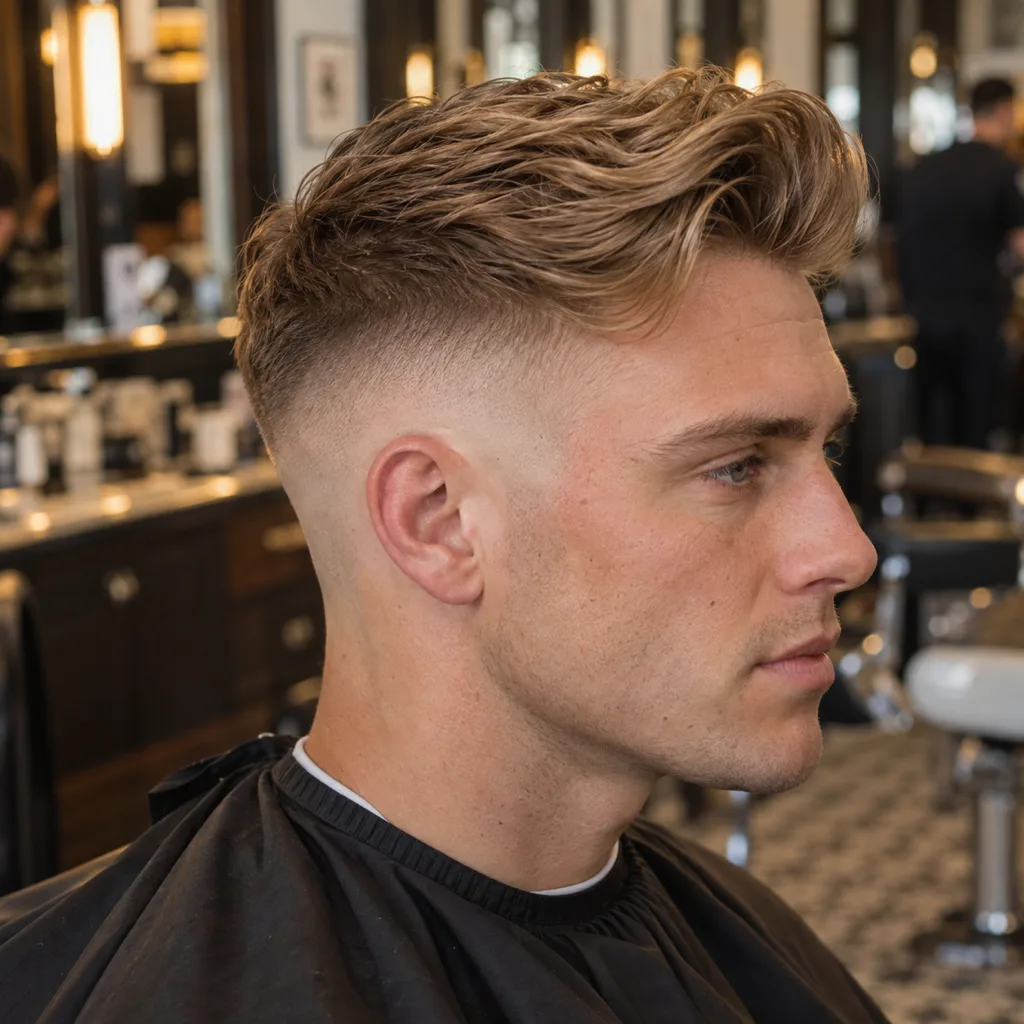 Try this on me
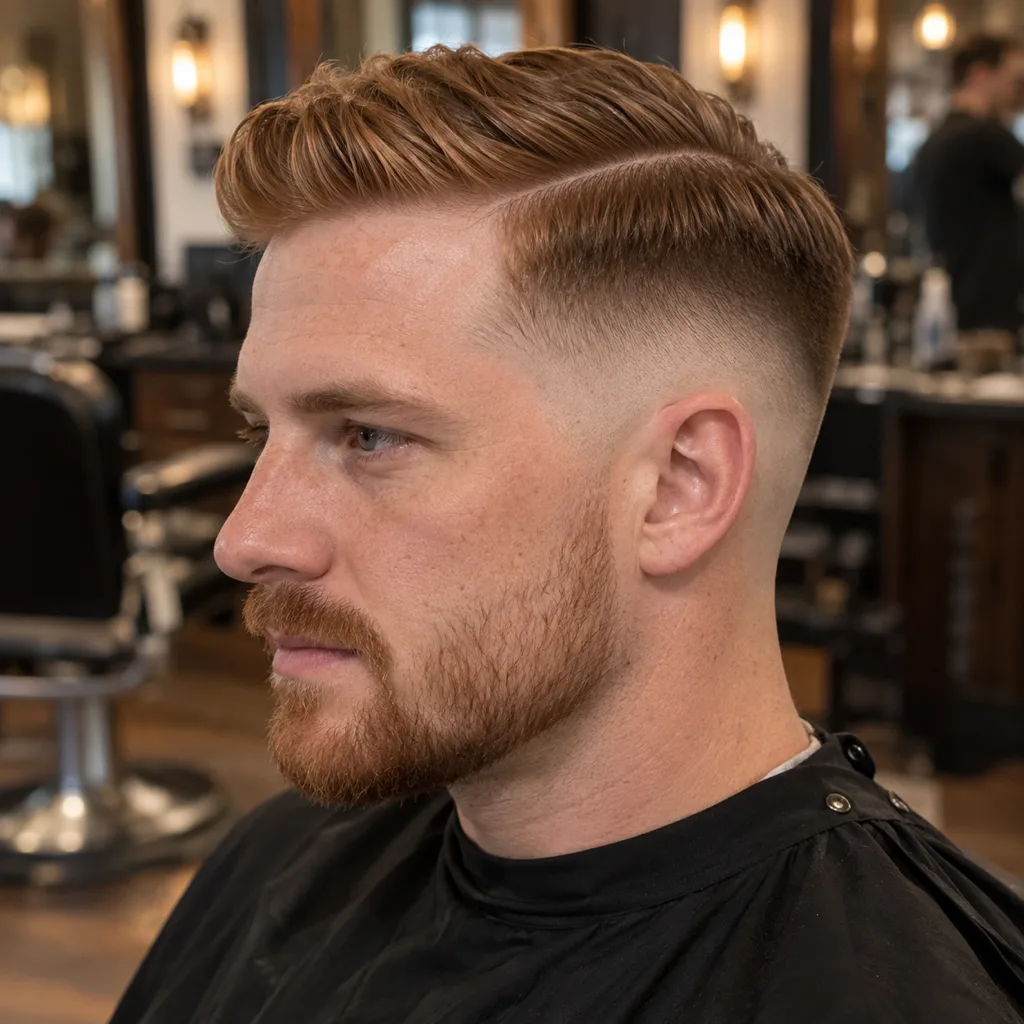 Try this on me
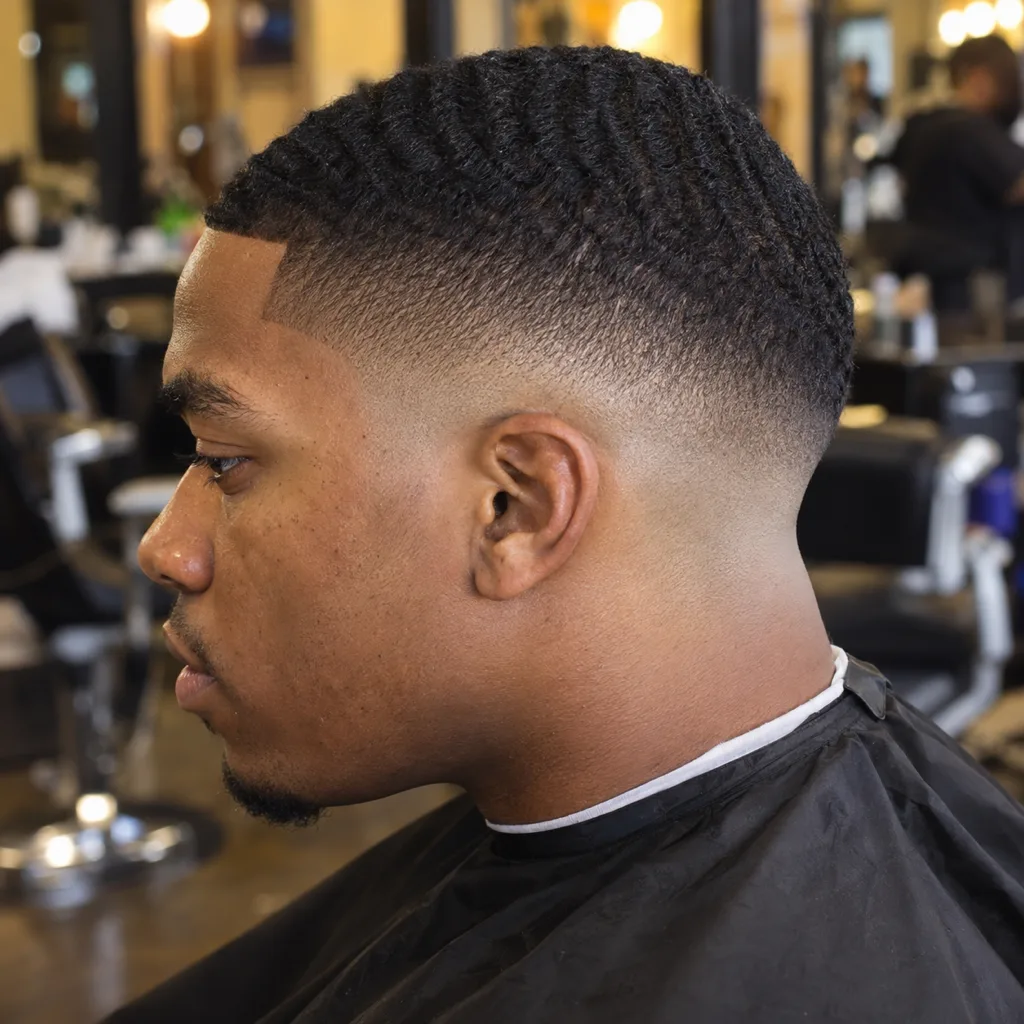 Try this on me
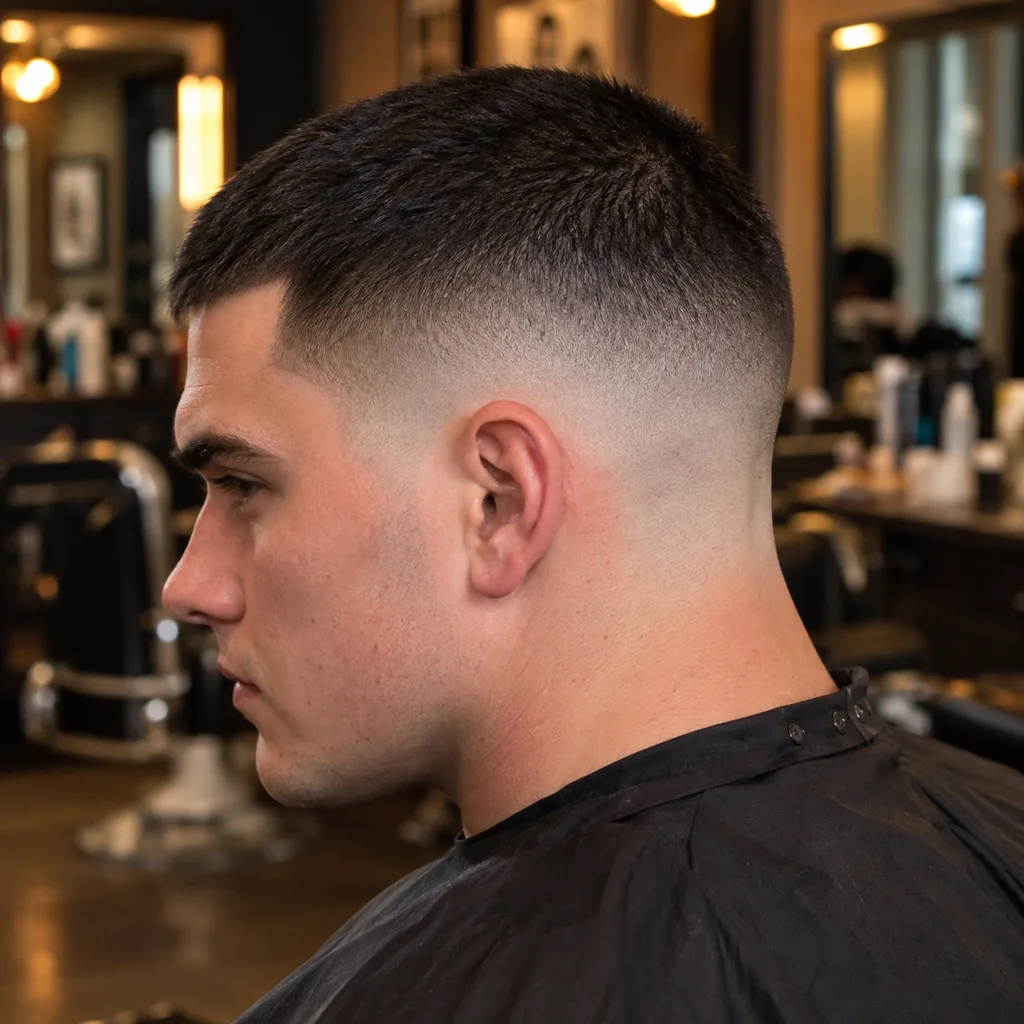 Try this on me
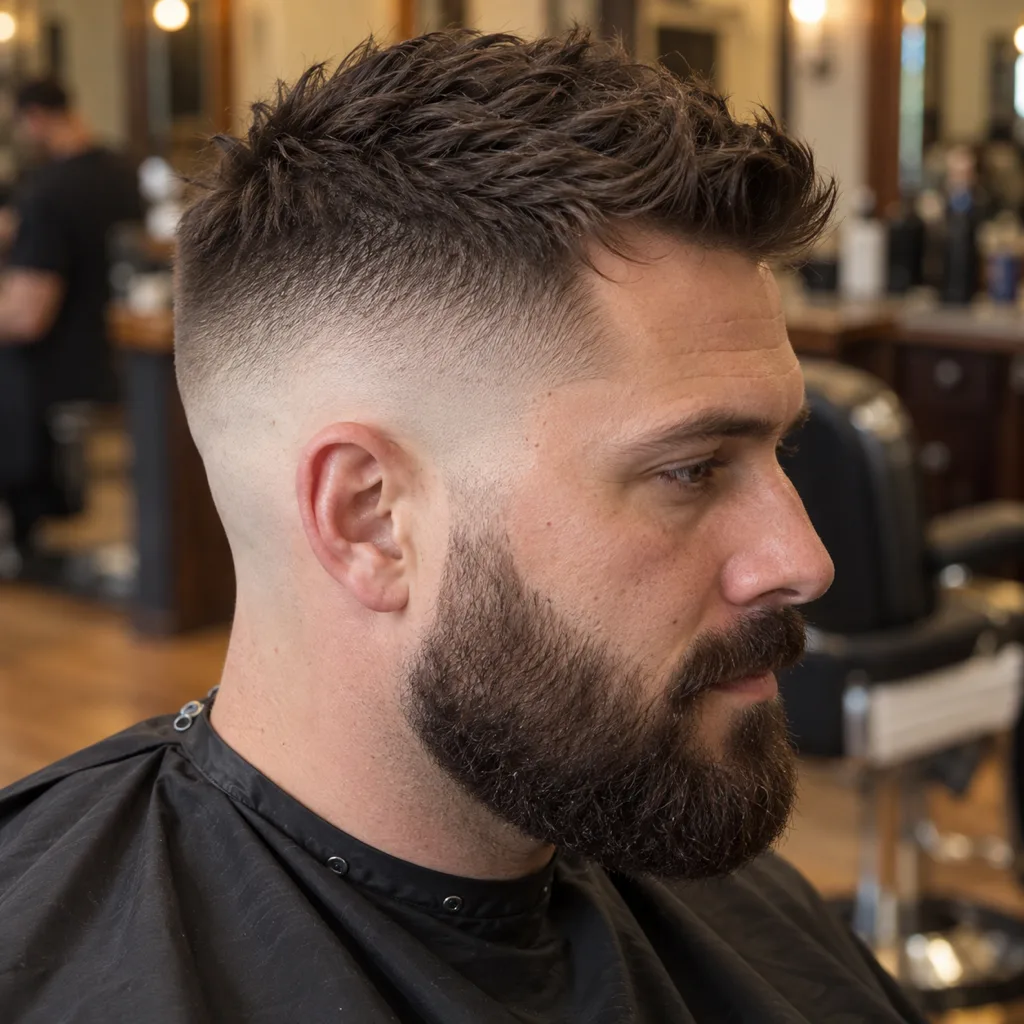 Try this on me
Two of those are not strictly height variants. The drop fade curves the line down behind the ear instead of running it straight, which softens the back of the head. The burst fade radiates around the ear only and leaves the back long, which is why it ended up attached to every modern mullet of the last three years. A low bald fade also works under a thin tail left at the nape, as long as the top keeps enough length to balance it.
Yours could be here.
Start with one selfie.
One photo, twenty seconds, and you'll know. Free account, no card for your first render.
5 Mistakes That Ruin a Bald Fade
Picking a height your calendar cannot pay for. Covered above, and it is the one that costs the most. A high bald fade on a monthly schedule is money spent on two good weeks.
Leaving nothing on top. A bald fade is a contrast haircut. With half an inch up top there is nothing to contrast against, and the whole thing collapses into a buzz cut with fancy edges.
Going high with receding temples. The high fade exposes the corners of your hairline and draws a bright line around exactly the part you were hoping nobody would notice. Low, every time.
Asking for a skin fade to hide thinning. It does the opposite. Maximum contrast against a thin top reads as more scalp, not less. Even coverage hides thinning; gradients advertise it.
Booking your first one the day before something important. A fresh bald fade looks aggressive for about 48 hours as the shaved skin settles. Get it three days out, not one.
Can You See a Bald Fade on Yourself Before Committing?
Yes, and you should, because this is the haircut with the least undo. The free method first: find a photo of yourself at the same angle as a reference shot, hold them side by side, and pay attention to the width of your head above the ear and how much scalp shows in normal light. It costs nothing and it catches the obvious mismatches.
Where that method hits a wall is fade height. Comparing your face to a stranger's face tells you almost nothing about whether the skin should stop at your ear or your temple, because that answer depends on your skull, your hairline and your hair density, not theirs. Nobody can hold that comparison in their head accurately.
That is the specific gap HairstyleAtlas fills. Upload one photo and see a low, a mid and a high bald fade on your own head, then pick the one that works instead of describing a guess to your barber. The first try-on is free and takes no card. Plans start at $9 a month if you want to keep going, with a seven day refund and cancellation in two clicks.
Choose the height by your schedule, name the landmark out loud in the chair, and keep enough on top to give the fade something to fade into. Everything else on this page is detail.
If you are still deciding between this and something you can leave for a month, compare it against the mid taper fade before you book.
Frequently asked questions
A bald fade is a fade where the hair at the bottom of the sides and back is taken all the way to bare skin with no guard, then blended upward through progressively longer lengths with no visible line. It is the most extreme version of a fade, and the same haircut barbers call a skin fade.
Not automatically. Low describes where the fade stops, bald describes how short it goes at the bottom. A low fade can end at a number one guard or at bare skin. A low bald fade is the version that goes to skin, just low on the head.
There is none. The two terms describe the same thing: a fade taken to bare scalp. Some shops prefer one word to the other, and a few barbers use bald fade to imply a razor finish rather than a zero-gapped clipper, but no customer needs to care about that distinction.
It looks its best for about a week. The shaved section fills in first and the crisp gradient is noticeably soft by day seven to ten. Most people who wear one book every two weeks; at four weeks it is no longer recognisable as a bald fade.
A mid or high bald fade, with at least 3 inches kept on top. Tight sides narrow the widest part of the face and vertical height on top lengthens it. A low fade leaves width exactly where a round face already has plenty.
Say "a taper fade" or "a fade, but leave a number one at the bottom, no skin". The word fade alone does not mean skin, but plenty of barbers default to a skin finish, so name the guard you want at the lowest point.
Not for the hair itself, which is cut rather than damaged. The risk is to the skin: repeated close shaving of the same area can cause folliculitis, razor bumps and ingrown hairs, particularly at the nape. If your neck breaks out after every cut, ask for a number half instead of bare skin.
A low one, or none at all. High and mid bald fades create maximum contrast, and contrast against a thinning top makes the thinning more obvious. Keeping the sides closer in length to the top gives a more even, fuller look. If the hairline is receding at the temples specifically, avoid high fades entirely.
Preview it on your own photo: Men's Hairstyle Try-On.
Share article
About the author

More articles
Men's Haircuts · 14 min
Benny Blanco Haircut: The Fake Half Shave and the Real Curls
Benny Blanco did not shave half his head. It was a prosthetic bald cap, and the buzz cuts are AI. Here is what his curly mop actually is, the short version, and exactly what to tell your barber.
Men's Haircuts · 16 min
1A Hair: How to Tell If You Have It + 14 Cuts That Work
1A hair is pin-straight with no bend from root to tip. How to tell it from 1B and 1C, why it goes flat, 14 haircuts that work on it, and how to style it for volume.
Men's Haircuts · 15 min
High and Tight Haircut: 4 Versions and the Head Shape Rule
A high and tight clips the sides almost to skin all the way up to the top of the head, so it shows your skull shape more than your face. The 4 versions, 14 photos, what to tell your barber, and how long it lasts.