Fade Haircut: Every Type, and Which One Suits You
Oleh Onysko Updated 27 September 2026 16 min read
In this article
A fade haircut is one continuous gradient on the back and sides, running from very short at the bottom up to whatever length you keep on top, with no visible line or step anywhere in it. Everything else - low, mid, high, skin, drop, burst - is just an argument about where that gradient starts. Pick the starting height and you have picked your haircut.
That one decision does more to your face than the hair on top does. This guide covers where each fade line sits, which one suits your face and hair, the exact words to say in the chair, and what it costs to keep.
What a fade haircut actually is
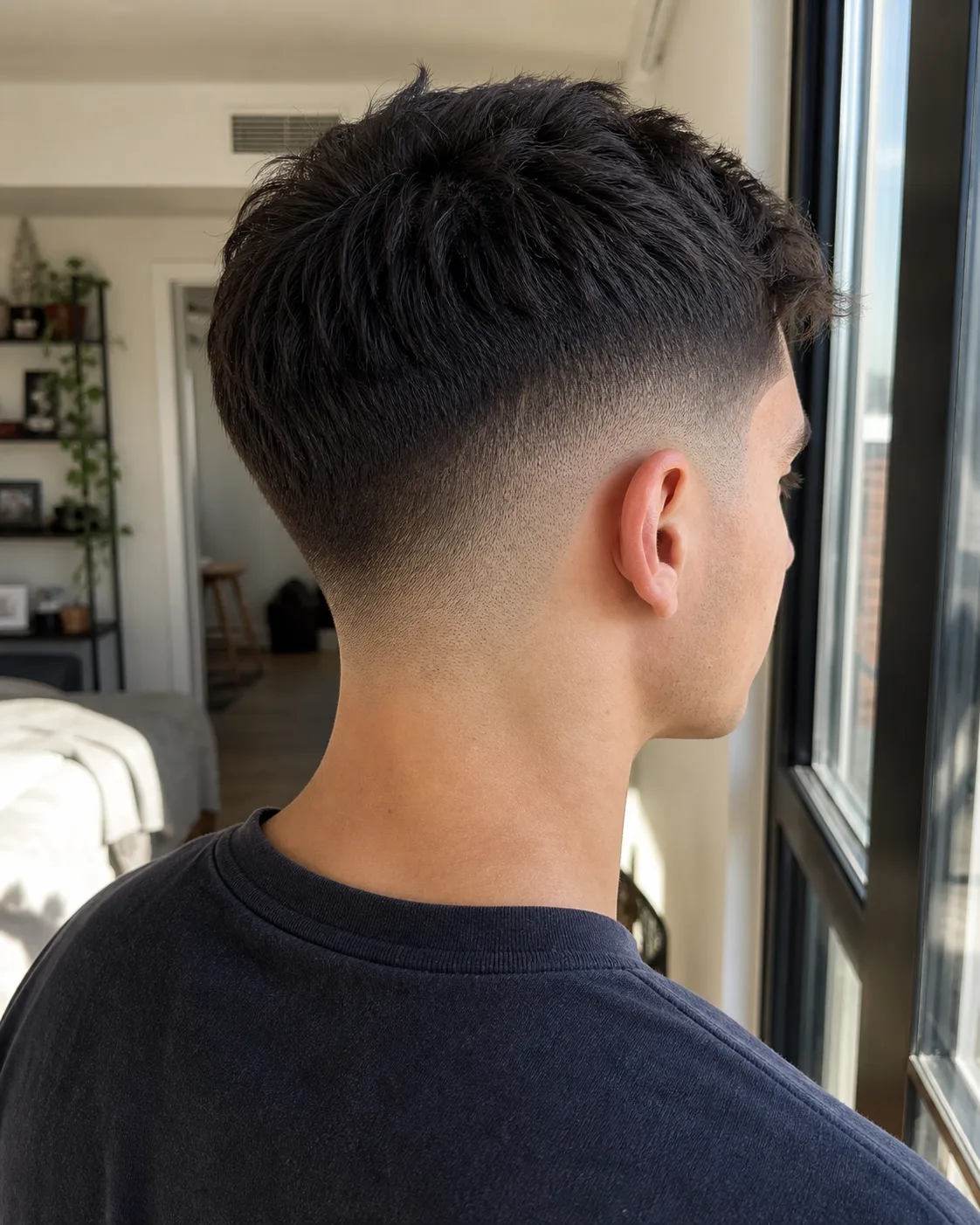
A fade is a gradient, not a length. The barber starts with a very short guard at the bottom edge of the hair - the nape and around the ears - and steps up through progressively longer guards as they move up the head, then blends the steps away until nothing reads as a line. Done right you cannot point at where one length ends and the next begins.
Two things follow from that. First, a fade is defined by its highest point, which barbers call the fade line. Second, the hair on top is a separate decision entirely. You can wear a fade with a buzz, with 2 inches of texture, with 5 inches of curls, or with a mullet, which has its own rule about where the fade has to stop. The fade is the frame. The top is the picture.
Fade vs taper: the difference that decides your cut
A taper is a narrow graduated band that follows your hairline at the sideburns and the nape, and nothing else. A fade takes the whole side of the head into that gradient. Every fade contains a taper at the bottom; not every taper is a fade. If the narrow version is the one you actually want, the taper on its own covers how high to take it and the exact words that stop a barber reaching for the fade.
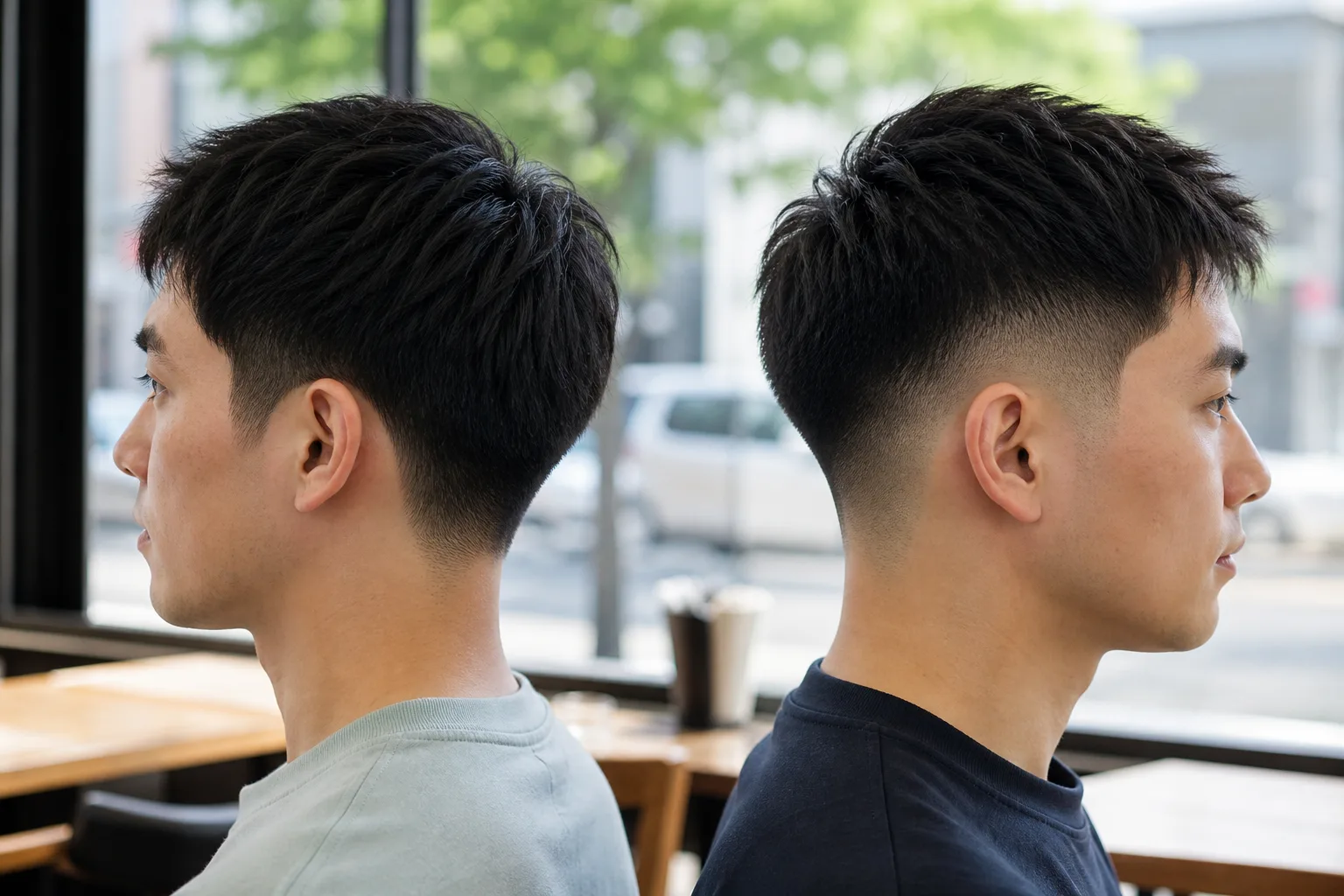
The practical difference is how much hair disappears. Ask for a taper and from the front you still look like a man with hair on the sides of his head. Ask for a fade and the sides go tight, your head reads narrower, and the top reads taller. That is a real change to your silhouette, not a trim. It is also the wrong change under a parting, which is why a classic side part asks for a taper every time and reads dated the moment a skin line appears above the ear.
| Taper | Fade | |
|---|---|---|
| Area worked | Sideburn and nape only | The whole side and back |
| Highest point | At or just above the ear | Ear to temple to forehead corner |
| Shortest length | Usually a #1 or #0.5 guard | Often bare skin |
| Grows out | Softly, over 5 to 6 weeks | Visibly, in 2 to 3 weeks |
| Office-safe by default | Yes | Depends how high you go |
| Best if | You want the same haircut, cleaner | You want a different silhouette |
If you are hovering between the two, start with a taper. Going shorter next time takes ten minutes. Going longer takes a month.
The types of fade haircuts, from low to skin
There are only two variables: how high the fade line goes, and how short the bottom gets. Everything with a name is a combination of those two. The middle row of this table is the one most men end up with, and it splits into four versions of its own once you count the drop, the burst and the skin finish.
| Type | Where the fade line sits | Shortest guard | Reads as |
|---|---|---|---|
| Taper fade | Just above the ear, hairline band only | #1 to #0.5 | Conservative, grown-up |
| Low fade | About an inch above the ear, below the temple | #0.5 to bare | Clean without being loud |
| Mid fade | At the temple, halfway up the side | #0.5 to bare | The safe default |
| High fade | At the temple corner, level with the forehead | #0.5 to bare | Bold, high contrast |
| Skin fade | Any height, taken down to bare scalp | Bare skin | Sharp, and high maintenance |
| Drop fade | Curves down behind the ear in an arc | #0.5 to bare | Softer on the back of the head |
| Burst fade | A semicircle around the ear only | #0.5 to bare | Keeps length at the back |
| Temple fade | Around the temple and front hairline only | #1 to bare | The smallest change you can make |
Two of these deserve their own guides, and they have them: the low taper fade is the version that hides best in an office, and the mid taper fade is what most barbers hand you when you say "just a fade" without specifying.
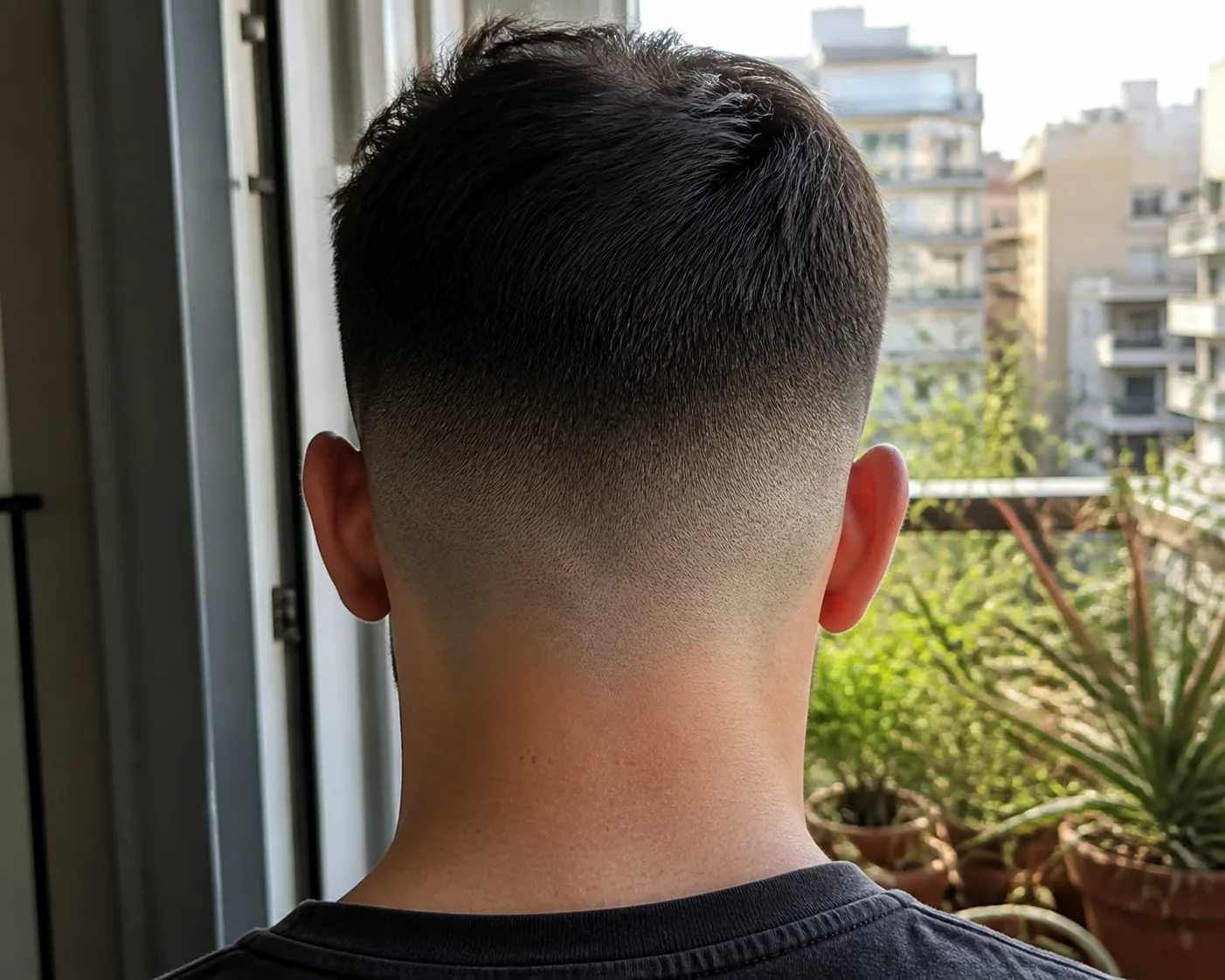
A skin fade is not a separate height. You can have a low skin fade or a high skin fade. It only describes the bottom, and what it really buys you is contrast: bare scalp next to 2 inches of hair is the sharpest edge a haircut can have. It is also two weeks of good and four weeks of shadow. If that is the version you want, the full bald fade guide compares low, mid and high side by side.
Every type of fade, side by side
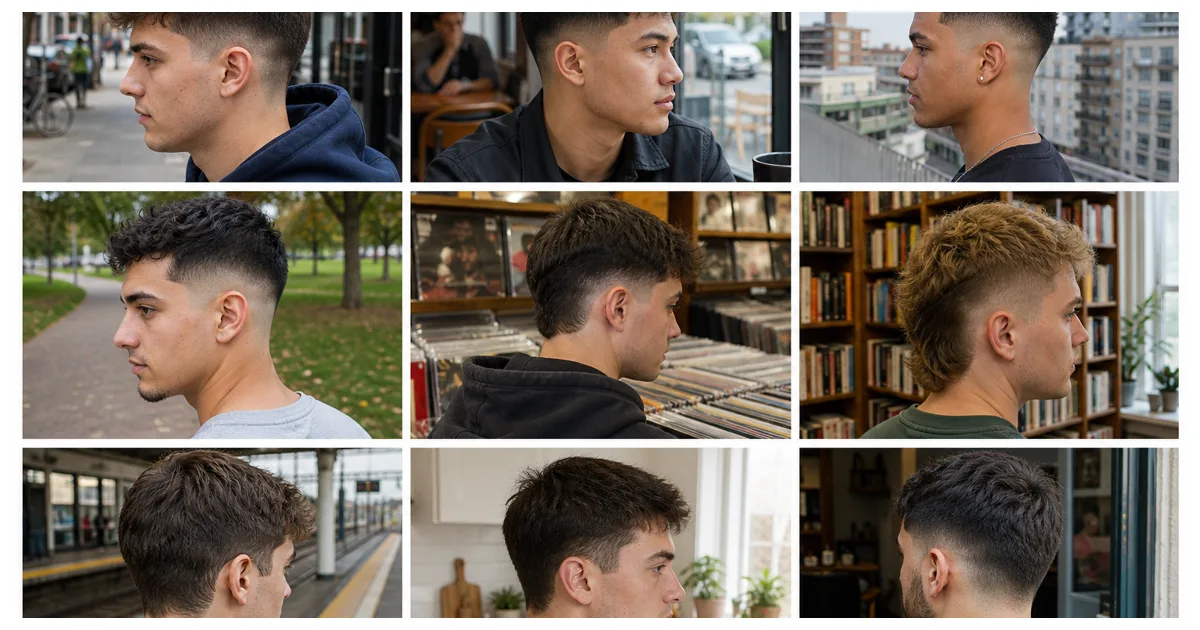
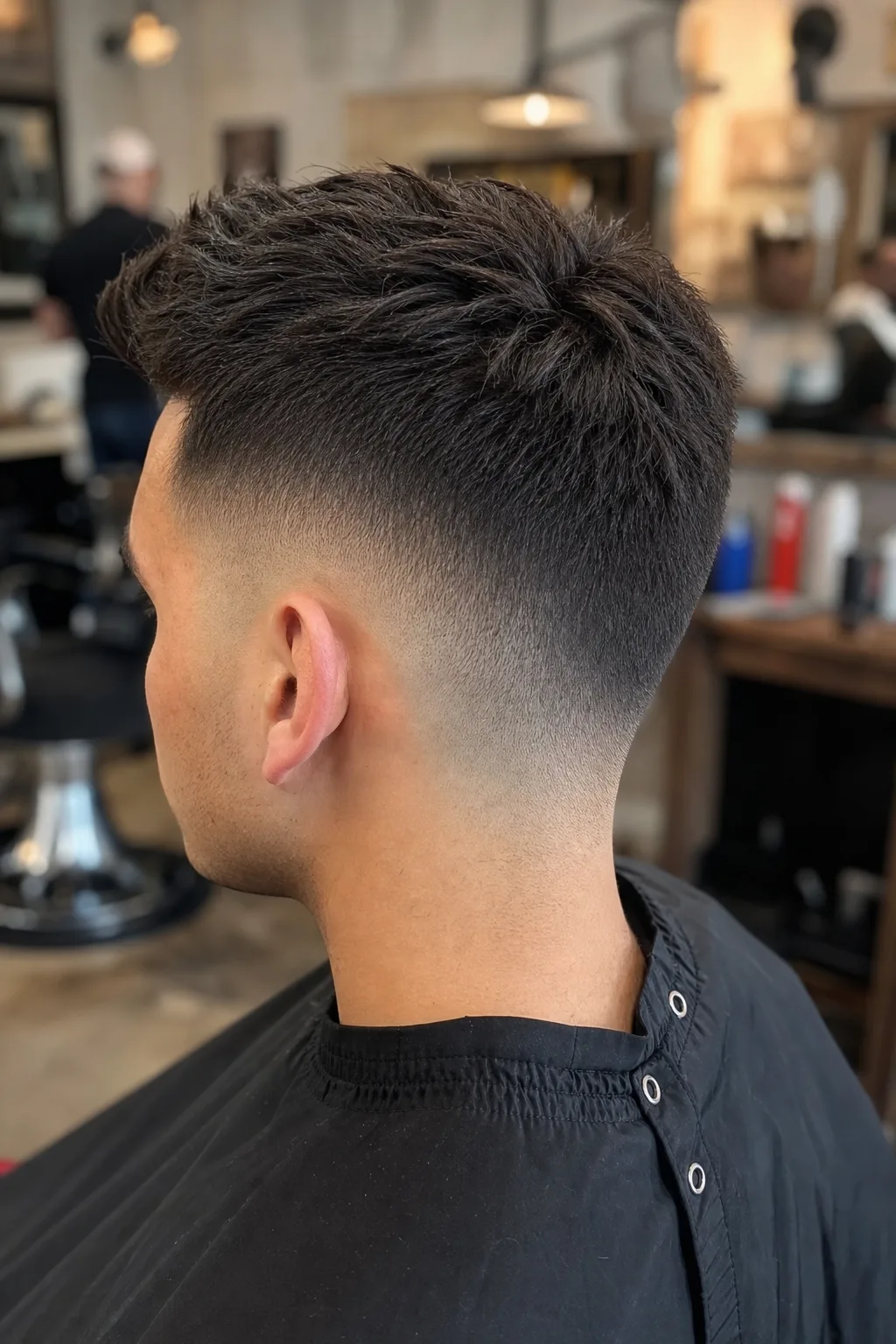
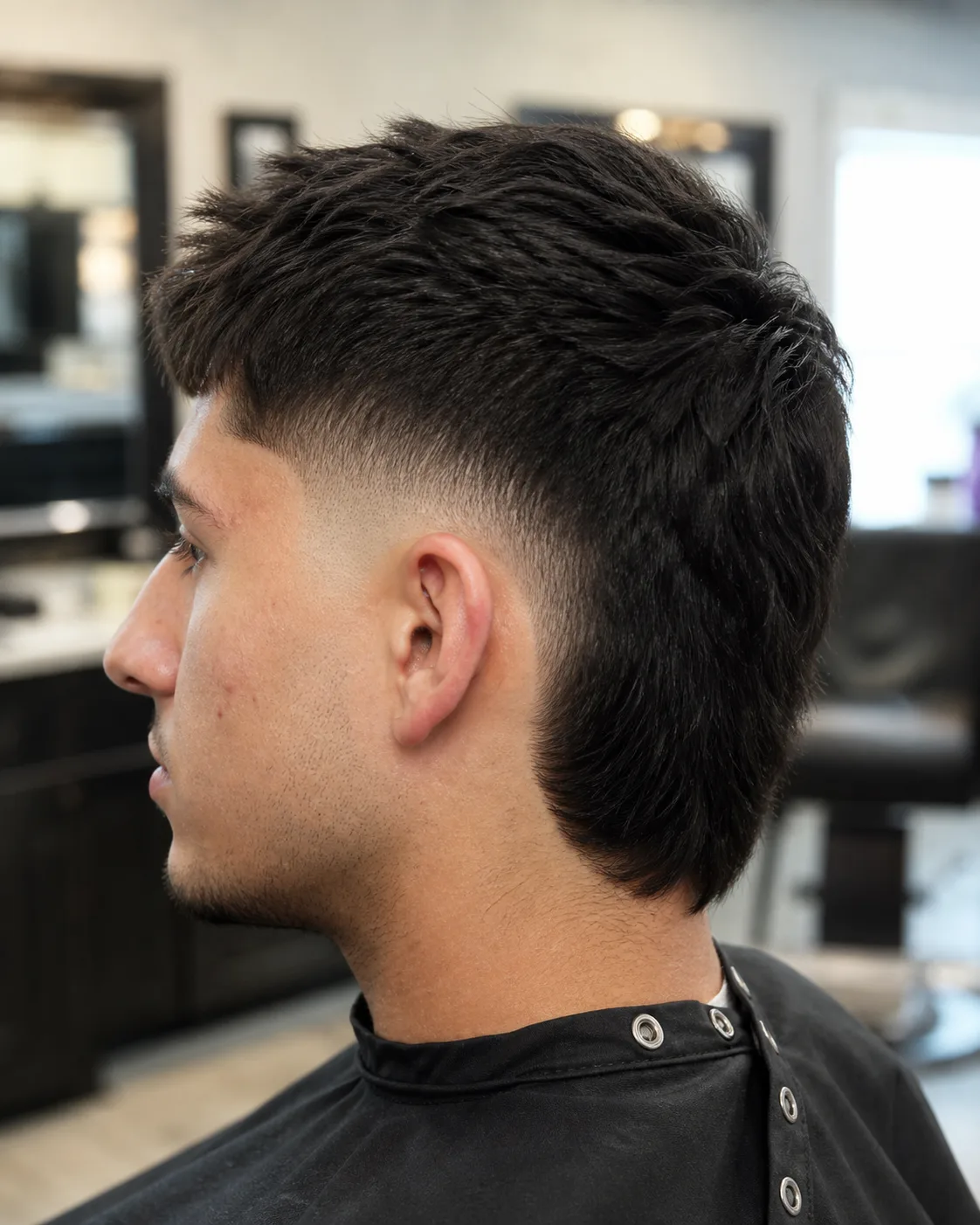
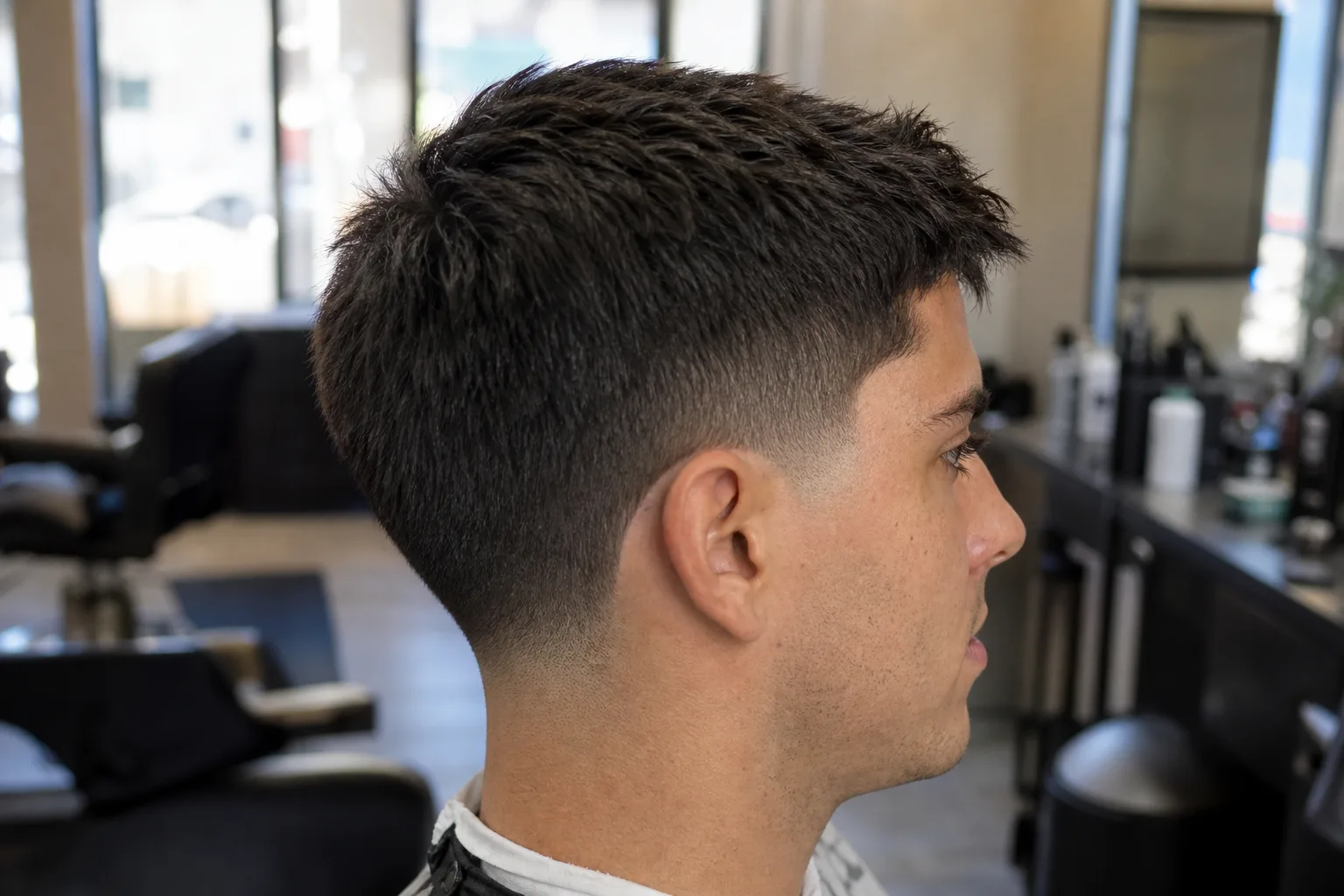
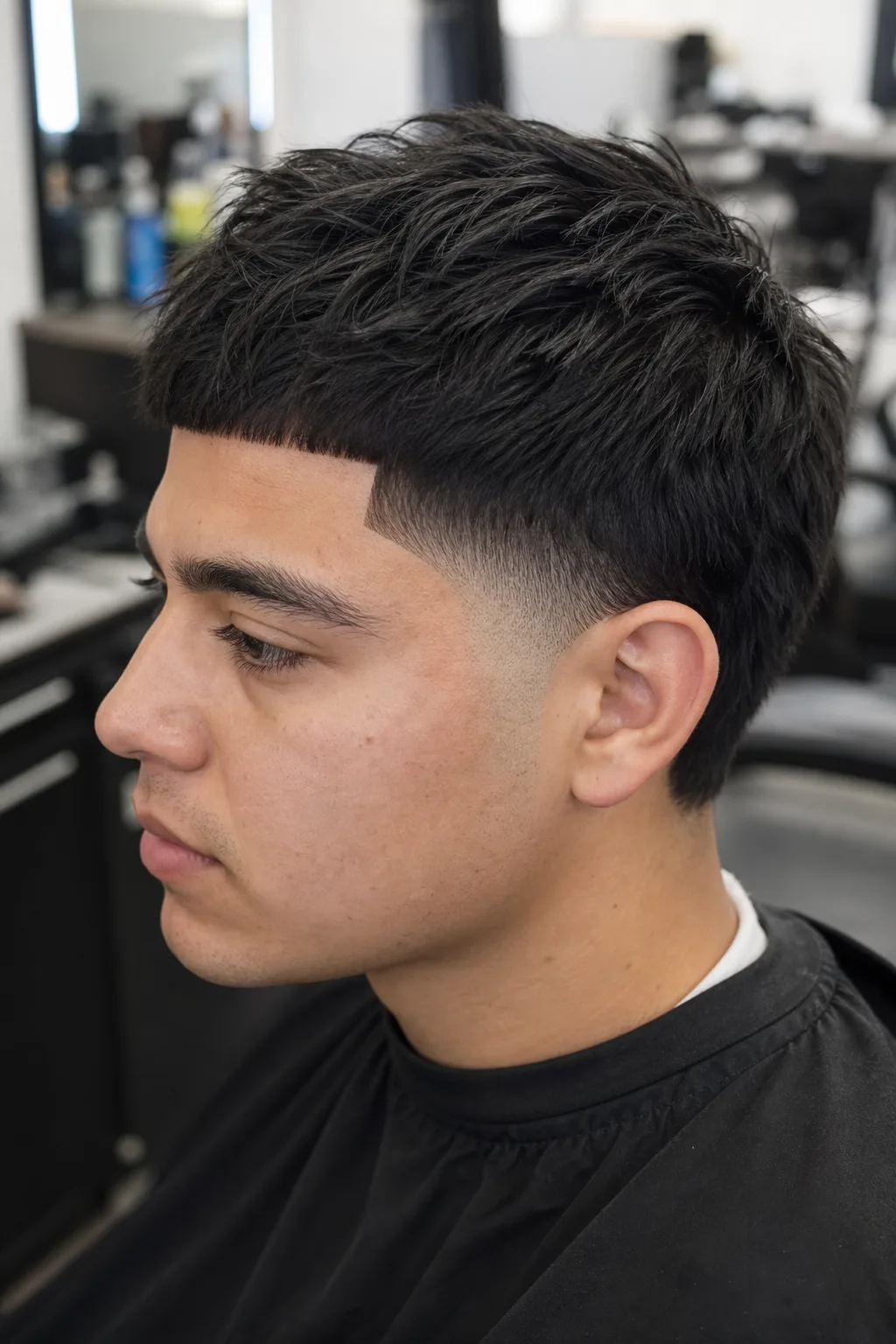
Same head, same 2 inch textured top, eight different fade lines. This is the whole decision in one row - the top never changes, and the haircut does.
Gallery8 photos · tap to enlarge
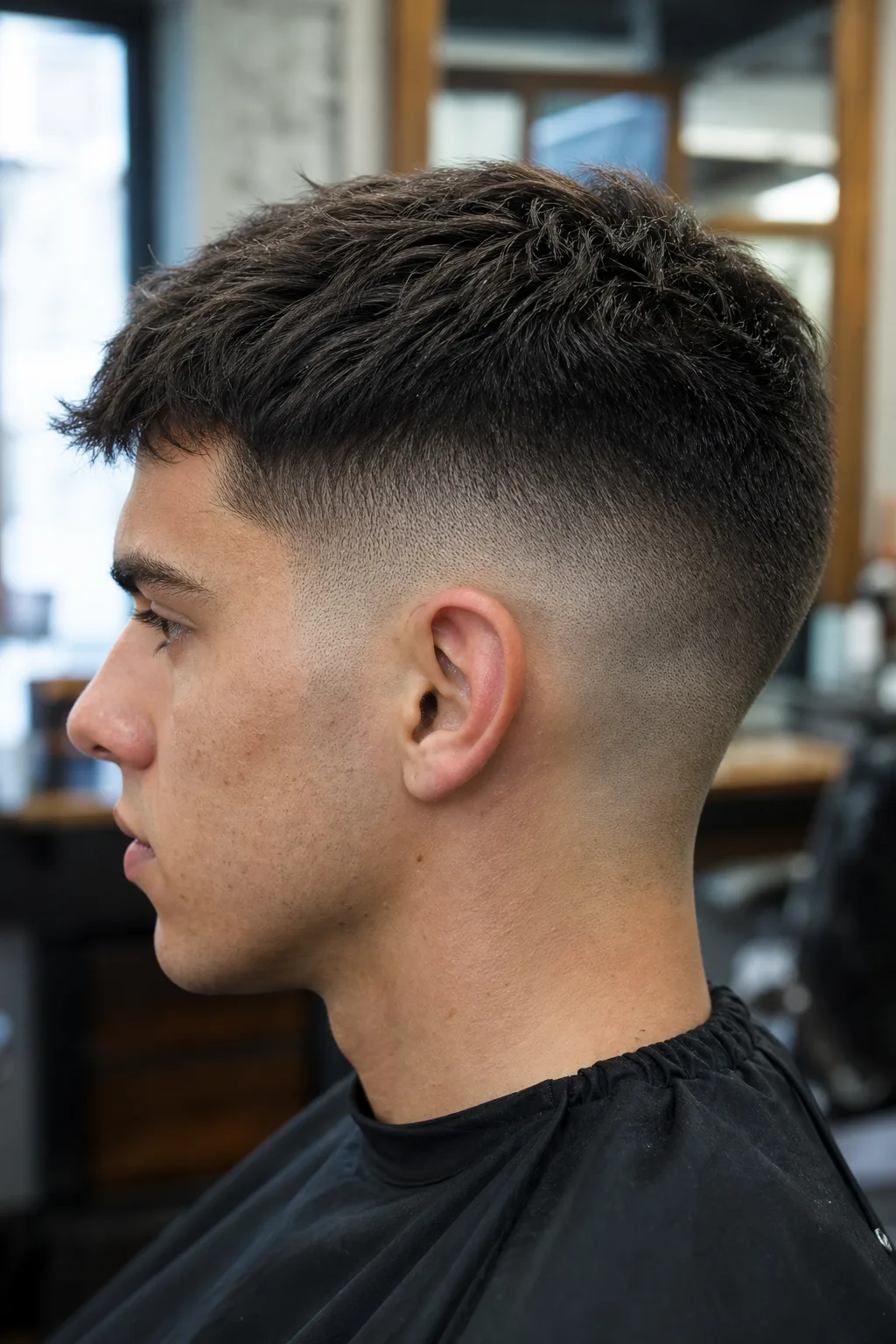 Try this on me
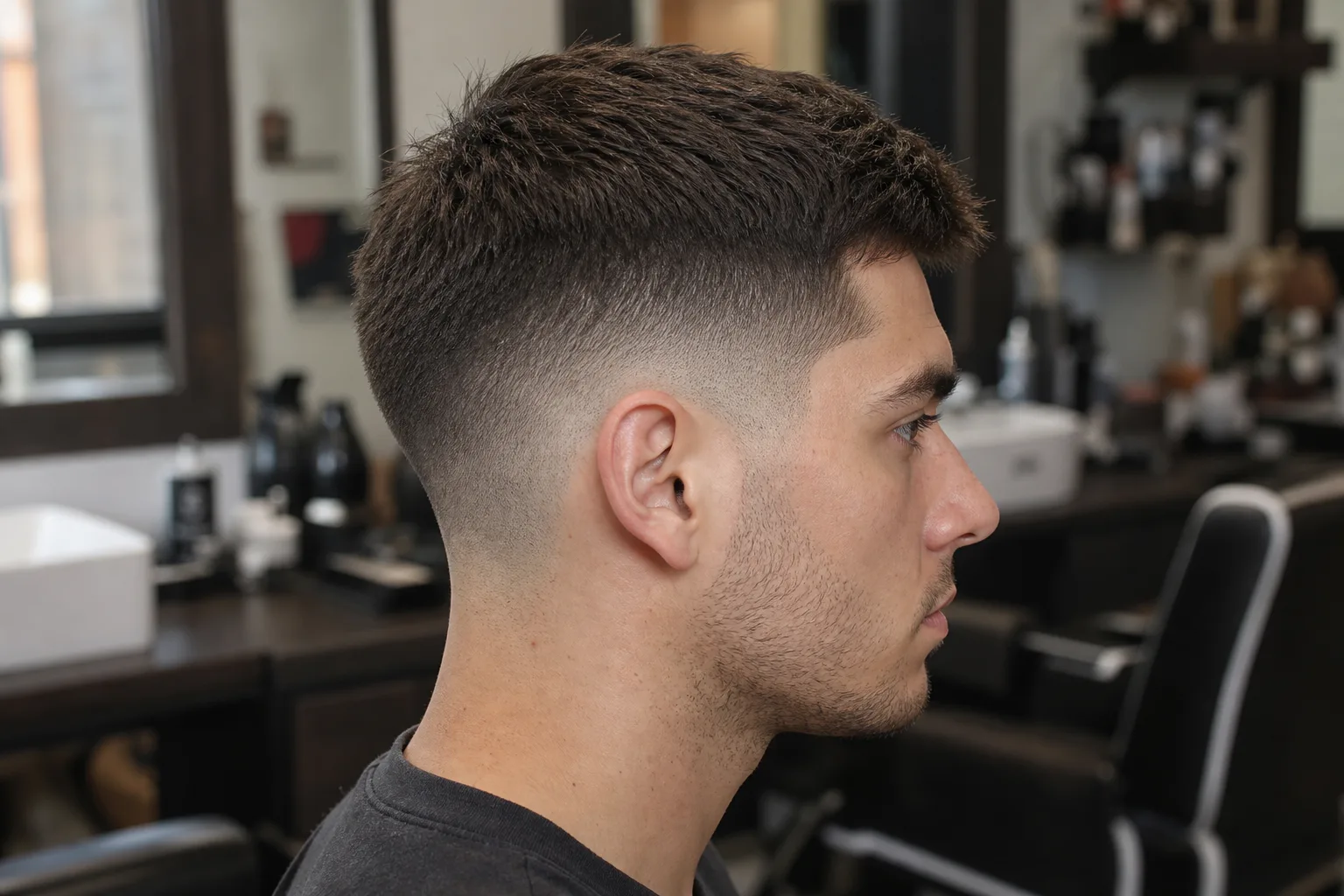 Try this on me
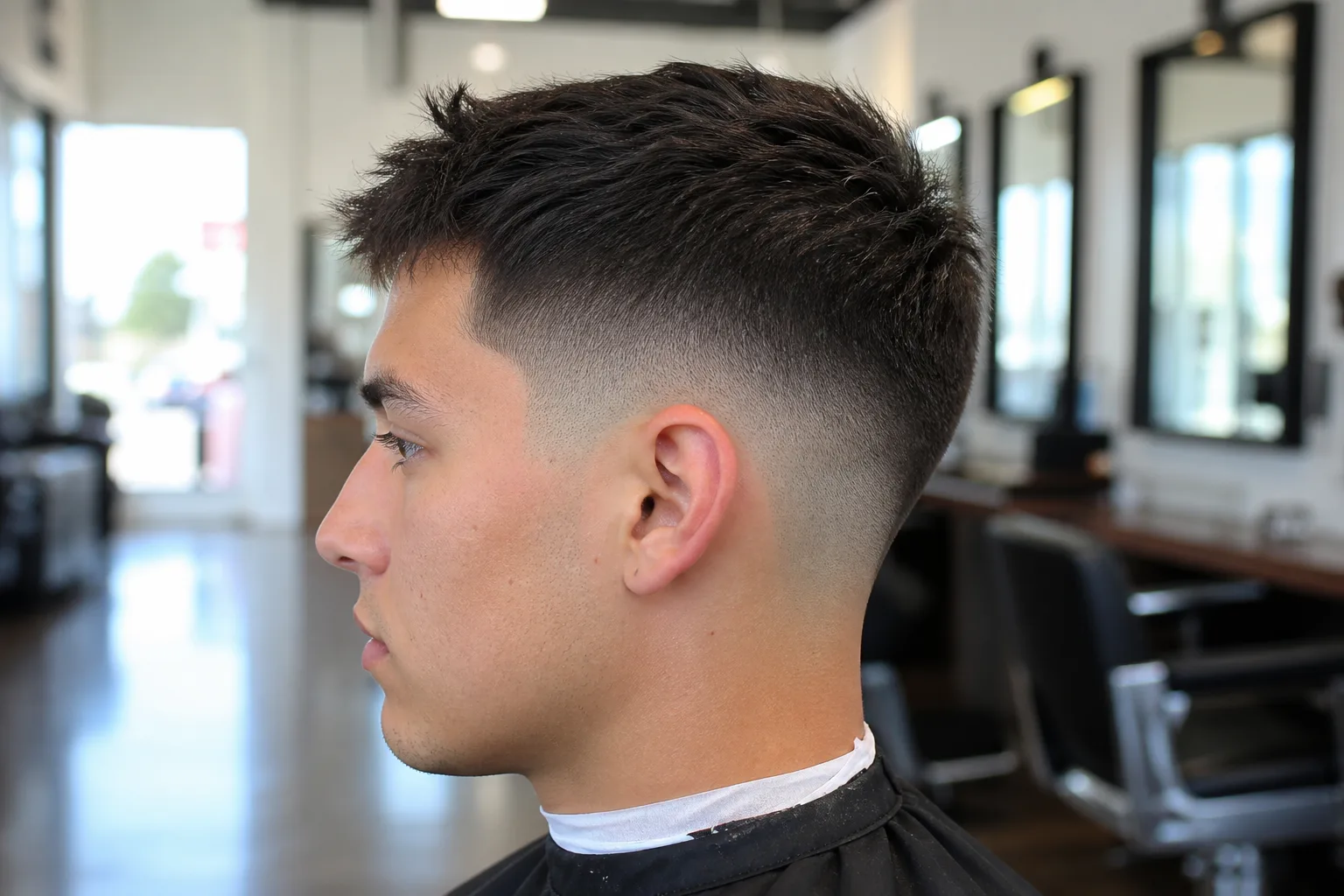 Try this on me
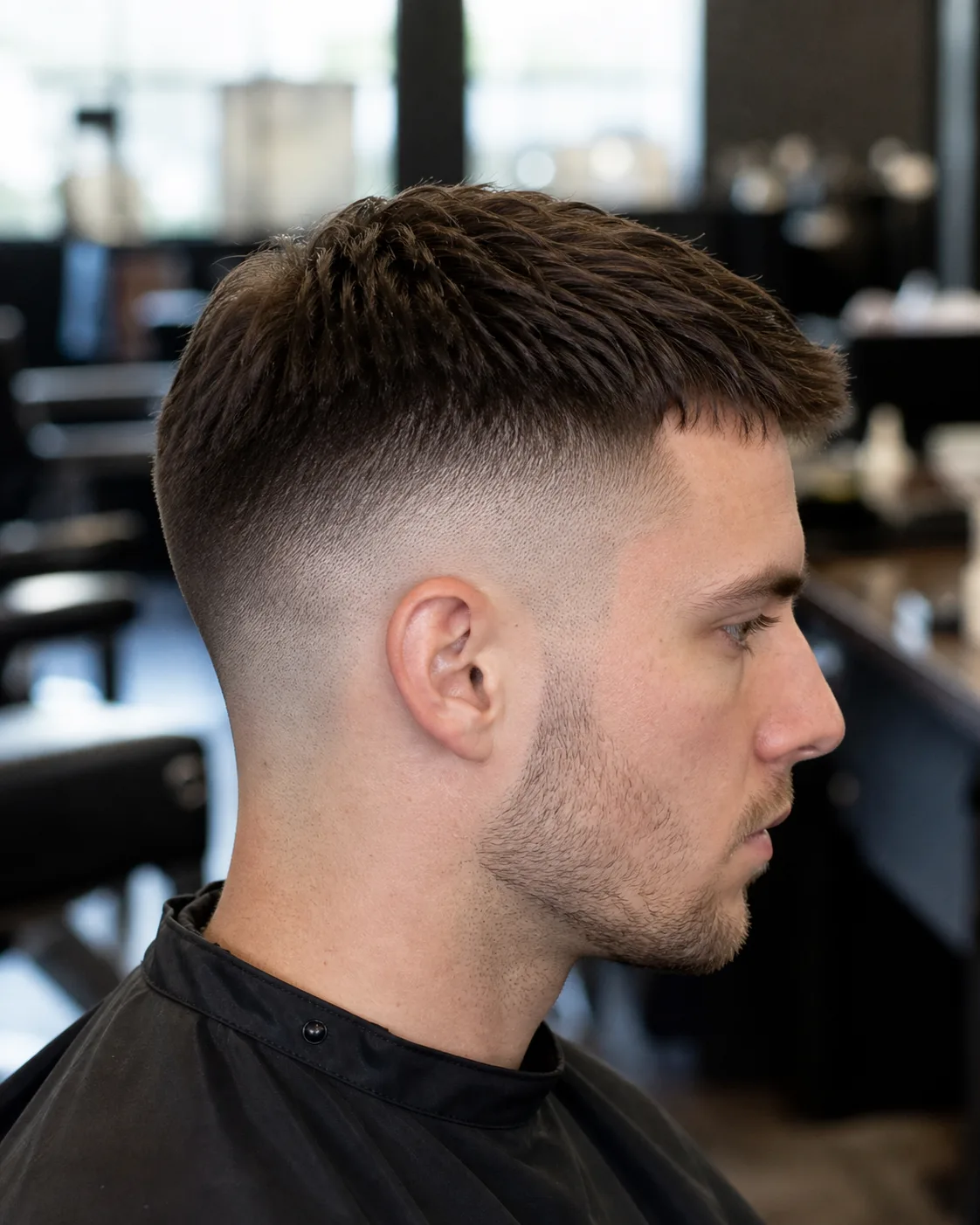 Try this on me
 Try this on me
 Try this on me
 Try this on me
 Try this on me
 Yours could be here.
Start with one selfie.
One photo, twenty seconds, and you'll know. Free account, no card for your first render.
Which fade suits your face and hair
The fade line changes the width of your head and the height of your silhouette. Higher fade, narrower sides, taller look. That is the entire rule, and it is why the answer depends on what your face already does.
| Your situation | Go for | Avoid | Why |
|---|---|---|---|
| Round or full face | High or mid fade, height on top | Low fade with a flat top | Narrow sides and vertical volume break the circle |
| Long or oblong face | Low fade, width kept on the sides | High skin fade | You do not want more height |
| Square or angular face | Mid fade, softer texture on top | Hard lined-up edges | The cut should not add more corners |
| Curly or coily hair | Mid or drop fade | Anything above the temple | Curls need a base to sit on |
| Thinning or receding | Low fade, short flat top | High skin fade | Contrast advertises what is missing |
| Big ears | Low or drop fade | High fade | A high fade puts nothing beside them |
If you are not sure which category your face falls into, measure it rather than guessing:
Measure it instead of guessing
Both numbers in the same unit — the answer is a ratio, so it does not matter which.
Under 1.15 reads round, 1.15 to 1.5 reads oval, over 1.5 reads long. Oval and long split on the jaw rather than the ratio: an oval tapers toward the chin, a long face runs straight down.
Round or full face
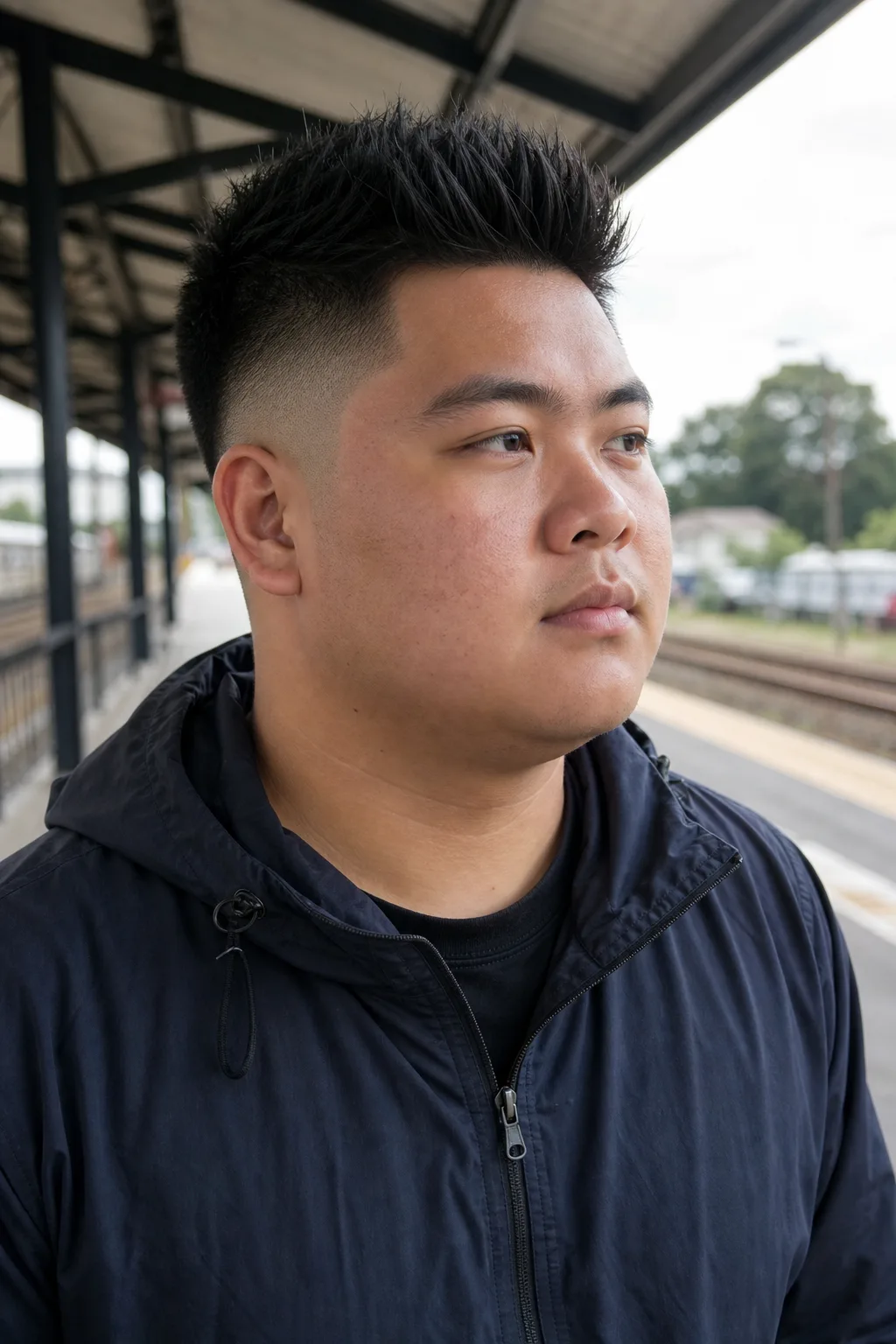
Go high. A high fade pulls the sides in tight and a quiff, pomp or upswept crop adds real height above the forehead. Together they turn a circle into an oval. This is the single most reliable pairing on this page.
What kills it is a low fade with nothing on top. That keeps the width and adds no length, and a round face ends up looking wider than it started.
Long or oblong face
Do the opposite. Keep a low fade, leave the sides some substance, and stop the top at around 2 inches. Fringe forward rather than up. Height is the last thing a long face needs.
Curly or coily hair

A mid or drop fade is the sweet spot. Curls need a couple of inches of graduated hair underneath them or the top sits on the head like a hat with a gap. Take the fade above the temple and the curls lose their base, and the shape reads top-heavy from the side.
A drop fade in particular works because it follows the round back of the head instead of cutting straight across it. If you want to see how a fade sits under your own curl pattern before you commit, the curly hair try-on renders it on your photo.
Thinning hair or a receding hairline
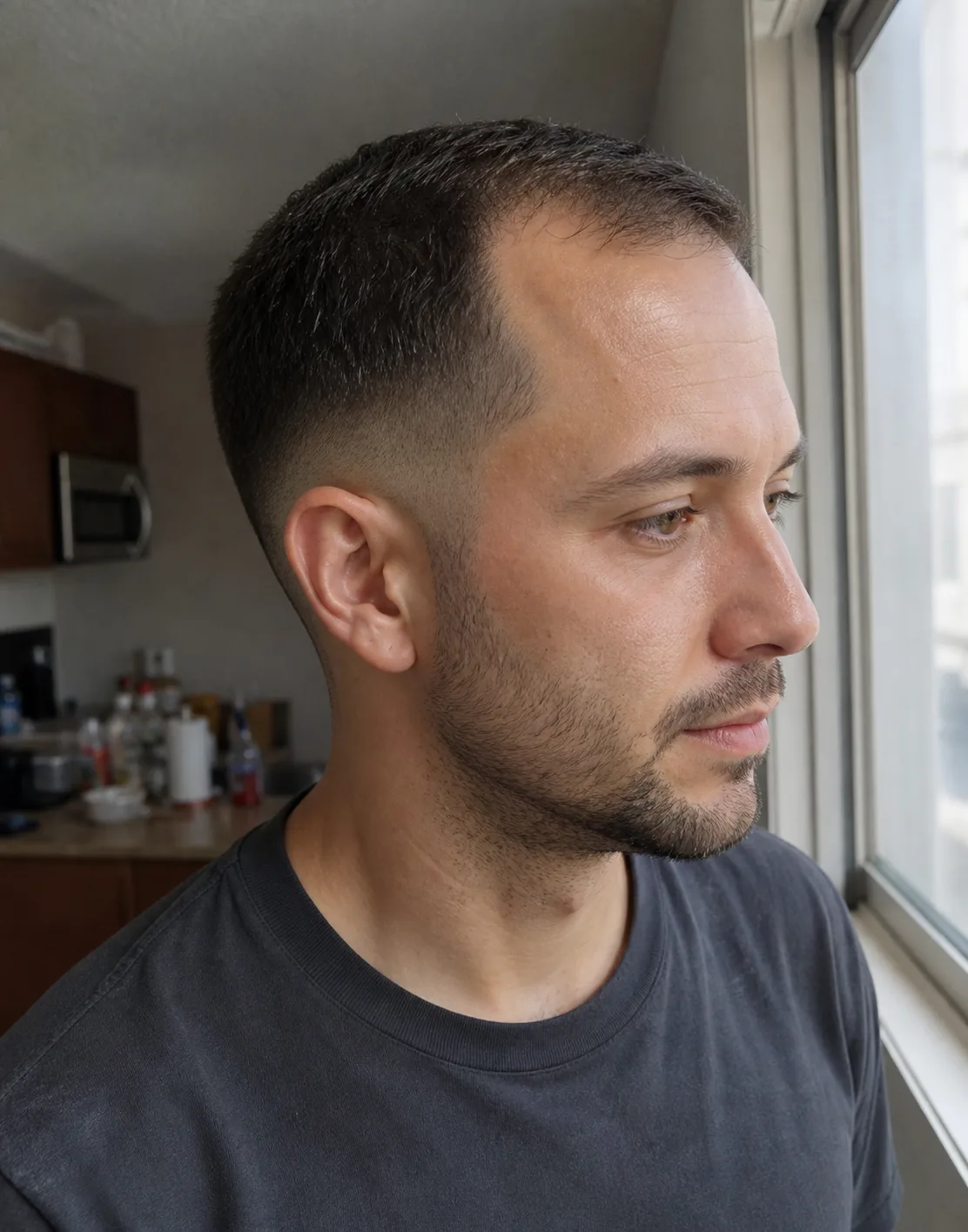
Low fade, short top, matte finish. The reason is unglamorous: contrast is what makes hair loss visible. Bare skin next to a thin patch draws the eye straight to the thin patch. A low fade with 1 inch on top keeps the density even and the whole thing reads as a deliberate short haircut.
If you are weighing this up against going shorter still, our hairline preview tool and the buzz cut simulator both show it on your own head first.
How to ask your barber for a fade
Say the height, say the bottom, say the top. Three facts, in that order, and any barber in the country knows exactly what you want. For a worked example of that script, our guide to what to ask for in a low taper fade spells out each step.
Say this to your barber
Mid fade please, starting at the temple, down to a number one at the bottom, not skin. Leave about two inches on top, point-cut, and keep the nape rounded.
How to ask for a fade haircut
- Name the height
Low, mid or high, and point at the spot on your own head. "Mid, starting about here." Barbers work from landmarks, not adjectives.
- Name the bottom
"Down to a number one" or "down to skin." The guard numbers are standard: a #1 leaves 1/8 inch, a #2 leaves 1/4 inch, a #3 leaves 3/8 inch, and each number up adds another 1/8 inch. Wahl publishes the full guard length chart if you want the exact figures.
- Name the top
Length in inches, and what you want it to do. "Two inches, point-cut, worn forward." Do not say "short" - short means four different things to four barbers.
- Say what you do not want
This is the step people skip. "No hard line at the top," "keep the nape rounded, not squared," "no line-up at the front." One sentence here prevents most bad fades, and if one has already happened, here is how each of the common bad haircuts gets fixed.
- Bring a picture
Not of a celebrity, of the haircut. A photo shows the fade line in half a second, which is faster than any sentence above.
A note on the "3:2:1 fade" you will see in barber videos: those are guard numbers, not a style. It means #3 at the top of the graduated area, #2 in the middle, #1 at the bottom, blended together. It is a recipe for a fairly conservative fade, and it is a perfectly good thing to ask for by name.
What a fade costs to keep
A fade is the highest maintenance short haircut there is, because the thing that makes it look good is precision, and precision has a shelf life.
| Bottom length | Looks fresh for | Looks acceptable for | Barber visits a year |
|---|---|---|---|
| Skin fade | 5 to 7 days | About 2 weeks | 24 to 30 |
| #0.5 fade | About 10 days | 3 weeks | 17 to 20 |
| #1 fade | 2 weeks | 4 weeks | 13 to 15 |
| Taper fade | 3 weeks | 6 weeks | 9 to 12 |
At a typical US barbershop rate that is the difference between a haircut being a monthly expense and a fortnightly one. If you cannot get in every two weeks, do not get a skin fade. A #1 low fade at four weeks still looks like a haircut. A skin fade at four weeks looks like you stopped caring. That gap in upkeep is most of the reason the low fade outsells every other height in the average shop.
Five mistakes that ruin a fade
Going higher than your hair can support. A high fade with 1 inch on top on fine hair gives you a head with a stripe. The higher the fade, the more the top has to do.
Asking for skin when your schedule says otherwise. Two great weeks followed by four bad ones is a worse average than four decent weeks. Be honest about how often you actually book.
Letting the barber square off the nape. A squared nape grows into a visible shelf of hair sitting on your neck, and it is obvious from behind long before you see it in a mirror. Rounded, always.
A line-up you did not ask for. Squaring the front hairline into a hard line borrows hair from your temples permanently if it is done every visit. On a receding hairline it is the fastest way to make it look worse.
Copying the fade from a photo instead of the face. The reason a fade looks good on someone is usually their head shape, not the cut. This is exactly what a fade haircut simulator is for - the same eight fades above, rendered on your face rather than a model's.
Can you see a fade on your face before booking?
Yes, and the first one costs nothing. Hairstyle Atlas gives you one free look with no card: upload a selfie, pick a fade, and get the front view back. That is enough to settle a low-versus-high argument with yourself.
Past that it is a paid plan. Starter is $9 a month, or $90 for the year, and covers 150 credits, all 120-plus cuts and colors, a before-and-after sheet to hand your barber, and clean downloads with no watermark. Pro is $24 a month and adds the side, back and three-quarter views, which is the half of a fade you cannot see in a mirror. A haircut render costs 10 credits, a color on top of it costs 5, and a failed render refunds its credits. Every plan has a seven-day refund with no conditions.
If you want the full menu rather than fades specifically, the men's try-on covers everything in the atlas, and what haircut suits me works backwards from your face shape instead.
The short version
Decide the height first: low if you want a haircut, high if you want a different head. Decide the bottom second, and be honest about your calendar - skin fades are a fortnightly commitment. Decide the top last, because it is the one thing you can change without a barber.
Then say the three facts out loud in the chair. Height, bottom, top. That sentence is worth more than any photo you bring. The top half of that decision is the one worth spending time on, and every men's haircut sorted by length on top gives you the honest styling cost of each before you commit to one.
Frequently asked questions
The mid fade, if you have to pick one blind. It sits at the temple, suits the widest range of face shapes, and is the version most barbers default to. If you want a specific answer rather than a safe one, match the height to your face: high for a round face, low for a long one, mid for everything in between.
A taper only shortens a narrow band along your sideburns and nape. A fade takes the entire side and back of your head into a gradient. Every fade includes a taper at the bottom, but a taper on its own leaves the sides of your head at full length.
No, but the loud end of the range is cooling off. Very high skin fades with hard lines peaked a couple of years ago, and low fades, taper fades and drop fades are where barbers are pointing people now. The soft blended version of the cut is not going anywhere.
A high fade with height on top. Tight sides narrow the head and a quiff or upswept crop adds vertical length, which is the pair of changes a round face benefits from most. Avoid a low fade worn flat, which keeps the width.
Three things in order: the height, the bottom, the top. For example, "mid fade starting at the temple, down to a number one, not skin, leave two inches on top." Then add one sentence about what you do not want, such as no hard line and a rounded nape.
You can, and you will get their house default, which is usually a mid fade to a #0.5. If that is fine with you, no problem. If you have a preference about height or about bare skin, say it before the clippers start, because there is no undo.
Low, mid and high describe where the gradient starts. Skin describes how short the bottom goes. Taper, drop, burst and temple describe the shape of the line rather than its height. Any real haircut is one from the first group combined with one from the others.
Low taper fades and drop fades, especially paired with longer, textured hair on top. The trend is toward fades that read as a well-groomed haircut rather than as a fade, which is a reversal of the high-contrast look that dominated the late 2010s.
It is a recipe rather than a style: a #3 guard at the top of the graduated section, a #2 through the middle, a #1 at the bottom, blended so the steps disappear. That leaves 3/8 inch down to 1/8 inch, so it is a fairly soft fade with no bare skin. It is a good thing to ask for if you want low contrast.
Preview it on your own photo: Men's Hairstyle Try-On.
Share article
About the author

More articles
Men's Haircuts · 14 min
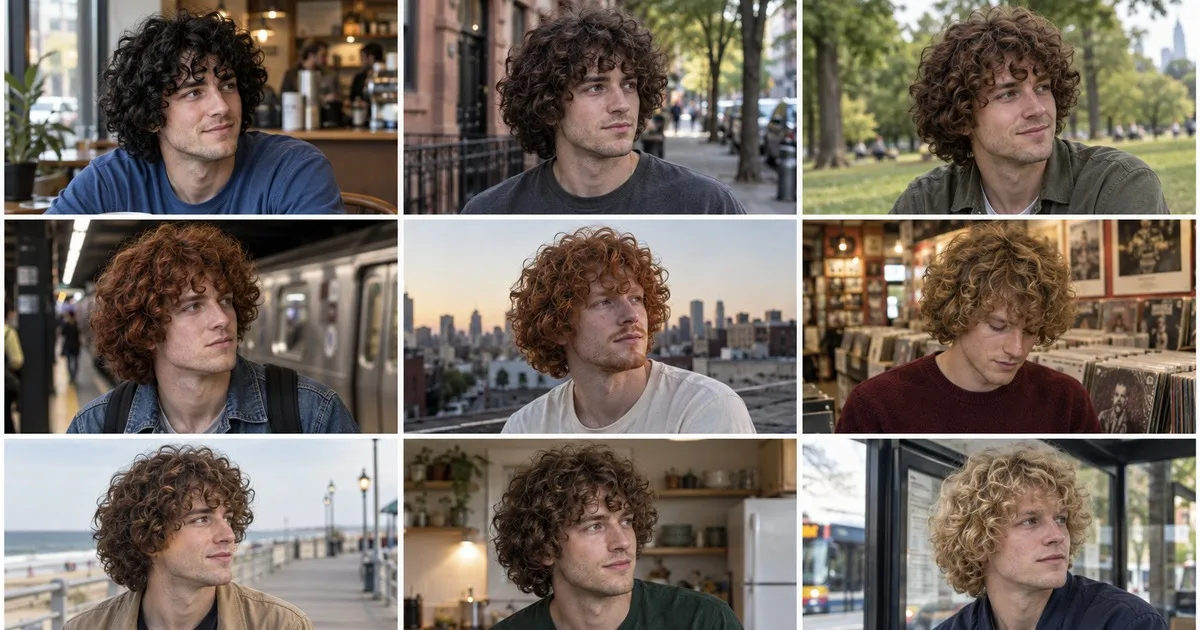
Benny Blanco Haircut: The Fake Half Shave and the Real Curls
Benny Blanco did not shave half his head. It was a prosthetic bald cap, and the buzz cuts are AI. Here is what his curly mop actually is, the short version, and exactly what to tell your barber.
Men's Haircuts · 16 min
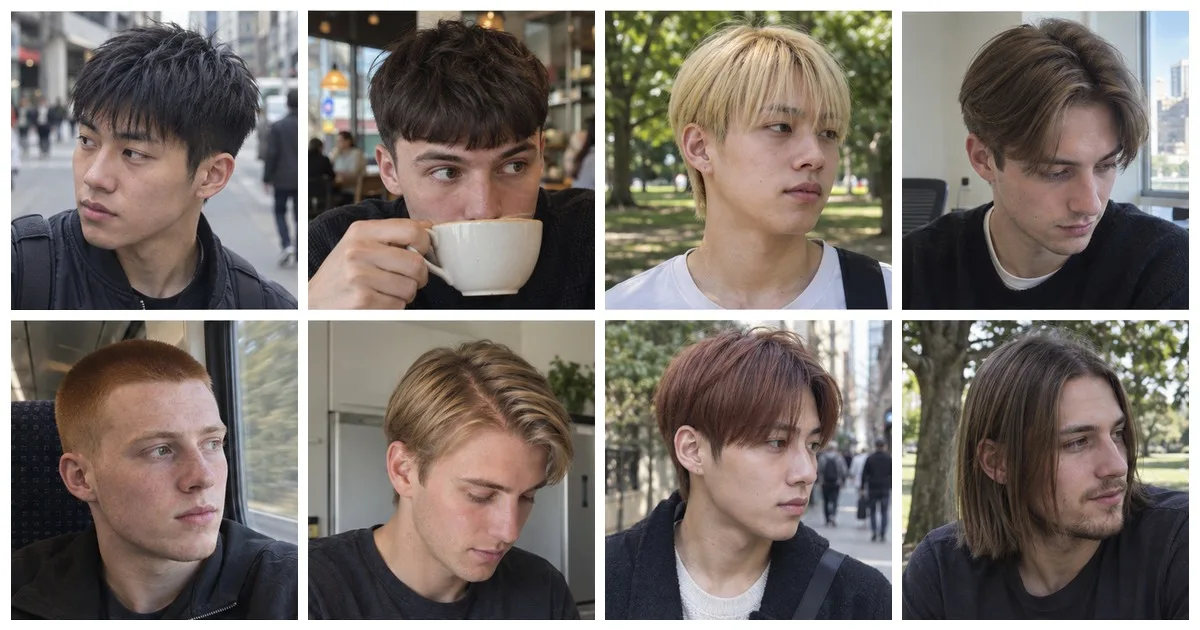
1A Hair: How to Tell If You Have It + 14 Cuts That Work
1A hair is pin-straight with no bend from root to tip. How to tell it from 1B and 1C, why it goes flat, 14 haircuts that work on it, and how to style it for volume.
Men's Haircuts · 15 min
High and Tight Haircut: 4 Versions and the Head Shape Rule
A high and tight clips the sides almost to skin all the way up to the top of the head, so it shows your skull shape more than your face. The 4 versions, 14 photos, what to tell your barber, and how long it lasts.