Coily Hair: Types, Care and a Routine That Fits You
Oleh Onysko 17 October 2026 13 min read
In this article
Coily hair forms very tight curls, small springs or closely packed bends, usually described as type 4 hair. Its care depends less on finding a perfect 4A, 4B or 4C label than on how easily it tangles, how much product it needs and how you want to wear it.
The useful distinction is this: shrinkage changes the length you see, not the length you have. Plan a haircut around your dry, unstretched shape. Plan your routine around keeping the strands manageable. You do not need to stretch every coil or make every strand form an identical ringlet.
What is coily hair?
Coily hair has a tightly repeating pattern that can look like tiny corkscrews, angular bends or a dense, soft cloud. The pattern can vary across the same head. A looser patch at the nape does not cancel out tighter coils at the crown.

The common typing system puts these textures under type 4. It is a visual shorthand, not a diagnosis, a strength rating or a shopping list. You cannot reliably identify a subtype from a styled photograph alone: length, conditioner, gel, brushing and stretching all change the visible pattern.
To look at your own pattern, check a small clean section after it dries without tension. Examine a few areas rather than choosing the most defined curl. If the labels still feel unclear, you can care for your hair without choosing one.
Want to see it first? Preview curly hair on your own photo.
Coily hair vs curly hair: what is different?
Both are curly textures in the broad sense. In everyday hair typing, curly usually means larger, more visible loops, while coily means much tighter springs or bends. Neither word tells you whether an individual strand is fine or thick.
| What you are noticing | Often called curly | Often called coily |
|---|---|---|
| Visible pattern | Larger loops or corkscrews | Tiny springs or tightly packed bends |
| Dry outline | Ringlets often hang separately | Coils may cluster into a compact shape |
| Apparent length | Can still shrink substantially | Often looks much shorter than when stretched |
| Useful care question | Does the curl need hold or less weight? | Does the hair need more slip or less handling? |
The boundary is fuzzy. If your pattern sits between small corkscrews and tighter coils, compare our 3B hair guide with the type 4 descriptions below. Do not change products just to match a number.
A practical guide to 4A, 4B and 4C
- 4A: small, often visible S-shaped coils. Start with the 4A hair guide if your main problem is keeping those coils grouped without making them stiff.
- 4B: tighter bends that may look more angular than round. Our 4B texture guide focuses on handling and shape rather than forcing every strand into a corkscrew.
- 4C: very tightly packed coils or bends, with a pattern that can be difficult to see at normal viewing distance. The 4C hair guide covers that compact texture in more detail.
These categories overlap. None means your hair is automatically coarse, high porosity, damaged or incapable of growing long. Those are separate questions.
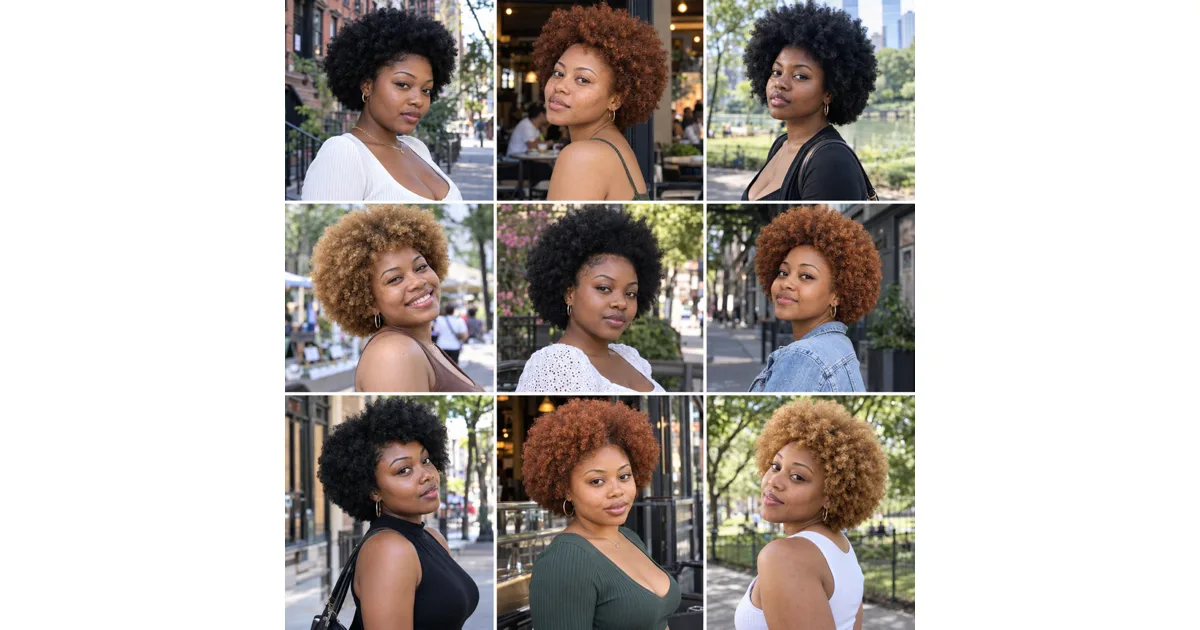
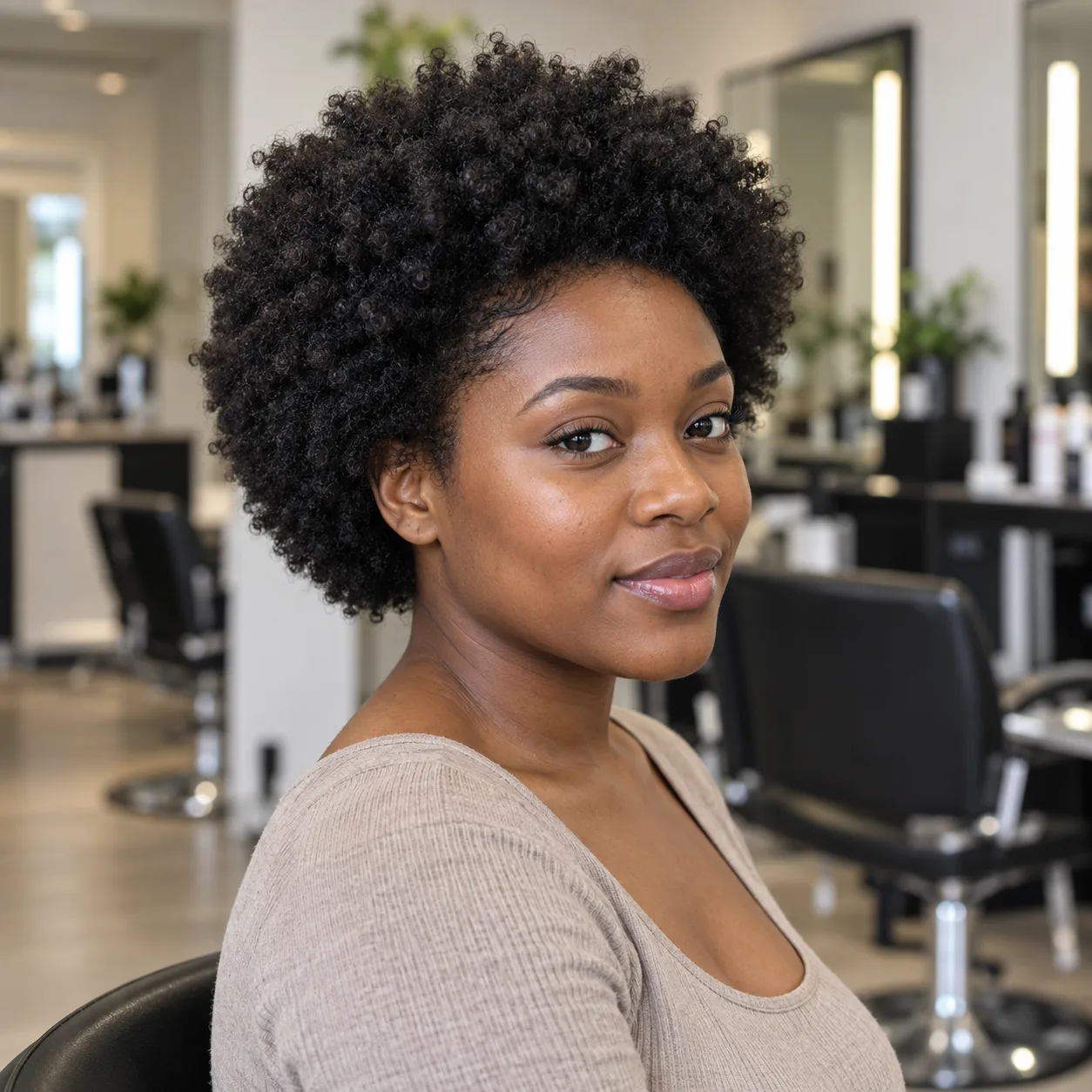
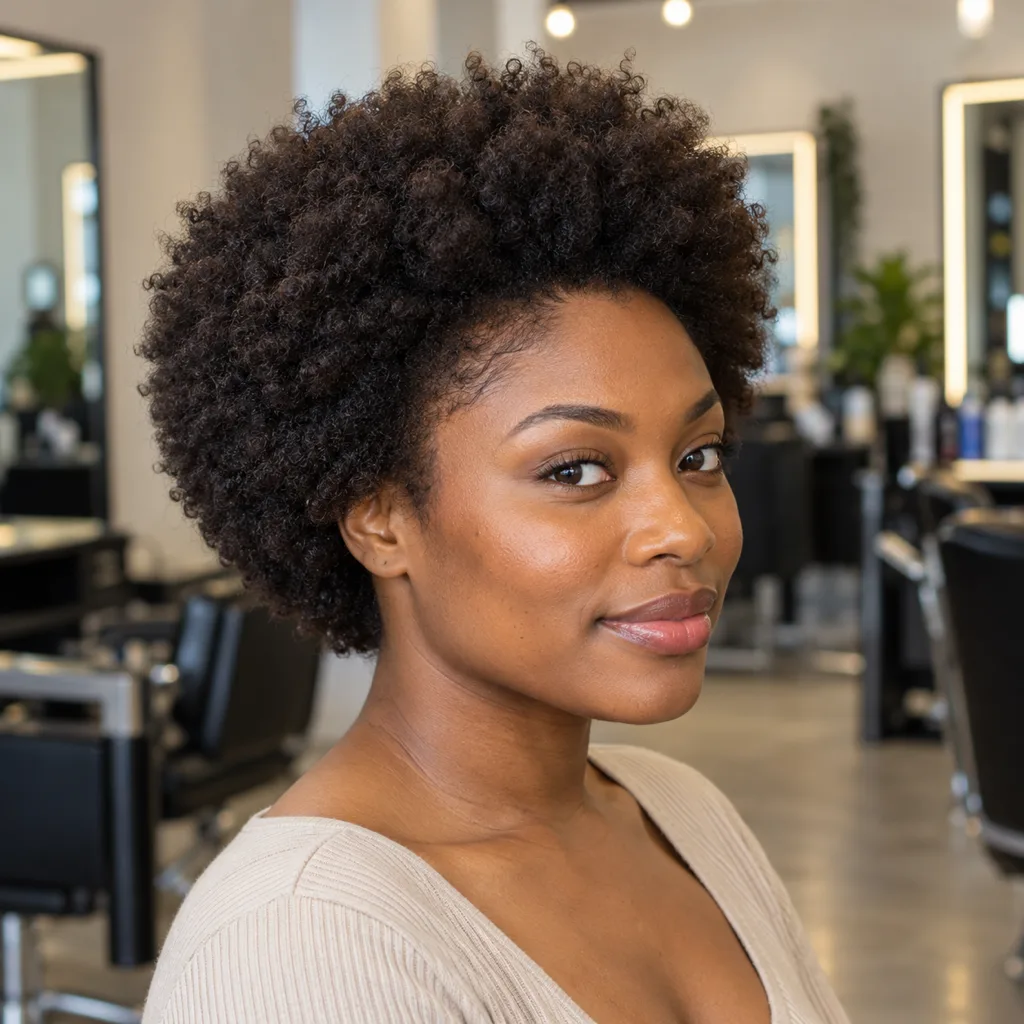
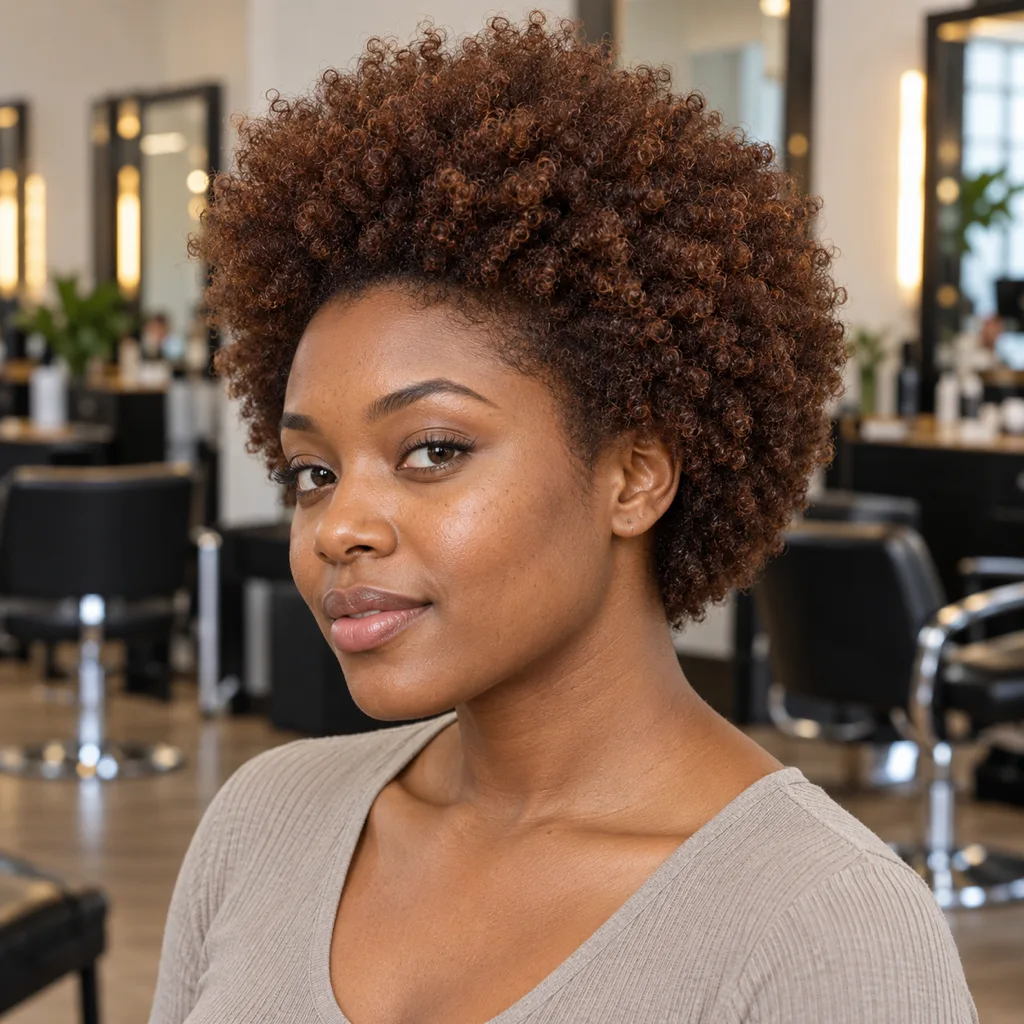
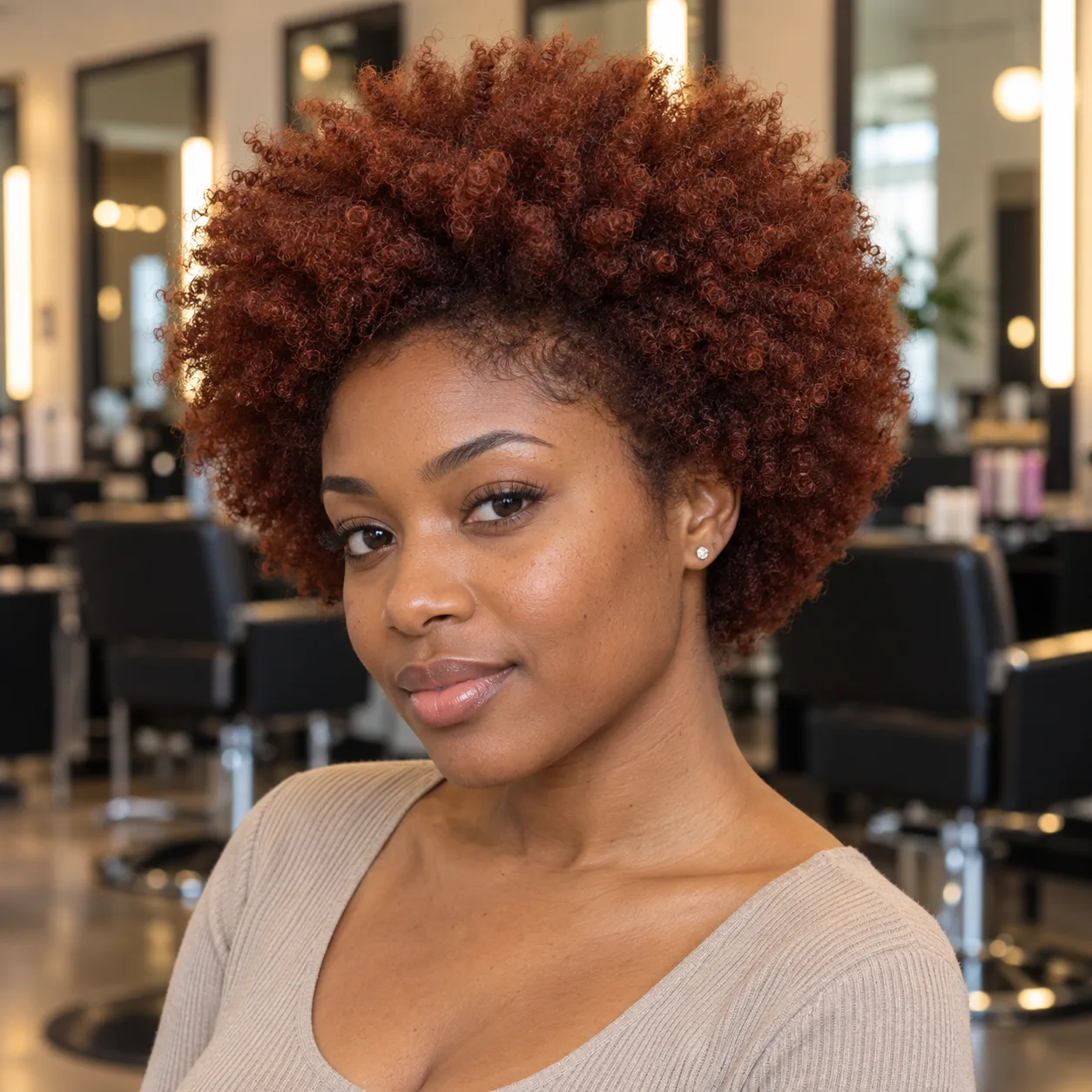
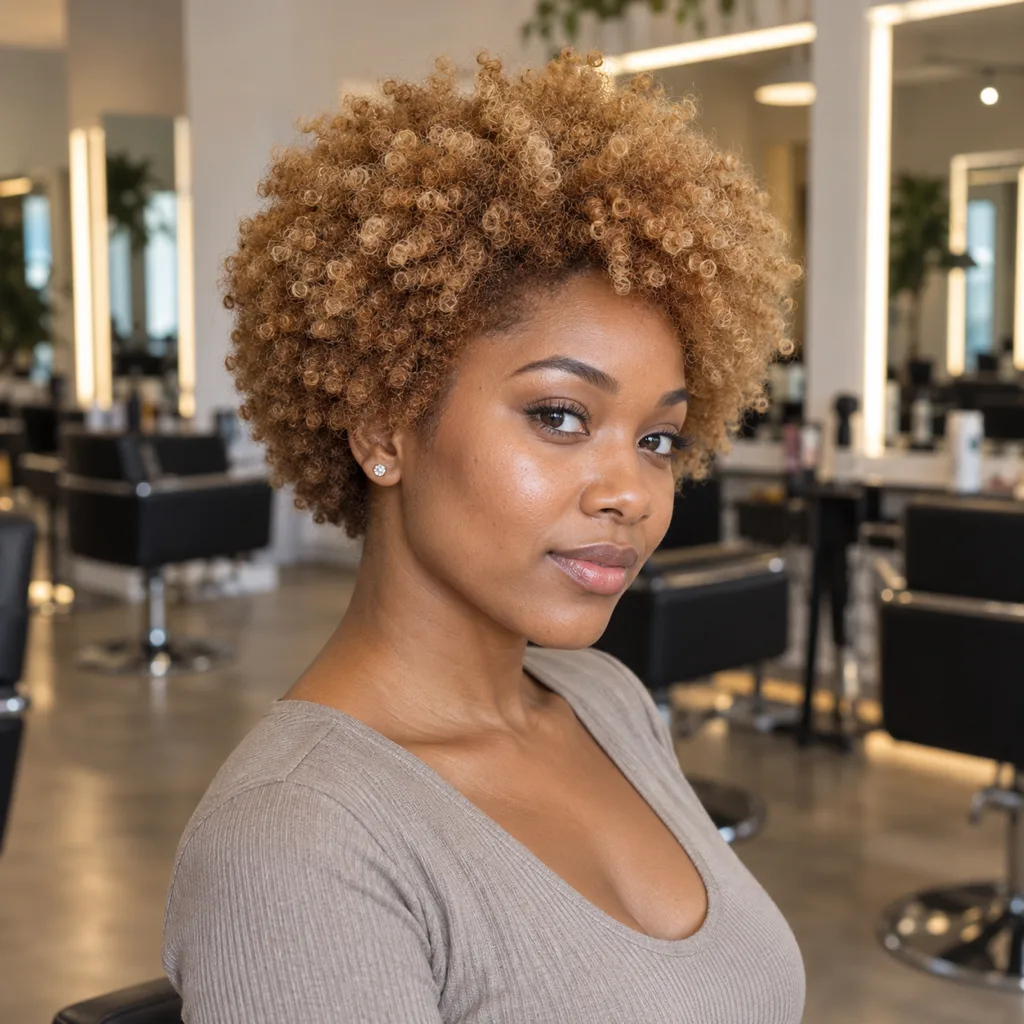
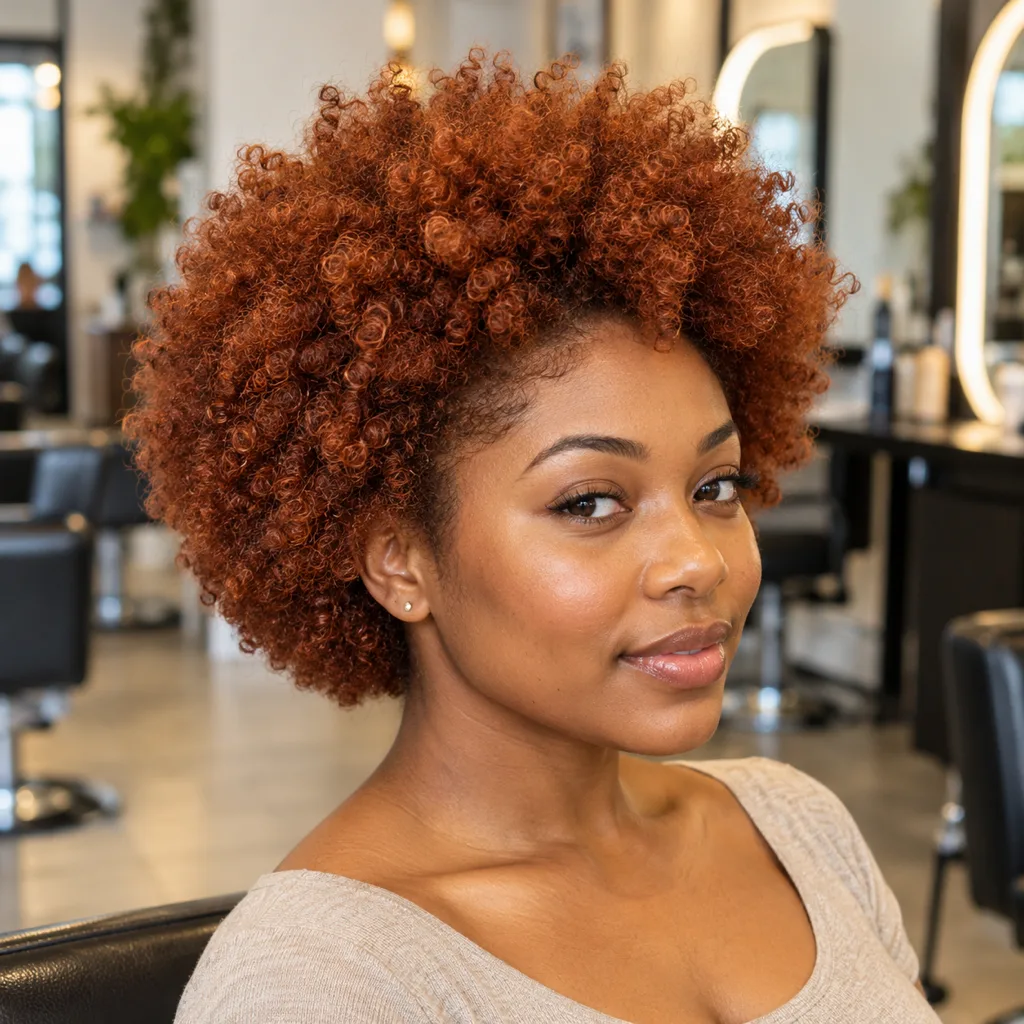
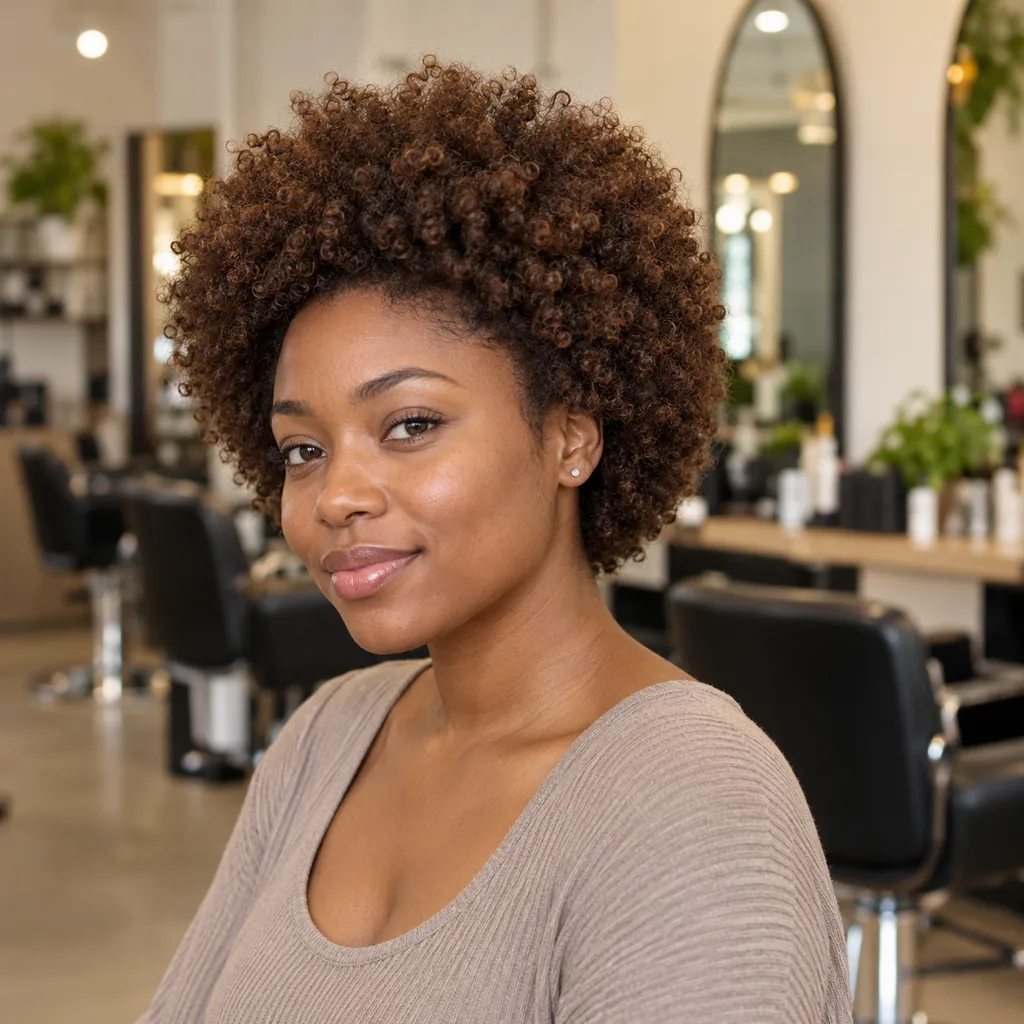
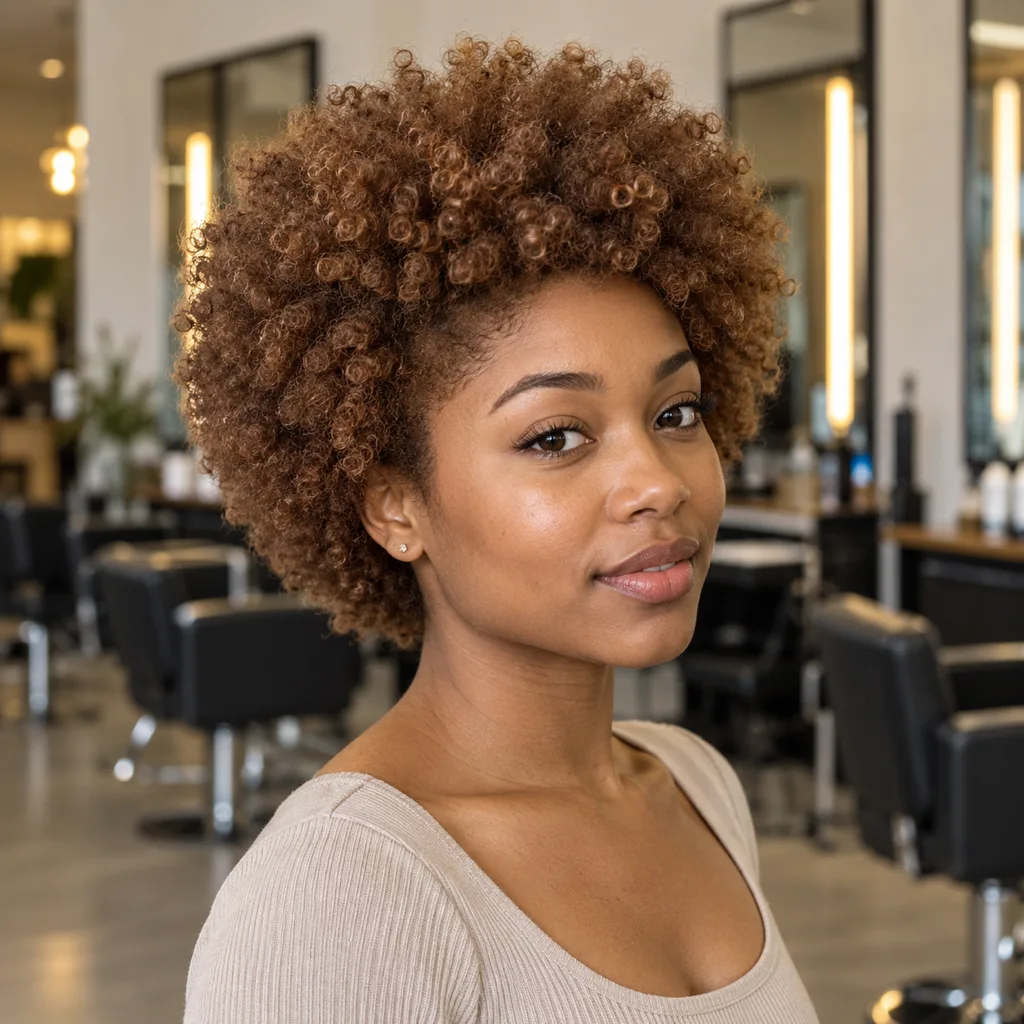
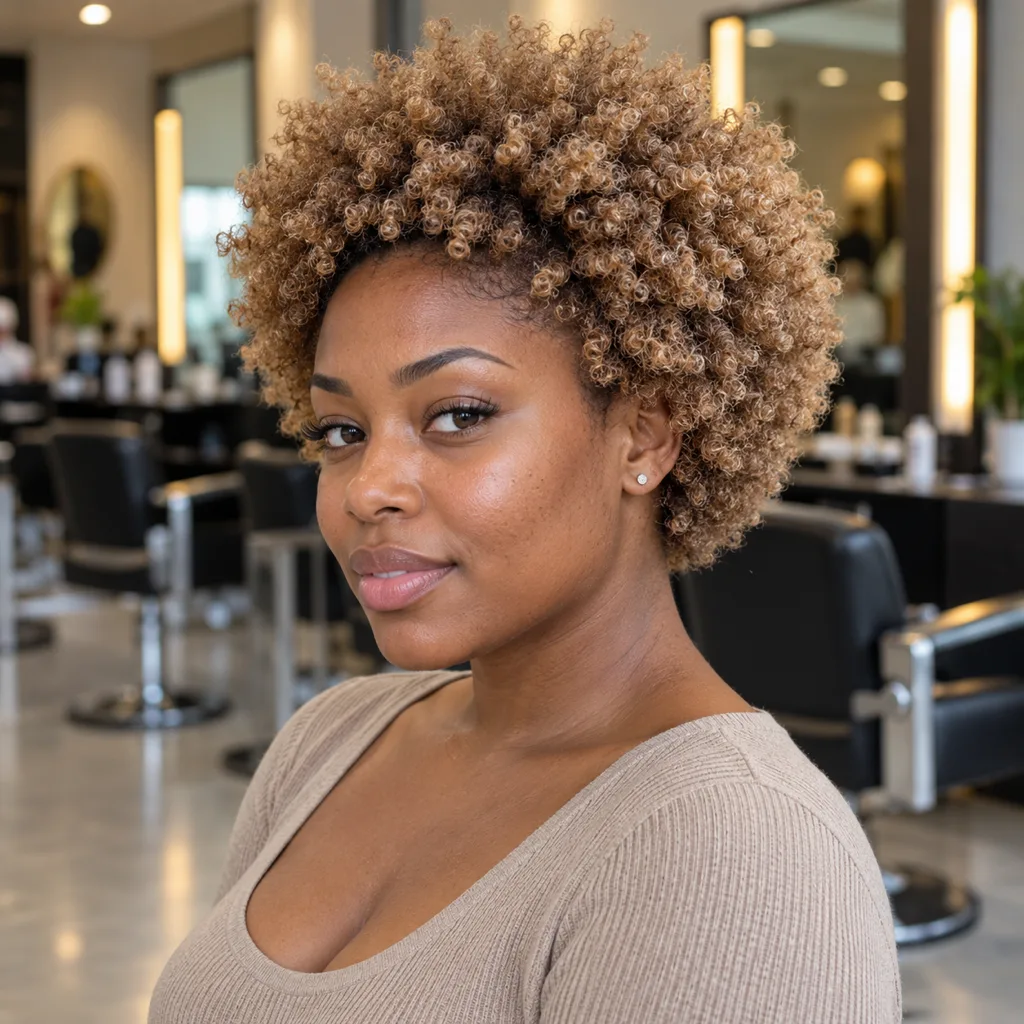
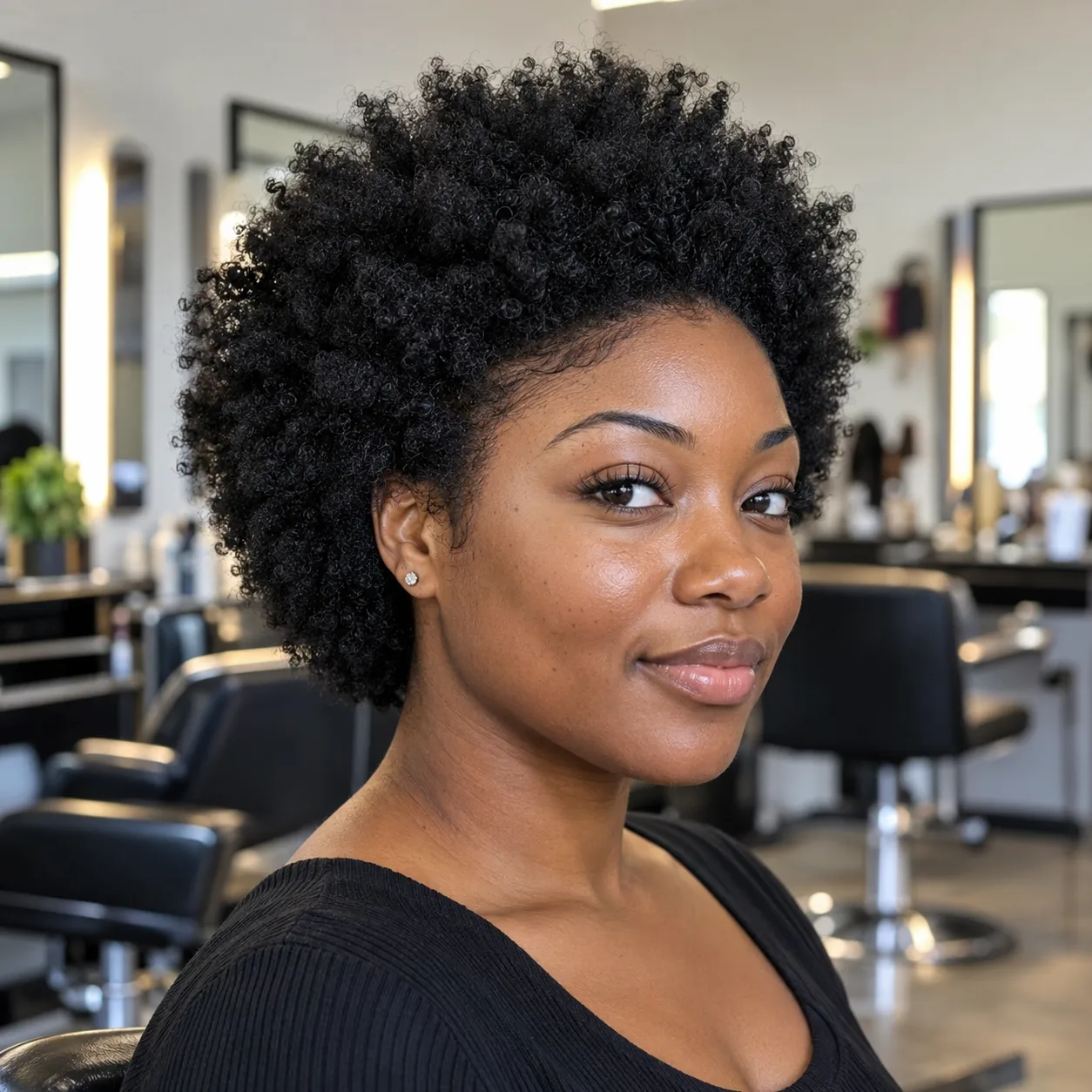
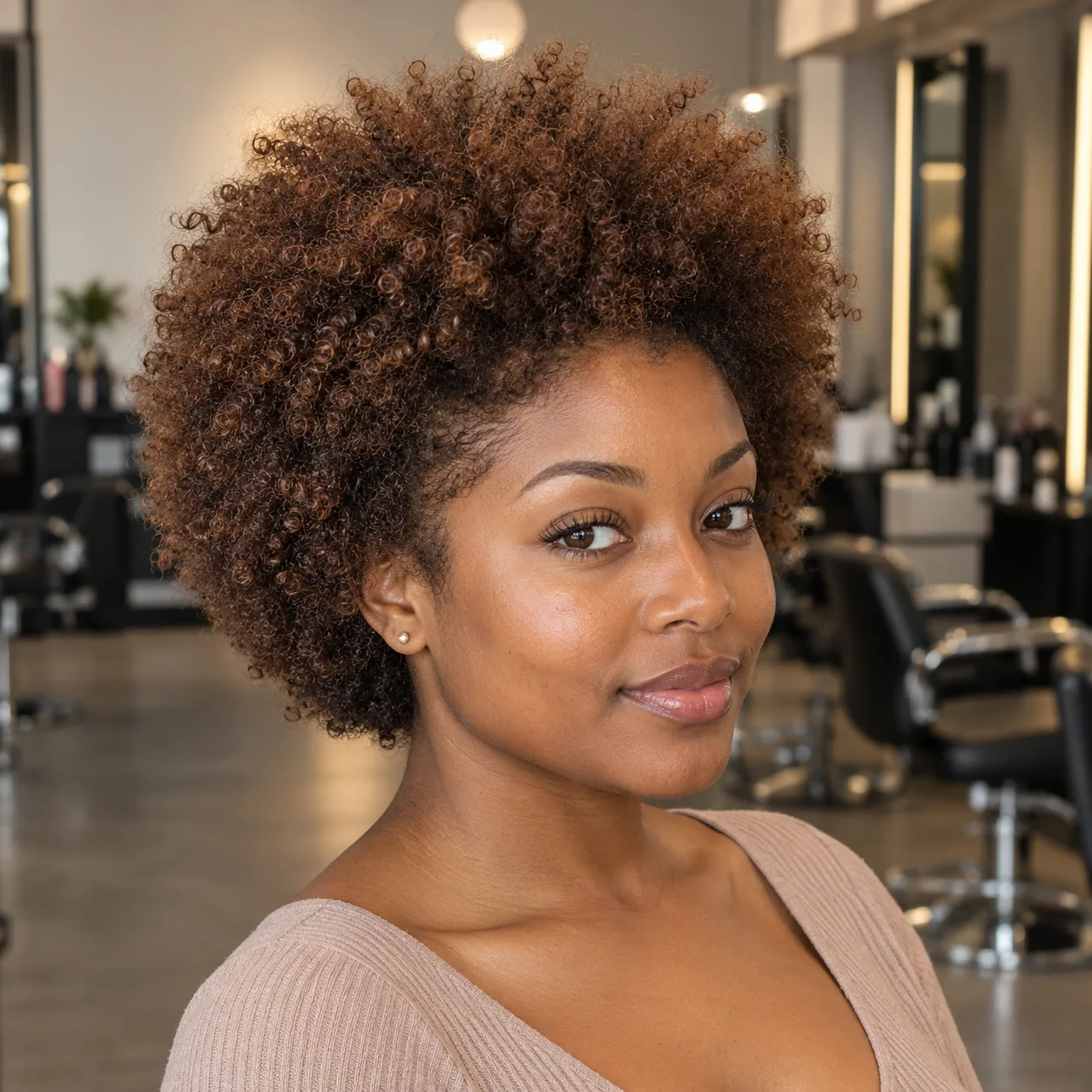
Coily afro reference gallery: compare the color, not the type
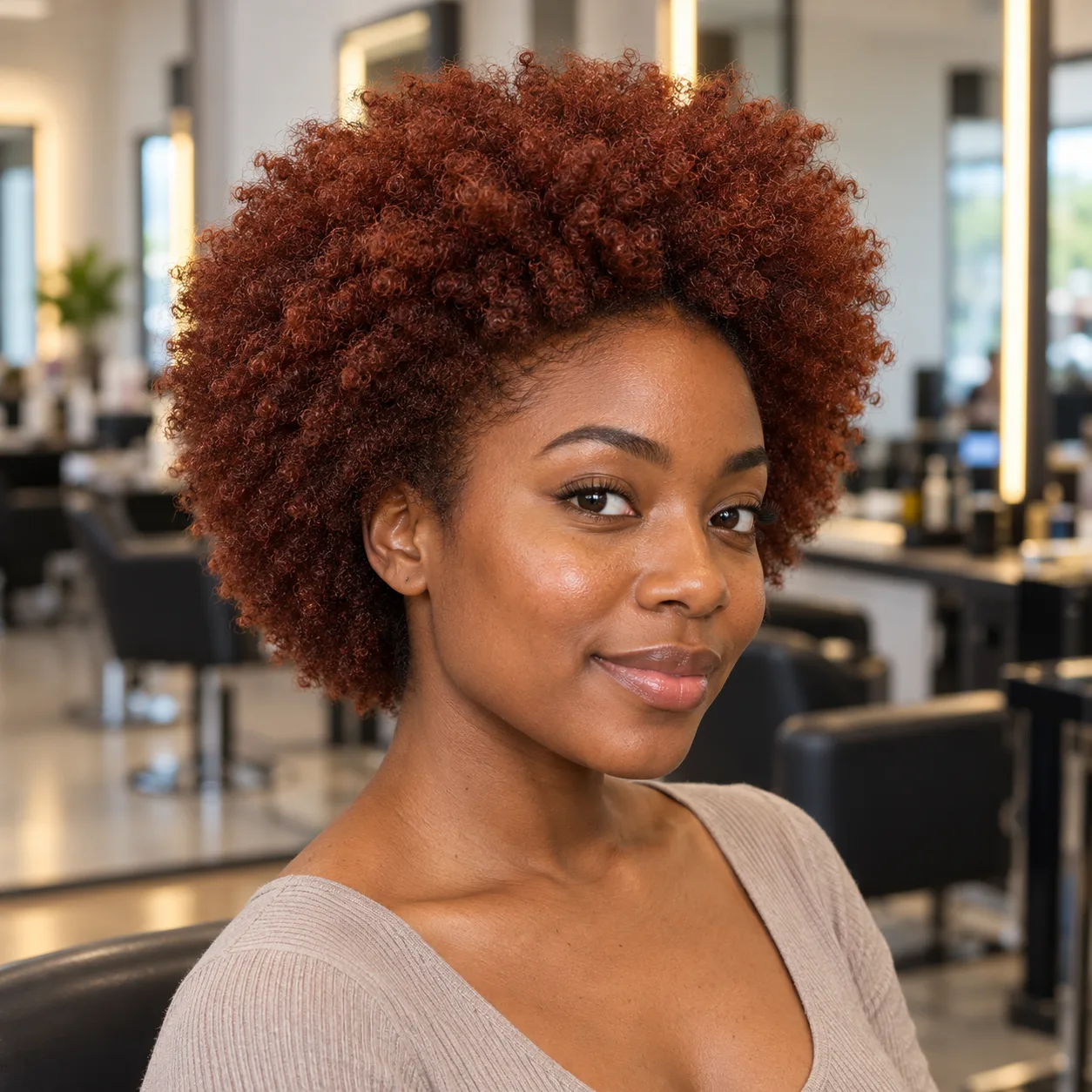
These AI-generated hairstyle illustrations keep a rounded afro and salon portrait framing as the reference, while varying the visible hair color. Use them to compare the overall effect of color around the face, not to diagnose a curl subtype or predict a dye result. The models and small details vary, so this is not a controlled before-and-after comparison.
Gallery12 photos · tap to enlarge
 Try this on me
 Try this on me
 Try this on me
 Try this on me
 Try this on me
 Try this on me
 Try this on me
 Try this on me
 Try this on me
 Try this on me
 Try this on me
 Try this on me
To choose a shape without a tool, photograph your dry hair from the front and both sides, then save a reference with a similar outline. Tell your stylist which width and height you want to keep. That gives you a useful consultation, but it cannot show the proposed silhouette on your own face before a cut.
Yours could be here.
Start with one selfie.
One photo, twenty seconds, and you'll know. Free account, no card for your first render.
Choose a routine for what your hair actually does
Your biggest problem is a better starting point than a subtype. Keep the routine simple enough that you can tell what helped.

| Your situation | Start here | Avoid making this your first fix |
|---|---|---|
| Fine strands get flat or coated | Use less leave-in and apply in sections | Layering a butter over every product |
| Dense hair tangles underneath | Divide it into manageable sections before washing | Scrubbing all the hair into one pile |
| Coils lose their shape quickly | Apply a hold product evenly while damp, then leave it alone to dry | Adding more cream after every touch |
| Ends snag while the roots feel manageable | Detangle gently and ask a stylist to assess the ends | Pulling a comb through the snag |
| Scalp feels coated or itchy | Review cleansing and product buildup | Covering the scalp with another layer of oil |
Fine strands or a smaller amount of hair
Fine describes strand thickness; density describes how many hairs grow in an area. You can have fine strands and plenty of them. Begin with a small amount of conditioner or leave-in, distribute it thoroughly, and add more only where the hair needs slip.
If your hair feels greasy on the outside but tangles underneath, the answer may be better sectioning rather than a heavier product. Work through one section at a time so the inner layers receive conditioner too.
Dense hair that takes time to detangle
Make sections large enough to work efficiently but small enough to reach the roots without pulling. Four may be enough; very dense hair may be easier in more. There is no prize for finishing with fewer sections.
Support a section above the knot and start loosening it at the ends. Move upward as it becomes manageable. If you hear snapping or have to pull hard, stop and add water and conditioner rather than increasing the force.
The American Academy of Dermatology's curly hair guidance recommends wetting hair thoroughly, using conditioner and working in sections to detangle. It also advises against dry brushing that can cause breakage and frizz.
Hair that feels dry between washes
Water, conditioning and an appropriate cleansing routine do different jobs. Oil can help with lubrication and reducing moisture loss, but repeatedly coating unwashed hair does not replace washing or conditioning it.
Refresh only what needs attention. Dampen a flattened area, smooth in a little suitable product if needed, and let it settle. Completely restyling every morning adds handling without necessarily giving you a better result.
A simple coily hair wash-day routine
You need a cleanser, a conditioner that gives you slip, and an optional styling product suited to your finish. Begin there before buying a stack of masks, oils and curl creams.
How to wash and style coily hair
- Divide the hair before washing
Separate it into manageable sections with your fingers. Loosen obvious tangles gently rather than combing dry knots by force. If necessary, use conditioner to help with detangling before shampooing.
- Clean the scalp and rinse thoroughly
Apply shampoo as directed on the label. Work with your fingertips, not your nails, and avoid piling the lengths into a knot. Wash when your scalp and product buildup call for it, not when a stranger's schedule says you should.
- Condition and detangle in sections
Distribute conditioner throughout each section. Use your fingers or a suitable wide-toothed comb, starting at the ends. Rinse according to the product directions. Leaving a rinse-out product in indefinitely is not an automatic upgrade.
- Choose softness or stronger definition
For a soft afro, use a small amount of leave-in if needed and allow the hair to dry with minimal disturbance. For more defined clusters, distribute a suitable gel or mousse evenly and avoid separating the coils repeatedly as they dry.
- Let the roots dry before putting the hair away
Air-dry when practical or use a dryer carefully at a low setting. Do not pull the hair into a tight style while trying to speed things up. Once dry, loosen the roots gently if you want more volume.
There is no universal wash interval. The AAD notes that thick curly hair may not need daily or even weekly washing, but recommends cleansing at least every two to three weeks. Exercise, scalp symptoms and styling products may mean washing more often. Persistent itch, sores or unusual shedding deserve a dermatologist's assessment, not a more elaborate product routine.
How to ask for a coily haircut that survives shrinkage

Ask the stylist to assess your hair in the state you usually wear it. If you normally wear a dry, unstretched afro, a stretched-length reference alone can set the wrong expectation. Show both the silhouette you like and the amount of visible length you want to retain.
A rounded afro is a practical starting point because you can discuss its outline directly: width at the temples, height at the crown and how much hair sits around the ears. You do not have to assign a curl type to those preferences.
Say this to your barber
I usually wear my coils dry and unstretched. Please assess the shape that way, keep a soft rounded outline, and agree with me on the visible length to remove before cutting.
For a round face, compare a little more crown height with a wider, rounder silhouette. For a longer face, compare some width beside the cheeks with less added height. These are styling choices, not rules about which faces are allowed to wear an afro.
Mistakes that make coily hair harder to manage
Treating shrinkage as damage. Hair can draw up as it dries without being unhealthy. Judge handling, breakage and scalp comfort separately from visible length. A style that shrinks is not a failed style.
Chasing definition at any cost. More gel and more brushing can produce a different finish, but visible ringlets are not a measure of healthy hair. A soft, less separated texture is a valid result.
Repeating heat passes to reach a photo's length. If you use heat, follow the appliance and product instructions, use a conservative temperature and avoid unnecessary repeat passes. Our heat protectant guide explains why a protectant reduces risk rather than making heat harmless.
Choosing color from a rendered image alone. The gallery shows an aesthetic, not a chemical outcome. Blonde or copper on naturally dark hair may require lightening, which changes the maintenance conversation. Read about demi-permanent color before assuming every warm shade can be achieved without lifting the base.
Calling a painful style protective. A hairstyle should not depend on scalp pain or constant pulling. If you choose twist hairstyles between loose-hair days, keep tension comfortable and continue caring for the scalp.
Make the next morning easier

Before bed, gather long enough hair loosely or use loose sections that do not pull at the roots. A smooth bonnet or pillowcase can reduce rubbing. Keep the hairline comfortable; a tight band is not helpful just because the fabric feels silky.
In the morning, reshape the flattened area with your hands before deciding it needs a full restyle. Leave intact coils alone. If a section needs moisture to loosen it, dampen that section instead of soaking the whole head and restarting wash day.
Keep the shape, simplify the routine
Coily hair does not need to behave like looser curls to look finished. Start with gentle detangling, enough conditioning and a cut planned around your actual dry shape. Then change one part of the routine at a time so you can tell whether the change helped.
If your next decision is the silhouette, save a reference and compare a voluminous afro on your face. If the problem is tangling or scalp discomfort, solve that first. A convincing preview cannot replace a comfortable routine.
Frequently asked questions
Coily usually describes type 4 textures with tight springs or closely packed bends. The 4A, 4B and 4C labels are informal ways to describe the visible pattern, not a precise test of hair health or product needs.
Coily hair is curly in the broad sense. When people contrast the terms, curly usually refers to larger loops, while coily refers to much tighter curls or bends. Individual heads often contain more than one pattern.
There is no single African hair texture. People of African ancestry can have a wide range of patterns, including curly and coily hair. Describe the person's actual hair rather than assigning a type from ancestry.
In the common typing system, 4C is coily. Its tightly packed pattern may be hard to see from a distance, especially in an unstretched afro. That does not mean the hair has no pattern.
The labels overlap in everyday usage. Type 3C generally describes tight corkscrews within the curly category, while type 4 describes tighter coils and bends. Your handling needs matter more than settling a borderline label.
That is a useful broad description, but some coily strands show closely packed bends rather than obvious round ringlets. A soft afro can therefore be coily even when each curl is not separately defined.
Your natural growth pattern is not something a curl cream can permanently change. Styling can group, stretch or temporarily reshape hair. If your hair is already coily, gentle handling and suitable hold can make its existing pattern easier to see, but it does not need visible ringlets to count.
Low poo is an informal term for using a gentler shampoo or lower-lather cleansing routine. It does not mean skipping scalp cleansing altogether, and it is not a regulated promise about a product. Choose a cleanser that removes your buildup without leaving your hair uncomfortable.
Preview it on your own photo: Virtual Hair Color Try-On.
Share article
About the author

Related posts

Women's Haircuts · 13 min
Thick Hair: What It Is, the Cuts That Work and How to Manage It
Thick hair is a weight problem before it is a frizz problem. How to tell dense from coarse, 13 cuts that handle the bulk, how to thin it without ruining it, and the words to say to your stylist.

Women's Haircuts · 14 min
1B Hair: How to Tell If You Have It + 14 Cuts That Suit It
1B hair is straight with some body at the crown and a slight turn at the ends. How to tell it from 1A and 1C, why the length of your cut matters most, 14 cuts that suit it and how to style it.

Women's Haircuts · 16 min
1C Hair: How to Tell If You Have It + 14 Cuts That Tame It
1C hair is straight at the root with a loose bend through the lengths, coarse strands and frizz on top. How to tell it from 1B and 2A, why it puffs, 14 cuts that suit it and how to style it.
Women's Haircuts · 14 min
Best Hairstyle Apps for Women 2026: 10 Apps, Real Prices
The best hairstyle app for women changes your hair and leaves your face and density alone. Ten apps compared with real prices and free tiers, what Reddit users complain about, and which app fits your hair type.

Women's Haircuts · 17 min
Long Hair With Bangs: 14 Styles and Which One Suits Your Face
Long hair with bangs suits almost every face, and the bangs matter more than the length. 14 bang styles on long hair, a face shape table, the mistakes to avoid and the exact sentence to say in the chair.
Women's Haircuts · 13 min
Heat Protectant for Curly Hair: Which One for Each Heat Tool
Curly hair needs a different heat protectant for a diffuser, a blowout and a flat iron. Match the product to your tool and curl type, apply it the right way, and keep your curl pattern.