4c Hair: What It Is and How to Style It at Any Length
Oleh Onysko Updated 27 September 2026 17 min read
In this article
4c hair is the tightest of the type 4 textures: coils so small and densely packed that they show no visible curl pattern when the hair is dry, and shrink to roughly a quarter of their real length. That shrinkage is why a person with six inches of hair looks like they have two, and it is the single fact most 4c advice on the internet skips.
The rest of this page is what follows from it. How to tell 4c from 4b in about thirty seconds, which styles hold at which length, a moisture routine that survives a work week, and where people lose length without noticing.
What 4c hair actually is
4c is the last band on the Andre Walker type 4 scale. The coil is tighter than a pen spring and about as wide as a sewing thread. There is no S-wave and no defined ringlet in it when it is dry, so instead of reading as separate curls it reads as one dense, matte, cotton-like mass. It is the highest-density and the most fragile texture on the chart, and those two facts pull in opposite directions all the time.
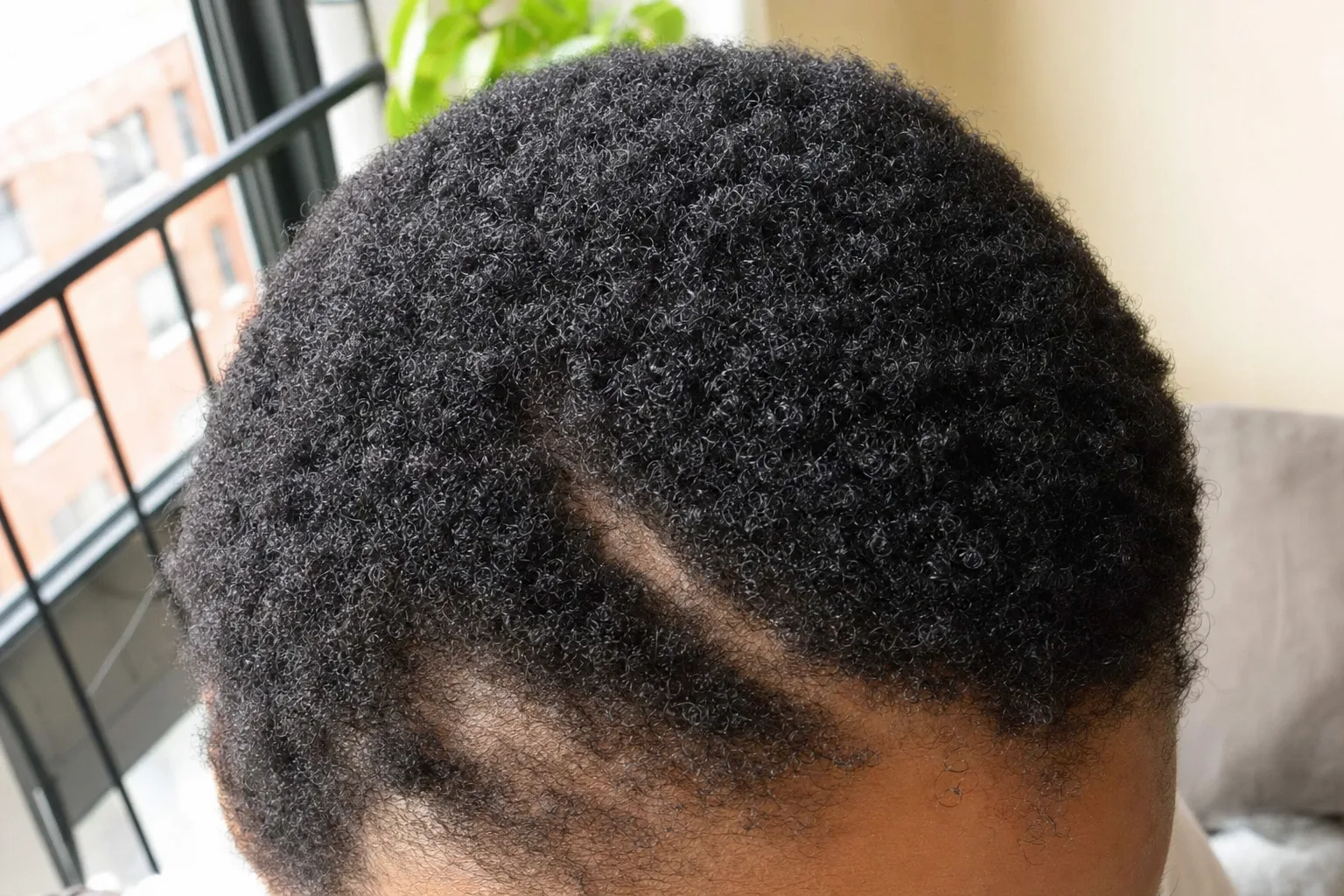
The scale is a description of coil diameter, not a grade. It is also imprecise: most heads carry two or three textures at once, usually looser at the nape and tighter at the crown, so the honest answer to "what type am I" is normally a range.
| 4a | 4b | 4c | |
|---|---|---|---|
| Pattern when dry | Visible coils, roughly pencil-width | Sharp Z-shaped bends, no coil | No visible pattern, dense coil |
| Shrinkage | 40 to 50 percent | 50 to 70 percent | 70 to 80 percent |
| Definition without product | Some | Almost none | None |
| What it needs most | Moisture | Moisture and length retention | Moisture, low manipulation, protective styling |
How to tell if your hair is 4b or 4c
Look at a single dry strand in daylight. If you can see a repeating zig-zag with straight segments between the bends, that is 4b. If the strand looks like a continuous coil with no straight run anywhere, and the ends want to lock onto each other, that is 4c.
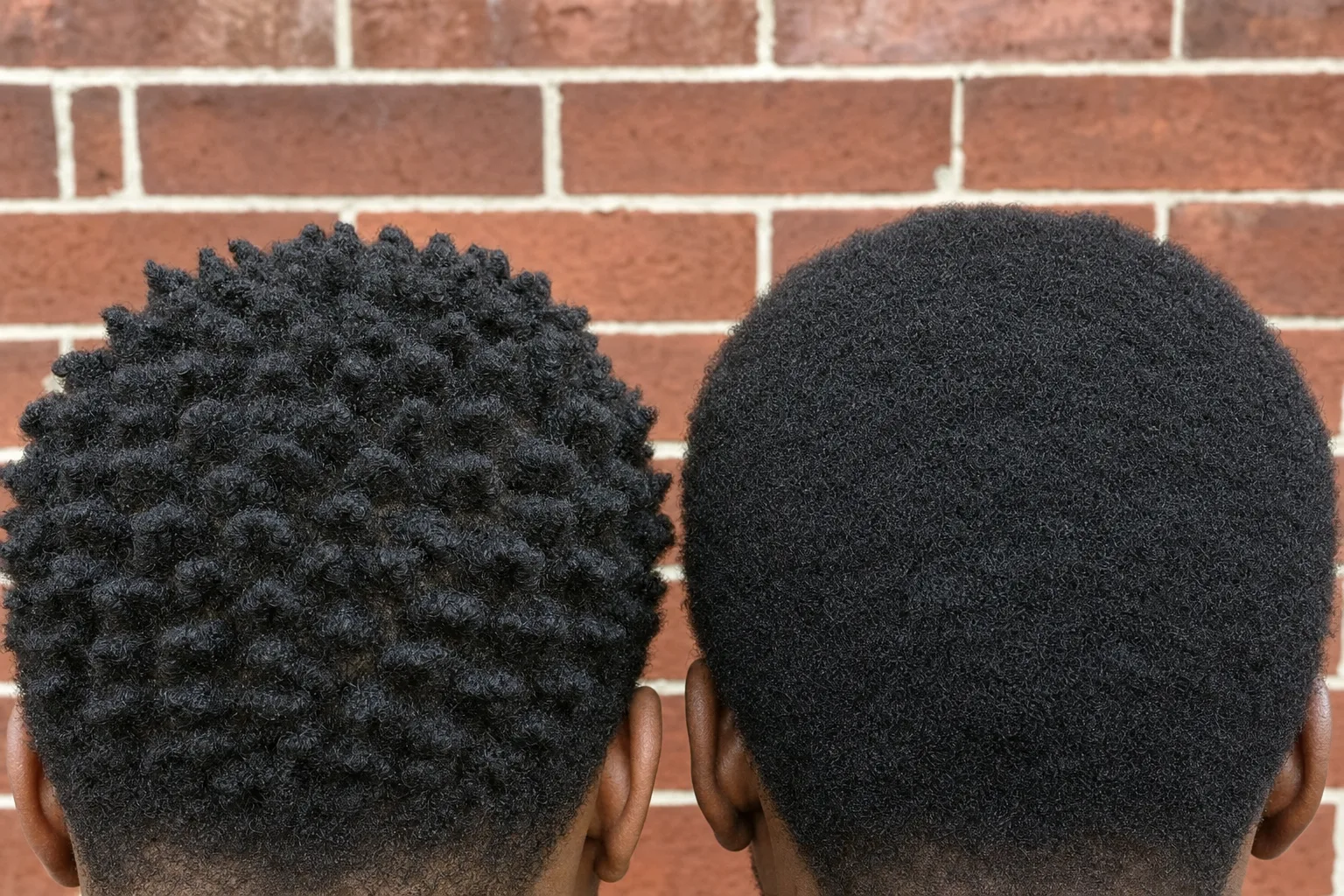
The faster test is what happens in water. Wet a small section and watch it. 4b springs back with visible bends. 4c collapses into itself and looks shorter than it did dry, then keeps shrinking as it dries. If your hair loses more than about 70 percent of its stretched length, you are in 4c territory whatever the strand looks like.
None of this changes what you do day to day very much. 4b and 4c want the same things: water first, a sealant after, and as few hands in it as possible. The reason to know is styling: 4b holds a twist-out definition longer, 4c holds a stretched style better. If the strand test put you in 4b, the 4b hair guide covers the twist-out set that texture rewards. Both textures anchor most of the natural and protective Black hairstyles worth trying.
Shrinkage is the whole story
Stretched, most 4c hair is two to four times longer than it looks. That gap is not damage and it is not a failure to grow. It is a geometry problem: a coil that tight packs a lot of strand into very little vertical distance.
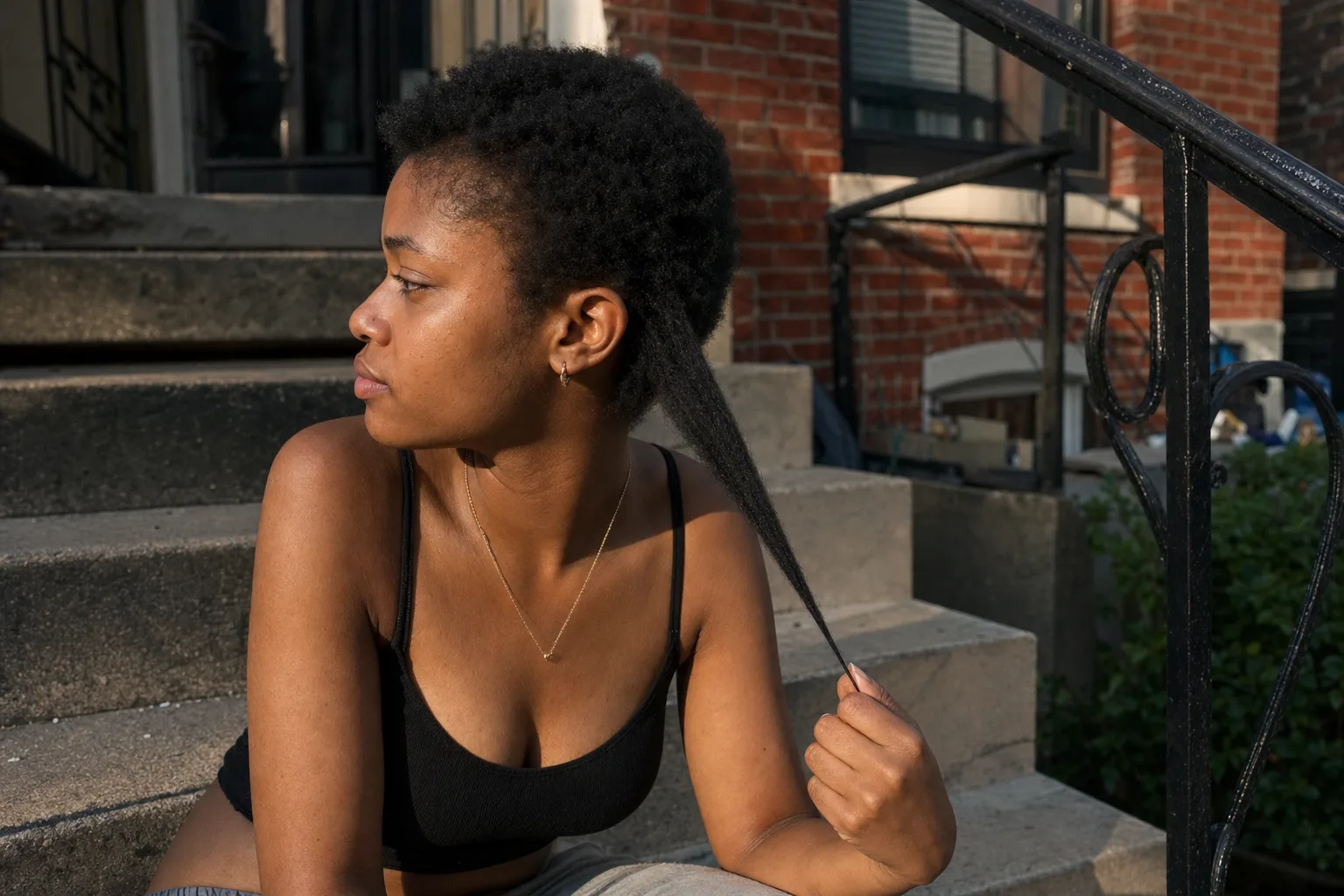
The practical consequence is that length checks lie. Measure wet and stretched against your spine, in the same spot, once a month. Measuring a dry afro with a tape measure tells you almost nothing, and it is why people conclude their hair "does not grow" while adding half an inch a month like everyone else.
It also means shrinkage is a styling tool rather than an enemy. Banding, African threading, a blowout on cool air and a well-set twist-out all buy back visible length without heat. Fighting shrinkage with a flat iron every week is the most reliable way to end up with less hair than you started with.
Which 4c styles work at your length
The one thing that decides what you can wear is how many inches you actually have, stretched. Everything else - face shape, density, occupation - is a second-order question. Here is the honest verdict at each stage.
| Stretched length | What holds | What does not | Salon frequency |
|---|---|---|---|
| Under 2 inches (TWA) | Sponge coils, shape-up, tapered TWA, color | Twist-outs, puffs, most braided styles | Every 3 to 4 weeks for the shape |
| 2 to 5 inches | Flat twists, two-strand twists, short afro, finger coils | Anything needing a ponytail | Every 6 to 8 weeks |
| 5 to 8 inches | Twist-out, high puff, wash and go, mini braids | Long-hanging protective styles without extensions | Every 8 to 10 weeks |
| 8 inches and over | Afro, braided updo, knotless braids, silk press, bantu knots | Nothing much | Trim every 10 to 12 weeks |
Under two inches: the TWA
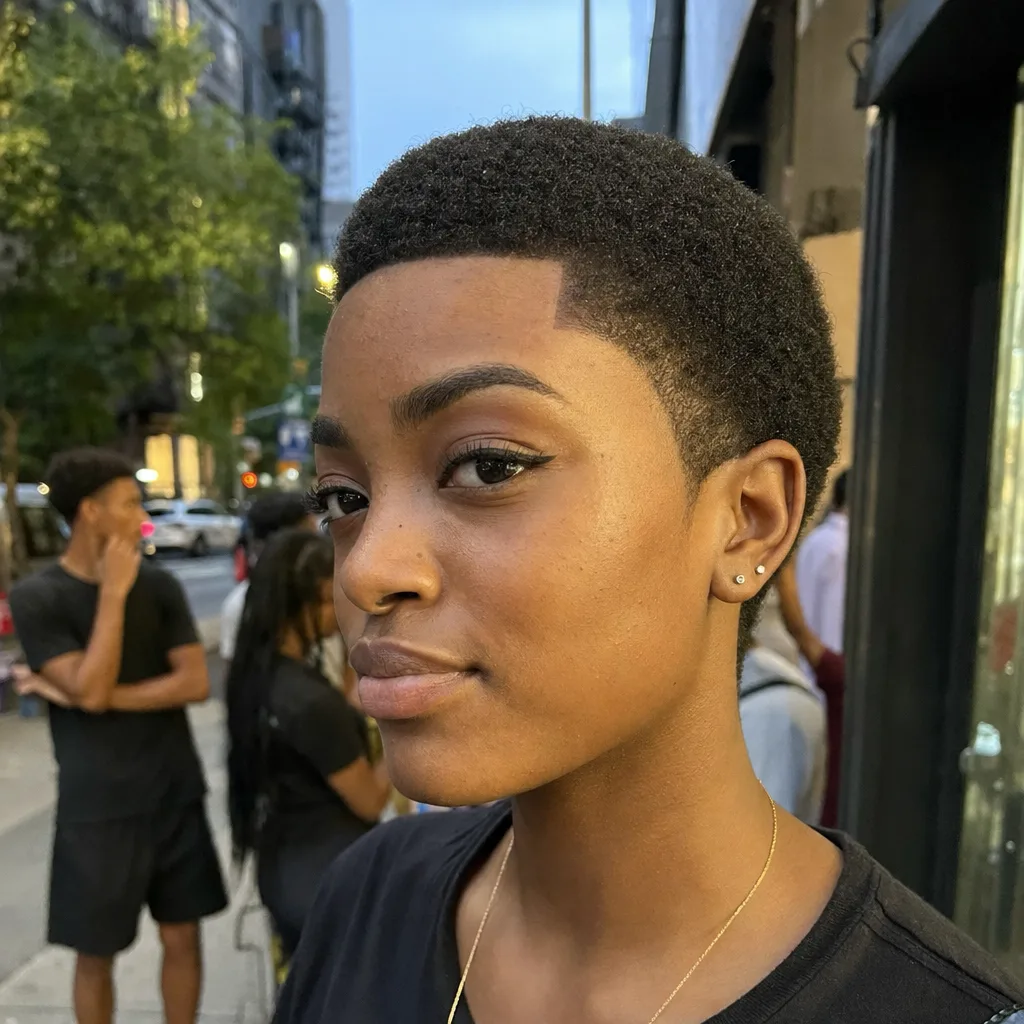
A teeny weeny afro is the only 4c length where the cut matters more than the product. With almost no length to style, the shape of the hairline and the taper at the sides is the entire look. A clean shape-up plus a soft taper reads as deliberate; the same hair grown out unevenly reads as an accident. It is also the one 4c length where color is low risk, because you are cutting off the processed hair within a few months anyway - worth seeing a shade on your own photo before you sit down for it. At longer lengths the low-risk version is a hidden panel of color sectioned under the top layer, which leaves the coils on the surface completely untouched.
Say this to your barber
A short taper on the sides and back, keep the length on top, and a clean shape-up on the hairline and edges.
Two to five inches: twists do the work
This is the awkward stage and it is where most people give up. Nothing hangs yet, but there is enough to grip. Flat twists and two-strand twists are the answer, because they set a pattern into hair that has no pattern of its own and they can be worn as the style or taken down as a twist-out. The full run of twist styles and how long each one lasts starts right here, at this length.
Five to eight inches: the range opens up
At this length a twist-out reads as a full head of hair, a high puff is possible, and a wash and go finally has something to define. This is also the point where shrinkage stops being frustrating and starts being useful, because you can wear the same hair at two visibly different lengths depending on whether you set it stretched or let it coil. If you are deciding between keeping this length and cutting back to a crop, the short hair filter shows both on the same photo.
Eight inches and over: everything is available
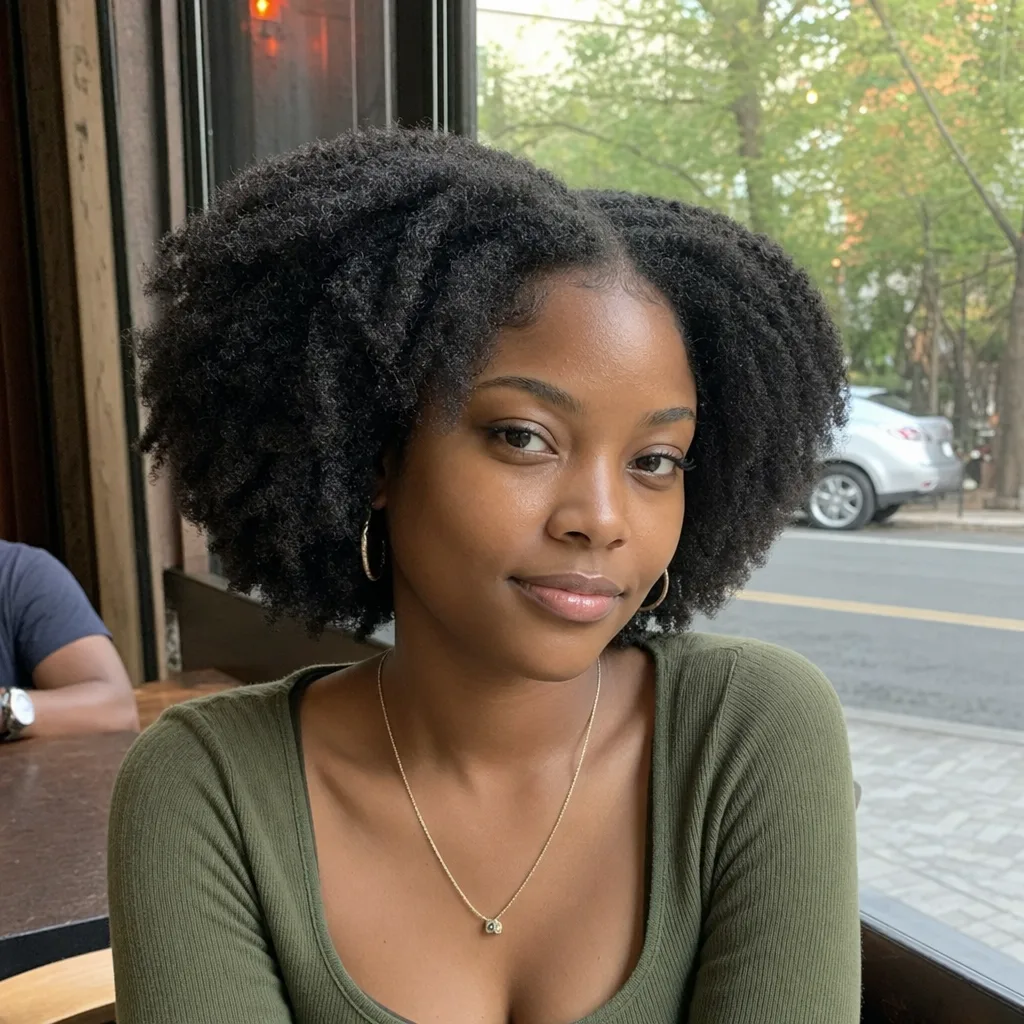
An afro at this length is a genuinely large silhouette, and braided updos, box braids, fulani braids and knotless braids all sit comfortably. The constraint stops being what the hair can do and starts being how much manipulation you are willing to spend on it.
Yours could be here.
Start with one selfie.
One photo, twenty seconds, and you'll know. Free account, no card for your first render.
A moisture routine that holds for a week
4c hair gets dry because the coil is tight enough that sebum cannot travel down the strand from the scalp. That is a structural fact, not a hygiene problem, and it means the moisture has to be applied rather than produced. Water first, always: an oil on dry hair seals in dryness. The four products that do the work are cheap and all sit on the same shelf, which is the aisle most people walk straight past.
How to moisturize 4c hair
- Start with water, not product
Spray the hair until it is genuinely damp, in sections. Damp means it darkens and clumps, not that it is misted. This is the only step that adds moisture; everything after it is about keeping the water in.
- Work in a leave-in on soaking sections
Take a section roughly the width of two fingers and rake a water-based leave-in through it while it is still wet. If your hands are dry by the time you finish a section, the section was not wet enough.
- Seal with a cream, then an oil
Cream first to hold the water, oil last to slow evaporation. On 4c the order matters more than the brands: reversing it puts a waterproof layer between your hair and the moisture you just added.
- Twist or band the section before you move on
Never leave a moisturized section loose to tangle while you work on the next one. Twist it, band it, or clip it. This is where most breakage in a wash day happens.
- Protect it at night, every night
A satin bonnet or a satin pillowcase. Cotton pulls water out of hair overnight, and on 4c that undoes a full wash day in about two nights.
- Deep condition once a week, with heat
Thirty minutes under a plastic cap. Deep conditioning for 4c hair is not a treat, it is the thing that makes the other five steps hold, and skipping it is why routines stop working after a month.
Two more things that matter and get argued about. Protein and moisture have to be balanced: hair that snaps when stretched wet needs protein, hair that stretches and stays stretched needs moisture. And detangling belongs in the shower with conditioner on the hair and fingers first, never on dry hair with a brush.
4c hair on men
Most 4c advice is written for women, which leaves men searching "4c hair men" and finding conditioner reviews. The mechanics are identical; the styling question is different, because at short lengths the barber matters more than the shelf.
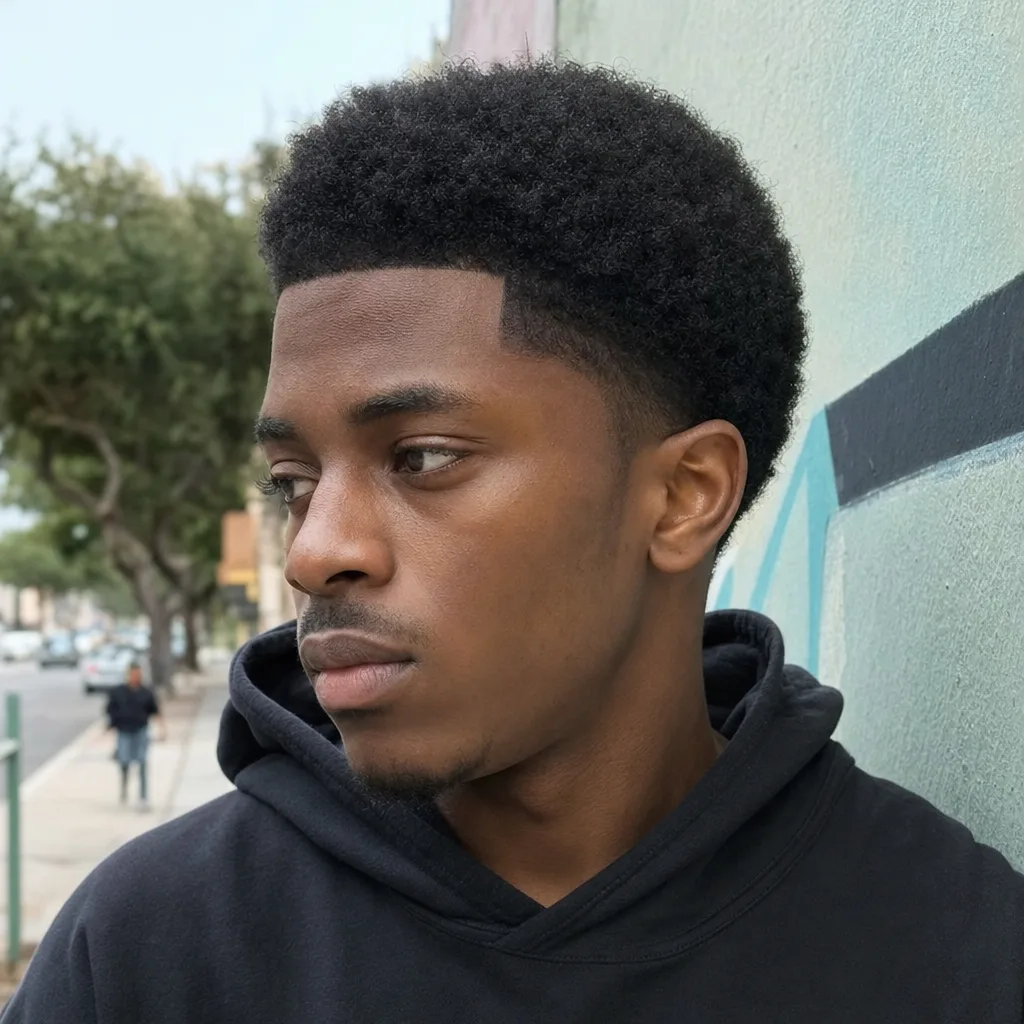
Once there are two inches to grip, braiding becomes the other default, and a set of straight-back cornrows buys four to six weeks of low manipulation on hair that hates being handled. A taper is the default for a reason: it keeps density on top where 4c looks best and removes the bulk at the sides that makes the head read wide. A low fade or a soft taper both work, and both need a shape-up every three to four weeks to stay sharp. Sponge coils are the cheapest way to add definition to a two-inch afro. Above four inches, twists and a defined finger-coil crop both hold.
Which braid pattern to ask for at a given length is a separate decision, and we broke it down by size and hair length in the men's braid styles guide.
The one thing that does not transfer from straight-hair grooming is brushing. A boar brush on dry 4c is friction with no upside. Moisturize, then pick from the roots outward with a wide-tooth afro pick.
Ten ways 4c hair is worn
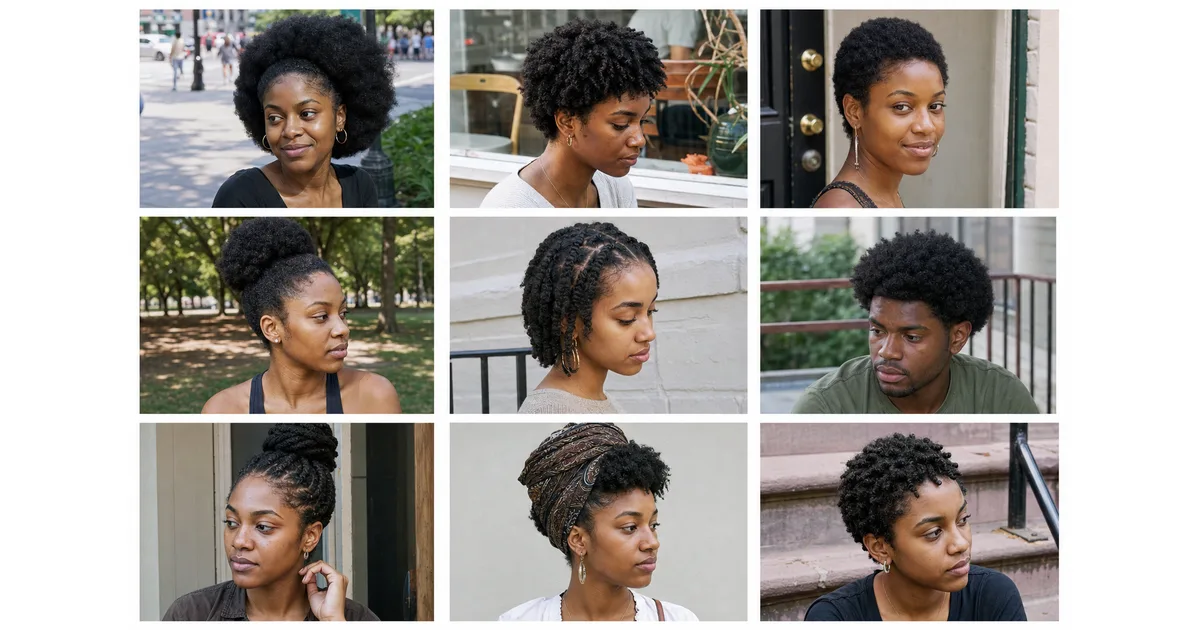
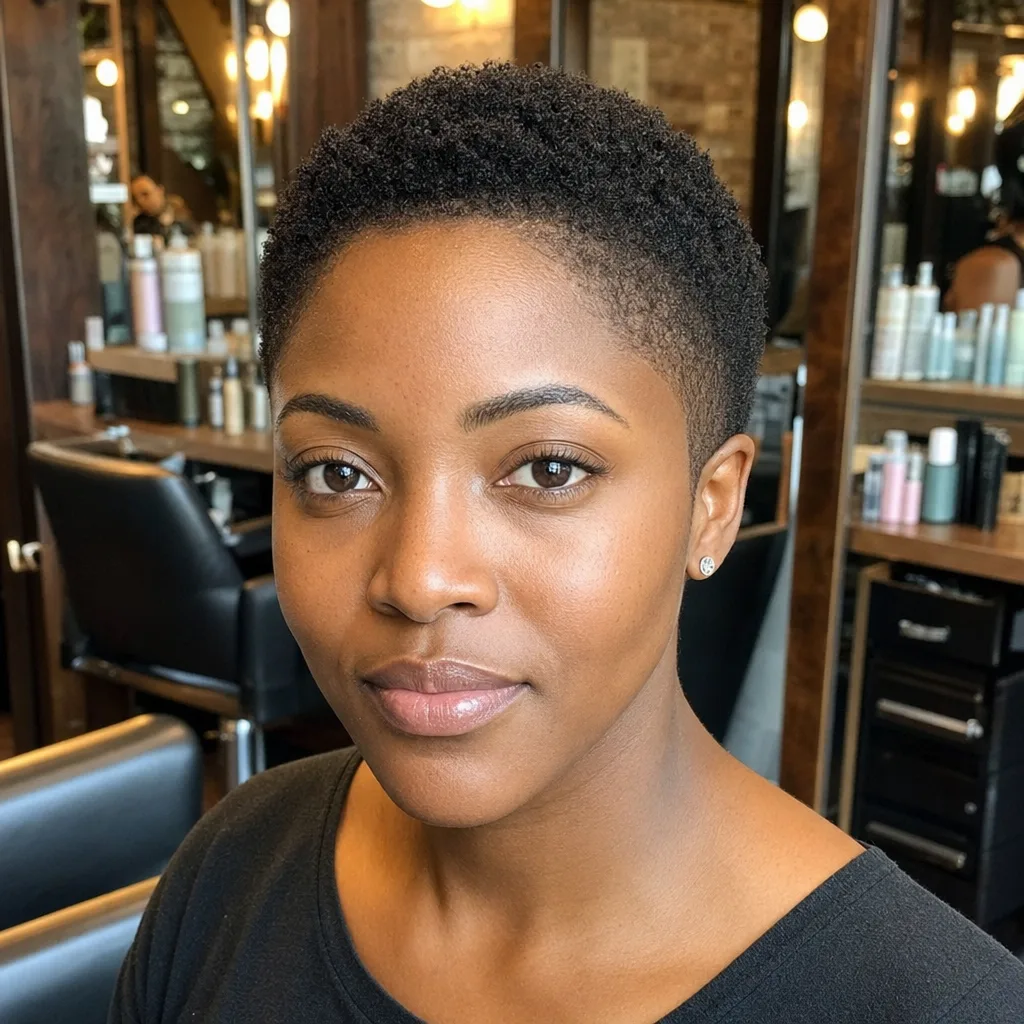
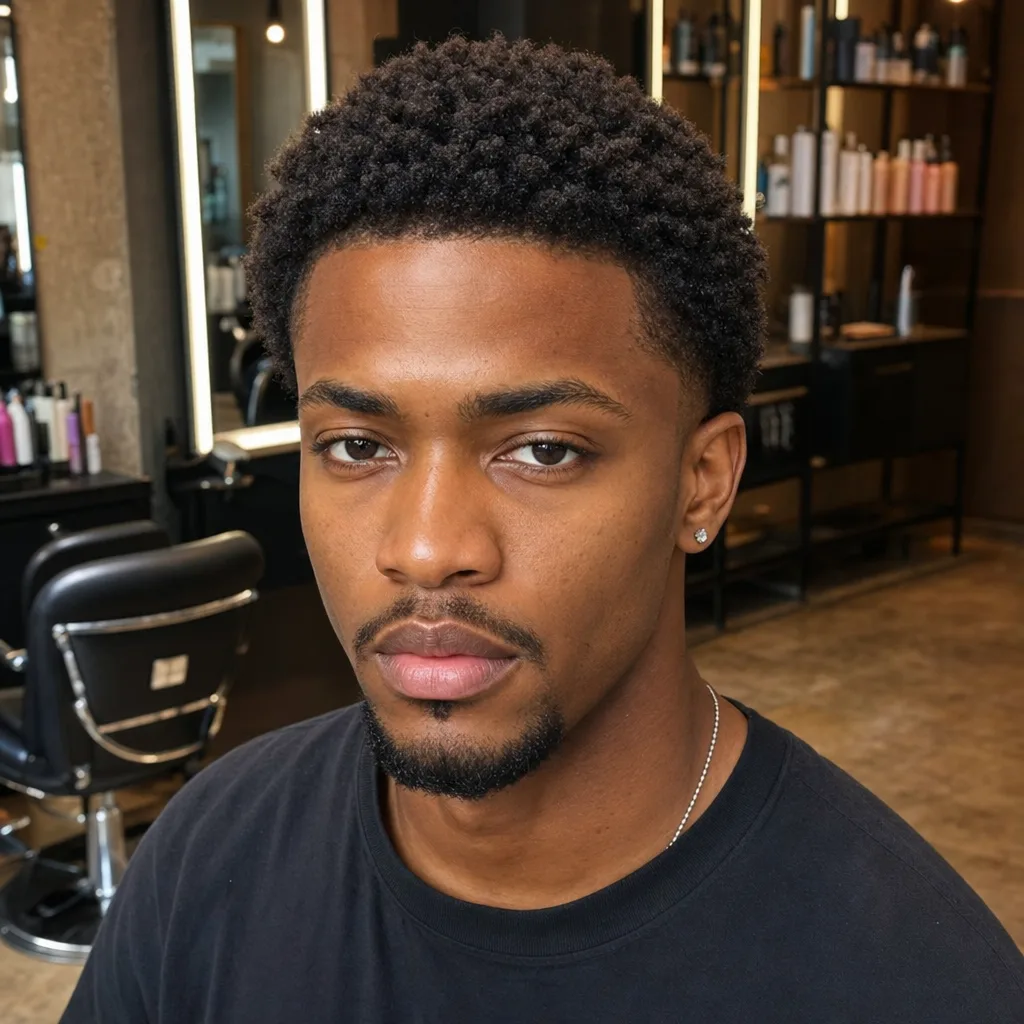
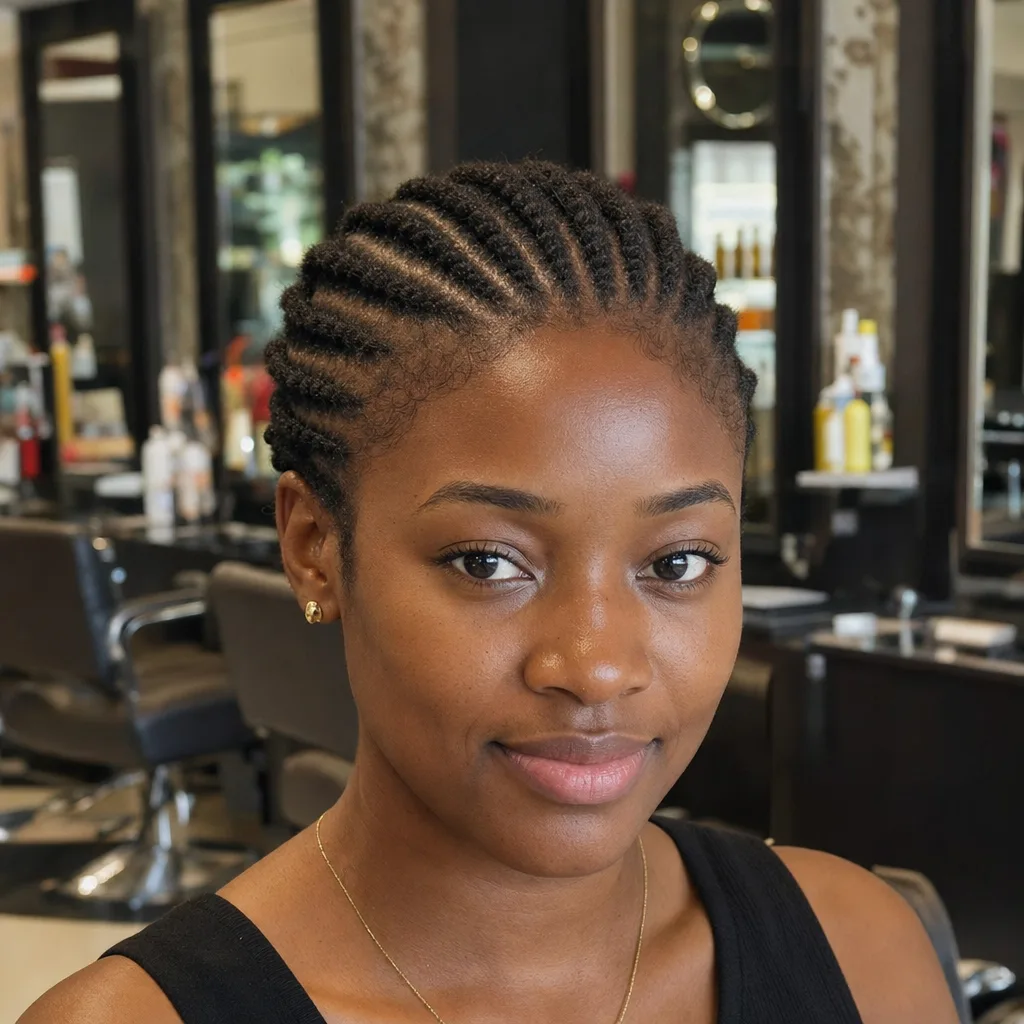
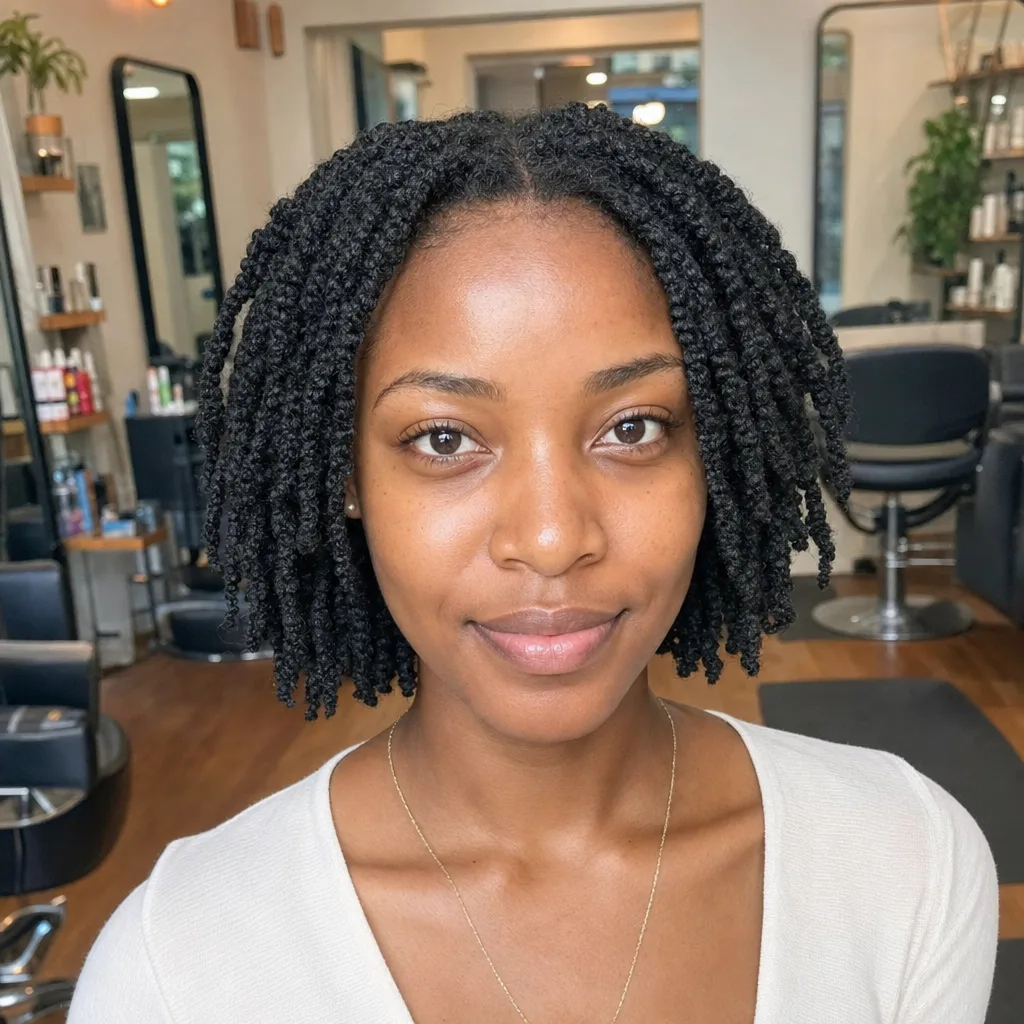
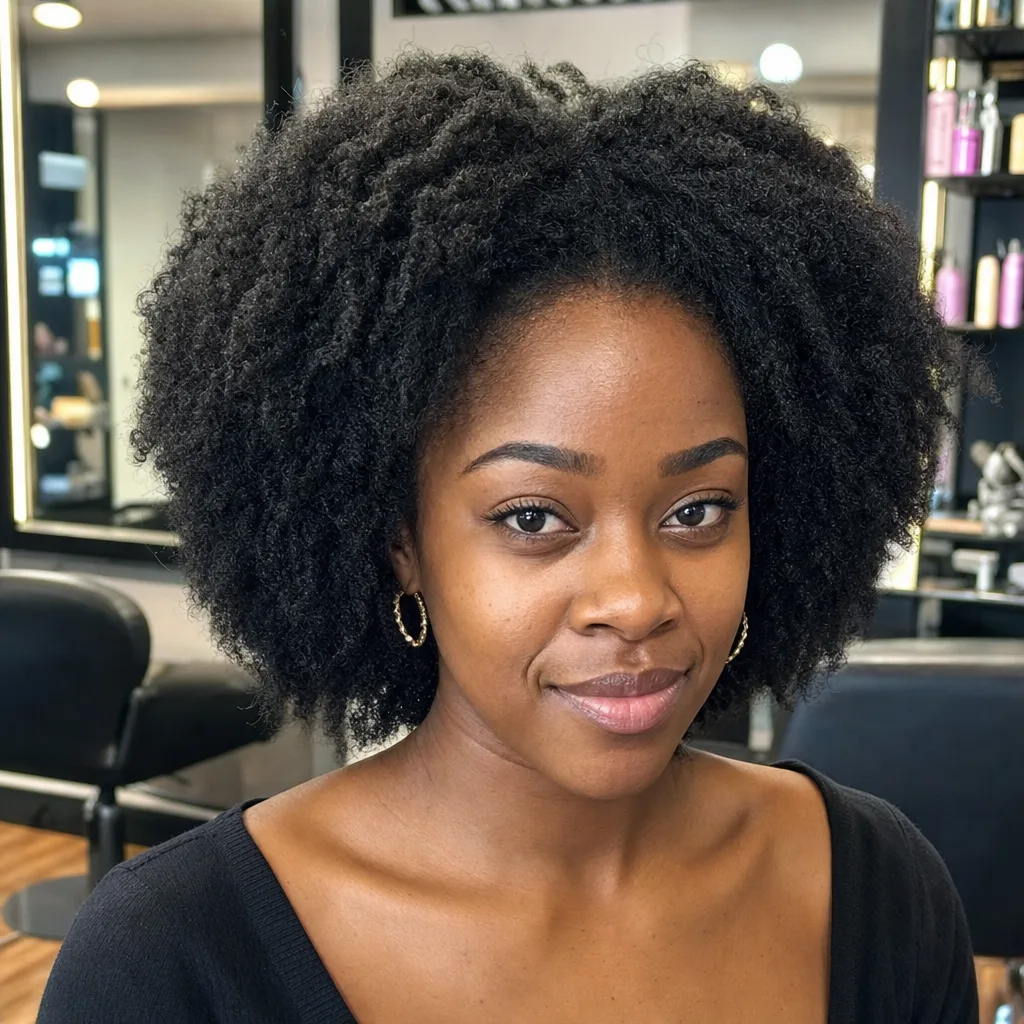
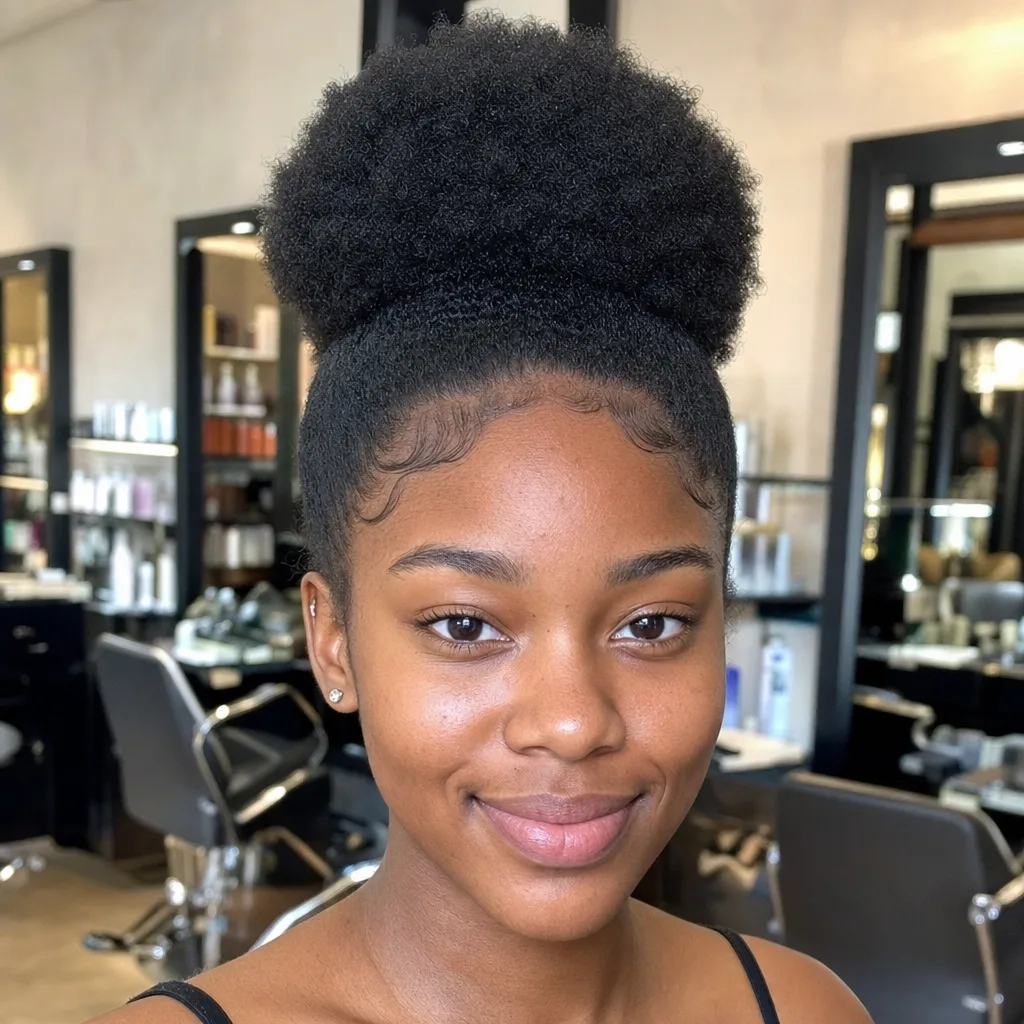
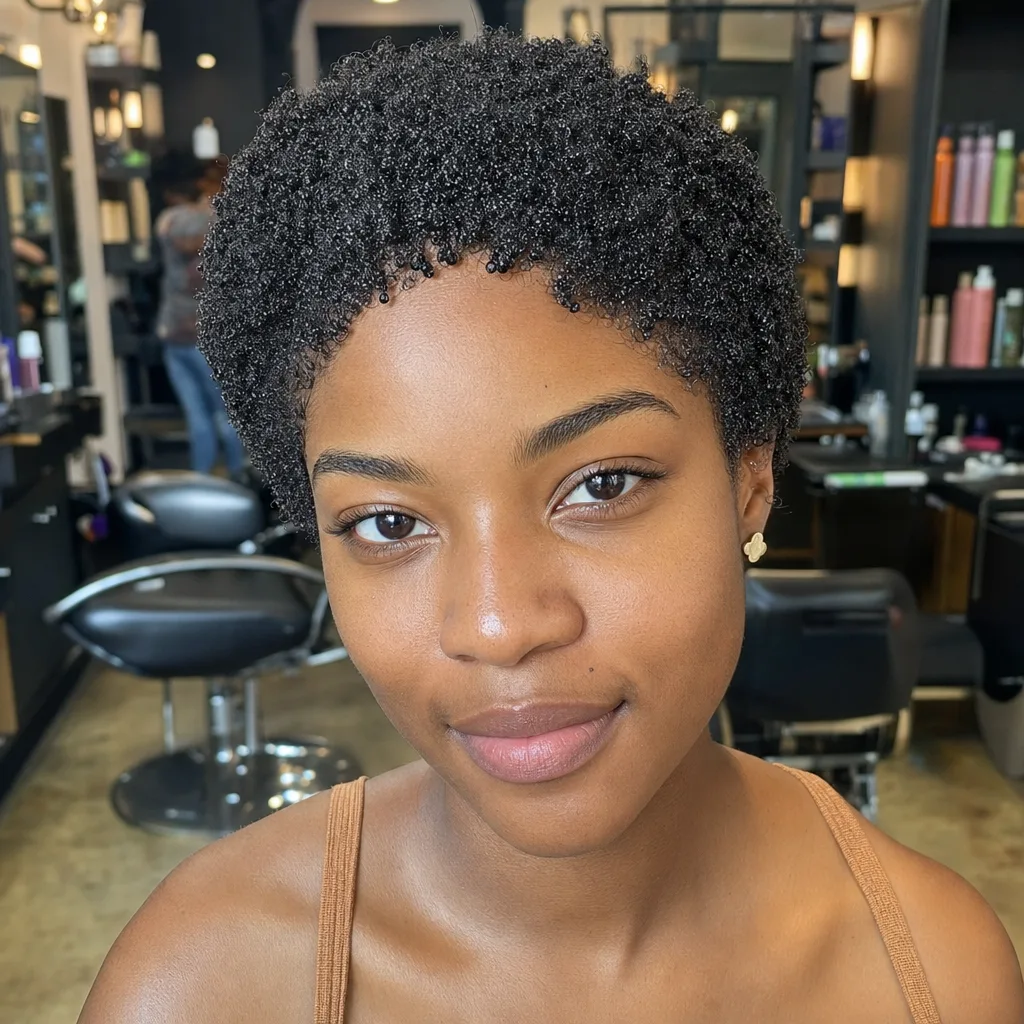
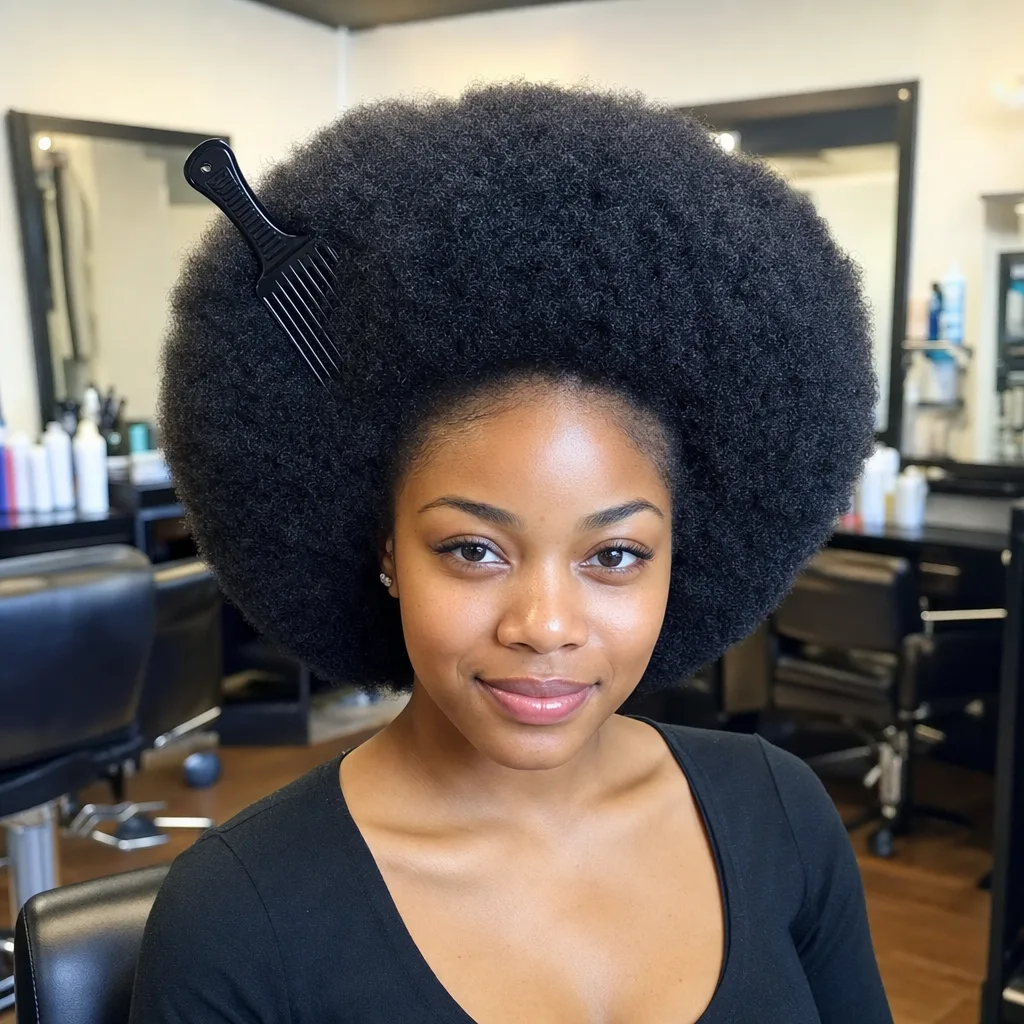
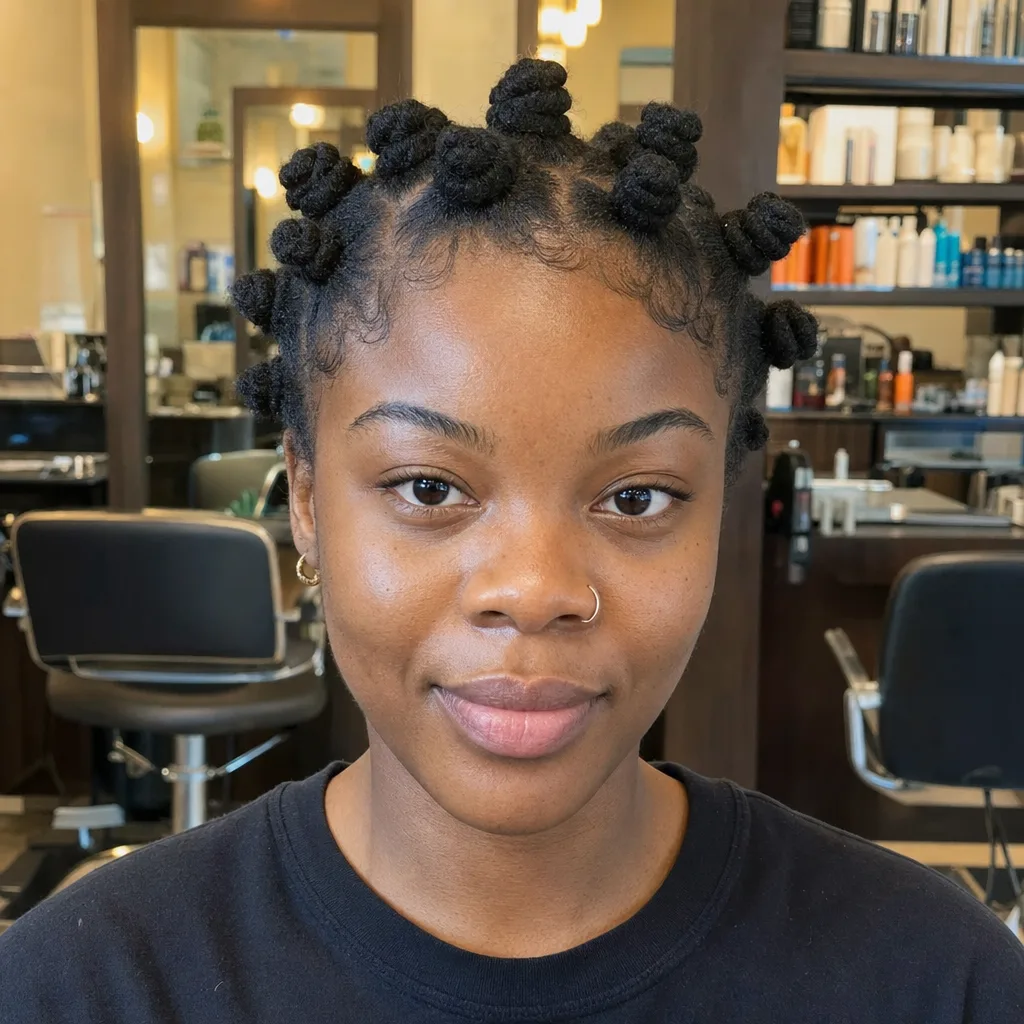
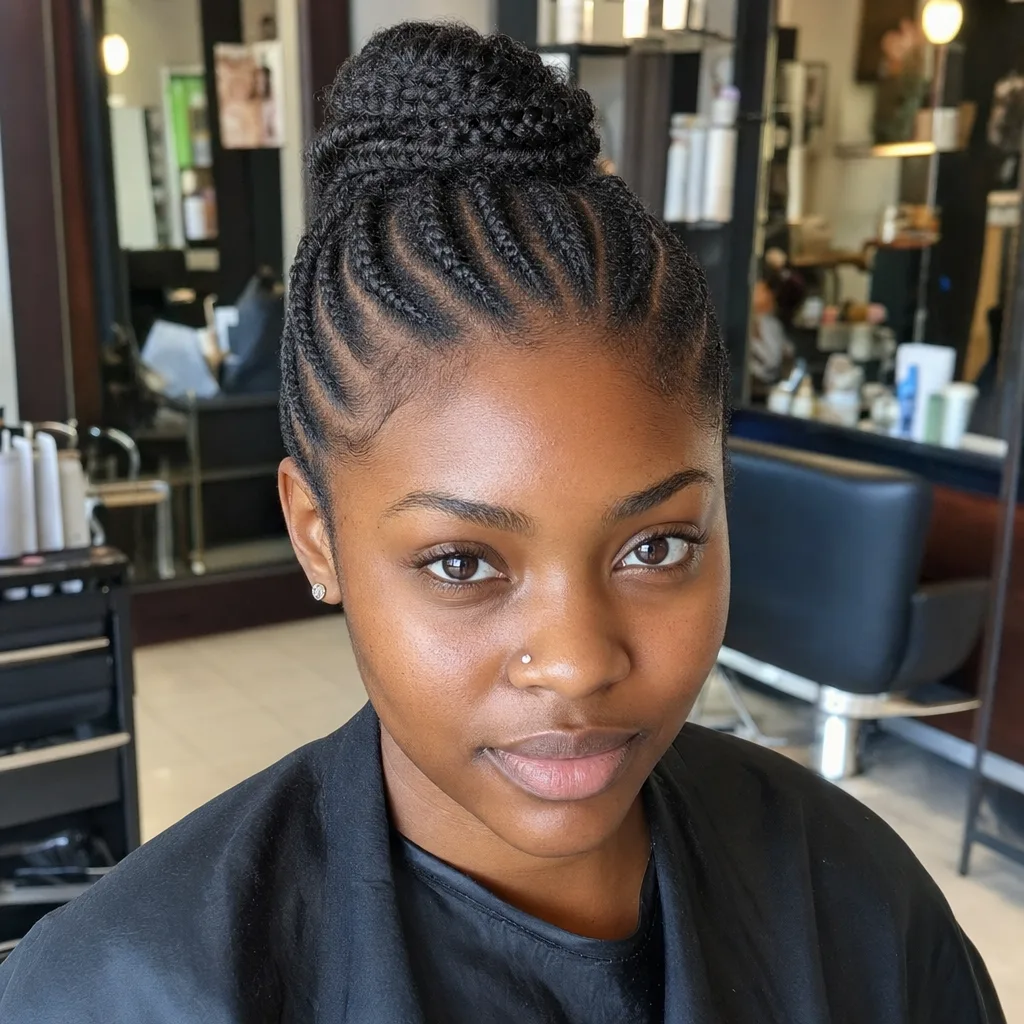
One texture, ten silhouettes. The point of this set is that the hair is the same in every frame - the difference is entirely length and set, which is what makes 4c more versatile than its reputation. Coily texture is also the one that fills out a bubble ponytail best, because the hair packs each section instead of hanging inside it. Any of them can be put on your own photo from the women's hairstyle try-on.
Gallery10 photos · tap to enlarge
 Try this on me
 Try this on me
 Try this on me
 Try this on me
 Try this on me
 Try this on me
 Try this on me
 Try this on me
 Try this on me
 Try this on me
The mistakes that cost you length
4c hair grows at the same rate as every other texture, roughly half an inch a month. When it looks like it is not growing, it is almost always retention rather than growth, and the causes are boringly consistent.
- Detangling dry. Every dry detangling session snaps strands at the tightest bends. Conditioner, water, fingers, then a wide-tooth comb - in that order or not at all.
- Leaving ends unsealed. The ends are the oldest hair on your head and on 4c they are also the most exposed. Unsealed ends split, then the split travels up, and you lose more at the trim than you gained.
- Wearing a protective style for ten weeks. Braids stop protecting somewhere around week six and start pulling. The style is protective for a window, not indefinitely.
- Tight edges. Traction alopecia at the hairline is the most common permanent damage in 4c hair care, and it comes from tension you can feel while it is being installed. If it hurts, it is too tight.
- Lifting for a bright color in one sitting. Double processing the same coils in one appointment is where 4c hair snaps, and it is the reason a three tone color like calico should be split across two visits.
- Weekly heat. A flat iron once a season is survivable. Every week and the coil stops reverting, which is heat damage and does not grow back.
- Chasing a wash and go you cannot maintain. A wash and go on 4c is a two-day style that tangles on day three. That is not a product failure.
Is the try-on free
Yes, for the first look. One hairstyle and one color on your own photo, front view, no card and no account needed. If you want more than that, Starter is $9 a month or $90 a year and gives you 150 credits a month, where a hairstyle costs 10 credits and a color on that cut costs 5. Pro is $24 a month and adds the side, three-quarter and back views, which on 4c is the useful upgrade because the back of a taper is the part you cannot see in a mirror.
That is the whole pricing model. There is a seven-day refund and cancelling takes two clicks.
Where to start
Measure your hair stretched and wet, once, so you know which row of the table above you are actually in. Most people underestimate by half. Then pick the two or three styles from that row and stop reading advice written for other rows - the majority of frustration with 4c hair is people trying to wear a length they do not have yet.
After that it is the same six steps every week, and a satin bonnet every night. It is not complicated. It is just relentless, and 4c hair punishes gaps faster than any other texture.
If you want to see what a length looks like before you grow into it or cut back to it, the curly and coily try-on renders it on your own photo, and what suits me works from your face shape if you have not picked a direction yet.
Frequently asked questions
4c is the tightest texture on the type 4 scale: densely packed coils with no visible curl pattern when the hair is dry, shrinking to roughly a quarter of their stretched length. It is a description of coil diameter, nothing more. The scale says nothing about hair health, thickness or what it can be styled into. At the opposite end of the same chart, a 3a spiral loops around something an inch wide and fights weight rather than dryness, which is why almost none of the advice here transfers to it.
Look at one dry strand. 4b has a visible zig-zag with straight runs between the bends; 4c is a continuous coil with no straight section anywhere. The confirming test is shrinkage: 4b loses about half its length, 4c loses 70 to 80 percent. Most people have both on the same head, tighter at the crown.
Tight - it is the tightest coil pattern described by the type system. Individual coils are roughly the width of a sewing thread. That tightness is what causes the shrinkage and the dryness, because it is difficult for scalp oils to travel along a strand with that many bends in it.
Because sebum cannot travel down the coil from your scalp. On straight hair the natural oil coats the strand from root to tip; on 4c it barely leaves the root. That is structural, not a hygiene failure, which is why every 4c routine is built around applying water and then sealing it in rather than around washing less.
Moisturized 4c hair stretches when you pull a strand gently and returns without snapping. Dry hair snaps almost immediately with a small crackle. It should also feel supple rather than squeaky, and a section left alone for a day should not feel like straw at the ends.
You mostly cannot change the rate - hair grows about half an inch a month regardless of texture. What you can change is how much of it you keep. Low manipulation, sealed ends, satin at night, protective styles worn for six weeks rather than ten, and a real trim schedule are what turn growth into visible length.
It is not hard to grow, it is hard to retain. The same coil that makes 4c dense makes it fragile at every bend, so breakage happens faster than on any other texture, and shrinkage hides the progress that does happen. Growth and length are two different measurements and 4c is the texture where they diverge most.
At the lengths most people are actually at, a twist-out or flat twists. Under two inches a tapered TWA with a clean shape-up. Over eight inches, an afro or a braided updo. There is no single best style because the answer is determined almost entirely by your stretched length, which is why the table above is organized that way.
4c is most common among people of sub-Saharan African descent, and it appears across the African diaspora including Black American, Caribbean and Afro-Latino populations. Hair texture is a continuum rather than a set of ethnic categories though, and type 4 textures occur outside those groups as well.
Preview it on your own photo: Virtual Hair Color Try-On.
Share article
About the author

More articles
Women's Haircuts · 14 min
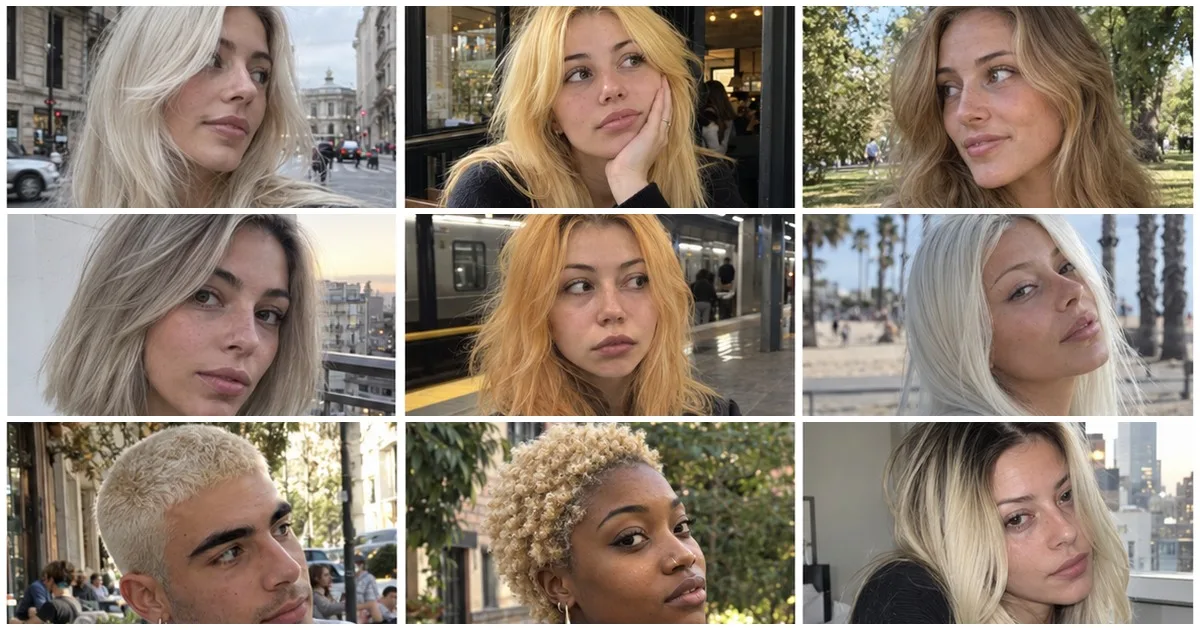
Bleached Hair: How Light Yours Can Go, 14 Shades, Aftercare
How light your bleached hair can go depends on where it starts. See 14 bleached shades on one cut, what each starting color can reach in one session, how toner finishes the job, and the aftercare that keeps it soft.
Women's Haircuts · 16 min
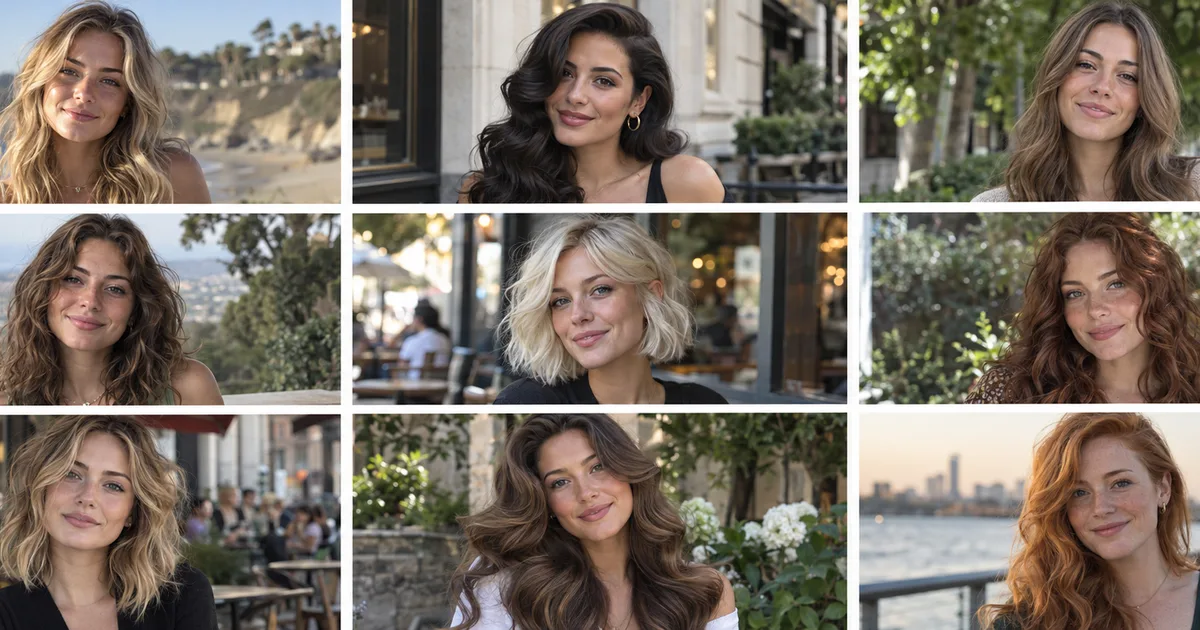
Waves Hair: How to Get Beach, Loose and Hollywood Waves That Last
Waves hair is about what you leave straight. How to get beach, loose, Hollywood and heatless waves, which wave suits your hair type, and why your waves keep falling out.
Women's Haircuts · 15 min
Fino Hair Mask: Who It Suits, How to Use It, and Its Limit
The Fino hair mask makes dry, bleached and frizzy hair smooth and shiny in one use, mostly by coating it. Here is what is in the jar, which hair types it suits, exactly how to use it, and what to do when the ends are past a mask.