High Porosity Hair: Signs, Causes and the Routine That Works
Oleh Onysko 31 October 2026 16 min read
In this article
High porosity hair has a raised, gappy outer layer, so it soaks up water fast and loses it just as fast. That is why it feels dry an hour after you moisturized it. The fix is not more moisture. It is sealing what you put in, with heavier creams and oils, protein to patch the gaps, and less of whatever lifted the cuticle in the first place.
This guide shows you how to tell if your hair is high porosity, what caused it, the routine that works, and why a silk press on high porosity hair goes sleek in one pass and then reverts by lunchtime.
What is high porosity hair?
High porosity hair is hair whose cuticle, the overlapping layer of scales on the outside of each strand, has lifted, chipped or worn away. Water and product rush in through the gaps, and they leave through the same gaps. Low porosity hair is the opposite: the scales lie flat and tight, so water beads on top and takes ages to sink in.
Porosity is about the outer layer, not your curl pattern. Straight, wavy, curly and coily hair can all be high porosity. It is most common on coily hair, because every bend in a coil is a spot where the cuticle lifts, and on any hair that has been bleached, colored or pressed often.

What it looks like day to day:
- It dries fast after a wash, often in under an hour.
- It feels soft right after conditioner and rough again by the evening.
- It frizzes in humidity, because the open cuticle pulls water out of the air.
- The ends look duller and see-through compared with the roots.
- It tangles and snaps more easily, especially wet.
High porosity vs low porosity hair
The two need opposite routines, so getting this wrong is why a product that saved your friend's hair did nothing for yours.
| High porosity | Medium porosity | Low porosity | |
|---|---|---|---|
| Cuticle | Raised, gappy or worn | Lying mostly flat | Flat and tight |
| Water on wet hair | Soaks in at once | Soaks in after a moment | Beads on top |
| Drying time | Fast | Average | Very slow |
| Feel by day two | Dry, rough, frizzy | Soft | Product sits on top, greasy feel |
| Wants | Heavier creams, butters, oils, some protein | Most products | Light, water-based products, heat to open the cuticle |
| Avoid | Harsh sulfates, high heat, bleach on top of bleach | Overloading | Heavy butters that just sit there |
If your hair is low porosity, our 4C hair guide covers the lighter routine that type usually needs.
How to tell if you have high porosity hair
Do the float test, then check it against how your hair actually behaves. The behavior is the better answer.
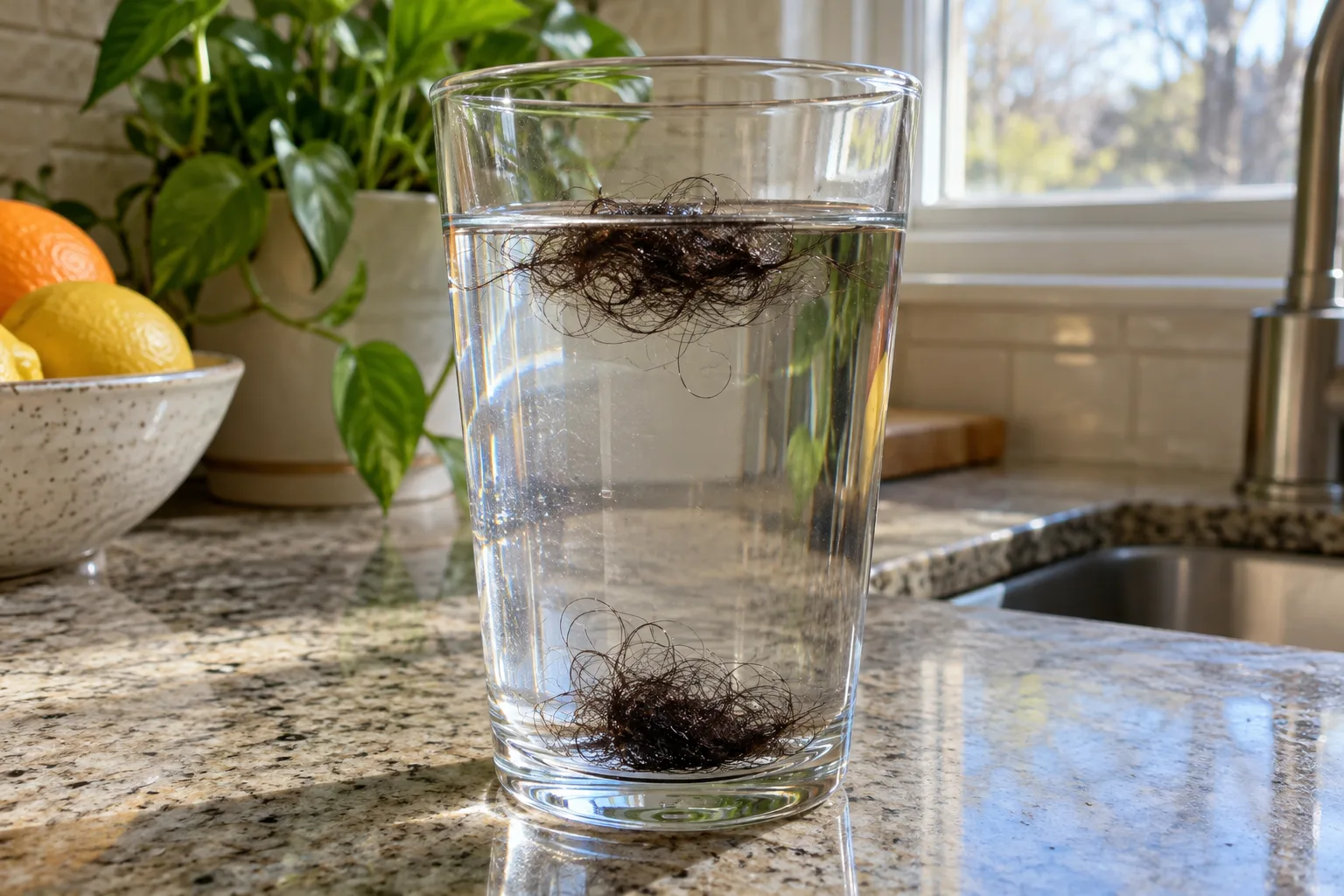
- Float test. Drop a few clean, product-free shed strands into a glass of room temperature water. Hair that sinks within a few minutes points to high porosity. Hair that floats points to low. It is a rough signal: oil, leftover product and the strand's thickness all change how it floats.
- Slide test. Pinch a single strand and slide your fingers from the end up toward the root. Bumpy and rough means the cuticle is lifted. Smooth means it is flat.
- Spray test. Mist a dry section with water. If it darkens and soaks in at once, it is high porosity. If the water beads, it is low.
- The week test. Most reliable of all: if your hair dries fast, frizzes in damp weather and feels dry a day after deep conditioning, you have your answer.
Porosity can also differ across one head. Ends that have been through more washes, sun and heat are often high porosity while the roots are medium.
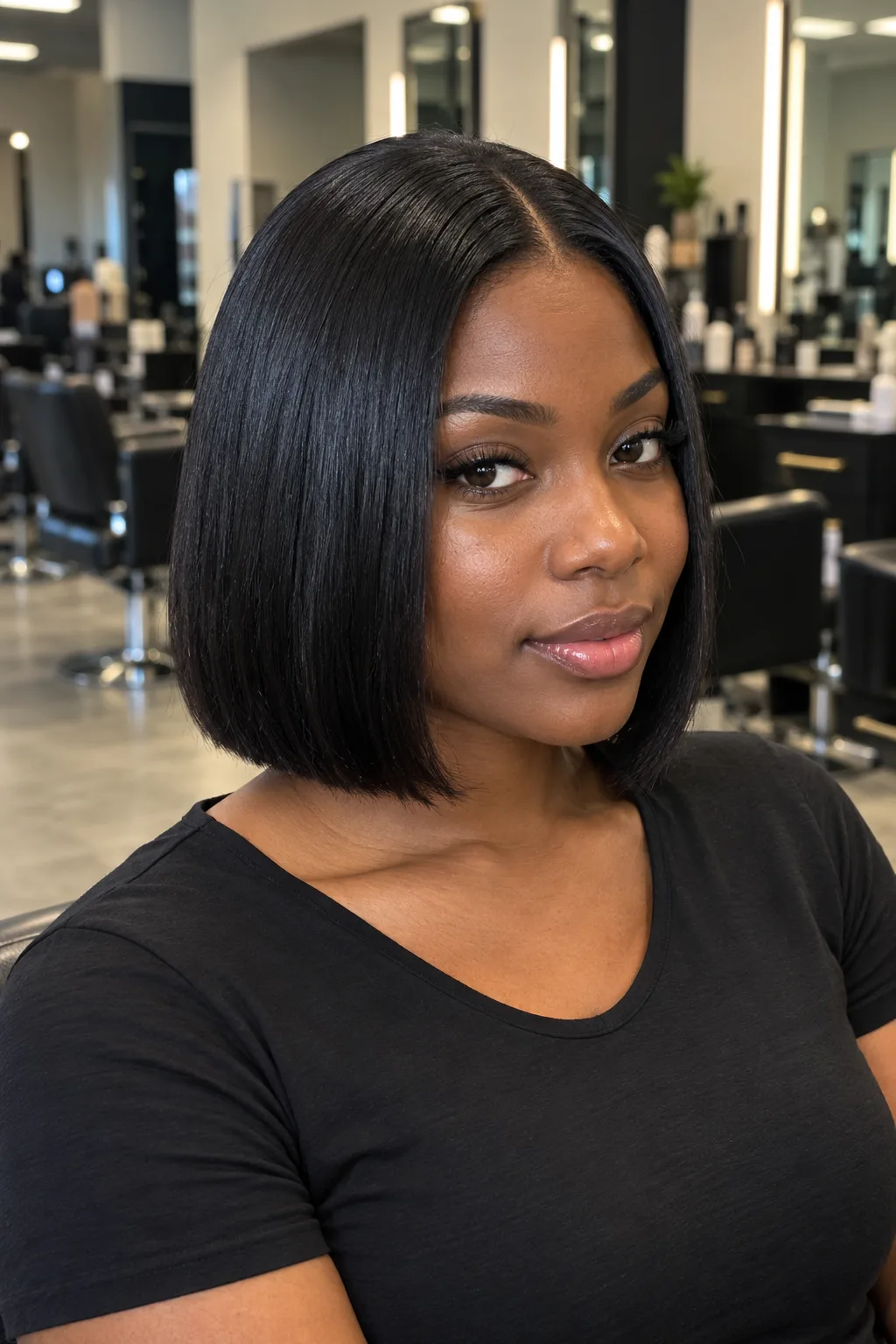
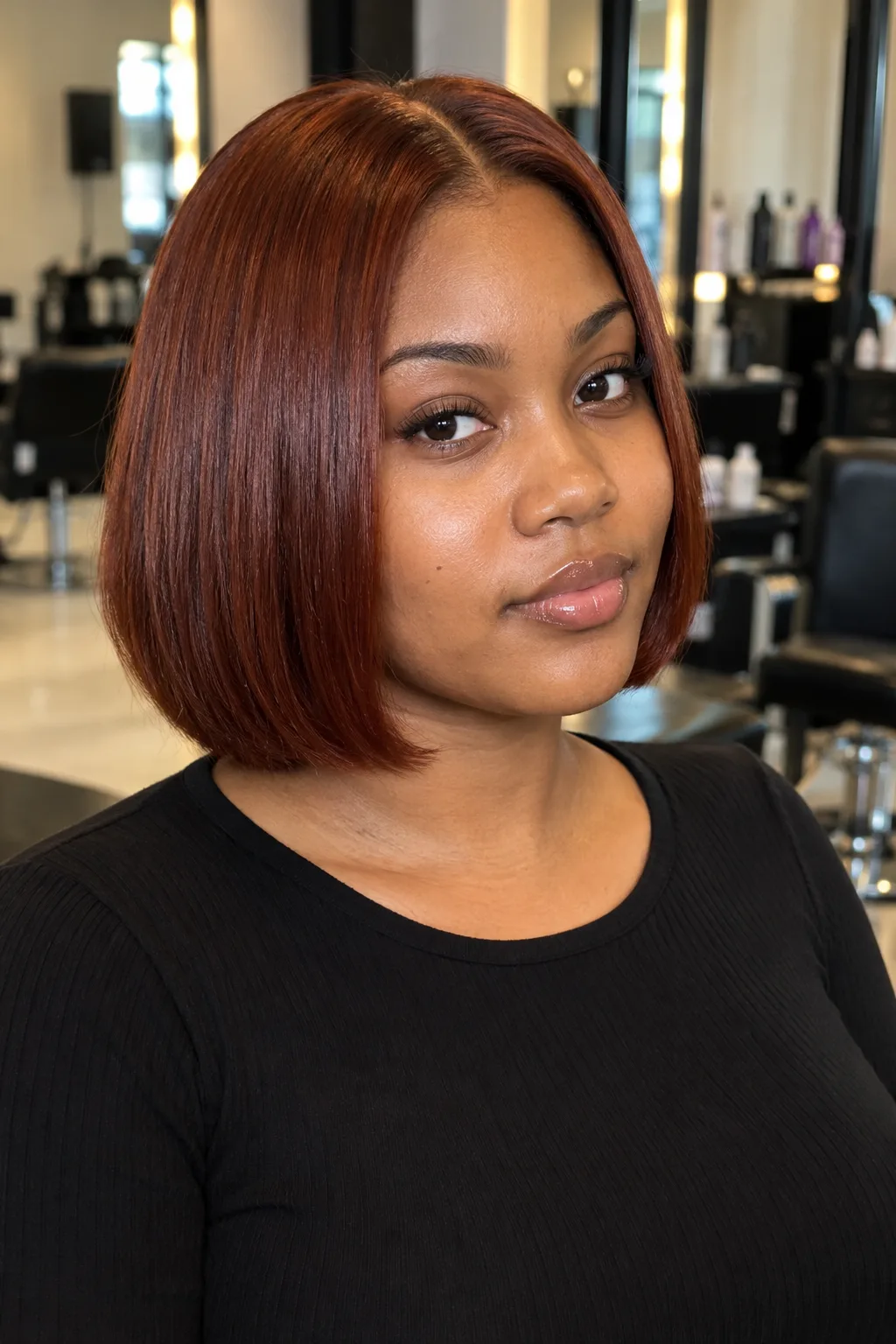
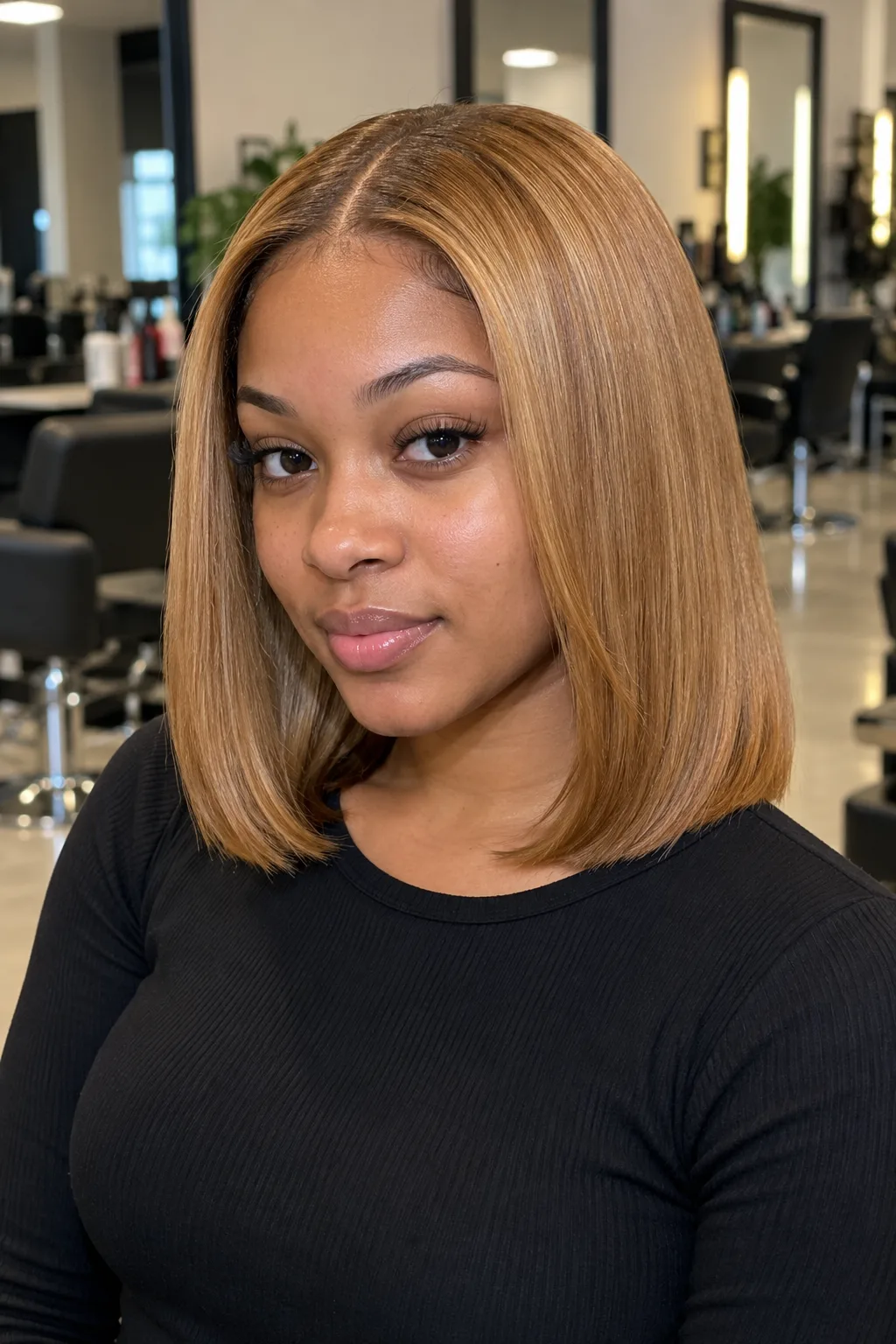
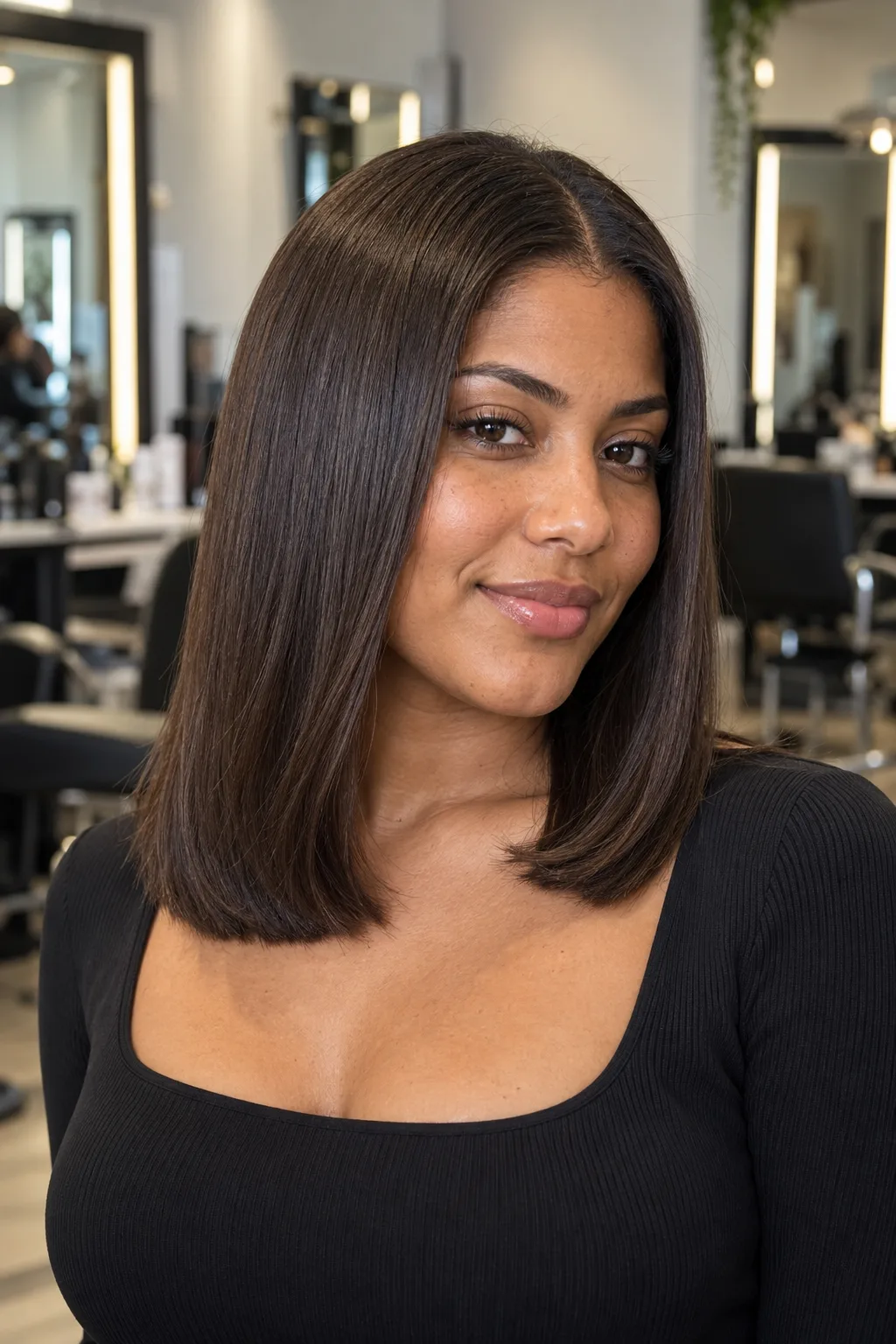
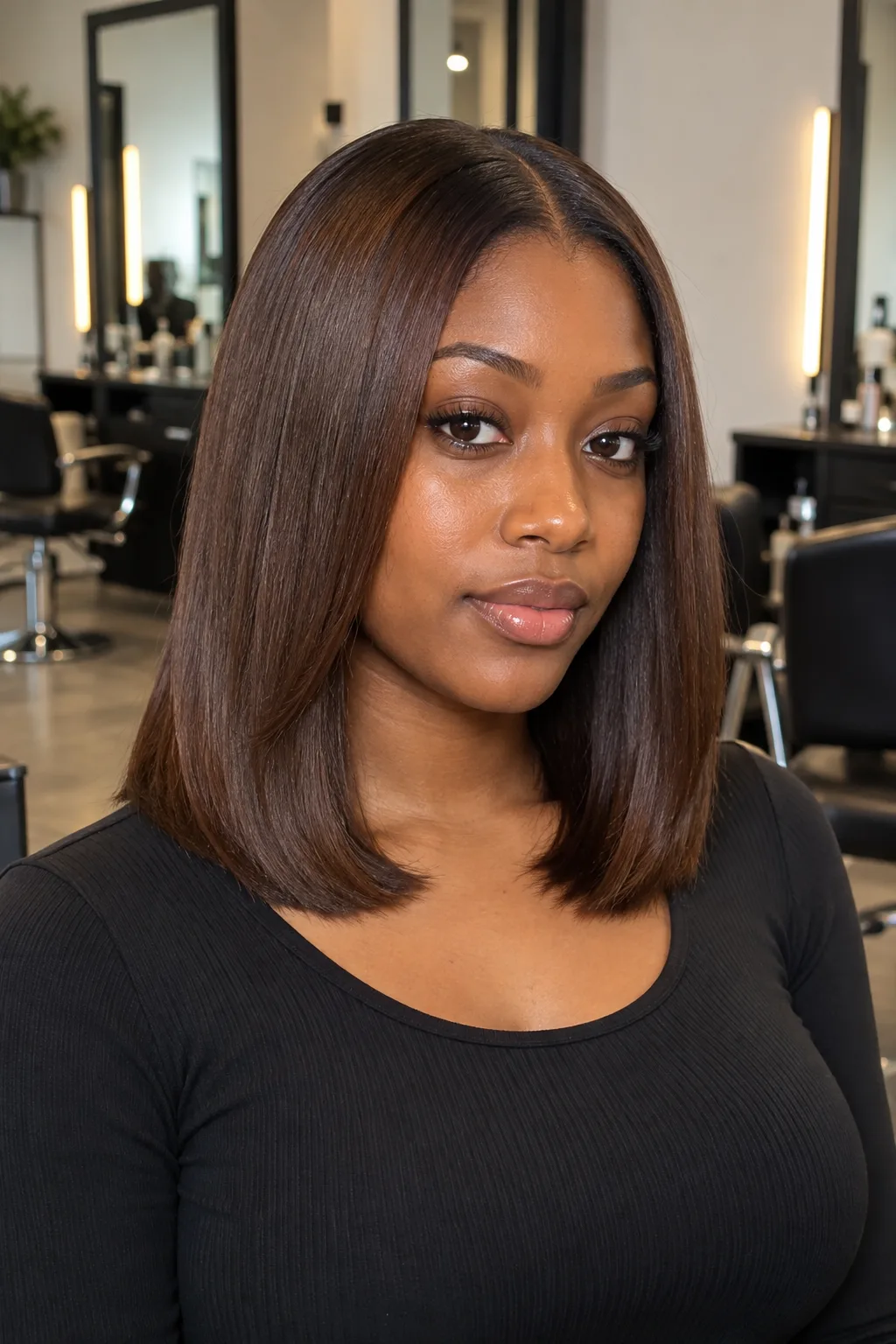
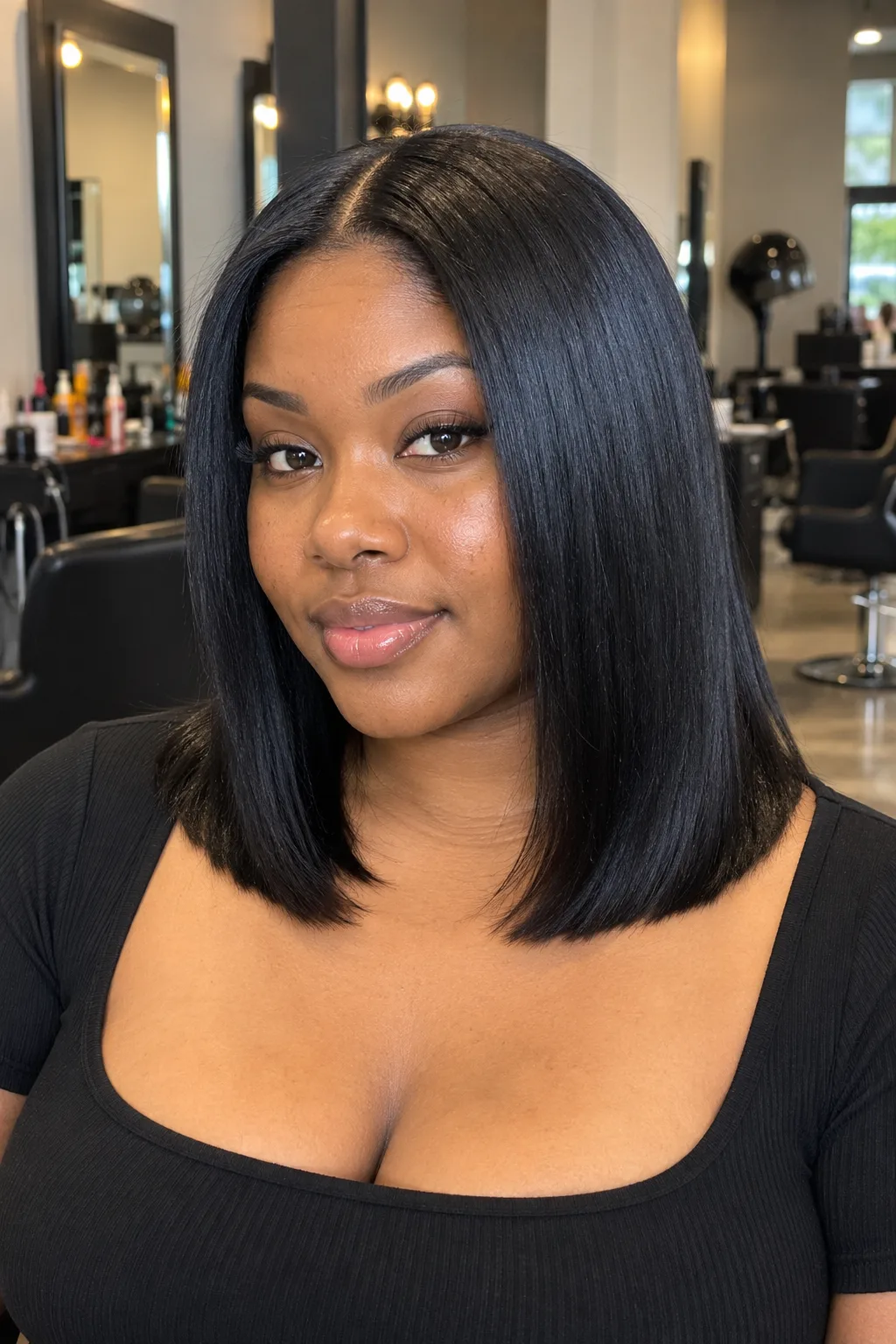
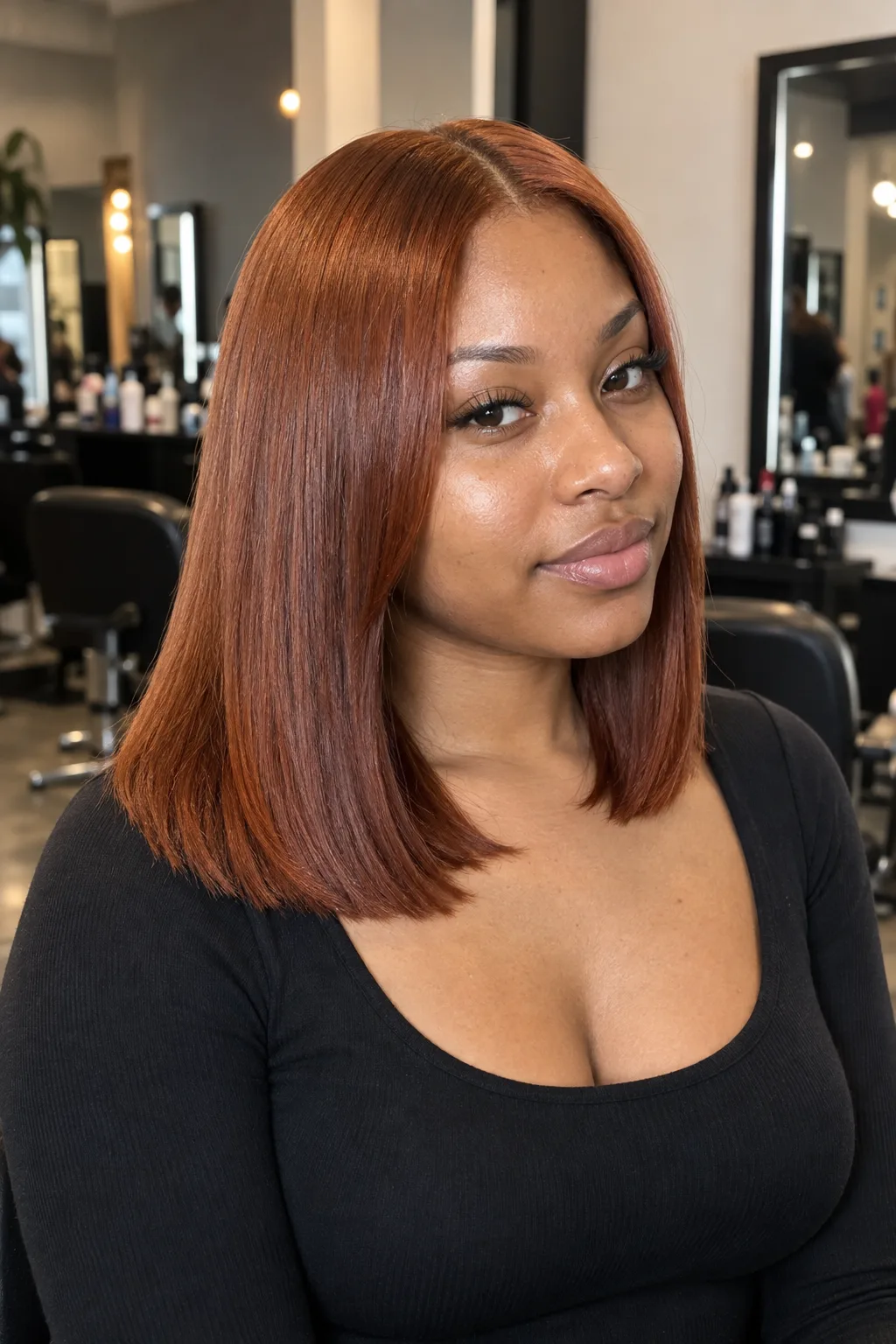
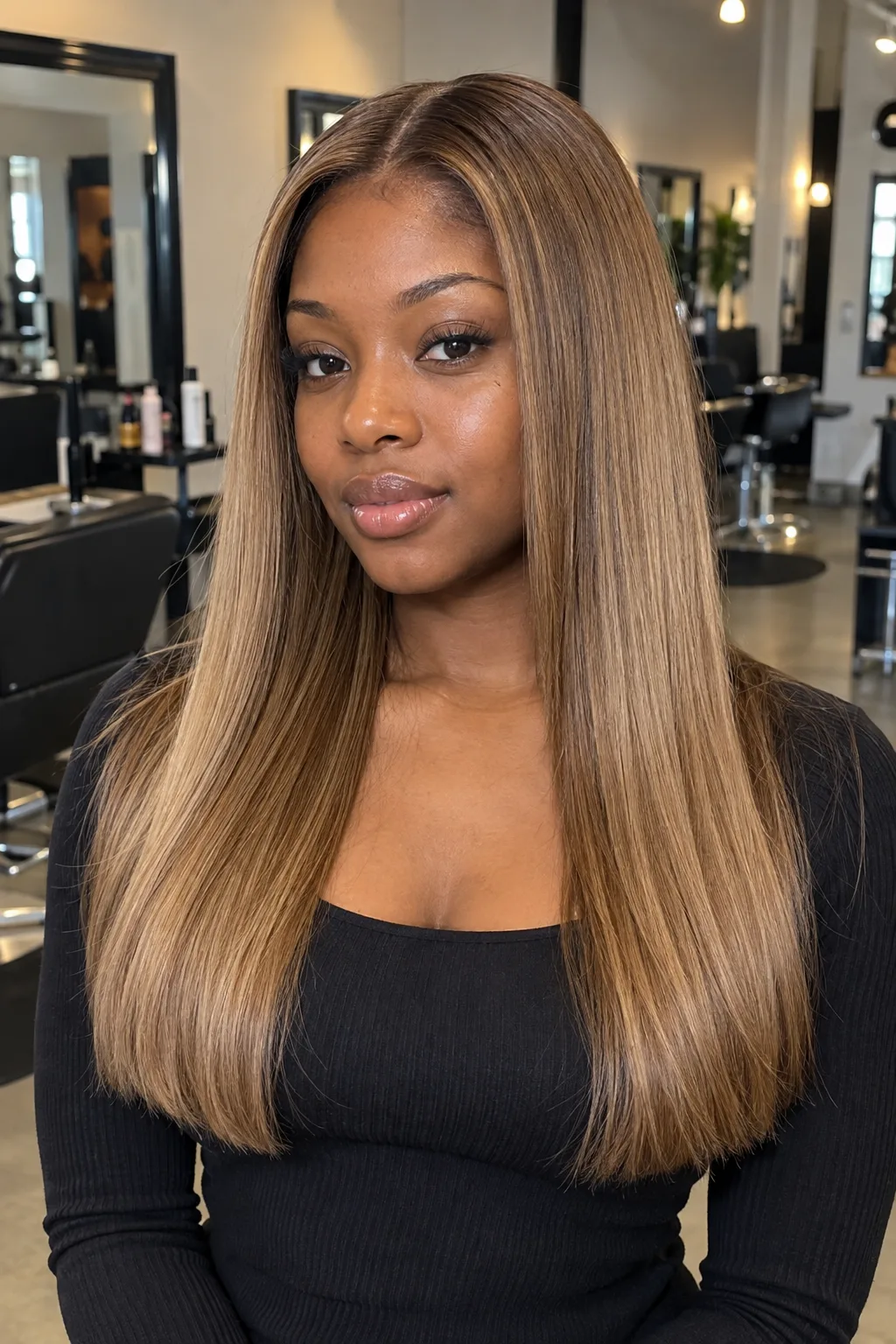
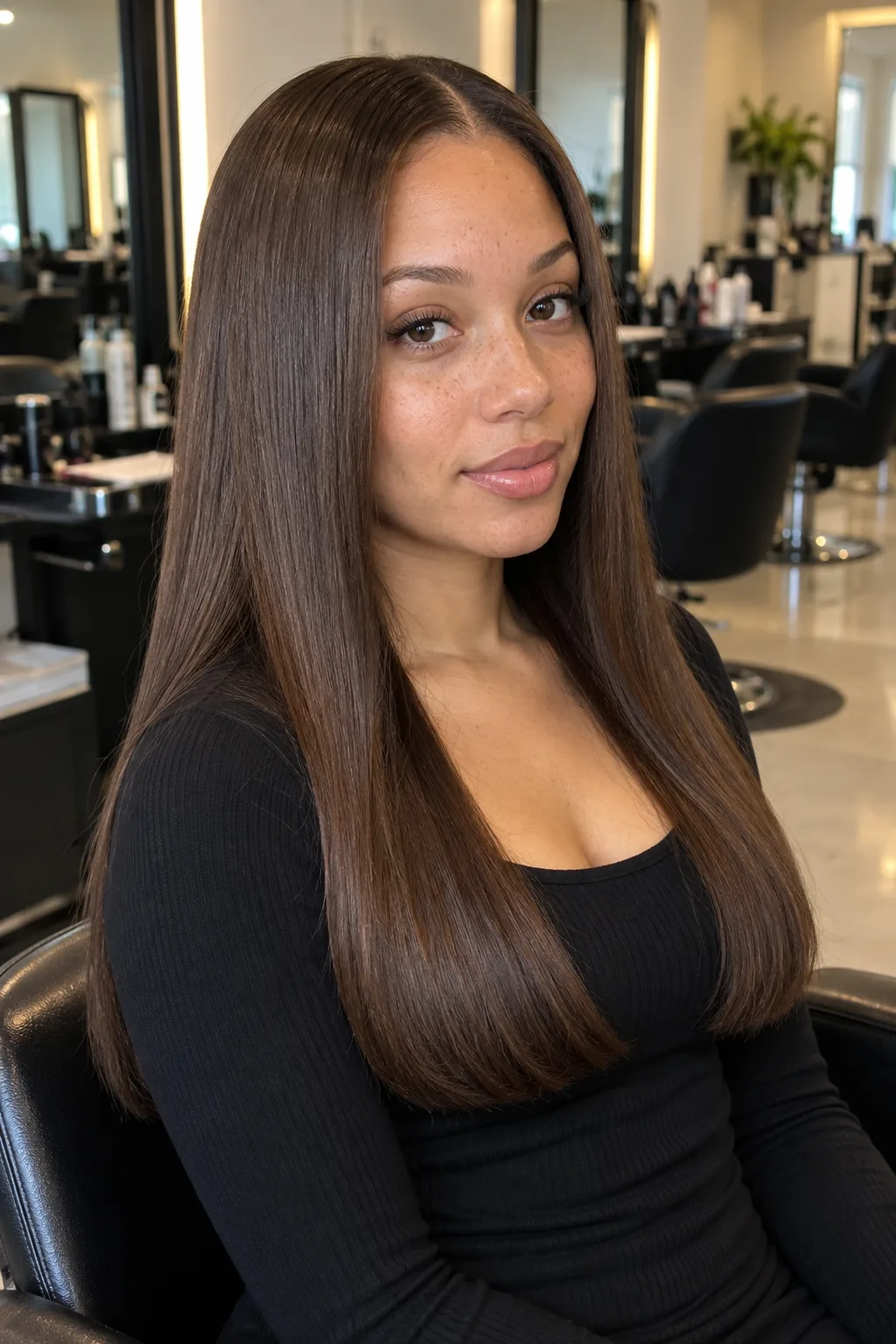
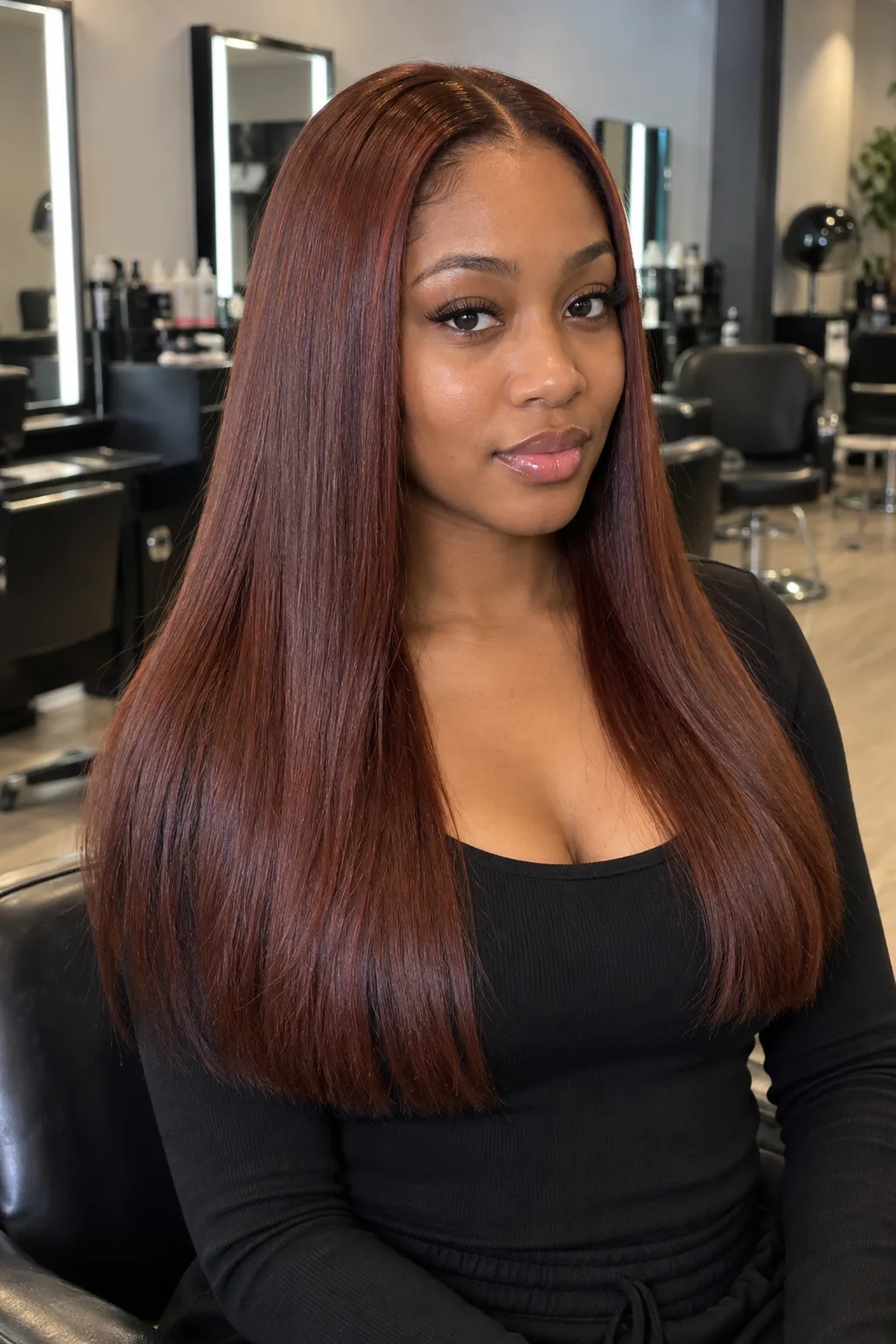
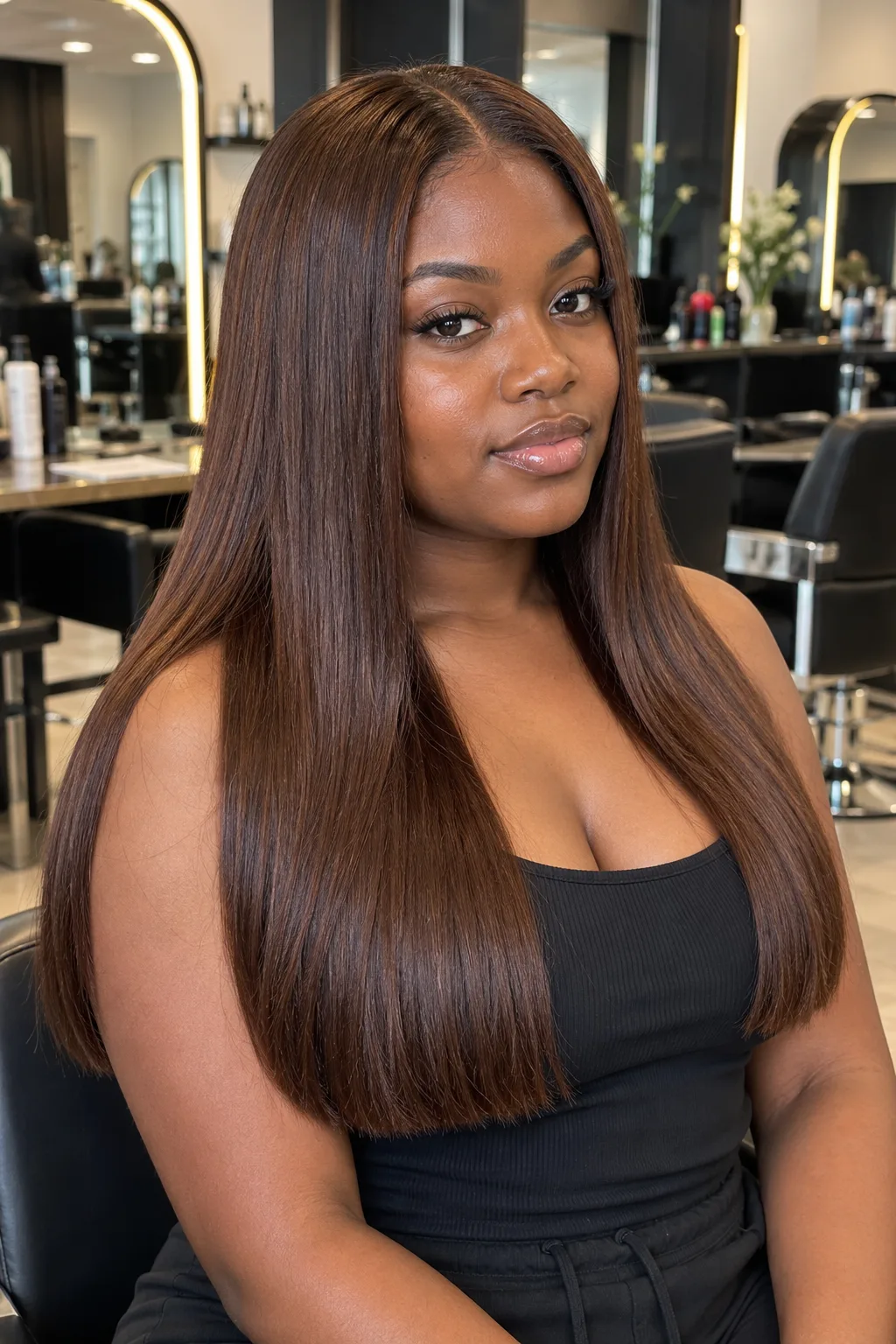
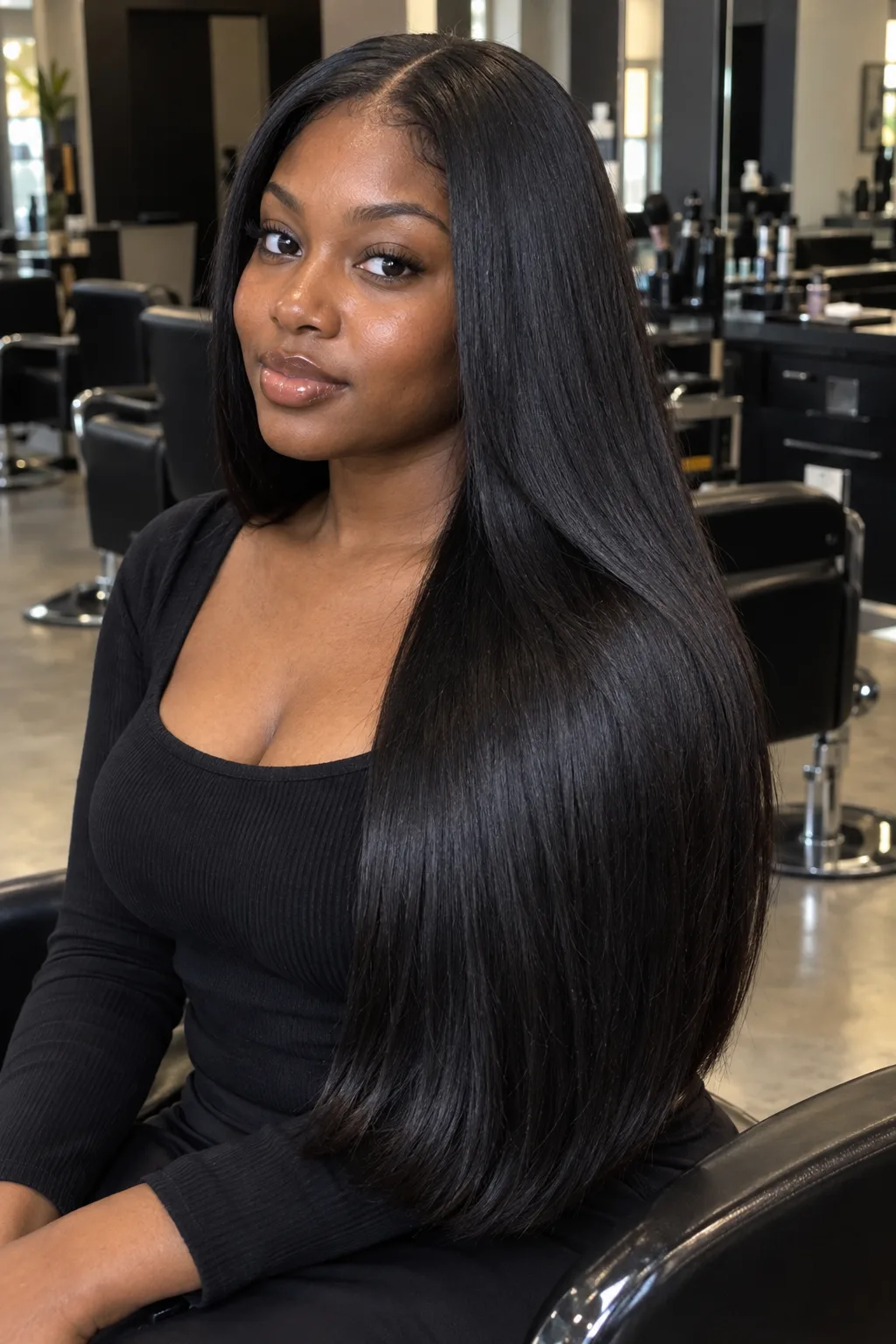
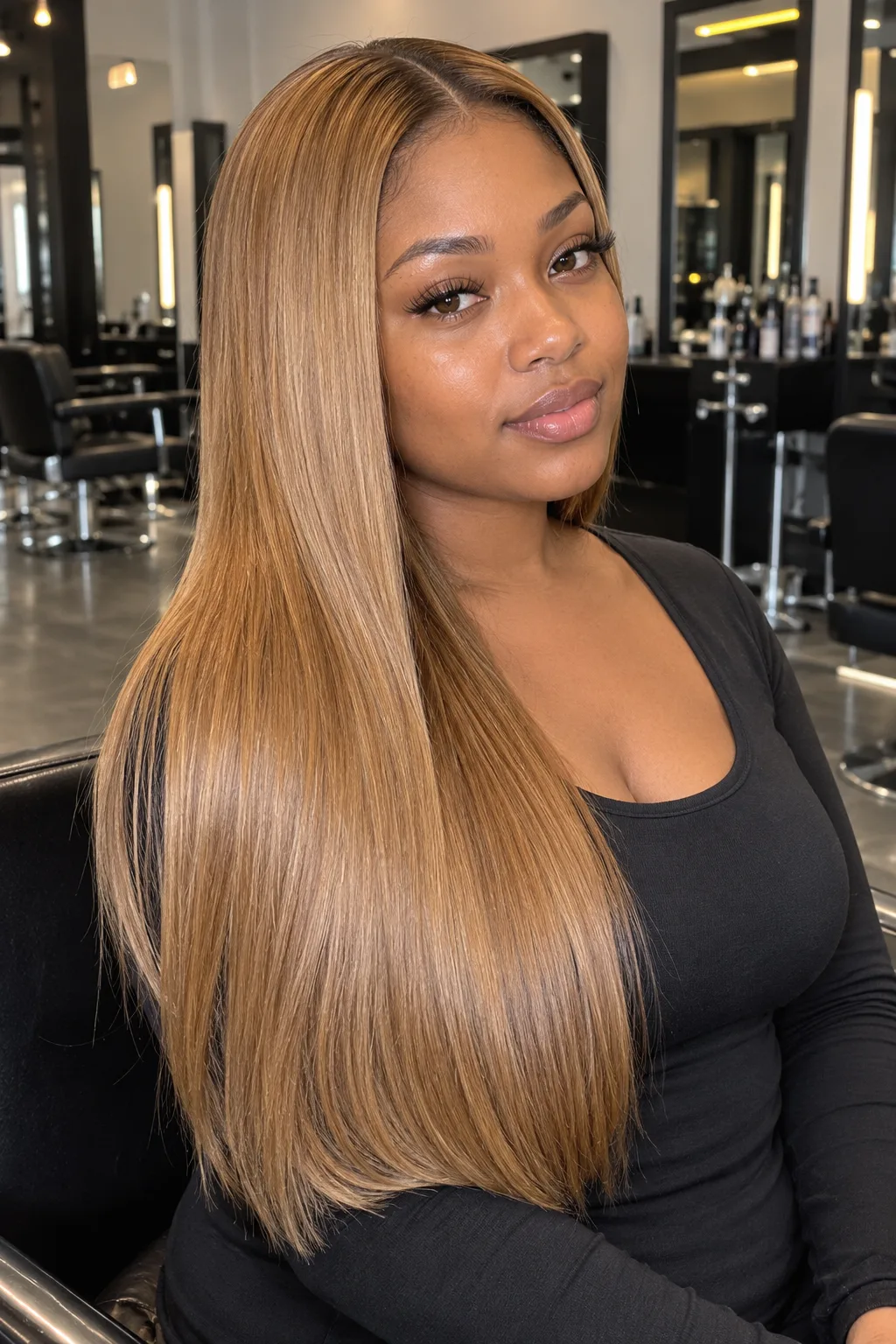
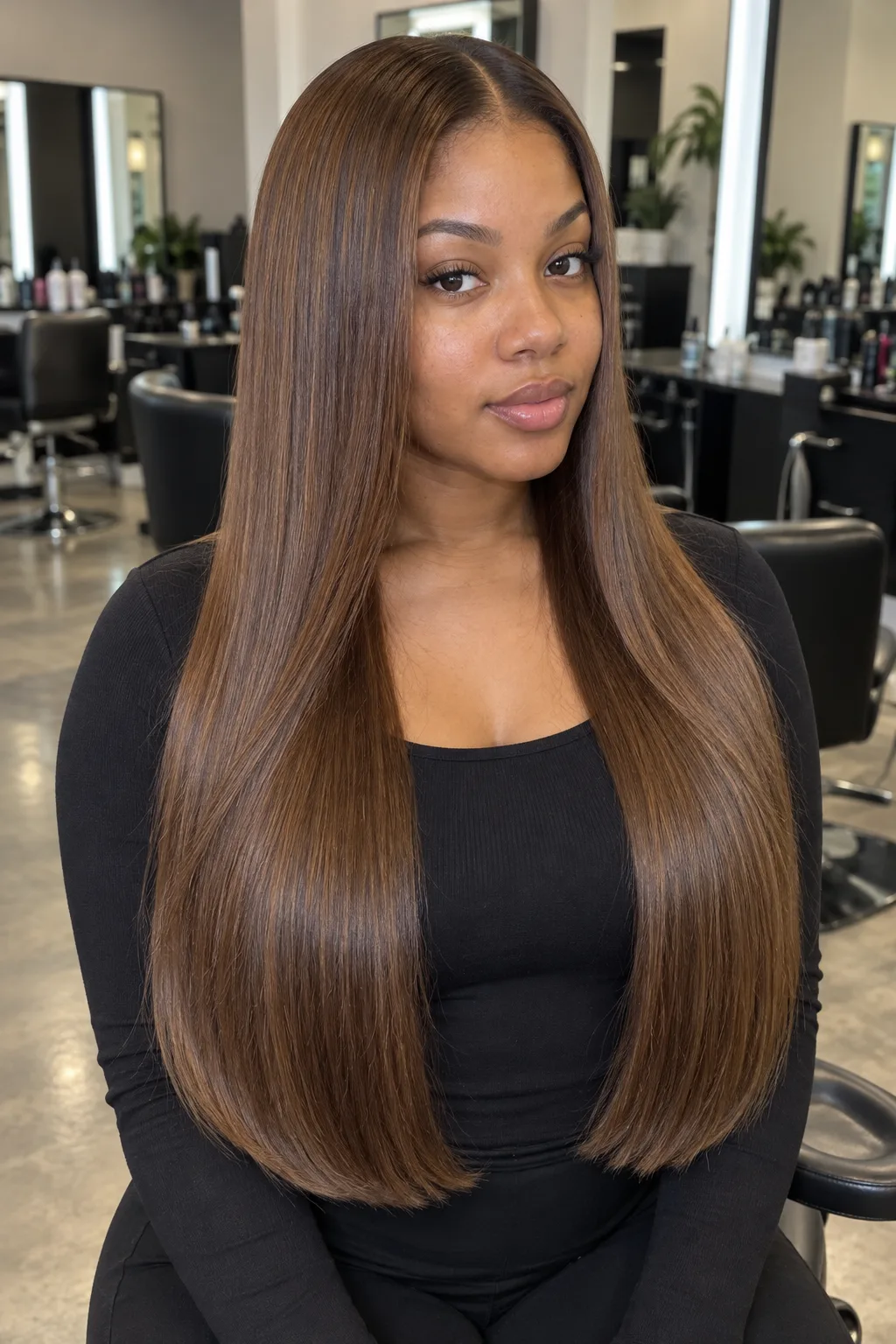
High porosity hair, silk pressed: 14 lengths
High porosity hair takes a silk press fast, which is why so many people with it wear one. Everything below is the same look, natural hair blown out and flat-ironed straight with a blunt end. The only thing that changes is the length, from a chin-length bob to the waist, so you can see where yours would land. Several are lightened or colored, which is the most common reason hair turns high porosity in the first place.
Gallery14 photos · tap to enlarge
 Would this suit me?
 Would this suit me?
 Would this suit me?
 Would this suit me?
 Would this suit me?
 Would this suit me?
 Would this suit me?
 Would this suit me?
 Would this suit me?
 Would this suit me?
 Would this suit me?
 Would this suit me?
 Would this suit me?
 Would this suit me?
What causes high porosity hair?
The cause decides the fix, because some porosity can be managed and some only grows out. Most high porosity hair is damage, not genetics.
| Cause | Can it be reversed? | First move |
|---|---|---|
| Bleach and permanent color | No, only managed until it grows out | Bond-building treatment, gentler color, longer gaps between sessions |
| Heat (flat irons, silk presses, blow dryers) | No, only managed | Lower the iron temperature and press less often |
| Chemical straighteners and relaxers | No, only managed | Space touch-ups, never overlap onto treated hair |
| Sun, salt water and chlorine | Mostly preventable | Hat, leave-in before swimming, rinse after |
| Naturally coily hair | It is your hair, not damage | A sealing routine (below) |
| Rough handling | Preventable | Detangle wet with conditioner, satin at night |
Bleached and color-treated hair
Bleach works by opening the cuticle to get at the pigment inside, and it never fully closes again. Every lift adds porosity, so platinum and honey blonde on dark natural hair are almost always high porosity. If you lightened recently, read the bleached hair care guide before you add heat on top.
Heat-damaged hair
Every pass of a flat iron at high heat chips the cuticle a little more. People who press every two weeks often end up with high porosity ends and medium porosity roots. The heat protectant guide for curly hair matches the protectant to the tool, but the setting on the iron matters more than the bottle.
Naturally high porosity coils
Tightly coiled hair has more bends, and each bend is a spot where the cuticle lifts. Natural oils also travel down a coil slowly, so the ends dry out first. That is not damage. It is the texture, and our guide to coily hair covers how it behaves. The routine below is built for it.
How to care for high porosity hair
Your hair takes water in easily. The whole routine is about keeping it there: put water in, lock it in, and stop the cuticle lifting further.
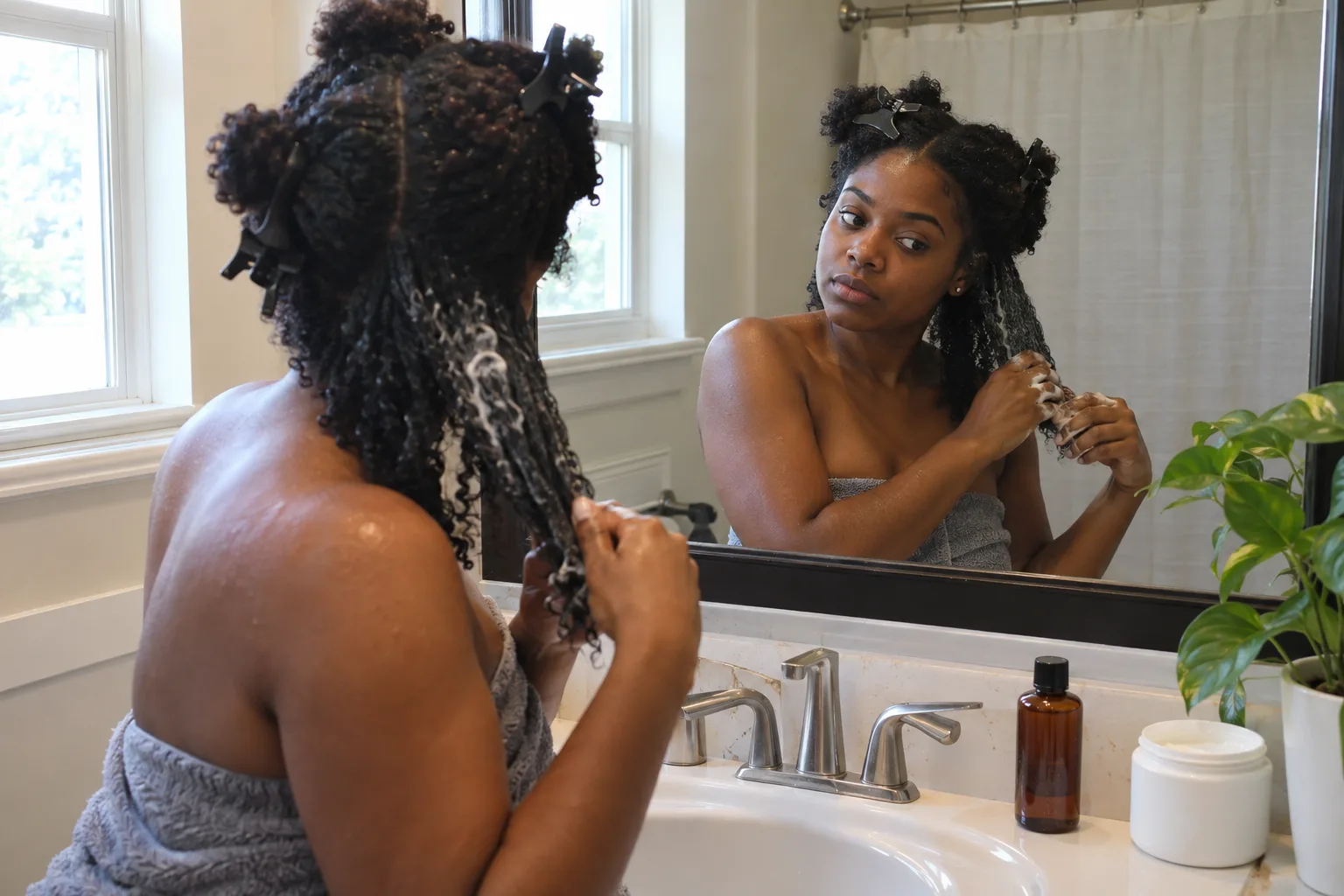
The order matters more than the brand. The LOC method (liquid, oil, cream) and the LCO method (liquid, cream, oil) both work on high porosity hair. Try LOC first, and switch to LCO if your hair still feels dry by the next day, because ending on an oil seals harder.
How to moisturize high porosity hair
- Wash gently, once or twice a week
Use a sulfate-free shampoo or a co-wash. Harsh cleansers strip what little oil the open cuticle holds onto. Most high porosity hair does best with one or two washes a week.
- Deep condition with some protein
Use a deep conditioner with hydrolyzed protein (keratin, wheat, rice or silk) every week or two. Protein fills gaps in the cuticle for a while. If your hair turns stiff or straw-like, cut back to once a month.
- Rinse cool
Finish with a cool rinse. It will not close the cuticle like a door, but it makes the hair feel smoother and less frizzy than a hot rinse does.
- Apply a water-based leave-in on soaking wet hair
Work in sections while the hair is still dripping. The leave-in is the liquid in LOC. On high porosity hair, damp is too late: it has already started drying.
- Seal with oil, then cream
Rake a small amount of oil through each section, then a thick cream or butter on top. Heavier products are your friend here, which is the opposite of low porosity advice.
- Dry gently
Squeeze with a cotton T-shirt instead of a towel, and air dry or diffuse on low. Rough towels and high heat lift the cuticle further.
- Protect it at night
Sleep on a satin or silk pillowcase, or wrap your hair in a satin scarf. Cotton pulls moisture out and roughs up the cuticle.
What to look for in high porosity hair products
Brands change every season. Ingredients do not. Turn the bottle over.
| Look for | Why it helps | Go easy on |
|---|---|---|
| Hydrolyzed proteins (keratin, wheat, rice, silk) | Temporarily patch gaps in the cuticle | Daily protein, which can leave hair brittle |
| Shea butter, mango butter | Thick seal that slows water loss | Very light, watery milks as your only product |
| Coconut oil | Can soak into the strand itself, not just coat it | Coconut oil if your hair turns stiff with it |
| Castor, olive or avocado oil | Heavy oils that seal well | Mineral oil as your only sealant |
| Aloe vera, a low pH leave-in | Smooths the cuticle | Harsh sulfates, high alcohol gels |
| Silicones before heat (dimethicone) | Coat the strand before an iron | Heavy silicones every day without a clarifying wash |
Coconut oil has real evidence behind it. A study in the Journal of Cosmetic Science found coconut oil reduced protein loss from hair when used before and after washing, while mineral oil and sunflower oil did not.
High porosity hair and a silk press
This is where most people with high porosity hair get hurt. It presses beautifully: the open cuticle lets the heat and moisture out fast, so a section goes sleek in one pass. It also reverts faster than any other hair, because the same open cuticle pulls humidity straight back in.

The usual reaction to reversion is to turn the iron up and press it again. That makes it worse. More heat lifts the cuticle further, the hair gets more porous, and the next press reverts faster still. High porosity hair needs less heat, not more:
- Keep the iron at 350 to 400°F. Bleached hair stays at 350°F or below.
- One slow pass per small section, with a fine-tooth comb just ahead of the plates.
- Deep condition with protein the week before, not the day of, so the hair is not soft and limp under the iron.
- Use a silicone serum or iron-rated protectant on fully dry, blown-out hair right before the plates touch it.
- Wrap it every night under a satin scarf and keep it away from steam, sweat and rain.

The roots go first because they are the newest hair, with the tightest curl. A press that frizzes at the root after a few humid hours is normal. A press that will not go straight in one pass, or ends that stay straight after a wash, is heat damage, and the only fix is trimming it off.
A silk press on high porosity hair is a two-week commitment you pay for in heat. Before you book one, it helps to know whether straight hair at that length actually suits your face. You can check that on your own photo first.
Which cut makes you look best?
Find out in 60 seconds.
A few quick taps and one selfie, and you'll know. Free account, no card for your first render.
What to say before a silk press
If a stylist is pressing it, tell them your hair is high porosity before they start.
Say this to your barber
My hair is high porosity, so please keep the iron at 400 or under, one pass per section, with protectant on every section.
Mistakes that keep high porosity hair dry
- Adding more water and nothing else. High porosity hair takes water in and lets it straight back out. Without an oil or cream on top, a spray bottle just starts the drying over.
- Skipping protein. Moisture alone leaves gappy hair limp and stretchy. A little protein every week or two is what lets it hold its shape.
- Using light, low porosity products. Watery milks and mousses suit hair that cannot absorb much. Yours absorbs everything and needs a seal on top.
- Turning the iron up to fight reversion. It buys you one sleek day and costs you more porosity. Lower heat and better aftercare last longer.
- Rubbing it dry with a towel. The American Academy of Dermatology advises wrapping wet hair in a towel or T-shirt to absorb water, because rubbing it dry causes damage. It also recommends low or medium heat settings with a protectant.
- Holding the dryer close and on high. A study in the Annals of Dermatology found damage rose with temperature, and a dryer held about 6 inches away and kept moving did less harm than letting hair air dry.
Which routine fits your hair?
Use your texture and history to pick a starting point, then adjust by how your hair feels on day two.
| Your hair | Start with | Heat |
|---|---|---|
| Natural coils, never colored | LCO, butter to seal, protein monthly | Low, a press a few times a year |
| Natural curls, colored or highlighted | LOC, protein every two weeks | Iron at 350 to 400°F |
| Bleached blonde on natural hair | Bond builder, protein every week | Iron at 350°F or less, press rarely |
| Pressed every two weeks | Trim the straight ends, protein before each press | Drop the iron 25 to 50°F |
If you are still working out your curl type, the type 4 hair guide and the 3C hair guide show each pattern up close.
Can you see a silk press on yourself for free?
Yes, once. HairstyleAtlas gives you your first try-on free, with no card: upload a selfie, pick a look, and see it on your own face. That is enough to decide whether a sleek, straight press suits you before you put an iron on high porosity hair. More looks are on the Plus plan at $9 a month, and the full details are on the pricing page. The curly and coily hair try-on previews other looks too, from a blowout to defined curls.
If you change one thing, change the order, not the products. Put water in on soaking wet hair, seal it with oil and a thick cream, add a little protein every week or two, and keep heat low. High porosity hair is not hard to moisturize. It is hard to keep moisturized, and everything in a good routine is about holding on to what you already put in. If you press it, press it cooler and less often: that is what keeps the next silk press sleek.
Frequently asked questions
Avoid harsh sulfate shampoos, hot water, high heat from irons and dryers, and bleaching on top of already lightened hair. Also skip routines built only on light, watery products. They go in fast and leave just as fast, so seal them with an oil or a cream.
Yes. High porosity hair can be soft, shiny and strong when the routine seals moisture in and protein patches the cuticle. Naturally high porosity coils are healthy hair. Damage-driven porosity can be managed well, though the damaged lengths only fully recover as they grow out and get trimmed.
Usually, yes. Coconut oil can soak into the strand and has been shown to reduce protein loss during washing. Some people find it makes their hair stiff. If yours does, swap to a heavier sealing oil like castor or olive oil.
Once or twice a week suits most high porosity hair. Washing more often strips oils the open cuticle cannot spare. Use a sulfate-free shampoo or a co-wash between washes, and always follow with conditioner.
Yes. Porosity usually goes up with bleach, color, heat, relaxers and sun. It can come down as damaged lengths are trimmed off and replaced with new growth. The new hair near your scalp often has lower porosity than your ends.
LOC stands for liquid, oil, cream: a water-based leave-in, then an oil, then a cream, applied in that order on wet hair. It layers moisture and seals it in. The LCO method swaps the last two steps, which some high porosity hair holds even better.
Heat pulls water out of the strand, and high porosity hair loses it faster than most. Avoid adding water to a fresh press, since it brings back the curl. Use a light serum on the ends, wrap your hair at night, and deep condition before the next press.
No. A silk press uses direct heat and leaves the ends exposed, so it is not a protective style. It can be gentle on healthy hair if it is done at moderate heat a few times a year. On high porosity hair, press less often and cooler.
Porosity is not set by ethnicity. It is mostly set by damage and by curl shape. Tightly coiled hair, more common in people of African descent, tends toward higher porosity because the cuticle lifts at each bend. Bleached or heat-styled hair of any ethnicity can be high porosity.
Preview it on your own photo: Virtual Hair Color Try-On.
Share article
About the author

Related posts

Women's Haircuts · 15 min
Lob Haircut: 14 Long Bob Ideas and the One Call That Decides If It Suits You
A lob is a long bob that ends between the jaw and the collarbone. Fourteen versions at the same length, which one suits your face and hair type, and the exact words to say in the chair.

Women's Haircuts · 11 min
Layered Hair: 14 Looks and the One Number That Decides Each
Layered hair comes down to one number: the gap between your shortest piece and your longest. See 14 layered looks sorted by that gap, which suits your face and hair type, and what to say in the chair.

Women's Haircuts · 13 min
Copper Hair Color: 14 Shades and Which One Suits Your Skin
Copper is a bright orange-red, like a new penny. See 14 copper shades side by side, which one suits your skin tone, what to say at the salon, and why maintenance matters more than your complexion.

Women's Haircuts · 12 min
Blowout Hair: 14 Looks and How to Do a Salon Blowout at Home
Blowout hair is set by the cool shot, not the heat. See 14 blowout finishes from sleek to 90s bounce, the at-home routine step by step, and which version suits your hair type.
Women's Haircuts · 14 min
Miracle Knots Hair: 12 Looks, How It Works and How Long It Lasts
Miracle knots loop curly human hair into small plaits of your own hair: boho braids in 2 to 3.5 hours, with less weight. How it works, how many bundles, which hair it suits and how long it lasts.
Women's Haircuts · 14 min
Braided Ponytail: 14 Styles and How to Do One That Lasts
The braid is the easy part. 14 braided ponytail styles side by side, which one suits your hair type, how many packs of braiding hair to buy, and how to keep the base from pulling out your edges.