4b Hair: Why It Won't Define on Its Own and the Styles That Work
Oleh Onysko Updated 27 September 2026 14 min read
In this article
4b hair is a type 4 texture whose strands bend in sharp zig-zag angles instead of curling into round coils. That one detail decides almost everything: 4b does not clump into definition by itself, so the styles that look best on it are the ones where you set the pattern, like twist-outs, braid-outs and a well-shaped afro.
This guide covers how to tell 4b from 4a and 4c, which styles to wear for the result you want, a twist-out that lasts, the mistakes that cost you length, and ten ways 4b hair is actually worn.
What is 4b hair?
4b hair is the middle texture of the type 4 group in the Andre Walker hair typing system, the same scale that runs from 2a waves through 3a spirals to 4c. Each 4b strand zig-zags in tight, sharp angles with short straight runs between the bends, so a lock of it looks crimped rather than spiraled. The hair is usually fine to medium per strand, grows densely, and feels soft and cottony when dry.
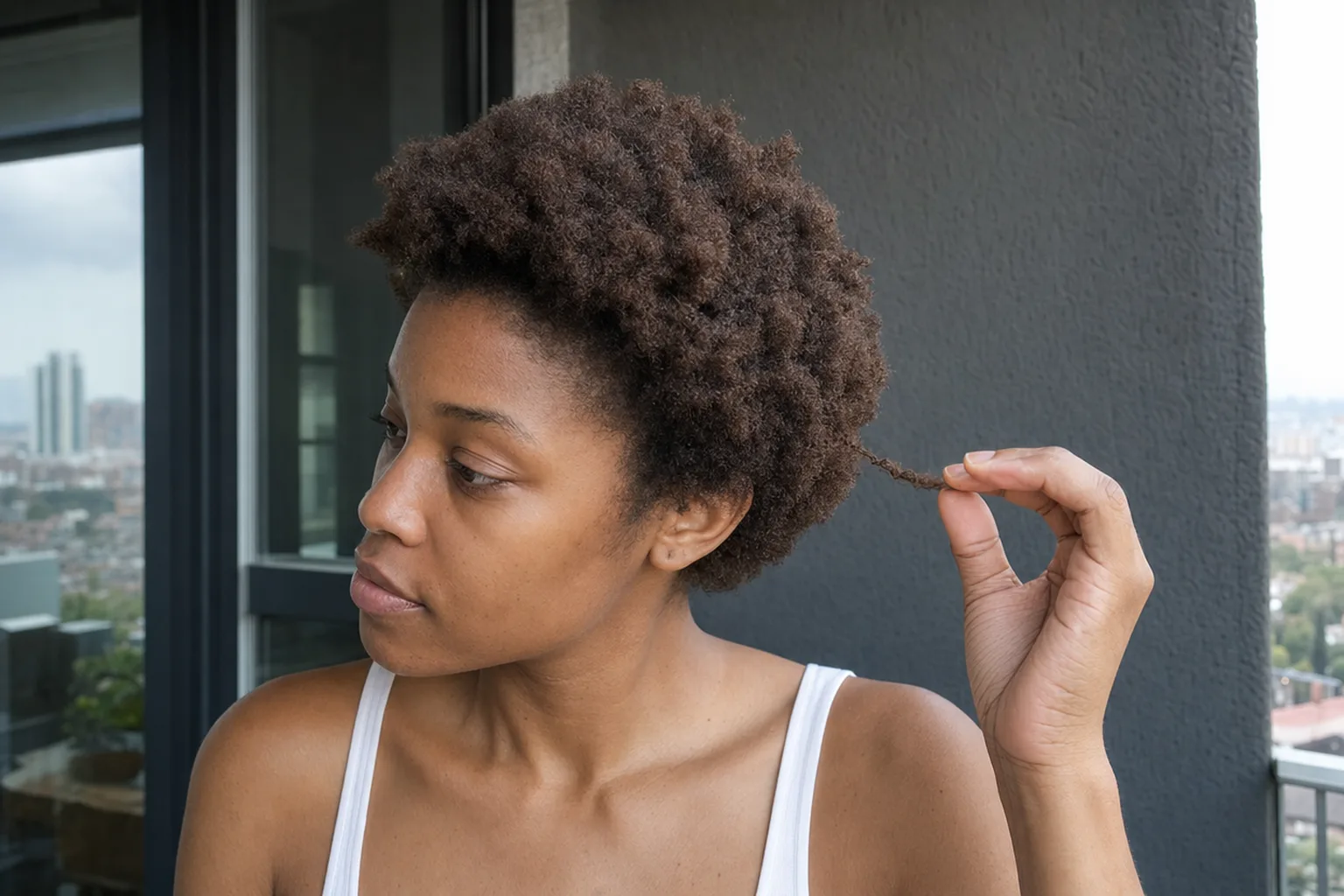
What it is not: it is not a loose ringlet that holds its own shape, and it is not the continuous coil of 4c. Left alone after washing, 4b dries into a fluffy cloud with very little visible pattern, which is why so many people with 4b hair assume theirs is "undefined" or damaged. It is neither. It is a texture that bends instead of curling.
Three practical consequences follow:
- Shrinkage is heavy. Dry 4b hair often looks half its stretched length or less.
- Dryness comes first. Scalp oil struggles to travel down a strand that changes direction every few millimeters, so the ends are always the driest part.
- The bends are the weak points. Every sharp angle is a place a strand can snap, so rough detangling costs more length on 4b than on looser textures.
4a vs 4b vs 4c: how to tell them apart
Look at a single dry strand in daylight. A spiral you could wrap around a pencil is 4a. A zig-zag with sharp corners is 4b. A coil so tight it shows no pattern at all is 4c. Most heads carry two of these, often 4b at the crown and 4a or 4c at the nape and edges, so type by the section that covers most of your head.
| 4a | 4b | 4c | |
|---|---|---|---|
| Strand shape | Round S-shaped coil | Sharp Z-shaped bend | Very tight coil, pattern hard to see |
| Clumps on its own after washing | Yes, defined coils | Rarely, dries fluffy | No, dries as one mass |
| Typical shrinkage | Moderate | Heavy | Heaviest |
| Wash-and-go result | Defined | Soft, frizzy, short-lived | Mostly shrinkage |
| Best route to definition | Wash-and-go or twist-out | Twist-out or braid-out | Stretched and protective styles |
| Read next | 3c and 3c/4a hair | This guide | 4c hair guide |
If you sit on the border with 4c, the guide to 4c hair walks through the strand test and the water test in more detail. For styling, the line that matters is this one: 4b holds a set pattern well, and 4c holds a stretch well.
Why definition on 4b hair is made, not found
Here is the counterintuitive part. The most common frustration with 4b hair is a wash-and-go that looks great wet and turns into a fuzzy halo by lunchtime. People respond with more gel, more curl cream and more layering, and the result barely moves. The texture is not failing. A zig-zag strand has no round coil to spring back into, so it never forms stable clumps the way 4a or 3c does.
What 4b does extremely well is hold a pattern you give it. Twist or braid it while damp, let it dry fully, unravel, and the zig-zag holds the shape of the twist. A good twist-out on 4b often lasts four or five days with a loose pineapple at night, where the same hair left as a wash-and-go lasts one.

So the real decision is not which product defines 4b hair. It is which set you want to live in this week. That shift is what makes 4b easier.
Yours could be here.
Start with one selfie.
One photo, twenty seconds, and you'll know. Free account, no card for your first render.
Which 4b hairstyle fits what you want?
Pick by the result you want and the time you have, not by what looks best in a photo on someone with a different texture.
| What you want | Best style | Set time | Lasts | Manipulation |
|---|---|---|---|---|
| Visible definition | Twist-out or braid-out | 1 to 2 hours | 4 to 5 days | Medium |
| Maximum volume | Picked-out afro or puff | 20 minutes | 2 to 4 days | Low |
| Hands off for weeks | Two-strand twists or braids | 2 to 5 hours | 1 to 3 weeks | Very low once in |
| Almost no styling | Short tapered cut (TWA) | 10 minutes | Daily | Very low |
For definition: twist-outs and braid-outs
This is where 4b hair shines, and it is the reason to learn one good set. Two-strand twists give chunky, rope-like definition; braids give a finer, crinkled wave. Chunkier twists stretch more and shrink less, so if your hair is shoulder length stretched but looks chin length, go bigger. The step-by-step is further down.
For volume: the picked-out afro
4b hair makes a very full afro because the zig-zag strands push against each other instead of nesting. Stretch it first with a twist-out or a banded set, then pick from the roots, not the ends, so you get shape without tearing through the lengths.

A rounded shape flatters most faces; if your face is long, keep more width at the sides than the top. The curly and coily try-on is the quickest way to see that shape at your length before you commit to growing it.
For low manipulation: two-strand twists and protective styles
Twists made from your own hair are the best low-effort option for 4b, because they protect the ends, which are the part that breaks. Keep them in one to three weeks, moisturize the length every few days, and take them down gently with oil on your fingers. The twist hairstyles guide covers sizes and parting, and knotless braids are the gentler braided option when you want added length.

For almost no styling: the short tapered cut
A short cut on 4b hair, called a TWA (teeny weeny afro) when it is kept round, is a real option and not only a big-chop phase. Tapered at the sides and nape, it needs water, a leave-in and a minute of shaping each morning. The cut matters more than the products here, so ask for it shaped on dry, shrunken hair.
Say this to your barber
Please cut my hair dry and stretched, keep about two inches on top, taper the sides and nape short but not down to skin, and shape the curve by how it shrinks.
4b hair on men
4b hair on men follows the same rule: it wants water, a light cream and as little combing as possible. The two looks that suit it best are a short sponge-textured top with a low taper, and two-strand twists once the top passes about three inches.
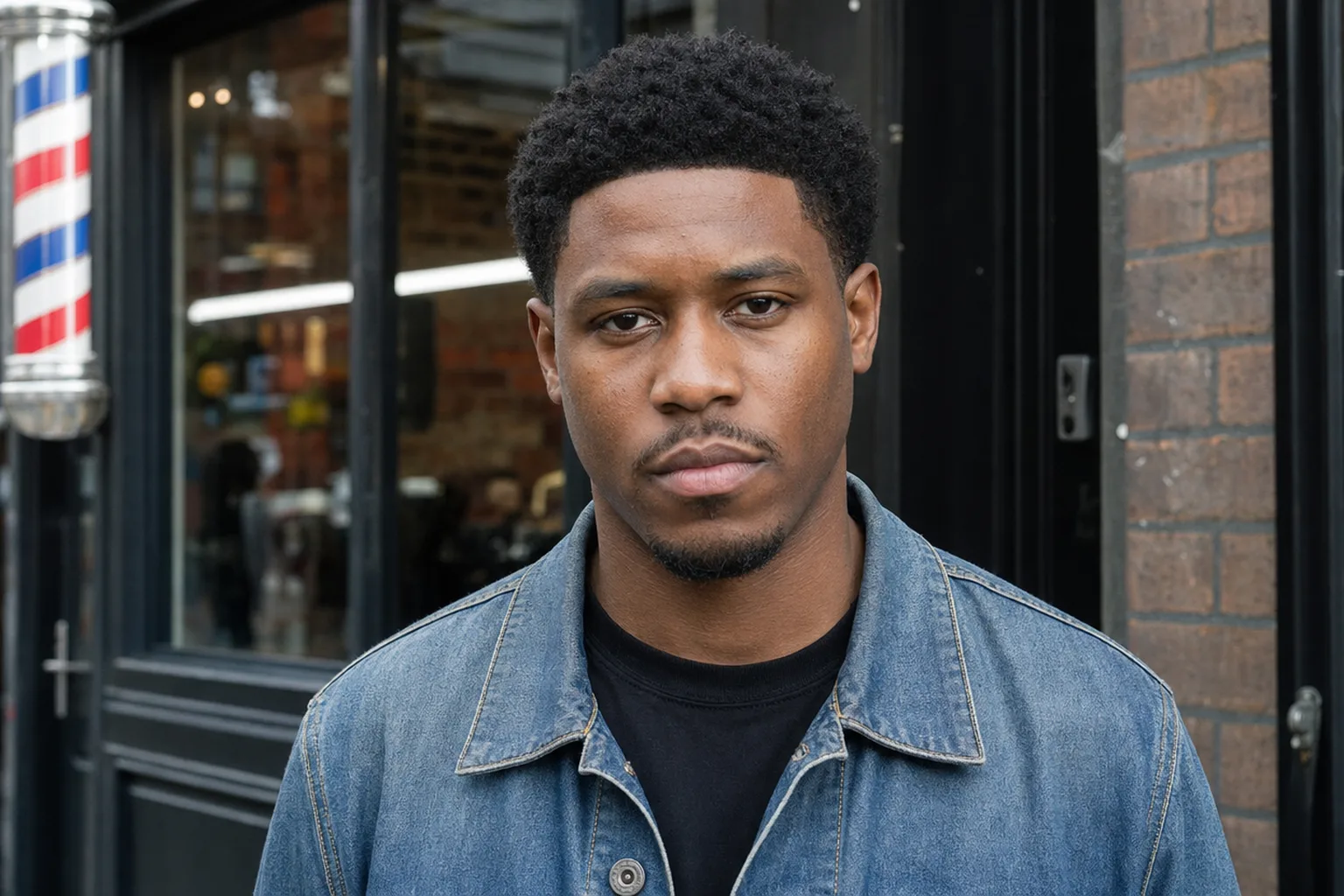
Two things go wrong. The first is brushing short 4b hair daily to lay it flat, which frays the ends and leaves a dry, dusty look. The second is getting a fade cut on wet hair, which looks right in the chair and then shrinks into an uneven line. Barbers who work with type 4 hair cut it dry. For fade heights, see the taper haircut guide, and haircuts for curly hair men covers the in-between lengths.
How to define 4b hair with a twist-out
This is the one routine worth learning, because it gives the longest-lasting definition 4b hair can hold.
How to do a twist-out on 4b hair
- Start on clean, soaking wet hair
Wash and condition, then detangle in the shower with conditioner still in, working from the ends up with your fingers or a wide-tooth comb. Split the head into four to six sections with clips.
- Apply a leave-in, then a cream
Work a water-based leave-in through one section at a time while it is still dripping, then a styling cream or butter over it. On 4b hair, the leave-in carries the moisture and the cream holds it in.
- Twist in medium sections
Make two-strand twists about an inch wide, twisting down to the ends and coiling each end around your finger. Smaller twists give tighter definition and more shrinkage; bigger twists stretch more.
- Let it dry completely
Air dry overnight or sit under a hooded dryer. Unraveling damp twists is the most common reason a twist-out goes frizzy within a day.
- Unravel with oil on your fingers
Untwist each piece in the reverse direction, split it once or twice, and fluff at the roots only. Do not comb through the lengths.
- Protect it at night
Gather it loosely on top of the head and sleep on satin or in a bonnet. Refresh the ends with a little water and cream in the morning.
Mistakes that cost you length with 4b hair
- Detangling dry. The bends catch on each other, and dry combing snaps them. Detangle wet, with conditioner for slip.
- Chasing a wash-and-go. Layering more product on a texture that does not clump buys buildup, not definition. Set the pattern instead.
- Tight styles at the edges. Braids, puffs and ponytails pulled tight at the hairline cause traction alopecia, which the American Academy of Dermatology warns can become permanent the longer it goes untreated.
- Heat as a daily stretch. Frequent flat ironing loosens the 4b pattern over time, and heat damage does not revert. Stretch with twists, braids or banding.
- Skipping the ends. The last two inches are the oldest and driest. If you only moisturize the roots, that is where the length goes.
- Measuring dry. A dry 4b afro hides most of its length. Check progress stretched and wet, in the same place, once a month.
Ten ways 4b hair is worn
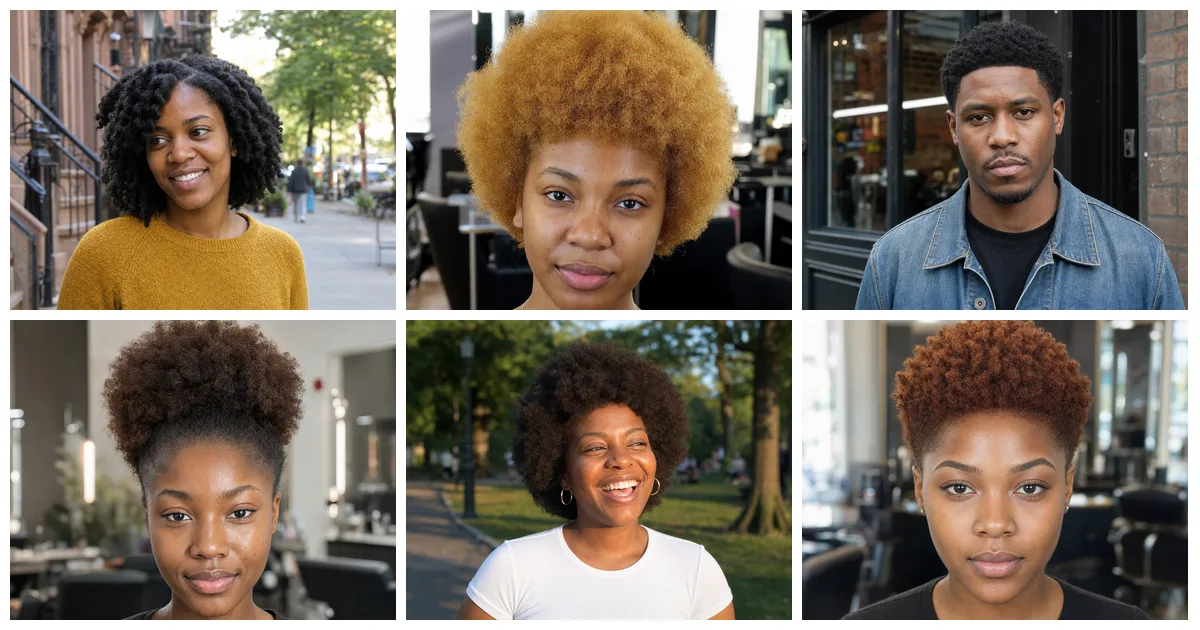
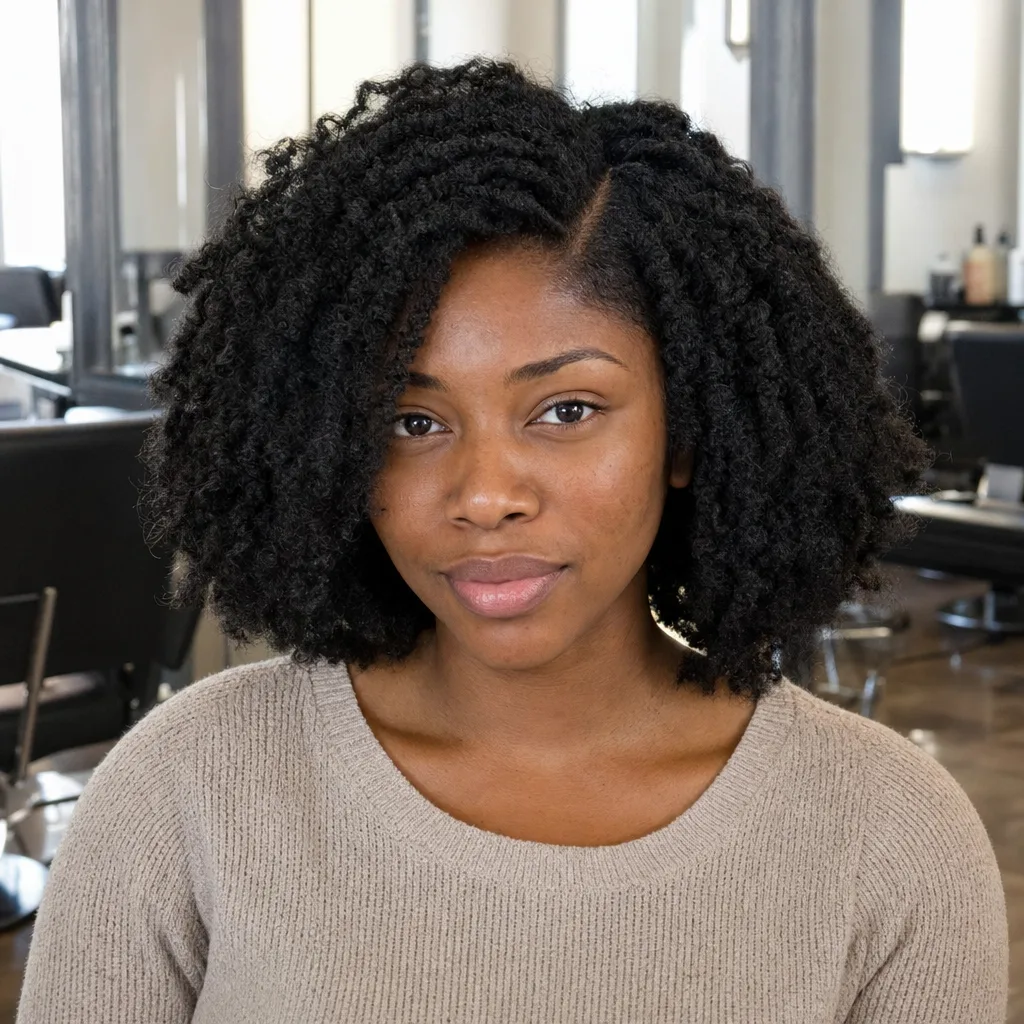
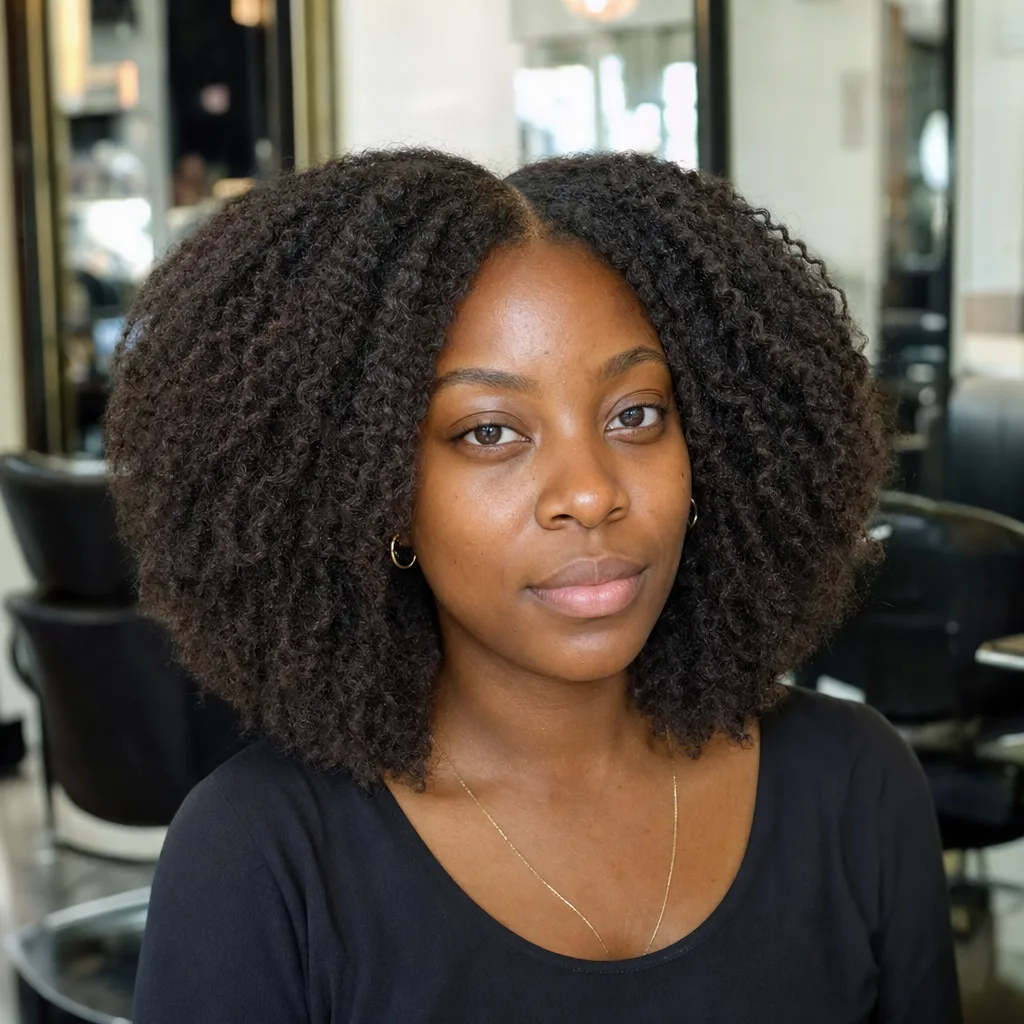
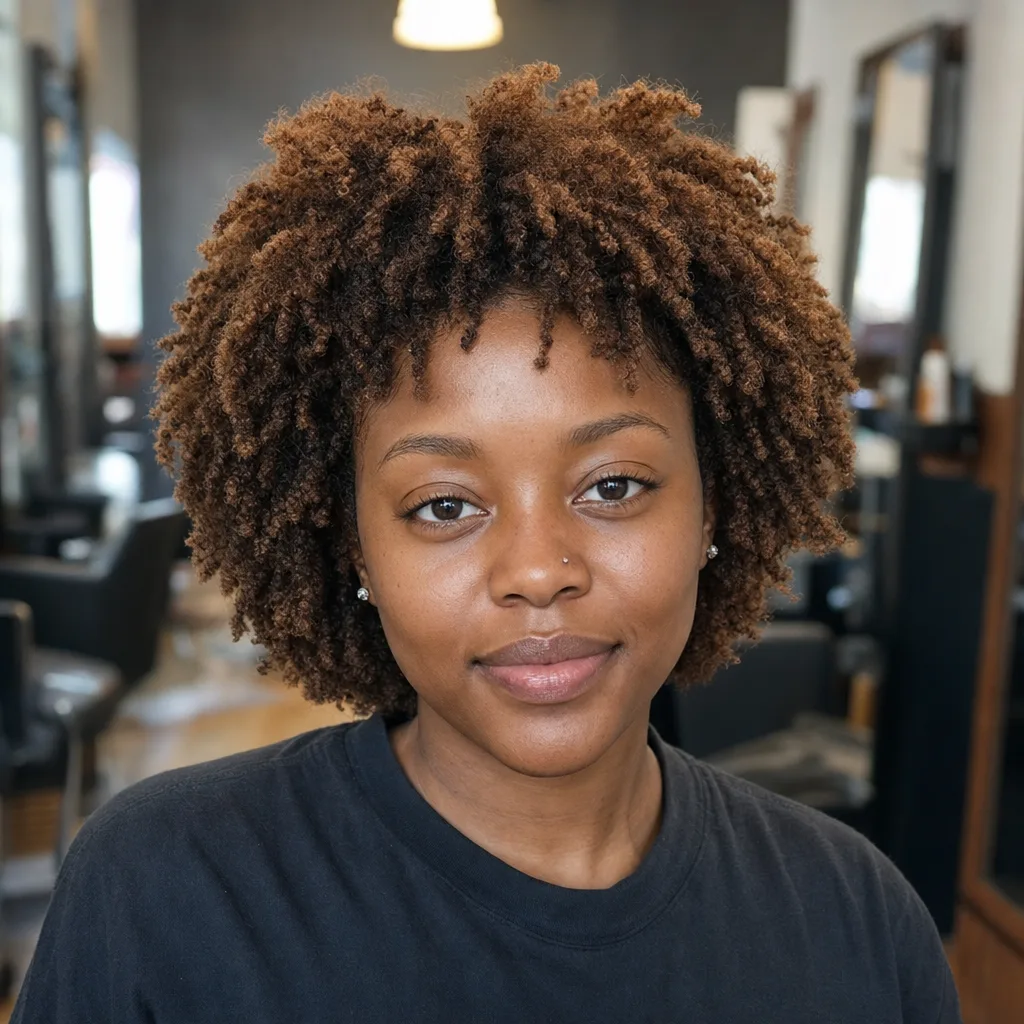
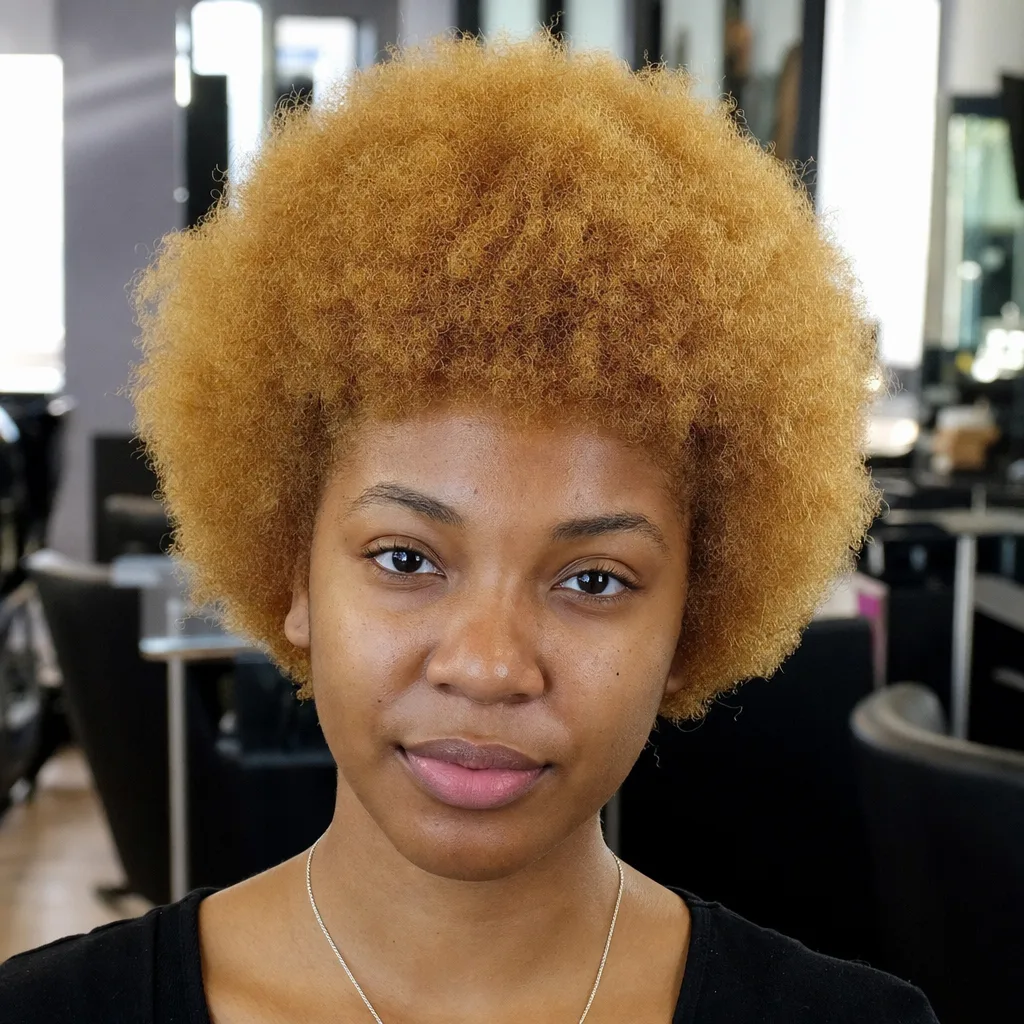
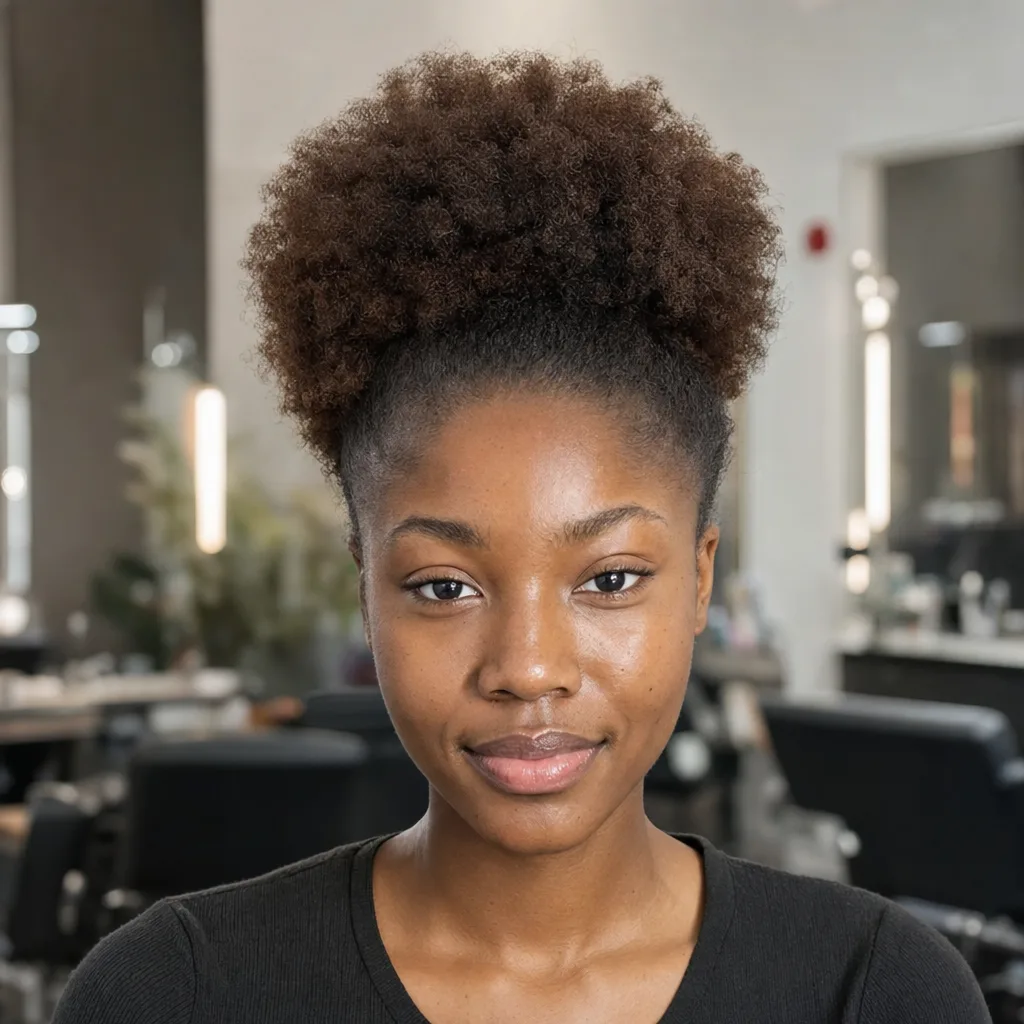
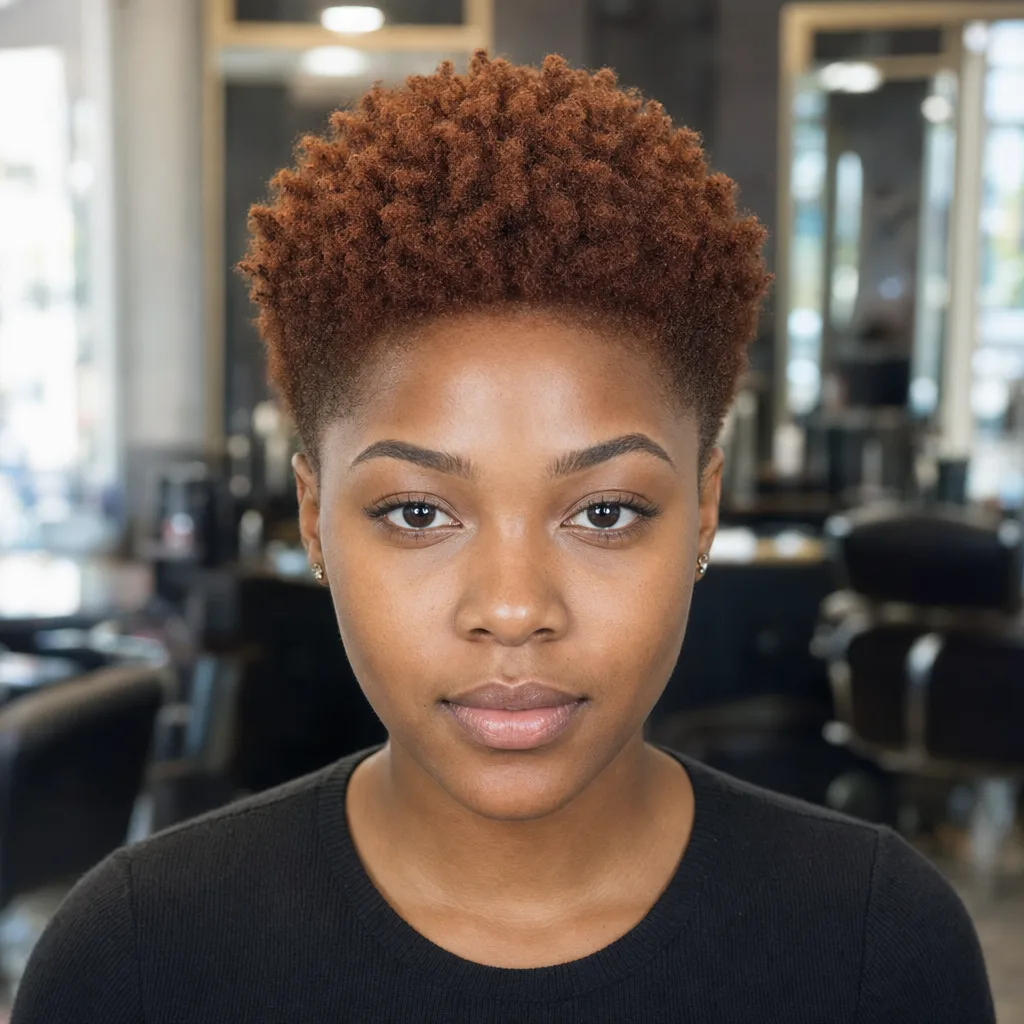
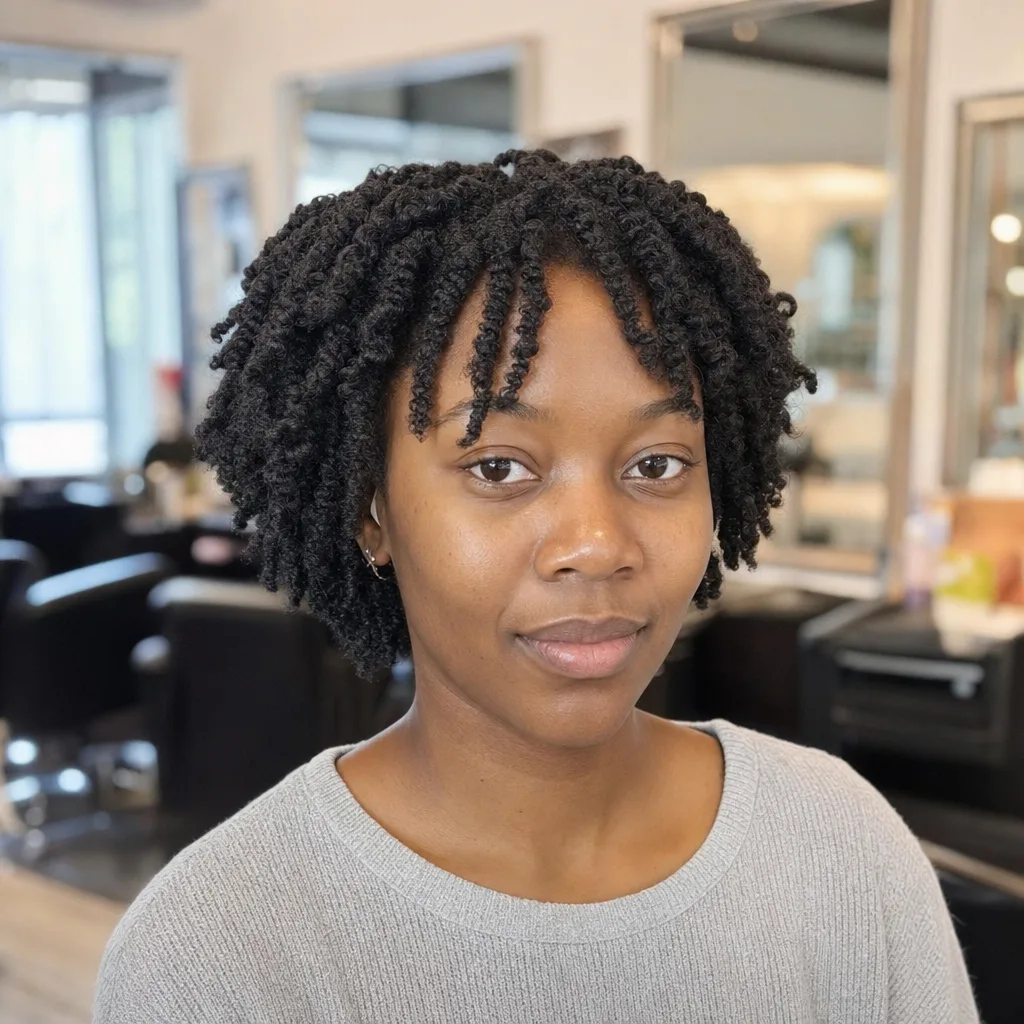
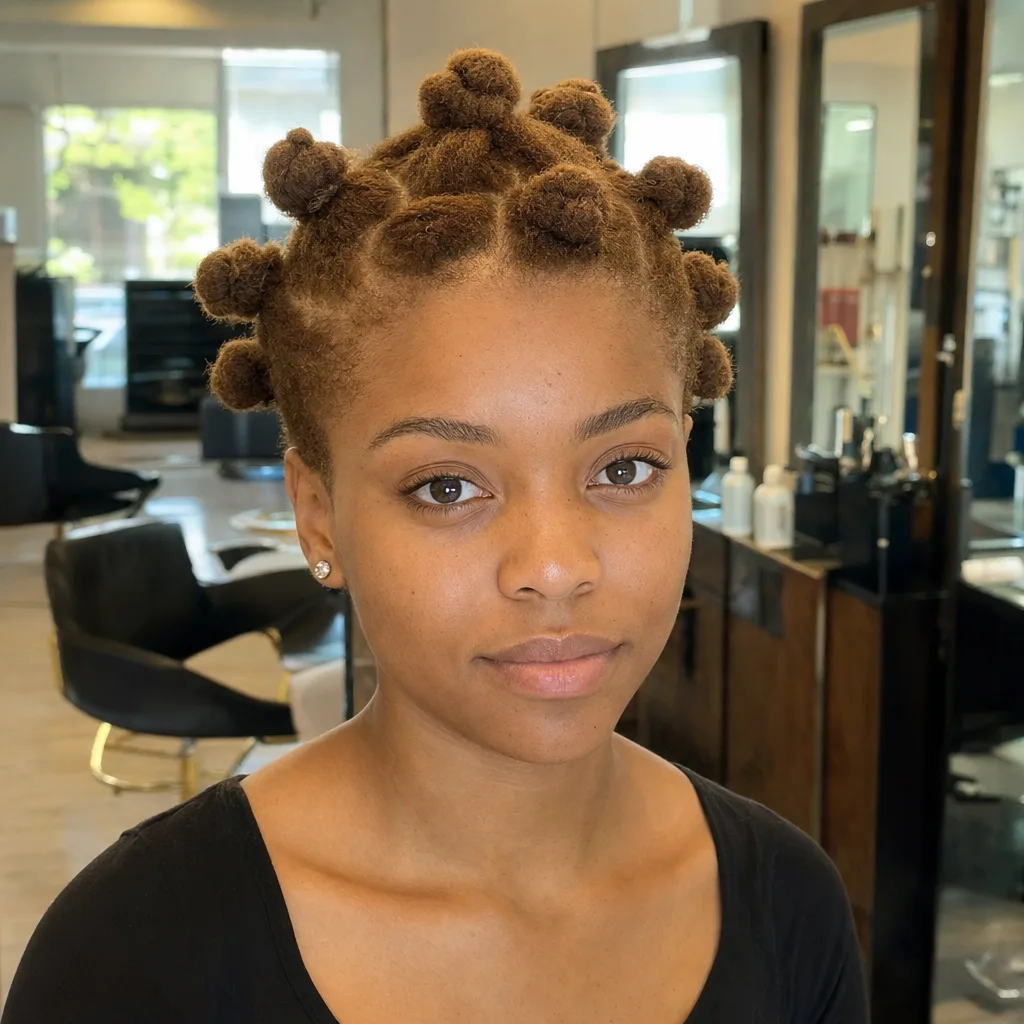
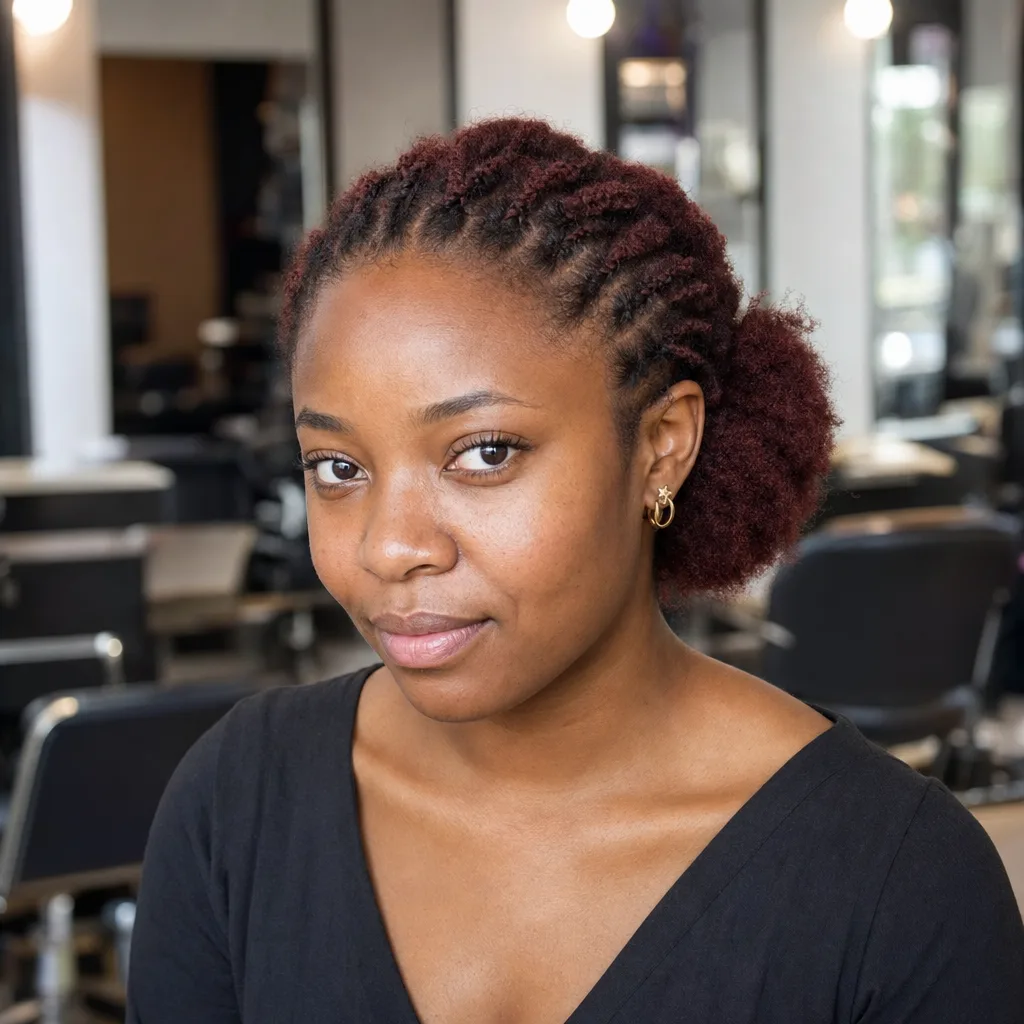
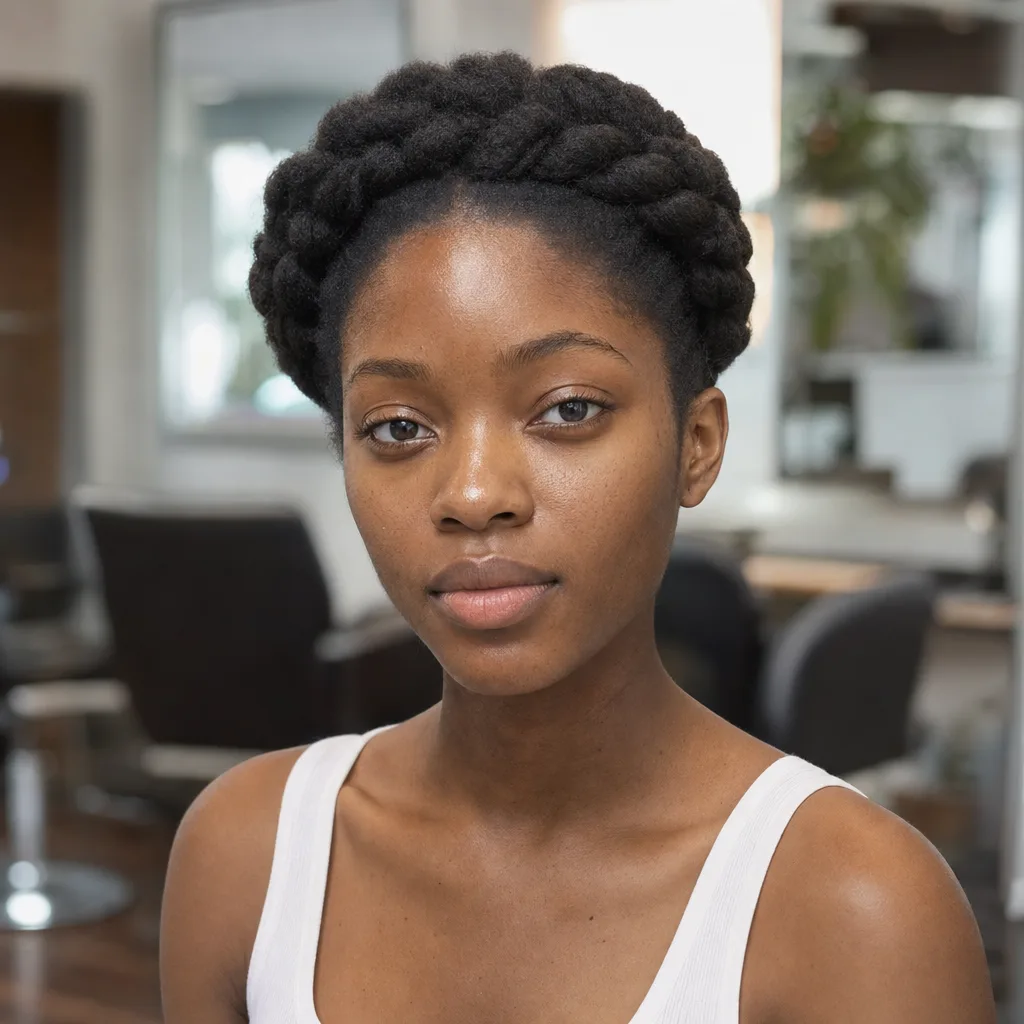
Every photo below is 4b hair in the same salon setting, so the only thing that changes is how it is styled. Use it to pick your next set, from the most defined to the most protective.
Gallery10 photos · tap to enlarge
 Try this on me
 Try this on me
 Try this on me
 Try this on me
 Try this on me
 Try this on me
 Try this on me
 Try this on me
 Try this on me
 Try this on me
If none of these fit, the wider roundup of natural and protective Black hairstyles goes further into braided and loc styles.
Can you try a 4b hairstyle on for free?
Yes, for the first look. You get one hairstyle, plus one color on it, on your own photo in front view, with no card needed. After that, Plus is $9 a month or $60 a year for 150 credits a month, where a hairstyle costs 10 credits and a color on it costs 5. Pro is $24 a month or $160 a year for 480 credits and adds side, three-quarter and back views. There is a seven-day refund, and cancelling takes two clicks. Full details are on the pricing page.
The free look is where to start if you are deciding between a big chop and growing out, or want to see a honey blonde afro before you lighten your hair. The hair color try-on does the color part on its own.
Where to start with 4b hair
Stop judging your hair by its wash-and-go. That is the one change that makes 4b hair easier, because it is the one style the texture was never going to win at. Learn one twist-out, keep the ends moisturized, detangle only when wet, and let the set do the defining.
If you are unsure which direction to take next, a full afro, a tapered cut or a set of twists, try it on first. The first look costs nothing and saves a wash day, or a haircut you cannot undo.
Frequently asked questions
Look at one dry strand in daylight. A round spiral is 4a, a sharp zig-zag is 4b, and a coil so tight you cannot see a pattern is 4c. Most people have two types on one head, so go by the section that covers most of it.
No. Both are type 4 textures with heavy shrinkage and similar care needs, but 4b strands bend in visible Z-shaped angles while 4c coils so tightly the pattern is hard to see. In styling terms, 4b holds a twist-out longer and 4c holds a stretched style better.
No. 4b is a common texture among people of African descent, and many people who describe their hair as 4c actually have large 4b sections. It seems rarer than it is because it rarely looks defined unless it has been set.
4b hair is most common among people of African descent, including African American, Caribbean and African people, and it also appears in people of mixed heritage. Hair type describes the shape of the strand, not a person's ethnicity, and texture can vary a lot within one family.
No. Hair grows at roughly the same rate on every texture, about half an inch a month. 4b can look like it grows faster because it shrinks a little less than 4c and, handled gently, keeps more of its length.
Dry, and ideally stretched. Wet 4b hair looks much longer than it will once it shrinks, so a cut shaped wet usually dries shorter and uneven. A stylist who works with type 4 hair will cut it dry or on a blown-out stretch.
Once a week is a good default, or every ten days if your scalp stays comfortable. Rinse or co-wash in between if you work out. Washing more often than your scalp needs tends to leave 4b ends drier.
It is the same zig-zag texture on a shorter cut. On men it looks best as a short sponge-textured top with a low taper, or as two-strand twists once there are about three inches on top, and it should be moisturized rather than brushed flat every day.
Preview it on your own photo: Virtual Hair Color Try-On.
Share article
About the author

More articles
Women's Haircuts · 14 min
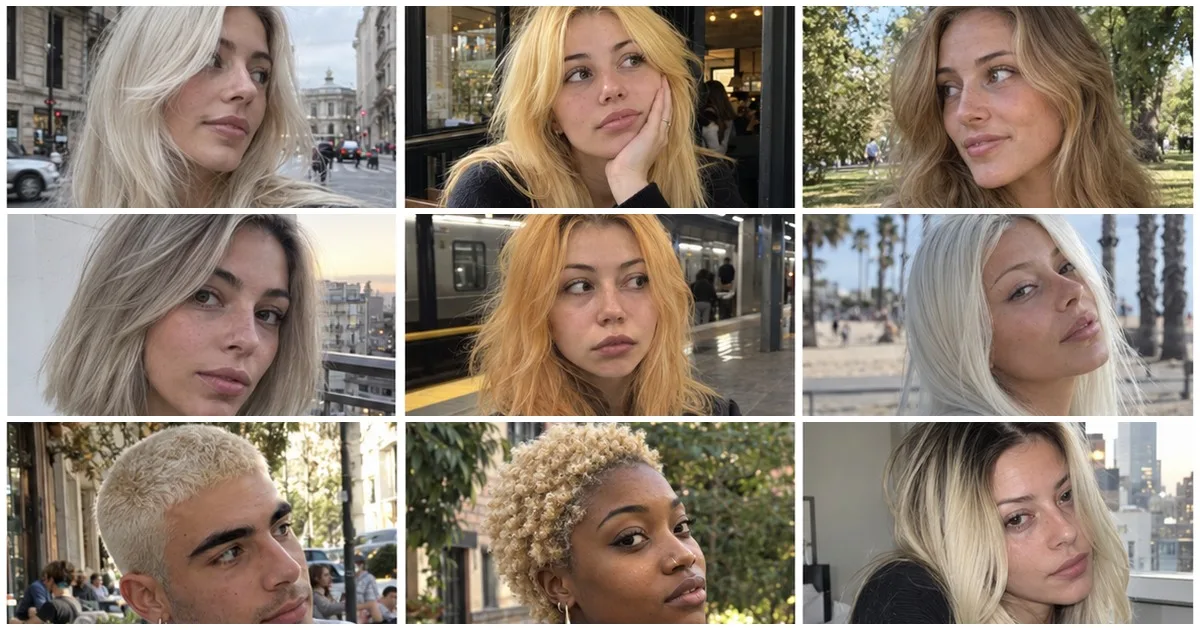
Bleached Hair: How Light Yours Can Go, 14 Shades, Aftercare
How light your bleached hair can go depends on where it starts. See 14 bleached shades on one cut, what each starting color can reach in one session, how toner finishes the job, and the aftercare that keeps it soft.
Women's Haircuts · 16 min
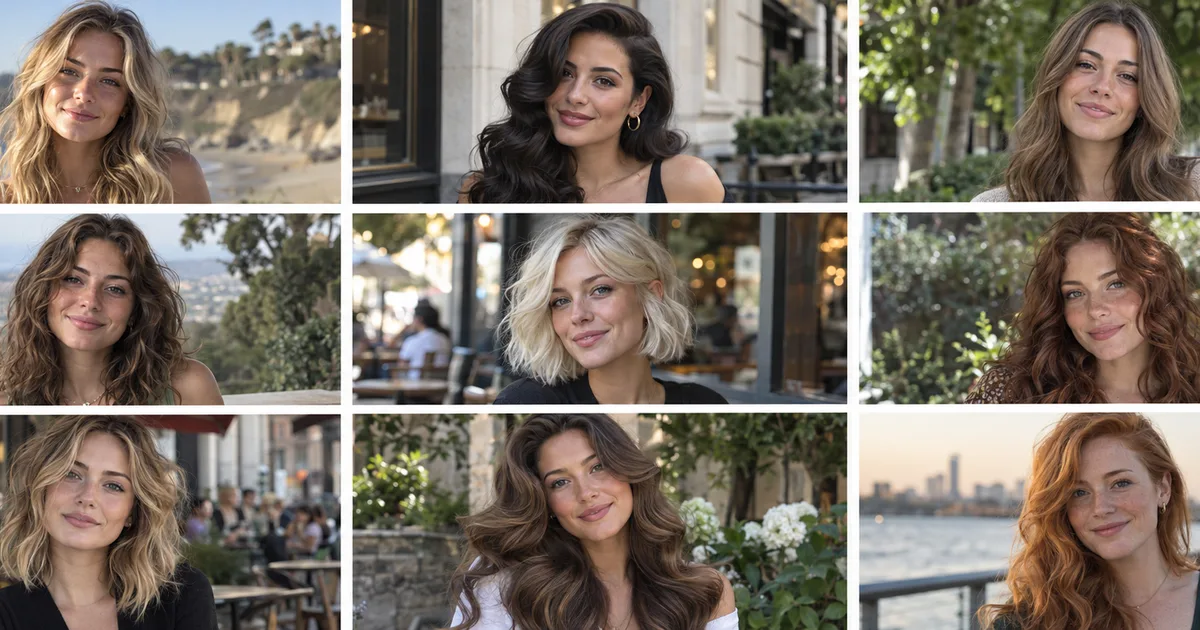
Waves Hair: How to Get Beach, Loose and Hollywood Waves That Last
Waves hair is about what you leave straight. How to get beach, loose, Hollywood and heatless waves, which wave suits your hair type, and why your waves keep falling out.

Women's Haircuts · 15 min
Fino Hair Mask: Who It Suits, How to Use It, and Its Limit
The Fino hair mask makes dry, bleached and frizzy hair smooth and shiny in one use, mostly by coating it. Here is what is in the jar, which hair types it suits, exactly how to use it, and what to do when the ends are past a mask.