Twist Hairstyles: 9 Types and How Long Each Lasts
Oleh Onysko Updated 27 September 2026 16 min read
In this article
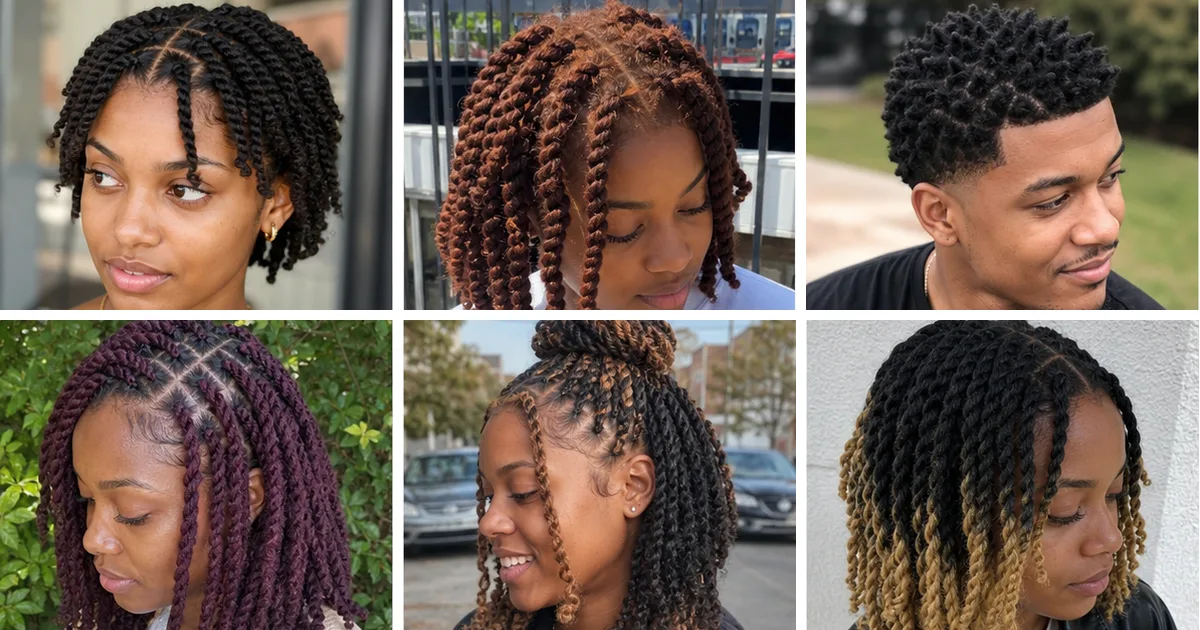
Every twist hairstyle on this page is the same move: split a section of hair into two, wind the halves around each other, let the coil hold itself. A mini twist, a passion twist and a Marley twist are not three techniques. They are one technique with different hair added and different partings taken.
That is the part most guides skip, and it matters because parting size, not twist type, is what decides whether your twists look clean for two weeks or six. Below: nine types with a verdict table, real timings and costs, the base twist step by step, and the mistakes that cost people their hairline.
What a twist hairstyle actually is
A twist hairstyle is any style where a section of hair is divided into two strands and wound around each other rather than plaited into three. The two strands hold each other by friction, which is why twists work beautifully on coily hair and slide apart on straight hair.
On natural hair it is a protective style. The fragile ends are tucked inside the twist instead of rubbing against collars and getting combed every morning, so the style is doing a job while it sits there. That is the whole reason twists outlast a blowout.

Twist, braid and loc: the difference in one line
A twist uses two strands. A braid uses three. A loc is a twist or a braid that has been left alone until the hair mats permanently and can no longer be taken down.
If you want the three-strand side of the family, that is the whole subject of our African hair braiding guide, from cornrows to feed-ins.
That last one matters more than it sounds. A two-strand twist left in for months without retwisting is how a lot of people start locs, sometimes on purpose and sometimes by accident. If you want your twists back out, take them down inside the window in the table below.
The nine twist types, compared
The first five need no added hair. The last four are installed with extensions, which is why they last longer and cost more.
| Type | Added hair | Typical parting | How long it lasts | Install time | Best for |
|---|---|---|---|---|---|
| Two-strand twist | None | Half inch to one inch | 1 to 2 weeks | 1 to 2 hours | Any coily length past 3 inches |
| Mini twists | None | Quarter inch or less | 3 to 6 weeks | 4 to 8 hours | Shorter hair, maximum longevity |
| Flat twists | None | Rows, like cornrows | 3 to 7 days | 45 to 90 minutes | Laying the front, twist-out prep |
| Rope twist (three strand) | None | Half inch to one inch | 1 to 2 weeks | 1 to 2 hours | Thicker, rounder rope look |
| Twist-out | None | Half inch to one inch | 2 to 4 days | Overnight set | Loose defined curls, no twists visible |
| Passion twists | Water wave hair | Half inch to one inch | 4 to 6 weeks | 4 to 6 hours | Soft wavy texture, lightest feel |
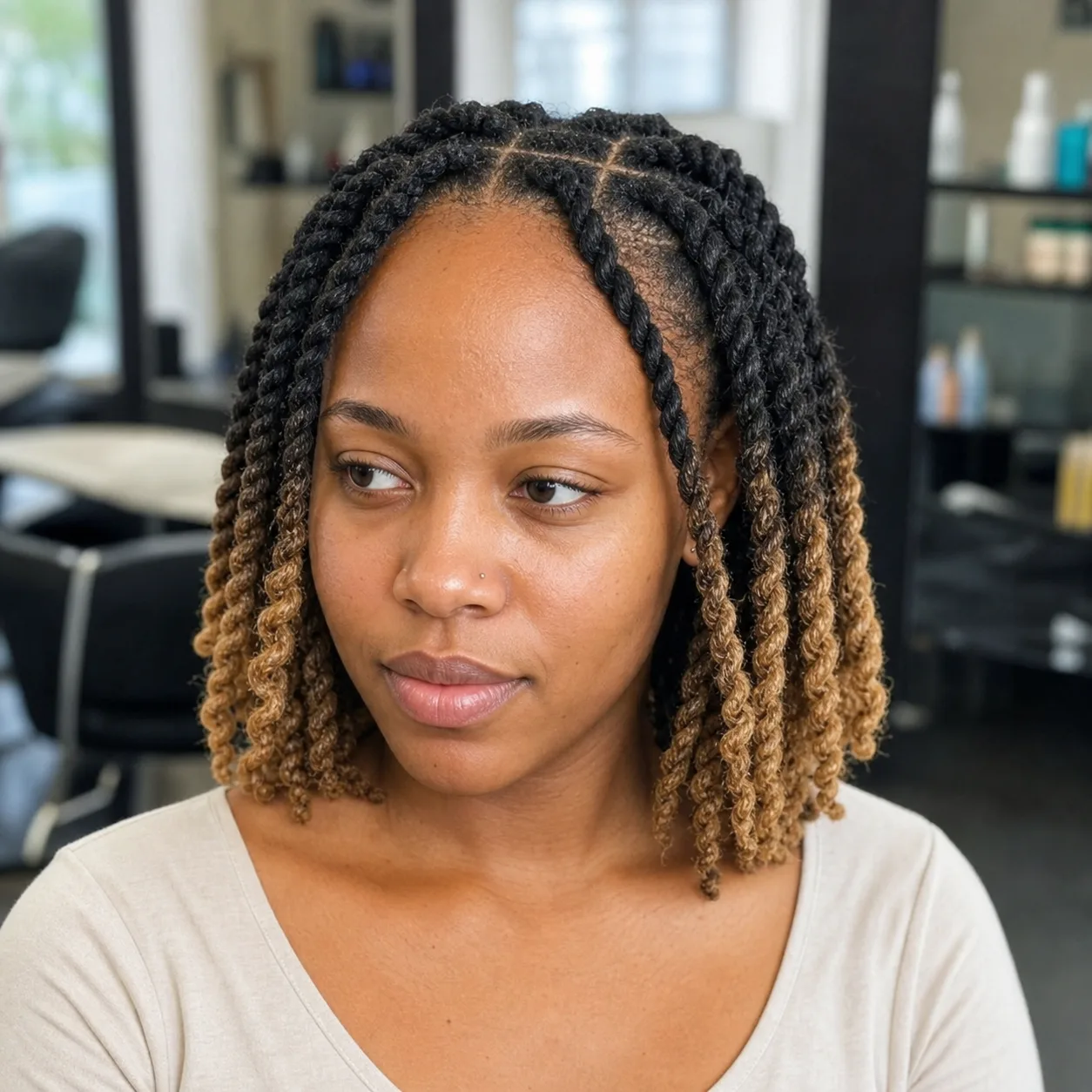
| Marley twists | Marley or kinky hair | Half inch to one inch | 6 to 8 weeks | 4 to 7 hours | Matching 4c texture, chunky look |
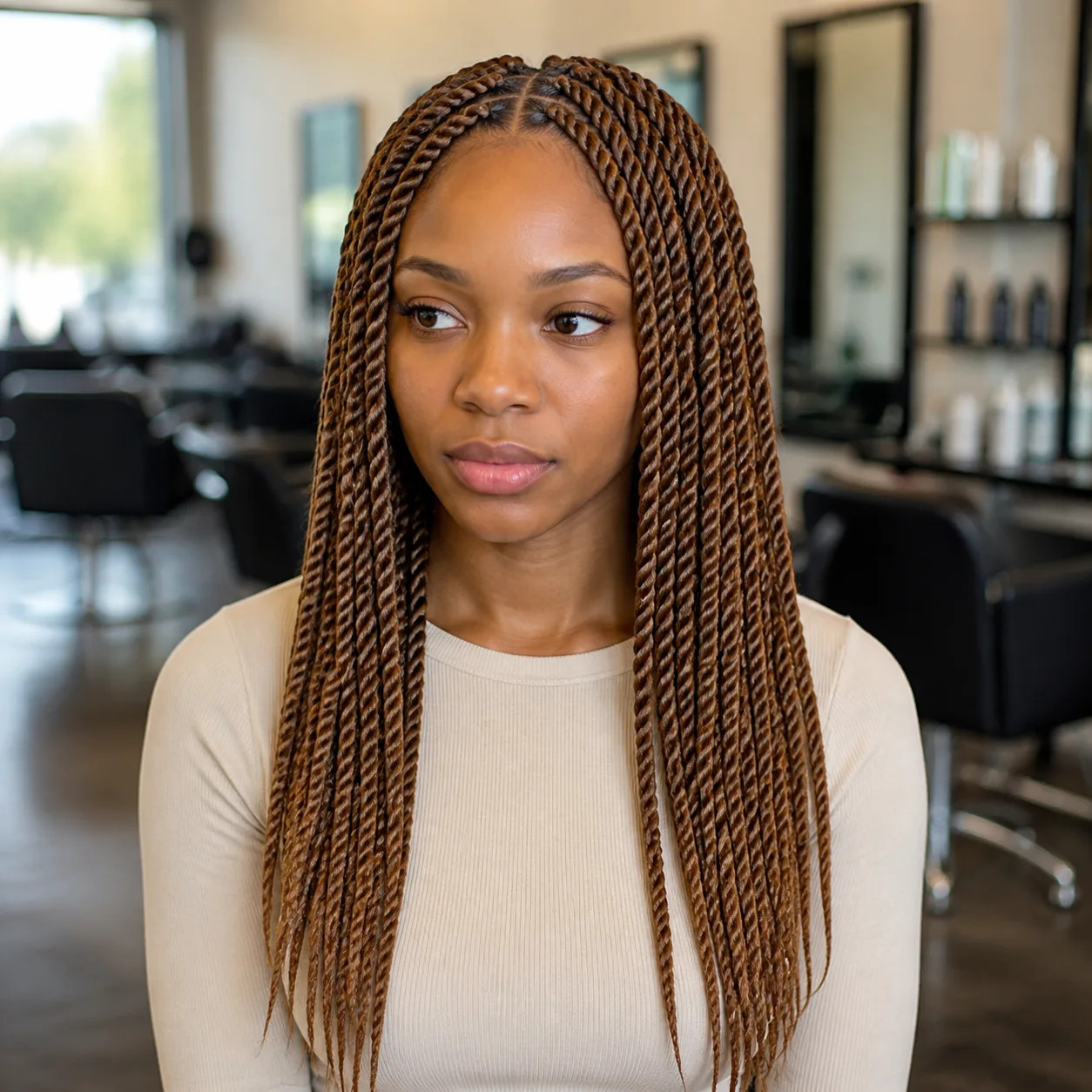
| Senegalese twists | Silky kanekalon | Quarter to half inch | 6 to 8 weeks | 5 to 8 hours | Smooth rope finish, high shine |
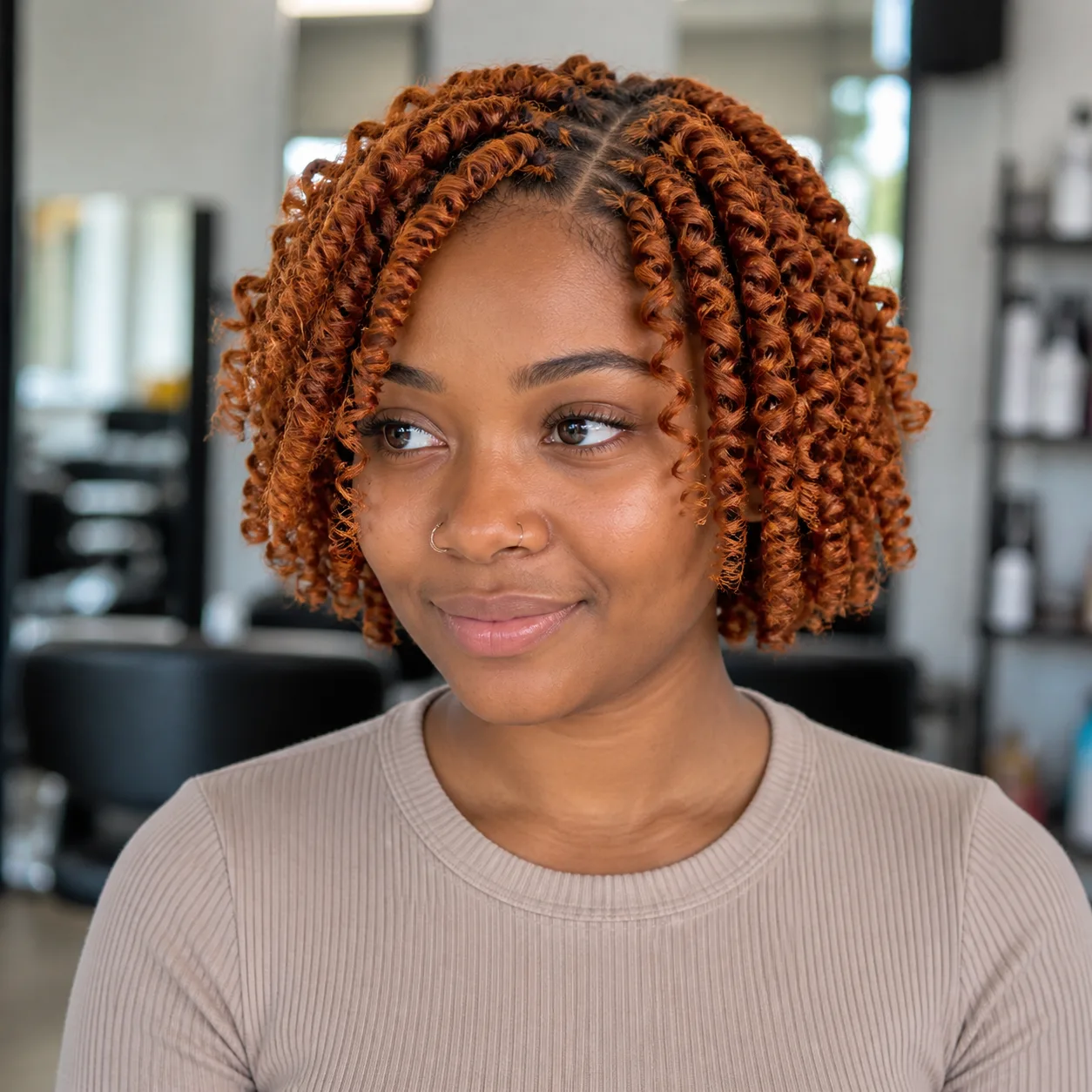
| Spring or island twists | Pre-curled springy hair | Half inch to one inch | 4 to 6 weeks | 3 to 5 hours | Bouncy short styles, light weight |
Two-strand twist
The base. Two sections of your own hair, no extensions, wound from root to end and left to set. Done on damp hair with a leave-in and a cream, it holds for one to two weeks before the roots start to loosen and frizz.
This is the style worth learning first, because every other type on the list is this one with something changed. It is also the cheapest: nothing but product and an hour of your evening.
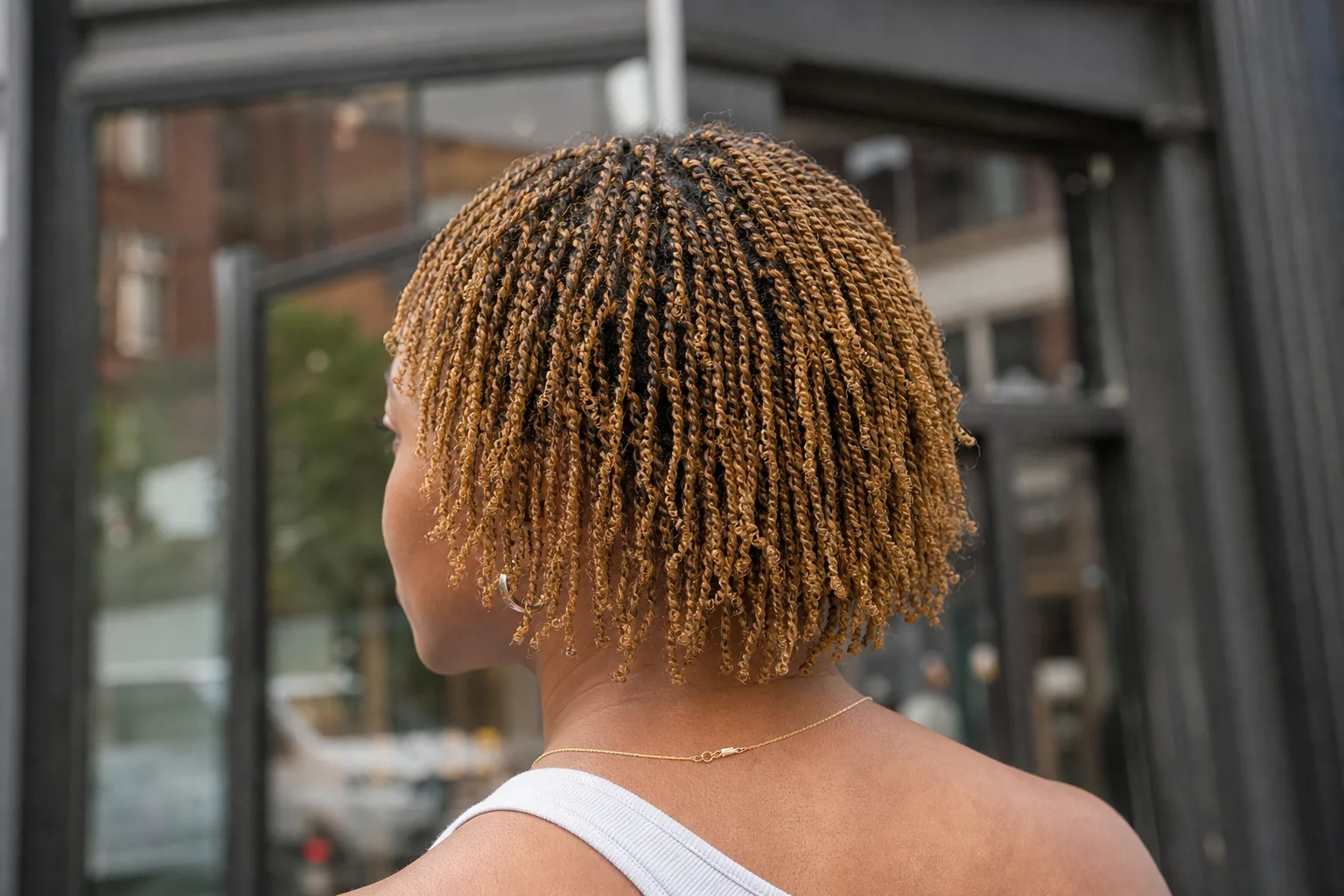
Mini twists
Same technique, much smaller partings. Quarter inch or less, often closer to a pencil width, which means a lot more twists and a lot more hours in the chair.
The payoff is longevity. Small twists have less weight pulling on each root, so they stay tidy for three to six weeks rather than one to two. If you have shorter hair and want a protective style that actually protects, this beats a chunky install every time.
Flat twists
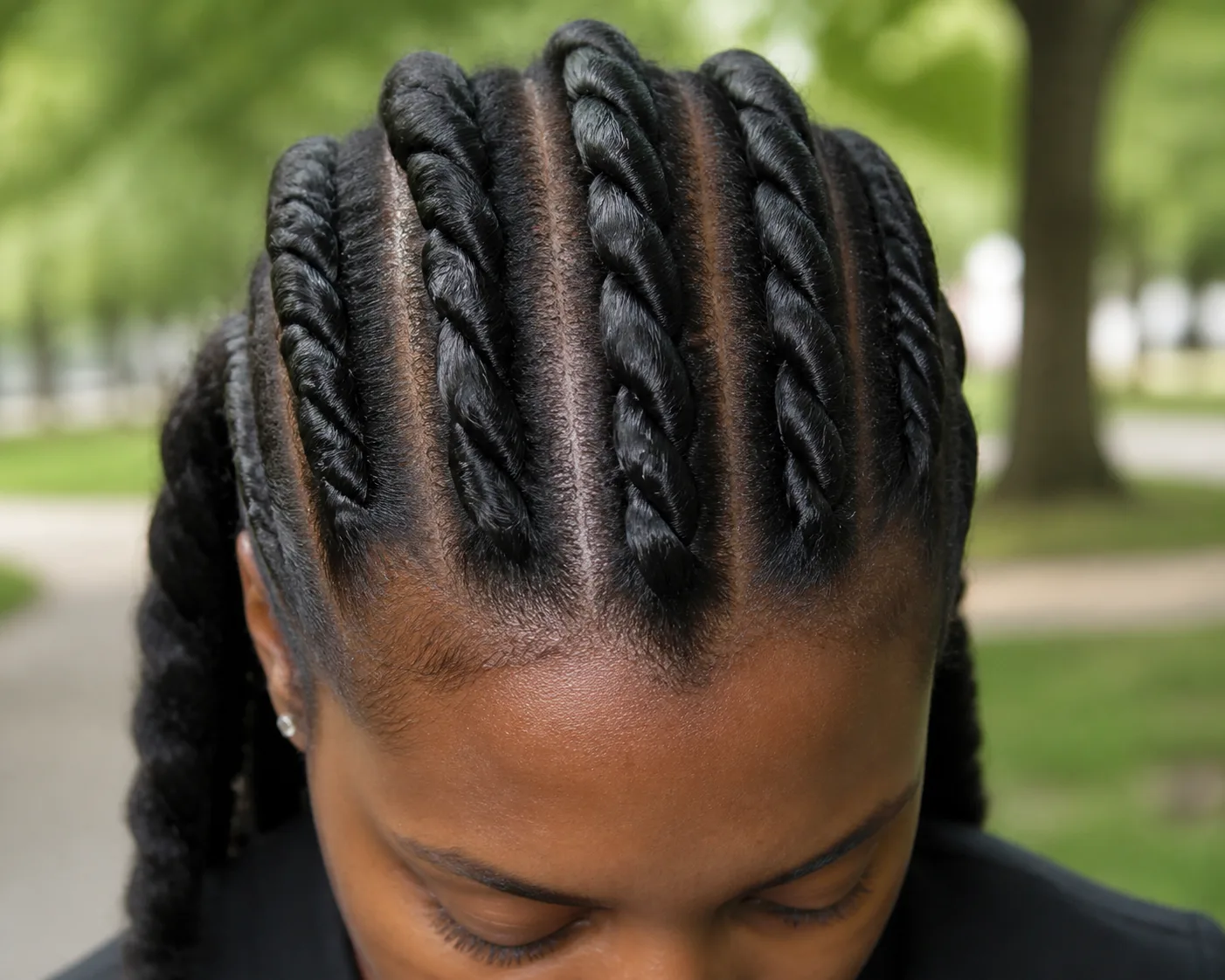
A flat twist lies against the scalp, picking up hair as it travels, the way a cornrow does. Two strands instead of three, so it reads softer and rounder than a cornrow and takes about half the time.
The number of rows is the whole decision, the same way it is with feed-in cornrows. Four fat rows reads casual, ten fine rows reads dressed.
Flat twists are usually part of a style rather than the whole style: two or three at the front with the rest loose, or a full head of rows set overnight and taken out as a twist-out. They do not last long on their own, three to seven days at most, because there is nothing tucked away.
Rope twist
Three strands wound rather than plaited. It gives a rounder, more corded look than a two-strand twist and holds a fraction longer, at the cost of being harder to do on yourself.
Most people never need it. Try it if your two-strand twists keep unravelling at the ends despite damp hair and cream, because the third strand locks the end more firmly.
Twist-out
Not a twist you wear, a twist you undo. Set the hair in two-strand twists at night, let it dry fully, unravel each one in the morning and separate. What you get is a defined, uniform curl pattern with no partings showing.
This is the highest reward per hour on the list and the shortest lived. Two to four days before humidity flattens it. Sleep in a satin bonnet and re-twist only the front to buy another day.
Passion twists
Installed with water wave extension hair, which is wavy and glossy rather than matte and coily. The result is the softest of the extension twists and the lightest on your scalp, which is why they became the default summer install.
Four to six weeks, and the boundary is usually your roots rather than the twists themselves. They start looking fuzzy at the part lines before the length gives up.
Marley twists
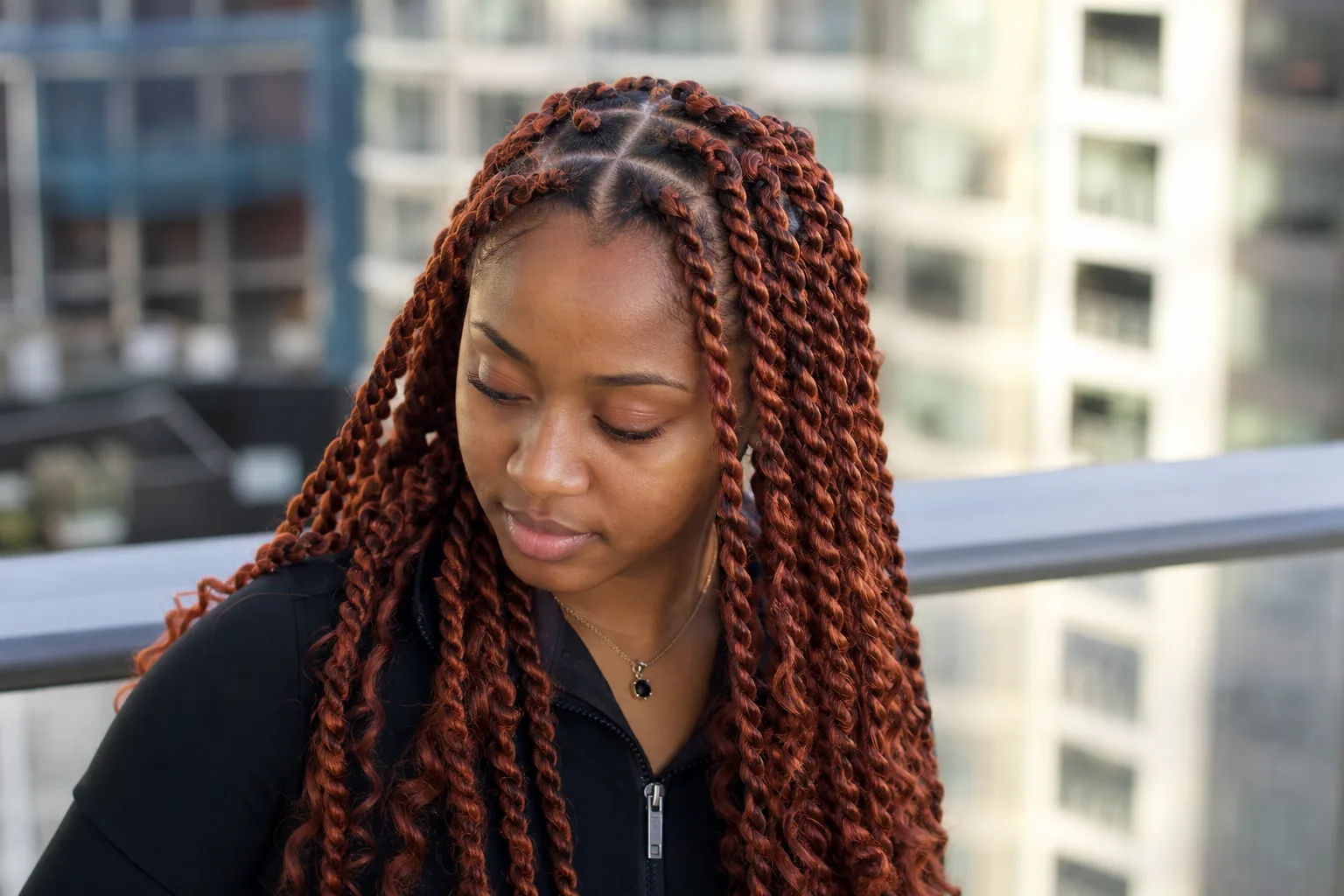
Installed with Marley hair, a matte kinky texture made to match 4c hair. Of all the extension options this is the one that blends invisibly into your own hair, so the twists look like they grew there.
They are also the heaviest per twist. Six to eight weeks is realistic, but if your hairline is fine, take bigger partings so fewer, lighter twists hang from each section. Shake-N-Go's pre-stretched kinky twist packs are a common choice here, and what Organique hair is and what it costs sets out how many packs a full head takes.
Senegalese twists
Silky kanekalon, wound tight, finished smooth. They look like rope and shine like rope, and they are the sleekest thing on this list.
The trade is tension. Silky hair slips, so it gets installed tighter to stay put, and tight plus heavy at a small parting is the exact recipe for traction damage. If you want this look, ask for half inch partings rather than quarter inch.
Spring and island twists
Pre-curled springy extension hair, installed short, usually shoulder length or above. They bounce, they weigh almost nothing, and they are the fastest extension install here at three to five hours.
Best choice if you have never worn extension twists and want to find out whether you like the weight before committing to a waist-length set. If you do go long, work out your pack count before you shop, because beauty supply stores will happily sell you four packs when six is the number.
Twists on men's hair
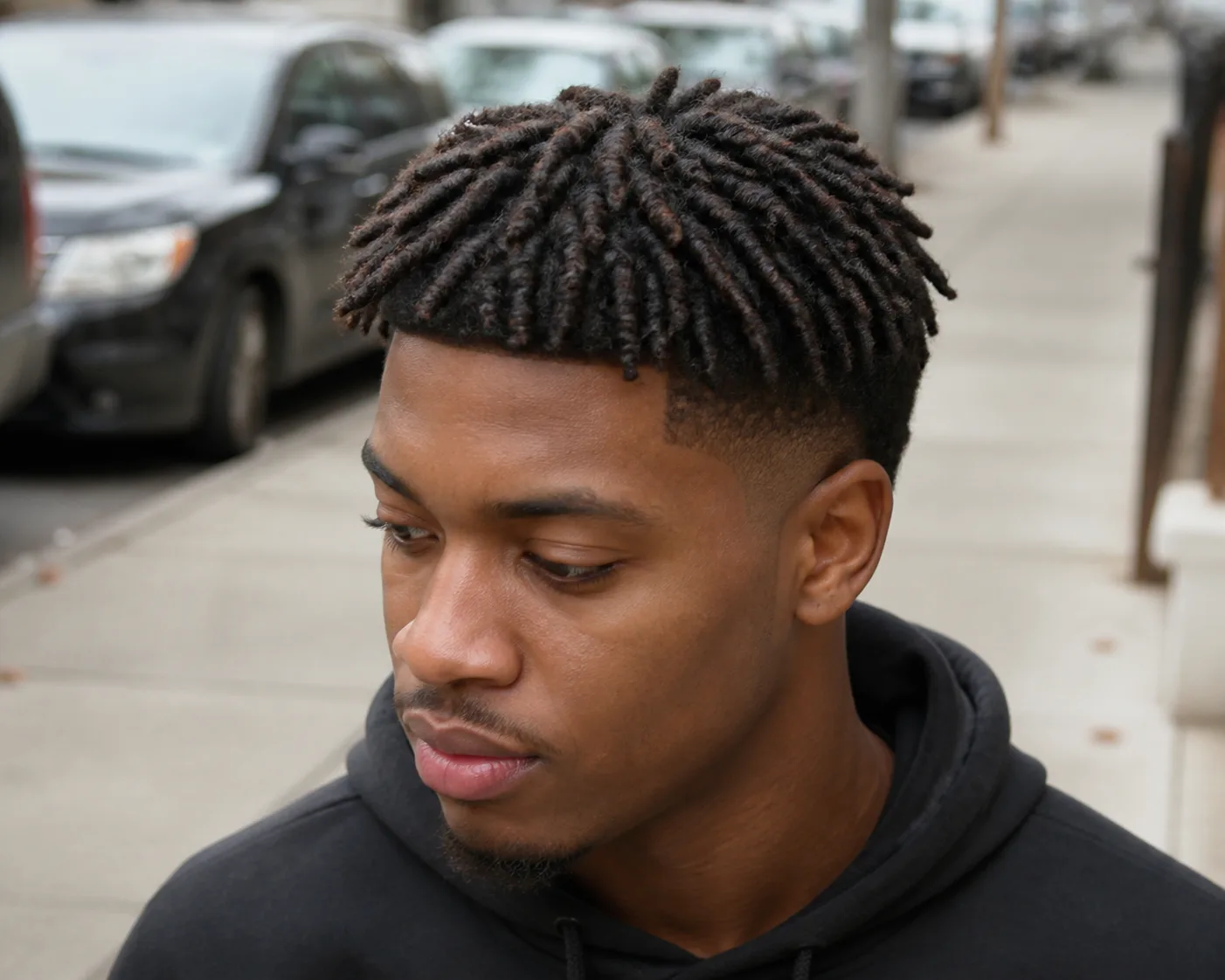
Short hair twists perfectly well. On two to four inches of coily hair you can finger twist or use a twist sponge, and the whole head takes twenty minutes once you have the motion. Barbers charge roughly 40 to 80 dollars for a finger twist depending on length and city, and a sponge costs under ten dollars if you want to do it yourself.
The rule that trips men up is length. Under two inches the twist has nothing to grip and unwinds as soon as you touch it. Grow it out first, and read our 4c hair guide if you are not sure which texture you are working with. If your hair zig-zags rather than coils, 4b hair holds a twist set especially well, which makes twists the easiest place to start.
Parting size is the whole game
Here is the thing nobody puts in the style name. The same Marley hair, installed at a quarter inch parting or a one inch parting, gives two completely different results in weight, longevity and risk.
| Parting | Twists per head | Lasts | Weight per root | Traction risk |
|---|---|---|---|---|
| Quarter inch or less | 200 plus | 6 to 8 weeks | Low | Low if no extensions, high with them |
| Half inch | 90 to 150 | 4 to 6 weeks | Medium | Moderate |
| One inch | 50 to 80 | 3 to 4 weeks | High | High at the hairline |
| Chunky, over one inch | Under 50 | 1 to 3 weeks | Very high | Highest |
Read it this way: small partings with your own hair are the safest long-lasting option. Small partings with heavy extension hair are the most dangerous thing on the page, because you have concentrated real weight onto a tiny anchor. If you are adding hair, go bigger on the parting, not smaller.
How to do a two-strand twist
- Start on damp hair
Wash, condition and leave the hair damp, not soaking. Dry hair will not hold the twist and soaking hair takes two days to set. This is the single most common reason a twist unravels.
- Part a clean section
Use the end of a rat tail comb to take a square section, half an inch across for a normal set. Clip the rest away. Square sections sit flatter than triangles and do not gap when you move.
- Product from root to end
Leave-in first, then a cream or butter, worked through the whole section with your fingers until it feels slick. Every inch needs it, especially the last inch.
- Split into two and wind
Divide the section into two equal strands. Cross the right over the left, then the left over the right, keeping steady even tension all the way down. Do not pull at the root. You should be able to move your eyebrows.
- Seal the end
Twirl the last inch around one finger until it coils on itself. If it keeps springing open, add a drop more cream, or use a perm rod on the end overnight.
- Let it dry completely
Six to eight hours, or overnight under a bonnet. Undoing a twist that is still damp is how a twist-out ends up as frizz.
Say this to your barber
Half inch square partings, two-strand twists in my own hair, no extensions, and keep the tension off my edges.
See it on your own head first
The manual way to decide between mini twists and passion twists is the way everybody does it: save twenty pictures, hold your phone next to your face in the bathroom mirror, and guess. That works right up to the point it matters, because every picture you saved is on somebody else's face shape, hairline and skin tone.
That is the wall. A six hour install and 200 dollars is a lot to spend on a guess, and twists are not a style you can undo on the way home.
Yours could be here.
Start with one selfie.
One photo, twenty seconds, and you'll know. Free account, no card for your first render.
Drop a selfie and you get the twist rendered on your own face, front view, before you book anything. The first look is free and needs no card. After that Plus is 9 dollars a month for 150 credits, a hairstyle render costs 10 credits, and there is a seven day refund with no conditions.
What goes wrong
Tension at the hairline. The one that does permanent damage. Twists installed tight enough to sting are pulling on follicles that do not grow back, and repeated pulling styles are a recognised cause of traction alopecia according to the American Academy of Dermatology. If it hurts on day one, it is too tight, and loosening the front row is a five minute fix.
Leaving them in too long. Past eight weeks with extensions, your new growth at the root mats and the takedown starts costing you real length. Set a date when you install.
Twisting dry hair. It will not hold, and you will blame the technique.
Skipping the ends. The last inch is the most fragile hair on your head and the first to unravel. Product it deliberately.
Small partings plus heavy hair. Covered above, and worth repeating because it is the mistake that looks like good work in the chair and shows up as thinning in six months.
The look book
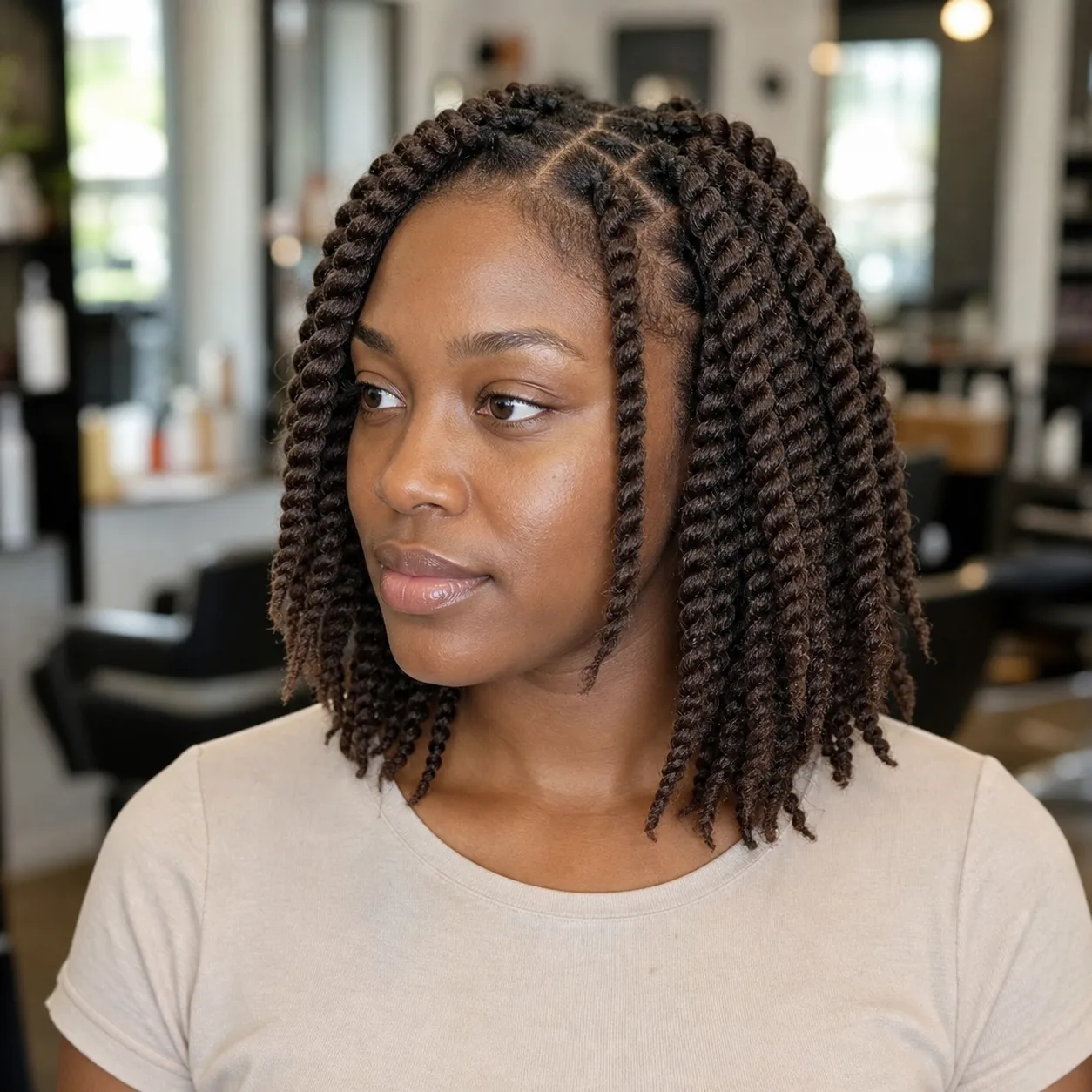
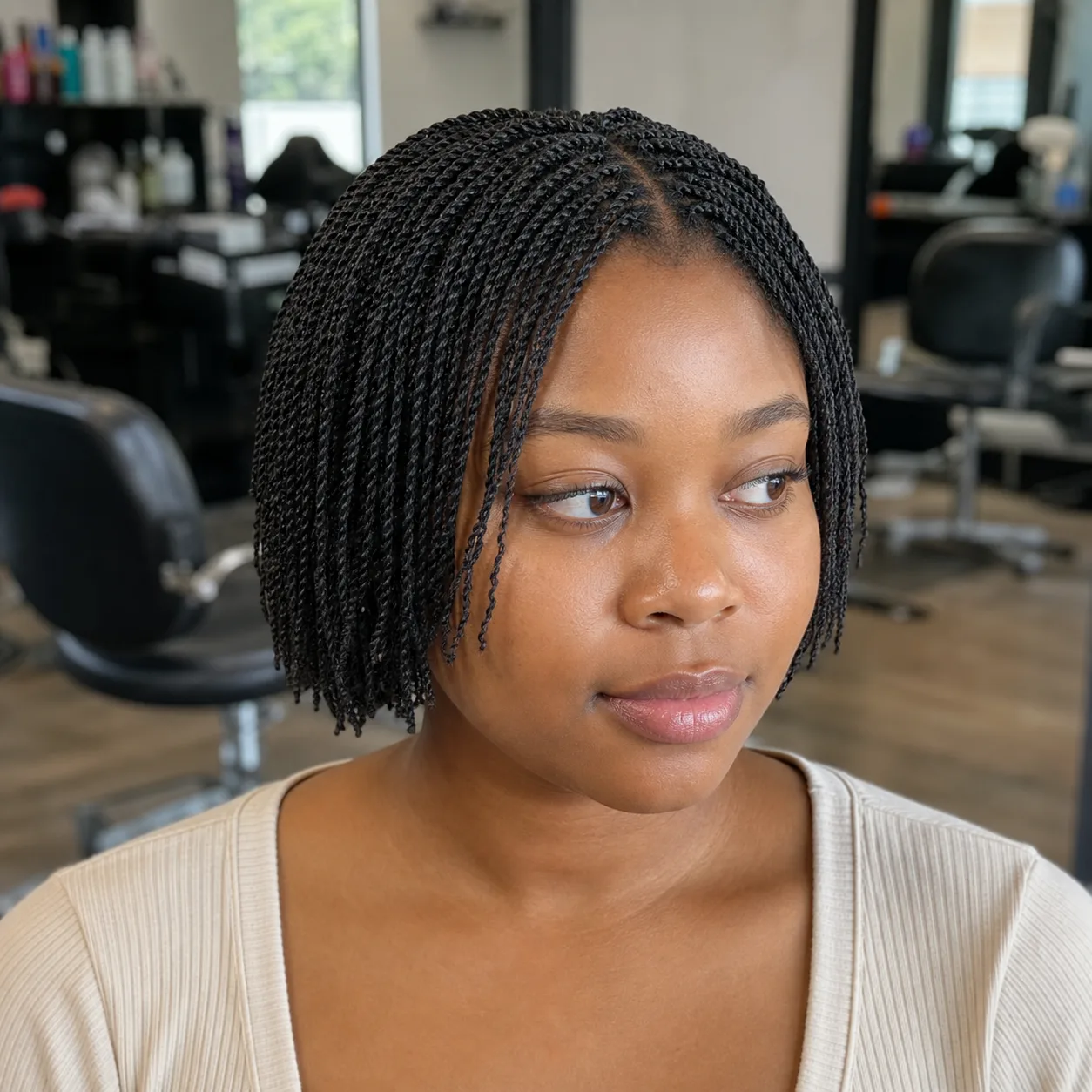
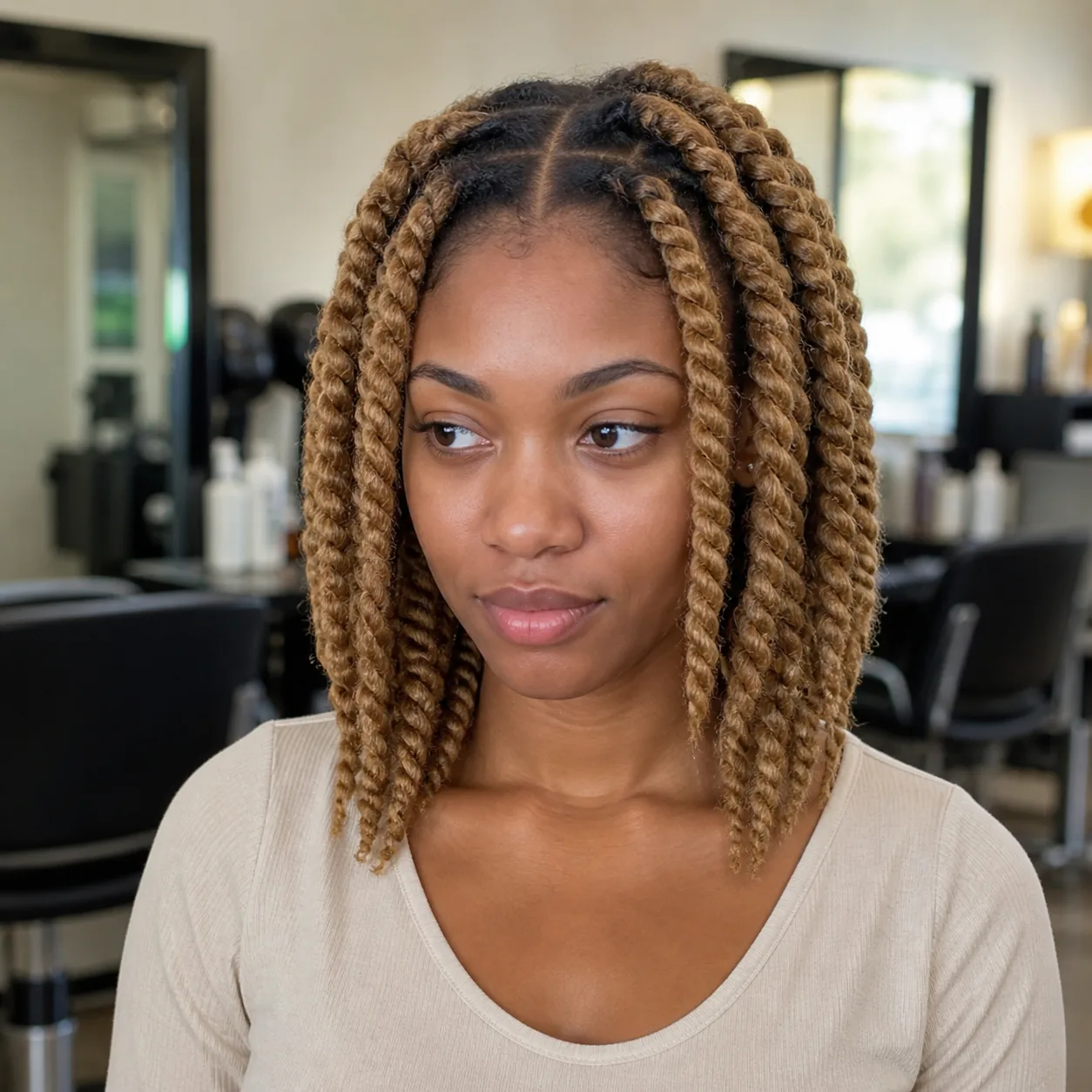
Same salon, same light, same framing on all ten. The only thing that changes is which twist is installed, so you can compare them honestly instead of across ten different photographers with ten different lenses.
Gallery10 photos · tap to enlarge
 Try this on me
 Try this on me
 Try this on me
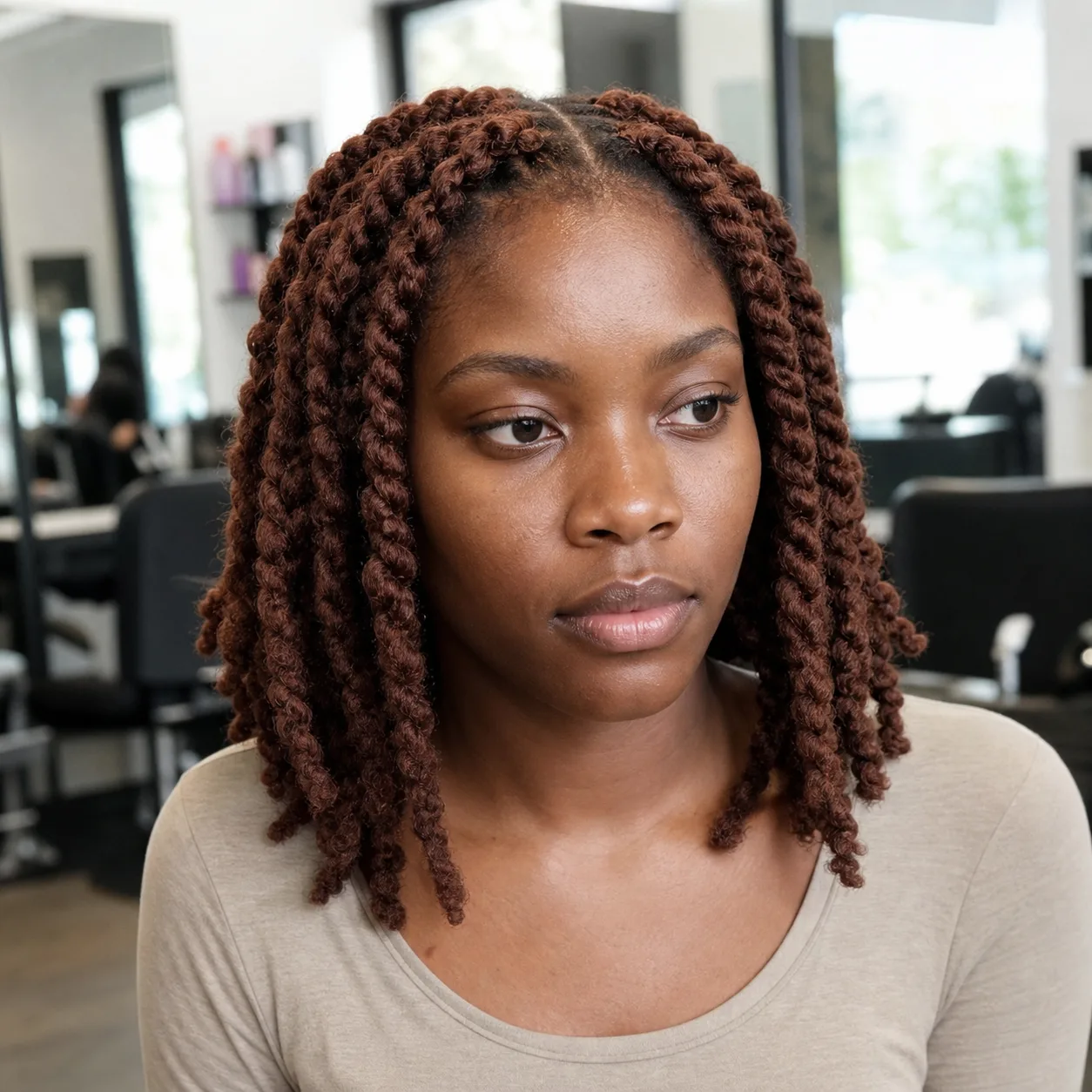 Try this on me
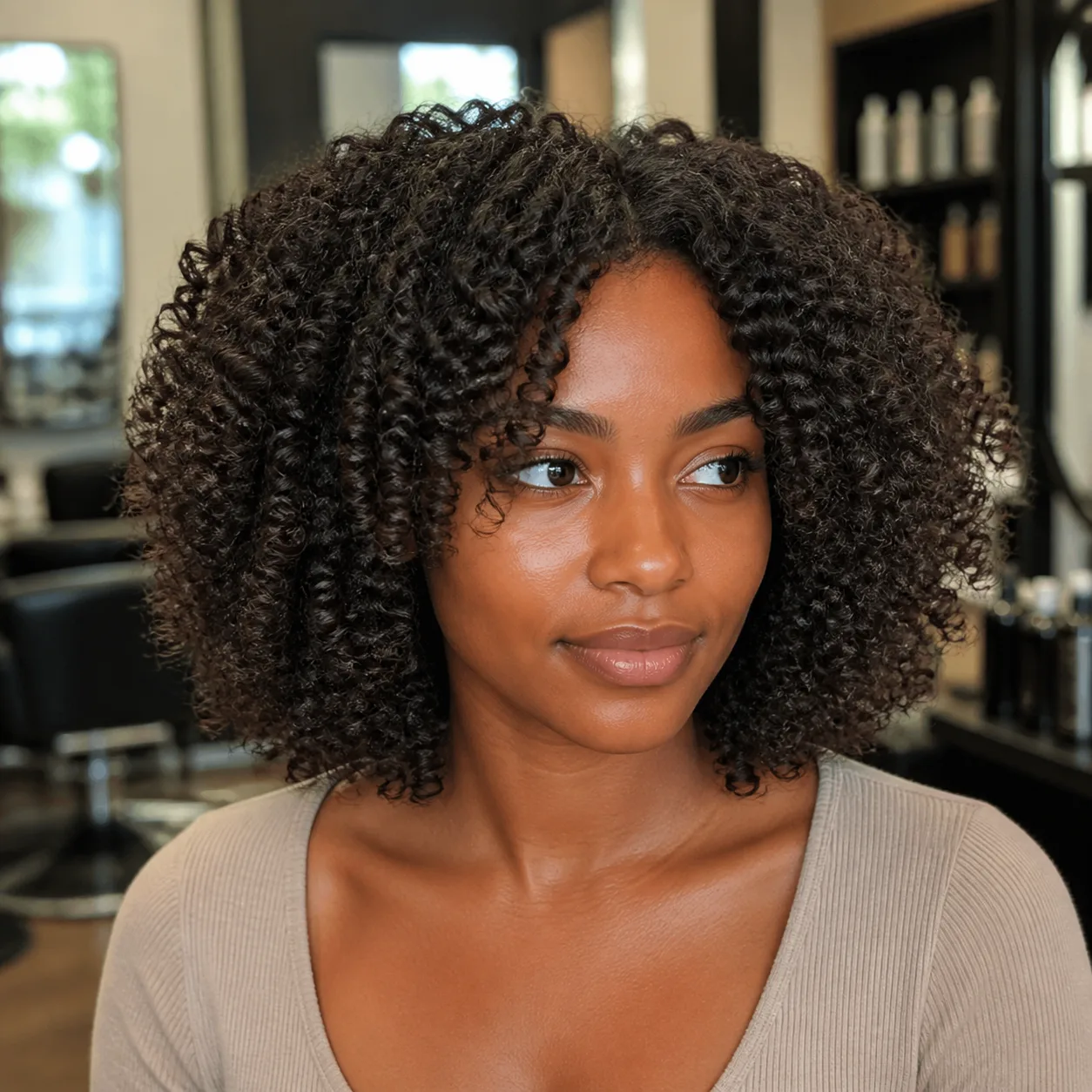 Try this on me
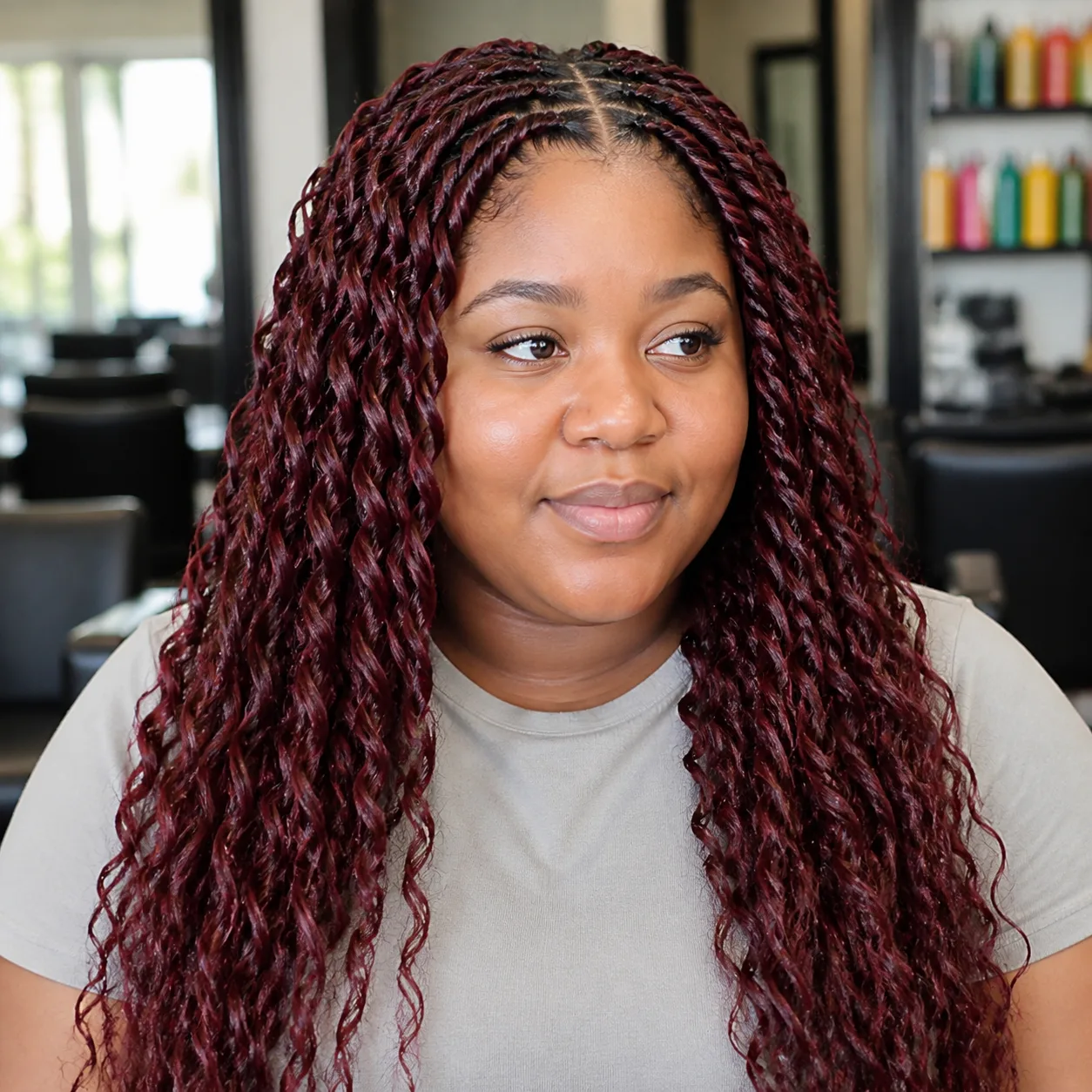 Try this on me
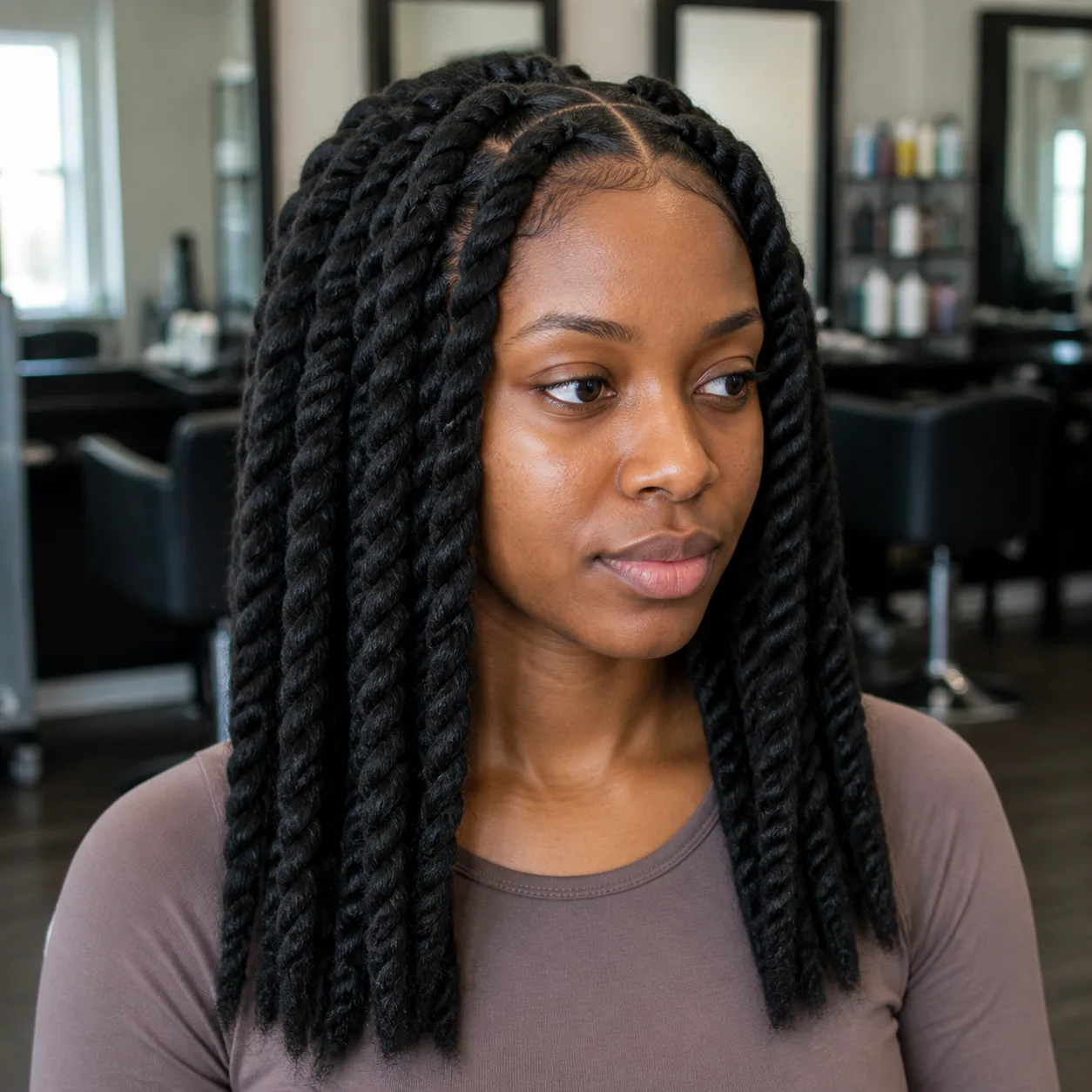 Try this on me
 Try this on me
 Try this on me
 Try this on me
Which one to pick
If you have never worn twists, start with a two-strand twist in your own hair on half inch partings. One evening, no money, and you find out whether you like the texture before you commit six hours to an install.
If you want the style to carry you for a month or more, mini twists in your own hair are the safest long-lasting option, and passion twists are the safest of the extension sets because the hair is light. If your hairline is fine, take bigger partings than the stylist suggests and take the style down on schedule. Twists are meant to protect your hair. A twist that is hurting you has stopped doing its job.
For more protective options in the same family, our guides to knotless braids and Fulani braids cover the three-strand side, and the black hairstyles roundup puts twists next to everything else worth wearing.
Frequently asked questions
A twist hairstyle divides a section of hair into two strands and winds them around each other instead of plaiting them into three. On coily hair the two strands grip each other and hold without an elastic, which is why twists sit as a protective style for weeks rather than hours.
It depends on what was added. With no extensions it is a two-strand twist, or mini twists when the partings are tiny, or flat twists when it lies against the scalp. With extensions the name follows the hair used: passion twists use water wave, Marley twists use kinky Marley hair, Senegalese twists use silky kanekalon.
None, in normal use. A twist on natural hair is a two-strand twist by default. People say the full name to separate it from a three-strand rope twist, or from flat twists that lie on the scalp.
One to two weeks in your own hair at half inch partings. Mini twists at quarter inch partings hold three to six weeks. With extensions, four to eight weeks depending on the hair type, and the limit is your new growth at the root rather than the twists.
Braids, by roughly a week or two at the same parting size, because three strands lock more tightly than two. Twists take half the time to install and come down much faster, which is why a lot of people trade the extra week for the saved afternoon.
Damp, not wet and not dry. Dry hair will not hold the shape and unravels within hours. Soaking hair takes a day or two to dry inside the twist, which invites mildew smell and a soft, undefined set.
Three things: damp hair, cream worked all the way through the last inch, and a sealed end twirled around your finger until it coils on itself. If the ends still spring open, put a perm rod on each one overnight.
Around 40 to 80 dollars at a barber for a finger twist on short natural hair, depending on length and city. A twist sponge for doing it yourself is under ten dollars and takes about twenty minutes once you have the motion.
One to two weeks on short natural hair before the roots loosen. Sleeping in a durag and retwisting the front each morning pushes it closer to three.
Preview it on your own photo: Virtual Hair Color Try-On.
Share article
About the author
More articles
Women's Haircuts · 14 min
Bleached Hair: How Light Yours Can Go, 14 Shades, Aftercare
How light your bleached hair can go depends on where it starts. See 14 bleached shades on one cut, what each starting color can reach in one session, how toner finishes the job, and the aftercare that keeps it soft.
Women's Haircuts · 16 min
Waves Hair: How to Get Beach, Loose and Hollywood Waves That Last
Waves hair is about what you leave straight. How to get beach, loose, Hollywood and heatless waves, which wave suits your hair type, and why your waves keep falling out.

Women's Haircuts · 15 min
Fino Hair Mask: Who It Suits, How to Use It, and Its Limit
The Fino hair mask makes dry, bleached and frizzy hair smooth and shiny in one use, mostly by coating it. Here is what is in the jar, which hair types it suits, exactly how to use it, and what to do when the ends are past a mask.