Type 4 Hair: How to Tell 4a, 4b and 4c Apart and What Actually Matters
Oleh Onysko 21 October 2026 15 min read
In this article
Type 4 hair is the tightest group of natural hair textures: dense, coily or zig-zag strands that shrink to a fraction of their real length and dry out faster than any other type. It splits into 4a, 4b and 4c, and the letter tells you one useful thing: which styling method will actually hold on your head.
What the letter does not tell you is how to care for it. Two people with 4c hair can need opposite routines, because porosity, strand width and density matter more than the coil pattern. This guide is the map: how to tell type 3 from type 4, how to tell 4a, 4b and 4c apart, the three tests that decide your routine, a wash day that works on any type 4 head, type 4 hair on men, and fourteen ways it is worn.
What is type 4 hair?
Type 4 hair is the fourth and tightest group in the Andre Walker hair typing system, after straight (type 1), wavy (type 2) and curly (type 3). Each strand bends into tight coils or sharp zig-zags, often smaller than the width of a pen spring, packed close together across the scalp. It is sometimes called coily or kinky hair, and our coily hair guide covers the wider family.
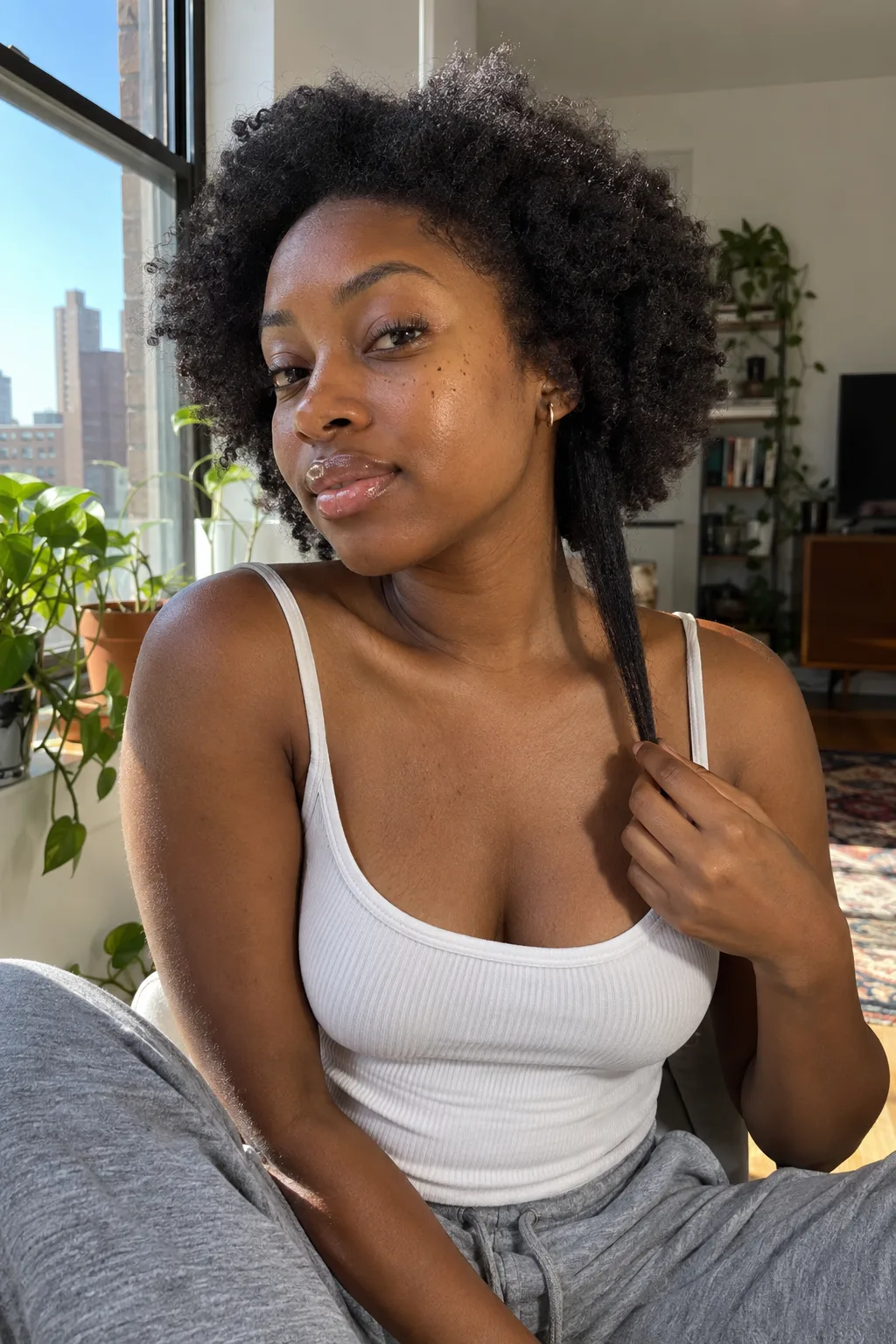
Three things are true of every type 4 head, whatever the letter:
- Shrinkage hides most of the length. Dry type 4 hair can look 50 to 75 percent shorter than it is stretched, so shoulder-length hair often sits at the chin.
- It is the driest hair type. Scalp oil travels down a straight strand easily. On a strand that bends every millimetre, it barely reaches the ends.
- It is more fragile than it looks. Every bend is a weak point, and coils wrap around their neighbours, so rough detangling snaps strands that look thick and strong.
What type 4 is not: loose corkscrew ringlets that you could wrap around a pencil. Those are type 3.
Am I type 3 or type 4 hair?
Look at one clean, dry, product-free strand in daylight. If it forms a ringlet you could slide a pencil or a straw through, you are type 3. If the coil is tighter than that, or the strand zig-zags with sharp corners instead of curves, you are type 4. A second test: type 3 hair usually shows its curl pattern with no product at all, while type 4 hair often looks like a soft cloud until it is wet and styled.
If you land right on the line, read the 3c hair guide next to this one. 3c and 4a are neighbours, and many heads carry both.
4a vs 4b vs 4c hair: how to tell them apart
Take a dry strand from the crown, the part of the head that covers the most area, and match it to the table. Most heads mix two of these, often looser at the nape and tighter at the crown, so go by the majority.
| 4a | 4b | 4c | |
|---|---|---|---|
| Strand shape | Round S-shaped coil | Sharp Z-shaped zig-zag | Very tight coil, little visible pattern |
| Coil size | About a crochet needle | No round coil | Smaller than a crochet needle |
| Shrinkage | 40 to 50 percent | 50 to 70 percent | Up to 75 percent |
| Defines on its own | Yes | Rarely, dries fluffy | No |
| Style that holds | Wash-and-go | Twist-out or braid-out set | Stretched styles and protective styles |
| Full guide | 4a hair guide | 4b hair guide | 4c hair guide |
The "Style that holds" row is the real reason to know your letter. 4a holds a wash-and-go, 4b holds a set, and 4c holds a stretch. If a routine keeps failing you, the most common cause is using the method built for the letter next to yours.
Fourteen ways type 4 hair is worn
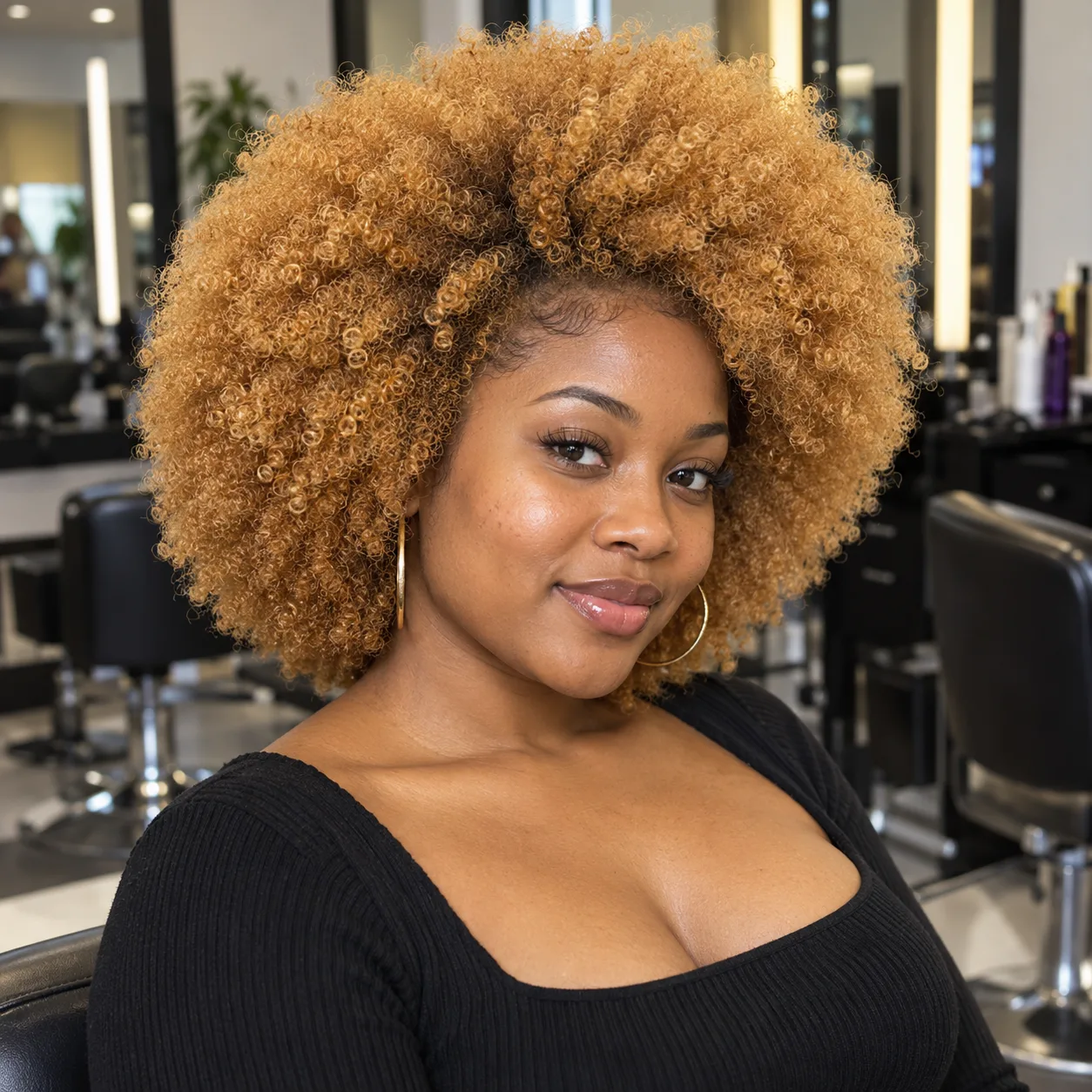
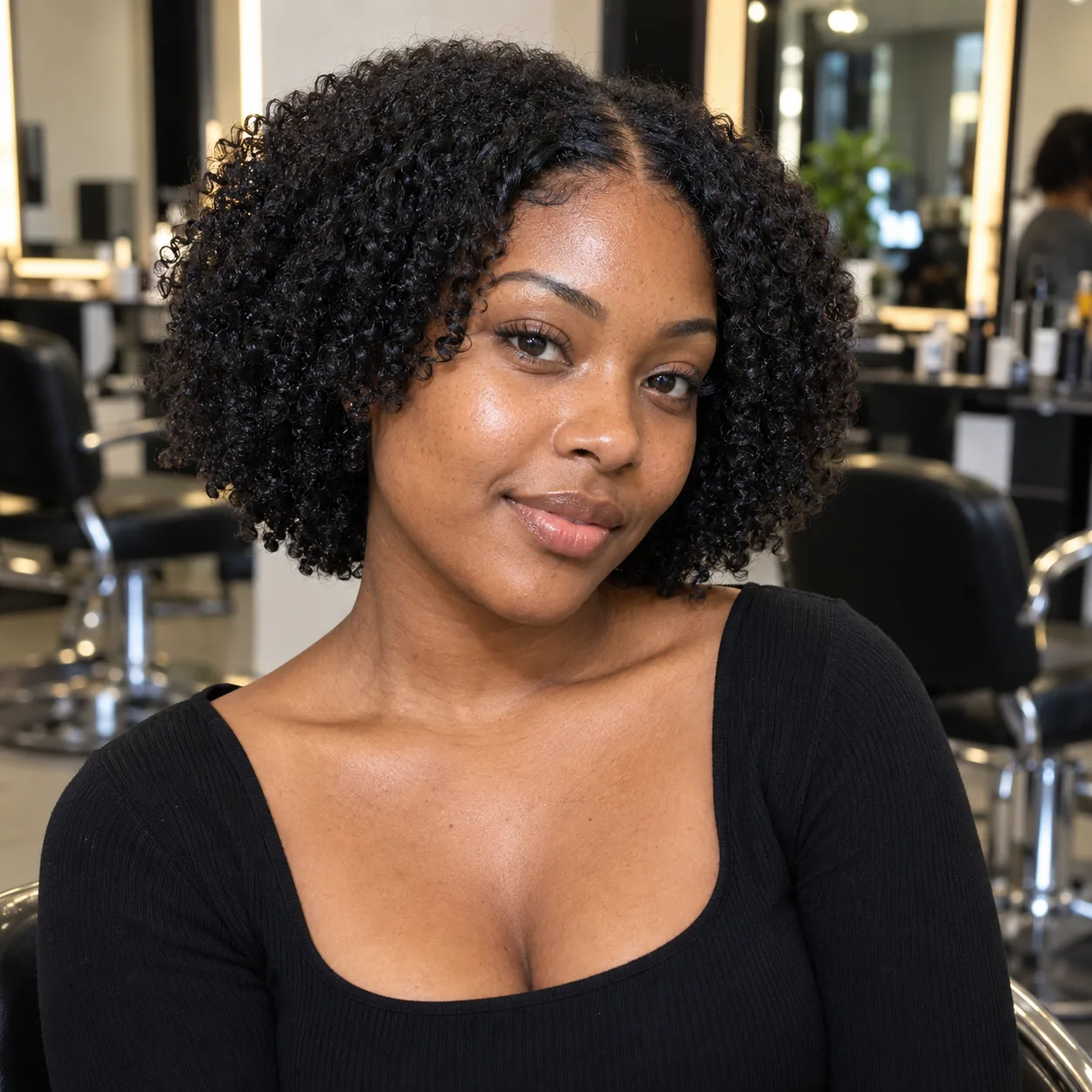
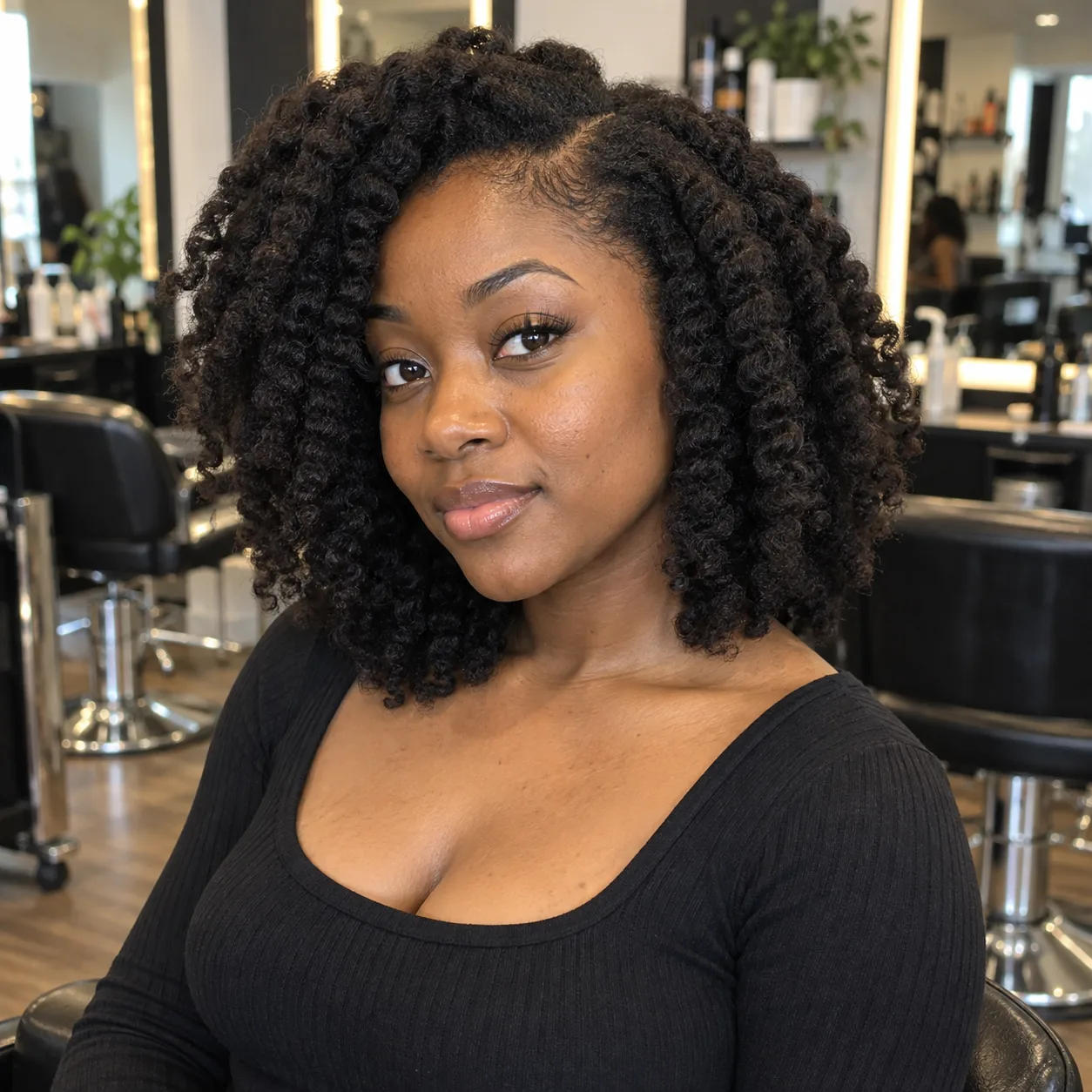
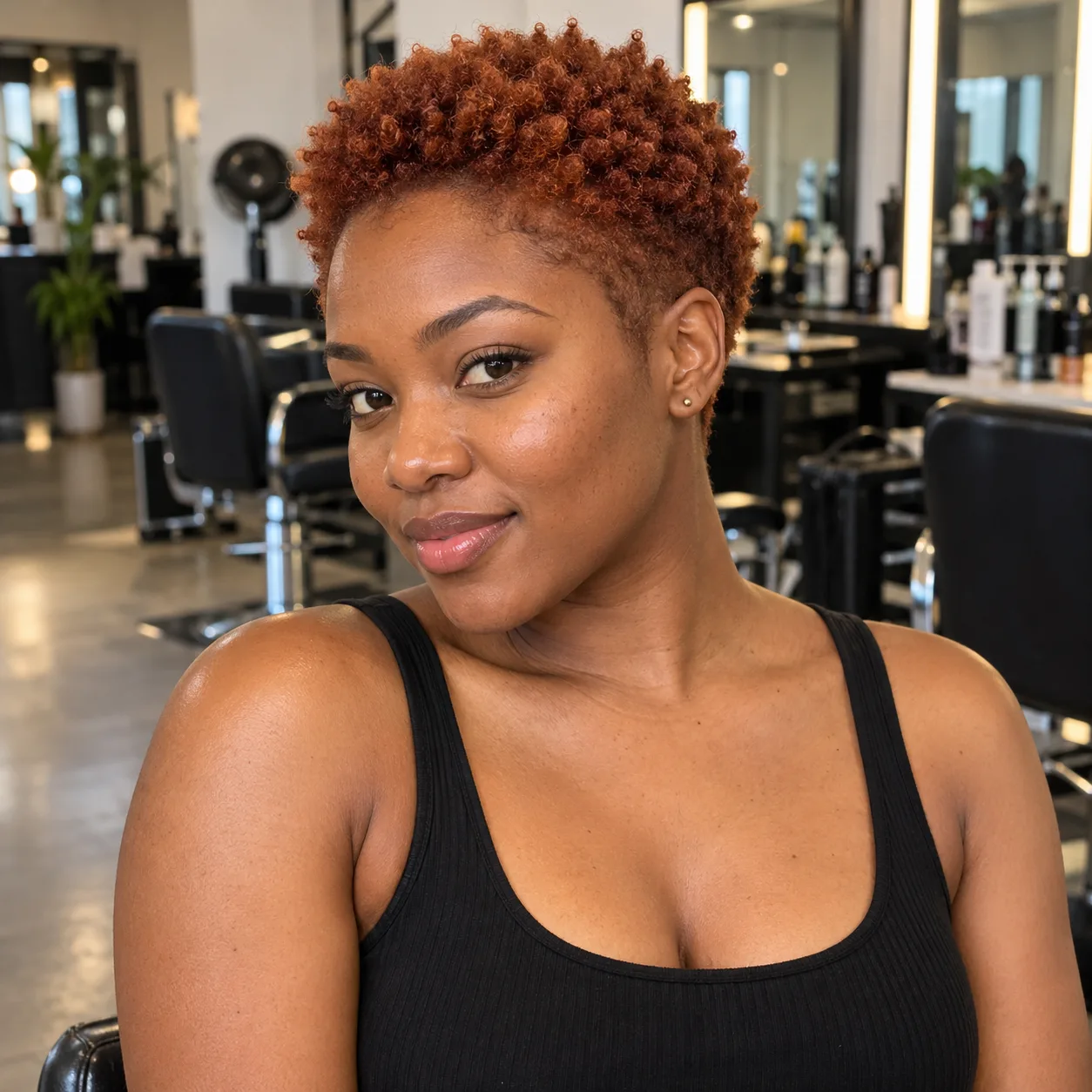
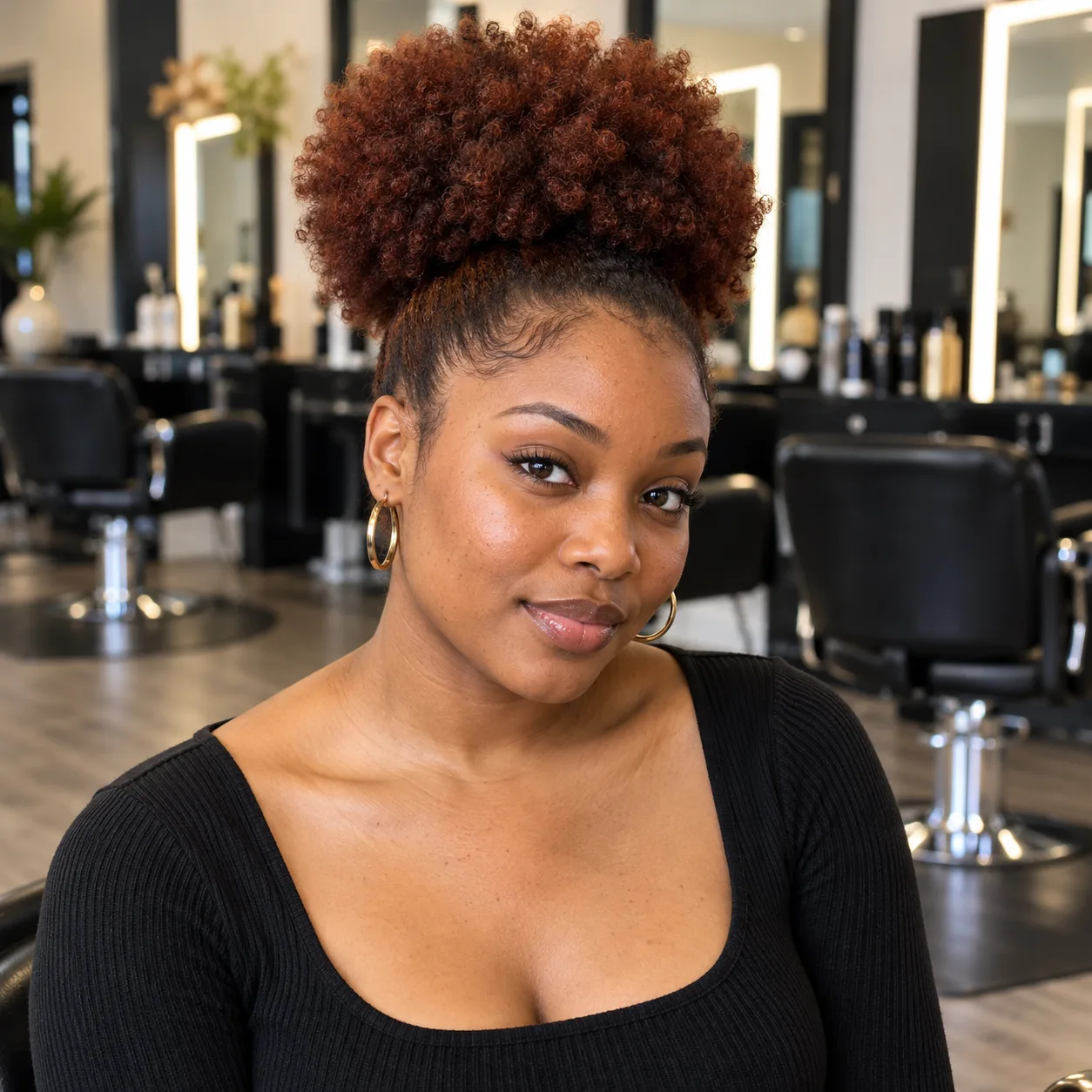
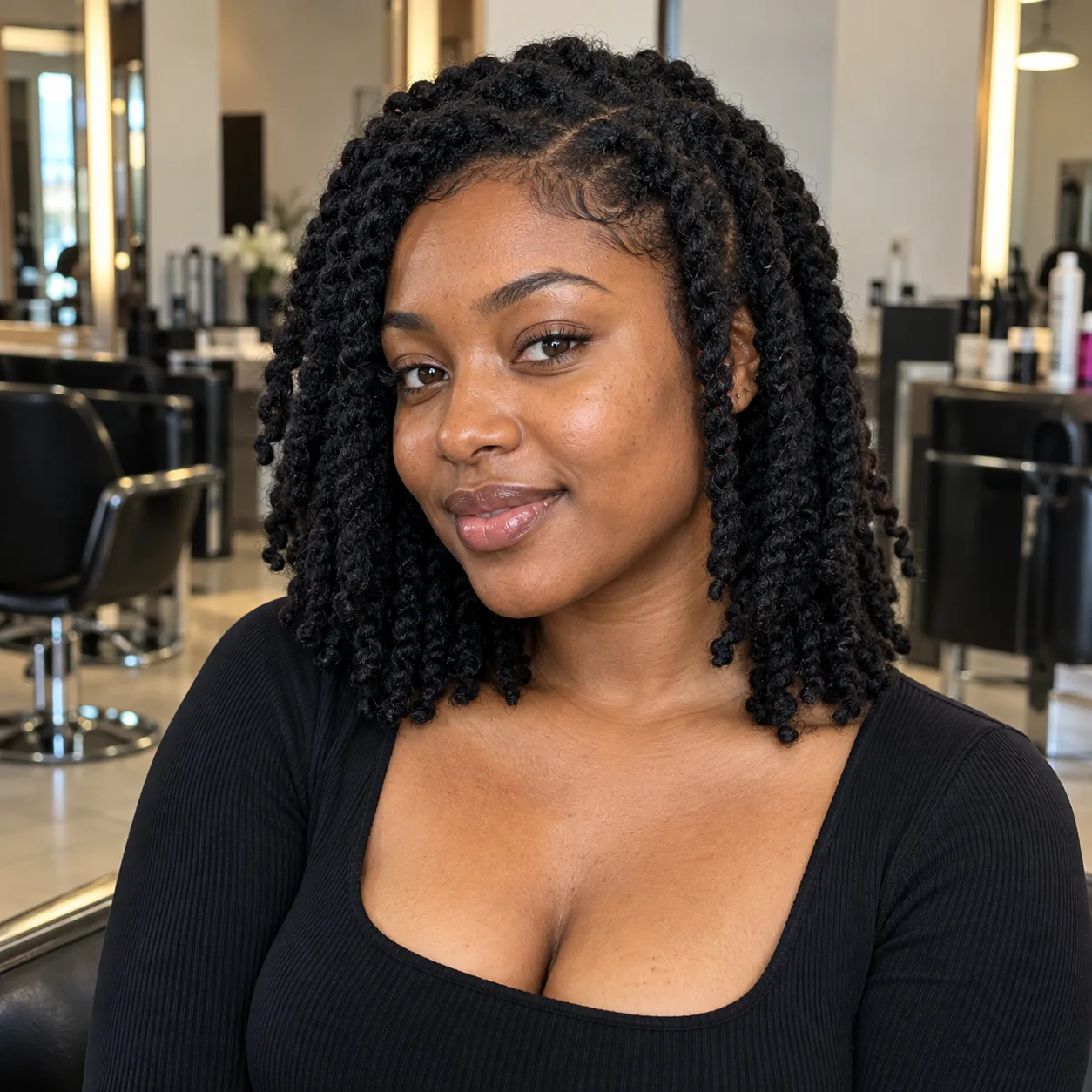
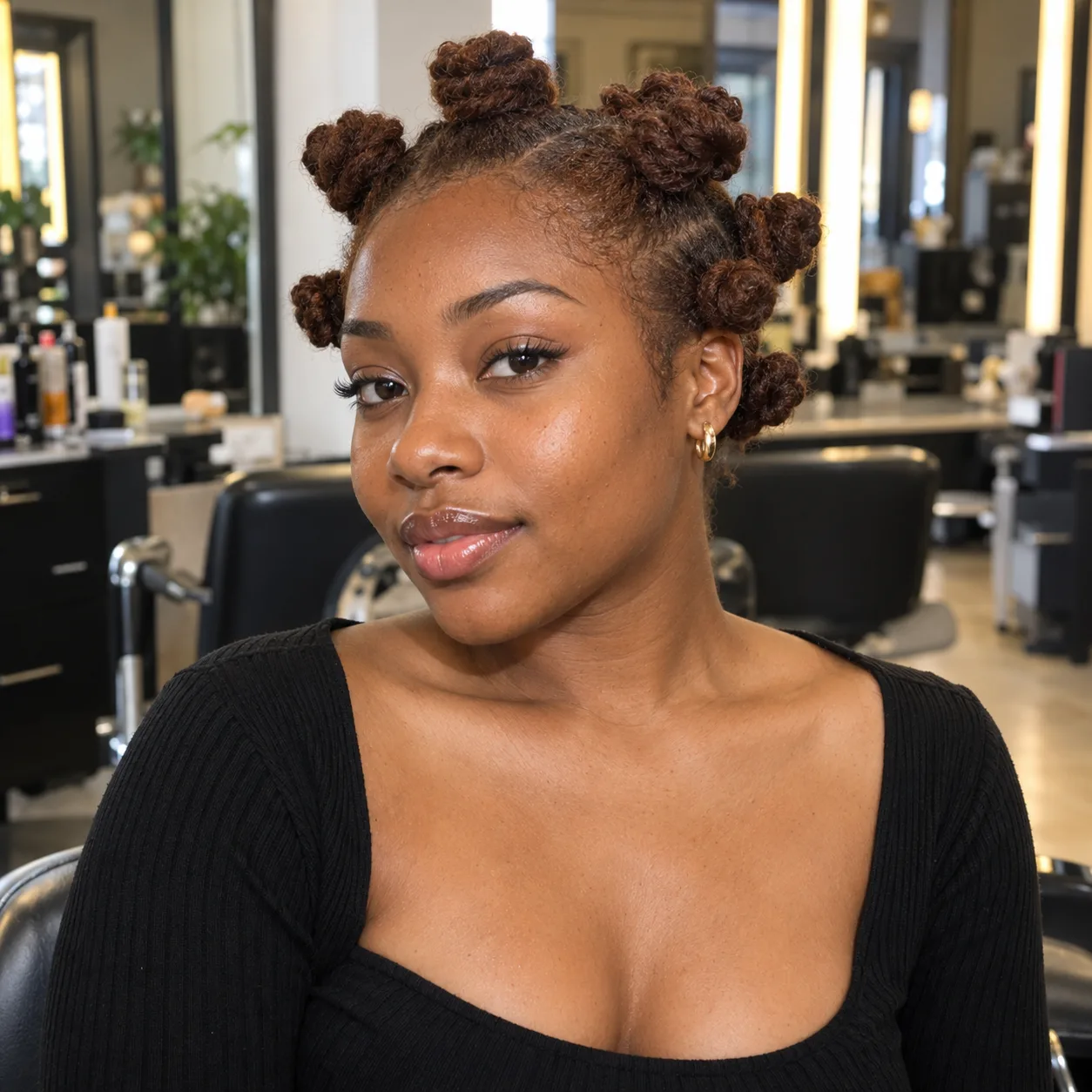
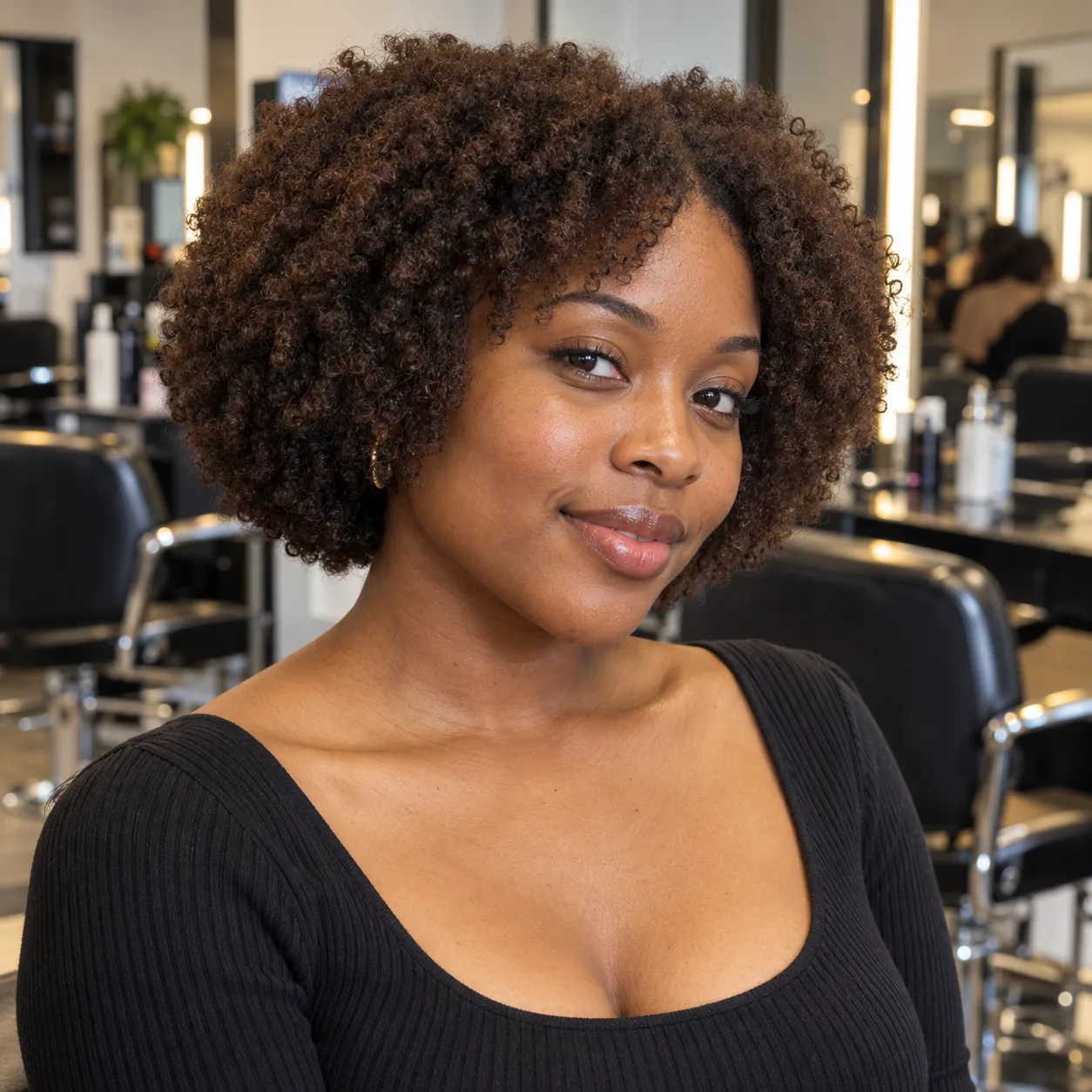
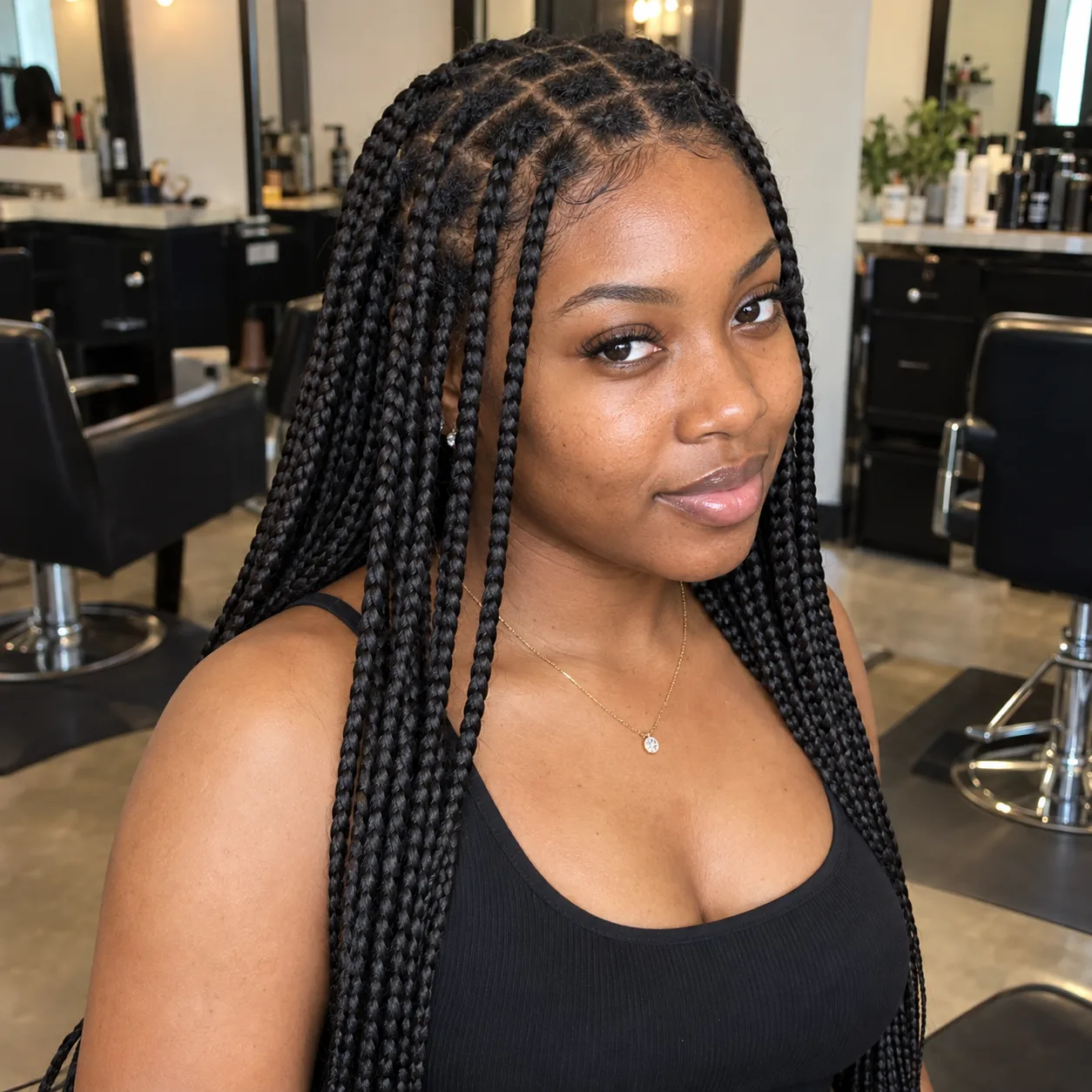
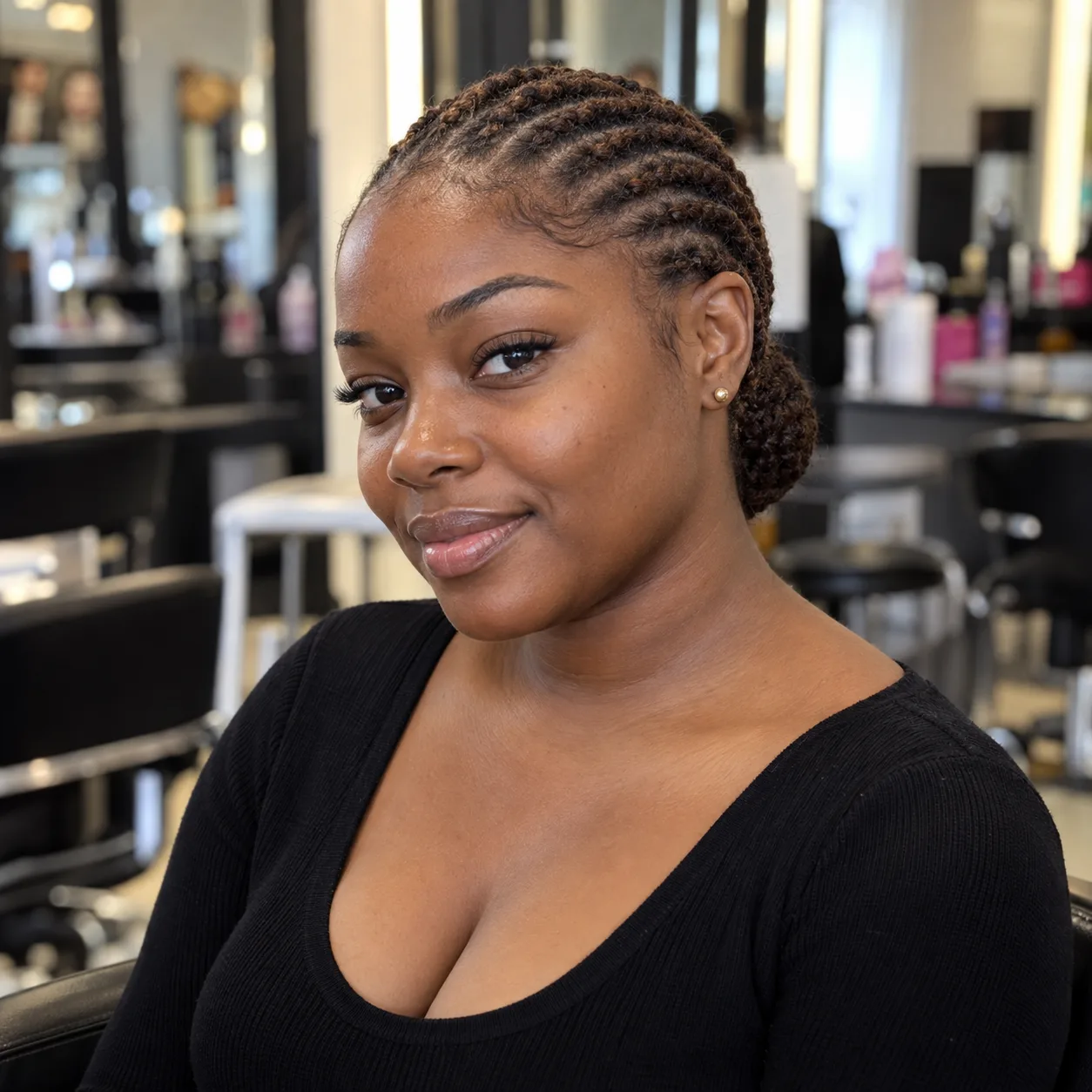
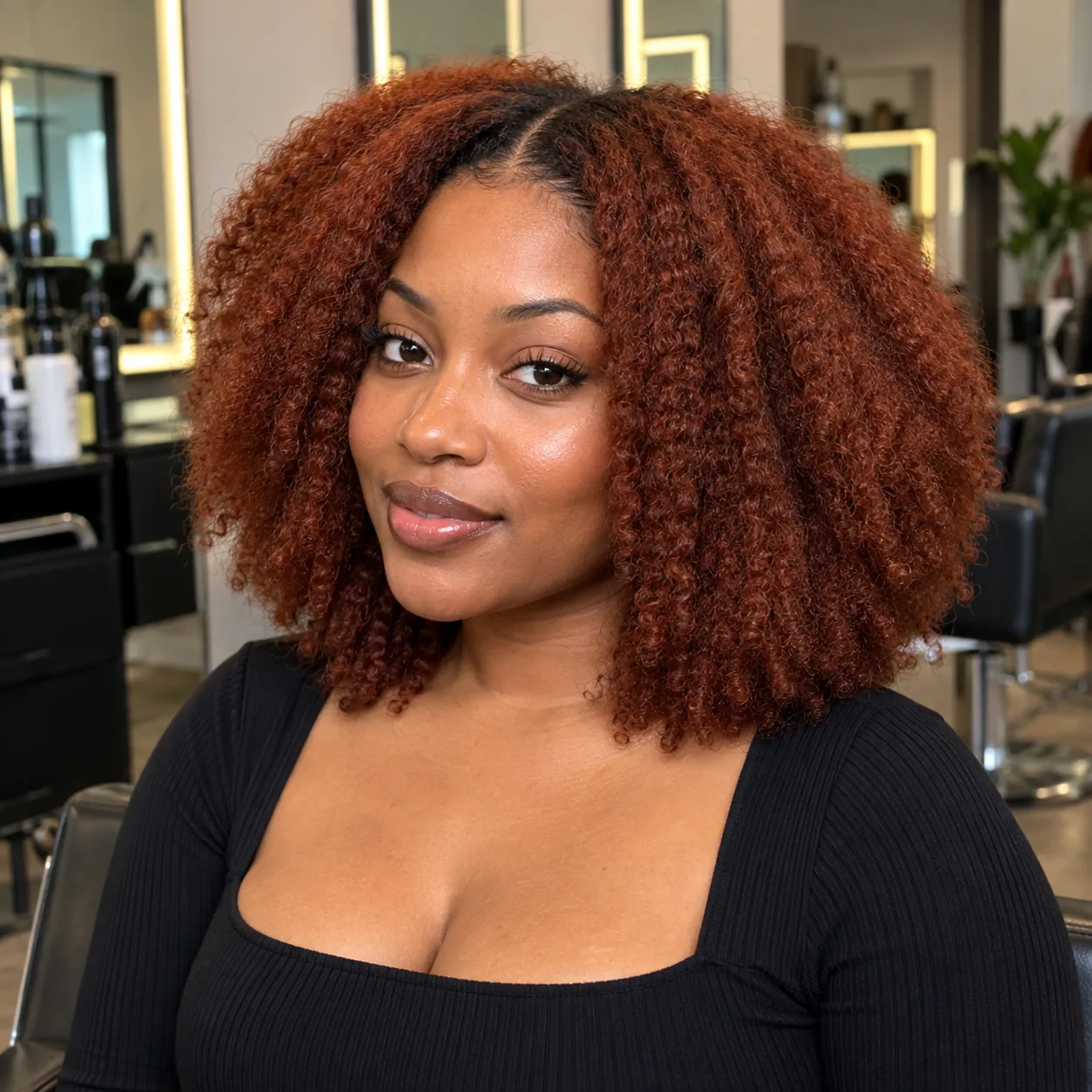
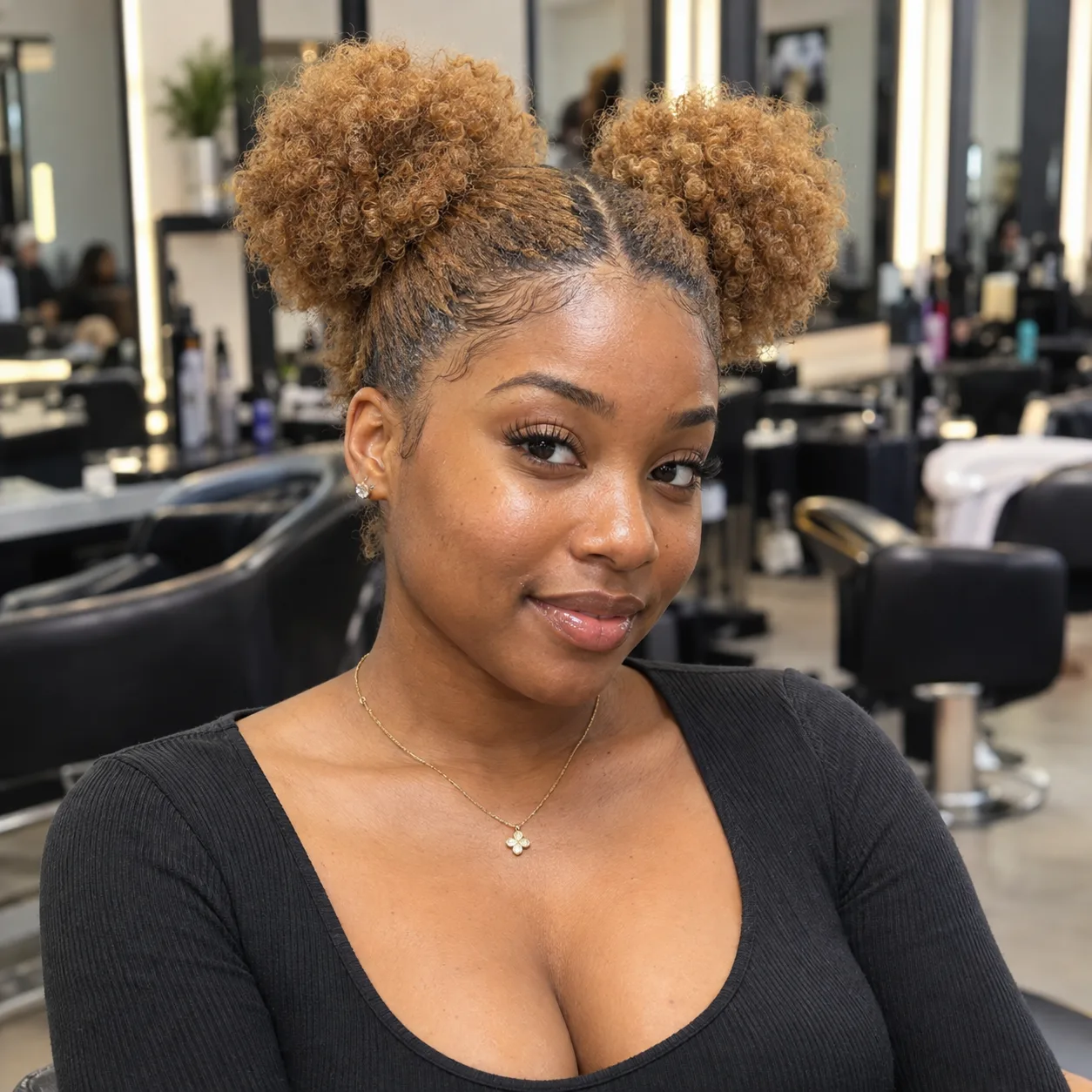
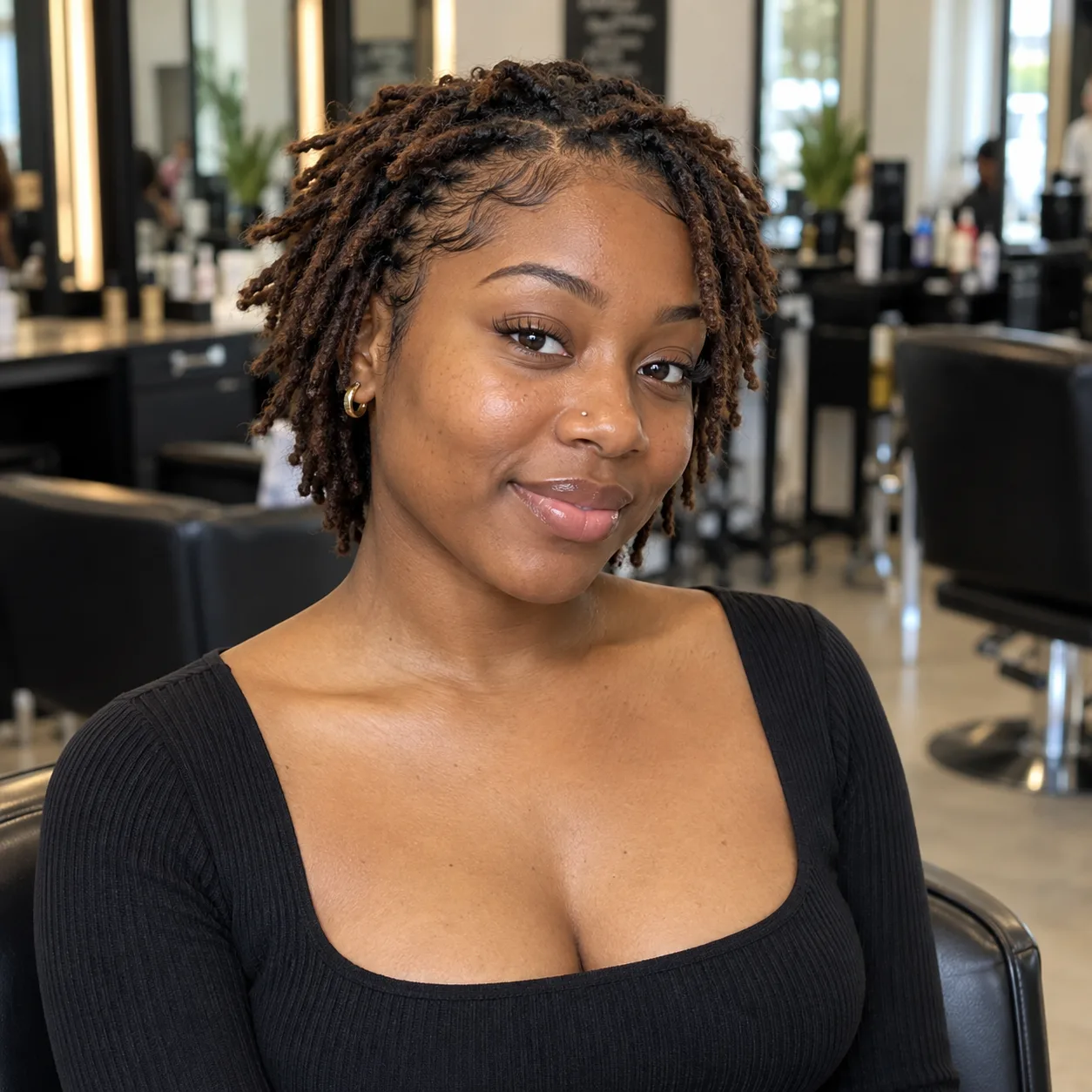
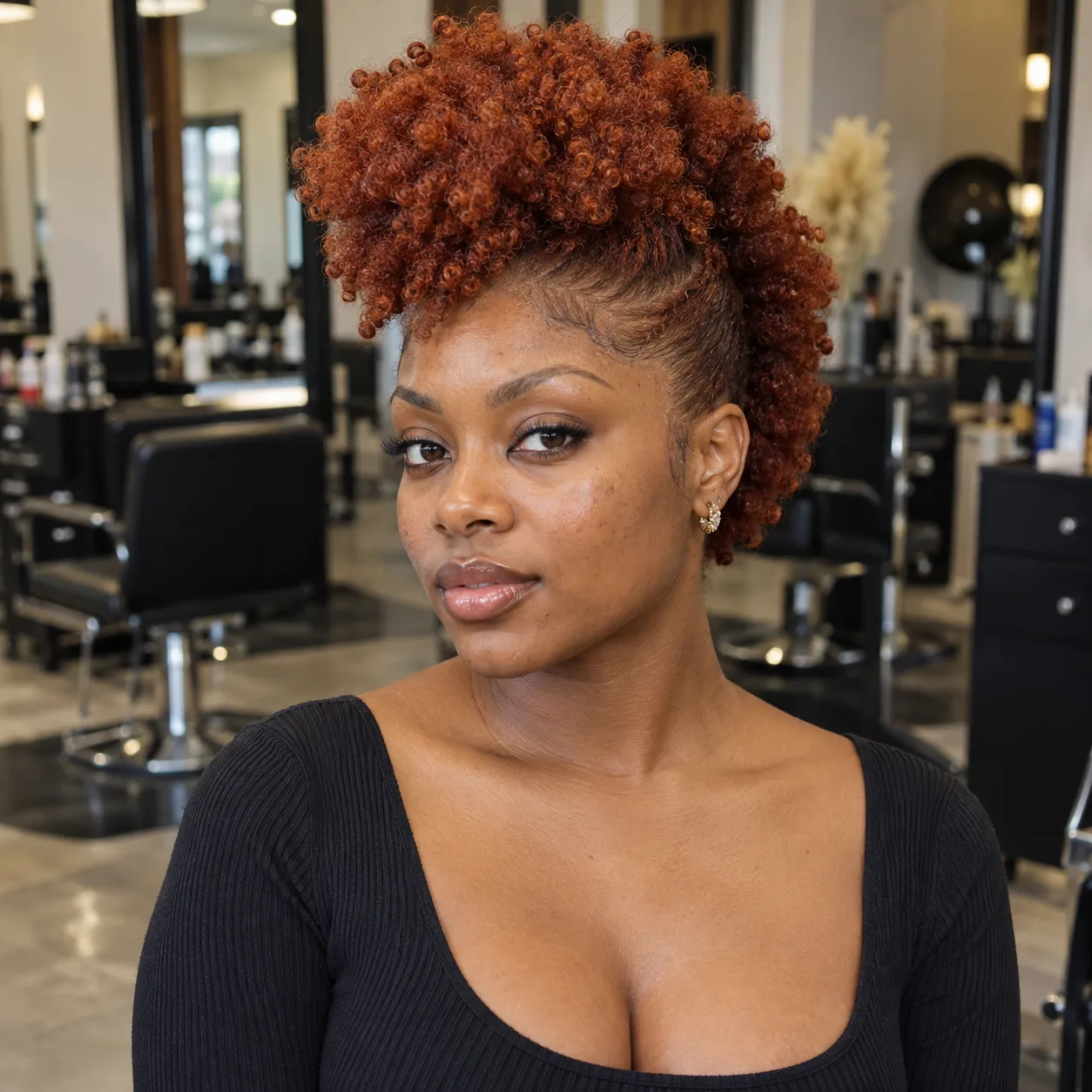
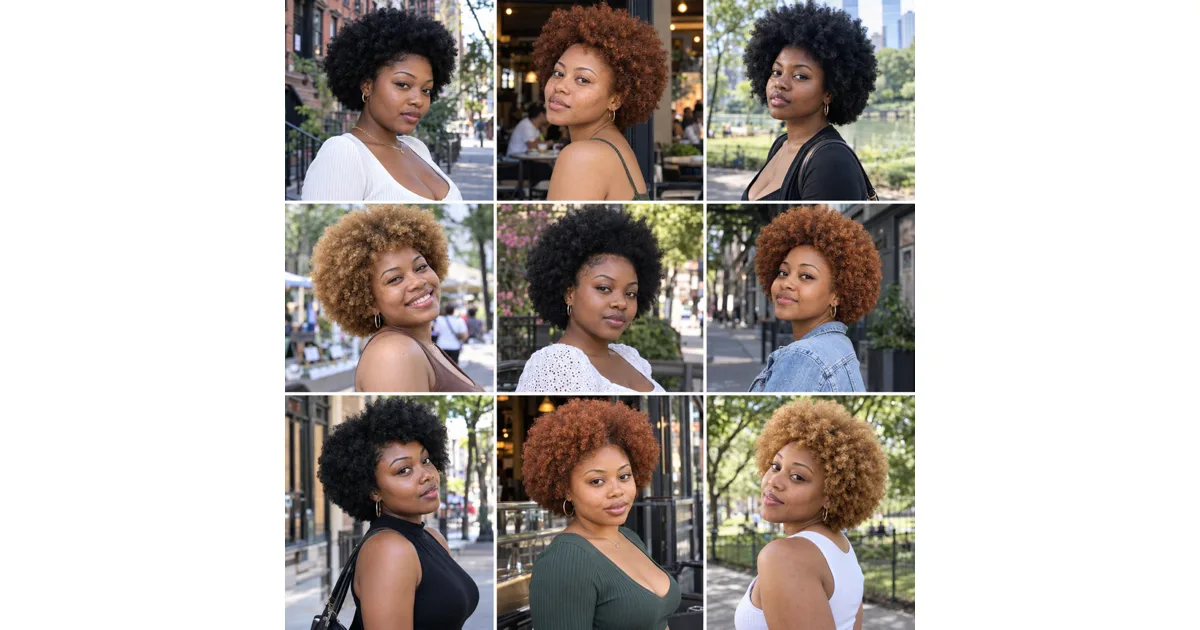
Every photo below is type 4 hair in the same salon setting, so the setting stays constant and only the style changes. The set runs from a wash-and-go to braids and locs, in seven hair colors.
Gallery14 photos · tap to enlarge
 Try this on me
 Try this on me
 Try this on me
 Try this on me
 Try this on me
 Try this on me
 Try this on me
 Try this on me
 Try this on me
 Try this on me
 Try this on me
 Try this on me
 Try this on me
 Try this on me
To see one of these on your face before your next wash day, the curly and coily hair try-on renders a style onto your own photo.
What matters more than 4a, 4b or 4c
Here is the part most hair typing guides skip. The letter describes the shape of the coil. It says nothing about how your hair takes in water, how thick each strand is, or how many strands you have. Those three decide which products work, and they vary inside every letter. A fine-stranded, high-porosity 4c head and a coarse, low-porosity 4c head will fail on each other's routines.

| What to test | How to test it | If it is low or fine | If it is high or coarse |
|---|---|---|---|
| Porosity (how fast hair takes in water) | Mist a clean, dry section. Beads that sit on top mean low; water that vanishes in seconds means high | Light water-based products, warmth to help them in, clarify often | Heavier creams and butters, seal with oil, protein now and then |
| Strand width | Roll one strand between your fingers. Barely felt is fine; a clear thread is coarse | Light gels and creams; heavy butters weigh it down | Thick creams and strong hold gels; it can take more product |
| Density (how many strands) | Look at your scalp in a mirror with hair dry and loose. Scalp easy to see is low | Smaller amounts, styles that build volume | More product, more sections on wash day |
Do the porosity test first. It is the one that changes your shopping list the most, and it is the reason a cream that your friend with "the same hair" swears by can leave yours sitting greasy on top.
Type 4 hair products: what you actually need
You do not need a shelf. Every working type 4 routine is built from five product types, and the tests above tell you how heavy each one should be.
| Product | What it does | Who needs the heavy version |
|---|---|---|
| Sulfate-free shampoo or co-wash | Cleans without stripping | Everyone uses a gentle one; clarify monthly if you are low porosity |
| Rinse-out conditioner | Gives slip to detangle | Coarse and dense hair |
| Water-based leave-in | Puts moisture in | Everyone; it is the base of every style |
| Cream or butter | Holds moisture in and softens | High porosity and coarse hair |
| Gel or oil | Sets the style or seals the ends | Gel for 4a definition; oil to seal for high porosity |
Apply them to wet or damp hair, in that order, section by section. The order is often called LCO (liquid, cream, oil) or LOC (liquid, oil, cream). Low porosity hair usually does better with LCO, high porosity with LOC.
How to do a wash day on type 4 hair
This routine works on 4a, 4b and 4c. Only the styling step at the end changes with the letter.
How to wash and style type 4 hair
- Pre-poo on dry hair
Coat the hair with conditioner or oil before you wet it. It cuts the knots and the breakage you get from shampoo.
- Wash in four to eight sections
Twist or clip the hair into sections and wash each one on its own, focusing shampoo on the scalp. Sections stop the coils from matting together under the water.
- Condition and detangle while wet
Apply conditioner, then detangle each section with your fingers or a wide-tooth comb, from the ends up to the roots. Never detangle type 4 hair dry.
- Moisturize and seal on damp hair
Work in a water-based leave-in, then your cream and oil in the order your porosity prefers, section by section.
- Style by your letter
4a: smooth on gel for a wash-and-go. 4b: set two-strand twists or braids for a twist-out or braid-out. 4c: stretch with twists, threading or banding, or put it into a protective style.
- Protect it overnight
Sleep on a satin pillowcase or in a satin bonnet, and refresh with a mist of water and a little cream instead of washing again.
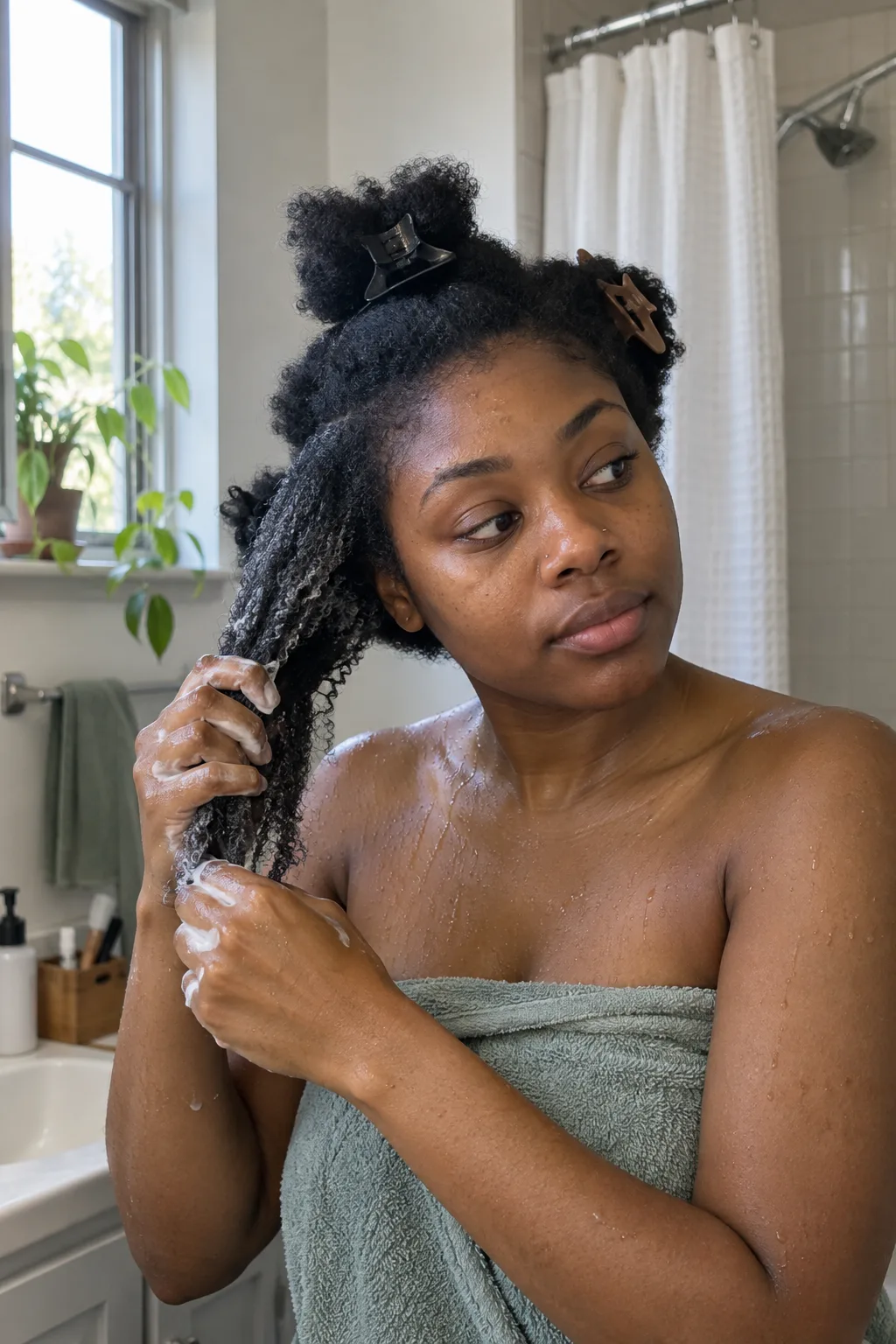
Most type 4 hair does best with a full wash day every one to two weeks. Washing every day strips the little oil that reaches the ends.
Yours could be here.
Start with one selfie.
One photo, twenty seconds, and you'll know. Free account, no card for your first render.
Which type 4 hairstyle fits what you want?
Pick by the result you want and how much time you have, not just by your letter.
| What you want | Style | Set time | Lasts | Best on |
|---|---|---|---|---|
| Show the coil | Wash-and-go | 30 to 60 minutes | 2 to 4 days | 4a |
| Show the length | Twist-out or braid-out | 1 to 2 hours plus drying | 3 to 7 days | 4b, 4c |
| Big volume | Picked-out afro or puff | 15 minutes on stretched hair | 2 to 5 days | All |
| Hands off for weeks | Twists, braids or cornrows | 2 to 8 hours | 2 to 6 weeks | All, especially 4c |
| Almost no styling | Short tapered cut | 10 minutes | Daily | All |

Protective styles like twists and braids keep the ends tucked away, which is why they are the fastest way to retain length on 4c hair. Keep them loose at the hairline and take them out within six to eight weeks. The twist hairstyles guide covers twist sizes and parting.
Type 4 hair on men
Type 4 hair on men is usually worn short, and short is where it is easiest: under two inches, 4a and 4b coils define with water and a light cream, and 4c hair forms an even, soft texture that holds a clean shape. The cuts that suit it most are a short afro with a low taper, 360 waves for 4a and loose 4b, and twists once the top passes about three inches.
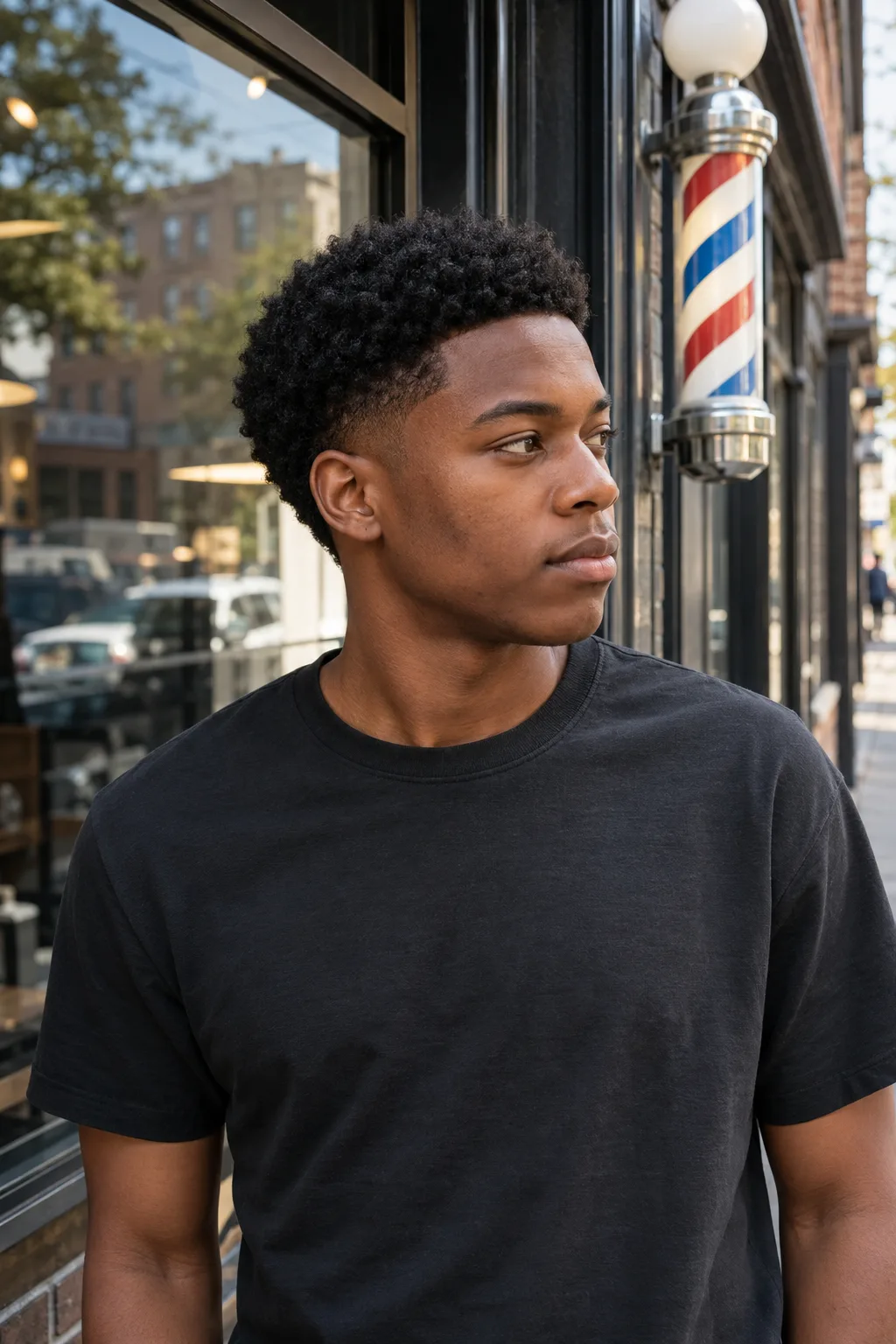
The two mistakes that cost men the most: cutting wet hair, which shrinks into an uneven line by the next day, and brushing dry coils hard every morning, which snaps them at the crown. Ask for the cut on dry hair.
Say this to your barber
Please cut my hair dry, keep about two inches on top, shape it round, and give me a low taper at the temples and nape without taking it down to skin.
Mistakes that cost type 4 hair its length
- Using a type 3 routine. Light mousses and sprays made for curls leave type 4 ends dry, and dry ends snap. Type 4 needs a leave-in and a sealing step every time.
- Detangling dry or from the roots. Coils knot around each other. Detangle wet, with conditioner, ends first.
- Chasing a letter's look. Trying to force a 4a wash-and-go onto 4c hair means more product, more touching and more frizz. Pick the style your texture holds.
- Tight styles at the hairline. Snatched ponytails and tight braids pull on the edges and cause traction alopecia, which the American Academy of Dermatology says can become permanent.
- Heat as a weekly stretch. Repeated flat ironing loosens the coil for good, and heat damage does not grow back curly. Stretch with twists, threading or banding.
- Measuring dry. Check length stretched, in the same spot, once a month. Dry type 4 hair hides most of what you grew.
Can you try a type 4 hairstyle on for free?
Yes, for the first look. You get one hairstyle, plus one color on it, on your own photo in front view, with no card needed. After that, Plus is $9.99 a week for 150 credits a week, where a hairstyle costs 10 credits and a color on it costs 5. Pro is $21.99 a week for 480 credits a week and adds other angles of the head. Every plan has a seven-day refund with no conditions, and cancelling takes two clicks. Full details are on the pricing page.
The manual way to choose your next look is to save photos of other people's type 4 hair. That works until the question is how a big afro, a tapered cut or honey blonde looks around your face, at your shrinkage, and no photo of someone else can answer it. The free look is the fix for exactly that wall.
Where to start with type 4 hair
Find your letter once, then stop thinking about it, because its only job is to tell you which style holds: a wash-and-go for 4a, a set for 4b, a stretch for 4c. Spend your attention on the porosity test instead. It decides your products, and getting it right ends most of the dryness and breakage people blame on their hair type.
Then keep the ends moist, detangle only when wet, keep the hairline loose, and measure stretched. That is the whole routine, and it works on every type 4 head.
Frequently asked questions
They are the four groups of the Andre Walker hair typing system. Type 1 is straight, type 2 is wavy, type 3 is curly with defined ringlets, and type 4 is coily or zig-zag, the tightest and most fragile pattern. Each group splits into a, b and c, from loosest to tightest.
Look at a clean, dry strand from your crown in daylight. A round coil about the width of a crochet needle is 4a, a sharp zig-zag with corners is 4b, and a coil so tight it shows almost no pattern is 4c. Most heads carry two types, so go by the one that covers most of your head.
If your strand forms a ringlet you could slide a pencil or straw through, you are type 3. If it is tighter than that or zig-zags, you are type 4. Type 3 also shows its pattern with no product, while type 4 often looks like a soft cloud until it is wet and styled.
Type 4 hair looks dense and full, with tight coils or zig-zags packed closely together and a matte to soft sheen. It shrinks a lot, so it often looks much shorter than it is. The gallery above shows fourteen styles across 4a, 4b and 4c.
No. 4c is one of the most common textures among people of African descent. It can look rare online because many people with 4c hair wear it stretched or in protective styles, and many heads mix 4c with 4b.
It is uncommon. Type 4 hair is most common among people of African descent and people of mixed heritage. Hair type describes the shape of the strand, not ethnicity, so a tighter texture can show up in anyone, but type 4 in people with no African ancestry is rare.
A sulfate-free shampoo, a rinse-out conditioner with good slip, a water-based leave-in, a cream or butter, and a gel or oil. How heavy each should be depends on your porosity and strand width, not your letter. Low porosity hair wants lighter products; high porosity hair wants heavier ones.
Many people find 4c the hardest, because it shows little pattern, shrinks the most and tangles easily. In practice the hardest hair to manage is hair on the wrong routine. Once 4c is stretched, moisturized and handled only when wet, it is easier to keep healthy than people expect.
Preview it on your own photo: Virtual Hair Color Try-On.
Share article
About the author

Related posts

Women's Haircuts · 13 min
Thick Hair: What It Is, the Cuts That Work and How to Manage It
Thick hair is a weight problem before it is a frizz problem. How to tell dense from coarse, 13 cuts that handle the bulk, how to thin it without ruining it, and the words to say to your stylist.
Women's Haircuts · 13 min
Coily Hair: Types, Care and a Routine That Fits You
Understand coily hair without getting stuck on a subtype. Learn how to detangle, wash and style your coils, plan for shrinkage, and choose an afro shape.

Women's Haircuts · 14 min
1B Hair: How to Tell If You Have It + 14 Cuts That Suit It
1B hair is straight with some body at the crown and a slight turn at the ends. How to tell it from 1A and 1C, why the length of your cut matters most, 14 cuts that suit it and how to style it.

Women's Haircuts · 16 min
1C Hair: How to Tell If You Have It + 14 Cuts That Tame It
1C hair is straight at the root with a loose bend through the lengths, coarse strands and frizz on top. How to tell it from 1B and 2A, why it puffs, 14 cuts that suit it and how to style it.
Women's Haircuts · 14 min
Best Hairstyle Apps for Women 2026: 10 Apps, Real Prices
The best hairstyle app for women changes your hair and leaves your face and density alone. Ten apps compared with real prices and free tiers, what Reddit users complain about, and which app fits your hair type.

Women's Haircuts · 17 min
Long Hair With Bangs: 14 Styles and Which One Suits Your Face
Long hair with bangs suits almost every face, and the bangs matter more than the length. 14 bang styles on long hair, a face shape table, the mistakes to avoid and the exact sentence to say in the chair.