1C Hair: How to Tell If You Have It + 14 Cuts That Tame It
Oleh Onysko Updated 17 October 2026 16 min read
In this article
1C hair is the most textured kind of straight hair: it grows straight from the root, then picks up a loose S-bend through the lengths, with coarse, thick strands and some frizz on top. It is the last subtype of type 1 before hair counts as wavy, and its one real problem is not flatness, like 1A, but puff.
Here is what most 1C guides get wrong. They tell you to thin it out and add layers to "take the bulk away". On 1C hair that does the opposite. The weight of the hair is what holds the bend down, and every layer you cut short is a piece of hair that is now free to bend outward and frizz. Keep the weight, and the bend reads as polish. Cut it out, and you get a triangle.
This guide covers how to tell whether you are 1B, 1C or 2A, why 1C hair puffs, fourteen cuts that suit it, how to choose one for your density, and how to style and care for it.
What is 1C hair?
1C hair is type 1 hair with the most bend and the most body. The first two or three inches come out of the scalp straight, then the hair starts to bend in a wide, loose S somewhere around the cheekbones or the jaw. The bend is uneven: some sections ripple, others hang almost straight. The strands are usually coarse, meaning each hair is wide, and that is why 1C has more volume than any other straight type.
The typing chart comes from stylist Andre Walker, whose hair typing system sorts hair from type 1 (straight) to type 4 (coily). The A, B and C letters inside each type were added later and are now the shorthand stylists and forums use. Within type 1, the letter tells you how much bend and body there is, and 1C has the most of both.

What 1C hair does in daily life:
- It frizzes in humidity. The outer layer lifts and a halo forms on top, while the ends puff.
- It holds a curl for hours. Curl it with an iron and the curl is still there at night.
- It dries differently every day. The bend depends on how you towel it, how you sleep on it and the weather.
- It looks thicker than it is. Coarse strands that bend take up more room than the same number of straight ones.
Want to see it first? Try a new hairstyle on your own photo.
How to tell if you have 1C hair
The only reliable test is the air-dry test. Wash your hair, put conditioner on the ends only, use no styling product, then let it dry fully without brushing, blow-drying or touching it. Look at it in daylight.
- 1A: no bend anywhere, flat to the head. The 1A hair guide covers this one.
- 1B: straight with a slight flick at the ends and a bit of body at the crown. If that sounds like you, 1B hair has its own test and cuts.
- 1C: straight at the root, then a loose S-bend from mid-length down, coarse to the touch, with frizz on top.
- 2A: a clear, flat S-wave that starts higher, often at the ears, and repeats down the length. If the waves form a pattern rather than a random bend, read the 2A hair guide.
The tell between 1C and 2A is the pattern. 1C bends here and there and hangs straight in places. 2A forms the same S-shape again and again from the ears down.
1C vs 1B vs 2A hair
The three types sit next to each other on the chart, and plenty of people sit on the line between two of them. Use this to see which side you lean towards, because it changes which cuts work.
| 1B | 1C | 2A | |
|---|---|---|---|
| Bend | Slight flick at the ends | Loose, uneven S from mid-length | Flat S-wave, repeating |
| Where it starts | Last few inches | Cheekbones to jaw | Ears or higher |
| Strand | Medium | Coarse | Fine to medium |
| Volume | Some at the crown | Most of type 1 | Moderate, flat at the root |
| Frizz | Little | Halo on top, puffy ends | Some, mostly mid-length |
| Main problem | Uneven ends | Puff and frizz | Waves dropping flat |
| Cuts that suit it | Most cuts | Blunt lines, long layers | Long layers, lobs |
14 haircuts for 1C hair
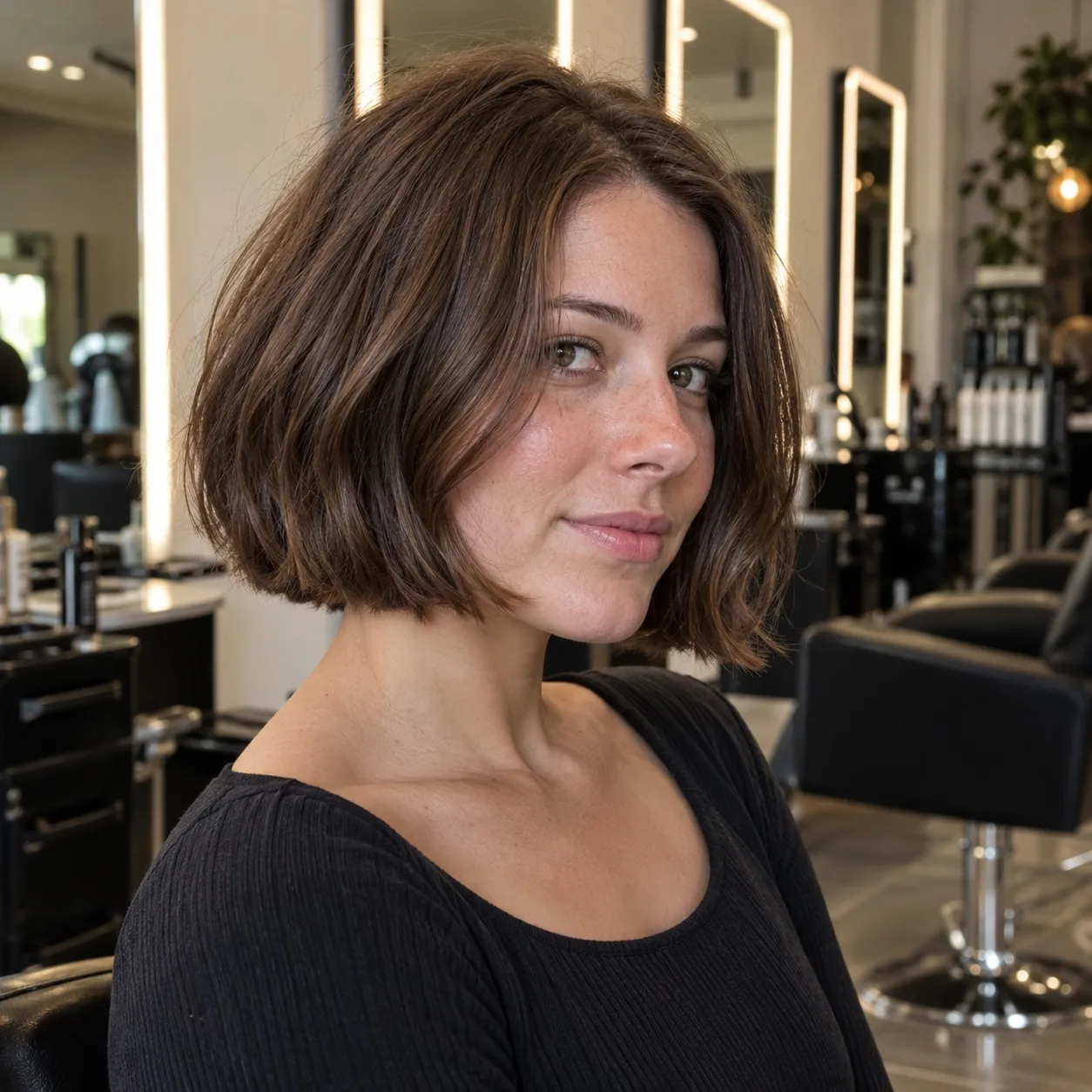
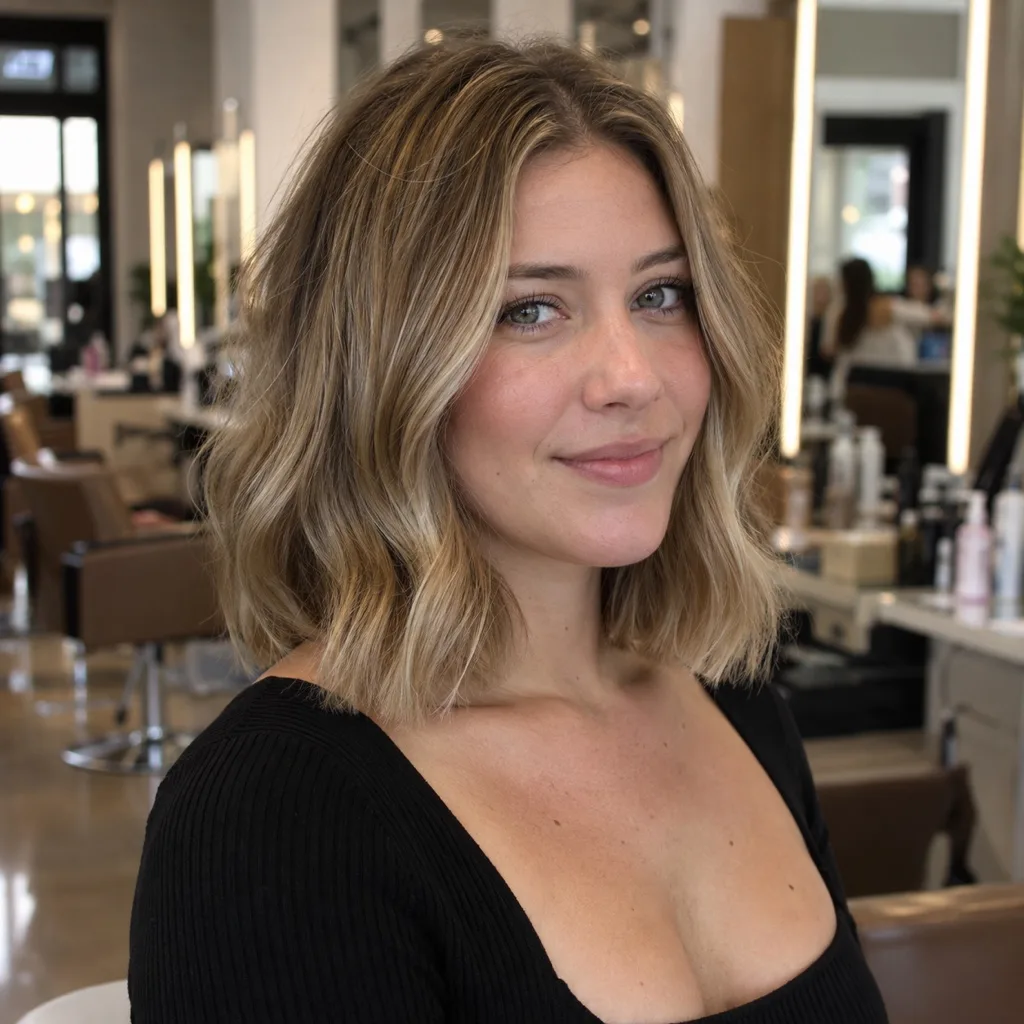
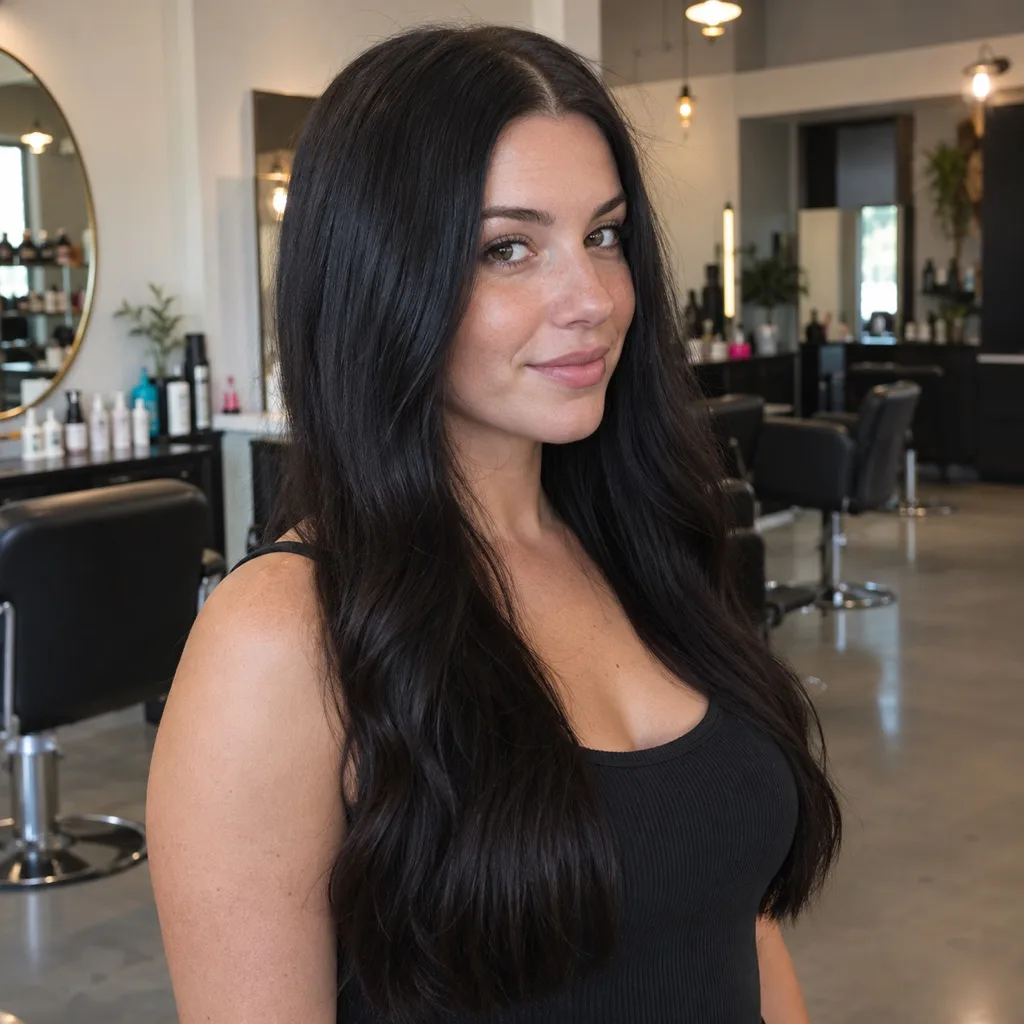
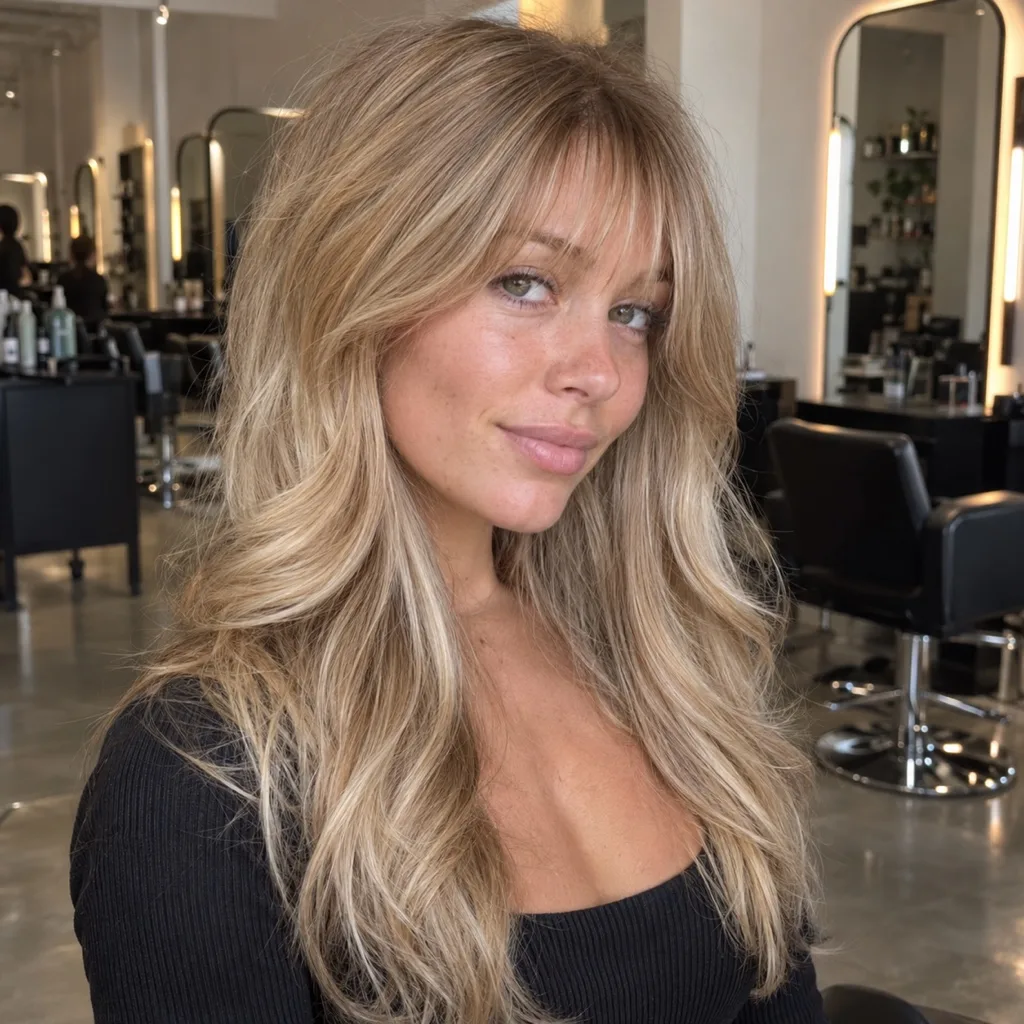
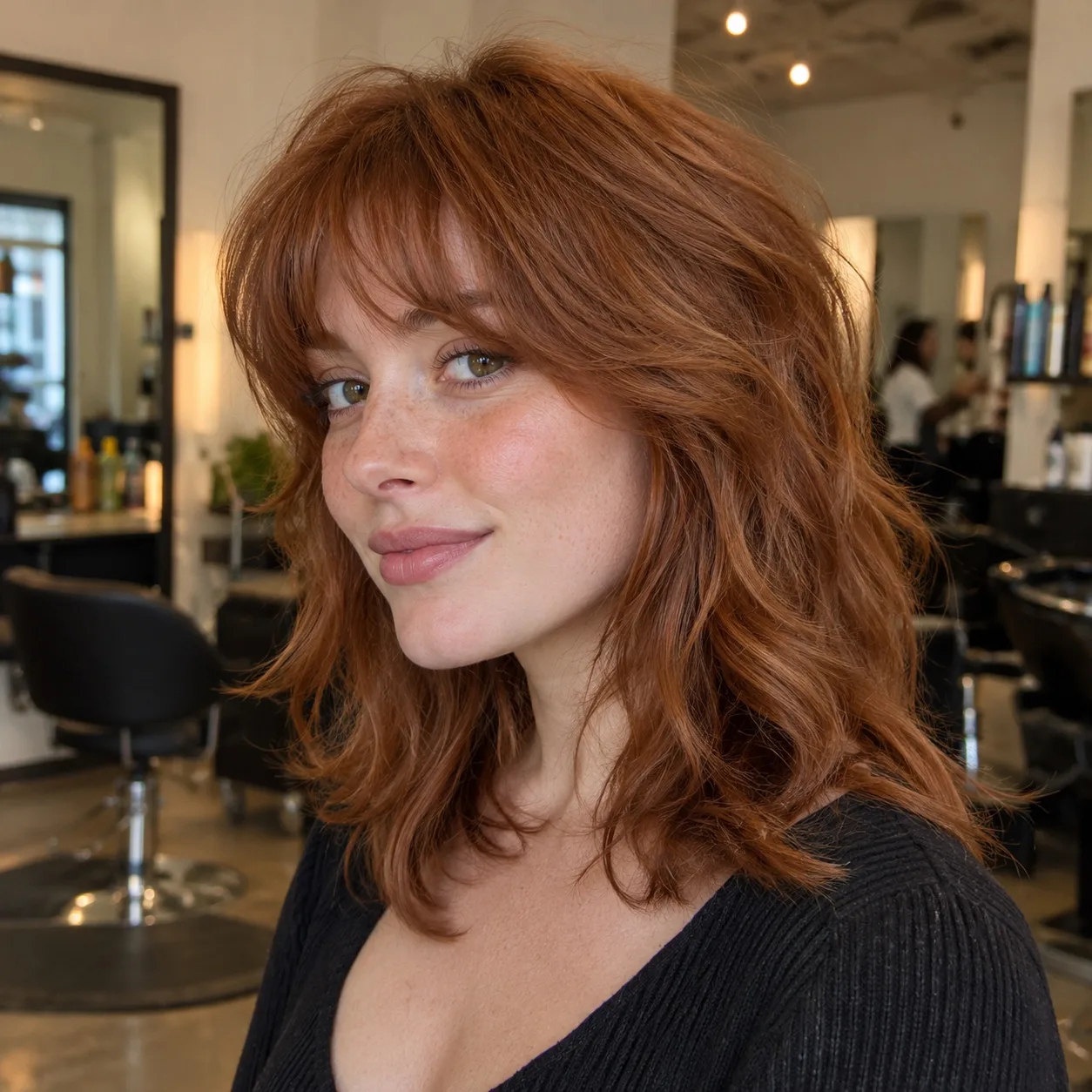
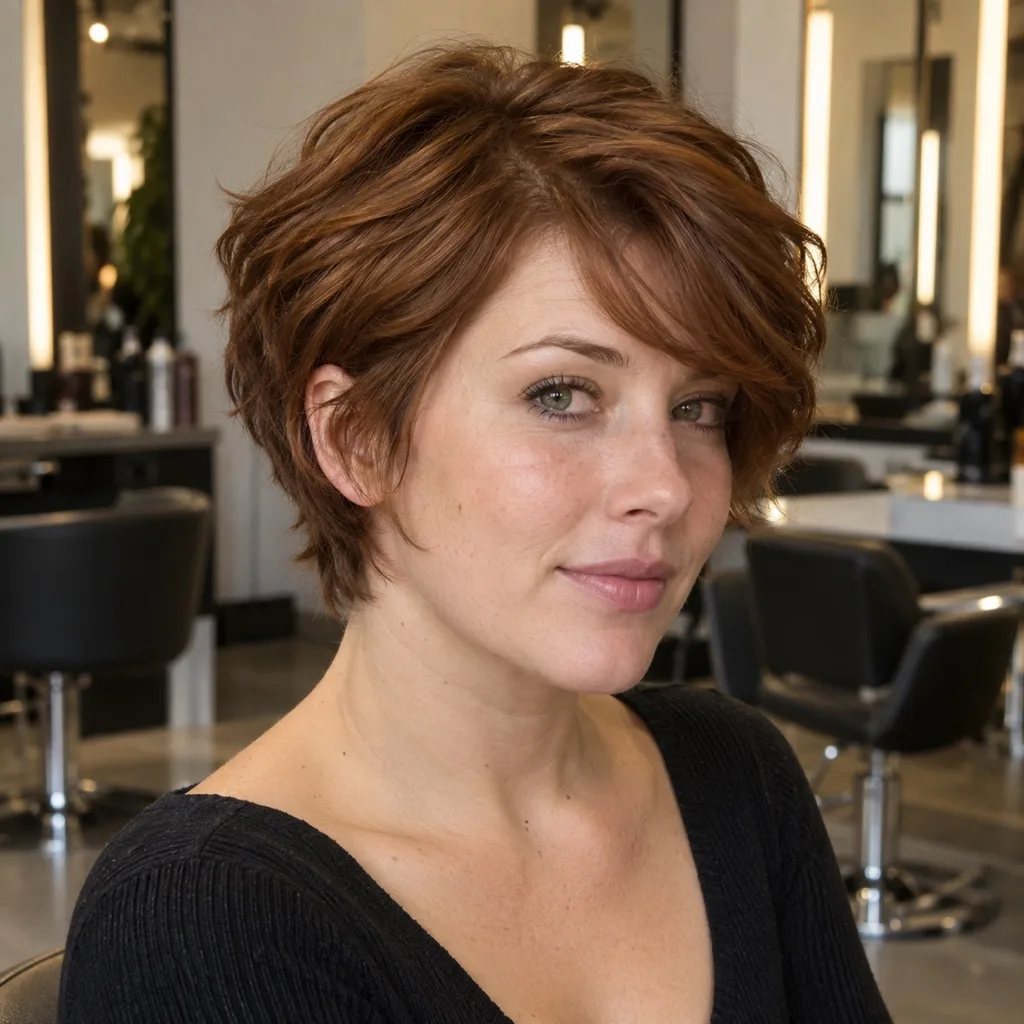
Every picture below is the same hair type: straight at the root, a loose bend through the lengths, coarse strands. Only the cut changes, so you can see what each shape does to hair that wants to puff. The blunt, one-length shapes at the start are the easiest to live with; the heavily layered ones near the end need more styling to stop the outer layer frizzing.
Gallery14 photos · tap to enlarge
 Try this on me
 Try this on me
 Try this on me
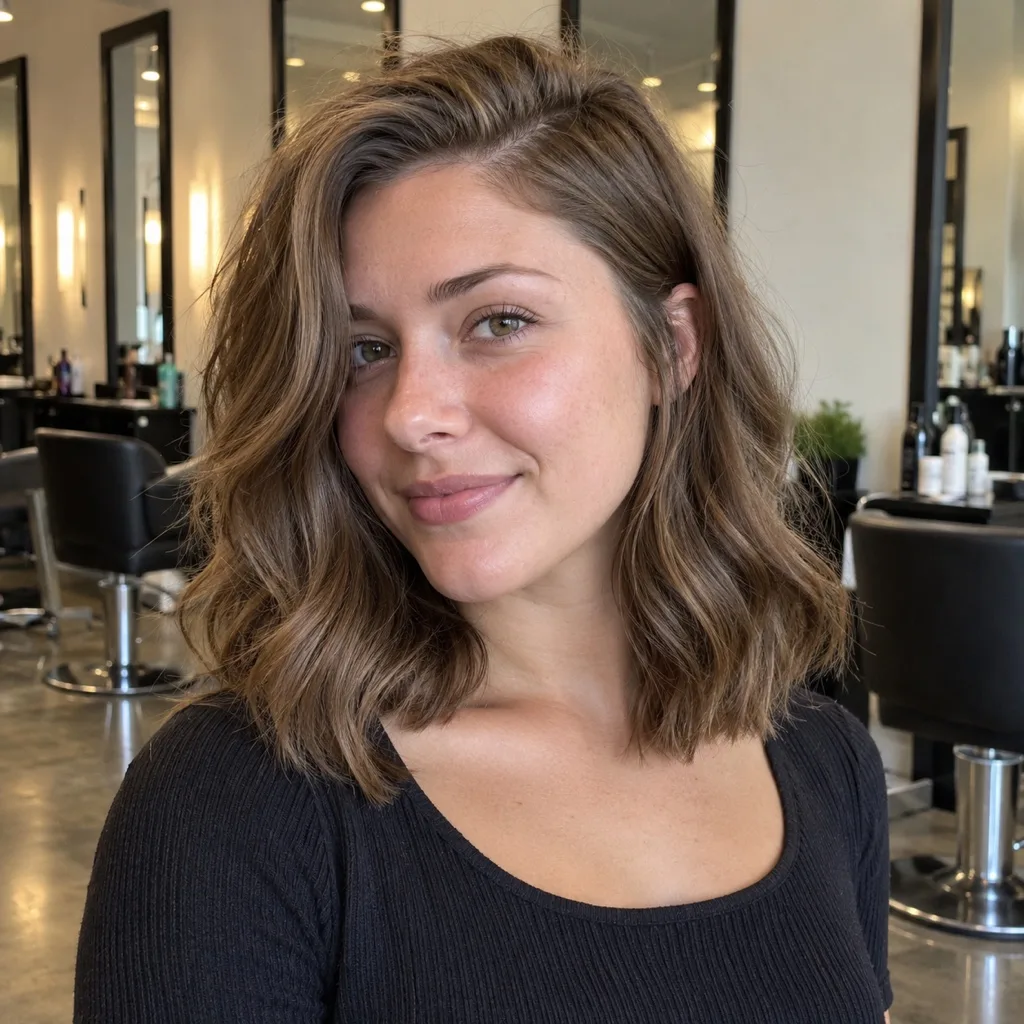 Try this on me
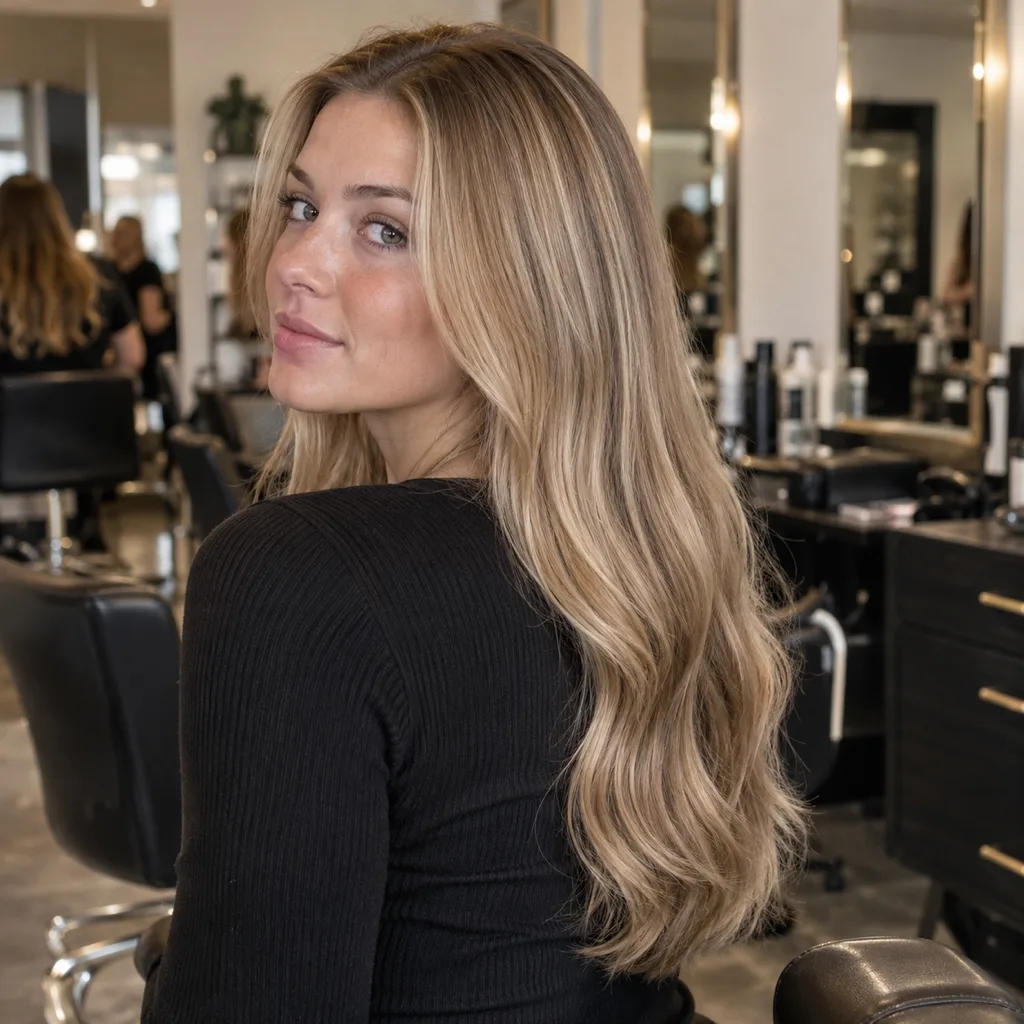 Try this on me
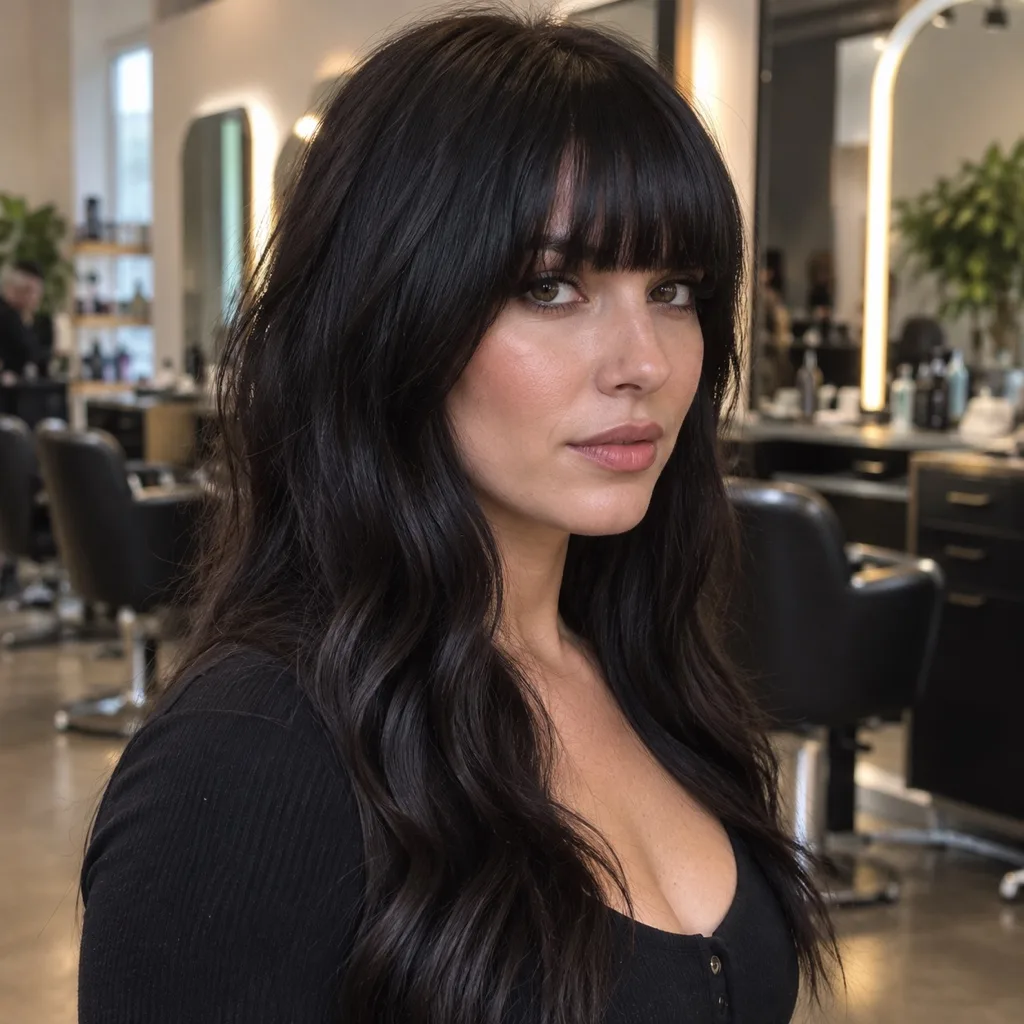 Try this on me
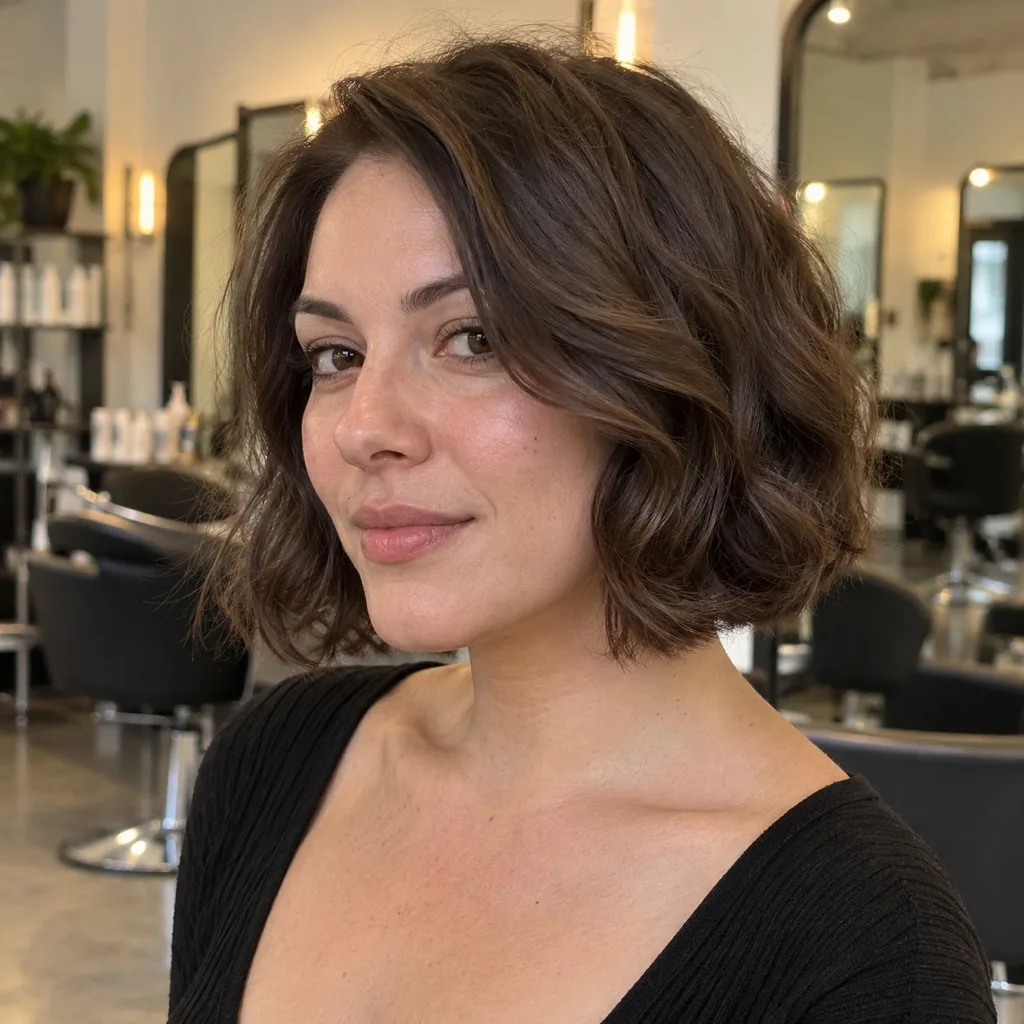 Try this on me
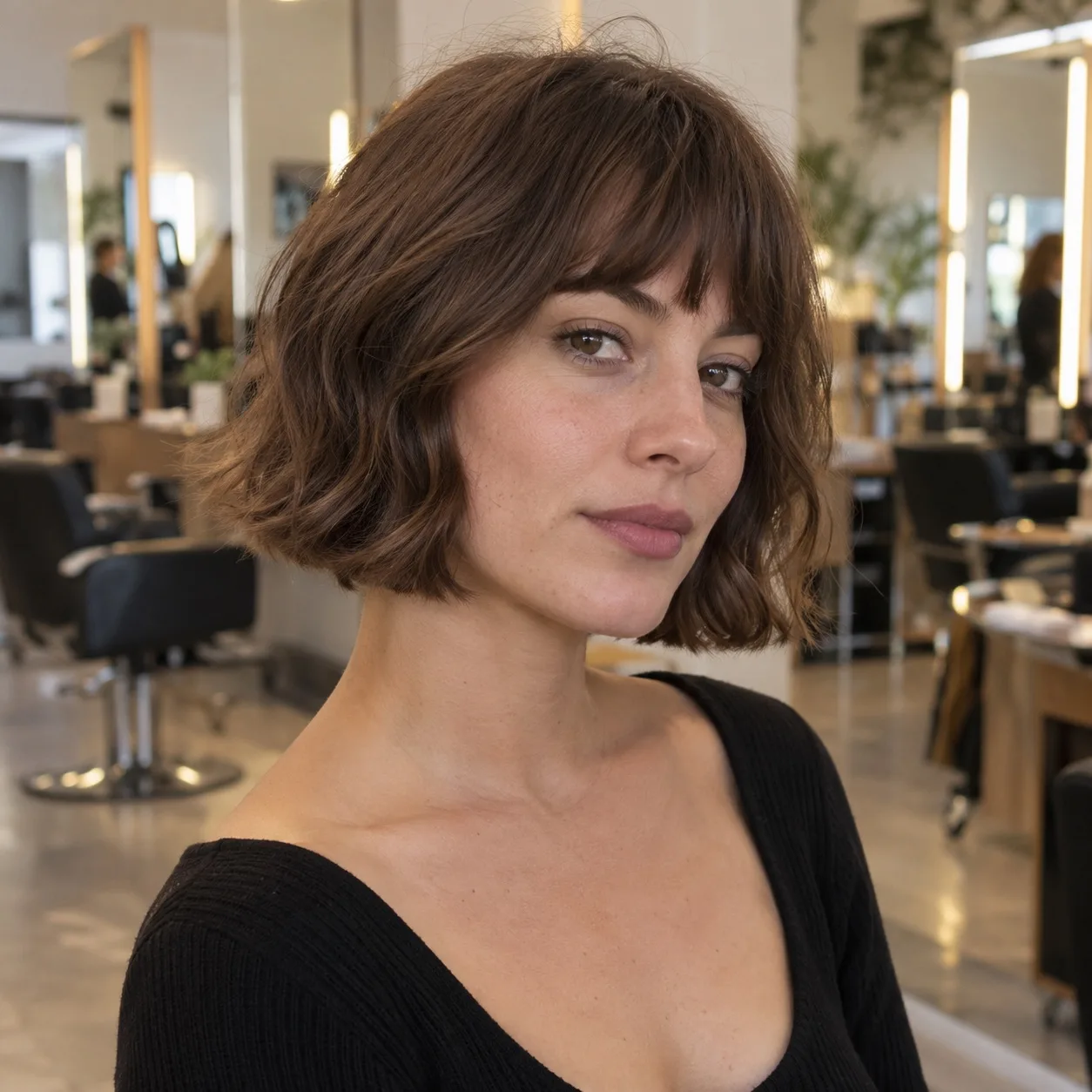 Try this on me
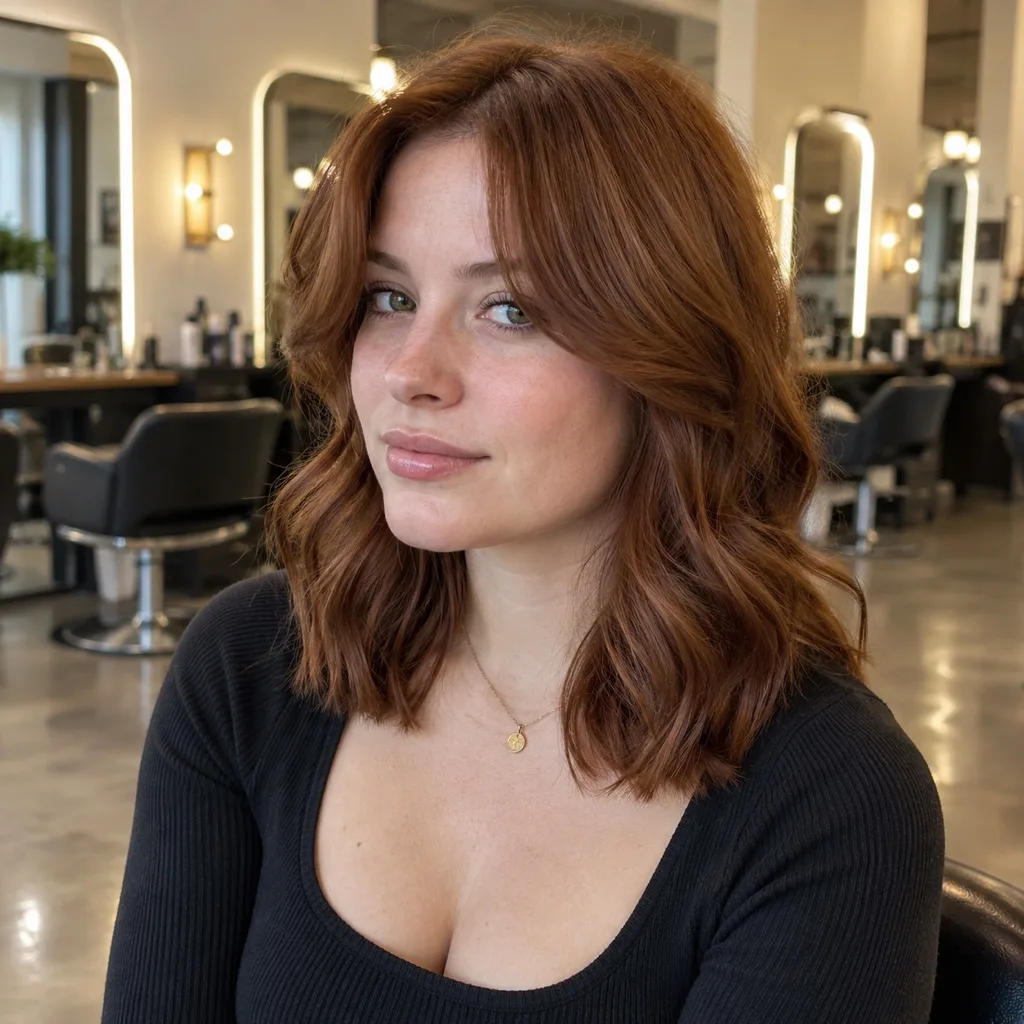 Try this on me
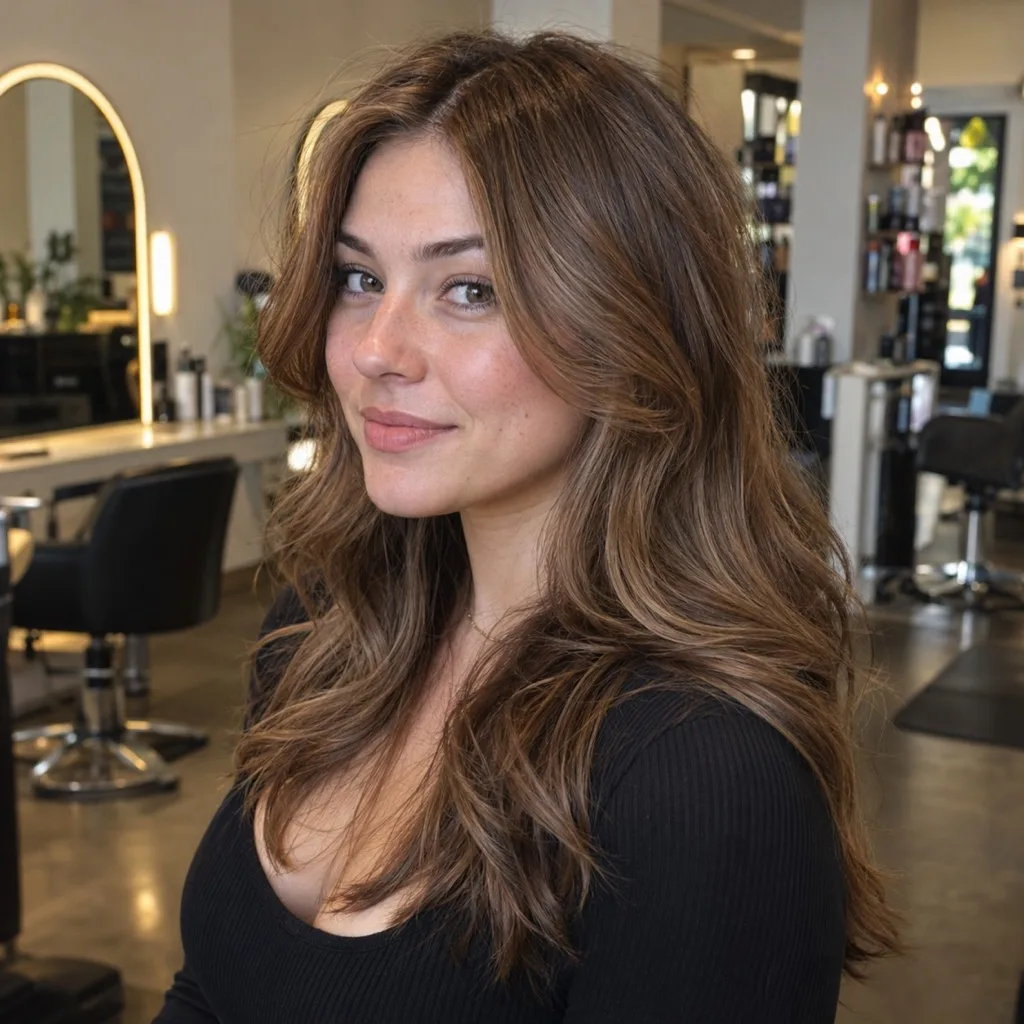 Try this on me
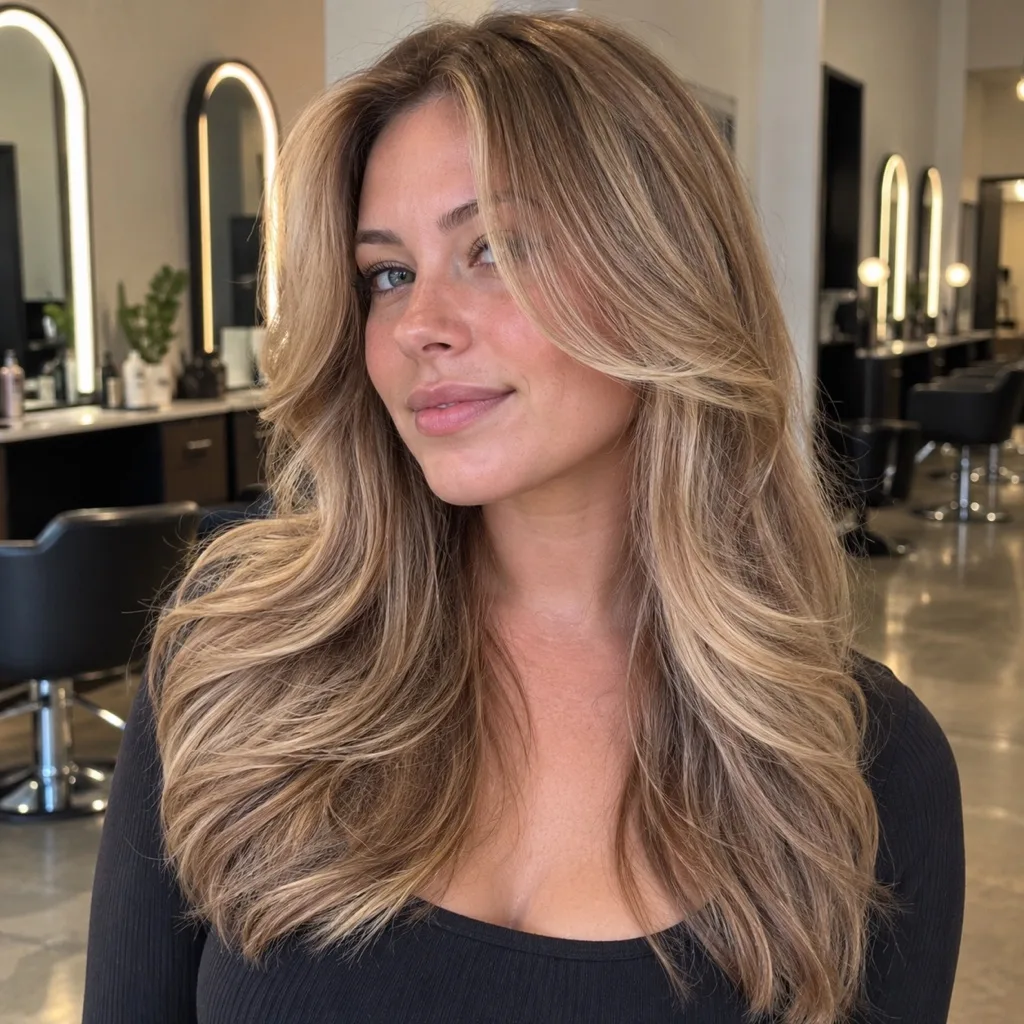 Try this on me
 Try this on me
 Try this on me
 Try this on me
Which cut suits your 1C hair?
Pick by the thing that actually differs between people with 1C hair: how much of it there is. The hair type is the same for everyone reading this; density is not, and it decides whether you need weight or need it taken out.
| Your situation | Best cuts | Avoid |
|---|---|---|
| Fine strands, low density | Blunt bob, blunt lob, one-length | Shags, choppy short layers |
| Coarse and thick | Long layers, butterfly cut, U-shape | Chin-length cuts with no internal shaping |
| Frizz is the main complaint | Long one-length, blunt bangs | Razor cuts, heavy thinning |
| Round face | Collarbone lob, long layers, side part | Chin-length bob with a middle part |
Fine 1C hair: keep one heavy line
If your strands are on the fine side or you do not have much hair, a blunt cut is your best friend. A chin-length blunt bob cut in one solid line keeps the full weight of the hair at the ends, which pins the bend down and makes thin ends look thick. The bend still shows, as a soft lift at the bottom, but it cannot run away. The layered bob guide is the next step if you want a little more movement.

Thick 1C hair: take weight out from the inside
Thick, coarse 1C hair is the one case where you do need weight removed, but from the inside, not from the surface. Ask for long layers that start at the chin or lower and for internal weight removal under the top layer. The outline stays long and smooth, and the hair stops sitting like a triangle. A butterfly cut or a U-shaped back works for the same reason, and the shoulder length haircuts guide has more lengths for the in-between stage.
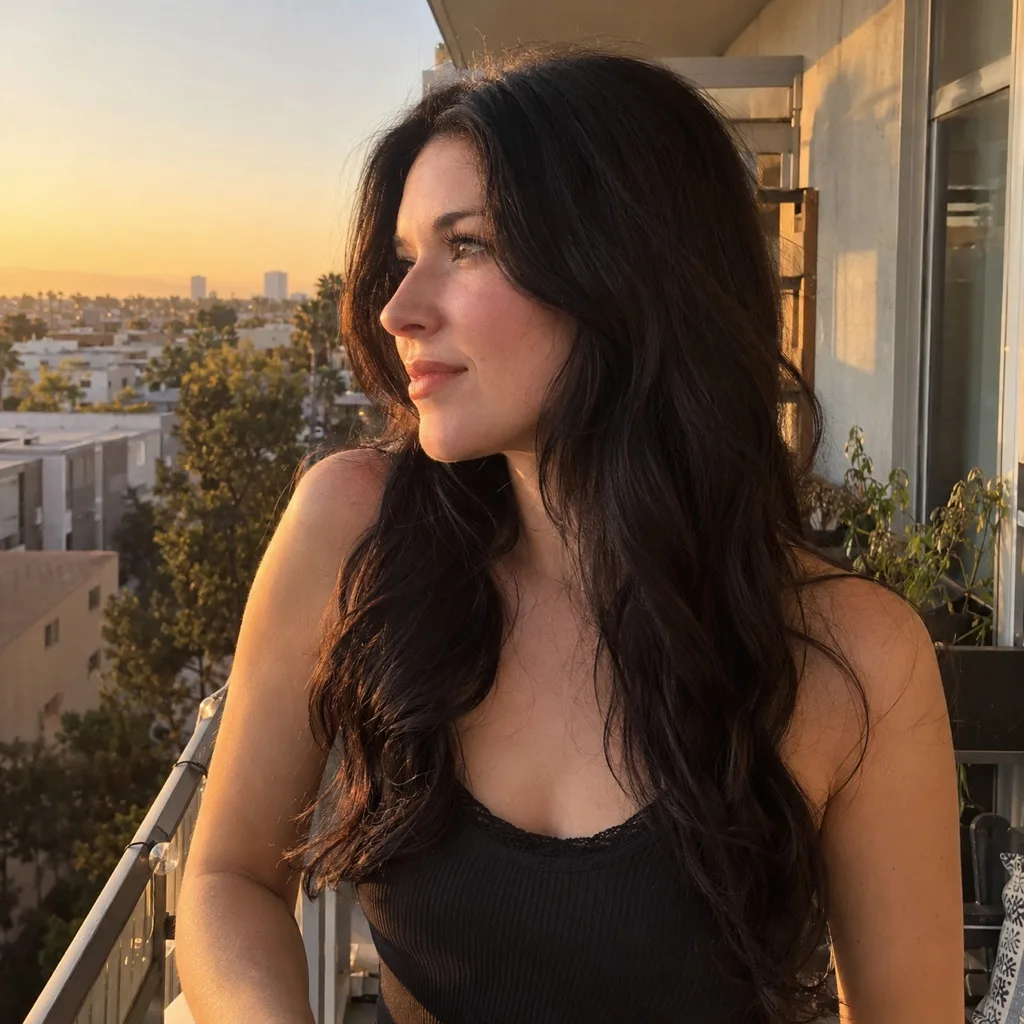
1C hair and a round face
1C hair adds width at the jaw, because that is where the bend starts. On a round face, a chin-length bob with a middle part puts that width exactly where you do not want it. Go a few inches longer, to the collarbone, and part it to the side, so the bend sits below the jaw and the line runs down rather than across. If you are not sure what shape your face is, measure it here.
Measure it instead of guessing
Both numbers in the same unit — the answer is a ratio, so it does not matter which.
Under 1.15 reads round, 1.15 to 1.5 reads oval, over 1.5 reads long. Oval and long split on the jaw rather than the ratio: an oval tapers toward the chin, a long face runs straight down.
Yours could be here.
Start with one selfie.
One photo, twenty seconds, and you'll know. Free account, no card for your first render.
Why does 1C hair puff and frizz?
1C hair frizzes because the strand is coarse and bent. A bent strand has more cuticle facing outward, and the cuticle lifts when it takes up moisture from the air, which turns into the halo you see on humid days. The ends puff for the same reason, because they are the oldest, driest part of the hair and they are free to bend.
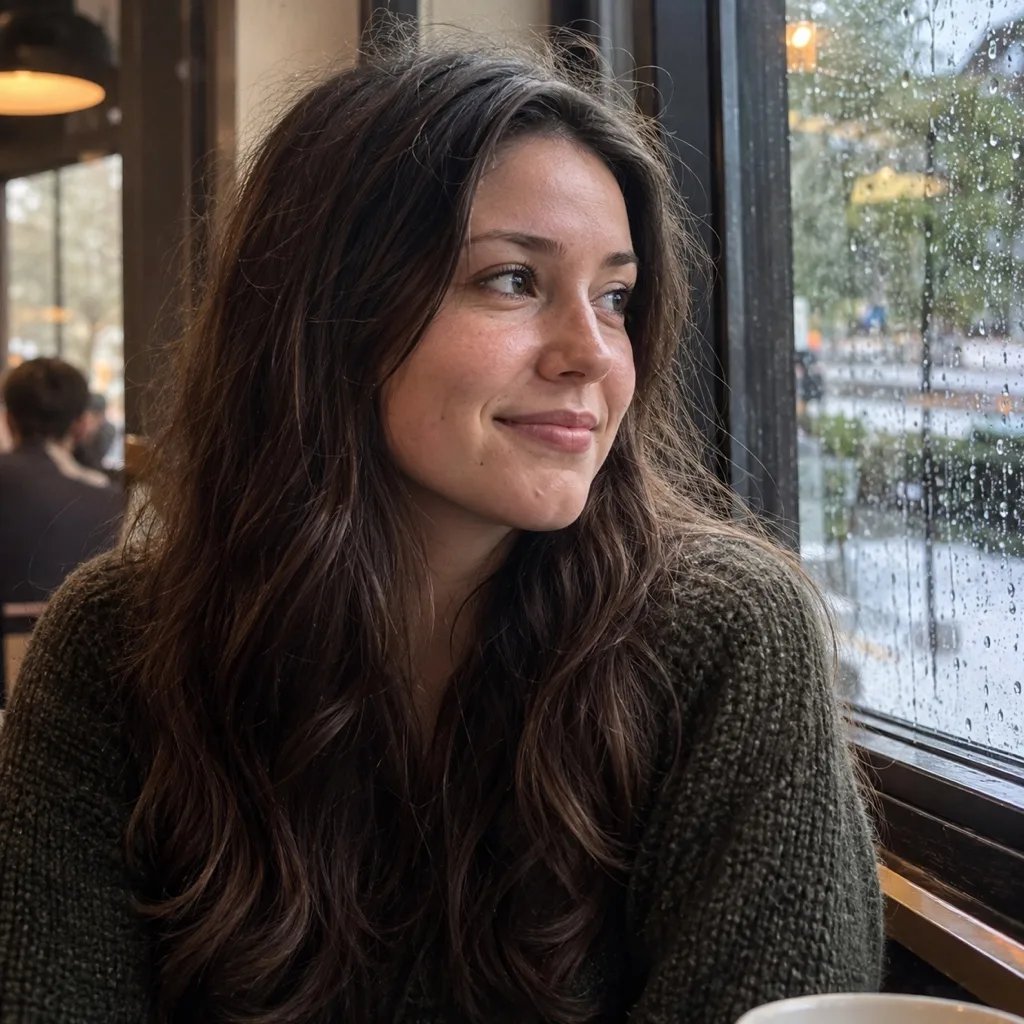
The cut decides how much of that you see. Hair that is all one length weighs the bend down from the ends up. Short layers throughout the top give dozens of loose ends a chance to lift. That is why a blunt bob on 1C hair can look sleek on the same day a shag on the same head looks frizzy.
Mistakes that make 1C hair look puffy
- Thinning shears on the surface. A stylist sees a lot of hair and thins it out. On 1C hair the short pieces bend outward and sit on top as frizz. Ask for weight to come out underneath, never on the top layer.
- Short, choppy layers. The more short ends there are, the more of them lift. Keep the shortest layer at the chin or below.
- Brushing it dry. Brushing a dry bend breaks it into frizz. Brush or detangle in the shower with conditioner in.
- Rubbing with a terry towel. It roughs up the cuticle. Squeeze the water out with a cotton t-shirt or a microfiber towel instead.
- Treating it like curly hair. Heavy butters and curl creams flatten the roots and still do not make 1C hair curl. Light products only.
Say this in the chair to avoid the first two:
Say this to your barber
Keep the outline blunt, take any weight out from underneath, no thinning shears on the top layer, and no layers shorter than my chin.
How to style 1C hair
You can wear 1C hair two ways: bring out the bend, or smooth it. Both start with damp hair and less product than you think.
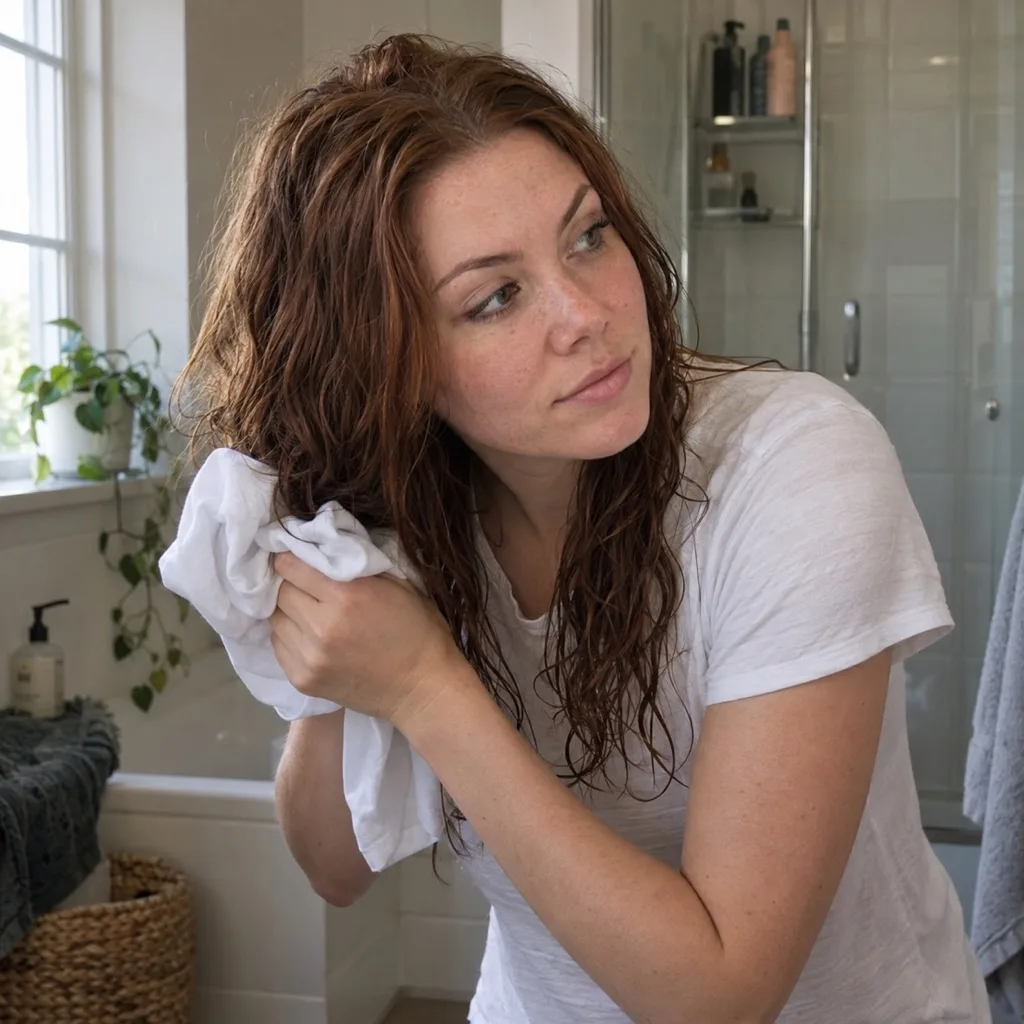
How to style 1C hair to bring out the bend
- Squeeze out the water
Wring the hair gently with a cotton t-shirt or microfiber towel. Do not rub. You want it damp, not dripping.
- Add a light product to damp hair
Rake a small amount of lightweight mousse or a light leave-in through the mid-lengths and ends. Keep it off the roots, which do not bend anyway.
- Scrunch upward
Cup the ends in your hands or the t-shirt and push them up towards the scalp a few times. This groups the bends into loose waves.
- Dry without touching
Air-dry, or use a diffuser on low heat and low speed. Touching the hair while it dries breaks the bends up into frizz.
- Break the cast and finish
Once fully dry, scrunch once more to soften any stiffness, then smooth a drop of light oil over the top layer to calm the halo.
To wear it smooth instead, blow-dry section by section with a paddle or round brush, pulling the hair straight from root to end, and use a heat protectant first. 1C hair holds a straightened shape well until it meets humidity, so a light anti-frizz spray matters more than usual. The heat protectant guide covers which one to pick for thicker hair.
How to care for 1C hair
1C hair sits between straight and wavy in its care too. It gets less oily than 1A because oil travels down a bent strand more slowly, and it needs more moisture on the ends.
- Wash: two or three times a week is enough for most people, with a gentle, sulfate-free shampoo.
- Condition: every wash, mid-lengths to ends, and detangle with your fingers or a wide-tooth comb while it is in.
- Leave-in: a light one on the ends. A heavy cream flattens the bend and leaves the hair limp at the root.
- Trims: every eight to ten weeks. Split, dry ends are what puff first.
- Sleep: a silk or satin pillowcase, or a loose low bun, keeps the bend from being crushed into frizz overnight.
Is 1C hair rare?
1C hair is less common than 1A and 1B, and it is often mistaken for something else. Many people with 1C hair spend years blow-drying it straight and call themselves straight-haired, and others see the bend and decide they are 2A. There is no reliable count of how many people have each hair type, so treat any "rarest hair type" ranking you see online as a guess.
Can you see a cut on your own 1C hair first?
Here is the wall with every tip above. 1C hair changes shape with the cut more than almost any other type: the same hair can look sleek in a blunt bob and puffy in a shag. The photos you save are almost always on different hair, and the only way to know whether a chin-length bob or a collarbone lob suits your face is to get one and live with it for two months.
A try-on takes the guessing out of that. Upload a selfie and see the cut on your own face before anyone picks up the scissors.
Is the try-on free?
Yes, the first look is free and needs no card: one hairstyle, one colour on it, front view. After that, Plus is $9.99 a week or $60 a year for 150 credits and every cut in the catalogue, and a hairstyle on your photo costs 10 credits. Every plan has a seven-day refund with no conditions.
One free look is enough to settle a single decision, like bob or lob, and that is usually the decision that matters.
1C hair is not frizzy hair that needs fixing. It is straight hair with a bend and a lot of body, and the cut decides whether that body looks polished or puffy. Keep the line blunt if your hair is fine, take weight out from underneath if it is thick, go longer if your face is round, and keep short layers off the top.
If you want bangs with it, wispy bangs sit better on a bend than heavy ones do, and the face shape guide matches lengths to your face. For the next type up, see 2B hair.
Frequently asked questions
The best hairstyles for 1C hair keep the outline blunt and the weight at the ends: a chin-length blunt bob, a collarbone lob, long one-length hair, and long layers that start at the chin or lower. Avoid short choppy layers and shags unless you are willing to style them every day.
Look at the pattern after an air-dry. 1C hair is straight at the root and bends unevenly from mid-length, with some sections hanging almost straight. 2A hair forms a repeating flat S-wave that starts higher, often at the ears. Many people sit between the two.
1A hair has no bend at all, fine strands and little volume. 1C hair has a loose S-bend through the lengths, coarse strands and the most volume of type 1. 1A goes flat; 1C puffs and frizzes.
1C is less common than 1A and 1B, and many people with it do not know they have it, because they blow-dry it straight or call it wavy. There is no reliable count of hair types, so claims about which type is rarest are guesses.
Yes. 1C hair straightens easily with a blow-dry or a flat iron and holds that shape well, but it starts to bend again in humidity or when it gets wet. Use a heat protectant first, and a light anti-frizz spray to hold it.
Yes. 1C is usually coarse, but hair type describes the shape of the strand, not its width. Fine hair with a loose bend from mid-length is still 1C. It will have less volume, and blunt cuts suit it best.
A blunt cut is the safest choice: a chin-length blunt bob if your hair is fine, a collarbone lob or long one-length cut if it is average, and long layers with weight removed from underneath if it is thick. All of them keep the bend under control.
1B hair is mostly straight with a slight flick at the ends. 1C hair has a clear S-bend from mid-length down, coarser strands, more volume and more frizz. If you can see a bend above your chin, you are probably 1C.
Preview it on your own photo: Virtual Hair Color Try-On.
Share article
About the author
Related posts
Women's Haircuts · 13 min
Thick Hair: What It Is, the Cuts That Work and How to Manage It
Thick hair is a weight problem before it is a frizz problem. How to tell dense from coarse, 13 cuts that handle the bulk, how to thin it without ruining it, and the words to say to your stylist.
Women's Haircuts · 13 min
Coily Hair: Types, Care and a Routine That Fits You
Understand coily hair without getting stuck on a subtype. Learn how to detangle, wash and style your coils, plan for shrinkage, and choose an afro shape.
Women's Haircuts · 14 min
1B Hair: How to Tell If You Have It + 14 Cuts That Suit It
1B hair is straight with some body at the crown and a slight turn at the ends. How to tell it from 1A and 1C, why the length of your cut matters most, 14 cuts that suit it and how to style it.
Women's Haircuts · 14 min
Best Hairstyle Apps for Women 2026: 10 Apps, Real Prices
The best hairstyle app for women changes your hair and leaves your face and density alone. Ten apps compared with real prices and free tiers, what Reddit users complain about, and which app fits your hair type.
Women's Haircuts · 17 min
Long Hair With Bangs: 14 Styles and Which One Suits Your Face
Long hair with bangs suits almost every face, and the bangs matter more than the length. 14 bang styles on long hair, a face shape table, the mistakes to avoid and the exact sentence to say in the chair.
Women's Haircuts · 13 min
Heat Protectant for Curly Hair: Which One for Each Heat Tool
Curly hair needs a different heat protectant for a diffuser, a blowout and a flat iron. Match the product to your tool and curl type, apply it the right way, and keep your curl pattern.