Layered Hair: 14 Looks and the One Number That Decides Each
Oleh Onysko 12 November 2026 11 min read
In this article
Layered hair is any cut where the hair is trimmed to more than one length, so shorter pieces sit over longer ones and the ends move instead of hanging as a block. The look you get depends less on how many layers you have and more on one number: the gap between your shortest piece and your longest.
A two inch gap reads as one length that swings. A six inch gap frames your face. A ten inch gap is a shag or a wolf cut. Below are 14 layered looks sorted by that gap, which one suits your face and hair type, and the one sentence to say in the chair.
What is layered hair?
Layered hair is hair cut at several lengths on purpose. The stylist lifts sections away from the head and cuts them shorter than the hair underneath, so the top and front sit shorter than the back. A one-length cut, by contrast, is trimmed so every strand ends on the same line.
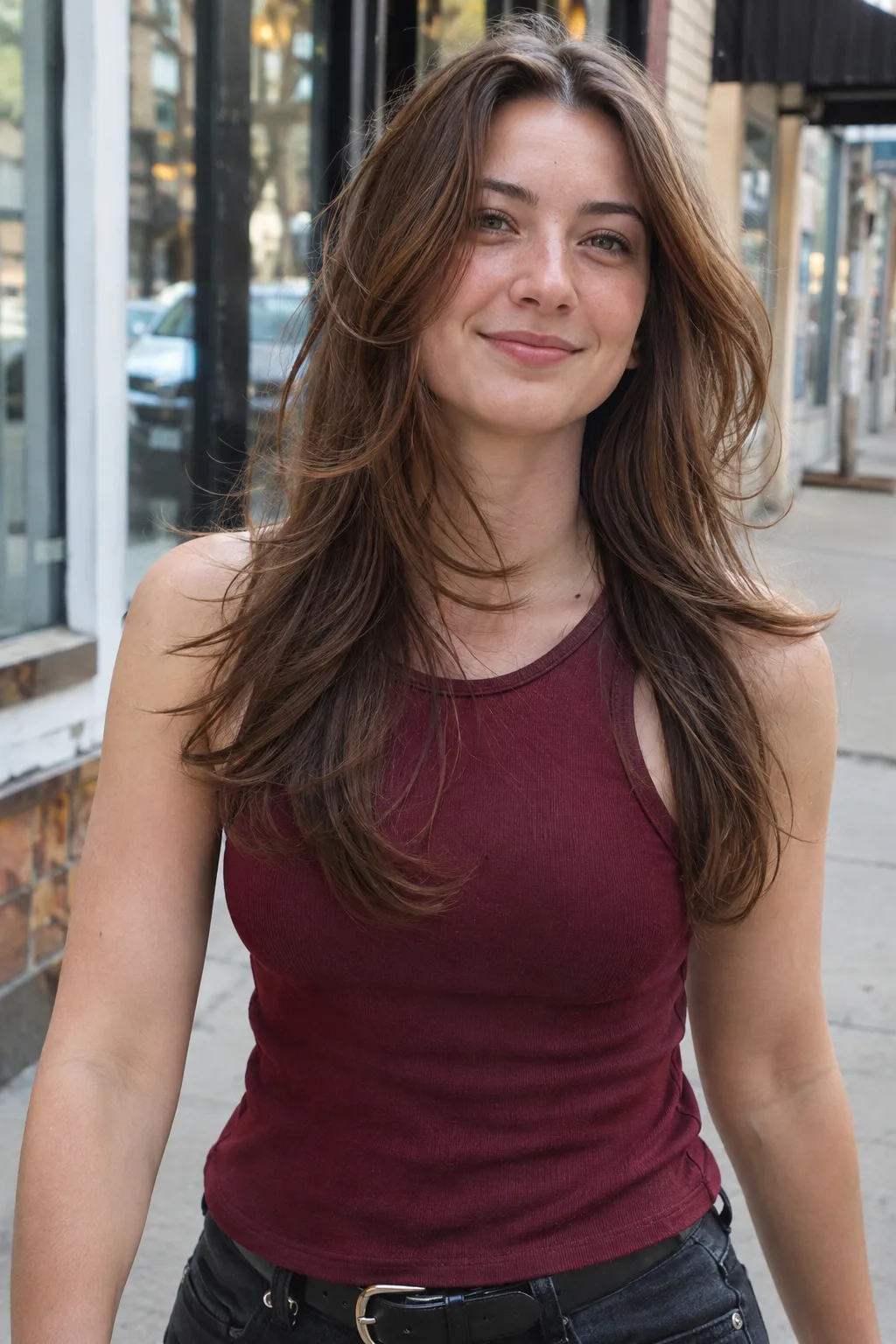
Layers do three jobs. They take weight out so thick hair stops looking like a triangle. They put movement into the ends so straight hair swings. And they put shape where you want it, usually around the cheekbones and jaw. You only get to pick one of those as the main goal, and that choice decides the gap.
If you want the technique side, our guide on how to cut layers walks through the sections and angles. This page is about choosing the look.
Want to see it first? Try a wolf cut on your own photo.
Types of layered hair compared
Here is the vocabulary a stylist uses, sorted from the smallest gap to the largest. The gap is the distance between the shortest piece and the longest ends.
| Layer type | Shortest piece lands | Gap | Best for | Upkeep |
|---|---|---|---|---|
| Ghost layers | 2 in above the ends | Small | Fine hair that wants movement | 10 to 12 weeks |
| Long layers | Below the shoulders | Small to medium | Long hair, any texture | 10 to 12 weeks |
| Face-framing layers | Chin | Medium | Round and square faces | 6 to 8 weeks |
| Curtain bangs with layers | Cheekbone | Medium | Long faces, high foreheads | 4 to 6 weeks |
| Butterfly layers | Cheekbone and chin | Large | Thick hair, blowout fans | 6 to 8 weeks |
| Soft shag | Cheekbone, with bangs | Large | Wavy hair | 6 to 8 weeks |
| Wolf cut | Crown | Very large | Thick or wavy hair, bold looks | 6 weeks |
The pattern is simple. Small gaps grow out without anyone noticing. Large gaps look dramatic for two weeks and need a trim every six to eight weeks to keep their shape.
14 layered hair looks, sorted by the gap
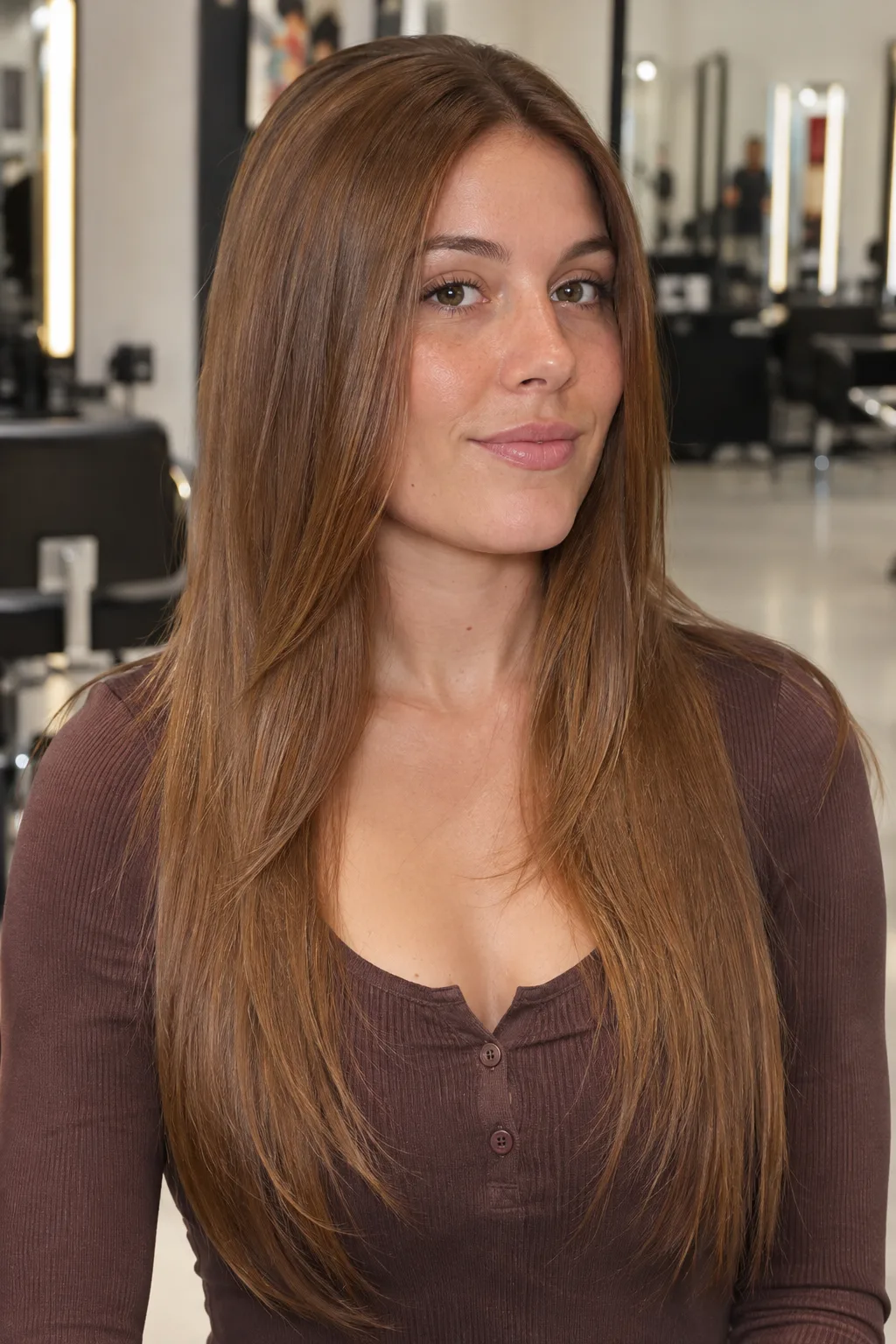
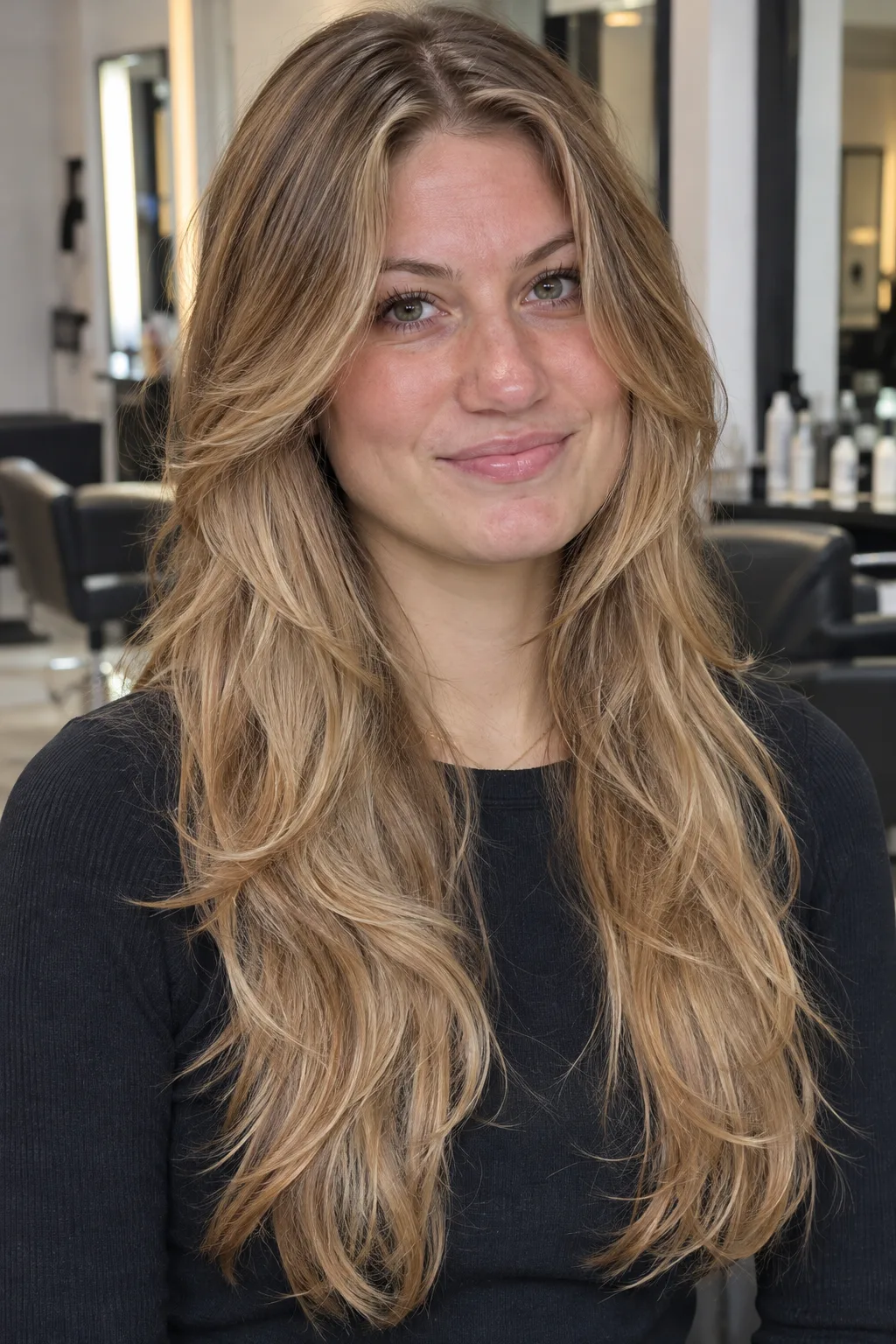
Every photo below holds the setting and framing steady. The only thing that changes is how far the shortest layer sits from the longest ends, starting with layers you can barely see and ending with a full wolf cut.
Gallery14 photos · tap to enlarge
 Would this suit me?
 Would this suit me?
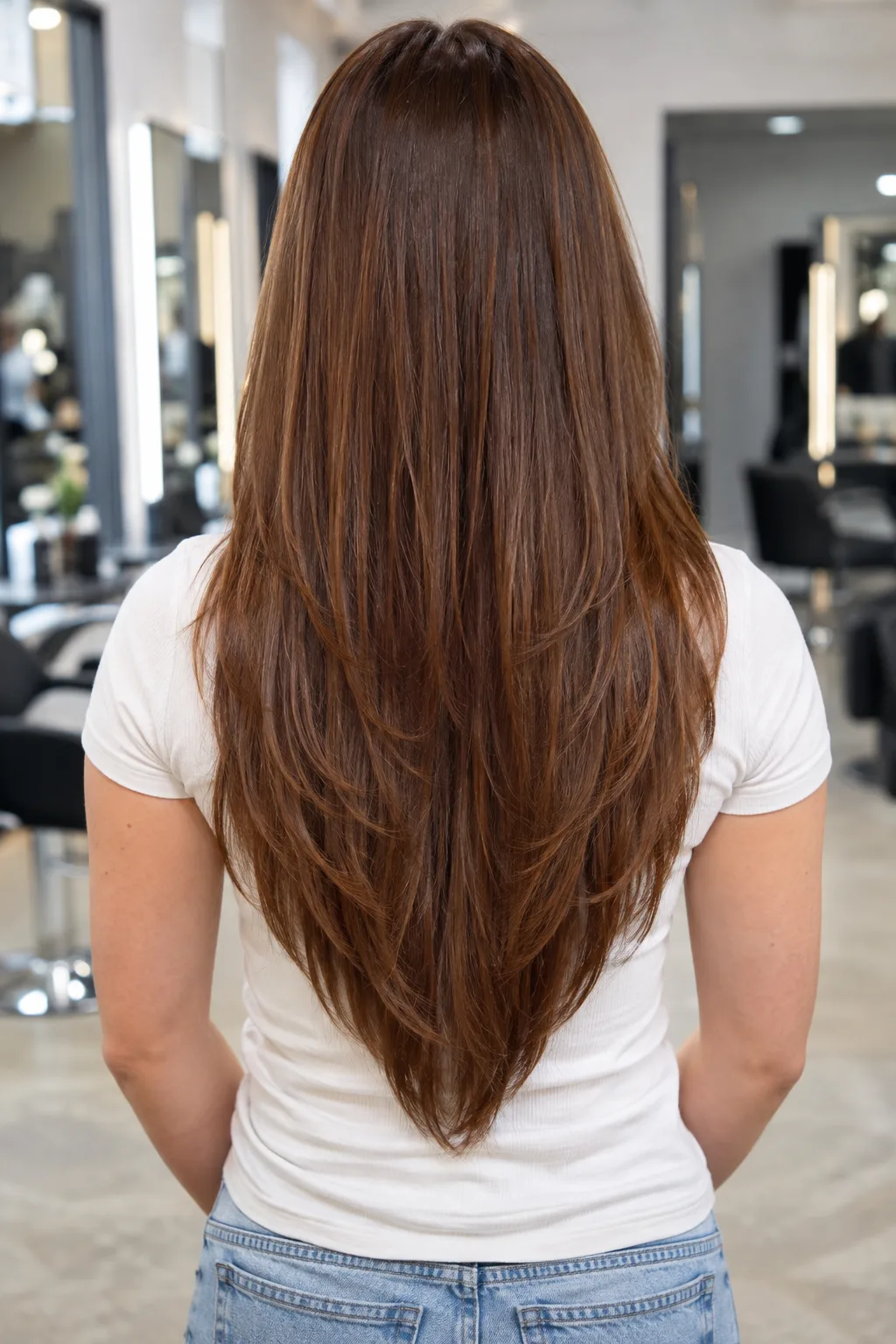 Would this suit me?
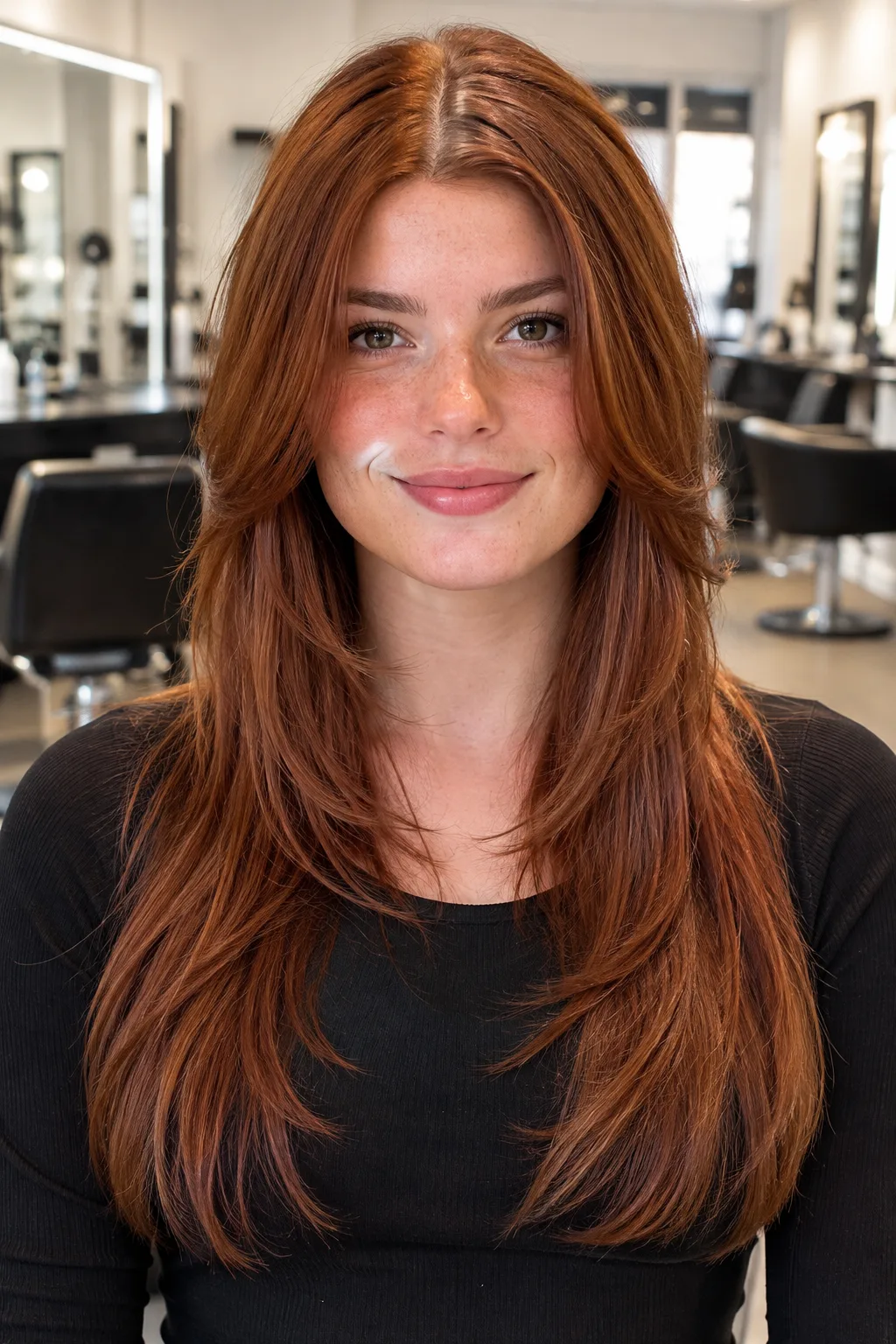 Would this suit me?
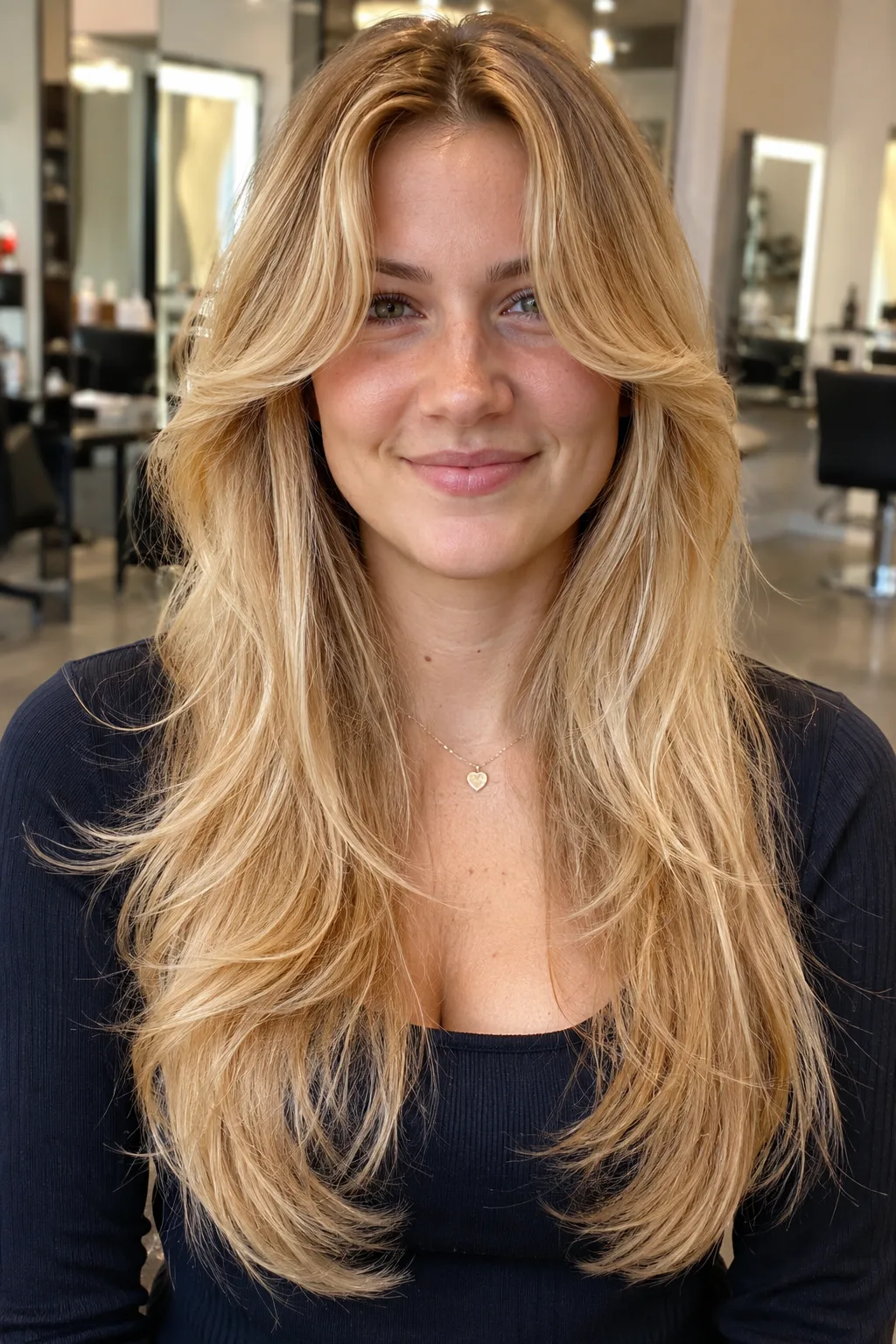 Would this suit me?
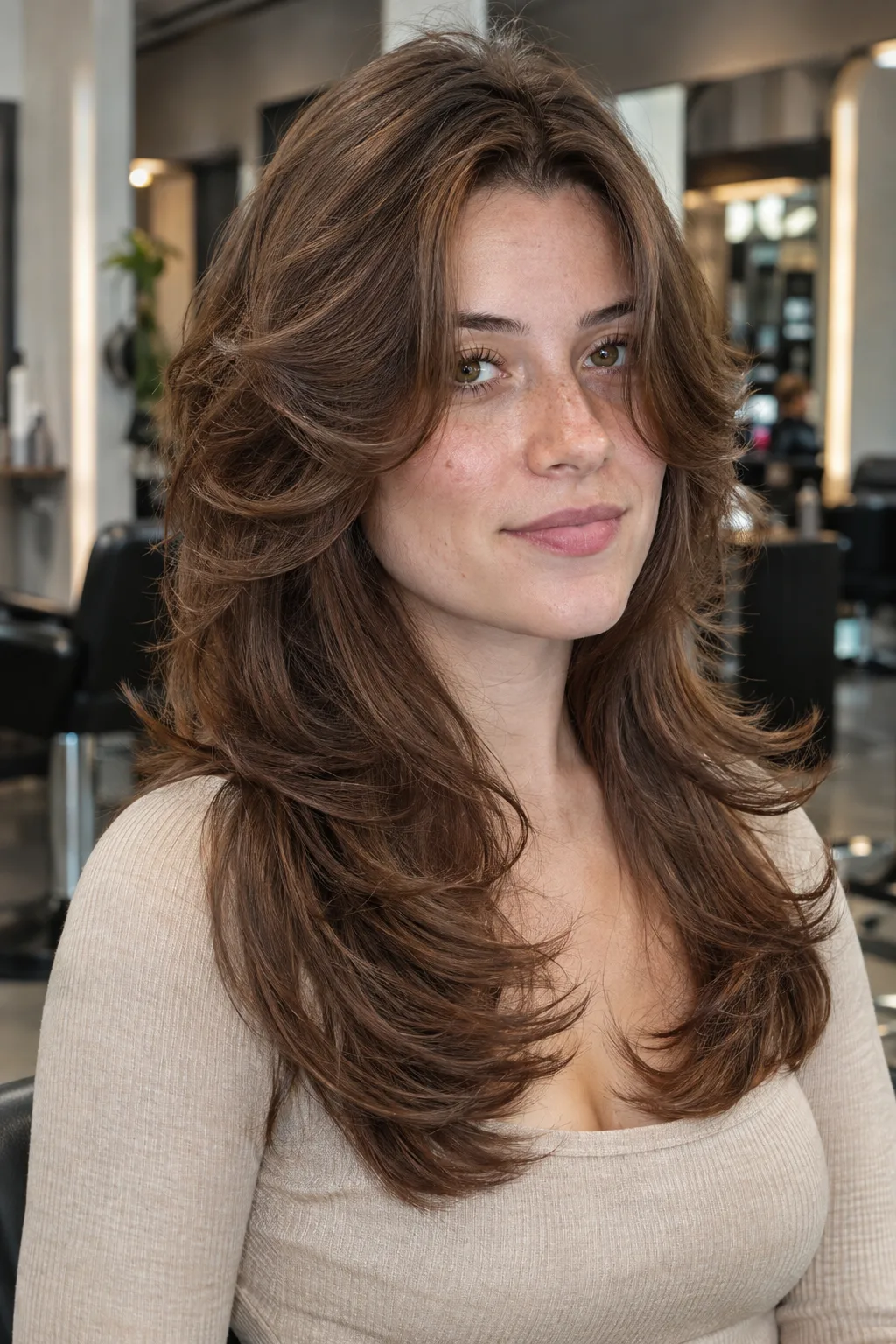 Would this suit me?
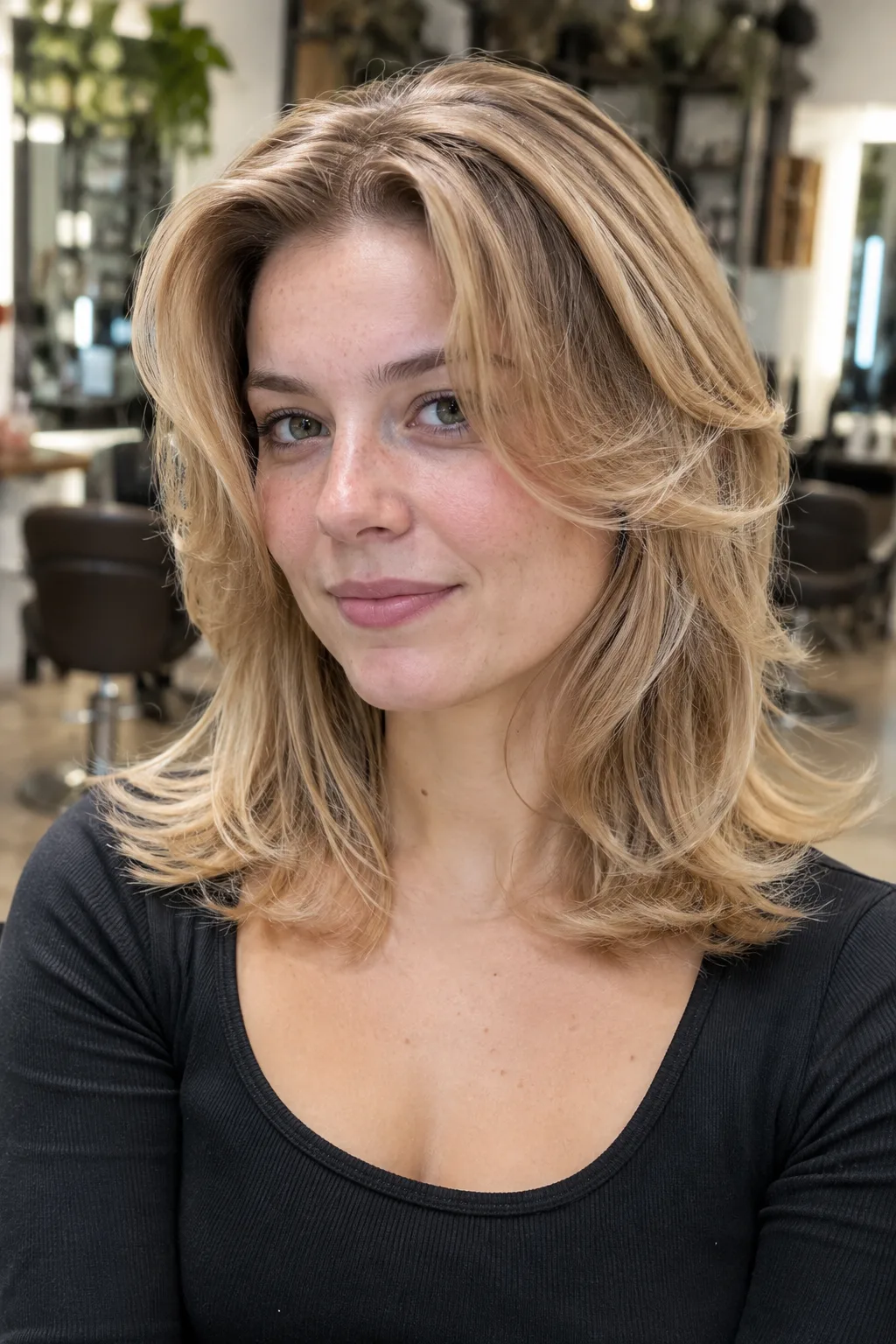 Would this suit me?
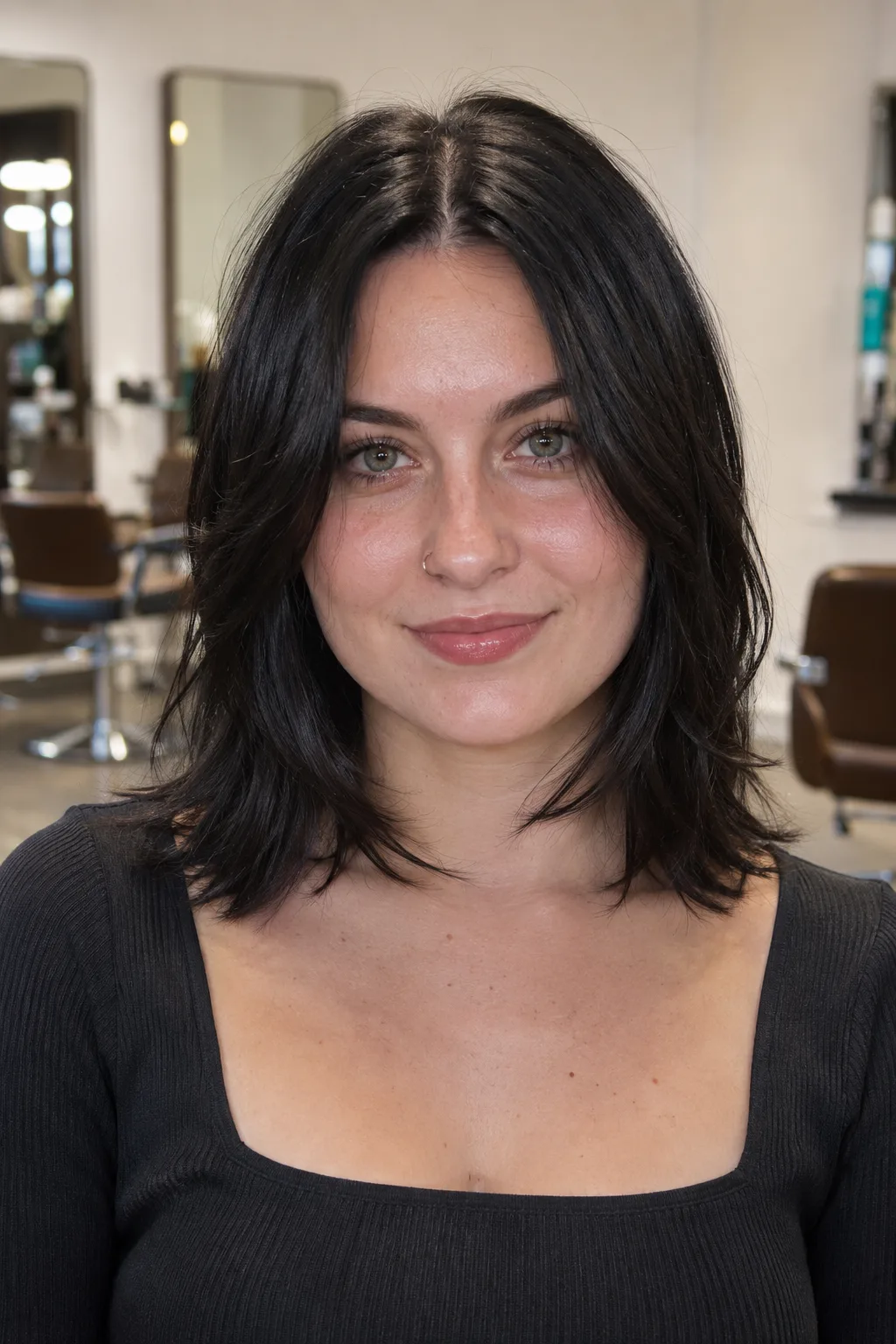 Would this suit me?
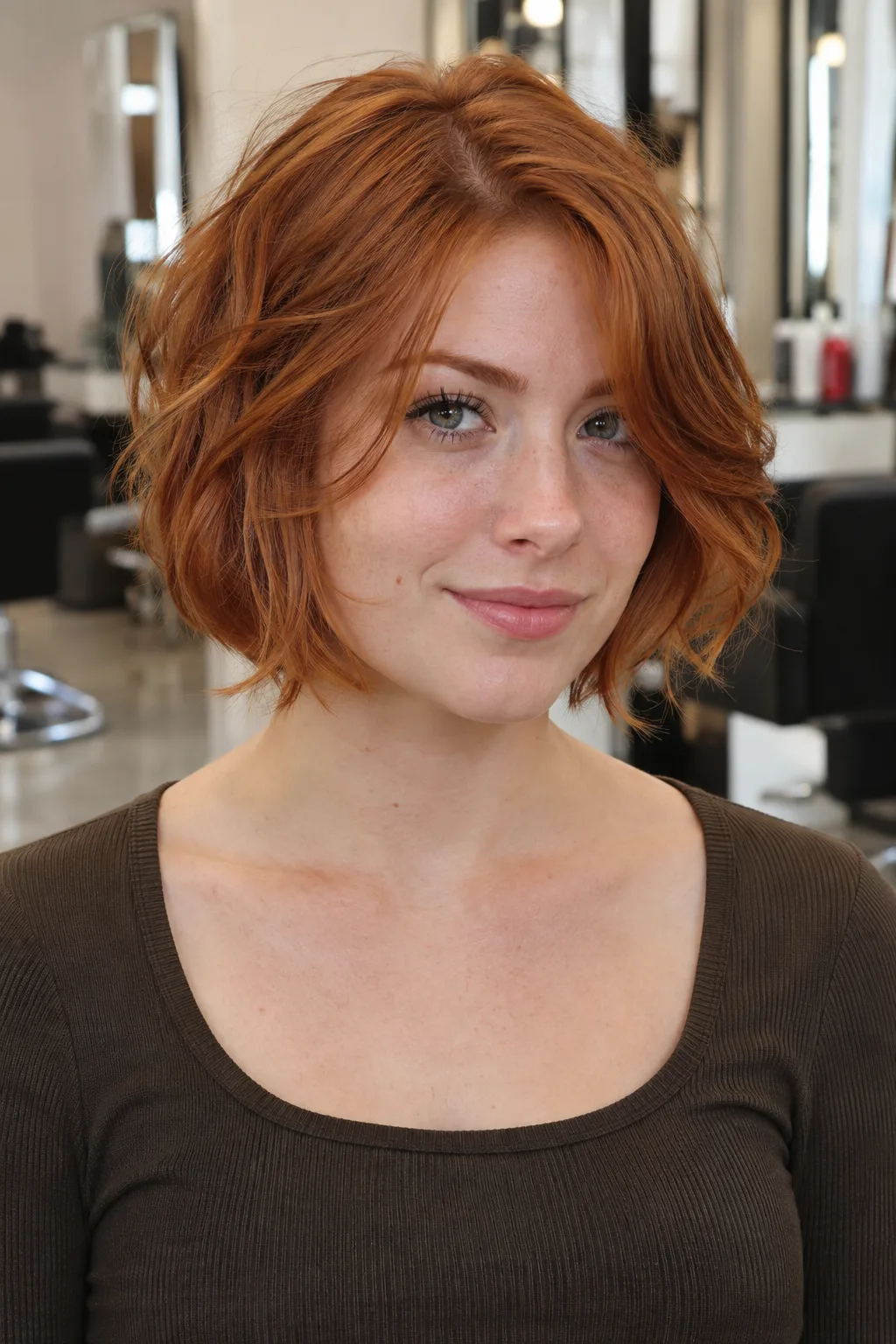 Would this suit me?
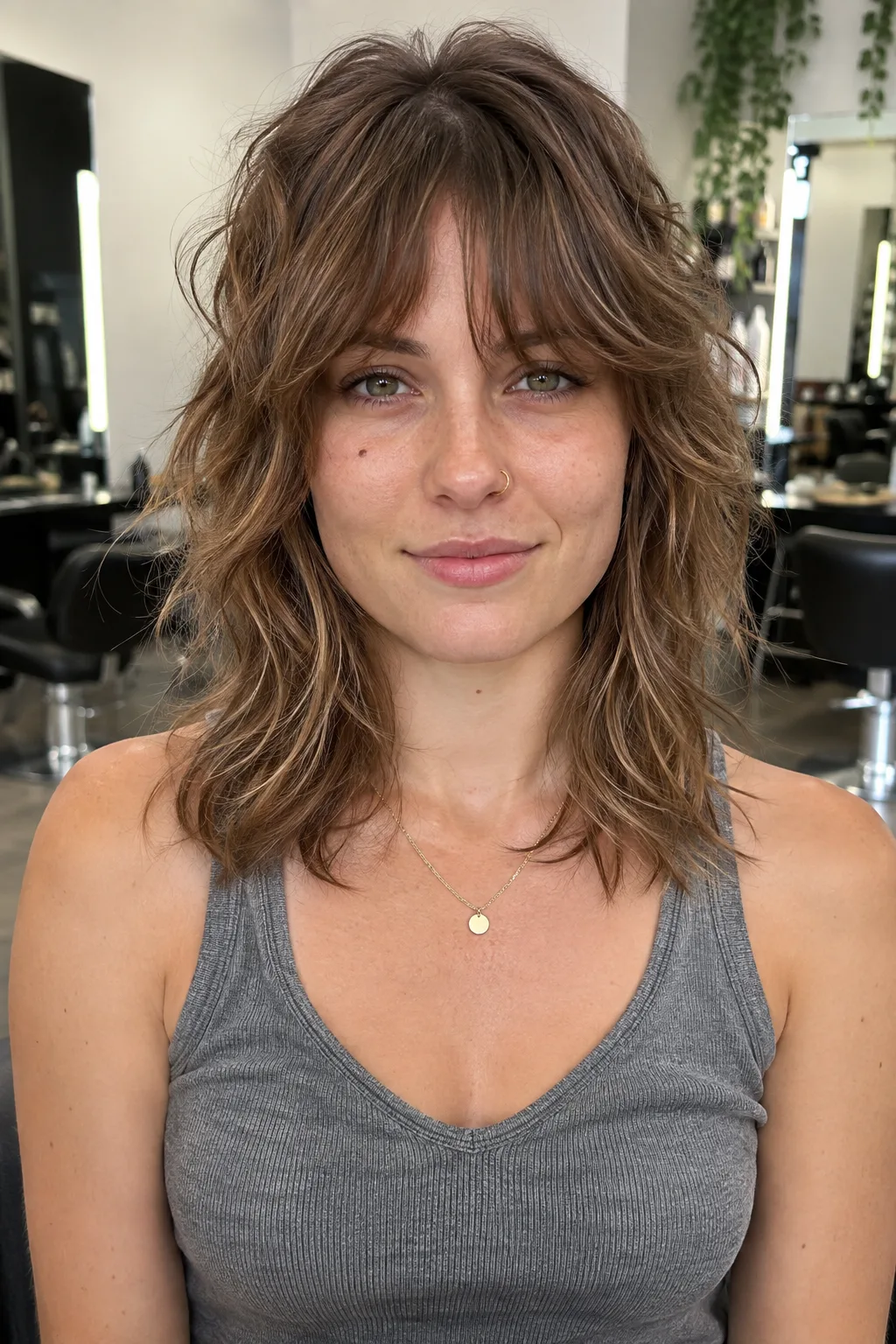 Would this suit me?
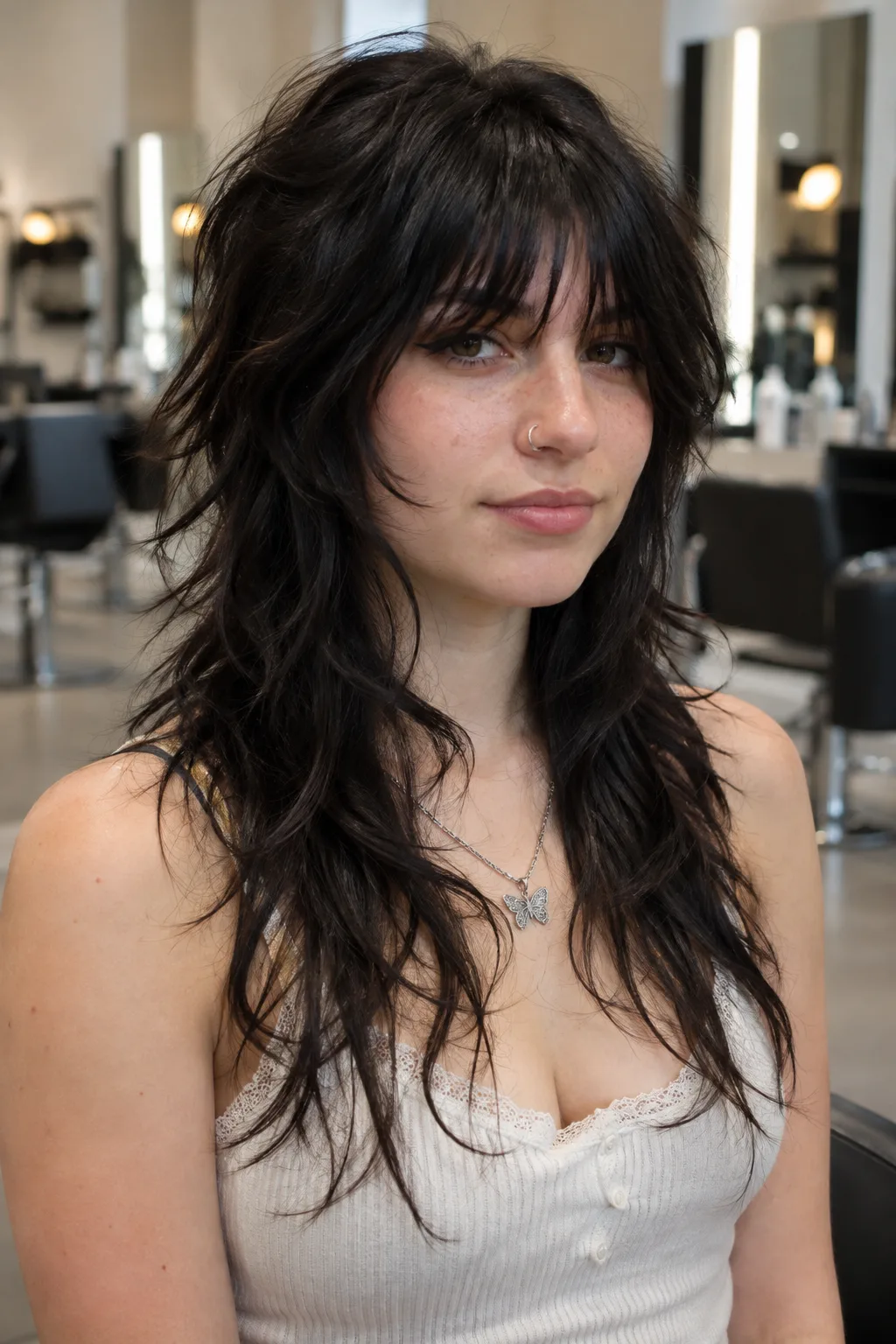 Would this suit me?
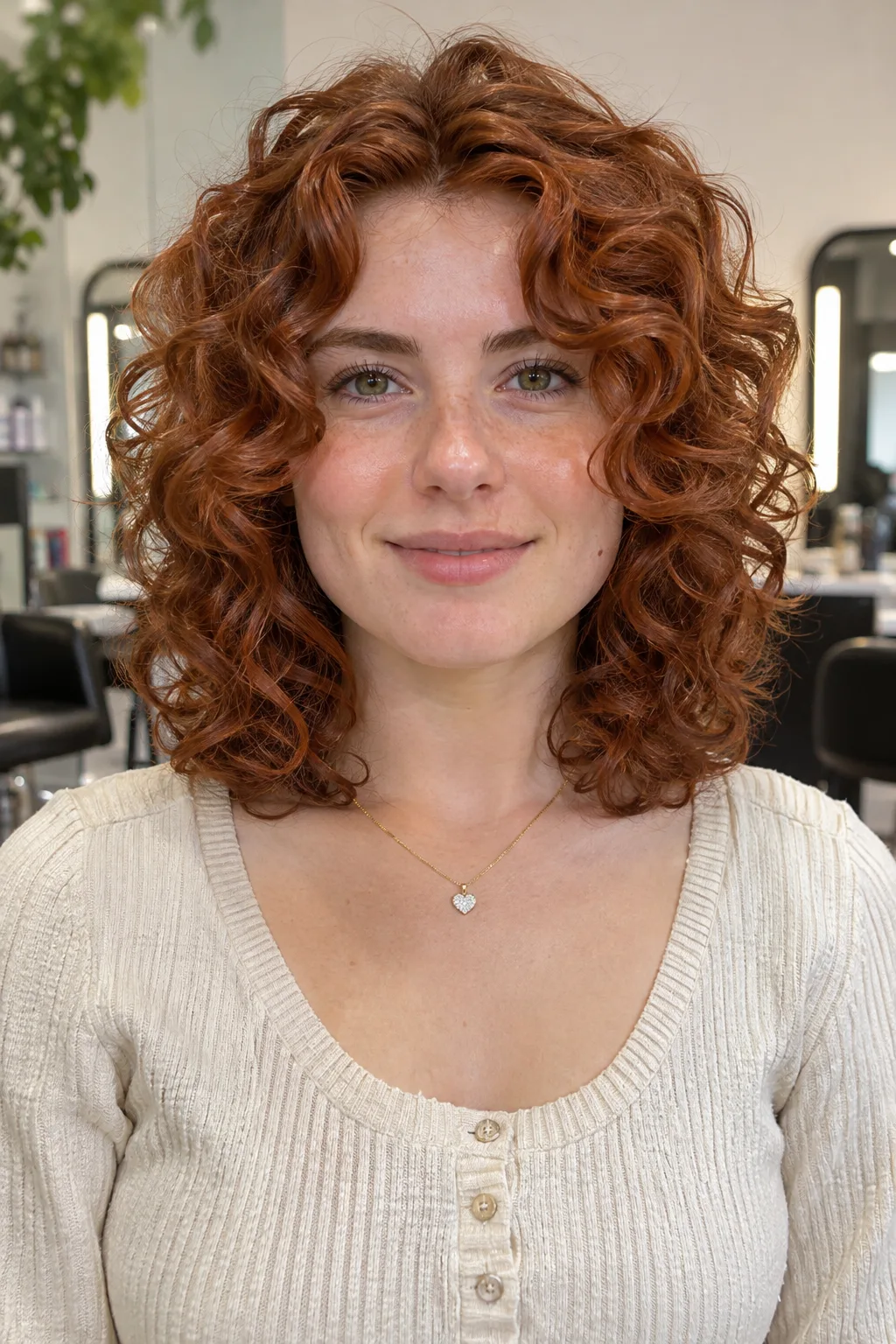 Would this suit me?
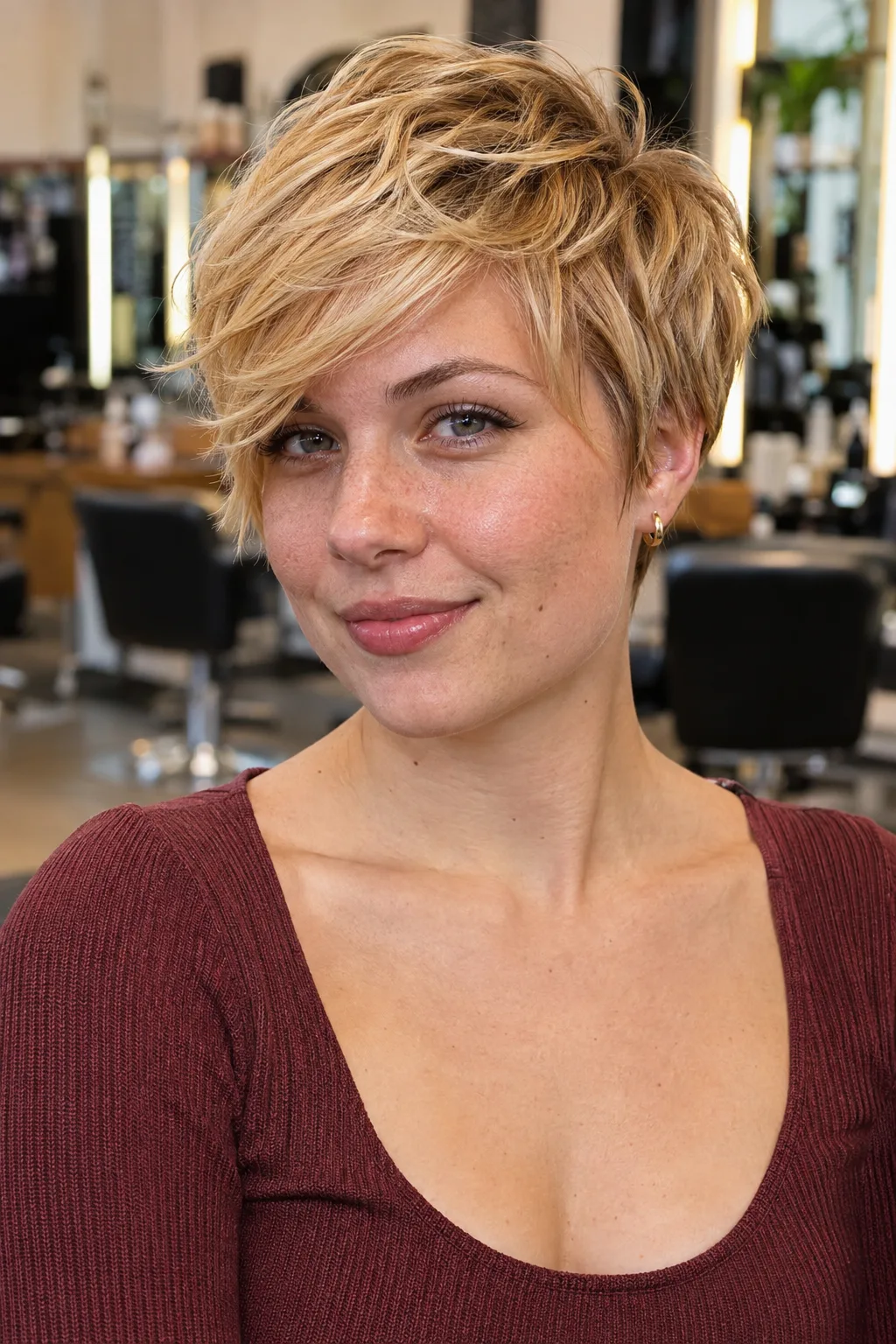 Would this suit me?
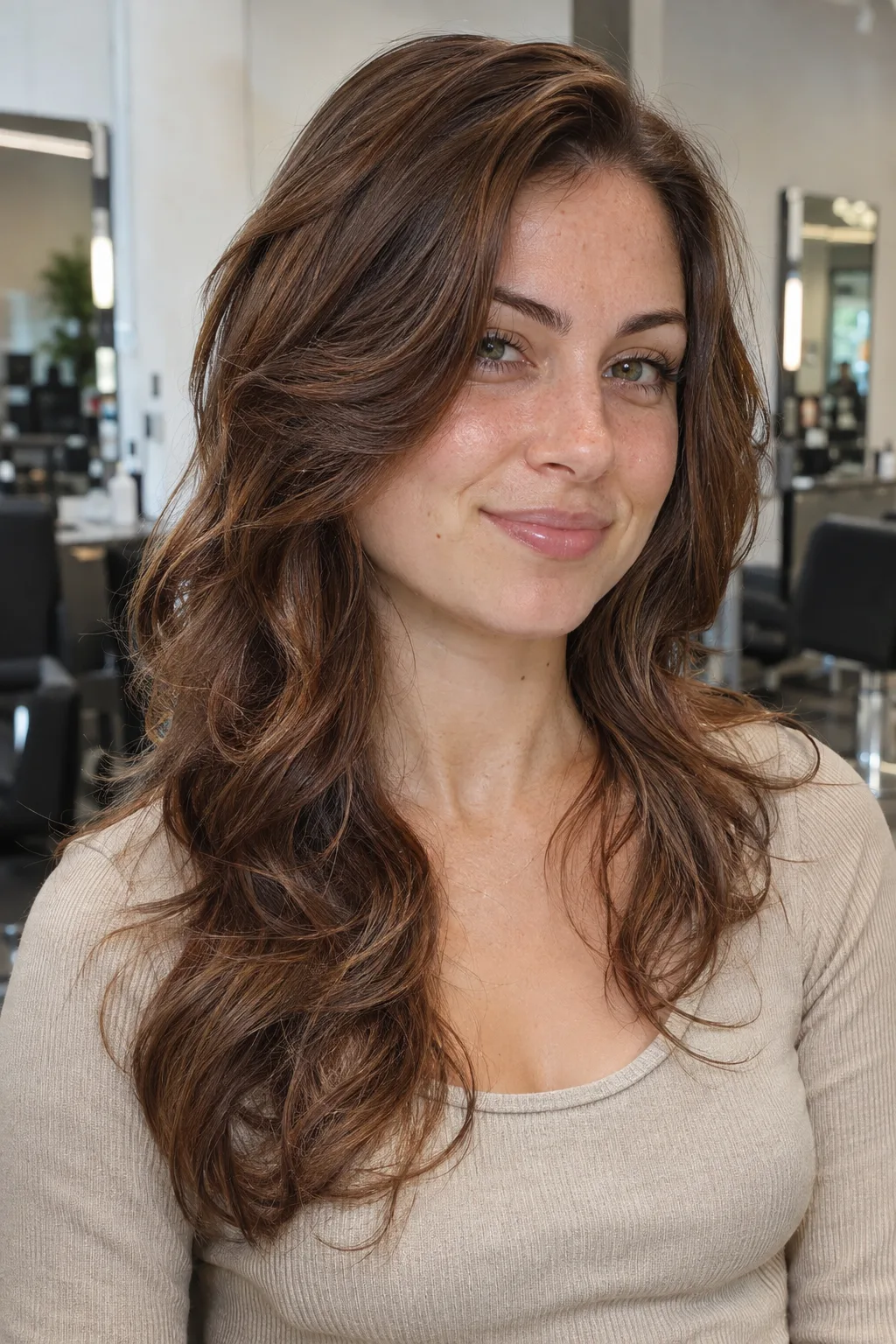 Would this suit me?
Which cut makes you look best?
Find out in 60 seconds.
A few quick taps and one selfie, and you'll know. Free account, no card for your first render.
Which layered hair suits your face shape?
Short answer: put the shortest layer where you want width, and keep it away from where you already have it. Layers draw the eye to the line where they land.
Layered hair for a round face
Start the shortest layer below the chin, not at the cheekbones. Layers that land at the cheeks add width exactly where a round face already has it. Pair long layers with a deep side part to break the symmetry.

Layered hair for a long face
Do the opposite. Bring the shortest pieces up to the cheekbone with curtain bangs, which shortens the face visually and adds width at the sides. Skip long layers that start below the shoulders, they pull the eye down.
Layered hair for a square face
Face-framing layers that start at the chin and curve outward soften a strong jaw. Avoid a blunt line that ends right at the jaw.
Layered hair for a heart face
Keep volume low on top and let layers start at the chin or below, so the width moves down toward the narrower jaw.
Not sure which face shape you have?
Measure it instead of guessing. The calculator below compares your face length to its width and tells you the closest match.
Measure it instead of guessing
Both numbers in the same unit — the answer is a ratio, so it does not matter which.
Under 1.15 reads round, 1.15 to 1.5 reads oval, over 1.5 reads long. Oval and long split on the jaw rather than the ratio: an oval tapers toward the chin, a long face runs straight down.
Layered hair by hair type
Face shape decides where the shortest layer lands. Hair type decides how big the gap can safely be.
Fine or thin hair
Keep the gap small. Ghost layers or a few long layers add movement without thinning out the ends, which is what makes fine hair look sparse. Ask for the ends to stay blunt and heavy. If your hair is fine and shoulder length, layered shoulder length hairstyles covers the safest options.

Thick hair
Thick hair can take the biggest gaps and benefits most from them. Ask for internal layers too, cut inside the hair so it lies flatter without looking choppy on the surface. Our thick hair guide goes deeper on weight removal.
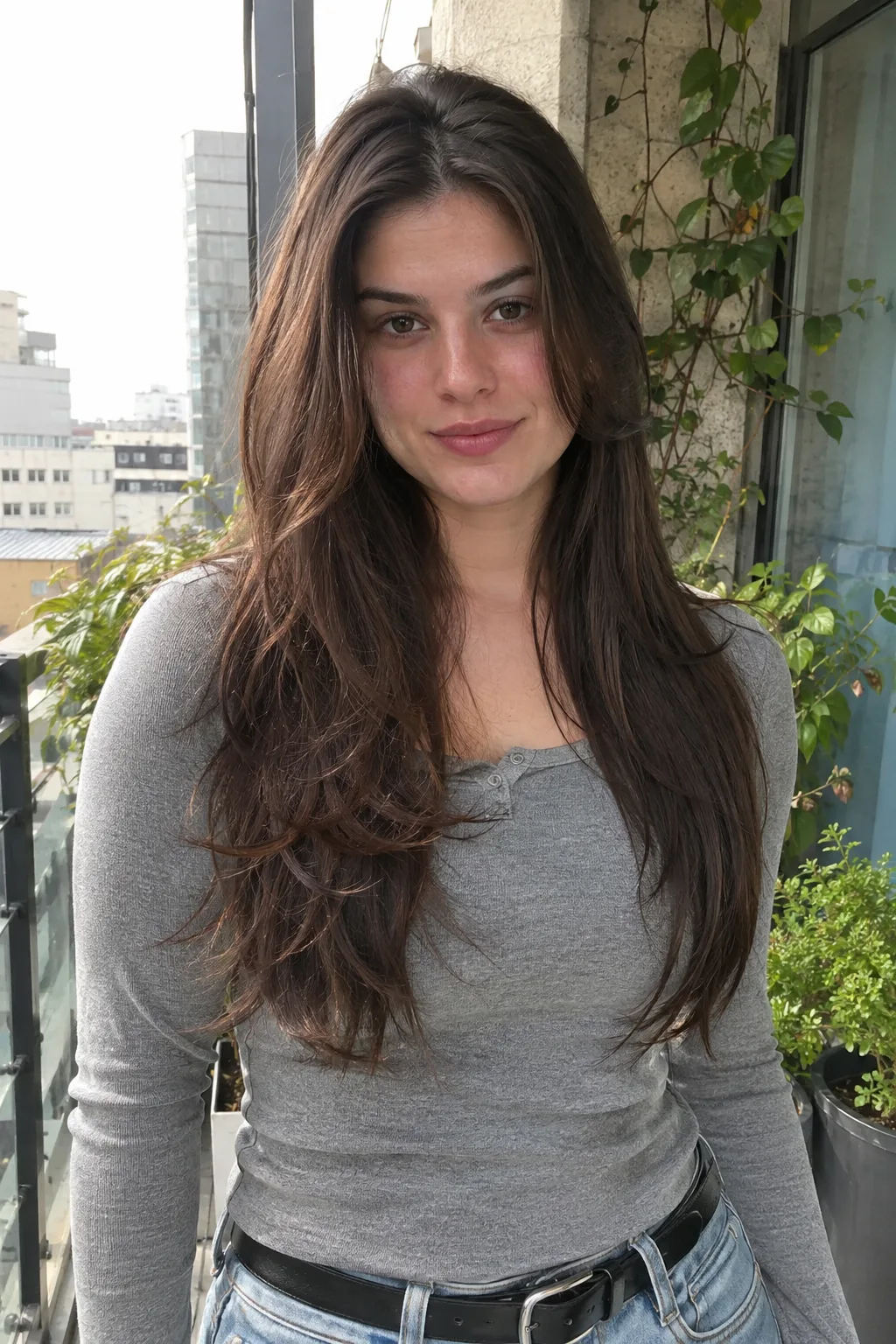
Wavy and curly hair
Layers let curls stack instead of collapsing into a triangle. Ask for curly layers cut dry, curl by curl, because wet curly hair can shrink by several inches once it dries. A soft shag is the natural home for waves.

Layered hair by length
Length changes how much room you have for a gap. Long hair can carry a ten inch gap. A chin-length bob has maybe three inches to work with.
- Long hair: long layers, V-cut or butterfly. More ideas in hairstyles for long hair.
- Medium hair: face-framing, shag or a layered lob. We sorted 14 of them in medium layered haircuts.
- Short hair: a layered bob or pixie. See layered bob haircuts for the bob version.
Mistakes that cost you months of grow-out
- Layers too high on fine hair. The ends go see-through. It takes about six months to grow back the weight at roughly half an inch a month.
- Cheekbone layers on a round face. They add width where you least want it.
- Razor layers on frizz-prone hair. A razor leaves the ends fluffy. Ask for scissors if your hair frizzes.
- Asking for "layers" with no number. One stylist hears ghost layers, another hears a shag. Always say where the shortest piece should land.
- Skipping heat protection on a blowout cut. Butterfly and feathered layers need a round brush to look right. The American Academy of Dermatology recommends letting hair air dry when you can and using the lowest heat setting, so keep the blowout for days that need it.
How to ask for layered hair
Give your stylist three facts: the length you keep, where the shortest layer lands, and how you style it on a normal day.
Say this to your barber
Keep my length, start the shortest layer at my chin, blend it softly to the ends, and cut it so it works air-dried.
How to ask for layered hair
- Say the length you keep
Point to where your longest ends should sit after the cut, on your body, not in inches.
- Say where the shortest layer lands
Chin, cheekbone or below the shoulders. This one choice decides the whole look.
- Say how soft the ends should be
Soft and blended reads as natural. Choppy and piecey reads as a shag or wolf cut.
- Say how you style it
Air dry, blowout or curls. A cut that needs a round brush daily will disappoint you on lazy mornings.
- Show two photos
One of the look you want and one of a look you do not want. The second photo is often more useful.
Can you see layers on your own face first?
The manual method above works, but it hits one wall: you cannot see a layered cut on your own face before it is cut. A photo of a model with chin layers tells you nothing about how chin layers sit next to your cheekbones, and layers take months to grow back if you guessed wrong.
That is the gap HairstyleAtlas fills. Upload one selfie and try long layers, face-framing layers, curtain bangs or a shag on your actual face, then take the version you like to the salon.
Layered hair is not one haircut. It is a choice about where the shortest piece lands and how far it sits from your longest ends. Pick the gap from your hair type, pick the landing point from your face shape, and say both out loud in the chair. If you want to see the result first, try it on a selfie before you book.
Frequently asked questions
Layers need more upkeep than a one-length cut, usually a trim every 6 to 10 weeks, and they can make fine hair look thin at the ends if they start too high. Big layers also take months to grow back out.
Long, well-placed layers can make hair look fuller because they add volume at the crown and movement at the ends. Short or heavy layering on fine hair does the opposite and makes the ends look sparse.
Soft face-framing layers and curtain bangs usually read younger because they lift and soften the face. Very flat, heavy one-length hair tends to drag the face down.
A butterfly cut is a layered haircut with short layers around the crown and face, landing at the cheekbones and chin, over much longer hair underneath. Blown out, the top looks like a shorter cut while you keep your length.
Layers run through the whole head. Face-framing layers are only the front pieces, cut shorter around the face while the back stays mostly one length.
Tell your stylist the length you want to keep, where the shortest layer should land (chin, cheekbone or below the shoulders) and how you style your hair day to day. Bring one photo you like and one you do not.
Round faces should avoid layers or a blunt line that ends at the cheekbones, plus very full volume at the sides. Long layers that start below the chin and a side part work better.
Preview it on your own photo: Virtual Hair Color Try-On.
Share article
About the author

Related posts
Women's Haircuts · 15 min
Lob Haircut: 14 Long Bob Ideas and the One Call That Decides If It Suits You
A lob is a long bob that ends between the jaw and the collarbone. Fourteen versions at the same length, which one suits your face and hair type, and the exact words to say in the chair.
Women's Haircuts · 13 min
Copper Hair Color: 14 Shades and Which One Suits Your Skin
Copper is a bright orange-red, like a new penny. See 14 copper shades side by side, which one suits your skin tone, what to say at the salon, and why maintenance matters more than your complexion.
Women's Haircuts · 12 min
Blowout Hair: 14 Looks and How to Do a Salon Blowout at Home
Blowout hair is set by the cool shot, not the heat. See 14 blowout finishes from sleek to 90s bounce, the at-home routine step by step, and which version suits your hair type.
Women's Haircuts · 14 min
Miracle Knots Hair: 12 Looks, How It Works and How Long It Lasts
Miracle knots loop curly human hair into small plaits of your own hair: boho braids in 2 to 3.5 hours, with less weight. How it works, how many bundles, which hair it suits and how long it lasts.
Women's Haircuts · 14 min
Braided Ponytail: 14 Styles and How to Do One That Lasts
The braid is the easy part. 14 braided ponytail styles side by side, which one suits your hair type, how many packs of braiding hair to buy, and how to keep the base from pulling out your edges.
Women's Haircuts · 14 min
Black Short Hairstyles for Women: 14 Cuts Sorted by Upkeep
Fourteen short hairstyles for Black women, from the TWA and tapered cut to the pixie, braided bob and buzz cut, sorted by how much upkeep each one really takes.