Shoulder Length Bob: 14 Looks, Who It Suits and the Half Inch That Matters
Oleh Onysko 28 October 2026 15 min read
In this article
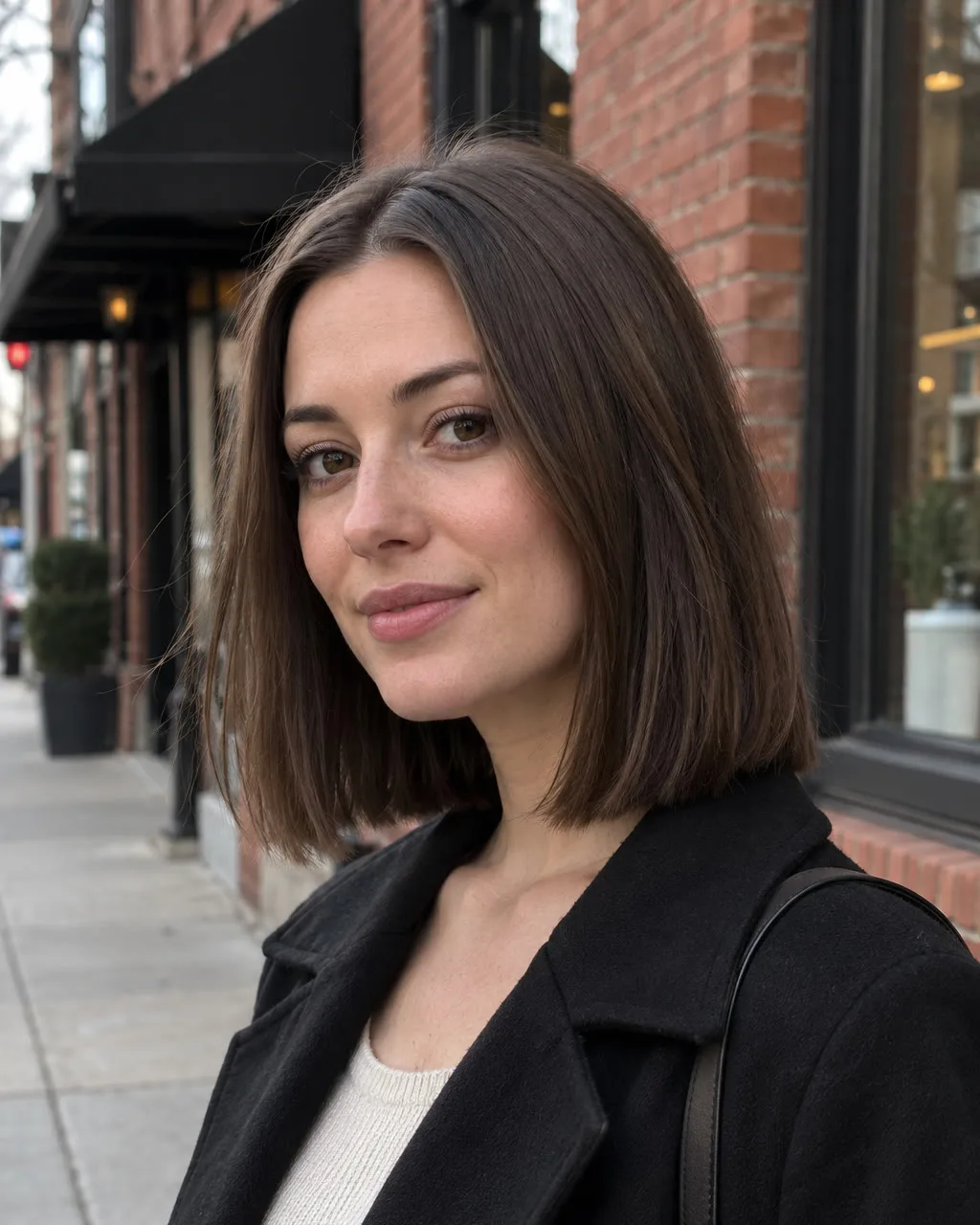
A shoulder length bob is a bob cut with one clean perimeter that ends at the top of your shoulders, with the back cut to the same level as the sides. It is the longest length that still counts as a bob: half an inch longer and the ends start resting on your shoulders, and from there it is a lob.
That half inch is the whole game. The shoulders are the only place on your body where your hair hits something that moves, and when the ends land on them they get pushed outward. So the most common shoulder length bob complaint, "it flips out every morning", is not your hair or your stylist. It is the length. Cut it so the ends sit just above the shoulder line when you are standing up, and it swings. Cut it right on the line, and it flicks.
This guide covers what the cut is and is not, how it compares with a chin bob and a lob, fourteen versions at the same length, which one suits your hair and face, the mistakes that cost you a second appointment, and the exact words to say in the chair.
What is a shoulder length bob?
A shoulder length bob is a one-length haircut where the ends fall between the bottom of your neck and the top of your shoulders, roughly 11 to 12 inches from the crown on most women. The defining feature is the line: one deliberate perimeter, the same height at the back as at the front, with no stacking at the nape and no long layers through the lengths.
What it is not matters just as much, because the names overlap. A stacked or inverted bob is shorter at the back and angles down toward the face; that is a different cut, covered in our guide to layered and stacked bobs. And if you want general ideas for hair at this length with layers, curtain fringes and long face framing, that is a shoulder length haircut, not a bob. The bob version keeps the weight at the bottom. That weight is why it looks thick.
Want to see it first? See a new hairstyle on your face with the AI hairstyle changer.
Shoulder length bob vs chin bob vs lob
Most people who ask for "a bob" mean one of three lengths. The difference between them is only two or three inches, but each one behaves differently once it meets your jaw, your neck or your shoulders.
| Chin bob | Shoulder length bob | Lob (long bob) | |
|---|---|---|---|
| Where the ends sit | At the jaw or chin | Just above the shoulders | On or past the shoulders, toward the collarbone |
| Length from crown | About 8 to 9 inches | About 11 to 12 inches | About 13 to 15 inches |
| How the ends move | Swing freely | Swing freely if cut above the line | Rest on the shoulders and flip or bend |
| Can you tie it up | No | A short low ponytail or half up | Yes, a full ponytail |
| Trim schedule | Every 6 weeks | Every 8 weeks | Every 10 to 12 weeks |
| Best for | Fine hair, strong jaw, high confidence | Almost everyone, the safest first bob | Growing out, thick or wavy hair |
If you are going shorter for the first time, the shoulder length bob is the one to start with. It keeps enough length to tie half up on a bad day and it is the easiest bob to grow into a lob later. Hair grows about half an inch a month, according to dermatologists cited by USA Today, so a cut that sits half an inch above your shoulders will start touching them in about four weeks. That is why the trim schedule above is tighter than most people expect.
14 shoulder length bob ideas at the same length
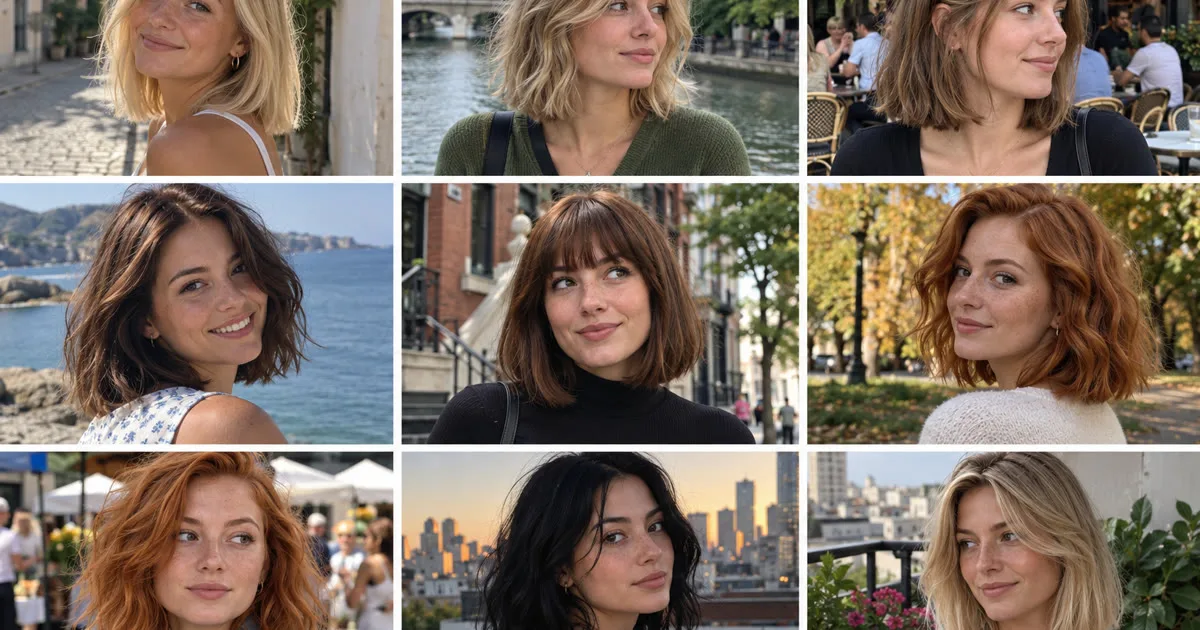
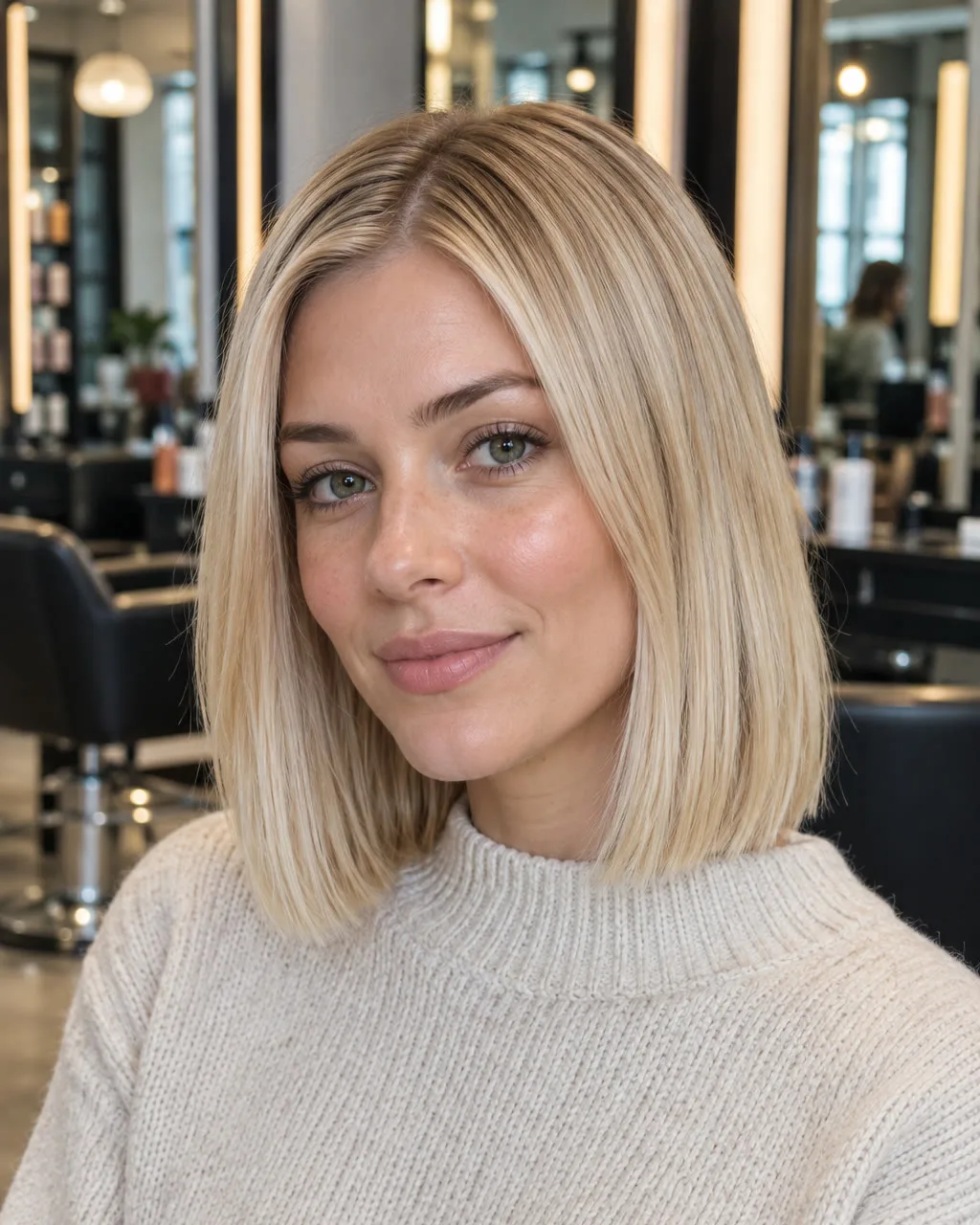
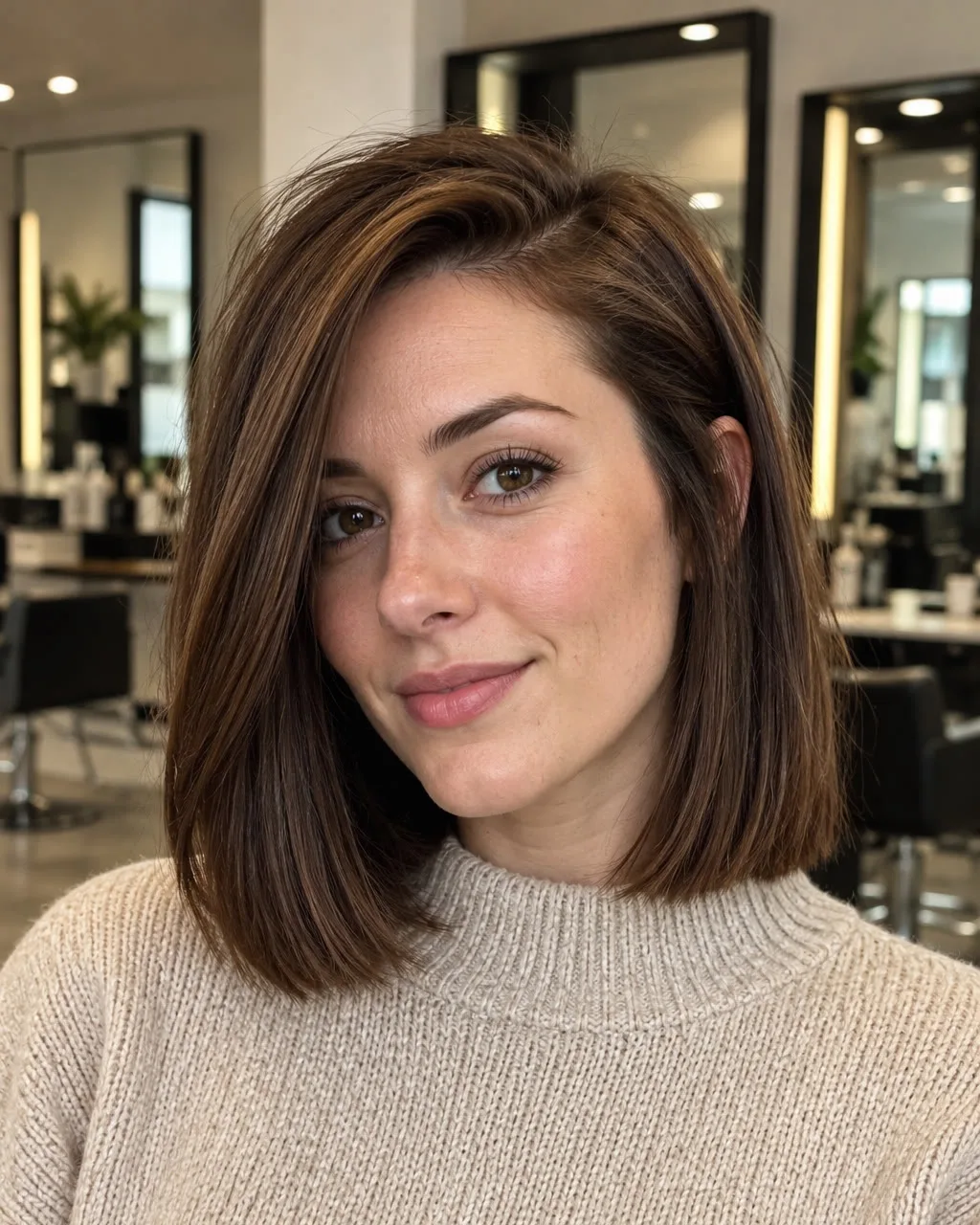
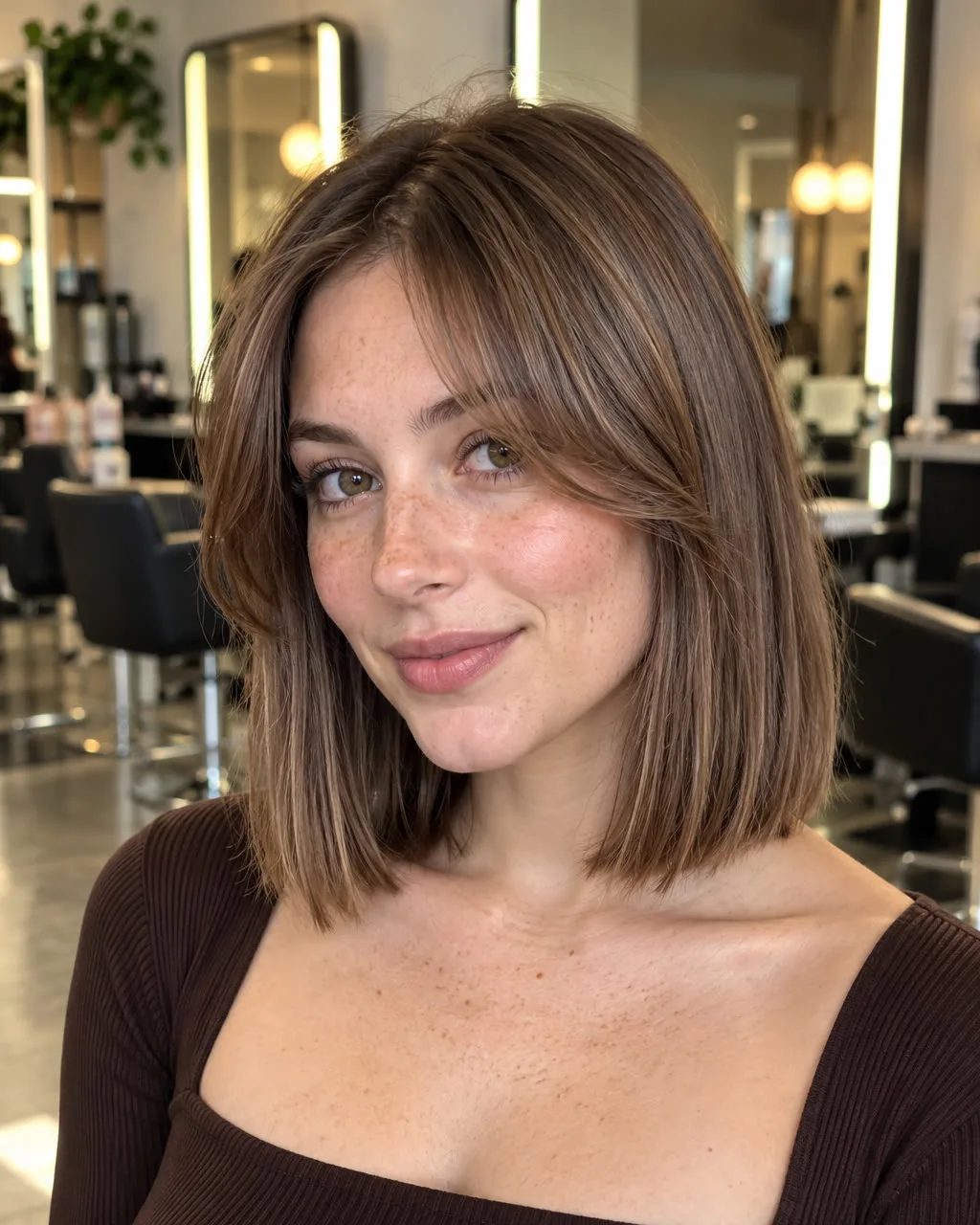
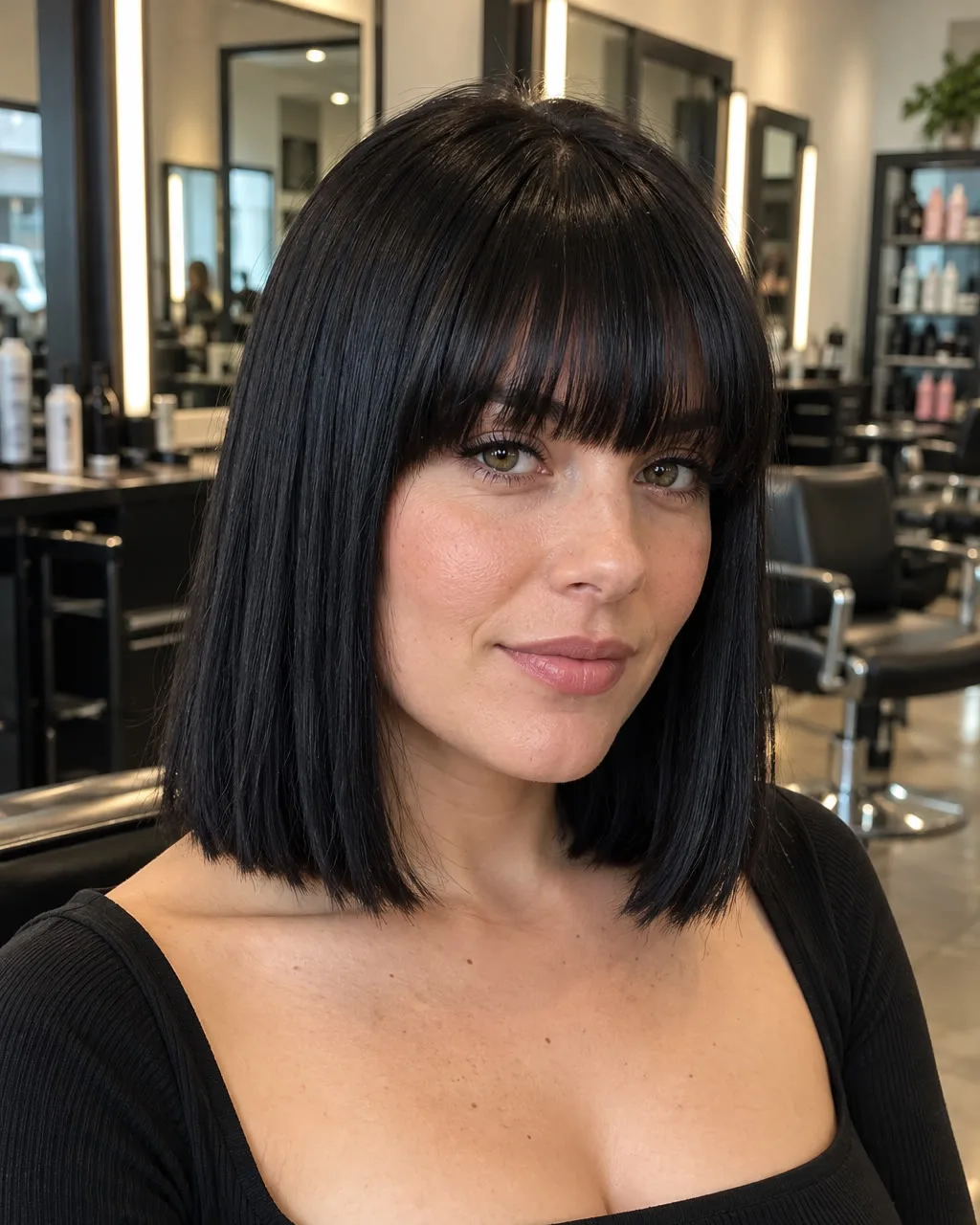
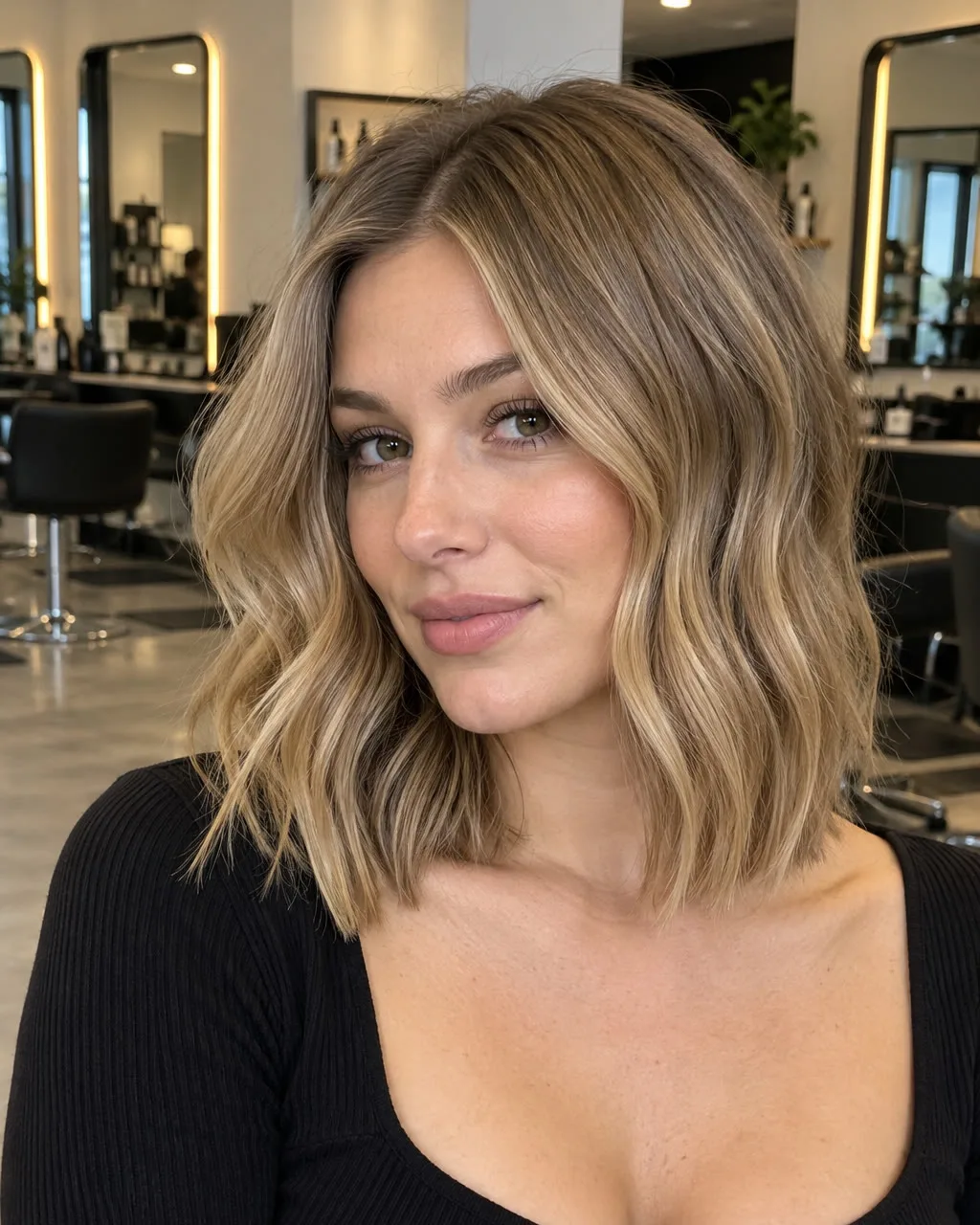
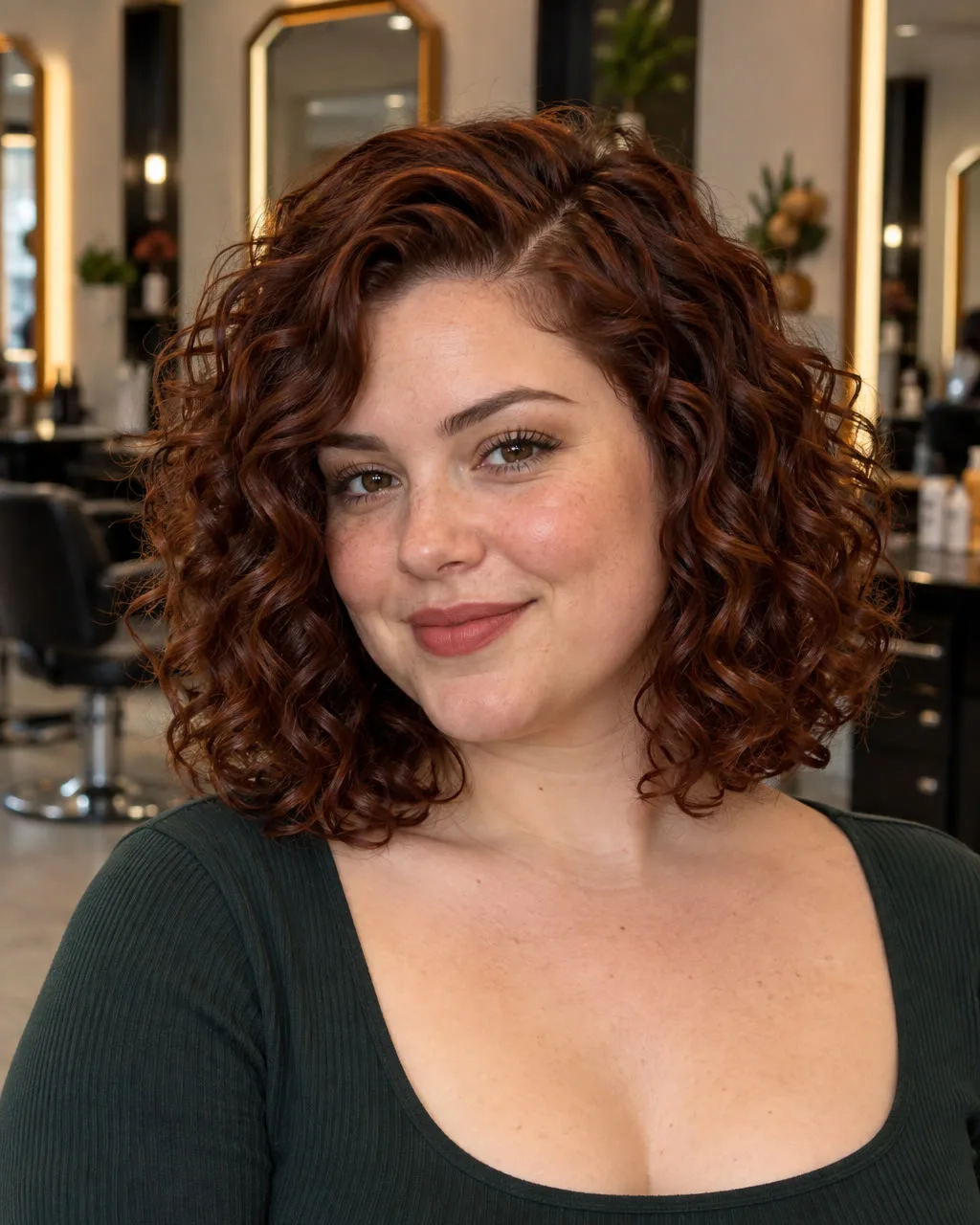
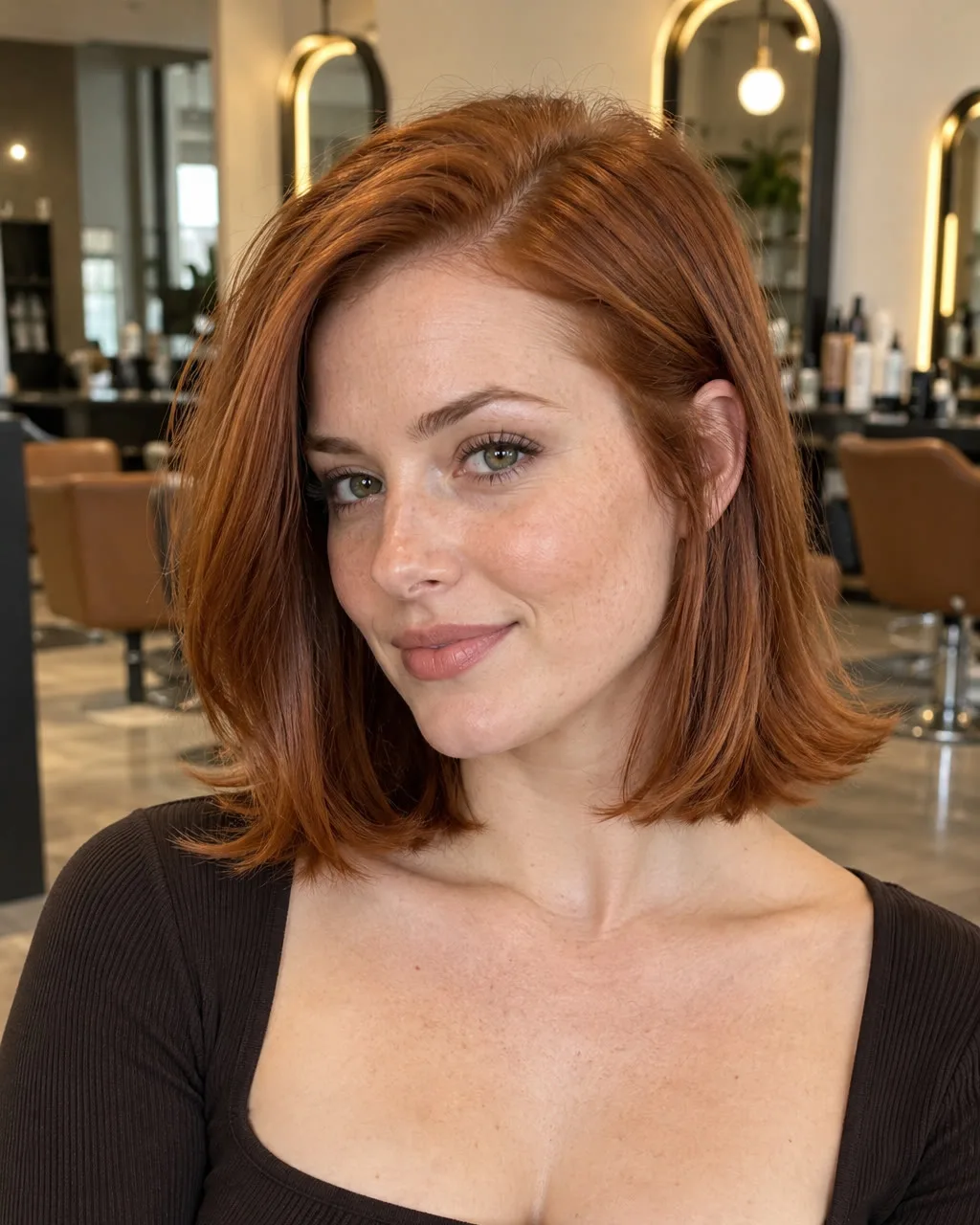
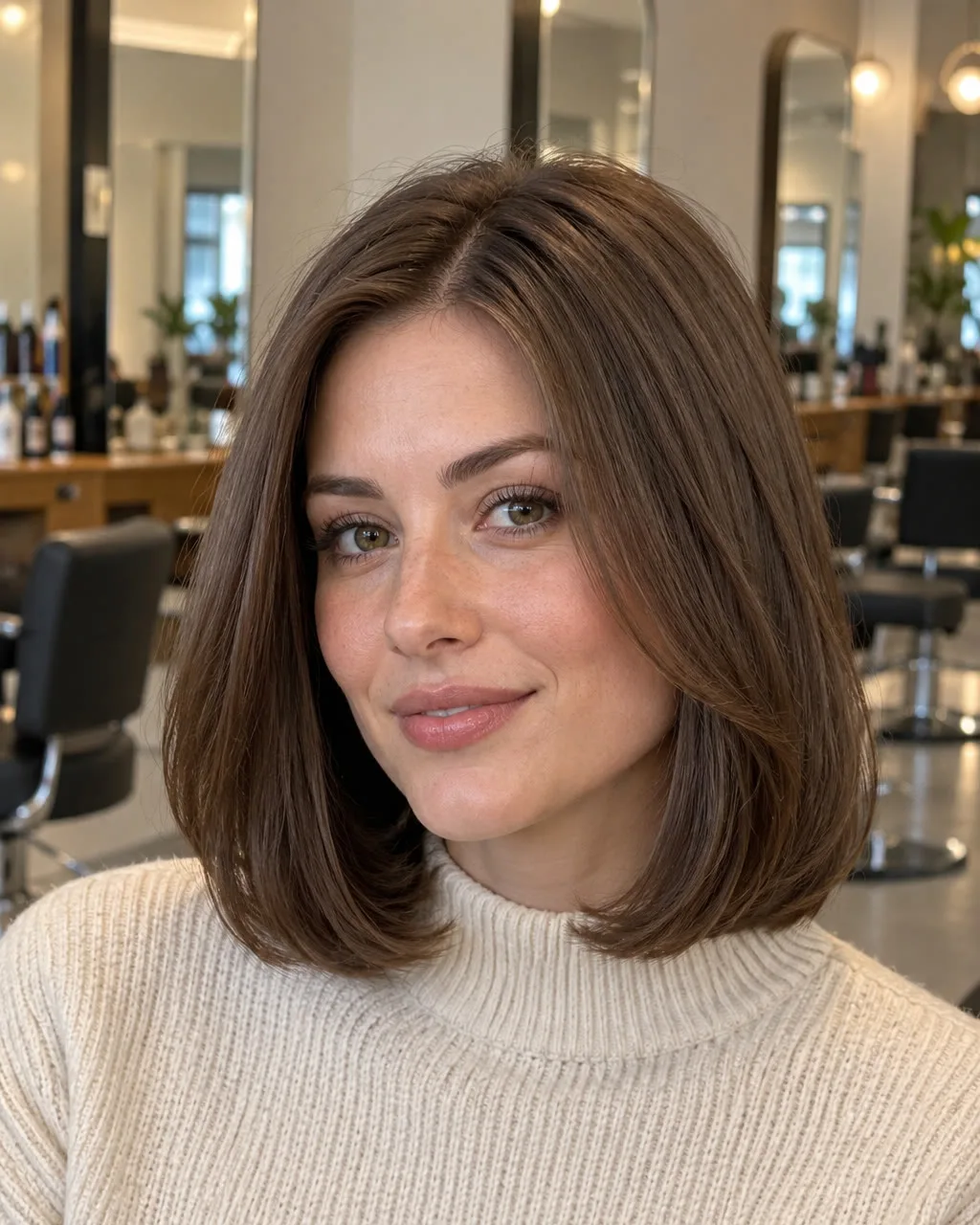
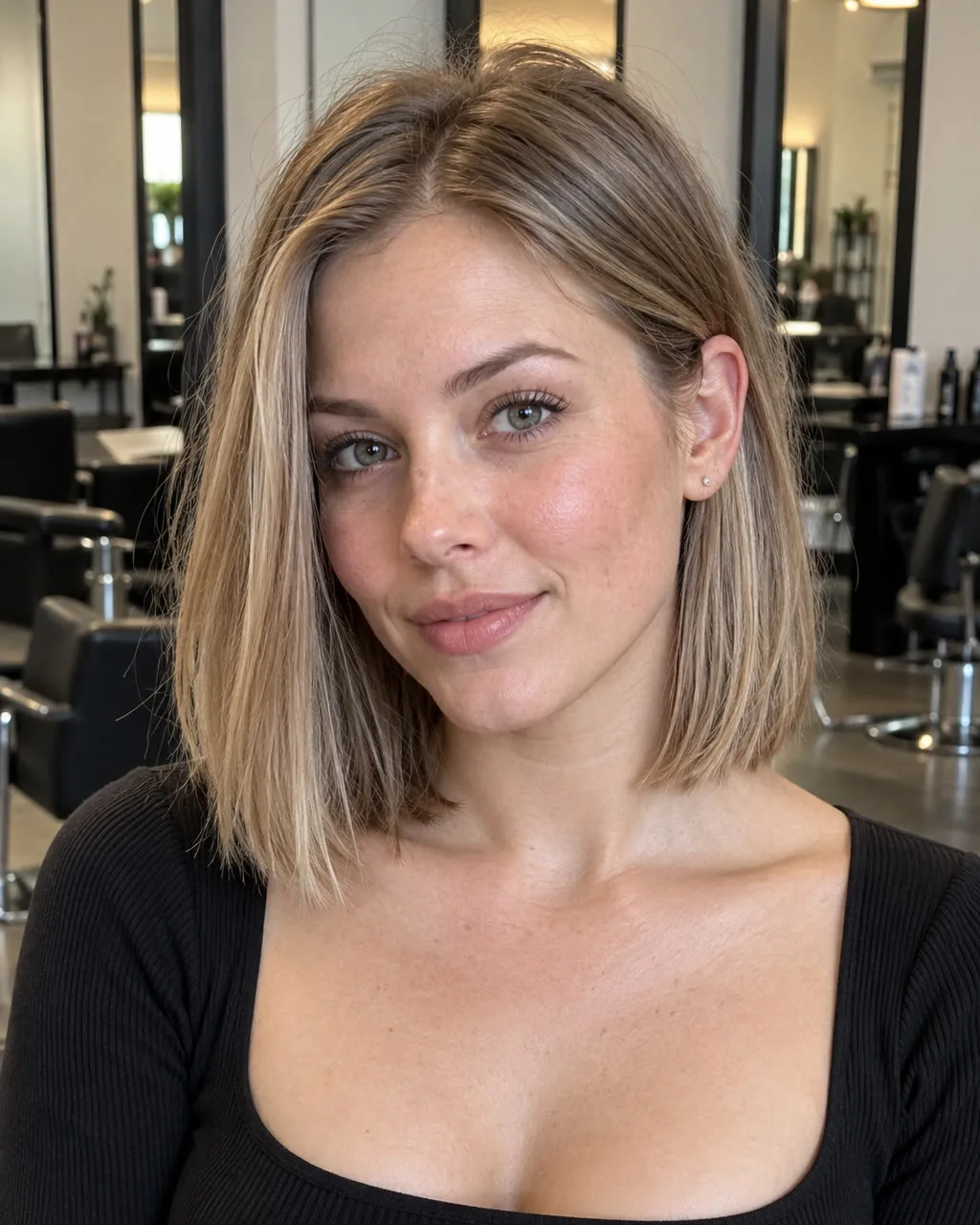
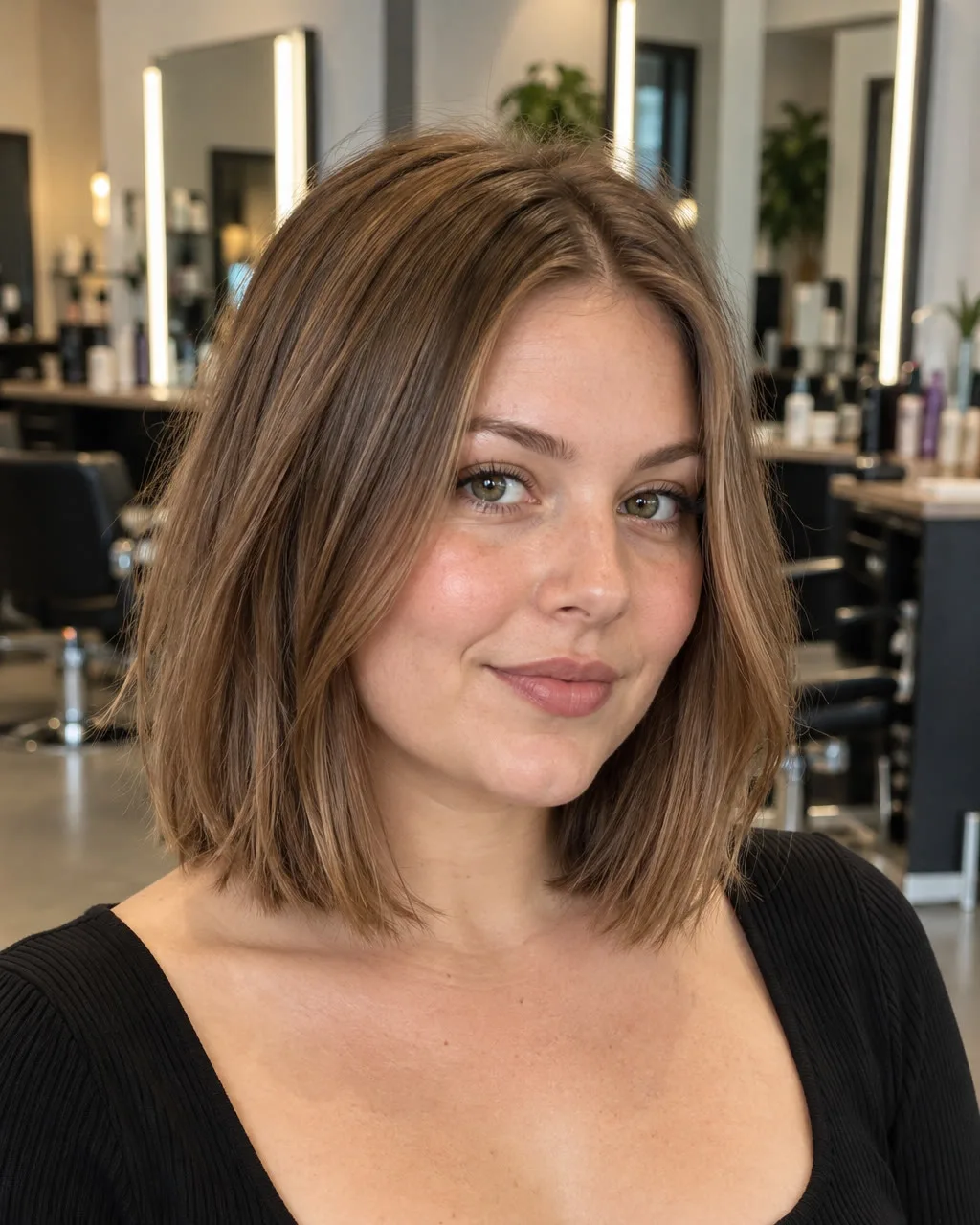
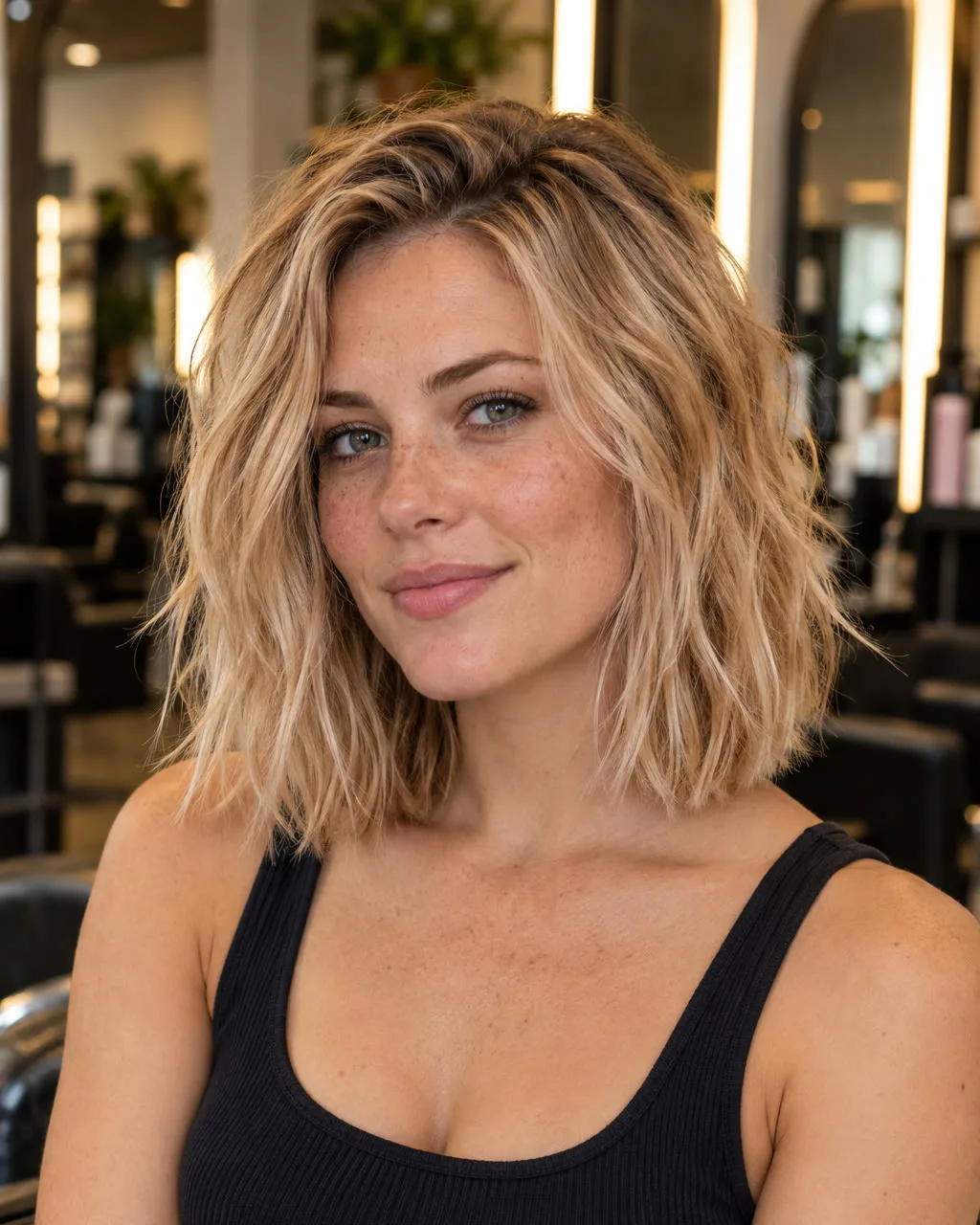
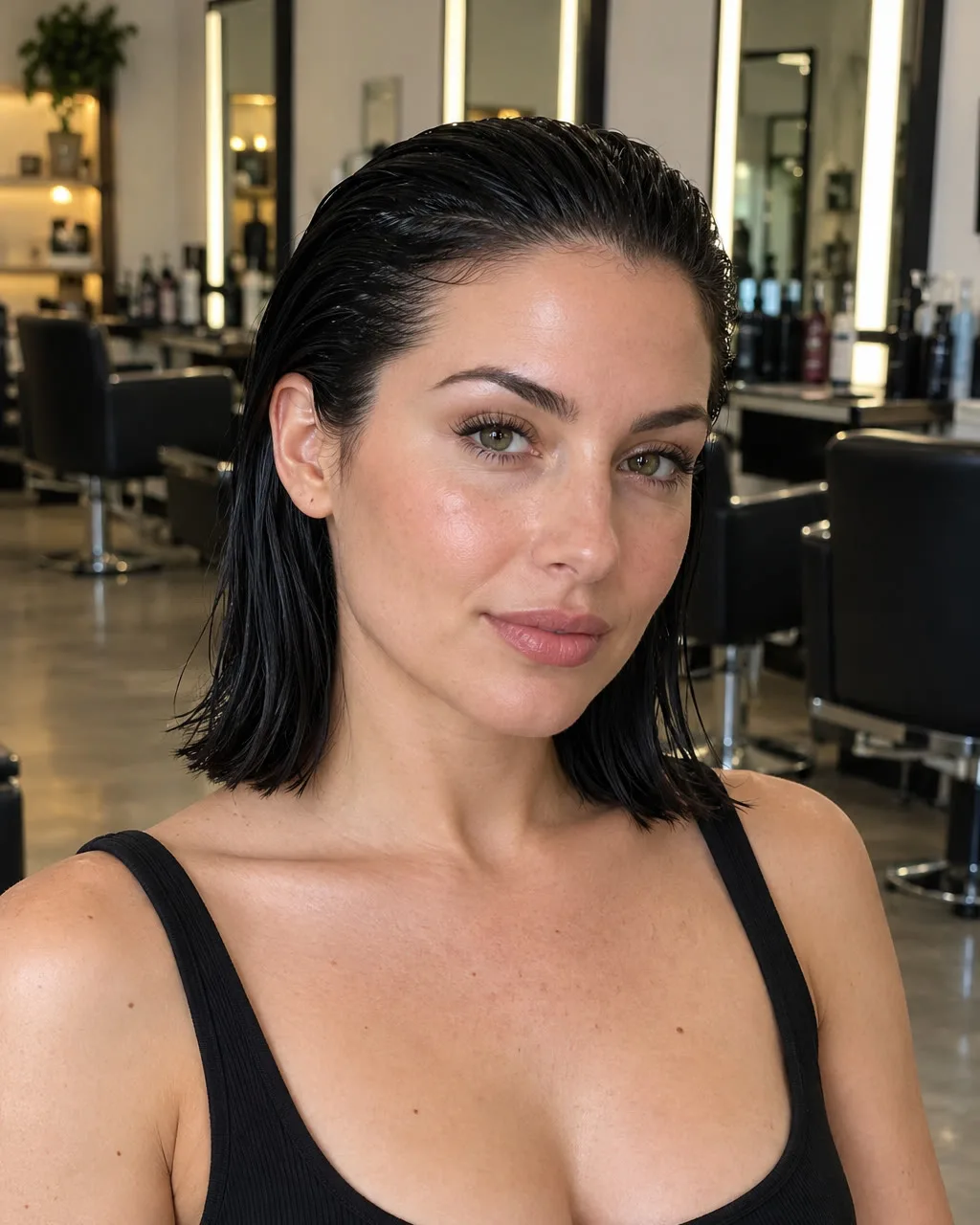
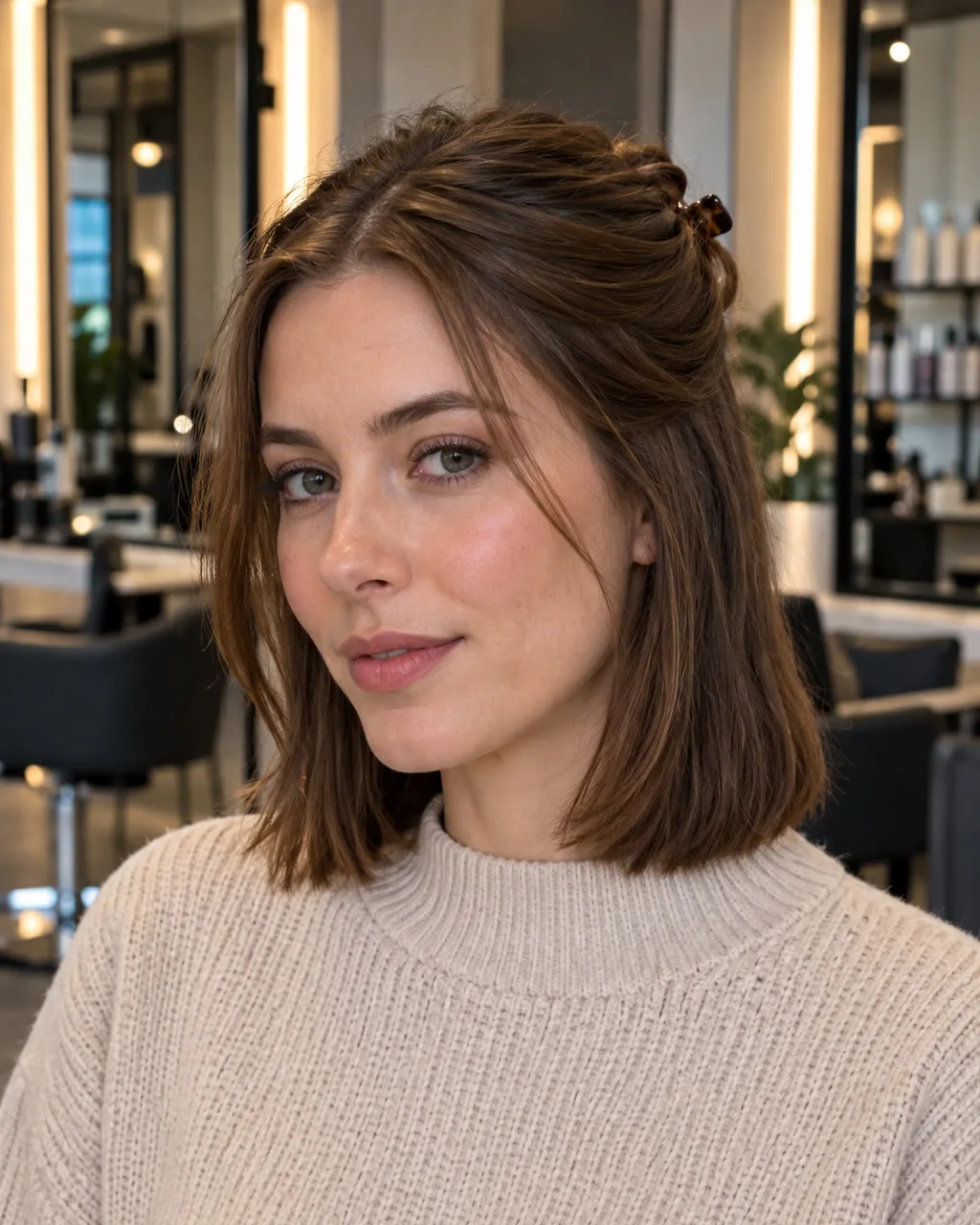
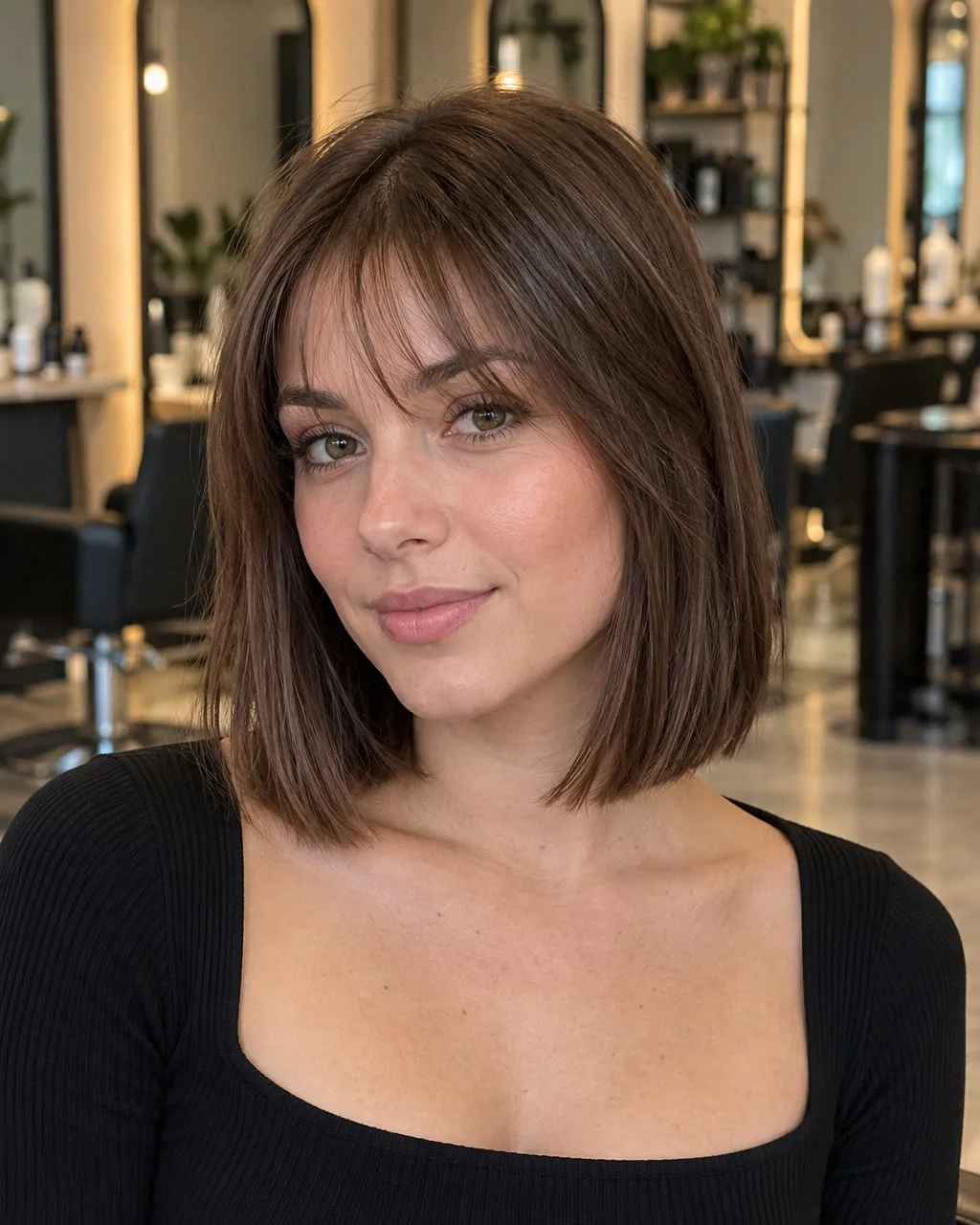
Every picture below is the same cut: a one-length bob with the ends at the top of the shoulders. Only one thing changes from tile to tile, the part, the bangs, the texture or the finish, so you can see what each change does to the same length. Tap any tile to try that version on your own photo.
Gallery14 photos · tap to enlarge
 Try this on me
 Try this on me
 Try this on me
 Try this on me
 Try this on me
 Try this on me
 Try this on me
 Try this on me
 Try this on me
 Try this on me
 Try this on me
 Try this on me
 Try this on me
 Try this on me
Two patterns stand out. Bangs change the cut more than anything else: the blunt bangs and the wispy bangs look like two different haircuts on the same length. And finish does more than most people credit; the bent waves, the beach texture and the slicked back look all come from the same blunt cut with a different product.
Yours could be here.
Start with one selfie.
One photo, twenty seconds, and you'll know. Free account, no card for your first render.
Which shoulder length bob suits your hair?
Your hair type decides how the line is cut more than any trend does. Here is the short verdict, then the detail for each.
| Hair type | Verdict | Ask for |
|---|---|---|
| Fine or thin | Best length you can wear | Completely blunt ends, no thinning shears |
| Medium, straight | Easy, wear it any way | Blunt line, slight bevel at the ends |
| Very thick | Yes, with internal weight removal | Weight taken out from underneath, line kept blunt |
| Wavy (2a to 2c) | Yes, cut a little longer | Cut dry or ask for half an inch of extra length |
| Curly (3a and up) | Yes, cut dry, curl by curl | A rounded shape that ends at the shoulder when dry |
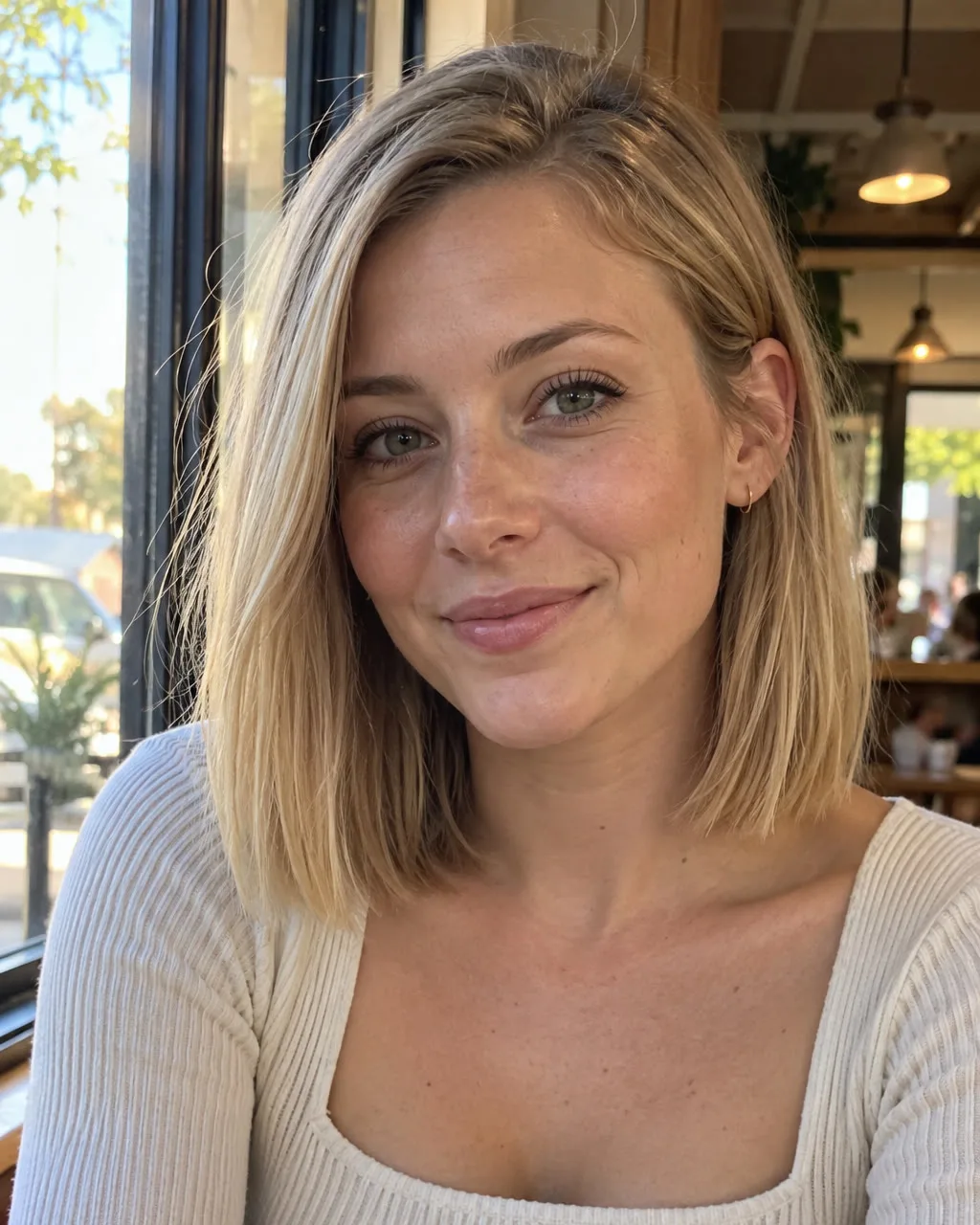
Fine or thin hair
A shoulder length bob is the best friend fine hair has. All of your hair ends at the same point, so the bottom edge reads as thick even when the roots are thin. The one rule: no thinning shears and no point cutting at the ends. Every bit of texture you add to fine hair takes away the density that makes this cut work. If your hair is pin straight and slippery, our guide to type 1b hair goes further into cuts that hold a shape.
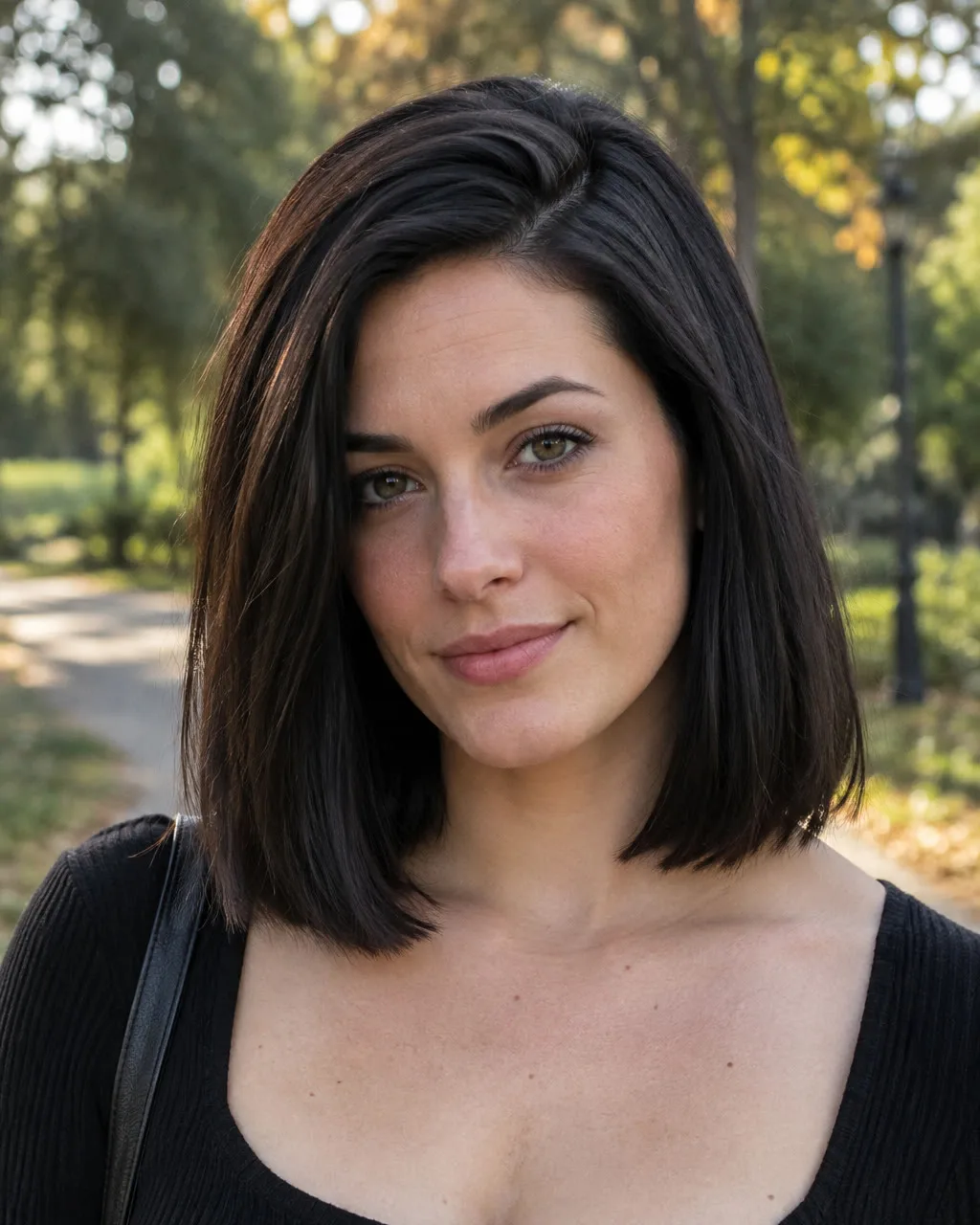
Very thick hair
Thick hair can wear this cut, but a blunt bob on thick hair left as it is will puff out at the bottom into a triangle. The fix is weight removal from the inside: your stylist takes bulk out of the under layers so the outside line stays blunt but lies flat. Ask for that by name. Our guide to managing thick hair explains the techniques if you want to know what you are asking for.
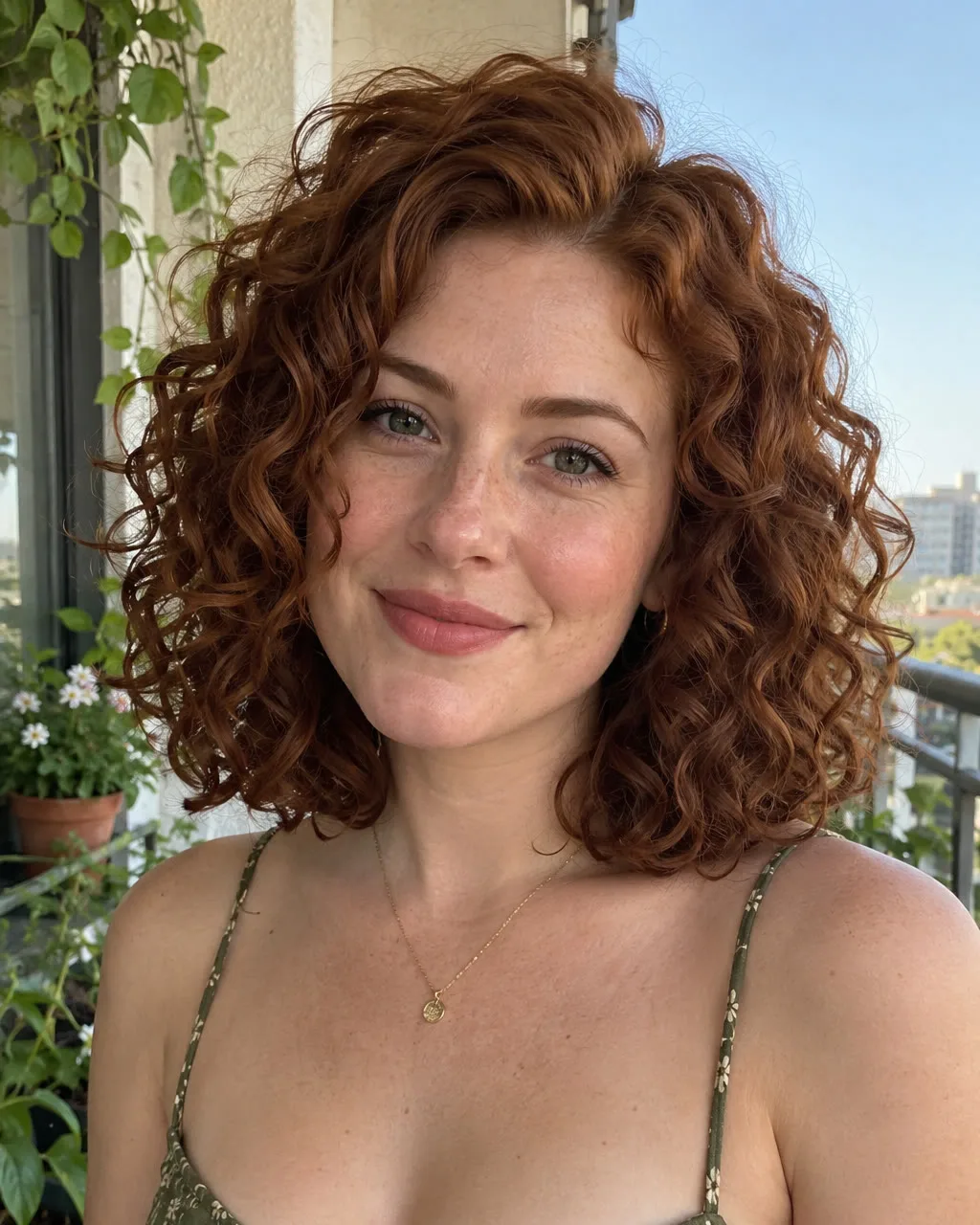
Wavy and curly hair
Waves and curls shrink. A cut that sits at your shoulders when wet can end at your chin when dry, which turns a shoulder length bob into a chin bob by accident. Wavy hair should be cut half an inch longer than the target, or cut dry. Curly hair should always be cut dry, curl by curl, so the stylist sees where each curl actually lands. For loose curls, see what works for 3a hair; the same rounded bob shape works up to tighter curl patterns.
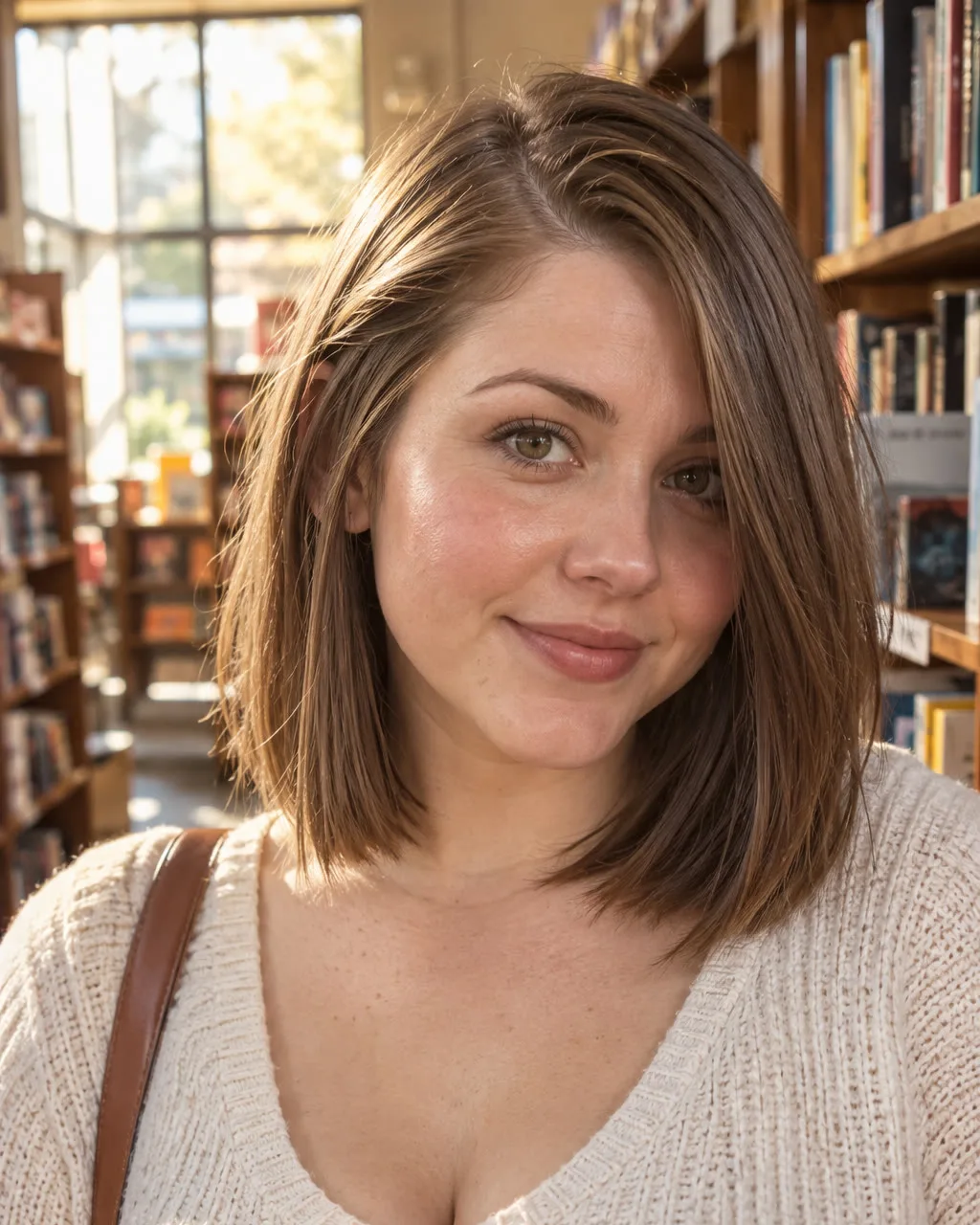
Is a shoulder length bob good for a round face?
Yes, and it is one of the better bob lengths for a round face, because the ends sit well below the jaw and draw the eye down. The trick is to avoid symmetry at the cheeks. A center part with the hair framing both cheeks equally adds width; a deep side part with the longer side sweeping across the face cuts a diagonal line that makes the face look longer.
If you are not sure whether your face is round, oval or square, measure it. Take a selfie straight on and use the calculator below, or read our full guide to haircuts for every face shape.
Measure it instead of guessing
Both numbers in the same unit — the answer is a ratio, so it does not matter which.
Under 1.15 reads round, 1.15 to 1.5 reads oval, over 1.5 reads long. Oval and long split on the jaw rather than the ratio: an oval tapers toward the chin, a long face runs straight down.
Mistakes that cost you a second appointment
Most bad shoulder length bobs come from the same four mistakes, and every one is avoidable before the scissors come out.
- Cutting it right on the shoulder line. The ends land on your shoulders, get pushed out and flip every day. Ask for the ends half an inch above the line, measured standing up with your head level.
- Letting it be cut with your chin down. Stylists often tilt your head forward to cut the back. That is fine, but the length should be checked with your head level, or the back ends up shorter than you planned.
- Saying "bob" and nothing else. "Bob" covers everything from a chin cut to a stacked A-line. Without a length and a back, you are leaving it to chance.
- Thinning fine hair at the ends. Texturizing makes the ends look wispy and see-through, which is the opposite of why you chose a blunt bob.
How to ask for a shoulder length bob
Bring a photo that shows the back and the side, not just the front. Then say this, word for word.
Say this to your barber
A one-length bob with the ends half an inch above my shoulders when I'm standing, the back the same length as the front, no stacking and no layers, and please don't thin the ends.
How to ask for a shoulder length bob
- Show the length on your body
Stand up and put your finger where you want the ends to stop, half an inch above the shoulder. Stylists read a finger on your body far better than they read inches.
- Say what happens at the back
Tell them the back should be the same length as the front, not stacked, not shorter at the nape. This is what separates a shoulder length bob from an A-line or inverted bob.
- Name your texture
If your hair is wavy or curly, ask for it to be cut dry, or ask them to leave half an inch for shrinkage.
- Check it standing up
Before you leave, stand, keep your head level and look at the side profile. The ends should clear your shoulders.
How do you style a shoulder length bob?
For a sleek finish, blow dry with a round brush and turn the ends under slightly at the bottom. For a casual finish, use a flat iron to put a loose bend in the middle of each section and leave the last inch straight; that is the bent wave in the gallery and it takes ten minutes. On a second day, a sea salt spray and a few scrunches give you the beach texture. A shoulder length bob is long enough for a half up clip and a short low ponytail, but not a full high one.
Can you see a shoulder length bob on yourself before you cut it?
Yes, and the first look is free. Upload a selfie to HairstyleAtlas, pick the bob and see it on your own face and hair color, with no card needed. Plans start at $9 a month if you want to compare more looks.
That matters because the gallery above has one limit no guide can get around: it shows the cut on someone else's face, neck and shoulders. Where the ends land depends on your neck length and the slope of your shoulders, and a photo of someone else cannot tell you that. A try-on on your own photo shows the length against your actual shoulders, and on HairstyleAtlas the length, bangs and part are part of the same picture, so you can compare the blunt version with curtain bangs or a side part before anything is cut. Want more bob shapes to compare? The bob haircut try-on covers the shorter versions too.
The bottom line
The shoulder length bob is the safest bob there is: it suits fine hair better than any other length, it works on a round face with a side part, and it grows into a lob without a bad month. Get the line right and everything else is styling. Ask for the ends half an inch above your shoulders, the back level with the front and no thinning, and check it standing up. If you are torn between this and something longer, try both on your own photo first.
Frequently asked questions
A bob is harder work if you have very thick, coarse hair and no time to blow dry, because a blunt line on heavy hair can puff into a triangle. It is also a poor fit if you need to tie all your hair back every day for work. A shoulder length bob solves part of both: it is long enough for a half up clip and can be cut with weight removed from the inside.
Look at your jaw and neck. If you like your jawline and have a medium or long neck, most bob lengths will suit you. If you are unsure, start at shoulder length, which is the most forgiving bob length, or try the cut on your own photo before you commit.
Yes, as long as it ends below the jaw. A shoulder length bob with a deep side part works best because the ends sit well below the widest part of the face. Avoid a chin length bob with a center part, which sits right at the cheeks and adds width.
Yes. Shoulder length and long bobs are still among the most requested cuts, partly because they suit most hair types and grow out easily. The current versions are blunter and glossier than the choppy cuts of a few years ago.
The main types are the chin bob, the shoulder length bob, the long bob or lob, the stacked bob, the inverted or A-line bob, the layered bob, the French bob with bangs, and the Italian bob. They differ by length and by what happens at the back.
A bob looks deliberate, which is why it reads as polished. Whether it suits you comes down to where the line falls on your face and neck, which is why length matters more than the style name. Seeing it on your own photo is the fastest way to know.
If you want your hair to look thicker, get a shoulder length bob with blunt ends. If you want movement and face framing, get a layered cut at the same length instead. Fine hair suits the bob, thick and wavy hair suits either.
Most stylists recommend a bob that ends between the jaw and the shoulders, because it lifts the face without exposing the whole neck. A shoulder length bob with a slight bevel at the ends is a common choice for exactly that reason.
Preview it on your own photo: Virtual Hair Color Try-On.
Share article
About the author
Related posts
Women's Haircuts · 13 min
Layered Shoulder Length Hairstyles: 14 Looks, 3 Layer Zones
At shoulder length there is room for one layer job, not three. Here are 14 layered shoulder length hairstyles sorted by where the layers go, which suits your hair type and face, and the exact sentence to say in the chair.
Women's Haircuts · 13 min
Chocolate Brown Hair: 14 Shades and Who Each One Suits
Chocolate brown is a level 3 to 5 brunette with a rich, neutral to warm tone. See 14 shades side by side, which suits your skin tone, and why your starting color matters more than the box.
Women's Haircuts · 13 min
Brown Hair With Highlights: 14 Colors and Which Suits Your Base
Caramel, honey, copper, red, ash, beige and silver on brown hair, compared by how much lift each needs and what it costs to keep. Find the shade that suits your base and skin.
Women's Haircuts · 13 min
Messy Bun: How to Do It in 2 Minutes on Any Hair Type
A messy bun takes two minutes and one hair tie. The part tutorials skip: the messy look comes from your haircut and texture, not your hands. See it on 13 hair types and find the version that holds on yours.
Women's Haircuts · 13 min
Honey Blonde Hair: 14 Shades and How to Get It From Any Base
Honey blonde is a warm golden blonde around level 7 to 8. See 14 versions, how it compares to caramel and golden blonde, the route from your starting colour, and the mistakes that turn it brassy.
Women's Haircuts · 15 min
Bixie Haircut: 14 Looks, Who It Suits and What to Ask For
A bixie is the shaggy cut between a pixie and a bob. See 14 versions, which one suits your face shape and hair type, how it compares to a pixie, and the exact words to say in the salon.