Low Taper Fade on Black Hair: 14 Styles and What to Ask For
Oleh Onysko 2 November 2026 14 min read
In this article
A low taper fade on Black hair takes only the very bottom of the hairline down short: the sideburns and the nape go tight, and everything above the top of the ear keeps its length. It works on every Black hair texture, from 4c coils to 360 waves to locs, because it frames the hair instead of removing it.
The part most guides skip is that on coily hair the taper is the easy half. What decides whether the cut looks sharp in week two is the lineup and the length you leave above the ear, because coils grow out, not down. Below you will find what the cut looks like, 14 tops to wear over the same taper, the version for each hair type, and the exact words to say in the chair.
Say this to your barber
Low taper fade please: taper only the sideburns and the nape, no skin above the ear, keep the bulk on the sides, and a natural lineup that follows my own hairline.
What is a low taper fade on Black hair?
A low taper fade on Black hair is a cut where only the outer edge of the hairline is graduated short. The barber takes the sideburn in front of the ear and the nape at the back down to close stubble, then blends up so the hair is back to full length by the top of the ear. The temples and the sides above the ear are left alone, so the head keeps its round shape.
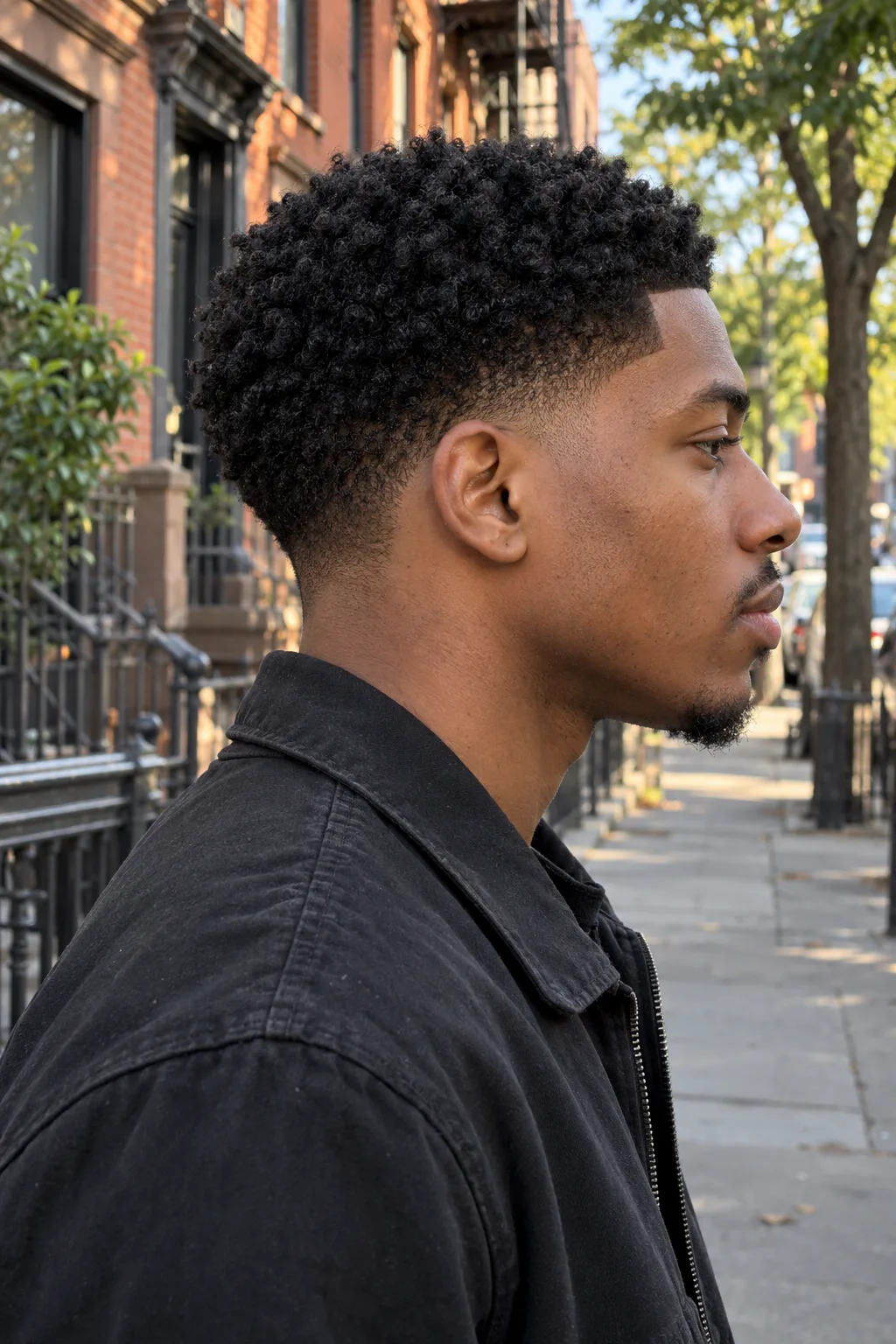
On coily hair this reads differently than on straight hair. Dense, dark coils make the blend look like a soft shadow at the edge rather than a visible gradient, so the taper looks cleaner and more subtle. That is why it has become the default request in Black barbershops: you get the fresh, lined up look of a fade with almost none of the scalp showing. If you want the full background on the cut itself, our main guide to the low taper fade covers it on every hair type.
Why the lineup matters more than the taper
A taper only touches about an inch of hair. The lineup, the crisp edge at the forehead and temples, frames the whole face. On Black hair a lineup that is pushed back past your natural hairline is the single most common way a good taper turns into a bad cut: it takes months to grow back and it ages the face. Ask for a lineup that follows the hairline you already have.
Want to see it first? Try a mullet on your own photo.
Low taper vs low fade vs burst fade on Black hair
People use these three names for the same cut, and they are not the same. The difference is how high the short hair goes and whether it reaches bare skin.
| Cut | Where it starts | How short it goes | How it grows out on coily hair | Best for |
|---|---|---|---|---|
| Low taper | Sideburn and nape only, below the top of the ear | Close stubble at the edge, never bare skin above it | Softly, looks fine for 2 to 3 weeks | First timers, work, sensitive skin |
| Low fade | Just above the ear, all the way around | Often to skin, a wider short band | Shows a line by week 2 | A sharper, more dramatic contrast |
| Burst fade | Arcs around the ear, leaves the nape long | Skin around the ear | Fast, needs a touch up in 10 to 14 days | Mohawks, frohawks, curly tops |
| Mid taper | Starts near the temple | Close at the edge | Grows out more visibly | Longer tops that need more contrast |
If you are torn between heights, the mid taper fade guide shows low, mid and high side by side, and the burst fade guide covers the curved version that leaves the back long.
Low taper fade black styles: 14 tops on the same taper
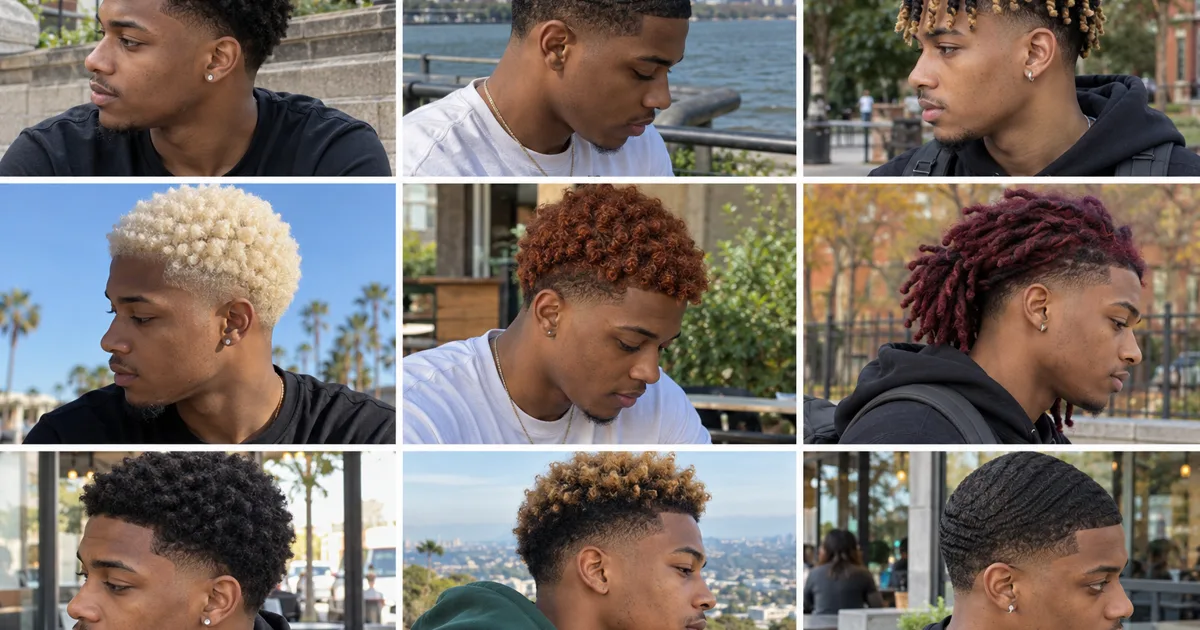
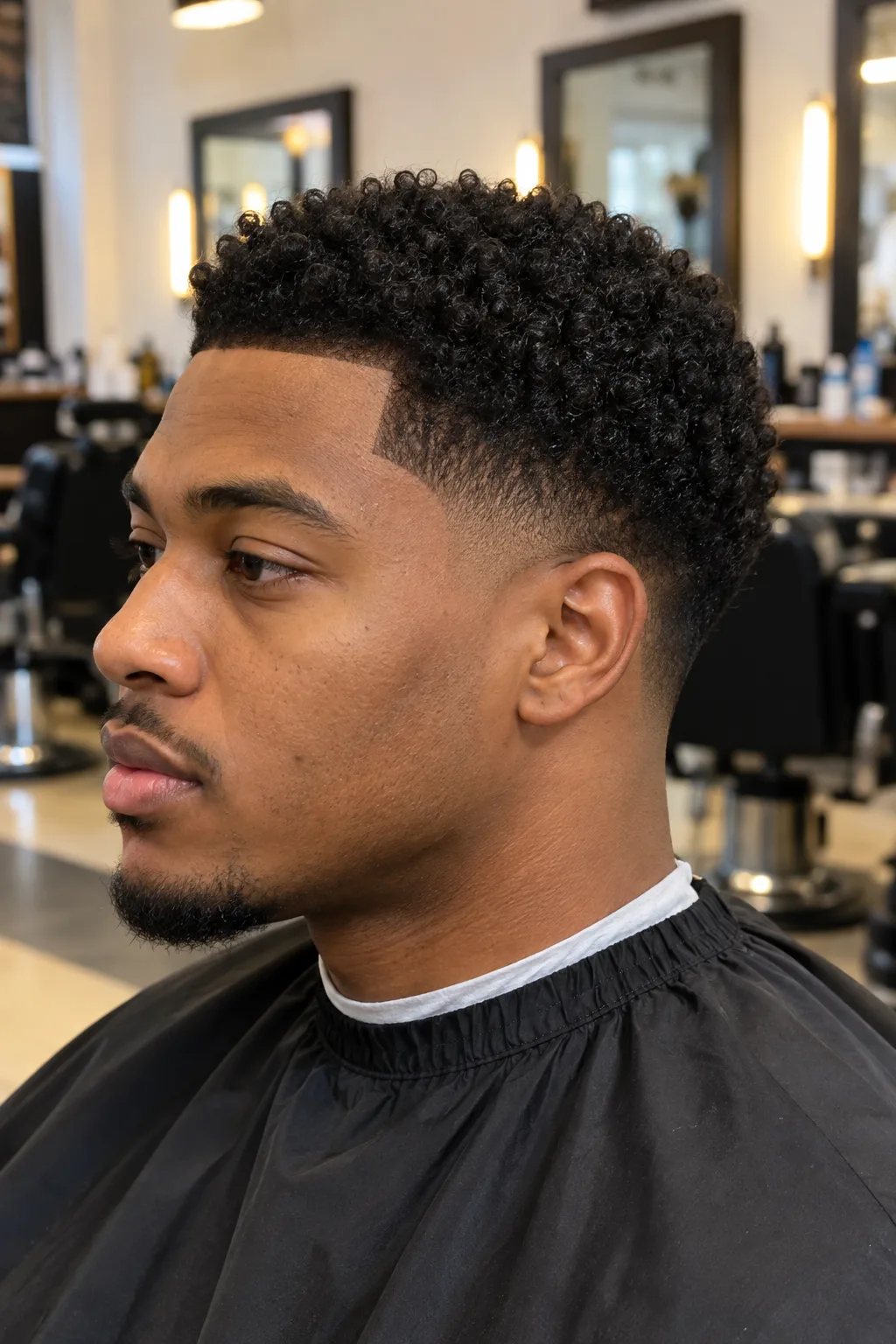
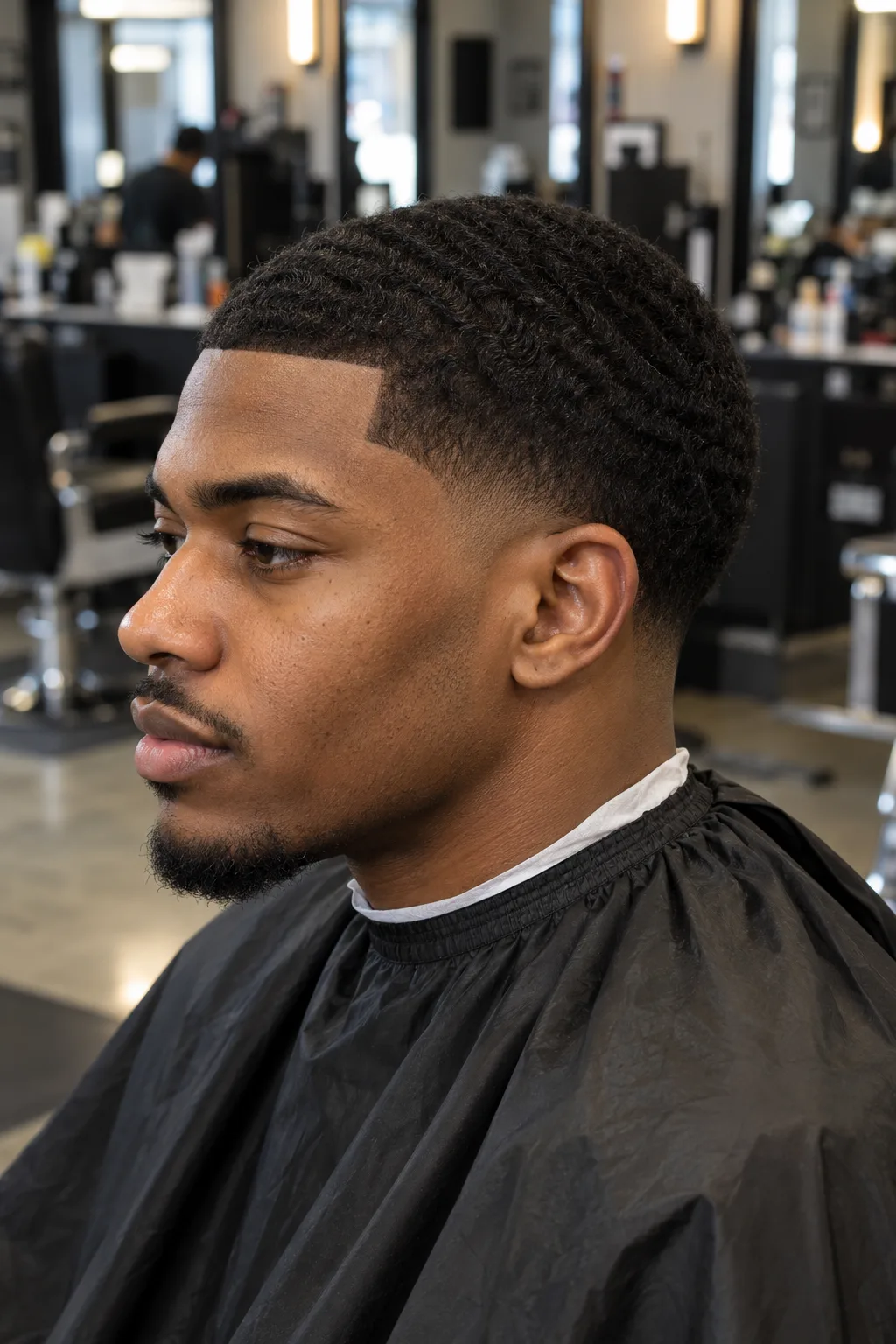
Every picture below has the same low taper: tight at the sideburn and the nape, full length by the top of the ear, a natural lineup. The only thing that changes is what sits on top, from half an inch of waves to long locs. Read it as a menu. Pick the top first, then ask for the taper underneath it.
Gallery14 photos · tap to enlarge
 Would this suit me?
 Would this suit me?
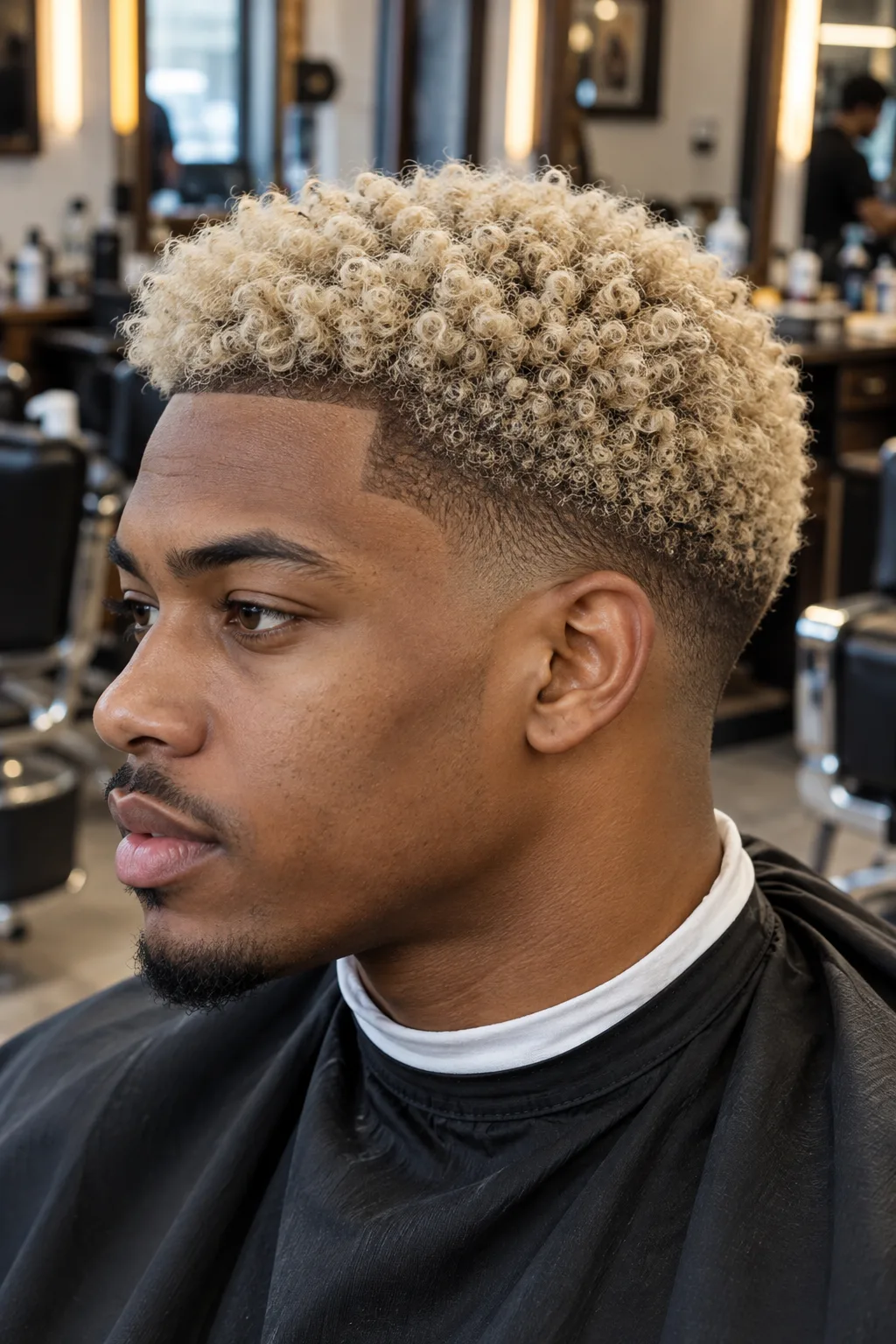 Would this suit me?
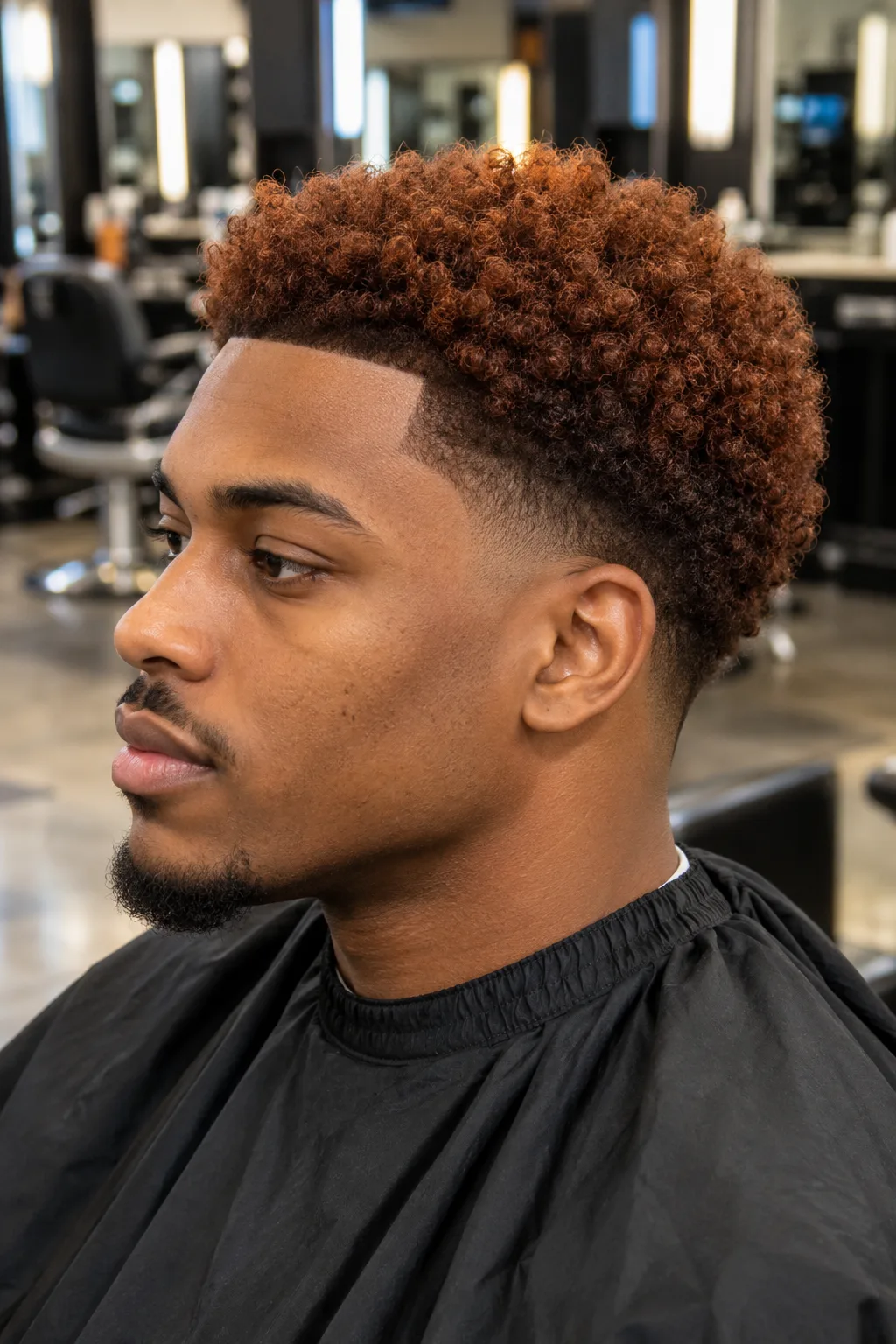 Would this suit me?
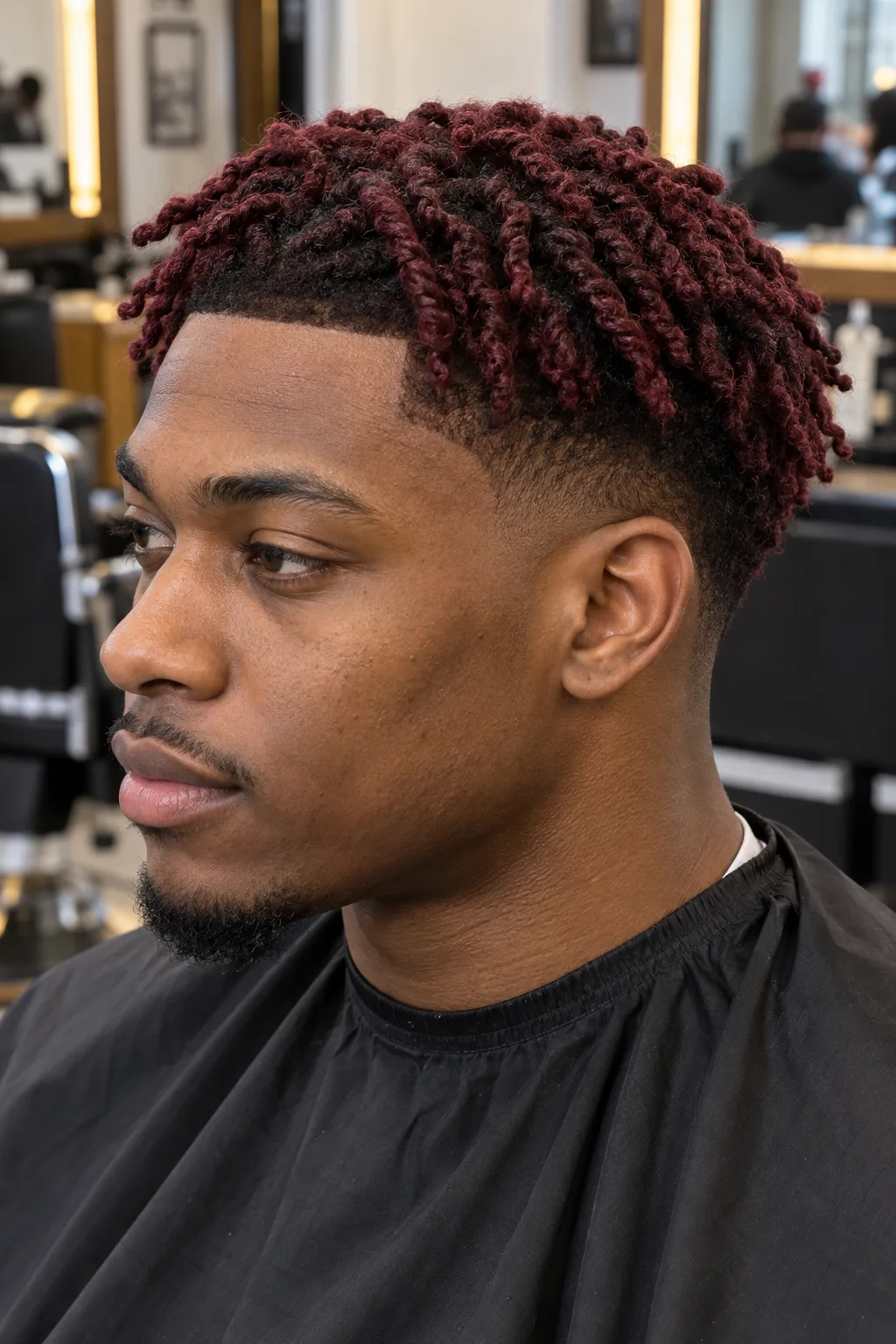 Would this suit me?
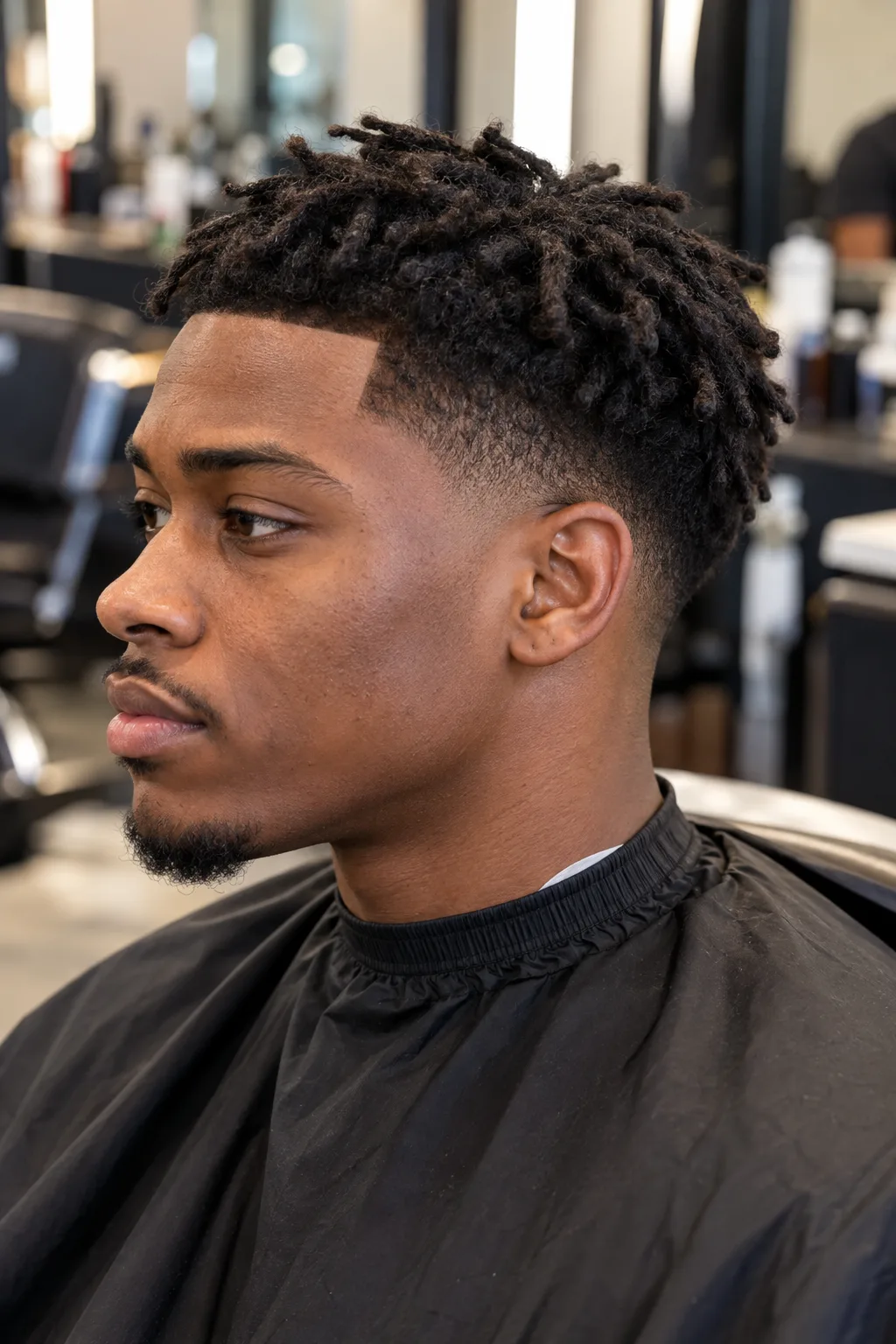 Would this suit me?
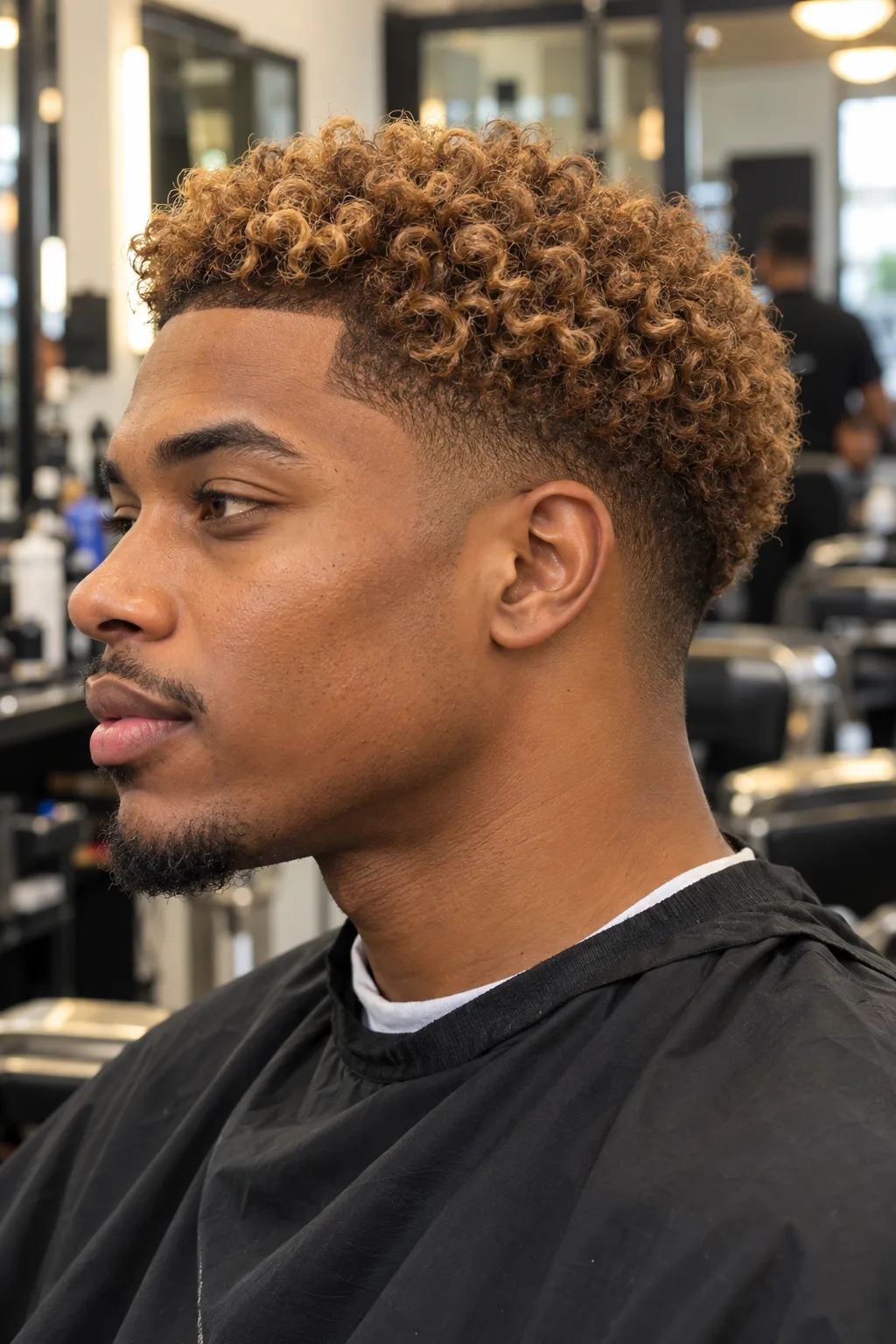 Would this suit me?
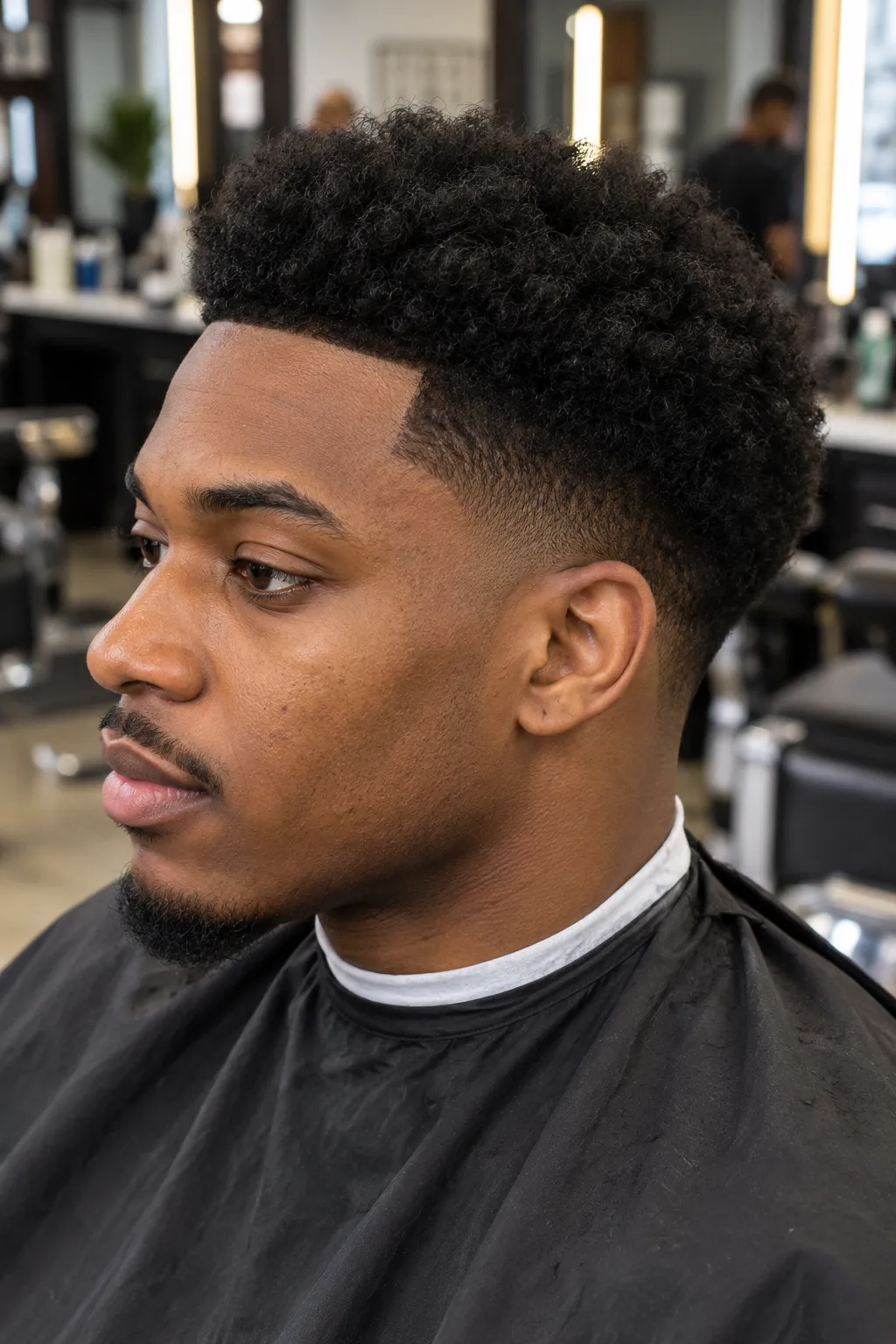 Would this suit me?
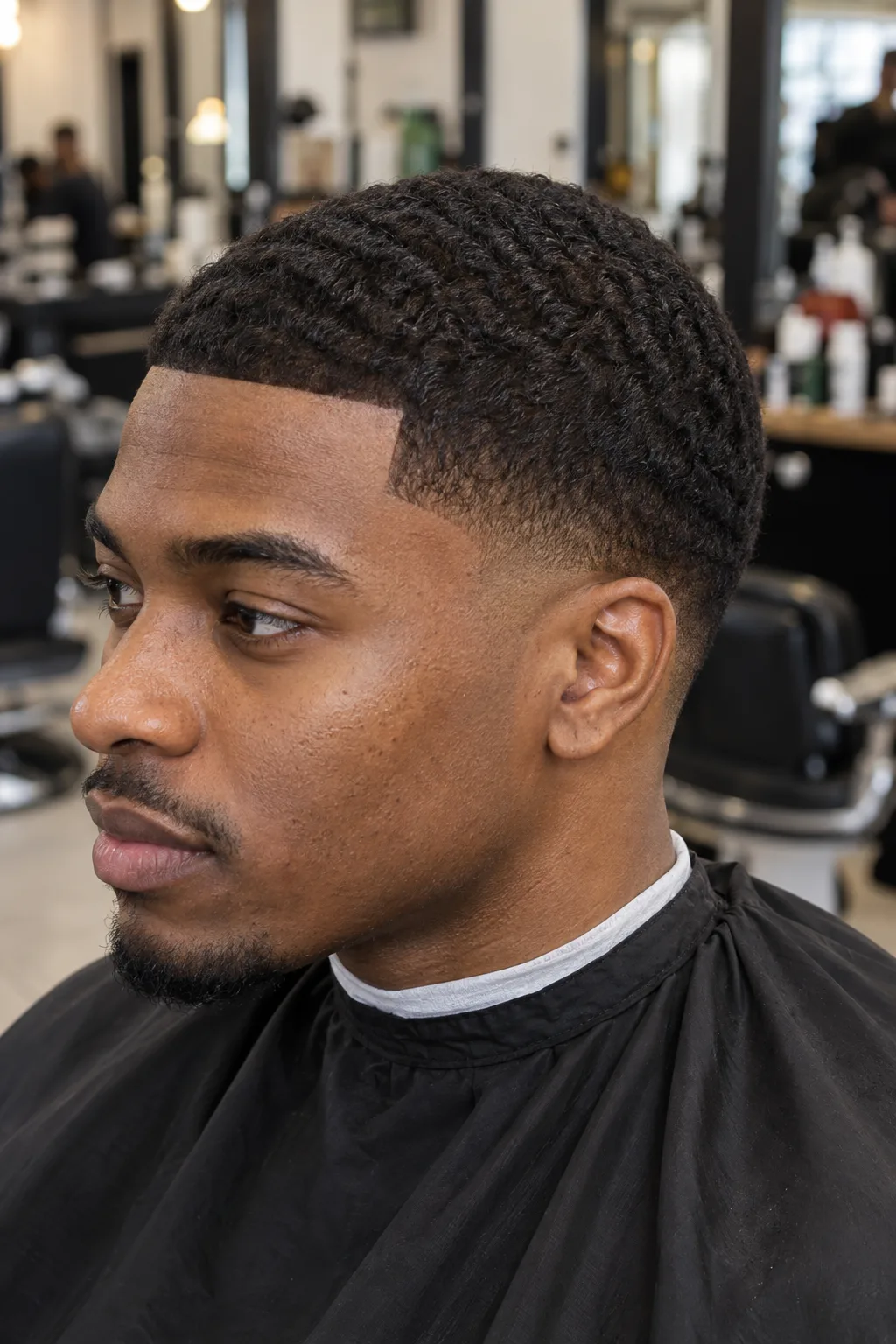 Would this suit me?
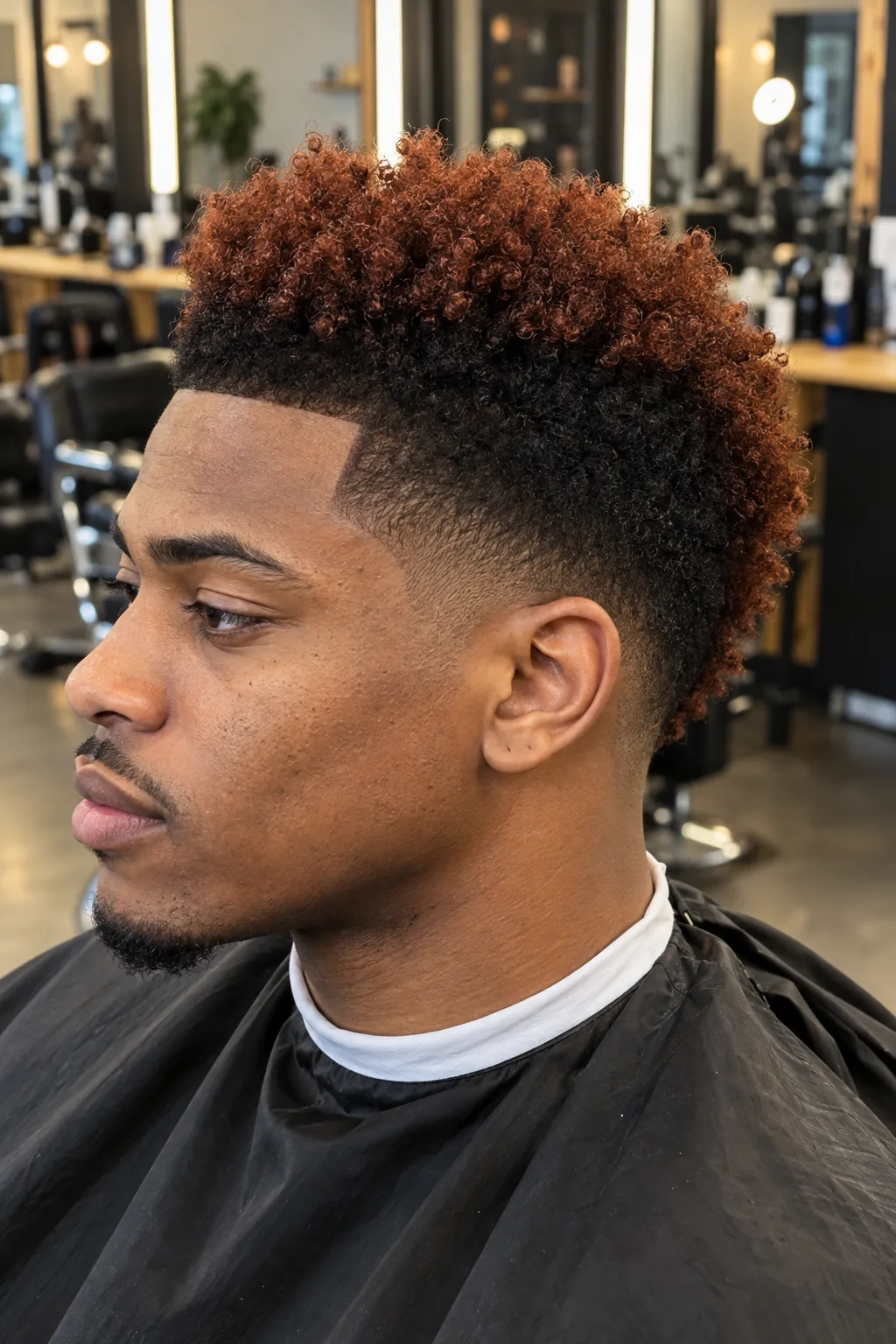 Would this suit me?
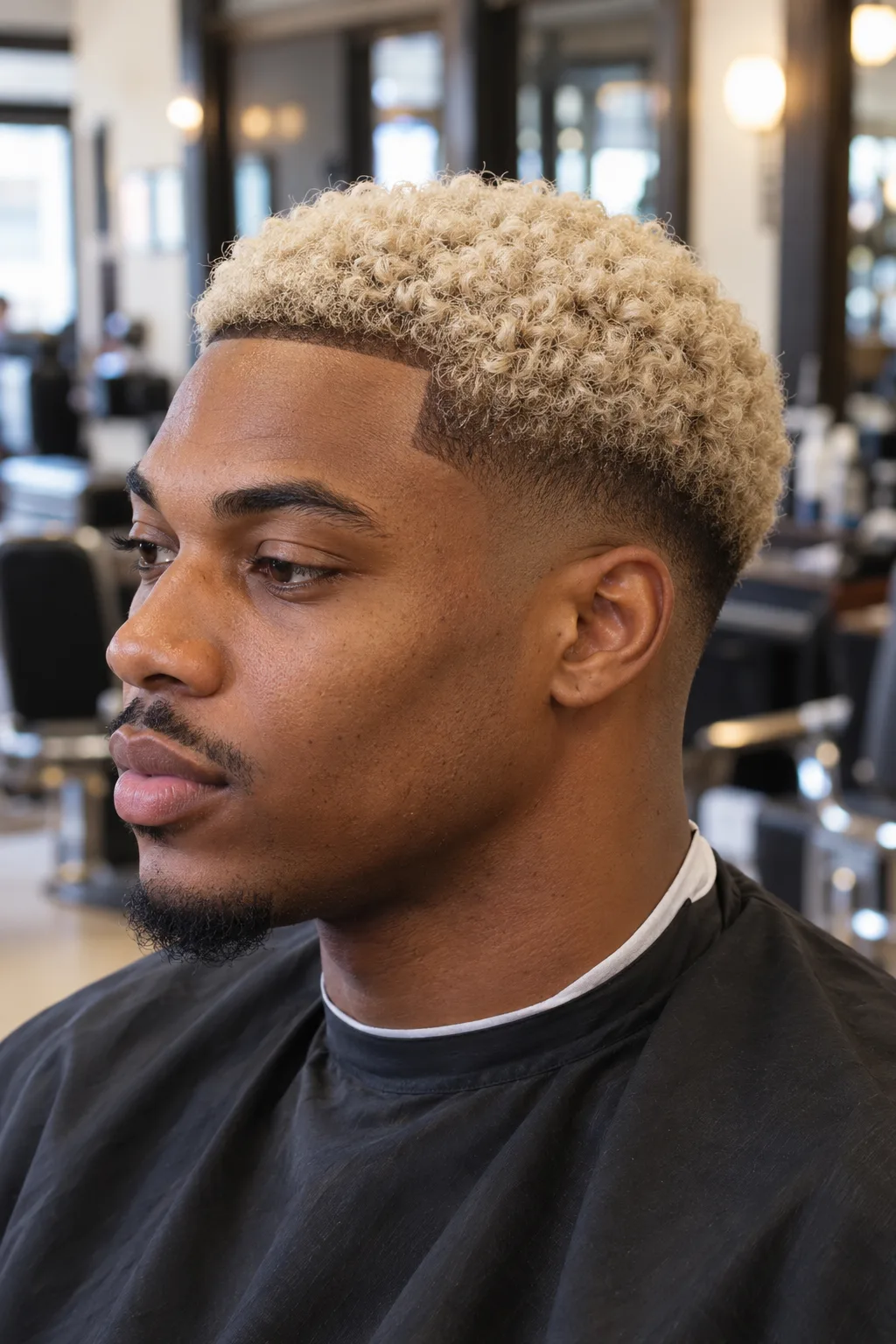 Would this suit me?
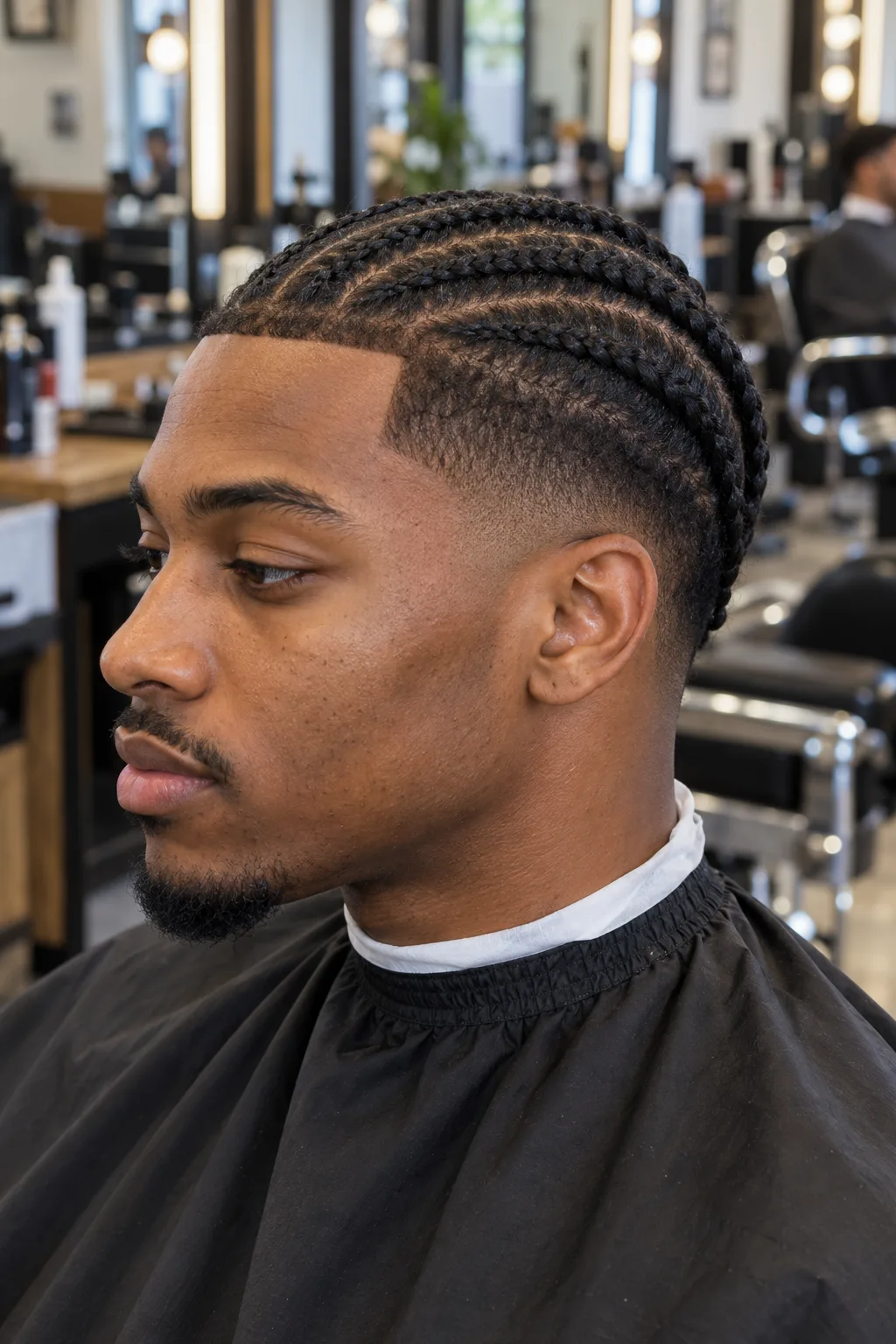 Would this suit me?
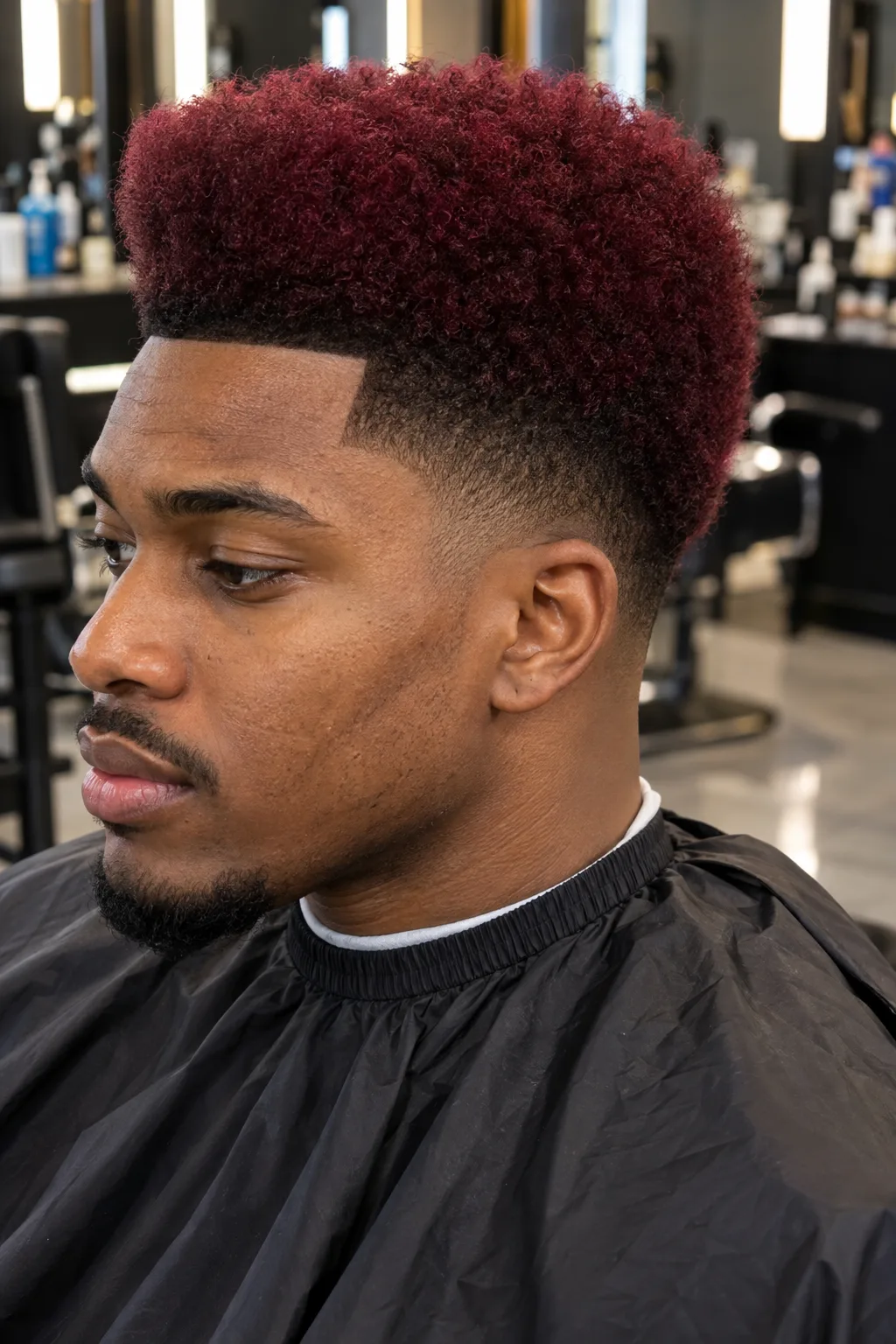 Would this suit me?
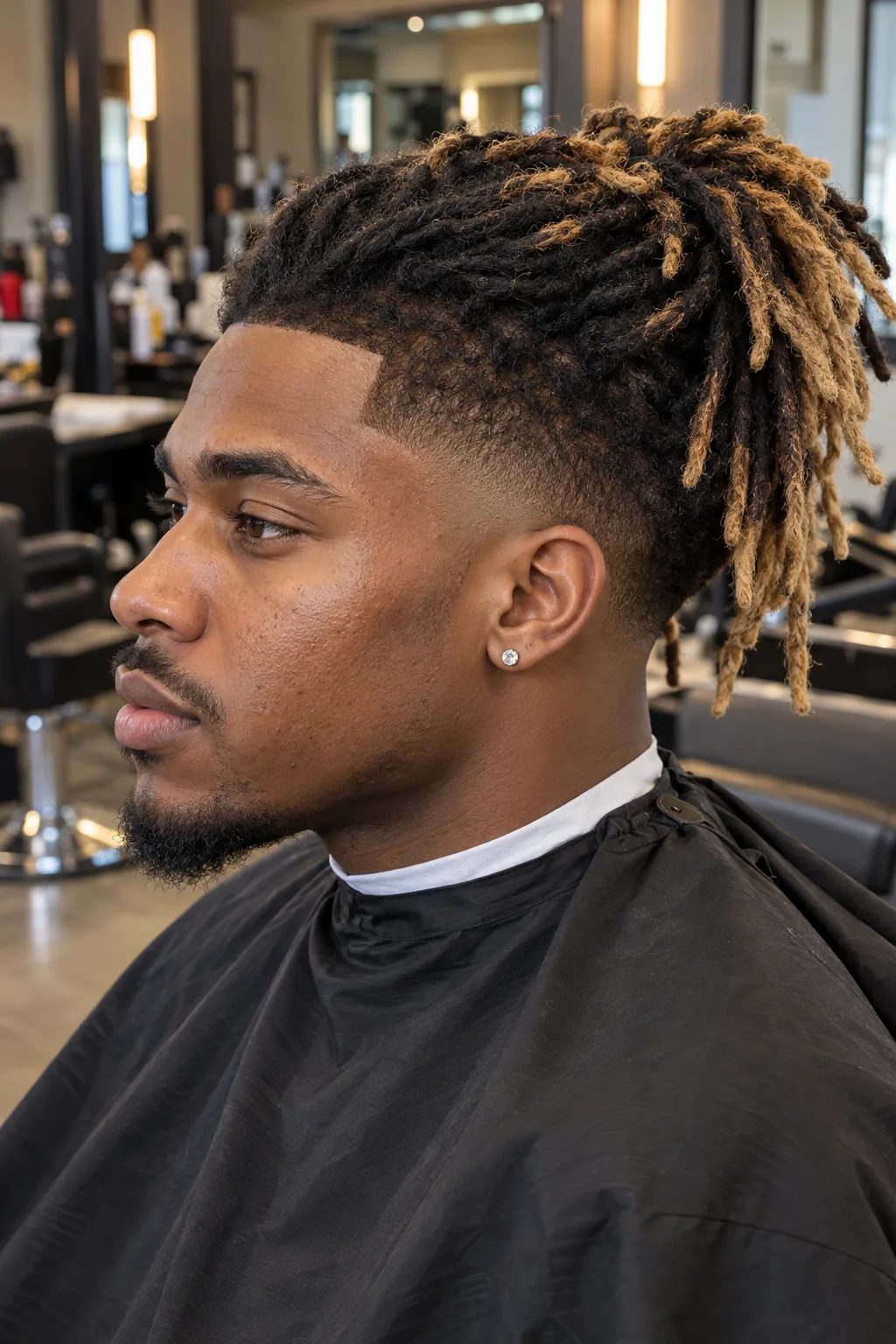 Would this suit me?
Which cut makes you look best?
Find out in 60 seconds.
A few quick taps and one selfie, and you'll know. Free account, no card for your first render.
Which Black hair type are you?
The taper is the same on every head. What changes with texture is how much length to leave on top, how the hair shrinks, and how fast the edge goes fuzzy. Find your row, then read your section.
| Hair type | Best top over a low taper | Length to ask for on top | Touch up every |
|---|---|---|---|
| 4c coils | Short afro or sponge curls | 1.5 to 3 inches stretched | 2 to 3 weeks |
| 4a and 4b coils | Textured crop or twists | 1 to 2 inches | 2 to 3 weeks |
| 3c curls | Defined curls or a curly top | 2 to 3 inches | 2 weeks |
| Waves | Brushed 360 waves or a caesar | Half an inch or less | 1 to 2 weeks |
| Twists and locs | Twists, starter locs, freeform locs | Any | Edges every 2 to 3 weeks |
4c coils
4c hair shrinks the most, often to a quarter of its stretched length, so the number you ask for is not the number you see. Ask for length in stretched inches and expect it to look much shorter. A rounded short afro is the classic top here: the low taper keeps the sides from puffing out into a triangle as it grows. Our guide to type 4 hair explains the shrinkage and care side.

4a and 4b coils
4a and 4b coils have a visible pattern that a sponge or a curl brush brings out. A textured crop, 1 to 2 inches of coils pushed slightly forward, is the easiest top to wear over a low taper and the one people try most. If you are not sure where your pattern sits, 4a hair walks through the differences.
3c curls
Looser curls hold their shape with less product, so you can leave more on top, 2 to 3 inches, and still look neat. The risk is the opposite of 4c: curls hang down over the taper as they grow, so ask the barber to keep the sides above the ear a little tighter than on coily hair.
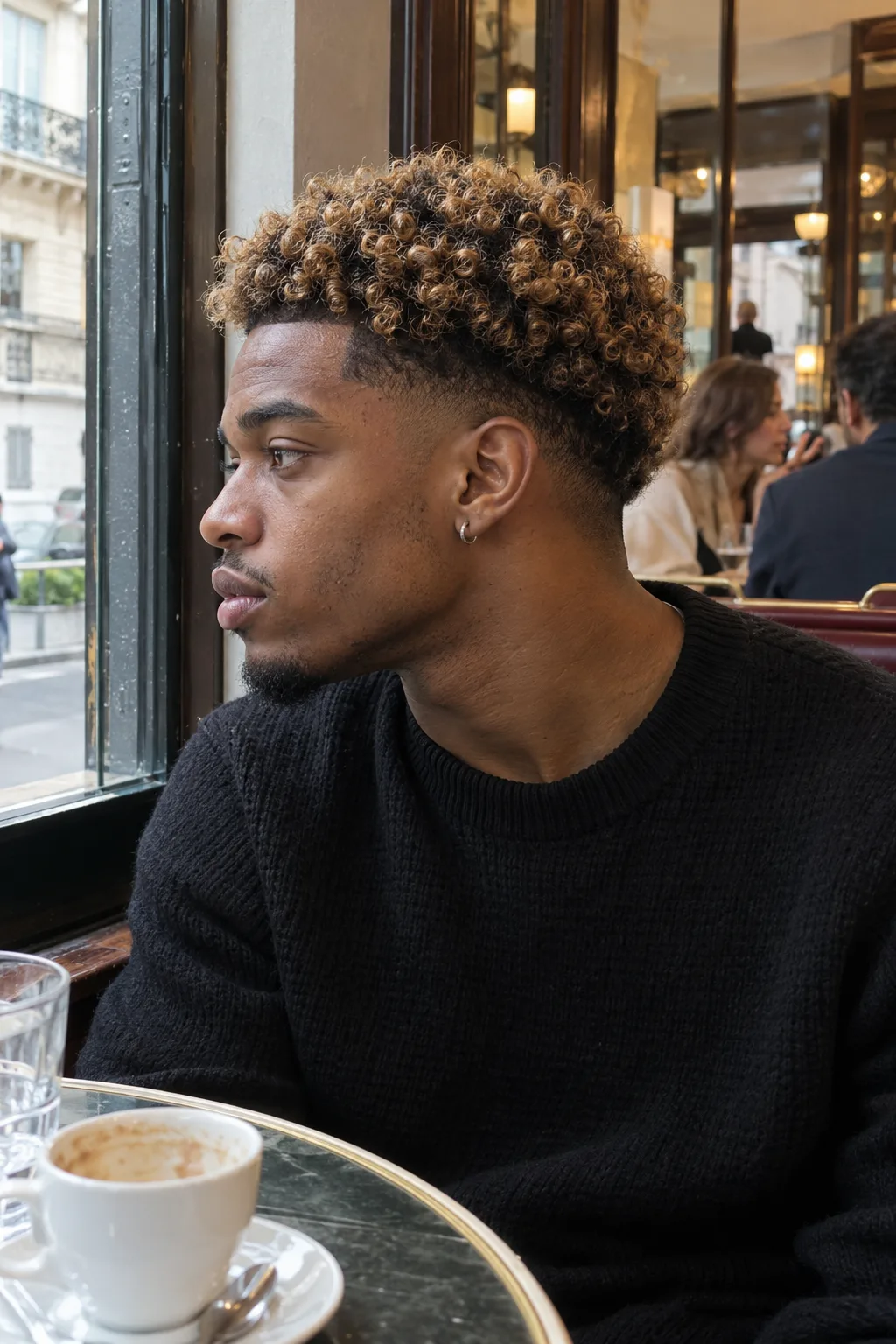
360 waves
Waves and a low taper are made for each other. The taper keeps the edge clean while the top stays short enough to brush. Keep the top at half an inch or less, and ask for the taper to be done with the grain so it does not break the wave pattern at the sides.

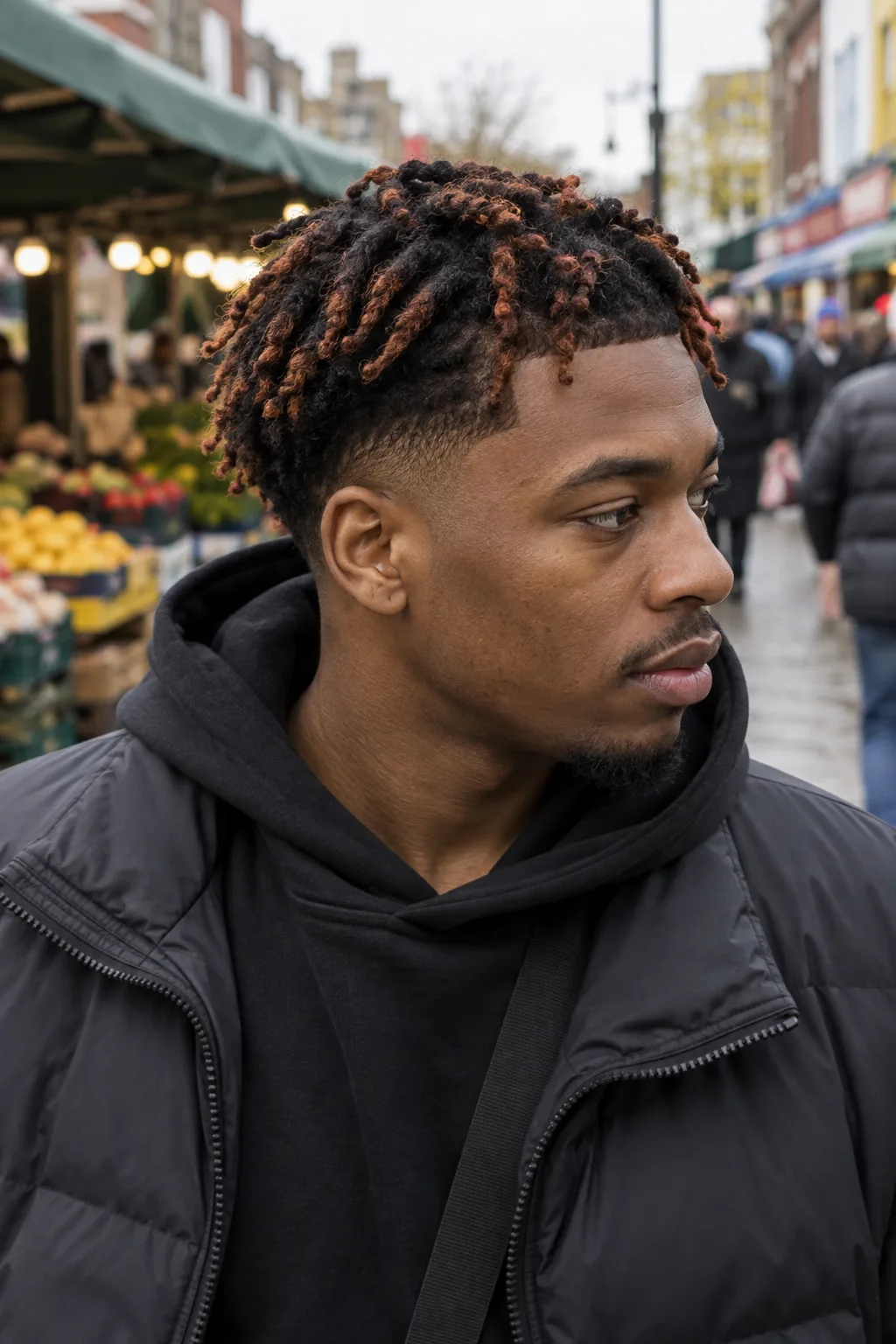
Twists and locs
Twists and locs carry their own length and weight, so the low taper is about the edge only. It keeps the sides and nape neat between retwists and lets the locs or twists hang clean. Ask the barber to work around the parts at the edge rather than through them.
Does a low taper fade suit your face shape?
A low taper suits almost every face shape because it changes so little of the head. What does change things is the top. Round faces look longer with height on top, like a short afro or a high top. Long or oval faces suit a shorter, flatter top, like waves or a caesar. Square jaws can take any of them. If you are not sure which you have, measure it here.
Measure it instead of guessing
Both numbers in the same unit — the answer is a ratio, so it does not matter which.
Under 1.15 reads round, 1.15 to 1.5 reads oval, over 1.5 reads long. Oval and long split on the jaw rather than the ratio: an oval tapers toward the chin, a long face runs straight down.
How to ask for a low taper fade on Black hair
Barbers hear "low taper" and "low fade" as different cuts, and many will default to a fade to skin. Five short sentences avoid that. For the clipper side of the job, our step by step low taper fade cutting guide shows how barbers actually blend it.
How to ask for a low taper fade on Black hair
- Say "low taper", not "low fade"
Say the word taper. Then point to your sideburn and the back of your neck and say that is the only part you want short.
- Say no skin above the ear
Ask for the edge to be taken close but not bald, and for nothing above the top of the ear to go to skin.
- Ask for a natural lineup
Ask the barber to follow your own hairline at the forehead and temples, not to push it back to make it sharper.
- Give the top length in stretched inches
Say how much you want left on top, in inches, stretched. On coily hair the shrunk length is a lot shorter.
- Show a photo of hair like yours
Bring a picture of the exact top on hair with the same texture as yours, not a straight hair taper.
Mistakes that cost you the cut
- Asking for a fade and getting skin. A low fade often goes bald above the ear. On coily hair that shows a hard line within ten days.
- A lineup pushed past your hairline. It looks sharp for three days and takes months to grow back.
- Too much off the sides above the ear. Without that bulk the top looks like it sits on a shaved head and the shape goes square.
- Shaving the nape too close, too often. Close shaves at the back of the neck can trigger razor bumps and, in some men, acne keloidalis nuchae, firm bumps that can scar. A taper that stops at stubble is kinder to the skin.
- Picking the top from someone with different hair. A textured crop on 3c curls looks nothing like the same crop on 4c coils.
How long does a low taper fade last on Black hair?
A low taper fade looks fresh for about two weeks and still looks tidy at three. That is longer than a skin fade, because there is no bald band for the regrowth to show against. The lineup is what goes first: most men book a touch up of the edges at week two and a full cut at week three or four. Between cuts, a durag or wave cap at night keeps the top in shape, and a light oil on the edge stops the stubble from looking dry.
Can you see a low taper fade on yourself for free?
The free way is what you are doing now: look at photos of Black hair like yours, pick a top, and show the photo to the barber. It works up to a point. The wall it hits is that you are looking at someone else's head, hairline and face. You cannot see how the taper sits against your own ears and jaw, or whether the top you picked suits your forehead, until the cut is done.
That is the gap our low taper fade try-on fills. Upload a selfie and it renders the cut on your own face. The first look is free and needs no card. After that, more looks, colors and clean downloads are on the Plus plan at $9 a month or $60 a year, with a seven-day refund.
A low taper fade is the safest fade you can ask for on Black hair. It keeps the shape of your head, grows out softly and is kind to the skin at the back of the neck. The taper itself is easy for any decent barber. What you have to protect is the lineup and the bulk above the ear, so say "taper, not fade", ask for your natural hairline, and give the top length in stretched inches. For more cuts built for coily and curly hair, browse our Black hairstyles guide.
Frequently asked questions
It looks like a full head of hair with a clean, tight edge. The sideburns and the nape are taken down to stubble and blend up quickly, so from the front you mostly see the lineup and the top. From the side the hair above the ear stays full and the shape of the head stays round.
Low means the short part starts at the bottom of the hairline, below the top of the ear. Taper means only the edge is graduated, the sideburns and the nape, rather than a band all the way around. Fade is often added out of habit, even though a true taper does not go to bare skin.
A taper shortens only the edge of the hairline, the sideburns and the nape, and usually stops at stubble. A fade takes a whole band around the head short, often down to skin. On Black hair a taper looks softer and grows out more slowly, while a fade gives more contrast.
The opposite is a high fade, where the short part starts near the top of the head and runs down to skin, leaving only a small patch on top. A low taper changes the least of the head and a high fade changes the most.
Book a touch up of the lineup and the nape every two weeks and a full cut every three to four. Sleep in a durag or satin cap to protect the top, keep the edges moisturized with a light oil, and avoid shaving the nape yourself, which is where razor bumps start.
A taper lasts longer. Because it never goes to bare skin above the ear, there is no sharp line for the regrowth to show against. A low taper still looks tidy after three weeks, while a skin fade usually needs a touch up after ten to fourteen days.
Say "low taper, not low fade", point to your sideburns and nape as the only part to go short, ask for no skin above the ear and a lineup that follows your natural hairline. Then give the length you want on top in stretched inches and show a photo of hair with your texture.
It is one of the most requested cuts in Black barbershops for a reason: it looks clean and current without changing the shape of your head, and it suits almost every face. Whether it suits you comes down to the top you pair with it, which is the part worth trying on first.
Preview it on your own photo: Men's Hairstyle Try-On.
Share article
About the author
Related posts
Men's Haircuts · 12 min
Modern Mod Cut: 14 Variations and How to Ask Your Barber
The modern mod cut is decided at the sides, not the fringe. 14 variations, which hair type and face shape it suits, the mistakes that cost three months, and the exact words for your barber.
Men's Haircuts · 14 min
Man Wolf Cut: 15 Ways to Wear It and How to Ask Your Barber
A men's wolf cut is decided at the sides, not on top. See 15 versions from classic to low taper, which one suits your hair type and face shape, and the exact words for your barber.
Men's Haircuts · 15 min
Fringe Cut: 9 Men's Fringe Types and Which One Suits You
A fringe cut lets the front of your hair fall onto your forehead. Your hairline, not your face shape, decides which of the nine types will sit right. See all nine, check yours in 30 seconds, and get the words for your barber.
Men's Haircuts · 13 min
Fade Fohawk: 14 Faux Hawk Fades and How to Pick Yours
A fade fohawk is a faux hawk with faded sides. The ridge is the easy part; the fade decides how loud it reads. 14 versions compared, which fade suits you, and what to tell your barber.
Men's Haircuts · 15 min
Taper Burst Fade: 14 Looks and the Words That Stop Your Barber Going to Skin
A taper burst fade curves around the ear, never goes to bare skin and keeps the back long. See it on 14 different tops, which hair type it suits, and exactly what to say in the chair.
Men's Haircuts · 13 min
Men's Short Fade Cuts: 14 Looks and What to Ask Your Barber
14 men's short fade cuts on the same mid fade, matched to your hair type, plus the fade height rule most guides skip and the exact words to say in the chair.