Messy Bun: How to Do It in 2 Minutes on Any Hair Type
Oleh Onysko 25 October 2026 13 min read
In this article
To do a messy bun, gather unbrushed hair at the back of your crown, twist it, wrap it around itself and close it with one elastic, then pull a few loops loose and leave two pieces out at the front. It takes about two minutes, and the only tools are a hair tie and maybe two bobby pins.
Here is what most tutorials skip: the "messy" part is not something you do with your hands. It comes from the haircut underneath. Hair with layers and a few shorter pieces breaks out of a bun in all the right places on its own. One-length hair, cut blunt, gives you a smooth lump no matter how much you tug at it. So if your messy bun never looks like the photos, the fix is usually texture first and the cut second, not more practice.
This guide shows the messy bun on 13 hair types side by side, gives you a two-minute method, and tells you which version holds on your length.
What is a messy bun?
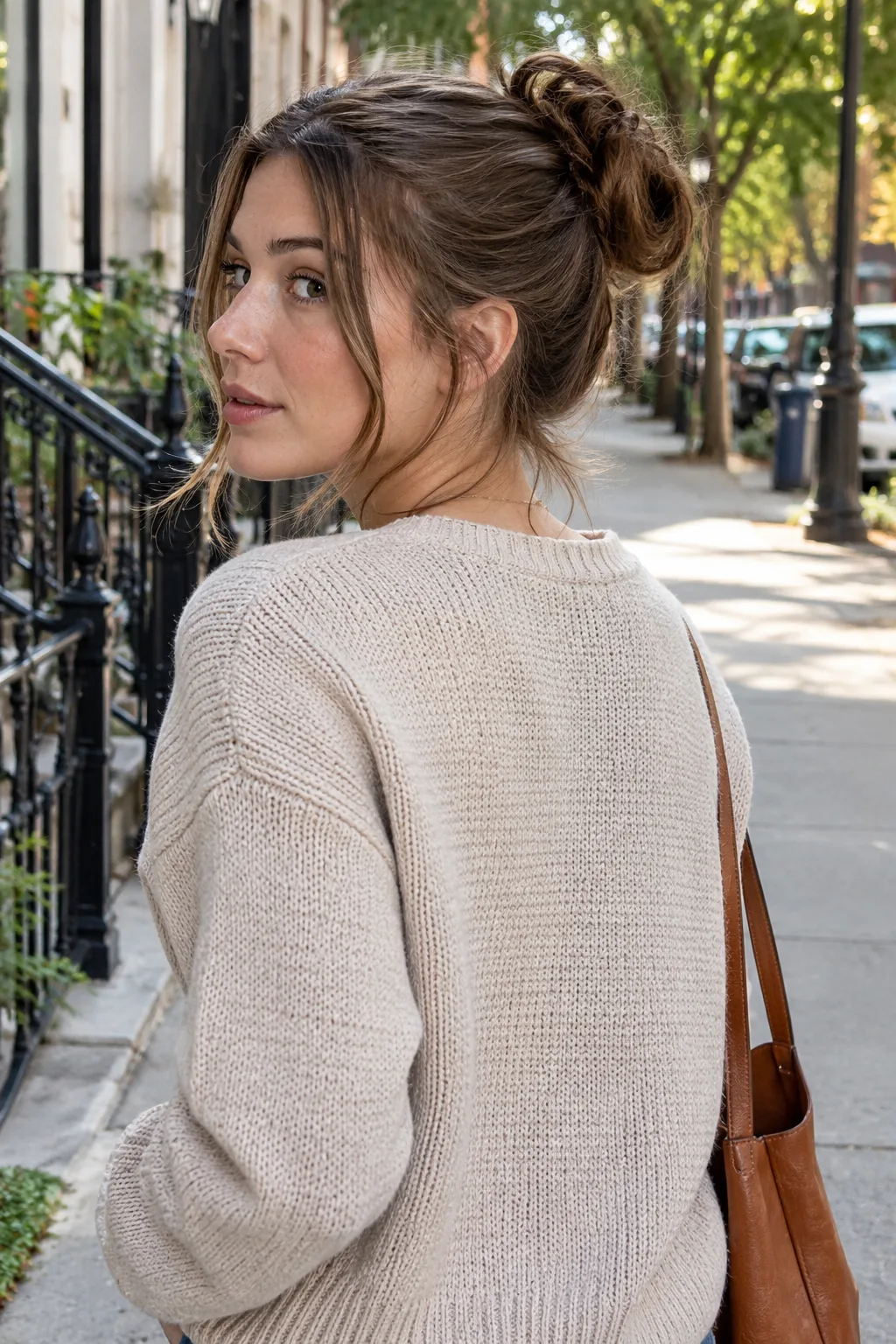
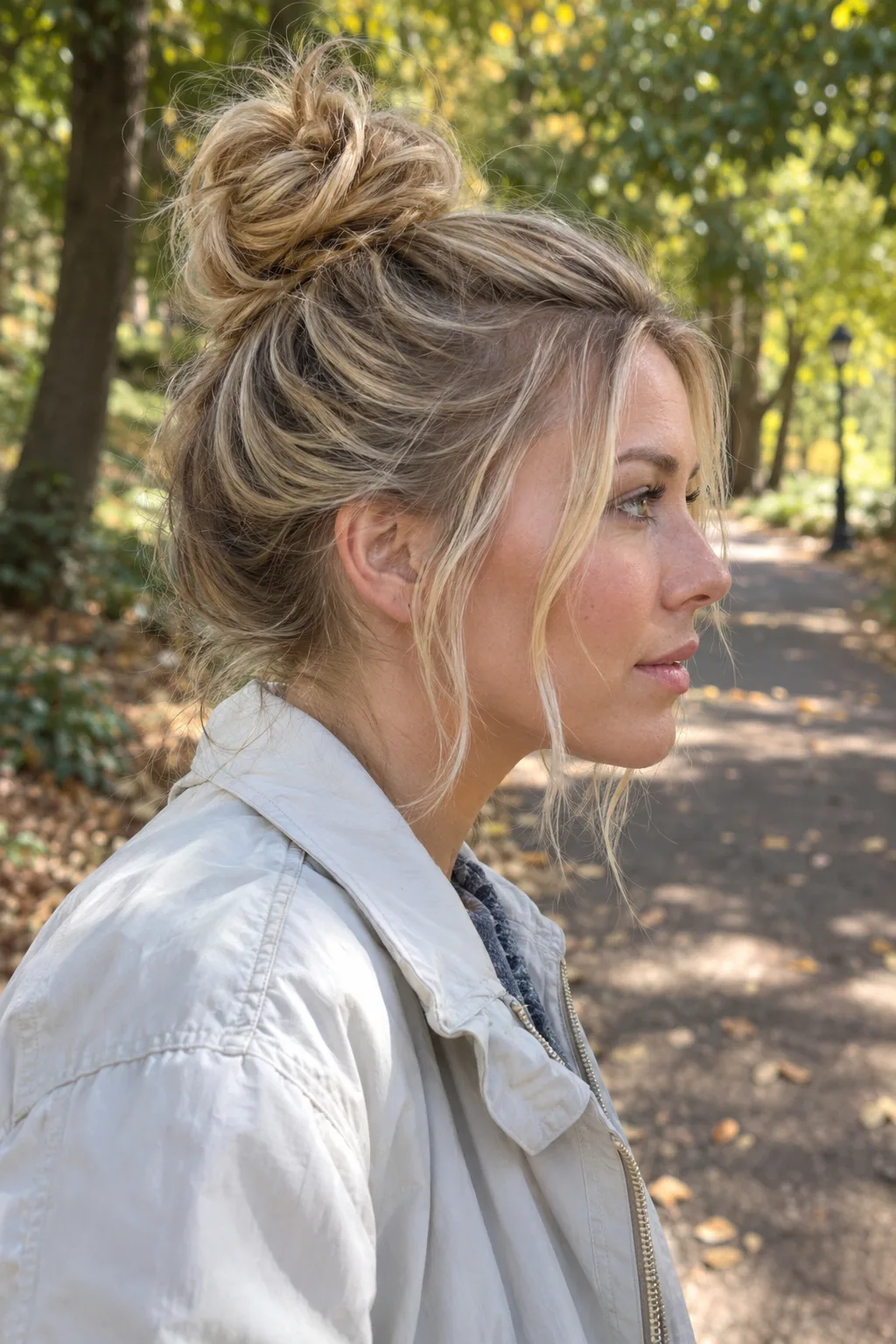
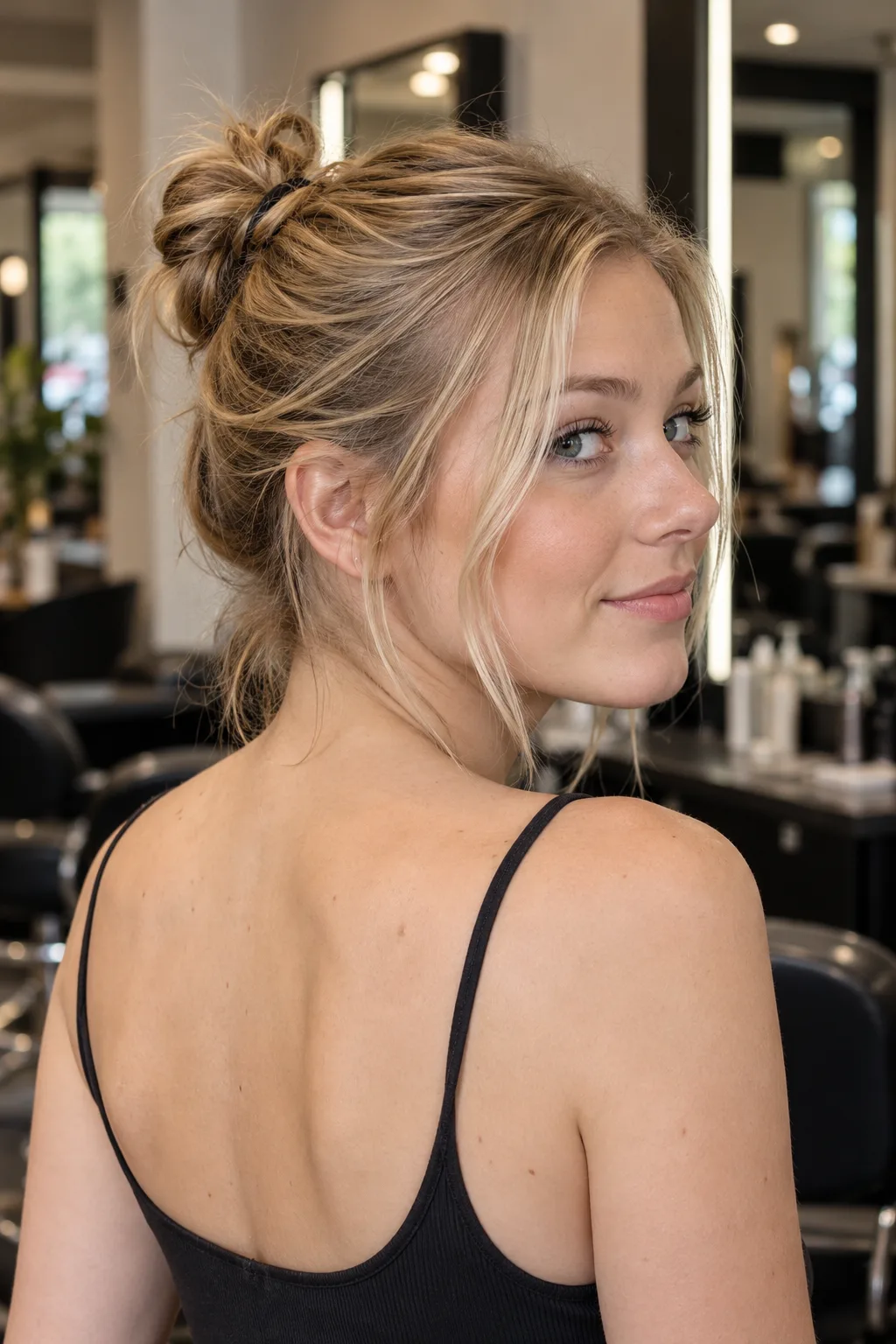
A messy bun is a loose, rounded bun where the hair is twisted and wrapped without brushing, so loops, ends and a few face-framing pieces are left visible on purpose. It sits anywhere from the nape to the top of the crown and is held with one elastic, sometimes a pin or two.
It is not a sleek ballerina bun, which is brushed smooth and wrapped tight, and it is not a donut bun built over a foam ring. The point of a messy bun is that it looks like it took no effort, even though the base under it is secure.
Want to see it first? Try a wolf cut on your own photo.
High vs low vs mid messy bun: which height to wear
Height changes the whole mood of a messy bun more than anything else you can control on the day. A high bun reads sporty and lifts the face. A low bun reads polished and quiet. The middle is the everyday default.
| Height | Where it sits | Reads as | Best for | Holds on |
|---|---|---|---|---|
| High messy bun | On top of the crown | Sporty, casual, lifts the face | Gym, errands, round faces | Hair past the shoulders |
| Mid messy bun | Back of the head, level with the top of the ears | Everyday, relaxed | Work, school, most days | Shoulder length and longer |
| Low messy bun | At the nape, just above the collar | Polished, soft | Dinners, weddings, long faces | Any length that reaches the nape |
| Side messy bun | Behind one ear | Romantic, a bit dressy | Events, heart-shaped faces | Long hair with layers |
If you are not sure, start mid. It is the easiest to wrap because your hands do not have to reach high or low, and it works with almost any neckline.

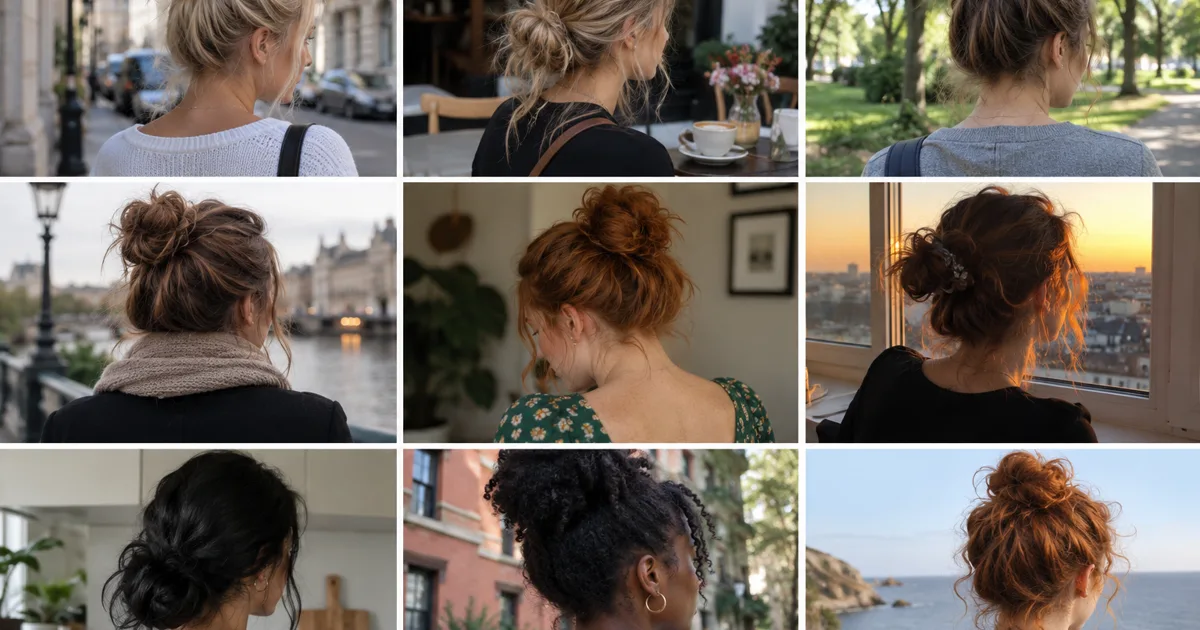
The messy bun on 13 hair types
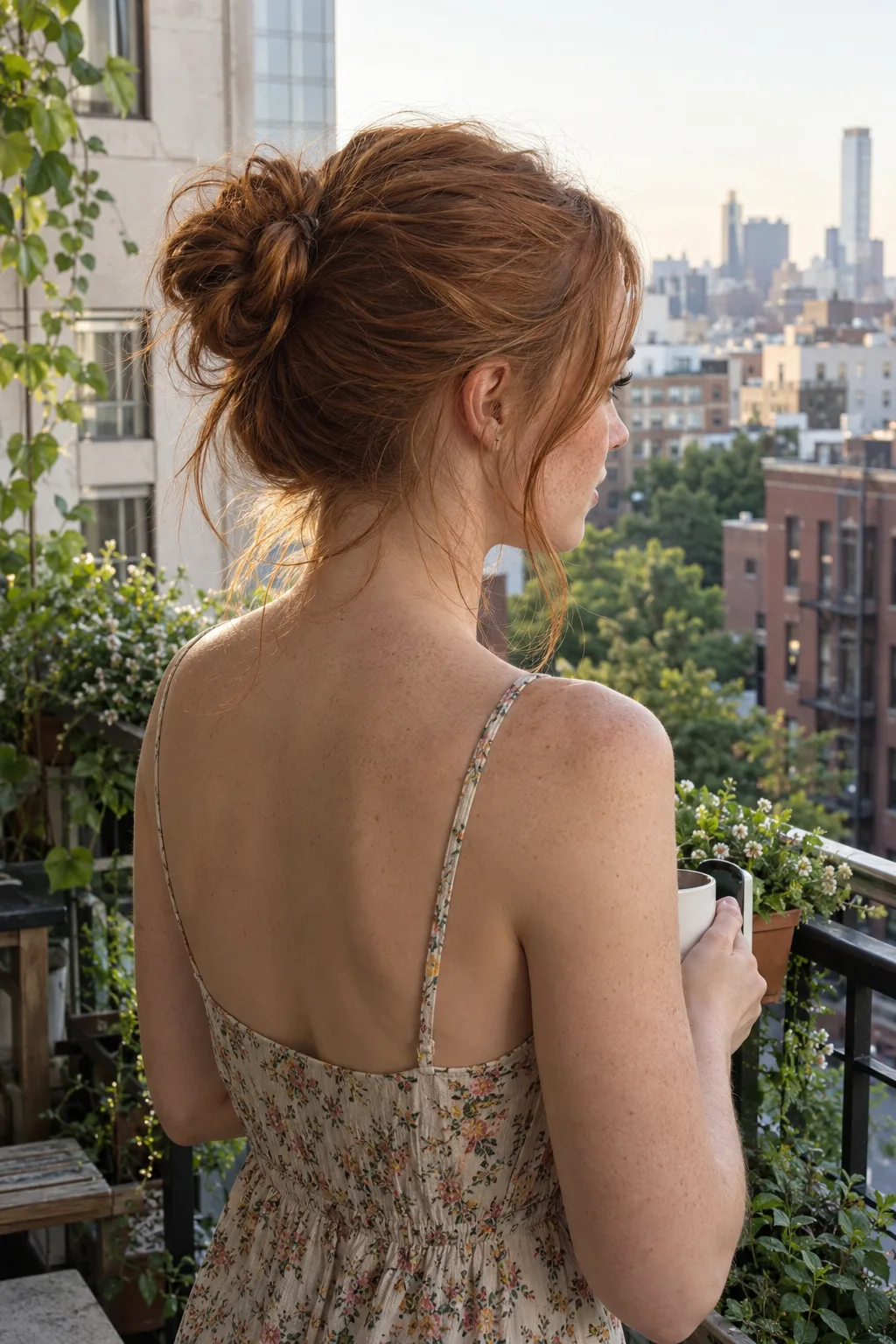
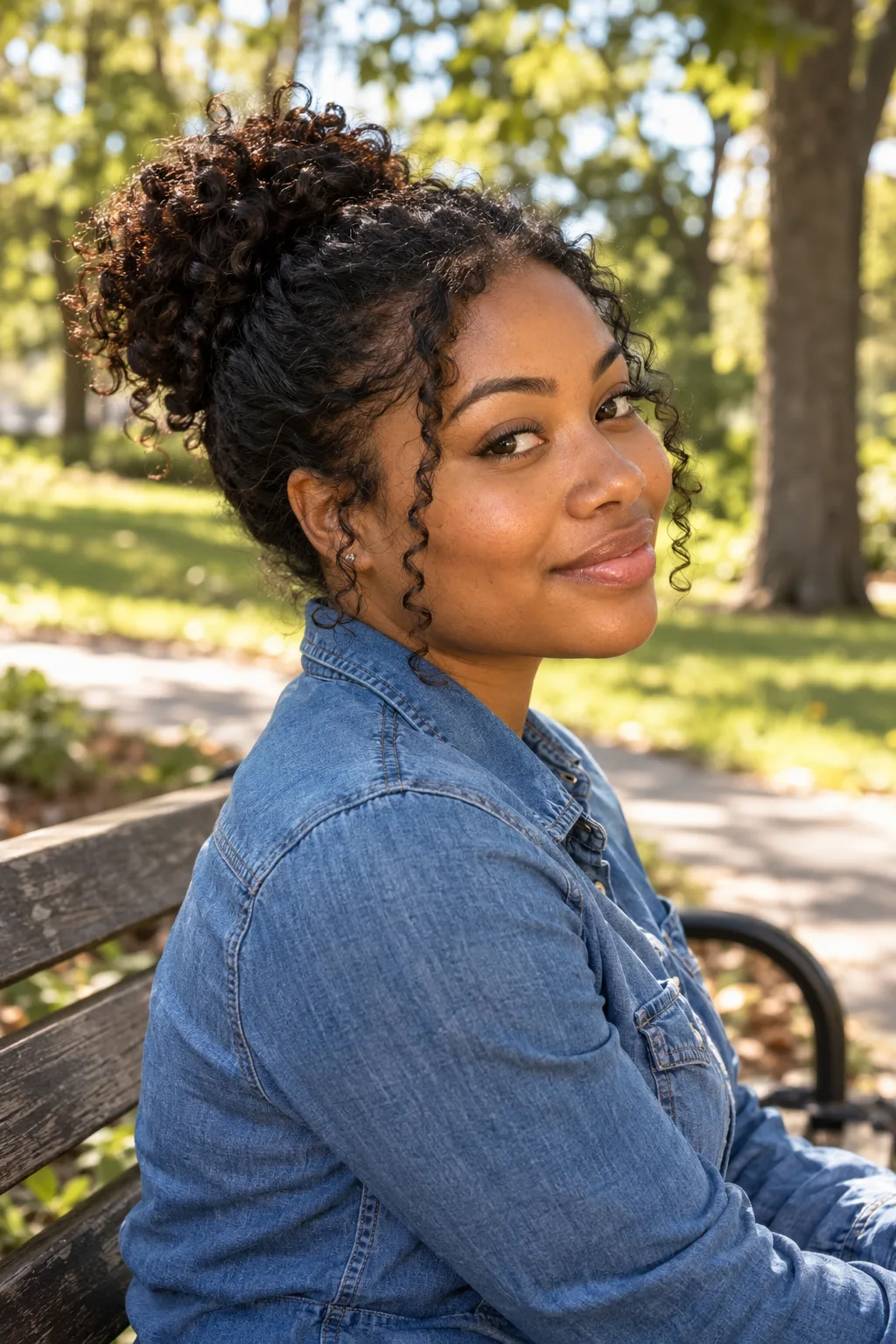
Everything here is the same style: one messy bun at the back of the head, a few pieces left out at the front. The only thing that changes from photo to photo is the hair underneath it: texture, thickness and bangs. Look for your own hair in the row before you copy a tutorial filmed on someone else's.
Gallery13 photos · tap to enlarge
 Try this on me
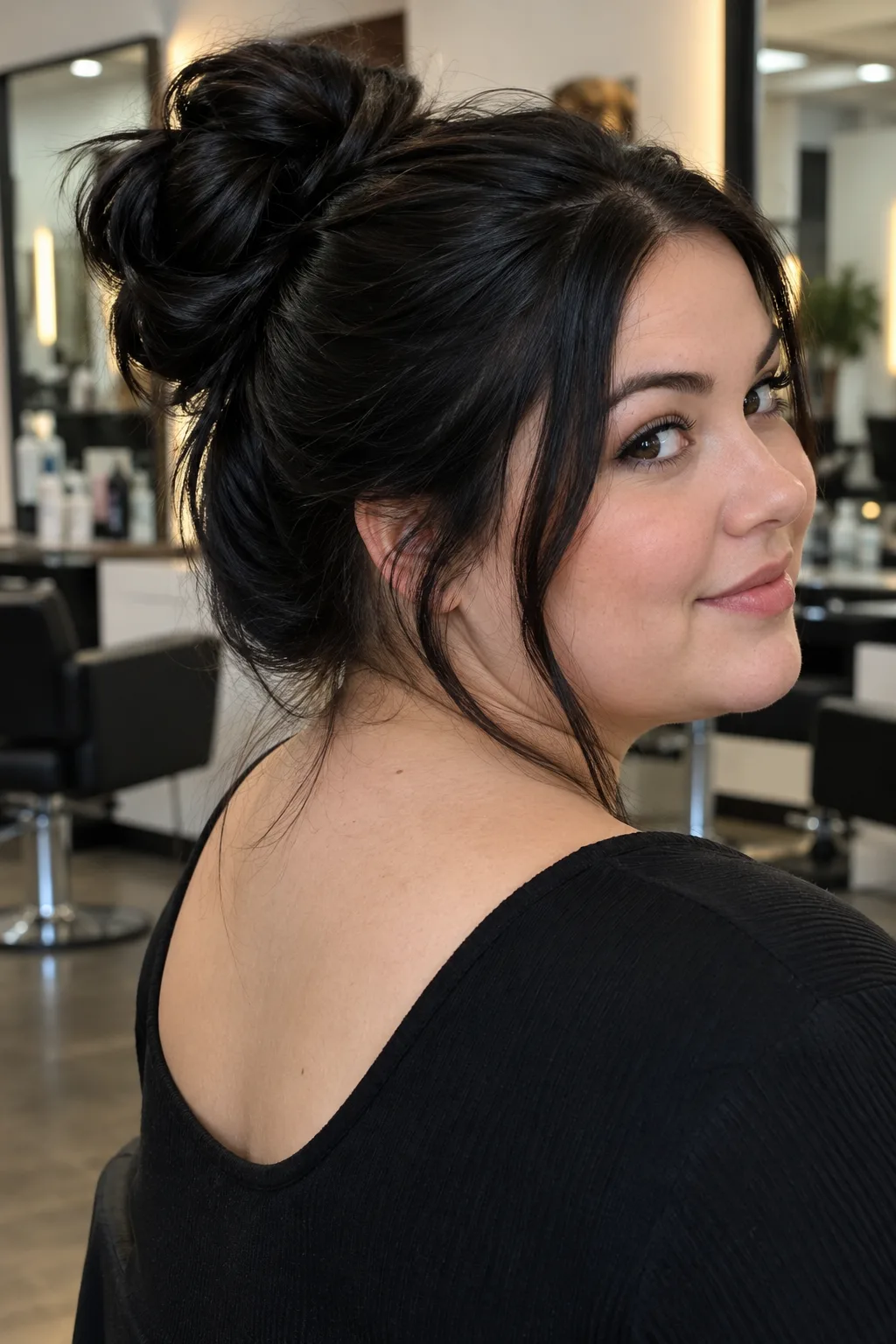 Try this on me
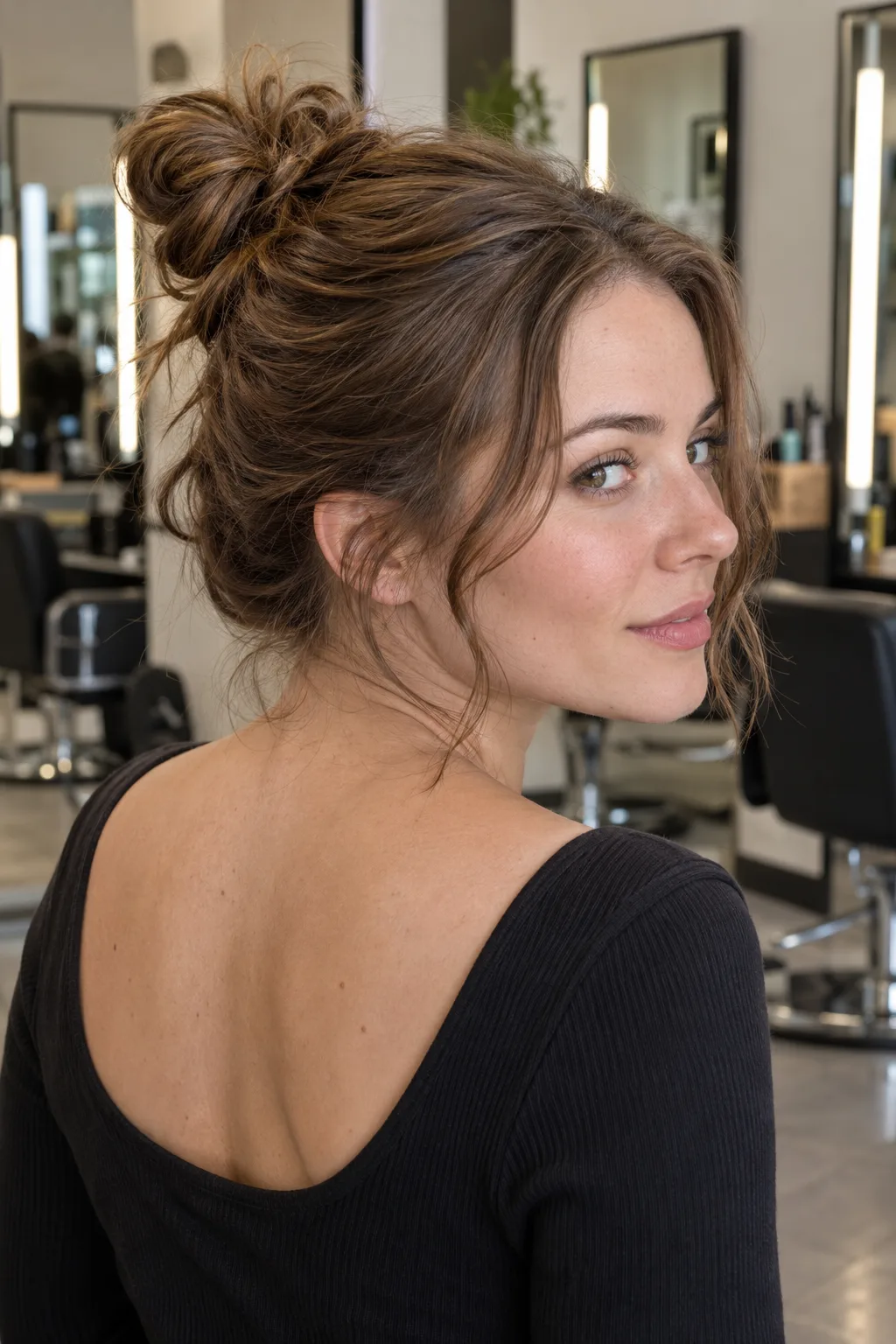 Try this on me
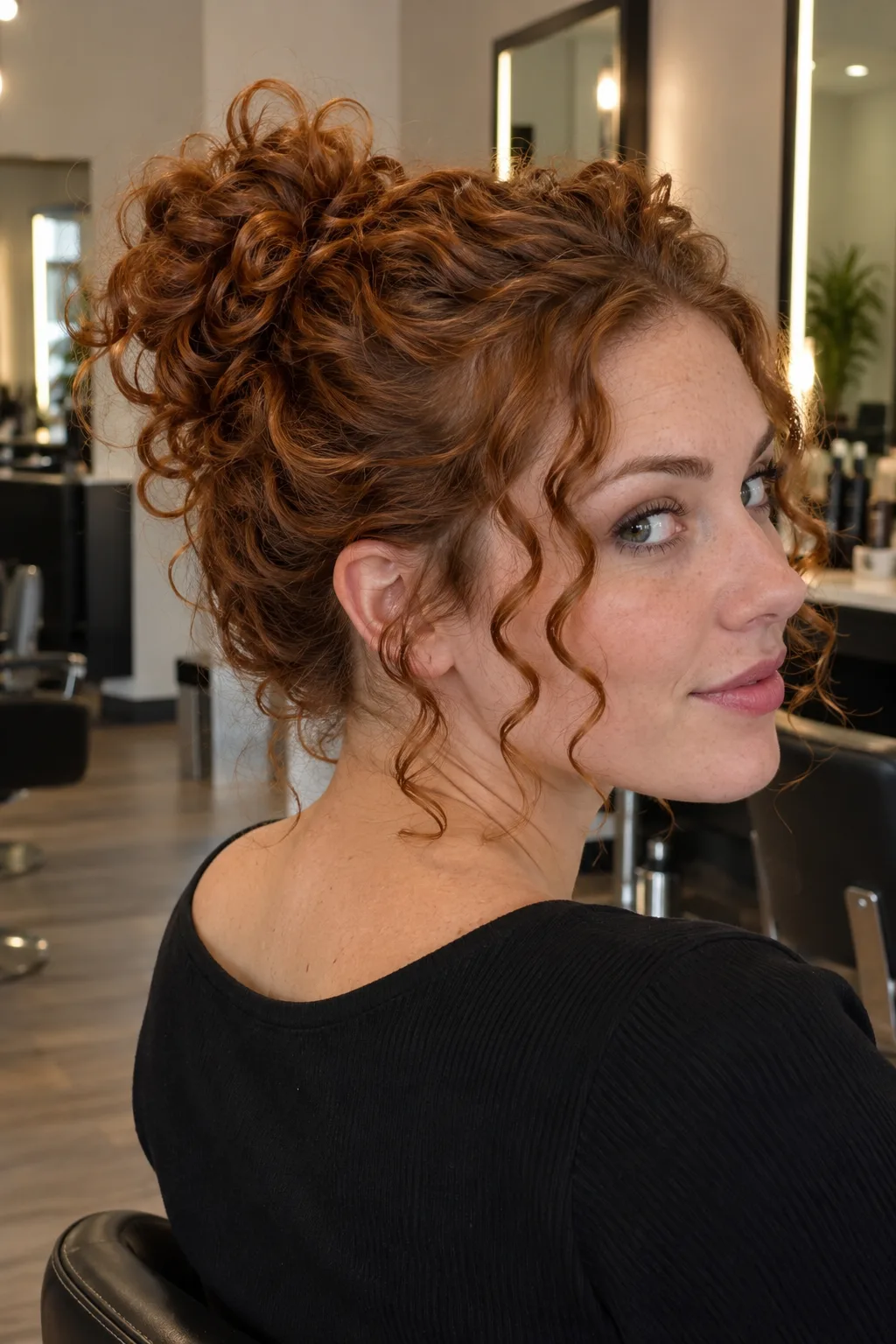 Try this on me
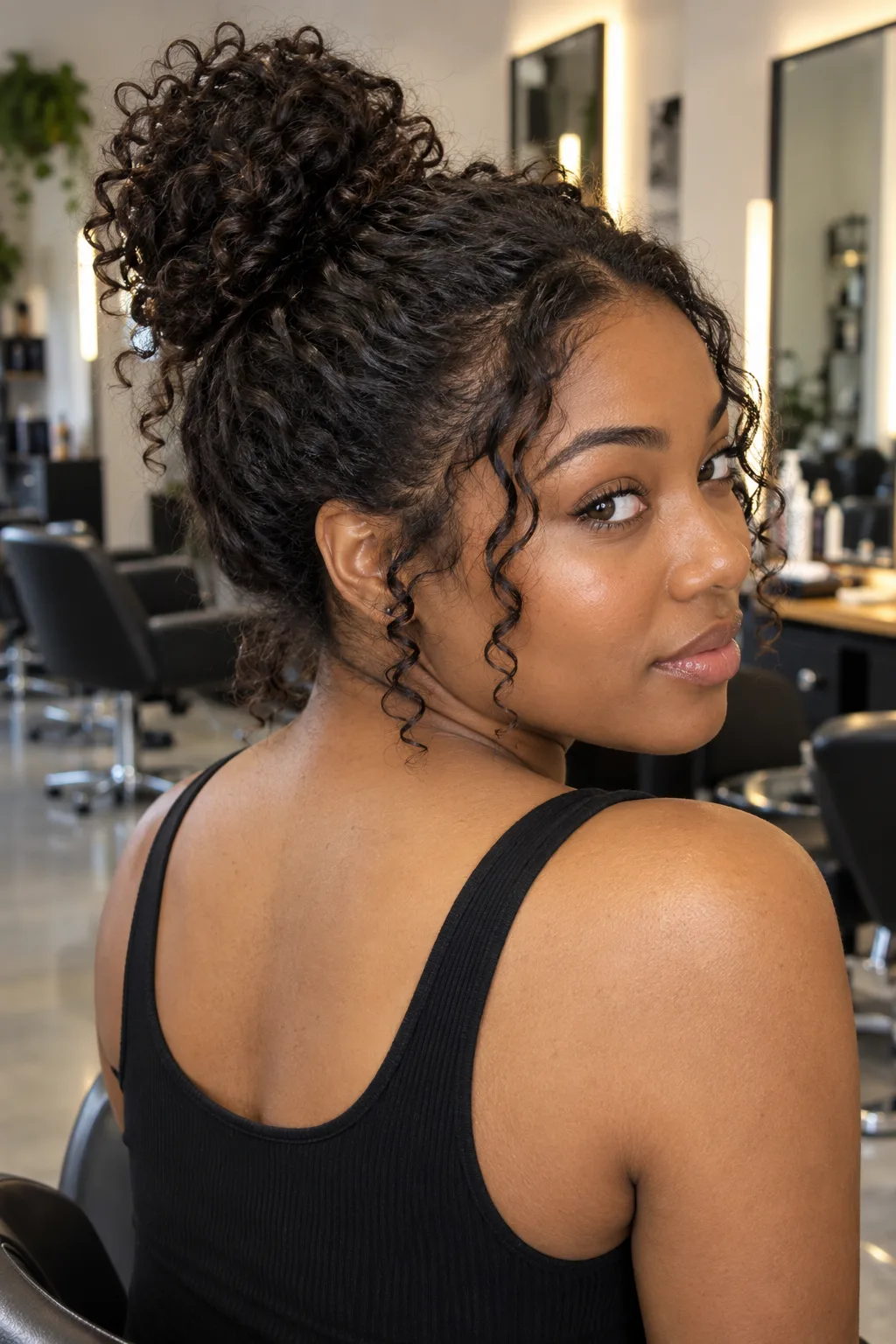 Try this on me
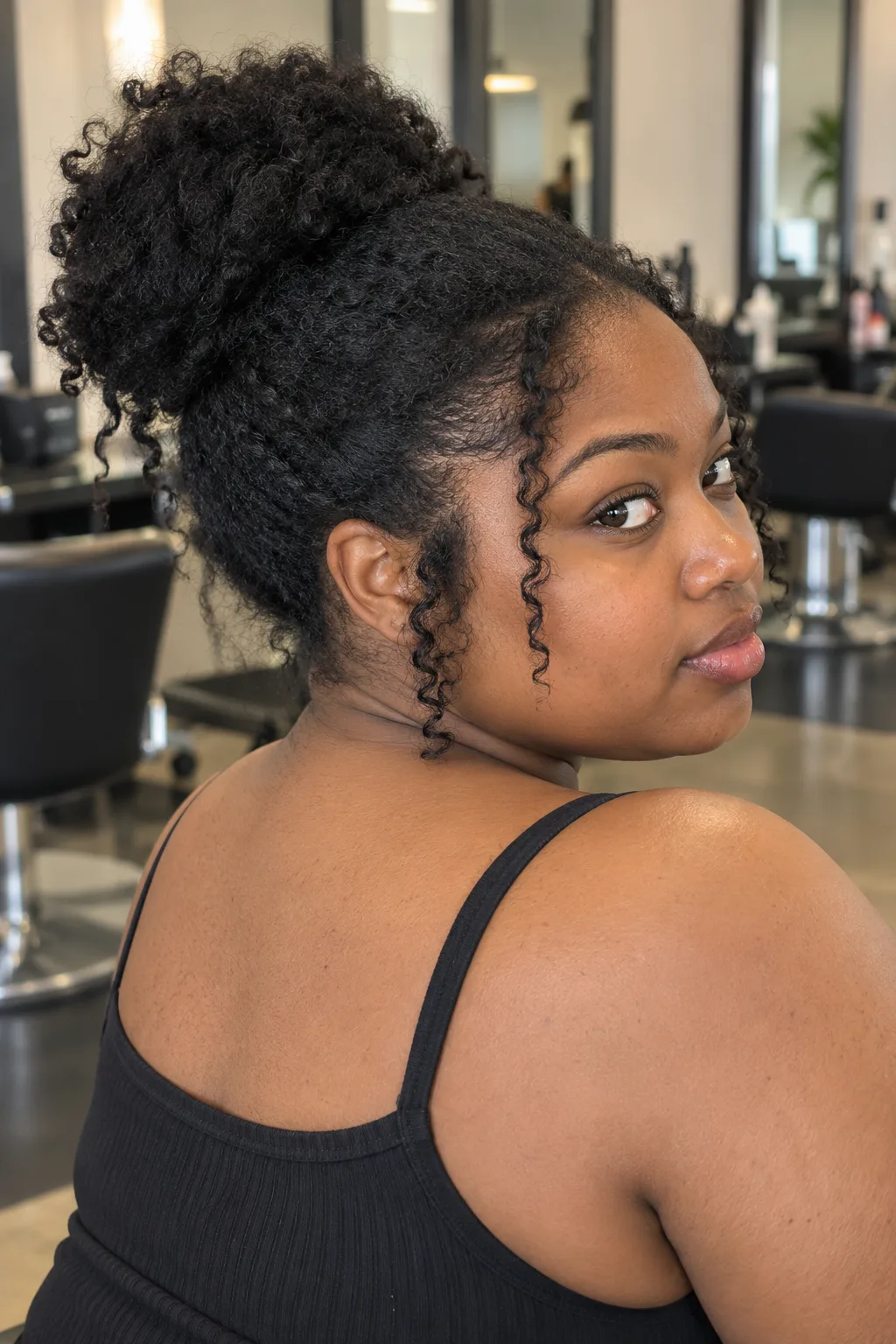 Try this on me
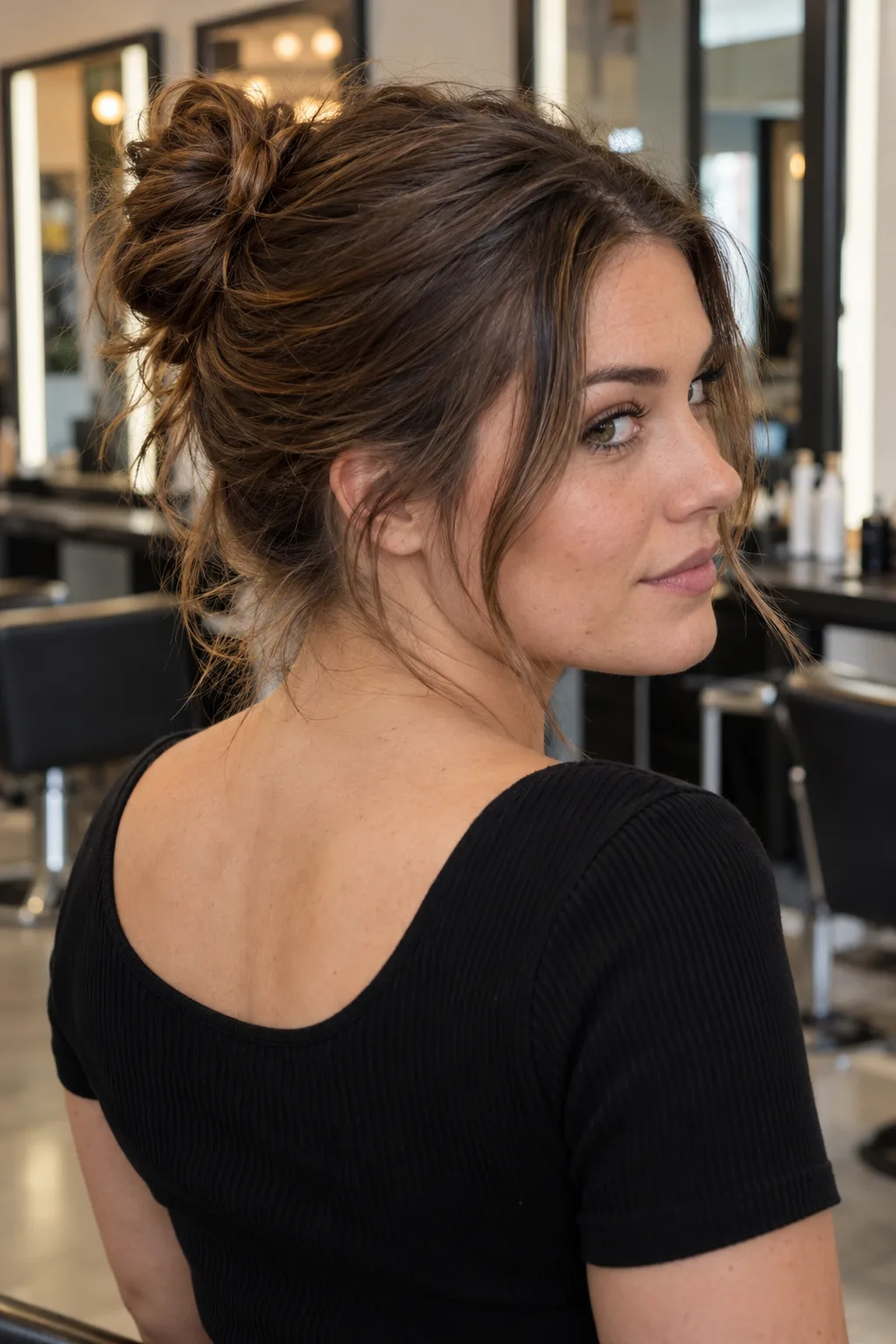 Try this on me
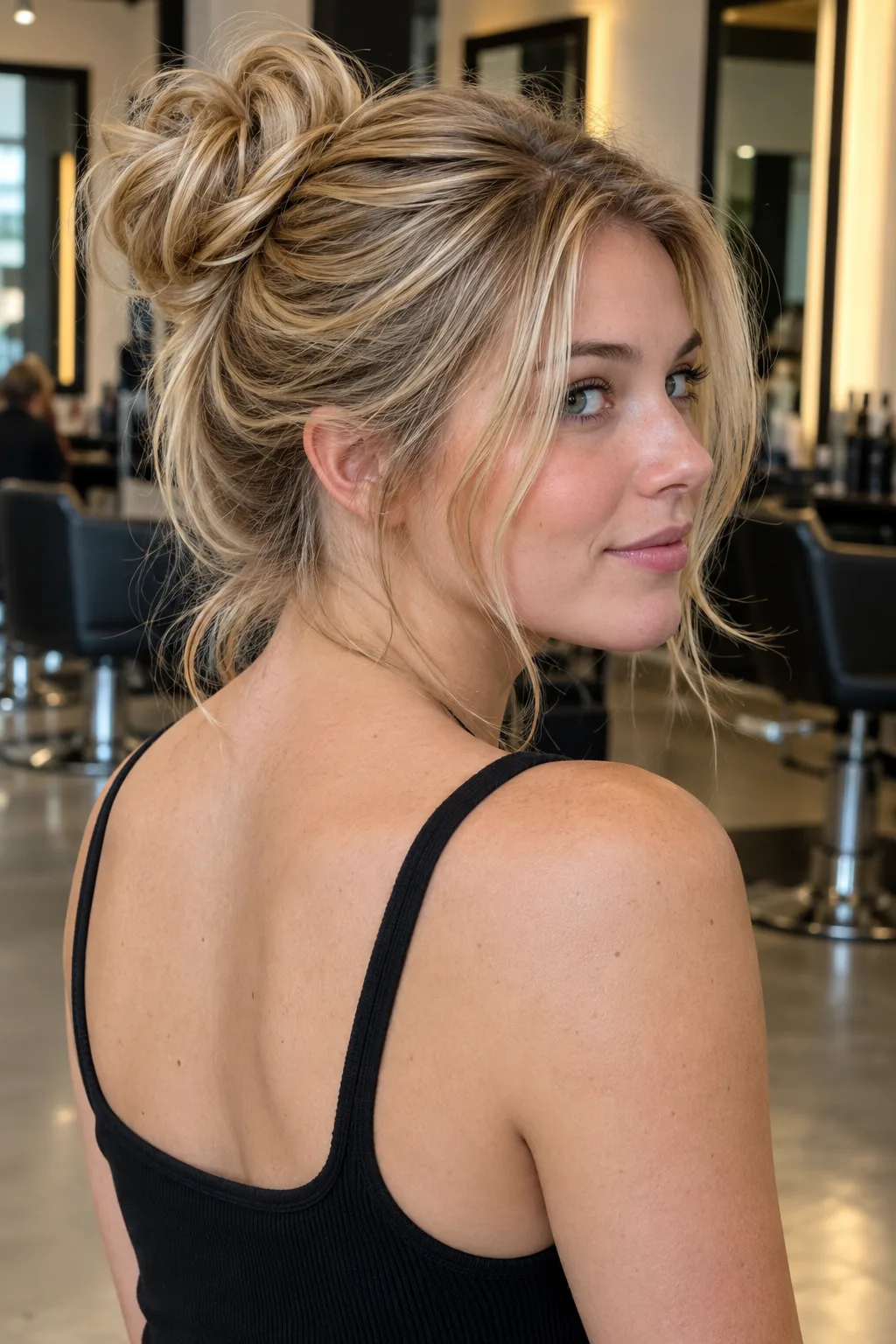 Try this on me
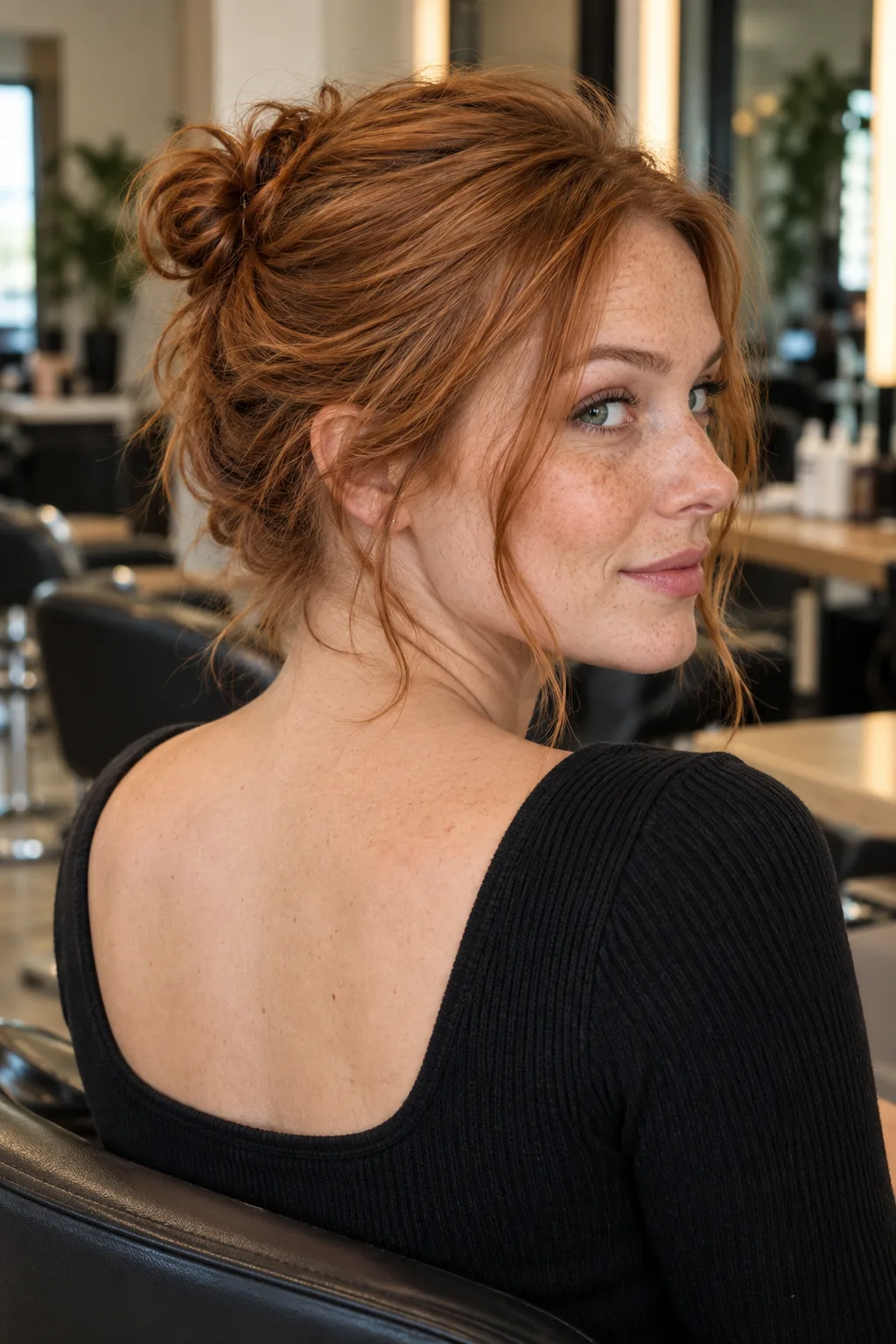 Try this on me
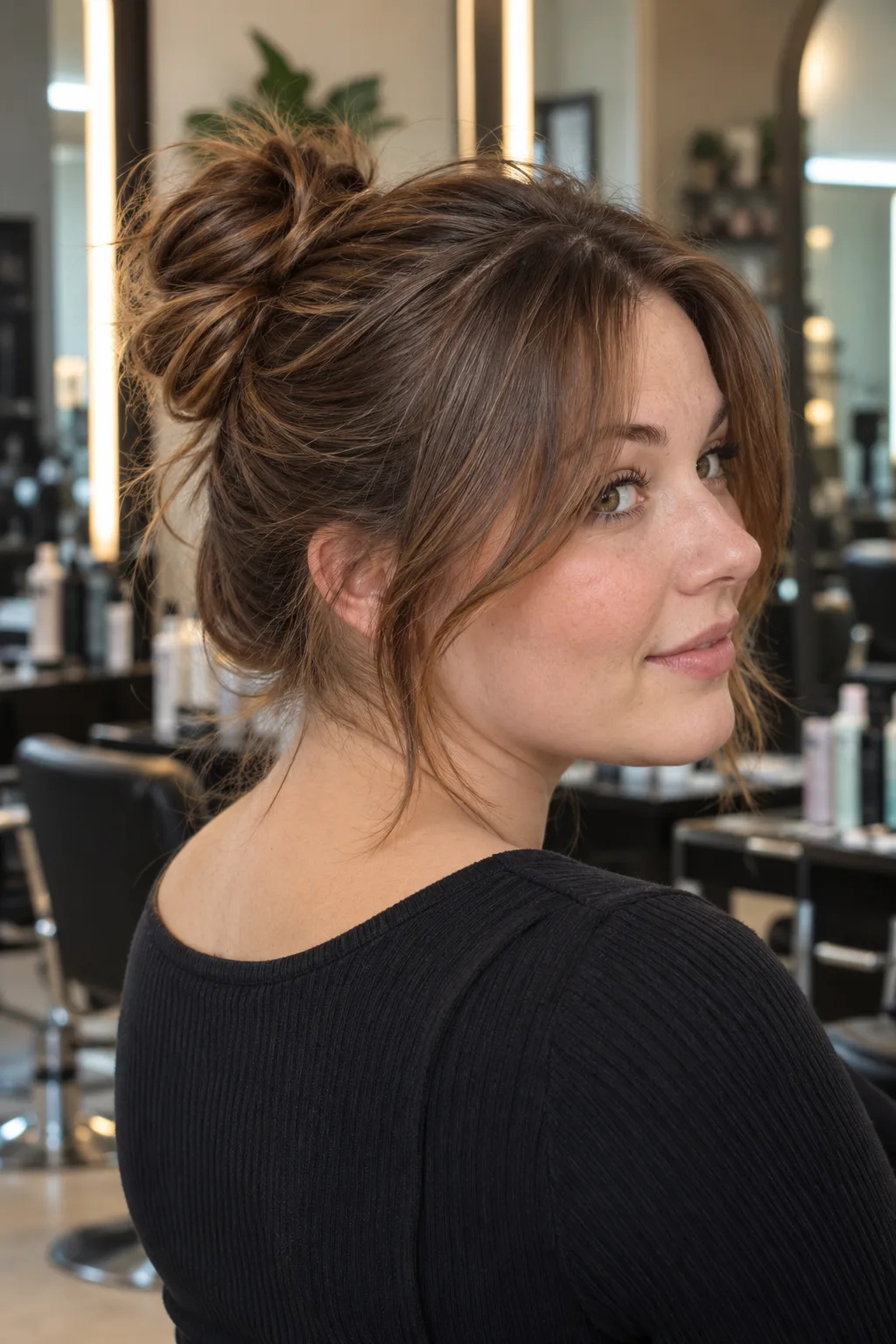 Try this on me
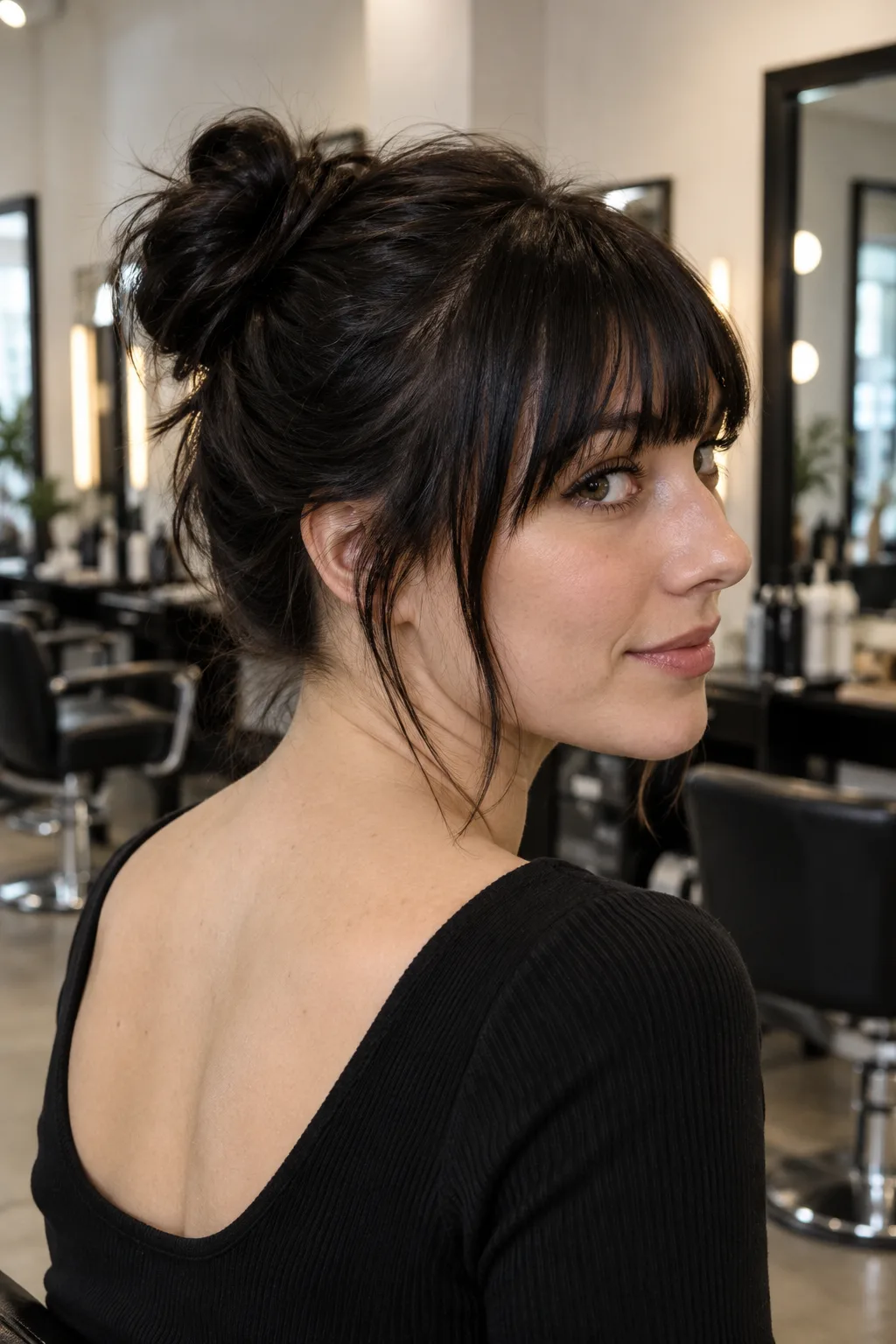 Try this on me
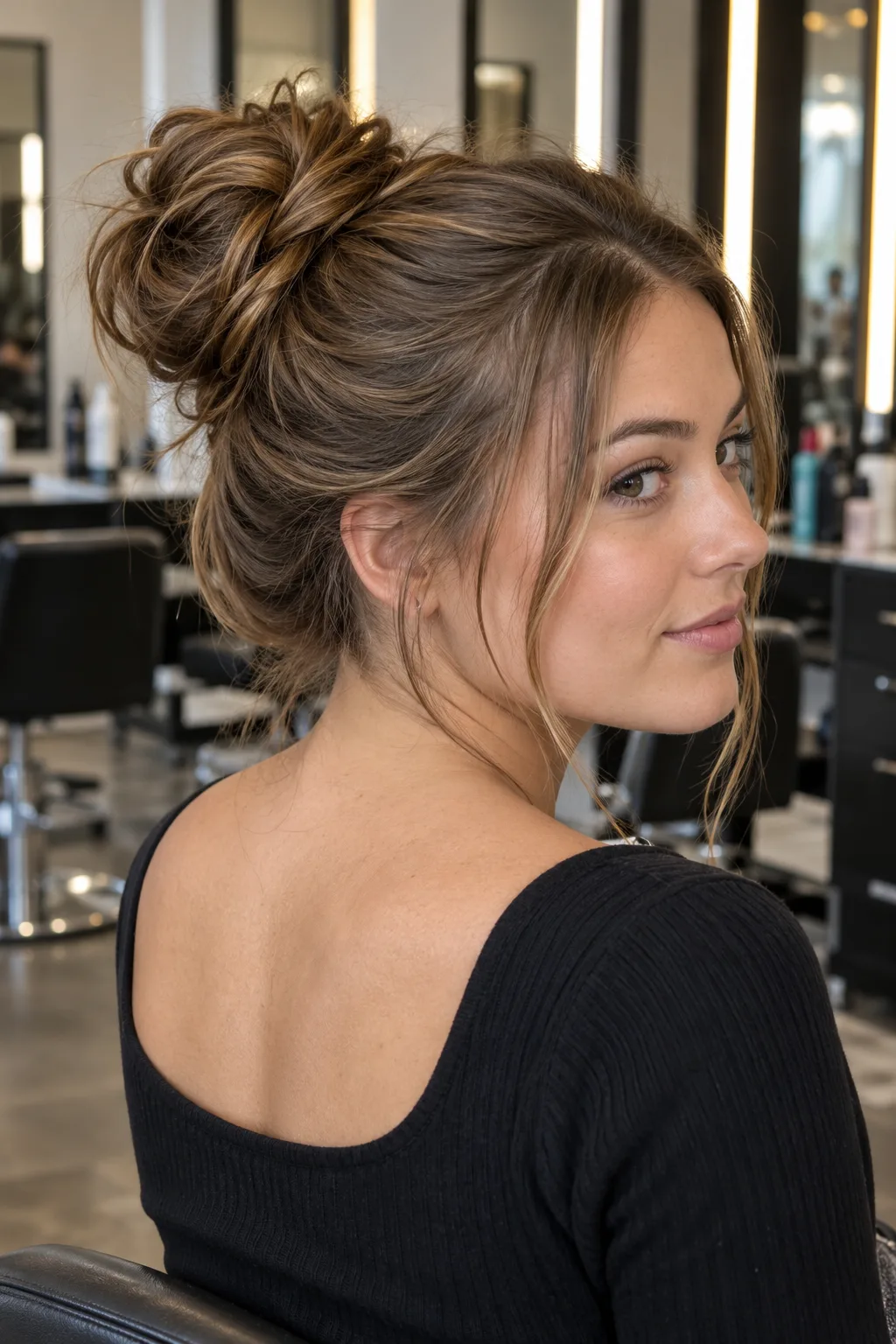 Try this on me
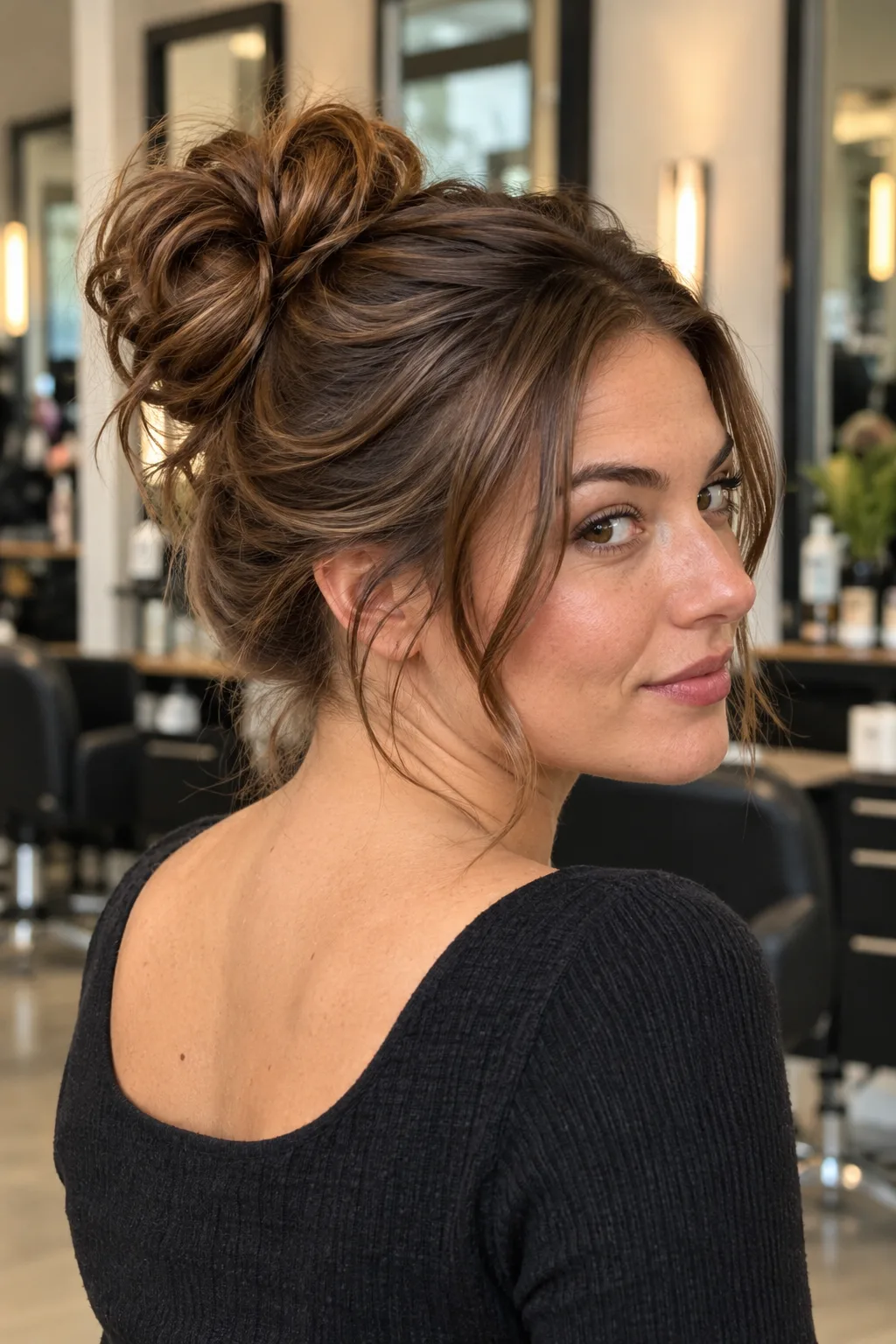 Try this on me
Notice the pattern. The buns that look most "done" are the ones with built-in texture: waves, curls, coils and layers. The straight, fine, one-length versions need help from product to get the same shape.
Yours could be here.
Start with one selfie.
One photo, twenty seconds, and you'll know. Free account, no card for your first render.
How to do a messy bun in 2 minutes
This method works on any hair that reaches the nape when pulled back. Do it on second-day hair if you can. Freshly washed hair is too slippery to hold a loose twist, which is why so many messy buns fall out by lunch.
How to do a messy bun
- Add grip
Spray dry shampoo or a texture spray at the roots and through the lengths, then rough the hair up with your fingers. Skip this step only if your hair is already a day or two past washing.
- Gather without brushing
Tip your head forward or tilt it back, depending on the height you want, and gather the hair with your fingers at that spot. Leave the bumps. A brush makes it look like a ballerina bun.
- Twist and wrap
Twist the whole ponytail loosely in one direction, then wrap it around its own base until the ends are tucked in or sticking out a little.
- Secure the base, not the bun
Put one elastic over the whole bun, two or three wraps. Make the base firm, because that is what holds; the bun itself can stay loose.
- Pull it looser
Hold the base with one hand and gently pull loops out of the bun with the other, a quarter inch at a time, until it looks fuller and rounder. This step is what makes it look messy on purpose instead of messy by accident.
- Free the front
Pull two or three thin pieces out at the temples and behind the ears. Pin any loose end that hangs below the bun with one or two bobby pins pushed in toward the base.
If your hair is too slippery to hold the twist, braid it loosely before you wrap it. A braided wrap grips itself and gives the same undone shape with less pinning.
Which messy bun suits your hair?
Your length and texture decide which version stays up, not your skill. Find your row first, then read the section under it.
| Your hair | Do this | Avoid | Pins |
|---|---|---|---|
| Chin to shoulder length | Small mid or low bun, pin the nape ends | High bun, the short layers fall out | 3 to 6 |
| Shoulder to mid back | Any height, classic twist and wrap | Nothing, this is the easiest length | 0 to 2 |
| Waist length | Low bun, wrap twice, or braid first | High bun, it drags and gives a headache | 2 to 4 |
| Fine or thin | Texture spray, then pull loops wide | Clean, silky hair straight from the shower | 2 |
| Thick | Two elastics, or a claw clip over the base | One thin elastic, it snaps or slides | 2 to 4 |
| Curly or coily | Gather damp or with leave-in, wrap loosely | Brushing out the curl pattern | 0 to 2 |
Short hair
For hair that ends between your chin and your collarbone, accept that the bun will be small and let that be the look. Gather at the middle of the back of your head, twist, and pin the short pieces at the nape instead of fighting them into the elastic. A shoulder-length cut is the shortest length where a messy bun stays up without pins.
Long hair
With long hair, weight is the enemy. A high messy bun on waist-length hair pulls on the scalp and sinks by mid-afternoon. Go low or mid, wrap the length around twice, and split the bun into two halves if it feels heavy: wrap one half each way and pin them together.
Curly and coily hair
Curly hair makes the best messy buns, because the curl does the work that everyone else fakes with spray. Gather it while it is damp or right after a leave-in, use a fabric scrunchie instead of a thin elastic, and do not brush. On coily hair the bun is often a puff at the crown; the 4C hair guide covers how to keep edges soft without slicking them flat.
Fine or thin hair
Fine hair can look like a thin twist instead of a bun. Add texture spray first, then pull the loops out wide in the last step, wider than feels right. Pulling a few strands out at the crown also hides the scalp at the part.
Thick hair
Thick hair is the opposite problem: too much hair for one elastic. Use two, one for the base and one over the wrapped bun, or close a medium claw clip across the twist. If you have to pick, a claw clip is kinder to thick hair than a tight elastic.
Messy bun mistakes that make it look sloppy
- Brushing first. A brushed ponytail gives a smooth, tight bun. Use your fingers.
- Doing it on wet or squeaky-clean hair. It slides out within an hour. Add dry shampoo or wait a day.
- A loose base. The base holds everything. Keep it firm and make only the bun loose. A loose base is why buns slide down the back of the head.
- Too many face pieces. Two or three thin pieces look intentional. Ten look like the bun fell out.
- Wearing it tight every day. A bun that pulls hard at the hairline, every day, can thin it over time. The American Academy of Dermatology warns that hairstyles that pull can lead to hair loss, so keep the tension light and change the height from day to day.
- Blaming your technique when it is your haircut. If you have done all of the above and your bun still looks like a lump, your hair is probably one length.
The haircut that makes messy buns easy
If you want a messy bun to fall into shape every time, ask for long face-framing layers. The shorter layers around the face slip out of the bun as soft pieces, and the internal layers give the bun its rounded, undone shape. It is the same reason a medium layered haircut makes most easy hairstyles quicker to do.
Here is what to say in the salon chair:
Say this to your barber
Long face-framing layers, the shortest piece at my chin, and soft internal layers so it falls out of a bun on its own.
The wall you hit here is obvious: you cannot see face-framing layers on your own face before the scissors come out, and they take months to grow back if they are wrong. That is the one point where a preview is worth more than a tutorial.
Can you see a new cut on yourself for free?
Yes, once. Your first look on HairstyleAtlas is free and needs no card: upload a selfie, pick a cut and see it on your own face. After that, Plus is $9.99 a week for 150 credits, according to our pricing page, enough to compare layers with a few other cuts before you book.
Learn the mid messy bun first, on second-day hair, with a firm base and loose loops. That one version covers almost every day. If it still never looks right, stop practicing and look at your cut, because a messy bun is mostly the haircut showing through. For more pulled-back styles, see our updo hairstyles guide; for the men's version, see the man bun guide. And before you ask for layers, try them in our women's hairstyle try-on.
Frequently asked questions
Gather unbrushed hair where you want the bun, twist it, wrap it around its base and secure it with one elastic. Then hold the base and pull loops out of the bun to make it fuller, and leave two or three thin pieces loose around your face.
Long face-framing layers. The shorter front layers fall out as soft pieces, and internal layers give the bun its rounded shape. One-length blunt hair is the hardest to make look messy on purpose.
The mid messy bun is the easiest because your hands work at a comfortable height and it does not need to be neat. A claw clip twist is a close second if your hair is too slippery for a wrap.
Gather your hair at the nape, twist it loosely, wrap it around the base and secure it with an elastic or two bobby pins. Loosen the loops, then pull a few pieces out behind the ears. A low bun is the best choice for very long or heavy hair.
Yes, if your hair reaches the nape when you pull it back. Make the bun small, put it in the middle of the back of your head, and pin the short ends that fall out at the nape instead of forcing them into the elastic.
Keep it low or mid and wrap the length around the base twice, or braid it first so it grips. High buns on very long hair are heavy, sink during the day and can pull on the scalp.
Yes. "Messy bun" still draws tens of thousands of US searches a month, because it works on almost every hair type and takes two minutes. It is less a trend than a default, so it does not date the way a specific cut does.
It shows the face and neck while looking relaxed rather than styled. The loose pieces soften the jaw and cheekbones, and the volume at the back balances the face from the side.
Preview it on your own photo: Virtual Hair Color Try-On.
Share article
About the author
Related posts
Women's Haircuts · 13 min
Honey Blonde Hair: 14 Shades and How to Get It From Any Base
Honey blonde is a warm golden blonde around level 7 to 8. See 14 versions, how it compares to caramel and golden blonde, the route from your starting colour, and the mistakes that turn it brassy.
Women's Haircuts · 15 min
Bixie Haircut: 14 Looks, Who It Suits and What to Ask For
A bixie is the shaggy cut between a pixie and a bob. See 14 versions, which one suits your face shape and hair type, how it compares to a pixie, and the exact words to say in the salon.
Women's Haircuts · 15 min
Type 4 Hair: How to Tell 4a, 4b and 4c Apart and What Actually Matters
Type 4 hair is the tightest natural texture, split into 4a, 4b and 4c. How to tell type 3 from type 4, how to read your letter, the porosity test that matters more than it, a wash day that works on any type 4 head, type 4 hair on men, and fourteen ways it is worn.
Women's Haircuts · 13 min
Thick Hair: What It Is, the Cuts That Work and How to Manage It
Thick hair is a weight problem before it is a frizz problem. How to tell dense from coarse, 13 cuts that handle the bulk, how to thin it without ruining it, and the words to say to your stylist.
Women's Haircuts · 13 min
Coily Hair: Types, Care and a Routine That Fits You
Understand coily hair without getting stuck on a subtype. Learn how to detangle, wash and style your coils, plan for shrinkage, and choose an afro shape.
Women's Haircuts · 14 min
1B Hair: How to Tell If You Have It + 14 Cuts That Suit It
1B hair is straight with some body at the crown and a slight turn at the ends. How to tell it from 1A and 1C, why the length of your cut matters most, 14 cuts that suit it and how to style it.