Bixie Haircut: 14 Looks, Who It Suits and What to Ask For
Oleh Onysko 23 October 2026 15 min read

In this article
A bixie haircut is a cross between a pixie and a bob: short, shaggy layers that end somewhere between your ear and your jaw, with the back cut shorter than the front. It is longer and softer than a pixie, shorter and more textured than a bob, and it grows out without an awkward stage because it already sits in the awkward stage on purpose.
Here is the part most bixie guides skip. A bixie is decided at the back of your head, not the front. From the front, a bixie and a short layered bob look almost the same in a photo. The difference is the nape: on a bixie it is stacked and tapered to about an inch, so the whole cut tips forward and moves. Walk into a salon with only a front photo and you will most likely leave with a bob.
This guide covers what a bixie is, how it compares to a pixie and a bob, fourteen versions to show your stylist, which one suits your face shape and hair type, and the exact words to use in the chair.
What is a bixie haircut?
A bixie is a short layered cut where the longest pieces, on top and at the front, are about three to four inches and fall near the cheekbone. The sides cover the top of the ear or tuck behind it. The back is shorter and gently stacked, and the nape is tapered to around an inch with scissors. Nothing is shaved and there is no undercut.
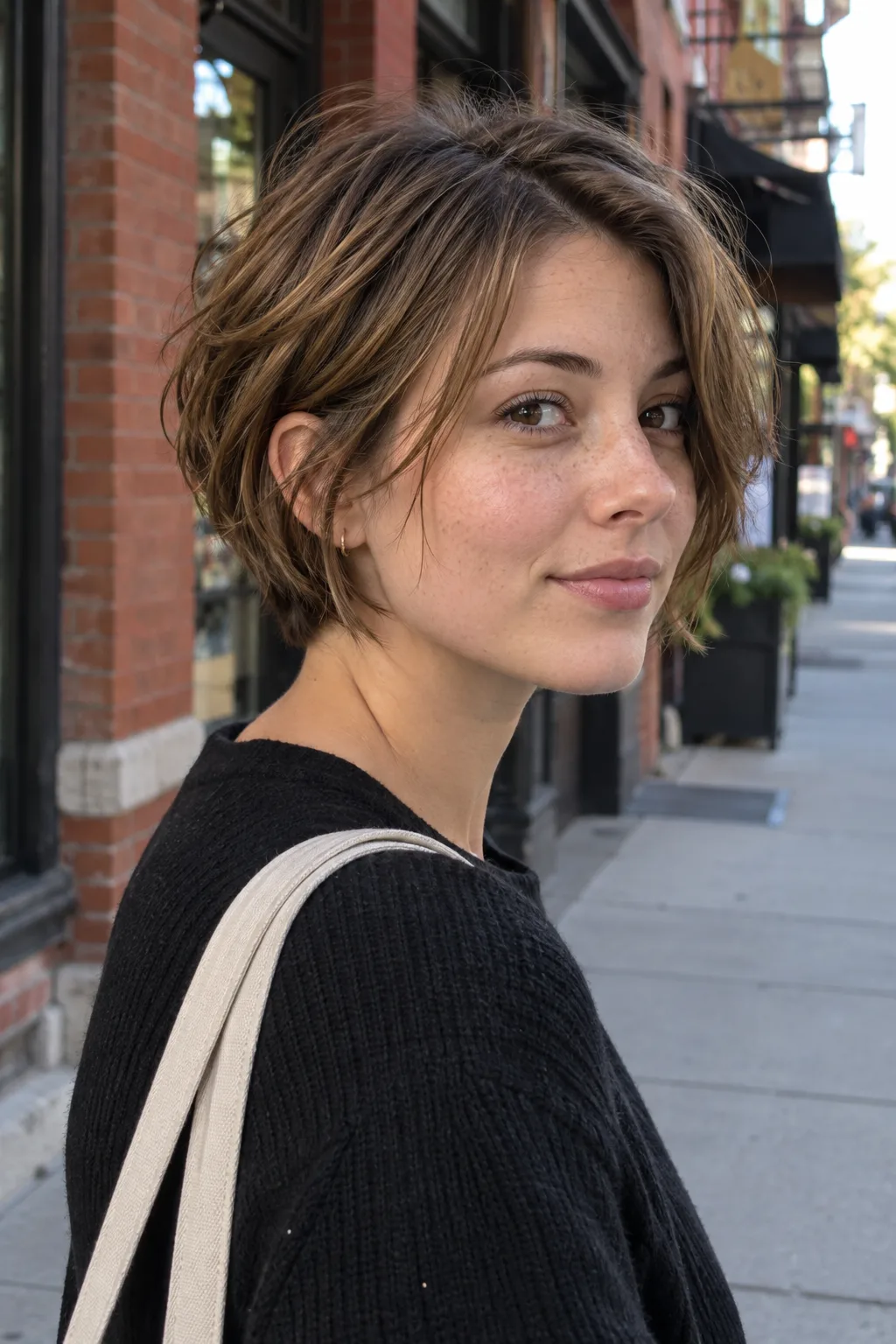
What a bixie is not: it is not a pixie with a bit of growth, because a pixie is cut close around the ears and at the nape. It is not a chin-length bob either, because a bob is cut to one line and a bixie is cut in layers with no single line anywhere. The name is new, but the shape is not. The shaggy, piecey short cuts of the 1990s were bixies before anyone called them that, and the word took off because it gave people a way to ask for something between the two classic short cuts without getting either.
Want to see it first? Preview a new hairstyle on your own photo.
Bixie vs pixie vs bob
If you are choosing between the three, the table is the short answer. The row that matters most is the nape, because it decides how the cut moves and how it grows out.
| Pixie | Bixie | Short bob | |
|---|---|---|---|
| Longest piece | 2 to 3 inches, at the crown | 3 to 4 inches, front and top | 5 to 7 inches, all round |
| Where it ends | Above the ear | Between ear and jaw | At or just below the jaw |
| The nape | Cut close, often clippered | Stacked, tapered to about 1 inch | Same length as the sides |
| Layers | Short, all over | Choppy, all over | Few or none |
| Trim every | 4 to 6 weeks | 6 to 8 weeks | 8 to 12 weeks |
| Styling time | 2 to 5 minutes | 5 minutes | 5 to 15 minutes |
| Grow-out | Awkward around the ears | Turns into a bob on its own | Turns into a lob |
The bixie wins the grow-out row. Stop cutting it and in three months it is a layered bob. A pixie has to pass through a stage where the hair over your ears sticks out, and no product fixes that.
14 Bixie Haircuts to Show Your Stylist
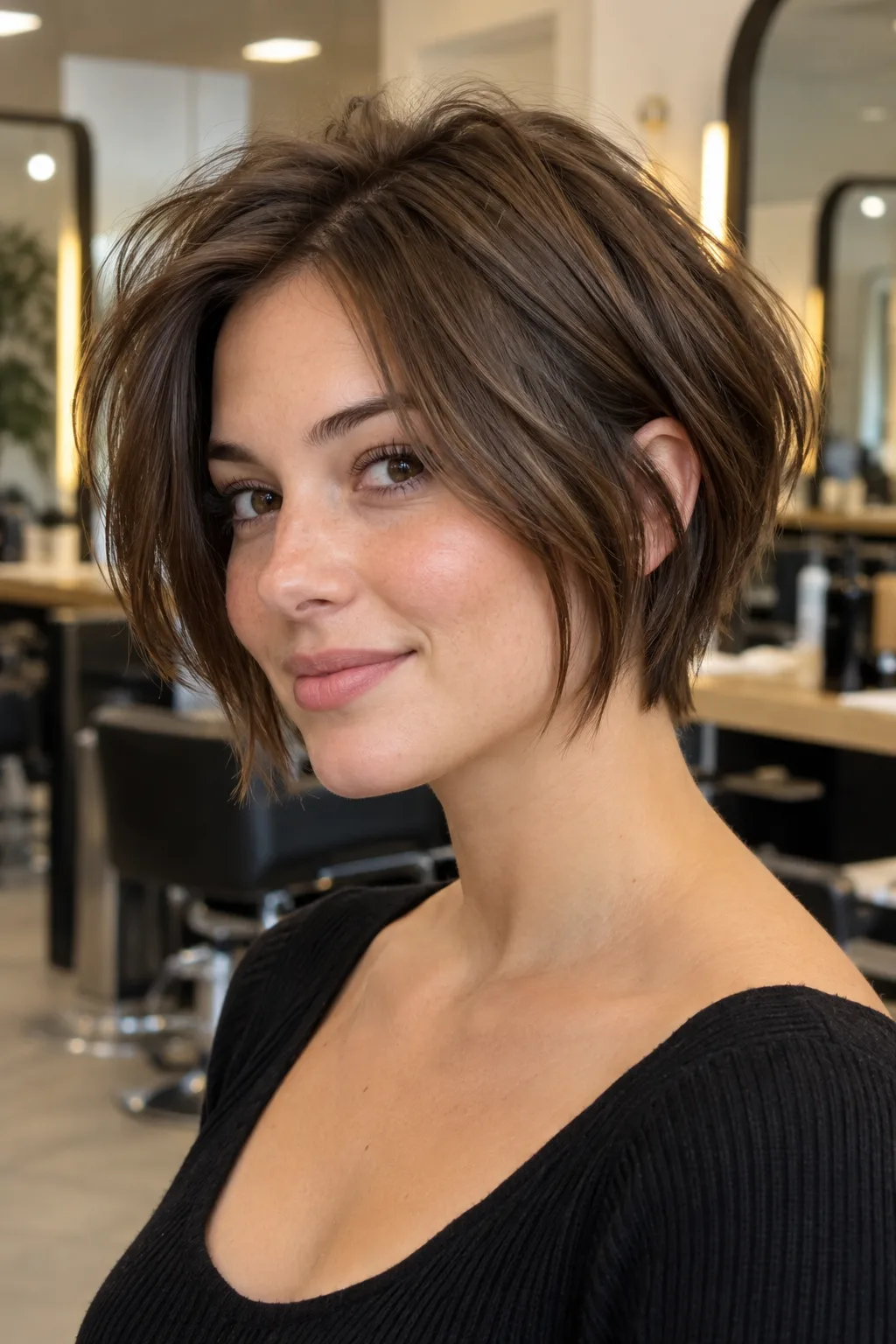
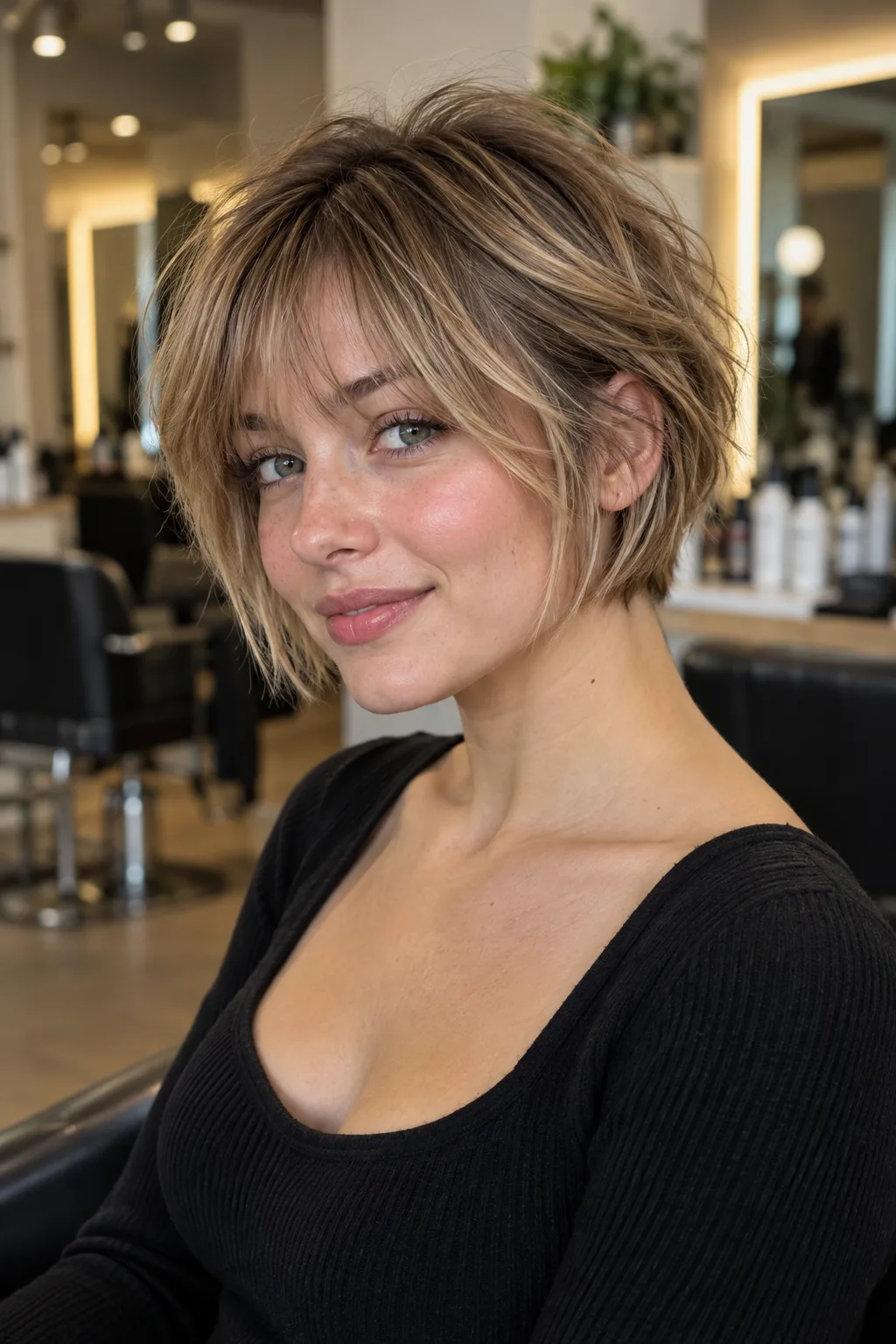
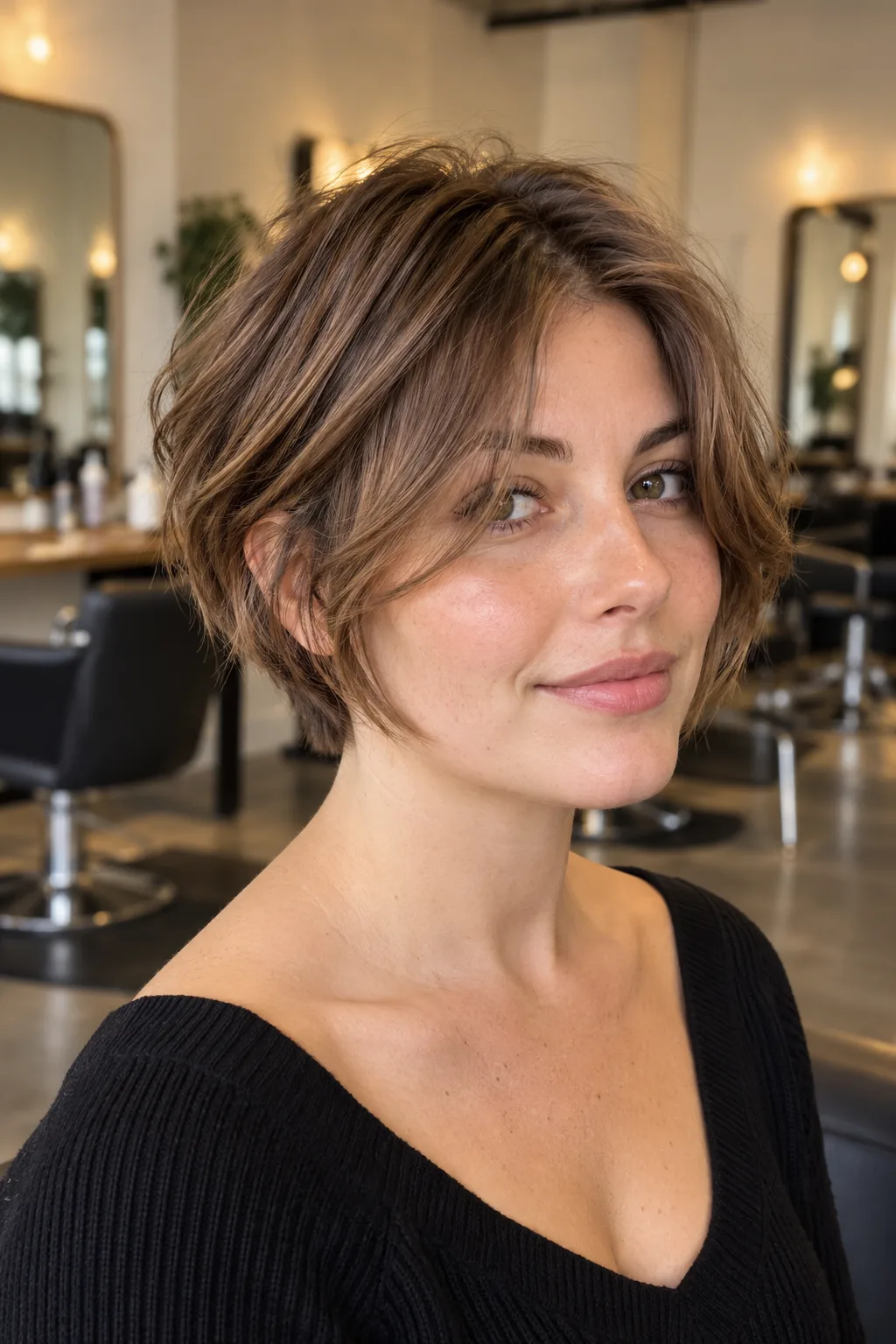
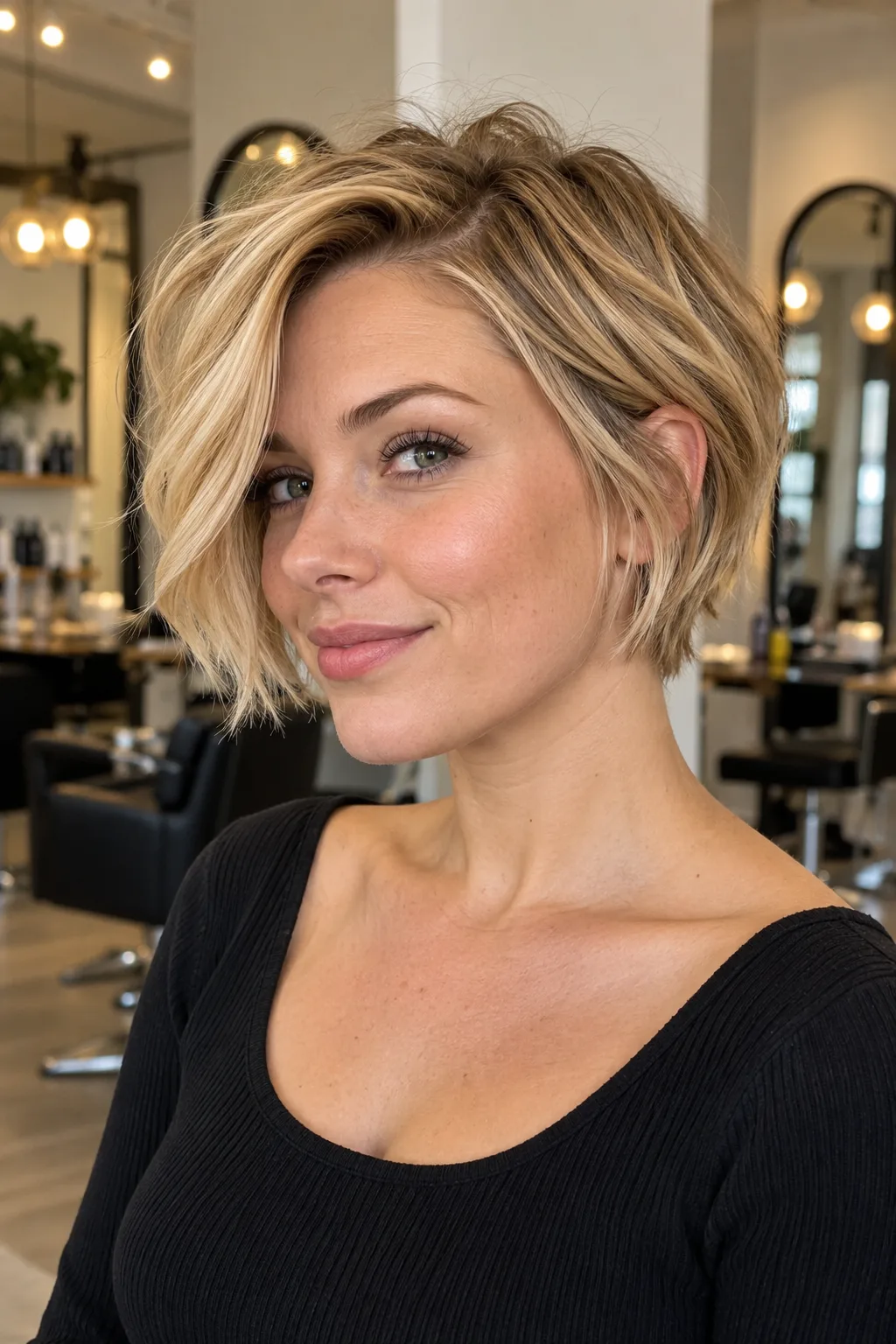
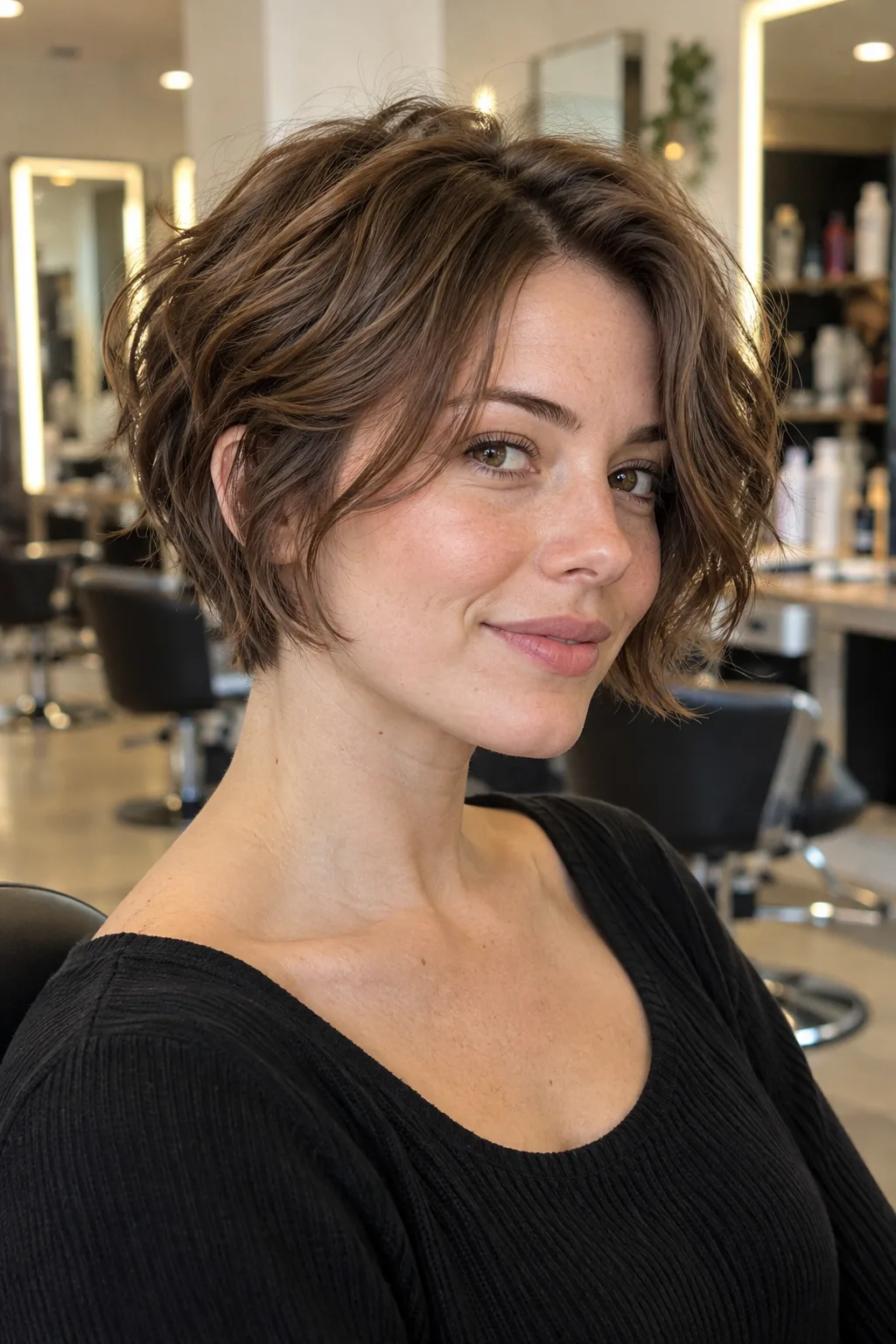
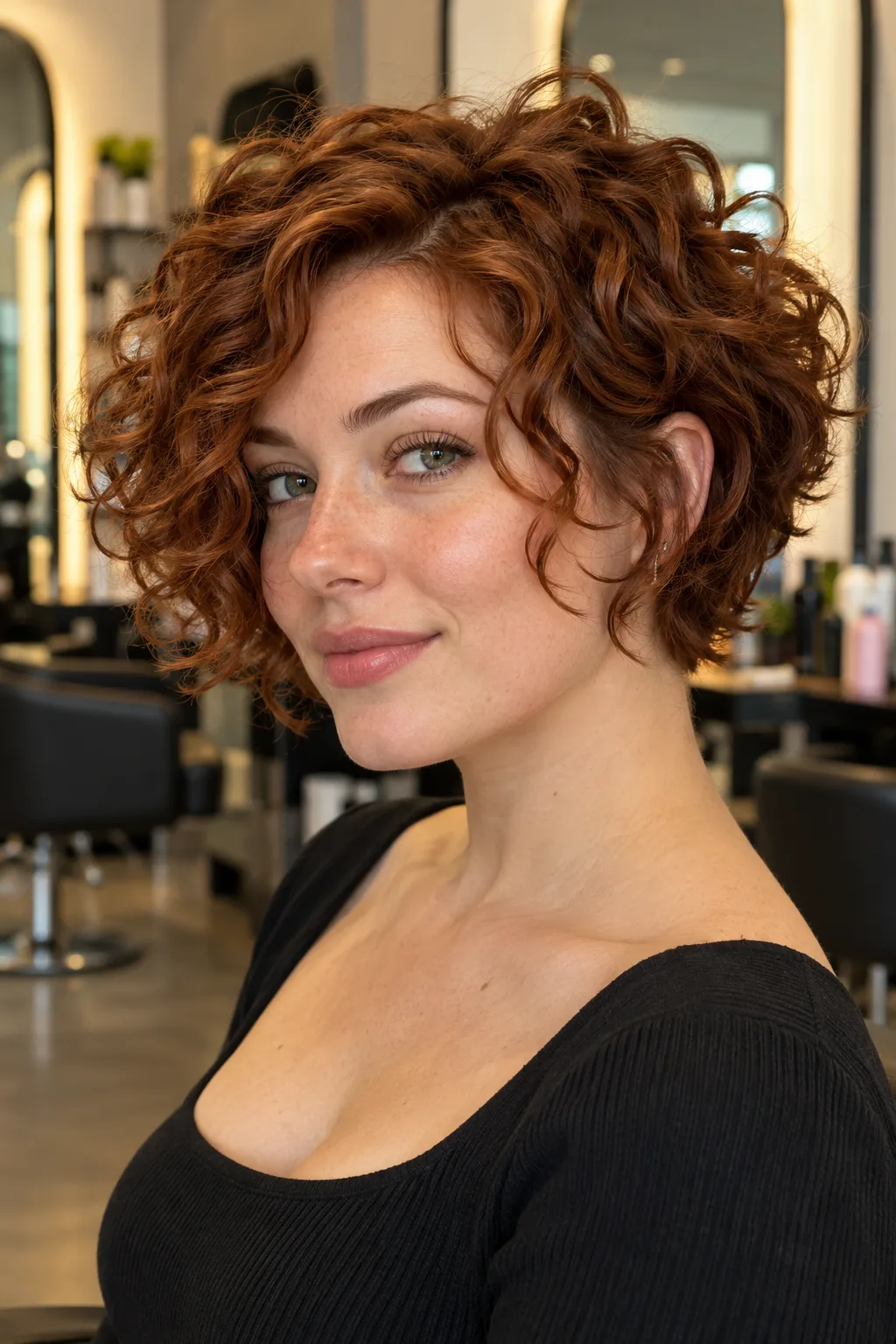
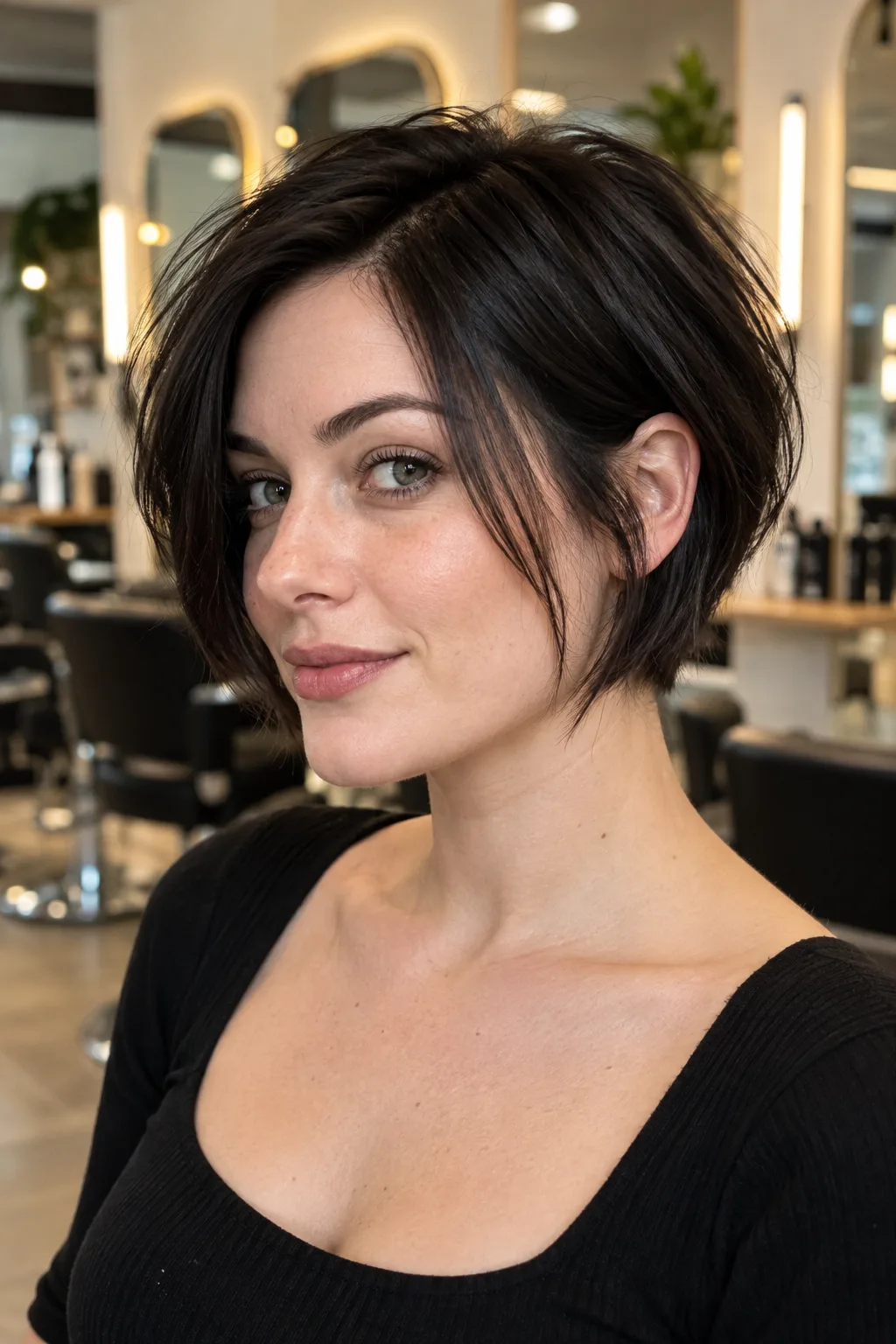
Every picture below is the same bixie: the same stacked back, the same tapered nape, the length ending between ear and jaw. What changes is the one choice you make on the day: the fringe, the part, the texture, the finish or how far the front is left. Pick the tile closest to your own hair and save it to show in the salon.
Gallery14 photos · tap to enlarge
 Try this on me
 Try this on me
 Try this on me
 Try this on me
 Try this on me
 Try this on me
 Try this on me
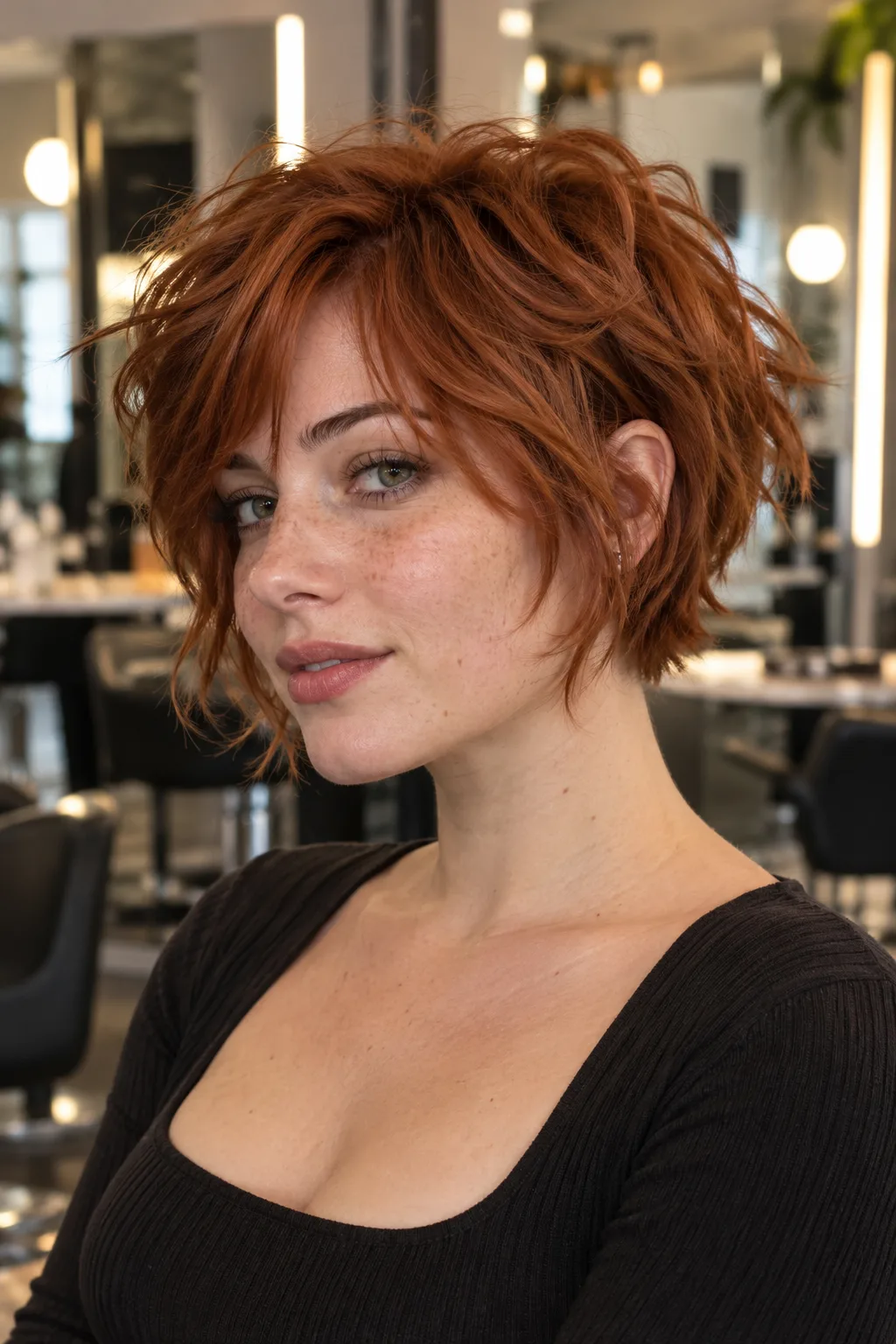 Try this on me
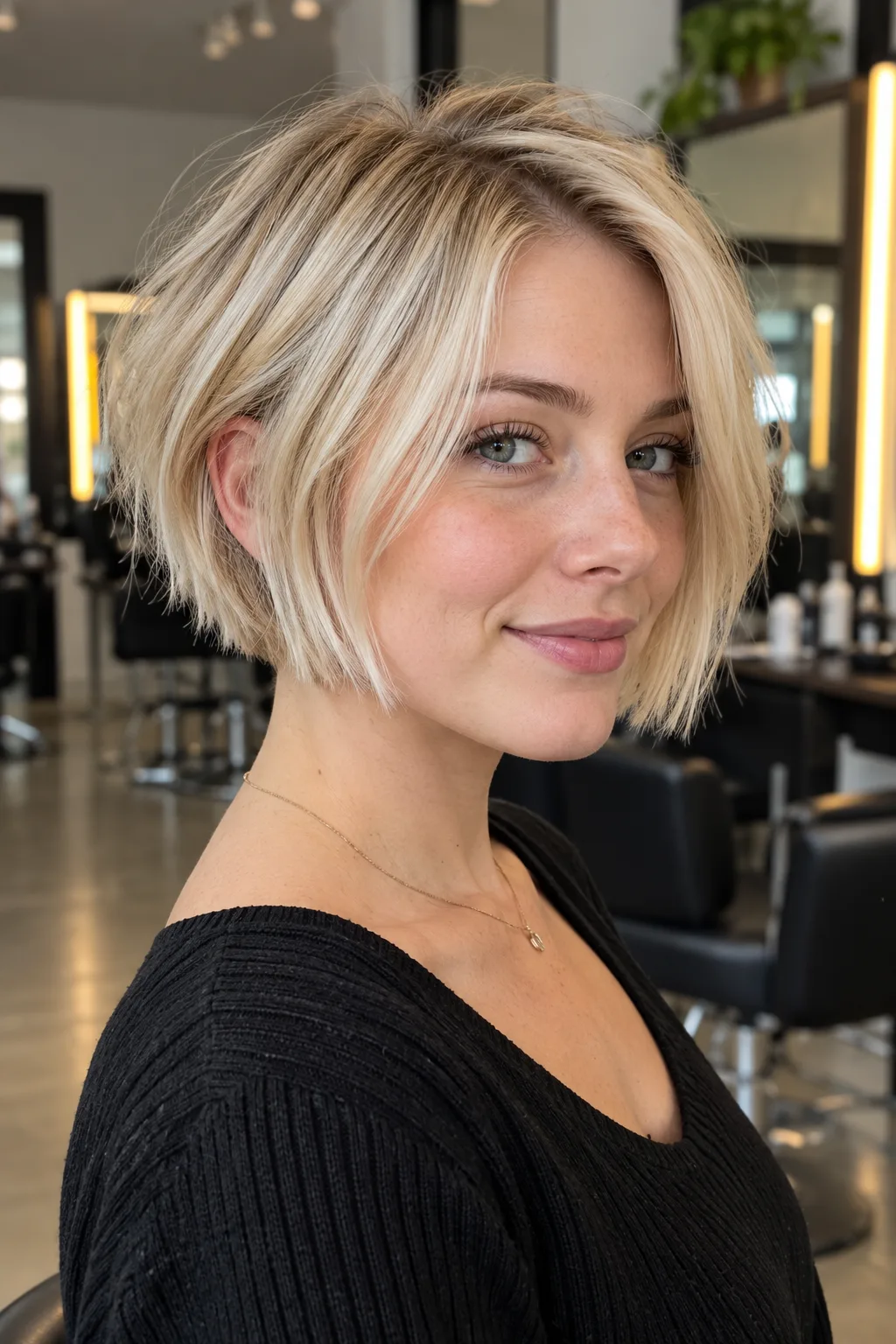 Try this on me
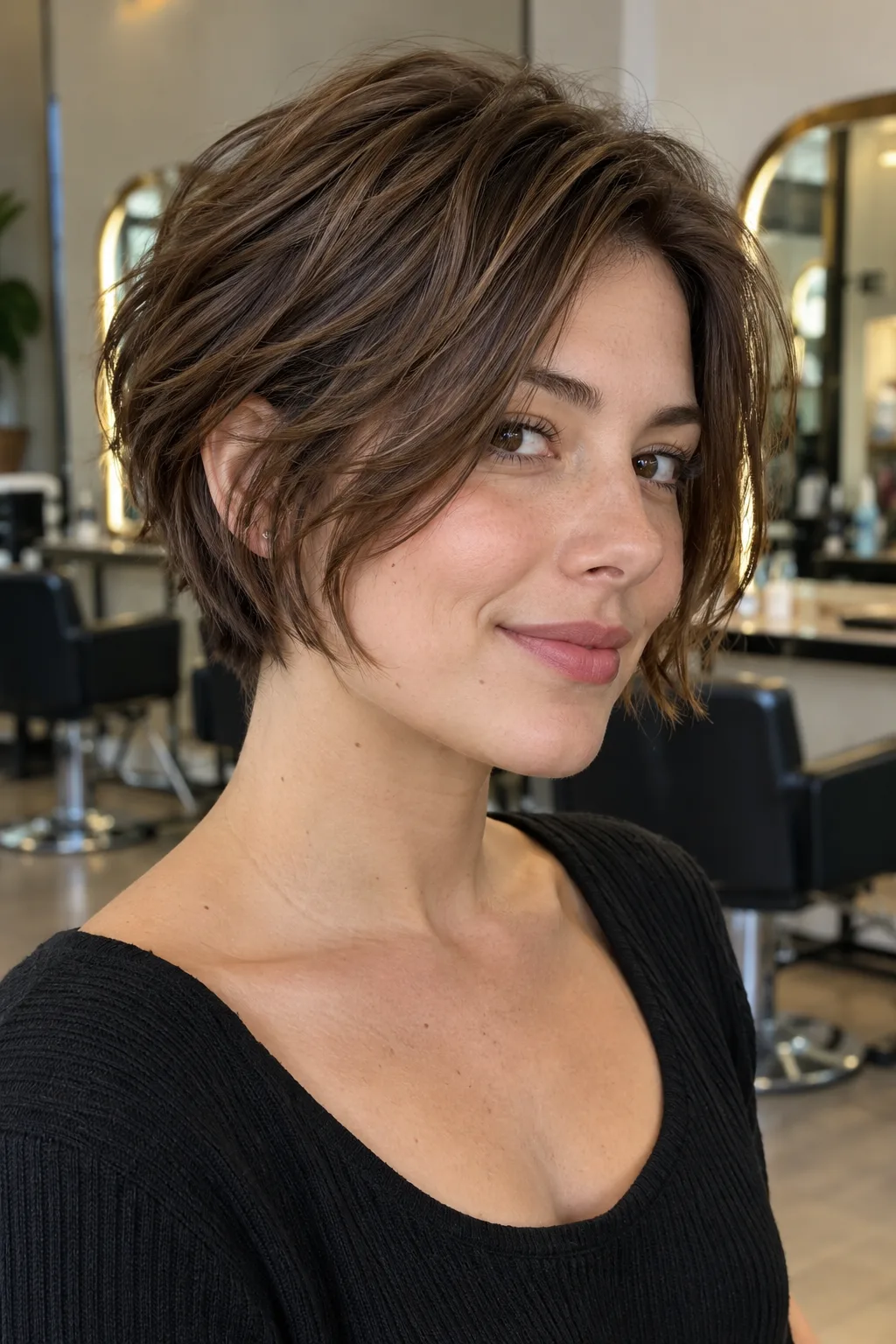 Try this on me
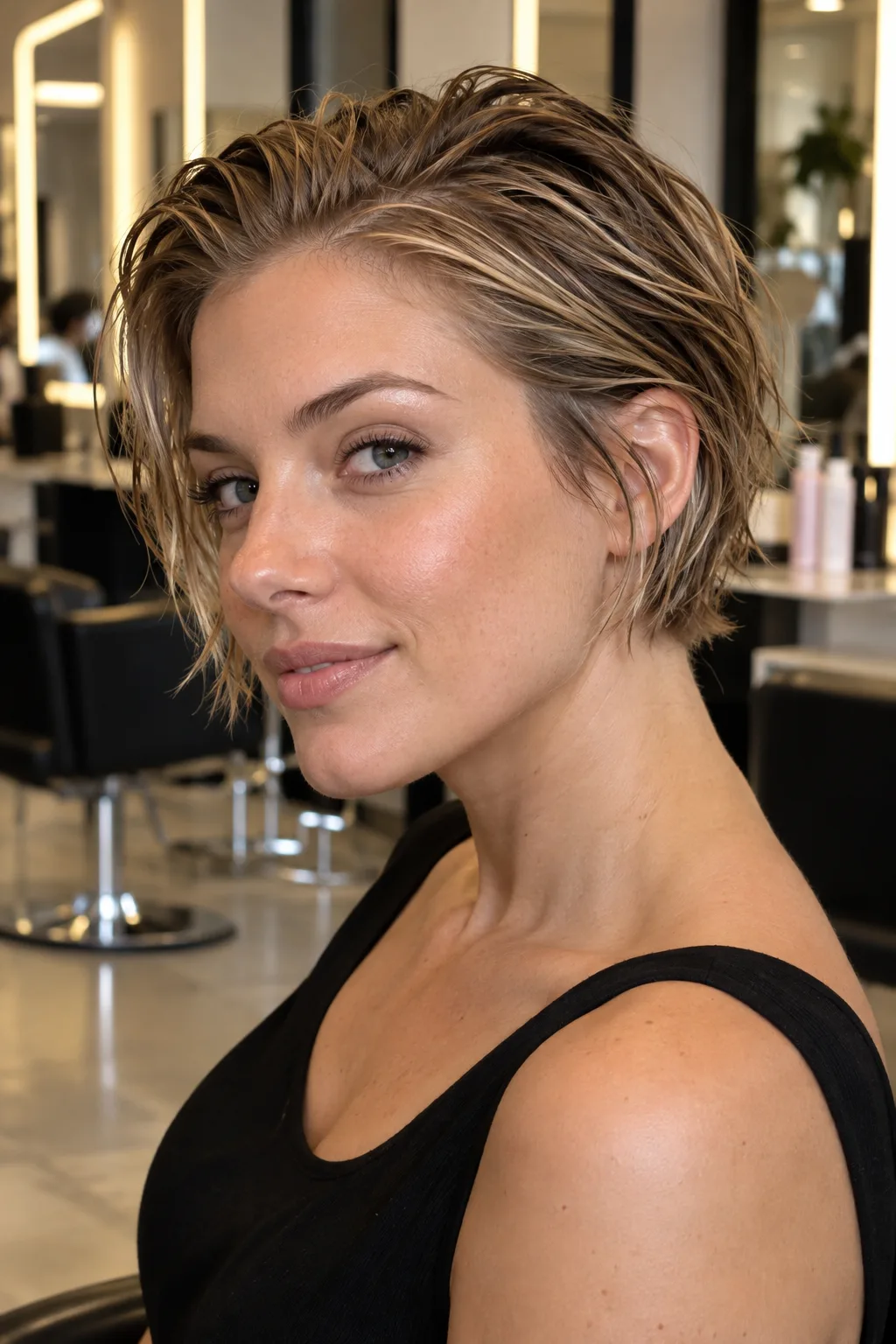 Try this on me
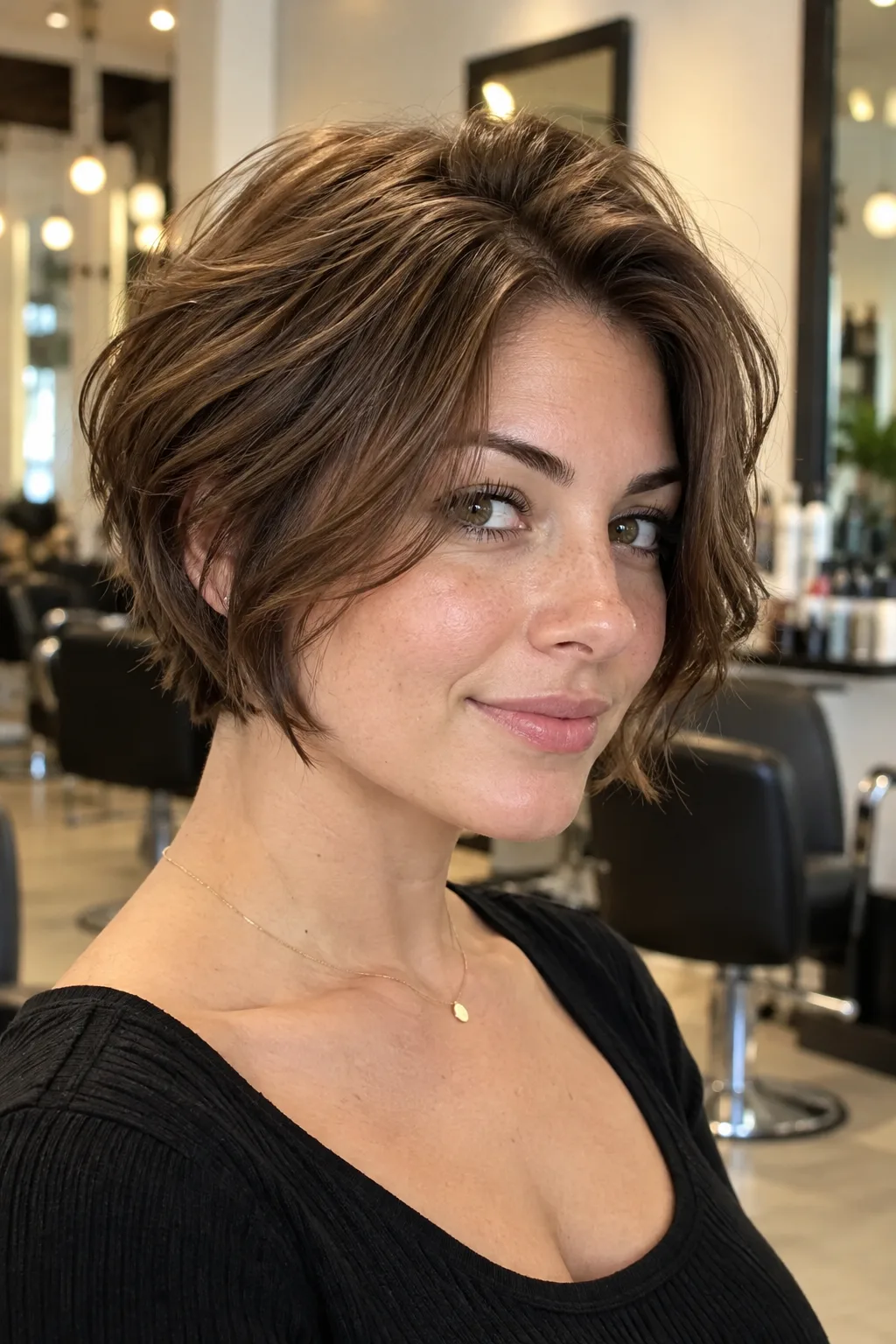 Try this on me
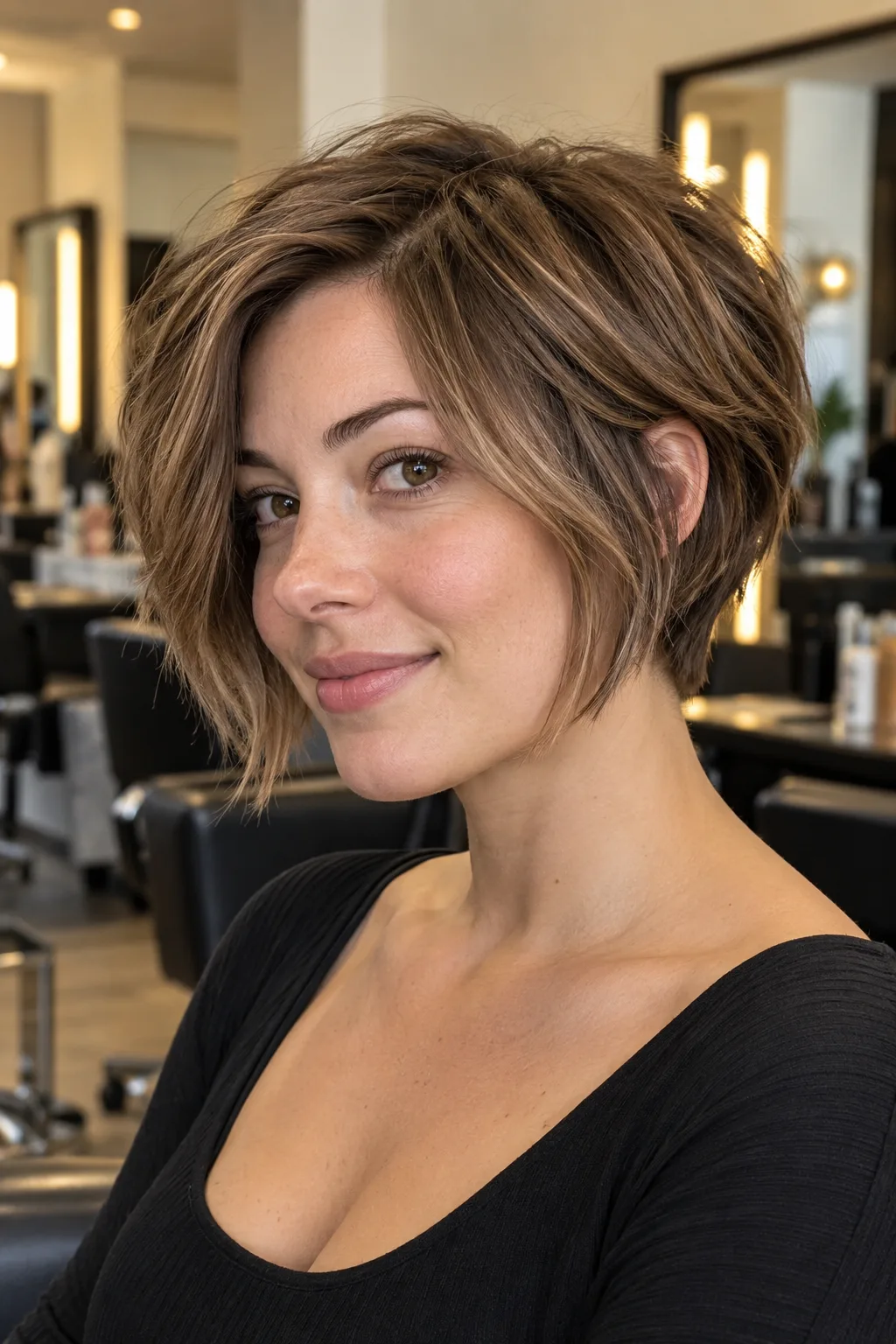 Try this on me
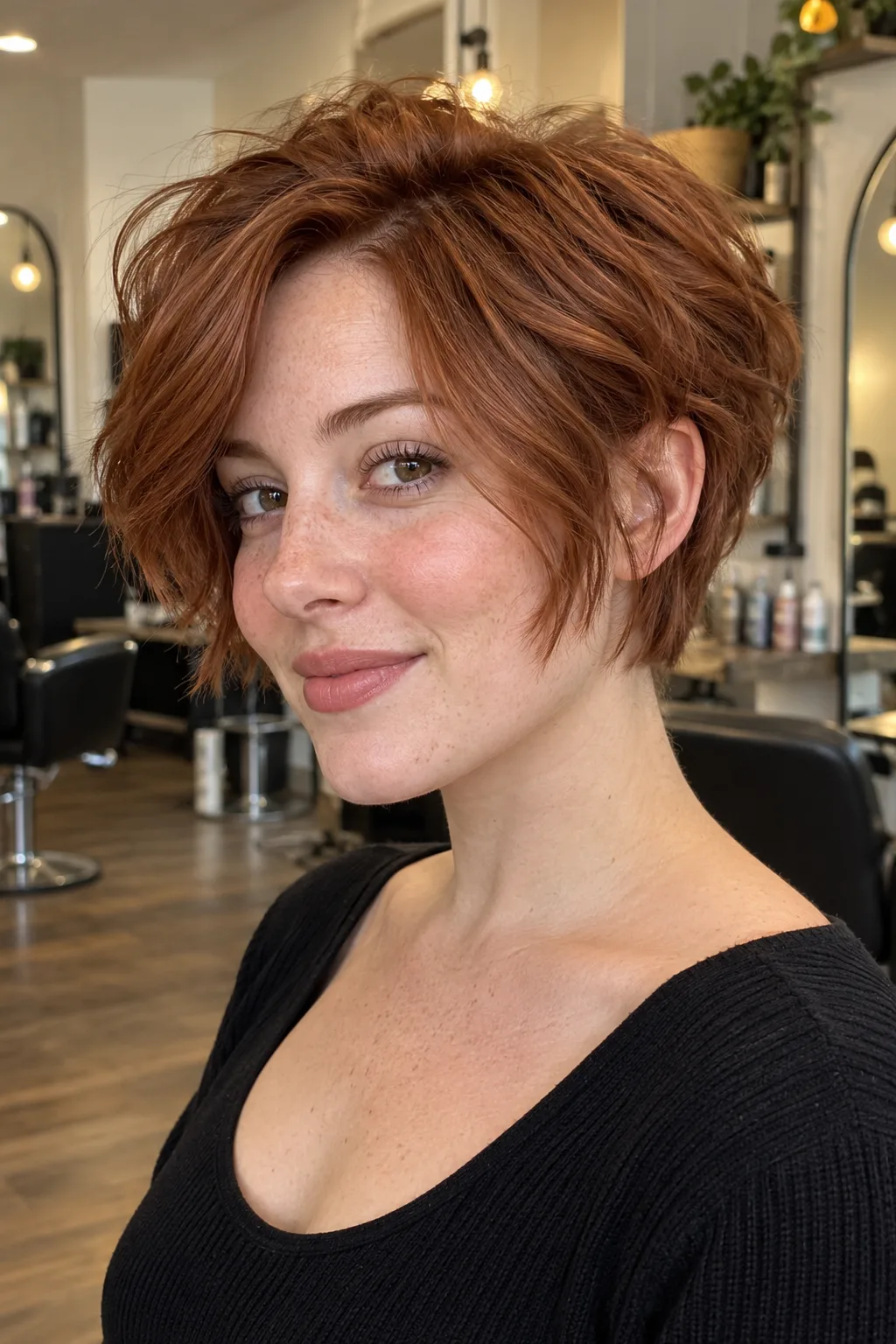 Try this on me
Yours could be here.
Start with one selfie.
One photo, twenty seconds, and you'll know. Free account, no card for your first render.
Which bixie suits your face shape?
Almost every face shape can wear a bixie, which is a large part of why it caught on. What changes is where the longest piece lands and where the volume sits. Put the length where you want the eye to stop, and keep the volume away from the widest part of your face.
| Face shape | Best bixie | Longest piece lands | Avoid |
|---|---|---|---|
| Oval | Any version | Cheekbone | Nothing in particular |
| Round | Side part, long front | Below the cheekbone | Blunt bangs, volume at the sides |
| Square | Wavy, soft ends | Just past the jaw corner | A sharp line at the jaw |
| Heart | Curtain bangs, fuller sides | Jaw | Height at the crown |
| Long | Bangs, volume at the sides | Cheekbone | Extra height on top |
Round face
A round face is the best case for the side-swept bixie, not the worst. The long front piece cuts a diagonal across the cheek, and that diagonal reads as length. Ask for a deep side part, the front left at the longest end of the range, and the sides kept close to the head so there is no width at cheek level. Skip straight-across bangs, because they put a horizontal line right where your face is widest.

Oval face
You can wear any of the fourteen above. Choose by hair type instead, which is the next section.
Square face
Soften the jaw rather than framing it. Waves or a bit of bend at the ends break up the corners, and the front pieces should land just past the jaw corner, never exactly on it.
Heart face
The forehead is the widest part, so curtain bangs and a little fullness at the sides near the jaw balance it. Keep the crown flatter than a classic bixie.
Long face
Bangs shorten the face, and volume at the sides widens it. Ask for the top kept flat and the sides left fuller. Most face shape guides give the same advice for any short cut, and it holds here.
Not sure which one you are? Measure it from a photo below. It takes a minute and settles the question better than squinting at a mirror.
Measure it instead of guessing
Both numbers in the same unit — the answer is a ratio, so it does not matter which.
Under 1.15 reads round, 1.15 to 1.5 reads oval, over 1.5 reads long. Oval and long split on the jaw rather than the ratio: an oval tapers toward the chin, a long face runs straight down.
Your hair type matters more than your face
Face shape gets the attention, but hair type decides whether the cut works on day three. These are the four that change what you ask for.
Fine hair
Fine hair is the best hair type for a bixie, which surprises people. Long fine hair drags the roots flat. At three or four inches it stands up on its own. The rule is to keep the perimeter fairly solid. If your stylist thins the ends, a fine-hair bixie goes see-through and wispy. Ask for texture on top only and a full edge, and for more lift the tricks in our guide to fluffy hair work at any length.

Thick hair
Thick hair needs the opposite: weight taken out from inside, so the cut lies flat instead of puffing into a helmet. Ask for the bulk removed underneath with point cutting, not thinning shears on the surface, which leave frizz on top.
Wavy hair
Wavy hair is the easiest bixie to wear. The layers let the bend show, and you can air-dry it with a little sea salt spray. If your hair is wavy, ask for the cut done dry, because a wet cut on waves bounces up shorter than planned.
Curly hair
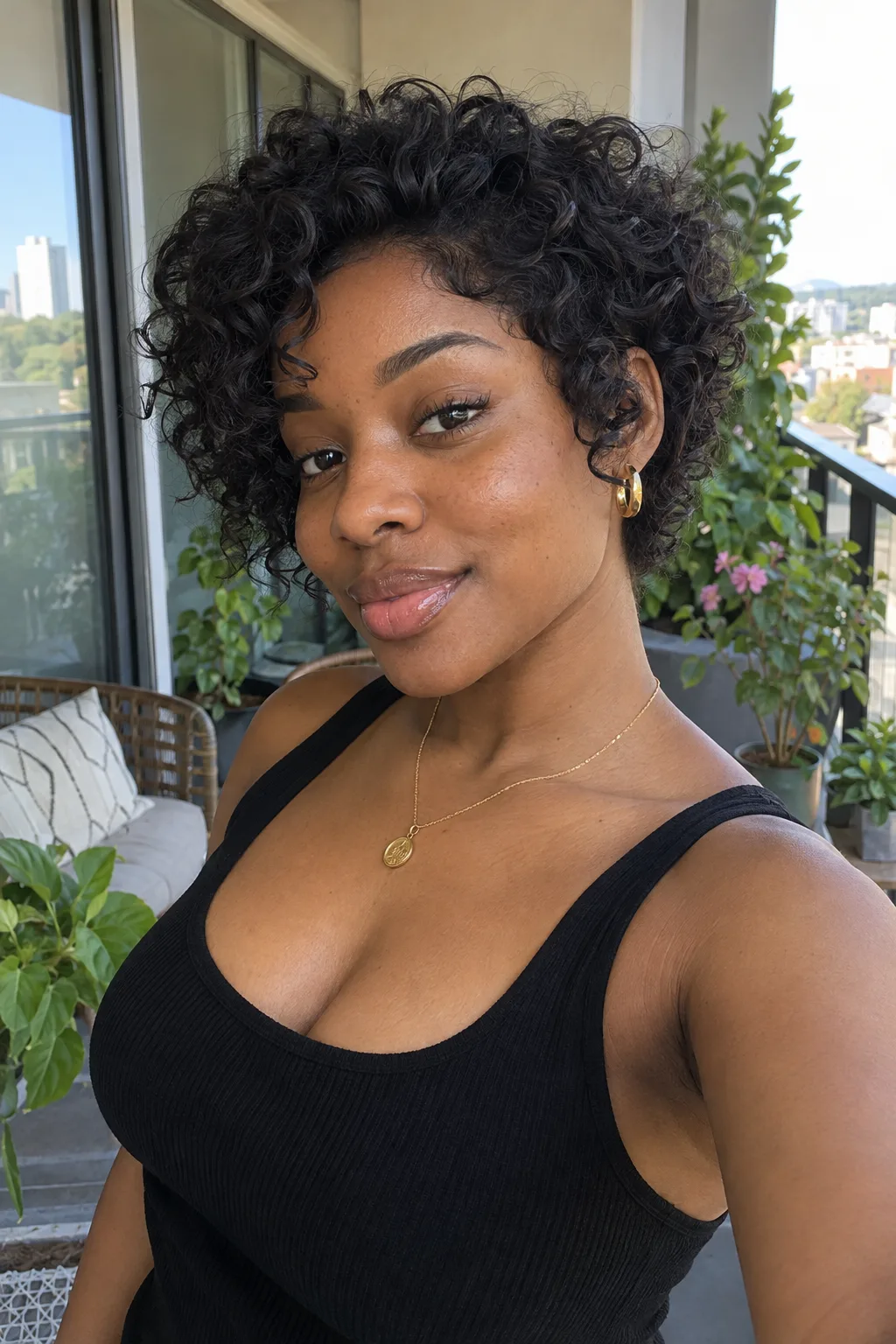
A curly bixie is shaped curl by curl rather than cut to a line. The top and front are left longer to allow for shrinkage, often an inch or more, and only the nape is taken short. Defined 3C curls carry the shape well with no heat. Book a stylist who cuts curls dry; it is a different appointment.
Why the back decides it
The front of a bixie is what you see in photos, so it is what people ask for. But the back is what makes it a bixie. Stack the back and taper the nape, and the cut has a forward lean, movement and an easy grow-out. Cut the back to the same length as the sides and you have a short bob, however choppy the front.
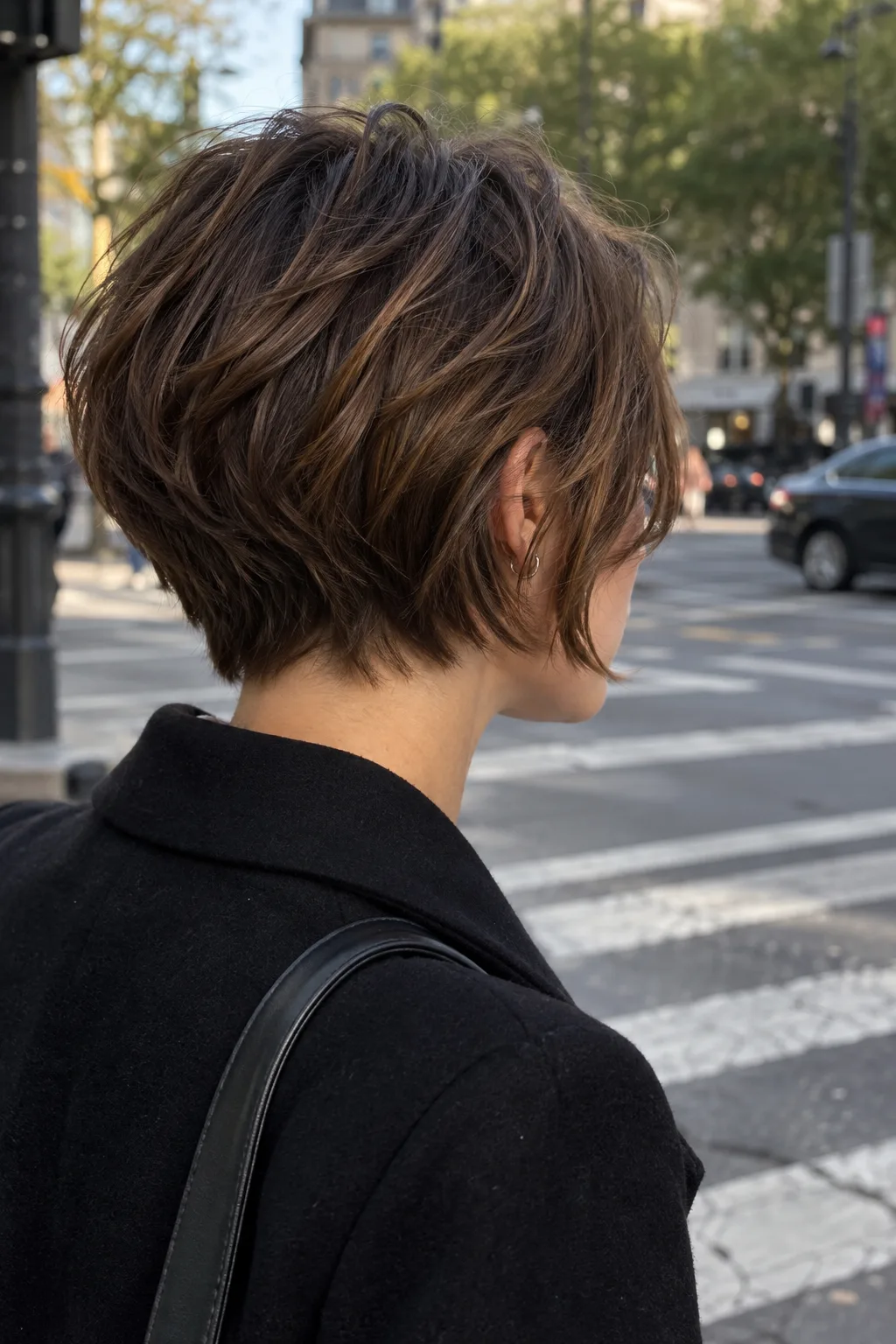
This is also where stylists go wrong in the other direction. Take the nape too short, or reach for clippers, and you are into pixie territory. About an inch, scissor blended, is the target. Show the back of the cut in your reference photos, not only the front.
Say this to your barber
A bixie please: three to four inches on top and at the front, landing at my cheekbone, sides over the top of my ear, the back stacked shorter and the nape tapered to about an inch with scissors. No clippers, nothing shaved, and keep the edge full.
How to ask for a bixie haircut
- Bring three photos
One front, one side and one back. The back photo matters most, because it is the part that separates a bixie from a bob.
- Say where the longest piece lands
Name a feature, not a number. "At my cheekbone" or "just past my jaw" is clearer than "three inches", which means different things wet and dry.
- Ask for the nape in scissors
Say "tapered to about an inch, no clippers". This keeps it out of pixie territory.
- Agree on the fringe
Wispy bangs, curtain bangs, side-swept or none. Decide before the cutting starts, because the fringe is the one piece you cannot add back.
- Ask to see it dry
Have the stylist check the layers once your hair is dry. Waves and curls jump up shorter, and a dry check catches a piece that sits wrong.
Is a bixie high maintenance?
No, and that is the main reason to choose it over a pixie. A bixie needs a trim every six to eight weeks, against four to six for a pixie, and styling takes about five minutes: a little product at the roots, a rough dry, and your fingers through the ends. Skip a trim and it simply drifts longer toward a bob rather than going out of shape.
The higher maintenance version is the one with bangs. Bangs need a trim every three or four weeks, and many salons offer a quick fringe trim between full cuts. If you would rather not book that, the side-swept or tucked-back bixie skips it.
Mistakes that cost you three months of growing
- Showing only a front photo. You get a short bob. The back photo is the whole brief.
- Letting the stylist thin fine hair. The ends go wispy and the cut looks thinner than your long hair did. Ask for texture on top and a solid edge.
- Clippers at the nape. That is a pixie, and it takes about two months to grow back to bixie length.
- Choosing blunt bangs with a round face. The horizontal line widens the face. A side-swept front fixes it.
- Going from long hair to a bixie with no plan. It is a big change. If you are cutting off more than eight inches, read our notes on going from long hair to short first, because the same two-appointment approach works here.
Can you see a bixie on yourself first, and is that free?
Yes, and the first look costs nothing. Hairstyle Atlas gives you one free try-on with no card: upload a selfie, pick the bixie, and see it on your own face and your own hair color. Paid plans start at $9.99 a week if you want more looks.
That is the wall every guide, including this one, runs into. A gallery shows you the cut on someone else's face shape, someone else's hairline and someone else's hair. It cannot show you where the long front piece lands on your cheek. On Hairstyle Atlas, length, bangs and part are part of the same picture and cost no extra credits, so you can compare the bixie with bangs, with a side part and with the front at the jaw, on your own photo, before anything is cut.
The short version
Get the bixie if you want short hair that grows out on its own, takes five minutes in the morning and suits nearly every face shape. It is the best short cut for fine hair and the safest first step if you have never been short before. Choose your fringe by your face shape, choose your layering by your hair type, and bring a photo of the back. If you want more length in the end, it turns into a shaggy cut or a bob without a single bad week. If you are not sure, try it on your own photo first.
Frequently asked questions
Oval faces can wear any version, but the bixie suits almost every shape once you place the longest piece correctly. Round faces do best with a deep side part and a long front, heart faces with curtain bangs, long faces with bangs and fuller sides, and square faces with soft waves that end past the jaw corner.
A pixie is cut close around the ears and at the nape, with the longest hair at the crown, usually two to three inches. A bixie keeps three to four inches on top and at the front, covers the top of the ear and ends between the ear and the jaw, with the nape tapered to about an inch rather than cut close.
No. A layered bob ends at or below the jaw and the back is the same length as the sides. A bixie is shorter, the layers are choppier, and the back is stacked shorter than the front. From the front the two can look alike, which is why you should bring a photo of the back.
They are lower maintenance than a pixie. Plan on a trim every six to eight weeks and about five minutes of styling a day. Bixies with bangs need a fringe trim every three or four weeks.
It is the same cut, usually worn a little softer, with fuller layers on top for lift and a side-swept front instead of short bangs. It is popular after 60 because it adds volume to thinning hair and needs little styling. Our guide to short haircuts for women over 60 covers more options.
A slightly longer pixie is usually called a long pixie, and once the front and sides reach past the ear toward the jaw, it is a bixie. Stylists also use "grown-out pixie" for the same length.
A soft, textured short cut tends to read younger, because it lifts the hair off the face and shows the cheekbones. A severe, very close cut can do the opposite. The bixie sits on the softer side, which is part of its appeal.
Yes, and the bixie is the version most people are asking for. "Bixie haircut" is now searched more in the US than most named short cuts, and the shaggy, lived-in shape is what keeps it current: it looks deliberate without looking styled.
Preview it on your own photo: Virtual Hair Color Try-On.
Share article
About the author

Related posts
Women's Haircuts · 15 min
Type 4 Hair: How to Tell 4a, 4b and 4c Apart and What Actually Matters
Type 4 hair is the tightest natural texture, split into 4a, 4b and 4c. How to tell type 3 from type 4, how to read your letter, the porosity test that matters more than it, a wash day that works on any type 4 head, type 4 hair on men, and fourteen ways it is worn.

Women's Haircuts · 13 min
Thick Hair: What It Is, the Cuts That Work and How to Manage It
Thick hair is a weight problem before it is a frizz problem. How to tell dense from coarse, 13 cuts that handle the bulk, how to thin it without ruining it, and the words to say to your stylist.
Women's Haircuts · 13 min
Coily Hair: Types, Care and a Routine That Fits You
Understand coily hair without getting stuck on a subtype. Learn how to detangle, wash and style your coils, plan for shrinkage, and choose an afro shape.

Women's Haircuts · 14 min
1B Hair: How to Tell If You Have It + 14 Cuts That Suit It
1B hair is straight with some body at the crown and a slight turn at the ends. How to tell it from 1A and 1C, why the length of your cut matters most, 14 cuts that suit it and how to style it.

Women's Haircuts · 16 min
1C Hair: How to Tell If You Have It + 14 Cuts That Tame It
1C hair is straight at the root with a loose bend through the lengths, coarse strands and frizz on top. How to tell it from 1B and 2A, why it puffs, 14 cuts that suit it and how to style it.
Women's Haircuts · 14 min
Best Hairstyle Apps for Women 2026: 10 Apps, Real Prices
The best hairstyle app for women changes your hair and leaves your face and density alone. Ten apps compared with real prices and free tiers, what Reddit users complain about, and which app fits your hair type.