Rat Tail Haircut: 10 Styles and How to Get One Right
Oleh Onysko Updated 27 September 2026 14 min read
In this article
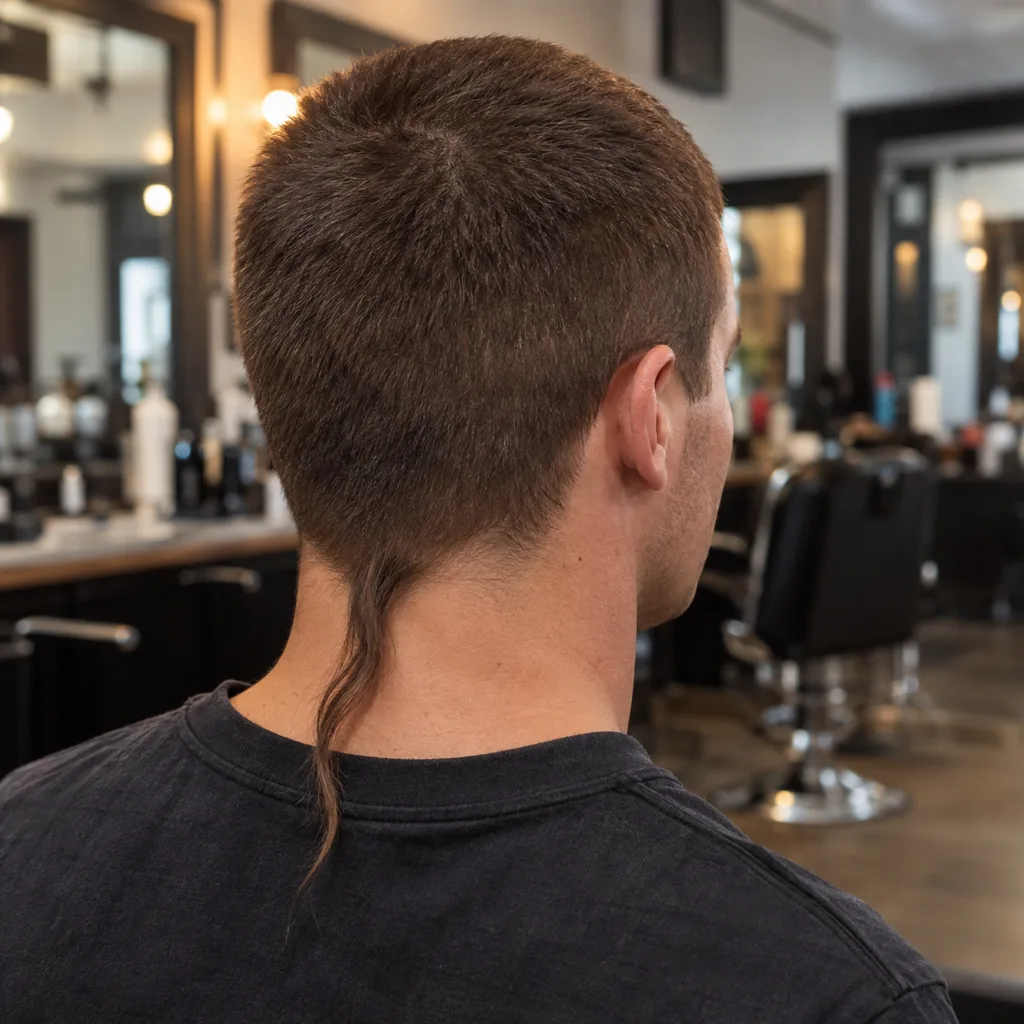
A rat tail is one thin strand of hair left long at the center of the nape while everything else is cut short. Whether it looks like a deliberate style or a haircut somebody forgot to finish depends almost entirely on the cut around it, not on the tail.
That is the part most rat tail guides skip. They show you the tail. This one covers the base cut that makes it work, how long you have to wait before a barber can give you one, ten ways to wear it, and the exact words to say in the chair.
What is a rat tail haircut?
A rat tail haircut is a short cut with one narrow section at the nape, usually about an inch wide, left several inches longer than everything around it. It is not a mullet and not a ponytail: the length lives in a single strand, and the hair on either side of it is taken short.
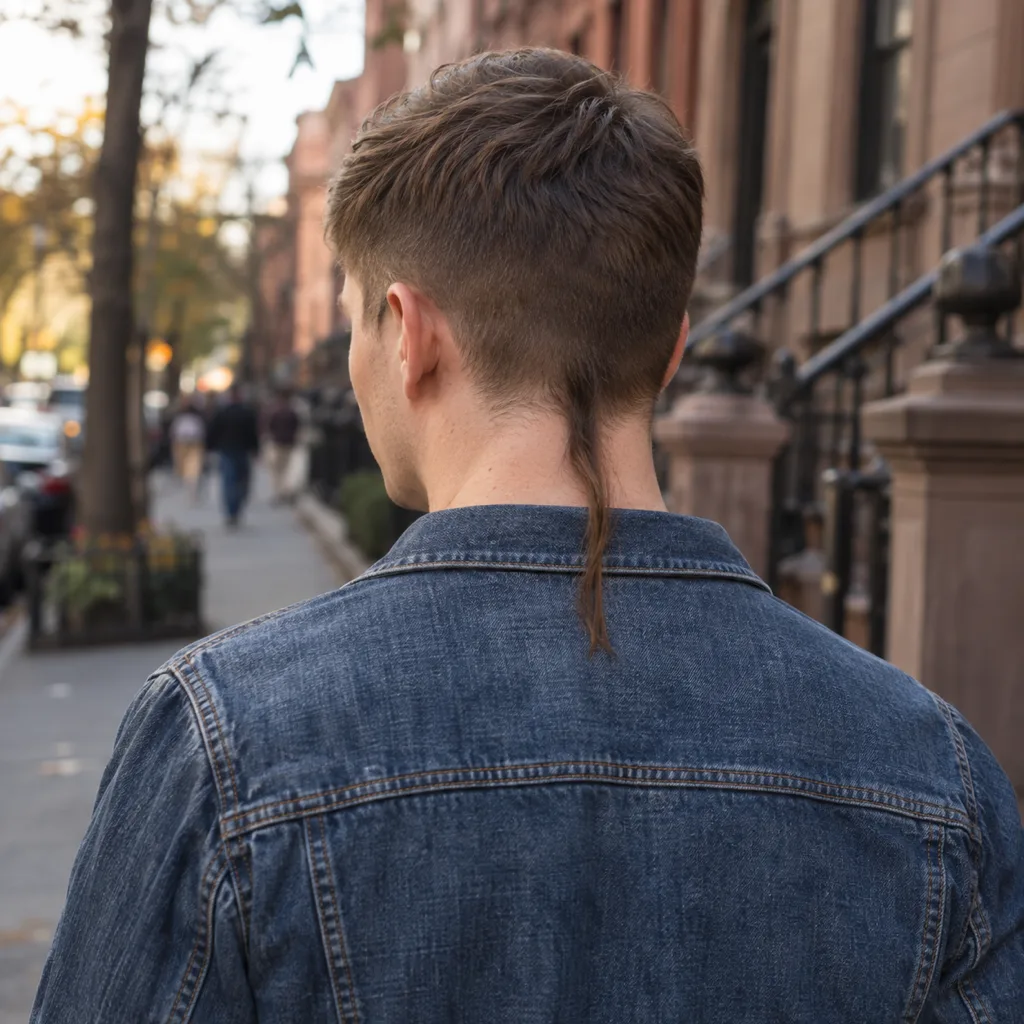
Here is the counterintuitive bit. A barber does not make a rat tail. They cut away everything around hair you already grew. That makes it a subtraction cut, and it means the length sitting at the center of your nape today is the most tail you can walk out with. If your last fade took the nape down to stubble, nobody can give you a rat tail this week.
| Part | Where it sits | Typical length |
|---|---|---|
| The tail | Center of the nape, about 1 inch wide | 3 to 6 inches |
| Around the tail | Rest of the nape and the back | Clipper short, tapered |
| Sides | Temples down to the ears | Low taper or fade |
| Top | Crown and front | 1 to 3 inches |
The style is older than the 1980s image most people have of it. Wikipedia's history of the rattail traces it back to the Manchu queue of 17th century China, through a mainstream run in the mid to late 1980s, to the revival it is having now.
Rat tail vs mullet: what is the difference?
A mullet keeps length across the whole back of the head. A rat tail keeps length in one narrow strand and cuts the rest of the back short. The two combine in the rat tail mullet, where a short mullet covers the nape and a thinner tail runs on past it. If you want faded sides with the full back instead, a mullet fade keeps the length across the whole nape.

| Mullet | Rat tail | Rat tail mullet | |
|---|---|---|---|
| Length at the back | Across the whole nape | One strand, about 1 inch wide | Short across the nape, one strand longer |
| How loud it is | Moderate | Loud | Loudest |
| Grow-out time | 3 to 6 months | 4 to 8 months for the tail | 6 months or more |
| Easiest to undo | Cut the back | One snip | One snip, then a mullet |
That last row is the rat tail's quiet advantage. It is the cheapest loud haircut there is to reverse: one cut and you are back to a clean taper. If you want the fuller version, our guide to the modern mullet covers the back-length options in detail.
How long does it take to grow a rat tail?
Most people need four to eight months to grow a rat tail from a freshly cut nape. Scalp hair grows about half an inch a month on average, according to dermatologists quoted by USA Today, so a 2 inch tail takes around four months and a 4 inch tail around eight.
| Months since the nape was last cut | Approximate tail length | What it looks like |
|---|---|---|
| 2 | 1 inch | A patch the barber has to protect, not yet a tail |
| 4 | 2 inches | A starter tail that touches the collar |
| 6 | 3 inches | Clearly a rat tail, hangs past the collar |
| 8 | 4 inches | The classic length |
| 12 | 6 inches | Long enough to braid with ease |
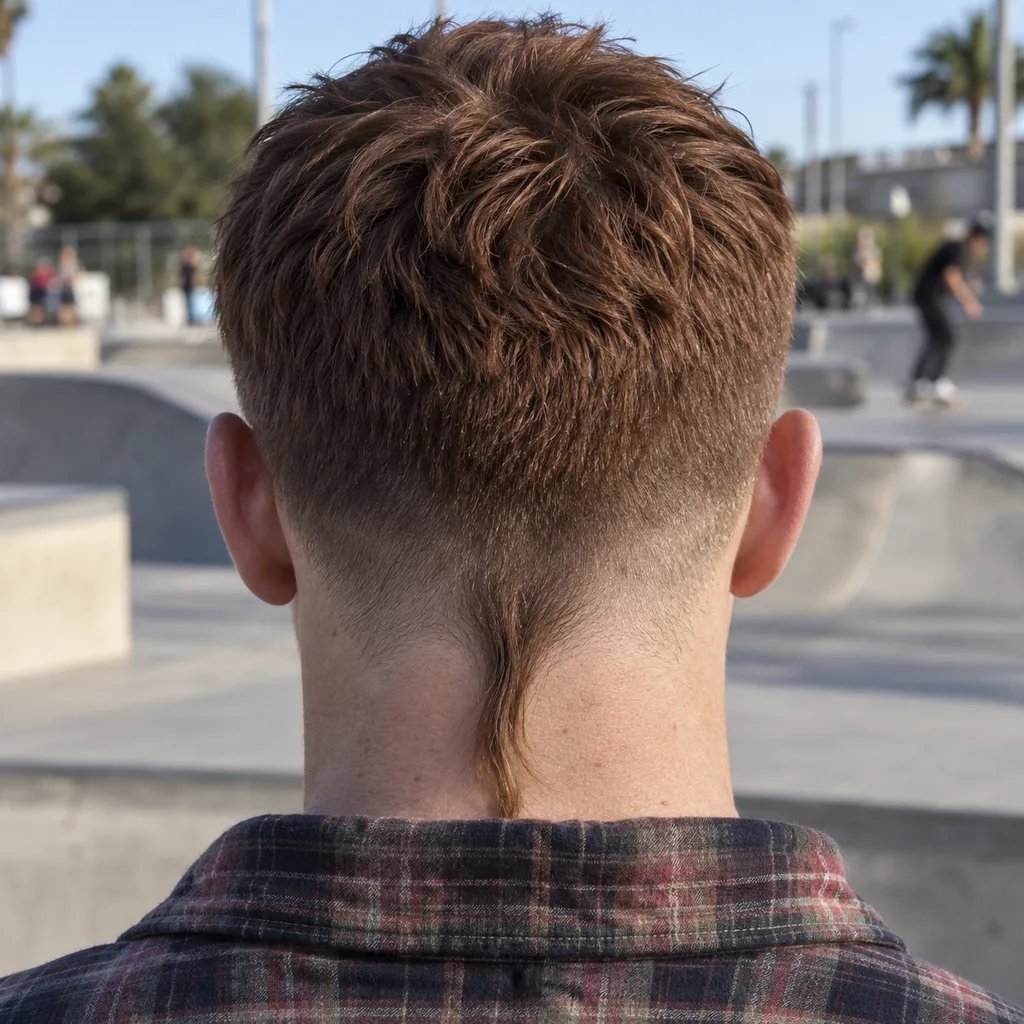
The trick is that you keep getting haircuts the whole time. Tell your barber to leave a one-inch patch at the center of the nape alone and taper everything else as normal. You never have to go through an awkward all-over grow-out, which is the reason a rat tail is easier to commit to than a mullet.
Which base cut suits a rat tail best?
A low taper with a textured top suits a rat tail best for most people, because the clean edge makes the tail look intended and the texture on top keeps the head from reading bare. The table ranks the usual options.
| Base cut | How the tail reads | Upkeep | Verdict |
|---|---|---|---|
| Low taper, textured top | Deliberate, current | Barber every 3 to 4 weeks | The default. Start here |
| Buzz cut | Loud, punk | Clippers at home weekly | Best contrast, least forgiving |
| Skin or bald fade | Sharp, graphic | Barber every 2 to 3 weeks | Great on thick hair, high upkeep |
| Mullet | Maximal | Barber every 4 to 6 weeks | Only if you want the loudest version |
| Grown-out, no taper | Unfinished | None | Avoid. This is the version people mock |
Low taper with a textured top
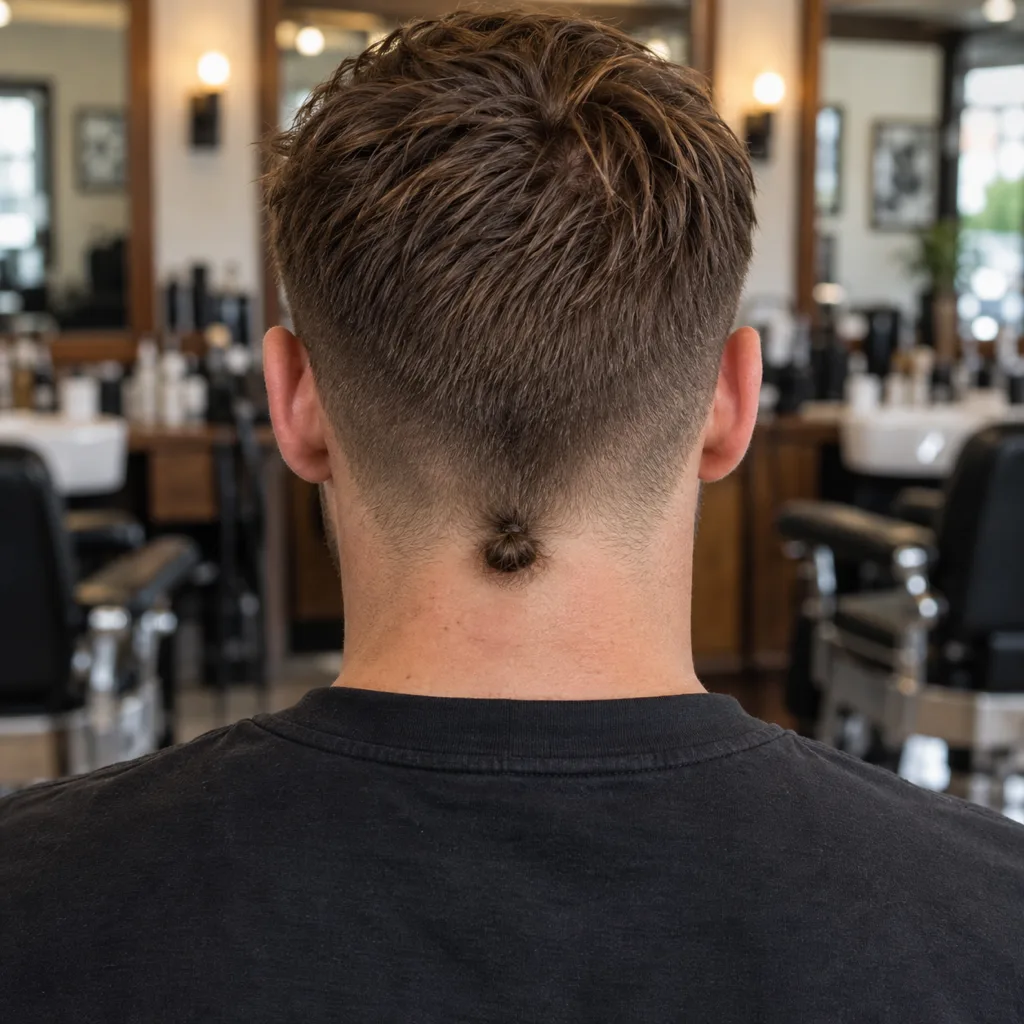
This is the one to copy. The taper cleans up the hair around the tail so the strand stands alone, and 2 inches of texture on top balance the length at the back. Our mid taper fade guide explains how high to take the taper if you want the sides a little sharper.
Buzz cut
Take the whole head to one guard and the tail becomes the only length anywhere on your head. It is the purest, loudest form of the cut and the easiest to maintain yourself, but it hides nothing, so the tail has to be neat and dead center.
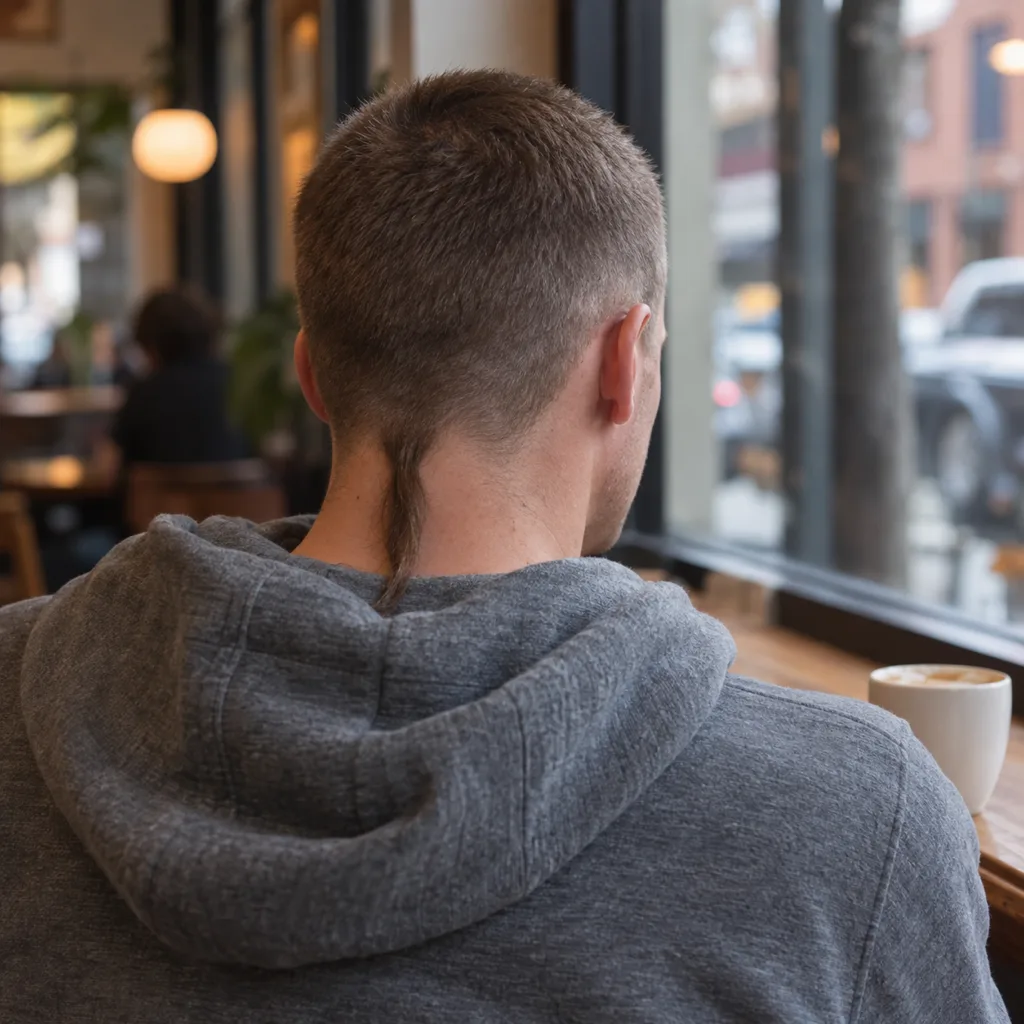
If you have never worn your hair that short, preview a buzz cut on your own photo first. The tail is easy to lose; the buzz is the part that takes months to grow back.
Skin or bald fade
A fade down to skin gives the sharpest frame of all. It works best when the top has some length, because a bald fade plus a bald nape plus a tail can look like a mistake rather than a choice. Our bald fade guide shows how high the skin section can go, and the fade simulator lets you compare heights on your face.
Curly and coily hair
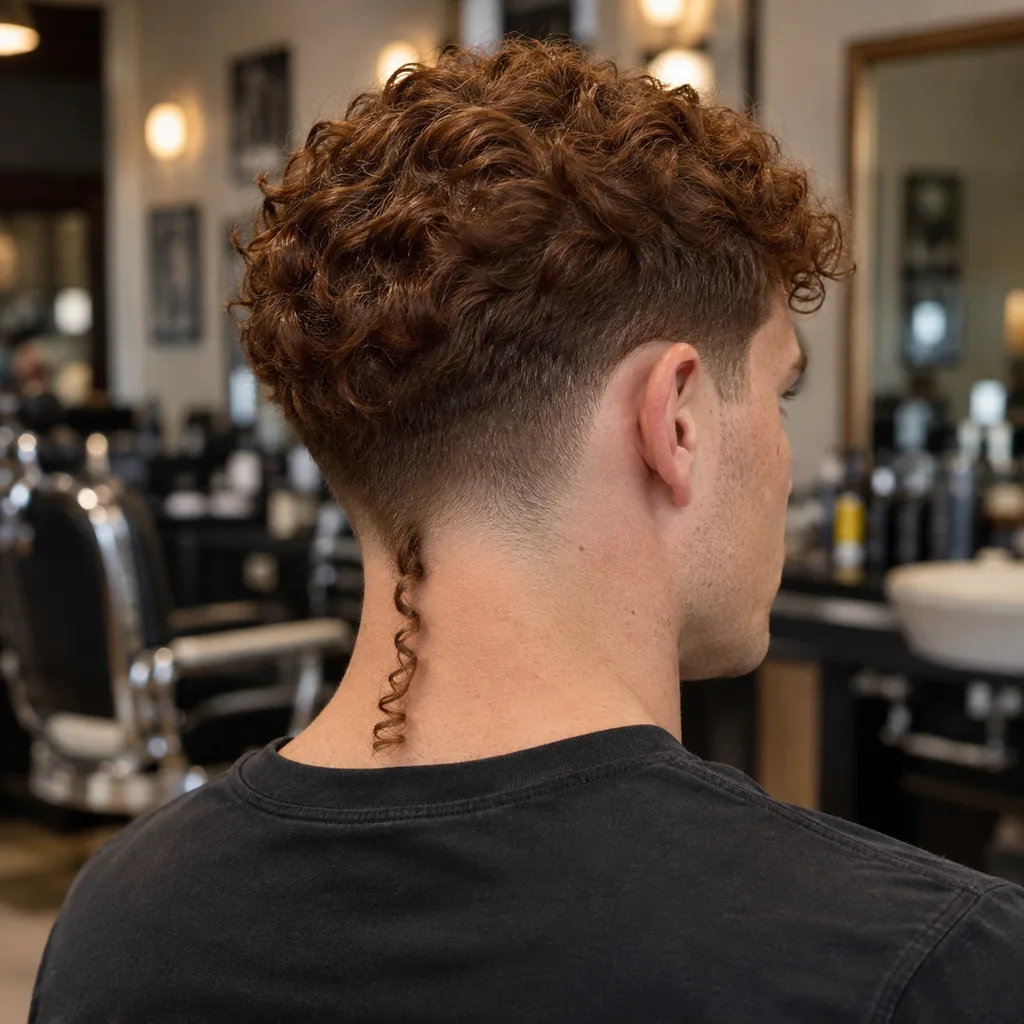
Texture changes the tail more than any base cut does. Curly hair coils up, so a 4 inch tail can look like 2. Tightly coiled hair shrinks even more, which is why most people with 4c hair wear the tail twisted or braided rather than loose.

Twisting keeps the strand defined and stops it knotting into the collar. Our twist hairstyles guide covers the two-strand technique, and the curly and coily try-on shows a base cut on your real texture rather than on a straight-haired model. For base cuts that work with curl, see our haircuts for curly hair men.
Yours could be here.
Start with one selfie.
One photo, twenty seconds, and you'll know. Free account, no card for your first render.
Mistakes that make a rat tail look unfinished
- A tail that is too wide. Past about an inch and a half it stops reading as a tail and starts reading as a mullet that went wrong. Keep it roughly the width of two fingers or less.
- Letting the base grow out. The tail only looks intended when the hair around it is crisp. Skip two barber visits and the whole head looks neglected, tail included.
- Never trimming the tail. The ends of a long, thin strand split and go stringy. Take a quarter inch off the tip every other visit and it stays solid to the end.
- An off-center tail. Your nape is not a straight line, and a tail a half inch to one side looks like an accident. Have the barber mark the center with a comb before clipping anything.
- Cutting the back yourself. You cannot see your nape, and one pass too close takes four months to fix. Buzz the top at home if you like, but let someone else handle the back.
How to ask your barber for a rat tail
Say where the tail goes, how wide it is, and that its length must not be touched. Barbers clean up the nape on autopilot, so the "leave it" part is the sentence that matters.
Say this to your barber
Low taper on the sides and back, about two inches of texture on top, and leave a strip about one inch wide at the center of my nape long as a rat tail. Don't cut its length, just clean up around it.
How to get a rat tail haircut
- Grow the nape first
Skip nape cleanups for at least four months. Keep getting the sides and top cut, but ask the barber to leave the center of the nape alone.
- Mark the center
Have the barber find the center of the nape with a comb, level with the middle of your spine, and section off a strip about one inch wide.
- Clip the tail out of the way
The strip gets twisted and clipped up before any clippers go near the back, so a stray pass cannot shorten it.
- Cut the base
Taper the sides and back as normal, then take the rest of the nape short right up to the edges of the strip so the tail stands alone.
- Trim the tip
Unclip the tail, comb it straight and take a quarter inch off the ends to remove split hair.
How to style and braid a rat tail
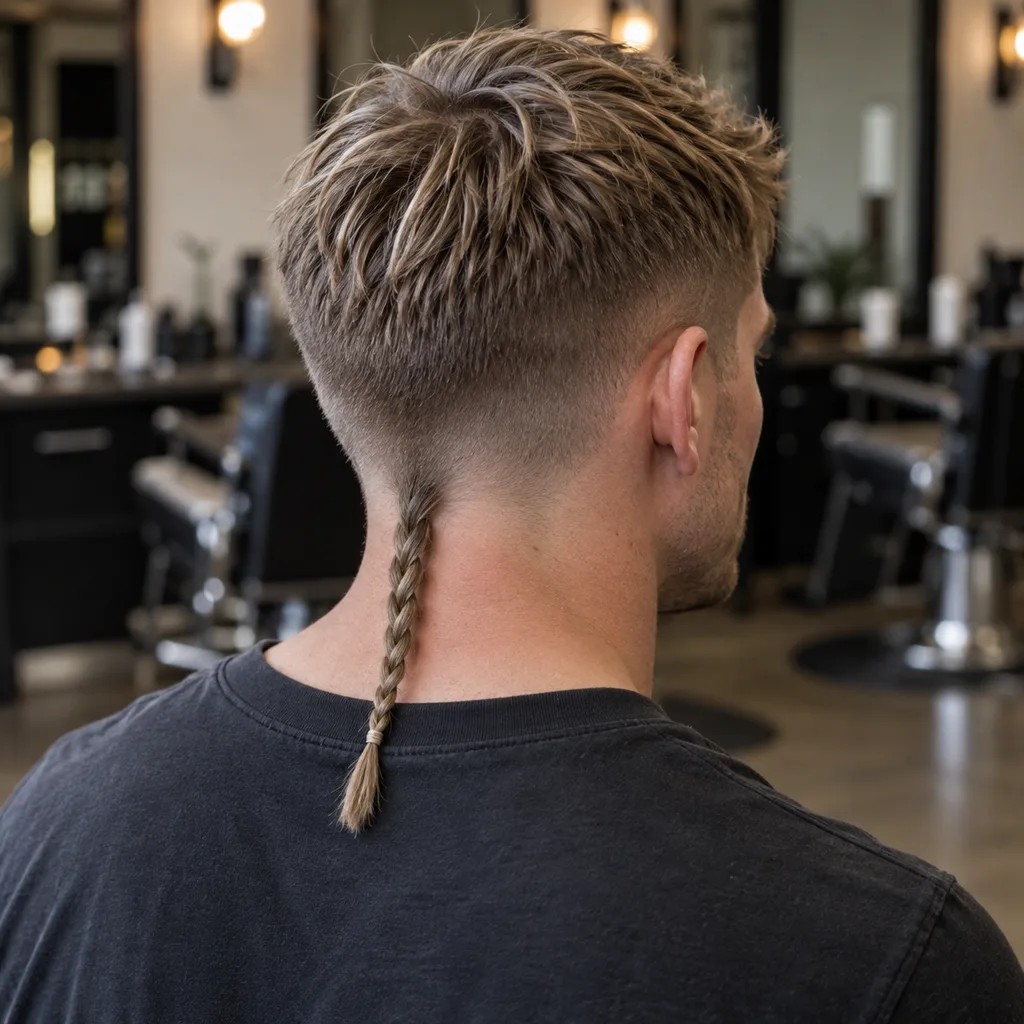
A loose tail needs almost nothing: a drop of leave-in so it does not frizz, and a comb-through in the morning. A braid needs about 4 inches of length. Split the tail into three even sections, braid down tight, and finish with a small clear elastic. Two-strand twists work from about 3 inches and hold better on curly or coily hair. Bleaching only the tail is the other popular move, and since it is one strand it is cheap to do and cheap to cut off.
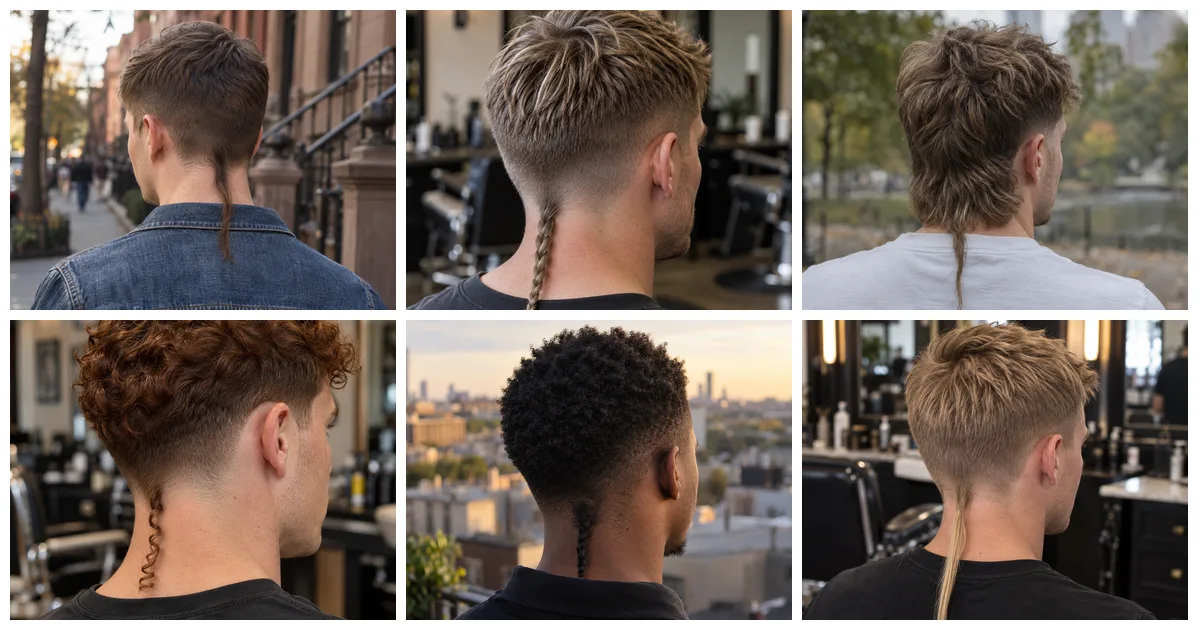
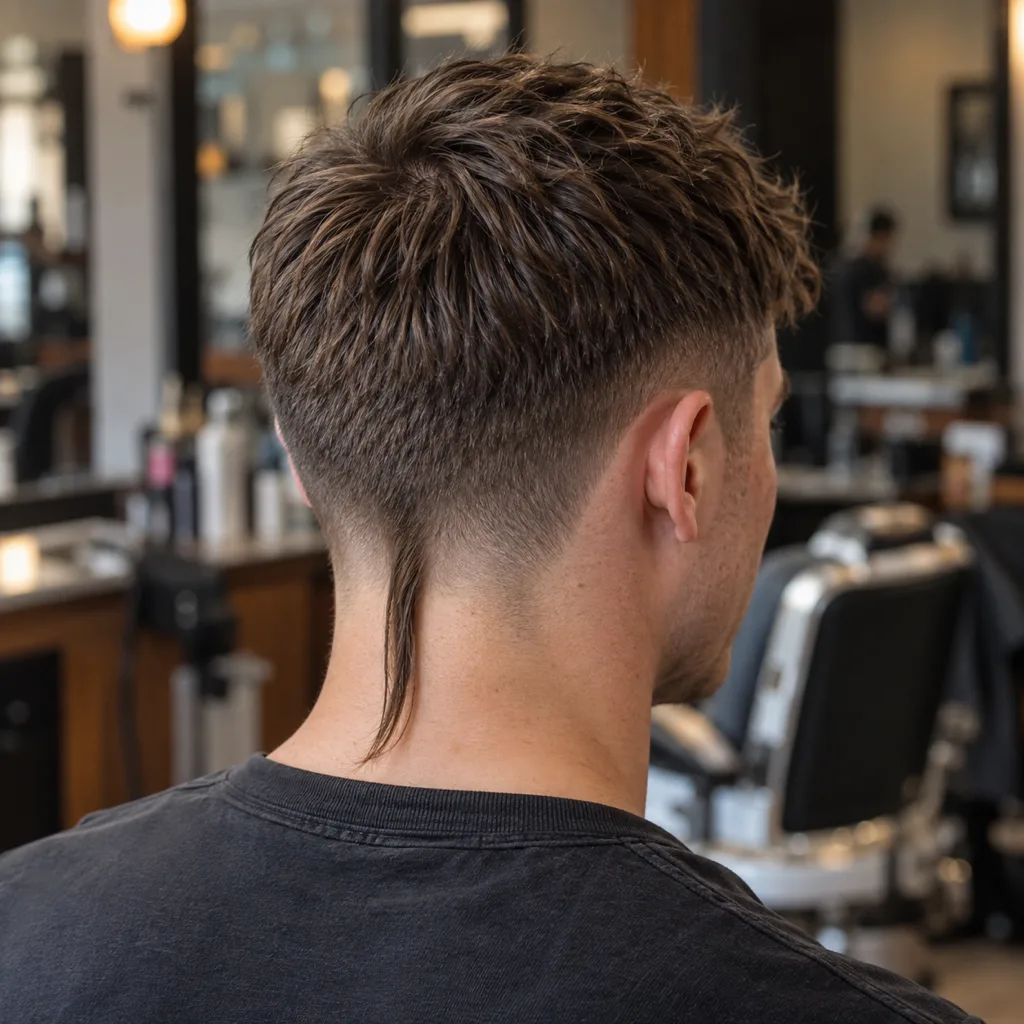
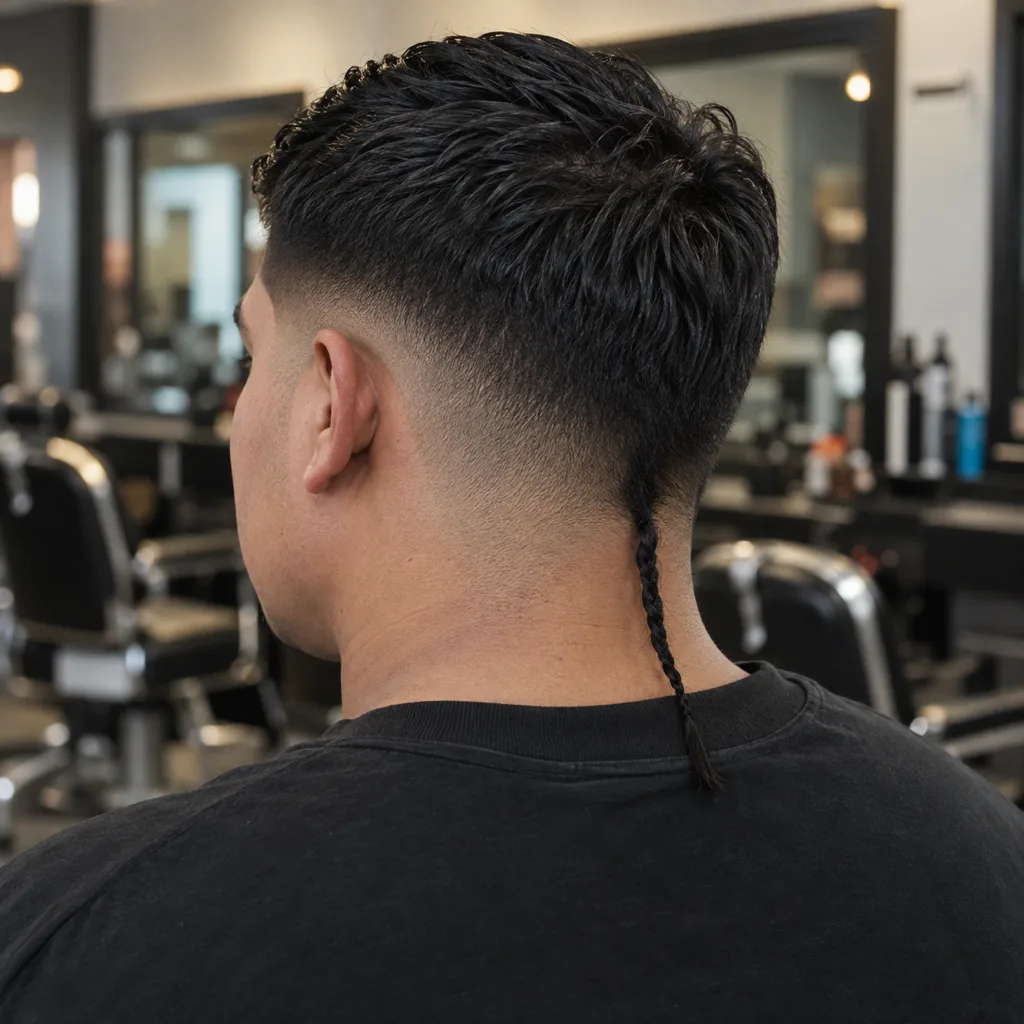
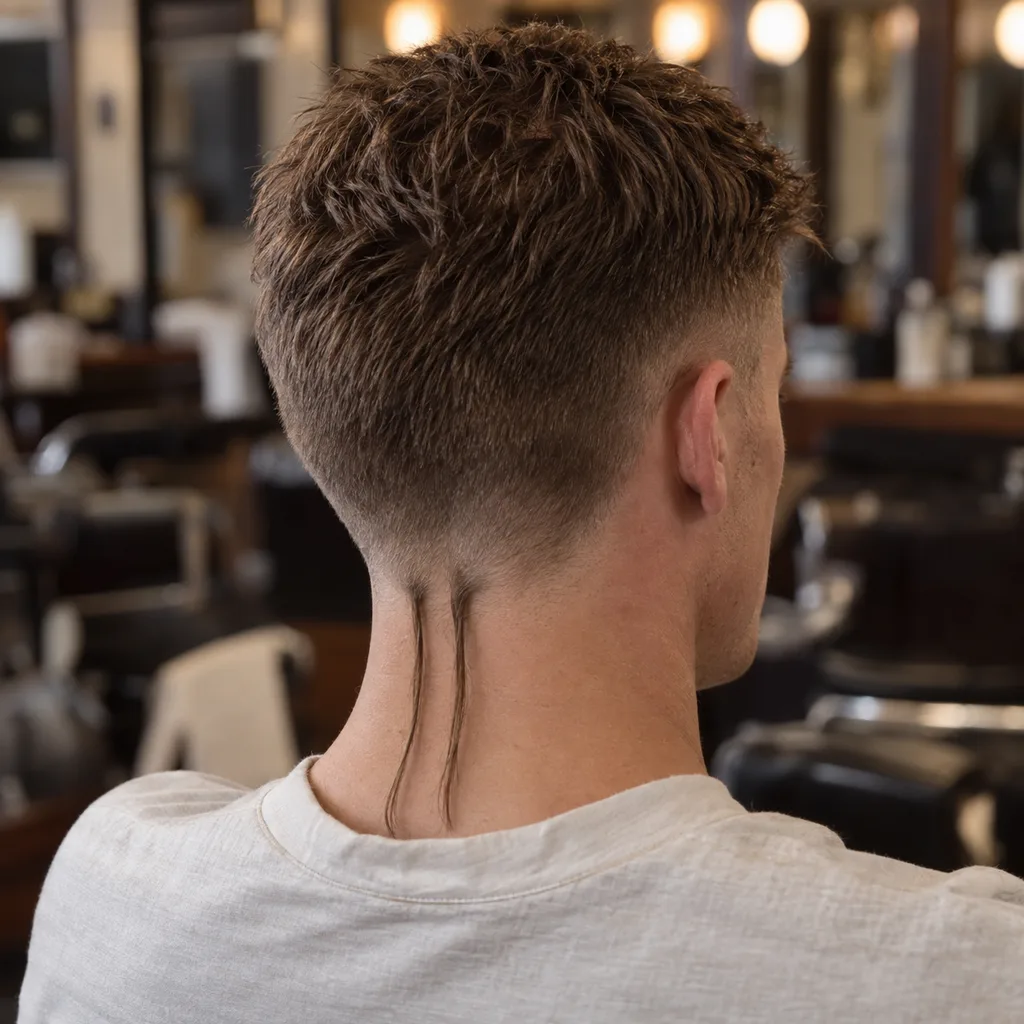
10 rat tail styles on the same short base
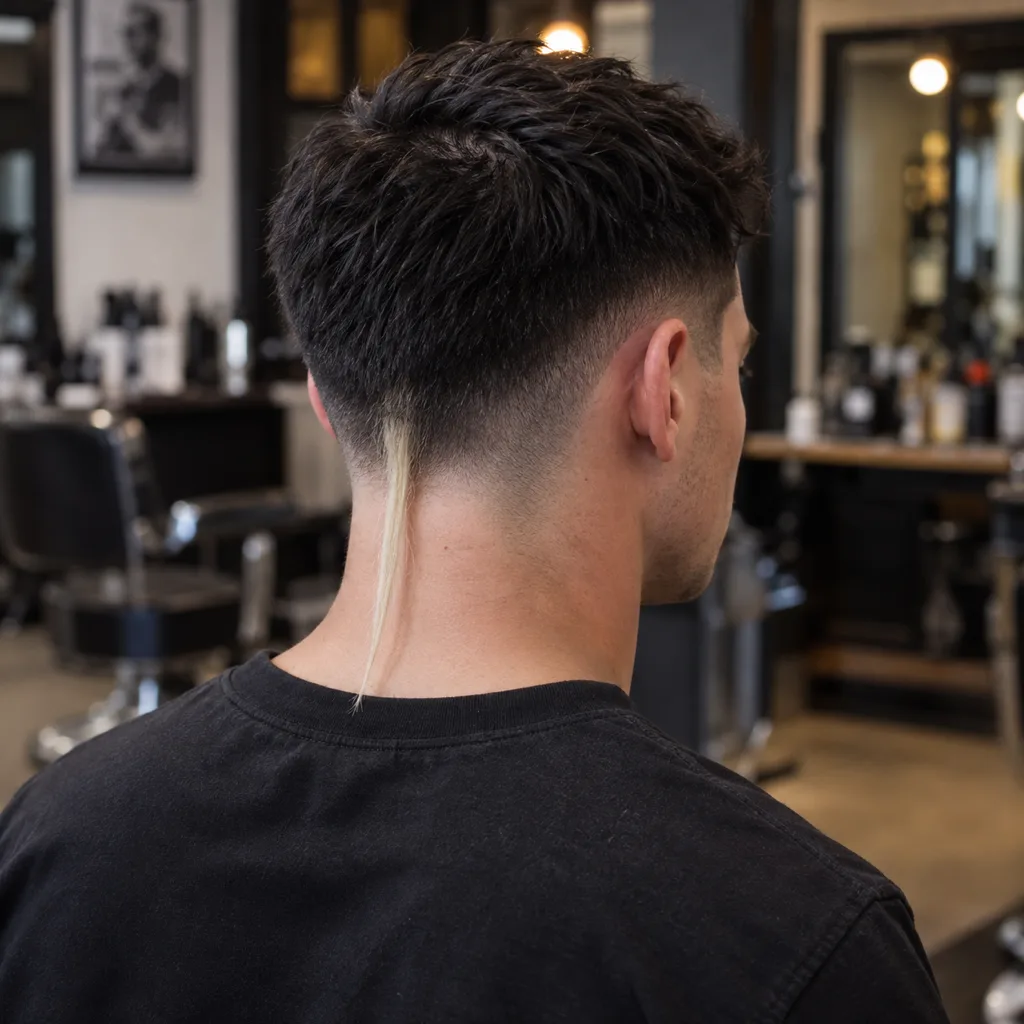
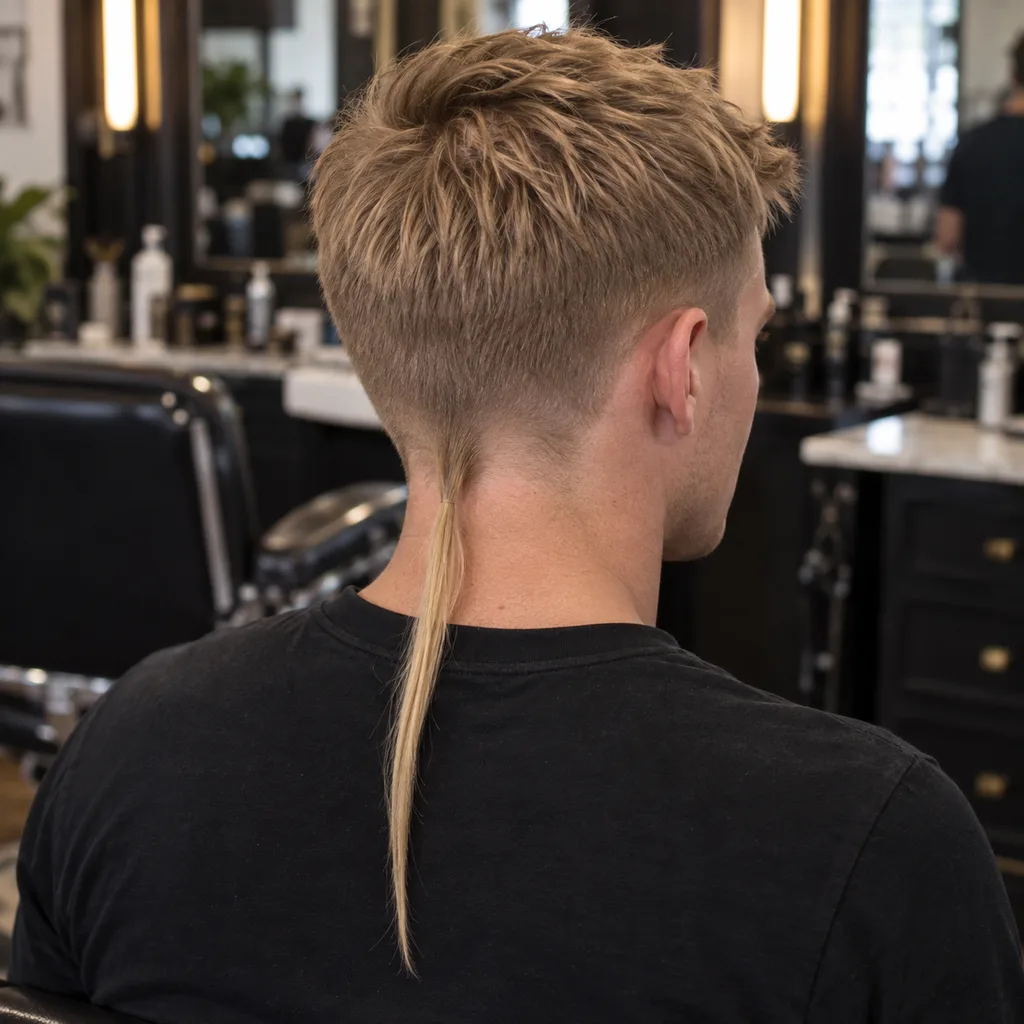
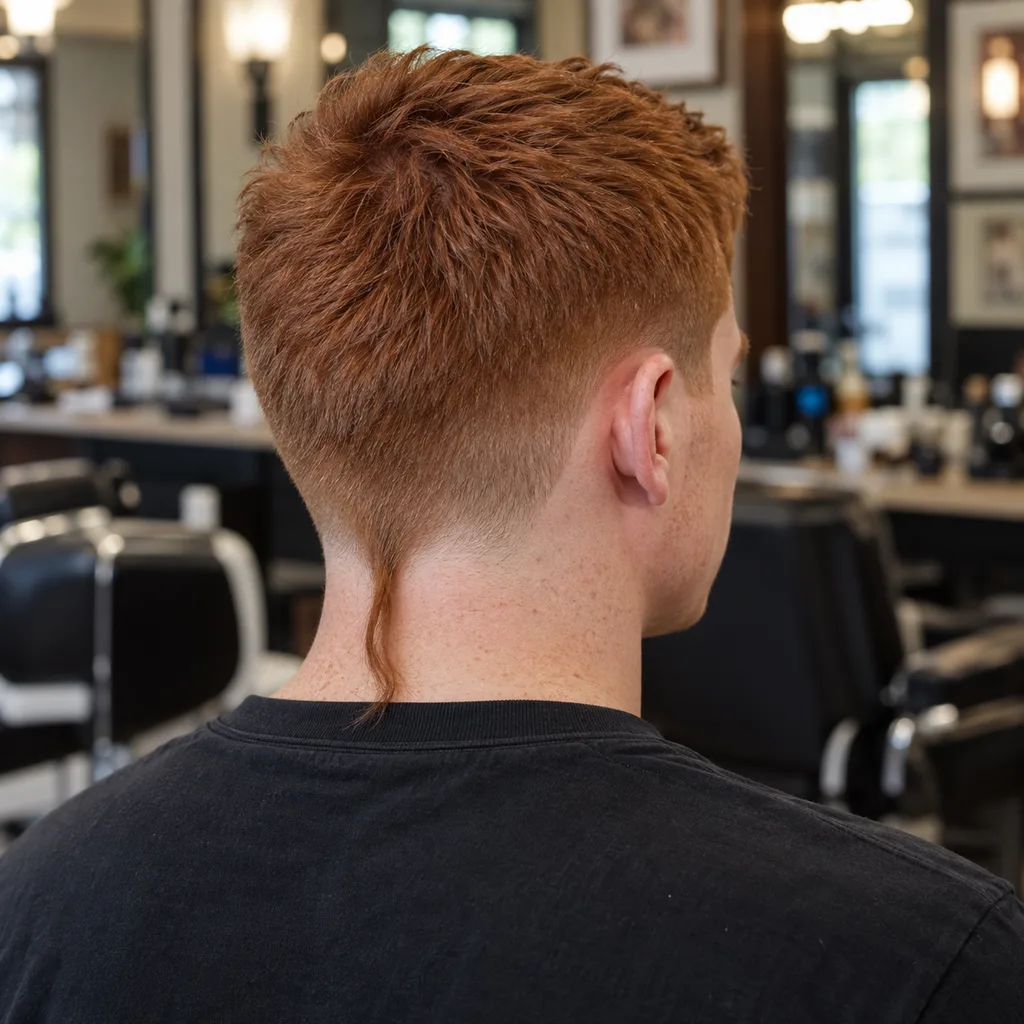
Every picture below keeps the base close to the same: a short, tapered back and a short top, shot from behind so the tail is visible. What changes is the tail itself, so you can compare the treatment rather than the haircut.
Gallery10 photos · tap to enlarge
Can you see a rat tail on yourself before you commit?
Not the tail itself, and it is worth being straight about that. Hairstyle Atlas does not have a rat tail in its catalog, and every rat tail photo you have saved is on somebody else's head. What you can preview is the base cut, which is the part that decides whether the tail looks intended or unfinished.
The first look is free, needs no card, and shows the front view of one hairstyle. Try the taper, the buzz or the mullet the tail would sit on. Back and side angles are part of the Pro plan at $24 a month, so if you want to see the nape itself, that is the only paid step. Everything you need to decide on the base is in the free look.
Get the base right and the tail takes care of itself. A low taper, a couple of inches of texture on top, and a tail about a finger wide and four inches long is the version that looks like a style in 2026 rather than a throwback. Start growing the nape now, because no barber can give you the length you did not grow. And if you get there and decide short hair is not for you, our guide to longer men's haircuts is the calmer place to land.
Frequently asked questions
A mullet leaves length across the whole back of the head, while a rat tail leaves one narrow strand long and cuts the rest of the back short. A rat tail mullet combines both: a short mullet at the nape with one thinner strand running past it.
About four months for a 2 inch starter tail and eight months for a classic 4 inch tail, since hair grows roughly half an inch a month. You can keep getting the rest of your hair cut the whole time, as long as the barber leaves the center of the nape alone.
Grow the hair at the center of your nape, then cut everything around it short. You can maintain a buzzed top at home, but let a barber or a friend cut the nape itself, because you cannot see it and one pass too close costs you months.
A low taper with about 2 inches of textured hair on top. The taper makes the tail stand alone and look deliberate, and the texture on top balances the length at the back. A buzz cut is the louder alternative.
Wait until the tail is about 4 inches long, split it into three even sections, braid tightly down to the end and secure it with a small clear elastic. On curly or coily hair a two-strand twist is easier and holds longer.
Rat tails had their mainstream peak in the mid to late 1980s and fell out of fashion by the mid 1990s. They have come back since the early 2020s, usually paired with a taper or a mullet rather than the older untapered look.
Yes. The rat tail returned alongside the mullet revival, and the current version is cleaner than the 1980s one: a tight taper, a textured top and a thin, deliberate tail rather than a long strand on untidy hair.
Mostly nothing more than a style choice. It has been worn by punks, 1980s pop stars, athletes and, now, people who like a haircut that looks a little ironic. The most common reaction it gets today is "bold", not offense.
Preview it on your own photo: Men's Hairstyle Try-On.
Share article
About the author

More articles

Men's Haircuts · 14 min
Benny Blanco Haircut: The Fake Half Shave and the Real Curls
Benny Blanco did not shave half his head. It was a prosthetic bald cap, and the buzz cuts are AI. Here is what his curly mop actually is, the short version, and exactly what to tell your barber.
Men's Haircuts · 16 min
1A Hair: How to Tell If You Have It + 14 Cuts That Work
1A hair is pin-straight with no bend from root to tip. How to tell it from 1B and 1C, why it goes flat, 14 haircuts that work on it, and how to style it for volume.
Men's Haircuts · 15 min
High and Tight Haircut: 4 Versions and the Head Shape Rule
A high and tight clips the sides almost to skin all the way up to the top of the head, so it shows your skull shape more than your face. The 4 versions, 14 photos, what to tell your barber, and how long it lasts.