Modern Mullet vs the 1980s One: What Actually Changed
Oleh Onysko Updated 27 September 2026 13 min read
In this article
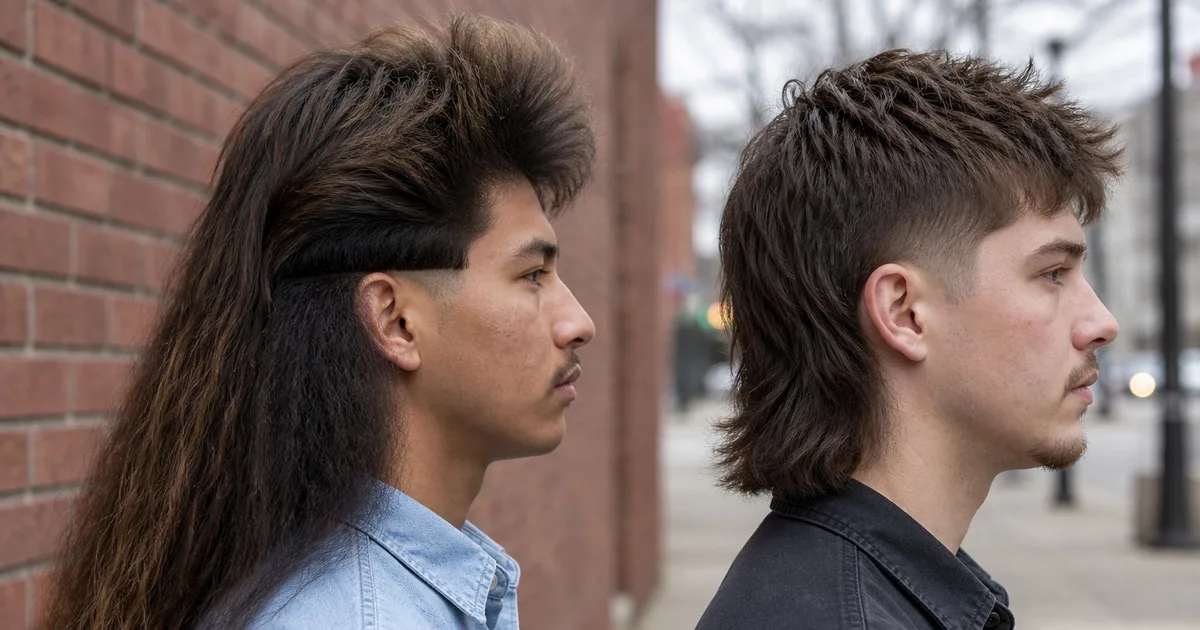
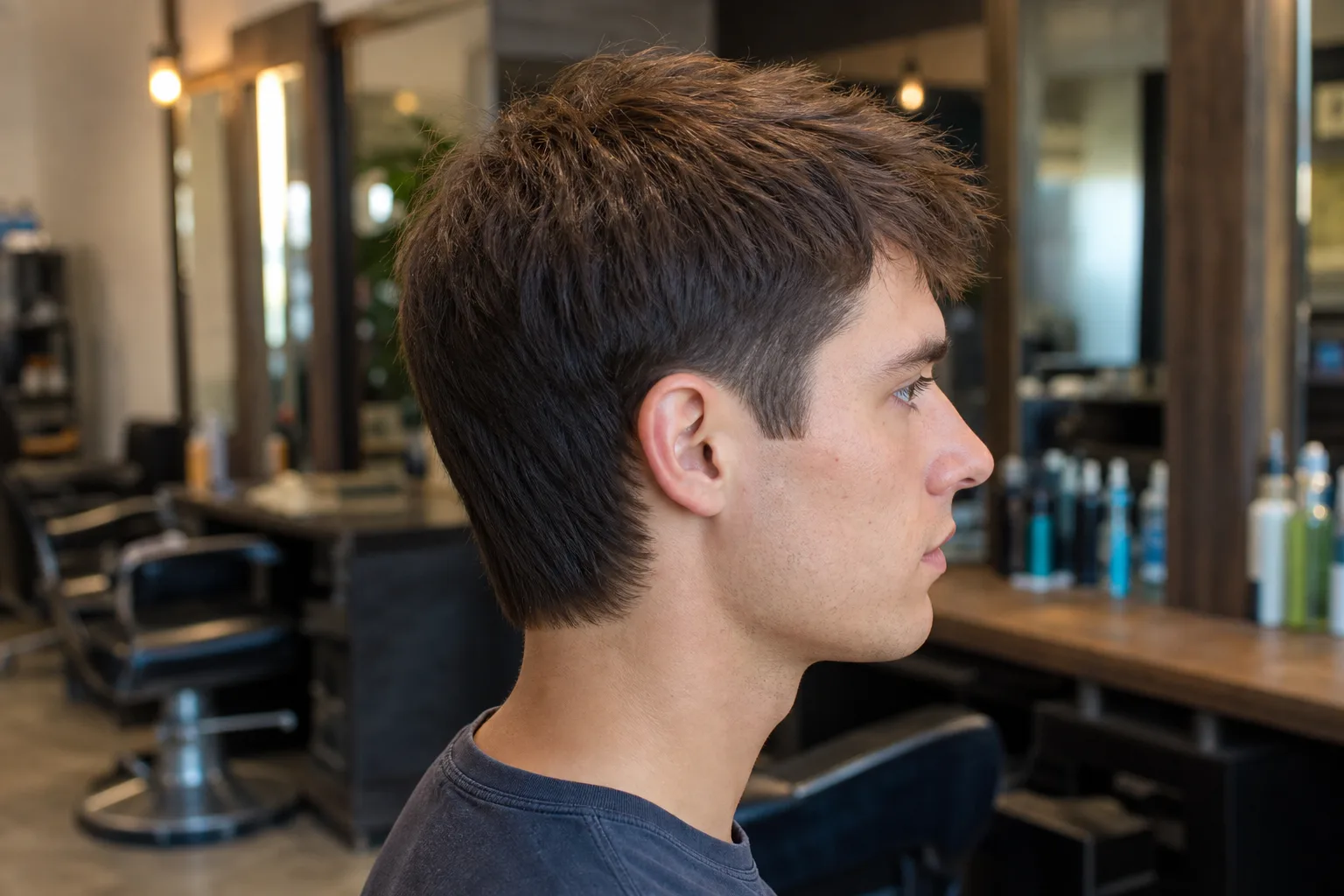
A modern mullet keeps the one idea the 1980s version had, length at the back, and throws away everything else. No hard line between the top and the back, no helmet of volume on the crown, no thin rat tail. The sides are faded or tapered, the top is textured, and the back is shorter than you are picturing.
That is the whole difference, and it is why the cut came back.
What is a modern mullet?
A mullet is defined by one relationship: the back is longer than the sides. Everything else is negotiable, and the modern version renegotiates most of it.
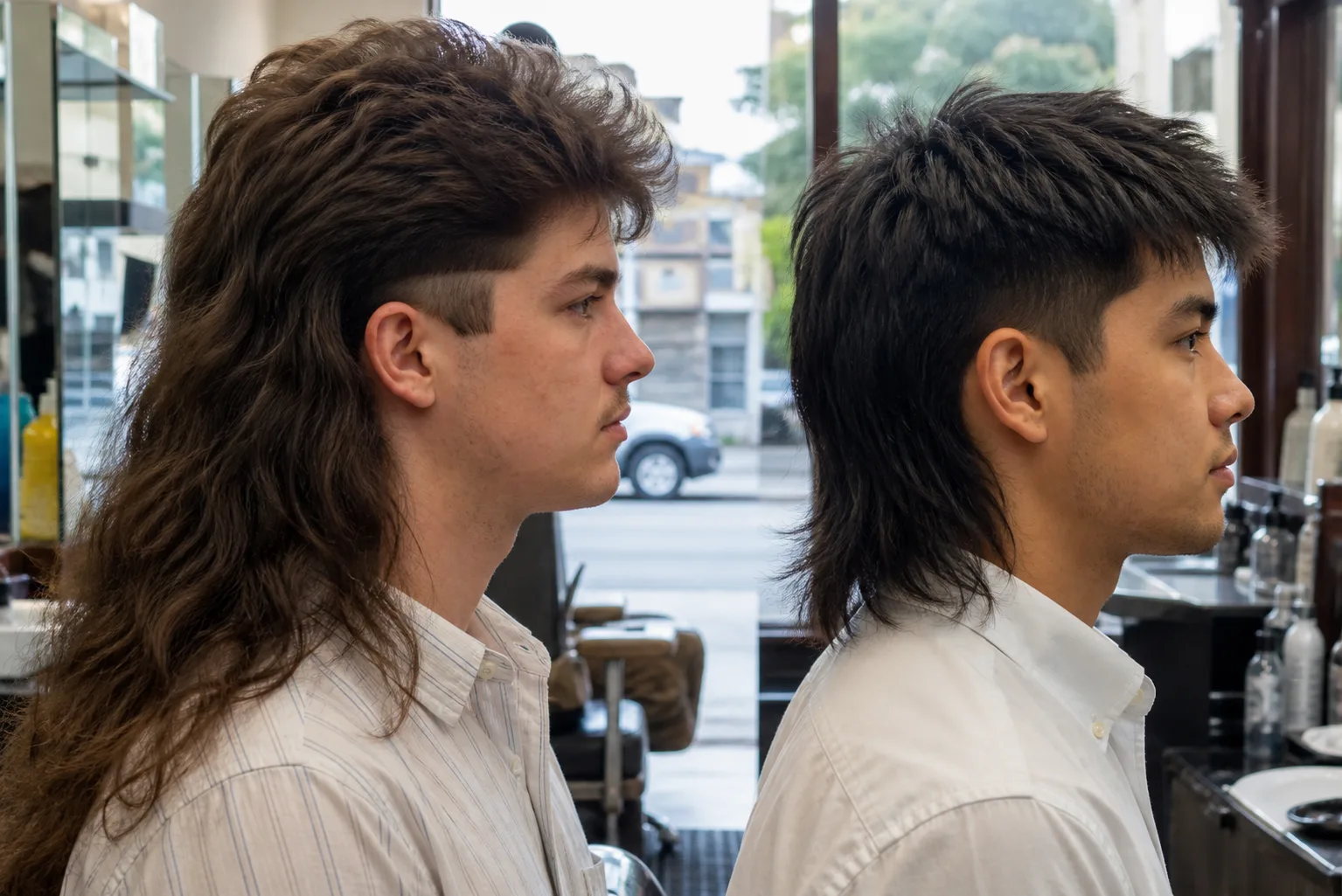
The 1980s cut was disconnected. The sides stopped, the back started, and there was a visible step between them. The modern one is blended or only softly disconnected, so the eye travels from the temple to the nape without hitting a wall. The top carries texture rather than height, and the length at the back usually sits somewhere between the collar and the top of the shoulder blade, not halfway down it. If you want the length at the back concentrated in one thin strand instead, that is a different cut, and our rat tail haircut guide covers it.
This is the single most common point of confusion, and it is why the second result on Google for this term is somebody asking a room full of barbers what a modern mullet actually is.
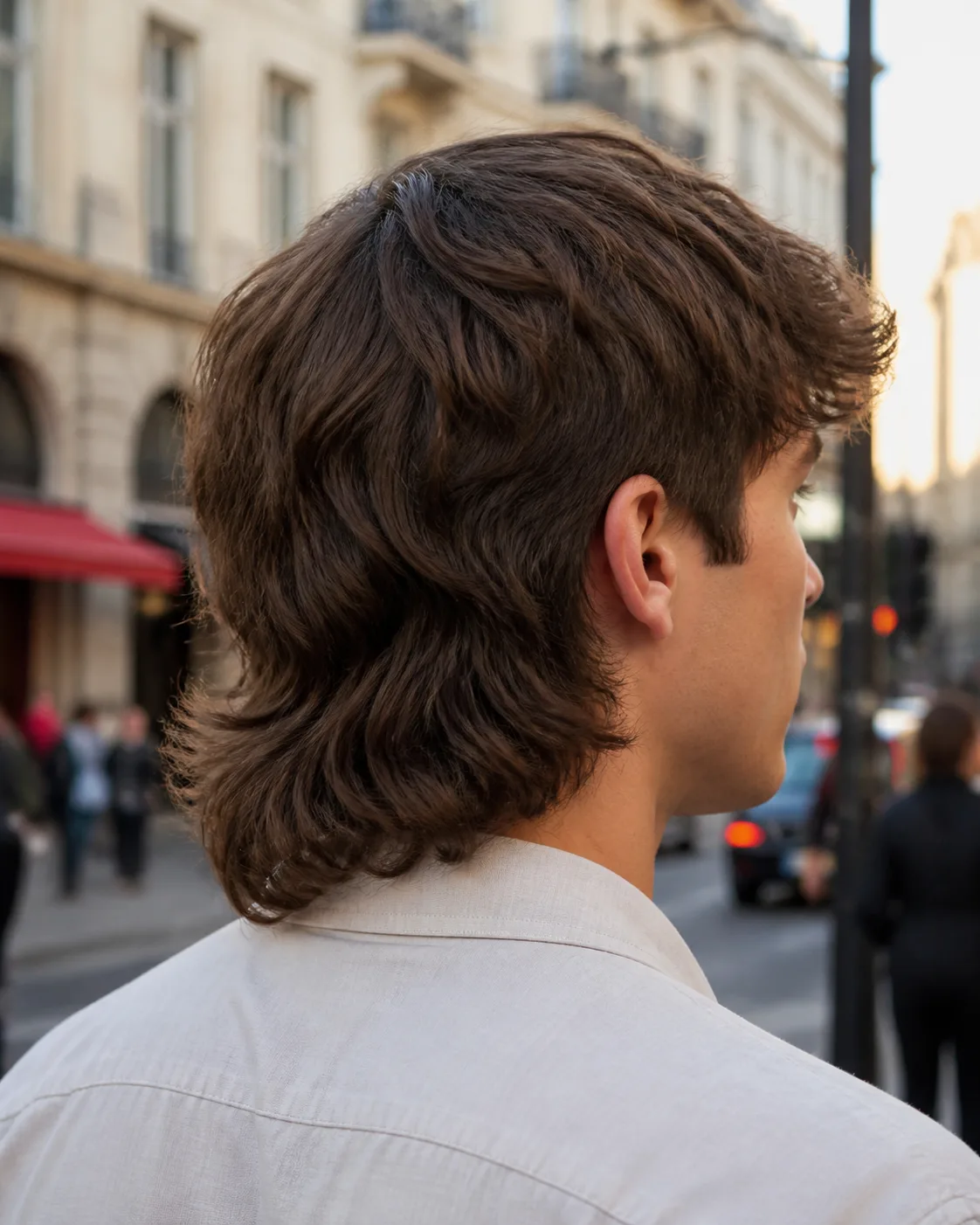
Modern mullet vs the 1980s mullet
| 1980s mullet | Modern mullet | |
|---|---|---|
| Sides to back | Hard disconnect, visible step | Blended, or a soft deliberate disconnect |
| Sides | Left thick, sometimes layered | Tapered, faded, or scissor-cut short |
| Top | Height and volume | Texture and movement, worn forward or messy |
| Back length | Well past the collar | Collar to just below, rarely more |
| Reads as | A costume | A haircut |
| Barber visit | Whenever | 6-8 weeks |
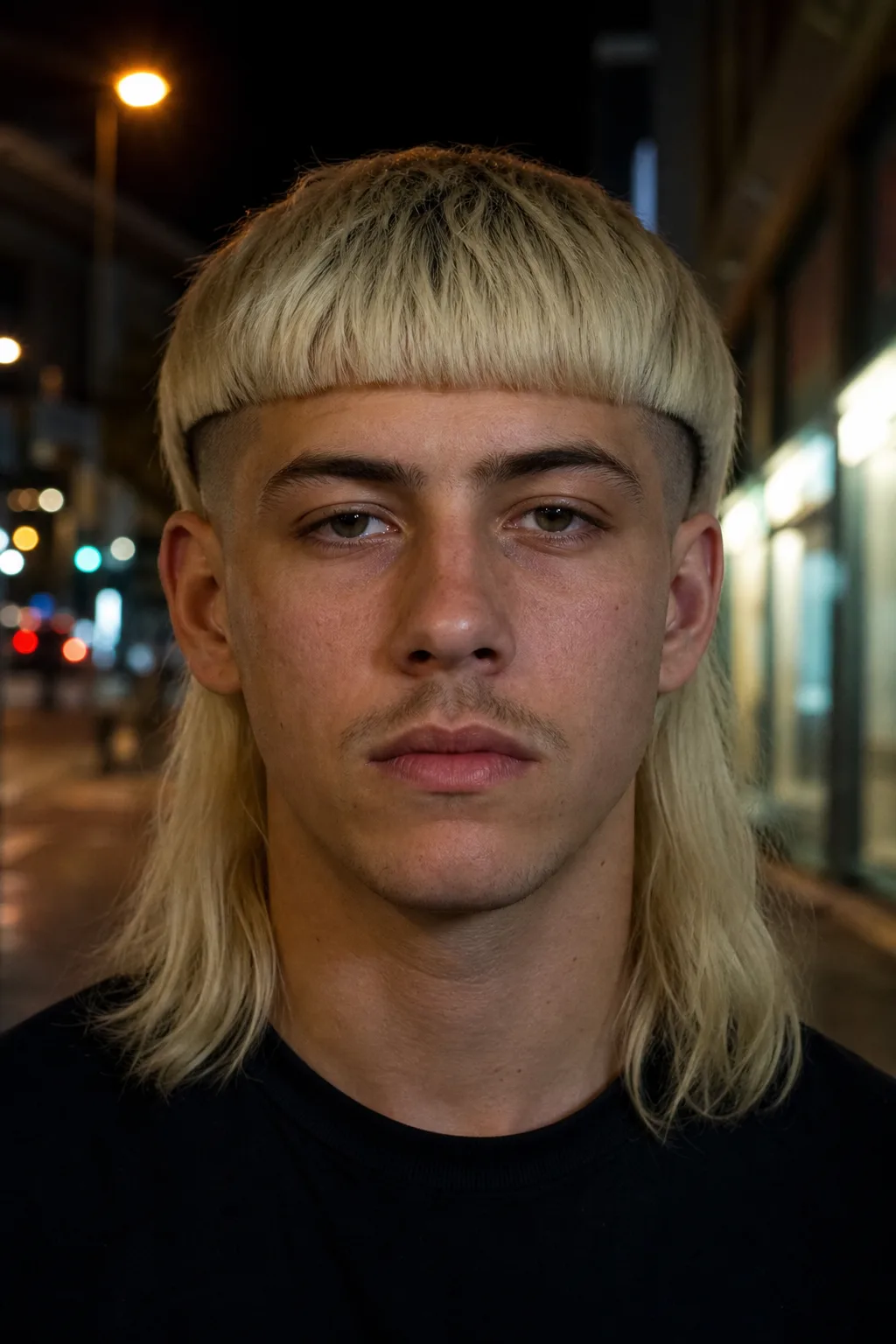
The women's cut that takes the same disconnection idea to its extreme is the jellyfish cut, where a blunt bowl-shaped cap sits over waist-length hair with nothing joining the two.
That last row is the underrated one. A mullet is one of the few short-ish cuts that grows out in your favour, because the shape is soft and getting longer at the back is the direction it was already going. Compare that with a taper fade, which starts looking untidy inside three weeks.
Are mullets still in style in 2026?
Yes, and the honest version of that answer is more useful: the mullet stopped being a trend and became a category. It has been in continuous circulation since roughly 2020, long enough that it now has settled variants with their own names, which is what happens to a cut that stays rather than one that spikes.
What has changed is the register. The extreme version peaked. What is being cut now is subtler, shorter at the back, and more blended, to the point where a lot of people wearing one would not call it a mullet.
Which modern mullet suits you?
The real question is not which one looks best in a photo. It is how much you want the haircut to announce itself. That is the axis worth choosing on. If the answer is not very loud at all, the same length worn without the disconnected back is simply a medium length men's haircut, and that is a quieter place to start.
| Variant | How loud | Best on | Notes |
|---|---|---|---|
| Soft / blended mullet | Quiet | Straight or wavy hair | Barely reads as a mullet. The safe entry point. |
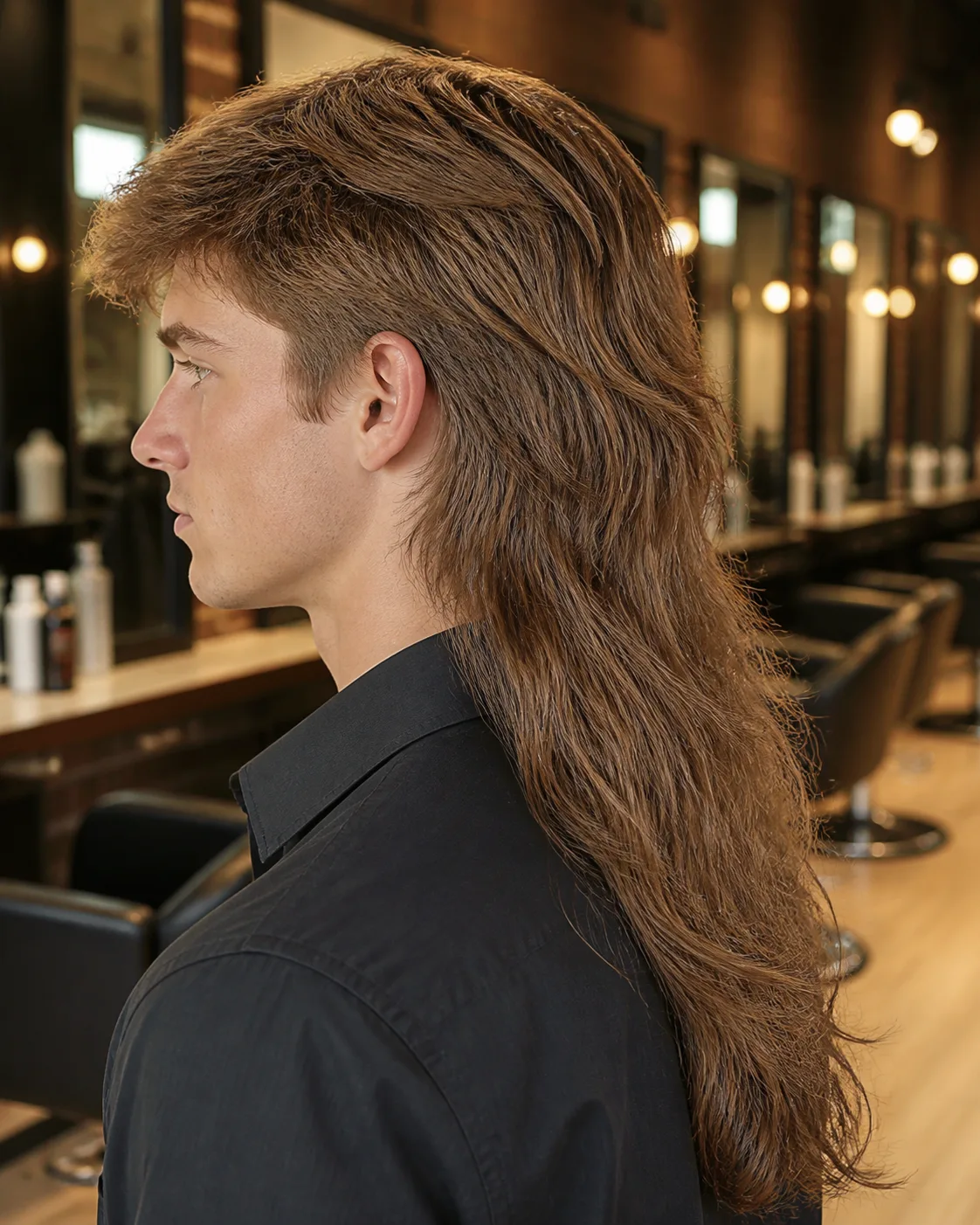
| Textured mullet | Moderate | Thick, straight or wavy | The default. Choppy top, tapered sides, defined back. |
| Burst fade mullet | Loud | Any texture, dense growth | The fade arcs around the ear. Highest contrast, highest maintenance. |
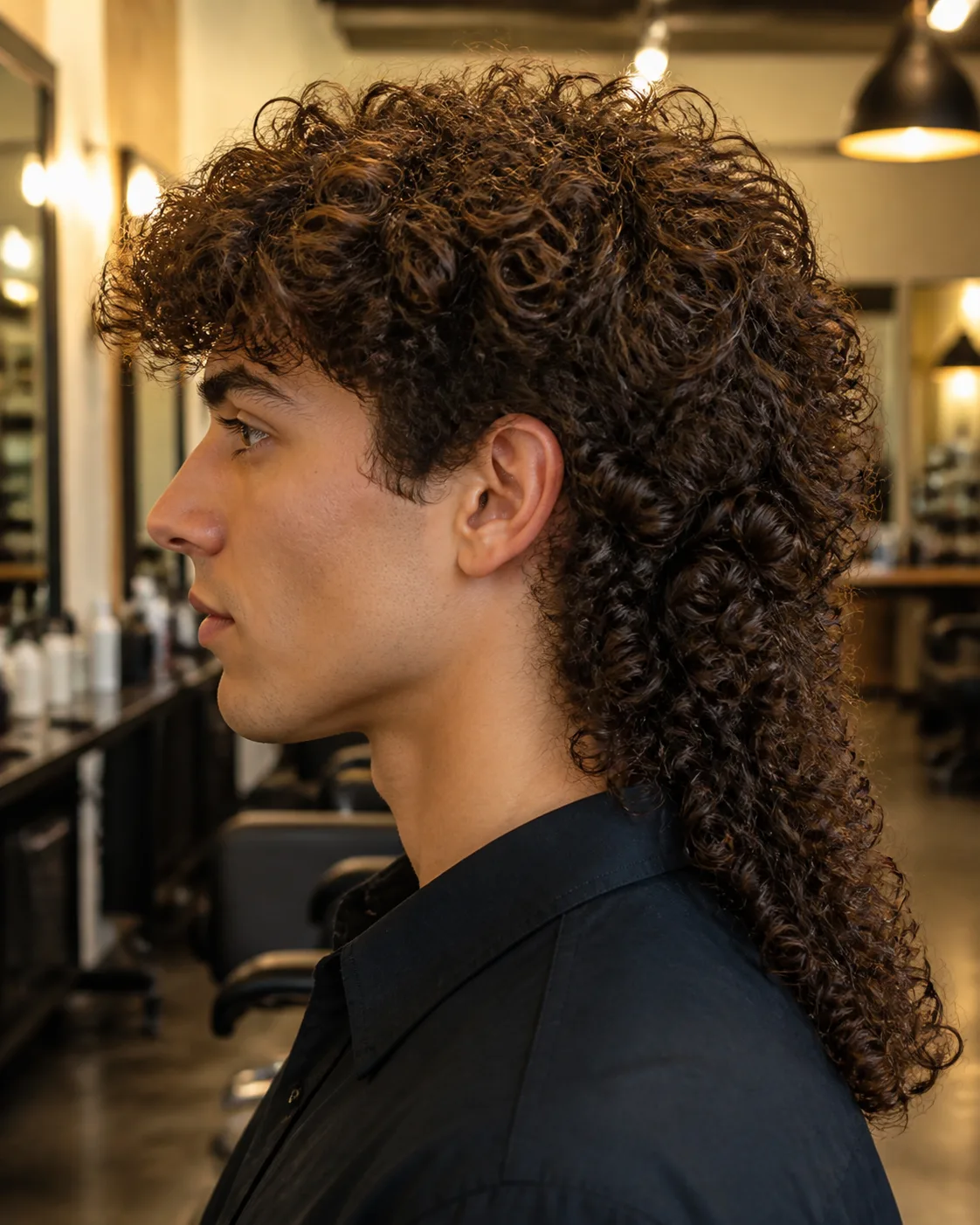
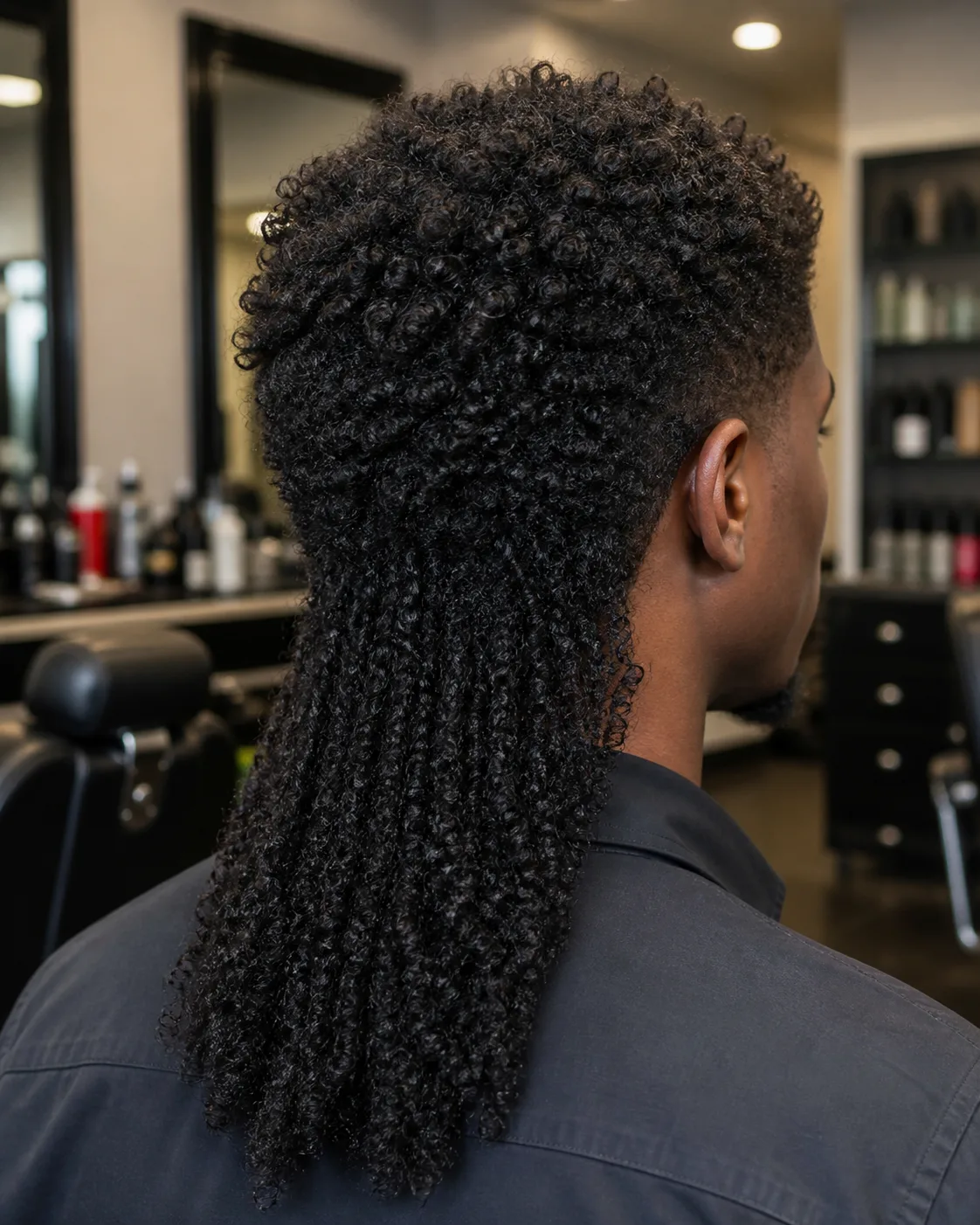
| Curly mullet | Moderate to loud | Curly and coily hair | The curl does the shaping. Needs the least styling of any of them. |
| Wolf cut | Loud | Fine to medium, any wave | Not a mullet. Layers run through the whole head, not just the back. |
If you are hedging
Take the soft version and go shorter at the back than feels right. A mullet that is too short reads as a shag and grows into a mullet in a month. A mullet that is too long has to be cut off. If you want the same compact attitude with no extra back length, compare these short boyish crop options before choosing the mullet.

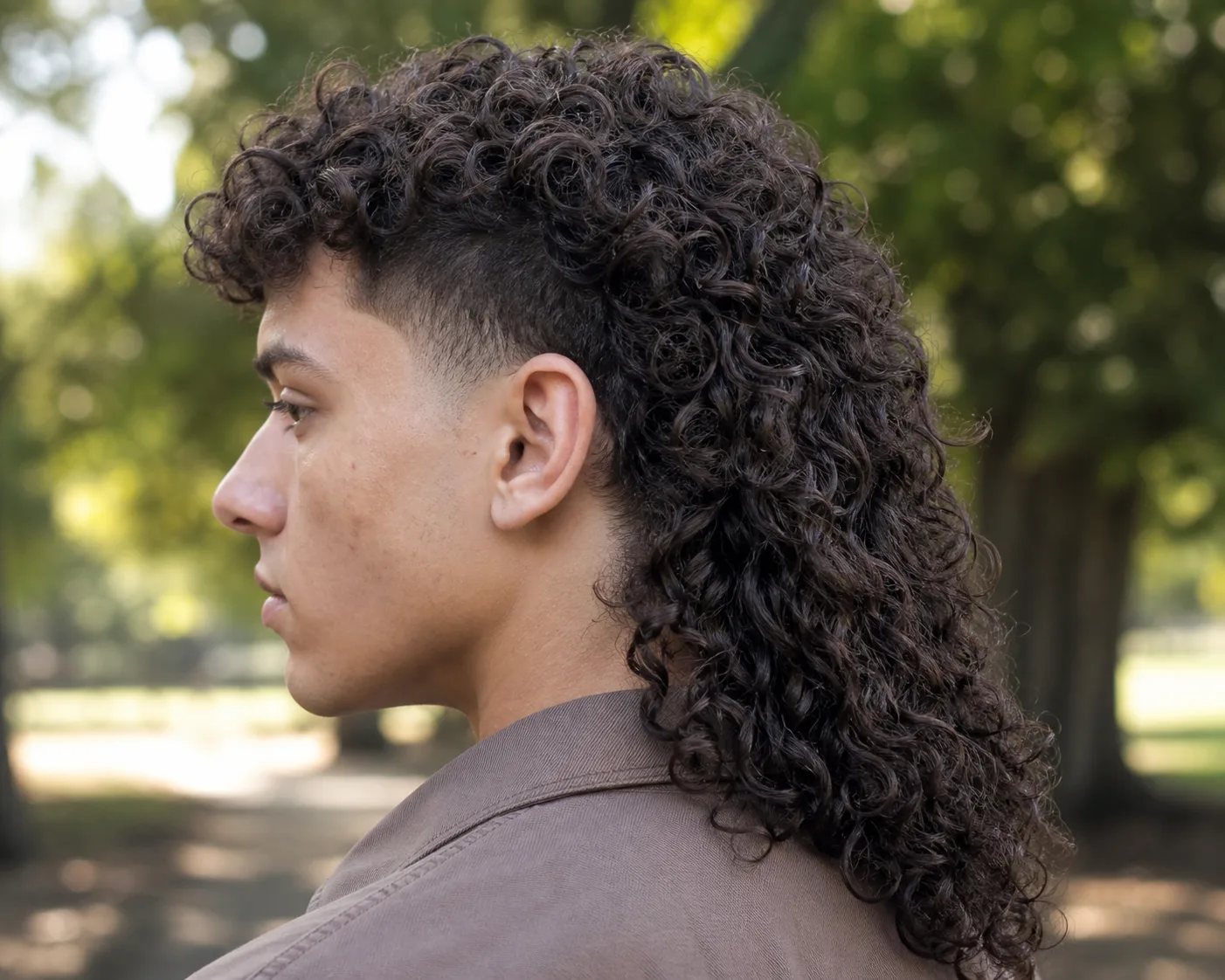
If your hair is curly
This is the texture the cut was made for. Curl hides the transition between the sides and the back, so the disconnect problem solves itself.
If you want the fade version
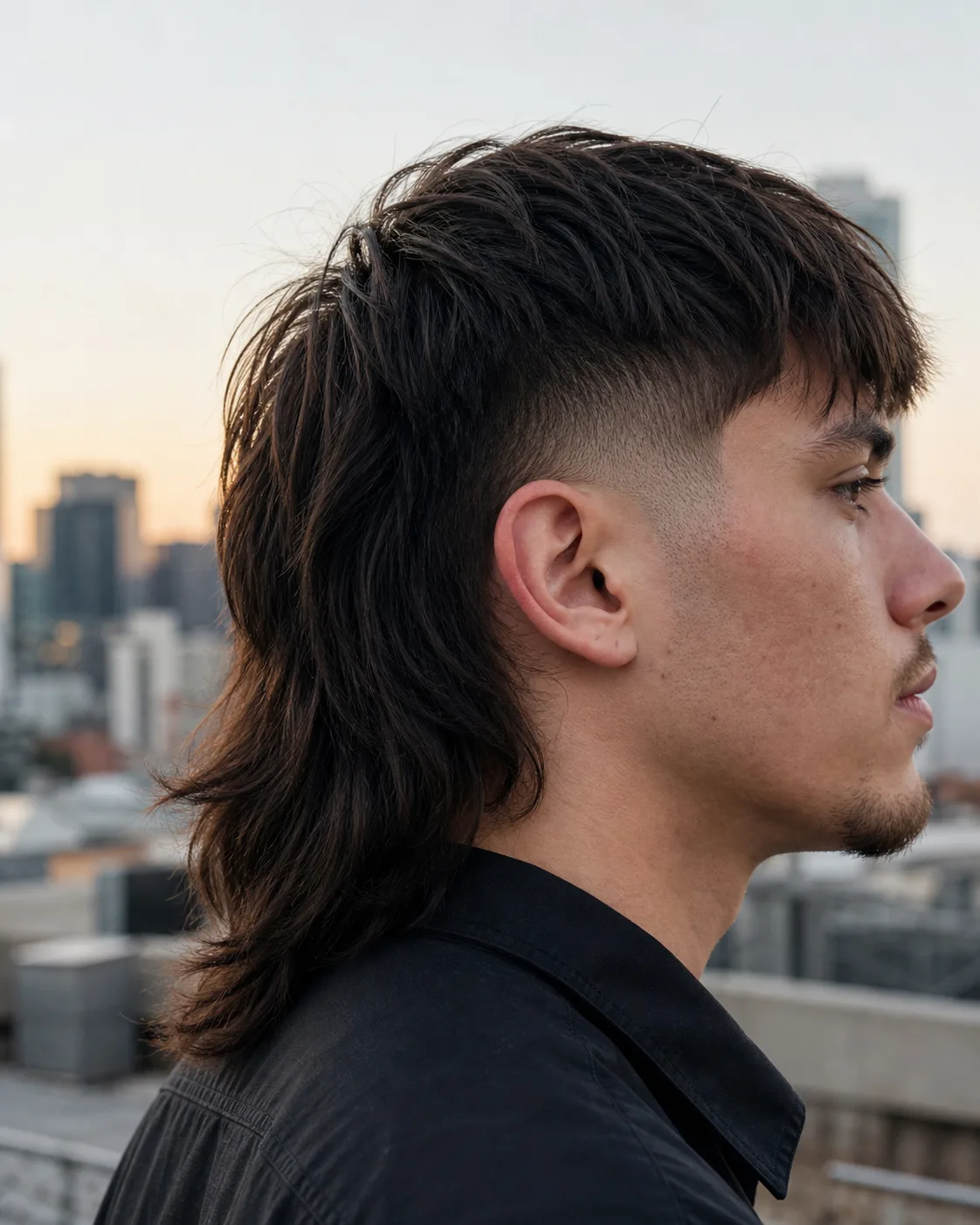
The burst fade wraps the short section around the ear in an arc instead of running straight down.
If you are actually describing a wolf cut
Wolf cut and mullet get used interchangeably and they are not the same. A mullet is about the back. A wolf cut is layered throughout, with volume at the crown and a much shaggier overall shape. If what you want is movement everywhere rather than length at the back, you want the wolf cut.
Will a mullet suit your face shape?
Broadly it is forgiving, because the weight sits behind you rather than around your face. The two that need thought:
- Round faces. The length at the back and the height on top both help. This is a good cut for you.
- Long faces. The opposite. Extra length in the same direction your face already runs. Keep the back short and the sides fuller.
If you are not sure which you have, work it out from a photo rather than guessing. Most people get it wrong.
Mistakes that turn a modern mullet into an old one
- Asking for "a mullet" and nothing else. Half of barbers will hear 1985. Say "modern mullet, blended, not disconnected" and you have removed the entire risk.
- Going too long at the back on the first cut. Length is the one thing you cannot undo. Start above the collar and grow into it.
- Leaving the sides thick. Thick sides plus long back is the costume version. The sides have to come down for the shape to read as current.
- Flat top. The modern cut needs texture up there. A blunt, heavy top with a long back is the exact silhouette people mock.
- Copying a curly reference with straight hair. Curl hides the transition; straight hair exposes it. The same instruction produces two very different haircuts.
- Booking it before something that matters. Give it two weeks to settle. Every mullet looks slightly too fresh on day one.
Say this to your barber
A modern mullet, blended not disconnected, tapered at the sides, texture through the top, and the back kept just above the collar.
How to ask for a modern mullet
- Say "modern" and say "blended"
Those two words do most of the work. They rule out the disconnected 1980s shape that "mullet" alone suggests.
- Name the back length in inches
Or point to your collar. This is the only irreversible decision in the haircut, so do not leave it to interpretation.
- Decide the sides before you sit down
Tapered, faded, or scissor-cut. If you want the burst fade, say burst fade, because it is a specific technique and not every barber offers it.
- Ask for texture on top
Point cut, thinned, choppy, whichever word your barber uses. What you are ruling out is a flat heavy top.
Ten modern mullets
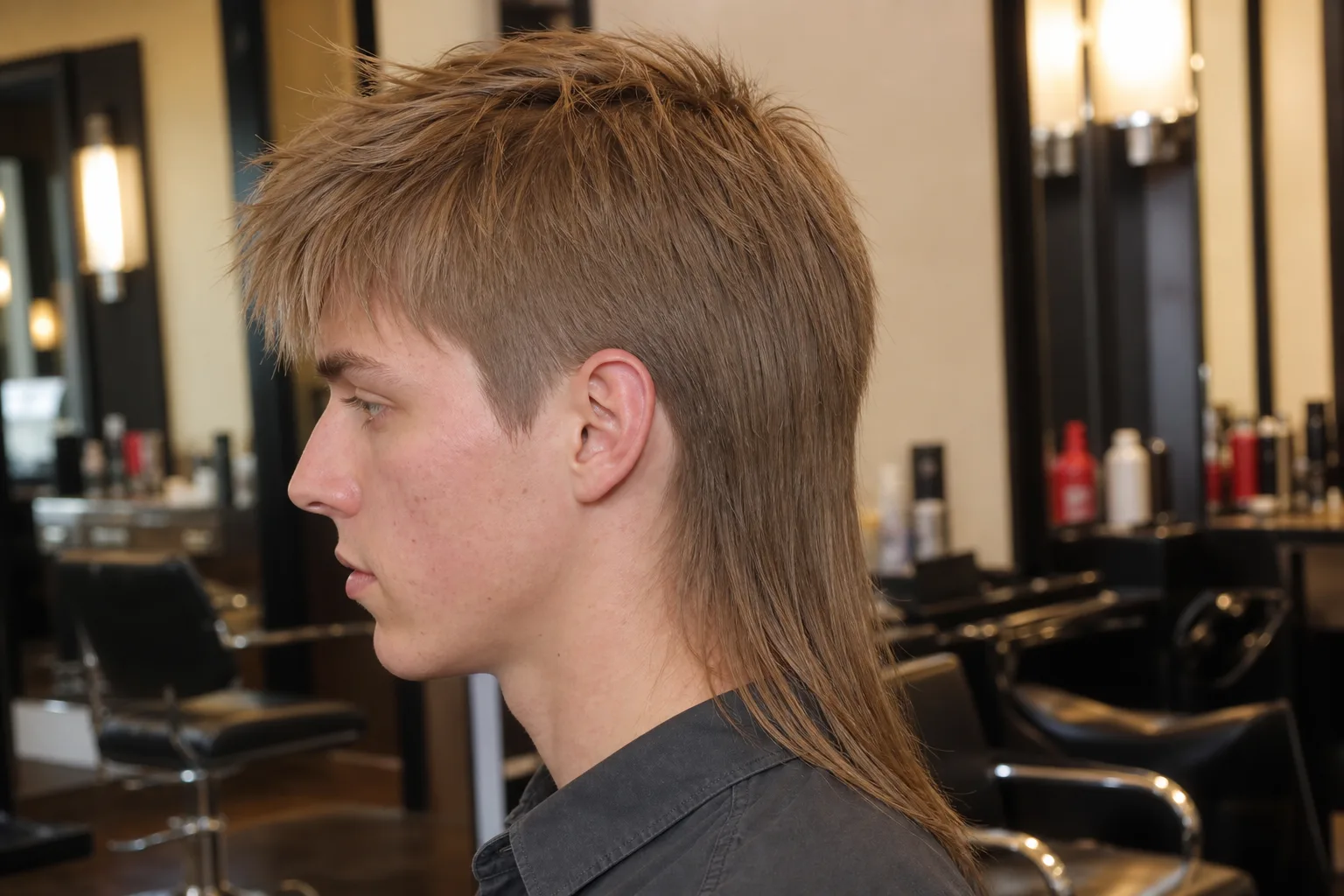
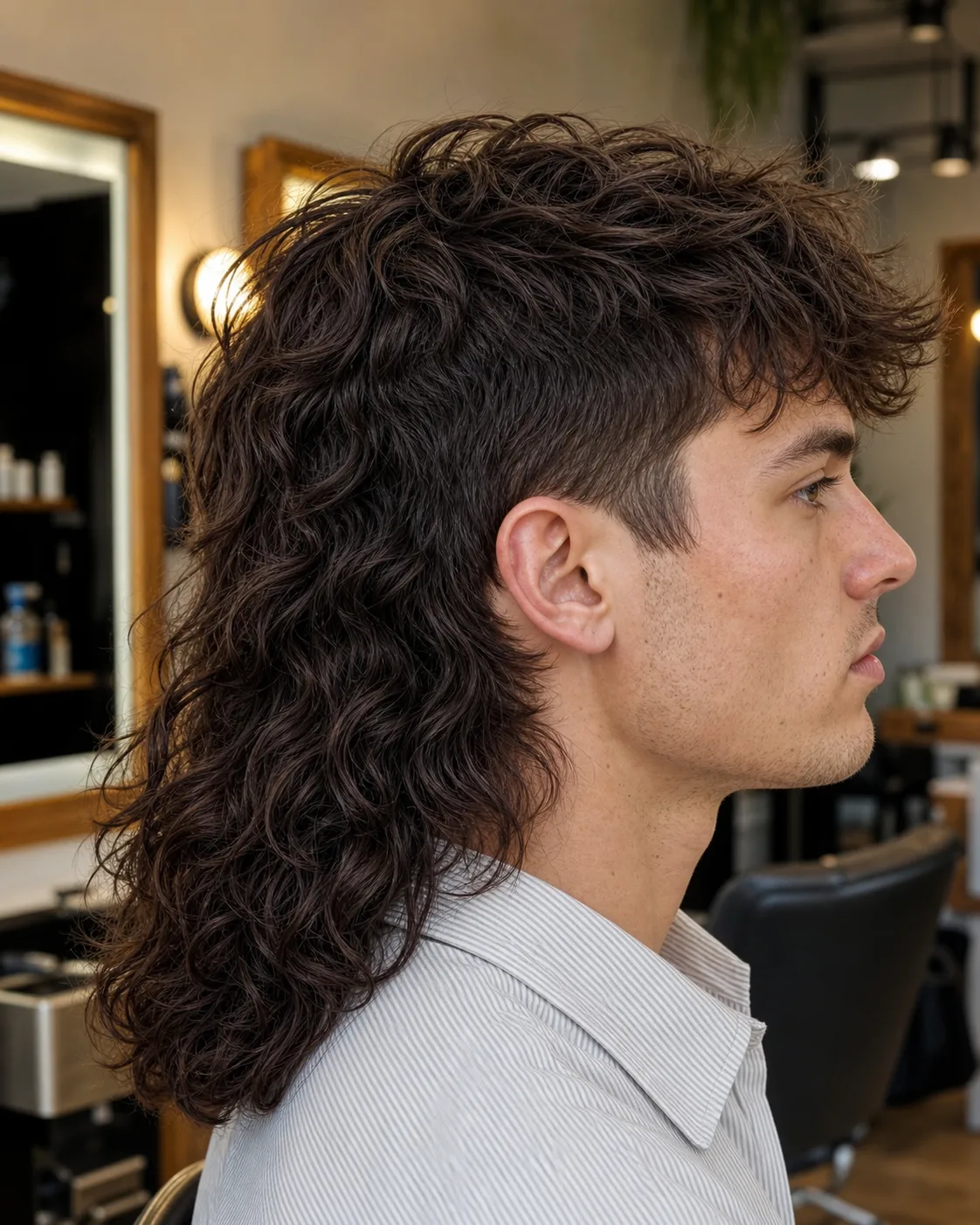
Same cut, ten sets of hair. Texture changes a mullet more than length does, so if your hair is coily or fine, the reference photo of a wavy one is not telling you much.
Gallery10 photos · tap to enlarge
 Try this on me
 Try this on me
 Try this on me
 Try this on me
 Try this on me
 Try this on me
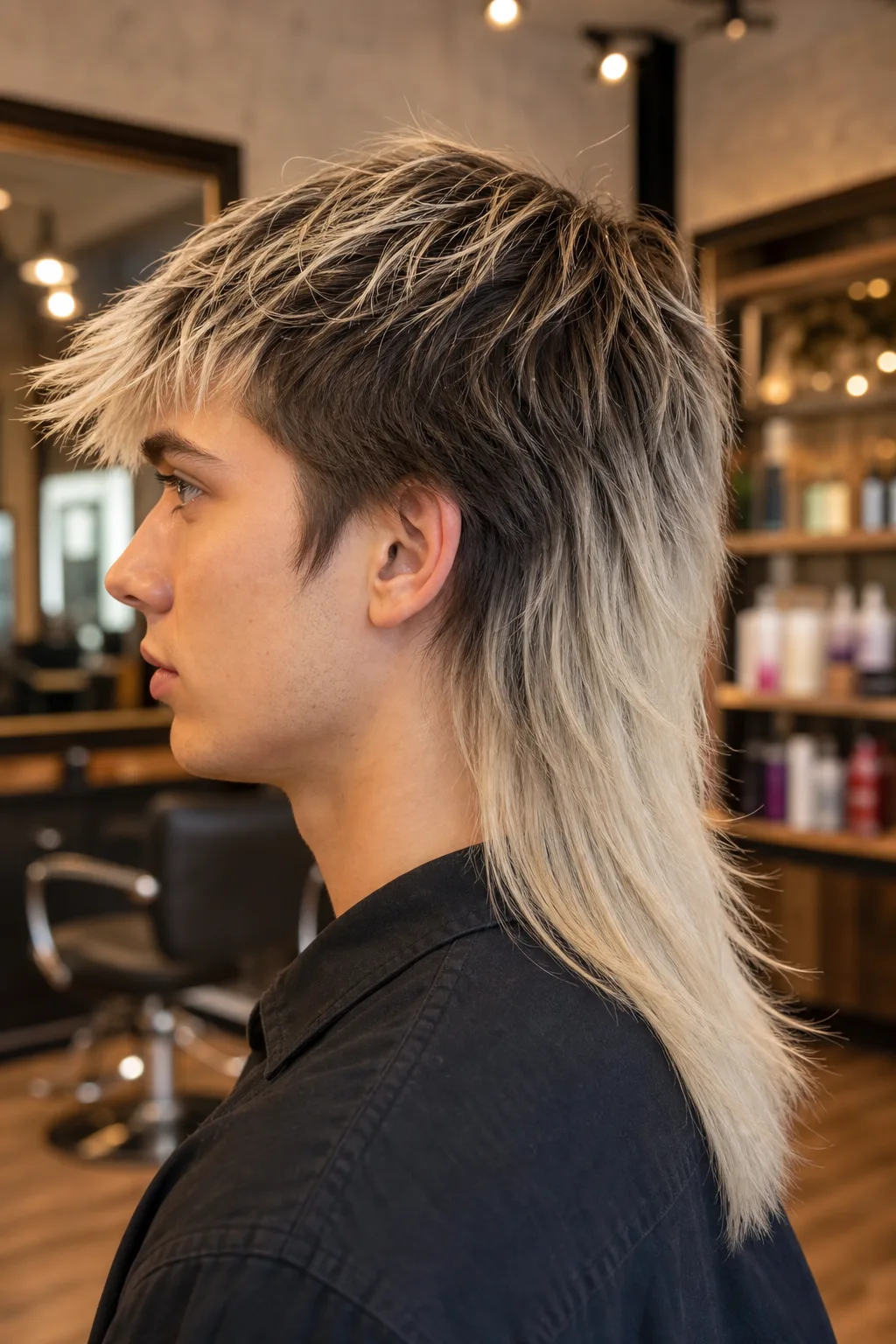 Try this on me
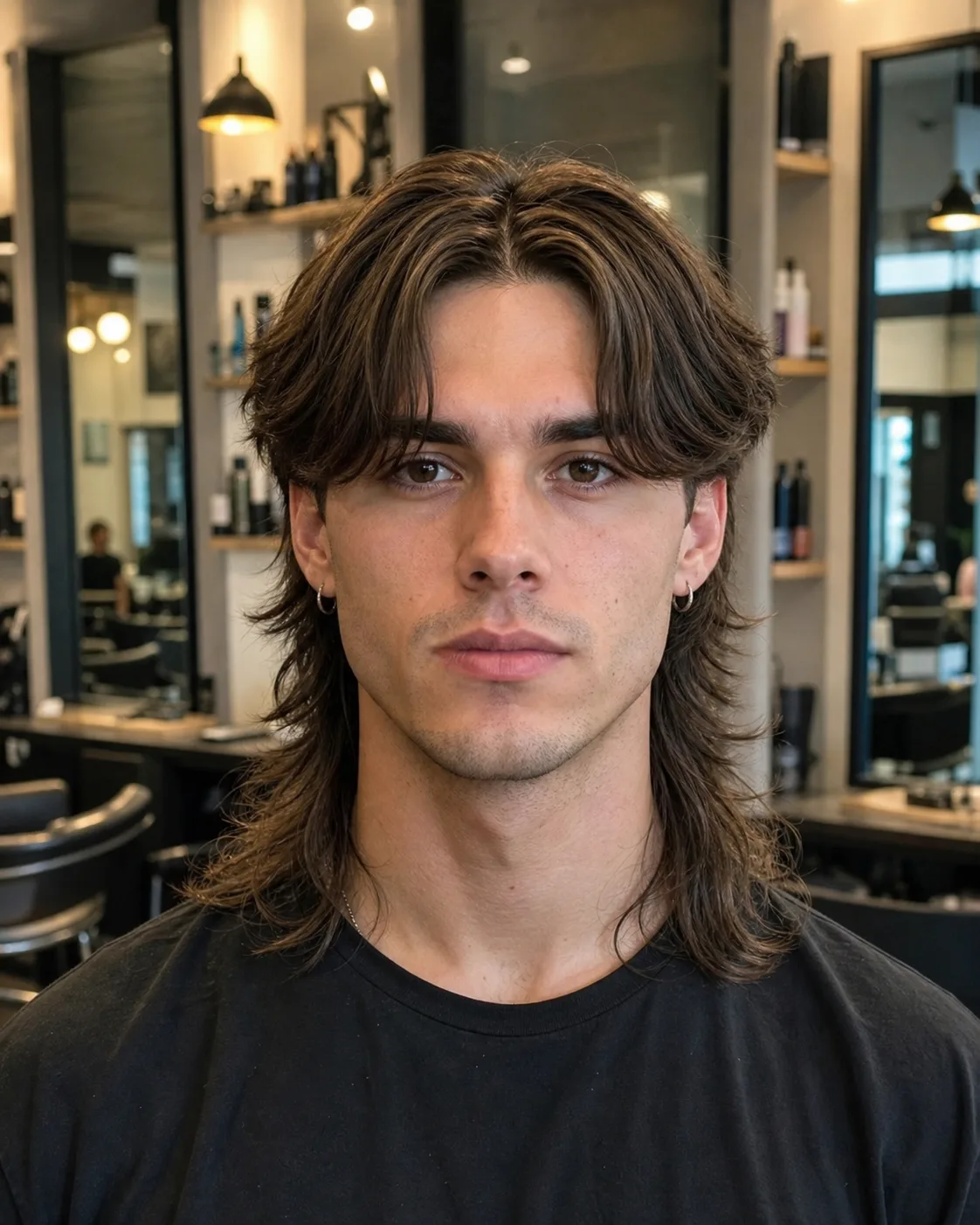 Try this on me
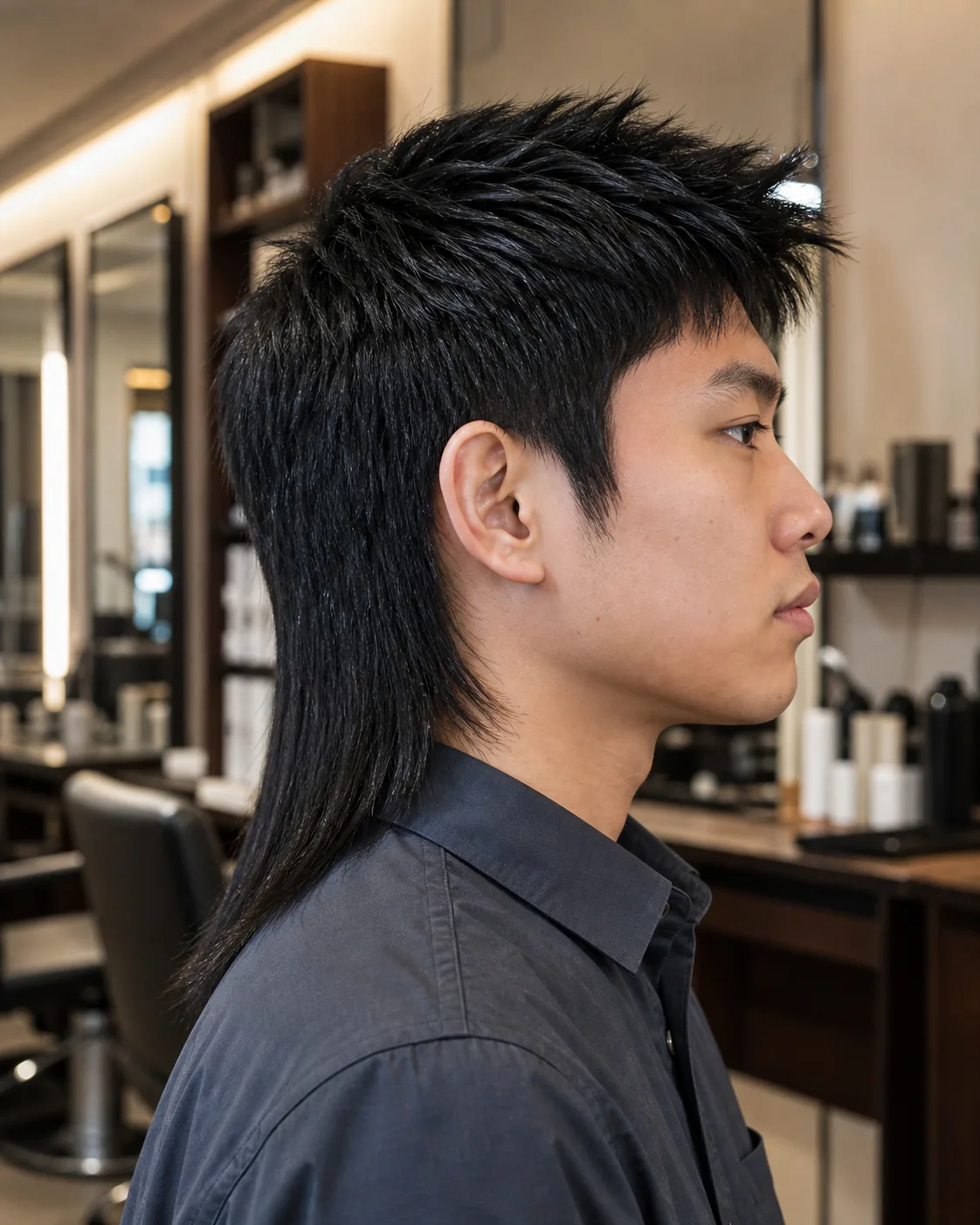 Try this on me
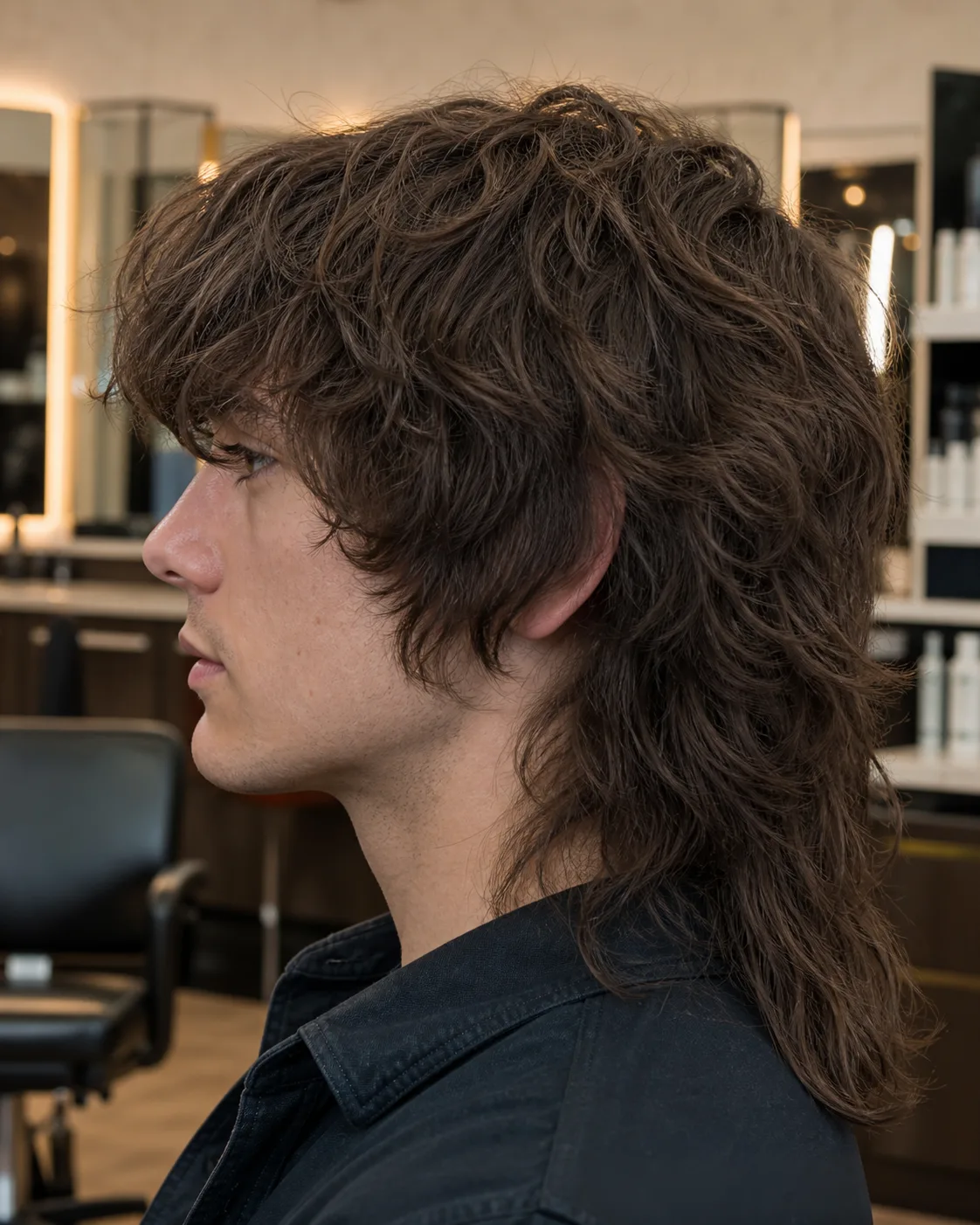 Try this on me
 Yours could be here.
Start with one selfie.
One photo, twenty seconds, and you'll know. Free account, no card for your first render.
Can you see a mullet on yourself before committing?
Yes, once, free. Hairstyle Atlas gives you one free change, which is enough for the only question that matters here: does the shape work on your head. After that it is $9 a month, and you do not need a subscription to answer one question.
This cut is worth previewing more than most. It is the haircut people are most afraid of getting wrong, the back takes months to undo, and every photo you have saved is on somebody else's head and somebody else's hair type.
So should you get one
If you have been thinking about it for more than a month, get the soft blended version and go shorter at the back than you think. It is the lowest risk entry into the cut, it grows into the louder version by itself, and it is the one you are least likely to regret in the photos.
If you already know you want the loud one, the burst fade mullet is the sharpest of them, and it is a three week cycle. Go in knowing that.
Put it on your own face before the appointment. Two minutes now against six months of growing out the back.
Frequently asked questions
A mullet with the back kept shorter, the sides tapered or faded, the top textured, and the transition blended rather than hard-edged. The 1980s version had a visible step between the sides and the back; the modern one does not.
Blending and proportion. A classic mullet disconnects the short sides from the long back and leaves the sides thick. A modern mullet blends them, cuts the sides shorter, and keeps the back closer to the collar than the shoulder blade.
Yes. It has been in continuous circulation since around 2020, which is long enough to stop being a trend and start being a standard option. The version being cut now is shorter and more blended than the one that peaked.
No, but the extreme version is past its peak. The subtle, blended cut is what most barbers are producing now, and it reads as a normal haircut rather than a statement.
Most people, because the weight sits behind the face rather than around it. It particularly suits round faces and curly hair. Long faces should keep the back short and the sides fuller.
A mullet where the short section arcs around the ear instead of running straight down the side. It is the highest contrast version, and it needs recutting roughly every three weeks.
No. A mullet is defined by length at the back. A wolf cut is layered throughout with volume at the crown and a shaggier overall shape. They overlap but they are different haircuts.
Enough to clearly separate it from the sides, which in practice means at least a couple of inches past where the sides finish. Anything shorter reads as a shag rather than a mullet.
Preview it on your own photo: Men's Hairstyle Try-On.
Share article
About the author
More articles
Men's Haircuts · 14 min
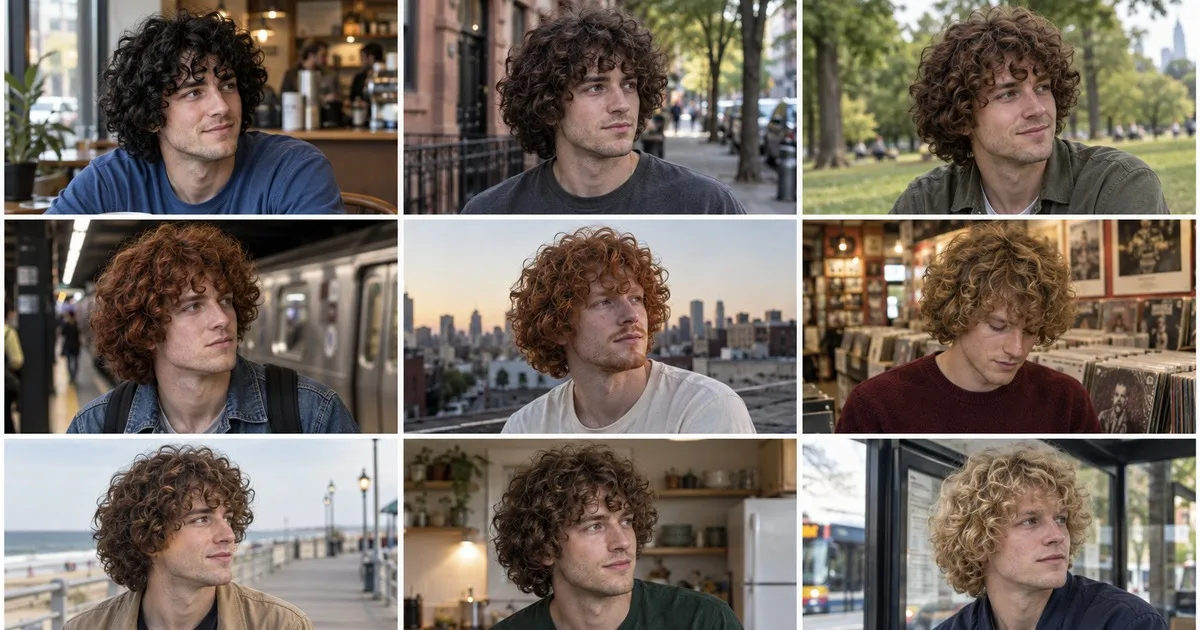
Benny Blanco Haircut: The Fake Half Shave and the Real Curls
Benny Blanco did not shave half his head. It was a prosthetic bald cap, and the buzz cuts are AI. Here is what his curly mop actually is, the short version, and exactly what to tell your barber.
Men's Haircuts · 13 min
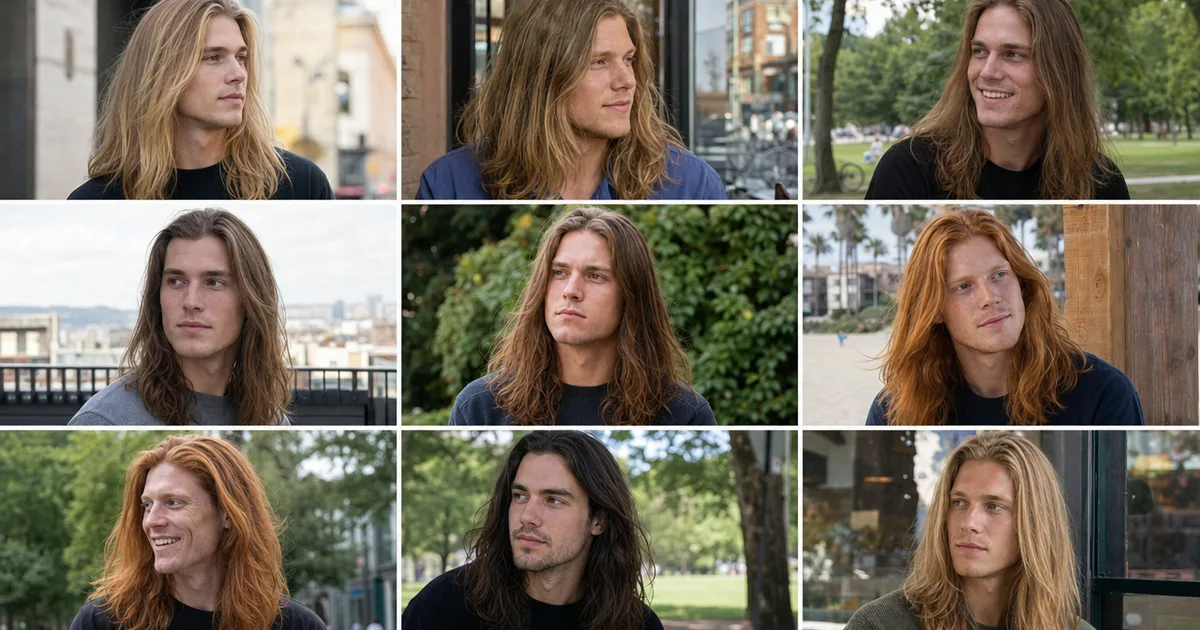
Trevor Lawrence Haircut: The Wig, the Flow, How to Copy It
Trevor Lawrence did not cut his hair. The short cut in the Jaguars' 2026 schedule video was a wig. Here is what his long flow actually is, how long it takes to grow and what to tell your barber.
Trends and Celebrity · 15 min
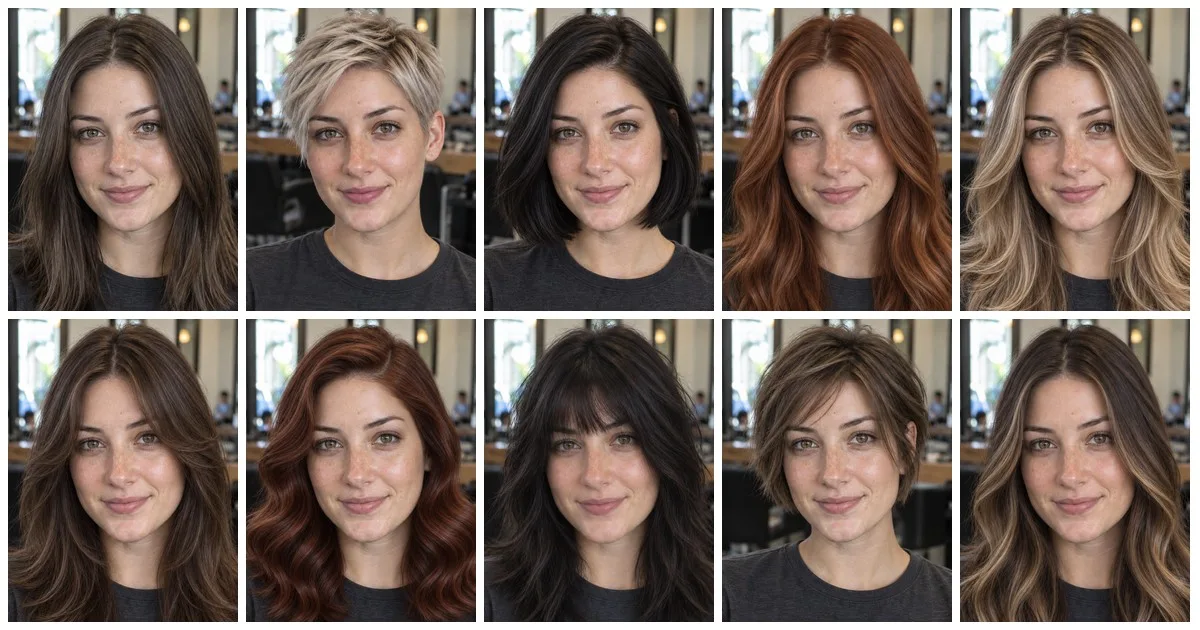
Best AI Hairstyle Apps in 2026: 9 Try-On Apps Ranked
The best AI hairstyle app changes your hair and leaves your face alone. Nine try-on apps ranked, with platforms and prices taken from each vendor, what each does well, where it falls short, and which kind of tool to use for a haircut versus a color.