Haircuts for Curly Hair Men: 12 Cuts and How to Ask
Oleh Onysko Updated 29 September 2026 19 min read
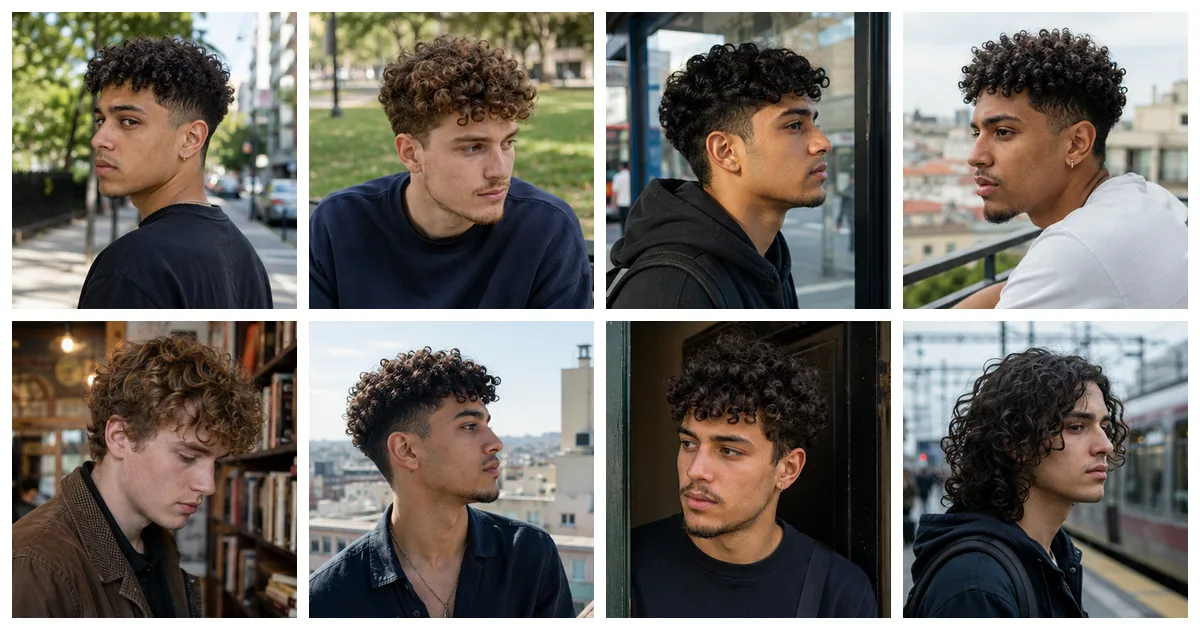
In this article
Every list of curly haircuts for men names the cuts and skips the part that decides whether yours works. The name on the poster is the least important thing you will say in the chair. Two instructions matter more: cut it dry, and take the weight off the sides rather than off the top.
Get those two right and a dozen different cuts look good on you. Get them wrong and the best cut in this article dries into a triangle by Thursday.
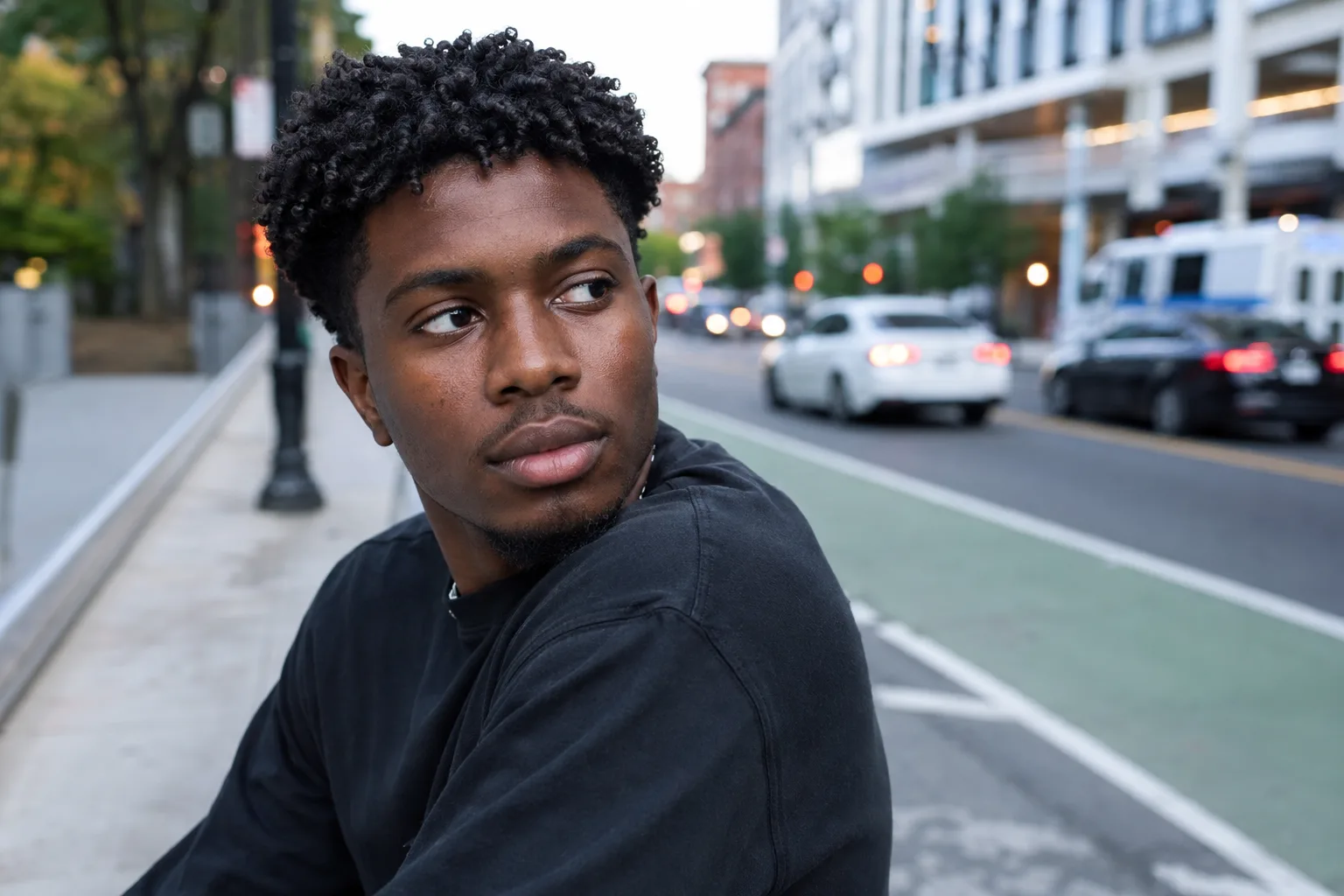
Cut it dry, or you are cutting a shape you will never see
Wet curly hair hangs almost straight. Dry, it springs back. Depending on how tight your curl is, you lose somewhere between 30 and 75 percent of your visible length when it dries, which L'Oreal's own guide to shrinkage puts in the same range that most curl specialists quote.
Do the arithmetic on that. You ask for two inches off. The barber combs it wet, measures two inches, cuts. Those two wet inches were closer to three dry inches of curl. You paid for a trim and walked out with a short back and sides.
This is why a barber who wets, combs and clippers over a comb is a bad idea on curly hair even when they are excellent at it. The comb pulls the curl straight, the clipper cuts a flat plane through it, and when it dries every curl retracts a different distance depending on how tight it is. What was a clean line wet becomes a ragged one dry.
A barber who cuts curly hair well cuts it dry, in its natural clump, one section at a time, and checks the shape by looking at it rather than by measuring it. If a shop will not do that, it is the wrong shop. That single question tells you more than any portfolio.
The three decisions behind every curly cut
Strip the names away and every men's curly cut is three choices. Once you can name yours, you can walk into any shop in the country and describe what you want without knowing what it is called.
| Decision | The options | What it actually controls |
|---|---|---|
| Side weight | Scissor taper, low taper, mid or high fade, undercut | How wide your head looks. Curly hair grows out before it grows down, so bulk collects at the temples and above the ears |
| Top length | 2 inches, 3 to 4 inches, 5 inches and up | How much curl definition you get. Under 2 inches most curl patterns read as texture, not curls |
| Perimeter | Blended, disconnected, or one length | Whether there is a visible step between the top and the sides |
Curly hair is the one texture where the sides do all the work. On straight hair you can leave the sides long and the hair lies flat against the skull, which is why the cuts that work on type 1 hair are sorted by what is done to the top instead. On curls it does not lie anywhere. It stands out sideways at the exact point where your head is already widest, and that is the whole reason curly guys end up with the pyramid.
So if you only change one thing about your current cut, change the side weight. That is also why nearly every good curly cut in this article is built on some version of a low taper, even the long ones.
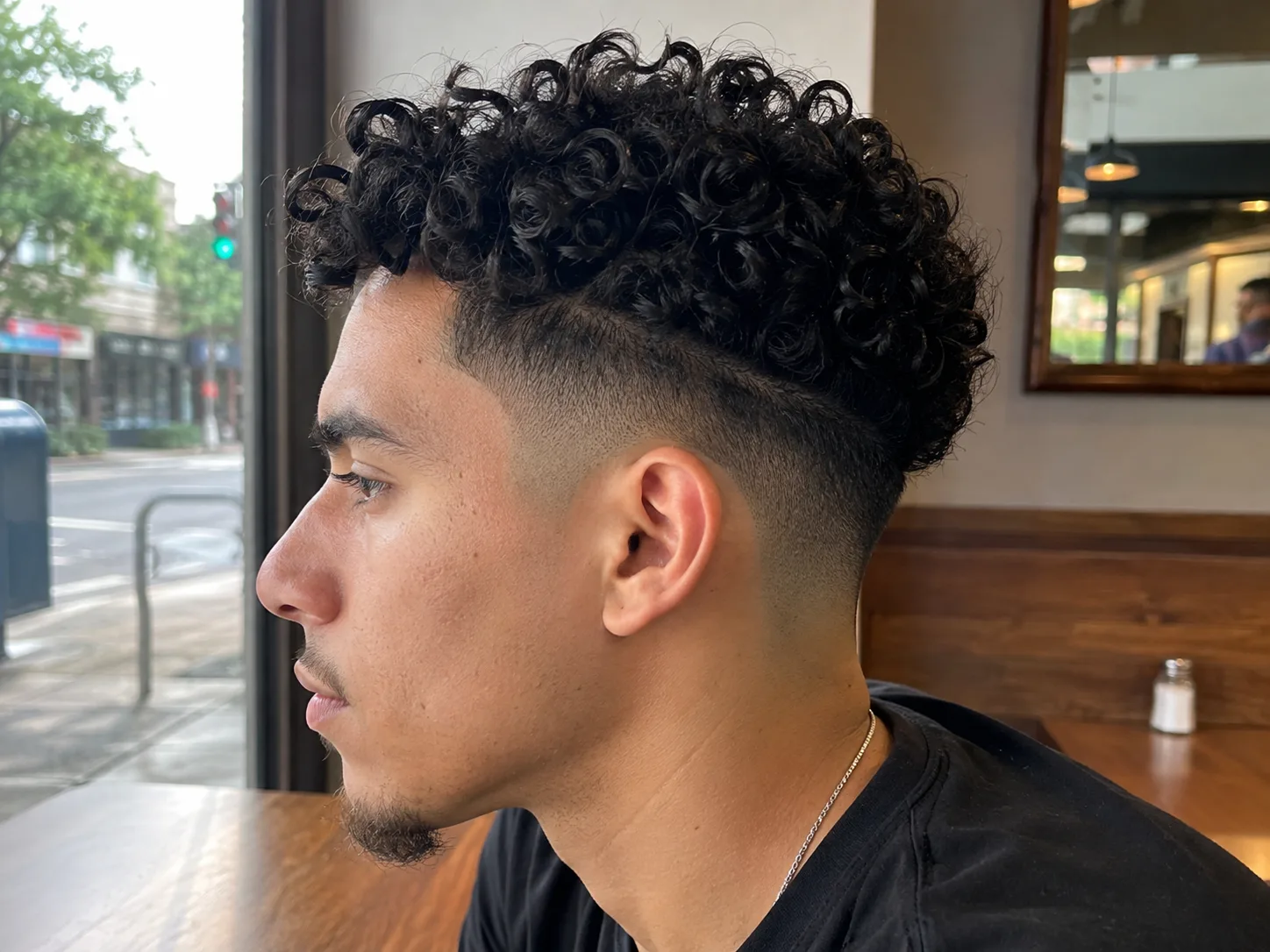
Match the cut to your curl type
Curl type is not vanity classification. It changes how much weight you can leave on the sides before the shape breaks. Researchers at L'Oreal built an eight-type curl scale by measuring curl diameter and curve index rather than guessing by eye, published as a worldwide classification of human hair shape, and the popular 2A to 4C scale is a rough consumer version of the same idea.
| Your curl | What it does | Ask for | Avoid |
|---|---|---|---|
| 2A to 2C wavy | Waves collapse under their own weight and go flat on top | Length on top, light internal layers, scissor taper on the sides | Fades above the temple, which leave nothing to weigh the wave down |
| 3A to 3B curly | Loose to springy spirals, defined but soft | Anything here works. Low or mid taper, 3 to 5 inches on top | Thinning shears through the mid lengths, which cause frizz halos |
| 3C tight curly | Dense corkscrews, maximum width at the sides | Mid taper or higher, plenty of length on top for balance | Uniform length all over, which is how the triangle happens |
| 4A to 4C coily | Shrinks the most, holds shape the best | Sponge-defined crops, high tops, sharp line-ups, or a shape-up with real length on top | Cutting wet, and any promise of "loose curls" from a haircut |
If your hair sits in the 4 range, the styling side of this matters as much as the cut, and there is more detail in the guide to caring for 4C hair.
Short curly haircuts for men
Short here means roughly 2 to 3 inches on top. Short curly cuts fail in one specific way: taken too short, curl reads as fuzz instead of pattern. Two inches is the floor for most 3-type hair.
Curly taper fade
The default, and it is the default for good reason. The sides taper from a soft finish at the sideburn up to full length, with no hard line anywhere, and the top keeps every inch of curl. It works on every curl type from 2C to 4C, it grows out without a bad phase, and it does not commit you to a style.
Say low taper if you want the change to be invisible from the front, mid if you want your head to look narrower. The mid taper is the safer pick on 3C and up.
Textured curly crop
Short and blunt through the back, with the top pushed forward into a curly fringe that sits on the forehead. The fringe is the point. It shortens a long face and it hides a receding corner without announcing anything.
The mechanics are the same as any textured fringe, with one change: on curls the fringe is cut curl by curl, so the front edge is soft and uneven rather than a straight line across the brow.
Short curly afro with a line-up
An even 2 to 3 inches all round, shaped into a rounded silhouette, with a razored line-up across the front hairline and around the temples. The line-up is what makes it look cut rather than grown. It is the highest-maintenance cut on this list, because the line moves visibly in about ten days.
Curly caesar
Roman-emperor logic: short all over, the front sections brought forward flat against the forehead in a short curly fringe. It is the best cut on this list for a hairline that is thinning at the temples, because the weight sits exactly where the hair is going.
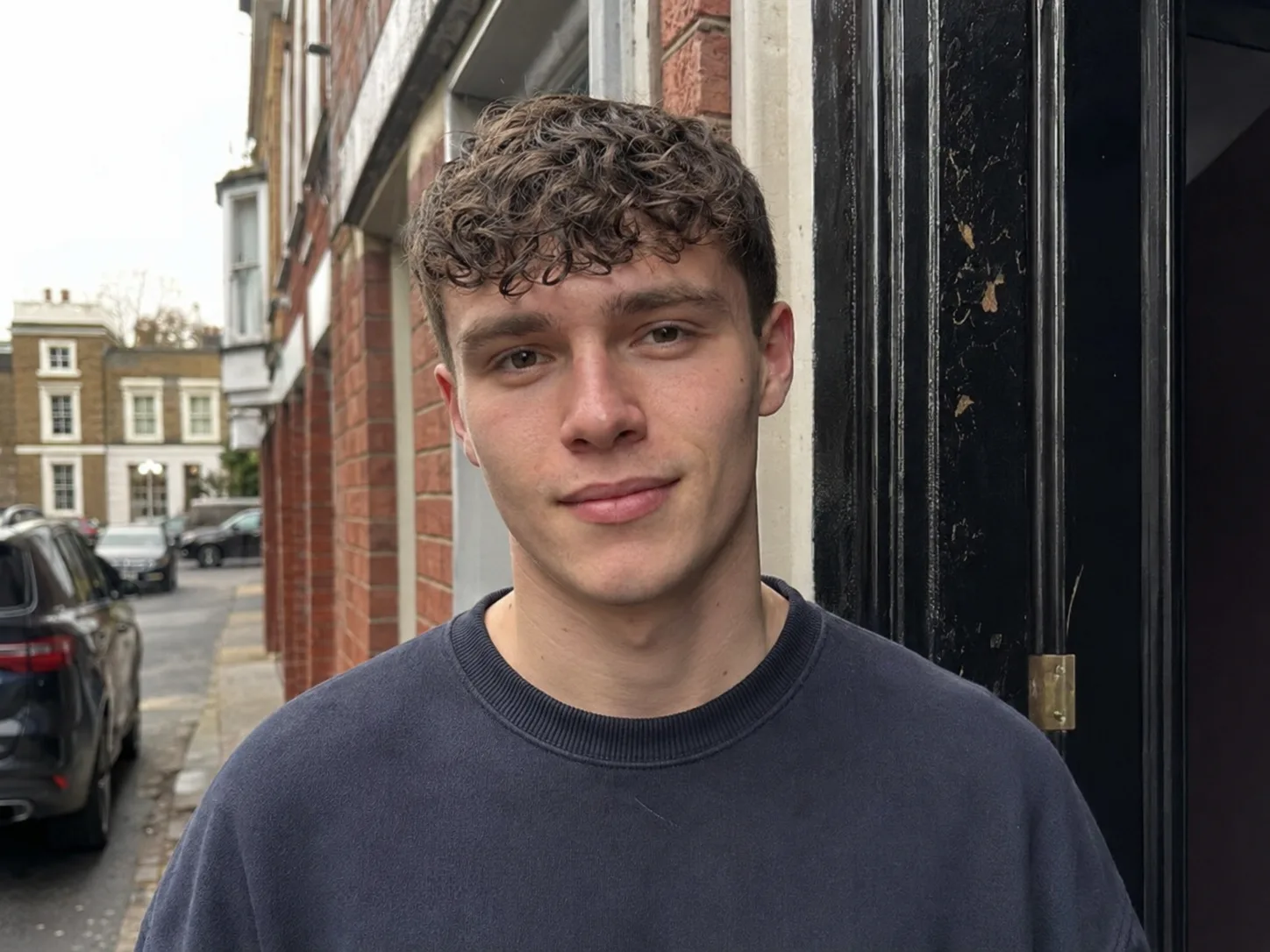
Medium curly haircuts for men
Between 3 and 6 inches on top. This is where curl definition peaks, and where nearly every curly cut trending right now lives.
Low taper blowout
The one teenagers call the broccoli cut. A low taper keeps the sides tight and the top is blow-dried up and forward into a dense round mass of curl, four inches or more. Done badly it is a mushroom. Done well it is the single most flattering cut on 2C to 3B hair, because all the volume sits above the widest part of your head instead of beside it.
The blow dryer is not optional. Air dried, this cut lies down and becomes a different haircut entirely.
Curly curtains
A middle part with the length falling to either side of the forehead, five inches or so at the front. On straight hair curtains need styling every day. On curls they hold themselves apart, which is why the cut has come back on wavy and 3A hair specifically. If that is your pattern, the loose one-inch spiral has its own rules about how much length to leave before the curl reads as a curl.
Needs a soft taper or nothing at all on the sides. A high fade under curtains fights the shape.
Curly undercut
One clipper length on the back and sides, no blend, a visible step where the top starts. It is the most aggressive way to kill side bulk, which makes it the right answer on very dense 3C hair that a taper cannot control.
The trade-off is real: an undercut has no gentle grow-out. Around week five the disconnection blurs and it looks unintentional for a fortnight.
Curly shag
Heavy layers through the crown, length left at the back and around the ears, a wispy curly fringe at the front. It is the deliberately unbarbered option, and it is the only cut here that gets better as it grows. Keep going past the shoulders and long curly hair on a man has its own rules: cut it dry and wear it loose. Stop at the jaw instead and you have the round, one-length mop behind the Benny Blanco haircut, which only works if nobody touches the sides with clippers.
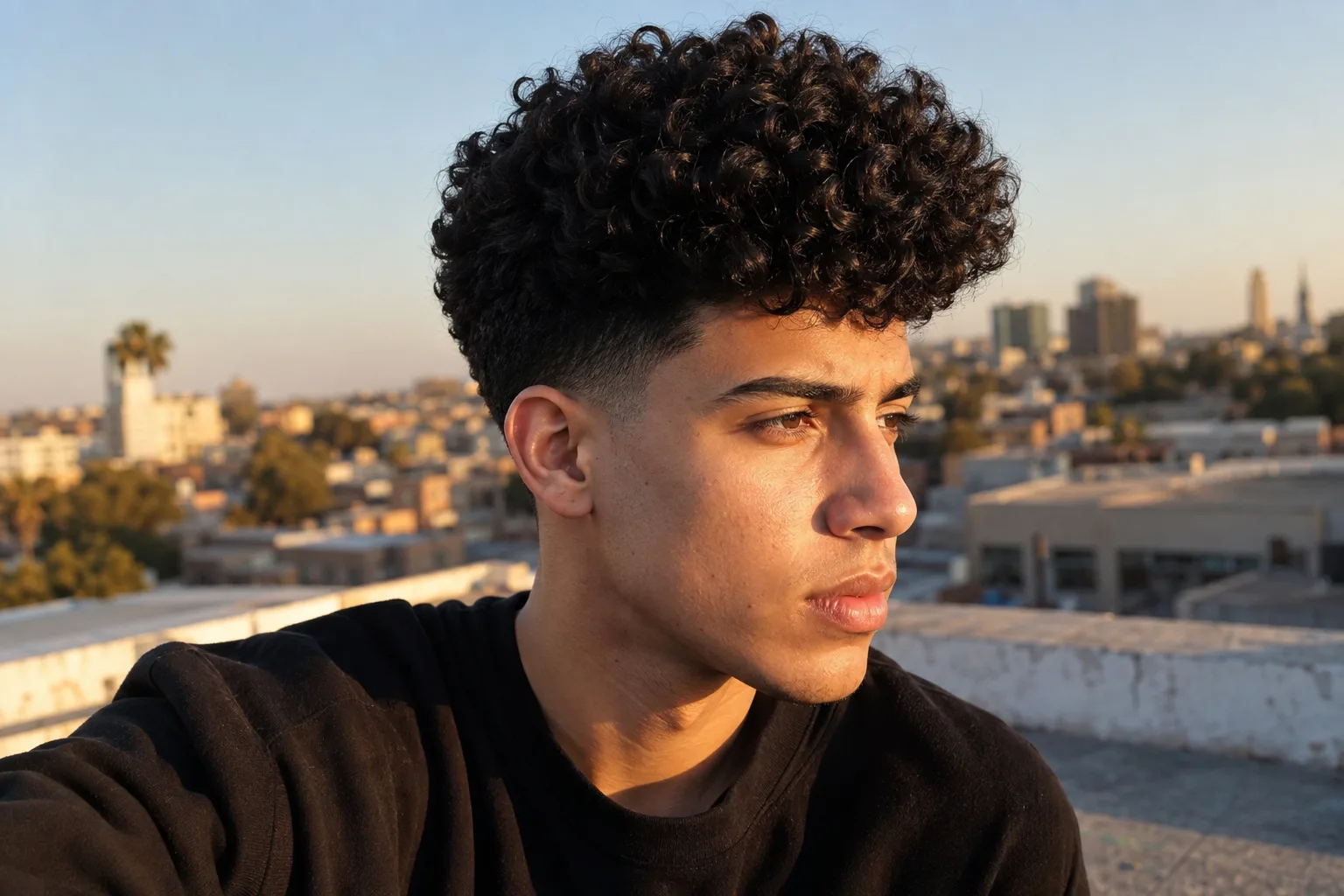
Long curly haircuts for men
Six inches and up. Long curly hair is a maintenance argument, not a styling one: length exposes damage, and dry curly ends look worse than dry straight ends because every bend is a stress point.
Shoulder-length layered curls
Long, with internal layers cut dry to remove weight from the middle without shortening the outline. The layers are invisible when it is done properly. All you notice is that the curls near your face still have spring instead of being dragged flat by the ones below them.
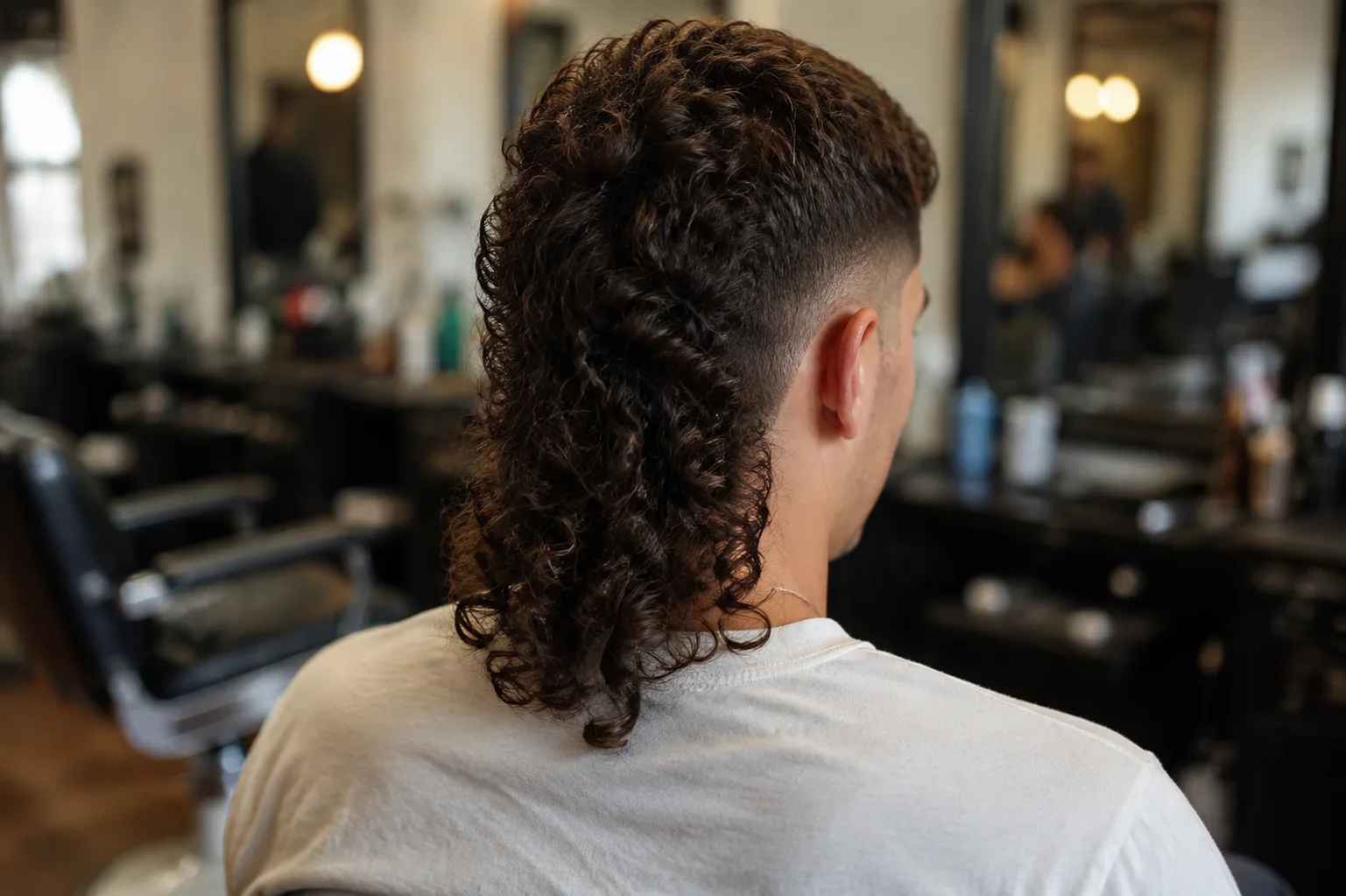
Curly mullet
Short and tapered at the sides and front, long through the back. Curl suits it better than straight hair does, because the curl breaks up the hard boundary that made the original version look like a mistake. Everything about the modern build applies here, and the modern mullet guide covers the proportions.
Half-up bun with a tapered nape
The top and crown sections tied up, the rest left down over a nape that has been tapered short. The taper is the part people skip. Without it the down half sits on your collar in a wedge, and the whole thing reads unkempt rather than deliberate.
One-length long curls, scissor cut only
No clipper touches your head. The hair is cut to one length dry and shaped only at the perimeter, so the curl pattern does all the work. It is the hardest look to get right and the easiest to maintain: two cuts a year and a decent conditioner.

Curly hair and your face shape
Curls add width at the temples and height at the crown. That is the entire face-shape calculation, and it is why the standard advice inverts for curly hair. The rules below cover most faces, and our what hairstyle suits me tool covers the rest with your own photo. If your hair is straight and you want this shape rather than a cut that works with existing curl, a perm is the route there, and the rod size does the same job the curl type does here.
A round face is the case people ask about most. Round faces want height and want the sides narrow, so a round-faced curly guy should be pushing volume up and clipping it in at the temples: a mid taper with four inches on top, not a soft all-over cut. The instinct to "soften" a round face with volume at the sides is exactly backwards.
Long faces are the reverse. Keep the top under four inches, let the sides stay full, and cut a fringe forward.
If you are not sure which you have, the calculator below measures it off a photo rather than asking you to judge your own face in a mirror.
Measure it instead of guessing
Both numbers in the same unit — the answer is a ratio, so it does not matter which.
Under 1.15 reads round, 1.15 to 1.5 reads oval, over 1.5 reads long. Oval and long split on the jaw rather than the ratio: an oval tapers toward the chin, a long face runs straight down.
How to ask for it without being talked into something else
How to ask for a curly haircut
- Turn up with your hair dry and in its natural state
Do not wet it, do not gel it, do not wear a hat on the way. The barber needs to see the shape it actually dries into, including the side that misbehaves.
- Say the words "cut it dry" before anything else
If the answer is anything other than yes, you are in the wrong chair. This is a screening question, not a preference.
- Name the side weight first, then the top
Side weight is the decision that changes your silhouette. "Low taper, blended, nothing above the ear" is more useful than any style name.
- Give the top length in dry inches
Say the number you want to see when you leave, not the number you want cut off. "Leave four inches on top, dry" removes the shrinkage problem entirely.
- Ask them to cut curl by curl, not in sections
Curl-by-curl means each clump is cut where it naturally falls. It takes longer and it is the difference between a curly cut and a normal cut done on curly hair.
- Check it dry, in the mirror, before the cape comes off
Shake it out with your fingers first. If there is a corner sticking out at the temple, now is the time to say so.
Here is the whole thing as one sentence you can read off your phone.
Say this to your barber
Please cut it dry and curl by curl, low taper on the sides with nothing above the ear, and leave about four inches on top measured dry.
Five ways curly cuts go wrong
- Cut wet. The single biggest one. You lose an inch you did not agree to and the perimeter dries ragged.
- Thinning shears through the mid lengths. They cut random hairs at random depths. On curls, every cut end sticks out of its clump and becomes a frizz halo six weeks later.
- A razor for texture. A razor frays the cuticle. Straight hair hides it, curly hair turns it into permanent fluff at the ends.
- Uniform length all over. No weight removal at the sides plus equal length everywhere is the recipe for the triangle. It is the most common curly haircut in the world and nobody asks for it.
- Washing with shampoo every day. Curly hair does not move oil down the shaft the way straight hair does, so the ends are dry before you start. Two or three washes a week, conditioner in between.
The consequence is what matters here, not the rule. A bad curly cut is not a bad week. Four inches of curl grows back over three to four months, and you look at it every morning until it does.
See the cut on your face before you commit to it
The free method first, because it works and you should do it: take five photos of your hair dry, from the front, both sides, three-quarter and back, plus two reference pictures of the cut you want. Hand your barber the phone. That is more information than 90 percent of clients give, and a good barber will do a lot with it.
Here is the wall it hits. Your reference photo is another man's curl pattern on another man's head. A 3A curl blowout on a narrow face tells you almost nothing about what a 3C blowout will do on a round one, and the gap between those two outcomes is the entire reason curly guys leave shops unhappy. You are not choosing between cuts. You are guessing at a translation.
That is the specific gap the try-on closes. Drop a selfie in and the curl pattern rendered is the one on your head, at the length and side weight you picked, so you are comparing your face against your face instead of against a stranger's.
Yours could be here.
Start with one selfie.
One photo, twenty seconds, and you'll know. Free account, no card for your first render.
The first look is free and does not need a card: one hairstyle, one color on it, front view. Paid plans start at $9 a month for 150 credits, where a hairstyle costs 10 credits and a color on top of it costs 5. There is a seven-day refund with no conditions. If you just want to settle one argument with yourself before Saturday, the free look is genuinely enough, and the curly hair try-on is the page to start on.
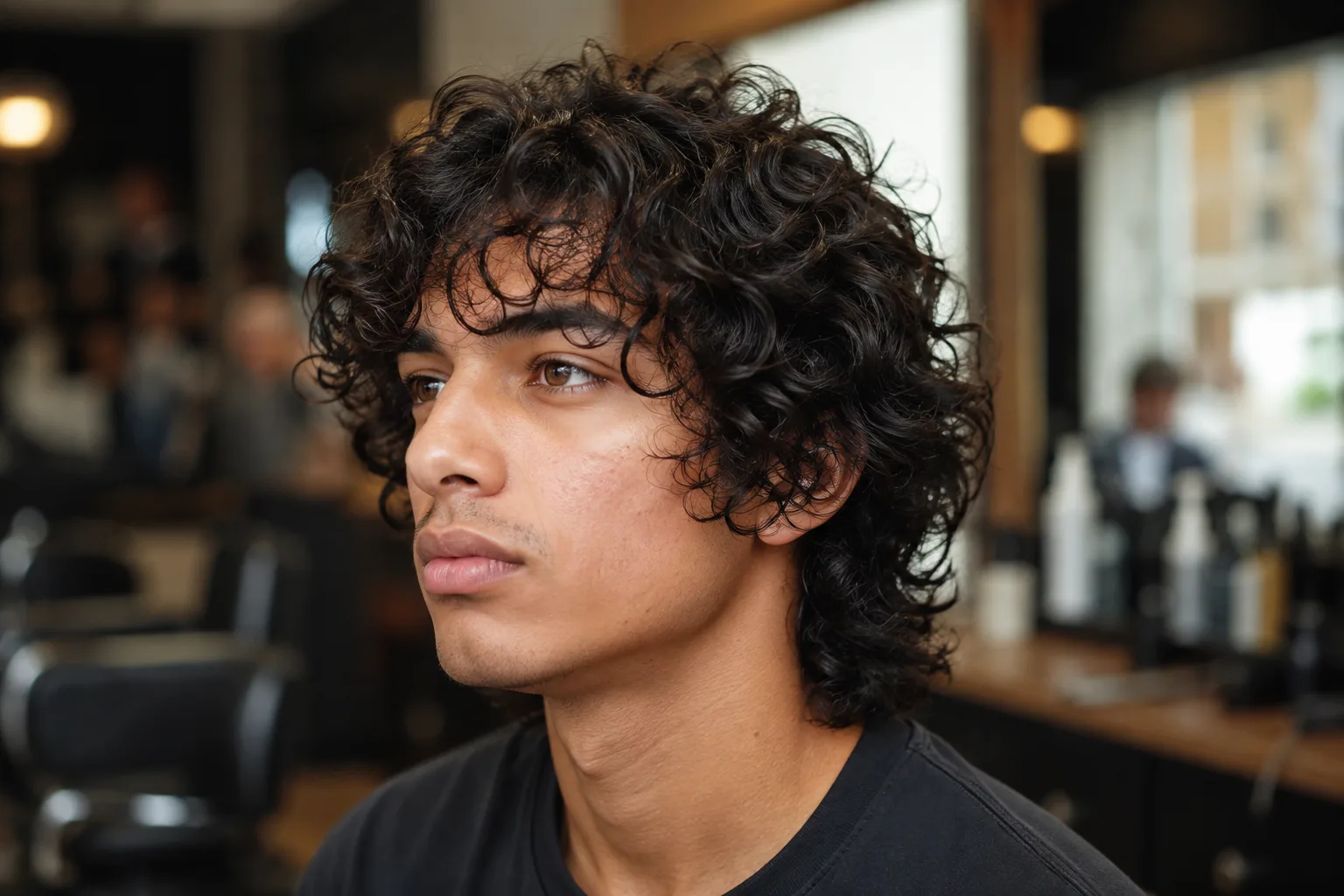
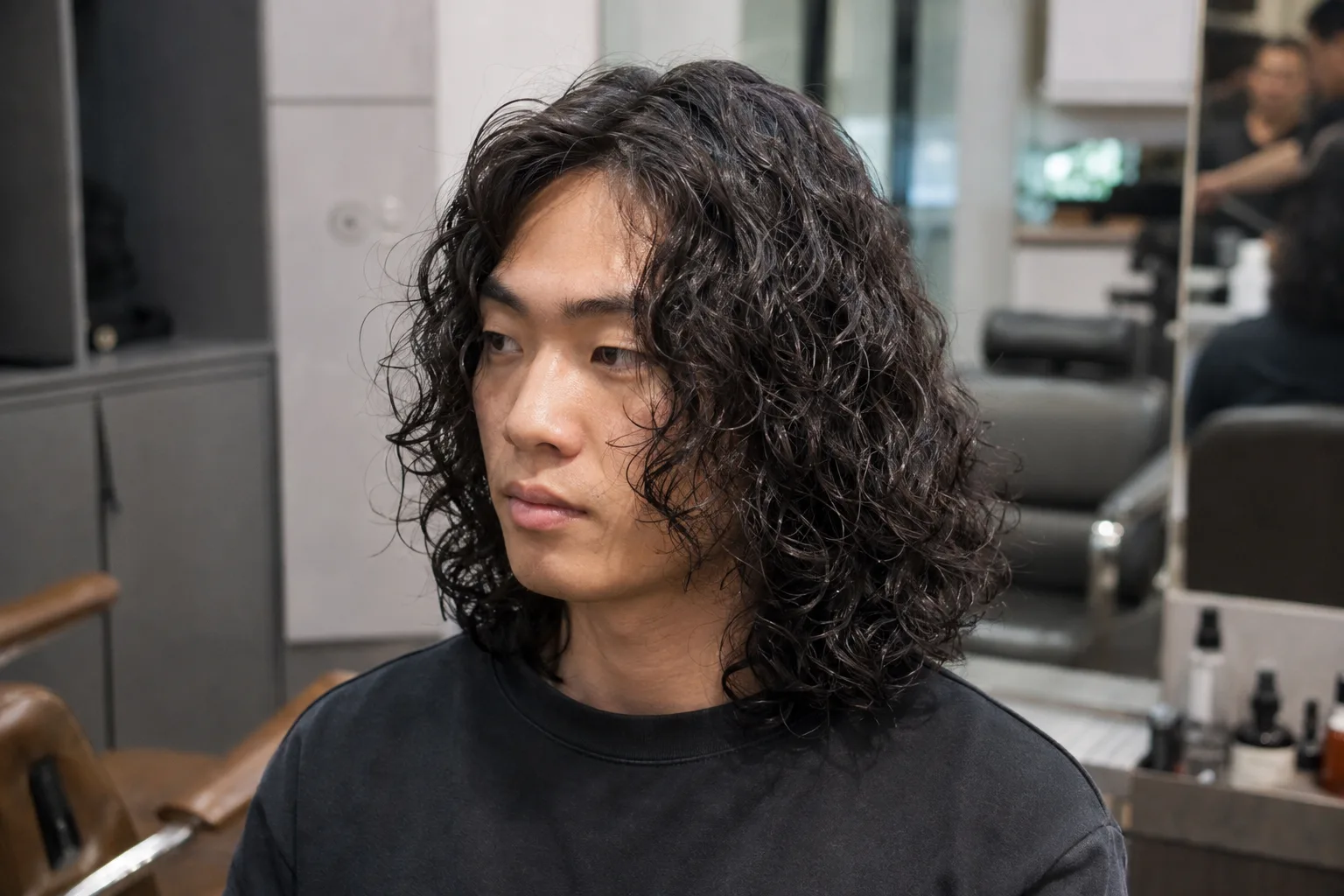
Ten of these cuts, side by side
Same barbershop, same lighting, same framing. The only variable is the cut. Work along the row and notice how much of the difference is happening at the sides rather than on top.
Gallery10 photos · tap to enlarge
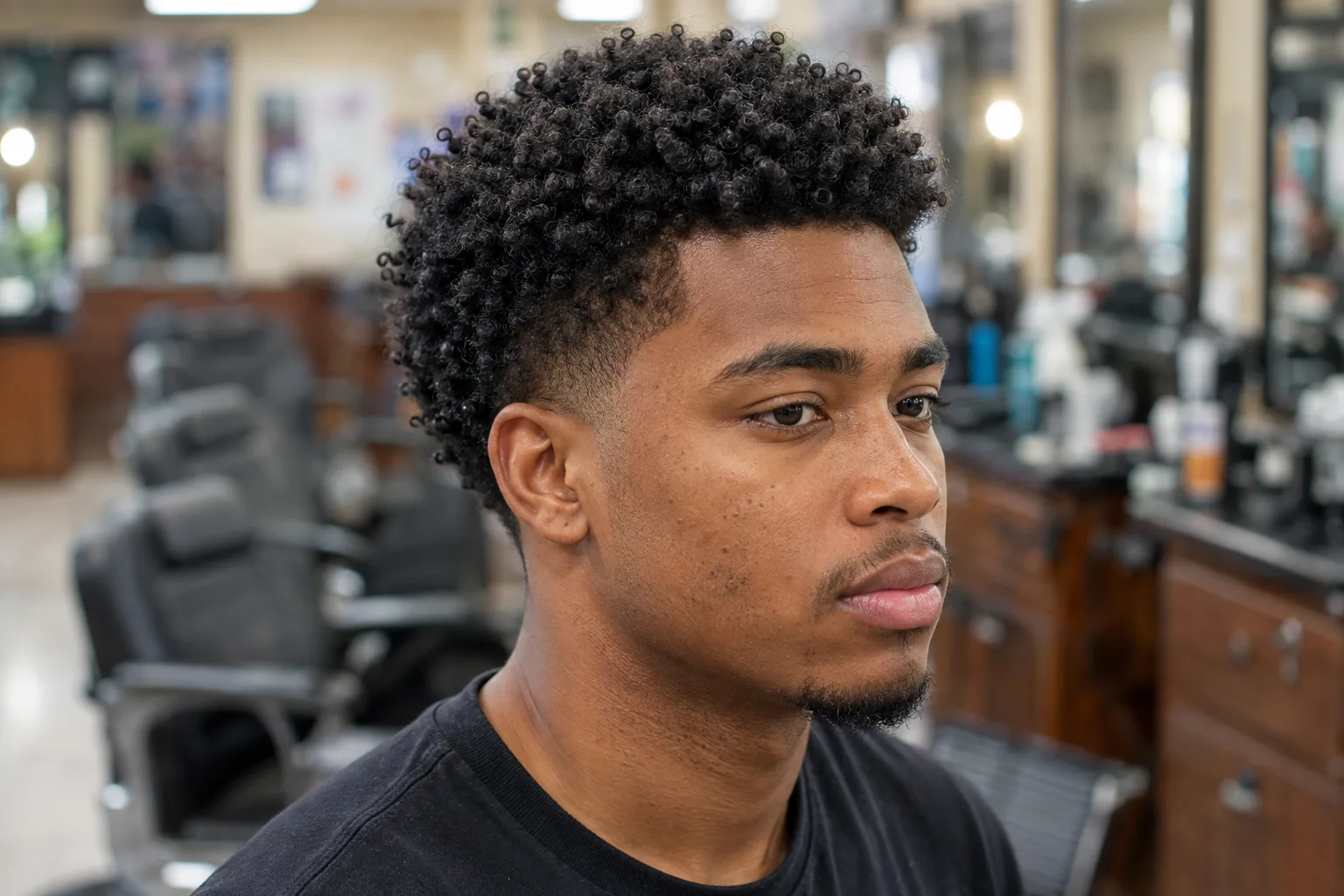 Try this on me
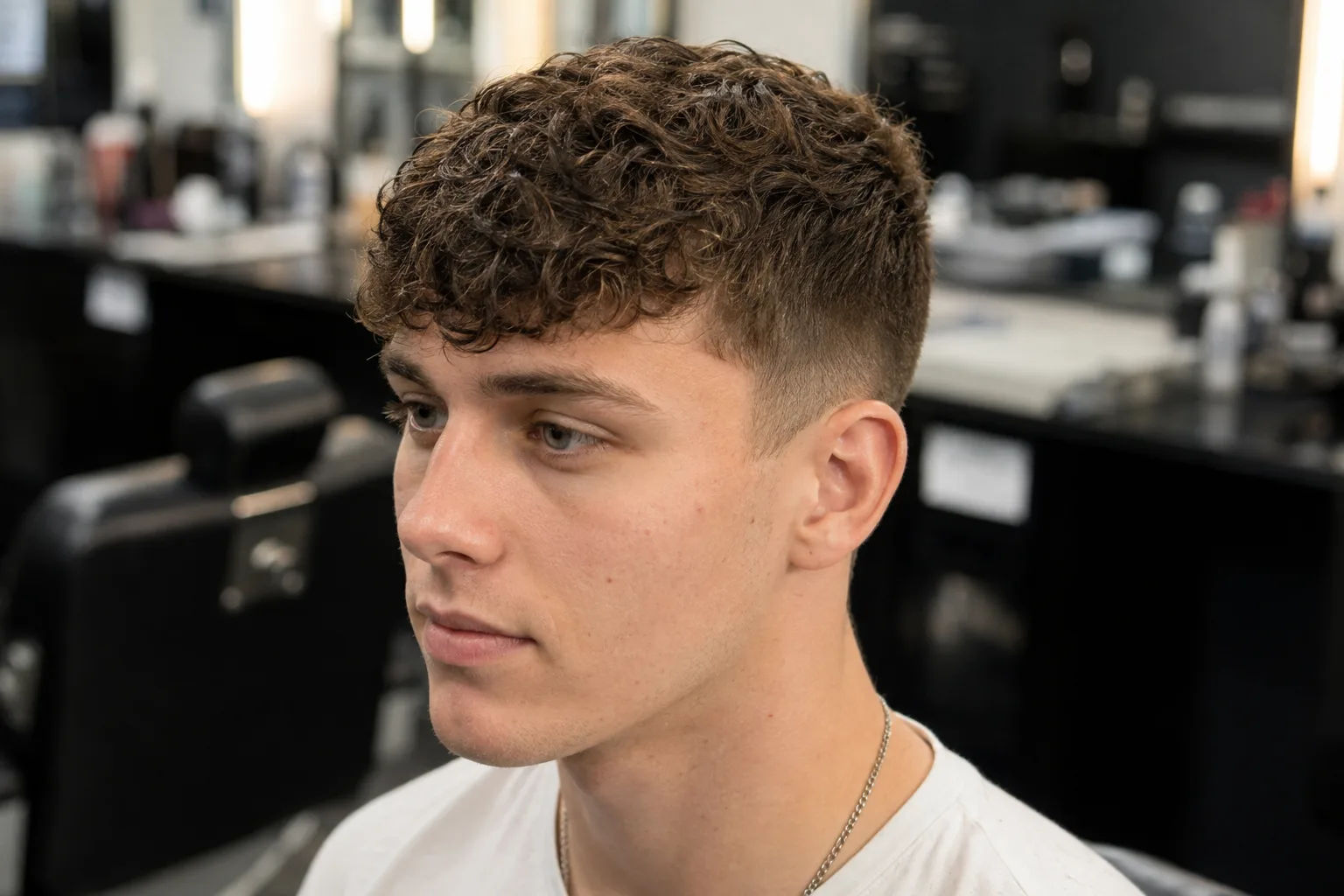 Try this on me
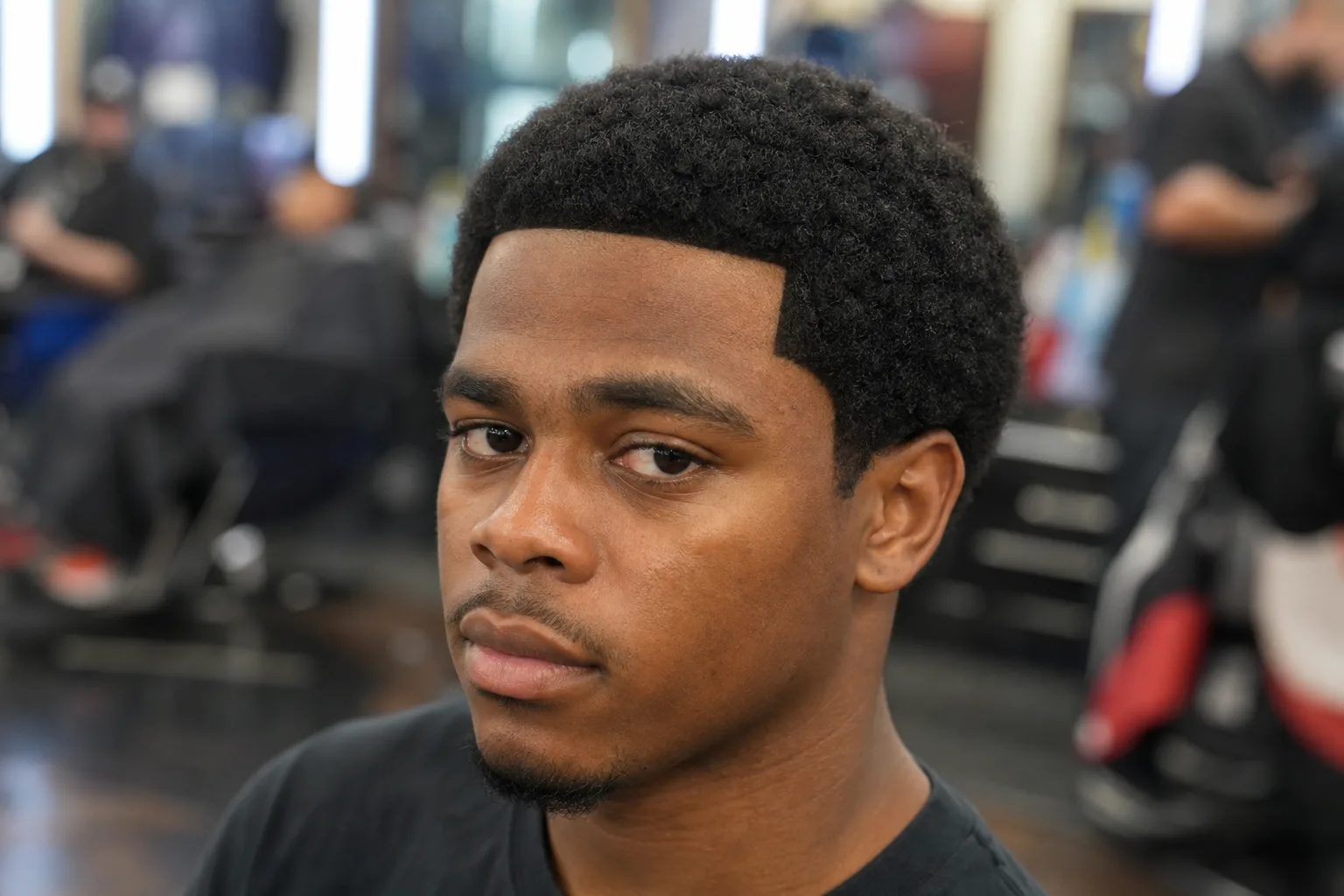 Try this on me
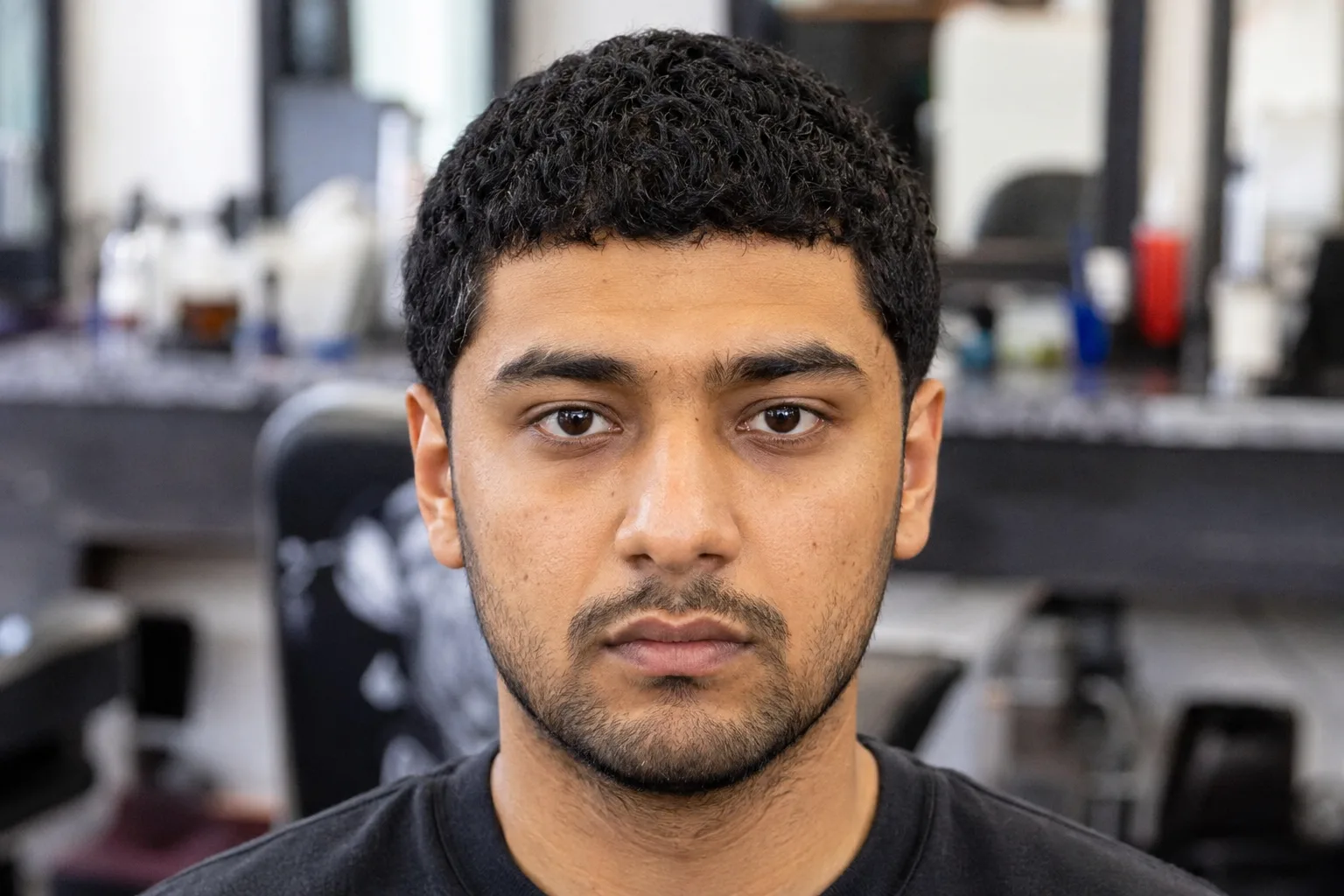 Try this on me
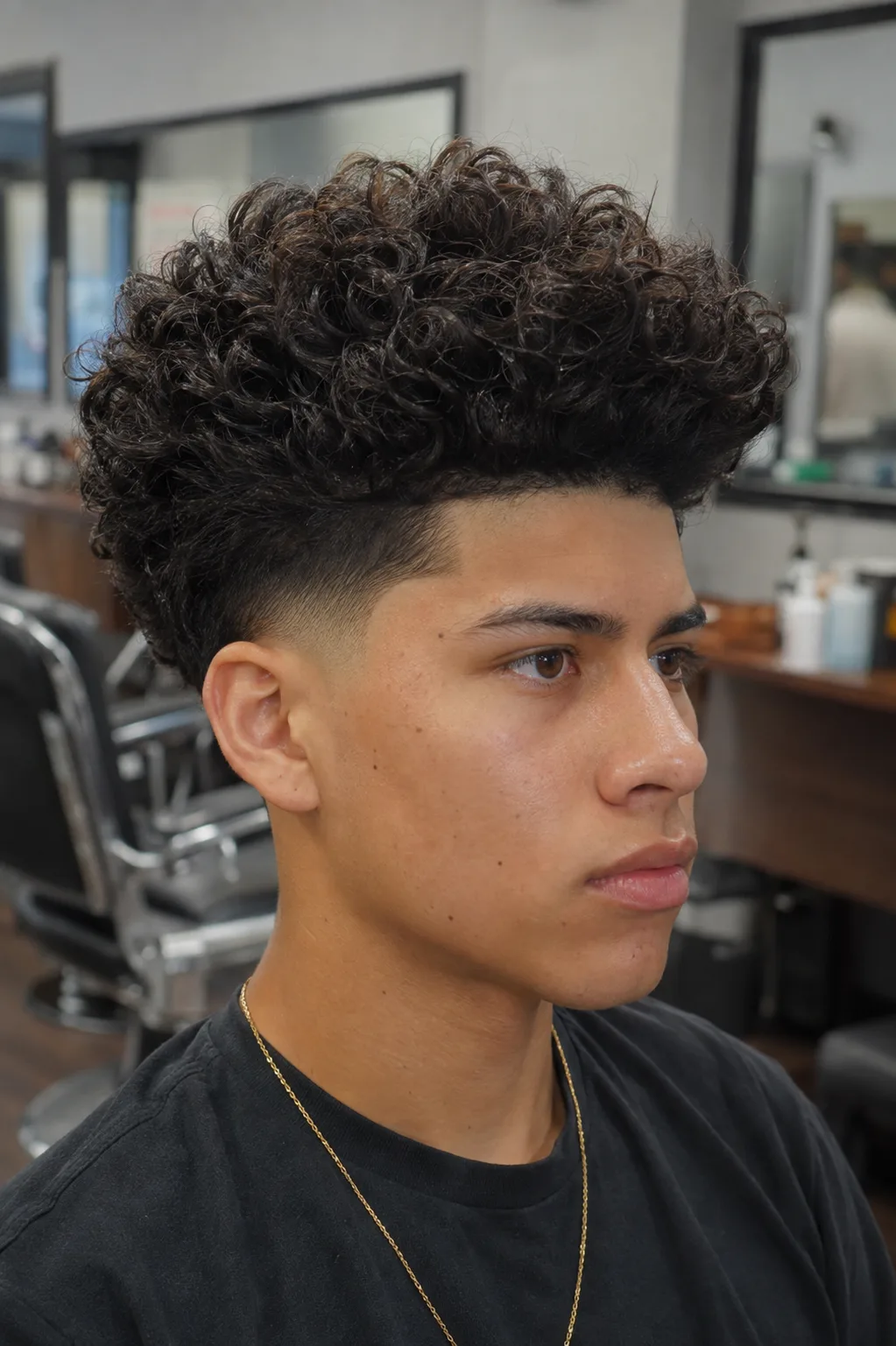 Try this on me
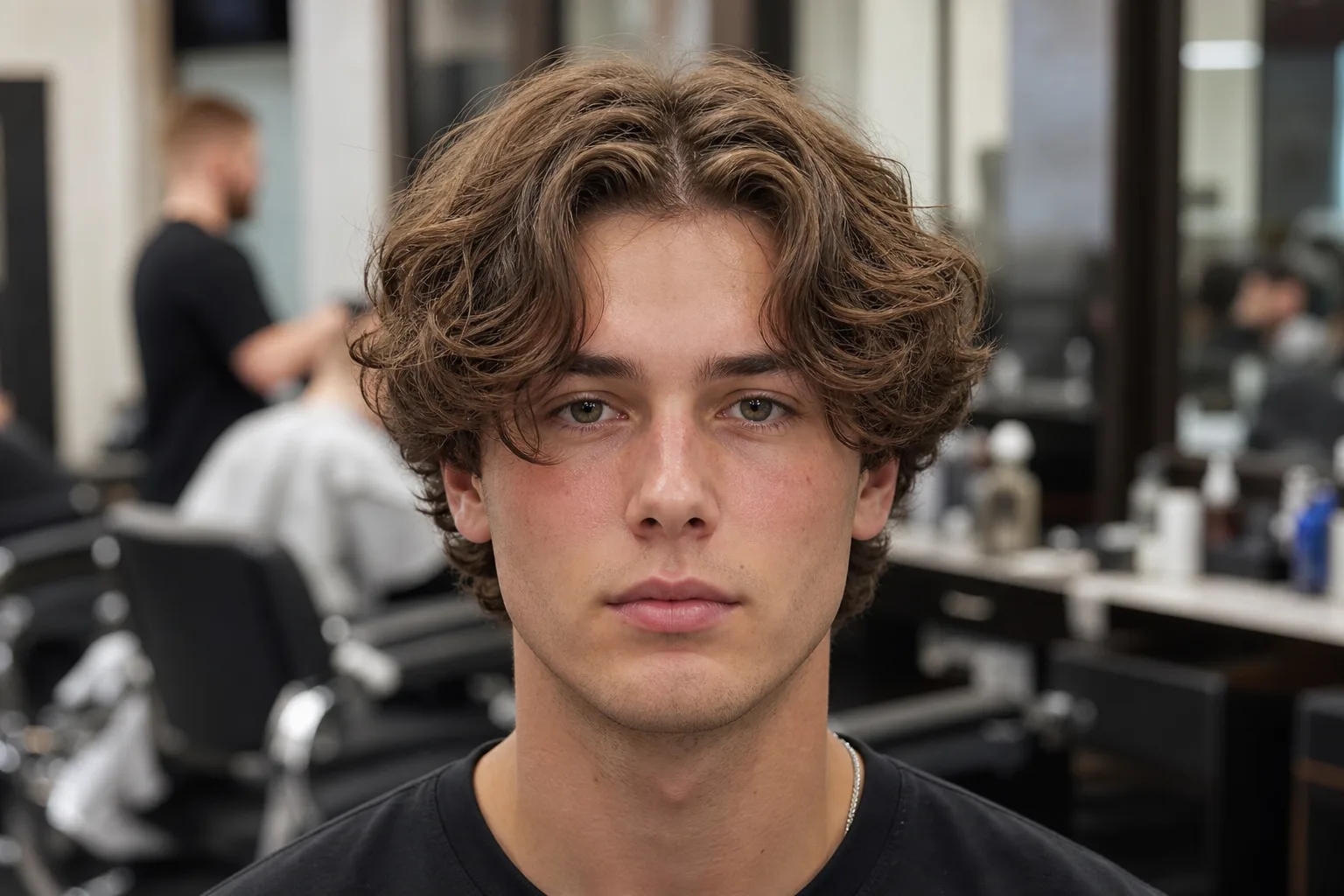 Try this on me
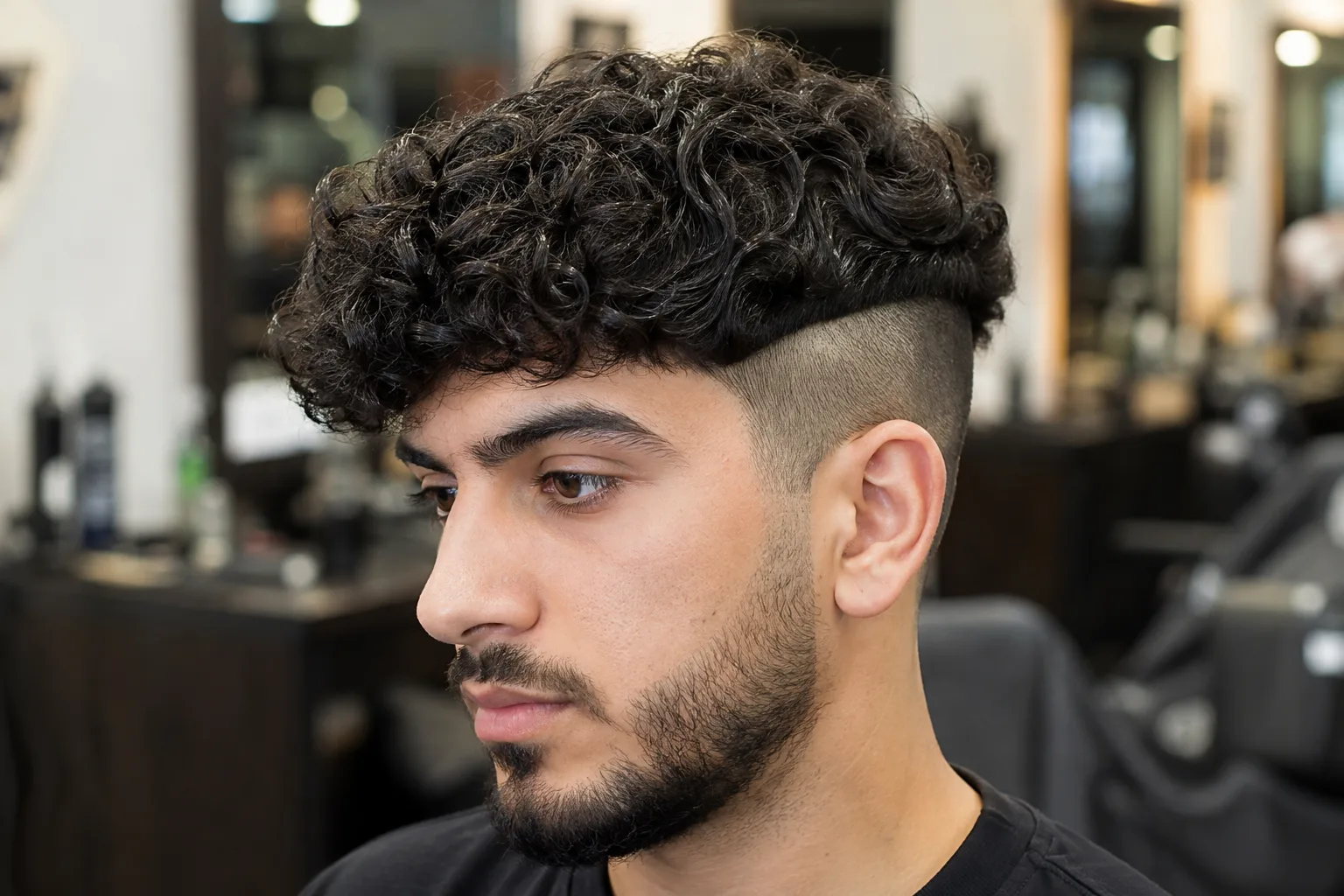 Try this on me
 Try this on me
 Try this on me
 Try this on me
If you want to see how the same side weights read across straight and wavy hair too, the medium length men's guide runs the same comparison.
What to do this week
Book with a shop that says yes to cutting dry. Ask for a low or mid taper depending on how dense your curl is, name your top length in dry inches, and leave the styling argument for a second visit. If you want to see it first, put your own photo through the try-on and take the render with you.
One cut, done properly, changes more than any product you can buy.
Frequently asked questions
A curly taper fade with 2 to 3 inches left on top. It suits every curl type, needs no daily styling, and grows out without an awkward phase. Below about 2 inches most curl patterns stop reading as curls and start reading as texture, so that is the floor rather than the target.
A fade on the back and sides with the curls left full on top. The fade is graded from short at the bottom to longer as it rises, and where it stops is what you are choosing: a low fade stops below the temple, a mid fade level with it, a high fade above it. On curly hair a taper, which has no hard line at all, is more forgiving than a true fade because there is no crisp edge for the curl to break up.
It is a social media shorthand, not a professional standard, and it has more than one definition doing the rounds. The most common version is clipper guards stepped 3, 2 then 1 up the back and sides to build a graduated taper. Treat it with suspicion on curly hair: guard numbers measure stretched hair, so a number 3 on tight curls leaves far less visible length than the same guard on straight hair. Describe where you want the taper to start instead.
Three things, in this order. Cut it dry and curl by curl. Where the side weight comes off, described by a landmark such as "nothing above the ear". The top length in dry inches you want to see when you leave, not inches removed. Everything else is detail.
Dry, clean, and styled the way you normally wear it. No hat, no gel, no fresh wash on the way over. The barber is cutting the shape your hair actually makes, so they need to see it doing that, including the parts of it you do not like.
Yes, if the volume goes up rather than out. A round face wants height at the crown and narrow sides, so a mid taper with four or more inches on top is the shape to aim for. What does not work is leaving curl full at the temples, because that widens the face at its widest point. The instinct to soften a round face with side volume is the wrong one.
The broccoli cut, which is a low taper blowout: tight sides and a dense round mass of curl blow-dried up on top. It is on this list under low taper blowout. It only works on hair with real curl or wave, and it needs a blow dryer, which is the part most people skip before deciding it does not suit them.
By search interest and by what barbers are actually asked for, the low taper blowout leads, followed by the curly taper fade and the curly mullet. Longer, softer shapes are gaining on the tight fades that dominated the last few years, and the middle-parted curly curtain has come back on wavy hair specifically.
Preview it on your own photo: Men's Hairstyle Try-On.
Share article
About the author
More articles
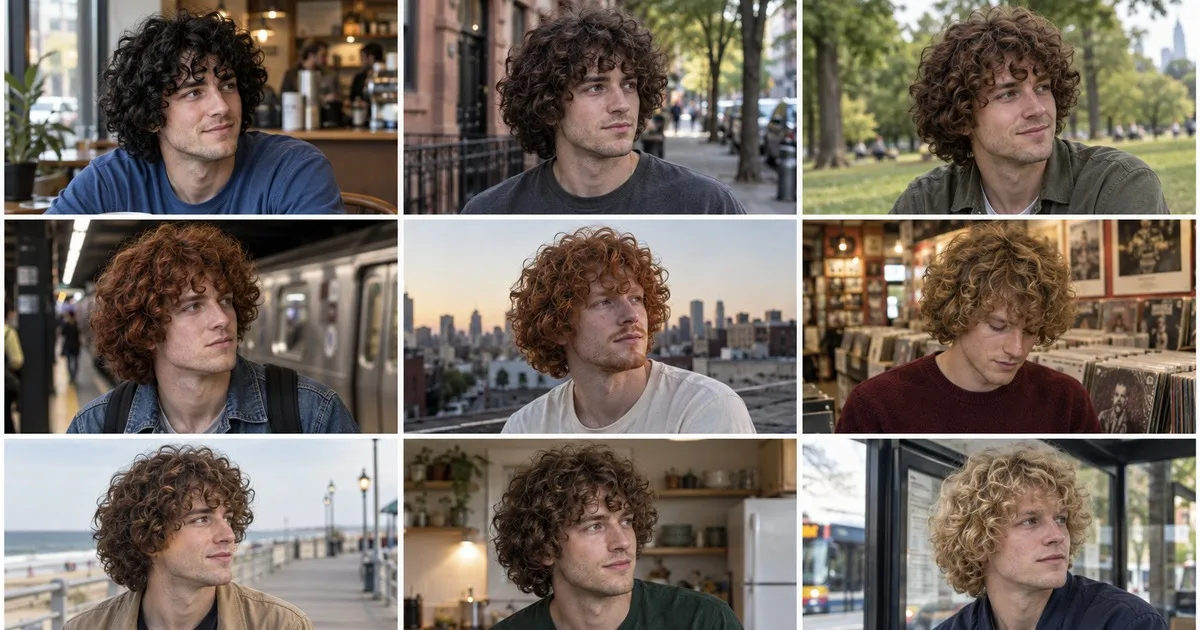
Men's Haircuts · 14 min
Benny Blanco Haircut: The Fake Half Shave and the Real Curls
Benny Blanco did not shave half his head. It was a prosthetic bald cap, and the buzz cuts are AI. Here is what his curly mop actually is, the short version, and exactly what to tell your barber.
Men's Haircuts · 16 min
1A Hair: How to Tell If You Have It + 14 Cuts That Work
1A hair is pin-straight with no bend from root to tip. How to tell it from 1B and 1C, why it goes flat, 14 haircuts that work on it, and how to style it for volume.
Men's Haircuts · 15 min
High and Tight Haircut: 4 Versions and the Head Shape Rule
A high and tight clips the sides almost to skin all the way up to the top of the head, so it shows your skull shape more than your face. The 4 versions, 14 photos, what to tell your barber, and how long it lasts.