Taper Haircut: The 6-Week Cut Most Guys Ask For Wrong
Oleh Onysko 8 September 2026 15 min read
In this article
A taper haircut shortens the hair gradually along the edge of your hairline only - the sideburn, around the ear, and down the nape - and leaves everything above that edge at full length. That is the entire definition. It is a cut described by where the short work stops, not by how short it goes.
Which is why nearly everyone asks for one wrong. Walk in saying "taper fade" and you will get whatever that barber thinks those two words mean together, and half the time you walk out with the sides of your head cut off.
What is a taper haircut?
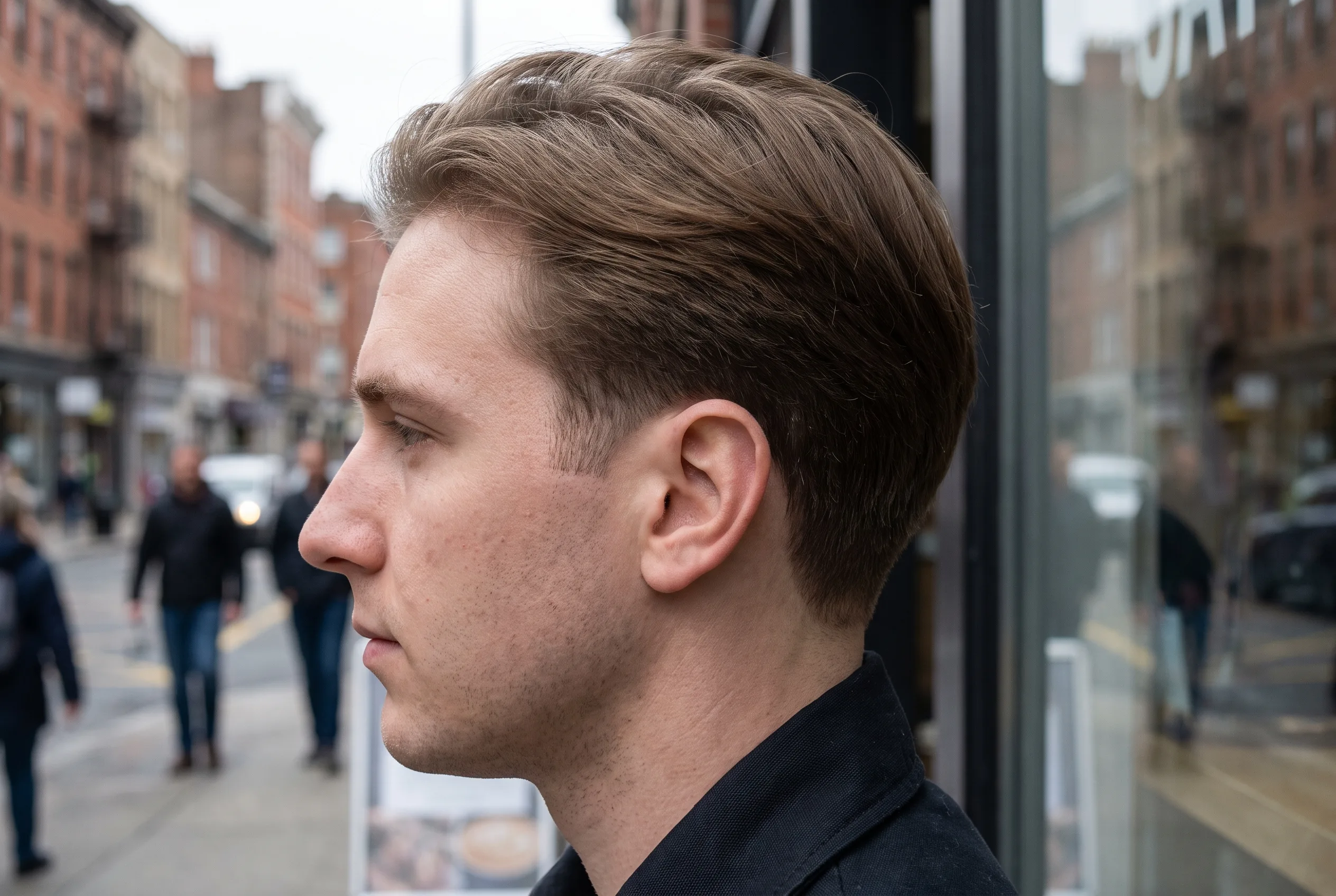
A taper is a narrow band of graduated hair that follows your natural hairline. The band is usually about an inch to an inch and a half deep. Inside it, the hair steps down from roughly half an inch to a soft close finish right at the edge. Above the band, nothing is touched.
The result is a head that still has hair on the sides. It reads as tidy rather than cut. Your ear looks framed instead of exposed. From the front, most people cannot tell you have had anything clippered at all, which is exactly the point.
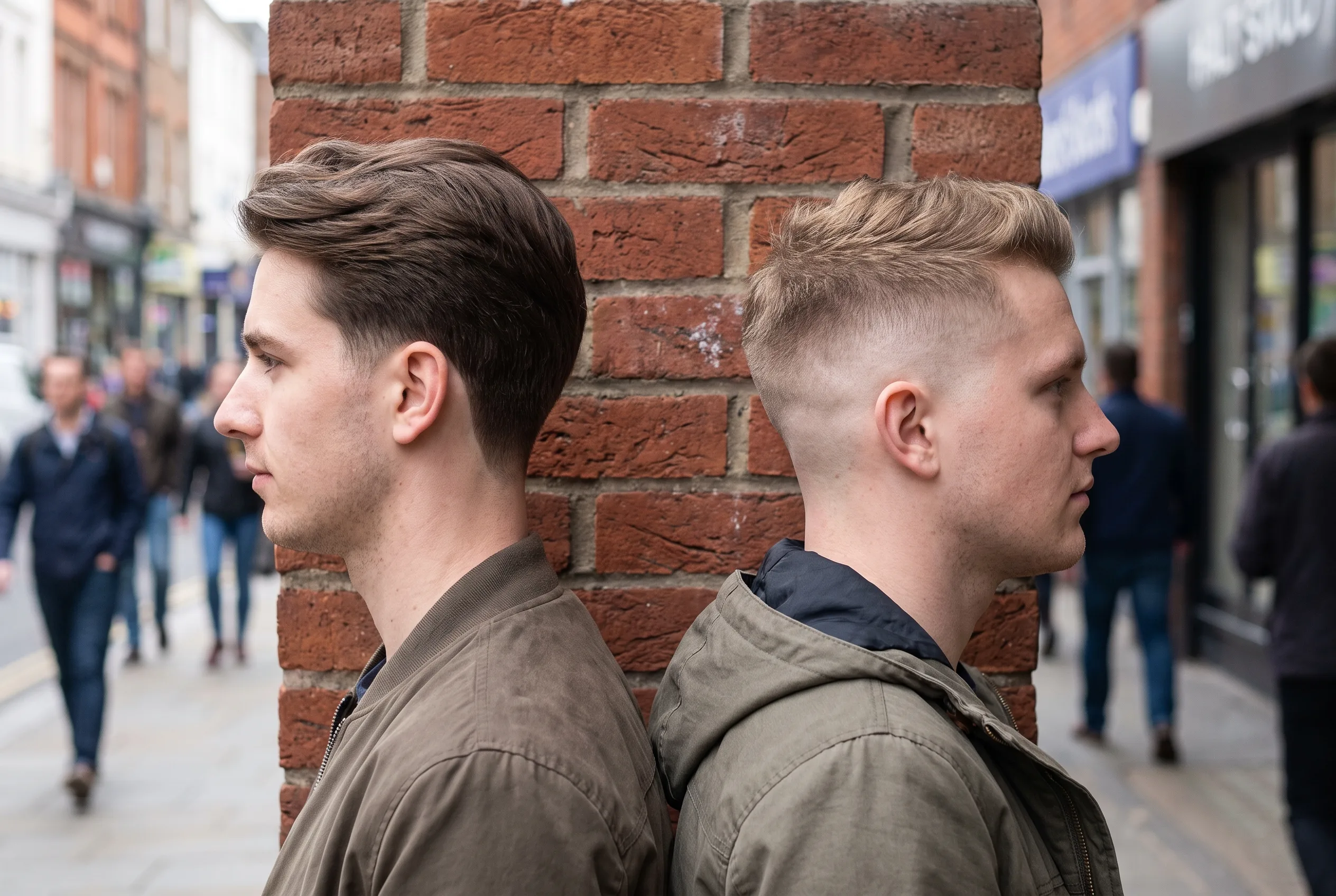
Taper vs fade: the difference is the map, not the length
This is the question behind most searches for this cut, so here is the straight answer. A taper works a band along your hairline. A fade works the whole side panel of your head, from the hairline up to the widest point of your skull, and usually takes the bottom of it down to skin.
Both use the same clippers and the same graduation. They differ in coverage area, and coverage area is what changes how you look.
| Taper | Fade | |
|---|---|---|
| Area cut short | A band along the hairline, about 1 to 1.5 inches | The entire side panel, hairline to parietal ridge |
| Skin showing | None. It finishes close but opaque | Usually yes, at the bottom |
| Hard line | No. It softens away | Often, where the top meets the side |
| How it reads | A full head of hair, neatened | Short sides with hair on top |
| Looks wrong after | 5 to 6 weeks | 2 to 3 weeks |
| Ask for it as | "A taper, not a fade" | "A low fade" or "a mid fade" |
The last two rows are where the money is. Scalp hair grows about one centimetre a month, a bit under half an inch. On a fade, that growth lands on skin that had nothing on it, so the gradient blurs and the contrast collapses within three weeks. On a taper, the same growth lands on hair that already had length, so the shape just gets slightly softer. Nothing breaks.
If a genuine fade is what you want, the full fade family is a separate decision with its own heights, and it is worth reading before you sit down.
Say it once in the chair and you will never get this wrong again: a taper is an edge, a fade is a panel.
How high should the taper go?
The one variable you actually choose is where the top of the band sits. Three answers cover almost everyone.
| Height | Band tops out at | Best for |
|---|---|---|
| Low | About an inch above the ear | Conservative offices, first timers, anyone unsure |
| Mid | The temple, level with your eyebrow | The default. Visible shape without commitment |
| High | The corner of the forehead | Thick or coarse hair that needs real bulk removed |
Start low. A low taper can be taken higher in ten minutes at your next visit; a high one cannot be put back for six weeks. If you already know you want the taper carried further and blended toward skin, that is the territory of the low taper fade and the mid taper fade, both of which are their own cuts with their own trade-offs.
The part nobody looks at and everybody notices
Your neckline. You will never see it and everyone standing behind you will.
Ask for a natural neckline, sometimes called tapered or faded. The hair thins gradually into your neck and the edge is soft. When it grows, it grows into nothing.
The alternative is a blocked neckline, cut in a straight line across the neck. It looks sharp for about eight days. Then a fringe of new growth appears below the line and you have a visible ledge on the back of your head until your next appointment. On a taper specifically this is the single most common way a good cut goes bad.

Say this to your barber
Just a taper, please. Keep the length on the sides and only take the hairline down - sideburns, around the ears, and the nape. No skin, no hard lines, and leave the neckline natural.
What a taper does for your hair type
The taper is a bulk problem solver, and how much bulk you have decides what it buys you.
| Hair type | What the taper fixes | Watch out for |
|---|---|---|
| Straight and fine | Stops the sides looking flat and shapeless | Go low. A high band on fine hair shows scalp fast |
| Straight and thick | Removes the shelf that sticks out over the ears | Ask for the band deeper rather than higher |
| Wavy | Keeps waves from flaring sideways | Waves hide the graduation, so it needs to be tight |
| Curly | Cleans the outline without touching curl volume | Cut it dry. Wet curls lie about their length |
| Coily | Defines the shape while the top stays full | This is where a proper barber matters most |
| Thinning at the temples | Softens the recession instead of framing it | Never take the band above the temple |

Curly hair is the strongest case for a taper over a fade. A fade cuts through the curl pattern and leaves a dense dark band where the curls used to be, which is why so many curly guys end up with heads that look like two different textures stacked. A taper only touches the perimeter, so the curl stays a single continuous shape. There is more on this in the guide to cutting curly hair on men.
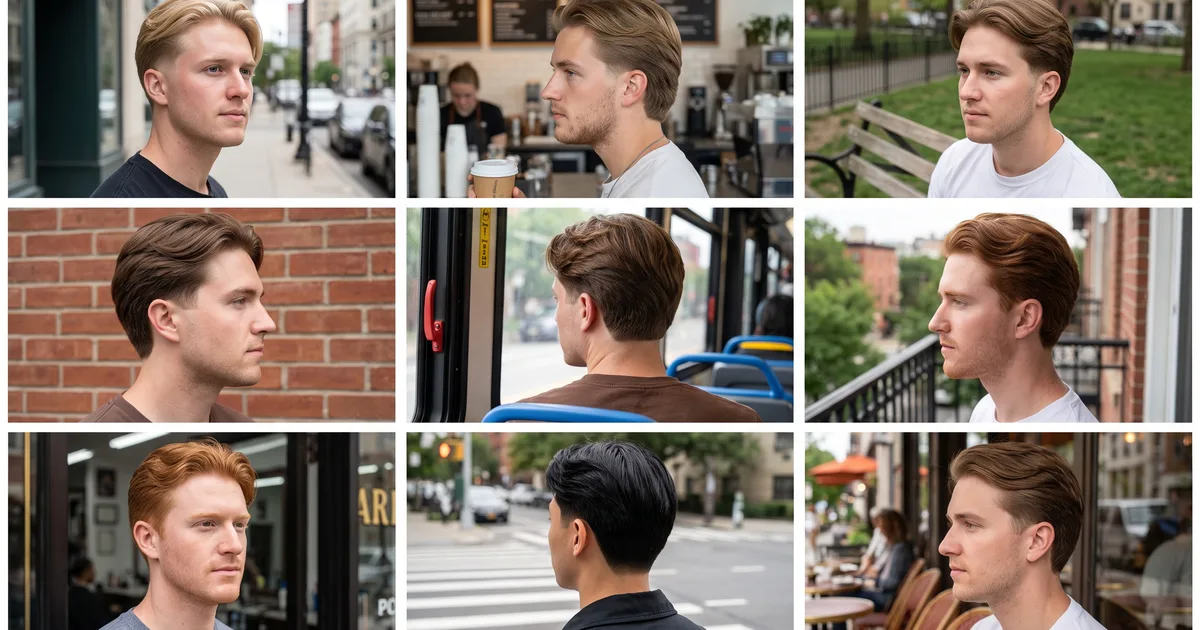
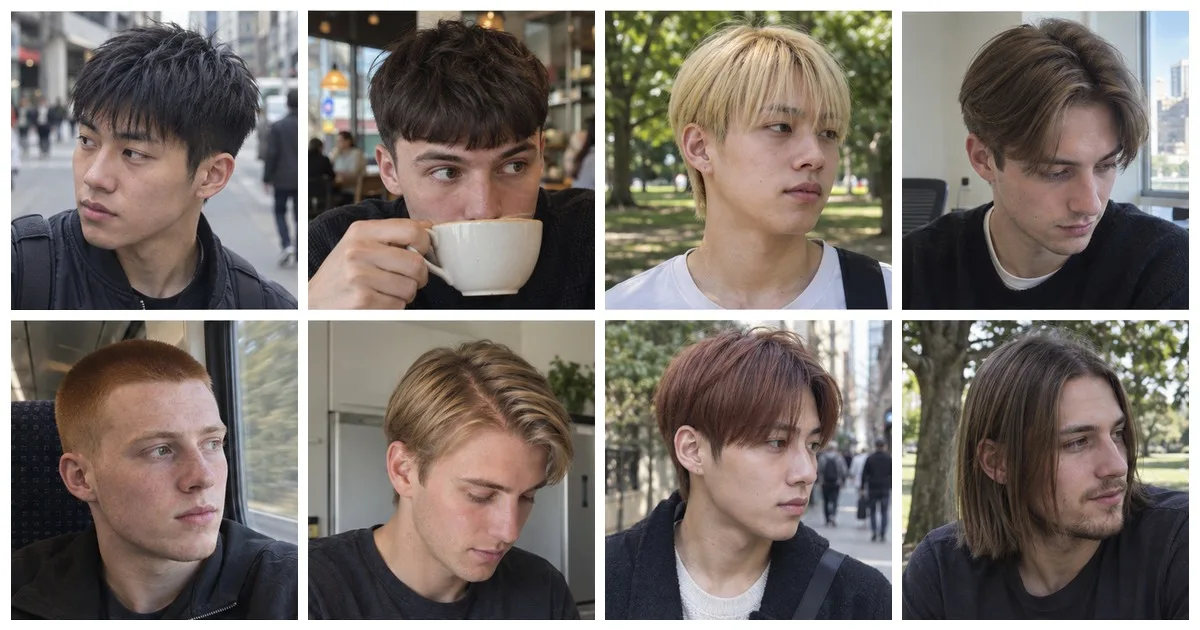
Ten tapers, ten different tops
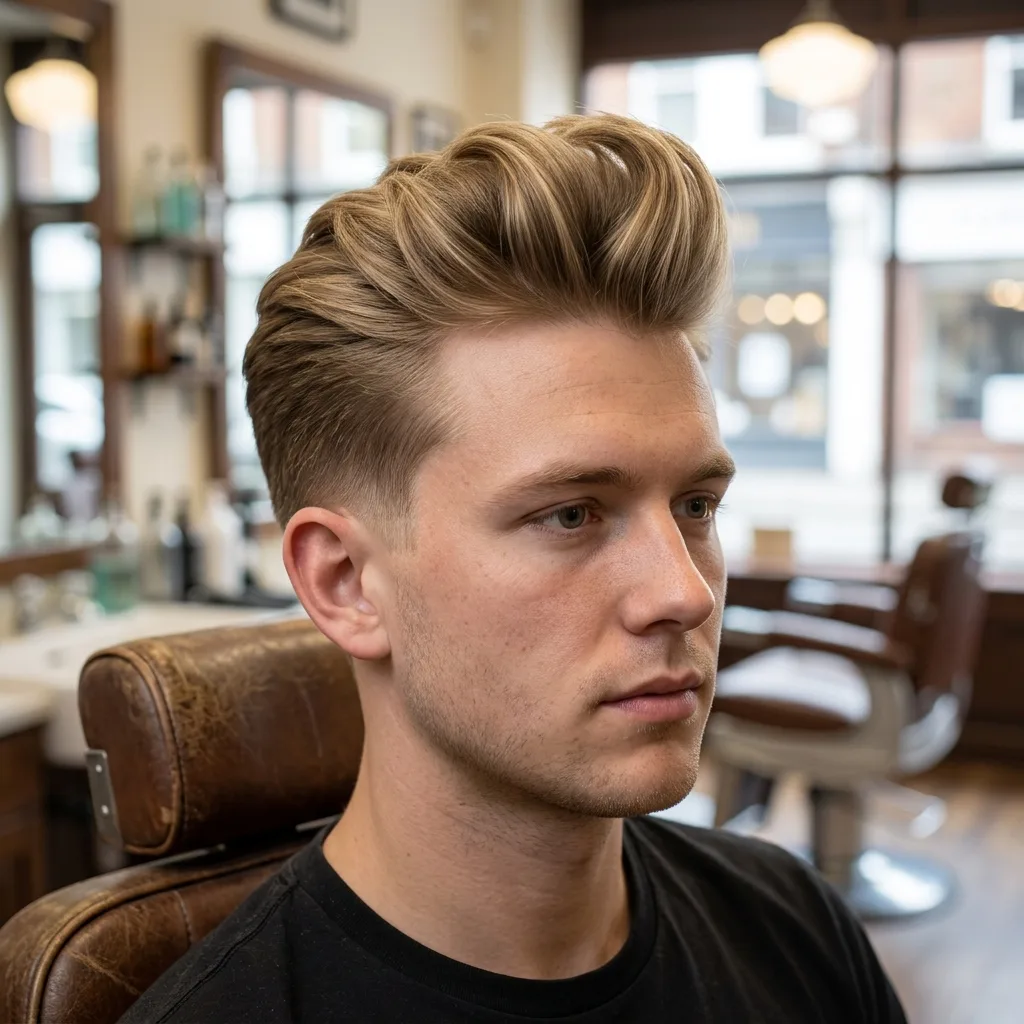
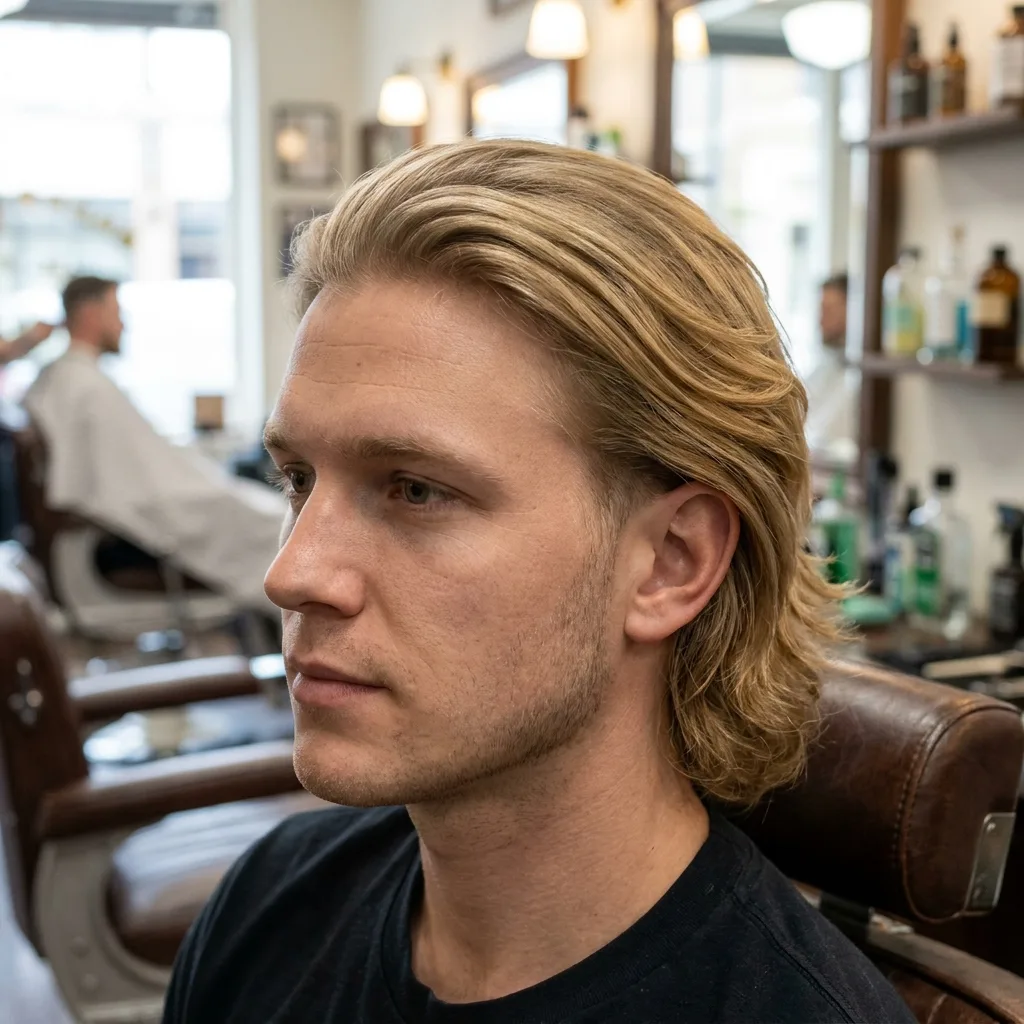
The taper is the same in every one of these. What changes is what got left on top, and that is genuinely the whole decision - the band along your hairline is a detail, the top is the haircut.
Gallery10 photos · tap to enlarge
 Try this on me
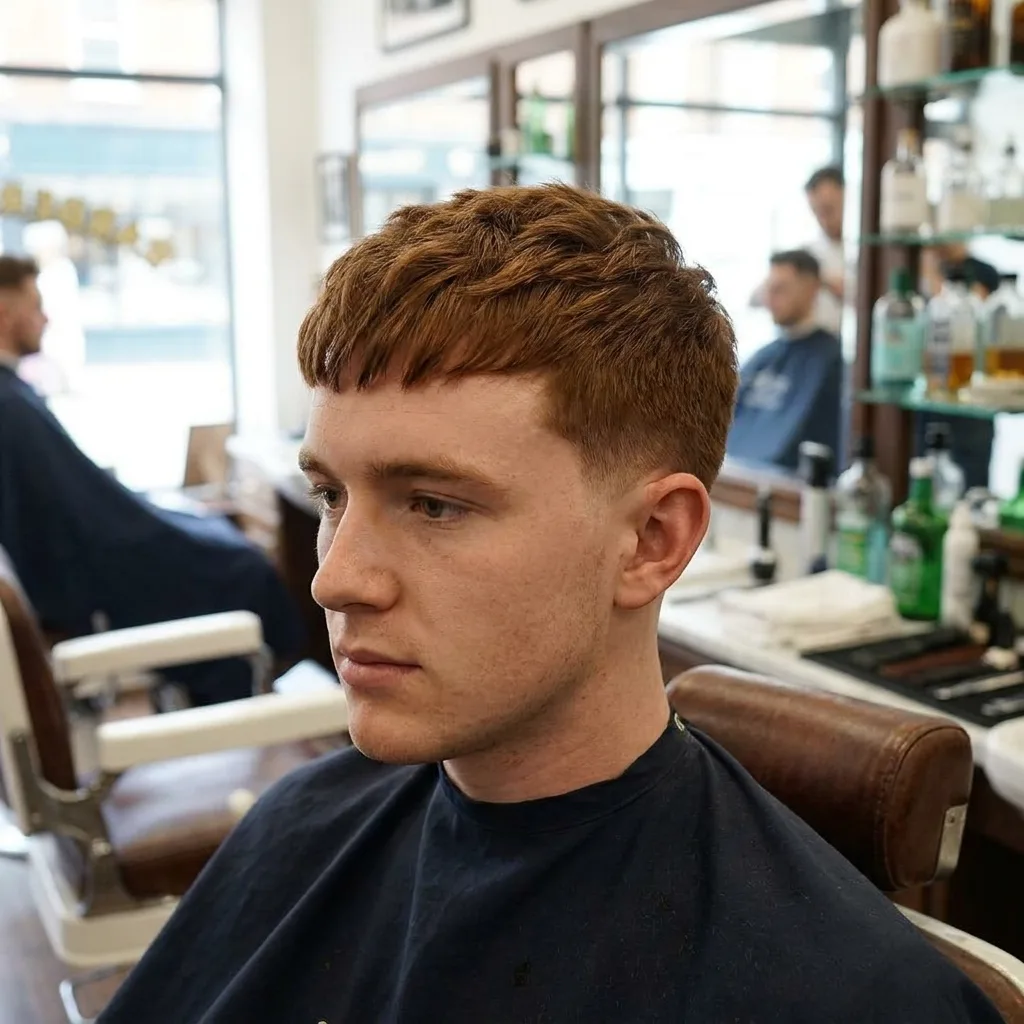 Try this on me
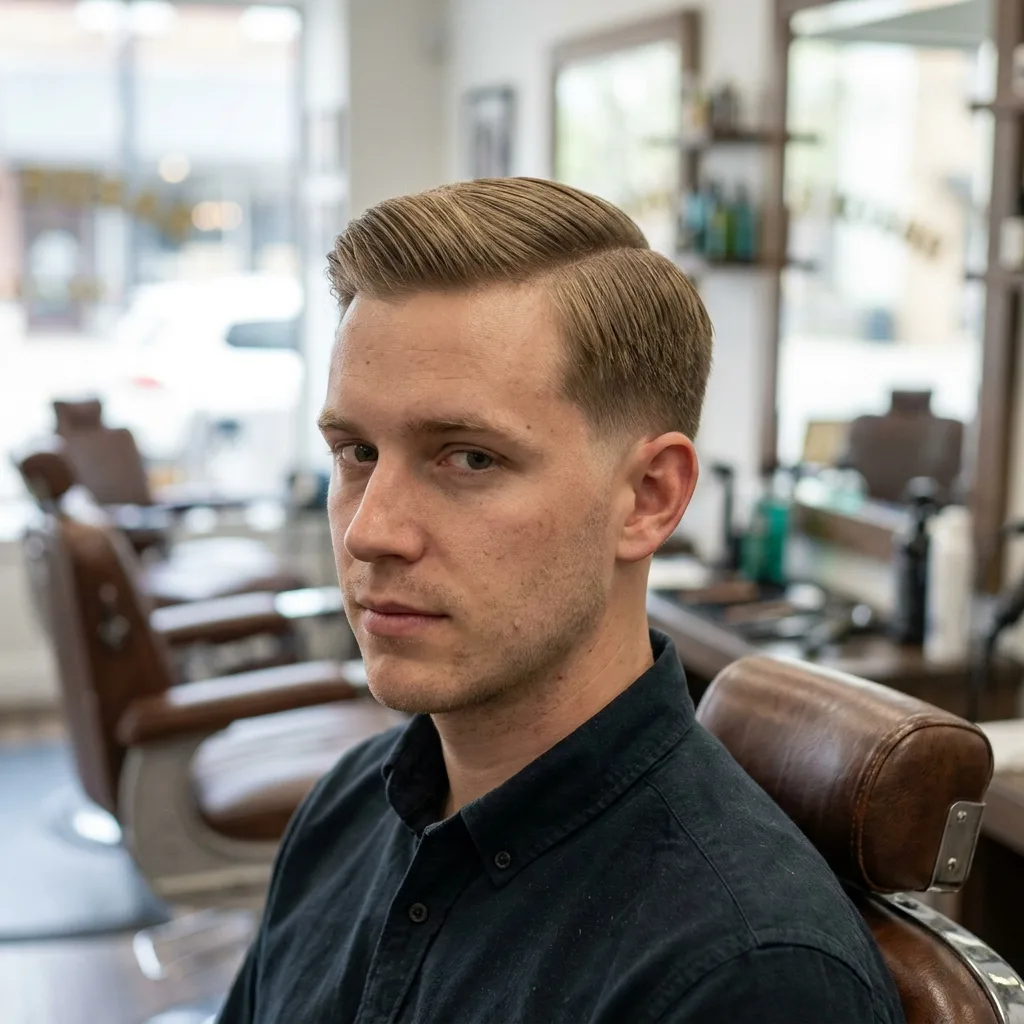 Try this on me
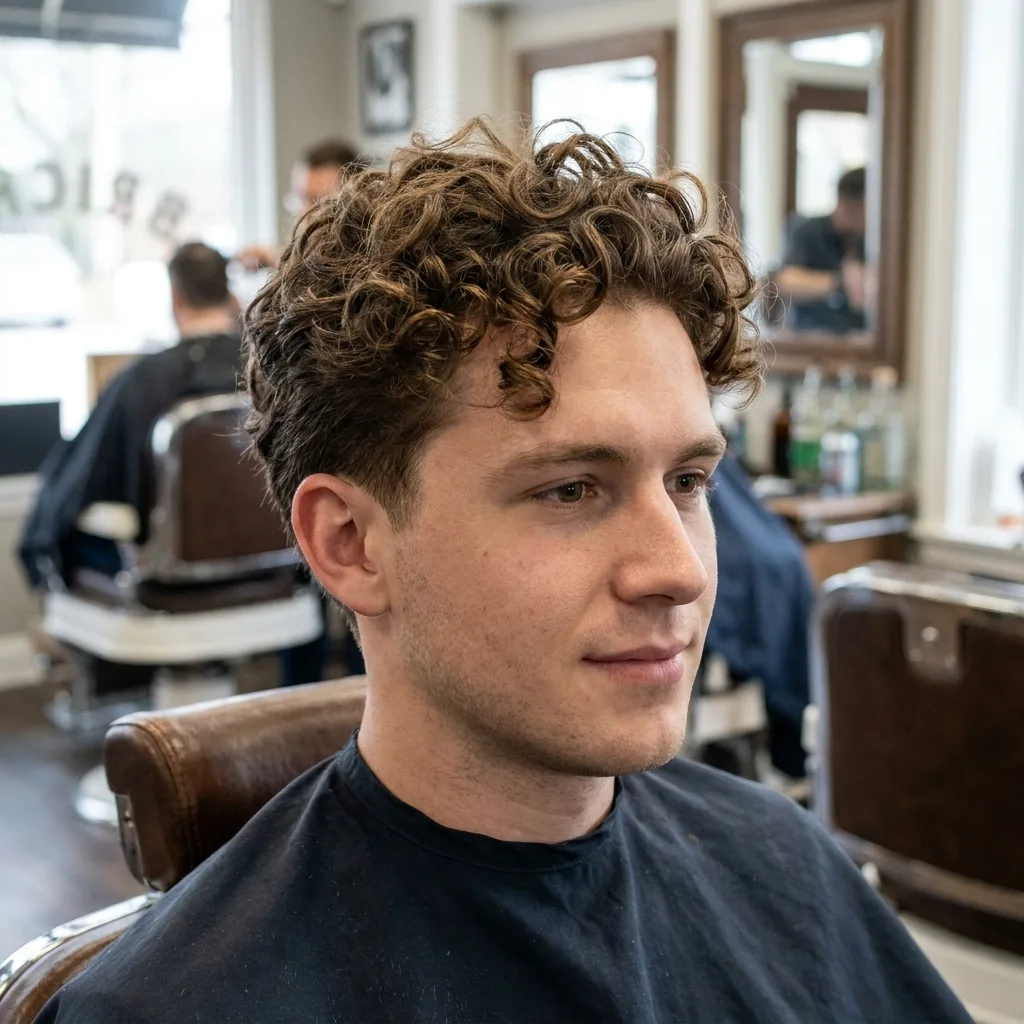 Try this on me
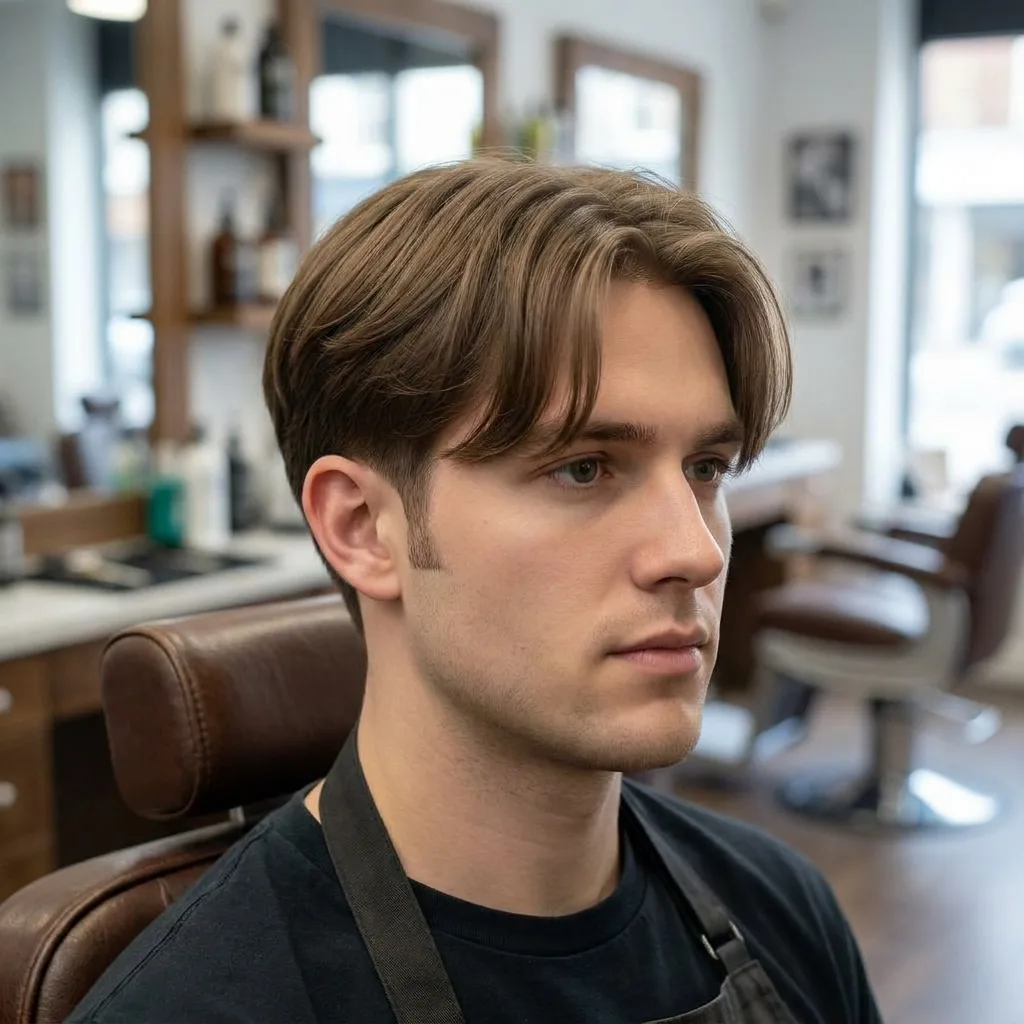 Try this on me
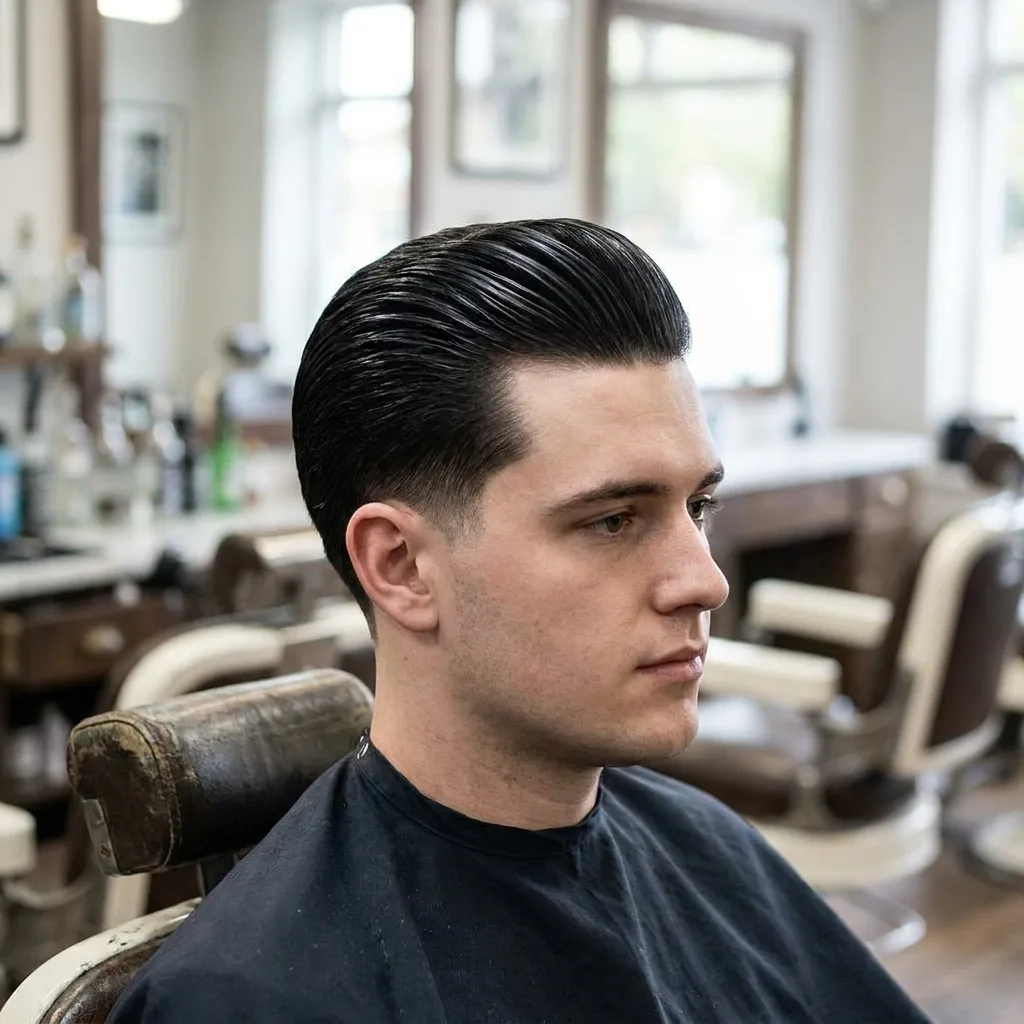 Try this on me
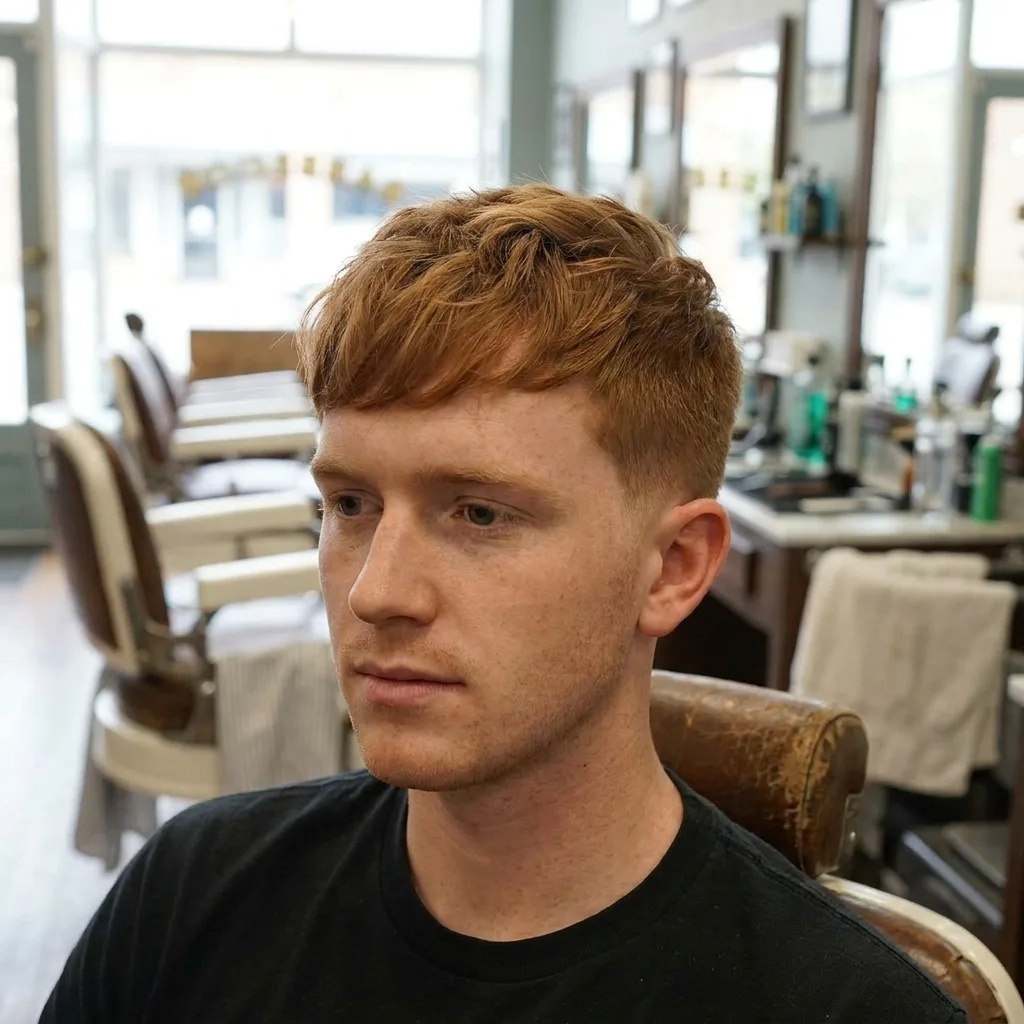 Try this on me
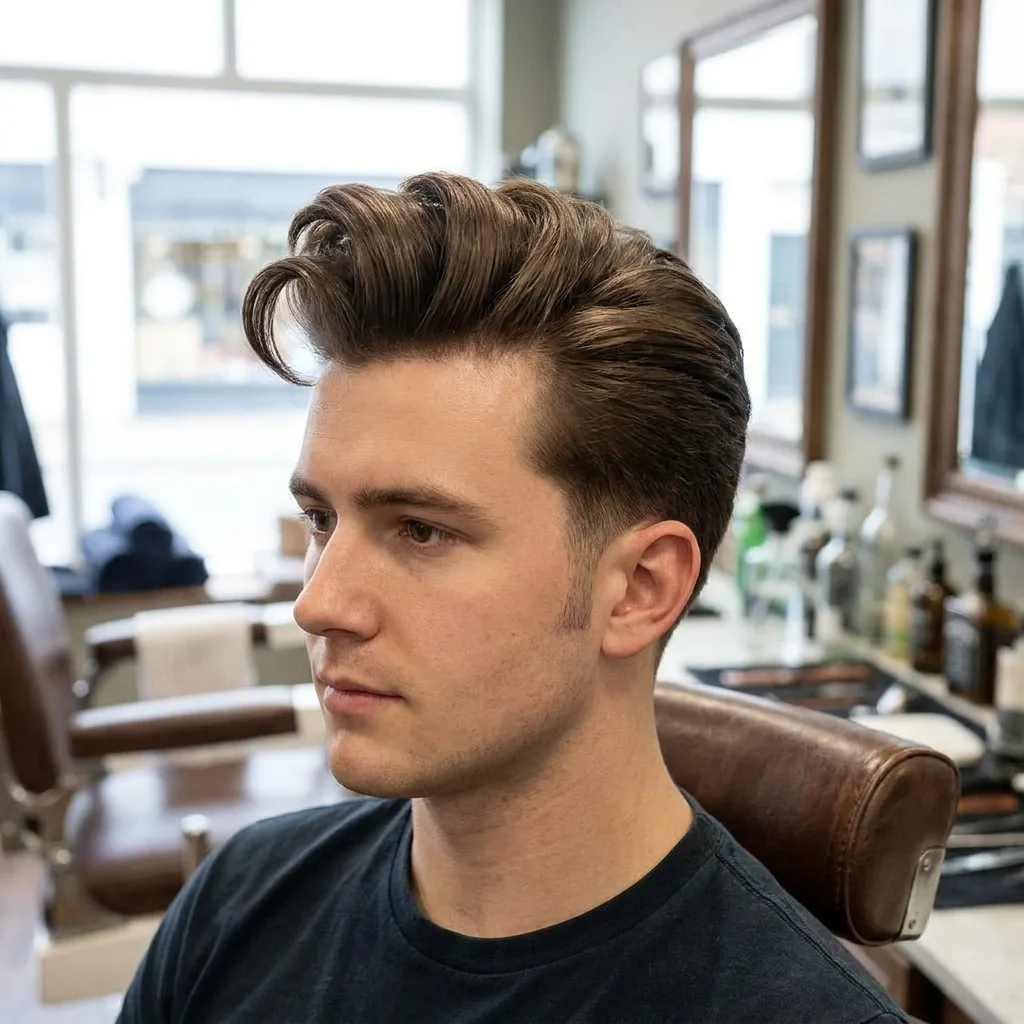 Try this on me
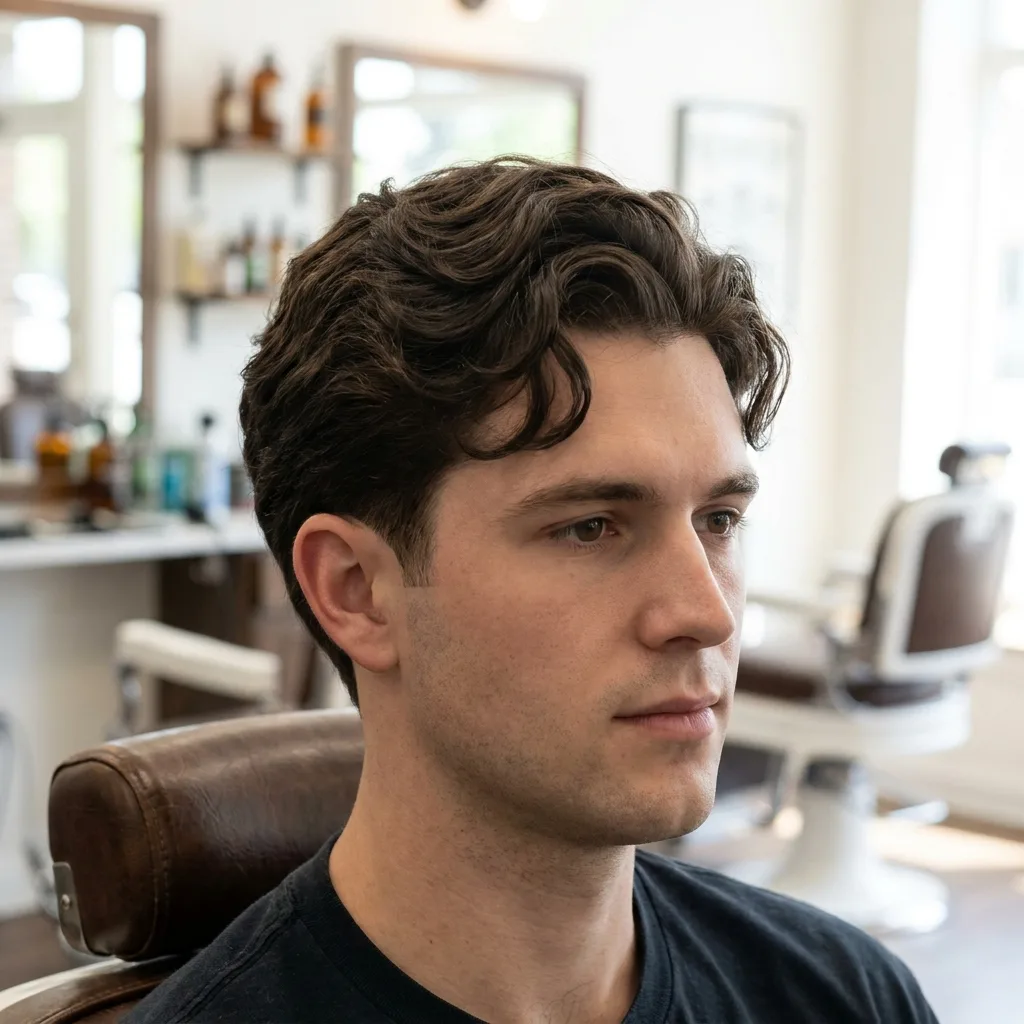 Try this on me
 Try this on me
Two of those are worth naming because they are the most requested pairings: the taper under a textured fringe, and the taper under genuine mid length hair, which is the version that keeps a long look from turning shapeless.
Yours could be here.
Start with one selfie.
One photo, twenty seconds, and you'll know. Free account, no card for your first render.
Four ways a taper goes wrong
You said "taper fade" and got a fade. In most shops those two words together mean "a fade, blended". If you want a taper, do not use the word fade in the same sentence. Say taper, then say not a fade.
The band went too high. Above the temple, a taper stops being an edge and becomes a panel, and you have accidentally bought a fade. On thinning hair this is worse than it sounds, because a high band puts bare-looking skin right beside a receding hairline.
Your barber blocked the neckline. Sharp for a week, then a ledge for five. Always ask for natural.
You booked the follow-up like it was a fade. People with fades come back every two to three weeks and assume everyone does. On a taper you are wasting money before week five.
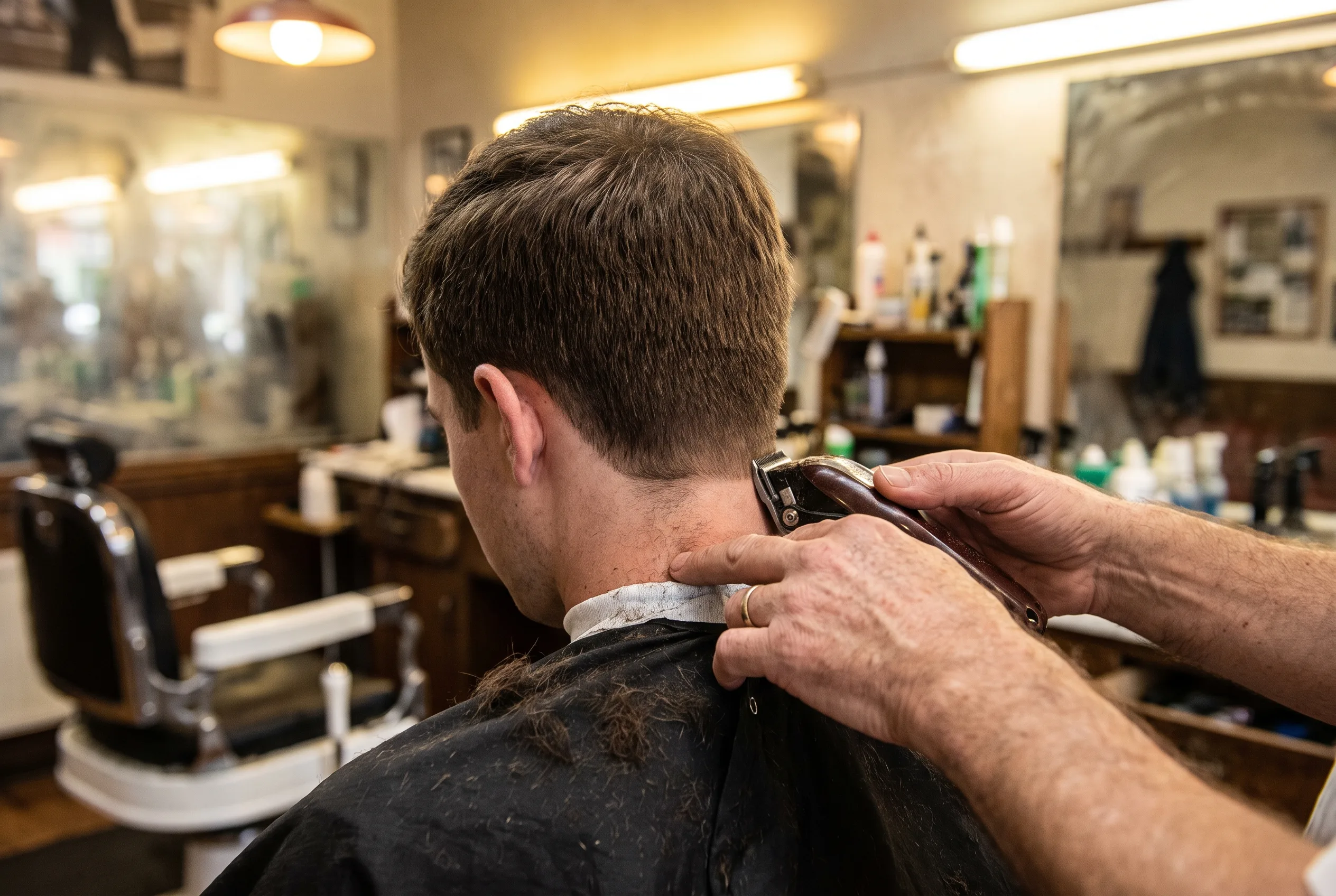
How to ask for a taper haircut
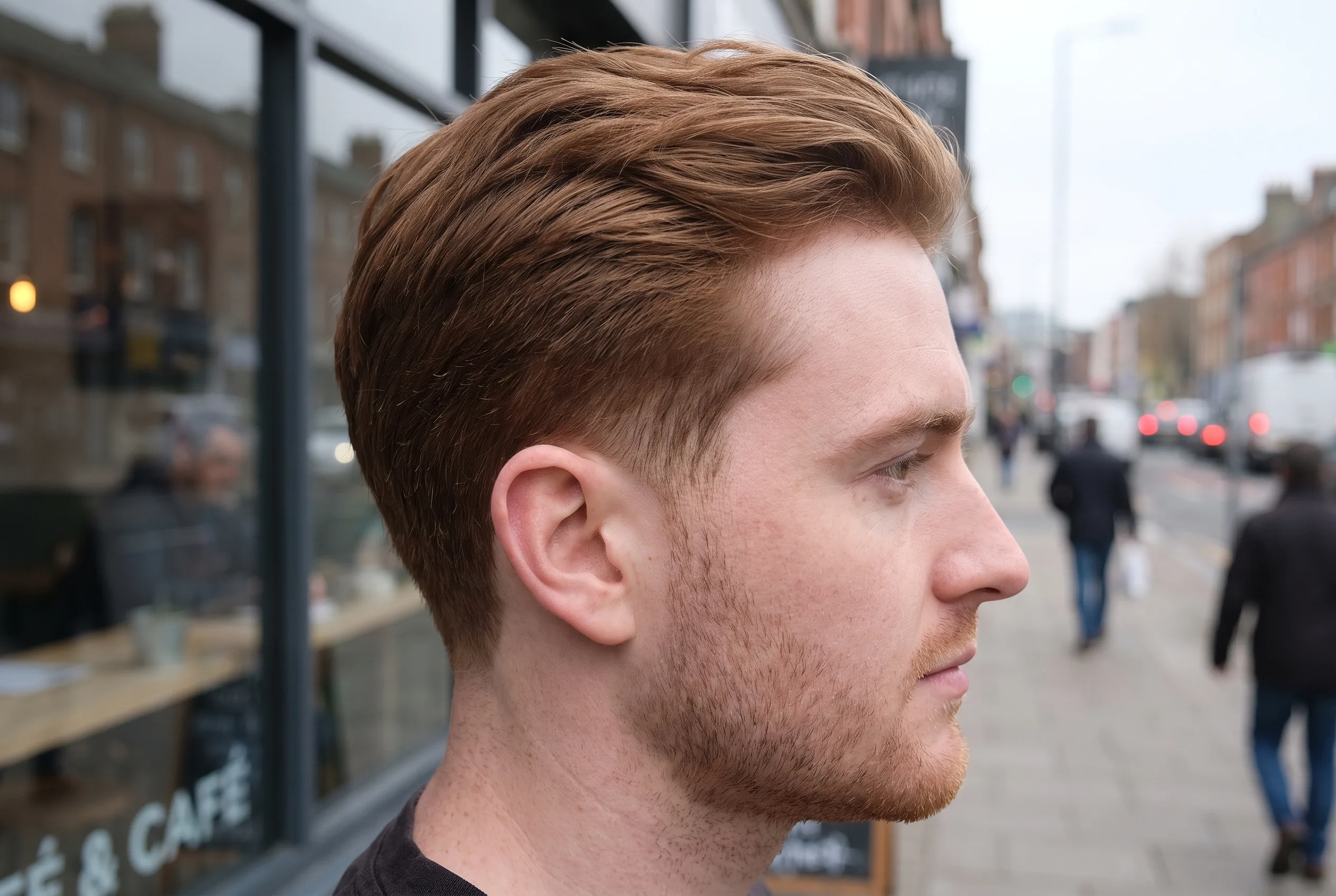
How to ask for a taper haircut
- Say the word taper, then rule out the fade
"I want a taper, not a fade." Barbers hear the two words interchangeably all day. Separating them yourself is the single most useful thing you can do.
- Point to where the band should stop
Put a finger on your head an inch above your ear, or at your temple. Height is the only real choice and a finger is more precise than any adjective.
- Say no skin and no lines
"Keep it off the skin and don't line it up." This rules out the two moves that turn a taper into something else.
- Ask for a natural neckline
"Natural at the neck, not blocked." Five words that decide how the back of your head looks for the next five weeks.
- Tell them what stays on top
Length in inches, and what you do with it in the morning. The sides take four minutes; the top is the actual haircut.
- Look at the back before you leave
Ask for the hand mirror. Check the neckline is soft and the band has no step in it. Fixing it now costs nothing.
See it on your own face before the clippers start
Every photo above is on someone else's head, which is the core problem with picking a haircut from pictures. The reliable free method is to save eight reference photos of the same cut, take them in, and talk your barber through the parts you like. It genuinely works, and if you have a barber you trust, do that.
Where it breaks is the thing you actually want to know: whether a taper at your temple suits your face, your hairline and your density. No reference photo answers that, because none of them are you.
That is the gap this site fills. Upload one selfie and see the cut rendered on your own head, from the front, before anyone touches your hair. The men's try-on covers the taper and everything you might put on top of it, and if you are torn between a taper and a proper fade, the fade simulator puts the two side by side.
Is it free? The first look is free and needs no card - one hairstyle, one colour on it, front view. Paid plans start at $9 a month for 150 credits, and a hairstyle render costs 10 credits. The full breakdown is on the pricing page. Try the free one first; one render tells you whether the answer is worth paying for.
If you only keep one sentence: a taper is an edge, a fade is a panel. Ask for the edge, tell your barber where it stops, say no skin and no lines, and take a natural neckline.
Do that and you get a cut that looks deliberate the day you get it and still looks deliberate five weeks later. Which, unless you enjoy monthly barber visits, is the whole reason to choose it.
Frequently asked questions
A taper is hair that gets gradually shorter along the edge of your hairline - the sideburn, around the ear, and down the nape. The band is usually an inch to an inch and a half deep, and everything above it keeps its full length. It is defined by where the short work stops, not by how short it goes.
No. They use the same technique on different areas. A taper works a narrow band along your hairline and leaves the side of your head alone. A fade takes the whole side panel short, from the hairline up to the widest part of your skull, and usually goes to skin at the bottom.
A taper if you want to keep looking like you have a full head of hair, want a cut that survives five or six weeks, or have curly hair. A fade if you want visible contrast, a sharper look, and do not mind booking every two to three weeks. Neither is better in the abstract; they answer different questions.
A taper, by roughly double. Hair grows about a centimetre a month, and on a fade that growth lands on bare skin, so the gradient blurs and the cut reads as untidy within two to three weeks. On a taper it lands on hair that already had length, so the shape only softens. Most people get five to six weeks.
"I want a taper, not a fade. Keep the length on the sides, take the hairline down at the sideburns, around the ears and the nape. No skin, no hard lines, and leave the neckline natural." Then point to where you want the band to stop and say what you want left on top.
Low, mid and high, named for where the top of the band sits. Low tops out about an inch above the ear, mid at the temple level with your eyebrow, high at the corner of the forehead. Low is the safest starting point because it can be taken higher at your next visit.
Almost any barber can, but not every barber will do it unprompted, because the default in most shops right now is a fade. The risk is not skill, it is assumption. Say the word taper and rule out the fade explicitly and you will usually get exactly what you asked for.
The sideburns and the sides are doable with guards and a mirror. The nape is not, and the nape is where a taper is judged. If you cut your own hair, do the sides yourself and have someone else run the clippers down the back, or accept that the neckline will be the weak point.
Yes, and it is one of the better options. Keeping height on top and closeness at the perimeter lengthens the head visually, which is the opposite of what a uniform short cut does. Go mid rather than low so the shape reads, and keep at least three inches on top.
Preview it on your own photo: Men's Hairstyle Try-On.
Share article
About the author

More articles
Men's Haircuts · 14 min
Benny Blanco Haircut: The Fake Half Shave and the Real Curls
Benny Blanco did not shave half his head. It was a prosthetic bald cap, and the buzz cuts are AI. Here is what his curly mop actually is, the short version, and exactly what to tell your barber.
Men's Haircuts · 16 min
1A Hair: How to Tell If You Have It + 14 Cuts That Work
1A hair is pin-straight with no bend from root to tip. How to tell it from 1B and 1C, why it goes flat, 14 haircuts that work on it, and how to style it for volume.
Men's Haircuts · 15 min
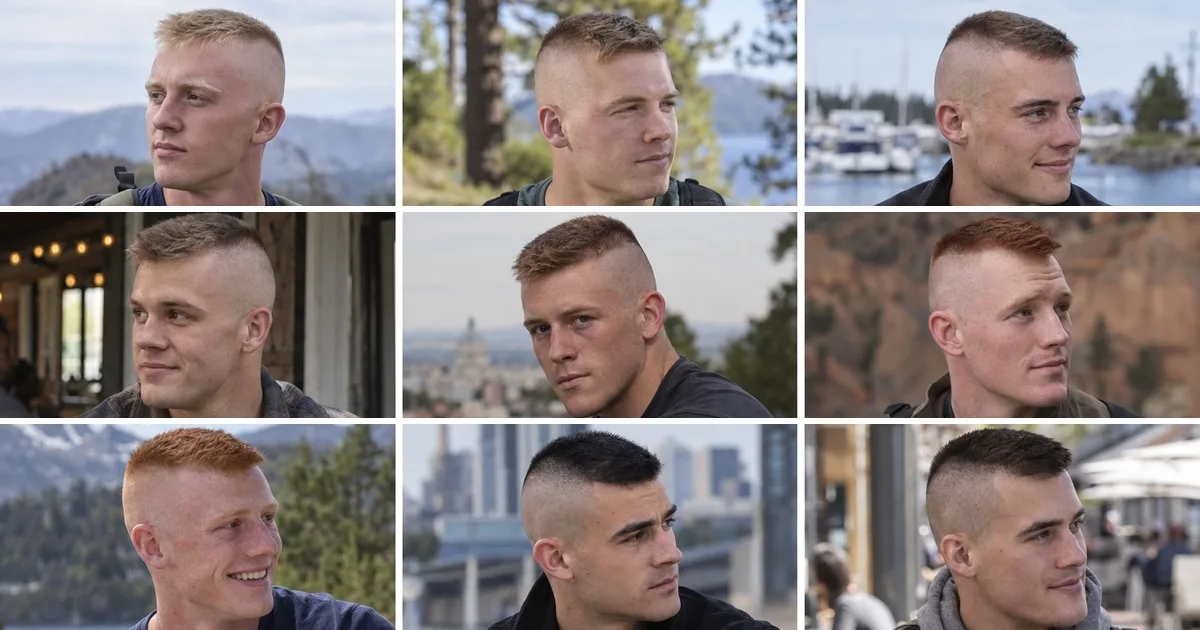
High and Tight Haircut: 4 Versions and the Head Shape Rule
A high and tight clips the sides almost to skin all the way up to the top of the head, so it shows your skull shape more than your face. The 4 versions, 14 photos, what to tell your barber, and how long it lasts.