2C Hair: How to Tell, 14 Cuts That Work, and a Routine
Oleh Onysko 1 October 2026 16 min read
In this article
2C hair is the tightest wave type: thick S-shaped waves that start at or just below the root, run all the way to the ends, and tip over into loose spiral ringlets here and there. It sits one step short of curly, which is exactly why it gets mishandled so often.
Here is the thing most 2C heads never find out. A lot of people with 2C hair have never actually seen it. They brush it dry, which pulls every S apart into fuzz, and they conclude they have frizzy straight hair. Then a stylist thins it out with texturizing shears to "take the bulk out", and the wave loses the weight it needed to clump. Stop brushing it dry and get one cut made for waves, and the pattern shows up on its own.
So this guide does three things. It helps you confirm you are 2C, shows you the cuts that work on it, and gives you a routine short enough that you will actually keep doing it.

What is 2C hair?
Type 2C is the third and strongest of the three wave types in the Andre Walker system. Waves start near the scalp instead of below the ear, the S shapes are narrow and well defined, and the strands are usually thick and plentiful. Some pieces, often underneath and at the nape, form actual ringlets.
| Type | Where the wave starts | Shape | What it feels like |
|---|---|---|---|
| 2A | Below the ear, often at the jaw | 2 to 3 wide, shallow S bends | Fine, flat roots, drops straight with product |
| 2B | Around the ear | Defined S from mid-length | Flat crown, frizz on top |
| 2C | At or near the root | Tight S bends, some ringlets | Thick, full, frizzes in humidity |
| 3A | At the root | Loose spirals the width of a sidewalk chalk stick | Springs back when stretched |
The typing chart was created in the 1990s by Andre Walker, Oprah Winfrey's stylist, and it describes curl shape only. It says nothing about density or strand thickness, which matter just as much for choosing a cut. Treat the number as a shorthand to hand your stylist, not a diagnosis. If your bends start low and shallow, our guide to 2A hair is the one you want.
Is 2C hair wavy or curly?
2C is wavy hair, but it is the type closest to curly, and most 2C heads have a few curly sections mixed in. The dominant shape is still an S that lies flat against the head, not a spiral that springs out from it.
The practical answer matters more than the label. 2C hair needs curly hair handling (no dry brushing, gentle drying, cuts that respect the wave) and wavy hair amounts of product. Load it with the heavy creams written for curls and the waves drop.
How do you know if your hair is 2C?
Wash your hair, skip the brush, put nothing in it, and let it air dry without touching it. Then check three things.
- Where the wave starts. Within an inch or two of the root points to 2C. Starting at the ear or lower points to 2A or 2B.
- The shape of the bend. A clear S that lies flat is wavy. If most strands form spirals you could slide a finger through, you are in 3A territory, and the 3A hair guide covers where the line falls between 2C and 3A.
- How much frizz shows by evening. 2C almost always grows a frizz halo at the crown. That is normal for this type, not a sign that your hair is damaged.
Most heads are a mix. It is common to be 2B on top, where the hair gets handled most, and 2C or 3A underneath. Go by what most of your head does.
Why 2C hair gets so frizzy
2C frizz comes from the wave itself. Every bend in the strand lifts the cuticle a little, which lets moisture from the air in. On a humid day the outer strands swell, break away from their wave clumps, and stand up in a halo. Thick 2C hair has more strands to do that, so you see it more.

Three habits make it much worse. Brushing when dry splits every clump into single strands, and single strands frizz. Rubbing with a terry towel roughs up the cuticle. Touching the hair while it dries breaks the clumps before they set.
The fix is to keep the clumps together: products go on soaking wet hair, you squeeze water out instead of rubbing, and nobody touches it until it is fully dry.
14 haircuts for 2C hair
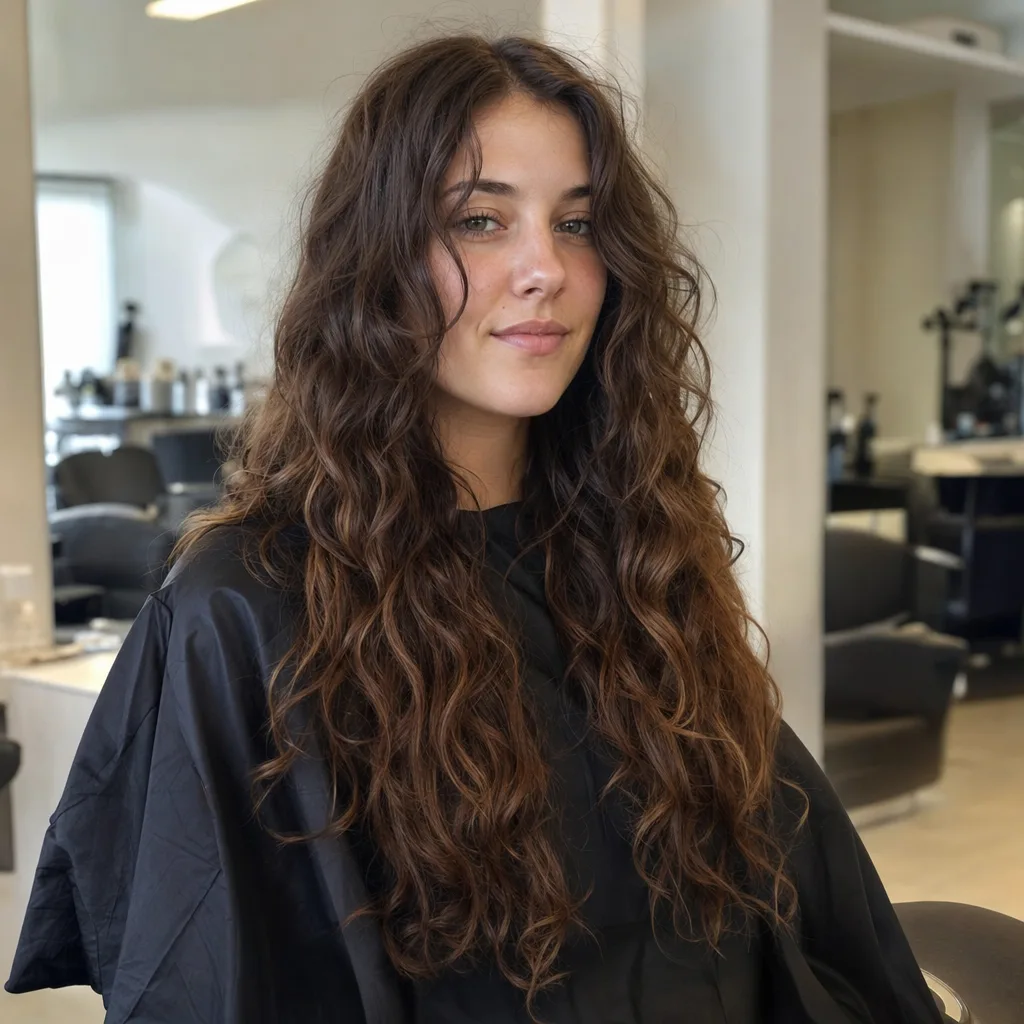
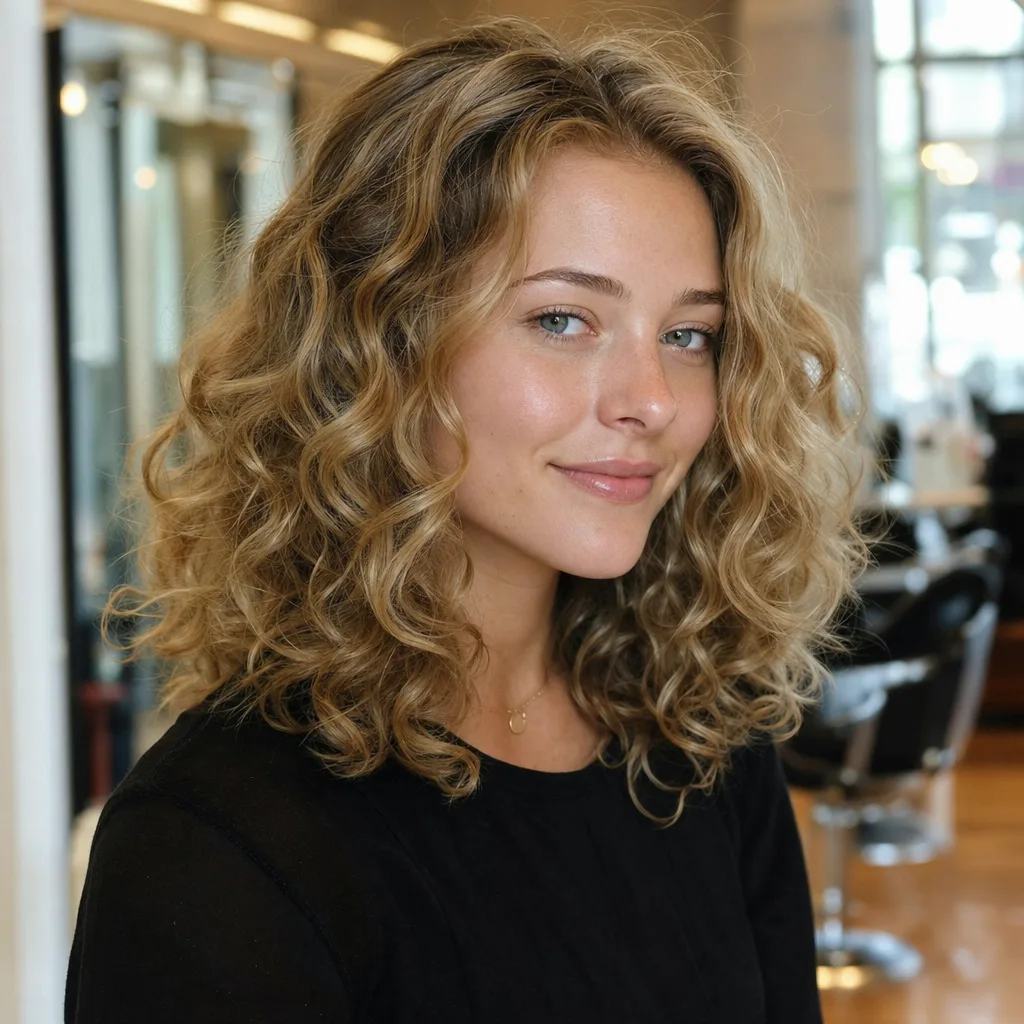
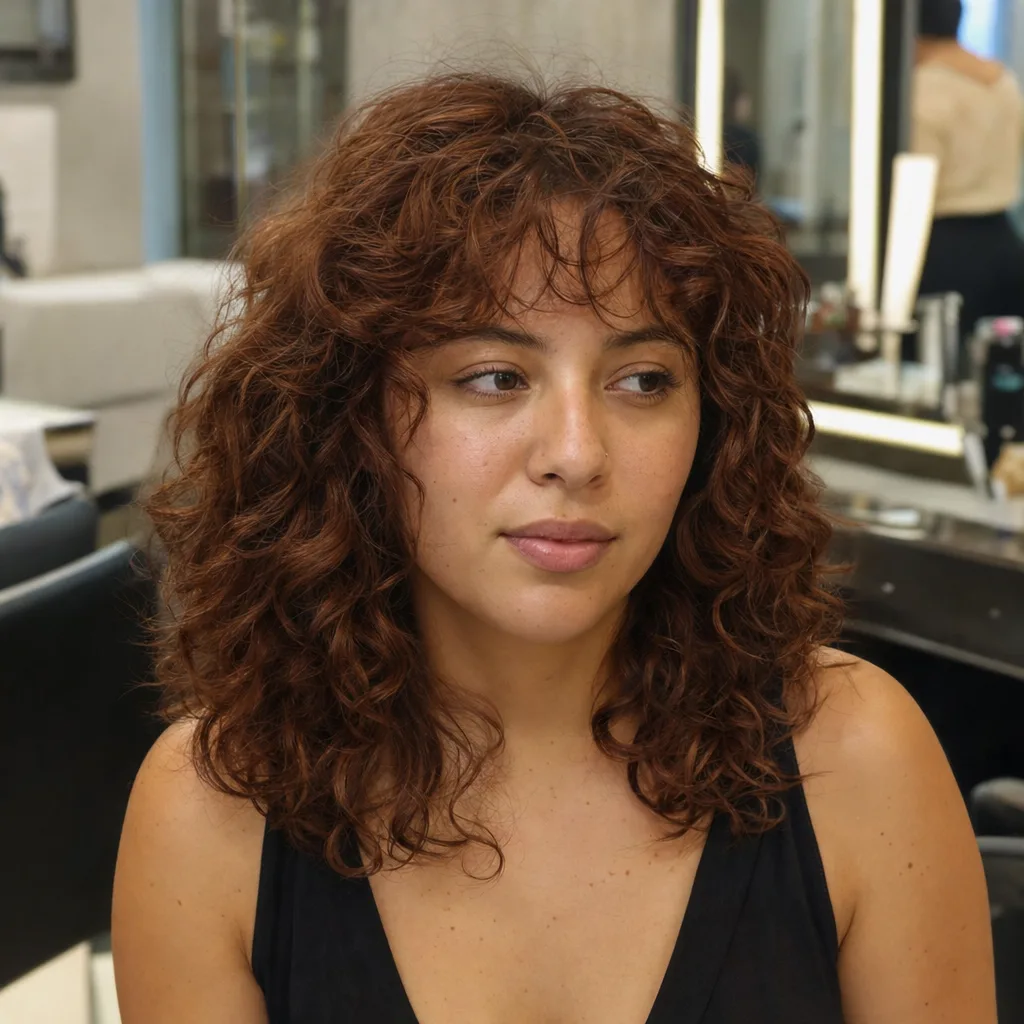
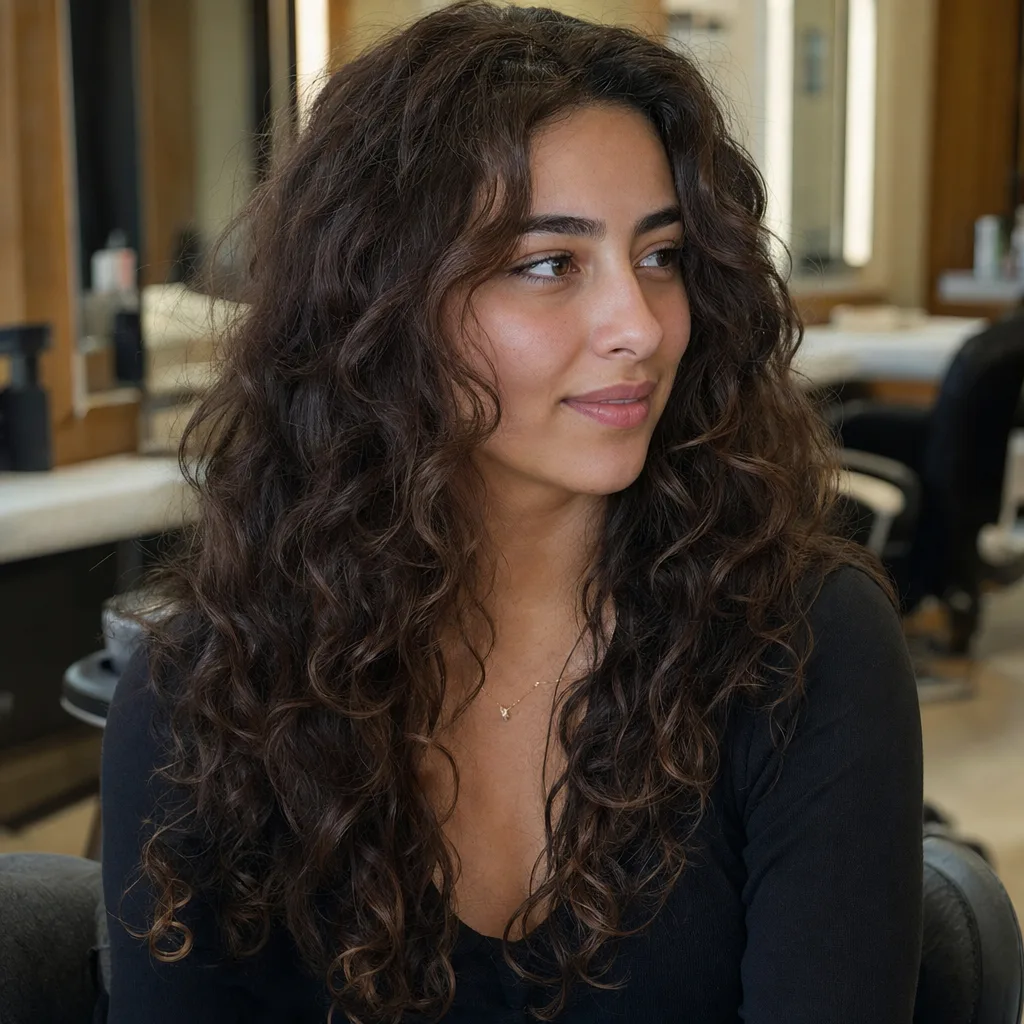
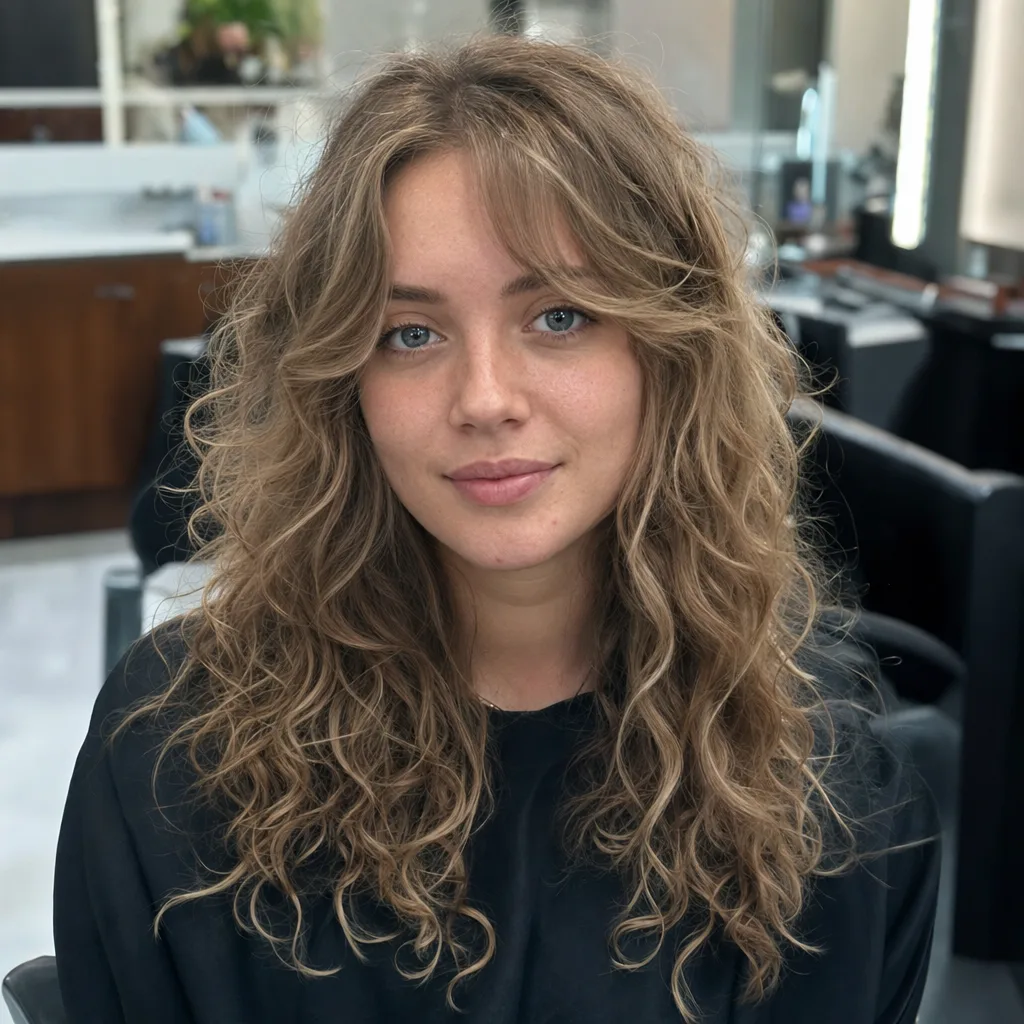
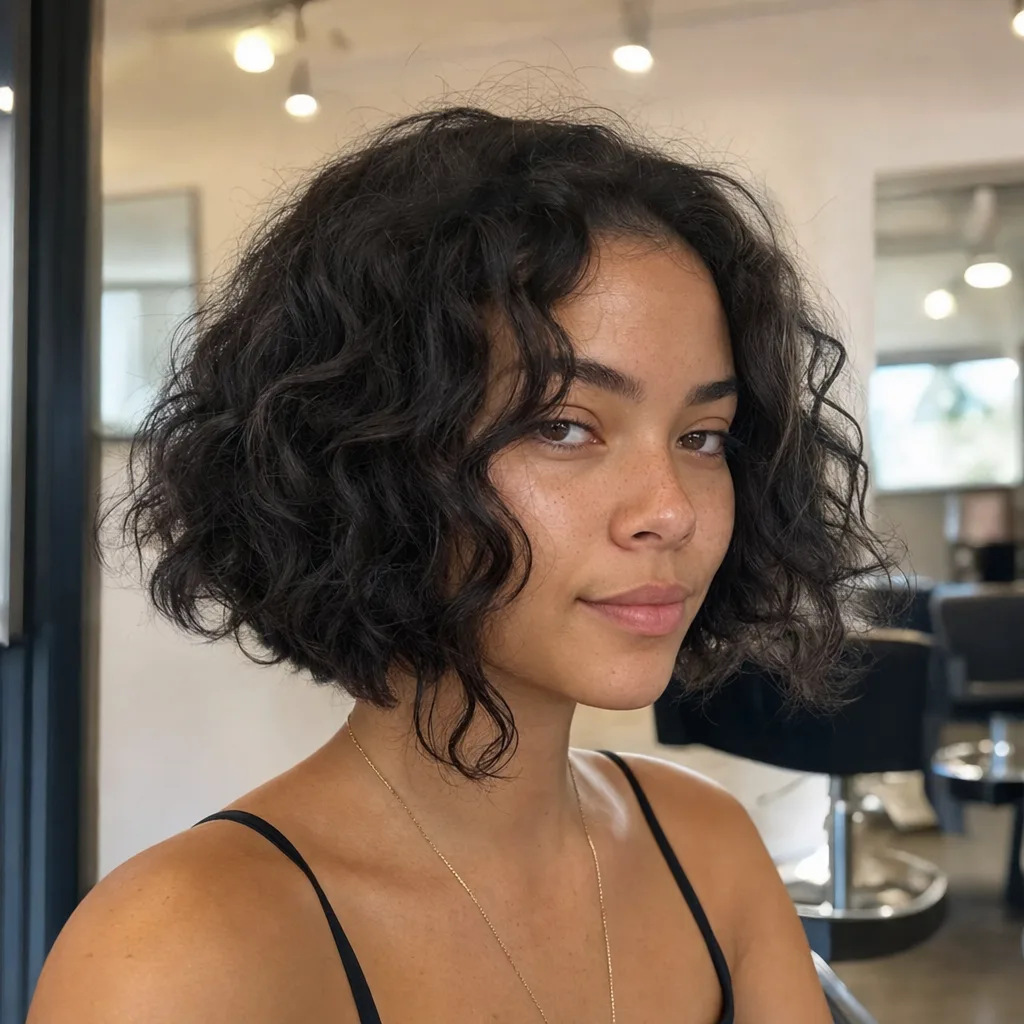
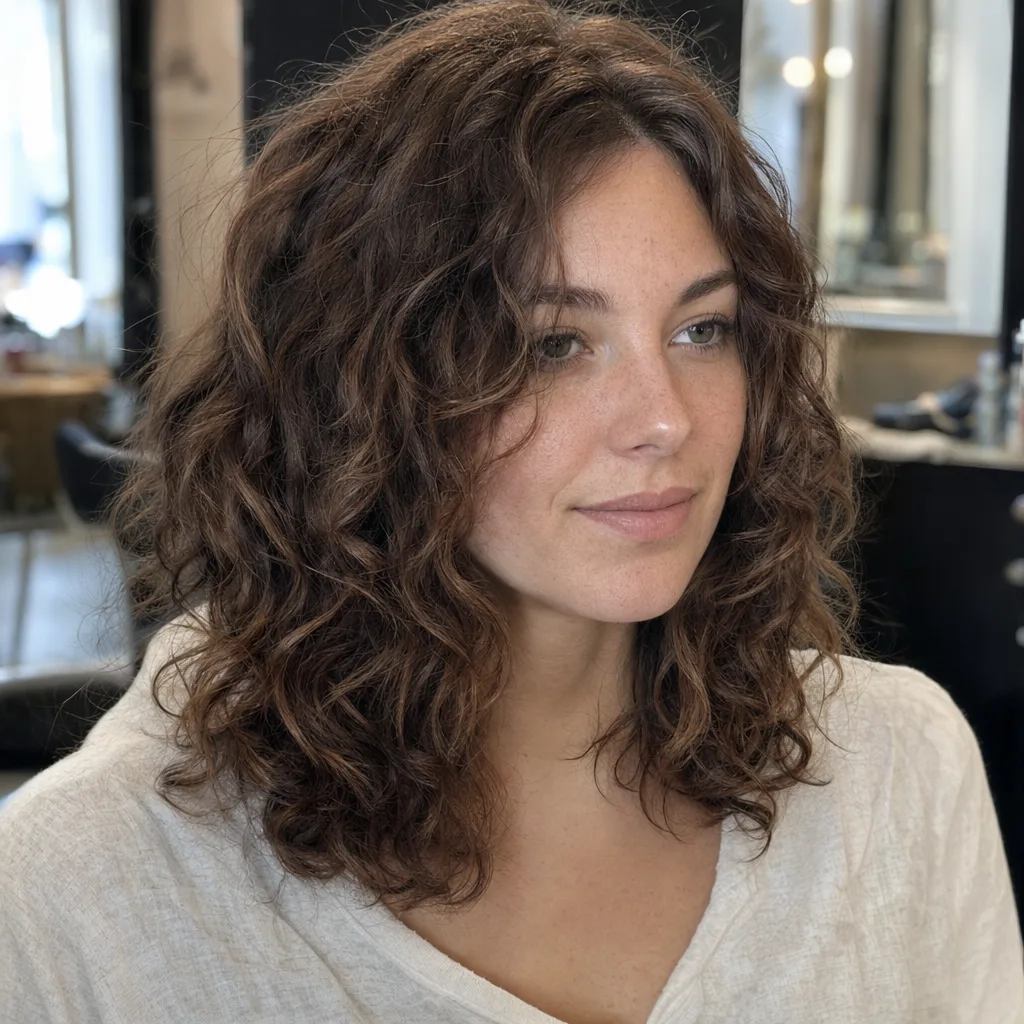
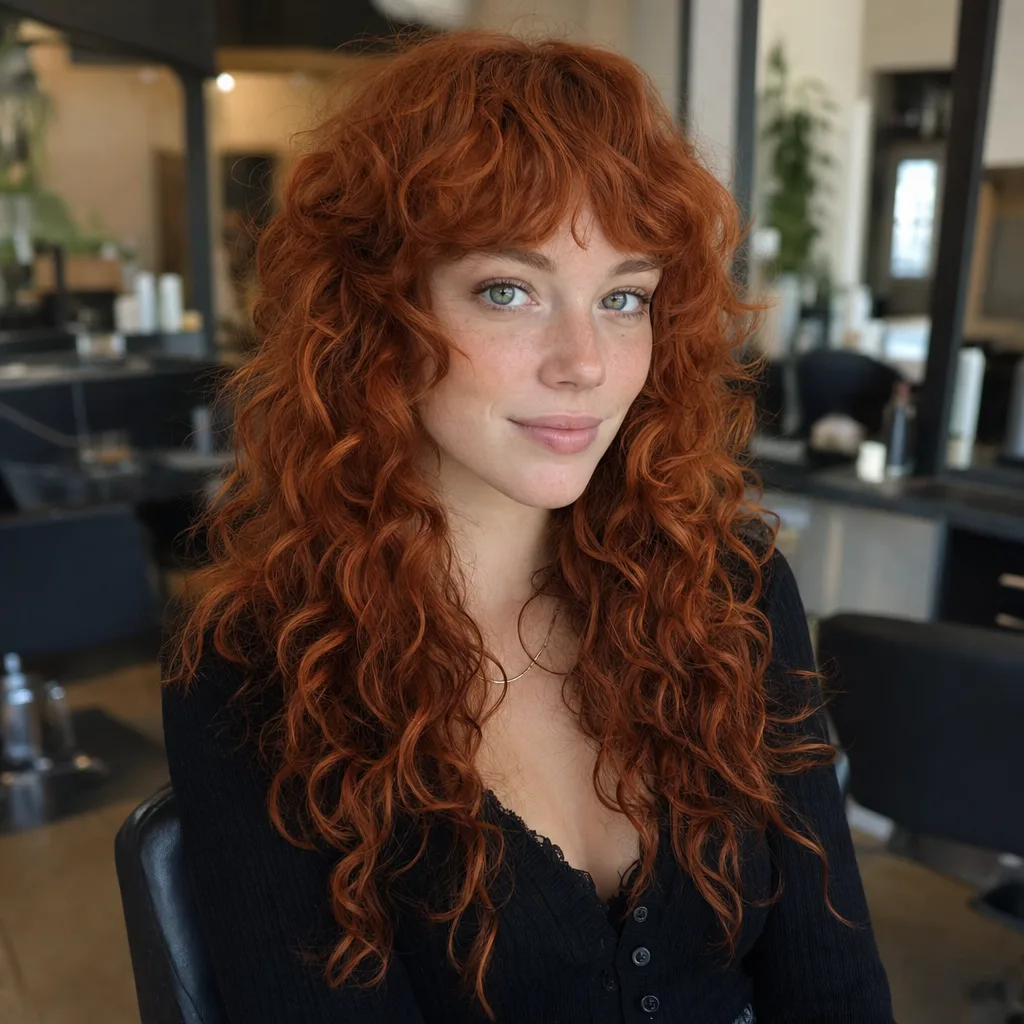
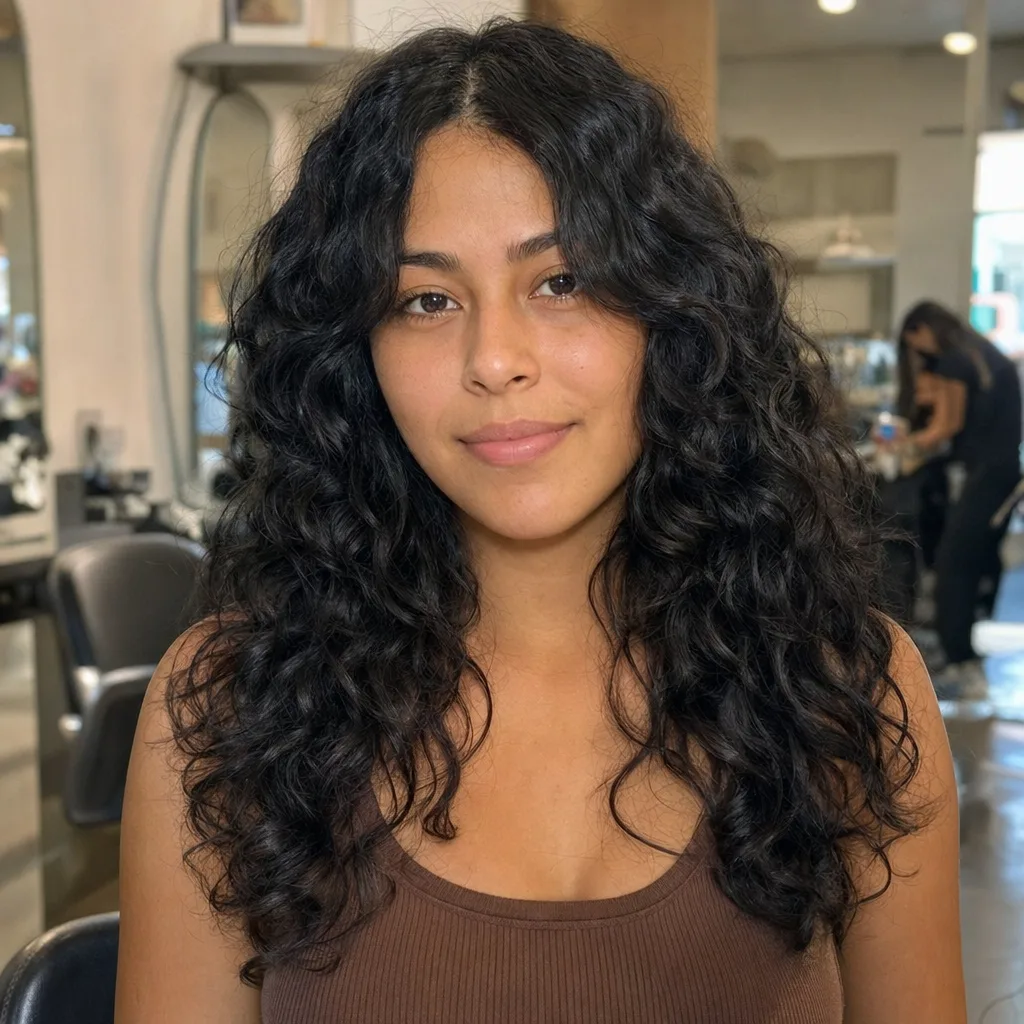
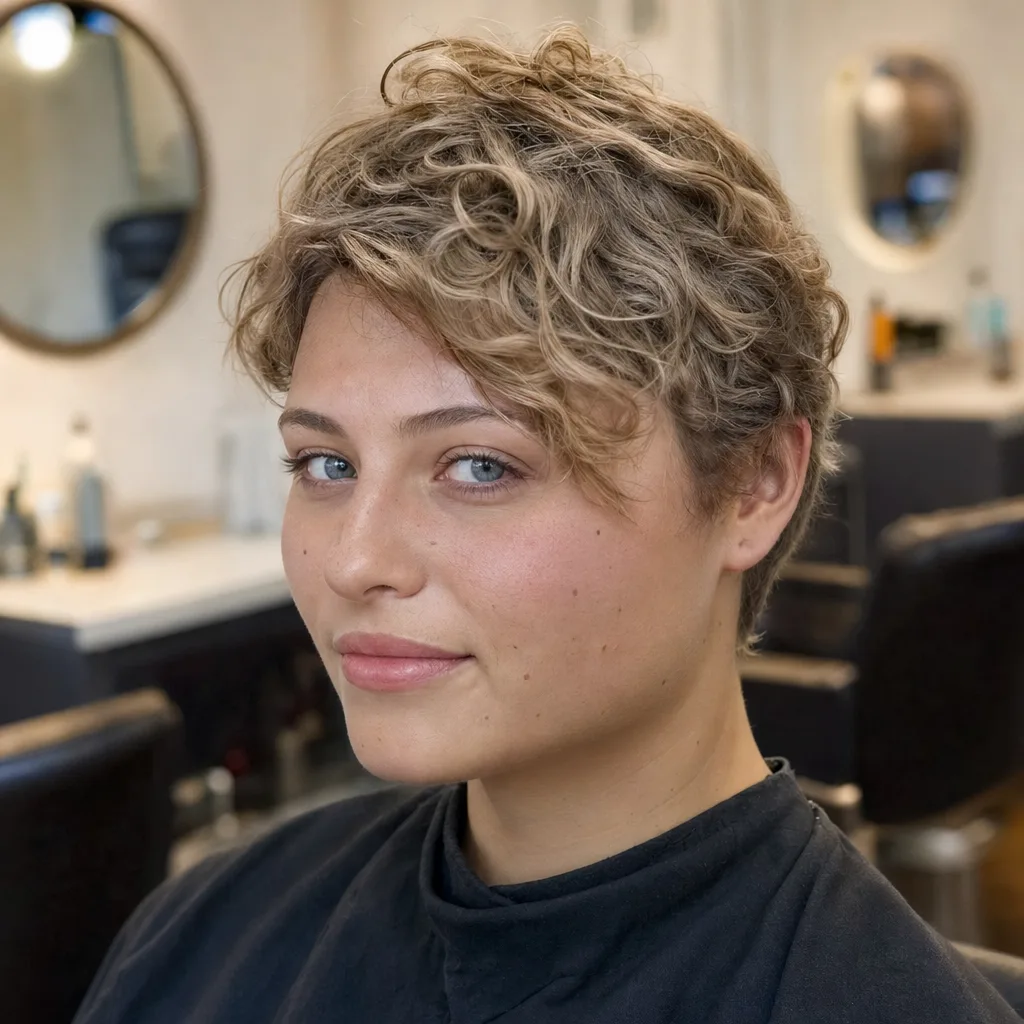
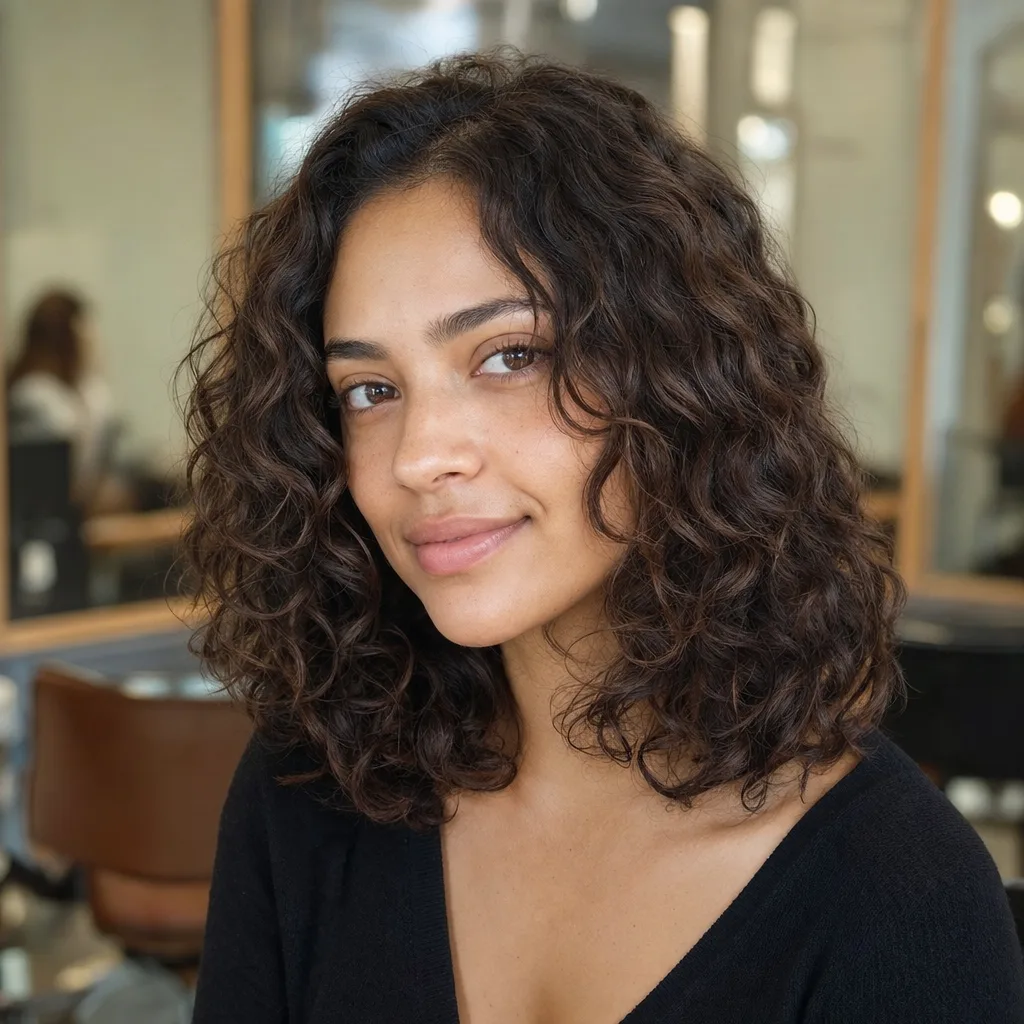
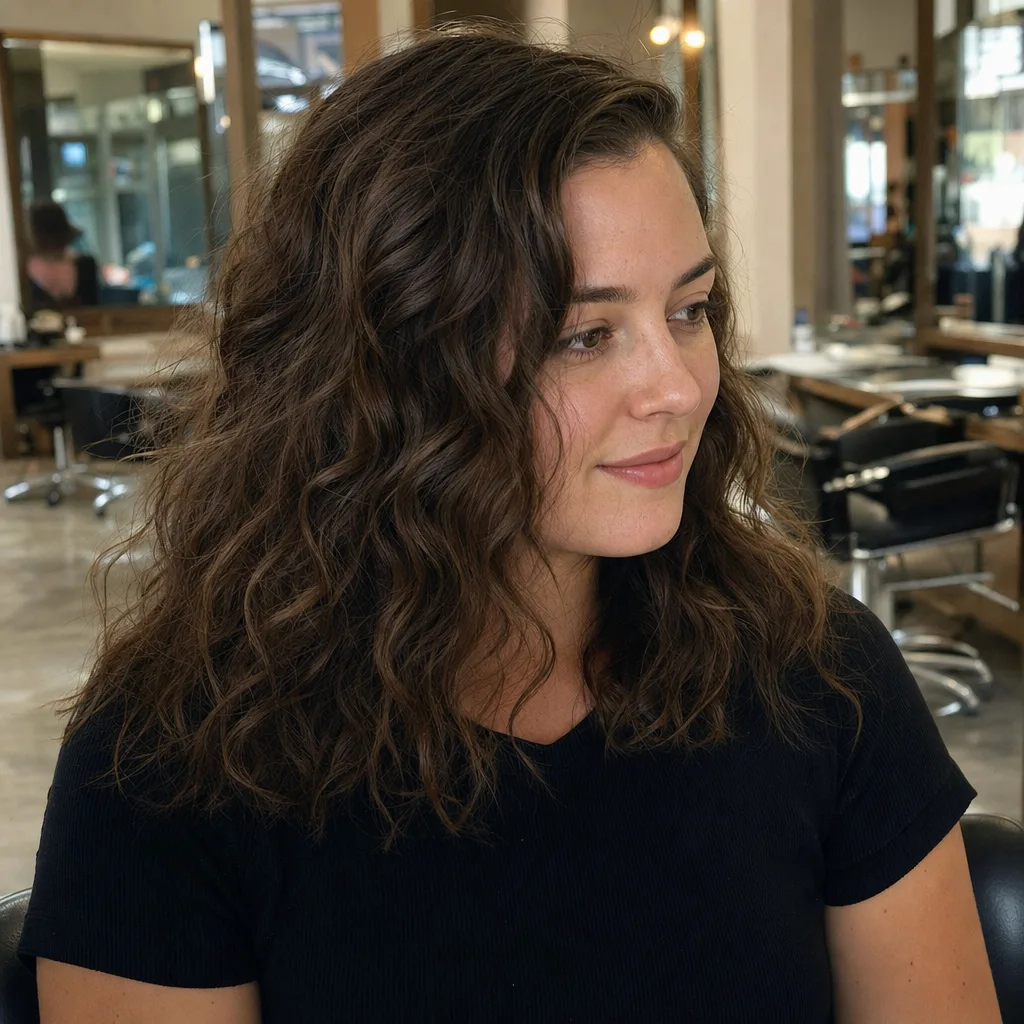
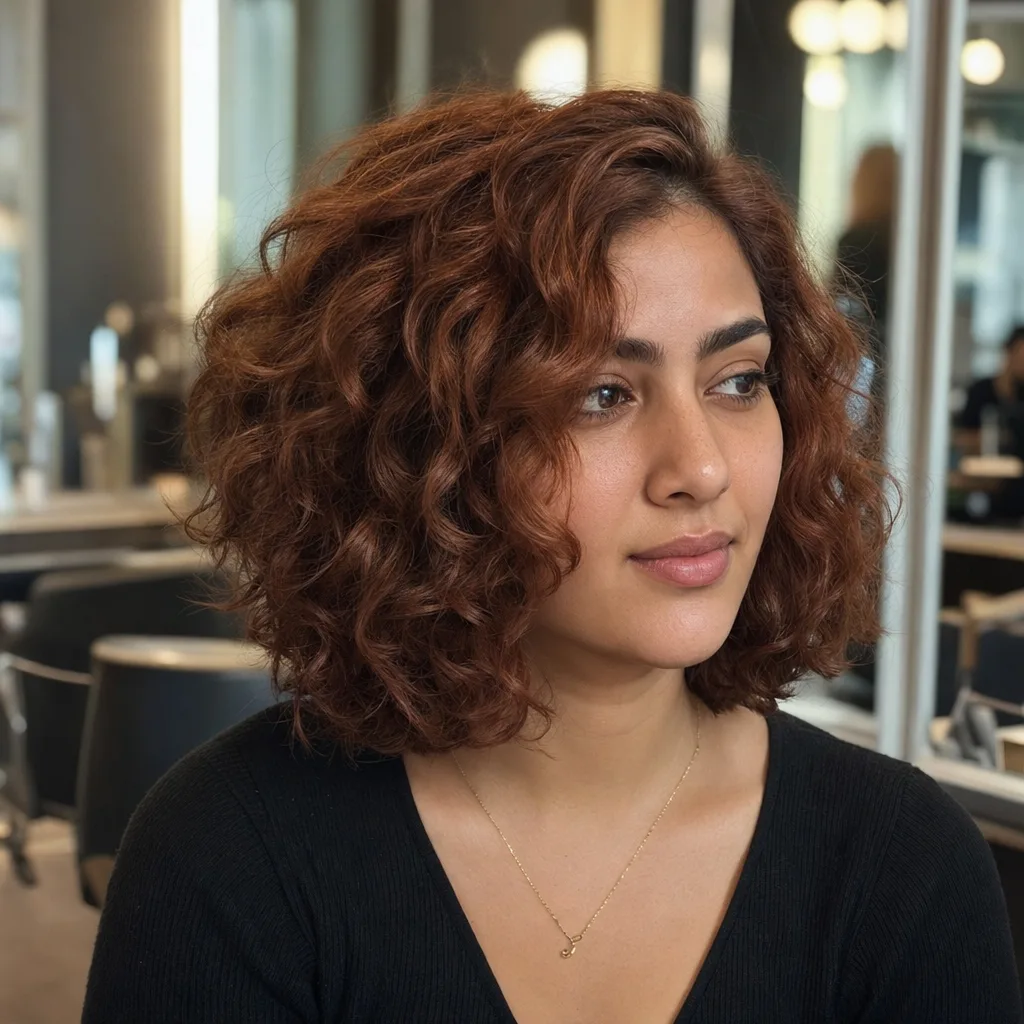
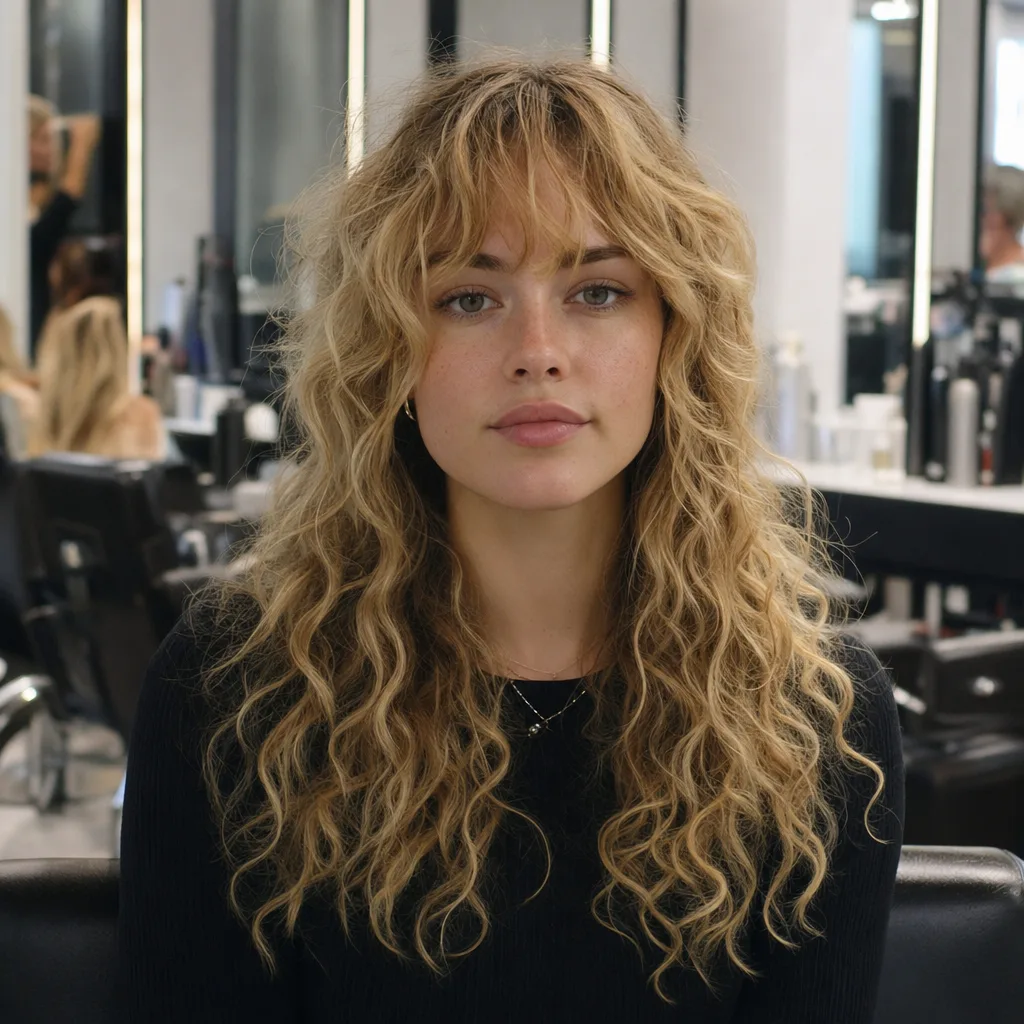
Every picture below shows the same kind of tight, full wave. The only thing that changes is the cut, so you can see how each shape handles it. Compare the rounded layers with the one-length cut near the end: the layered cuts lift at the crown, while the one-length cut carries its volume low, toward the ends.
Gallery14 photos · tap to enlarge
 Try this on me
 Try this on me
 Try this on me
 Try this on me
 Try this on me
 Try this on me
 Try this on me
 Try this on me
 Try this on me
 Try this on me
 Try this on me
 Try this on me
 Try this on me
 Try this on me
The pattern is clear across the set. Layers that start at the cheekbone or chin let 2C hair stack into a rounded shape. Length with no layers piles all the volume at the bottom. Bangs work, but cut them longer than you would on straight hair, because each wave shortens them by an inch or more. If the shag caught your eye, our shag haircut guide goes deeper on how much layering to ask for.
The best haircut for 2C hair
For most 2C heads, it is a shoulder-length layered cut. Longest pieces at the shoulder, layers starting at the cheekbone and stepping down, and no thinning shears anywhere.
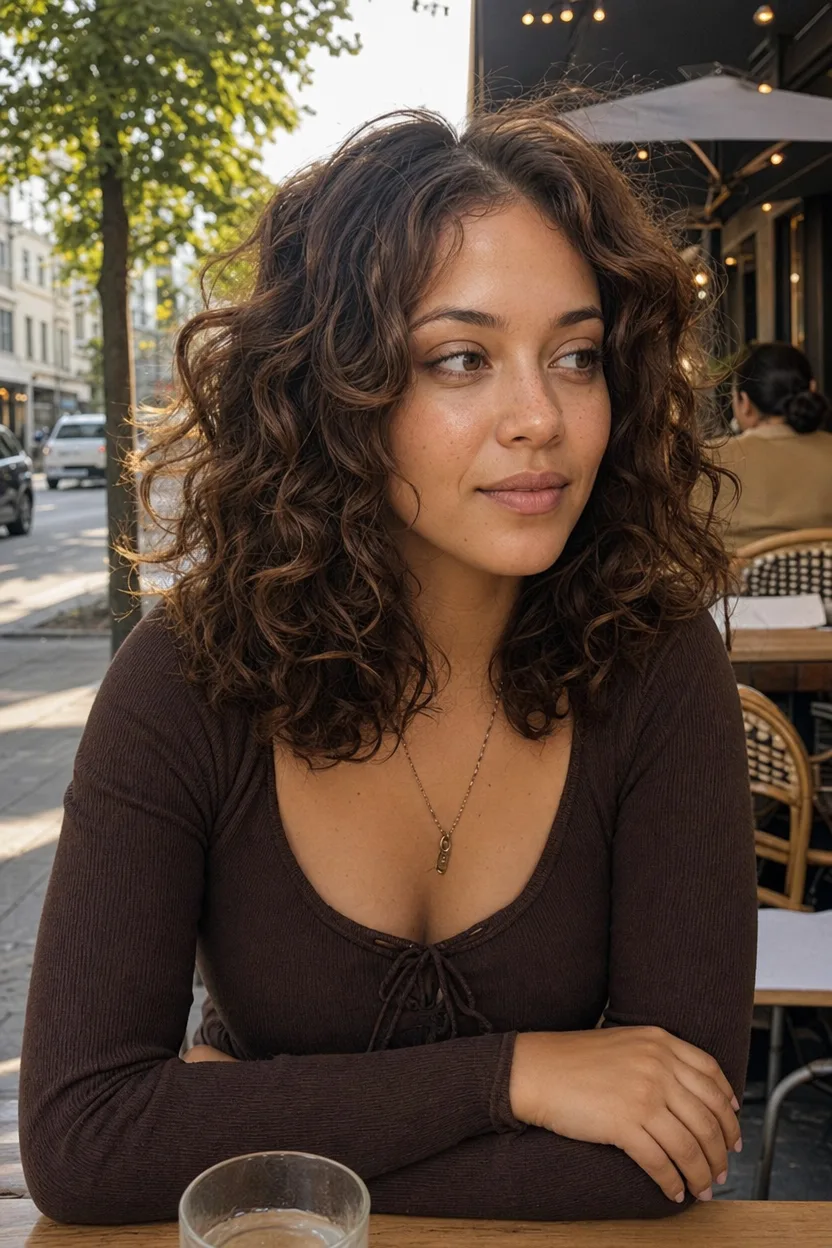
It works because 2C hair has one structural problem: weight. A full head of thick waves cut to one length piles all of its volume at the ends and forms the classic triangle, flat on top and wide at the bottom. Layers take weight out of the bottom and move the volume up toward your face, so the waves stack into a round, bouncy shape instead. Shoulder length is long enough to let each S form fully and short enough that the length does not pull the waves out at the root. Our shoulder-length haircuts guide has more shapes at this length.
The one thing to refuse is thinning shears or razor texturizing through the mid-lengths. They cut short pieces inside each wave clump, those short pieces frizz, and the clump falls apart.
Say this to your barber
Shoulder-length layers for 2C waves. Longest pieces at my shoulders, layers starting at the cheekbone so it stacks round, not triangular. Please cut with my wave in mind and no thinning shears or razor.
Yours could be here.
Start with one selfie.
One photo, twenty seconds, and you'll know. Free account, no card for your first render.
Which 2C cut suits your hair
Density decides more than the wave pattern does. Find your row.
| Your situation | Best cut | Layers | What to avoid |
|---|---|---|---|
| Thick, lots of hair | Shoulder layers or a curly shag | Plenty, starting at the cheekbone | One length, it turns into a triangle |
| 2C but fine strands | Chin bob or collarbone lob | Light, mostly inside | Heavy shag layers, they thin out the ends |
| Wants it long | Mid-back with long layers | Face-framing from the chin | Blunt mid-back length, it drags the wave flat |
| Wants it short | Chin bob or a long pixie | Light internal layers | Anything cut tight to the head on top |
| Round or full face | Collarbone or longer | Face-framing from the cheekbone | A rounded chin-length bob |
If you are not sure what your face shape is, the face shape guide walks you through measuring it in front of a mirror.
If you have thick 2C hair
You are the reader the shoulder layers were made for. If you want even more movement, go shorter in the layers and ask for a shag. The extra layering lets the crown lift, and thick 2C hair has enough density to keep the ends from looking thin.
If you want short 2C hair
A chin-length bob is the shortest cut that still lets the wave read as a wave. Shorter than that and each S has no room to finish, so you get bulk without pattern.

Keep the layers inside the bob, not stacked visibly at the back, so the perimeter stays full and the waves form a rounded shape around your jaw. The layered bob guide shows how much stacking is enough.
If you want to keep it long
Long 2C hair can work, but only with layers. Past the shoulder blades, the weight of the length stretches the waves near your scalp, so the top goes flat while the ends stay wavy. Long layers and face-framing pieces starting at the chin fix that without costing you length.

A 2C hair routine that holds
This takes about ten minutes on wash day and nothing on the days between. The order matters more than the brand of any product.
How to style 2C hair
- Detangle in the shower, not after
Use conditioner, then work out tangles with your fingers or a wide-tooth comb while the conditioner is still in. This is the only time your 2C hair should be combed. Rinse with cool water.
- Apply product to soaking wet hair
Do not towel off first. Rake a light leave-in or a small amount of curl cream through, then glaze a gel or mousse over the top with flat palms. Water in the hair is what lets the product spread without breaking the clumps.
- Scrunch upward to form the waves
Cup the ends in your palms and squeeze upward toward the scalp. You should hear a squelch. Then squeeze out extra water with a cotton t-shirt or microfiber towel, never a terry towel.
- Diffuse on low or air dry
Cup sections into a diffuser on low heat and low speed, holding each for 30 seconds, or let it air dry. Do not touch it while it dries.
- Break the cast
Once fully dry, the gel leaves the hair slightly crunchy. Scrunch it with your fingers, or with a drop of oil on your palms, until it softens. The waves stay; the crunch goes.

Wash two or three times a week. Most 2C hair looks best on day two, when the natural oils have softened the wave a little. On the days in between, mist the hair with water and scrunch to wake the waves back up.
2C hair products: what to use and what to skip
You need fewer products than the curly aisle suggests. A light leave-in, a gel or mousse with hold, and a gentle shampoo cover most 2C hair.
| Use | Why | Skip | Why |
|---|---|---|---|
| Lightweight leave-in conditioner | Moisture without weight | Heavy butters and thick creams | They drag the waves flat |
| Medium-hold gel or mousse | Keeps the clumps together through humidity | No-hold "air dry" creams alone | They lose the pattern by noon |
| Sulfate-free or gentle shampoo | Cleans without stripping | Harsh clarifying shampoo every wash | Dries the ends and adds frizz |
| A few drops of oil on dry ends | Softens the cast and seals the ends | Silicones you never wash out | They build up and flatten the root |
If your hair is fine, lean toward mousse. If it is thick and coarse, gel holds better. A clarifying wash once a month clears out buildup without drying the ends the way a weekly one would.
Five mistakes that ruin 2C waves
- Brushing it dry. This is the one that turns 2C hair into a frizz cloud. Every clump splits, and the S shapes disappear.
- Letting a stylist thin it out. Thinning shears leave short strands inside each clump. Those short strands frizz and the waves stop forming.
- One-length cuts on thick hair. All the volume collects at the bottom and you get the triangle. Layers are not optional on thick 2C.
- Product on damp, half-dried hair. By then the frizz has already formed. Product goes on soaking wet hair, or it does very little.
- Treating it like 3C or 4C hair. The heavy butters and rich creams that coils need will flatten a wave. The routine for tighter curl types like 3C uses far more product than your hair can carry.
What about 2C hair on men?
The same rules apply, only shorter. Men with 2C hair usually cut it too short on top to see the wave at all. Leave three or four inches on top, keep the sides tidy rather than skin faded high, and use a light cream instead of a hard paste. Our guide to haircuts for curly hair for men has cuts that work on 2C texture.
Is Hairstyle Atlas free to try?
Yes, your first look is free and needs no card. You upload a selfie, pick one hairstyle, and see it on your own face in one color, front view. After that, Plus is 9 dollars a month or 60 dollars a year, with 150 credits a month, every cut and color, a before and after sheet to show your stylist, and downloads without a watermark. Every plan comes with a seven-day refund with no conditions.
You can also do this the free way. Save ten photos of 2C hair you like, take them to a consultation, and ask which will work on your density. That is a good start. The wall it hits is that none of those photos have your face or your wave pattern, and shoulder layers on thick 2C hair look very different on a round face than on a long one. Seeing it on your own photo is the gap the curly hair try-on fills.
If you take one thing from this: 2C hair is not frizzy straight hair and it is not underperforming curly hair. It is a strong wave that needs to be left alone while it dries and cut so the weight does not sit at the bottom.
Put the brush away, get shoulder-length layers with no thinning shears, and put light product on soaking wet hair. That gets most 2C heads most of the way there.
Frequently asked questions
2C is wavy, the tightest of the wavy types. Its main shape is an S bend that lies close to the head, though most 2C heads have some ringlets mixed in, often underneath and at the nape.
Look at the shape after an untouched air dry. If most strands make an S that lies flat, you are 2C. If most make spirals that spring back when you stretch them, you are 3A. Many people have both, and the right routine for each is very close.
Check where the wave starts. 2A starts below the ear with wide, shallow bends. 2B starts around the ear with clearer S shapes. 2C starts at or near the root with tight, defined waves and some ringlets.
No. Type 2 waves are common, and 2C is one of the more common textures among people with wavy hair. It often goes unnoticed because brushing and heat styling hide the pattern.
Type 2 hair shows up across every background. It is common in people of European, Latin American, Middle Eastern and South Asian descent, and in mixed-race people. Your hair type comes from the shape of your follicles, not from one specific ethnicity.
Each bend in a wavy strand lifts the cuticle slightly, so moisture from the air gets in and the outer strands swell out of their clumps. Dry brushing, rubbing with a towel and touching the hair while it dries all make it worse.
Two or three times a week suits most 2C hair. Washing every day strips the oils that help the waves clump, and most 2C hair looks best on the second day.
Layered cuts work best: shoulder-length layers, a curly shag, butterfly layers, a layered lob, or long layers with face-framing pieces. Avoid one-length cuts on thick hair and ask your stylist not to use thinning shears.
Preview it on your own photo: Virtual Hair Color Try-On.
Share article
About the author
More articles
Women's Haircuts · 17 min
2B Hair: Why It Frizzes on Top and the Cuts That Fix It
2B hair is wavy from about ear level down, with four or five defined S bends. Most 2B frizz is a roughed up top layer sitting over good waves. Here is how to tell 2B from 2A and 2C, the cut that lets the waves move, 14 haircuts on 2B texture, and a routine that holds.
Women's Haircuts · 16 min
Wispy Bangs: 14 Looks and the 1-Inch Rule Behind Them
Wispy bangs are decided by how little hair goes into the fringe, not by thinning shears. 14 looks, a face shape table, the sentence to say in the chair and how to cut them at home.
Women's Haircuts · 14 min
Bleached Hair: How Light Yours Can Go, 14 Shades, Aftercare
How light your bleached hair can go depends on where it starts. See 14 bleached shades on one cut, what each starting color can reach in one session, how toner finishes the job, and the aftercare that keeps it soft.